
Fair Game

cake on a stick at the state fair
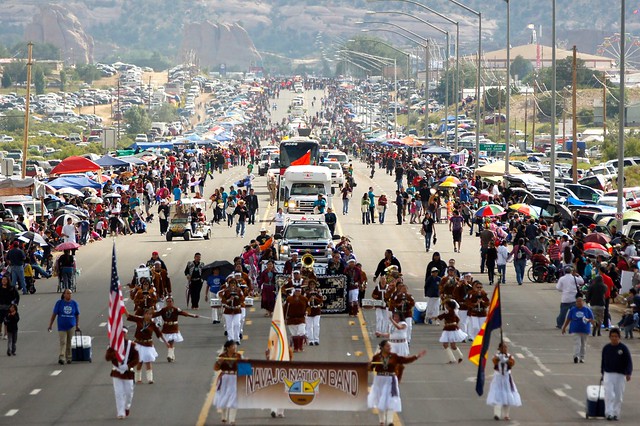
Is there anyone out there who doesn’t know that the Iowa State Fair is a happening thing right now? And how many state fairs—other than your own—are you aware of? But Iowa? Definitely. And why might that be?
state fairground photograph

It isn’t the oldest. That would be the New York State Fair, dating from 1841.


It isn’t held first.  The California State Fair is held annually in July. This year, it’s July 12-28. Or last: the North Carolina State Fair will be October 17-27.


It isn’t the biggest. The Iowa State Fair (with some 1.13 million visitors) is #7. And rated by Attendance as % of State Population, Iowa’s 35.93% is high, but still only 3rd place.


And according to blt: the blog for lifestyle and travelit isn’t the best. The Iowa State Fair is ranked #4 among the The 20 Best State Fairs in America.

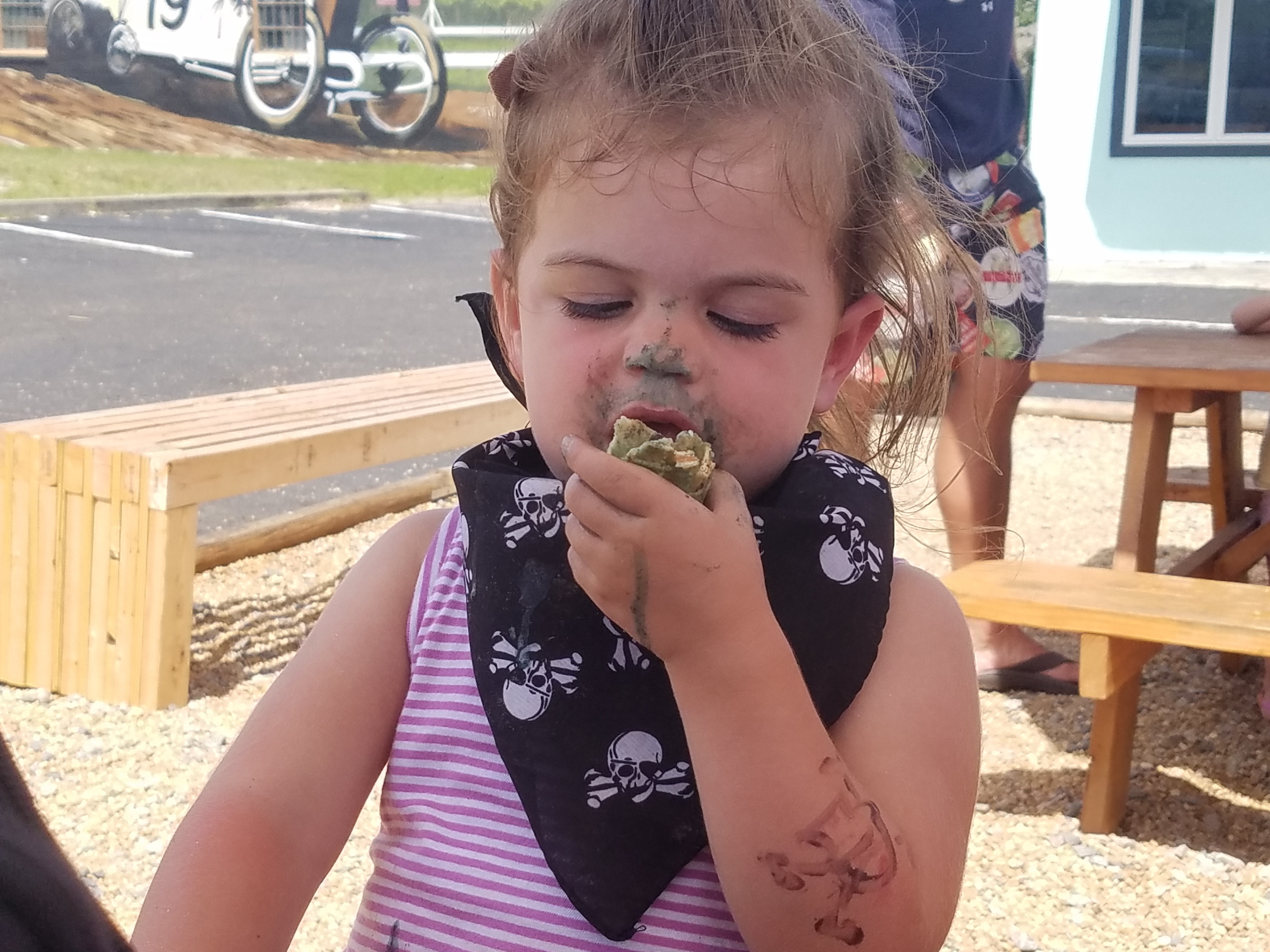
children eating cake on a stick at a state fair

Those who regularly attend the Iowa State Fair expect all manner of fried food and especially food on a stick. According to the fair website, there are more than 80 varieties of food on a stick are available this year, from apple pie on a stick to golden fried peanut butter and jelly on a stick. There are more than 70 new foods this year, including Bacon Wrapped Pig Wings (Don’t ask. IDK.) and Bauder’s Ultimate Bacon Crisp (ice cream), Big Grove Brewery Deep Fried Apple Pie Craft Beer and Butter Cake Shake, Chocolate Brownie Waffle Stick and Fried Avocado Slices.

sculpture of a cow made from butter
Sculpture by Sarah Pratt (Iowa State Fair image library)

Another big draw is a visit to the life-size butter cow, 600 pounds of pure Iowa butter created each year by a local sculptor. It’s a tradition that began in 1911. Once it’s sculpted, the butter cow can be stored and reused for up to 10 years! In addition to the butter cow, one or more companion butter sculptures are on view in the Agriculture Building.


The Iowa State Fair features an Agriculture Expo: cattle and other livestock, an Animal Learning Center, and an Avenue of Breeds that represents 100 species, including 100 to 120 animals.

man standing on hay bales at a state fair

But face it, none of these account for the national attention focused on this one fair. There seem to be two factor that focus the spotlight on Iowa—and neither is directly related to what state fairs are all about.


One, Iowa holds the first state political caucuses in the nation, in February. Thus, the Iowa State Fair is an opportunity for political candidates (both state and national) to appeal to potential voters, as well as attract canvassers, event planners—any campaign volunteers.


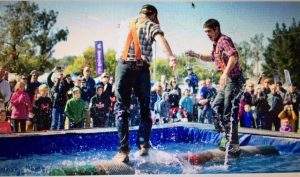
Two, The Des Moines Register has a Political Soapbox at the fair. The Soapbox is a long-standing Iowa tradition. Stacked bales of hay provide a platform for people to address passersby. This year, there is a public schedule of the appearances of more than 20 Democratic Presidential Candidates. Each will have 20 minutes to address the crowds, plus limitless opportunities to mingle and press the flesh.


There’s a long history here. Calvin Coolidge spoke in 1925. Franklin Delano Roosevelt met with other politicians at the fair concerning the Midwestern drought. Dwight Eisenhower gave a speech in 1954. Jimmy Carter visited the fair in 1976—after winning the Democratic nomination.


And the benefits may flow both ways. Three years ago, when Bernie Sanders, Hillary Clinton, and Donald Trump all came to the fair the same day, it set an attendance record.

screenshot from Washington Post op-ed section about Iowa State Fair

But not everyone thinks the Iowa State Fair and political candidate connection is a good thing. Everything presidential candidates do is under the media microscope. “…at events such as this one we get into a particularly intense cycle of insincere playacting and brutal theater criticism…” Candidates are praised or savaged based on their performances. “Is the candidate wearing properly casual clothing and shoes? Does she seem at ease perusing the booths and chatting with passersby, as though there weren’t five cameras in her face? How Middle American were the foods she chose to eat? Did she stuff them in her mouth with the proper enthusiasm?”


Waldman’s point is that a performance is no basis for judging a person and his/her suitability and promise as president. “And consider that there might be better ways of figuring out who you should vote for.”


And please note: although 35.93% of state citizens attend the fair, fewer than 16% of Iowans turned out for the 2016 caucuses. There may be numerous reasons people have difficulty participating in caucuses, the fact is that they may be irrelevant. Minnesota, for example, which consistently have the highest voter turnout, in 2016 had only 8% caucus turnout.


So why did I write this blog? I like fairs, and this year—more than ever before—I’m aware of the Iowa State Fair.

vivian lawry typewriter
Bottom line for writers: I hope you find something of interest—and maybe even use—in this blog.

From the Archives: Alcohol for Writers

"alcohol for writers" whisky poured into tumbler


In 2016, I wrote Alcohol for Writers: the famous authors infamous for drinking, facts writers should know about alcohol (even if they don’t imbibe), and what to know about your characters’ interactions with drink.

On the subject of alcohol, you can read about its consumption with tobacco in Smokers Drink and Drinkers Smoke. Perhaps not surprisingly, the people who drink the most, as a group, also consume the most tobacco.

Each of these posts explore the dangers of addiction, which I dive into in The Upside of Addiction for Writers. In addition to substance abuse, writers should also consider behavioral addiction, such as gambling, eating, or working. (And don’t forget Workaholics Day.)

Now it’s your turn: how do you treat alcohol in your writing? Let me know in the comments.


DEAD BUT NOT GONE

Holding onto your loved one after death

Making Death Mask Edit 4
Two men making a death mask, New York, circa 1908. Making_death_mask.jpg: Bain News Servicederivative work: AutoGyro at en.wikipedia [Public domain]
 

In various times, in various places, and for various reasons, people have—and do—cling to the dearly departed. Consider death masks, sarcophagi, grave markers. Or perhaps, more personally, the loved one’s name is carved into a garden bench or painted on a rock. Today, one can get a “Poetree” Cremation Ash Tree, a circular planter containing the deceased ashes that encircles the trunk of a young tree planted in that person’s honor, and fertilizes it. The planter can be inscribed to make a custom cremation cultivation.


Perhaps most frequently, people keep tokens of the deceased—something  owned, worn, or loved—a ring, a photo, an antique car, an autographed football, a piece of furniture or art.


Quilts made by Elsie Rich
Quilts made by Elsie Rich – Library of Congress

01/01/1996


A step beyond keeping a token is repurposing a token. One example would be making a quilt or throw from the dead person’s clothing. Beyond that, a piece of clothing could be framed, used to make a wine cozy, a pillow to hug or a stuffed animal for a grandchild.


As cremation becomes more popular, there is a whole industry in cremains urns. Using modern technology and pictures of the deceased, a head sculpture of the deceased can be created as a container for the ashes.

Cylinder Cremation Jewelry
Cylinder Cremation Jewelry from Stardust Memorials

In addition, there is a plethora of small containers for ashes, typically in the form of a gold or sterling pendant. Cremains are relatively voluminous. At least in theory, everyone who wants a bit of ash in a pendant could have it.

Please note: Catholics are forbidden from keeping the ashes of cremated loved ones at home, scattering them, dividing them among family members, or turning them into mementoes—i.e., they must be buried.

Victorian Hair Mourning Jewelry 2
Thayne Tuason [CC BY-SA 4.0]
And that brings us to mementos involving body parts. From the 1850s onward, hair art became popular for those in mourning: by cutting a lock of hair from the loved one after death and weaving it into designs for brooches, rings, watch fobs, bracelets, and necklaces, the bereaved could keep the dead one close.


In a more goth period of history, a loved one’s teeth can be turned into jewelry: molar rings, earrings, a necklace with 10 or more teeth on a silver or gold chain—even a denture bangle bracelet.


back tattoo

If the loved one had a tattoo, the tattooed skin can be removed and preserved in a frame suitable for display.


If actual, unchanged body parts are too ghoulish, consider transformation. Ashes can become many things.


Blue Spiral Teardrop Pendant with Infused Cremation Ash
Blue Spiral Teardrop Pendant with Infused Cremation Ash from Spirit Pieces


  • consider a titanium band with ashes, $183.20
  • glass cremation necklaces and pendants, $84 and up to a few hundred
  • similar processes can produce paperweights, tree ornaments, and suncatcher spinner, $99 and up
  • a cremation ash painting in which a loved one’s ashes are mixed into the paint for a portrait, landscape, or other painting


Diamond created from ashes
Diamond created from ashes by Tomorrows Traditions, photo: Roger Blake (CC BY 2.0)


  • several companies specialize in turning a loved one’s ashes into diamonds
  • as with natural diamonds, these can be rings, pendants, earrings, etc.
  • creation time ranges from 35 to 150 days
  • length of process is related to color: brown, red, pink, gray, blue, green, violet, purple, yellow, orange, and clear
  • the longer the creation time, the higher the price
  • price depends on clarity, color, carat weight, and cut
  • price includes making, cutting, and polishing the stone—no setting (which can range from $200 to $2200 and more)
  • so prices could be as low as $300 for a pendant of chips to more than $17,000 for a one carat white stone


Relic of Longinus
Relic of St. Longinus, photo: TrappistMonkStuff [CC BY-SA 4.0]
I’ve focused on personal, emotional reasons to hold on to parts of dead loved ones. However, Ward Hazell has identified 10 Reasons for Keeping Human Body Parts After Death. 

10) Relics of Catholic saints. Other religions have preserved Buddha’s tooth and the beard of Muhammad

9) War trophies. The most common one being scalps for Greeks and Native Americans.

8) Decoration. See above. Also bones carved to form ceremonial aprons in Tibet, bone sculptures, etc.

7) Medical science and education. Enough said.

6) Just plain weird. Find out about Jeremy Bentham, who directed his body dissected and the skeleton used to create an auto-icon still held at University College London.

5) To prevent death. In parts of Uganda, the blood and body parts of dead children are used to ward off disease and death and bring prosperity.

4) Made into objects. See above. Also, skulls used as drinking vessels many places.

3) (A kind of) Magic. Juju priests use menstrual blood, hair, nail clippings, body parts, and blood taken from childbirth to create spells which bind believers to the priest and do whatever they are told.

2) As room fittings. The Sedlec Ossuary in the Czech Republic, Our Lady of the Conception of the Capuchins in Rome, the chapel in Czermna, Poland, every inch lined with bones.

1) Proof of kill, often when a warrior was paid according to the number of kills made. For example, Samurai warriors cut off noses and sometimes ears of slain Koreans.


Poland - Czermna - Chapel of Skulls - altar with skulls 03
Chapel of Skulls in Czermna, Poland. Photo: Merlin [CC BY 3.0]
A while back I visited Cuzco, Peru. I was fortunate to see a skull altar in a private home. In Cuzco—and perhaps in other parts of Peru—people  take the skull of an ancestor or family member into their homes to keep and to honor. This may come from Inca influences. In any event, this particular ancestor alar was a shelf carved into the stone wall, surrounded by partly burned candles and dried herbs and flowers. People say the skulls are good company—draw love, memory and affection—and are expected to do important things around the house, such as watching over the house and making sure things go well for the family. They protect from thieves and bad energy—and they have a sense of humor.


BOTTOM LINE FOR WRITERSDead isn’t necessarily gone. Think outside the casket. 

Mrs. S. Nesselhauf in casket covered with flowers 1915 (3191580392)
Snyder, Frank R. Flickr: Miami U. Libraries – Digital Collections [No restrictions]

Kidnapping for Writers

I love word origins—so of course I had to check out a word that has nothing to do with baby goats or sleeping toddlers.

“Kid” meaning “child”  first appeared in the 16th century, but only became popular in the 19th century. 

The “nap” in kidnap has nothing to do with sleep. The “kidnap” kind of “nap” is an obscure and now nearly obsolete English word meaning “to seize or steal,” possibly related to the verb “to nab” (as in “Police nab bank robbers”).

According to The Word Detective online:

“…when ‘kidnap’ first appeared in England in the late 1600s, it not only meant ‘to steal and carry off children,’ but very specifically to snatch children and other young people in order to ship them off to the colonies in North America or the Caribbean to serve as servants or laborers. . . . The word ‘kidnap’ itself is thought to be a grisly souvenir of this practice, invented by the criminals who actually stole children from the slums of England to sell into servitude half a world away.”

Tah-dah! Thus we have a direct historical link between kidnapping and today’s human trafficking on the black market—as discussed in last week’s blog.
dictionary

Abduction vs Kidnapping

According to Merriam-Webster, the current Legal Definition of kidnapping is: an act or instance of the crime of seizing, confining, inveigling, abducting, or carrying away a person by force or fraud often with a demand for ransom or in furtherance of another crime.


Although this definition includes abduction, some make a distinction between abduction and kidnapping. For these people, abduction is defined as using deceit or force to take a person (child or adult) away from home or relatives. The victim typically knows the abductor. Abductions are especially likely during separations, divorces, and custody battles. Estimates are that family members abduct 1,230 children each year. Kidnapping usually involves demanding money from the employer, government, family, or  victim in order for the victim to be set free. The kidnapper could be anyone, known or unknown, professional or amateur.

Common Kidnap and Ransom Scenarios

According to Universal Safety & Security Solutions (USSS), kidnapping for ransom is an epidemic on a global scale, and escalating. They report estimates of 15,000 to 20,000 incidents each year, with fewer than 20% of these incidents being reported. Common targets include high net worth people, those who work for large companies in the public domain, or companies with an unpopular product or reputation. USSS identifies six common kidnap and ransom scenarios.

ATM card

1—Express Kidnapping. Someone gets into a taxi, the driver takes the victim a few blocks away and picks up the kidnapers. They force the victim to several different ATM or banking locations and force him/her to withdraw the maximum allowable. Victims are held until the kidnappers believe they have all the funds available. Sometimes the victim is released unharmed; more often they are robbed and assaulted; some are held longer if the kidnappers believe they can get more money from family or an employer.


2—High Net Worth Individual Kidnapping. These are carried out by experienced or professional gangs. They are strategically planned, requiring surveillance and intelligence gathering to determine habits, security measures, and prime opportunities. The perpetrators demand ransom from the family or company. After the ransom is paid, the captive is typically released.


3—Tiger Kidnapping. It’s strategically planned over time. The victim (or sometimes an object) is taken as leverage to force a third party target to commit an illegal act on behalf of the kidnappers (or their employers). These are rarely reported because the target has also committed a criminal act.


4—Political/Terrorist Kidnapping. Terrorist organizations target expatriates, national natives, westerners, oil and gas workers, non-governmental mid-level managers, workers, and journalists.These kidnappings  make political statements, force political concessions, force the release of political prisoners, and/or fund their organizations. Many involve military entities.


5—Virtual Kidnapping. This isn’t an actual abduction or kidnapping. It’s a scam that turns panic, fear, and urgency into revenue. The perpetrators could be individuals or groups. They call the target, say that a child or loved one has been kidnapped, demand immediate payment. They use scare tactics, such as someone screaming in the background. The goal is to get payment before the victims can learn that their loved one isn’t actually being held. The average payment for a virtual kidnapping was $1000 to $3000.


6—Unlawful Detention. There is no ransom demand. It covers a variety of issues, including child custody, illegal imprisonment, prostitution, slave labor, sexual predation, and forced marriages.


money in wallet


Political/Terrorist Kidnapping

Political/terrorist kidnapping is extremely important worldwide. As best I could determine, the Taliban and Al Qaeda groups have been preeminent in this area, making hundreds of millions of dollars kidnapping hostages and releasing them for a ransom payment. Indeed, the United Nations Security Council urged countries not to pay ransom in order to cut off this source of funding for Al Qaeda.  Nevertheless, the perpetrators aren’t always terrorist groups. According o a report by researchers at Tilburg University in the Netherlands, thousands of children were kidnapped and held for ransom by senior Eritrea military officers. In Eritrea, all students must serve at a military camp in order to graduate high school. The officers kidnapped students, called their victims’ families, and demanded a ransom of $7,500 to release the victim. If not paid, the military sold the children to Bedouin traffickers. 


The top 5 countries for kidnapping for ransom

  • Mexico
  • India
  • Nigeria
  • Pakistan
  • Venezuela

35% of all global kidnappings reported were in the Asia Pacific region. You can get specifics by country online.

 
globe
 

Statistics on kidnapping in the United States are difficult to pin down because it isn’t separately recorded in the Uniform Crime Report. One can only assume that motivation and tactics are in line with those outlined above. Unlike the five countries listed above, official U.S. policy is to NOT pay ransom.

The Business of Kidnapping


Anja Shortland, a Reader in Political Economics at King’s College, London, is prominent in discussing kidnapping as business. She points out that most kidnappings happen in countries with weak governments and disputed territories. But regardless of venue, what is the right price for a loved one’s life? Shortland’s position is that it’s a negotiation like any other.


  • The kidnappers want the maximum payout. If the first demand is agreed to, they will revise the demand upward, assuming the family, company, or government can do better—and will continue to up the ante. Therefore, never agree immediately to a kidnapper’s demands.
  • Also, a generous payout makes other members of the family or company or fellow nationals vulnerable to being targeted. It’s morally responsible to try to limit payments.
  • If the kidnappers agree to the first ransom offer they are given, they’re probably amateurs and already desperate to return the hostage.They might let it go with a couple of ATM passes.


Three factors make the “business deal” of kidnapping for ransom especially difficult to close.

  • Kidnappers and payers distrust each other. One-time transactions increase the likelihood of cheating.
  • Agreeing to a ransom is difficult, for the reasons outlined above.
  • Swapping the ransom for the hostage is usually complicated: police intervention, rival gangs or other thieves, leaving a potential witness.

Last But Not Least: 

Kidnapping Oneself

Yep, it happens—and there are two general types.

Police have discovered many “fake” cases of kidnapping for ransom in which people hide themselves for some time because of (1) business problems or (2) family disputes or (3) to extort money from their own families. Some 18 fake cases were reported in Lahore alone last year.

And then there are thrill-seekers who get themselves kidnapped for the excitement of the experience. Several companies that provide such a service advertise online, offering a chance to “feel the rush, the thrill and the fear of a real kidnapping; feel and understand the psychological shock of victims; and grow the reality of kidnapping as you wish by integrating into a larger-than-life scenario.”

BOTTOM LINE FOR WRITERS

Working a kidnapping into your plot could pay off, even if you don’t demand ransom!
 
room and chair, kidnapping


This Gun for Hire

Information Writers Need About Contract Killers

handgun
I recently blogged about the going rates for body parts on the black market, and for human trafficking. Given how my mind works, that led me to murder for hire. Murder for hire is so much a part of popular culture and fiction—and so much info seems to be out there about illegal activity—that I was surprised to find only sparse and conjectural data about murder for hire. But here’s what I found, starting with the most concrete and mind-blowing.

Cost Per Hit

list of contract killers cost
Although the average payment for a “hit” is $15,000, if the offered rates are anything to go by, it can range from a few hundred dollars to a few hundred thousand dollars. And per the above list, it varies greatly by country.
From what I could find, hitmen are almost always men, between the ages of 25 and 49, unmarried. Murder for hire might stem from revenge, expediency (easier than getting a divorce), or a misplaced wish to spare the victim hurt. But by far the most common reason for murder-for-hire is either insurance policy payouts or a romantic relationship gone wrong. A study in Australia (supported by less rigorous data in the U.S.) indicates that contract killings account for 2%-4% of murders. The most common weapon is a firearm.  In determining a fee, the hitman needs to consider both risk and expected expenses.
Reliable information on the cost of murder for hire is hard to come by for several reasons—most especially that successful contract killers go unpunished and don’t talk about it. But fees depend on a number of factors, including:
  • the difficulty of the hit
  • the prominence of the target
  • the financial standing of the employer
  • the financial needs of the hitman

And from low to high cost:

  • straightforward murder
  • murder that looks like suicide
  • murder that looks like an accident
  • murder that looks like natural causes

HOW TO HIRE A CONTRACT KILLER

  • search online
  • check for references (really)
  • don’t meet the killer in person
  • don’t exchange names
  • don’t give a reason for the hit
  • pay in bitcoin to avoid traceability, use an escrow to pay when job is done
  • other than bitcoin, if you do know the hitman, consider jewelry, barter, etc.
  • don’t pay 50% up front because he might take the money and run
  • if you advertise, don’t accept the first two respondents, who are probably undercover law enforcement
  • to hire anonymously on line, don’t give real name, address, credit card, or phone number, and hide your IP through Tor Browser

WRITERS BEWARE

You can’t just troll around on sites like 18th Street Gan Hitmen on the dark web marketplace. If you try to get info by pretending to be a hitman, you will be asked to prove yourself by hurting a specific person in specific ways.

Why might no one take on your job?

  • You don’t have the deep pockets for an assassin who specializes in political targets, disguising homicide, or disappearances.
  • If you don’t have a reputation within the criminal world, you are a liability: you might be an undercover cop, get cold feet, or brag about it when drunk.
  • You don’t seem to have enough to lose if it fails.
police car with lights illuminated

Reasons for failure.

  • Most people who want someone killed don’t know the criminal underworld, so look to family, acquaintances, neighbors, or others who are inept or inexperienced.
  • Most people won’t do it, and would likely call the police.
  • Talking publicly and widely about wishing someone dead.
  • Mistakenly believing that not actually doing the act means no criminal liability.
Bottom line for writers: Murder for hire could be a powerful part of your story

Wanted, Dead or Alive! Body Parts on the Black Market

silhouette of person pushing against glass
At a family dinner earlier this month, my granddaughter started quoting prices of body parts on the black market. (Don’t ask. Maybe she will grow up to be a writer!) In case you are like me, and this isn’t something you know a lot about, here—for your writing education—are the results of my research. All data cited here are from Havocscope: Global Black Market Information or GIZMODO.
blood in needle

Cost to Buy Body Parts on the Black Market

(All prices in US dollars)

  • blood, pint: $25-$337 depending on country
  • bones and ligaments: up to a few thousand dollars, depending on the exact part
  • bone marrow: $23,000 per gram
  • corneas: $24,400 including implanting them
  • coronary artery: $1,525—even though coronary arteries aren’t transplanted
  • eggs: $12,400
  • eyeballs, pair: $1,525
  • gallbladder: $1,219
  • hand and forearm: $385
  • heart: $119,000
  • kidney: $!5,000-$262,000 depending on country
  • liver: $157,000
  • scalp: $607
  • shoulder: $500
  • skin: $10 per square inch
  • skull with teeth:$1,200
  • small intestine: $2,519
  • spleen: $508
  • stomach: $508

eye

Profits on the Black Market


Before you decide to sell a few spare body parts to finance your retirement, be aware of two things: (1) what it costs to buy is not what the seller gets to sell; and (2) where the buying and selling happens makes an enormous difference. For example, consider kidneys and livers.


Kidneys: average paid to buyer, $150,000; average paid to seller, $5,000.  Kidney buyers pay $10,000 in Thailand but $300,000 in Singapore. Income to sellers ranges from $650 in Kenya to $200,000 in Ukraine.


Livers: liver buyer in China, $21,900; seller gets $3,660.


If you do want to sell something you can spare, consider selling half of your healthy liver (which can regenerate a full liver for both donor and recipient). Even more lucrative, have your character sell a gram or two of bone marrow at $23,000 per gram. Properly done, it’s quick, with little to no pain. Although it’s legal to donate, selling isn’t. So, yes, it’s illegal, but the payoff is huge: compare to cocaine, at $150 per gram. If you want to stay legal, consider selling enough eggs for an in vitro fertilization cycle for $8,000.

What Powers the Black Market in Body Parts?

Short answer: demand outpaces legal supply. Less than a third of US patients on the kidney waitlist will get a legal kidney to save their lives. Fifty percent of waitlist patients overall die waiting for an organ. It is estimated that 10% of all organs and tissues used in surgical transplants come from the black market.

 

Writers, in particular, might want to know where these body parts come from. Consider press coverage of organ harvesting from children in Mexico and from prisoners in China. These methods are clearly illegal and/or unethical. Some poor people sell an organ for their own profit. The only country in the world where buying or selling human organs is legal is Iran—and then only if both the buyer and the seller are Iranian citizens.


Human Trafficking, No Disassembly Required

 
When people—including writers—think of human trafficking, the first thought is often prostitution. But it also turns out people are sold for labor, marriage, and adoption.

CONCLUSION: The whole is worth less than the sum of its parts!
 

Bottom Lines For Writers

The possibilities are nearly limitless:
 
  • bits of esoteric info to add to the plot
  • benign reasons to buy organs (like transplants)
  • macabre reasons to buy organs (like cannibalism, black magic)
  • a positive/evil character who is a buyer
  • a positive/evil character who is a seller
  • reasons to turn to the black market as either
  • succeeding—or not
  • and on and on and on

hand holding pen to write

Road Trip Roundup

My recent travels to Bethany Beach rekindled my interest in road trips.

I wrote about road trips back in 2010, advising writers to note the names of roads, businesses, schools–whatever–as they traveled. Venture off the congested interstate to the byways and small towns where the names really get good. Sometimes a compelling name is enough to spark a story. Consider Bone Yard Road or Fresh Fire Church of God as possible settings.

barn on a scenic byway on my road trip home
A barn glimpsed from a scenic byway during my recent travels

Leave space in your itinerary and in your mindset to come upon the unexpected, e.g. an African/Mediterranean vegan cafe in Santa Fe or a salt mine in Warsaw, Poland, that’s been carved into a salt cathedral. Those locations might stimulate a scene or add a quirk to your story.

Wieliczka salt mine
Wieliczka salt mine (Photo: Cezary p [CC BY-SA 3.0])

While I’m on the road, I keep a daily journal to record the vivid details not found in a tourist pamphlet. Think Jack Kerouac. John McPhee. Paul Theroux.

How do you record your road trips? Let me know in the comments.


Our 2019 Beach Reads

illustration of Harry Potter carrying books "Change the beach one book at a time"

I wrote about beach reads in 2016 and 2018—years when I actually spent a week at the beach.

So what happened in 2017? I was in the Rockies for a week! And somehow, writing about mountain reads just didn’t come to mind. I expect to be in the West again in 2020, and I’ll fix that! In the meantime, this was another beach summer, this time at Bethany Beach, DE.

In case you are interested, the rotation is based on the locations of my daughters—one in Connecticut, one in Massachusetts, and one in Colorado. Traditionally, meeting in the East means the beach somewhere whereas the West has meant mountains. Most of the same people come year after year, all family.

Browseabout Books sign
Browseabout Books

This year’s beach reads

This year we were 14—all family, but all individuals, hence the variety of reads! Here’s what three generations are reading during their week together.

P1: Jan Karon, IN THE COMPANY OF OTHERS; Bob Goff, EVERYBODY, ALWAYS.

P2: David Jeremiah, THE BOOK OF SIGNS; Robert Ludlum, SCORPIO ILLUSION.

P3: Pearl S. Buck, THE GOOD EARTH.

GoodEarthNovel.JPG
The Good Earth (Fair use)


P4: Erica Ridley, THE COMPLETE DUKES OF WAR COLLECTION—seven novels and a short story.

P5: Don Miguel Ruiz, THE FOUR AGREEMENTS; Bill P, Todd W, and Sarah S, DROP THE ROCK; Nora Roberts, THE MACKADE BROTHERS; DAILY REFLECTIONS.

P6: Andy Weir, ARTEMIS; Sarah Perry, THE ESSEX SERPENT; George R. R. Martin, A CLASH OF KINGS.

P7: Jonathan Kellerman, KILLER; John Sandford, DARK OF THE MOON; DAILY REFLECTIONS.

P8: Ernest Cline, READY PLAYER ONE.

P9: Angie Thomas, THE HATE U GIVE.

The Hate U Give by Angie Thomas

P10: Jeff Kinney, DIARY OF A WIMPY KID: THE LONG HAUL

P11: Sharon M. Draper, OUT OF MY MIND

P12: Adam Silvera, HISTORY IS ALL YOU LEFT ME; John Green, WILL GRAYSON, WILL GRAYSON.

P13: Andrew J. Mellon, UNSTUFF YOUR LIFE: KICK THE CLUTTER HABIT AND COMPLETELY ORGANIZE YOUR LIFE FOR GOOD

P14: H. W. Brands, THE FIRST AMERICAN: THE LIFE AND TIMES OF BENJAMIN FRANKLIN


beach reads sign: "what are you reading this summer? Let us know!"

Where are you traveling this summer, and what are you reading? Let me know in the comments.

Cold

Frozen iceberg blue in color

On Tuesday I wrote about heat. Could cold be far behind? Again, I talked about the effects of cold in a recent blog on weather for writers. Today I want to look at cold in our lives, and it turns out to be remarkably parallel to heat!


Cold Snap 

cold snap (or cold spell) is distinguished by cooling of the air. (Big surprise!) Specifically, as used by the U.S. National Weather Service, a cold wave is a rapid fall in temperature within a 24-hour period requiring substantially increased protection to agriculture, industry, commerce, and social activities. The precise criterion for a cold wave is determined by the rate at which the temperature falls, and the minimum to which it falls. This minimum temperature is dependent on the geographical region and time of year. In the United States, a cold spell is defined as the national average high temperature dropping below 20 °F (−7 °C).

house capped in snow

In some places, extreme cold requires that fuel-powered machinery to be run continuously. Plumbing may need to be wrapped, and often water is run continuously through pipes. Energy conservation is difficult in a cold wave. It may be necessary to collect people (especially the homeless, poor, and elderly) in communal shelters. Hospitals prepare for people suffering frostbite and hypothermia; schools and other public buildings are often closed, sometimes converted into shelters.


Privately, people stock up on food, water, and other necessities when a cold wave is predicted. Some move to warmer places (think Florida’s snowbirds during the winter). Farmers stock forage for livestock, and livestock might be shipped from affected areas or even slaughtered. Smudge pots can prevents hard freezes on a farm or grove. Vulnerable crops may be sprayed with water that will paradoxically protect the plants by freezing and absorbing the cold from surrounding air.


Most people bundle and layer their cloths to go outside—or deal with a heating failure. They can also stock candles, matches, flashlights, and plan how to eat without a working cookstove.

Staying Alive

Once your body hits 82 degrees, you can become unconscious. Death can happen when your body temperature goes below 70. This can take less than an hour. Death can happen faster if you fall into freezing water.

shopper in frozen food or cold storage section of grocery

But cold can also help us stay alive: think frozen food, natural cold used in winter. And that’s even before refrigeration. Today, body temperatures are often lowered during surgeries to slow down metabolism.

Cold is often associated with snow, and snow can be insulation: hollowing out a snow cave or living in an igloo conserve body heat and protects occupants from the colder air outside.

cold survival Inuit-Igloo
Inuit constructing an igloo, November 26, 1924 (Frank E. Kleinschmidt [Public domain])

And After Death

Ice and freezing preserve food but also bodies. During the American Civil War, bodies awaiting transport home for burial were iced for preservation. But consider the human and animal remains that have been discovered in Antartica or other areas where they have remained largely unchanged, sometimes for hundreds of years.

Cold and Humidity


Again, paralleling heat, humidity intensify feelings of cold. It might seem paradoxical, but dry air will most times feel warmer than cold, humid air at the same temperature.  A cold day in the southeast U.S. feels colder than a cold day in the southwest.

I remember days in the North Country of New York when I couldn’t breathe without covering my mouth with a scarf, and the damp air frosted my eyelashes.

woman bundled against cold with scarf around face

My father used to say that he’d rather cold weather than hot because he could always put on enough clothes to get warm but couldn’t take off enough clothes to get cool.


QUESTION: how does your character cope with cold? Let me know in the comments.

Heat

heat causing leaves to droop
Heat has caused these leaves to droop
The weather has been so hot and rain so scarce that even the trees are suffering. I’ve been feeling the heat and—the ironically high humidity—and thinking about heat a lot. Herewith, my musings.

Some months ago I wrote about weather for writers, and so I won’t go into details of how peoples’ feelings and behavior are affected by heat. We all “know” (for example) that people are less energetic, more irritable and aggressive as the heat rises. Instead, I’m considering the role of heat in our daily lives.

thermometer weather writers

Heat Waves

We in Richmond are currently in a heatwave, as defined by several days over 90 degrees, often accompanied by high humidity.  Indeed, some say that heatwave occurs when the daily maximum temperature exceeds the average maximum temperature by 9 degrees F for five or more consecutive days. But there is no universal definition of a heatwave: it is defined based on heat relative to the usual weather, relative to the normal temperatures for the season. So, it varies by region and country. For example, Sweden defines a heat wave as at least 5 days in a row with a daily high exceeding 77 degrees F.

Global warming increases the likelihood of heat waves.

barren canyon with high heat

Staying Alive

First there is literally staying alive. It turns out, our cells start to die around 106 to 113 degrees Fahrenheit, but people can survive much higher temperatures; a person could make a trip to Death Valley on one of the hottest days (131 degrees F) and as long as s/he stayed hydrated, would probably not die. So when a Richmonder says, “This heat is killing me,” it’s probably an exaggeration. Heat usually kills people in combination with other things: pre-existing vulnerability (e.g., very young, very old, ill), exertion, and dehydration.

dried beans in paper bags
And then there is food. Although people can and do eat raw, many foods—especially meat and fish—are much safer when cooked. But alongside cooking—and arguably even more important—is using heat to preserve food for later consumption. Native Americans, for example, have traditionally dried everything from jerky to leather-britches beans. Drying is one of the oldest methods of preserving food. Beef jerky has been found in 2,000 year old tombs in China. As best I could determine, dried legumes are edible forever—though texture suffers and the older the bean, the longer the cooking time.
Mummy hall
Mummies on display (photo: frankjuarez [CC BY 2.0])

And After Death

The first thought that comes to mind is mummies—desiccated remains that simply look dried out. In fact, the mummies we’re most familiar with are bodies that were prepared to be mummies: internal organs removed, special spices, etc. But accidental mummies can happen when a body is exposed to heat, lack of air, and low humidity.

Heat and Humidity

The heat index combines the effects of heat and humidity. To put it simply, increasing either one makes you feel hotter. For example, with 40% humidity, a temperature of 100 degrees F feels like 109 degrees F. At 100% humidity, a temperature of 92 degrees F feels like 132 degrees F.

Heat and humidity, when high, contribute all sorts of ailments: heat stroke, edema (swelling), heat rash (prickly heat), dermatitis, bacterial infection, heat cramps, heat exhaustion (which might include diarrhea, headache, nausea, vomiting, dizziness, irregular heartbeat, malaise, and myalgia.
heat causing a leaf to turn brown

Bottom line for writers

The effect of heat can be nearly anything you want it to be! And surviving the negative effects is often a matter of hydration.