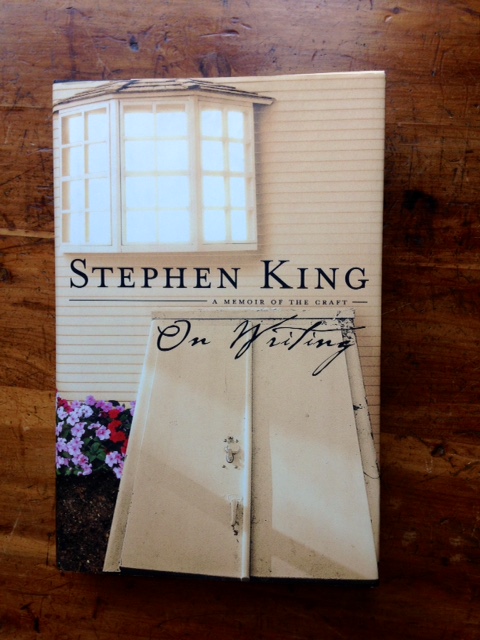
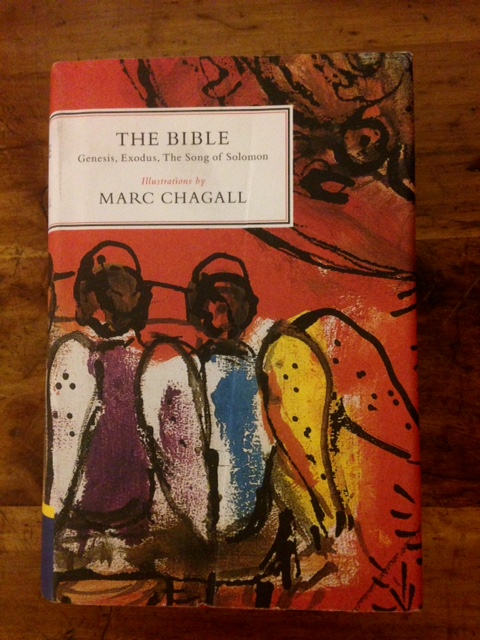
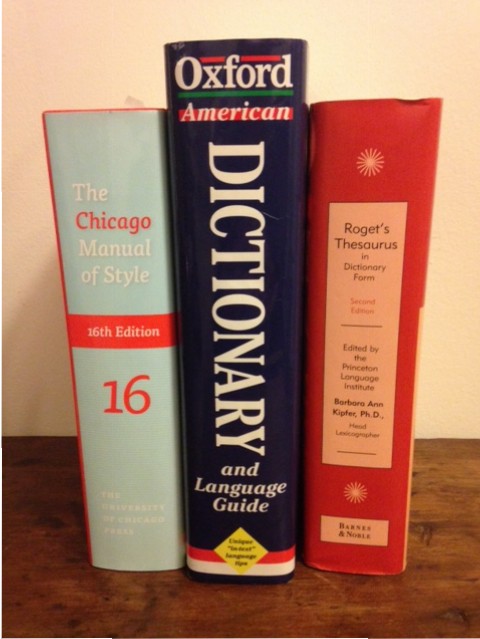
I can’t imagine a writer without some tools of the trade, even if those are only a good dictionary and a thesaurus, preferably a good manual of style as well. I share a few of my favorite resources.
Somewhere in my public life, I mentioned that I collect dictionaries. I have whole shelves of them, everything from slang to carnival jargon to common usage during the Civil War to books of insults and dirty words. I ordered all six volumes of the Dictionary of American Regional English—and then thanked my husband for his birthday present to me.
Writers are readers, by and large, and also word collectors. We tend to fall in love with words. Some writers make a career of writing about words as well as with them.
As a writer, some of your best material comes from your body. Using all of your senses, every day will infuse your writing with rich details and believable depictions of events and emotions.
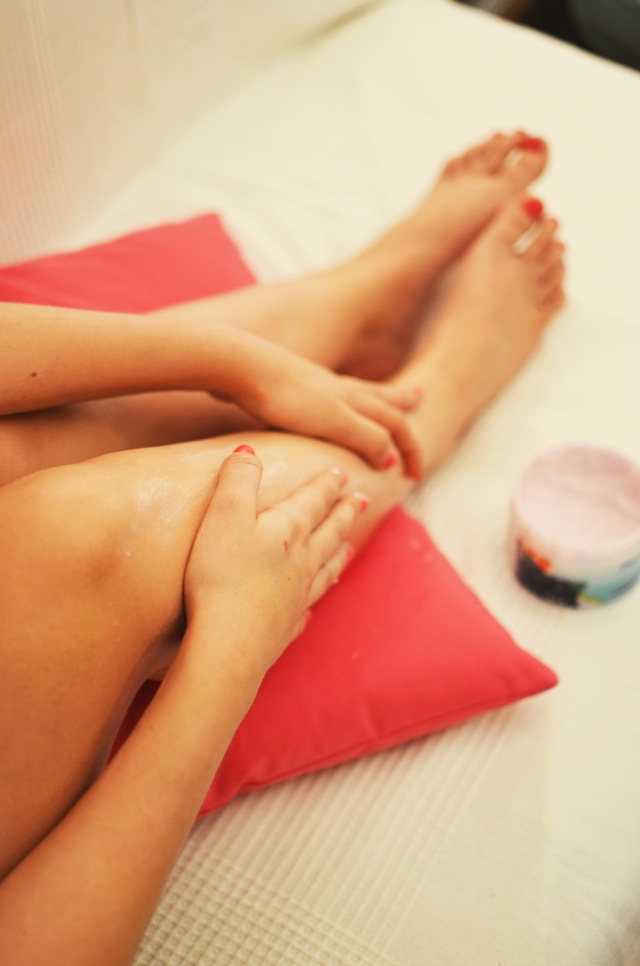
I’ll give you a concrete example. I love getting massages. In my story “Beautiful Bones,” published in the Connecticut Review, I conglomerated various massage experiences and settings to provide a detailed and sensuous description of a massage to accompany the recipients thoughts and anxieties before turning to magical realism at the end. I call this a case of direct application, in which a character is having the experience I drew upon to describe it.
But consider the use of indirect application: you could just as easily incorporate many massage moves into the description of a sex scene. Or consider the case of a waitress whose partner offers a foot rub after a long day at work.
For any experience,try to note as many of your senses as possible.
What happens when you are angry? What happens to your heart rate, breathing, stomach? Do you blush? Go white around the lips? Does your body tense? Which part(s)? What happens to you voice—everything from pitch to loudness to speed of speaking. Now consider someone you know well: how do you know when s/he is angry? What are the visual and auditory cues?
Food and drink are more than taste!
In fact, eighty percent of taste is actually smell. When olfactory cues are absent, people can’t tell the difference between bits of apple and bits of onion. And then there are the issues of temperature, texture, and spiciness. How complex is the experience?
For writers, everything is material.
Whether it’s a walk in the woods, giving blood, taking a taxi from the airport to a hotel, the frustration of tax time, or just being bored out of your skull, pay attention and use your experience.
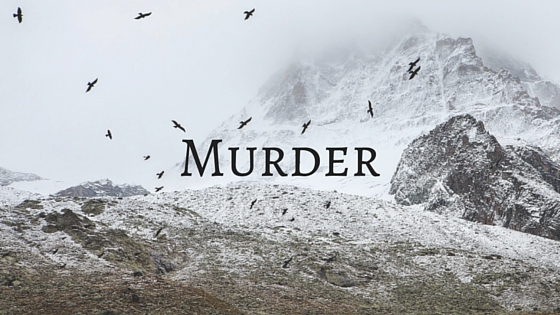
Crows and ravens have been popular in myth and literature for centuries–Odin’s Huginn (Thought) and Muninn (Memory or Mind) to Poe’s “Raven”–often with menacing depictions. Perhaps it’s because ‘murder’ has been the collective noun for a group of crows since the Middle Ages.
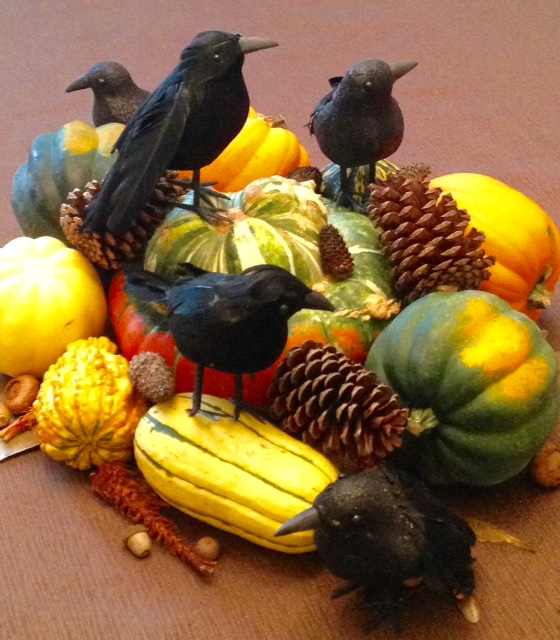
But I like crows! Every year they star in my autumn table.
Indeed, I like the entire corvid family of birds—crows, ravens, jackdaws, and rooks. I once took a two-week float and paddle trip through the Grand Canyon, and every campsite came equipped with a pair of ravens. Our guides warned us about their tricks. Even so, we were taken unaware when a raven landed a few feet away and started performing—hopping about, dragging first one wing and then the other in a beautiful raven dance. In the meantime, its partner was unzipping fanny packs and making off with bits of food and anything shiny!
Photo by Matteo Paganelli
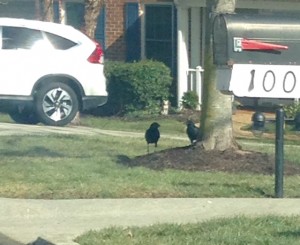
The only one that seems to hang out near where I live is the American Crow, featured in the March-April, 2016 issue of Audubon, along with articles about Common Ravens and a corvid cousin the Eurasian Jay.
The articles provide fascinating glimpses of these bird brainiacs and the research that delineates their amazing abilities. Corvids are among the smartest animals on earth. They can make and use tools, play tricks, teach each other new things, and hold “funerals” for their dead. With only one exposure, they can form memories of human faces to be trusted and faces to be feared. Not only do these memories last for years, the fear response is taught to others born after the original exposure, and long after the exposed birds have died.
Birds are in the reptilian line of the animal kingdom (who knew?) but relative to their body size, corvid brains are comparable to primates. They appear to have cognitive abilities comparable to a four- or five-year-old child.
Crows are survivalists and exploiters who thrive in urban and suburban environments. According to the Audubon article, “The crows in your neighborhood know your block better than you do. They know the garbage truck routes. They know which kids drop animal crackers and which ones throw rocks. They know the pet dogs, and they might even play with the friendly ones. If you feed them, they probably not only recognize you but your car as well, and they might just leave trinkets in return.”
They’ve been observed putting hard nuts in the street to be run over by cars and then collecting the cracked nutmeats after. They cache food, hide their caches, and steal from each other.
A murder of crows may not sound as appealing as an exaltation of larks, but I find them more interesting!
TAKEAWAY FOR WRITERS
Why use tired images of crows in a cornfield or birds on a wire? When a mention of birds fits your story, infuse your writing with much more interesting bird behaviors!
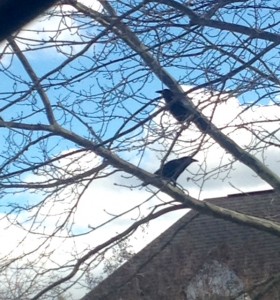
So, given how smart crows are, how long will it be before these learn that I only want to take pictures? I’m waiting for the day they let me come close!
I once took a class titled “Writing Fiction Based on Works of Art,” taught by Susan Hankla at the Virginia Museum of Fine Arts Studio School. I cannot share with you the great assignments from that class (those being the intellectual property of Susan Hankla) but I can discuss the concept.
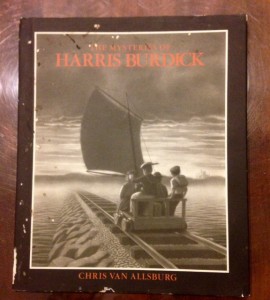
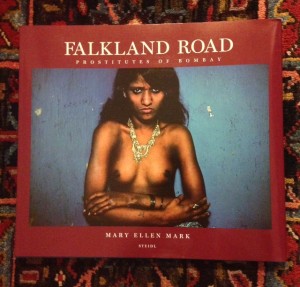
Poets, musicians, painters, novelists, playwrights, sculptors—all sorts of artists—have a long history of drawing inspiration from something created in another medium. As a writer, think paintings, sculpture, architecture, music, and nature.
Several of my publications grew out Susan’s class assignments, what I am calling cross-over fiction. “The Naked Truth” started with a painting of a nude (not this one)
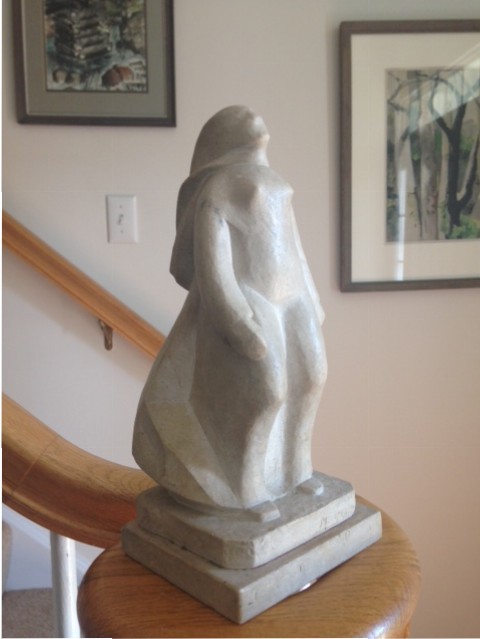
“Buddha Remote” started with a video display and “Not Mechanically Inclined,” a sculpture (also not pictured here).
By Michel wal (Own work) [GFDL (http://www.gnu.org/copyleft/fdl.html) or CC BY-SA 3.0 (http://creativecommons.org/licenses/by-sa/3.0)], via Wikimedia Commons
Three images of Elvis inspired “Love Me Tender.”
Not this photo of Elvis, 1954. Photographer unknown (commercial work-for-hire) derivative work: Dockino (PresleyPromo1954.jpg) [Public domain], via Wikimedia Commons
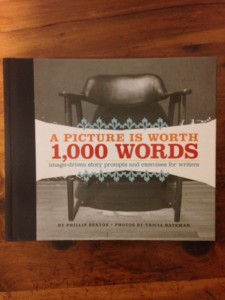
Writing cross-over fiction is a challenge and I urge you to accept it. Get thee to the VMFA, to other museums, to galleries and art shows, parks and the great outdoors. At the very least, find books of provocative images to stimulate and inspire your creativity!
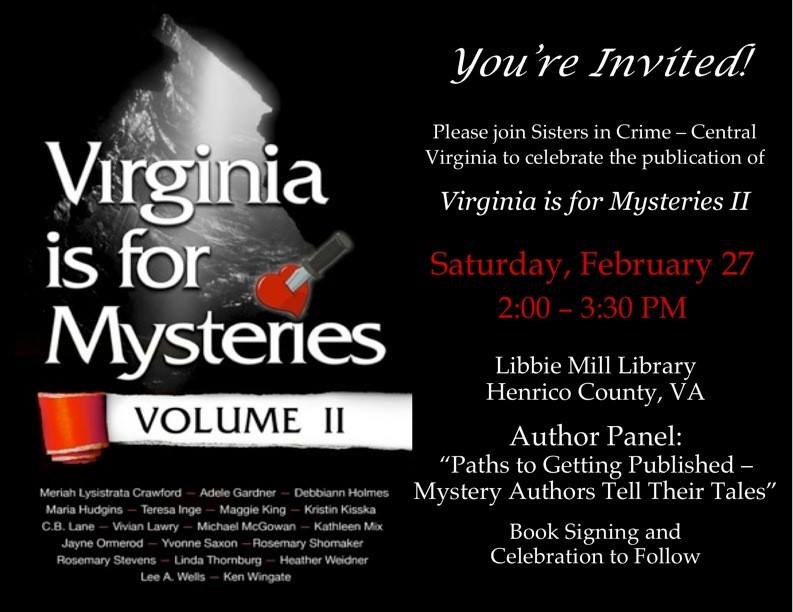
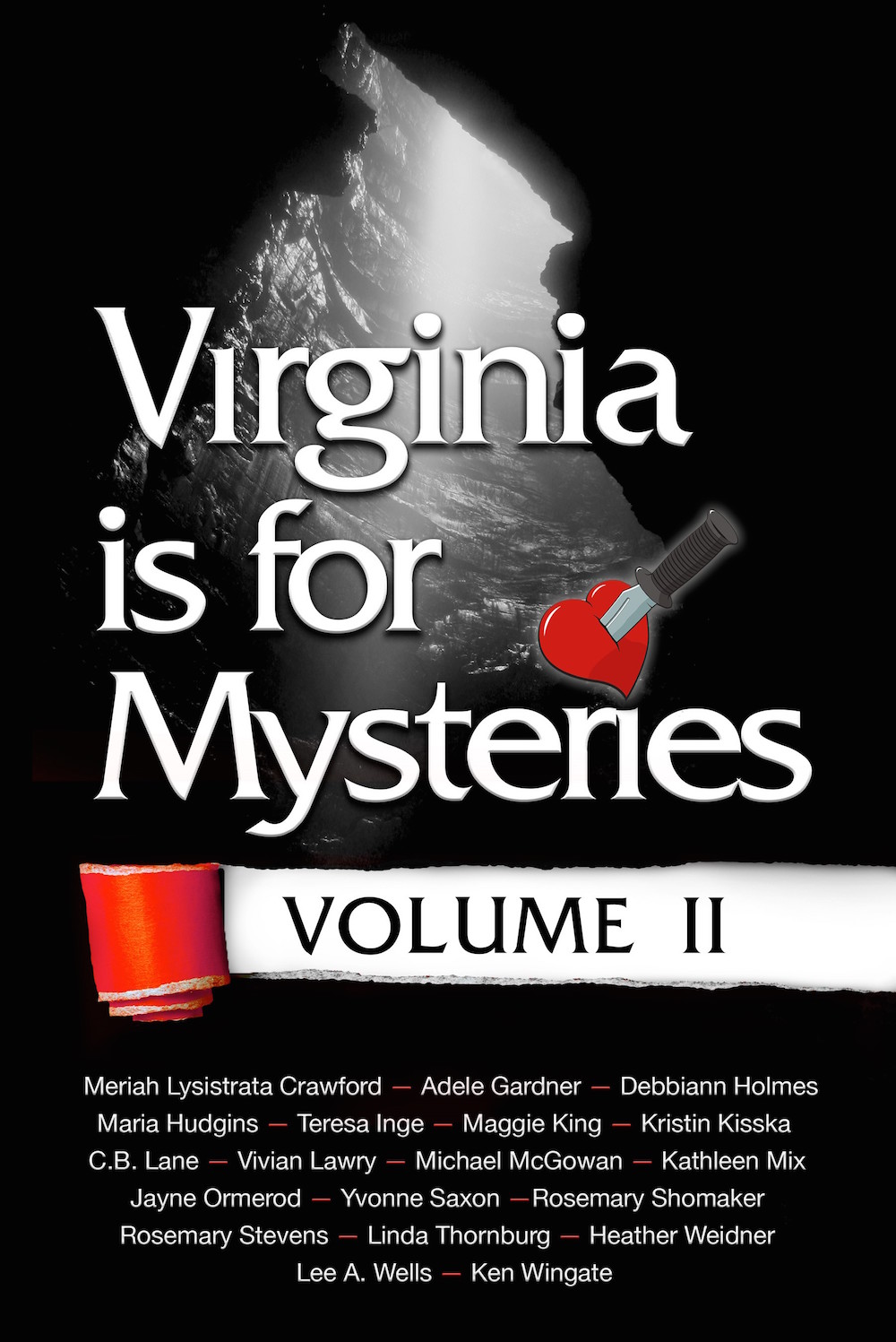
I’m honored to have my story “War and Murder at Nimrod Hall” in the anthology. My story is set at historic Nimrod Hall. Over on the Virginia is for Mysteries blog, I shared how Nimrod Hall inspired me.
I can’t imagine a writer without some tools of the trade, even if those are only a good dictionary and a thesaurus, preferably a good manual of style as well.
Most of us have much more than the basics, however. I often set stories in times that are not now. Therefore, in order to get the details needed to enrich the prose and draw the reader into the period, I often rely on bits of dialogue about what something costs, or what’s being eaten or worn.
A few of my favorite references
For the cost of things, I turn first to The Value of a Dollar.
The Value of a Dollar, Grey House Publishing
The most recent volume is 1860-2014, and new it costs $155. I first came across this book in the reference section of a library in Clifton Forge, VA, when I was researching my novel Nettie’s Books, which is set 1930-1935. I was delighted to learn that ham was 8¢ a pound back then, and that Sears was selling 25 Hershey’s 5¢ Almond Bars for $1. I wanted that book! The price of a new one was prohibitive, but by dropping back to the previous edition (pictured above), it was very reasonable. Indeed, I just ordered the one that covers 1860-2009 for $7.91 plus shipping.
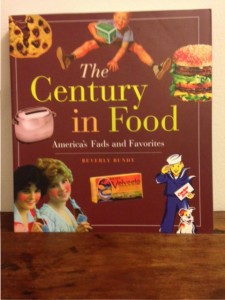
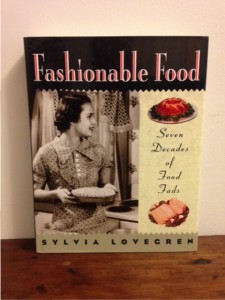
As you know from other parts of this website, I collect cookbooks. But I also collect food reference books for writing, such as the two pictured here.
The Century in Food
Fashionable Foods
Being able to put waffle irons, Kool-Ade, Spam, and Jiffy Biscuit Mix in the right period is highly tempting! Among other things, such references may trigger childhood memories for readers and help draw them in.
In addition, I find it very helpful to have good references for popular culture and slang. In fact, I have several of each. I often write stories set in Appalachia some decades past, when saying an overweight woman wears clothes so tight she looks like ten pounds of potatoes in a five-pound sack can create just the right vivid image of the woman in question as well as giving insight into the speaker. A character saying, “What a hoot!” is clearly older than the one who says, “Whatever.” The two books pictured here are rather specialized ones, but more comprehensive options are readily available both new and used.
Remember That? and Butter My Butt and Call Me a Biscuit
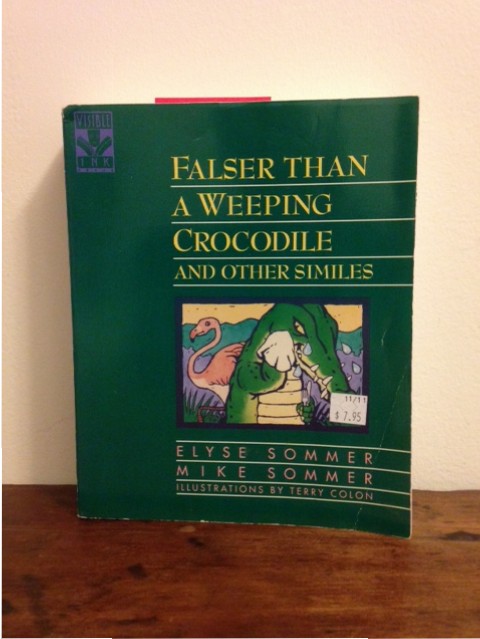
I revel in dipping into these and other references even when I’m not researching a particular writing project. Some of my favorites don’t fall into any of the above categories, but they are great stimulants to striving for better, richer language.
Falser Than A Weeping Crocodile And Other Similes
I was a reader before I was a writer (weren’t we all?) and for me, these are great reads! Advice to writers: choose research and writing tools you can enjoy.
What is at stake for your character(s)? If nothing important is at risk, why should the reader care what happens? Why read on?
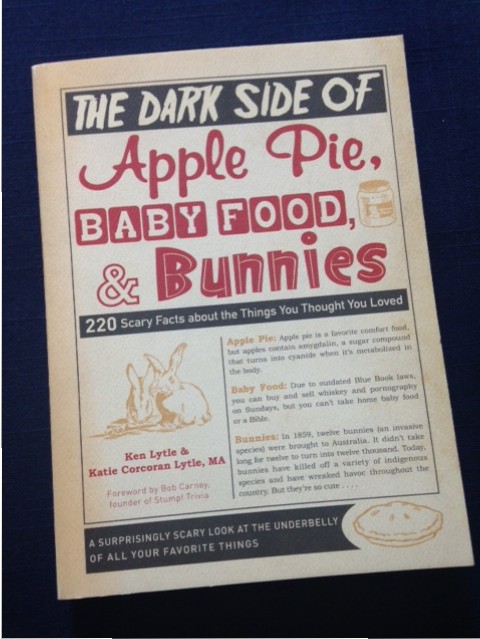
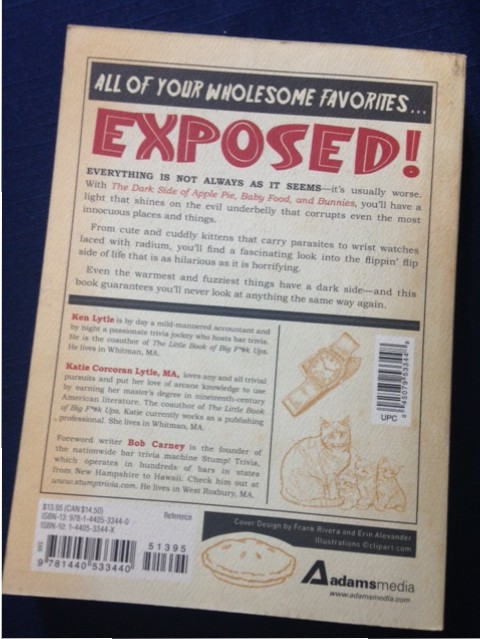
The Dark Side of Apple Pie, Baby Food, and Bunnies
Virtually everything has a dark side. Finding it is well worth a writer’s time. One of the maxims for writing tension and conflict is to make a situation bad and then make it worse.If you can do this in an unexpected way, so much the better.
For example, a single strand of hair can tell scientists not only a person’s gender and ethnicity but also where s/he lives, what’s been eaten, and whether the person has been taking drugs or ingesting arsenic. Hair grows up to .02 inches (.5 mm) every day, so the record can extend over several months and tell not only what but when!
For another example, consider deadly diamonds. Commercial services are available to extract carbon from cremated human remains and turn it into a diamond using intense pressure and high heat. Up to 100 diamonds can be made from a single dead body. Consider the possibilities! Is it love? Or is it a way of flaunting the fact that she got away with murder? What if the dead body was the murderer and someone decides to present a diamond to the family of each of the victims?
If you think about it, you could find a dark side to the Air Guitar World Championships (September in Oulu, Finland) or the Woolly Worm Festival (October in Banner Elk, North Carolina).
What? You say your character is already starving? So, have him stumble into a potato field and eat green potatoes, sprouts, stems and leaves—which contain poisons that can be lethal. (Potatoes, like tomatoes, are members of the deadly nightshade family.) Bottom line: find the darkest side and make it even darker.
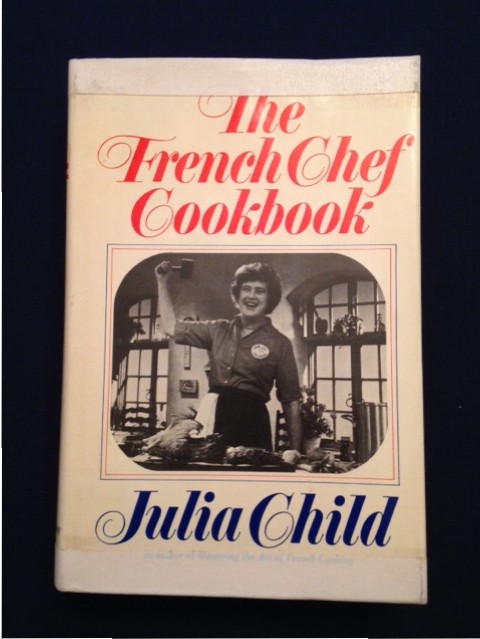
On February 11, 1963, WGBH-TV in Boston, Massachusetts launched “The French Chef,” featuring Julia Child. By the time The French Chef Cookbook was published in 1968, she was an international icon.
The French Chef Cookbook by Julia Child
As far as I know, she is the only chef whose entire kitchen has been reassembled as a display at the Smithsonian.
“Writer” probably isn’t the first word you associate with Julia Child, although she authored or coauthored eighteen books. The success of “The French Chef” launched a whole genre of TV shows about cooking. If you visit the PBS website, you can find an alphabetical listing of cooking shows on Public Television. I counted 50 from letters P through Z!
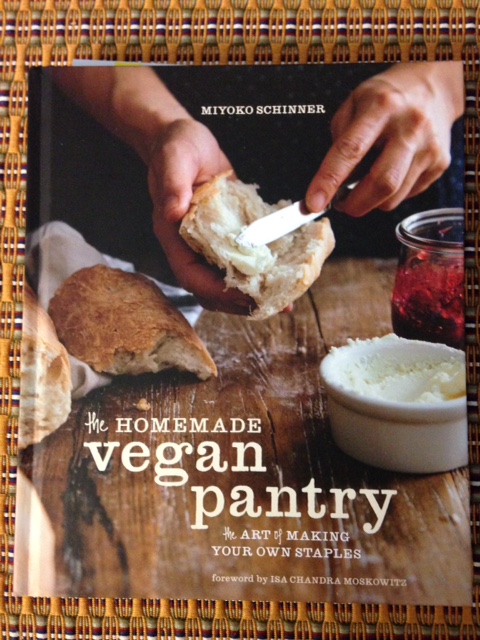
Overstating the breadth and depth of Julia Child’s influence—both culinary and cultural—would be difficult as sprinting up Mt Everest! Her kitchen identity is French, complete with butter, cream, cheese, and eggs, and yet vegan chef and restauranteur Miyoko Schinner acknowledges her debt to Julia Child and Mastering The Art of French Cooking.
The Homemade Vegan Pantry by Miyoko Schinner
Heads up, writers!
Julia Child’s reach would have been much more limited if not for her personality. She was witty, appealing, with distinctive voice and body language. Your assignment: go on-line to view clips of her slapping the poultry around and rattling off one-liners, and then capture her in written words! And when you create characters for your stories, try to make them as compelling and vivid as Julia Child.
Everyone has a body image. It’s how you feel about your body and all its parts as well as how you think other people view you. Body image isn’t something you’re born with, but you acquire one pretty early on—starting with what family and friends say and do, and then from how what you see in the mirror compares to what you see reflected in the media and what your culture values.
People who accept the way they look and feel good about their bodies (most of the time) have positive body images. Beyond looks, body image is related to how you feel physically and what your body can do. Some say that a positive body image must also reflect reality. Consider whether this is what you want for your character(s).
It might be effective to have a serious body defect and/or distortion of perception. Interesting (to me) is that research indicates that (1) women of all ethnic groups have more issues with body image than men do, (2) women think men are attracted to thinner ideals than men actually are, and (3) men think women are more attracted to more muscular body builds than women actually are. In the extreme, distorted body images are associated with anorexia, bulimia, and exercise disorders. As a writer, consider the value of misery!
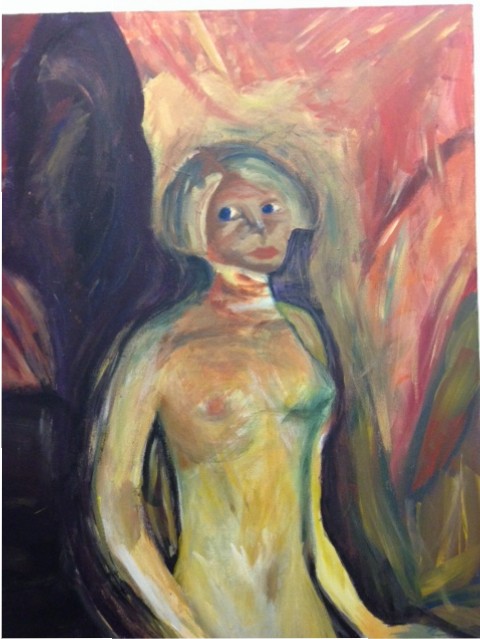
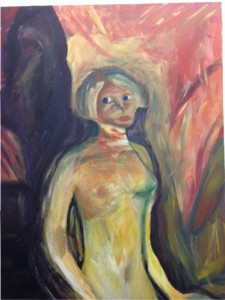
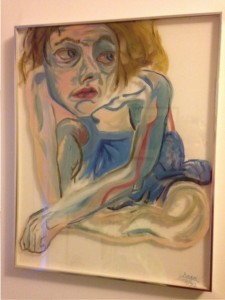
Although body image tends to be established early and to solidify during adolescence, it isn’t static. Artist’s self-portraits often reveal a great deal about how they view themselves at a given time. Consider these two self-portraits by the same artist, two years apart. What seems to have happened to body image?
I recently wrote a memoirin which I mentioned illness turning me into a person I never meant to be. All sorts of trauma can have that effect. Think of the opportunities!
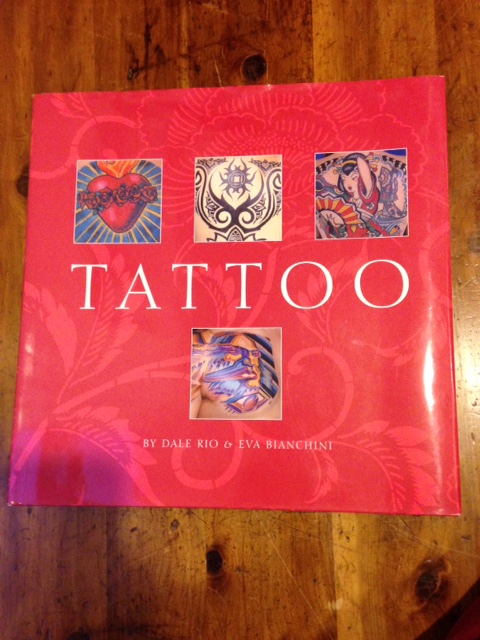
Of course, we seldom live au naturel. Men have haircuts and facial hair, maybe lifts in their shoes, and other bits for more adventuresome tweaks—maybe hair transplants. Women, on the other hand, have haircuts and hair color, corsets or Spanx, shoe choices and jewelry, makeup, and all manner of accessories. In the extreme (my judgment), they go for tummy tucks, face lifts, breast augmentation (sometimes reduction) and so forth. What about your character? Recently, in the US, tattoos have been coming into their own. I was surprised recently to learn that Richmond, VA, is one of the most tattooed cities in the country.
Would your character get a tattoo? Why or why not? Where? What? Under what circumstances? Is the tattoo public or private?