
PUMPKINS: THE MEATIEST FRUIT

Pumpkin patch

Having consumed all the pawpaws, I’ve turned to pumpkins. Pumpkins, too, are a native fruit. (Yes, botanically, pumpkins are fruits, a type of berry known as a pepo, to be precise. But cooks and diners commonly class pumpkins with vegetables—along with squash, tomatoes, eggplant and other “vegetables” that have their seeds on the inside—allowing pawpaw to be the largest native food that is considered and eaten as fruit.)

Pumpkin History

Three sisters: pumpkins, corn, and beans
Three Sisters by Garlan Miles

Pumpkins and winter squash are native to the Americas, from the southwestern part of what is now the United States through much of central and South America.  People have cultivated pumpkins at least since 3500 B.C.E. Corn and pumpkins are the oldest known crops in the western hemisphere. 

And who hasn’t heard about the Cahokian, Muscogee, and Iroquois “three sisters” system of companion planting: corn, beans, and squash/pumpkins grown together to the benefit of all.

Native peoples baked pumpkins whole in wood ashes, stewed them, and sometimes made a sort of succotash with beans and corn. Pumpkin was a popular ingredient in meat stews. They roasted long strips of pumpkin on an open fire until edible 

Dried pumpkin
Dried pumpkin

Roasted seeds were (and are) eaten as a delicacy.  In fall, people cut pumpkins into rings and hung up the strips to dry, later to grind the strips into flour to add to bread. 

Perhaps more unexpectedly, Native Americans dried strips of pumpkin flesh and wove them into mats.  And, they made a fermented drink from pumpkins. (Researchers have recently found that fermenting pumpkin reduces insulin-dependent sugars, making it a particularly suitable beverage for diabetics.)

Native Americans introduced colonists to pumpkins and they, too, relied heavily on pumpkin for food as evidenced by this poem (circa 1630):

For pottage and puddings and custard and pies,
Our pumpkins and parsnips are common supplies:
We have pumpkins at morning and pumpkins at noon,
If it were not for pumpkins, we should be undoon.

Anonymous Plymouth Plantation colonist

Early colonists used pumpkins as the Native Americans taught them, also making pumpkin butter (similar to apple butter) and pumpkin syrup (as a substitute for molasses). 

During the Revolutionary War, they made pumpkin sugar! (Pumpkin, Pumpkin, Anne Copeland) FYI: at one time, the Port of Boston was called Pumpkinshire.

Pumpkin pie

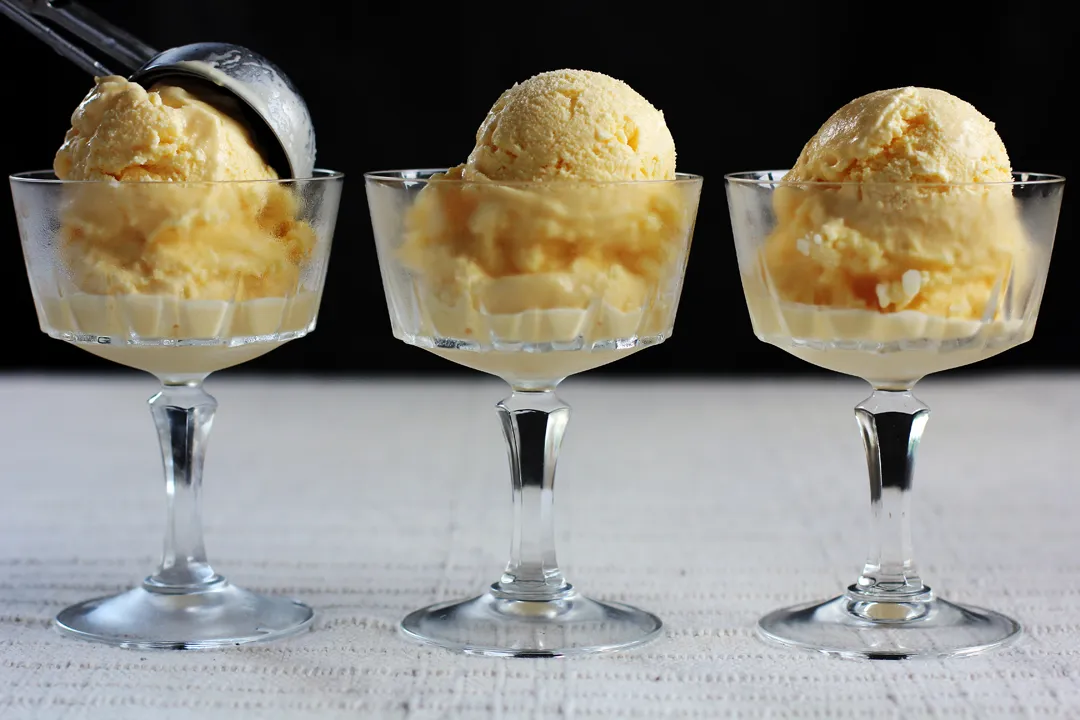
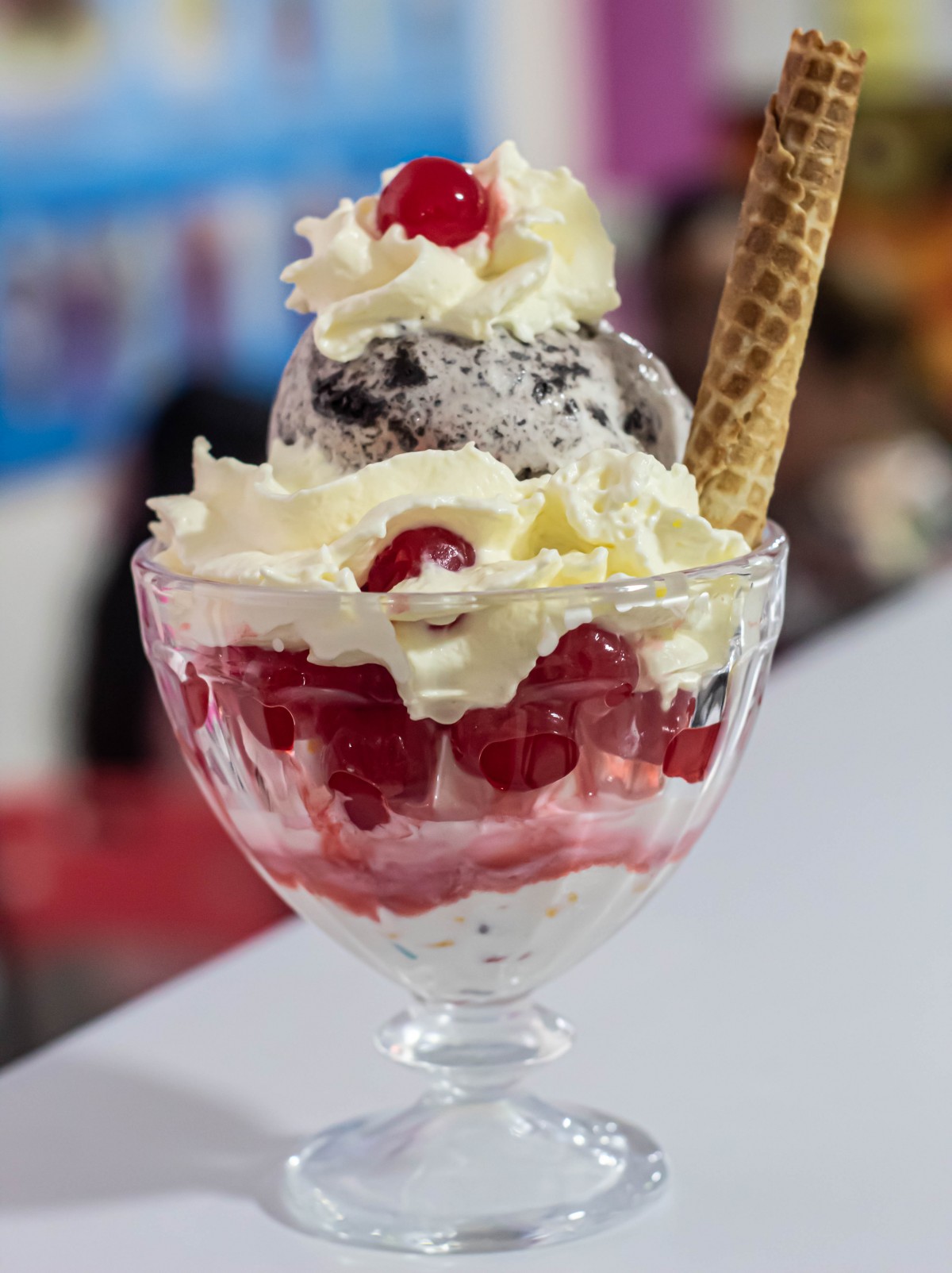
Now, eating pumpkin is more seasonal. Come October, one can easily find pumpkin muffins, bread, meatloaf, soup, ice cream, and drinks. Thoughts of pumpkin pie stir. (FYI, the canned product sold for making pumpkin pies actually is Cucurbita moschata, a species of winter squash. The FDA does not distinguish among varieties of squash when labeling canned foods.) 

Pumpkin Folklore

The Pumpkin Effigy 1867
The Pumpkin Effigy“, from Harper’s Weekly, November 23, 1867

Although once an important food source, pumpkins are now more prominent in Halloween and Thanksgiving decorations. 

Jack-o-lanterns originated in Ireland. According to legend, Stingy Jack fooled the devil so many times that when Jack arrived at the gates of hell, the devil wouldn’t let him in. Instead he sent him off into the night with a burning lump of coal, which Jack put into a hollowed out turnip and has been roaming the Earth ever since. 

“If you knew the sufferings of that forsaken craythur, since the time the poor sowl was doomed to wandher, with a lanthern in his hand, on this cowld earth, without rest for his foot, or shelter for his head, until the day of judgment… oh, it ‘ud soften the heart of stone to see him as I once did, the poor old dunawn, his feet blistered and bleeding, his poneens (rags) all flying about him, and the rains of heaven beating on his ould white head.”

Dublin Penny Journal 1836
Does this count as cannibalism? Jack-ibalism?

Immigrants to America continued the tradition of making jack-o-lanterns but switched to easier to carve pumpkins.  The influx of Irish immigrants in the 18th and 19th centuries greatly increased the popularity of Halloween celebrations. They adapted the customs and traditions of Samhain to their new homes in North America, including dressing in costumes, trick-or-treating, pranking houses, and carving jack-o-lanterns.

Pumpkin Varieties

Imagine a pumpkin. Chances are, what came to mind first was a “typical” pumpkin, 12-18 pounds, oblong and orange, as commonly seen around and about in October, suitable for painting and carving. But consider the variety!

Jack Be Little Pumpkins
Jack Be Little

One of the most popular miniature pumpkin varieties is Jack Be Little, orange, about 3” in diameter and 2” high. Typically used for fall decorations, they’re also edible and grow well on trellises, making them ideal for small growing spaces.

Baby Boo Pumpkins
Baby Boo

Baby Boo are small white pumpkins, also suitable for decorating and eating. Each plant produces about 10 pumpkins. Extreme sun and frost don’t affect growth adversely. 

At the other end of the continuum, you’ll find giant pumpkins: in 2022, a pumpkin set a new North American record, weighing 2,560 pounds. This was at the 49th Safeway World Championship Pumpkin Weigh-Off in Half Moon Bay, California, though Travis Gienger grew the pumpkin in Minnesota. 

Half Moon Bay considers itself the pumpkin capital of the world because local growers produce more than 3,000 tons of pumpkins each year. But in 2021, Stefano Crutupi, an Italian grower, set the world record for giant pumpkins with a 2,703 pound pumpkin.

Pumpkin Celebrations

Legoland features jack-o-lanterns made of Legos at their annual Brick or Treat Halloween Festival.

To truly appreciate pumpkins, go to a pumpkin festival. My home state of Ohio hosts the Circleville Pumpkin Show—“The Greatest Pumpkin Show on Earth”—always held the 3rd Wednesday through Saturday in October. There is, of course, every pumpkin food and beverage you might want available for purchase. Plus you can enjoy a giant pumpkin weigh-in, pumpkin carving demonstrations, and the crowning of Little Miss Pumpkin Show. And concerts for music lovers (this year featuring DJ Tune Stoned and The Poverty String Band).

The New Hampshire Pumpkin Festival boasts the largest display of lit jack-o-lanterns every year. At the Great Pumpkin Farm in Clarence, NY, visitors can “hunt zombies” in paintball tournaments. Stone Mountain, GA has an annual Play By Day / Glow By Night Pumpkin Festival at the end of October. Milton, WV hosts an annual Pumpkin Park at the beginning of October.

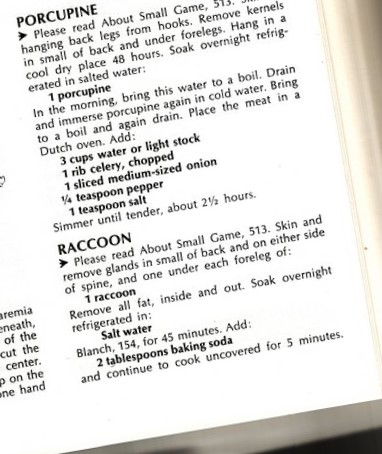
Truth be told, once upon a time, I used canned pumpkin for cooking and fresh pumpkins only for jack-o-lanterns . But when I had three daughters, and thus three pumpkins, I couldn’t bear the waste, and started collecting pumpkin recipes. I once thought of writing The Great Pumpkin Cookbook, but never got beyond a notebook full of clippings. I lost momentum when I found the following:


But I will share one pumpkin soup recipe, I made up based on a side dish my son-in-law made.

Savory Pumpkin Soup
1-2 cloves chopped garlic 
Chopped onion
Vegetable or olive oil to sauté
Equal amounts of pumpkin puree and diced canned tomatoes
Vegetable or chicken broth
Optional: your favorite herb or spice, such as basil, curry, etc.
Blue cheese or feta cheese

Gauge the garlic and onion on the basis of your taste and the amount of soup you are making. (For 15 oz. cans of tomatoes and puree, I use 1 clove of garlic and half a medium onion.) Sauté garlic and onion till soft. Add the pumpkin and tomatoes, and enough broth to make a soup of the consistency you like. If using additional seasonings, add now. Simmer to blend.  When hot, add cheese to taste and stir to melt.

BOTTOM LINE: there’s a lot more to pumpkins than decorations and pie!

Pumpkin patch
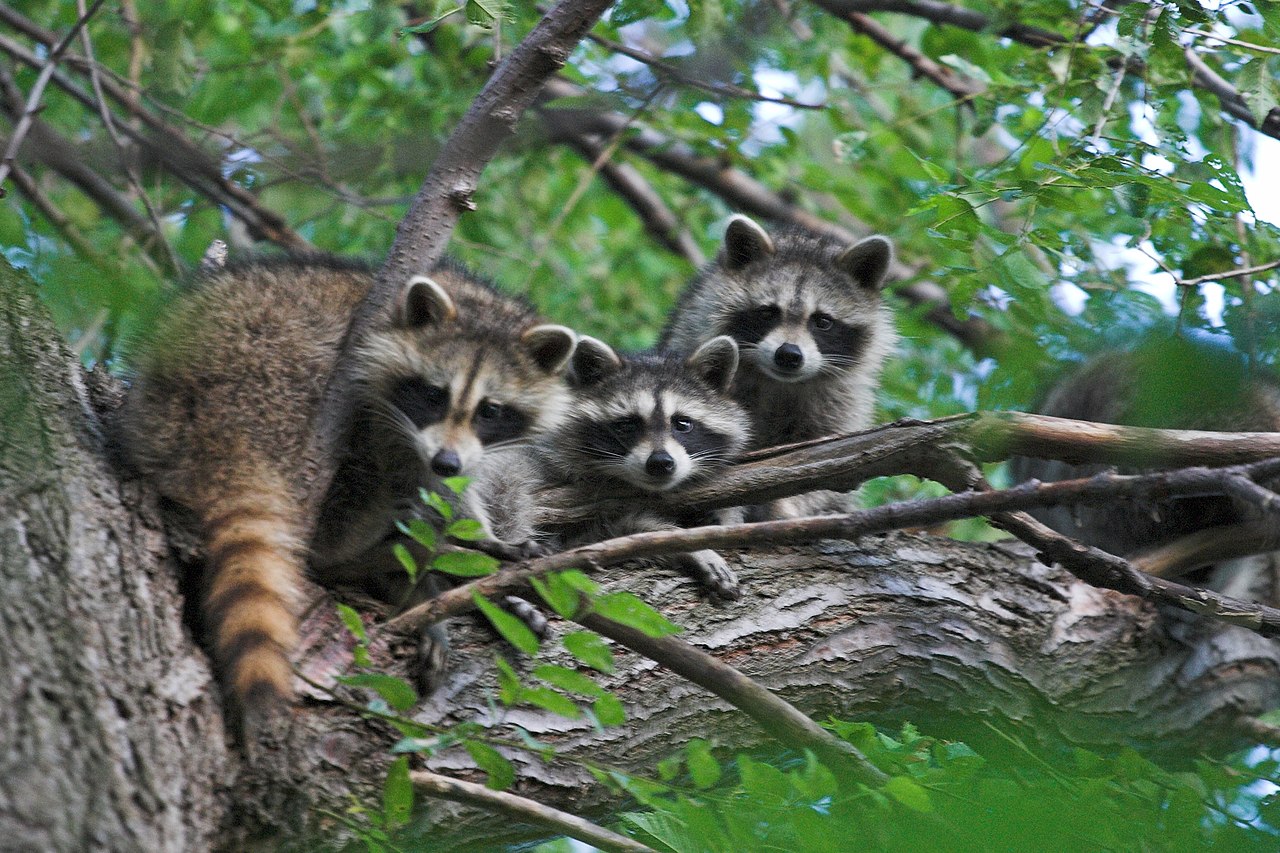
You never know what you might find in a pumpkin patch!

HOW SWEET IT IS!

Periodically, a friend of a friend gifts me with a few pawpaws. Pawpaw (Asimina triloba) is a little known and (IMHO) not a pretty fruit. They are especially not pretty when left in the fridge during a week at the beach.

Pawpaws

These are what remain of my most recent gift, received two days before I left town. Surprisingly, five of them are not just edible after a week in the fridge; they’re delicious. Which brings me to wax poetic—or at least, try to—about this fruit native to Virginia and most of the eastern United States and southern Canada.

Pawpaw seeds

For one thing, it’s the only fruit native anywhere in North America that resembles tropical fruits. It is also the largest edible fruit native to North America. Open a pawpaw and you’ll find a sunshine-yellow pulp dotted with dark brown/black seeds. The flesh is the consistency of pudding and tastes like some combination of banana, mango, and pineapple. What’s not to love?

In 1541, a Portuguese explorer who accompanied explorer Hernando de Santo wrote, “The fruit is like unto Peares Riall [pears royal]; it has a very good smell and an excellent taste.”

Pawpaws are high in vitamin C, magnesium, iron, copper, and manganese. They are a good source of potassium and several essential amino acids, and they also contain significant amounts of riboflavin, niacin, calcium, phosphorus, and zinc.

I eat it “as is” but people who have enough to save for later can freeze the flesh for baking, or make it into preserves. Pawpaws will not ripen if plucked from the tree too early, but unripe pawpaws can ferment into a sweet wine that pawpaw connoisseurs highly prize.

Pawpaw seeds

And about those seeds: as the largest edible fruit native to North America (5-16 oz., 3-6 inches long), there is plenty of room for seeds. The seeds are reminiscent of lima beans in shape, and adorn the flesh in two rows, 10-14 seeds per fruit. Each seed is 1/2 to 1-1/2 inches. Reputedly, pawpaws grow easily from seeds, but I’ve never tried. In the wild, pawpaws send out suckers, creating the “pawpaw patch” of song. Pawpaw cultivators frequently grow new trees from grafts and can produce fruit up to a pound and a half in size.

When sucked clean, the seeds feel satin smooth. One might be tempted to carry one as a lucky charm or worry “stone.”  I can imagine these seeds used in children’s games: money, tokens… But if one chooses to play with dry pawpaw seeds, be aware that dry seeds won’t germinate.

Unlike most fruit trees, pawpaws do not attract bees for pollination. The flowers attract carrion flies and beetles. Pawpaw leaves are the only host for zebra swallowtail butterfly larva.

Pawpaw History

If you aren’t familiar with pawpaws, you aren’t alone. You might know them as a poor man’s banana, Indiana banana, prairie banana, frost banana, custard apple, fetid-bush, or bandango. They aren’t easy to store or ship and so haven’t been developed as a commercial food until recently.  Food scientist Neal Peterson is one of many pawpaw enthusiasts who has spent decades breeding and cultivating pawpaws to make them commercially viable, greatly widening their availability.

Pawpaw cross-section

But they were a key component of American Indian diets; indeed, the Shawnee even had a “pawpaw month” (ha’siminikiisfwa) when they harvested and preserved pawpaws. It was a cultivated food for many tribes along the Eastern Seaboard.  Archaeologists have found huge quantities of pawpaw seeds and remnants at the sites of the earliest Native American settlements all along the east coast of North America.

A wise move, because pawpaws are incredibly nutritious. 

At least two U.S. presidents favored pawpaws: reportedly, they were George Washington’s favorite dessert. Thomas Jefferson grew pawpaws at Monticello and had the seeds shipped to friends in Paris when he was the American ambassador to France.
Journal entries document that pawpaws fed the Lewis & Clark expedition on their return trip in the fall of 1810.  In fact, pawpaw fruits and nuts saved the expedition from starvation and death when in western Missouri their rations ran low and no game was to be found. 

Our party entirely out of provisions. Subsisting on poppaws. We divide the buiskit [sic] (biscuits) which amount to nearly one buisket [sic] per man, this in addition to the poppaws is to last us down to the Settlement’s which is 150 miles.

William Clark (Lewis & CLark Expedition)

For a time, many European settlers viewed the pawpaw as a marker of racial difference, according to food historian Rebecca Earle. As ideas about racial and societal divides developed and codified, white settlers often dismissed pawpaws. Rejecting “different” foods, including pawpaws, as fit only for “different” races, became part of the colonial identity.

Their hardiness and tendency to grow wild made pawpaws a common food source along several areas of the Underground Railroad.

During the Great Depression, people often ate pawpaws as a substitute for other fruits, hence their nickname “poor man’s bananas.” Though the pawpaw continued to be an important fruit in the North American diet, interest waned after World War II with the introduction of other fruits. Racist views of the pawpaw’s place in the American diet contributed to its marginalization. As Dr. Devon Mihesuah, a scholar of Indigenous foodways, says, pawpaws haven’t been forgotten so much as “ignored, disliked, and unavailable.”

Pawpaw cultivars in Michigan
Pawpaw orchard in Michigan
Joe Grant Pawpaw
by Cbarlow

Nowadays, most pawpaws are very difficult to find outside of a few local farm markets, though some breeders are working to change that. The Cattawba Nation has started a food sovereignty program, including planting a pawpaw orchard. Every year, the Ohio Pawpaw Festival celebrates all the possibilities of this uniquely American fruit.

Although not a place name in Virginia, many states have named towns and villages after pawpaws, including Paw Paw, WV; Paw Paw, KY; Paw Paw, OK; and numerous others towns in Illinois, Ohio, and Indiana. In Michigan, the Paw Paw River drains into the Paw Paw Lake and Little Pawpaw Lake, skirting by the town of Paw Paw. Natchitoches, LA, translates to “pawpaw eaters,” a name given by the Caddo.

Folklore 

In the fall, Buck Run bananas [pawpaws] are ripe – in the frost fall, a wise man takes a wife.

Tennessee wisdom
Pawpaw cluster

Rural populations relied heavily on pawpaw fruit as a food source, so naturally other parts of the tree figured heavily in medicine and folklore traditions. In some communities, people wore pawpaw seeds as an amulet to prevent disease. Shawnee and Catawba artisans used pawpaw bark fiber to make fishing nets and lines, weaving designs for luck and good fish catches into the nets.

Pawpaws offered powerful protection against Ozark Witches. Ozarkers used many means to thwart witches, especially to protect the home. One method was driving several tiny pegs of pawpaw wood into the doorsill.

The (supposedly) powerful Pawpaw Conjure used wood from the pawpaw tree:

This charm could be employed if the witch master could obtain the witch’s nail parings, a lock of hair, a tooth, or a cloth with her blood on it. The hair, nail parings, or other personal effects were stuck to the end of a wooden peg with beeswax. The witch master took this peg out into the woods at midnight, bored a hole in the fork of a pawpaw tree, and drove the peg into the hole. The witch, and her powers, were expected to dwindle.

owennativefoods.com

BOTTOM LINE: Get thee to the pawpaw patch. I recently learned that Richmond has a pawpaw walk along the river, free for the taking!

Pawpaw Patch song

HOG HEAVEN

Papua New Guinea was long isolated from the rest of the world. The island is mountainous, and tribes located in tiny villages have warred with one another for five hundred generations. Even today, almost a thousand languages can be found (approximately 12% of all the languages spoken in the world). It is a wild place, where the outside world has had little influence, and cannibalism may be practiced, though there is some debate on how widespread the custom is today.

Actually, the only tribe which may still practice cannibalism is the Korowai tribe (a.k.a. Kolufu) in south-eastern Papua/south-eastern part of the western part of the New Guinea. But still, that is one marker of how very different human societies can be.

Archeological records suggest that pigs were introduced to New Guinea between 2,500 and 10,000 years ago, by way of a land bridge to Asia that has since disappeared.  Pigs play important roles among the peoples of Papua, especially so among those living in the Central Highlands. 

Apart from pigs and deer (originally brought in by the Europeans) there are not many mammals on these islands.  So, yes, pigs are bred for their meat, but they are rarely killed just for eating.  

The Pig Culture

In a section known as Kaulong, a pig culture prevails. The people believe pigs and humans are on a single continuum of existence, such that pigs may behave more or less like humans and humans may behave more or less like pigs.

Villagers say, “Pigs are our hearts!” Young pigs are treated as pets: they share their owner’s cooked food, are ritually named and baptized, are given magical treatments for illness, and women pre-chew tubers to feed to weak piglets.

The men own the pigs.  Although there is some assertion that women or children (rarely) own a pig, the counter argument is that the man has “given the pig into their care” and thus they speak of it as their own.

Raising pigs is an important responsibility, and there is no argument that women are the ones who care for these precious animals.

At birth, powdered lime is blown into the nostrils of the piglet to make it forget its natural mother and cause it to bond with its human one. 

Pigs are named, and share the women’s sleeping quarters. The women pet and handle them. Occasionally, small pigs unable to compete against siblings or orphaned piglets were breast fed by nursing mothers.

(If you search for “woman suckling pig” online, you can find images: a Huli woman breast feeding a child and a piglet the same time; and a Chimbu woman in the Eastern Highlands of Papua New Guinea breast feeding a piglet.) 

Ritual pig mask, Sepik region, Papua New Guinea

Pigs as Part of Ceremonies

Pigs are sacrificed in some places to appease the ancestral spirits, and they play central roles at major rites of passage: births, weaning of children, initiation of boys, a girl’s first menstruation, weddings, and funerals.  The most frequent occasion for eating pig meat is a funerary cremation.

Pig killing/eating accompanies many undertakings, such as house building and boat building.

The Korowai are also known for building raised houses that fascinate architects.

Much feasting accompanies festivals in which local men of influence match themselves in prestige competitions.

Pigs are exchanged at peacemaking ceremonies after violent disputes. 

A special occasion at which pig meat is eaten every day for weeks on end by men, women, and children, is during the major pig feasts, held at regular intervals. 

There are two exceptions: a pig which is sick, and a pig which has been stolen. Such pigs would be consumed as soon as possible, without the usual ceremony. 

Pigs for Status and Trade

Pigs are important symbol of political and social power.  The more pigs an individual has, the more pigs he can give away, leading to bigger feasts and a higher social status.

Pigs are the main dowry offered in exchange for brides.  

The most valuable pig to own is a “tusker.” These are pigs which have had their upper canines removed by a specialist, so that their lower canines can grow unimpeded, sometimes—after ten or twelve years—turning in a full circle to re-enter the lower jaw. After the ceremonial removal, the owner will use spells and all-night ceremonies to enhance that growth.

Adult tribe members blacken their own teeth with manganese oxide because white, visible teeth signify aggression (like a pig’s tusks). Tusks are made into ornaments, which a man must kill another man to earn permission to wear. When men are challenging another tribe in battle, they clench pigs’ tusks between their own teeth to appear more aggressive: “Watch out. I can be like a pig. I am powerful and dangerous.” 

BOTTOM LINE: Pigs are a very valuable commodity in this part of the world, because they are used to buy brides, in general commerce and trading, for feasts and important ceremonies. Pig ownership is a sign of a man’s wealth.  Thus—at (virtually) all costs—pigs are kept alive and pampered until needed. Seems like hog heaven to me!

NAME FUNNEL

No one can know when humans first used personal names. The only thing we can be sure of is that when there was a need, names emerged—personal names first, of course. As long as people lived in small enough groups, seldom traveling more than fifteen miles and delivering messages in person, single names were sufficient. But as populations grew, greater distinctions needed to be made.

This receipt for barley shipments contains the signature of the first person in history whose name we know: Kushim, the accountant.

World Names

According legend, Fuxi Feng first gave people names, including family names.

Records of Chinese family names date back at least 3,000 years, and were standardized during the Qin Dynasty. The Amorite and Aramean tribes in Mesopotamia used a combination of patronymic and tribal nisbas nearly 4,000 years ago. Ancient Romans gave their male children three names: a personal name (praenomen), a family name (nomen gentilicium), and a descriptor of their particular branch of the family tree (cognomen).

The Armenian military may have been responsible for reintroducing family names in Europe after the fall of the Roman Empire. In Europe, last names came into use in the Middle Ages and were well established by the end of the 16th century. According to some sources, the oldest surname known to have been recorded anywhere in Europe was in County Galway, Ireland, in 916: O’Cleirigh (O’Clery), meaning “descended from the clerk/cleric.”

J.N.Hook, author of Family Names, identified four categories that were the source of almost all English and European surnames:

Possibly not the Keeper of the Park my ancestors had in mind…
(a Sagittarius serpentarius at Jurong Bird Park)
  • Place Names:
    • John Hill, John Atwater.
    • Often O’ indicated from, as in Odell or Offield
  • Patronyms (or others based on personal names)
    • John Johnson, John Williams, John Alexander.
    • Often a prefix or ending meaning “son of” or “daughter of” was later dropped
  • Occupational Names
    • John Smith, John Fletcher
    • My family name Parker is of English origin, from Old French meaning “keeper of the park.”
    • Today the most popular of the names derived from occupations is—no surprise here—Smith,
  • Descriptive Names
    • John Long, John Armstrong
    • The family name Brown is thought to have come from an early family member who had brown hair or brown eyes or dressed habitually in brown.

American Names

Robyn Smith runs the fascinating genealogy website ReclaimingKin, specializing in researching slavery and enslaved ancestors.

Enslaved black people before the American Civil War often used only first names, sometimes bestowed by by the slave holder. After Emancipation, bureaucracies required last names, so newly freed blacks chose last names. Often they chose names common at the time, such as the ubiquitous Smith, sometimes the name of the former “master” or the plantation itself. 

According to afro.com, Washington being the “blackest name” is a matter of speculation, but it was very common after the Civil War. One possibility is that George Washington’s name was chosen because of his widely-known gesture of freeing his slaves in his will. A project based on the 2000 census counted 163,036 people with the surname Washington; 90% of those identified as Black.

By comparison, in raw numbers, Smith is the whitest last name, although only 70.9% of Smiths identify as white. But by proportion, there are several names over 90%: for example, 94.76% of people named Olson identify as white, as do 94.84% of those named Meyer, 95.15% of Schmidts, 95.35% of Schneiders, and 95.93% of those named Schwartz. Hmmm. Pattern?

Sometimes, names change spelling within families. For example, my maternal grandmother’s family name was Wine or Wyne, depending on how the midwife/doctor chose to spell it!  Sometimes immigrants to the U.S. with “foreign” names ended up with changed spelling for the same reason—i.e., the ignorance of a local school or tax official. And of course, sometimes a person (or branch) of a family chose to shorten or anglicize a name, turning Robertson into Roberts, or Makowski into Makosky.

According to the U.S. Census Bureau (CB), there are at least 151,671 different last names in this country and at least 5,163 different first names in common use. The number of combinations is mind-boggling!

The ten most common last/family names now:
Johnson C Smith University
1936 Women’s Basketball Team
  • Smith
  • Johnson
  • Williams
  • Brown
  • Jones
  • Garcia
  • Miller
  • Davis
  • Rodriguez
  • Martinez

Over the last 100 years, the most common male name was John, closely followed by James. The most common female name was Mary, followed not-so-closely by Patricia (~ half as many). 

Surprise? Not so much. Since 1530, the most popular “full” names in English-speaking countries are John and Mary Smith! John Smith is so common that Thesaurus.com incudes the following synonyms for that name: average joe, average person, common man, everyman, joe blow, joe doakes, joe sixpack, john q. public, man in the street, mr. nobody, ordinary joe.

Here are the ten rarest last names in the US, as of the 2010 Census (the most recent analysis available). You can go to rarest.org for more detail about each of these names.

Brett Banasiewicz, a BMX racer
  • Atonal
  • Banasiewicz
  • Guillebeaux
  • Mosheyev
  • Panchak
  • Ragsdill
  • Stawarski
  • Duckstein
  • Bombardo
  • Tuffin

As of the 2020 census, more than 4 million people in the US had unique last names.

FYI, there are 238 in the U.S. actually named John Doe. (Only 18 are named Jane Doe.) By far the most  common use of these names are as place holder names when the actual name is either unknown or secret, especially in legal contexts.

Who would hang that name on a child? Probably the same sort of person who would name a child Ima Hogg (a real woman, daughter of James Hogg, governor of Texas from 1890 to 1894) or Charles Brown, or take a stage name of Candy Barr (as Juanita Dale Slusher did).  Ancestry.com even reports 4 birth records for Scarlett O’Hara.

My Family’s Names

A woman in my family named Evon has never met another person with her name—and there’s a reason for that: according to the Social Security Administration (SSA) database, there are only 1.05 Evons per 100K. Vivian, however, comes up 35.97 times per 100K.

I’ve known for decades that women in my family have rare (usually middle) names, including Wavalene, Utor, Valeeta, Genilee, Alta, Vinnie…  Most of those names haven’t passed from generation to generation. Not unusual. 

All my life I’ve believed that Vivian means “likes bright and vivid colors.” Writing this blog on names, I found that it is of Latin origin, meaning “lively”—close, but still… The name has stood the test of time since the 1800s. Variations include Vivien, Vivienne, Viviana. And in England Vivian is a man’s name. You can probably name several famous Vivians, including Vivian Leigh, but Campbell, Balakrishnan, Woodward, Fuchs, Galbraith, Dsena, Blake, Anderson, Van Damm, are among famous male Vivians.

So, Vivian is a gender non-specific name. My birth middle name, Jean, turns out to be a feminine version of John. Little did I know. And when I named my daughter Daryl, I didn’t realize the ambiguity until a neighbor asked my new baby’s name (Daryl Jean) and then followed up by asking how much he weighed. And now I’ve learned that Darryl is among the names most likely to be perceived as a black male.  

Bottom line: This blog started broad and funneled down to the personal. I hope something in it is interesting, enlightening, or in some way relevant!

LUCK: GOOD, BAD, AND QUESTIONABLE

Nazur, lucky pendants to ward off the evil eye. A Turkish shopkeeper told me, “They are a lightning rod. The nazur takes the curse away from you and puts it somewhere safe.”
(Nazur pendants outside Cappadocia, Turkey)
For more hand signs used to attract good luck or ward off bad luck, check out my post on Thumbs!

“If I didn’t have bad luck, I wouldn’t have any luck at all.” How often have you heard that? When it’s better to have no luck at all, what’s a person to do?

Is it possible to change one’s luck?

Note: the following not-exhaustive lists were compiled from articles in Wikipedia, on history.com, at liveabout.commom.com

Warding Off Bad Luck

  • Carrying a 4-leaf clover reveals fairies hiding behind flowers, allowing one to prevent the mischief they could do. Some species of clover all have four leaves, but those have no power. The powerful 4-leaf clover is a mutant of the 3-leaf clover, occurring approximately 1 in 10,000.  To know you’ve found a true four-leaf clover, look for one leaflet that’s smaller than the others. If all four leaflets are the same size, you are probably looking at the wrong variety of clover.
  • Lucky rabbit foot: The original legend says that the left hind foot of a rabbit that is captured in a cemetery at night can ward off evil magic. These amulets definitely do not ward off bad luck for the rabbit!
  • Romans were very superstitious, and a lot of that superstition centered on reproductive organs.
    • Soldiers carved phallic totems for good luck and protection from Pompeii to Hadrian’s Wall.
    • According to the ancient writer Marcus Terentius Varro, Roman boys were even known to wear fascinus (winged penis) amulets around their necks to prevent harm from coming to them.
  • It was once thought that giving someone an evil eye (what might be called a stink eye these days) could cause all manner of bad, from mental illness to physical ailments.
    • People used evil eye talismans, or nazur (from Arabic نَظَر‎), to ward off the bad luck caused by these curses. Popular and beautiful evil eye talismans from Turkey use glass beads or discs with alternating blue and white circles. These are still widely in use in Turkey.
    • Some cultures use a hand with an eye in its center for protection.
    • Others use blue or green beads.

Attracting Good Luck

Lucky Animals 

  • The Chinese word for bat means “good luck.” Bats are seen as a sign of a long and healthy life. Some Chinese wear bat amulets to bring good fortune. Bats on greeting cards mean the sender is wising the recipient wellness and success.
  • Bears have been revered by both Native American and Siberian cultures. They are seen as good luck because a single bear carcass can feed a family/group for a long time. They were thought to have supernatural powers of good, based on being able to hibernate through the winter. Siberians believed that the bear was an incarnation of their god.
  • Goldfish are one of the eight sacred symbols of Buddha, representing fertility, abundance, and harmony. Ancient Greeks though goldfish brought good luck to marriage. Egyptians kept them in their homes “to add positivity to domestic situations.”
  • Greek, Celtic, Egyptian, and East Indian people all see a bull as a powerful force. It is said to be a sign of positive things from good health to wealth. The Greeks looked upon the bull as a master of love and fertility.
  • The deer is another symbol of Chinese good luck. The word for deer, “lu,” means “income.” Often the deer symbolizes luck, success, longevity and prosperity, and the hope for a long and healthy life.
  • In India, the elephant is seen as a bringer of fortune and wealth.
  • The frog is a good-luck symbol for many cultures that depend on rain for rich and bountiful crops. Others see frogs as a symbol of fertility, transformation and safe travel.
  • Ladybugs: In German-speaking countries, they are literally called lucky bugs, “Glueckskaefer.”  Some cultures say that if a ladybug lands on you and you don’t brush it off, your luck will improve.  The deeper red their color and the more spots they have, the luckier you’ll be!
  • Because lizards are mainly nocturnal, they have become a symbol for good vision and protection against the unseen things in life. 
  • Chinese lore says that pigs bring good luck to business dealings.
  • In Korea, the swallow is considered a sign of good luck thanks to the story of ​Heungbu and Nolbu. According to the story, a sparrow rewarded a kind deed with prosperity.
  • Egyptians looked at beetles, specifically the Egyptian scarab beetle, as lucky. These beetles wrap their eggs in mud and use the sun for incubation. Because of this ability to always find new life through the sun, Egyptians saw the scarab as a transmitter of luck.

Other Lucky Talismans

  • Horseshoes are one of the oldest of lucky talismans, and there are varied legends associated with their strength. Suffice it to say that hanging a horseshoe on or above a door is still popular. Make sure that the points face up, making a U so that the horseshoe can fill with luck.  Hanging the other way will allow all the luck to run out. Irish brides often carry a horseshoe instead of bouquet on their wedding day.
  • “Lucky bamboo” is actually a close relative called Dracaena. It’s hardy and long-lived, which might account for its reputation as lucky.  The more stalks a lucky bamboo plant has, the more luck it brings. A plant with three stalks is said to bring happiness, wealth, and longevity.
  • During World War II, fighter pilots carried a variety of lucky charms with them in the hopes of tipping the odds in their favor and coming back alive. Gambling items like cards and dice were popular.  Deccofelt Corp started marketing fuzzy dice to hang on the rearview mirrors of cars in 1959.
  • A “Fumsups” (“thumbs-up”)is a tiny cherub-faced doll giving the lucky thumbs-up with both hands. They  had metal bodies and wooden heads that allowed their owner to “touch wood” or “knock on wood” for good fortune. Fumsups were  most popular during World War I, when they were given to soldiers. Some versions had a four-leaf clover painted on the doll’s head for an extra dose of good fortune.
  • Hangman’s noose.  The ropes were so valuable that hangmen were even known to cut them into pieces for sale as good luck charms.  Sick people wrapped the ropes around their heads to cure headaches and fevers. This talisman was highly popular among gamblers and cardsharps. Other souvenirs of hangings were also considered lucky, but weren’t as reliably available.
  • caul is a piece of amniotic membrane that covers the face of newborn babies, albeit rarely. From ancient Rome till the 19th C, it was widely believed that having a piece of one would bring its owner good fortune, confer eloquence, good health and financial success. They were so prized that midwives were known to steal them.
  • Bezoars are hardened, pearl-like clumps of indigestible matter that sometimes form in the stomach lining of animals. Around 1000 A.D., the stones became known as good luck charms throughout Europe and Asia. Bezoar stones were often mounted in elaborate gold settings or worn as protective amulets, but they were also prized for their supposed curative powers: an antidote to poisons and a cure for many other ailments including epilepsy, dysentery and  the plague.

Doing Double Duty

Various evil eye amulets from Italy such as the cornicellocimaruta, and lunula (1895).
from Frederick Thomas Elworthy – The Evil Eye – page 203
  • Meaning “the Hand of God,” the Hamsa (from Hebrew חַמְסָה and Arabic خمسة) is a symbol many people in North Africa and Asia Minor have used to ward off the “evil eye” and dark spiritual forces. It is also thought to bring the wearer strength and blessings. 
  • Wearing a gem set in jewelry is used as a shield of protection to ward off troubles and bring happiness. Gems and minerals each are reputed to have specific beneficial properties, so consult a book of stones or search online for info about your favorite stones. (I’ve written more specifics about this before.)
  • Dreamcatchers are made with a web or net stretched over a loop and decorated with bright beads and feathers. They are said to catch bad dreams as they enter a household.  By capturing disturbing dreams, they make the owner happier, more balanced, and luckier. Dreamcatchers can be used as wall art, earrings, etc.
  • Because of its association with the Norse god Odin, the acorn has come to symbolize wisdom. Acorns also signify fertility, youth, and prosperity.  The Norse believed that acorns could bring divine protection and placed them in the windows of their homes to ward off lightning.

Portents of Things to Come

Bad

  • Seeing a lizard scurrying away is a sign for you to flee trouble as well, before it occurs.
  • Black cat crossing one’s path signals catastrophe to come.
  • Breaking a mirror causes seven years of bad luck.
  • Walking under a ladder disrupts the Christian Holy Trinity, leading to divine retribution.
  • Killing a ladybug hastens the killer’s death.

Good

Spazzacamino, Italian chimney sweeps
  • For the ancient Saxon people, spotting a rabbit was a sign of the spring to come. 
  • Seeing a rainbow, especially a double one, brings prosperity or peace, depending on the setting.
  • Seeing an albatross portends good luck for sailors.
  • According to legend, shaking a chimney sweep’s hand or passing one on the street is a harbinger of good fortune. The tradition is especially associated with weddings, so it’s particularly auspicious for couples to encounter chimney sweeps immediately after leaving the church. (Modern British chimney sweeps often supplement their income by hiring themselves out to wedding parties!)

We learn from Gay that the Lady-fly is used by the vulgar in E., in a similar manner for the purpose of divination.
“This lady-fly I take from the grass
Whose spotted back might scarlet red surpass?
Fly, lady-bird; north, south, or east or west
Fly where the man is found that I love best”.
from The Shepherd’s Week by John Gay, 1714
  • Ladybugs are particularly fortuitous!
    • If a man and a woman see a ladybug at the same time, they’ll fall in love. 
    • In Belgium, a ladybug crawling across a maiden’s hand meant that she would soon marry.  
    • A large number of ladybugs in the spring means there would be a good harvest.
    • If a newlywed couple sees a ladybug, they can foretell how many children they’ll have by counting the ladybug’s spots.
    • A ladybug inside your house signals a period of good fortune to come.
    • Ladybugs on toys or clothes for infants bring health and good fortune.
    • The Norse goddess Freya sent the ladybug to earth in a thunderbolt to bring good fortune and protection.
    • The Hindu Indra Sanskrit Indra’s shepherd

Maybe

  • Birds can symbolize many things to many people. Groups of nests, flight patterns, dropped feathers, spots on eggs, etc. mean all sorts of good or bad luck, depending on the setting. For more details, check out my previous blogs on Birds!
  • Find a penny, pick it up, all the day you’ll have good luck—but only if it’s heads up. Tails up, find a penny, let it lay (or give it away) or bad luck you’ll have all day.  Some people say that this is true; after all, any coin lying on the ground is luck.
All the lucky talismans you could need, together in Greece for your shopping convenience.
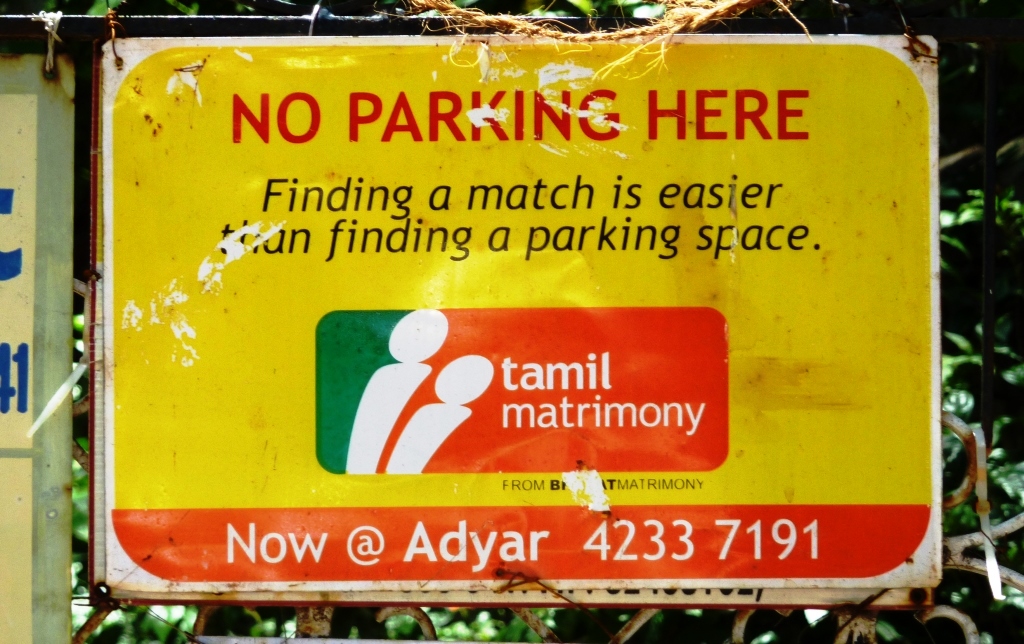
Bottom Line: Talismans to bring luck and/or ward off bad luck are so varied, most people could accumulate dozens. Do they work? I could not say. They may be nothing more than a self-fulfilling prophecy, causing confidence boosts and selective confirmations. But as a scientist, I urge you to give them a try. If you do, and they make no difference, you’ve lost nothing. On the other hand, if they can make a difference and you ignore them, you’ve missed a chance big time.

COMPENDIUM OF MARRIAGE

Say “They are married” and your listener/reader makes a whole host of assumptions. But are they correct?

Arranged Marriages in Assam
Maison Vie New Orleans

An article at Maison Vie New Orleans cites Psychology Today for a list of 7 types of marriage possibilities.  I’ve supplied definitions not given in the article.

Perhaps the most famous “Starter Marriage” participants
  • Starter Marriage: First marriage, five years or less, no children.
  • Companionship Marriage: Based on companionship, both partners have mutual consent and equality.
  • Parenting Marriage: Non-romantic, spouses come together to raise happy, healthy children.
    • This can also be the case of parents who would otherwise divorce but stay together for the sake of the children.
  • Safety Marriage: Marrying a “safety” partner, such as a long-time friend or old flame.
  • Living Alone Together Marriage: No standard definition found.
    • Each member of a marriage maintaining a separate household, sometimes far apart. (Jezebel)
    • Unmarried people living in communal (or roommate) arrangements, for financial and social benefits. (Psychology Today)
    • Married people who live together but maintain separate financial and social arrangements. (Center for Growth)
    • People who wish to divorce but cannot for social, religious, financial, etc. reasons. (Marriage.com)
  • Open Marriage: Spouses in a dyadic marriage agree that each may have extramarital sexual relationships, which are not considered infidelity.
  • Covenant Marriage: A legally distinct kind of marriage in three states (Arizona, Arkansas, and Louisiana) requiring pre-marital counseling and accepting more limited grounds for later seeking a divorce.
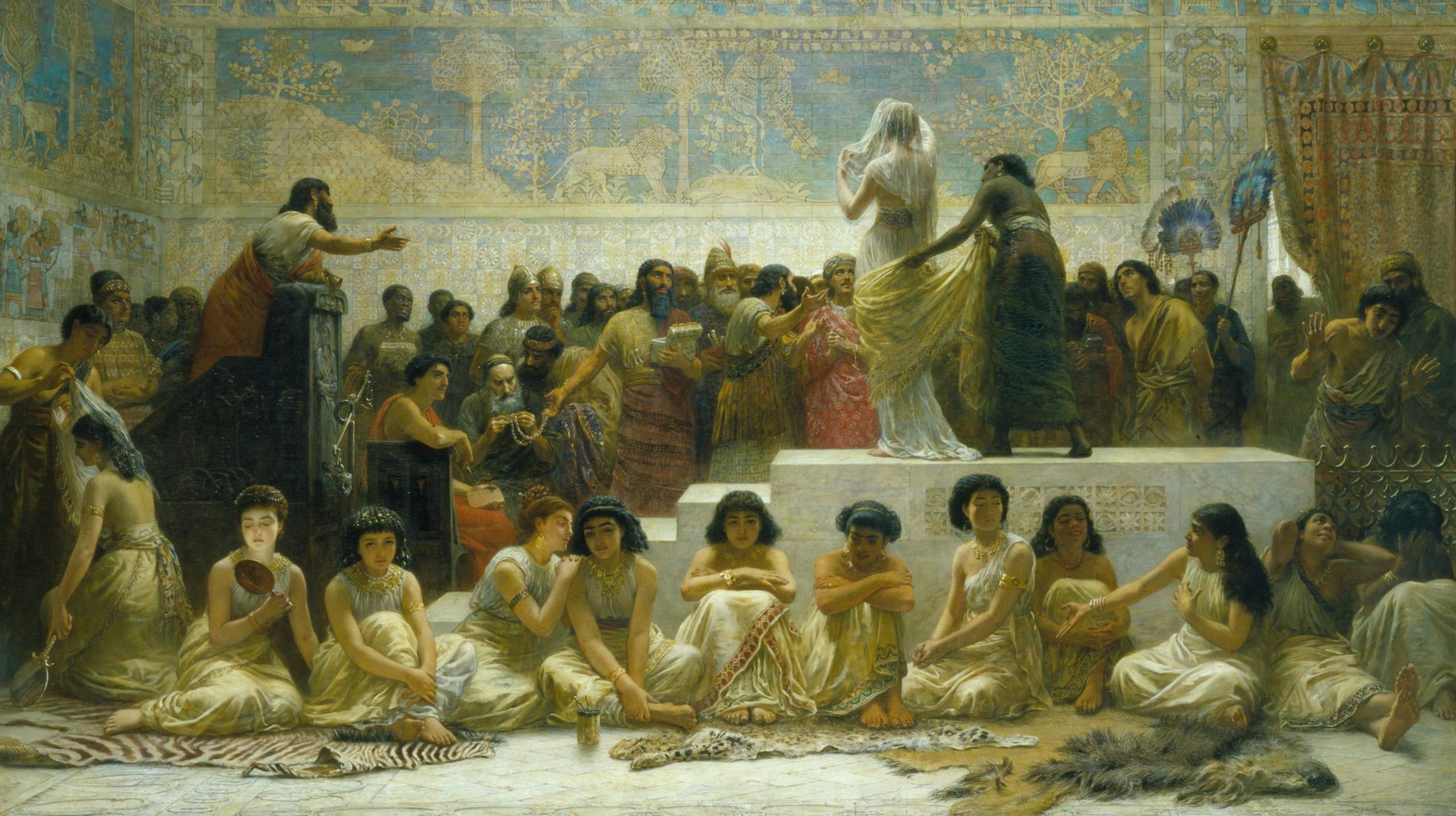
Psychology Today

On the other hand, an article on Marriage.com lists 25 types of marriages, including the following. In addition to those listed above, the author provides the following variations. This list includes both “legal” and emotional/motivational aspects.

“The Arranged Marriage” by Vasili Vladimirovitz Pukirev
  • Love Marriage: The ideal of romance movies and wedding magazines, though love is not necessary to marriage, as delineated throughout this blog.
  • Civil and Religious Marriage: when the marriage is recognized by the state, or the recognition is received from a religious body, such as the church, respectively.
  • Interfaith Marriage: When people from two different religions decide to get married, it is called an interfaith marriage.
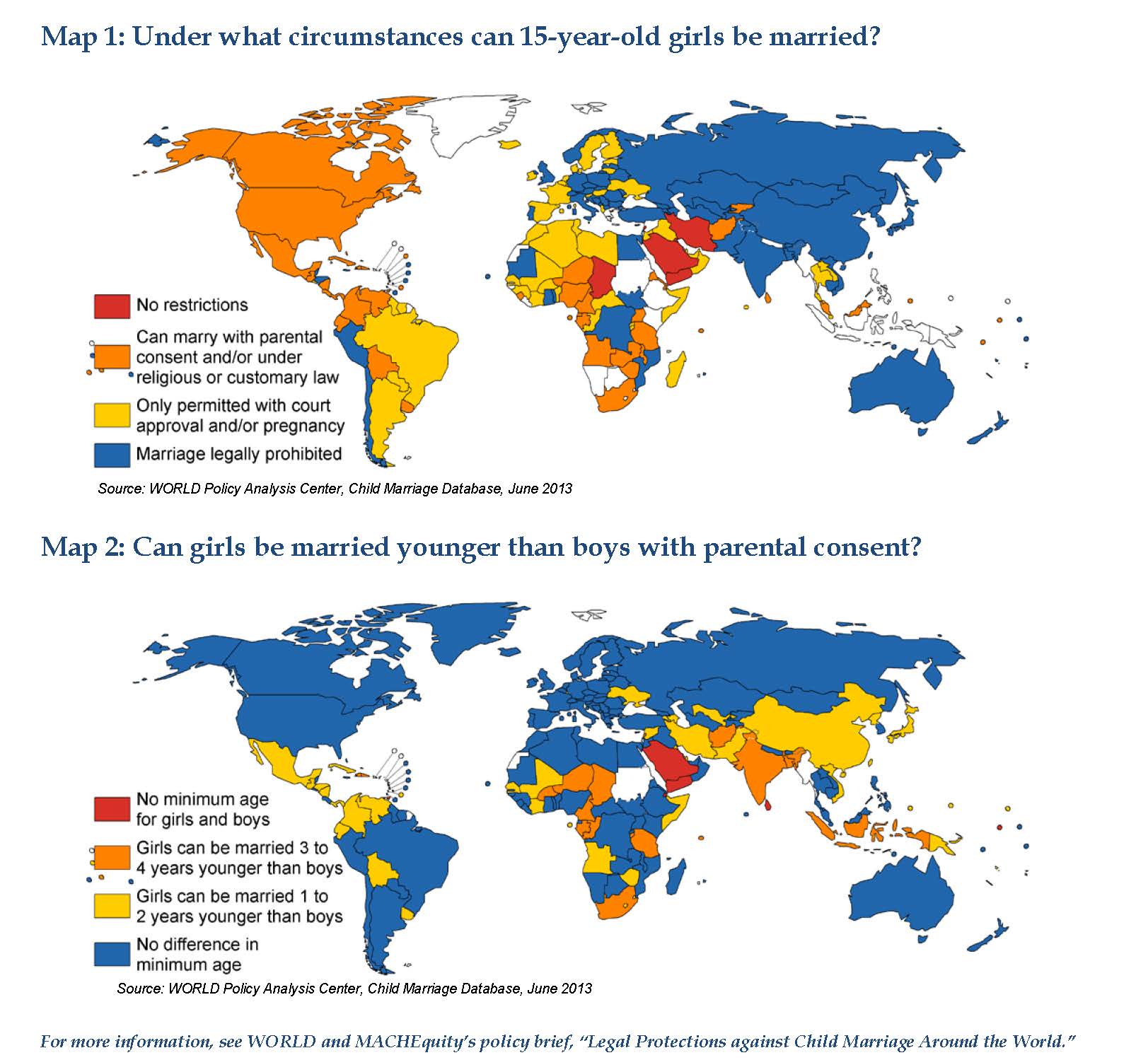
  • Common-Law Marriage: when two people have declare they are married and live together but do not have a certificate of registry.
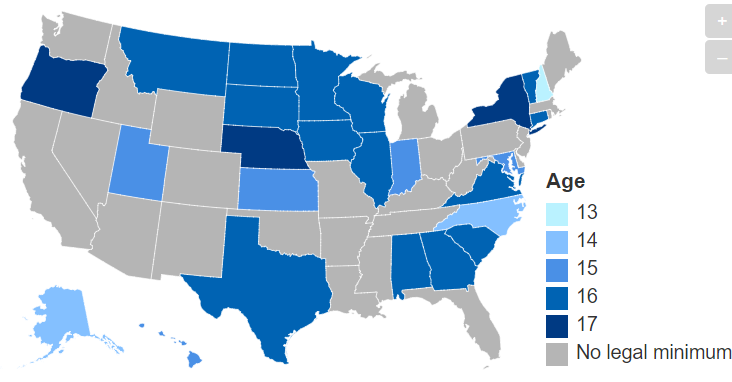
    • Cohabitation is not sufficient to be a common-law marriage but it is usually necessary.
    • The laws regarding common-law marriages vary not only from country to country but also between states in the US.
  • Monogamous Marriage: When the married couple “forsakes all others” and doesn’t get emotionally or sexually involved with anyone else outside the marriage.
  • Polyamorous Marriage: When the marriage involves more than two people
    • Polygyny, when a man has more than one wife
    • Polyandry, when a woman has more than one husband.
  • Group Marriage: one or more men are married to one or more women.
    • Differs from polygamous or polyandrous marriage primarily in that all members consider themselves in a relationship with all others rather than being “divided” along gender lines.
Morganatic Marriage: King Frederik VII of Denmark and Countess Danner
  • Left-Handed Marriage: (Not a term I was familiar with) when two people from unequal social rankings marry.
    • It’s also called a Morganatic Marriage, most often in reference to inheritance or succession.
  • Secret Marriage: When the marriage is hidden from society, friends, and family.
  • Shotgun Marriage: When a couple decides to get married because of an unplanned pregnancy or threat of pregnancy. Sometimes, they marry to save their reputations or embarrassment to their families.
  • Inter-Racial Marriage: Also called a mixed marriage, when people from different races marry.
  • Same-Sex Marriage: Legal in many parts of the world, though still not as universally socially acceptable as other types of marriage.
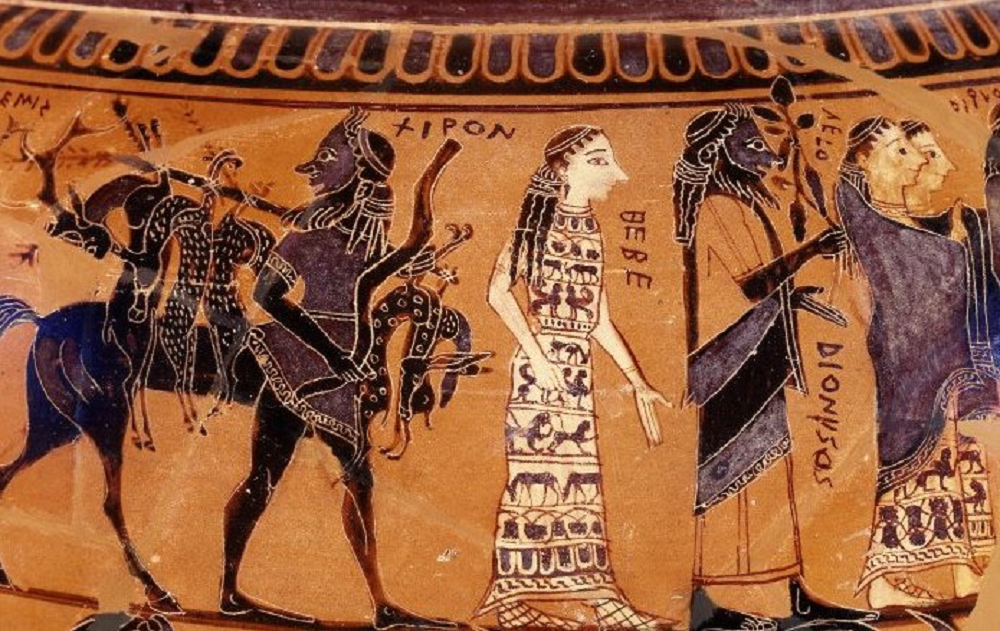
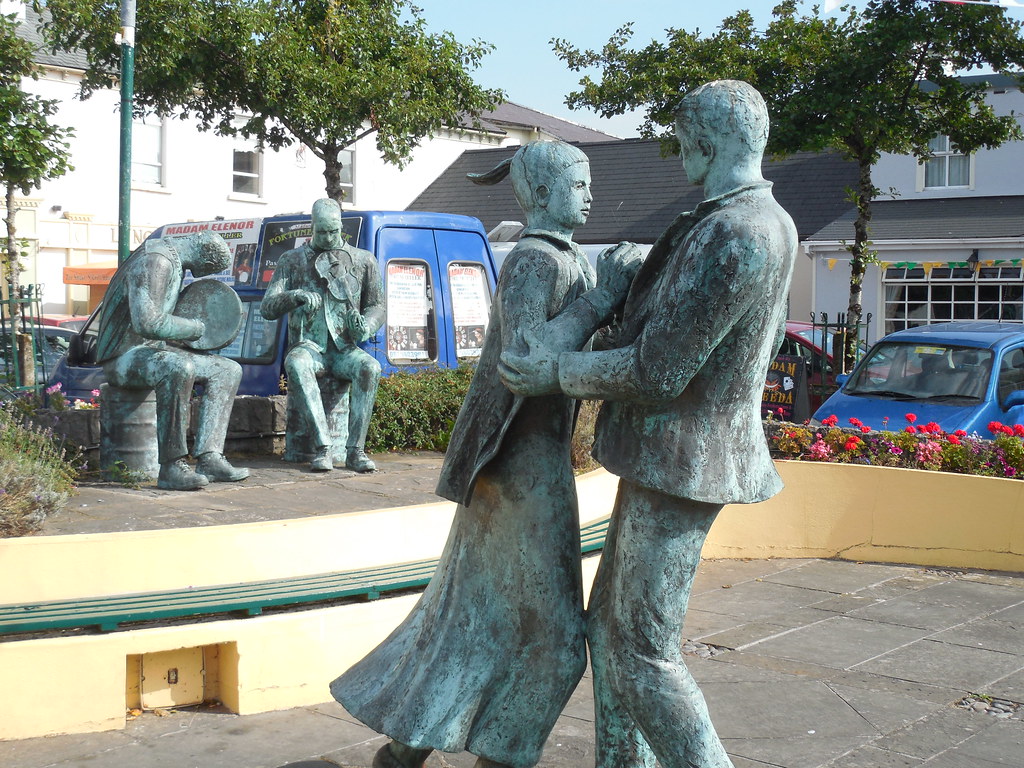
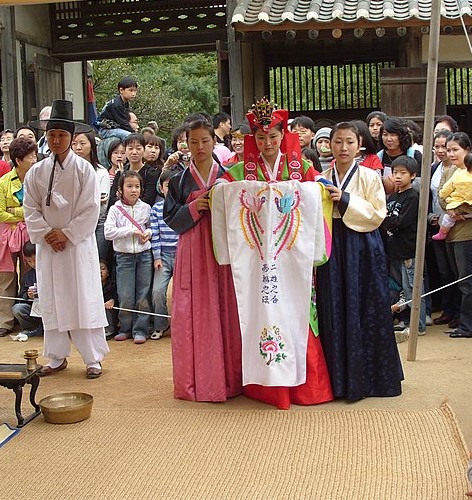
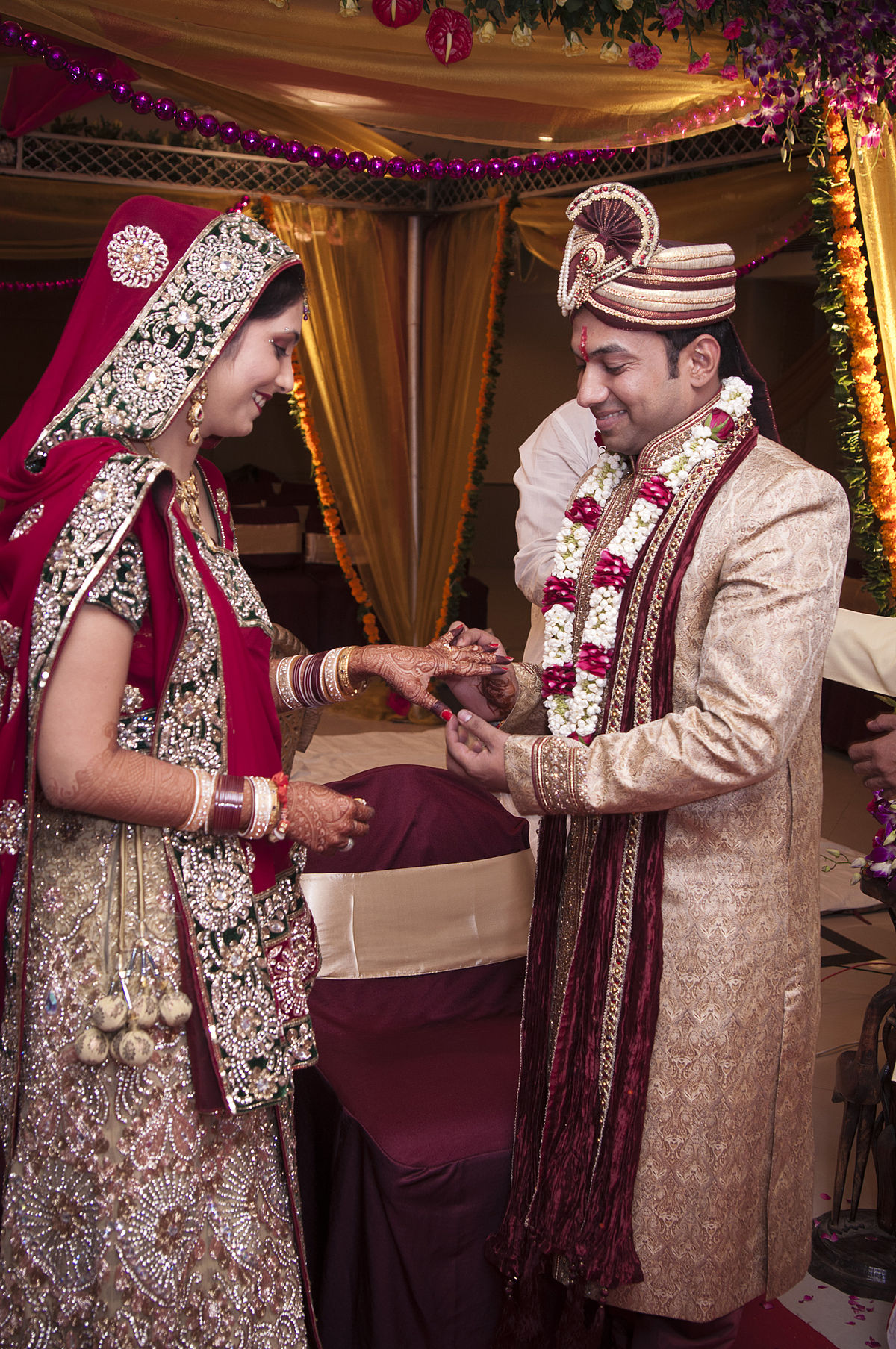
  • Arranged Marriage: When the family finds a suitable match for an eligible person, based on factors such as race, religion, caste, and other specific criteria they might have.
  • Convenience Marriage: When two people get married for reasons that bring convenience to their lives, such as financial security or childcare.
Um… Perhaps not this kind of zombie marriage…
  • Zombie Marriage: Both parties are docile and nice to each other in public but behind closed doors, they do not share any sort of a relationship.
  • Safety Marriage: When a marriage occurs because something tangible, mostly materialistic, is decided to be given in return. These terms are decided before marriage.
  • Open Marriage: When two people who are officially married agree that it’s okay to see others outside the marriage.
  • Partnership: Both spouses are equals, probably both work full-time and share household and child-rearing responsibilities equally.
  • Independents: Spouses live separate lives alongside each other; they may spend their free time apart; around the house, they tend to work separately in their areas of interest and on their own timetables.
    • (See “Living Alone Together”)
  • “Traditional” Marriage: One wife who does not work outside the home but takes care of the house and children; one husband who is the breadwinner and has few if any household duties; works only when/as long as both spouses like it that way.
  • Companionship: Both spouses want a life-long friend and their relationship is familiar and loving.
“The Marriage of Strongbow and Aoife” by Daniel Maclise
Non-Romantic Reasons for Marriage

And there are still other marriages not covered above.

Polyandri: Draupadi married the five Pandava brothers in the epic Mahabharta
  • Advancement: Enhancing social and/or financial standing; the classic/stereotypical case is a man marrying the boss’s daughter.
  • Age: It’s “time” to get married; varies by class and culture and time period.
  • Alcohol: In Reno or Vegas, it might literally be an inebriated service; more likely an inebriated engagement that turns out to be binding.
  • Duty or Obligation: Feeling duty-bound to marry to carry on the family name (more often males) or to provide some sort of support for children or others.
  • Escape: Leaving an unsafe, unpleasant, or otherwise intolerable living situation.
  • Family Pressure: Could be any want or need that the marriage is expected to fulfill.
  • Financial Security: Assuring the basics of food, shelter, health care, etc.
  • Lust: Less common than formerly, marriage as a way to get sex.
  • Politics: Reinforcing a political or financial arrangement by creating a familial tie through marriage.
  • Religious Orders: In the Catholic Church, nuns are referred to as “Brides of Christ.”
  • Social Pressure: “All my friends are married!”

Bottom line: Just something to think about. Marriage is many things to many people, not a single entity.

WINTER SOLSTICE IS COMING! (JUNE 21, 2022, 09:13 UTC.)

photo by astronaut Scott Kelly

No, really: for half the earth, the Winter Solstice will begin June 21, 09:13 UTC (Coordinated Universal Time).  The winter solstice marks the beginning of the return of the sun as the days get progressively longer again—and that’s always worth celebrating!  Ceremonies and rituals include purification, ritual sacrifice, dancing, and sometimes gift-giving

Oceania

The Australian Aboriginal community is thought to have been the first to celebrate the winter solstice, starting as much as 65,000 years ago. About 11,000 years ago, humans in Wathaurong created the Wurdi Youang rock formation, which maps sun positions on the Equinoxes and the Summer and Winter Solstices.

Wurdi Youang stones near Ballarat in Victoria
2012 Dark Mofo Festival

For a chilly celebration, Australians join the nude solstice swim in Canberra’s Lake Burley Griffin. Participants strip down and enjoy (?) a swim in waters where temperatures are below zero-degrees. (A cold front in Canberra has caused exceptionally cold temperatures this year, making that nude dip extra refreshing!)

Aotearoa Stonehenge

Elsewhere in the region, people in Tasmania celebrate for weeks, from 6 to 23 June this year. In Hobart, the capital city, the Dark Mofo Festival includes music and theater performances, art exhibits, and more. 

Māori Matariki parade

In New Zealand’s Māori tradition, the Matariki celebration commemorates and signals the triumph of light over darkness.  Events often take place at Aotearoa Stonehenge, a modern adaptation of Britain’s Stonehenge. This year, New Zealanders will celebrate Matariki as an official public holiday for the first time, following Māori customs of remembering the dead and celebrating the living.

Africa

Cape Town, South Africa
(photo by AfricanObserver)
Eswatini warriors dancing Incwala

The Eswatini of Swaziland mark the Winter Solstice with a six-day celebration of kingship called Incwala. Young men, at the direction of the king, cut branches of the lusekwane and imbondvo shrubs, which elders use to build a sanctuary hut for the king.

After days of dancing, feasting, and feats of prowess, the entire community spends a day in fasting and abstinence, including foregoing wearing jewelry, bathing, shaking hands, and sitting on chairs or mats. The elders and the king burn sacrificial objects to symbolize the ending of the old year. The king then remains in seclusion and abstinence for a month.

Umkhosi Wokweshwama in 2017

The Zulu celebration Umkhosi Wokweshwama (“First Fruits“) focuses more directly on the harvest. The king tastes the fruits brought from all over the country and then smashes a calabash to invite everyone to join him in feasting. Harvesting or eating before the king is a sign of disrespect. Young men of the king’s retinue sacrifice a black bull, killing it without any weapons.

British colonial authorities outlawed the Umkhosi Wokweshwama, but King Goodwill Zwelithini kaBhekuzulu revived the festival in 1990.

South America

Incan Empire Winter Solstice traditions are still celebrated throughout much of eastern South America. Inti Raymi (“Festival of the Sun God Inti“) festivals occur annually in Ecuador, Peru, Bolivia, Chile, and Argentina.

Inti Raymi celebrations in Peru

One of the biggest Inti Raymi celebrations takes place in Cusco, the historic capital of the Inca Empire, in modern-day Peru. The festival begins with a reenactment of appeasing Inti in the center of Cusco.

Historically, the Incas fasted for three days before the solstice. Before dawn on the fourth day, they went to a ceremonial plaza and waited for the sunrise. When it appeared, they crouched down before it, offering golden cups of chicha (a sacred beer made from fermented corn). Animals—including llamas—were sacrificed during the ceremony, and the Incas used a mirror to focus the sun’s rays and kindle a fire.
After the recreation of the ancient sacrificial rites, the modern celebration continues into the city where dancers dressed in colorful traditional attire march through the narrow streets and plazas. Festivities last for days and concerts continue late into the winter night.

Inti Raymi celebrations in Ecuador

The Ingapirca complex is the largest set of Inca ruins in Ecuador. Here, ceremonies begin as the rising sun shines through the doorway to the Temple of the Sun. Each year nearly 10,000 visitors travel to Ingapirca to witness the coming of the new agricultural year and join the festival.

In Ecuador, ritual purification in springs and rivers is an important component of the Inti Raymi celebration. It is believed to revitalize spiritual energy and their relationship with Pachamama. Members of the indigenous community in Otavalo begin the festivities with a spiritual renewal at the nearby waterfalls at midnight. The celebrations continue with a grand march into the main plaza where members of the community and visitors sing and dance for several days.

Wilkakuti celebrations in Argentina

In Bolivia, northern Chile, and southern Peru, the winter solstice (Willkakuti) marks the New Year for the Aymara People and is a time to celebrate and bless the land for bountiful harvests. More than thirty thousand people gather every year to welcome the sun at dawn. This June 2022 marks the 5,530th year of the Aymara culture. 

Sun Gate at Tiahuanaco

At Tiahuanaco, in Bolivia, ceremonies start the day before the Solstice, when pilgrims travel to Quimsa Chata and Aymara priests make offerings to Pachamama, the Earth Goddess. On the as the first rays of sunlight pass through the Sun Gate to the east of the Temple of Kalasaya, celebrants raise their hands to the dawning rays. 

Celebrants offer food and other sacrifices to Inti and Pachamama to bring fertility and prosperity during the start of the new agricultural period. Festivities continue throughout the night, with lots of dancing, eating, and drinking of a warm grape liquor known as signani to stay warm.

Antarctica

Even Antarctica gets its share of solstice celebration, thanks to the researchers staying there over the long, dangerously cold season. While the Northern Hemisphere is enjoying the most daylight hours, in the Southern Hemisphere they are celebrating Midwinter. Festivities include special meals, films, and sometimes even handmade gifts.

Bottom Line: Since ancient times, people all over the world have recognized the winter solstice as an important annual occurrence and have celebrated the subsequent “return” of the sun in a variety of ways. 

THUMBS: THE MULTIPURPOSE DIGIT

One can live a full, long life without thumbs, but it is/would be mighty inconvenient! Thumbs are hard working digits.  They are needed for power moves (lifting and moving weight), for fine motor control of all sorts, and for numerous activities in between. Ancient Romans thought the thumb held sway over the other fingers; in fact, the Latin word for thumb, pollex, may be a derivative of the word for power, pollet. Consider the following common activities:

The kalimba is played almost entirely with the thumbs.
  • Write with a pen or pencil
  • Put on jewelry
  • Paint
  • Put on socks
  • Open a door with a doorknob
  • Brush/comb hair
  • Button a shirt or blouse
  • Play basketball, baseball, most other ball games
  • Tie a bow/shoe lace
  • Tie off a balloon
  • Play most musical instruments
  • Tie a knot
Most important of all – making thumbprint cookies!
  • Drink from glass, cup, or mug
  • Seal a zip-lock bag
  • Pull up a zipper
  • Pick up something small from a flat surface
  • Snap or un-snap a closure
  • Manipulate chopsticks
  • Eat with a fork, spoon, or knife
  • Wield a toothbrush
  • Open jars/bottles
  • Use a needle and thread
  • Etc., etc., etc.

Clearly, thumbs are hard working digits. (You heard it here first!)

But wait! There’s more!

Thumbs for Identification

Finger and Thumb Prints of Al Capone
  • Everything that applies to fingerprints applies to thumbs. Your prints are set three months before birth.
  • They are virtually unique. No two are the identical, not for the two thumbs of the same person and not for identical twins.
  • They are durable over one’s lifetime, making them useful as long-term identifiers of criminals and dead bodies. 
    • Any injury that goes beneath the outer layers of the skin can affect the thumbprint.
    • Thumbprints can be temporarily scarred by cuts, abrasion, acid, or certain skin diseases, but thumbprints lost this way will grow back within a month.
  • With age, the skin on your thumbs is less elastic and the ridges thicker.
  • Voters mark ballots with a thumbprint in many countries where large portions of the population don’t read
  • A thumbprint can be used as a legal signature if the print is done in the presence of a Notary Public and is witnessed by two people who are not affected by the document, who also sign the document.
  • The Registration Act of 1908 in the Indian state of Maharashtra specified a print of the left thumb.
  • By custom and convention, the left thumb mark of a man and the right thumb print of a woman are used
  • Sometimes thumbs alone can be used to access print-controlled locks
    • i.e., sorting those who are allowed access from those who are not.


Thumbs for Communication 

Professor Albert Mehrabian has estimated that, when a speaker’s verbal and nonverbal communication don’t match, listeners only get a fraction of their information from words. The rest is comprised of paralanguage (tone, speed, “delivery”) and body language: posture, facial expressions, proximity, touch, and gestures.  So what are your thumbs saying? It depends on where you are, what you’re doing—and when!

Thumbs Up

Wikipedia has an extensive discussion of the possible origins of the gesture (pre-flight checks, archers testing bow strength, seal business transactions, etc.). Regardless of origin, the meanings are numerous. Here is a not-exhaustive list.

  • In the U.S., this is generally positive, indicating success, good wishes, agreement, etc.  
  • In the Middle East, it means “up your butt.” Many, perhaps most, Latin Americans consider it offensive, as do people in West Africa, Greece, Russia, Sardinia, southern Italy, Australia, the Philippines, and many Islamic nations. 
  • In Germany and parts of Japan, it simply means the number one. 
  • The hitchhiker’s thumb: thumb out, fingers curled, arm out meaning I want a lift. 
  • A similar gesture made toward a door means get out of here.
  • When scuba diving, thumbs up means ascend.
  • Two thumbs up means jump ball in basketball.
  • In baseball, an umpire’s thumb over the shoulder signals an out.
The A-OK
Scuba diver signaling that all equipment works during pre-dive checks

Touching the index finger to the thumb while remaining fingers remain upright.

  • It’s considered a positive gesture, meaning all okay here in the U.S.
  • The same gesture means all is well in scuba diving 
  • In Brazil, it’s like giving someone the finger
  • It’s vulgar in Greece and Turkey and implies that the person receiving the sign is gay
  • It’s the evil eye in some Middle Eastern countries
Thumbing One’s Nose
Joseph Stalin, 1940

Called “cocking a snook” in Britain, thumb your nose by touching your thumb to the tip of your nose, with fingers curled or open and wiggling. This is often accompanied by jeering, crossing eyes, or sticking out the tongue. It is a gesture of ridicule in most of the world.

Eric Ambler in 1938 wrote, “The Rome–Berlin axis…cocked the biggest snook yet at the League of Nations idea” in Cause for Alarm.

Experts (5 year old neighbors) agree that this gesture is most effective when accompanied by chanting, “na-na na-na na-na!”

The Cutis

Put the tip of your thumb in to your lips while the rest of the fingers are straight up (or sometimes curled). Then the the thumb is flicked out while vocalizing “Cutta!” (Screw you!). It’s an insult to the target and to the target’s entire family. The cutis is used mostly in India and Pakistan.

In American Sign Language, this gesture means “mom.”

Bite One’s Thumb

This gesture was famously used by Shakespeare as one of the insults used by Montagues and Capulets in Romeo and Juliet. Italians used the gesture as an insult for centuries before Shakespeare came around. There is some evidence that it had spread to England by the time of Romeo and Juliet’s production, but it was uncommon enough that Shakespeare included an explanation for why it was an insult.

The Fig

Hand is curled into  a loose fist with the tip of the thumb sticking out between the index and middle fingers. 

  • In the U.S., Canada, and Australia, this gesture is part of game often played with babies.
  • In American Sign Language, this is the gesture used for the letter T. 
  • It is insulting in Turkey, Indonesia, Italy, India, and some other Asian countries. 
  • In Ancient Rome, the head of the family would make this sign to fend off evil spirits during the Lemuria Festival.

In the Roman Arena

Pollice Verso by French painter Jean-Léon Gérôme (1872)

Myth: In Ancient Rome, a thumbs-down meant the gladiator should die. Wrong! This painting by Jean-Léon Gérôme (above) is most likely responsible for the popularity of this myth. The title means “Turned Thumbs,” a reference to the gesture being made by the crowd.

The Médaillon de Cavillargues (c 200AD) shows a gladiator referee gesturing with a sideways thumb.

Fact: Gladiator referees used a variety of gestures and signs to communicate with crowds, and gladiators didn’t often fight to the death. (Training a gladiator was incredibly expensive, and all the trainers, investors, sponsors, coordinators, etc. would have been quite upset if all their hard work was left to bleed out on the Coliseum sand. Death from injury, sepsis, or heatstroke was more common.)

Anthony Corbeill, a Latin professor at UVA, has written a whole book on ancient body language: Nature Embodied: Gesture in Ancient Rome. Hand gestures evolved and changed in meaning throughout the centuries and from place to place, but here are some common Coliseum gestures:

  • Pollices premere (thumb up) – raising weapons, attack
  • Pollices verso (turned thumb) – weapons down, submit, begin
    • Historians aren’t sure whether this meant turned to the side or turned down
  • Pollice compresso (pressed thumb) – sheathe weapons, bout over, pause
    • This might mean the thumb pressing the other fingers or being pressed by the other fingers
  • Waving handkerchiefs or shouting

Sign Language

Sign language interpreters from different countries during a project meeting with Spreadthesign
ASL “water”

Sign language: a system of communication using visual gestures and signs, typically used by/with deaf people. There are more than 300 different sign languages in use around the world. Almost all of them are highly dependent on thumbs! 

Increasingly, educators have adapted sign languages for use by very young children and non-verbal students. Many sign languages can be modified to suit the physical needs of the user, including creating two-handed signs with one hand, adjusting the size or speed of a movement, or changing which fingers are moved. Sometimes, this even includes not using the thumbs at all!


Bottom line: thumbs are incredibly important and deserve more attention and appreciation that they usually are granted!

HOW CLEAN IS CLEAN ENOUGH?

Balneological custom depends on when you live, where you live, how long you live, what you do for a living, and the seasons!

When You Live(d)

The Kumbh Mela is a Hindu festival that includes ritual river bathing.

If you lived in ancient India, you likely engaged in elaborate practices for personal hygiene with three daily baths and washing. These are recorded in the grihya sutras, covering domestic rituals and are still in practice today in some communities.

If you lived in China during the Chou Dynasty, you likely bathed outside, weather permitting. However, if you lived in a Chinese city during the Song Dynasty, you were likely to wash your hands and face before eating and to visit a public bathhouse several times a week.

Infant Buddha bathing
From Gandhara (circa 2nd century)

If you were a Buddhist monk in ancient Vietnam or Laos, you would have bathed frequently, sometimes daily, for religious reasons. However, if you were a Benedictine monk at Westminster Abbey, you would have been required to bathe only four times a year: on Easter, at the end of June, at the end of September, and on Christmas, according to monastic rules (though the Abbey employed a bath attendant year-round).

A German knight bathing
From the Manesse Codex, circa 1300

If you lived in Europe during the early part of the Middle Ages, you likely would have used a public bathhouse to spend quality time with your family, have a nice meal, meet your neighbors, and possibly even petition local officials. And if you lived during the 1340s-1350s and worried that open pores could allow illness to enter your body, you would likely have believed that dirt all over your skin would block disease. You would actually think bathing bad for your health because it opened pores, which led to sickness.

The Catholic Church has gone back and forth on bathing, sometimes linking physical and spiritual cleanliness and sometimes linking nudity and hellfire.

If you lived in Europe shortly after the Crusades, you are more likely to have engaged in a variation of the Turkish hammam and used soaps and perfumes brought back from Jerusalem.

“Don’t throw out the baby with the bath water!”
Narrenbeschwörung (Appeal to Fools) by Thomas Murner, 1512

The ancient Irish bathed daily, sometimes multiple times a day. With the spread of Christianity in Ireland in the 5th and 6th centuries, societal norms shifted to match the current Church customs in Rome: bathing only a few times a year.

It wasn’t until the time of the American Civil War, and the acceptance of germ theory of disease, that bathing became associated with health in Western medicine. 

In the early 1900’s, a typical Saturday night ritual involved American family members hauling loads of water into the kitchen, heating it, then filling a bath. Usually, the oldest/father of the family bathed first, followed by the mother, then the children in birth order, with the youngest last. Maybe this practice gave rise to “Don’t throw out the baby with the bath water.”

Where You Live

A sweat bath: illumination from Peter of EboliDe Balneis Puteolanis (“The Baths of Pozzuoli“)

“Daily showering is a more cultural phenomenon than medical necessity,” Joshua Zeichner, MD, Mount Sinai Hospital. 

If you believe YaHoo! Life, “Americans have long had a reputation for a “squeaky clean” devotion to hygiene that fuels a $3.1 billion body soap industry, yet recent studies show that Americans are actually quite average when compared to how often people shower worldwide.”

Among people who shower every day, Mexicans and Australians led, followed by Americans and the French. Brits, Russians, Swedes and Germans averaged less, with Chinese the least frequent.

Takaragawa Onsen

If you live in an area where the geography lends itself to hot springs, geothermal vents, and readily available water and fuel for heating water, you are more likely to bathe frequently. Japan’s natural hot springs (onsen, more than 27,000 by some estimates) are used for nearly daily bathing, with some research indicating a link between frequent soaking and longevity. Dense forests provide fuel to heat Finnish saunas and Iroquois sweat lodges, both used for physical and mental health as well as bathing.

Himba woman wearing a paste of hematite, sap, and butter

If you live in an area where water is scarce, you are likely to employ “dry” methods of bathing. Smoke baths, in which a blanket or tent is positioned above a fire of Commiphora wood to trap smoke around the bather’s skin, are effective means of killing bacteria and any bugs on the body or clothing. Oil or fat smeared on and scraped off the skin removes dirt and bacteria as well as protecting the skin from the elements. Pastes made with antibacterial herbs, clay, bark, and scented ingredients serve two purposes: they protect skin from sun, wind, or cold when applied and remove dirt when wiped off after drying.

If you live in an area crowded with other people, you are more likely to bathe frequently and often communally. Turkish hammam, Swiss health spas, Roman thermae, even medieval European bathhouses took advantage of shared resources (such as heat from baking ovens used to heat water) and were visited by groups of friends or neighbors. On the whole, bathing is less frequent in more sparsely populated areas.

Societies with a tradition of communal bathing tend to view a visit to the bathhouse as necessary for social and mental health in addition to physical hygiene. Russian banyas and Turkish hammam are places for meeting neighbors. Swedish and Japanese onsen are used for mental health and relaxation as much as removing dirt from the skin. Taiwanese hot springs and Mexican temazcal serve medicinal roles and are often staffed by medical professionals. The Finnish House of Parliament has a sauna where elected representatives can discuss legislation and issues of the day.

How Long You Live

Children
“Eskimo children bathing in Bering Sea”
c1905 FH Nowell

Bathing recommendations from the Cleveland Clinic depend on your child’s age. Dr. Tamburro suggests these general guidelines:

  • Babies, toddlers and little kids should spend some quality time in the tub two to three times per week. Their delicate skin doesn’t need daily cleansing, but it’s OK to get out the bath toys more often if your child gets dirty or has a messy diaper situation.
    • Speaking of tub toys, make sure they’re non-toxic and don’t have the potential to harbor, mold, fungus, and bacteria.
  • Older kids ages 6-11 should hit the bath two or three times per week, at a minimum. More showers are in order when they get muddy, sweaty or stinky.
  • Tweens and teens should shower daily. (Their newly stinky pits will probably clue you in when it’s time to step up their hygiene game.) They should also wash their face twice a day.  In addition, many teenagers are physically active, and showers are a good idea after strenuous sports events or practices, including swimming, working out, and other physical activities.
Older People/Seniors
  • To avoid any skin conditions or infections, a senior should bathe at least once or twice a week. 
  • Some elderly people may suffer from dementia, and they may have more toilet mishaps. Obviously, this means more frequent baths and showers to avoid infections.
Adults in General 

It may sound counterproductive, but a shower every day could be bad for your skin. Some dermatologists only recommend a shower every other day, or two to three times a week.  If you shower too much it can lead to discomfort, and you may experience:

After the Bath
c1898 by WB Davidson
  • Itching
  • Dry, flaky skin
  • Flare-ups of skin conditions like eczema and psoriasis
  • Dry, brittle hair

Although fewer showers may improve skin health, you should still keep your personal hygiene in mind.  If you go too long between showers you may experience

  • Increased body odor
  • Acne
  • Flare-ups of skin conditions like eczema, psoriasis, and dermatitis
  • Skin infections
  • Areas of dark or discolored skin
  • in extreme cases, dermatitis neglecta, thick patches of scaly skin

What You Do for a Living

Hydropathic applications according to Claridge’s Hydropathy book

People who work at desk jobs and spend most of their time indoors have the same bathing needs as adults in general. However, those who work with dangerous substances, animals, or in any jobs that people consider to be unhygienic may feel the need to bathe more often.

  • Janitor
  • Exterminator
  • Miner
  • Garbage collector
  • Butcher
  • People who work with corrosive materials, dangerous chemicals, disease agents, and radioactive materials need to shower at the end of each of their shifts.
  • Horticulturalists, arborists, amateur gardeners, and anyone who spends a significant amount of time outdoors around a variety of plants can reduce their risk of rashes and other skin injuries by showering as soon as they come indoors. on.
  • Athletes—anyone—whose job requires intense physical exertion.

Seasons and Weather

Home Bathing
by Kusakabe Kimbei

Guidance for better bathing during seasonal differences and changing weather are included in other categories and won’t be repeated here.

Health Line offers tips to bathe correctly and protect your skin.

  • Only take one shower a day (every other day, if possible). On days that you don’t shower, give yourself a sponge bath. Wash your face, armpits, and groin with a washcloth.
  • Don’t shower in hot water. Use warm water, instead.
  • Limit showers to 5 to 10 minutes.
  • Use a gentle soap or cleanser, and thoroughly rinse off soap before exiting the shower.
  • Don’t rub your skin with a towel. Blot skin dry to retain moisture.
  • Avoid cleansers and soaps with fragrances or deodorants. These products can irritate your skin.
  • Apply moisturizer to your skin after each shower or bath

Related Matters

Turkish hammam
  • Sweat doesn’t have an odor. It’s the interaction of sweat with bacteria on the skin that creates the stink.
  • Even with “good” smells, too much is never a good thing, particularly in close quarters. For example, the Richmond Symphony and Chorus ban perfume, aftershave, deodorant, etc.
  • According to the Cleveland Clinic, you probably don’t need to wash your hair every time you shower. Typically, shampooing two or three times a week will help keep your scalp healthy and hair happy.
  • Dutch study found that individuals who ended their showers with at least a 30-second blast of cold water were absent from work 29 percent less of the time than people who did not do so.
Washing before prayer (wudu) at Badshahi Mosque
Lahore, Pakistan

Bottom Line:  According to medicalnewstoday.com,  “Although showering offers physical, mental, and emotional benefits, the daily shower that many people in the U.S. are in the habit of taking is probably more than most people need. Showering dries out the skin and hair, uses natural resources, and creates an additional source of water pollution.”

For a more detailed exploration of how social norms around bathing vary throughout history and around the world, check out Clean: A History of Personal Hygiene and Purity by Virginia Smith.

KILLING ON MY MIND

“Axes, chisels, whetstones and a black stone bracelet from a Neolithic Macedonian settlement at Olynthus, excavated by Mylonas in 1928. Archeological Museum, Thessaloniki, Greece”
Michael Greenhalgh

I can’t help it.  The evening news is full of local drive-by shootings and the massacre happening in Ukraine. I’ve been thinking about killing (not planning it, just considering the varieties of ways and means).

I’ve mentally pursued two paths: the category of killing and the method of killing.

Categories of Killing

Execution: the carrying out of a sentence of death on a condemned person within the confines of a legal system. Over time, many methods have been embraced. For more information, look here, here, or here.

  • Firing squad
  • Hanging
  • Electrocution
  • Lethal injection
  • Drawing and quartering
  • Drowning
  • Burning at the stake
  • Beheading (whether by axe or guillotine)
  • Exposure (on the ice, in the desert sun, adrift at sea)
  • Disembowelment
  • Crucifixion
  • Gibbeting
  • Keelhauling
  • Suffocation

Murder: the unlawful premeditated killing of one human being by another. The methods are infinitely variable. 

  • Felony murder (in some jurisdictions):
    • Killing someone during the commission of a dangerous or enumerated crime.
    • The killer and also all accomplices or co-conspirators may be found guilty.
    • It doesn’t matter whether the killing was intentional or accidental.

Homicide: the deliberate and unlawful killing of one person by another. The point here is lack of premeditation or planning. Killing in the heat of the moment by whatever means would count. 

  • Justifiable homicide: the killing of a person in circumstances which allow the act to be regarded in law as without criminal guilt.
    • Examples include self-defense, capital punishment, and police shooting.
  • (Note: police shootings are not automatically judged  justifiable.)

Manslaughter: the crime of killing a human being without malice aforethought, or otherwise in circumstances not amounting to murder.  

  • Involuntary manslaughter: the person who commits the crime had no intention of causing or even expecting the possibility of death.

NOTE NOTE NOTE NOTE NOTE NOTE NOTE

Different jurisdictions define these categories of killing differently, and some times interchangeably. If you want to be precise, know your local laws.

Euthanasia (a.k.a. mercy killing): the painless killing of a patient suffering from an incurable and painful disease or an irreversible coma.  Note: the practice is illegal in most countries.

Ritual sacrifice: offering something to a deity in propitiation or homage, especially the ritual slaughter of an animal or person.

Suicide: death caused by injuring oneself with the intent to die. 

Assassination: 

  • In law: any murder committed by an assassin, understood to be committed for money, without any provocation resentment given by the person against whom the crime is directed.
  • In dictionary.com: to kill suddenly or secretively, especially a prominent person; premeditated.

Wartime Killing

War: a state of arms conflict between different nations, states, or different groups within a nation or state.

Soldiers killing soldiers during a war between nations or states are generally considered justified and legal; incidental killing of civilians are generally considered collateral damage, regrettable but not subject to punishment.

Not all wartime killing is internationally acceptable.

The Hague Conventions (1899 and 1907) and Geneva Conventions (1864, 1949 [pt 1, 2, 3, and 4], and 1977 [protocol 1 and 2] and 2005) focus on the protection of people not or no longer taking part in hostilities.  There is no single document in international law that codifies all war crimes. However, lists of war crime can be found in both international humanitarian law and international criminal law treaties, as well as international customary law.

  • War crimes (for a more complete list, see the United Nations, and the International Red Cross, and Wikipedia):
    • Intentionally killing civilians
    • Intentionally killing prisoners of war
    • Torture
    • Taking hostages
    • Unnecessary destruction of civilian property, often with the aim of causing starvation or death by exposure
    • Deception by perfidy
    • Wartime sexual violence
    • Pillaging
    • Use of chemical or biological weapons
    • Conscription of children into the military
    • Granting no quarter despite surrender
    • Flouting the legal distinctions of proportionality and military necessity  
  • Crimes against humanity:
    • Specific cries committed in the context of a large-scale attack targeting civilians, regardless of their nationality.
    • E.g., murder, torture, sexual violence, enslavement, persecution, enforced disappearance, etc.
    • Chemical, biological, and radioactive weapons are often considered specifically crimes against humanity in addition to being war crimes.
  • Genocide/ethnic cleansing:
    • The deliberate killing of a large number of people from a particular nation or ethnic group with the aim of destroying that nation or group.
    • Forced sterilization and sexual violence may be included here the aim is to disrupt or preemptively remove future generations.

War between groups within a nation or state = gang war: a “small” war between two (or more) groups feuding over territory or vendetta, not generally related to international legal standing.

  • Characterized by sanctioned and unsanctioned killing
  • Gun violence
  • Street violence
  • Joining a gang may be involuntary
  • Leaving a gang—and surviving—may be next to impossible
  • All gang activity is illegal in the US, although being a gang member per se isn’t

Methods of Killing 

There are far too many to list, but here are a few methods to think about.

  • No weapon (strangulation, broken neck or back, beaten to death with fists, thrown off a cliff, etc.)
  • Weapon of convenience (for example, branch, bookend, poker, scissors, axe—anything found at the scene)
  • Physical weapon brought to the scene (for example, cutting implement, gun, garrote, automobile, whatever)
  • Animal weapon (for example, dog, venomous snakes or insects, predatory animals such as bears, big cats, trampling by elephants or horses)
  • “Soft” weapon such as poison, gas, or medication overdose


Bottom Line: Killing is everywhere and always has been. Think about it! When—if ever—and under what—if any—circumstances would a character think/feel that killing could be acceptable.