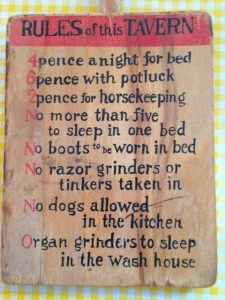
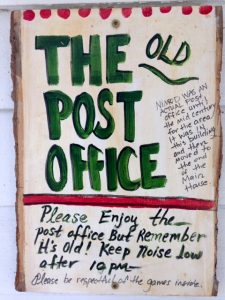
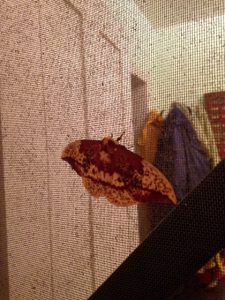
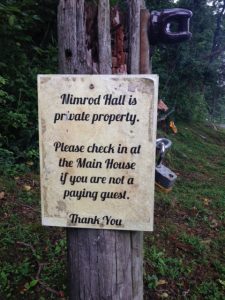
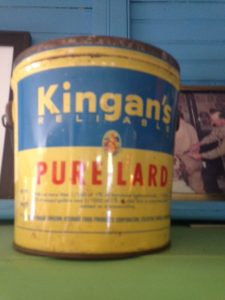
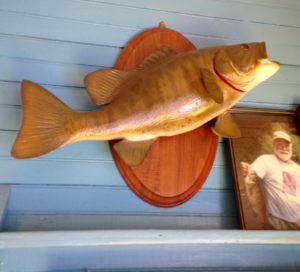
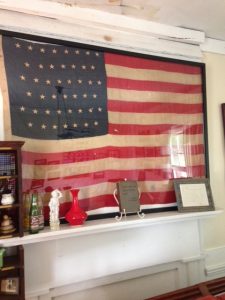
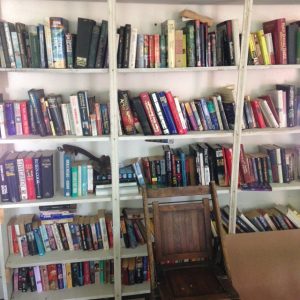
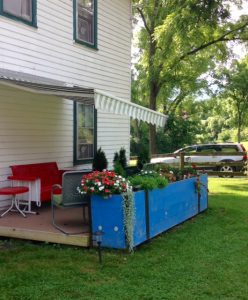
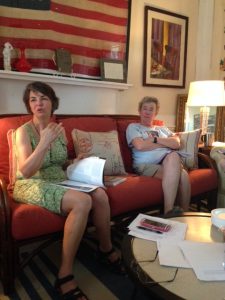
I’m still working on re-entry. The thing about Nimrod is that there is always something to see. Here is a selection of things you might use as writing prompts:
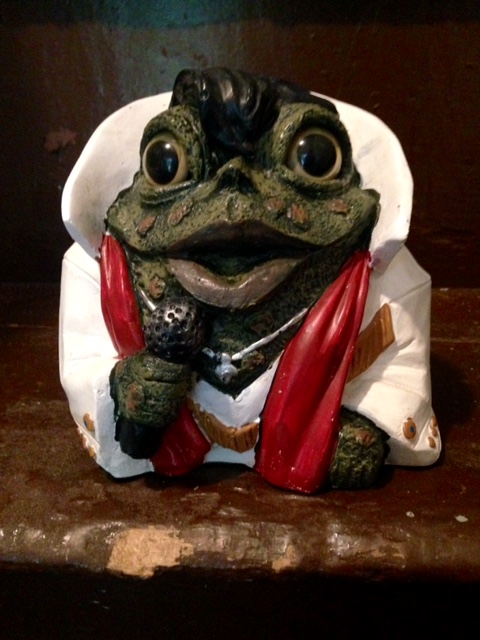
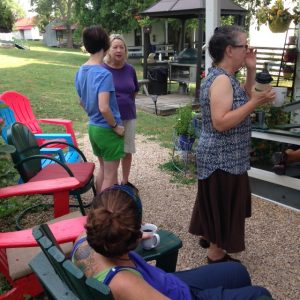
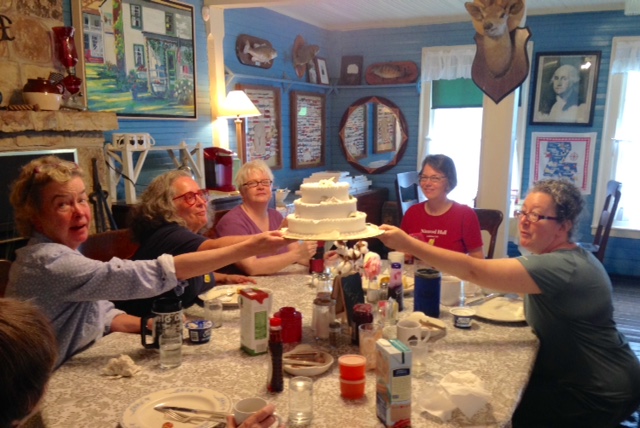
The frog statue is supposed to be Elvis. You know the story of the princess kissing a frog and turning him into a prince. Who might have kissed The King to turn him into a frog?
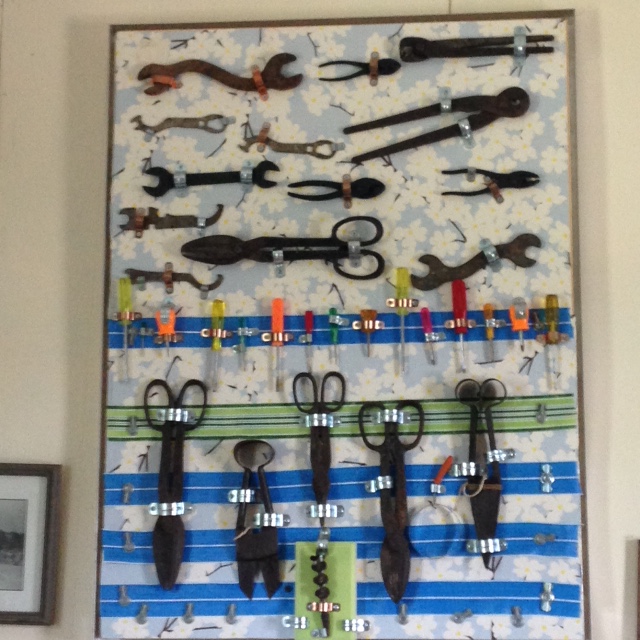
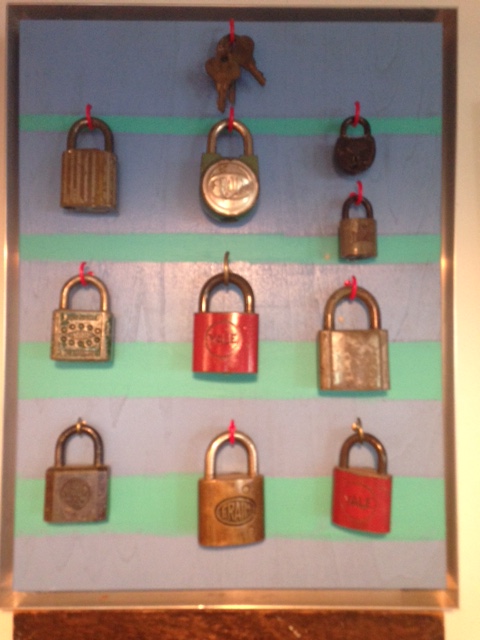
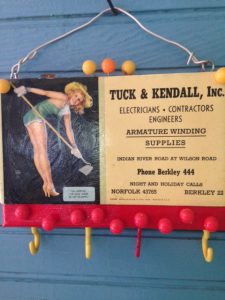
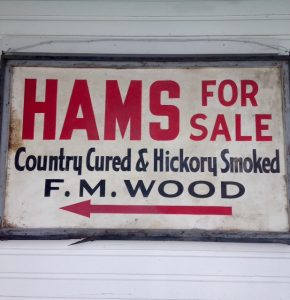
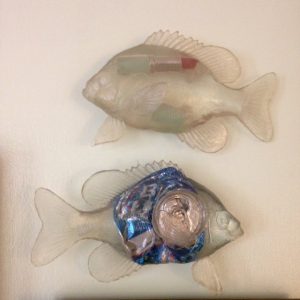
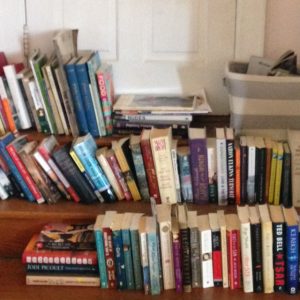
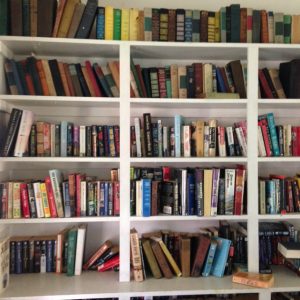
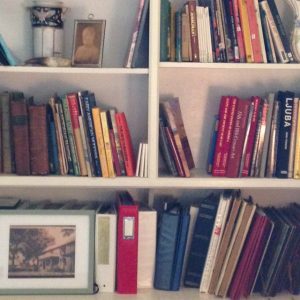
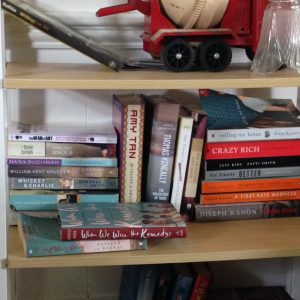
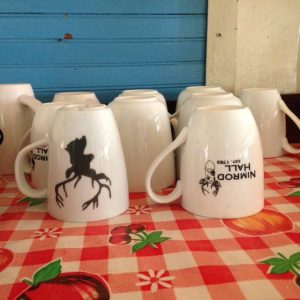
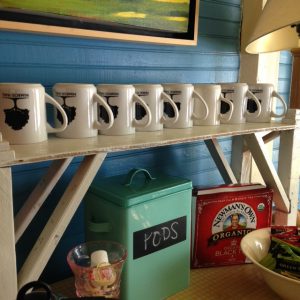
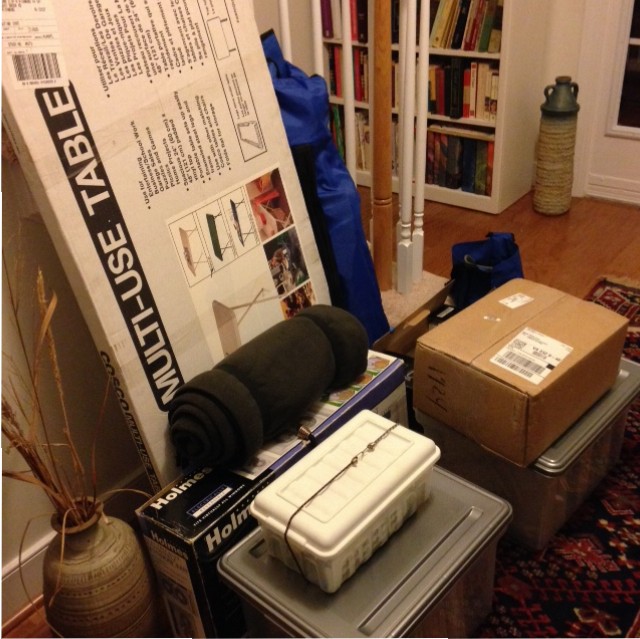
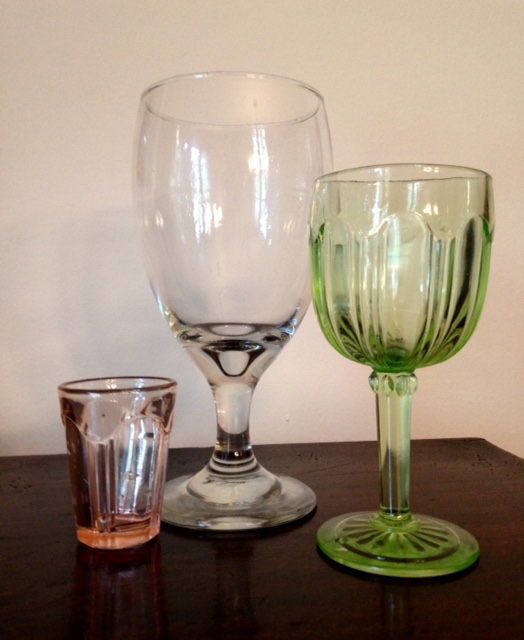
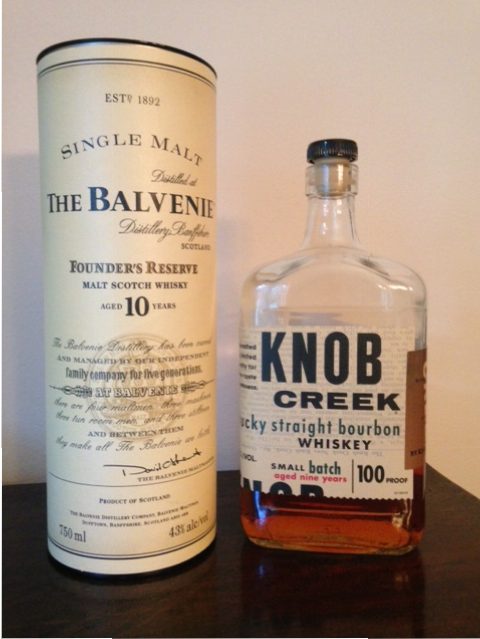
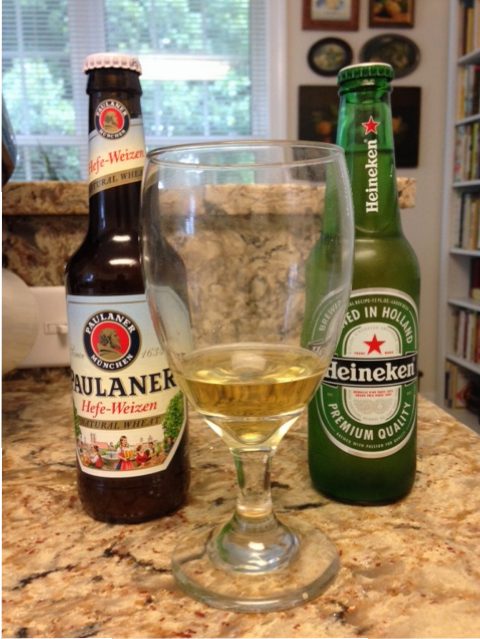
Who might have curated these collections, and why are these particular items of interest?
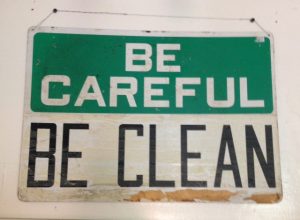
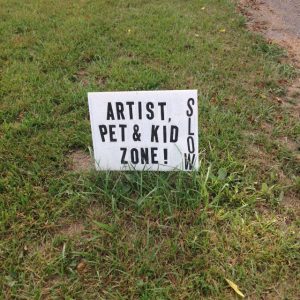
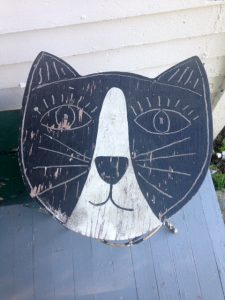
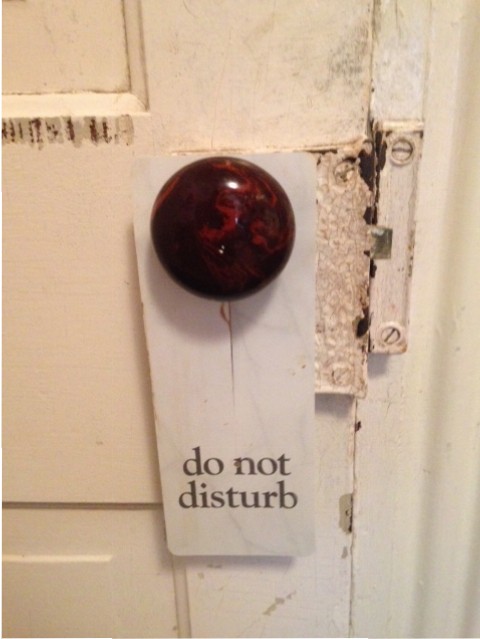
Write your own rules. Or write about a place that would post the ones below. What happens if someone breaks the rules?
What if an uninvited guest drops by?
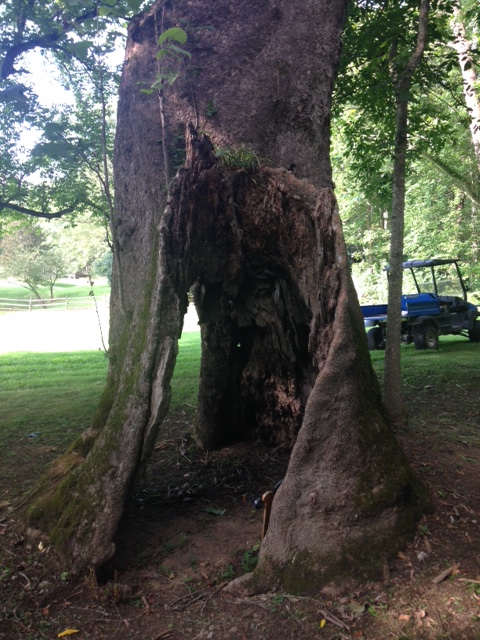
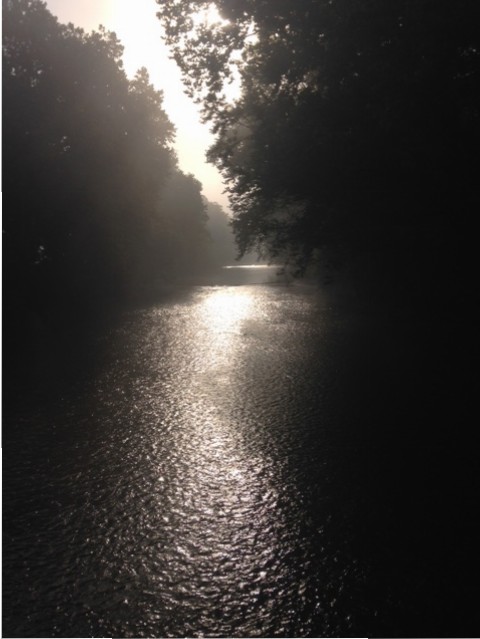
Notice the edge of a folding chair just visible in the big, hollow sycamore. Write about who might be using that chair, and why.
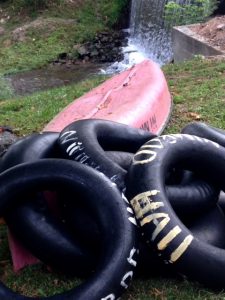
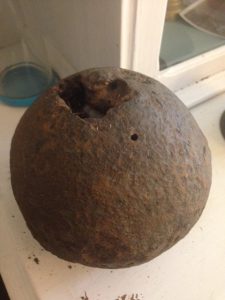
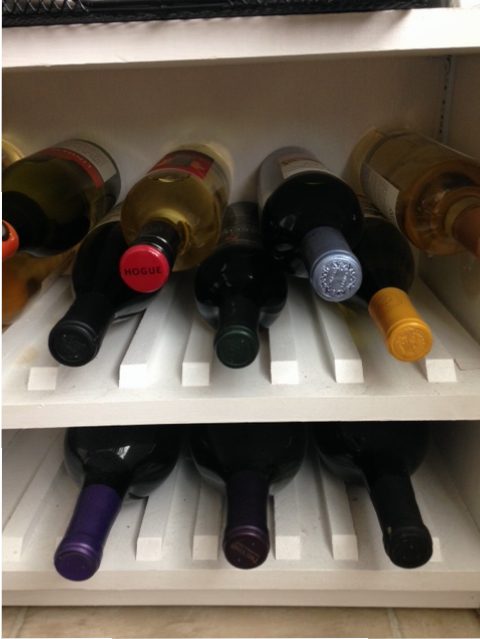
Or try your hand at writing flash fiction and include all the items from one–or more–of these groups.
#1
#2
#3
#4
#5
#6
And when all is said and done, if you aren’t writing at or about Nimrod, read!
And this really is all till next year!
Nimrod Hall, established in 1783, has been providing summer respite from everyday stress since 1906. It has been operating as an artist and writer colony for over 25 years. The Nimrod Hall Summer Arts Program is a non-competitive, inspirational environment for artists to create without the distractions of everyday life.
Energy is always high when I arrive at Nimrod on Sunday: getting settled, reuniting with friends, meeting the new writers, and getting the schedule for the week ahead.
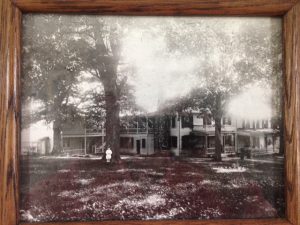
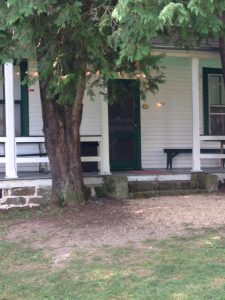
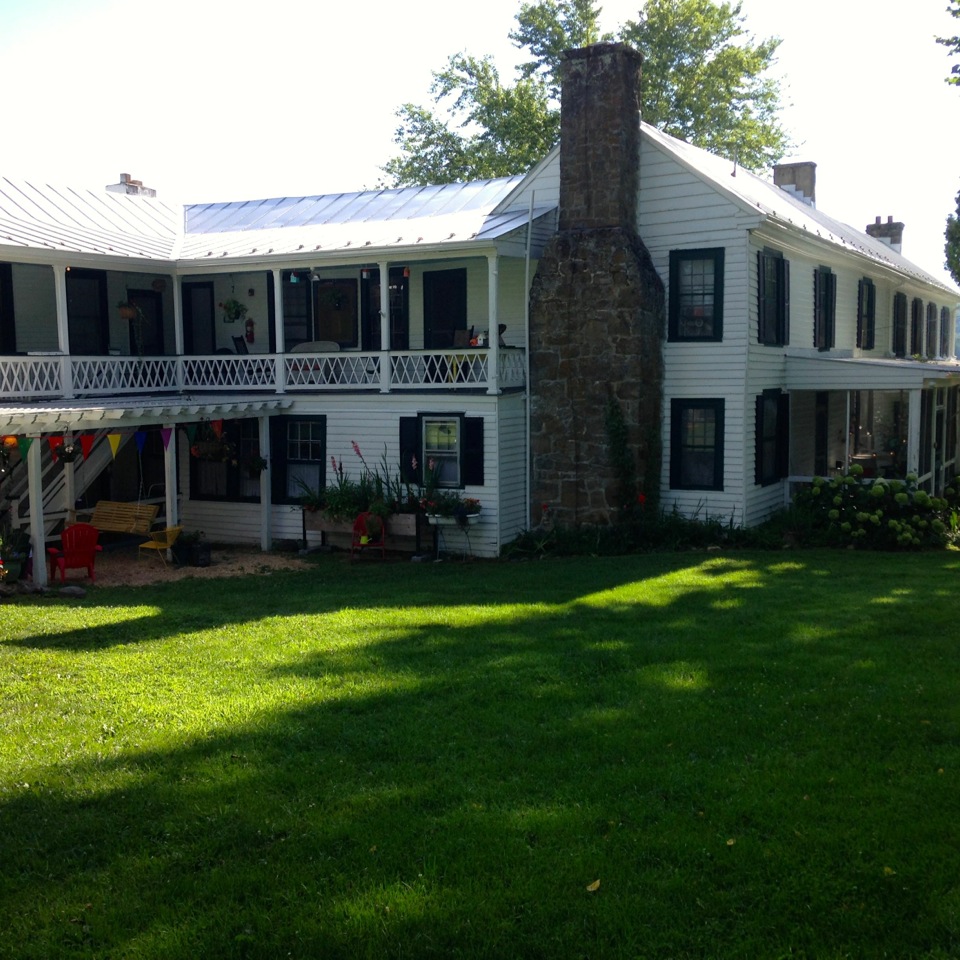
The Square House at Nimrod Hall
I was in Square House again this year, my favorite room! It’s downstairs, dim, and I know where my things will fit and how many extension cords I’ll need.
Cathy Hankla in our workshop
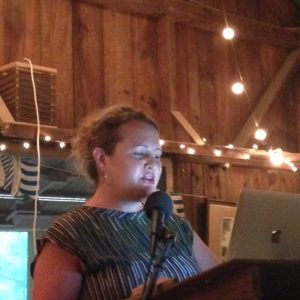
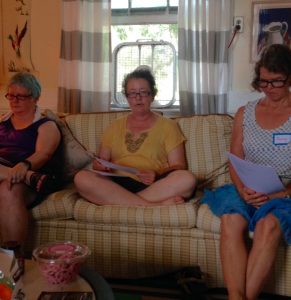
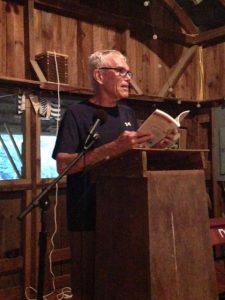
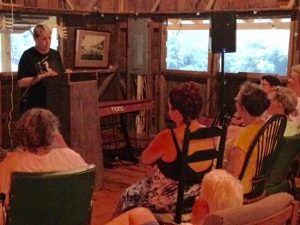
One of our wonderful evening readers
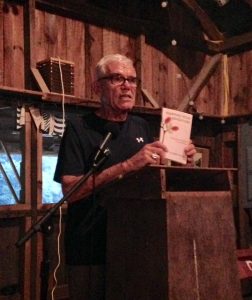
Another wonderful evening reader
Monday through Thursday at Nimrod is intense: focused writing, talk with fellow writers—who often ask how your work is going, which certainly reinforces that focus and productivity are expected and rewarded—reading every day for workshop, sharing opinions with other readers, then listening to the 8:00 readers after dinner…
All of this happening across varied genres leaves me feeling worn. I suspect others do as well.
So an open day on Friday was cherished! I walked in sunshine for the first time.
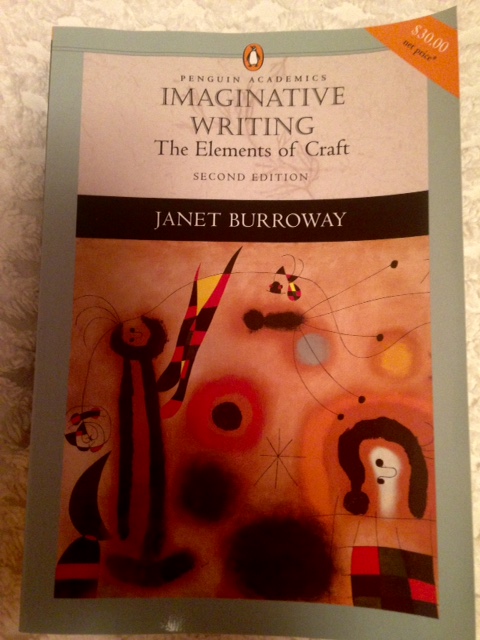
Imaginative Writing by Janet Burroway
It’s also a chance to tie things up. I (finally) turned to to the reference Cathy Hankla had given me on Monday! Unfortunately, I could not send off “Repair or Redecorate?” because my computer went all wonky. The touch-pad didn’t control the cursor. Damn! But at least it’s ready to go. I started packing to leave on Saturday.
I got a photo of Thursday’s readers on Friday evening, in the course of a most entertaining variety show! This was new to my years at Nimrod. Kristy Bell did an incredible job as MC! We had multiple readings of poetry, fiction, memoir, and all the other genre’s represented here, up and down the emotional spectrum. But we also had musical interludes!
Singers L-R: Judy Bice, Amelia Williams, and Terry Dolson
Terry Dolson and Sheri Reynolds
Terry Dolson accompanied Judy Bice, Amelia Williams, and Sheri Reynolds while the rest of us joined in as well as we could on such classics as “Country Road” and “Bobbie McGee.” I’m here to tell you, Sheri Williams does a mean Janis Joplin!
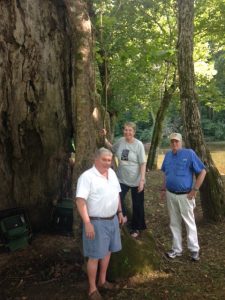
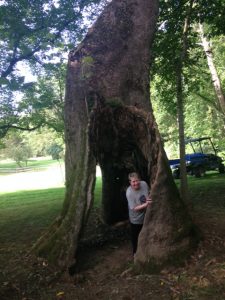
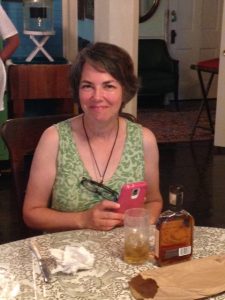
Most year I’ve gone to the Jefferson Baths. This year, I mourn missing it. But several of us had accepted a neighbor’s invitation for drinks and a visit to the champion sycamore tree: 10 feet across, 33 feet around. It was good viewing and very good scotch!
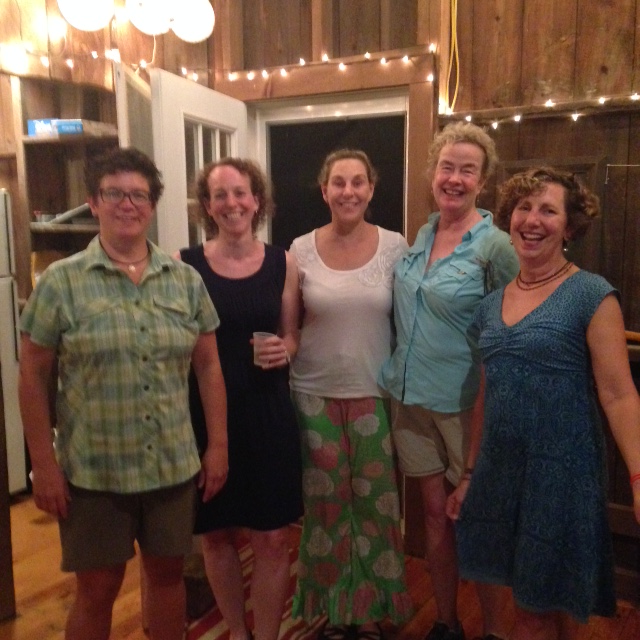
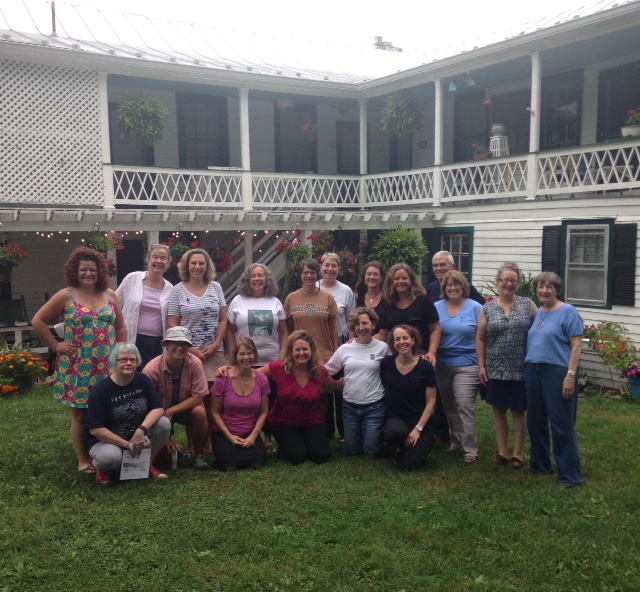
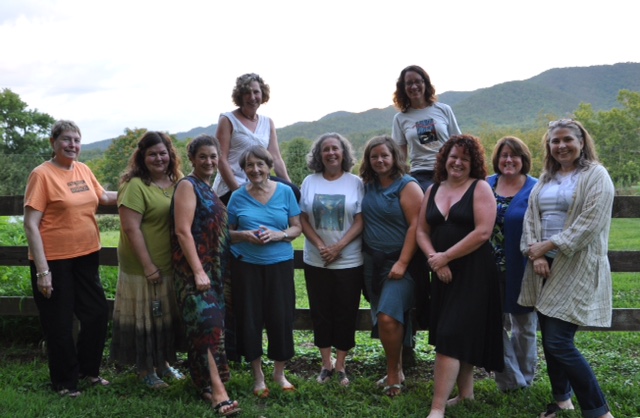
Every year we take a group picture. This one came was Saturday morning, just after breakfast.
L-R, kneeling: Foust, Kristy Bell, Nancy Hurrelbrinck,Jennifer Dickinson, Judy Bice, Ruth Gallogly; L-R standing, Terry Dolson, Jane Shepherd, Kit Wellfod, Charlotte Morgan, Cathy Hankla, me, Sheri Reynolds, Molly Todd, David Cooper, Betsy Arnett, Amelia Williams, Frances Burch.
Unfortunately, several people left on Friday. Oh, sigh. Maybe next year!
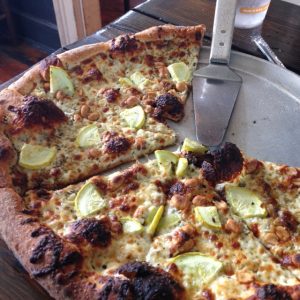
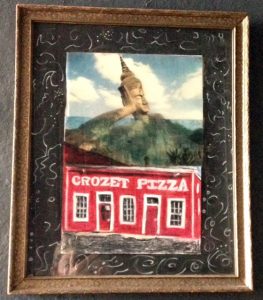
By 10:00 Saturday morning, Frances Burch and I were on the road. We followed our usual routine: we stopped in Crozet, Virginia for shopping at Over the Moon Bookstore and lunch at Crozet Pizza. For the first time ever, we had their specialty pizza that is a white base, topped with herbs, summer squash, and peanuts! It was excellent.
I was home by 3:00, but Nimrod lingers. There’s always a long re-entry time!
Nimrod Hall, established in 1783, has been providing summer respite from everyday stress since 1906. It has been operating as an artist and writer colony for over 25 years. The Nimrod Hall Summer Arts Program is a non-competitive, inspirational environment for artists to create without the distractions of everyday life.
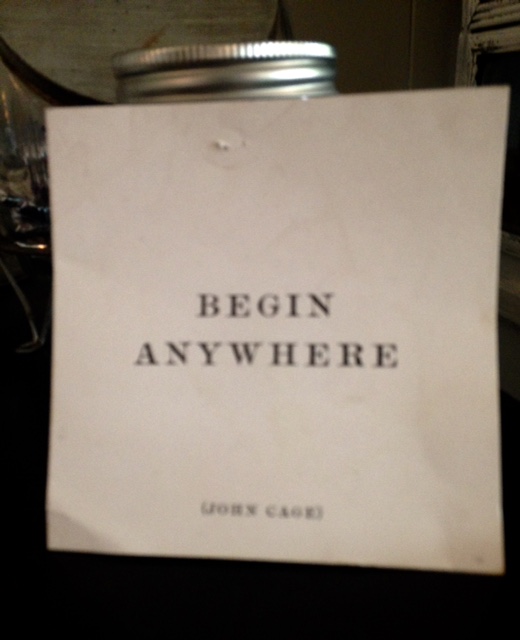
What a week it’s been! Where to begin? Well, I guess with this message:
“Begin Anywere.” -John Cage
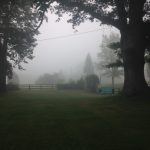
So, how about walking through a typical day? As you know, I’m fond of before-breakfast walks—usually damp and misty. But glories abound, from wildlife and flowers along the way, to the little graveyard up the hill, to the Cowpasture River down the hill.
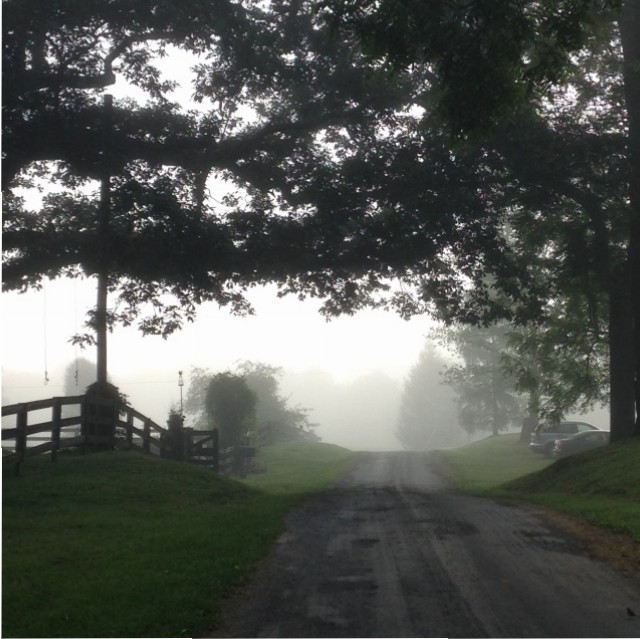
A misty morning at Nimrod Hall
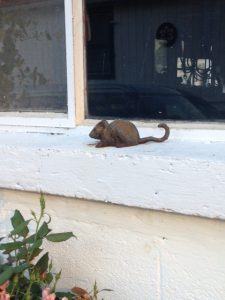
We found a rabbit!
Flowers in a field found during a morning walk
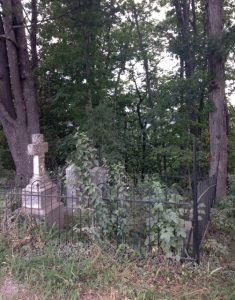
A graveyard along the walking trail
The river nearby
People gather to await the breakfast bell, still slightly groggy. But after a coffee infusion and a more-than-ample breakfast, we are hyped for the sacred writing time, which lasts till 1:00 lunch.
Waiting for the breakfast bell
This year I finished and revised a 6K word short story mystery AND submitted it! So thanks to my fearless leader Cathy Hankla and my workshop/critique group members for comments and suggestions.
Cathy Hankla
Amelia William, flanked by Foust and Nancy Hurrelbrinc.
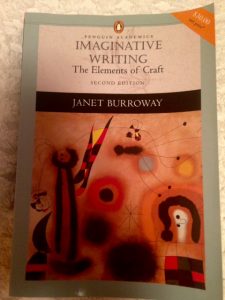
One of Cathy’s great strengths as a teacher is that she always seems to come up with targeted reading for specific writers. This year she brought Imaginative Writing for me. It contains “Interpreter of Maladies” by Jhumpa Lahiri, a wonderful example of showing an incident from the POV of a hired worker. But of course, Cathy is incredibly talented herself.
Imaginative Writing by Janet Burroway
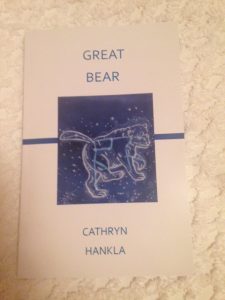
Cathy’s book, Great Bear
I tend to be a cave-dweller, so while others hike, run, do yoga, or go tubing on the river, I keep writing. And everyone understands.
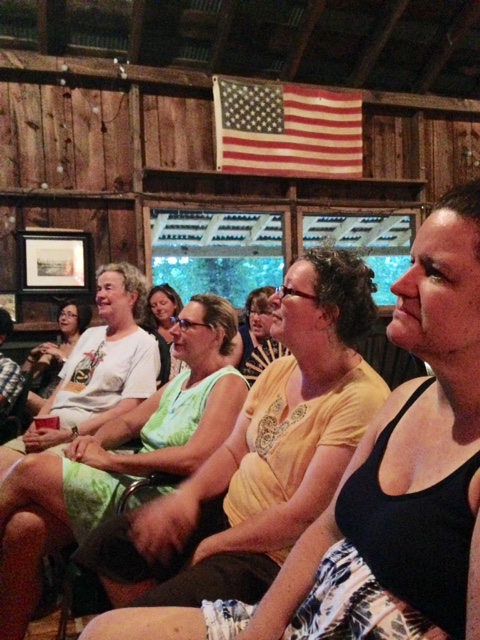
Happy half-hour was typically celebrated with our workshop group, followed by dinner during which we dispersed among the other writers present. Then we adjourn to the renovated Rec Hall for 8:00 readings. On Sunday night, Cathy Hankla and Sheri Reynolds read and Charlotte Morgan gave us our marching orders about the week’s structure.
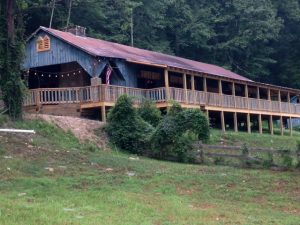
The Rec Hall
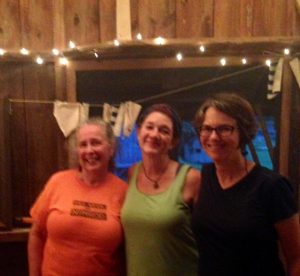
(L-R) Cathy Hankla, Sheri Reynolds, and Charlotte Morgan
David Cooper and I read the first night. I read 600 words on “Repair or Redecorate?” which I hope you’ll have an opportunity to read in the Richmond Times-Dispatch sometime soon. David is a “retired” man of the cloth and counselor who bicycles, does yoga, and seemed perfectly comfortable surrounded by all these writer women!
David Cooper’s reading
My reading
Tuesday night’s readings were by Frances Burch, Jennifer Dickinson, Nancy Hurrelbrinck, and Molly Todd.
Wednesday night we had Betsy Arnett, Foust, Amelia Williams, Heath Lee, and Terry Dolson.
Thursday night it was Judy Bice, Jane Shepard, Ruth Gallogly, and Kristy Bell—and I didn’t get a picture! Maybe I can rectify that later.
This diverse group of writers includes poets, fiction writers, memoirists, inspirational writers, historians—you name it. Several are from the Richmond area, and therefore likely to be available for local readings, signings, etc. Besides me, Elizabeth Smart, Frances Burch, Judy Bice, Molly Todd, Kristy Bell, Terry Dolson, David Cooper, Foust, and Suzanne Munson fall into this category. But we also had writers from Roanoke, Boyce, and Afton, Virginia (Heath Lee, Betsy Arnett, and Amelia Williams, respectively), and two from Charleston, WV (Jane Shepherd and Kit Wellford). And then there were the outliers, Ruth Gallogly (Brooklyn, NY) and Denny Stein (Freemont, CA).
These are wonderful, interesting, dear people. What are the chances that I’ll see them again before next year?
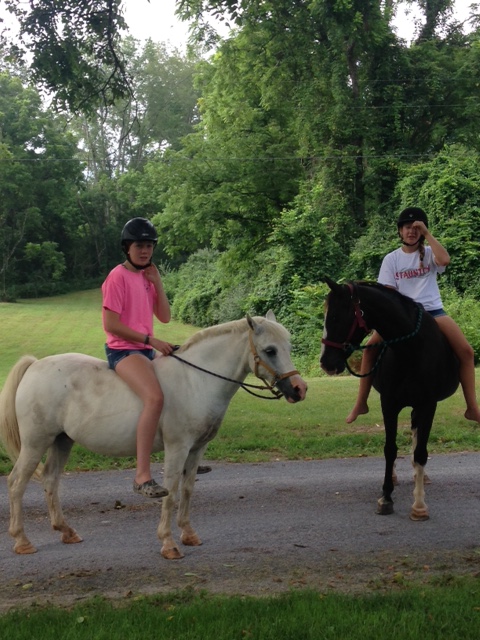
One reason I love Nimrod is that I never know what I’ll come across. It might be riders from Vinyard Farms next door. These are Amber and Frankie—the horses, not the riders.
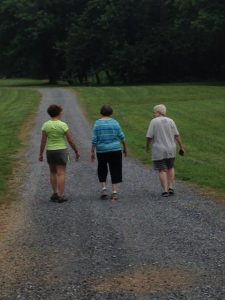
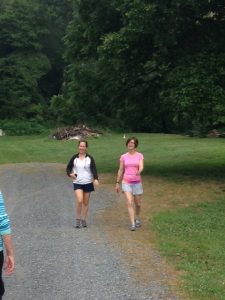
It might be fellow walkers…
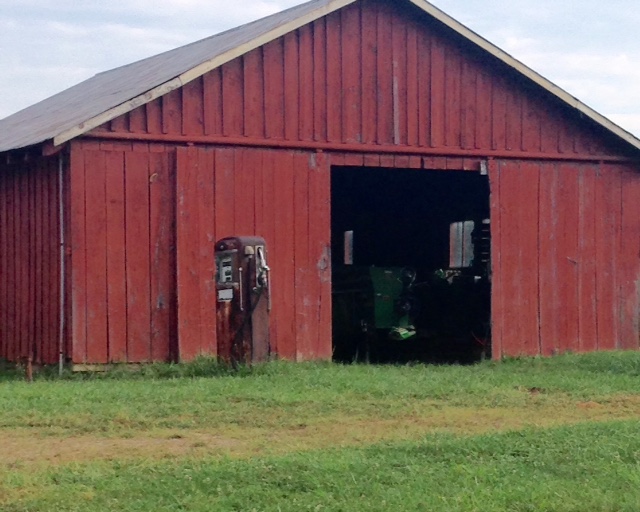
…or it might be an abandoned barn and gas pump. It’s always something!
And it’s always great company, great energy, and unstinting support! We don’t leave till tomorrow, but I’m missing it already! Stay tuned next week for a final wrap-up.
Nimrod Hall, established in 1783, has been providing summer respite from everyday stress since 1906. It has been operating as an artist and writer colony for over 25 years. The Nimrod Hall Summer Arts Program is a non-competitive, inspirational environment for artists to create without the distractions of everyday life.
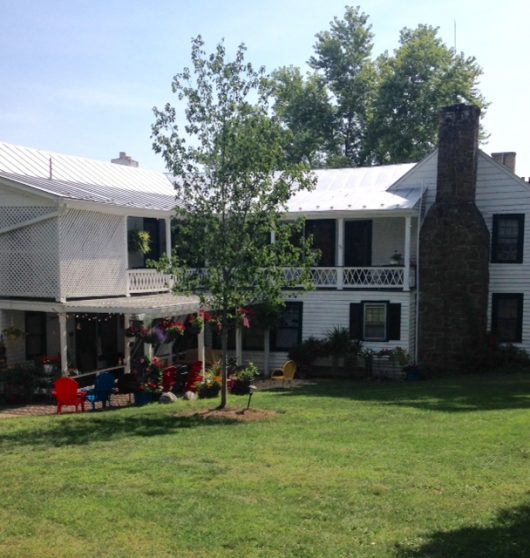
I treasure the constancy of Nimrod—all the things that stay the same. The physical surroundings have been spiffed up a bit from five or so years ago, but it’s basically unchanged: the main building, where hummingbirds gather and people wait for meal bells…
The main building of Nimrod Hall
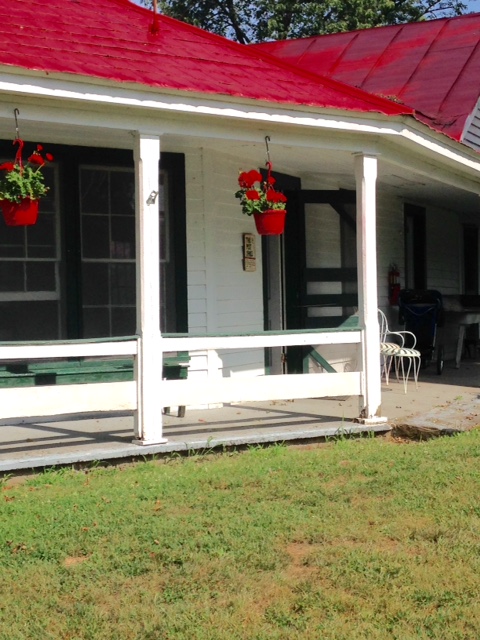
. . . the Old Post Office—which is the only pace where smoking is allowed. You will notice that the smoking porch doesn’t get much business!
The Old Post Office porch
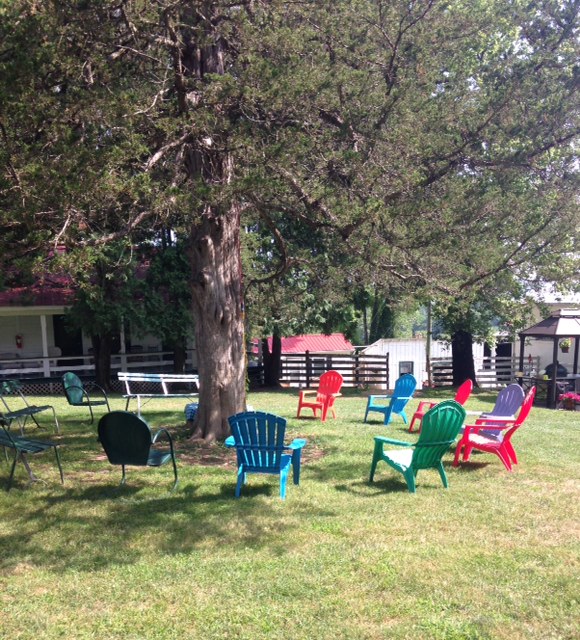
. . . and all the spaces where people could lounge but aren’t, for these pix were taken during the morning, which is sacred writing time, and therefore all good little writers are sequestered in their rooms…
Another thing that hasn’t changed about Nimrod is, as Charlotte Morgan says often, “There’s no such thing as a forced march!” So if one chooses not to write in the morning, that’s fine—as long as one is quiet and doesn’t encourage others to sluff-off.
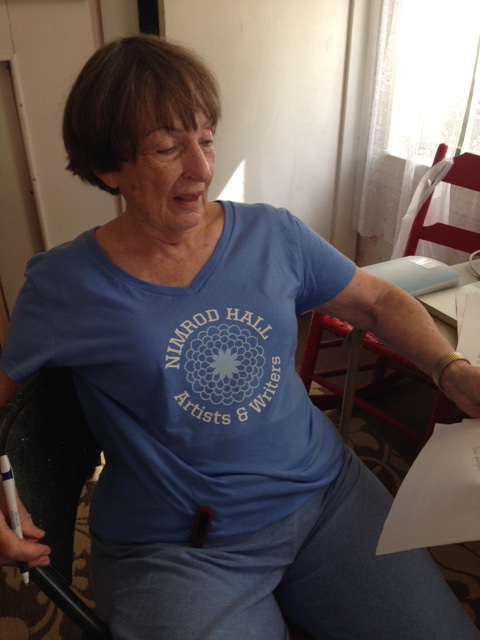
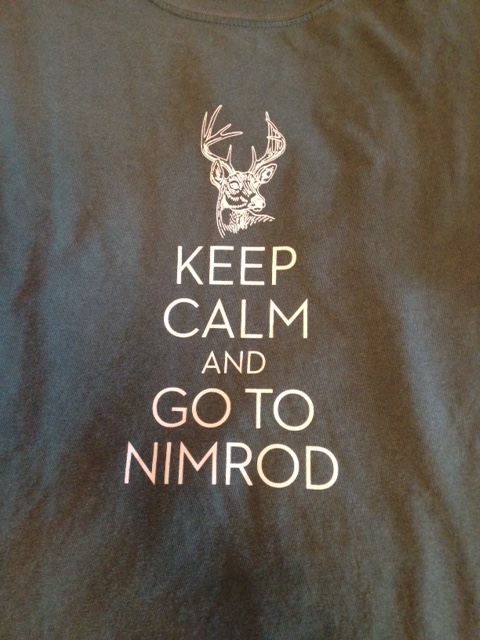
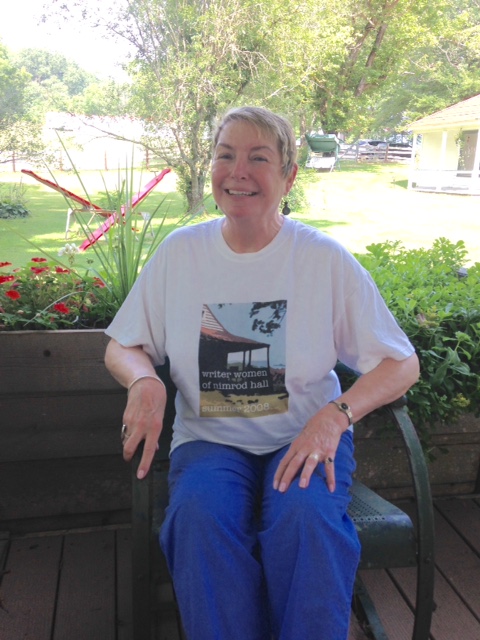
And one more thing that hasn’t changed: every year there are new t-shirts!
Frances Birch wearing a Nimrod t-shirt
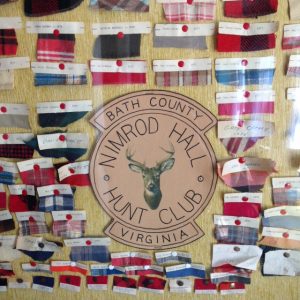
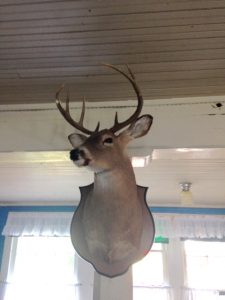
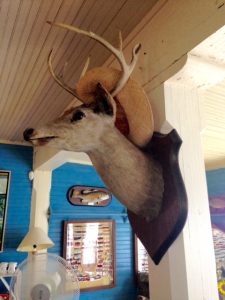
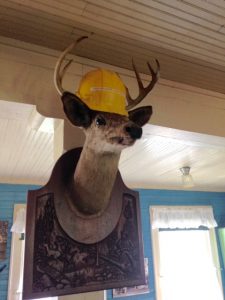
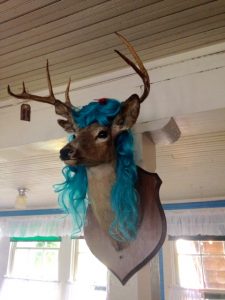
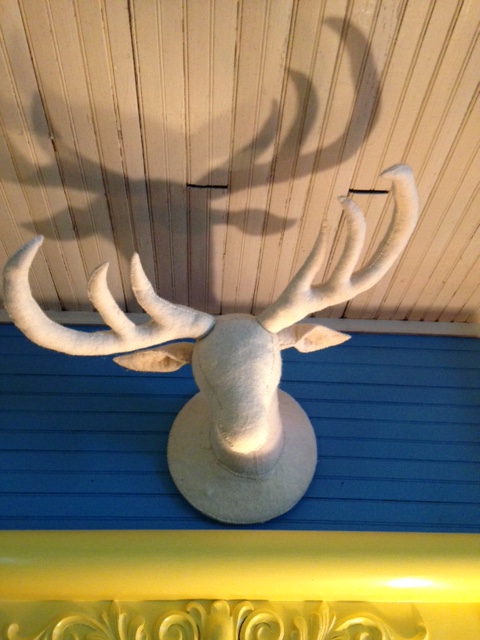
Once upon a time, Nimrod was a hunting camp, and reminders of that past are here still. As you can see from the following pix, the image has morphed over the years from the traditional trophy head to my personal favorite:
There are two new deer this year:
What’s new at Nimrod Hall?
This year, for the first time, there are three writers in residence present at the same time—Cathy Hankla, Charlotte Morgan, and Sheri Reynolds. Oh, if I could work with them all!
Cathy Hankla
Charlotte Morgan
Sheri Reynolds
This year, all the writers mingle over meals and at the 8:00 evening readings:
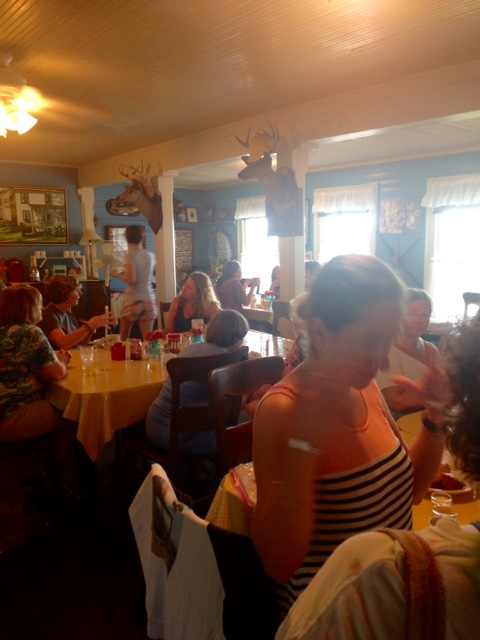
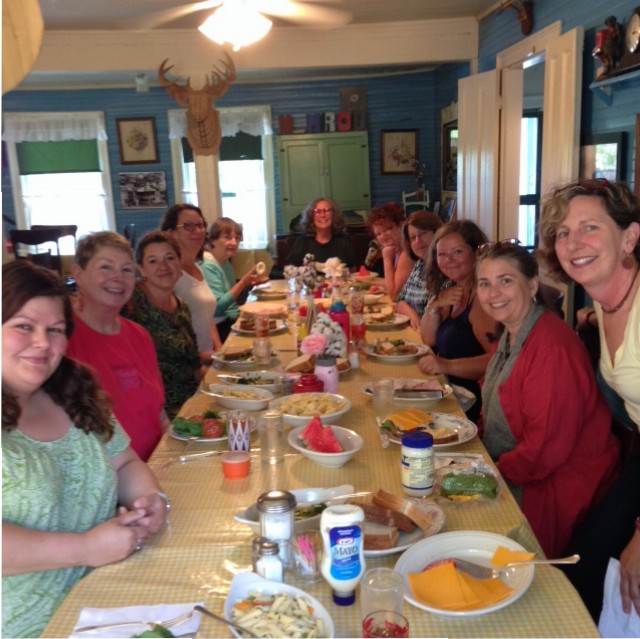
The dining room of Nimrod Hall
Evening reading at Nimrod Hall
Other meeting are much as before—i.e., critiques in small groups and a one-on-one conference with one writer-in-residence. I will meet with Cathy. I’m happy to be here!
Nimrod Hall, established in 1783, has been providing summer respite from everyday stress since 1906. It has been operating as an artist and writer colony for over 25 years. The Nimrod Hall Summer Arts Program is a non-competitive, inspirational environment for artists to create without the distractions of everyday life.
For many years I’ve traveled to Nimrod Hall in Millboro, Virginia, for their annual writing retreat. Nimrod has inspired several of my stories and given me hours of valuable writing time.
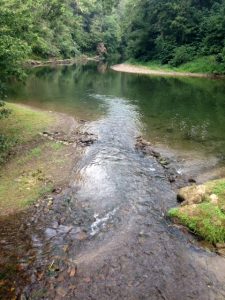
Cowpasture River near Nimrod Hall during my morning exercise
Nimrod Hall, established in 1783, has been providing summer respite from everyday stress since 1906. It has been operating as an artist and writer colony for over 25 years. The Nimrod Hall Summer Arts Program is a non-competitive, inspirational environment for artists to create without the distractions of everyday life.
Surely everyone can name at least one famous writer also famous for drinking. Think Raymond Chandler, Tennessee Williams, Dorothy Parker, Edgar Allen Poe. . . . If not, an internet search will turn up titles like these.
Top 15 Great Alcoholic Writers
Drinking Habits of Famous Authors
Top 10 Drunk American Writers
99 Writers who Were Alcoholics, Drunks, Addicted To Booze, Etc.
25 Great Writers Who Battled Drug Addiction and Alcoholism
All The Drunk Dudes: The Parodic Manliness Of The Alcoholic Writer
‘Every hour a glass of wine’—the female writers who drank
What drives writers to drink?
This last question has led to numerous academic examinations and investigations of the topic.
As for “How to Drink Like Kerouac, Hemingway, and Other Famous Writers,” don’t try this at home, lest you end up on the list of “Famous Alcoholic Writers Who Died of Alcoholism.”
So, although I don’t advise writers to drink, I do advise knowing about alcohol. It’s such an integral part of life in America—celebrations, business dinners, relaxation, sports events, picnics, parties, all sorts of gatherings from weddings to funerals—that one can hardly write realistically without scenes involving alcohol. So here are a few basic facts you should be aware of and ready to justify if you go against them. See below for why your petite female PI would be unlikely to drink a hulking athlete under the table.
Alcohol for Writers: The Facts
In general, bigger people, more muscular people, and males get drunk slower than smaller people, less-muscular people, and females.
Even controlling for height and weight, women absorb alcohol faster and metabolize it slower than men. In other words, they get drunk faster and stay drunk longer.
In general, the health-related problems for women drinkers come on faster and are more devastating than for men.
People get drunk faster on an empty stomach than after a full meal. I’ve read that ancient Romans drank olive oil to coat the stomach before their binges, because that slows-down the absorption of alcohol into the bloodstream.
People who drink regularly and heavily have a greater capacity (tolerance) than those who drink less.
People are more likely to blackout from fast drinking than from slow drinking of the same amount of alcohol.
A standard drink is defined as 1.5 oz.shot of liquor, 5 oz. of wine, or 12 oz. of beer. Most wine coolers are the equivalent of one standard drink. FYI, heavy drinking = anything more than two drinks per day for men or 1 drink per day for women.
Having 2-3 drinks can cause a loss of motor control 12 to 18 hours after drinking. Name your accidental injury—falls, drownings, automobile accidents, etc.—and the incidence goes up with alcohol consumption. Name your intentional injuries—shooting, stabbing, physical violence, rape—it’s more likely to happen with alcohol.
There’s a reason athletes don’t drink before big events. Two to three drinks can deplete aerobic capacity and decrease endurance up to 48 hours after consumption.
Alcohol impairs both learning new information and recalling previously learned information.
Alcohol is a depressant for the central nervous system. People initially get “high” because the first thing to get depressed is inhibitions, creating a willingness to party and live dangerously. But beyond the buzz is the risk of seriously depressing metabolic functioning. A pulse rate below 40 or a breathing rate slower than 8-10 per minute is a medical emergency!
The website brad21.org is a great resource for writers! B.R.A.D. stands for Be Responsible About Drinking. It’s a series of bullet facts, well-footnoted for further reading.
Other Things Writers Should Know
…especially if a main character drinks.
First, perhaps most obviously, you need to decide on a preferred drink. According to bartenders, here are 10 drink stereotypes to help you create the desired impression. (Taken from complex.com, “The Funny Ways Bartenders Stereotype You Based On What You Drink.”)
-Vodka sodas are for people who want to lose weight—or want people to think so—but not enough to quit drinking.
-Jager bombs and vodka Red Bull are for basic bros.
-Blue Moon is for craft beer posers.
-Real craft beer drinkers are actually pretty cool.
-Annoying people act like they invented picklebacks. (Apparently a shot of whisky followed by a shot of pickle juice—really.)
-Buttery Chardonnays are for soccer moms.
-Only rookies drink Appletinis.
-Bud Light is for sporting events and day drinking, not Saturday night.
-Martinis are a classic, classy drink.
-Shots should be taken with a beer or a celebration. (Otherwise they’re for alcoholics.)
For a funny but useful commentary on everything from absinthe to wine see pointsincase.com, in an article titled “What Your Drink Says About You.”
Second, know your character’s drink. Know what it looks like, how it smells, how strong it is, and its taste. Also, whether wine, beer, or liquor, a drinker is likely to have the everyday brand and the special-occasion brand.
Third, know your character’s drinking habits and reactions. Know when, where, under what circumstances, and how much s/he drinks. People usually have a pattern of reaction to alcohol, roughly: fall asleep, talk more, repeat him/herself, verbal abusiveness, physical violence.
Takeaway for Writers
What’s good for characters isn’t good for authors!
Top Ten Tuesday is an original feature created by The Broke and the Bookish. Each week, they provide a prompt for bloggers. This week’s prompt is Ten Facts About Me.
During the first minutes of my first time alone with my future father-in-law (an academic dean), he said, “Tell me. What were the guiding principles by which you were reared?” I’d never given that much thought, but being young and intrepid, I came up with the following—not in any particular order.
If it’s worth doing, it’s worth doing right.
Finish what you start.
If at first you don’t succeed, try again.
Failing is nothing to be ashamed of, but not trying your best is.
Go as far as you can, as fast as you can.
Education is the union card to a better life.
Your word is your bond.
Say what you mean and mean what you say.
Do unto others as you would have them do unto you.
Always be there for family.
It’s better to be the one giving help than the one receiving it.
When all is said and done, be prepared to take care of yourself and yours.
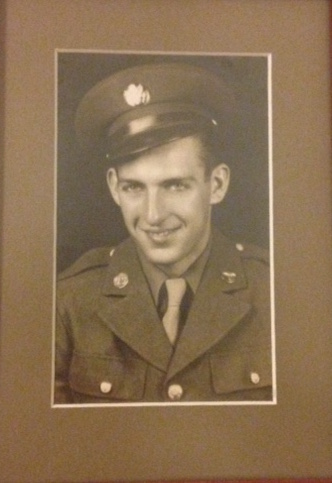
When I think of these guiding principles, I always hear my father’s voice. I always see his face.
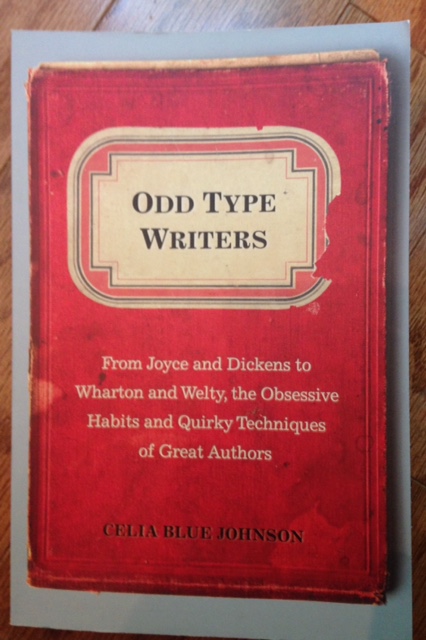
Odd Type Writers by Celia Blue Johnson is a delightful discovery! The subtitle says it all. I recommend it for bedtime, the beach, the doctor’s waiting room, the subway commute. . . Well written, lively, each section short and entertaining.
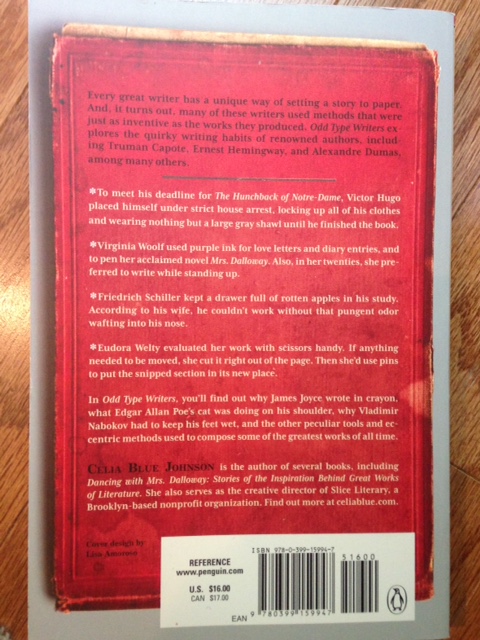
Last week I posted on Why We Write. Consider this book a companion piece to that one. Johnson culled the quirkiest bits and most obsessive behaviors of each author from interviews, websites, biographies, etc. In her own words, “Edgar Allan Poe balanced a cat on his shoulder while he wrote. Agatha Christie munched on apples in her bathtub while concocting murder plots. Victor Hugo shut himself inside and wore nothing but a long, gray, knitted shawl when he was on a tight deadline.” And so much more!
From the Table of Contents
By Unknown; most likely George C. Gilchrest, Samuel P. Howes, James M. Pearson, or Andrew J. Simpson, all of Lowell, MA [Public domain], via Wikimedia Commons {{PD-US}}
Rotten Ideas: Friedrich Schiller
By the Cup: Honoré de Balzac
Feeling Blue: Alexandre Dumas, père
House Arrest: Victor Hugo
A Mysterious Tail: Edgar Allan Poe
The Traveling Desk: Charles Dickens
Paper Topography: Edith Wharton
The Cork Shield: Marcel Proust
Flea Circus: Colette
Traffic Jamming: Gertrude Stein
Tunneling by the Thousands: Jack London
A Writer’s Easel: Virginia Woolf
Crayon, Scissors, and Paste: James Joyce
Leafing Through the Pages; D.H.Lawrence
Puzzling Assembly: Vladimir Nabokov
Outstanding Prose: Ernest Hemingway
Sound Writing: John Steinbeck’Pin It Down: Eudora Welty
Don’t Get Up: Truman Capote
Early to Write: Flannery O’Connor
You’ll enjoy these sketches of famous authors whether you’ve read their work or not! Cover to cover, this is a great read!
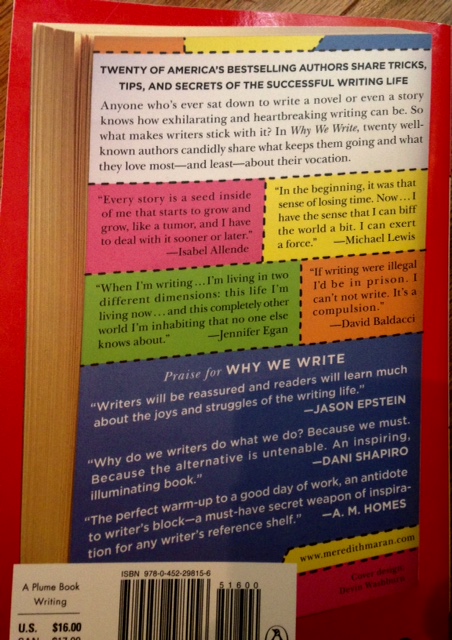
This book, edited by Meredith Maran, presents interviews with 20 acclaimed authors on why and how they write. In case you can’t read the names on the cover, these authors span genres and styles:
Why We Write
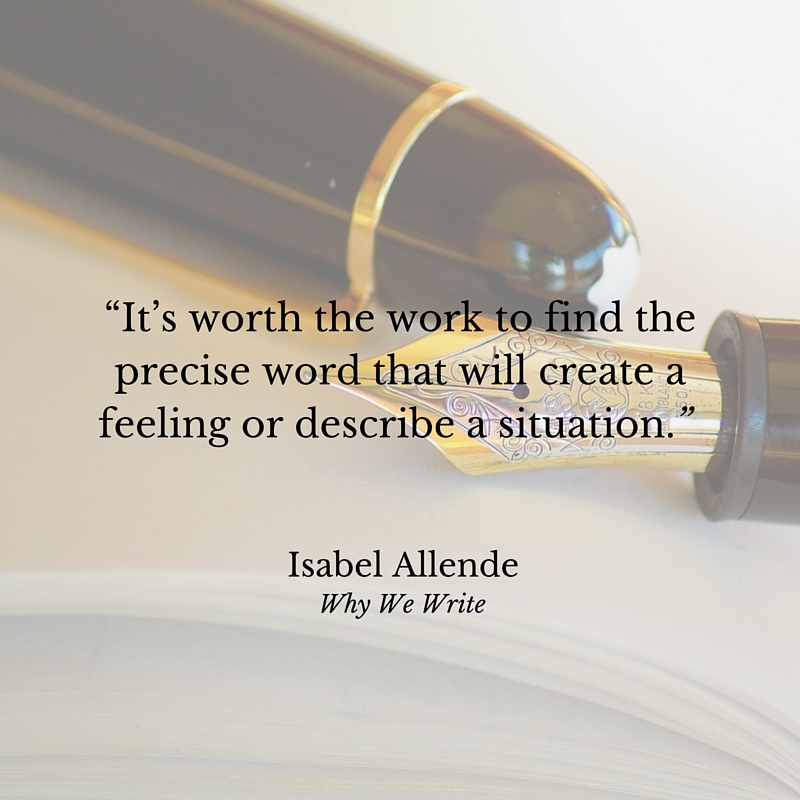
Isabel Allende
David Baldacci
Jennifer Egan
James Frey
Sue Grafton
Sara Gruen
Kathryn Harrison
Gish Jen
Sebastian Junger
Mary Karr
Michael Lewis
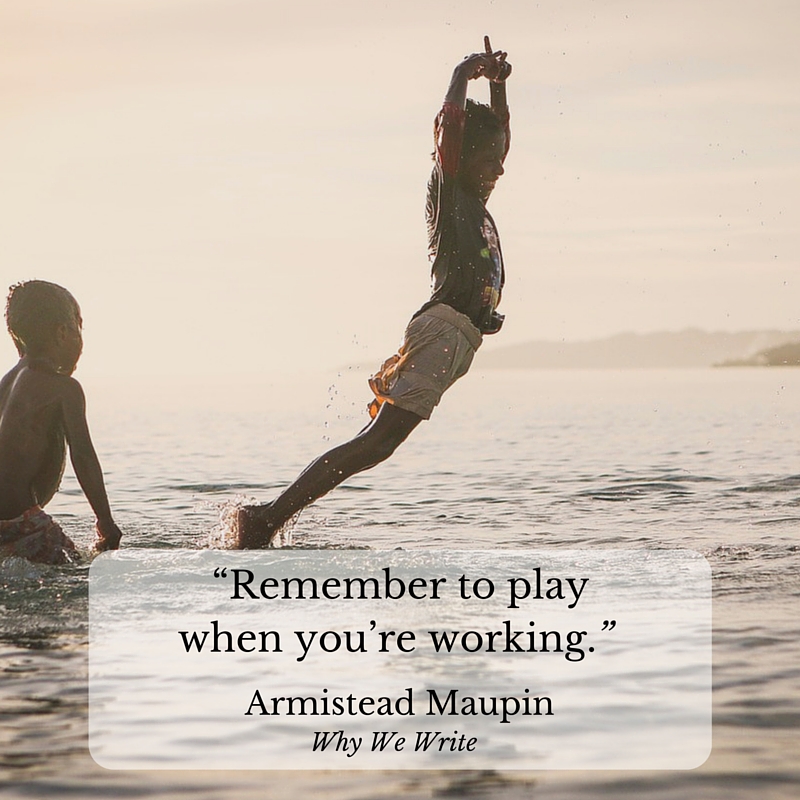
Armistead Maupin
Terry McMillan
Rick Moody
Walter Mosley
Susan Orlean
Ann Patchett
Jodi Picoult
Jane Smiley
Meg Wolitzer
As Maran writes in the introduction, “When the work is going well, and the author is transported, fingers flying under the watchful eye of the muse, she might wonder, as she takes her first sip of the coffee she poured and forgot about hours ago, ‘How did I get so lucky, that this is what I get to do?’”
Alternatively, “And then there are the less rapturous days or weeks or decades, when the muse is injured on the job and leaves the author sunk to the armpits in quicksand, and every word she types or scribbles is wrong, wrong, wrong, and she cries out to the heavens, ‘Why am I doing this to myself?’”
Meredith Maran, Photo by Lesley Bohm
As the interviews show, the creme de la creme of the writing world fly to the same heights and plunge to the same depths as every other writer.
Besides insights into the writing life of eminent writers, Moran gives us their vital statistics, list of collected works, and their Wisdom for Writers. So if you want to know who translates Isabel Allende’s books (Margaret Sayers Peden), how long David Baldacci practiced law (9 years), or when Jodi Picoult was born (May 19, 1966), look no more. Yes, you could find that information online, if you thought to look for it, but here it is, whether you knew you wanted to know or not.
Why We Write Words of Wisdom
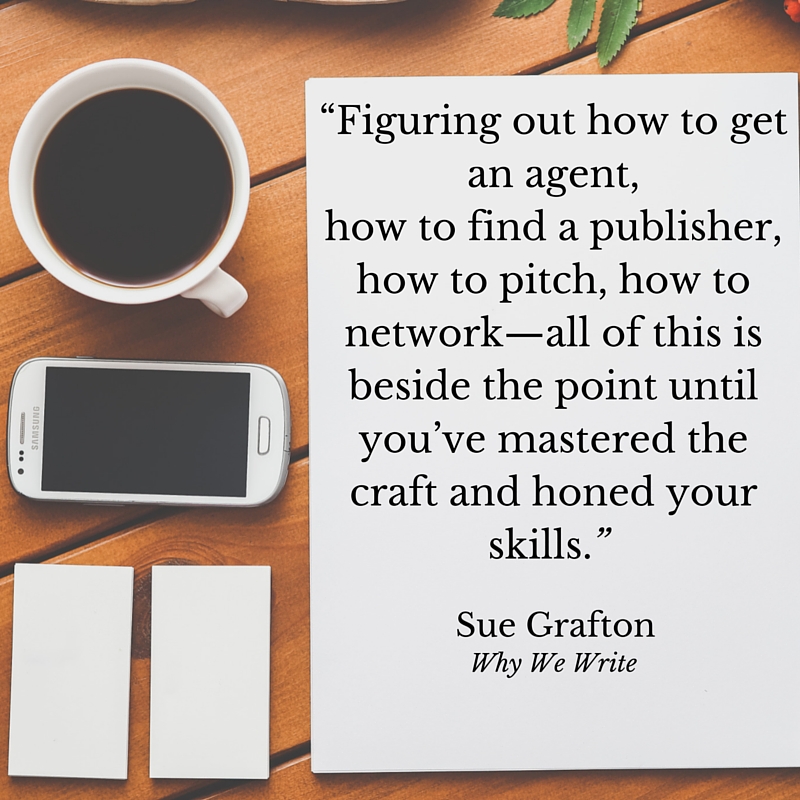
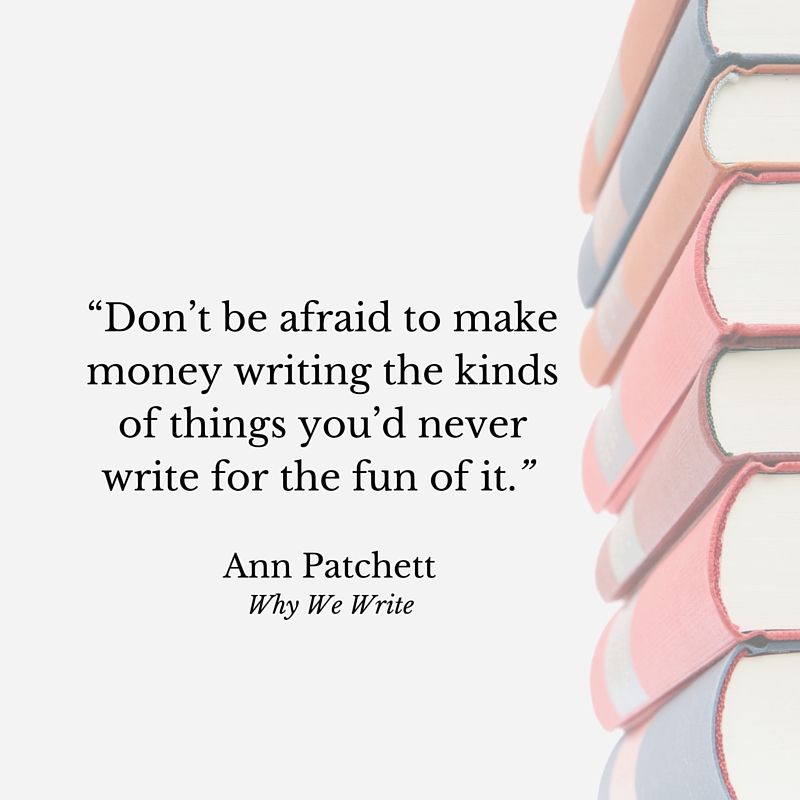
Here are some of the words of wisdom I most took to heart:
According to Gallup polls, over half of Americans say they are at least a little superstitious. Consider the value of superstition for your character(s).
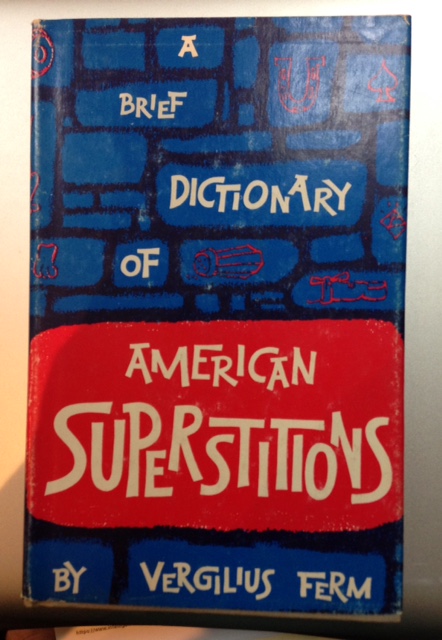
A Brief Dictionary of American Superstitions by Vergilius Ferm
People who are truly not superstitious are nevertheless well aware of what’s associated with Friday the 13th, black cats, broken mirrors, four-leaf clovers, etc. Such people might well make a wish with fingers crossed, or when tossing a coin into a fountain or other water, when blowing out birthday candles, or kissing a horseshoe. If you don’t consider yourself superstitious, you may engage in superstitious thinking or behavior nevertheless, without paying attention—an habitual or non-conscious action. For me, that’s knocking on wood.
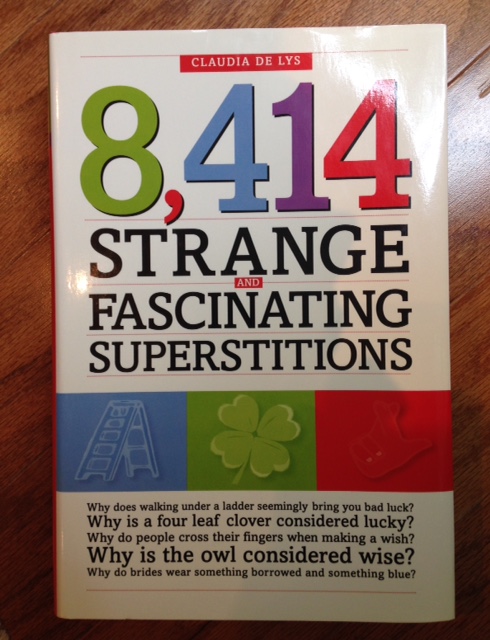
8,414 Strange and Fascinating Superstitions by Claudia De Lys
This collection by Claudia De Lys has an excellent two-page description of this and other wood superstitions, ranging from the balsam needle pillows to wooden rosary beads, traced back to the spirits believed to live in trees that bring on the seasonal changes (life, death, and resurrection) or maintain the evergreen state (immortality). A tree or wood was touched when asking favors and again in appreciation of good fortune received.
Superstitions and characters
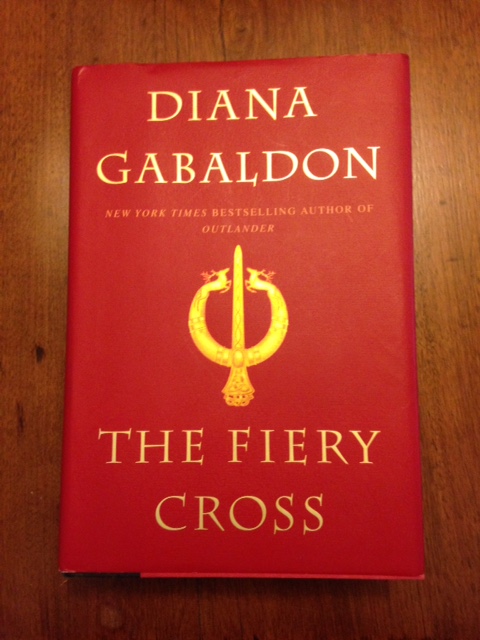
The Fiery Cross by Diana Gabaldon
Diana Gabaldon’s work is an excellent example of effectively using her characters’ beliefs, superstitions, and ritual acts—everything from beliefs about witches and fairies to making the sign of the cross—to illuminate both the characters and the historical context.
Stuart Vyse, Ph.D., author of Believing in Magic: The Psychology of Superstition, is an authority on magical thinking. He differentiates superstition from obsessive-compulsive behavior or other mental disorders and religious ritual, and discusses the functions each serves. I’ll stick with superstition for the sake of (relative) brevity.
Why are people superstitious?
Anything as nearly universal across time and cultures as superstition must serve some beneficial function! In a 2010 paper by Damisch, Stroberock, and Mussweiler, “Keep Your Fingers Crossed! How Superstition Improves Performance,” the researchers argue that superstitions give people a sense of control in chaotic situations. The major outcome of this research was that people who were allowed to solve problems with their lucky charms at hand performed better than when those charms were absent.
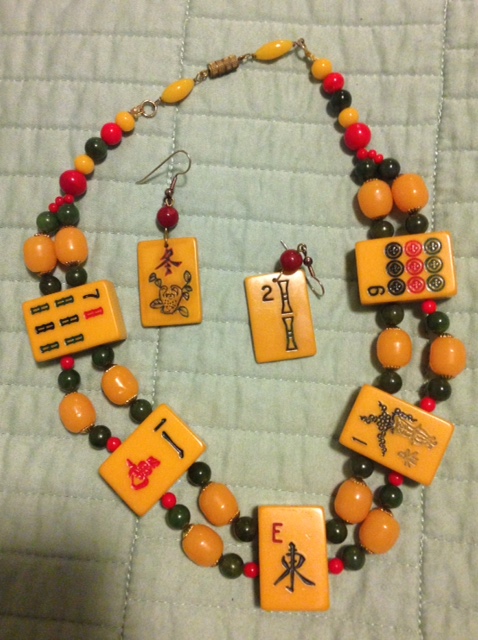
But the important point is that it is performance based. So wearing mismatched socks when playing baseball or tennis—or mah jongg jewelry when deep into that game—might improve performance.
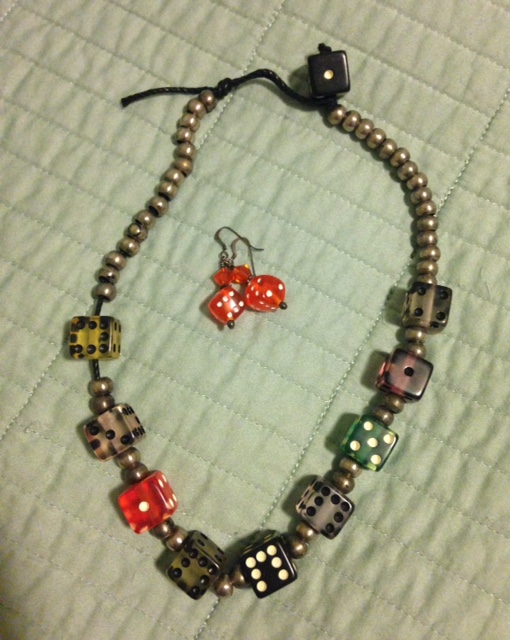
But lucky charms have no impact on outcome when the results are due to chance. So skip the lucky dice—unless you just like the look.
These researchers point out the ways in which this phenomenon may be wide-spread and important, for example in alcoholism. Many if not most members of AA attribute their abstinence to the higher power in their lives giving them strength. If they believe, they are more likely to stay sober.
Photo: Jonn Leffmann [CC BY 3.0 (http://creativecommons.org/licenses/by/3.0)], via Wikimedia Commons
Who is superstitious?
Some people are more superstitious than others—athletes and actors are notoriously so—and superstitions run in families. One example is a Virginia friend who says, “Rabbit, rabbit, rabbit,” first thing in the morning on the first day of each month to ensure a good month. Her daughter in Texas does the same thing. And now they text each other to see who says it first!
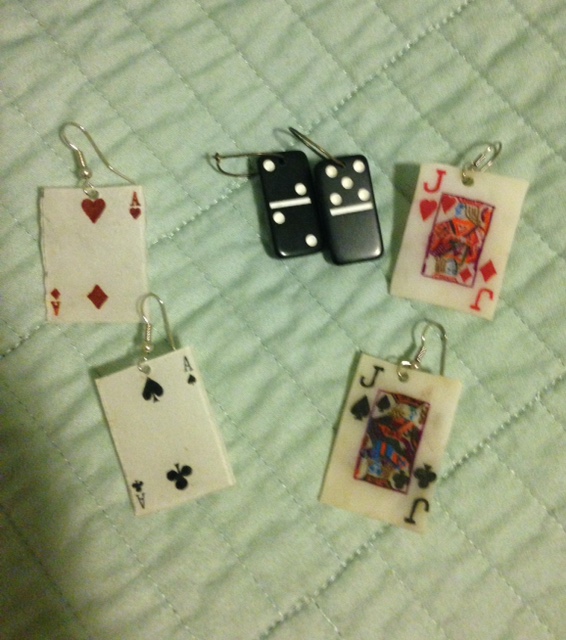
And, incidentally, women are more superstitious than men. Vyse relates this to locus of control. People who have an internal locus of control (I am master of my fate) are less superstitious than those with an external locus of control (life happens to me). Compared to men, women still feel that they have less control in their own lives. So maybe they wear special earrings for dominoes, euchre, and bridge for a reason!
Vyse also makes a connection between performance improvements and effort. He says that lucky charms don’t significantly reduce anxiety, but they do increase persistence. So maybe that’s what’s going on with a friend who happens to be a lapsed Catholic. When she loses something, she still says what she calls “the kid’s version of the prayer to St. Anthony”: Tony, Tony, come around. Something’s lost and must be found. She swears it works.
Truly magical thinking is taking an action that has no logical way to affect the outcome but may bring comfort anyway. A third friend who grew up in a Navy family won’t watch people leave because that means they won’t come back. She attributes this to her life on base, when families would see their husbands/fathers off at the dock but turn away as soon as the ship was underway.
When pressed, many non-superstitious people will admit that they prefer not to walk under ladders, step on graves, or open umbrellas indoors. They prefer to leave a building by the same door through which they entered, and they want to round an object in the path on the same side as their companion. Do you always include money when you give a purse or wallet? Does the recipient of a gift knife have to “pay” the giver at least a penny? Superstitions are everywhere, everyday, not just on Friday the 13th!
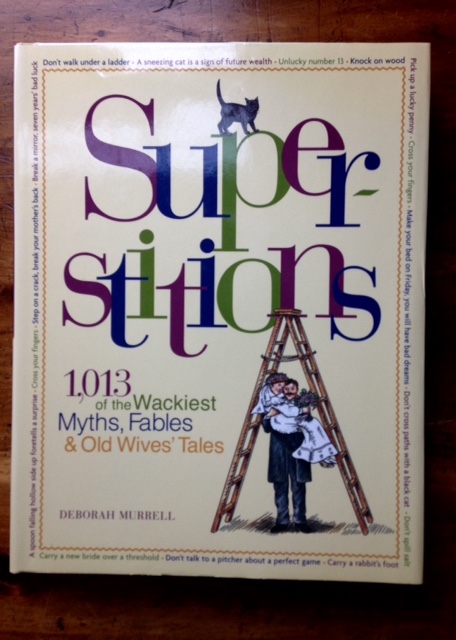
Superstitions: 1,013 of the Wackiest Myths, Fables & Old Wives’ Tales by Deborah Murrell
A Dictionary of Omens and Superstitions by Philippa Waring
Takeaway for writers
Give your characters superstitions and/or rituals. It can add interest, tell something about the person’s ethnic or family background, and illustrate her/his anxieties and feelings of control.