Wind interacts with water much the way it interacts with land. Local breezes are of most significance to athletes such as golfers, tennis players, sailors, and football players—anyone whose goal requires a precise interaction between object and wind, even a light one.
Unpredictable Winds
Waterspout
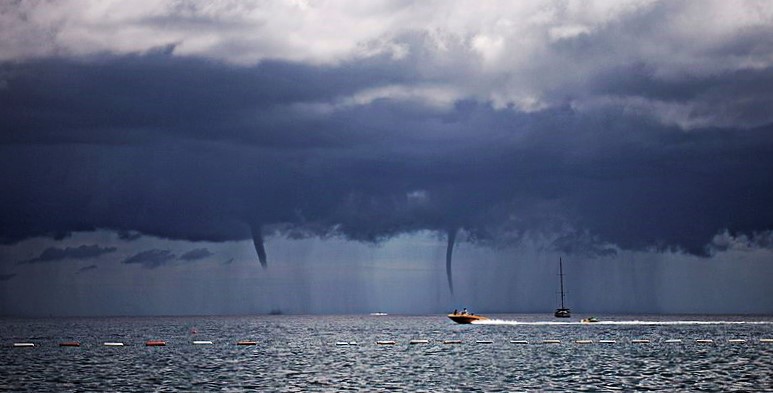
Tornadic Waterspouts in Budva
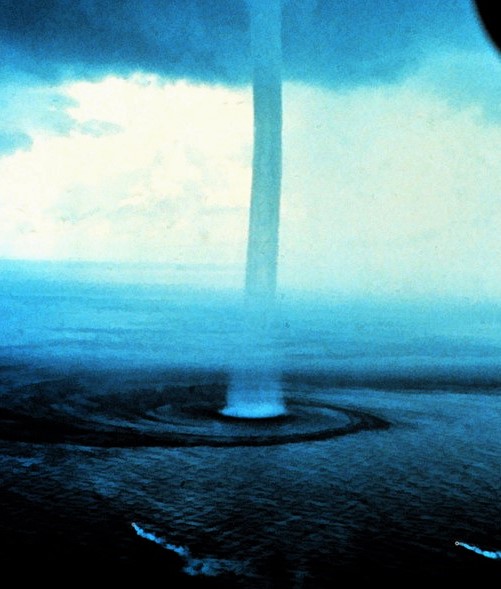
Waterspouts are largely comparable to dust devils on land. They fall into two categories: fair weather waterspouts and tornadic waterspouts.
Fair weather waterspouts are generally not associated with thunderstorms. A waterspout develops on the surface of the water and works its way upward. Fair weather waterspouts form in light wind conditions, so they normally move very little. Typically, fair weather waterspouts dissipate rapidly when they make landfall, and rarely penetrate far inland.
Tornadic waterspouts develop downward in a thunderstorm, and form over water—or (less often) move from land to water. Except for their development, they have the same characteristics as land tornados. They are associated with severe thunderstorms, and are often accompanied by high winds and seas, large hail, and frequent dangerous lightning.
Steam Devils
Steam Devils in Yellowstone Park
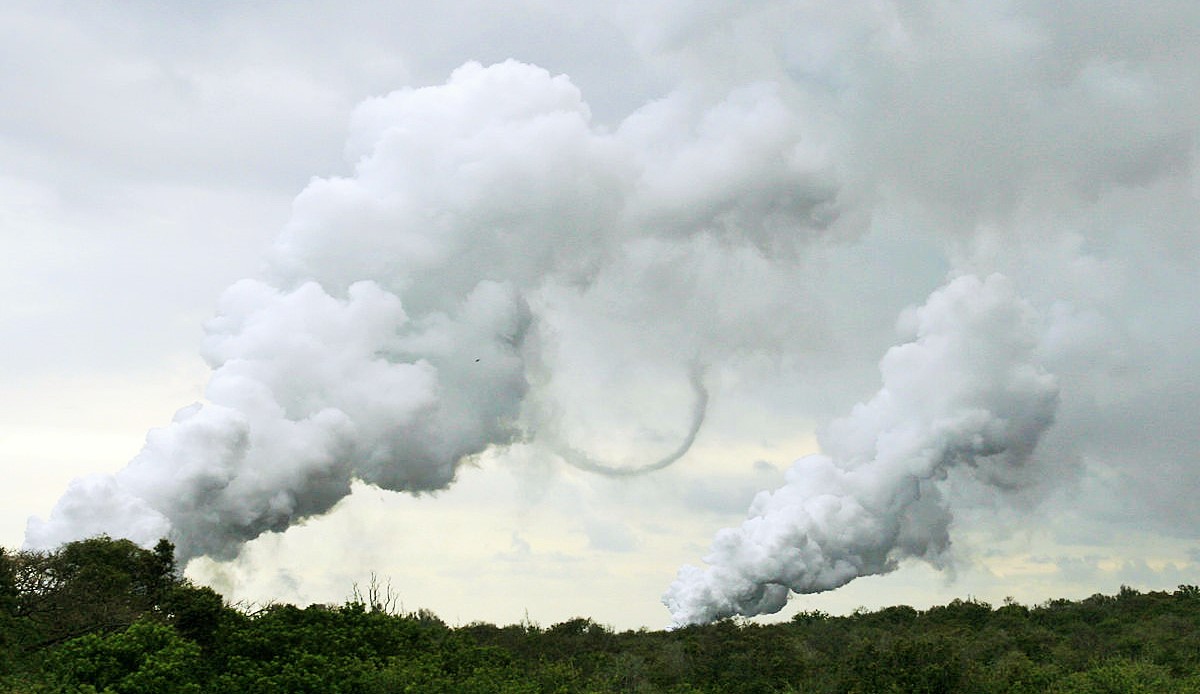
A steam devil is a small, weak whirlwind over water (or sometimes wet land) that has drawn fog into the vortex, which makes it visible.
Steam devils form over large lakes and oceans during cold air outbreaks while the water is still relatively warm, and can be an important mechanism in vertically transporting moisture. They are a component of sea smoke.
Castle Geyser in Yellowstone Park
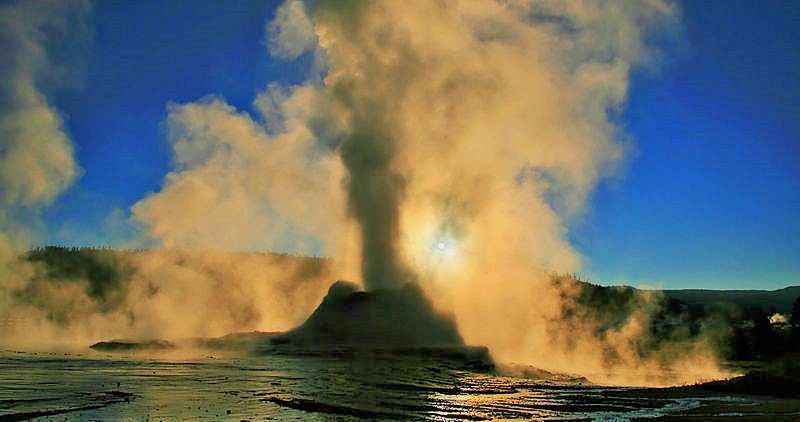
Smaller steam devils and steam whirls can form over geyser basins even in warm weather because of the very high water temperatures. Hot springs in Yellowstone Park produce them on a daily basis, though they tend to be rare in nature.
Steam devils and steam whirls look very ethereal and frequently give rise to stories of ghosts and spirits. Because some of these geysers and temperature changes are regular and some are not, characters living by or traveling through areas “haunted” by steam devils could be seen as cursed, magical, outcast, guarded, etc. by nearby communities.
Tornadoes and Invisible Tornadoes
Invisible Tornado (Mostly)
A tornado is a narrow, violently rotating column of air that extends from a thunderstorm to the ground. We’ve all seen tornados, at least on the news or in movies. As if they weren’t dangerous enough, tornadoes can sometimes be invisible if they don’t pick up any water or debris while spinning around.
Tornadoes can be among the most violent phenomena of all atmospheric storms we experience. The National Weather Service categorizes tornadoes by a number rating, from zero to five, based on the twister’s inflicted damage according to the Enhanced Fujita Scale.
As a narrative tool, tornadoes offer immediate, often unforeseen danger. Even with modern meteorology tools, there is very little warning before a tornado touches down. The destruction caused by tornadoes is often very narrow, arbitrarily destroying one house while leaving its neighbor untouched.
Hurricane, Cyclone, Typhoon
Hurricanes Katia, Irma, and Jose as Seen from Space
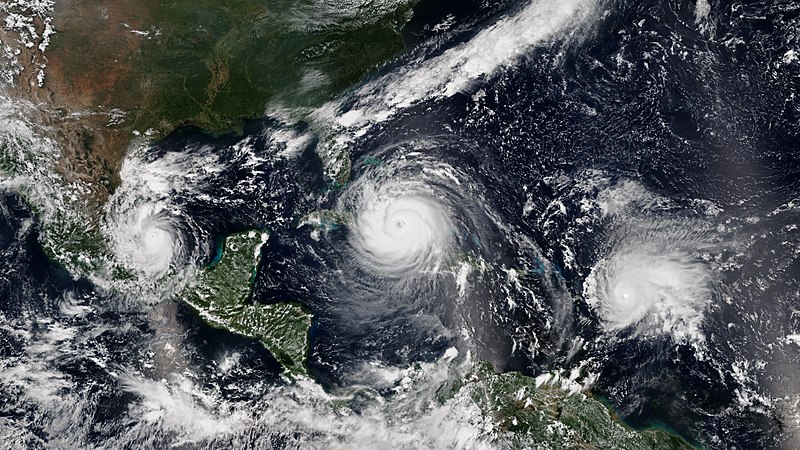
A tropical cyclone is a rotating low-pressure weather system that has organized thunderstorms. Tropical cyclones with maximum sustained surface winds of less than 39 miles per hour (mph) are called tropical depressions. Those with maximum sustained winds of 39 mph or higher are called tropical storms.
When a storm’s maximum sustained winds reach 74 mph, it is called a hurricane. The Saffir-Simpson Hurricane Wind Scale is a 1 to 5 rating, or category, based on a hurricane’s maximum sustained winds.
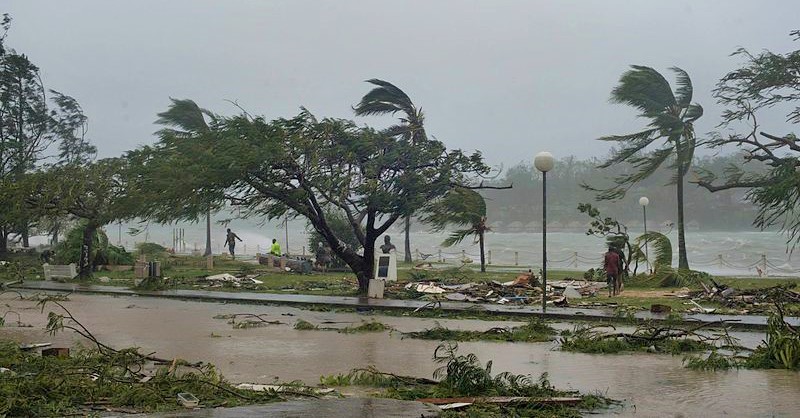
Aftermath of Cyclone Pam in 2015 (photograph by Graham Crumb)
Generally, hurricanes originate in the Atlantic Basin; storms of the same force in the Pacific Basin are called typhoons. “Hurricane” is thought to have originated in Taino, meaning “Wind God.” “Typhoon” may have come from ancient Greek “tuphon” meaning “whirlwind” or “big/ heavenly wind.” According to language, our ancestors thought these enormous storms had a supernatural origin.
Predictable Winds
Although much about the weather is unpredictable—or at least most predictable short term, other weather patters are almost like clockwork. These generally predictable winds are called Periodic or Trade Winds.
Sea Breezes and Land Breezes
Illustration by Bharat Choudhary
These develop due to differences in the temperatures between water and dry land. A sea breeze or onshore breeze is any wind that blows from a large body of water toward or onto a landmass, carrying some moisture; land/offshore breezes blow to sea and are dry.
These breezes are periodic because they are generally predictable, morning and evening. Also, they are relatively localized, and much beloved by beachgoers.
Monsoons
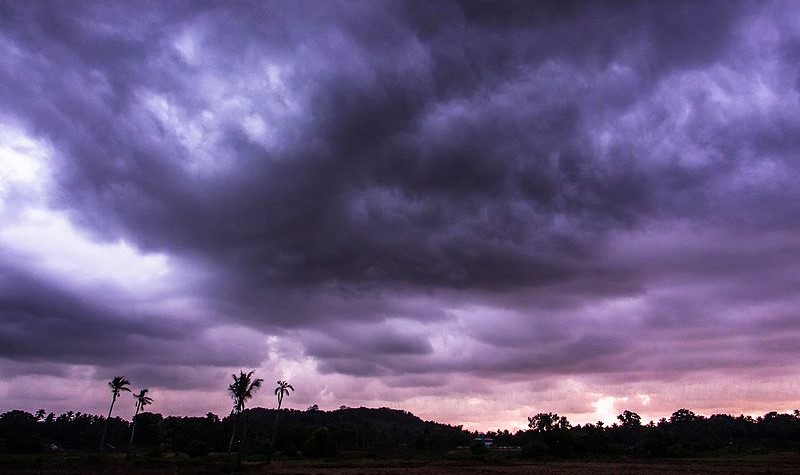
Incoming Monsoon Clouds in Goa, India
A monsoon is a months-long, seasonal, prevailing wind in the region of South and Southeast Asia. Between May and September, the wind blows from the southwest and brings rain (the wet monsoon). Between October and April, the wind blows from the northeast (the dry monsoon).
These rains blow in from the Indian Ocean and Arabian Sea in the southwest bringing heavy rainfall to the area. The temperature difference created by the Indian Ocean, Arabian Sea, Bay of Bengal and Himalayan wall forms the basis of monsoons in the Indian subcontinent.
The regularity of monsoon seasons governs the agricultural patterns in these areas. Changes to the monsoon—if it comes late, brings more or less water than expected, or moves its path—can cause enormous hardship to communities that rely on the crops grown according to expected patterns.
Mountain and Valley Breezes
Illustration by Yue Gan
Valley breeze is the hot air blowing from the valley up to the slopes of mountain slopes. In contrast, mountain breeze is the valley breeze that is the cold air from the mountain flow towards the valley.
Trade Winds and Westerlies
Prevailing Westerlies near Duloch, photographed by Peter Standing
These are permanent, prevailing winds. Indeed, the trade winds and westerlies are the most regular winds on earth. They blow with great force and in constant direction, which is why they are preferred by sailors. The trade winds bring heavy rain falls and sometimes contain intense depressions.
Trade winds blow from North east towards the equator in Northern hemisphere and South East Towards equator in southern hemisphere.
The directions of the Westerlies are opposite to trade winds and that is why they are also called antitrade winds. Trade winds are closer to the equator, in both the northern and southern hemispheres. Westerlies are closer to the poles
Characters might rely on regular trade winds to deliver supplies, escape a coming danger, relay news, or make a profit. Because of their regularity, meetings and departures can be worked into plots as scheduled, expected events.
Bottom Line: When wind meets water, it can be friend or foe.
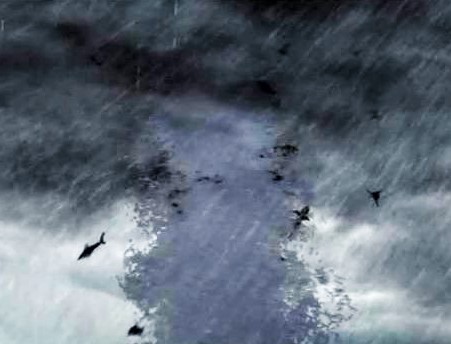
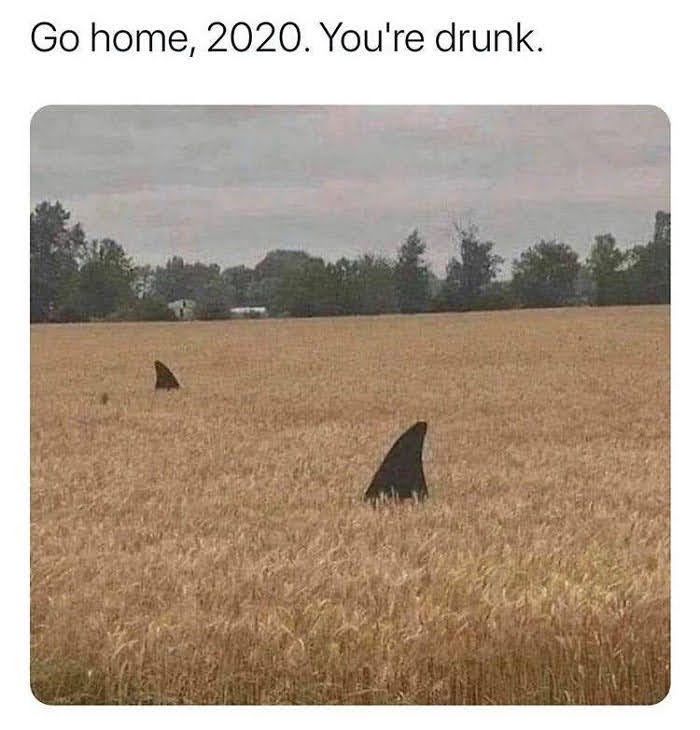
The most unpredictable wind of all is the dreaded Sharknado, which begins as a massive waterspout and sucks up sharks into its vortex. As the Sharknado moves over land, it flings these sharks into the flooded streets to chase down newly available human prey, much to the amusement of movie audiences.
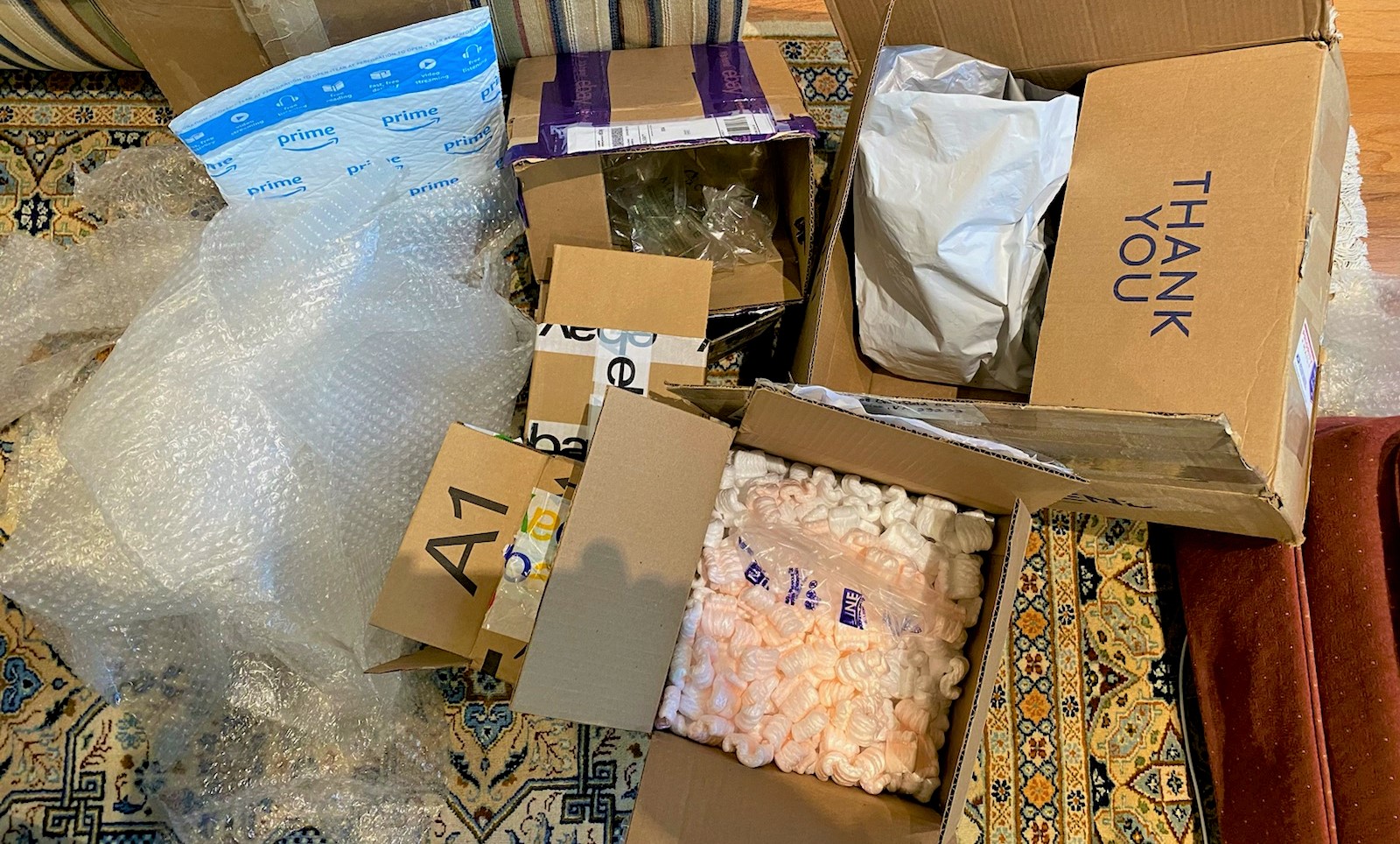
A week ago, I wrote about all the packages that hadn’t arrived before Christmas. Well, as 2021 began, the backlog continued. Again, drawing from my circle of family and friends, the waiting continued.
Some local offices haven’t switched to the newest technology yet.
. .
LJ: I’m SO frustrated. We mailed a box of gifts to Virginia on December 7. It sat in Cuyahoga Falls [Ohio] PO till December 15 before it arrived 7 miles away in Akron regional distribution center, arriving on December 17. It has been sitting there since, no movement shown in the tracking system! I know all the problems they have been having this year, but what is going on now? It only needs to get to Fredericksburg now. Just a little farther…
. .
NP: We’ve had the same problem here. A package G was expecting sat 10(!) miles from our house for more than a week.
Pretty soon, the packages might start opening themselves.
. .
KC: My box is still in Akron. No movement. The cookies are stale.
. .
TB: Me too, L! I hope EL finally got hers.
DA: BTW—we were not nearly as happy with UPS & FedEx. Several packages were randomly tossed “somewhere” in the vicinity of the house. One package (of nice chocolates) sat for a day and a half out in the rain before the meter man saw it & alerted us.
LJ: MJ had a photo of a package he sent to his sister in Buffalo. The Amazon guy left it in the snow. M got the delivery photo notice and he sent it to his sister. If they can’t get up to the house because of heavy snow, delivery people should have some way of notifying the recipient. At least Amazon’s photos help with that.
Good thing this one wasn’t left out in the snow.
TB: Our son’s pkg took almost 3 weeks from Oregon [to Ohio].
LJ: Weird, since the packages I sent to Florida and Memphis arrived at their destinations in time for Christmas with time to spare. Only my East and West destinations were screwed up. Arizona made it yesterday and Virginia is the one still traveling. That was the shortest journey by road mileage.
LJ: Mine is still at Dulles in Virginia; this is the 31st day. It needs to get to Fredericksburg. I’m happy you got yours before the New Year, however.
KC: I received a message on Dec 20 that my package was to be delivered Dec 3! It arrived on the 22nd!
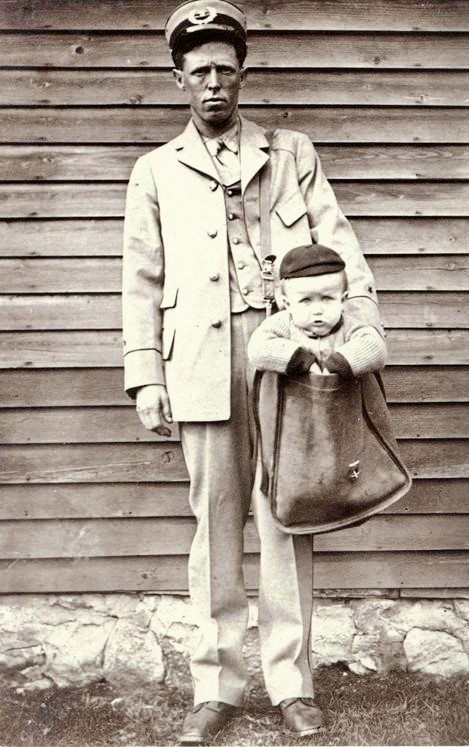
There is a network distribution center in Cleveland that has been severely backlogged since September. Perhaps the letter carriers should upgrade from tricycles.
MH: I think Ohio is the problem! D had an order for pants from LLBean and there were in the center near Columbus for a month! It wasn’t a Christmas present so it didn’t matter. We didn’t realize so many people were having this problem. In Ohio’s defense, I’m sure the diversion of trucks for vaccine delivery and the major storms were a factor.
LJ: There is something wrong with the Ohio to Virginia connection.
SB: Yup, still waiting for mine. Jan 6th now.
DM: My friend ordered a Christmas present for her husband on 12/2 and by 1/4 it still hadn’t arrived!
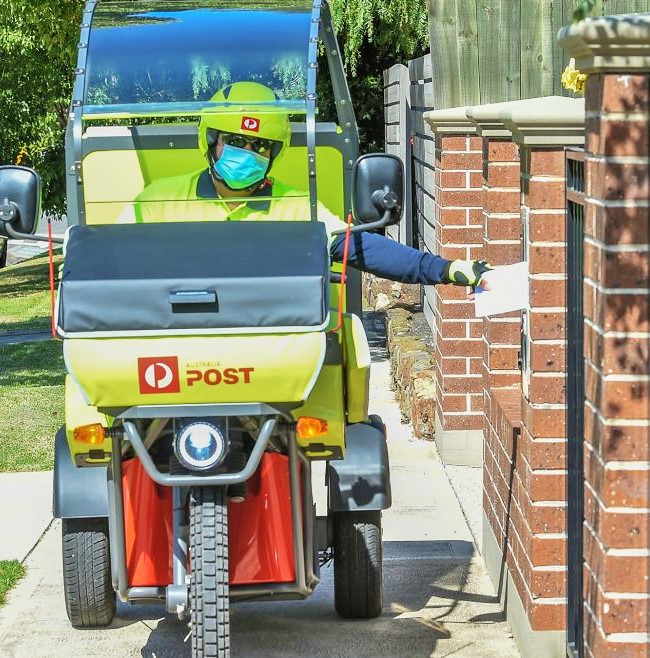
Australian mail is delivered faster because their tricycles are yellow.
DA: We must be the only people alive who had no (zero, null, nada) problems with package delivery. Our mailings to California, New Jersey, and Boston were delivered exactly when the tracking said they’d be. On the other hand, “normal” mail is quite another thing: no regular magazine deliveries (New Yorker, etc.), one priority mail that was sent from Hiram to our Hiram PO Box (for $3.80) took seven days. (Simply bizarre.) Not a single package or card from Europe has arrived yet—but Australian mail has exceeded all expectations. Tell me it’s not a plan to destroy the USPS so that it can be privatized….
[You may recall that in my blog about the Great Delivery Debacle posted 12/29, I offered three possible explanations—other than sheer overload—but an effort to privatize wasn’t one of them!]
Since January 1, a dam seems to have broken—but still no rhyme or reason I can find!
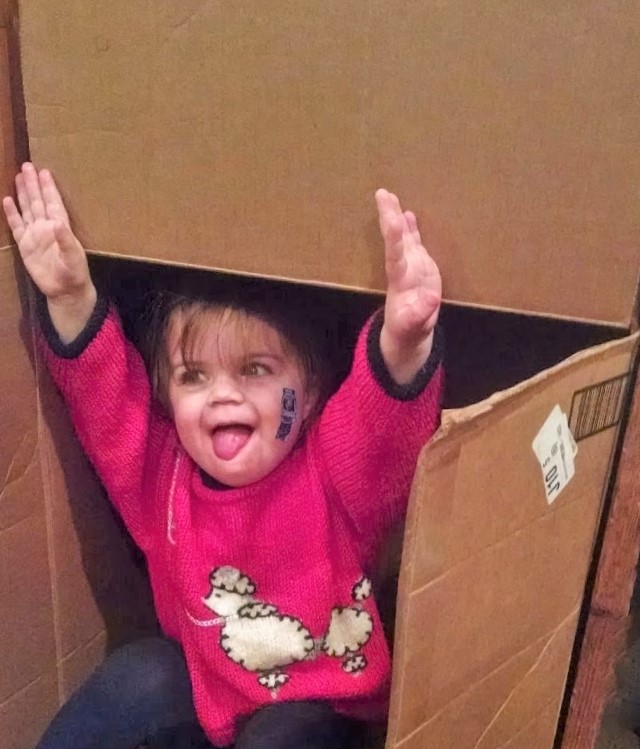
My order of poodles has finally arrived!
January 2-4, I received 11 packages, everything from nutritional supplements to a present I’d ordered to give as a present. Saturday and yesterday packages were delivered morning and afternoon.
Because you must be waiting with bated breath to know about the package from my sister, I won’t keep you in suspense: box of presents she mailed in Lancaster, OH, 12/11, arrived Saturday, 1/2! I was sorry to see that she had paid $20.40 for priority shipping!
Similarly, a standard 8.5X11-inch family calendar mailed from Massachusetts, $9.90 for two-day delivery, arrived after 5 days.
The other packages, mailed from all over the country between December 18 and 28, all arrived together. I noticed that two from Florida on the same day, one priority and one first class arrived together.
Surprise, shock, and awe! An item scheduled for delivery on January 6 arrived January 4!
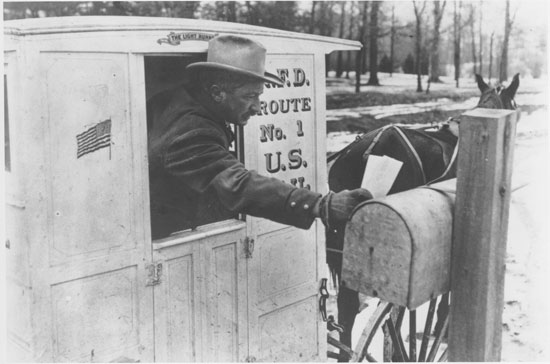
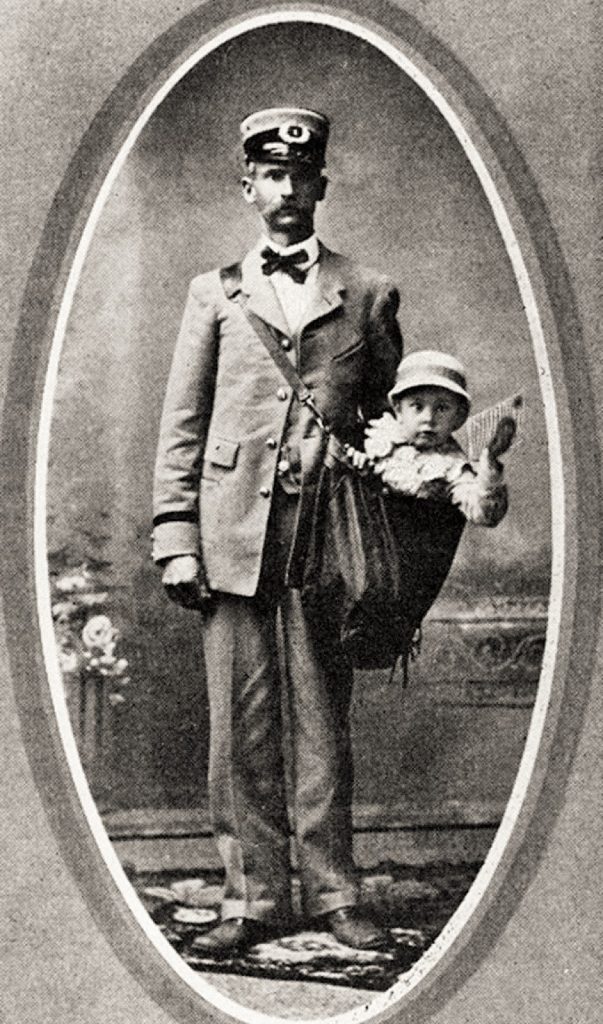
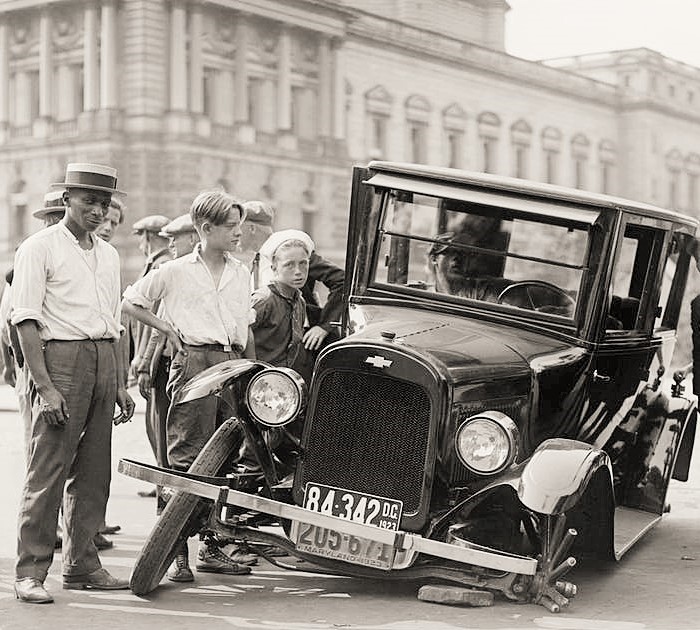
Some of the delivery vehicles are a bit out of date.
There is a method to all of this madness… sort of. Several factors combined this year to delay mail and package delivery schedules in every company. The various delivery services—US Postal Service, FedEx, UPS, Amazon, and others—often work together to carry goods to their destinations.
In particular, the Post Office is often responsible for delivering mail to individual residences in less populated areas, regardless of which company began the shipping. This means that a delay in any of the delivery services almost always ripples out.
Holiday delivery surges happen every year, but this year was extra special! You may remember some disruptions in US mail services from this past year, highlighted again at election time. Many of those disruptions are still in place.
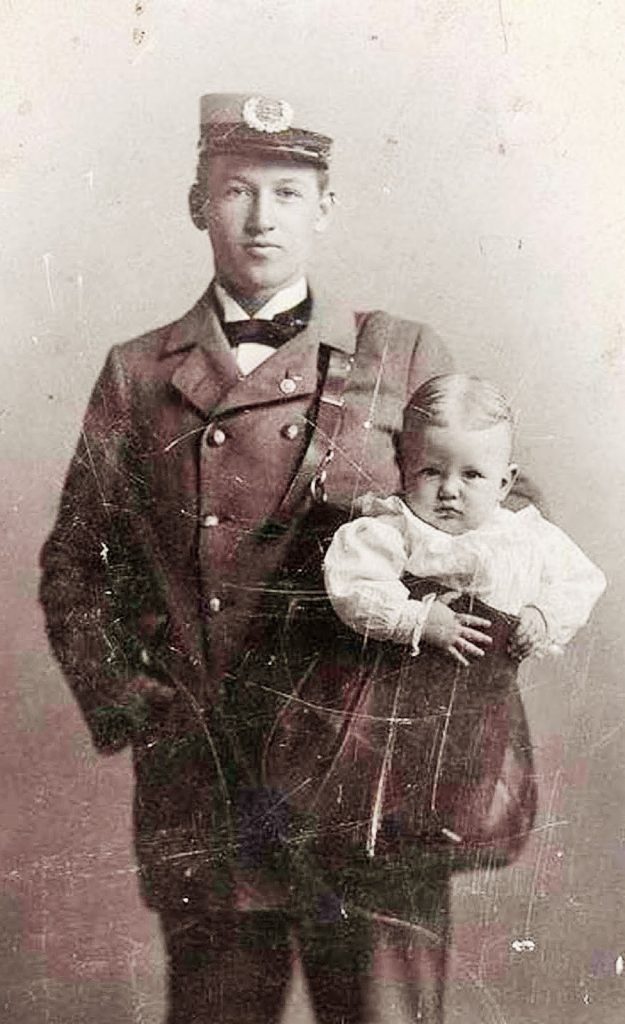
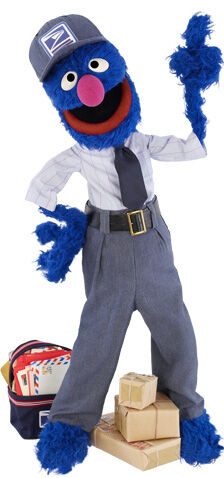
I still think the new guy looks shifty.
Sorting equipment that was removed and destroyed has not been replaced. Delivery trucks have not been serviced and so have broken down. Employees are still exposed to COVID, and many are sick or have passed away.
Kim Frum, a senior public relations representative for USPS, released a statement that read, in part, “While every year the Postal Service carefully plans for peak holiday season, a historic record of holiday volume compounded by a temporary employee shortage due to the COVID-19 surge, and capacity challenges with airlifts and trucking for moving this historic volume of mail are leading to temporary delays.”
Employees at Amazon, FedEx, DHL, Hermes, and UPS also interact regularly with the public and thus are exposed to increased risk of COVID. International service has been disrupted because of travel restrictions. Everyone is dealing with increased volumes because people are ordering things online to comply with quarantine orders.
. .
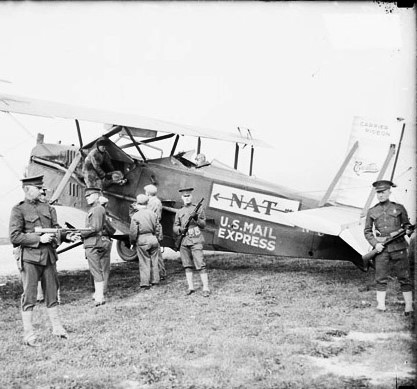
The Postal Police take their job pretty seriously.
The madness comes from playing Russian roulette with your packages. Will your box be the one in the back corner of the truck? Will your letter be the one that won’t fit in the bag and has to be left for the next round? Will your parcel be the one that hasn’t been sorted by the end of the shift and must stay in the warehouse until tomorrow? Most chancy of all: whose mail will that shifty new guy take to the TV studio with him?
. .
Bottom line: I’m waiting to see what the new mailing normal will be.
January is named for the Roman god Janus, the god of beginnings and endings. He’s depicted with two faces, looking in opposite directions. In any event, this is the customary time of year for people to take stock of what was and what’s to come.
In the most basic terms, we do know some things about 2021 for an absolute certainty. 2021—MMXXI if you’re particularly old-fashioned— will be a common year (not a Leap Year) starting on Friday of the Gregorian calendar. This is the 2021st year of the Common Era (CE) and Anno Domini (AD) designations, the 21st year of the 3rd millennium, the 21st year of the 21st century, and the 2nd year of the 2020s decade.
2021 Chinese Zodiac Predictions
Metal Ox, not Math Ox
In the Chinese Zodiac, 2021 will be a year of the Metal Ox beginning on February 12th (2020 was a Metal Rat). According to custom, the Ox is very hardworking and methodical. In the year of the Metal Ox, we should all focus on relationships of all kind (so let’s hope we don’t have to keep social distancing too much longer).
The Ox is also associated with hard work and responsibility, so expect lots of that in 2021 as well. The repercussions of previously made decisions will hit this year (oh boy!), but at least all our hard work will be rewarded.
2021 Angel Number Predictions
Angel Numbers are a branch of numerology based on the idea that groups of reappearing numbers or sequences of numbers are coded messages from angelic protectors.
The Angel Number 2021 symbolizes faith, whether it be in your guardian angels, your relationships, or your own intuition. Don’t doubt that your angels have good plans for you and that allowing change will bring progress. Seeing Angel Number 2021 indicates that you need to control your thoughts more, as they can affect your reality.
As per the Numerology Horoscope 2021, this year will be good for you financially. You will have a balanced and flourishing family life. Though you may face some stressful situations in the middle of the year, you will gradually overcome those challenges with your understanding and wisdom.
What about 2020?
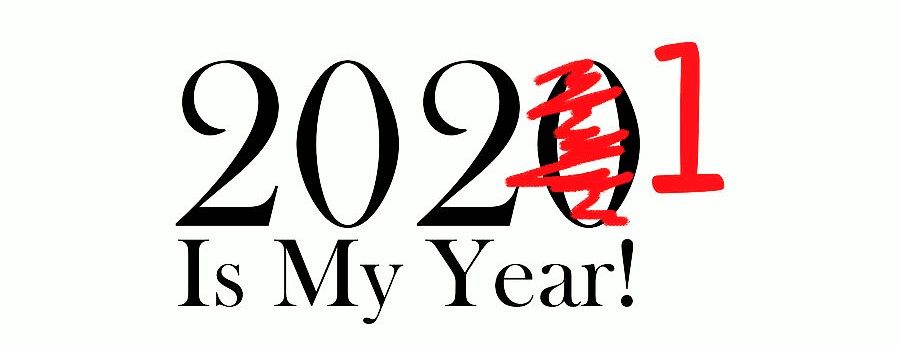
In general Numerology, 2020 is like 1616, 1717, 1818, and 1919, because the first two digits match the second two digits. Being alive in 2020 is special because it is the only year you are likely to live through wherein the first two digits will match the second two digits—unless you believe in cryogenics or reincarnation.
At what point do therapists start offering bulk discounts?
The energy represented by the number 2020 has a resonance of focus and relationships. It also resonates with conscientiousness, pragmatism, and teamwork.
Apparently, the Angel Number 2020 was telling us all to be prepared for what is coming our way. Guardian angels were telling us that extreme changes were about to enter our lives. Had we paid attention, perhaps we would have been more prepared, both mentally and physically.
“The year 2020 ushers in the Universal Year 4 – a number representing stability, organisation, industriousness, convention, and a mini-wealth cycle,” said Gracy Yap, a Singaporean numerologist and author of Secrets Of Golden Numbers. Jan 3, 2020
It seems everyone said 2020 would be a year of healing and big changes. Well, that was half right.
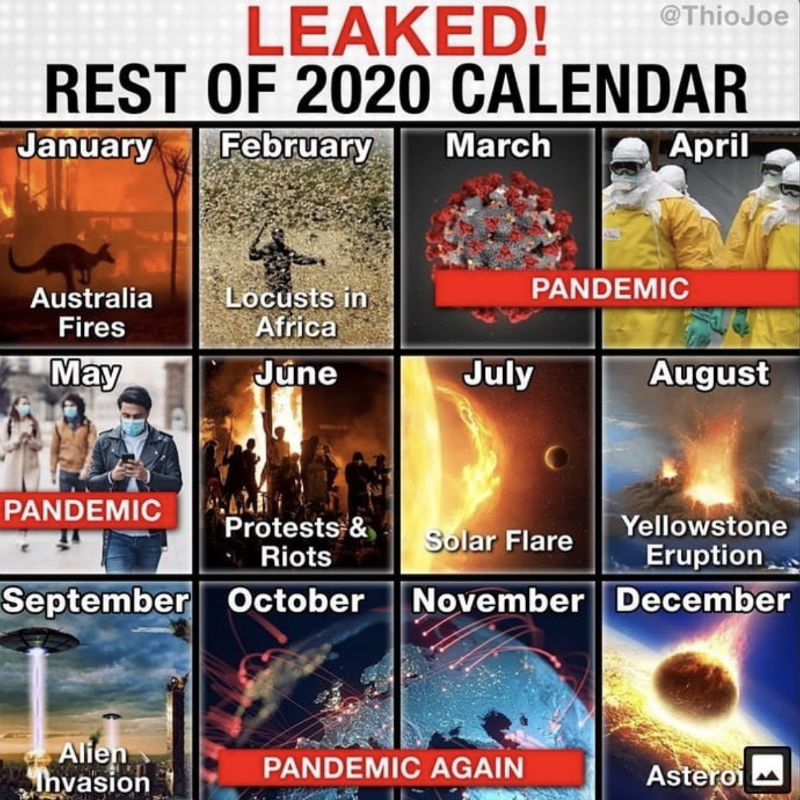
Interestingly, no one foretold the COVID-19 pandemic or the upheaval surrounding our presidential (and other) elections. Massive wildfires in Australia and California, murder hornets, flesh-eating bacteria in Mississippi, swarms of locusts in Africa, and wide-spread civil unrest in Belarus, Lithuania, Poland, America, Hong Kong, and Sudan… none of these were mentioned in all those 2020 predictions.
Bottom line: We have every reason to believe that 2021 will be a good year, new president in place and COVID vaccinations injected. But don’t count on it!
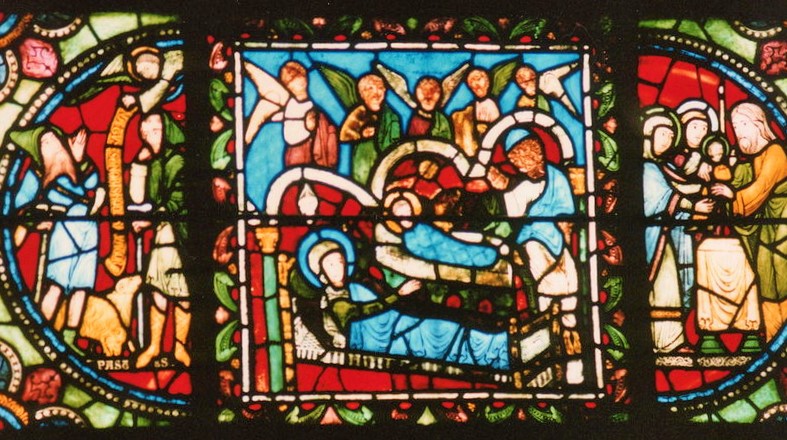
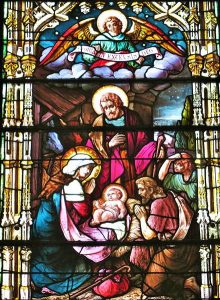
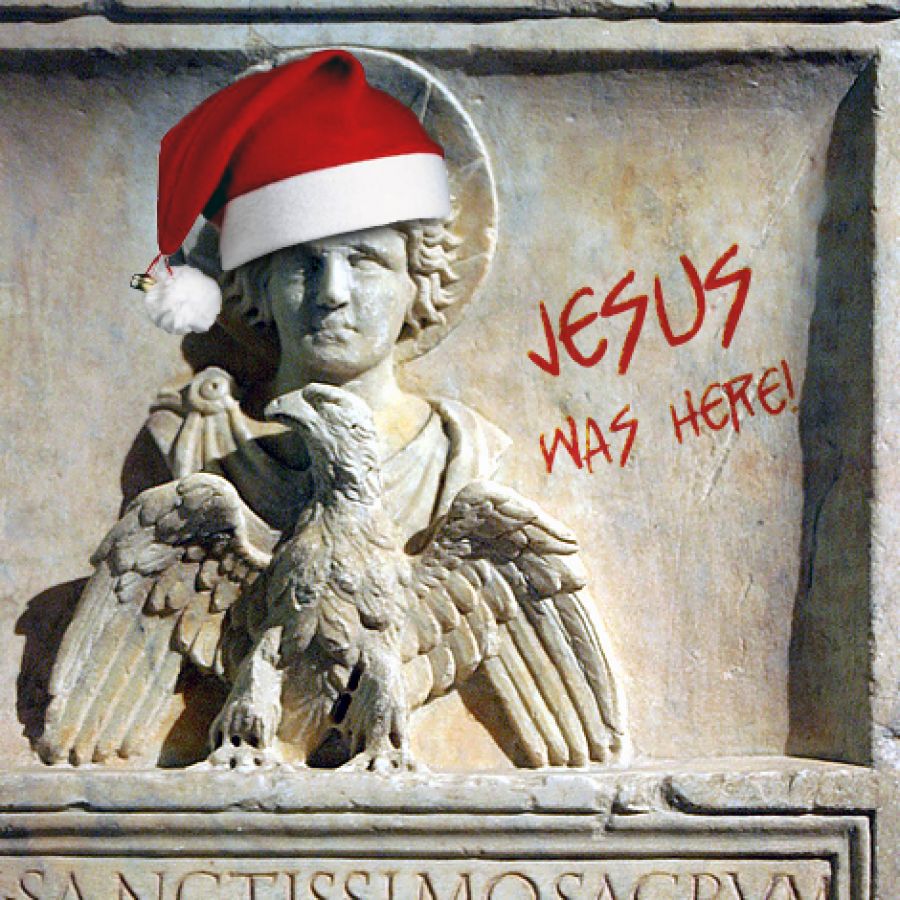
The logical answer would be, “We celebrate the birth of Christ on December 25th because that’s when He was born.” But in this instance, the logical answer is probably wrong.
Neither the Bible nor any other record dates Jesus’s actual day of birth. In addition, the season when shepherds would be watching their flocks by night and when the census was taken would argue that the actual birth was either spring or autumn.
According to Stephen Nissenbaum, author of The Battle for Christmas, early Christians weren’t bothered by not knowing Jesus’s birthday for “It never occurred to them that they needed to celebrate his birthday.”
Further, according to Nissenbaum, the Church got into something of a crisis, with people tending to believe that Jesus never existed as a man. Instituting a birthday celebration was a way to counteract that trend.
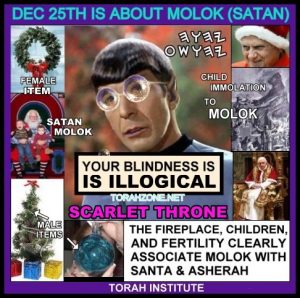
The first recorded date of Christmas being celebrated on December 25th was 336AD, during the time of the first Christian Roman Emperor, Constantine. Perhaps he chose that date because Pagan Romans would be celebrating the Winter Solstice, Saturnalia, and “Dies Natalis Solis Invicti” (birth of the unconquered sun god, Mitra) anyway.
Another possible explanation stems from Jewish tradition. Male babies were circumcised and given their names eight days after their birth. Church elders may have settled upon the beginning of the new year as the Naming Day of Jesus; eight days before that would be December 25th.
Pope Julius I is said to have declared that the birth of Jesus would be celebrated on the 25th of December. However, the sources for this claim are extremely questionable.
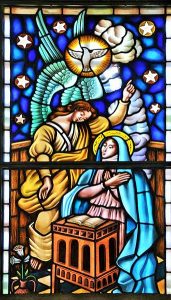
One very early Christian tradition held that on March 25th the Angel Gabriel told Mary she would have a very special baby. The Annunciation is still celebrated on March 25th—and nine months later is December 25th.
The early Church celebrated Christmas, the Epiphany, and the Baptism of Jesus all on January 6th. In some parts of the UK, January 6th is still called Old Christmas.
Then, too, not everyone celebrates Christmas on December 25th even today. Many Christians use other dates or December 25th on non-Gregorian calendars. The dates below are all Gregorian.
January 6–The Armenian Apostolic Church and the Armenian Catholic Church
January 7–Eastern Orthodox and Byzantine Rite Catholics in Russia, Georgia, Ukraine, Macedonia, Moldova, Montenegro, Serbia, Greek Patriarchate of Jerusalem, Ethiopian Orthodox Tewahedo Church
January 7 or 8–Coptic Orthodox Church of Alexandria
January 19–The Armenian Patriarchate of Jerusalem.
If you’re particularly bored (or really itching for a fight) in the next few weeks, go online and declare that you know the definitive birthdate of Jesus. No matter what date you claim, people will swarm to prove you wrong.
Arguments both for and against December 25th can be rather, er, creative.
Part of the downside of Christmas is this myth that everything and everyone is merry and bright, and if you aren’t, you must be a Scrooge. Or a Grinch. Or Burgemeister Meister Burgher. Indeed, much of what follows also applies to Hanukkah, Kwanzaa, Ōmisoka, and other holidays too numerous to mention. Almost everyone (every character?) suffers one or more of these downsides of typical celebrations.
Exposure Fatigue
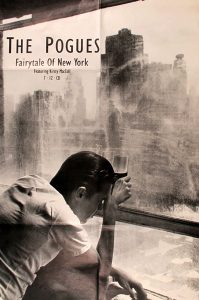
“Fairytale of New York” by The Pogues reflects the loneliness despair of Christmas.
Going into a store in October and see “decorations” for Halloween, Thanksgiving, AND Christmas
Christmas music that begins to be played everywhere before Thanksgiving
Christmas music gets old fast, particularly for people working in retail
Commercials touting the “perfect” gift
The pervasiveness of sappy Christmas movies (and over-exposure to the good ones, such as “It’s a Wonderful Life” and “Miracle on 34th Street”)
Physical Fatigue
Decorating
Food preparation
Package wrapping and/or mailing
Attending celebratory events, especially navigating office/work place parties
Divorce lawyers have their busiest month in January
Financial Strains
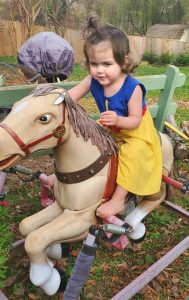
Why does everyone want a pony?
Feeling pressed to give a gift of equivalent value, even when the “gift lists” for giver and recipient aren’t the same
Dealing with a year when one’s gift-giving must be cut/downsized in number and/or expense and it will be obvious
Higher electric bill for huge outdoor displays
Travel, tickets, decorations, food, etc., can drain bank accounts and max out credit cards even without buying gifts
Physical Health
Emergency room visits are up 5-12% around Christmas
Slips and falls on icy walkways or while putting up decorations
Sharp object injuries from unfamiliar cooking utensils, new toys, assembling gifts
Falls from a height
Workplace accidents
Abdominal discomfort from overeating
Psychiatric disorders exacerbated by stress and crowds
Poisonings
Incorrectly prepared food
Overconsumption of alcohol
Disruption of healthy patterns
Abandoning diets or eating irregularly
Loss of sleep
Failure to follow doctor’s instructions for treatment and/or medication
A typical Christmas meal is likely to be two-to-three times the recommended daily calorie count
Indulging in meals, cakes, pies, chocolates, or whatever sweets
Cookies, biscuits, candy, homemade treats brought in to the workplace or shared by shops for the entire season
Stress levels are almost certain to be higher than usual
Stress contributes to heart disease, stroke, and cancer
Stress leading to immune system breakdowns, leading to colds, for example
Mingling with more people exposes them to more infections, especially flu and flu-like symptoms
Falls, cuts, and burns result in tens of thousand of visits to the ER
Alcohol consumption resulting in alcohol poisoning, broken bones from skips and fall, car and home accidents, etc.
Domestic violence is up about one-third compared to an average day
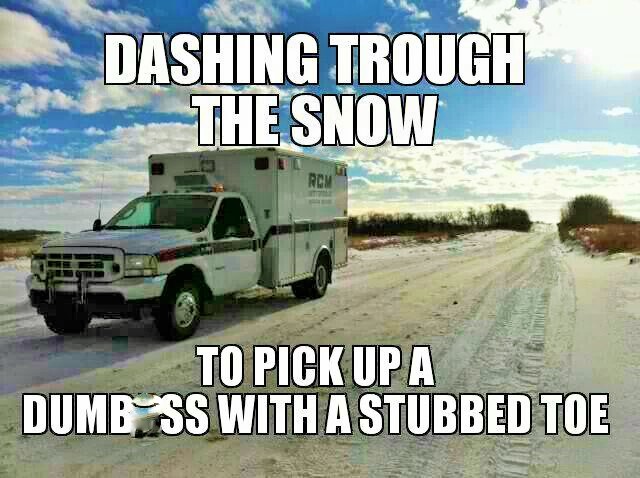
An ambulance driver explained it to me this way:
“It’s like everyone’s on a hurt-yourself schedule, same every year. Early morning starts with the drunk drivers going home from parties, sometimes the homeless with hypothermia, depends on the weather. Then the kids get up way too early and open their presents and start hitting each other with them or falling off anything with wheels and breaking any bone you can think of.
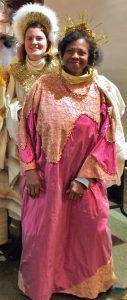
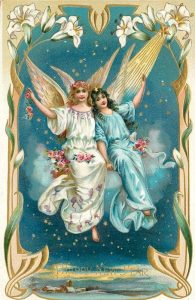
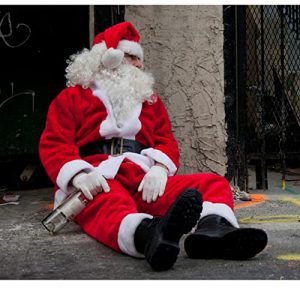
Even the angels are drinking too much!
“After that, you get a mix of cooking accidents and alcohol poisonings through the afternoon. Eventually, people hit their limit with family, have too much to drink, and start beating on each other. That’s also about the time ‘lonely hearts’ start calling us, asking to go to the hospital just because they have no place else to go and they don’t want to be alone.
“People eat too much at dinner and get the ‘too-much-macaroni sweats.’ They get heartburn and think they’re having a heart attack. We get more alcohol calls, either people fighting or passing out.
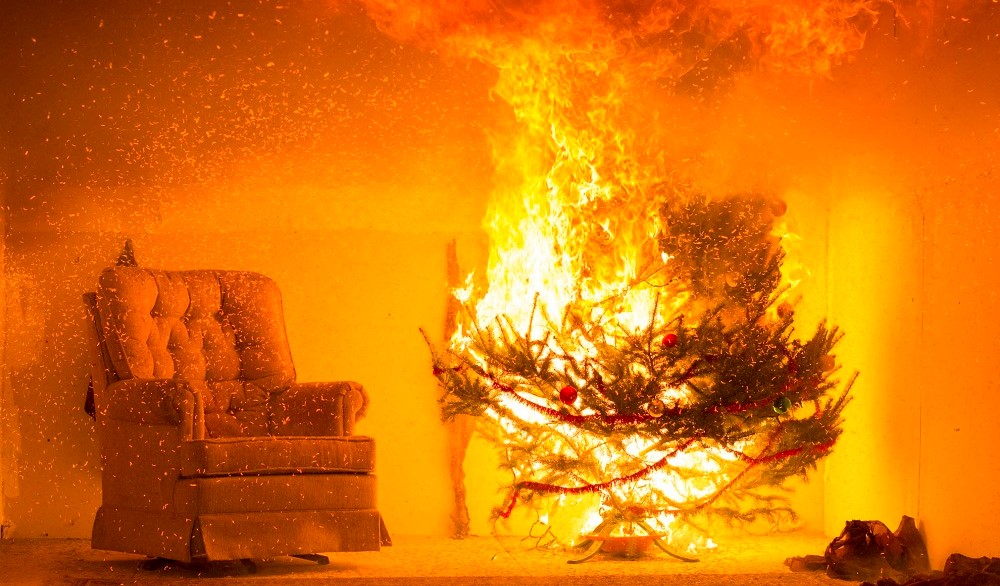
“And then everyone heads home, driving drunk. Better hope your tree doesn’t catch on fire. Happy Holidays.”
Mental Health
There is a MYTH that suicides peak around Christmas – they actually peak in spring
That said, it is breakup season
The peak breakup time is the two weeks before Christmas
Overall, holiday depression is a real thing
Family conflicts
Financial woes
Expectations of perfection
Singles watching couples get all mushy
Loneliness is highlighted, especially for older people who live alone and have no one available with whom to celebrate
People 65 and older are twice as likely to spend Christmas alone, compared to younger people
The loss of a family member—previous or recent—is especially painful
Being/fearing being left out of desirable events
Mistletoe invites unwanted advances
People with birthdays anywhere near Christmas often find the events conflated
Dealing with someone who has problems, like alcoholism or domestic violence
Wishing to skip Christmas because of other events in one’s life
Accessing helpful services that normally help one cope can be more difficult
Finding other religious festivals or holidays fade in comparison to Christmas
Overall, people are more likely to experience anxiety, sleep disturbances, headaches, loss of appetite, and poor concentration
Call rates to help hotlines spike on Christmas Eve
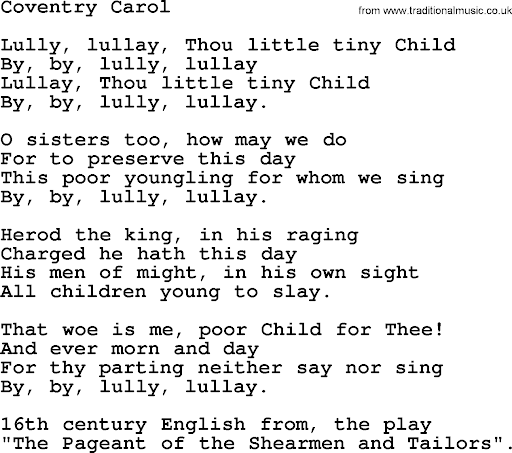
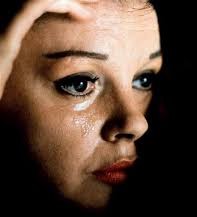
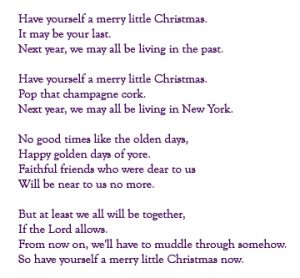
The original lyrics were a lot more depressing.
Environmental Downside
It’s after midnight! Wake up! Time for presents and sugar highs!
Massive amounts of trash going to landfills
Decorations
Single-use wrapping paper
Food waste
Imported foods enlarging your carbon footprint
Energy consumption
Traveling burning fossil fuels
Turning up the heat
Electric lights inside and outside
The End
Taking down/storing items for next year
Missing the buzz and activity
Realizing that nothing can be done about many things now regretted
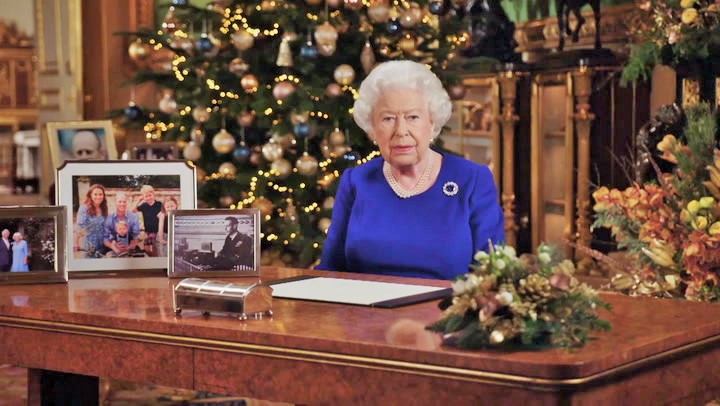
Queen Elizabeth doesn’t take down her Christmas decorations until early February, in memory of her father’s death.
Bottom line: These are all for typical Christmases. Consider which might be eased and which might be exacerbated in the year of COVID?
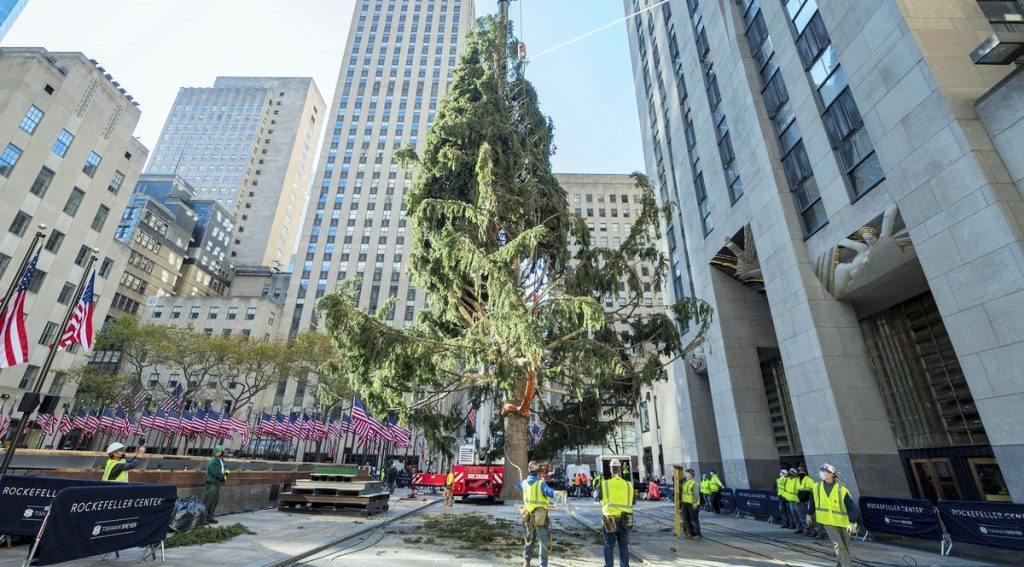
There are those, for example David C. Pack writing in The Real Truth magazine, who denounce the pagan origins of Christmas trees and other greenery. Pack cites Jeremiah 10:2-5 to support his assertion that we should have nothing to do with Christmas trees.
I am not among those. The reality of the world is that things morph and change—the meaning of words, clearly, but other symbols as well. So let’s take a look at the consensus around the evolution of the Christmas tree.
Long before the coming of Christianity, evergreen plants had a special meaning for people in winter. Ancient Europeans hung evergreen boughs over their doors and windows. In many countries, people believed that these would keep away witches, ghosts, evil spirits, and illness. The Romans used fir trees to decorate their temples at the festival of Saturnalia. Today, Christians use it as a sign of everlasting life with God. Why can’t it symbolize all those things?
Although evergreen trees are the through-line, in parts of northern Europe, cherry or hawthorn plants or branches were brought inside in hopes they would bloom in time for Christmas.
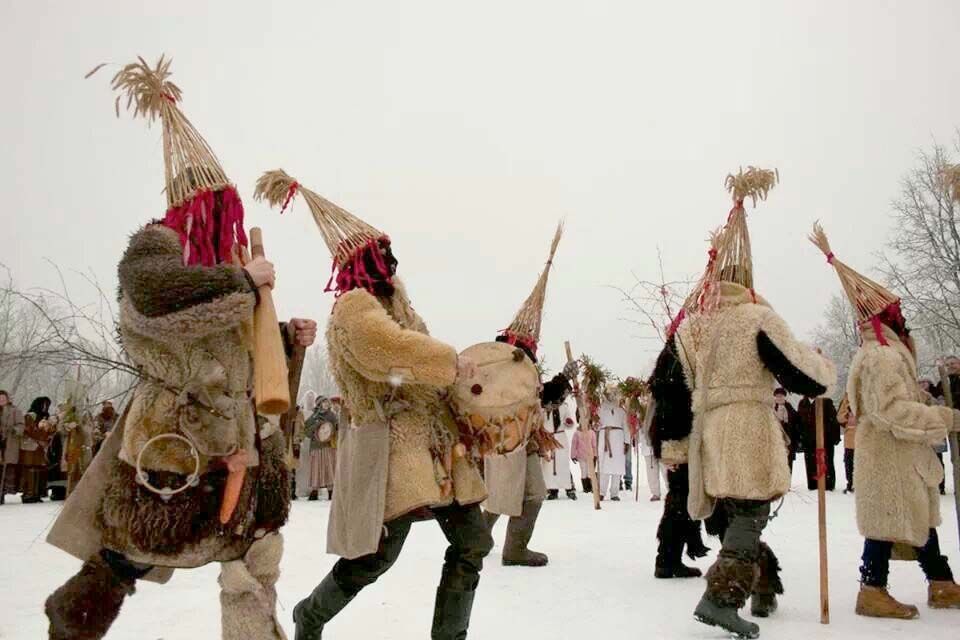
Many early Christmas trees were hung upside down from the ceiling.
The first documented use of tree at Christmas and New Year celebrations was in 1510, in Riga, the capital of Latvia. After the ceremony (involving men wearing black hats) the tree was burned. This is sometimes associated with the yule log.
The first person to bring a tree into the house, in the way we know it today, is thought to have been the German preacher Martin Luther in the 1500s. The lore goes that he was walking home in winter, was impressed with the stars shining through tree branches, and cut a tree to take home. He put small lit candles on the branches to share his vision with his family.
There are other stories, for example about St. Boniface of Crediton leaving England to travel to Germany. But this isn’t an encyclopedia, so I’ll move along.
But another point of consensus seems to be that Christmas trees took hold in Germany and spread across the world from there. In Germany, early trees were decorated with edible things like gingerbread and gold-covered apples. But by 1605, they were decorated with paper roses, apples, wafers, gold foil, and sweets.
The Christmas tree came to Britain sometime in the 1830s, and became popular in 1841 when Queen Victoria’s German husband had a Christmas tree at Windsor Castle. From England to the United States, from candles to electric lights, the evolution continued.
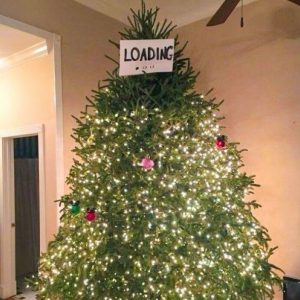
Artificial Christmas trees have long been popular, from the trees made from colored ostrich feathers in the Edwardian period on. Over the years, artificial trees have been made from feathers, papier mâché, metal, glass, and lots of plastic. Now lawns sometimes sport inflatable trees!
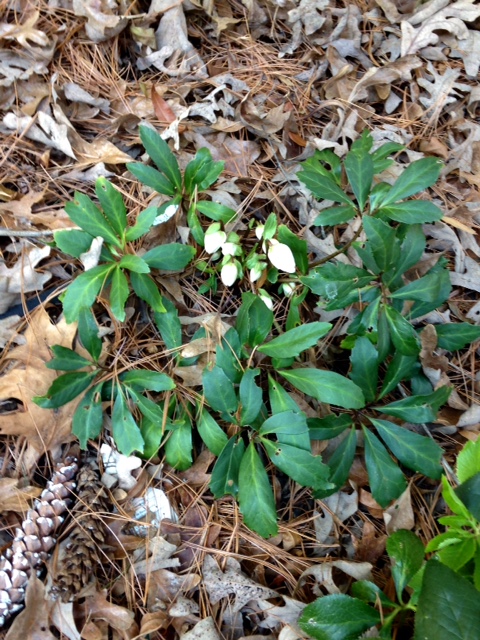
So, if pre-Christians and Christians both found good in the green of midwinter, fine with me! I plant hellebores and other evergreens where I can see them on the shortest days of the year.
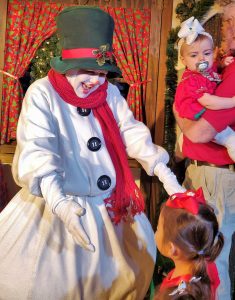
The subtle, quiet displays of merchants in the area may have hinted at it, but just in case you didn’t notice: Christmas is coming! Yes, I know, it’s easy to overlook the slight adjustments in advertising décor and to miss the odd carol or two playing on radio stations. Santa Claus will be coming to town in approximately twenty days (depending on when you read this).
But why should you care about all these visitors wandering about your town? (Besides the tendency to trespass and child beating, of course?) If society is reflected in its myths, then the writer can illustrate society by mentioning the myths.
Real World Gift-Givers
As discussed before, humans tend to follow the sun. When it goes away, we tend to get a little anxious and want it to come back. The tendency to mark the solstices appears in almost every part of the world that sees the effects of axial rotation. Giving gifts is a common theme at this time of year, often contrasted with giving coal or beatings to the deserving.
Writing teachers are always telling us to “show, not tell.” Referring to a culturally specific Santa-esque figure is a great way to show where and when a story is set. Consider some of these holiday figures with a habit of giving sweets, money, and gifts to deserving believers. Many of them are accompanied by a darker foil who comes to punish those who have been “naughty” during the preceding year.
Father Christmas
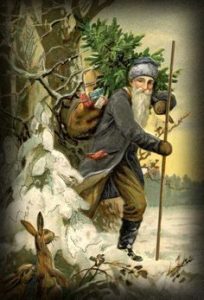
Today, Father Christmas is often depicted as simply the English version of Santa Claus. Look back a few hundred years, however, and you’ll see a very different figure. Oliver Cromwell’s puritan government cancelled Christmas during the English Civil War; the public brought it back during the Restoration of 1660. At that time, Father Christmas was the personification of Medieval customs of feasting and making merry to celebrate Yule. The evolution of Father Christmas since that time follows the changes in common Christmas celebrations in England.
Sinterklaas/ Saint Nicholas
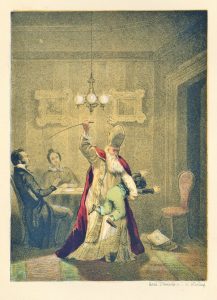
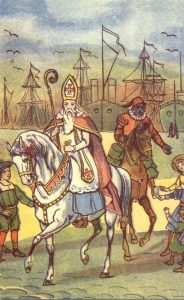
Saint Nicholas Day is almost upon us! Dutch children will leave their shoes on the doorstep or by the fire so that Sinterklaas can fill them with candy and toys. If children have been naughty, Sinterklaas’s assistant Zwarte Piet beats them with a stick or throws them into his sack and sends them to Spain. The historical Saint Nicholas was the Bishop of Myra (in modern Turkey) and patron saint of children and travelers. He arrives by steamboat and parades through town on a white horse, wearing his traditional bishop’s attire, accompanied by his assistants. Sinterklaas carries a huge, red book with a list of all the naughty and nice children in the area. The modern American Santa Claus owes much of his current fashionable ensemble to Sinterklaas.
Zwarte Piet, Black Peter, is a very controversial figure in modern Sinterklaas festivities and worthy of a separate discussion all his own.
Three Kings or Three Wise Men
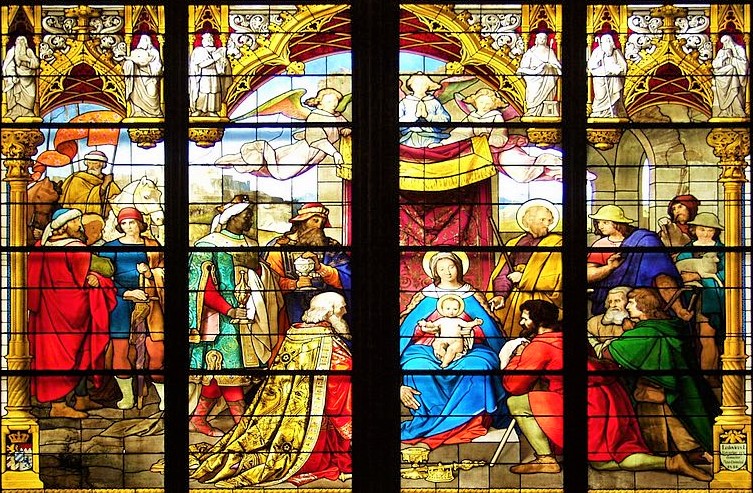
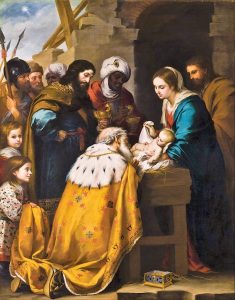
In many traditionally Catholic countries, gifts are brought by three figures: the Wise Men from the East mentioned in the Gospel of Matthew. On their way to bringing gold, frankincense, and myrrh to Baby Jesus, the Wise Men take a break to deliver gifts to good children in Venezuela, Spain, the Philippines, and many other countries. Very few specifics are actually given in the Bible, but traditions have filled in plenty of details. Kaspar, Melchior, and Balthazar may have come from Persia, Arabia, Pakistan, India, China, Tibet, Mongolia, Armenia, or Babylon, depending on local custom. Gifts are often given to children on January 4th, the Feast of the Epiphany, instead of December 25th.
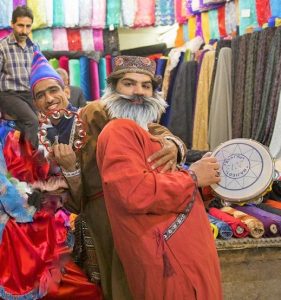
Amu Nowruz
Uncle Nowruz gives gifts to children at the Iranian New Year, which occurs at the Spring Equinox rather than the Winter Solstice. He spends the year travelling the world with Haji Nowruz, a soot-covered minstrel. While Haji Nowruz dances and sings, Amu Nowruz gives coins and candy to children.
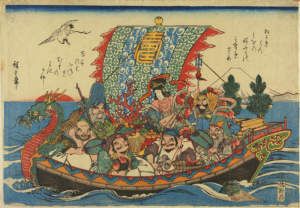
Seven Lucky Gods (Shichifukujin)
Ebisu, Daikokuten, Bishamonten, Benzaiten, Juroujin, Hotei, Fukurokuju bring their treasure ship Takarabune to Japan on January 2, the beginning of the New Year. Like the early Father Christmas, the Seven Lucky Gods bring good cheer and prosperity to everyone. Those who sleep with a picture of the Shichifukujin under their pillow will have good fortune in the coming year.
Fictional Gift-Givers
Pretty much any setting for a story on Earth has a celebration of midwinter or year’s beginning, complete with a figure who rewards or punishes believers according to their behavior the previous year. But what if the story doesn’t take place on Earth?
Once again, those who have gone before can show us how it’s done. Articles on io9, tv.tropes, and Goodreads show just how commonly a winter festival centered around gifts and the return of light occur in other universes. Tallying the previous year’s sins and distributing charity are common themes.
For a writer, midwinter festivals offer a chance to showcase family bonds, strengthen relationships, demonstrate local superstitions, or just have characters party.
Moș Gerilă
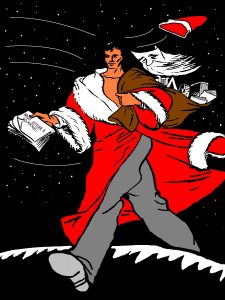
Honestly, I wasn’t sure whether to include Moș Gerilă as a real gift-giving figure or a fantasy. This “Old Man Frost” was created by the Romanian Communist Party in 1947 as part of an attempt to shift Christmas celebrations from the Orthodox Church and the private family to the state. Moș Gerilă was portrayed as a handsome, bare-chested, young man who brought gifts to factory workers. All celebrations were held on December 30th, the national Day of the Republic. Festivities with decorated trees and patriotic music were held in public spaces, and Moș Gerilă would come bearing gifts of nuts and sweets from the Communist Party to well-behaved children. The fate of badly-behaved children is not clear, but I would imagine a gulag was involved. After the fall of the Romanian Communist Party in 1990, Moș Gerilă disappeared and Moș Crăciun (Father Christmas, similar to the Russian Grandfather Snow) took his place.
Xmas
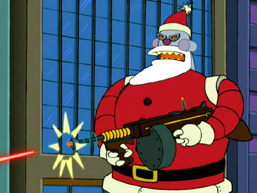
Futurama, set in the year 3000, has an Xmas episode each season. Celebrants decorate a palm tree with lights and barricade themselves indoors. Santa Claus has been replaced by a robot with a programming error. He judges everyone to be naughty and attempts to exterminate everyone on Earth every year. Kevlar vests and body armor are common gifts.
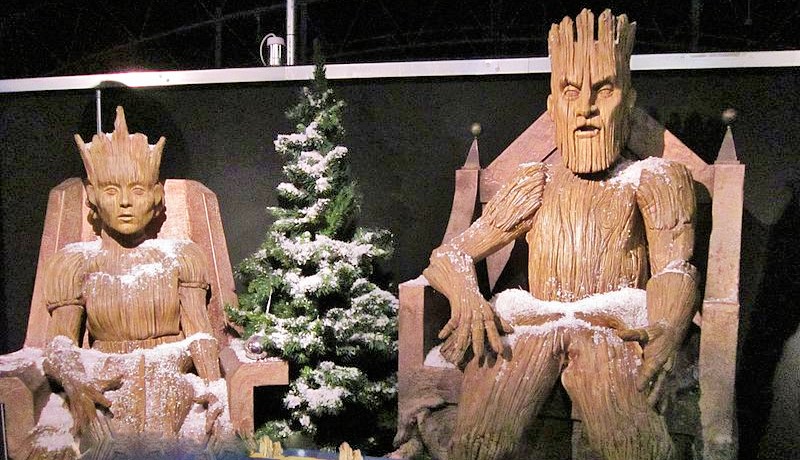
Life Day
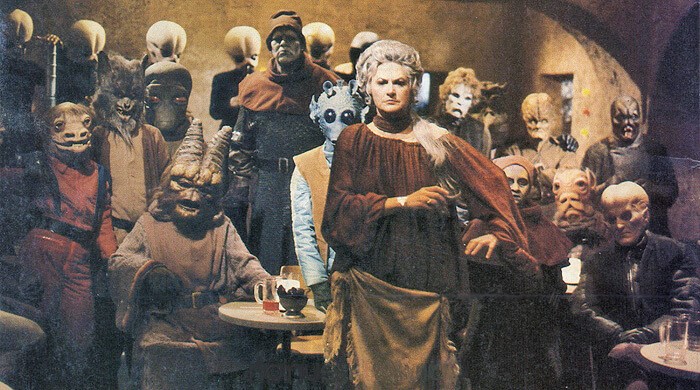
According to fan gossip, George Lucas attempted to find and destroy every copy of The Star Wars Holiday Special after it aired for the only time in 1978. Life Day is a Wookie holiday centered around the Tree of Life, celebrating children and death. The holiday is traditionally observed by family gatherings, preparing special foods, singing in red robes on Kashyyyk, and exchanging gifts. Also, Bea Arthur runs a cantina on Mos Eisley for some unexplained reason.
And she sings!
Hogswatchnight
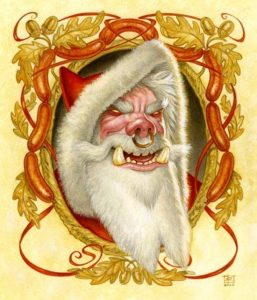
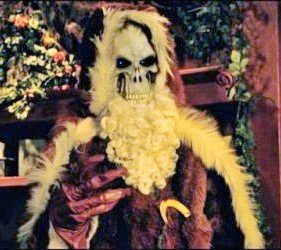
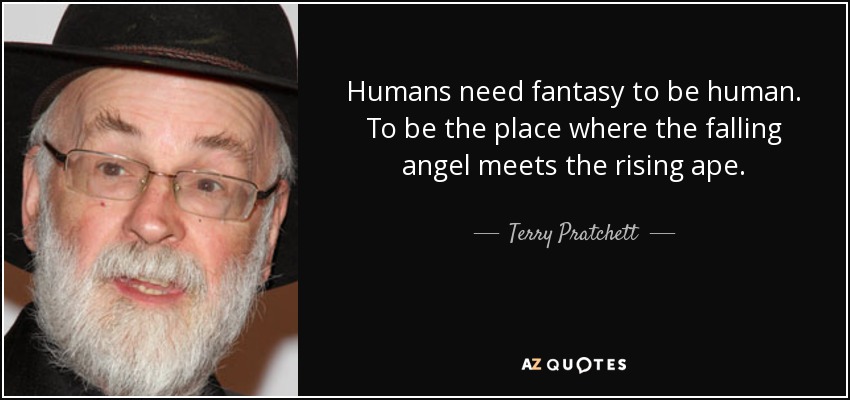
Terry Pratchett’s 20th Discworld novel, Hogfather, is essentially a satire of modern Christmas customs. Hogswatchnight is described by the narrator as “bearing a remarkable resemblance to your Christmas.” The Hogfather rides his sleigh pulled by magically flying boars around the Disc delivering toys by climbing down chimneys. Children leave pork pies and brandy for the Hogfather, essentially a wild boar dressed in Father Christmas robes, which raises some disturbing questions about why he eats pork pies.
In the beginning, “Most people forgot that the very oldest stories are, sooner or later, about blood. Later on they took the blood out to make the stories more acceptable to children, or at least to the people who had to read them to children rather than the children themselves, and then wondered where the stories went.” Over the course of the book, there are zany hijinks and wacky shenanigans involving Tooth Fairies, elegant parties, the Auditors of the Universe, a governess, the Death of Rats, and various other Terry Pratchett wonders. Ultimately, Death (a seven foot tall skeleton with glowing blue eyes and a scythe) has to save the day. In doing so, he explains to his granddaughter (genetics are complicated) why celebrations of the sun’s return and surviving through winter are so important.
I’ve written before of the benefits for writers as well as for readers in expanding your cultural horizons. With Halloween upon us, what better time to discuss cultural variations in death, dying, and what to do after? A particularly tragic element of the current pandemic inspired this particular blog post.
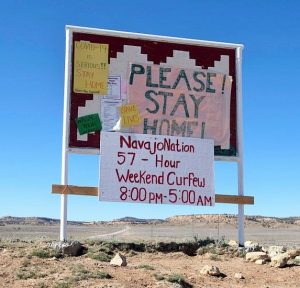
Although not comprehensive, COVID-19 statistics indicate that the death rate for American Indians/Alaskan Natives is 3.5 times the rate for non-Hispanic white people. The upshot is that I was moved to explore beliefs, traditions and customs related to death among native peoples.
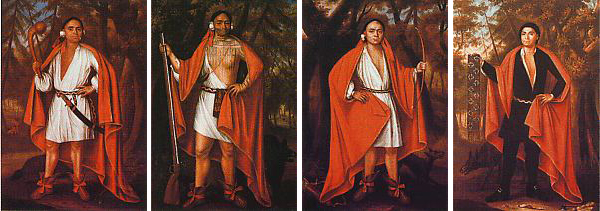
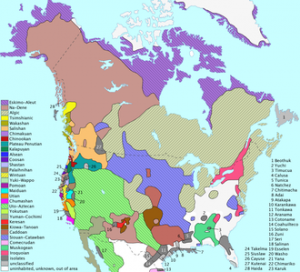
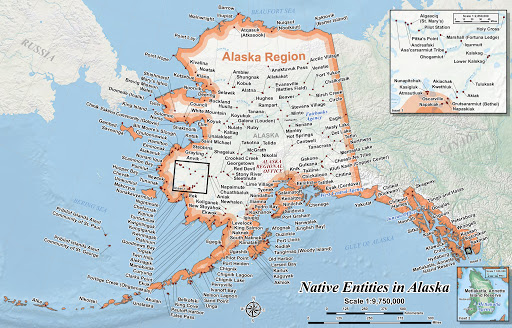
There are 574 federally recognized Indian Nations in the United States. I was surprised to learn that the labels nation, tribe, band, pueblo, community, and native village all are applied to ethnically, culturally, and linguistically diverse groups of people. Approximately 229 of these nations are located in Alaska; the other federally recognized tribes are located in 35 of the lower forty-eight states.
No slight to Alaskan Natives is intended, but this is a blog—albeit a long one—not a book, so I can only skim the customs and ceremonies of Native Americans. Further information about death and burial customs among tribes in Alaska is available on the Alaskan government website, several articles on JSTOR and other scholarly archives, and among training materials for healthcare workers who might be present at the end of life.
BTW, beyond the 574 federally recognized tribes, there are state government-recognized tribes located throughout the United States.
According to Michele Meleen, many tribes share beliefs about death and burial in general.
Each person has a soul or spirit that leaves the body after death.
Traditional burials take much longer than a modern funeral, up to several days, because the spirit of the person lingers before moving on.
Family and tribe members must help the spirit along its way through rituals and ceremonies.
Autopsies are avoided if at all possible because cutting open the body might prevent the spirit properly beginning its journey.
According to Klaudia Krystyna, there are further similarities in what varying tribes believed.
Most Native Americans worshiped an all-powerful Creator or spirit.
They believe in deep bonds between earth and all living things.
They also unite in a belief about an afterlife, with death beginning the journey that is a continuation of life on earth.
Many believe in reincarnation, coming back as another person or animal.
The type of person or animal depends on one’s deeds when alive, a bit like the Hindu cycle of reincarnation.
That said, in reality, the death practices in each tribe are unique. In today’s society, there is a tendency to view the immense variety of Native American cultures as all the same. Kara Stewart, a Sappony author and teacher, discussed the issues involved in authentic writing in an interview on The Winged Pen. As she said, “With over 567 very different sovereign federally-recognized nations and hundreds more sovereign state-recognized nations, nuance is everything.”
Given the number of tribes of Native Americans, what follows is just a sample of traditional Native American practices prior to the arrival of Christianity.
Navajo (Diné)
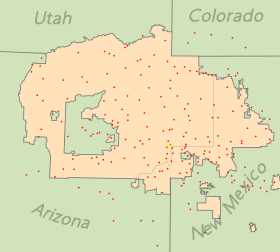
The Navajo tribe, also called the Diné, are the largest American Indian Nation. Currently, the Navajo nation covers approximately 17,544,500 acres in parts of Utah, Arizona and New Mexico. The tribe is divided into more than 50 families whose lineage can be traced matrilineally.
The religion and beliefs of the Navajo, like the Sioux (below), are based on animism.
One of the common Navajo beliefs about death was that the deceased goes to the underworld when he or she dies. Precautions must be taken to ensure that they don’t return to the world of the living. Navajos were very reluctant to look at a dead body. Contact with the body was limited to as few individuals as possible because contact with a corpse can bring sickness, misfortune, or even death.
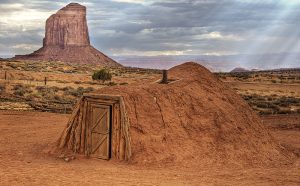
If a person died at home, then the dwelling and everything in it were destroyed. Therefore, when death was near, the person was taken outdoors, or to a separate hut, to die. Family members and the medicine man stayed until close to the end. Shortly before death, everyone except for one or two individuals left. Those who remained would be the closest relatives of the dying person, those most willing to expose themselves to evil spirits.
Navajo Hogan in Monument Valley
Four men did all of the tasks involved in the burial of the body.
After death, two men prepared the body for burial. They wore only moccasins. Before starting, they smeared ash all over their bodies to protect them from evil spirits. Before burial, the body was thoroughly washed and dressed. It was believed that if the burial was not handled in the proper fashion, the person’s spirit would return to his or her former home.
While the body was being prepared, two other men dug the grave as far a possible from the living area. The funeral was held as soon as possible, usually the next day. Those four men were the only ones present at the burial.
The dead person’s belongings were loaded onto a horse and brought to the grave site, led by one of the four mourners. Two others carried the body on their shoulders to the grave site. The fourth man warned those he met on the way that they should stay away from the area. Once the body was buried, great care was taken to ensure that no footprints were left behind. The tools used to dig the grave were destroyed.
Sometimes the property of the deceased was disposed of by burning. In any event, none of it was left at home.
According to some customs, after the body was cleaned, the face was coated with chei (paint made of soft red rock, crushed and mixed with sheep oil) for protection during the journey. The body was dressed in his or her best clothes, hair tied with eagle feathers symbolizing the return to the homeland.
Another variation in customs: three family members wrapped the prepared body in a blanket and laid it across the back of a clean horse. One man leads the horse to a suitable burial place (such as a secure cave). At the burial place, the dead person was interred with saddles and all personal belongings. After the body was buried, the horse was slaughtered and buried as well, to aid the deceased on the journey to the afterlife.
There was also the custom of burying the dead as far north as possible, to help the soul move on to the next journey more quickly.
According to traditional Navajo beliefs, birth, life, and death were all part of a natural, ongoing cycle. Crying and outward demonstrations of grief were not usual when someone died, because showing too much emotion can interrupt the spirit’s journey to the next world. The spirit could attach itself to a place, an object, or a person if the proper process was interrupted.
Sioux/Dakota
The Sioux Nation is the second largest Native American Nation, comprised three major divisions based on language/dialect: the Dakota, Lakota and Nakota (Yankton-Yanktonai).
The Sioux tribe (like the Navajo) believed in Animism, that the universe and all-natural objects—animals, plants, trees, rivers, mountains, rocks, etc.—have souls or spirits.
Sioux did not fear the souls of the dead. In general, the Sioux believed that death was the beginning of another spiritual journey. They held that the soul of the deceased lingered four days before leaving for the next resting place.
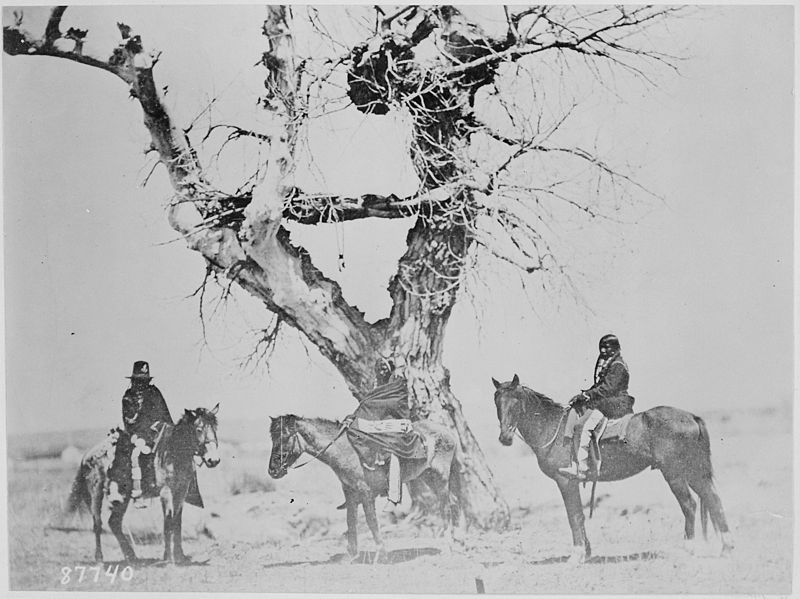
Traditionally, Sioux people put the body of the dead person in a tree, or on a scaffold in a tree about eight feet above the ground.
The remains were left there for a year, and treated as if still alive. The body was dressed in the best clothes, and surrounded by personal property. Fresh food was provided for the soul.
Today, many Sioux practice both traditional and modern Christian death rituals. (See below.)
Cherokee
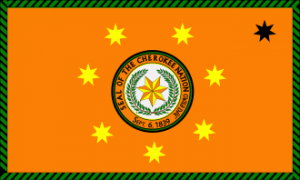
For the Cherokee, the funeral begins with prayers led by the shaman. During the service the shaman prays on behalf of the deceased and offers spiritual lessons to the living. The funeral ends in prayer and the body is carried to its final resting place on the shoulders of the funeral procession.
Chippewa/Ojibwe
The Chippewa are known in Canada as Ojibwe, Ojibway, or Ojibwa. They lived mainly in Michigan, Wisconsin, Minnesota, North Dakota, and Ontario, occupying large areas of land. Their way of life belongs to the northeast woodland cultural groups. Their population in the United States ranked fifth in the indigenous tribes, behind the Navajo, Cherokee, Choctaw and Lakota-Dakota-Nekota peoples. One well-known scholar who wrote extensively of the Chippewa way of life was Sister M. Inez Hilger, O.S.B.
In the Chippewa culture, they believed that the spirit would leave the body after it was buried, rather than at death, so they preferred to bury it immediately. Simultaneously, they also traditionally believed that it would take four days to achieve a happy death for the spirit of the dead. These two beliefs drove their rituals, as family members considered it their duty to help the spirit move forward.
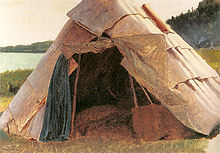
Ojibwe wigwam, 1904
If someone died in the morning, the body would be buried the same day to help the spirit reach the happiness sooner. If the body had to be kept overnight, people would go to the victim’s house, not only to spend time with the grieving relatives but also to be with the person who was lying there.
A pow-wow was held at the deceased’s home the night after the burial. Before dark, a fire was lit at the head of the grave, and this fire was lit every night for four nights to help guide the spirit.
At the end of the fourth day after burial, a medicine man presided over a feast and was responsible for giving away all the deceased’s belongings. Each person who received an item must give a new piece of clothing in return. All these new clothes were wrapped in a bundle and given, along with a dish, to the closest living relative. This person then handed out the new clothing to those he/she felt worthy.
The deceased’s loved one keeps the dish and carries it for one year to every meal he or she attends. It is filled with food to honor the deceased.
Kiowa
According to Toby Blackstar, a Native American funeral director, the Kiowa believe in-ground burial is the only acceptable way to release a body after death. They believe the Creator birthed the body from the earth, so it must return to the earth through decomposition.
For the Ponca Tribe within the Kiowa, there is a fear of the deceased which drives their death rituals. They are afraid the dead will resent them and the ghost will haunt anyone with his/her possessions. So, the tribe burns all of the deceased’s possessions, even if they are valuable. Any remaining family members who shared a house with the deceased person then moved into a new house.
Comanche
The burial customs for early Comanches were pretty simple. The body was not kept long prior to a proper burial. The deceased would be wrapped in a buffalo robe (or, later, blankets). The body was placed on a horse and taken to a burial place such as a cave or crevice in a rocky canyon. Burial sites would be in areas such as the Wichita Mountains and the slick hills or limestone hills of southwest Oklahoma. Personal items of the Comanche were placed in with the body and rocks were carefully placed on top to cover the deceased. It wasn’t until the Comanches came into contact with the early missionaries that they began burying their fellow Comanches in cemeteries.
Choctaw
From the middle to late nineteenth century, the Choctaw favored burying their dead directly in the ground. The deceased was buried in a seated position. Seven men placed seven red poles about the grave, with thirteen hoops of grapevines and a small white flag.
Iroquois
As a general practice, these tribes buried their dead in graves and traditionally took a more vengeful approach to death. They practiced revenge through torture of the person responsible for a loved one’s death, but these practices evolved into required payments of money rather than life. Taking a man’s life cost ten strings of wampum and taking a woman’s life cost twenty because she was valued for her ability to have children.
If a loved one was killed by a person from another tribe, the matriarch of that person’s family could ask tribal warriors to take a prisoner from the tribe of the murderer. These mourning wars often involved a planned raid on another tribal village for that sole purpose.
Once captured, the matriarch would choose whether the prisoner was adopted into her family or tortured based on her level of grief. If torture was chosen, all village members had to take part as a signal of ending the person’s old life. The Iroquois valued strength in numbers, so the tortured prisoner would often get adopted into the tribe as a replacement for the person they lost.
At some point in history, these mourning war practices were replaced by the Condolence Ceremony, particularly for clan and tribal chiefs. During this ceremony, members of several tribes would come together to mourn the loss as a nation rather than just the deceased’s family mourning a family member on their own.
These sacred ceremonies have not been well documented because they are deeply personal to Iroquois tradition. What is known is that leaders of another tribe were charged with conducting the ceremonies which included recitations of actions individuals could take to grieve the loss as well as comforting words. A string of wampum was presented by all the nations as one for each specific recitation, which could vary by tribe and circumstance.
From Then to Now
When Europe began to colonize America, European settlers brought great changes in Native American culture.
Eventually hundreds of tribes and ancient traditions disappeared.
The “mission” of Christian missionaries was to change the tribe. In 1882, the federal government of the United States attempted to ban the religious ceremonies of Indians and said they were “against public decency and morality”. Since the 19th century, some Native Americans have converted to some form of Christianity—becoming Catholics, Presbyterians, Jehovah’s Witnesses, or whatever.
Although modern Native American death ceremonies have changed radically, often these practices still contain elements of traditional beliefs. A current ceremony often mixes traditional practices with elements of Christianity or other religions.
Chippewa Nation Flag
Tribes who converted to Catholicism celebrate All Souls’ Day on 1st November, commemorating the dead. Related to the Mexican festival of Dia de los Muertos, on this day Native Americans would leave food offerings and decorate their homes with ears of corn. The Chippewa way of death is similar to Hindu.
One modern practice by the Oneida Nation is the Community Death Feast. These annual feasts are held once each spring and once each fall to honor those who have died. Each person in the community brings a traditional food like corn mush, wild berries, wild rice, or venison to share with the whole group. One plate is filled with some of each shared dish and placed in a private area just before sunrise as a token for the dead.
One expanded example of the old being melded with the new: modern Sioux burials last four days before the dead are buried. The casket is rolled up a short ramp onto a scaffold eight inches above the floor, in the middle of the room. Flowers are arranged around the casket.
Family stand near the coffin. Mourners greet them, and gifts for the deceased (e.g., knives and shawls) are placed in casket before burial. The moderator reads the obituary, talks about the life experience of the deceased, and invites the people participating in the funeral to talk about their experience with the deceased. Then prayers start praying, and all participants pray, and sing an honor song in the traditional Sioux language. The participants walk counterclockwise in the hall.
At night, a thin layer of purple lace is laid on top of the opening of the casket to prevent evil spirits from taking the spirit of the dead. This is a common practice among the Santee Sioux because bad spirits are most active at night. The Santee Dakota, known as the Eastern Dakota, was established in 1863 and reside in the extreme east of the Dakotas, Minnesota, and northern Iowa. The last watch is held at midnight, and everyone stays overnight. At least one family member has to stay with the deceased overnight until the burial.
The next three days are the same as the first day, with the obituary, praying and songs of honor. After each ceremony, friends and family take turns paying their respects to the deceased, giving him/her “spiritual food” called wakan or pemmican to help the spirit move along the journey.
When the casket is lowered into the grave, those who carried the casket each shovel earth into the grave. People who wish to sprinkle a handful of dirt onto the casket. The men carrying the coffin had the job of filling the grave. More prayers and songs follow. Finally, everyone leaves to enjoy a last meal together.
BOTTOM LINE:
Sacred Native American traditions and ceremonies are most often preserved in oral history, and taught to the next generation by word of mouth. These ceremonies and beliefs are not always documented outside of oral tradition. Each medicine person specializes in different ceremonies. When someone dies they take that knowledge with them. Over the last several decades, the Diné/Navajo medicine people has gone from a thousand to just 300. The coronavirus threatens the few who remain. Potentially, COVID can decimate both populations and culture among Native American peoples.
When it comes to holidays, some people go all out while others are minimalists—and some don’t participate at all. Even Christmas, the #1 holiday in the United States, isn’t celebrated by 4-8% of the population. For each of these most popular U.S. holidays, what would your character(s) do? And why?
Christmas
December 25 (Fixed)
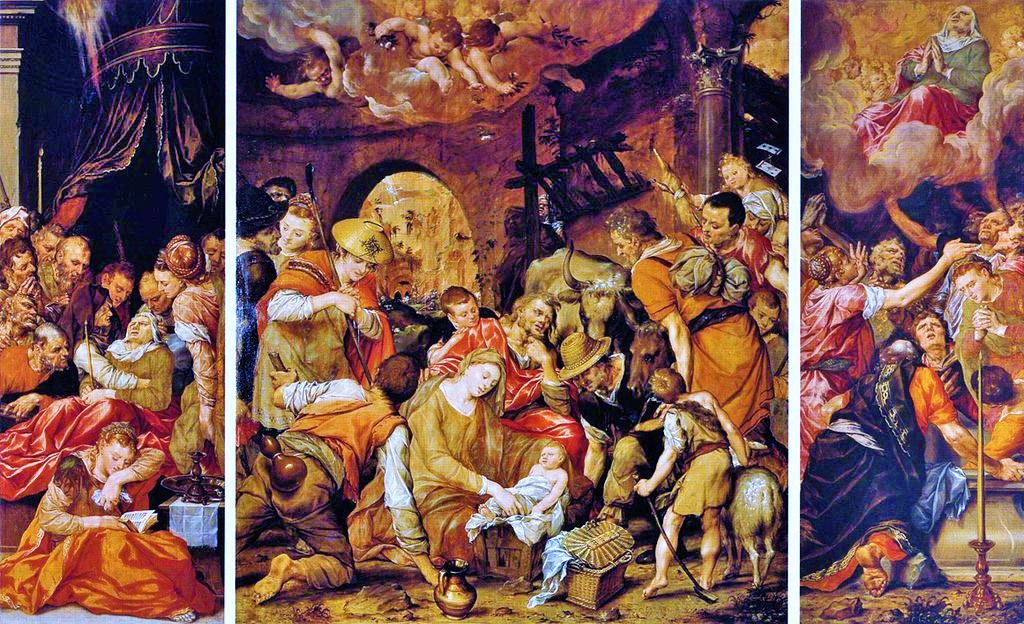
Christmas (from liturgical Christ’s Mass) is the Christian celebration of Jesus’ birth. Religious celebrations are marked by church services (often at midnight on Christmas Eve), singing hymns, recreating the scene of Jesus’ birth either in art or by reenacting, and observing four weeks of prayer and fasting in leading up to the holiday. Many elements of Saturnalia or pagan winter solstice festivals have been incorporated into modern Christmas celebrations, including decorating an evergreen tree, burning a Yule Log, making and eating special foods, and an evolution of the Holly King – Santa Claus, Father Christmas, Tovlis Babua, etc. Secular Christmas celebrations in the United States generally revolve around exchanging gifts, decorating inside and outside, singing carols, visiting family, and sharing a holiday meal. In addition to having the highest percentage of the population celebrating it, Christmas is the top holiday in the United States based on retail sales and number of greeting cards mailed. Among religious celebrations, Christmas is known for having the second highest church attendance (behind Easter).
Thanksgiving
November 22–28 (Floating Thursday)
Originally a harvest festival, the first official Thanksgiving holiday in the United States was proclaimed by George Washington in 1789. Traditional dishes often claim to have some connection to foods eaten by early American colonists, such as turkey, cranberry sauce, corn, and pumpkin. Typically, Thanksgiving is a celebration of thanks for the previous year, with families and friends gathering for a large meal or dinner. Consequently, the Thanksgiving holiday weekend is one of the busiest travel periods of the year. One-sixth of the turkeys consumed annually in the U.S. are eaten around Thanksgiving.
Mother’s Day
May 8–14 (Floating Sunday)
Mother’s Day recognizes mothers, motherhood, and maternal bonds in general, as well as the positive contributions that they make to society. Florists and restaurants have their busiest sale days on Mother’s Day and the days before and after, even higher than Valentine’s Day. Many churches experience spikes in attendance, following only Easter and Christmas.
Easter
March 22 – April 25 (Floating Sunday)
Easter commemorates the resurrection of Jesus from the dead. The highest church attendance happens on Easter. Most Christian traditions observe 40 days of Lent, fasting and repenting before Easter, beginning on Ash Wednesday. Many traditions associated with Easter originated with pagan celebrations of Spring Equinox, including the name (Eastra was a Saxon goddess of spring). Like Christmas, it has become a widely celebrated secular holiday, and customs observed by both Christians and some non-Christians include egg hunting, the Easter Bunny, and Easter parades.
Independence Day
July 4 (Fixed)
Independence Day, also commonly known as the Fourth of July, marks the date that the Declaration of Independence was adopted in 1776. The Continental Congress actually voted to adopt the Declaration of Independence on July 2nd. The holiday is best known today for fireworks and barbecues. In addition to watching civic displays of fireworks, 45% of American celebrate the 4th of July by setting off their own fireworks, accounting for about $675 million in fireworks sales.
Father’s Day
June 15–21 (Floating Sunday)
Father’s Day is a celebration honoring fathers and celebrating fatherhood, paternal bonds, and the influence of fathers in society. The first official Father’s Day observation in the US was in 1910. Sonora Smart Dodd was raised by her single father and wanted to recognize him and others in his position for their contributions. Inspired by the official celebration of Mother’s Day the year before, Dodd petitioned the government to set aside a day celebrating fathers. It accounts for the highest sales of ties and neckwear annually, around $12.7 billion.
Halloween
October 31 (Fixed)
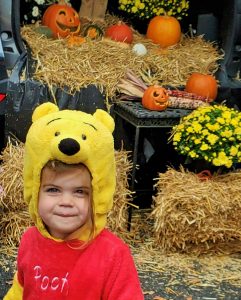
Halloween (Hallow’s Eve) celebrations are marked today by costumed children knocking door to door asking for treats, and costumed adults attending parties (or costumed adults borrowing the neighbor’s children to have an excuse to beg for candy). Historically, Halloween was a Christian adoption of pagan Samhain traditions, burning lanterns (in turnips or pumpkins) and wearing frightening costumes to scare off restless spirits. It is the most popular holiday for candy sales, amounting to $2.6 billion in 2015. The same year, $6.9 billion was spent on candy, costumes, and pumpkins, all of which are directly attributed to this holiday.
St. Valentine’s Day
February 14 (Fixed)
St. Valentine’s Day is recognized as a significant cultural, religious, and commercial celebration of romance and romantic love. As I’ve discussed before, there are also many tragic events associated with the 14th of February. It accounts for 224 million roses grown annually; 24% of American adults purchased flowers for Valentine’s Day in 2015. The holiday comes in second in terms of annual restaurant sales, behind only Mother’s Day. In recent years, florists, chocolatiers, greeting card sellers, and other associated romance retailers have been encouraging non-romantic displays of affection to increase sales.
St. Patrick’s Day
March 17 (Fixed)
St. Patrick’s Day (Lá Fhéile Pádraig) commemorates life of Saint Patrick, a Welsh shepherd brought to Ireland as a slave, and the arrival of Christianity in Ireland. It is also an opportunity to celebrates the heritage and culture of the Irish in general. In Ireland, St. Patrick’s Day is generally a quiet affair; most people attend church services and perhaps wear a shamrock on their lapel. American traditions of celebrating St. Patrick’s Day stem from Tammany Hall efforts to recruit voters from among the newly arrived Irish immigrants in New York at the end of the 19th century. The political organization threw parades, hired bands to play Irish music, and distributed food and beer to hungry tenement dwellers. Modern celebrations generally involve public parades and festivals, parties, the wearing of green attire or shamrocks, and alcohol consumption.
New Year’s Eve / New Year’s Day
December 31 (Fixed)
New Year’s Eve and New Year’s Day are usually lumped together, particularly since the actual festivities center around midnight between the two. Observed on December 31st and January 1, the last day of the old year and the first day of the year on the modern Gregorian calendar as well as the Julian calendar. Many religious traditions require attendance at services on New Year’s Day. Parties celebrating the countdown to midnight are common. It is known for being the holiday with the highest alcohol consumption, evidenced by the spike in sales around between Christmas Eve and New Year’s Eve. Alcoholics’ support groups acknowledge this as one of the most dangerous holidays for people fighting alcoholism. Many parents set their household clocks ahead by several hours and allow their children to stay up until “midnight” and watch the televised countdown and fireworks in a country several time zones ahead; the kids are then sent to bed at 9pm, convinced it is midnight, and parents can go to bed early.
Talk Like a Pirate Day is one of my favorites! (September 19)
We have literally hundreds of national, state, and local holidays. A couple of examples of the less common ones are Patriot’s Day celebrated and observed in Massachusetts and Maine; and Yorktown Victory Day in Virginia.
National Dog Day, this guy’s favorite holiday, is August 26th.
Are some holidays—not among the most popular in the U.S.—nevertheless important to you character(s)? What are they? Better yet, make a list of holidays most important to your character(s) similar to the above. This is especially useful if you are writing a series character.
Bottom line for writers: how your character behaves around and on holidays can tell the reader a great deal about ethnicity, religion, family relationships, and spending habits, as well as revealing basic tendencies toward extravagance or minimalism, introversion /extroversion, degree of anxiety, etc.
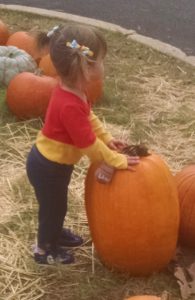
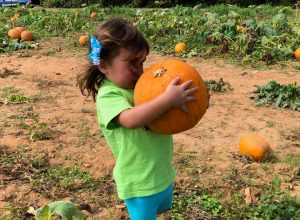
When my three children were young, we always carved three Jack-O-Lanterns on Halloween. (FYI: The traditional pumpkin for American Jack-O-Lanterns is the Connecticut field variety.) If my family of origin had a crest, our motto would be “Waste Not, Want Not.” Of course, I couldn’t just throw away perfectly edible food! This combination of personality and plenty resulted in lots of pumpkin for our table.
Culinary Uses
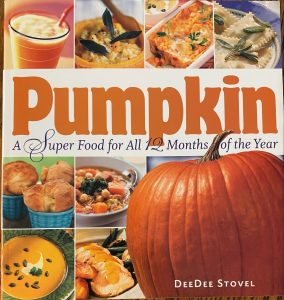
The day after Halloween, we “dealt with” those pumpkins. At the time, this meant chunking them up, baking the pieces, pureeing, and freezing the pulp in two-cup freezer bags. (Full disclosure: Jack-O-Lantern pumpkins are far from the best eating ones. Sugar pie pumpkins or Long Island Cheese pumpkins are preferred by pumpkin connoisseurs.) The bounty led me to cut recipes from can labels, ask for favorite recipes from family members, and buy cookbooks like this.
Between then and now, I’ve learned just how narrow my culinary use of pumpkins had been.
Sooooo sick of pumpkins!
In word associations tests, “pumpkin” is almost certain to be followed by “pie.” And sure enough, I have at least a dozen excellent pumpkin pie recipes. And then there is pumpkin bread, pumpkin stew, pumpkin curry, pumpkin lasagna, pumpkin beer, pumpkin butter, pumpkin muffins, pumpkin pancakes… Pumpkin smoothies are a current favorite.
FYI: Pumpkin can be substituted for other winter squash in virtually any recipe. In fact, the FDA does not distinguish between pumpkins and other varieties of squash. When you buy a can of “pumpkin” from the grocery store, it’s just as likely to be acorn or butternut squash inside.
Pumpkins grow worldwide. Antarctica is the only continent that can’t grow pumpkins. (Those poor penguins…)
Blossoms cooked with duck were and are a Chinese delicacy
Small, green pumpkins can be treated like summer squash
Leaves can be eaten by themselves or dressed in a salad
Whole pumpkins stuffed and baked (sweet or savory)
As a complement to meat in stews (especially in Native American, African, and South American recipes)
Slices fried with apples, sweet herbs and spices, and currants
With corn and beans as succotash (Native American)
Dried/dehydrated; sometimes pounded into powder for baking
Seeds:
Popular with pre-Columbian people of Mexico and Peru; now available in most grocery stores
Oil from seeds
Butter (like apple butter)
Beer/fermented drinks
As a hard times substitute for other ingredients
E.g., pumpkin syrup for molasses, pumpkin sugar)
Pumpkin shells can even be used a type of slow-cooker. After the stringy guts have been scooped out, they can be filled and buried in ashes or baked in an oven. Armenian rice pudding baked in a pumpkin shell is a particular holiday delicacy.
Native Americans (Iroquois in particular) had Four Sisters of agriculture: pumpkins, corn, beans, and squash, interplanted so each vegetable provided sustainability and nutrients for the others to grow. The four sisters of agriculture allowed the survival the earliest colonists. The ubiquity—and importance of pumpkins is clear in this old New England doggerel:
From pottage, and puddings, and puddings, and pies, Our pumpkins and parsnips are common supplies. We have pumpkins at morning, and pumpkins at noon; If it were not for pumpkins, we should be undone.
As an offering to deities in China during the season of the Fifth Moon
As a dietary supplement for cats and dogs that have certain digestive ailments such as hairballs, constipation, and diarrhea
In Native American medicine to treat intestinal worms and ailments
In Germany and southeastern Europe to treat irritable bladder and benign prostatic hyperplasia
In China for the treatment of parasitic disease and the expulsion of tape worms
Hollowed out and lighted with candles, as lanterns to light the way after dark
And Then There is Halloween
The tradition originated with the ancient Celtic festival of Samhain, an important day for Druids, when the veil between this world and the afterlife was particularly thin. People would light bonfires and wear frightening costumes to ward off ghosts. All Hallows Eve (the night before All Saints Day) transmuted to Halloween—holy or hallowed evening.
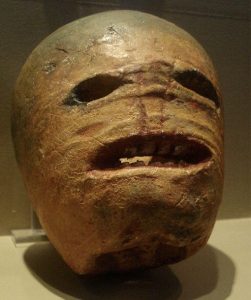
Historically, in Britain and Ireland lanterns were carved from turnips or other vegetables. In the New World, pumpkins were a substitute, and even better because they are bigger and easier to deal with. Although other vegetables are still popular in Scotland and Northern Ireland, Britain purchases millions of pumpkins for Halloween.
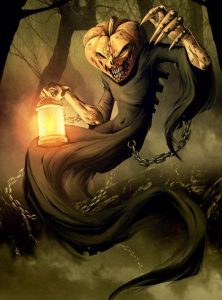
In 1837, the term Jack-O-Lantern appeared in several Irish newspapers as a term for a vegetable lantern. The association with Halloween was documented by 1866. Additionally, in popular culture there’s a connection between pumpkins and the supernatural. Jack-O-Lanterns derive from folklore about a lost soul wandering the earth, searching for his missing head.
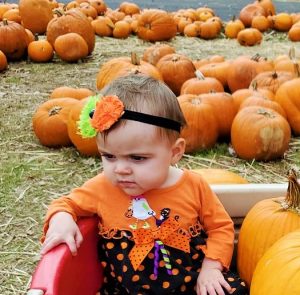
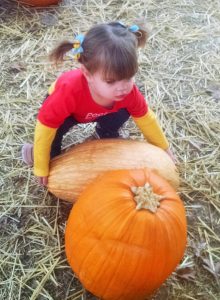
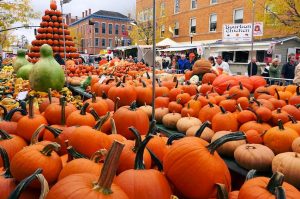
Annually, Circleville, OH holds a Pumpkin Festival, complete with marching bands, a queen, all sorts of fair foods made with pumpkin, and a prize for the biggest pumpkin. FYI, the largest pumpkin in North American history was grown by a New Hampshire man and tipped the scale at 2,528 pounds. You can find other festivals and pumpkin contests online.
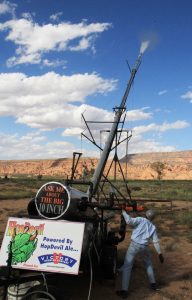
Then there are contests, often including baked goods. More actively, there are games like pumpkin throwing and pumpkin chunking. Chunking involves machines like catapults, trebuchets, ballistas, and air cannons. Some pumpkin chunkers breed and grow pumpkins specifically to improve the pumpkin’s chances of surviving a throw.
Folklore and Fiction
We all know a couple of examples
Peter, Peter pumpkin eater Had a wife and couldn’t keep her. Put her in a pumpkin shell And there he kept her very well.
Cinderella’s coach for the ball was carved from a pumpkin in many versions
In some versions of The Legend of Sleepy Hollow, the Headless Horseman has a pumpkin in place of a head
Overall, in the U.S., pumpkin folklore tends to be light and humorous (though keeping a woman in a gourd root doesn’t sound very nice), often involving the biggest, the fastest, the most fantastic. Pumpkins can talk, or someone hit by a pumpkin thinks he’s dead. Southern American folklore often stems from tall tales told by the descendants of West African slaves in which pumpkins—and pigs—meet magical realism.
In other cultures, pumpkins are often elements of different genres of myths.
Creation myths
Laotians believed that all the people of Indo-China came from a pumpkin.
Magical transformation
Turning into or giving birth to strange creatures, evil doers, beautiful princesses
Because it ripens later than most fruits and vegetables, between summer and winter, the pumpkin is often seen as a symbol of change.
Rebirth
In many West and Central African cultures, pumpkins stand for rebirth, when a pumpkin grows from a dead mother’s grave.
In Ukraine, a pumpkin was traditionally given to a suitor to symbolize that there was absolutely no chance of marriage.
Pumpkin History
Some sources, like Wikipedia, claim pumpkins are native to North America (northeastern Mexico and southern U.S). This assertion is based on evidence paleobotanists offer of cultivation as early as 7,500-5,000 BCE. Clearly, the use of pumpkins preceded the cultivation.
The Chinese grew pumpkins in the 6th and 7th centuries. Africa claims to have a pumpkin variety that preceded European or American contact. Pliny the Elder, in first century Rome, described something that seems to have been a pumpkin. Pre-Columbian Peruvians made pottery in the shape of pumpkins—suggesting that pumpkins were both prominent in their gardens and important in their culture. Conclusion: pumpkins were everywhere, very long ago!
Bottom line for writers: surely your plot and/or characters can use some tidbits about pumpkins!

















































_near_Fort_Laramie,_Wyoming_-_NARA_-_530913.jpg)