I’m one of the legions of TV watchers addicted to Call The Midwife. It’s gritty and real. In spite of the historical context, it deals with issues important today, issues of women’s health and the monumental role of childbearing in women’s lives.
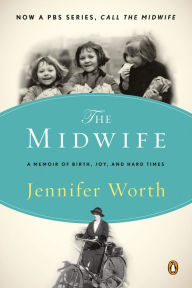
The Midwife: A Memoir of Birth, Joy, and Hard Times by Jennifer Worth
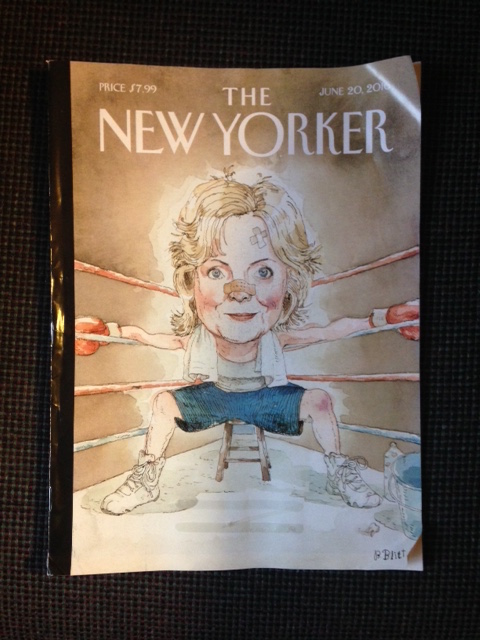
But even being a big fan, I was unaware that the series grew out of Jennifer Worth’s book, Call The Midwife: A Memoir of Birth, Joy, and Hard Times, until I read this week’s issue of The New Yorker.
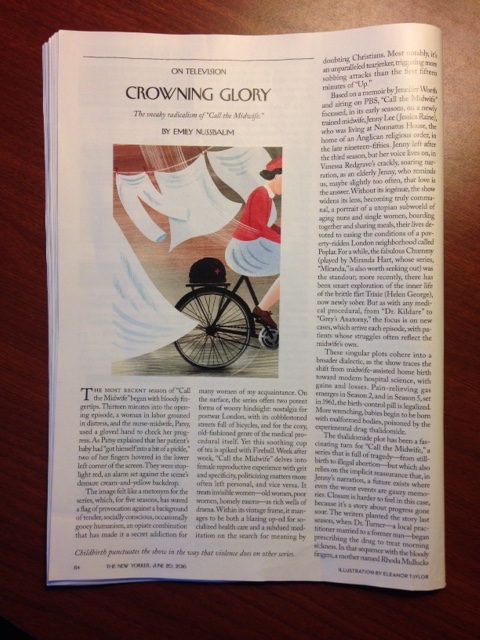
“Crowning Glory: The sneaky radicalism of Call the Midwife” by Emily Nussbaum
Nussbaum wrote succinctly and powerfully about the TV series. She called the bloody, gory images set against a backdrop of tender, socially conscious humanism a “metonym” for the series. Every episode delves into “female reproductive experience. . . politicizing matters more often left personal, and vice versa.” For me, one of the most powerful things Nussbaum said was, “It treats invisible women—old women, poor women, homely mums—as rich wells of drama.” This is the sort of thing readers hunger for and writers should seek to exploit in their stories.
I haven’t read Jennifer Worth’s book, but I intend to. Having spawned this captivating series, it’s likely to be the best kind of memoir—a true story as gripping as well-written fiction.
Is there anyone out there who doesn’t know that Hillary Clinton is the presumptive Democratic Party nominee for president? Or that she is the first woman to run for president on a major ticket? Her achievement reminds us all that women have long been making history. Some of you will remember that I mentioned Victoria Claflin Woodhull, the Equal Rights Party candidate in 1872. She was a fascinating woman—a stockbroker and publisher as well as a suffragist.
TO ALL THE READERS OUT THERE
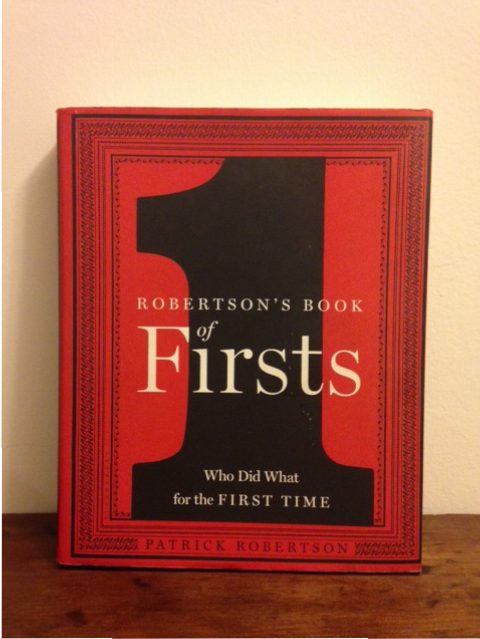
Find out about other amazing first women. Lots of them are listed in references such as this.
Famous First Facts
Lady Astor (birth name Nancy Witcher Langborne), the first American-born woman to become a member of Parliament in Great Britain in 1919.
By Bain News Service (Library of Congress) [Public domain], via Wikimedia Commons
Elizabeth Cady Stanton, the first woman to appear as a congressional hearing witness in 1869. She was trying to keep the women of DC from being debarred from voting.
Elizabeth Cady Stanton, c. 1880, [Public domain], via Wikimedia Commons
Sally Stearns, the first woman coxswain of a men’s collegiate varsity team, 1936.
Nan Jane Aspinwall, the first woman horseback rider to make a solo transcontinental trip from SanFrancisco to New York City, 1910.
Susanna Medora Salter, the first woman mayor, elected in Argonia, Kansas, 1887.
By Unknown photographer (Kansas Historical Society) [Public domain], via Wikimedia Commons
Belle Martell, the first woman licensed to be a prize fight referee, 1940.
Nellie Tayloe Ross, Director of the Mint, the first woman to have her name on the cornerstone of a US government building, 1936.
Nellie Tayloe Ross (1876-1977), Wyoming Governor, 1924-1926. Wyoming State Archives, photo published 1922 [Public domain]
Sybilla Masters, the first woman to obtain a patent—for a machine for cutting and cleaning Indian corn, 1715.
And many others, in books such as this.
Robertson’s Book of Firsts: Who Did What for the First Time
Alternatively, one could go to any field of interest—from playwright to astronaut—and find the first woman in those fields.
FOR THE WRITERS OUT THERE
Consider these pioneers as inspiration. What sort of character does it take to be a first? What might daily life be like for the first woman licensed as an electrical engineer? What price might such a woman pay in terms of family or love relationships? And ultimately, is it a story of triumph or tragedy?
Please share other first women in the comments or on social media. Please tag me on Facebook and Twitter to continue the celebration of first women.
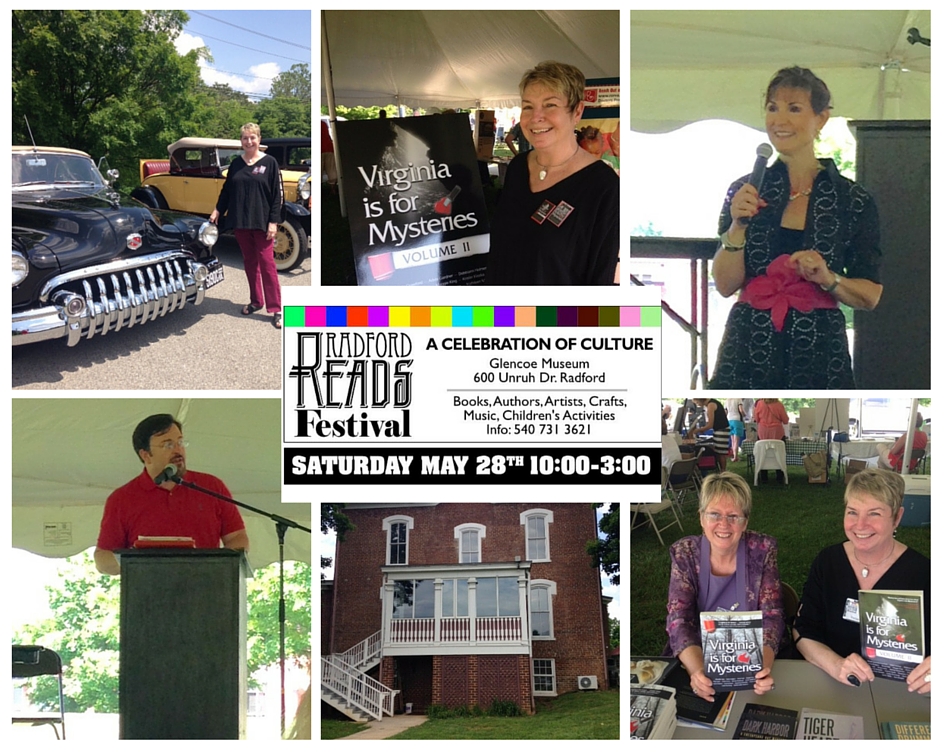
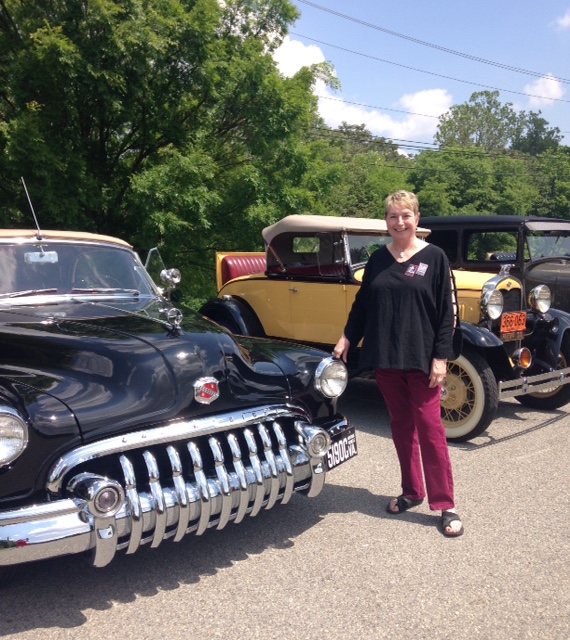
Yes, the Radford Reads Festival had the expected panels, speakers, and workshops (which I’ll get to soon), but it had so much more–just ask any of the attendees who came for the classic cars. . .
Classic cars at Radford Reads Festival and Celebrate Radford Festival
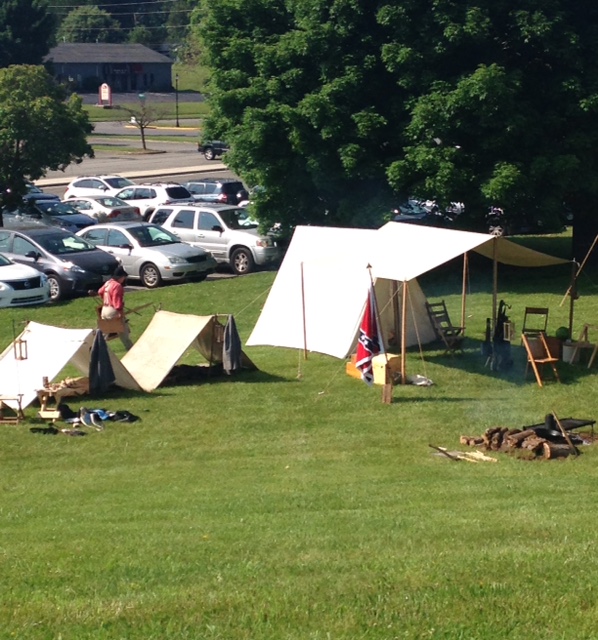
. . . or the blacksmithing, music, quilters, or Civil War reenactors.
Civil War camp reenactment
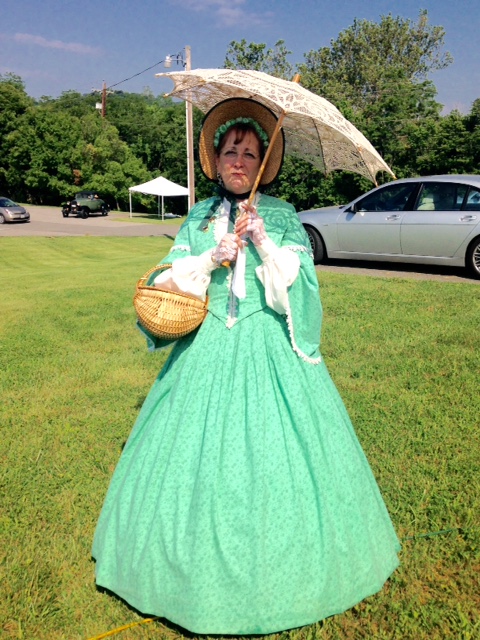
Civil War reenactor
There were crafters selling soaps, lotions, jewelry, and leather goods—and books, of course.
Books I purchased at the Radford Reads Festival
This breadth resulted from the joining of Radford Reads with the Celebrate Radford Festival, two events in their 3rd and 4th years, respectively. Both events are free and open to the public.
And then there was the location!
Glencoe Museum
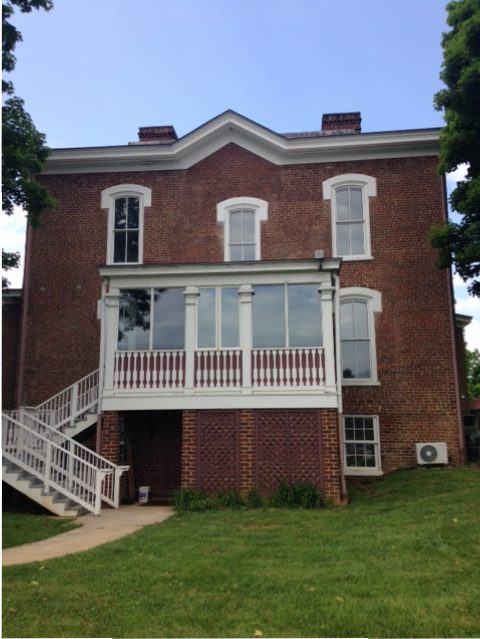
Glencoe Museum hosted Radford Reads
Both events were held on the grounds of the Glencoe Museum, housed in the post-war home of Brigadier General Gabriel C.Wharton, C.S.A., built in the 1870s. The museum includes an art gallery, and for the festival, there was art on the grounds as well.
Artwork on the lawn of Glencoe Museum
I arrived a day early and toured the museum and art gallery with great pleasure. Even in the midst of preparing for the festival the next day, Scott Gardner, director of the museum, and Maryann Whited graciously guided me.
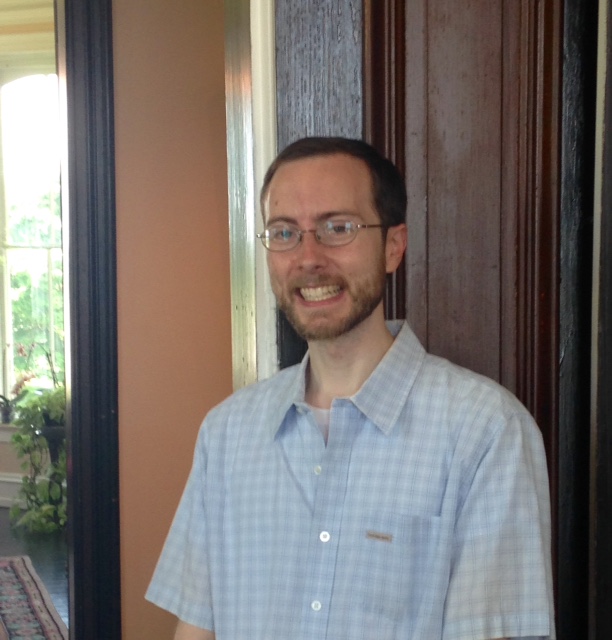
Scott Gardner, director of Glencoe Museum
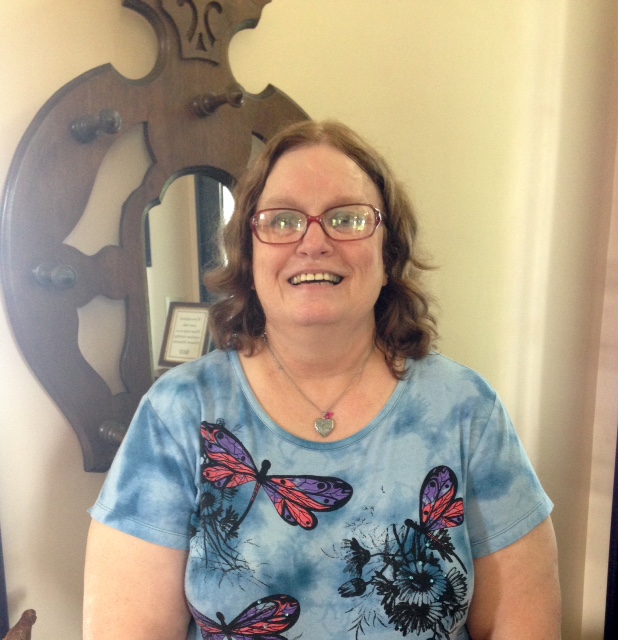
Maryann Whited, Glencoe Museum
I loved the woodwork—and the 12 to 13-foot ceilings—as well as the objects, such as this horn, carved in the shape of a fish.
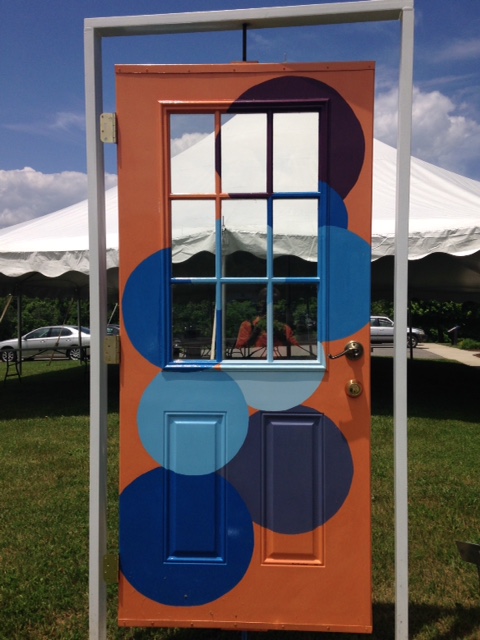
Doors at Glencoe Museum
Horn at Glencoe Museum
And fascinating historical artifacts—fascinating for me anyway. Note the exhibit about niter (also called saltpeter). I mentioned train loads of niter in my story “War and Murder at Nimrod Hall” in Virginia is for Mysteries: Volume II.
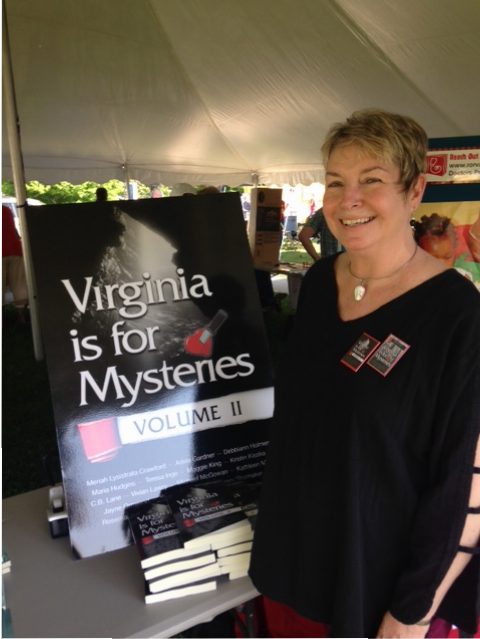
Signing Virginia is for Mysteries: Volume II at Radford Reads
But to the book festival itself.
Radford Reads
Because you are reading this, I assume you are a reader and/or writer, so these are the things that might interest you most.
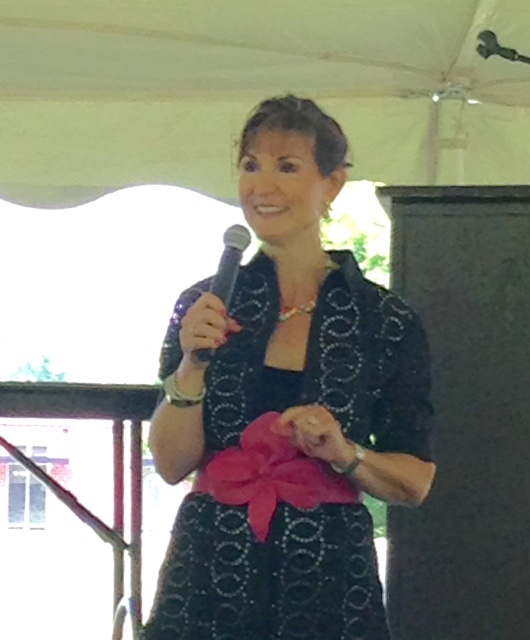
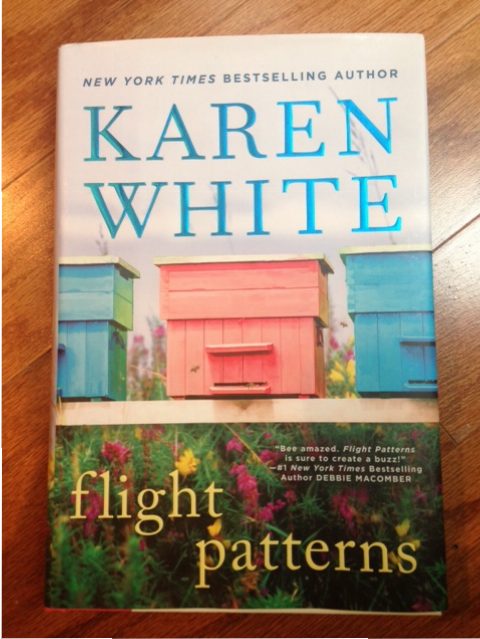
Karen White presented the keynote address. She was terrific! If you have an opportunity to hear her, do. She’s had a number of best-sellers. Her most recent is Flight Patterns. A number of seats had slips of paper taped under them, each giving the holder a free copy of her book—and I was lucky enough to get one! This seems like a great ploy for speaking events. Karen White’s favorite author is Diana Gabaldon, and she says she tries to write the sort of book she likes to read, so I am looking forward to this gift read.
Karen White speaking during Radford Reads keynote
Flight Patterns by Karen White
Immediately after that, Linda Thornburg and I presented our workshop on pathways to publication. I thought the attendance was a bit light, but the festival organizer was quite pleased with our attendance compared to the subsequent workshops. Several members of various Sisters in Crime chapters were there, even though our Central Virginia Chapter members were all busy elsewhere. Other workshops covered writing poetry and memoir.
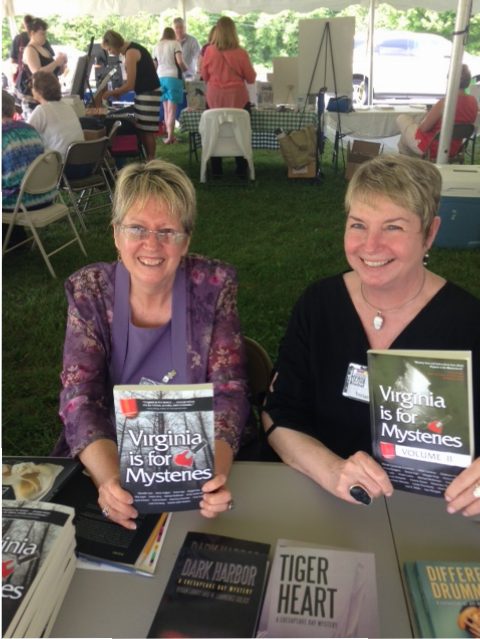
Linda Thornburg and I signing Virginia is for Mysteries
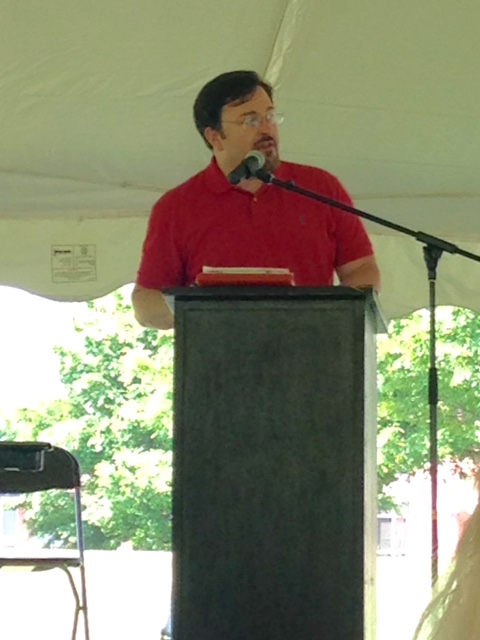
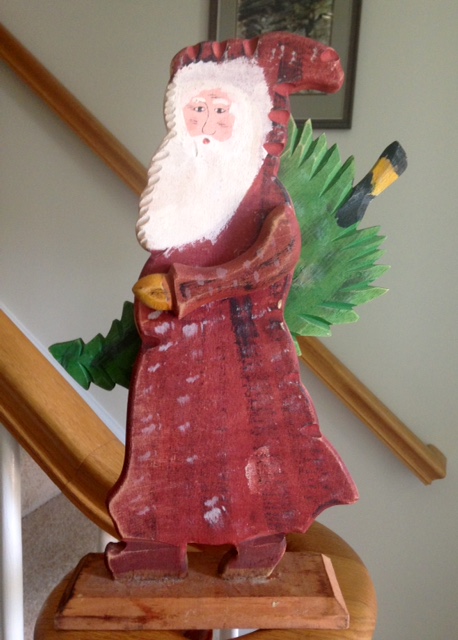
At 1:00, I spoke on the mystery panel. The moderator/host of all the book sessions was David Horton. He was amazing. He had really done his homework on all the presenters. He even mentioned that we share a love of carved wooden Santas!
David Horton hosting the mystery panel
My newest wooden Santa
I enjoyed sharing the panel with Webb Hubbell, Stewart Goodwin, and Mollie Cox Bryan. Check out their books. This panel was sponsored by the Rockwell family.
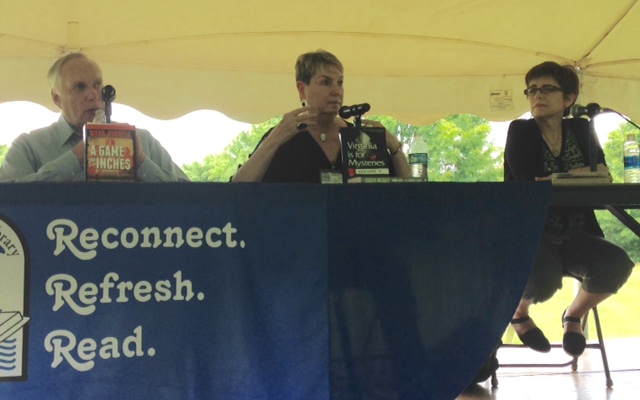
Mystery panel with (l or r) Stewart Goodwin, Webb Hubbell, and me
Radford Reads panel (l to r) Webb Hubbell, Vivian Lawry, and Mollie Cox Bryan
Other sessions were for writers of children’s and young adult fiction, Southern fiction, memoir, history, and poetry.
The festival had many sponsors. Radford Reads was inspired by the Rockwell family in honor of Jean Rockwell, a former Radford Public Library employee who loved the Virginia Festival of the Book. Besides the Rockwells, other sponsors were the Cheryl Blackwell Book Club, the Jervey Family, Ben Crenshaw Art Studio, The Lamplighters, Radford University Foundation, the Radford Heritage Foundation, Ridge and Valley Reader, the Radford Visitor’s Center, and LaQuinta Inn & Suites—at which I had a very pleasant stay!
LaQuinta Inn where I stayed during Radford Reads
It was a real community and family event. Reader or Writer, next year, check it out! It’s a two-fer, and the price is right.
Last weekend I participated in the 7th Annual Gaithersburg Book Festival, and I cannot praise it too highly. It had something for everyone! There were writing workshops for adults, teens, and children. The Children’s Village features storytellers, puppeteers, jugglers, authors, and magic, all encouraging reading, writing, and a love of books. There were exhibitor booths catering to adults and children, a variety of food vendors, and live performances by poets and singer-songwriters. And there were book sales!
Books!
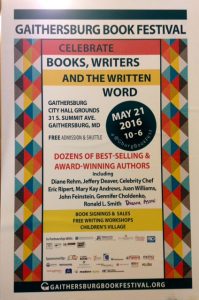
Gaithersburg Book Festival program
Politics and Prose
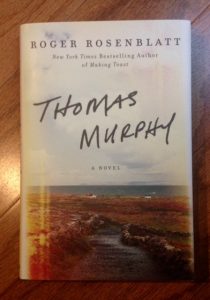
The official bookseller for the even was Politics and Prose. They sold all of the books represented on the program. I bought two, having been captivated by the authors’ presentations I attended after finishing my own presentation and signing. Thomas Murphy by Roger Rosenblatt, who had an engaging conversation/interview with Alice McDermott.
Thomas Murphy by Roger Rosenblatt
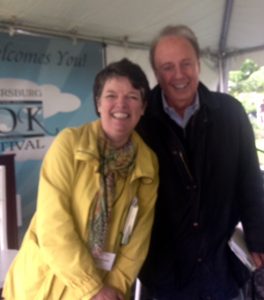
Alice McDermott and Roger Rosenblatt
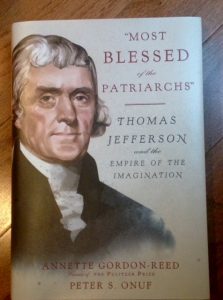
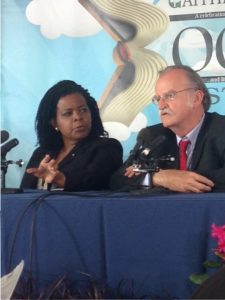
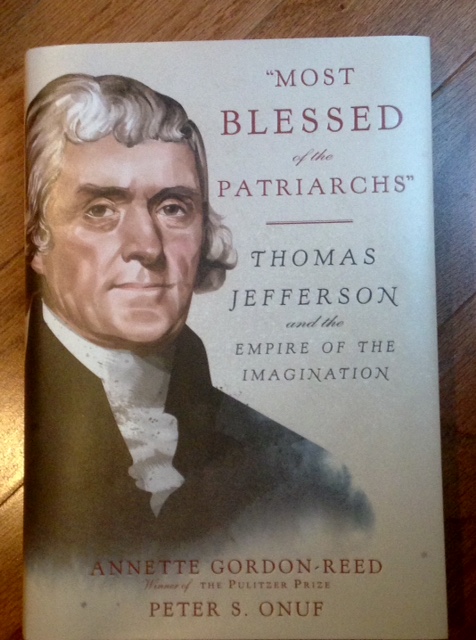
The second book I bought was “Most Blessed of the Patriarchs” by Annette Gordon-Reed and Peter S. Onuf. They presented jointly. She is the author of The Hemingses of Monticello, and a professor at Harvard. He is the Thomas Jefferson Foundation professor of history at the University of Virginia. They were a dynamic duo, talking about what promises to be an atypical biography of Jefferson (e.g., covering music and religion), and answering questions clearly—and patiently!
“Most Blessed of the Patriarchs,” Thomas Jefferson and the Empire of the Imagination
Annette Gordon-Reed and Peter S. Onuf
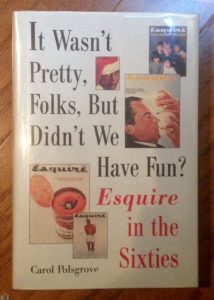
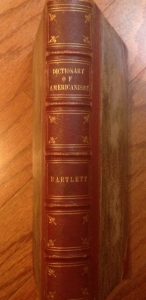
There was also a used book sale by Friends of the Library Montgomery County, MD. I bought two books related to three of my passions: popular culture, old books, and dictionaries! For which I spent a total of $8.
It Wasn’t Pretty Folks, But Didn’t We Have Fun? Esquire in the Sixties by Carol Polsgrove
Dictionary of Americanisms
Bartlett’s Dictionary of Americanisms was published in 1848! It explains what a chore is (the equivalent of char in England), and polk, meaning sack. Needless to say, it’s my oldest slang dictionary, and it nicely illustrates that what was slang 200 years ago has moved into—and sometimes through—mainstream English!
Authors!
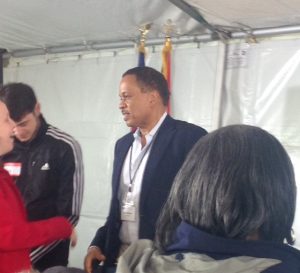
GBF drew participants from near and far. I met authors from New York, Texas, and London—to name a few. Some of the famous authors were highlighted on the festival poster, for example, Juan Williams.
Gaithersburg Book Festival poster highlighting Juan Williams
Juan Williams talking with a reader
Well-known or not, everyone was articulate and professional.
But enough about attending. As an author presenting there, I couldn’t have been treated better!
Before the event, my primary contact was Carolyn Crosby, the Senior Program Supervisor. She was not only friendly and gracious but well-organized and responsive. She made sure I had all the info I needed ahead of time, from hotel reservation to maps to advice on rain gear.
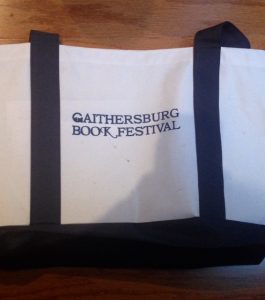
The festival hotel, Homewood Suites by Hilton, was spacious, comfortable, and provided shuttle service to all events. They gave us our GBF book bags, containing all the important stuff (program, shuttle schedule, maps) and no throw-away junk. It’s a classy bag, heavy canvas.
A great tote!
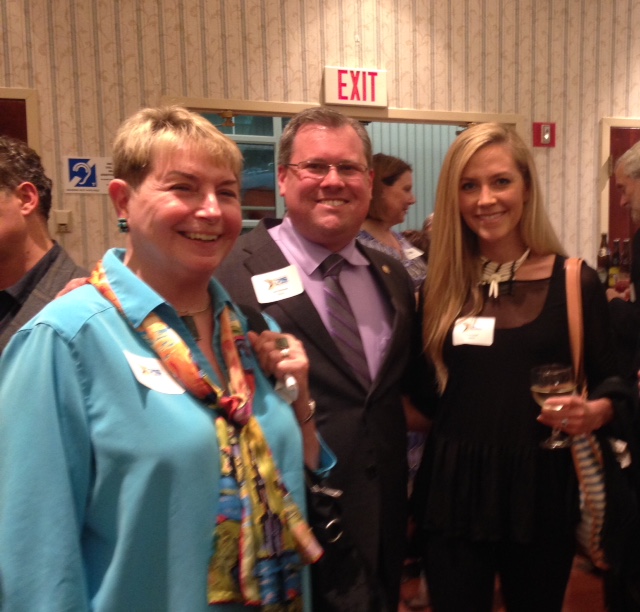
On Friday evening, there was a VIP Reception from 7:00 till 10:00. The food was great and plentiful, and there was an open bar. Presenters mingled with those involved in producing the event. I met Jud Ashman, Founder and Chair of GBH and currently mayor of Gaithersburg. He is articulate and humorous! He’s shown here with me and M.Tara Crowl, who writes fantasy fiction for middle-schoolers.
Vivian Lawry, Jud Ashman, M.Tara Crowl
Gaithersburg Book Festival is a rain-or-shine event.
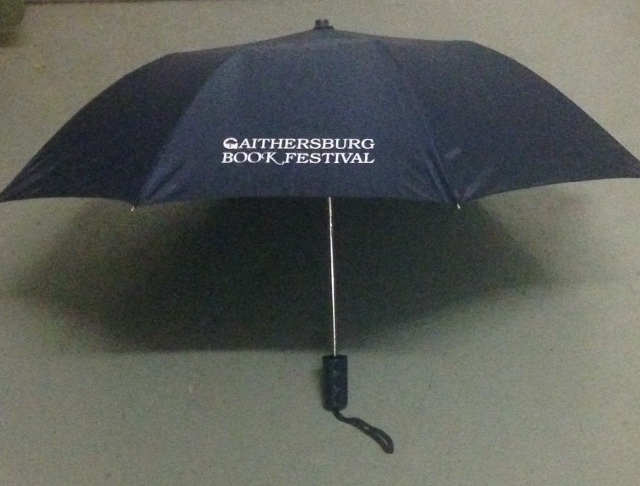
All of the programs are under tents—and this year it was rain, with temperatures in the low-50s. GBHis a class act, and they provided all the presenters with umbrellas.
Gaithersburg Book Festival umbrella
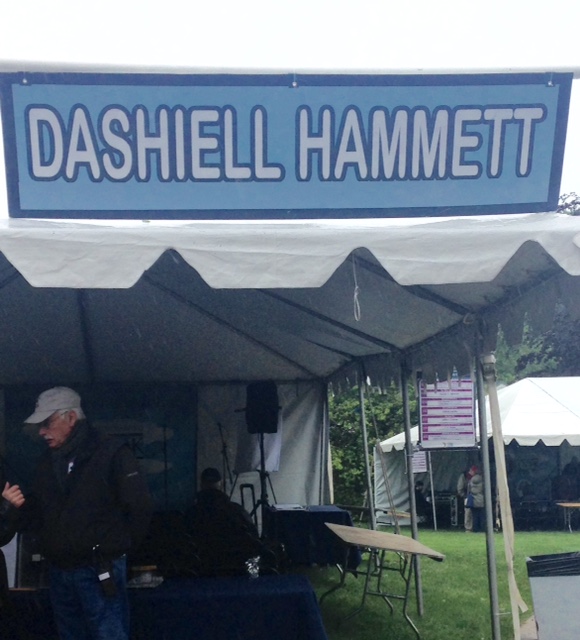
The weather dampened people but not spirits. Attendees could choose among 10 presentations at a time, each in a tented pavilion: Dashiell Hammett, F. Scott Fitzgerald, Edgar Allan Poe, H.L. Mencken, James Michener, Gertrude Stein, Rachel Carson, Jim Henson, Willa Cather, Ogden Nash.
Pavilion where I spoke
Speaking!
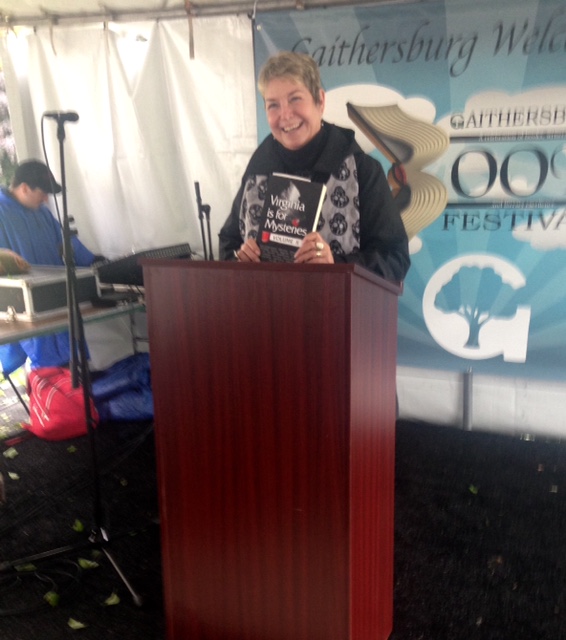
I was on at 10:00 a.m. in the Dashiell Hammett Pavilion. Debbiann Holmes and I talked about Making Fiction Real. We seem to make a great sister act. Maybe we should take it on the road.
Virginia is for Mysteries was with me at Gaithersburg Book Festival
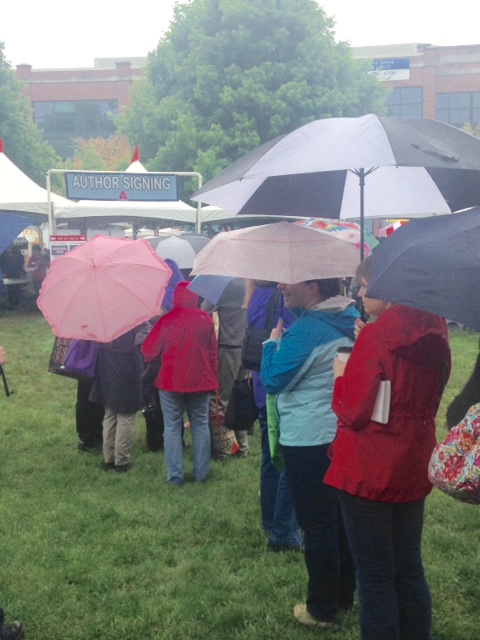
Enthusiastic, upbeat volunteers were everywhere.They kept the presenters on time starting and ending. We were escorted to the pavilion for the presentation, then to the signing area after. People seemed okay waiting in the rain to get books signed.
Signing line
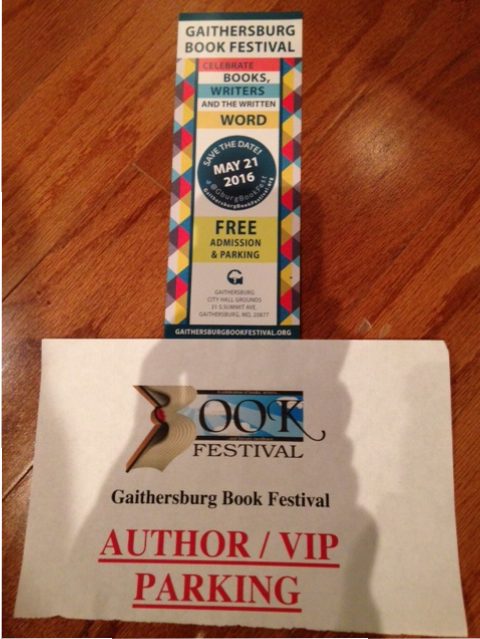
By definition, presenters were VIPs. Besides umbrellas and book bags, we had reserved parking, special registration, and a VIP lounge with refreshments all day.
Gaithersburg Book Festival information and parking pass
But perhaps the most striking aspect overall was the universal enthusiasm and the breadth of community support. Just look at the number of partners and sponsors they have!
Partners and Sponsors
I want to go again! And you should go, too. It might even be sunny!
Top Ten Tuesday is an original feature created by The Broke and the Bookish. Each week, they provide a prompt for bloggers. Today’s prompt is Ten Books I Feel Differently About After Time Has Passed.
BOOKS I LOVE—OR NOT SO MUCH!
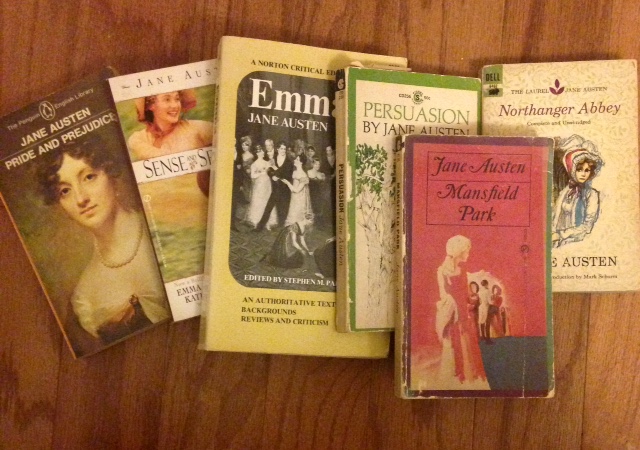
Some books seem to get better every day—or at least year by year. I find that many books I first read for entertainment have grown over time—or maybe I have! Into this category I put anything by Jane Austen.
Jane Austen
Her observations of human behaviors, foibles, and motivations are timeless. And I smile at the humor, even when re-reading.
Books by Jane Austen
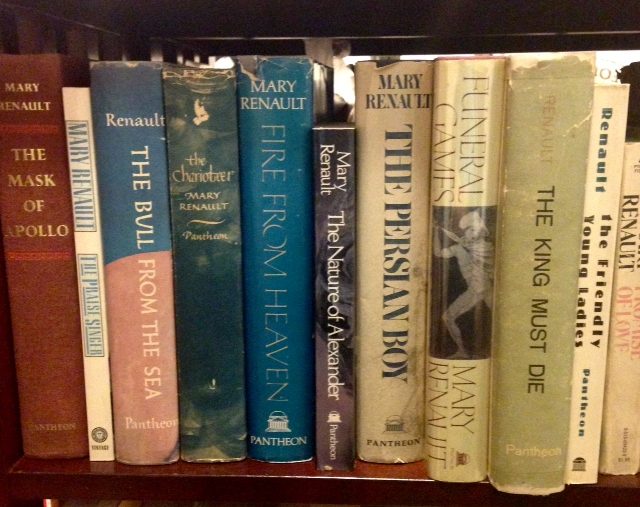
Mary Renault
Then there are Mary Renault’s books. She brings history to life and dealt with delicate issues of sexuality long before most mainstream authors.
Books by Mary Renault
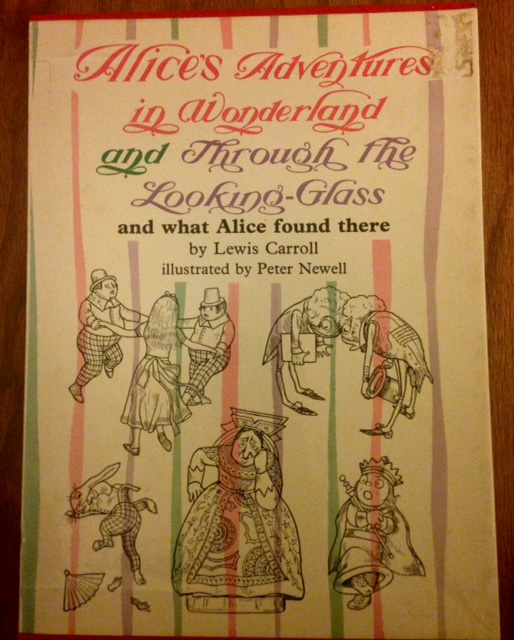
Lewis Carroll
I first approached Alice’s Adventures in Wonderland and Through the Looking-Glassas children’s books. Indeed, my elementary-school granddaughter read them recently. But reading them with an adult eye and understanding, I find the plot line and magical realism rich and the writing superb.
Alice’s Adventures in Wonderland and Through the Looking Glass
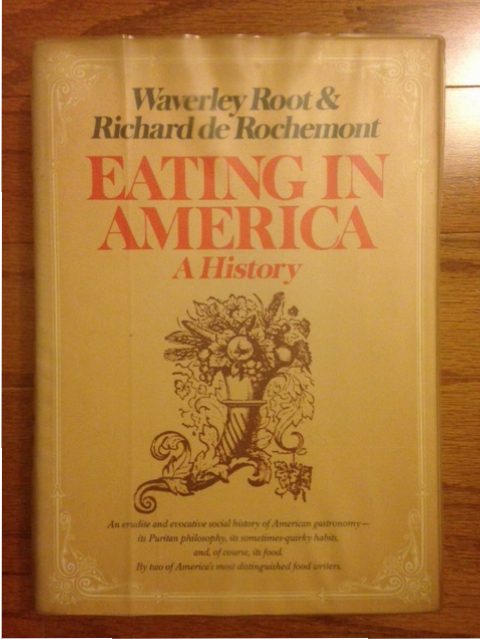
Waverley Root & Richard de Rochemont
I’ve had Eating in America: A History by Waverley Root and Richard de Rochemont on my shelf of unread books for years. But recently, The Food of Italy by Waverley Root turned up on a list of recommended reads for people planning a trip to Italy, and having started that book, I turned to Eating in America. It starts with seafarers and Native Americans and continues through refrigeration and the modern American sweet tooth. Why did I let it languish so long?
Eating in America: A History
Cookbooks
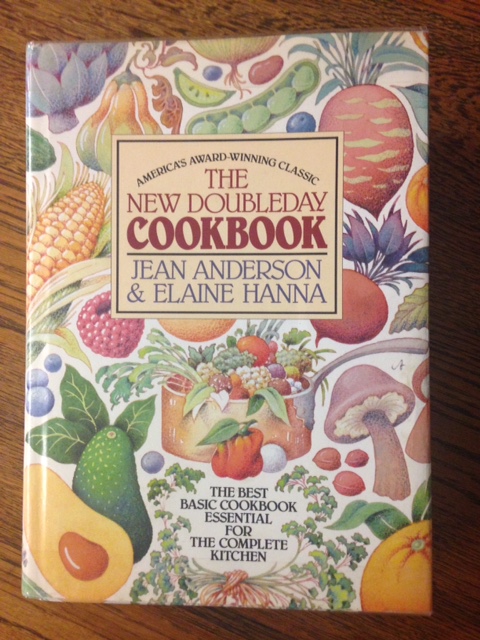
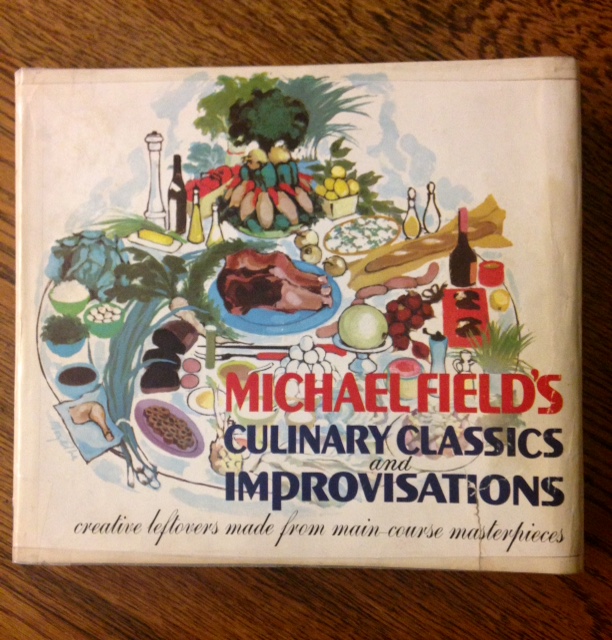
And that segues into cookbooks. Of all my book loves, cookbook loves are the most fickle. I’ve had my low-calorie, low-fat, low-glycemic-index, low-carb, pressure-cooking, microwaving, slow-cooking, blending, cooking-for-one-or-two infatuations. But two cookbooks have held steady in my heart: The Doubleday Cookbook—the best encyclopedic cookbook out there—and Culinary Classics and Improvisations—the best leftovers cookbook in the world!
The New Doubleday Cookbook
Culinary Classics and Improvisations: Creative Leftovers Made from Main-Course Masterpieces
Memoir & biography
As a category, I’m coming to a greater appreciation of memoir and biography. For example, The Glass Castleby Jannette Walls, West With the Night by Beryl Markham, and at the recent Gaithersburg Book Festival, I bought “Most Blessed of the Patriarchs” by Annette Gordon Reed and Peter S. Onuf, a recent and atypical biography of Thomas Jefferson—which is still untested but very promising.
West With the Night
“Most Blessed of the Patriarchs,” Thomas Jefferson and the Empire of the Imagination
The Bible
When it comes to books about which my feelings have undergone a sea-change, the Bible is in a category by itself. Once upon a time, I believed it was literally the word of God. Now I don’t. Enough said.
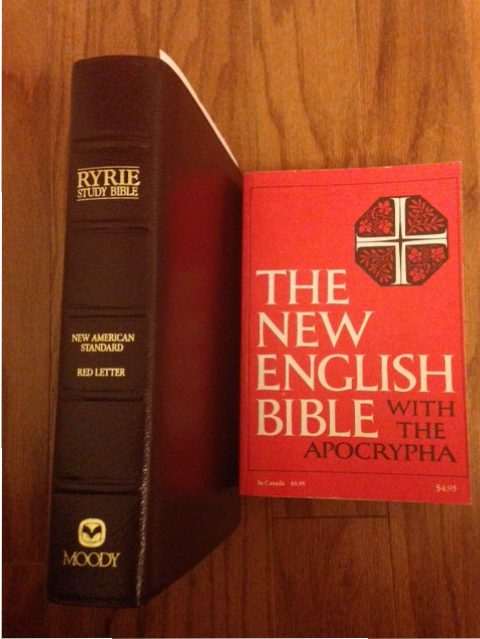
Ryrie Study Bible and The New English Bible
Mysteries
As I’ve become a writer, my interest in the mystery genre has waned. I lost interest in Patricia Cornwell early on because her protagonist, Kate Scarpetta, didn’t grow or develop. But former favorites from Sue Grafton to Rex Stout just don’t grab me anymore.
Depraved Heart
Strange Maps
One of the books I bought on a whim, Strange Maps, turned out not to be as interesting as I expected it to be.
Strange Maps: An Atlas of Cartographic Curiosities
The Dictionary of American Regional English
And last but not least, I’m no longer in love with the six volumes of The Dictionary of American Regional English. I really regret it. But being able to look up a word and find out where it’s used isn’t nearly as useful as it would be if I could look up a region and get typical word usage!
The Dictionary of American Regional English
What books are waxing, waning, or shifting ground in you heart?
Top Ten Tuesday is an original feature created by The Broke and the Bookish. Each week, they provide a prompt for bloggers. Today’s prompt is Ten Books I Picked Up on a Whim.
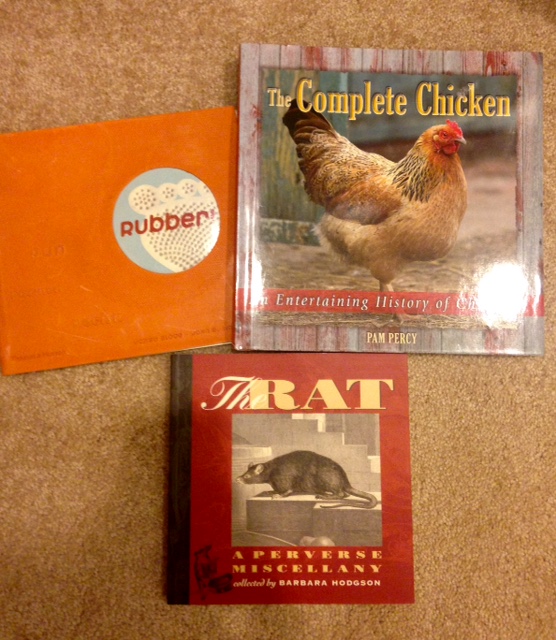
Actually, this could apply to most of the books currently on my shelves. I almost never set out to buy a particular book. I see it and I want it. And so, in no particular order, here are a few of my whimsies.
Books I Bought on a Whim: the Bizarre
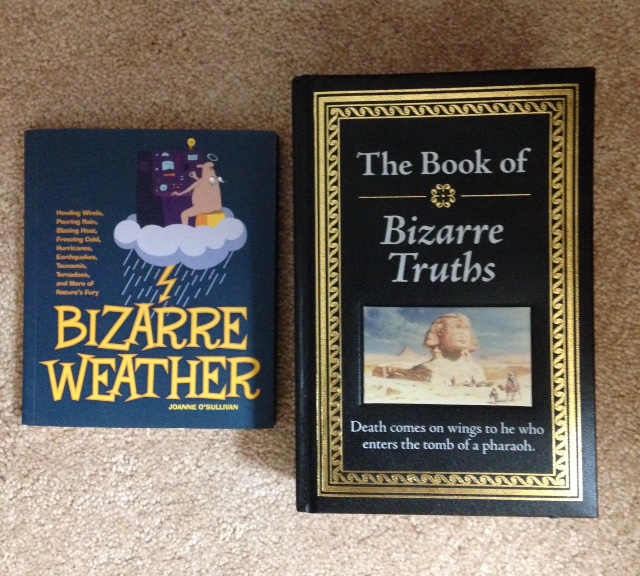
I’m attracted to anything with bizarre in the title. Who wouldn’t want to know about peculiar precipitation, from colored rain to frog falls? It may be comforting to know that not even acid can dissolve a diamond. And if you ever came across a Hercules beetle, you’d know it by its 7-inch length.
Bizarre Weather and The Book of Bizarre Truths
Books I Bought on a Whim: Skulls
I like skulls. I have half a dozen pairs of skull earrings, 3 rings, 4 pendants, and 1 bracelet. I bought this book by mail-order, and it covers everything from the empire of the dead to tattoo skulls.
The Mammoth Book of Skulls
Books I Bought on a Whim: the Horrible
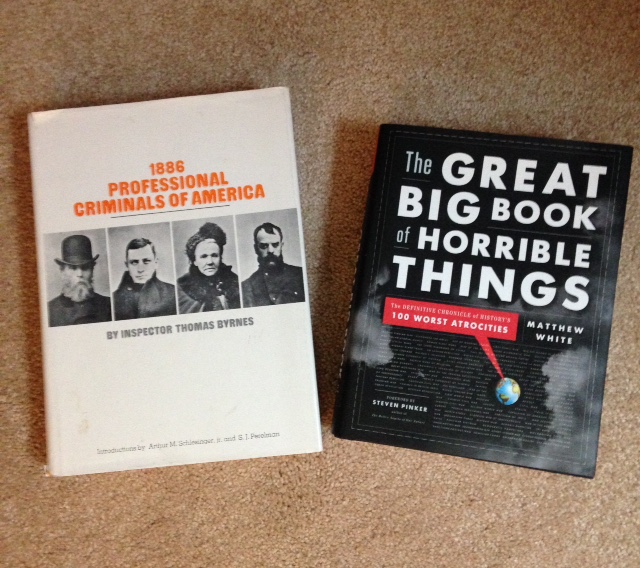
And then there are books that just appeal to me as a mystery writer—and as one fascinated by death.
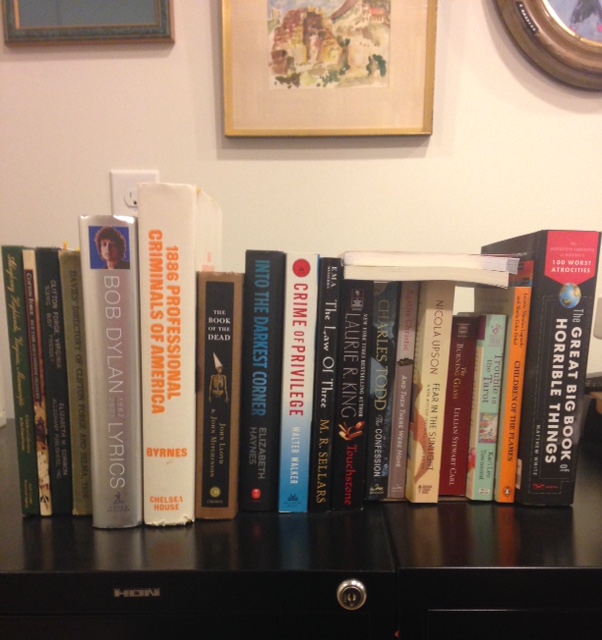
1886 Professional Criminals of America and The Great Big Book of Horrible Things
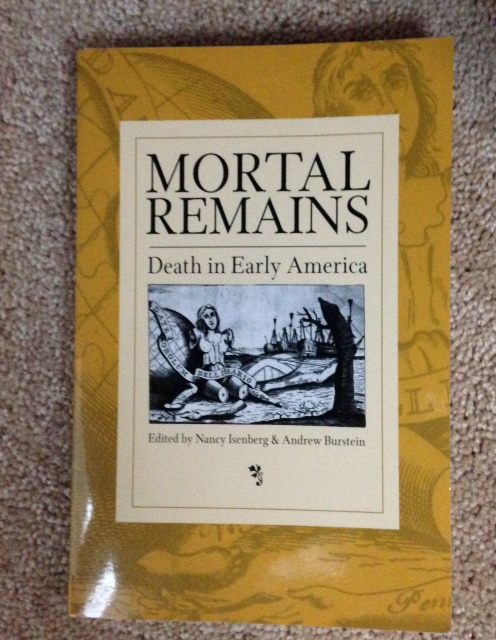
Mortal Remains: Death in Early America
Books I Bought on a Whim: Bob Dylan
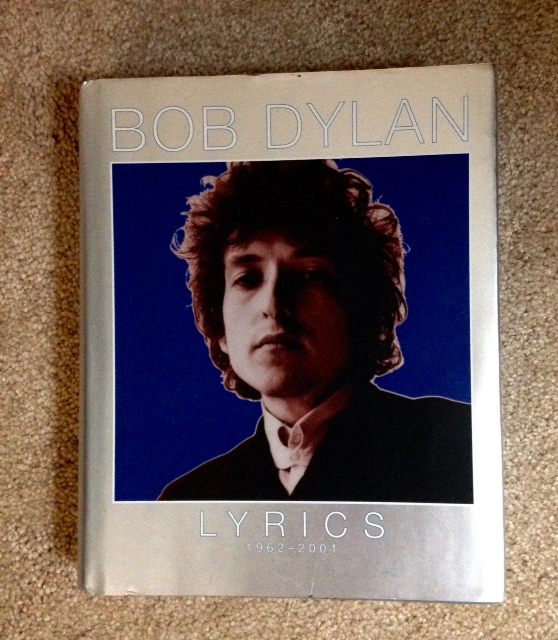
I first loved Dylan lyrics when I heard his songs sung by others. It took a long time for me to appreciate his voice. And truth be told, I seldom even glance at this book. I just like knowing it’s on the shelf.
Bob Dylan Lyrics
Books I Bought on a Whim: Writing Journals
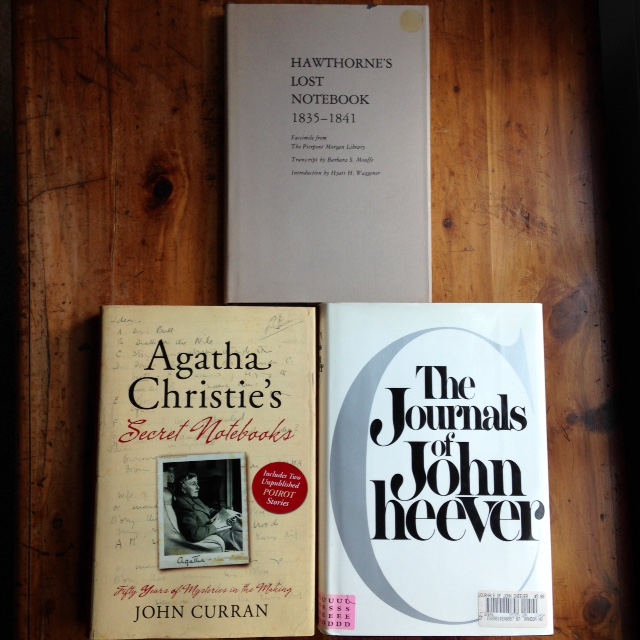
I’ve written in my diary every night for decades. I’ve kept notes and files related to writing ideas and projects. But I’ve never kept a writing journal. Maybe that’s why I buy every one I see!
Journals by Hawthorne, Christie, and Cheever
Books I Bought on a Whim: Chagall’s Illustrated Bible
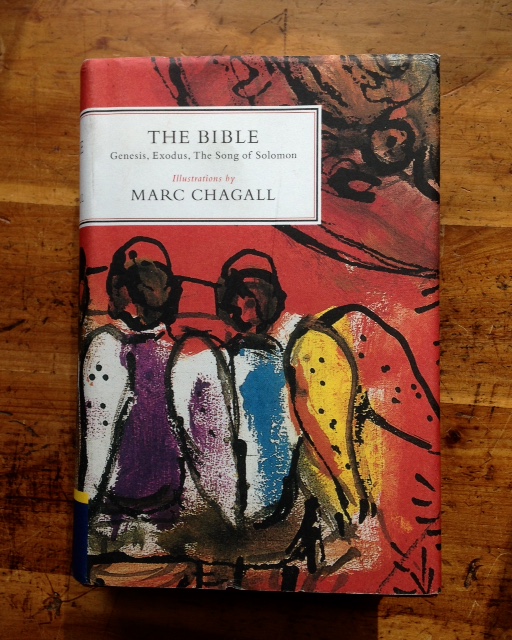
I bought this book after having seen it briefly in a writing class. You may remember my blog comments about cross-over art. Chagall’s illustrations cover only Genesis, Exodus, and The Song of Solomon. The text is set in paragraphs. The combination of format and paintings makes the words themselves fresh.
Chagall’s illustrations of Genesis, Exodus, and The Song of Solomon
Books I Bought on a Whim: the Dark Side
Books that deal with the dark side—for example, the books in the Postsecret series—are highly inspirational for writers. This book is similar. It covers shameful confessions to all the deadly sins, plus miscellaneous.
Not Proud: A Smorgasbord of Shame
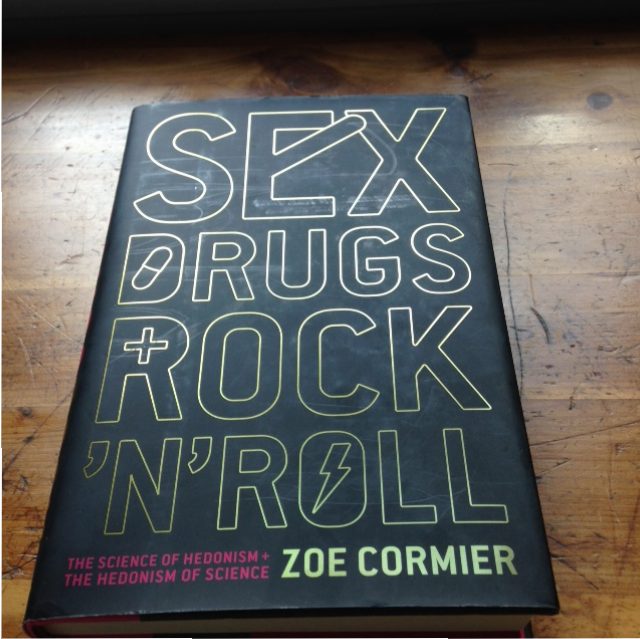
This book I bought because the title is such a cliché, and because it reminded me of BONK: The Curious Coupling of Science and Sex (Mary Roach).
Sex, Drugs, Rock ‘n’ Roll
Books I Bought on a Whim: Repeats
Last but not least, here are 5 books I bought on a whim more than once! Don’t ask.
A couple of weeks ago, I mentioned that I like having books about places I’ve lived. I was born and reared in Ohio, and now live in Virginia, so those are two of the states I am drawn to. And given that I’m also drawn to the weird. . .
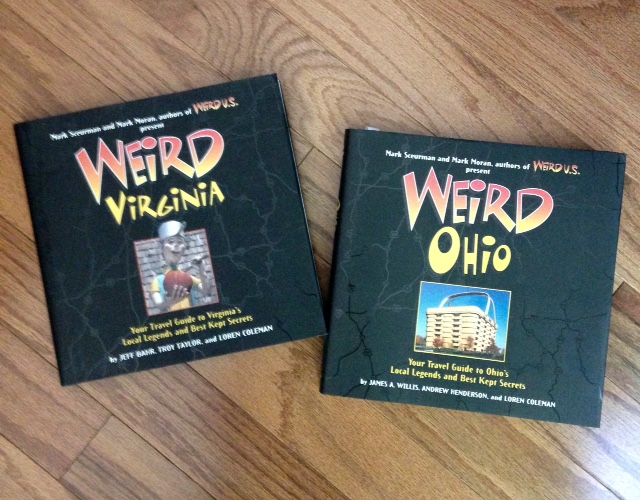
Weird Virginia and Weird Ohio
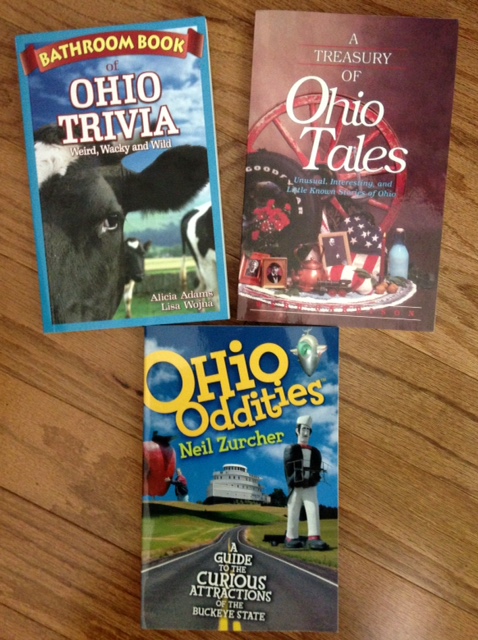
From books like these, you can gain such vital information about Ohio as the location of Crybaby Bridge; abandoned hospitals, prisons, and asylums; and graveyards worthy of a safari. And as for Virginia, you might think Civil War Statues—but what about a statue of a giant Viking, or Johnny Appleseed, or the Auto Muffler King?
Did you know that the official state drink of Ohio is tomato juice? Or that the 50-star U.S. flag was designed by an Ohio high-schooler? And FYI, the dorm room occupied by Edgar Allan Poe at the University of Virginia is on permanent display. And Secretariat was the first Virginia bred-and-owned horse to win the Triple Crown.
Trivia for writing inspiration
Of course, trivia can come in all forms. I have several books of lists. I like knowing the 6 illegal substances that occur naturally in our bodies, 21 biblical contradictions, and 12 erotic works by well-known writers. (Anne Rice? Piers Anthony?)
If ever evidence was needed that people will compete in anything, just check out weird records: the longest time balancing a Christmas tree on the chin (56,82 seconds), the longest time keeping toe in mouth while hopping on one foot (1min. 49.02 sec.), and the largest grand piano cake (300 lbs, shaped like a baby grand).
And examples could go on. But why? Either you love trivia—and therefore will own these books or others like them—or you won’t. In which case, why are you still reading?
Trivia positives for readers
Trivia is interesting, often funny, can serve as a conversational gambit, and you needn’t worry about coming to a good stopping place before going to bed.
Trivia positives for writers
Giving your characters off-beat information or obsessions adds interest—and you can enjoy the research!
True confession—in case you hadn’t figured this out yet: I’m a book hoarder. So, you might ask, why does someone who seldom sees a book she doesn’t want to own love libraries? Let me count the ways!
My local libraries all have book sales on-going, and I can pick up all sorts of interesting books, CDs, DVDs, etc., for $1-$2—some good enough to gift!
I can borrow audio books for those times when I can’t actually read—e.g., when I have a raging case of conjunctivitis or I’m driving 200 miles
Many people—even writers!—think research means Google, but sometimes that comes up short. In my experience, nothing beats the reference section of a library and a friendly librarian for helping to ferret out the tidbits you need to make your story real.
Probably less important for writers than for others—except in emergencies—but libraries offer free access to computers, and thus the internet.
Libraries host programs that are free to the public, often talks by writers or about writing.
Study rooms and meeting rooms are available free for non-profit use—such as critique group meetings. IMHO, every writer should have at least one good critique group that meets regularly, and meeting at a library means no one has to make the house suitable for visitors!
Inter-library loan is a godsend!
So why do I love libraries? Because I’m a writer!
Tell me your reasons for loving libraries. Leave a comment below, or find me on Facebook or Twitter.
How often do you check out bestseller lists? Which ones?
There are some who sneer at best-selling books, but I’m of a different opinion.
Just because it sells doesn’t mean it isn’t good!
There are debates about the legitimacy of bestseller lists and how the New York Times, Wall Street Journal,andUSA Todayarrive at their rankings. Some lists have more editorial oversight than others; some lists rely on sales figures as well as a sampling from their pre-selected booksellers. Some lists split digital and print, some don’t. The New York Times shows both.
Whatever your opinion of the tactics that create the lists, the lists are excellent places to find a great book to read. Or you might try recommendations from booksellers, such as the Indie Next List, which is curated by independent booksellers.
Top Ten Tuesday is an original feature created by The Broke and the Bookish. Each week, they provide a prompt for bloggers. Today’s prompt is Top Ten Bookworm Delights.
BOOKWORM DELIGHTS come in all guises! I’m talking about the periphery, the delights beyond lovely language, powerful characters, and compelling plots.
Bookworm Delights #1: I love old books.
Directions for Cookery, In Its Various Branches
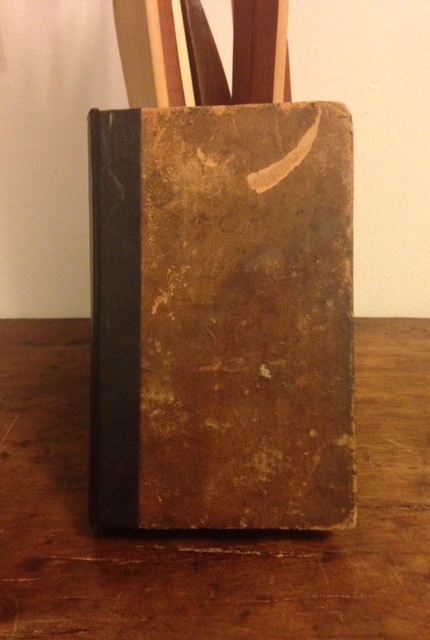
My oldest books are cookbooks. The oldest is DIRECTIONS FOR COOKERY, IN ITS VARIOUS BRANCHES, BY MISS LESLIE, 1843; unfortunately it isn’t at all photogenic. It includes helpful hints, such as two jills are half a pint; preparations for the sick; receipts [sic] for perfumery, and pudding catsup; uses for peach pits and plum stones; and advertisements for a treatise on the physiological and moral management of infancy, a book on the culture of flowers and grapes, and THE HOUSE BOOK: OR, A MANUAL OF DOMESTIC ECONOMY BY MISS LESLIE.
White House Cookbook
Sometimes old books yield bonuses. This 1899 printing of the WHITE HOUSE COOKBOOK came with four 1917 U.S. Dept. of Agriculture pamphlets with titles like “Do You Know Corn Meal? ITS USE MEANS Service to Your Country, Nourishing Food for You.”
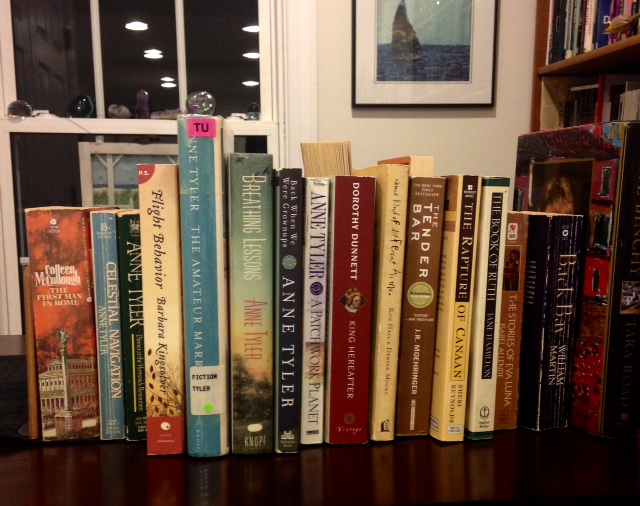
I don’t actually collect antiquarian books, cookbooks or otherwise. But I like having old books around, and many on my shelves date from the 1930s onward.
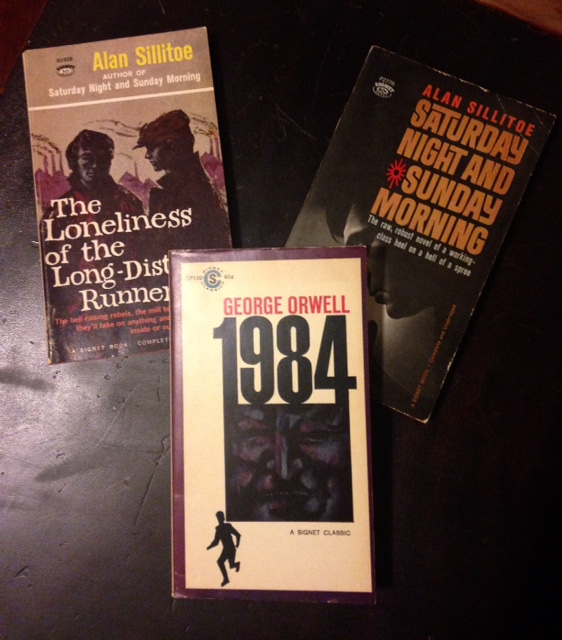
Given my druthers, I’d still read the fifty- and sixty-cent paperbacks rather than the shiny new editions from the bookstore.
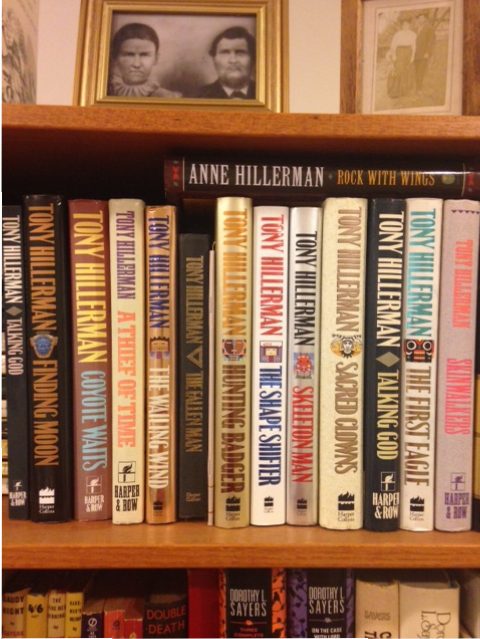
Bookworm Delights #2: I love sets of books
Books by Tony Hillerman
When I find an author I really enjoy, I want to read everything he or she wrote. And I keep the ones I like best, both fiction and non-fiction.
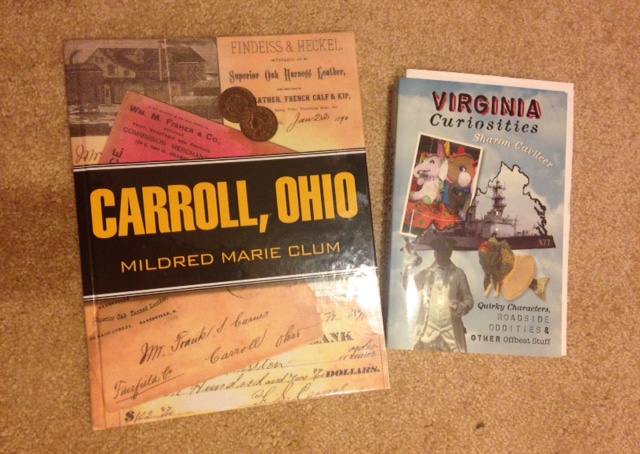
Bookworm Delights #3: I love books about places I’ve lived.
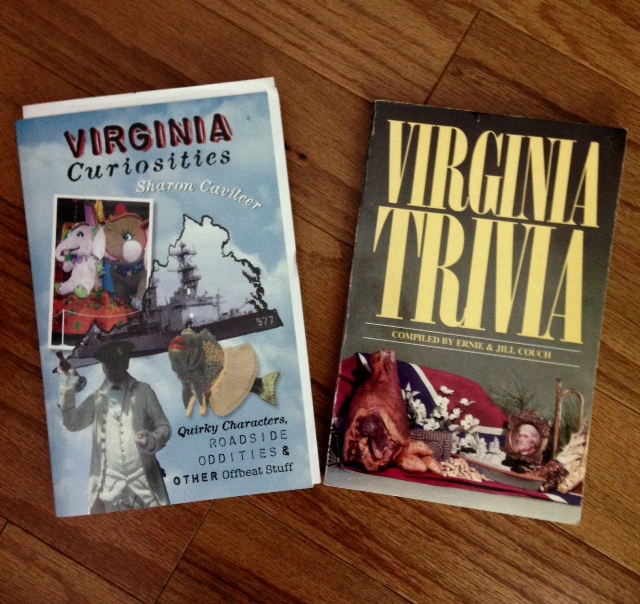
Carroll, Ohio by Mildred Marie Clum and Virginia Curiosities by Sharon Cavileer
Therefore, I have an array of books about Upstate New York, Washington, DC, and Maryland, as well as Ohio and Virginia.
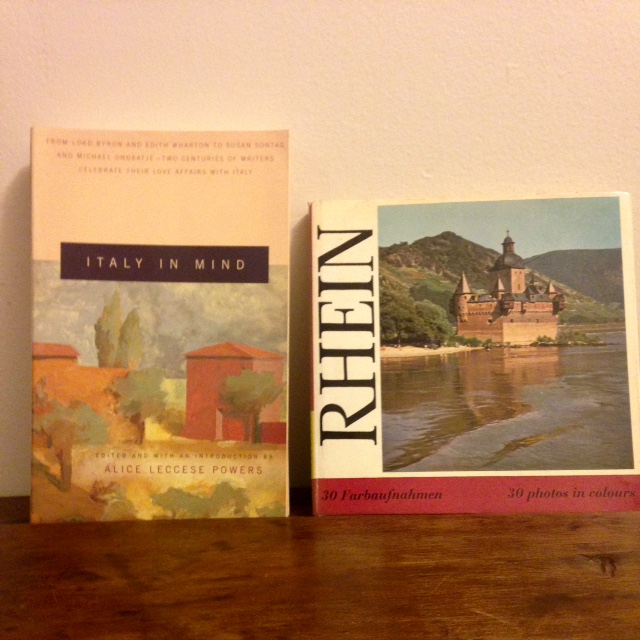
Bookworm Delights #4: When I travel, especially abroad, I love bringing home books of memories.
I have everything from books of cityscapes to fiction in translation and historical summaries. I’ll spare you photos of all the foreign cookbooks I’ve accumulated. But here are a couple representing Germany and Italy, places I’ve visited more than once.
Bookworm Delights #5: Oddball books give me great pleasure.
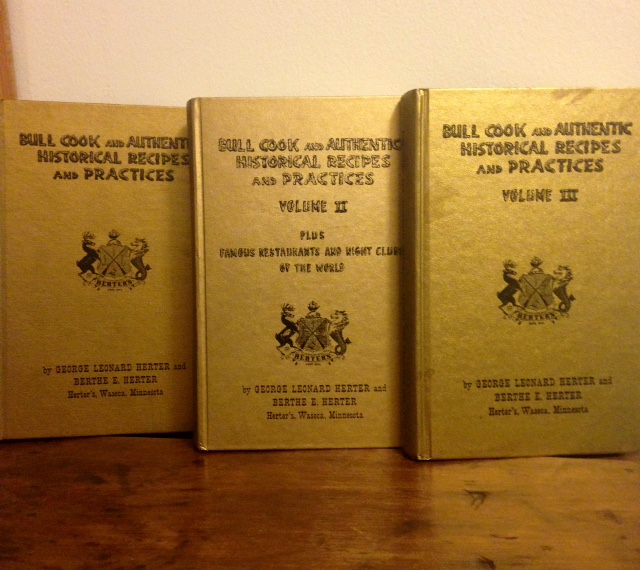
My favorites of these are the three volumes of Bull Cook and Authentic Historical Recipes and Practices by George Leonard Herter and Berthe E. Herter.
Bull Cook and Authentic Historical Recipes and Practices by George Leonard Herter and Berthe E. Herter
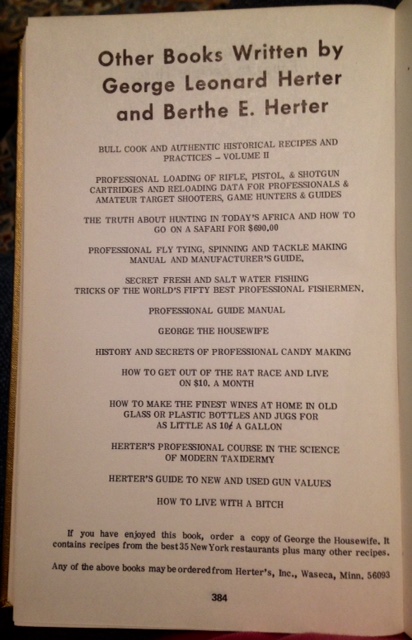
The first printing of the first volume was in 1960, and the three volumes are extremely entertaining examples of do-it-yourself publishing. The books contain wonderful paragraphs of opinion and assertion, with no attempt to document sources for the statements. For example, his recipe for Doves Wyatt Earp begins with four pages of purported biography of Earp. The recipe itself begins, “Pick ten doves and cut off their wings, feet and head. Remove the entrails and singe off the hair feathers with a candle.” Some of the recipes are quite tasty, the historical bits are fun reading, and all three volumes are illustrated with hundreds of black-and-white photographs, most of them by the author—at least, no photo credits are offered.
Closely related to oddball books are books on oddball topics—or if not oddball, at least on narrow topics—which I enjoy immensely because of the information therein.
There are whole books out there on toads, dung, how to hide one’s assets and disappear, and just about anything else you could think of.
Bookworm Delights #6: I love having shelves of unread books!
It feels like money in the bank.
Shelves of unread books
With unread books on hand (and this can include unread books on an e-reader!), should you suddenly find yourself unemployed or otherwise short of money to buy more books just now, no problem! Ditto should you find yourself laid up with a broken back or a lingering case of flu.
Bookworm Delights #7: I love receiving books from family and friends.
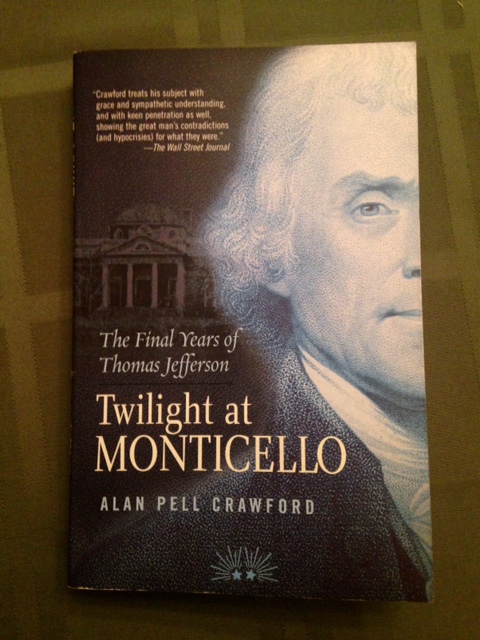
It’s better if I actually enjoy the book. But opening books inscribed by loved ones, knowing they were thinking about me and my interests—however imperfectly—when they bought them, makes me glow.
Twilight at Monticello: The Final Years of Thomas Jefferson by Alan Pell Crawford
And what are books without bookmarks?
Bookworm Delights #8: I love bookmarks.
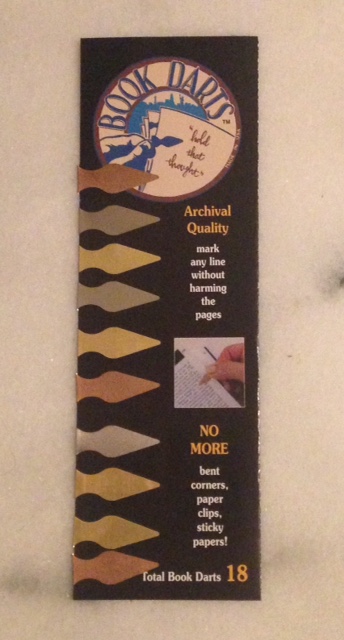
My favorite commercial bookmarks are book darts.
Book darts
They are simple, slim, and elegant. They stay put. They can mark a page at top or side or bottom (though I don’t see the point of bottom). Unfortunately, the local Barnes and Nobel doesn’t carry them anymore.
And did you know that Post-Its were invented by a man who was trying to create a bookmark that would stay put when reading on airplanes?
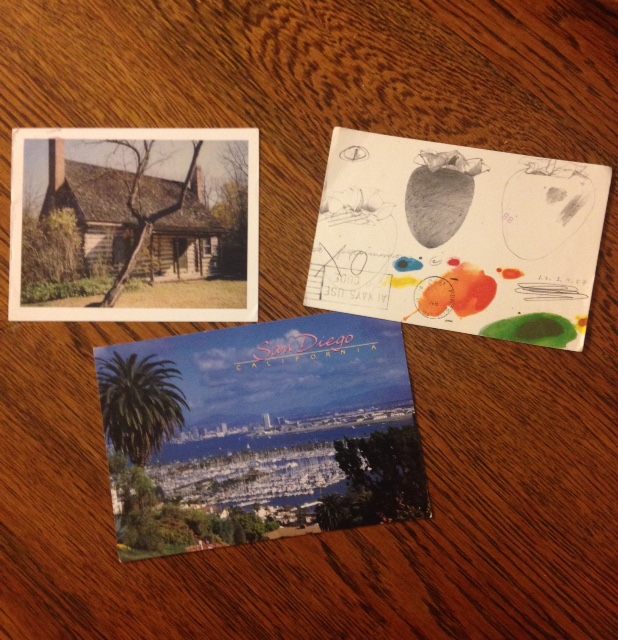
And speaking of bookmarks, decades ago I started using postcards as markers in cookbooks—books that often need more than one marker AND are opened frequently.
Bookworm Delights #9: I love coming across a postcard sent thirty years ago by someone traveling near or far.
They make me smile and think of the sender. Many of those senders are dead now. And I suppose postcards are going the way of the dodo bird, as friends now send e-mails with photos. Oh, sigh. All the more reason to treasure the ones I have.
Last but not least. . .
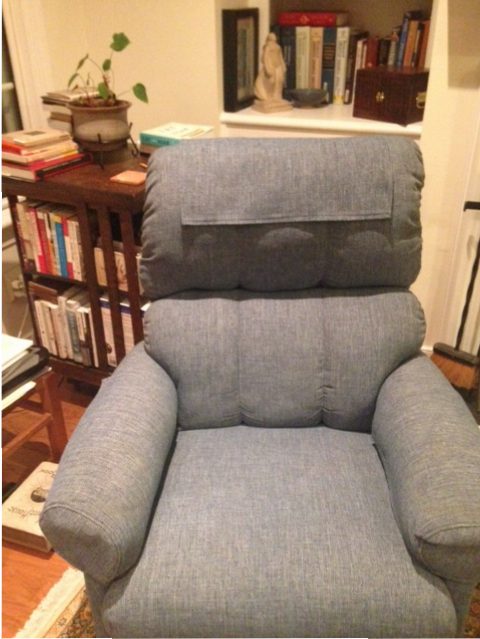
Bookworm Delights #10: I delight in my reading chair!
Recliner where I read
True bookworms read anywhere and everywhere. I read in doctors’ waiting rooms, and in the dentist’s chair waiting for the impression gunk to set up. In the car when it isn’t my turn to drive. When I’m in bed, lights out, the only glow that from my Kindle. Yes, I’ve even been known to read in the bathroom. But the best, coziest reading—whether with fireplace or AC—is in my recliner, feet up, padded armrests supporting my elbows.
Bottom line
Bookworm delights are as many and as varied as bookworms themselves. What are yours? Tell me in the comments below, on Facebook, or Twitter.