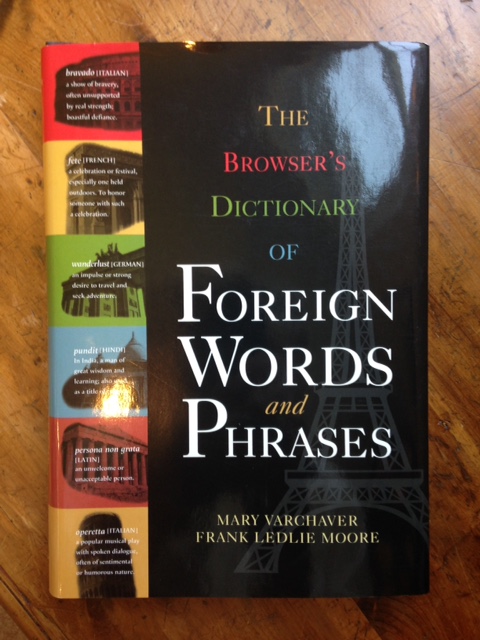
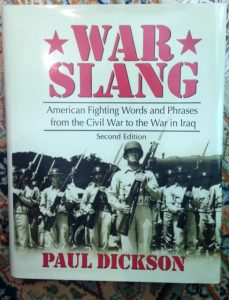
When I told a friend that I was leaving today for Italy, she said, “Oh, good for you! And thank goodness I don’t have to go. I hate traveling!” This immediately made me think about The Accidental Tourist.
I loved that book, and the movie. The protagonist was—is?—a man whose job is writing travel guides for people who don’t really want to leave home. Such people read about distant places rather than going there—not that there’s anything wrong with that! But personally, I find it incomprehensible. And it’s my belief that most people are with me on this.
Among reading travelers, there are two distinct but overlapping categories: those who read before they go in order to be prepared, and those who read after they return as a way of consolidating and enriching their memories. Regardless of your style, let me mention a few good travel reads.
Of course I think first of Italy. There’s something for everyone. La Bella Figura is light and humorous. It relies on lots of stereotypes, and is a bit brittle (IMHO) but entertaining nonetheless. I especially enjoy in-depth views of places written by ex-pats who are excellent writers. I also put The City of Florence by R.W.B. Lewis and My Venice by Donna Leon into this category. Both are well-written, rich in detail, and quirky in perspective, taking the reader beyond the usual tourist paths.
Bill Bryson’s Notes From a Small Island does a similar service for Great Britain.
Not all tourism must happen abroad. A two-week float-and-paddle rafting trip down the Colorado River remains one of my greatest trips ever. And having read John McPhee, a trip to Alaska remains one of my (as yet) unfulfilled dreams.
My advice: wherever you’re going, wherever you’ve been, wherever you want to go—if only in the comfort of your recliner!—read about it!
Top Ten Tuesday is an original feature created by The Broke and the Bookish. Each week, they provide a prompt for bloggers. Today’s prompt is “Top Ten ALL TIME Favorite Books Of X Genre.”
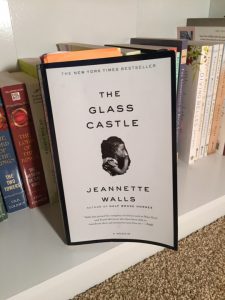
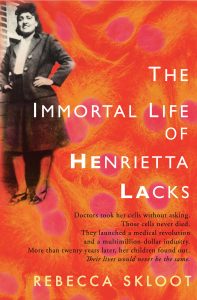
Yes, great non-fiction is a broad topic. Everything falls in there, from memoir to cookbooks to investigative reporting! I loved West With the Night, The Glass Castle, and The Immortal Life of Henrietta Lacks.
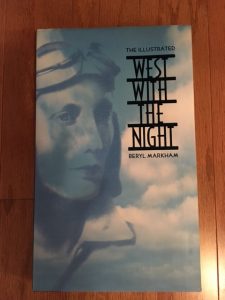
[Photo credit: rebeccaskloot.com]
But I’m not going to deal with that sort of non-fiction. I don’t know how to classify my sub-genre, so I’ll just put the exemplars out there!
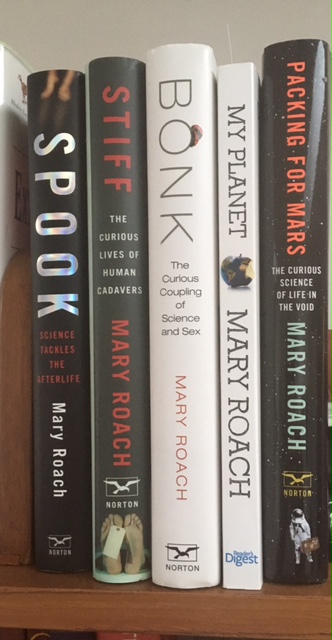
Mary Roach makes science reader-friendly. She writes about everything from sex research (Bonk) to human cadavers (Stiff). Without Roach, I’d never have stopped to wonder how crash dummies are calibrated—etc., etc., etc. Pick up any of her books.
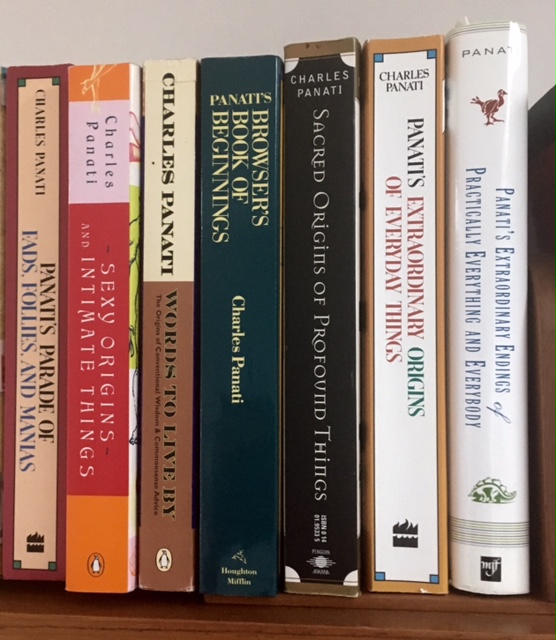
Charles Panati is a master of what I call “grouped trivia.” His titles say it all. Choose any one and you’ll get what you expect—except that you’ll likely enjoy it more! I consider Panati’s books reference works—for, as you may know, I often write weird stories (cf. Different Drummer: a collection of off-beat fiction).
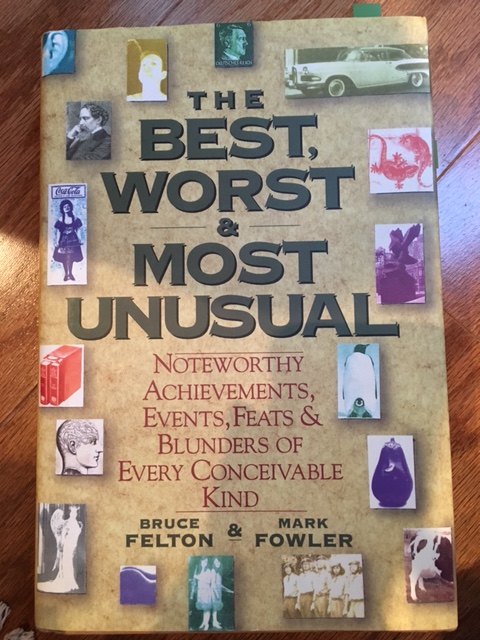
In the same category, I treasure The Best, Worst, and Most Unusual. How else would I know that in Hong Kong, cricket fighting (although illegal) is very popular, inspires heavy betting, and has much in common with cockfighting. Or that if you eat bananas, your skin will exude an odor that attracts mosquitoes?
I’m also a fan of Bill Bryson. I became hooked on Mother Tongue: English and How It Got That Way. His tracing of language evolution actually made me more tolerant of “prioritize” as a replacement for “set priorities”—though I still don’t like it!
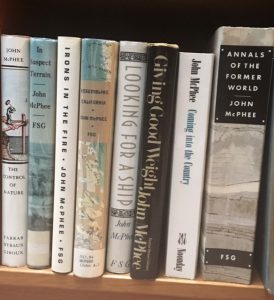
Last but far from least, I recommend John McPhee. The first book I read was Coming Into The Country, which left me with a dream of traveling to Alaska—a dream as yet unfulfilled, but hope springs eternal. This man can make anything interesting. As a result of his writing, even I know how Bill Bradley was able to make baskets while facing the opposite end of the court: you just have to have a sense of where you are.
I recommend these non-fiction books and authors to readers for pleasure and to writers for enlightenment!
Top Ten Tuesday is an original feature created by The Broke and the Bookish. Each week, they provide a prompt for bloggers. Today’s prompt is TV-themed.
We tend to think of TV as something totally separate from literature. Not so! If you’ve enjoyed any of the following on TV, consider reading the books they are based on.
One of the basic characteristics of anthologies is that the works included are relatively short. They are good for days when focusing for a long time may not be feasible, or when one wants a literary bite before bedtime.
By definition, because anthologies include works by different authors, they include different voices, styles, and maybe genres. If you don’t like one story, move on to the next.
When anthologies draw from previously published sources, the work has already been vetted for quality more than once. Indeed, many anthologies are published annually with titles like The Best X Short Stories of (Year).
Anthologies can be selected by format. Most recent anthologies are available both as physical books and ebooks.
Anthologies are often broad in scope.
100 Great Short Stories by Dover Publications
Great Short Short Stories, edited by Paul Negri
The World’s Greatest Short Stories, edited by James Daley
120 Great Short Stories, by Oldiees Publishing
Doubletakes: Pairs of Contemporary Short Stories, edited by T. C. Boyle et al.
40 Short Stories: A Portable Anthology, edited by Beverly Lawn
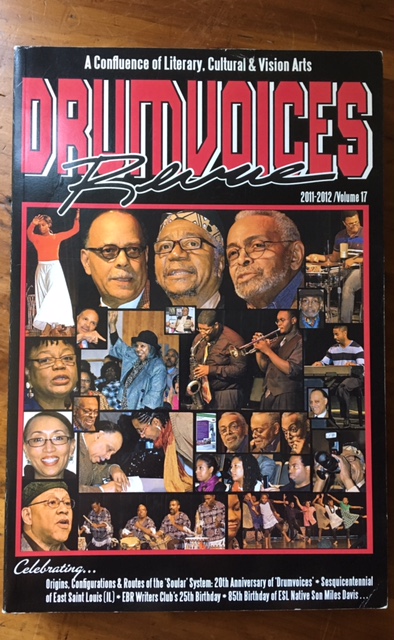
Some anthologies are mission driven. A couple of examples of these would be Drumvoices Revue (where my short story “Aunt Fan’s Private Journey” appeared), which celebrates diversity, and the Chrysalis Reader series, which describes itself as “original essays, poetry, and short stories illuminating the world of spirit.” One volume included my story “Solid Line.”
Sometimes they are focused by geographic region.
The Best American Short Stories, published annually by Houghton Mifflin Harcourt.
Great American Short Stories, edited by Wallace and Mary Stegner
The Anchor Book of New American Short Stories, published by Knopf Doubleday Publishing Group
100 Years of The Best American Short Stories, edited by Lorrie Moore and Heidi Pitlor
The Oxford Book of American Short Stories, Oxford University Press
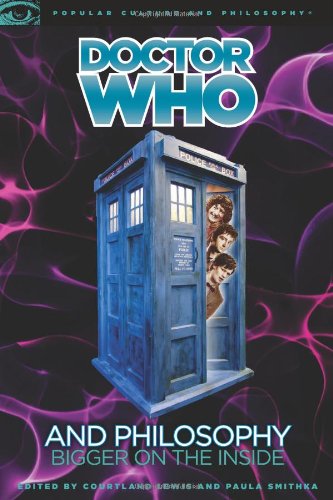
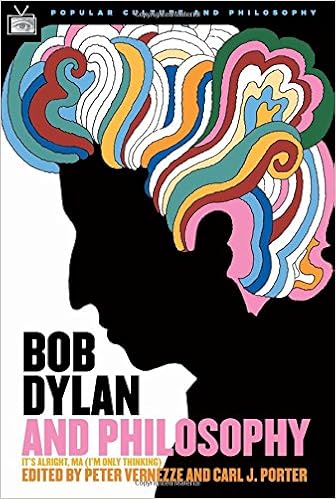
I took a couple of philosophy courses in college, and trust me, they didn’t have titles anything like these books! But for your reading pleasure, here are a variety of possibilities:
The Beatles and Philosophy: Popular Culture and Philosophy, edited by Michael & Steven Baur
Sherlock Holmes and Philosophy: The Footprints of a Gigantic Mind, edited by Josef Steiff
Doctor Who and Philosophy: Bigger on the Inside,edited by C. Lewis & P. Smithka [Photo credit: Amazon]
Star Trek and Philosophy: The Wrath of Kant, edited by J.T.Eberl & K.S. Decker
The Grateful Dead and Philosophy: Tetting High Minded About Love and Haight, edited by Steven Gimbel
Pink Floyd and Philosophy: Careful that Axiom, Eugene!, edited by George A. Reisch
The first and last titles say it all! The various volumes focus on issues of life, love, society, politics, spirituality, personal identity, art, ethics, conflict, community, cosmos, truth, American identity, justice, human fulfillment, meaning-of-life, obesity, animal rights, political correctness, religious tolerance, homophobia, moral responsibility, social justice, patriotism, romantic love, artistic creativity, and class oppression. Here’s a chance to explore the more serious underpinning of popular culture that, possibly, account for the popularity. Check these books out online; there’s something for every reader here!
Recommendations for great beach reads are everywhere, every year; they start in the spring and are often ongoing. Amazon gives us “Superbly Good Beach Reads” while Barnes and Noble more modestly lists “Beach Reads”—totally disinterested advice from both, of course! Real Simple gives us “The 20 Best New Paperback Beach Reads.” The Huffington Post published other people’s lists, including one from The Oprah Magazine. Refinery 29 has “Beach Read Books.” Bustle has “31 Beach Reads for Summer 2016, Because Vacation Should Be Filled With Incredible Stories.” In 2016, POPSUGAR recommended both “Summer Books 2016” and “Beach Reads for Women.”
Many lists seem to presume that women are the readers, because most of these lists appear in magazines targeted to women: Cosmopolitan, “Beach Reads for Summer 2016”; Redbook, “Best Summer Beach Reads of 2016”; Women’s Day, “28 Summer Beach Reads 2016.”
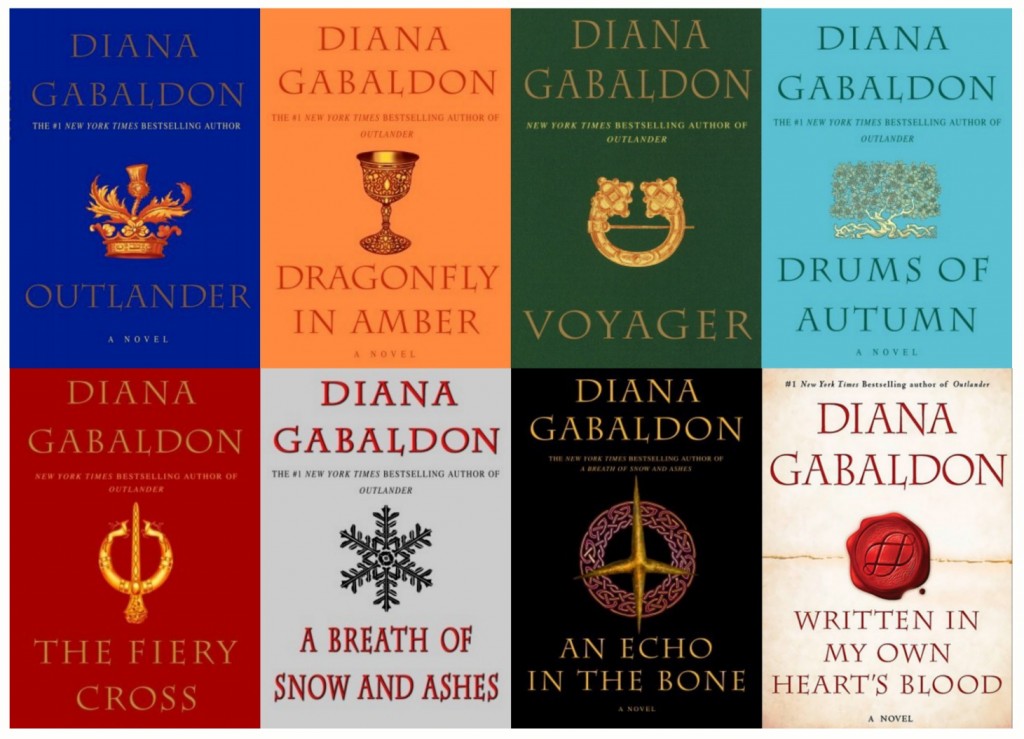
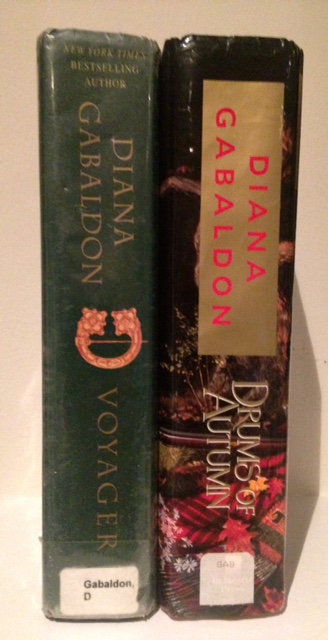
I’ve always loved the beach and books—but I’ve never bought a “beach read,” and didn’t this year. I’m rereading Diana Gabaldon.
I finished Voyager and started Drums of Autumn. Given that these are big, fat books, I didn’t take them. I took my Kindle, instead. For the reasons why I chose these reads, see my earlier blog on “Loving Diana Gabaldon.”
Am I alone in reading at the beach without advice?
I recently shared a beach week with 9 other people, ages eight to eighty-five. Some brought multiple books, but none of them brought a book specifically bought for the beach! Here, in no particular order, are their books and their comments on them.
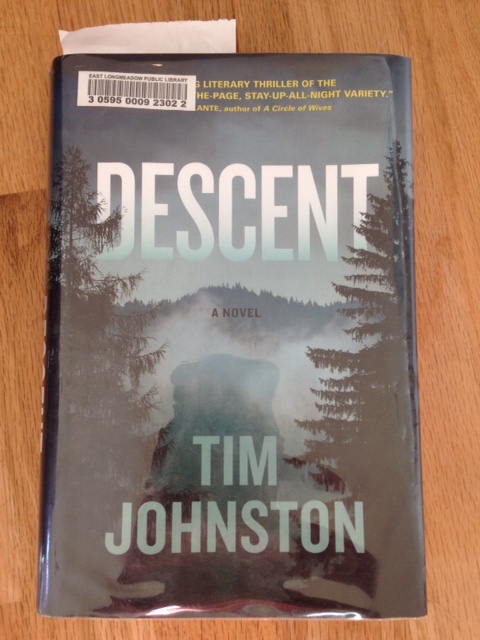
“I like macabre books. They hold my attention. I wanted to read The Girl on the Train but this book is better. A girl disappears when her family is on vacation in the Rocky Mountains.”
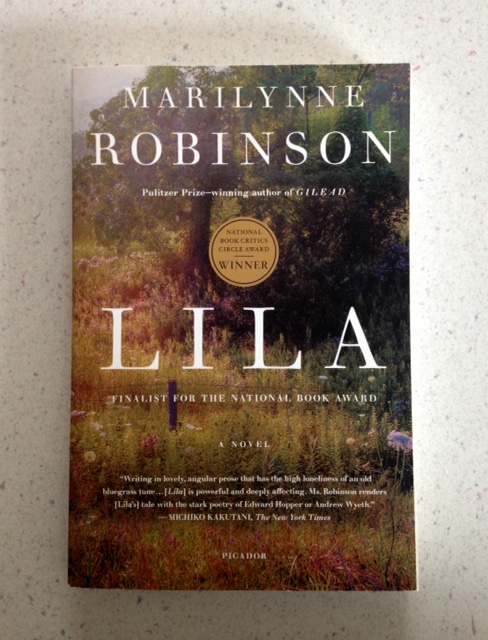
“I brought Lila by Marilyn Robinson, a book I bought the last time I was in Denver. She writes with surprising details about surprising events that call attention to the uniqueness of the most ordinary people, their inarticulateness. Yet somehow she brings out the intensity of their inner lives.”
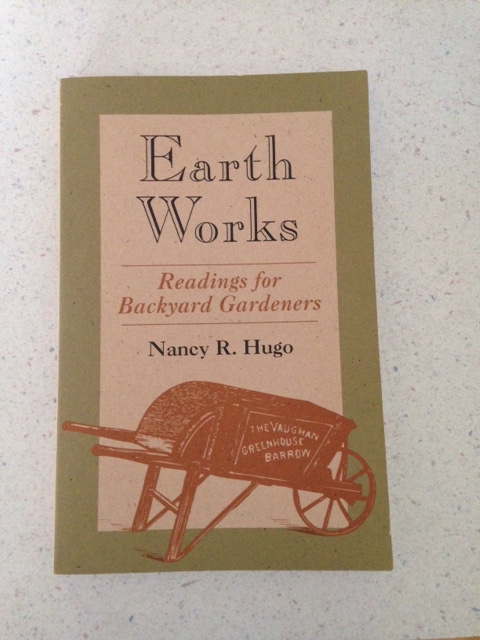
“I love flowers and Nancy Hugo writes about her gardening experiences in a very down-to-earth, witty way. She makes me feel like I am with her in her garden.”
“I brought Killing Reagan but I was out shopping and found a mystery by a local writer that sounded like a good read, about being set up by a friend with cyberspace and assault rifles and, of course, a woman was involved. The author is Bruce Wilkins and the book is The Count of Cape Hatteras.”
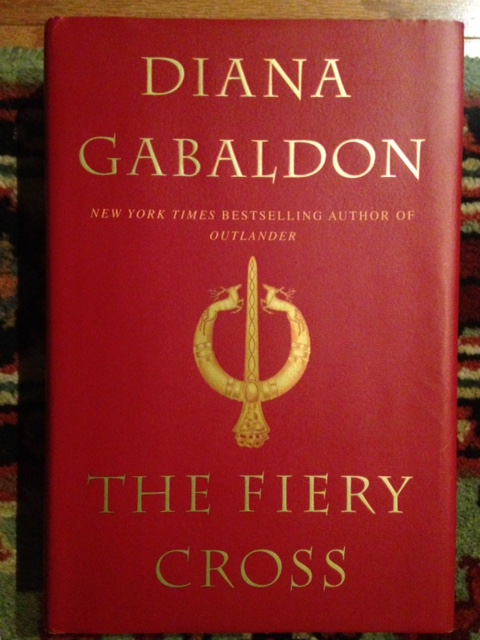
“I’m reading The Fiery Cross by Diana Gabaldon. As part of my 2016 Reading Challenge, I am supposed to re-read a book I previously abandoned. I struggled with this, the fifth in the Outlander series, when I started it a few years ago, but my interest was recently renewed by the TV series based on the books. I have found that I am more engaged in the book this time around and I am glad I picked it up again.”
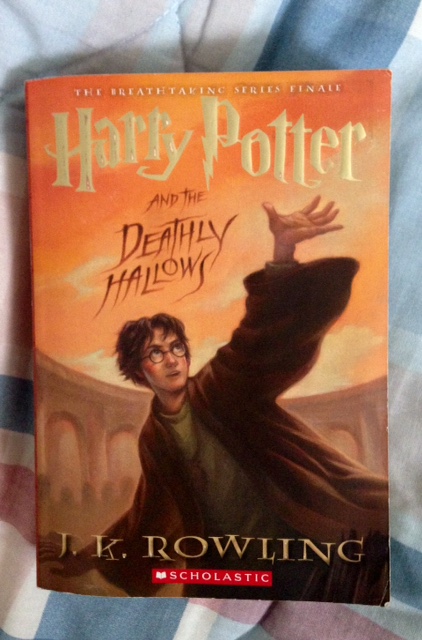
“Harry Potter and the Deathly Hollows is the seventh and last book in the Harry Potter series that I started in May, abandoned, and then started back up in late June, because I had nothing new to read. I have noticed that as the books go, it develops a more grown-up sort of writing, and the type of art on the covers changes as well. On the first book the cover is cartoon-y and on the last book it’s much more… ‘Sirius.’”
“The only book I brought was the daily meditations. I gotta keep up with the program, but the beach is for sun and water, not books!”
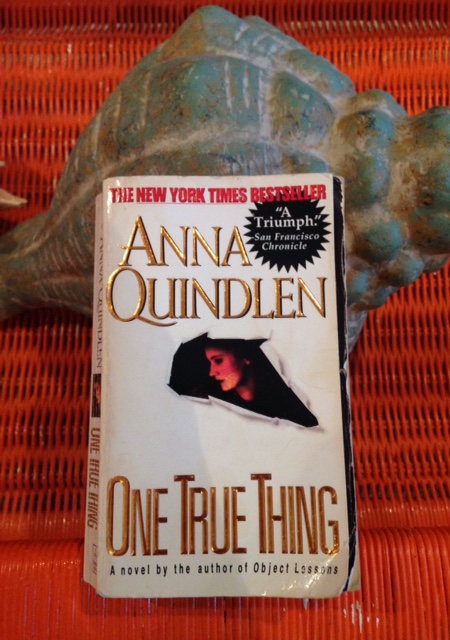
“One Time Thing by Anna Quindlon was recommended to me by a friend, I think because it’s about transformation. I like that it starts off with the narrator in her hometown jail and then regresses back to the events leading up to her relaxing gratefully in that cell. The way she illustrates courage, suffering, and everyday acts of love. . . the ingredients for the shifting bond of mother and daughter are beautiful. Anna Quindlon is an excellent storyteller who has managed to hold my attention.”
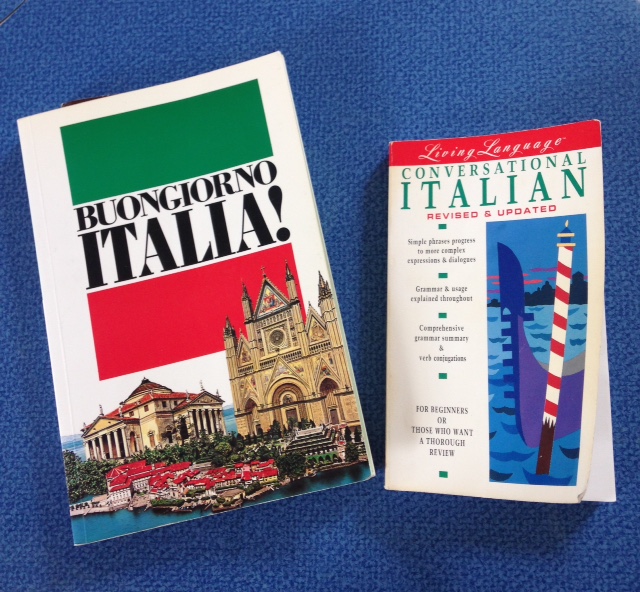
“I brought Buongiorno Italia! in a foolish attempt to learn enough Italian to use it on a trip in September. But really, my motive was because I like languages. Italian is beautiful to speak. I have picked up phrases that I memorized listening to opera records at age twelve or thirteen and didn’t understand. Right now I am working on the auxiliary verbs and verb endings. What fun! I need oral practice and a better memory.”
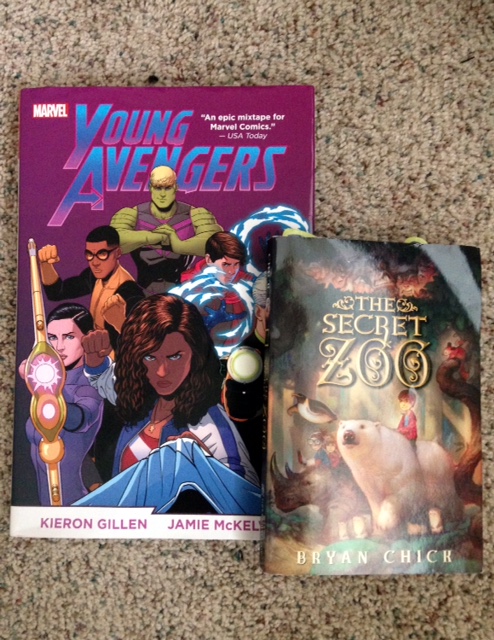
“The Young Avengers is about superheroes. I’m reading The Secret Zoo instead. It’s about a girl named Megan who went missing and her brother and his two friends go looking for her. What’s special about the zoo is that the animals are able to get out of their cages and lead Megan’s brother and friends to a secret part of the zoo. And along the way Megan’s brother finds pages of Megan’s notebook that have clues on them.”
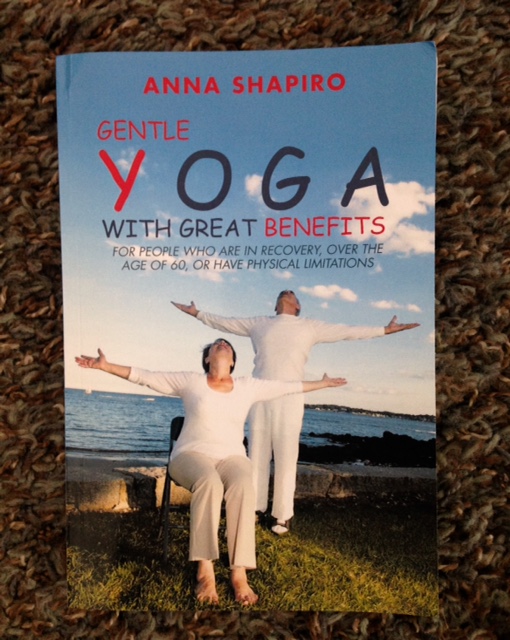
“My yoga teacher had surgery early this summer and won’t be back till September. I just wanted to hold my ground. Does looking at the pictures count as reading? If so, it’s a great read!”
When my younger granddaughter was singing nonsense, her older sister said, “That’s not a song!” The younger one said, “If I sing it, it’s a song!” To paraphrase: if you read it at the beach, it’s a beach read!
Addict: a person who has a compulsion toward some activity. Because these compulsions are often injurious, the label of addict has negative connotations. So one might instead choose alternative labels, such as aficionado, buff, devotee, enthusiast, fan, fanatic, junkie, etc.
One who is addicted is dependent on something. Again, self-labeling might tend toward alternatives such as absorbed, devoted, fond, hooked, hyped, prone to, etc.
An addiction, being a habit of activity, is represented by many slang expressions, including bag, bent, craving, dependence, enslavement, fixation, hang-up, hook, inclination, jones, kick, monkey, obsession, shot, or thing. You’ll notice that these are largely negative, and seldom applied to book addicts.
But essentially, anything that is addictive is habit-forming, and that certainly applies to books.
Why addictions? Basically, an addiction is a coping mechanism. It is what a person turns to in time of stress, distress, boredom, anxiety, depression, etc. It takes one’s mind off whatever is unsatisfactory or unsettling. Many people will happily admit to “escapist” reading.
Not sure whether you’re a book addict or not?
Symptoms of book addiction:
carrying a book (or e-reader) everywhere
reading on subways, trains, planes, and when a passenger in a car
reading in doctors’ waiting rooms or exam rooms, or when waiting for anything
reading before the play or movie starts, and during intermissions
reading during lunch or coffee breaks at work
having stacks of unread books at home but still buying/borrowing more
consistently preferring the book to the movie or TV series
becoming anxious, uncomfortable, or irritable when no book is at hand
A sign of book addiction
Dangers of book addiction:
it can lead to further frustration when waiting for the next book by your favorite author(s)
it often annoys family or friends
limits exposure to other pop culture alternatives
it can become costly, especially if you are at the book-a-day level of addiction.
As Erasmus once said, “When I get a little money, I buy books; and if any is left, I buy food and clothes.”
And, beware, this addiction is often passed on to one’s children and grandchildren, ad infinitum.
Advantages of book addiction:
Unlike other addictions, unless you actually try to read while driving or crossing a busy street, it isn’t likely to cause permanent or serious physical harm; and it has an educational component, exposing the addict to a broader vocabulary, exotic places, and the expansive possibilities of the human mind.
Of course, for a true addict, it leaves one open to a related psychological disorder.
Takeaway for book addicts:
Go for it! To paraphrase Abraham Lincoln, your best friend is a person who will give you a book you have not read. FYI, such persons are also known as “enablers.”
Dictionary definitions of paranoia include: a serious mental illness that causes you to falsely believe that other people are trying to harm you; an unreasonable feeling that people are trying to harm you, do not like you, etc.; a psychosis characterized by systematized delusions of persecution or grandeur usually without hallucinations; a tendency on the part of an individual or group toward excessive or irrational suspiciousness and distrustfulness of others. in common parlance, a belief that people and objects in the environment are out to get you. Paranoia is a rich mine for writers.
For one thing, paranoiacs are not happy—how could they be?—and we all know that miserable characters can be extremely effective.
But beyond that, writers should know several things. Paranoiacs are often above average in intelligence and function very well over-all within the family and work spheres. Note the phrase above about systematized delusions. They have well-integrated systems of belief that can often convince others that their beliefs are reasonable.
Also, the strict definition of paranoia includes several slippery modifiers: falsely believe, unreasonable feeling, excessive or irrational suspiciousness and distrustfulness. This gives writers a lot of latitude to develop tension.
Consider a poster that a classmate in graduate school had in his office:
Just Because You’re Paranoid Doesn’t Mean They Aren’t Out To Get You.
But perhaps the most value is in the fuzzy edges. For example, people losing their hearing but not yet recognizing the loss often tend toward paranoia: not hearing all that others say, s/he may suspect that people are mumbling or whispering in order to keep secrets.
And consider characters who have suspicious tendencies. What about a character who reads—or even writes—a book like one or more of the following.
Don’t Let Your Doctor Kill You by Dr. Erika Schwartz with M.J. Peltier
The Survivalist’s Handbook: How to Thrive When Things Fall Apart by Rainer Stahlberg
Bug Out: The Complete Plan for Escaping a Catastrophic Disaster Before It’s Too Late by Scott B. Williams
Build The Perfect Bug Out Vehicle: The Disaster Survival Vehicle Guide by Creek Stewart
Someone’s Watching You by Forest Lee
Dangerous Instincts: Use an FBI Profiler’s Tactics to Avoid Unsafe Situations by M.E. O’Toole and A. Bowman
How To Be Safe: Protecting Yourself, Your Home, Your Family, and Your Business from Crime
Dangerous Personalities: An FBI Profiler Shows You How to Identify and Protect Yourself from Harmful People
Takeaway for Writers
Include characters with suspicions, whether justified or not.
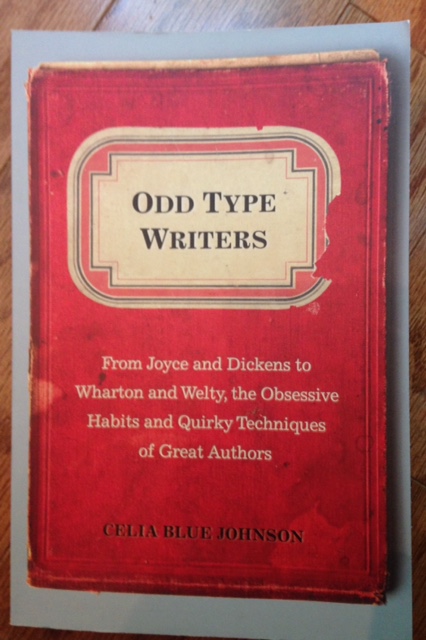
Odd Type Writers by Celia Blue Johnson is a delightful discovery! The subtitle says it all. I recommend it for bedtime, the beach, the doctor’s waiting room, the subway commute. . . Well written, lively, each section short and entertaining.
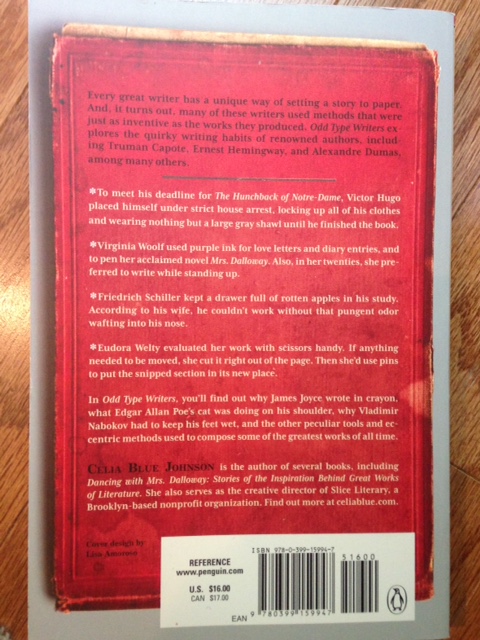
Last week I posted on Why We Write. Consider this book a companion piece to that one. Johnson culled the quirkiest bits and most obsessive behaviors of each author from interviews, websites, biographies, etc. In her own words, “Edgar Allan Poe balanced a cat on his shoulder while he wrote. Agatha Christie munched on apples in her bathtub while concocting murder plots. Victor Hugo shut himself inside and wore nothing but a long, gray, knitted shawl when he was on a tight deadline.” And so much more!
From the Table of Contents
By Unknown; most likely George C. Gilchrest, Samuel P. Howes, James M. Pearson, or Andrew J. Simpson, all of Lowell, MA [Public domain], via Wikimedia Commons {{PD-US}}
Rotten Ideas: Friedrich Schiller
By the Cup: Honoré de Balzac
Feeling Blue: Alexandre Dumas, père
House Arrest: Victor Hugo
A Mysterious Tail: Edgar Allan Poe
The Traveling Desk: Charles Dickens
Paper Topography: Edith Wharton
The Cork Shield: Marcel Proust
Flea Circus: Colette
Traffic Jamming: Gertrude Stein
Tunneling by the Thousands: Jack London
A Writer’s Easel: Virginia Woolf
Crayon, Scissors, and Paste: James Joyce
Leafing Through the Pages; D.H.Lawrence
Puzzling Assembly: Vladimir Nabokov
Outstanding Prose: Ernest Hemingway
Sound Writing: John Steinbeck’Pin It Down: Eudora Welty
Don’t Get Up: Truman Capote
Early to Write: Flannery O’Connor
You’ll enjoy these sketches of famous authors whether you’ve read their work or not! Cover to cover, this is a great read!
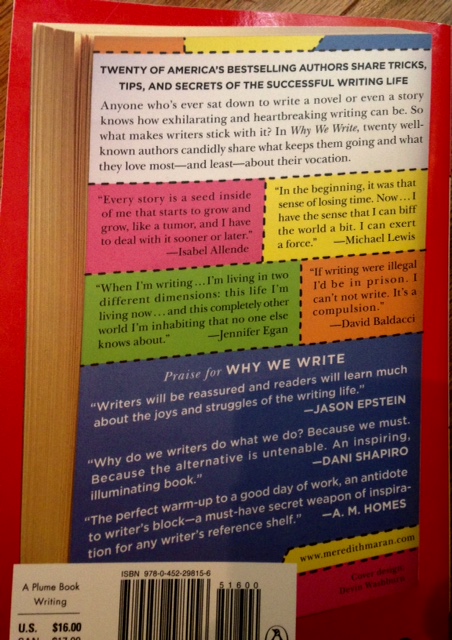
This book, edited by Meredith Maran, presents interviews with 20 acclaimed authors on why and how they write. In case you can’t read the names on the cover, these authors span genres and styles:
Why We Write
Isabel Allende
David Baldacci
Jennifer Egan
James Frey
Sue Grafton
Sara Gruen
Kathryn Harrison
Gish Jen
Sebastian Junger
Mary Karr
Michael Lewis
Armistead Maupin
Terry McMillan
Rick Moody
Walter Mosley
Susan Orlean
Ann Patchett
Jodi Picoult
Jane Smiley
Meg Wolitzer
As Maran writes in the introduction, “When the work is going well, and the author is transported, fingers flying under the watchful eye of the muse, she might wonder, as she takes her first sip of the coffee she poured and forgot about hours ago, ‘How did I get so lucky, that this is what I get to do?’”
Alternatively, “And then there are the less rapturous days or weeks or decades, when the muse is injured on the job and leaves the author sunk to the armpits in quicksand, and every word she types or scribbles is wrong, wrong, wrong, and she cries out to the heavens, ‘Why am I doing this to myself?’”
Meredith Maran, Photo by Lesley Bohm
As the interviews show, the creme de la creme of the writing world fly to the same heights and plunge to the same depths as every other writer.
Besides insights into the writing life of eminent writers, Moran gives us their vital statistics, list of collected works, and their Wisdom for Writers. So if you want to know who translates Isabel Allende’s books (Margaret Sayers Peden), how long David Baldacci practiced law (9 years), or when Jodi Picoult was born (May 19, 1966), look no more. Yes, you could find that information online, if you thought to look for it, but here it is, whether you knew you wanted to know or not.
Why We Write Words of Wisdom
Here are some of the words of wisdom I most took to heart: