Top Ten Tuesday: Funny Writing

Top Ten Tuesday, books on humor, funny, humorous books
Top Ten Tuesday is an original feature created by The Broke and the Bookish. Each week, they provide a prompt for bloggers. Today’s prompt is Ten Books That Will Make You Laugh.
FUNNY WRITING : I don’t do that. It isn’t for lack of interest; it just doesn’t come naturally to me. I have sometimes written things that make people smile, and several of those short pieces appear in Different Drummer. But when writing those things, humor wasn’t my goal. On the other hand, I definitely chose the cover for smiles!
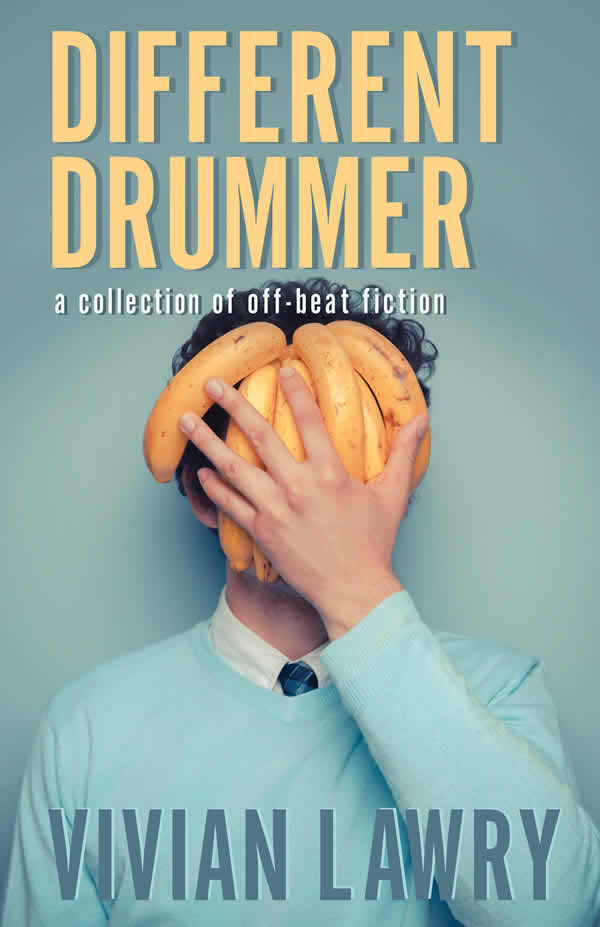
Different Drummer by Vivian Lawry, humor stories, short stories, funny
That said, I do like to laugh. And it’s a scientific fact that you can’t get ulcers while laughing. So for the sake of your physical and mental health, write funny if you can. And if you can’t, read some of the following.


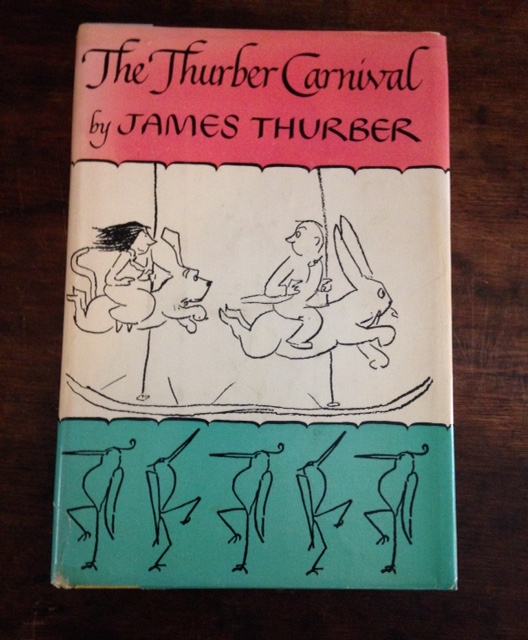
My all-time favorite humorist is James Thurber—and not just because he lived and worked in Columbus, Ohio. Not only does he write funny, he draws funny! His stories, illustrated with his own cartoons, appeared dozens of times in The New Yorker. If I had to choose just one book of his, it would be The Thurber Carnival.
 
James Thurber, funny writing, humor writing
The Thurber Carnival by James Thurber
For one thing, it includes selections from several of his other books, as well as some previously unpublished stories. It begins with a third-person bio which Thurber wrote about himself. Even his titles make me smile, e.g., “Are You the Young Man Who Bit My Daughter?” and “Darling, I Seem to Have This Rabbit.” But really, snap up any Thurber you happen to come across.
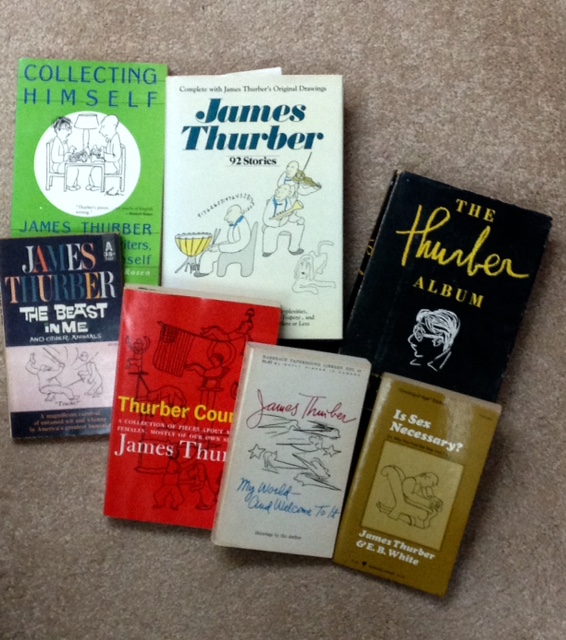
James Thurber collection of novels, funny writing, humor writing
James Thurber collection of funny writing
I tend to like collections of humor writing. For example, Sand in My Bra and Other Misadventures, edited by Jennifer L. Leo, contains stories by Anne Lamott, Ellen DeGeneres, and others.
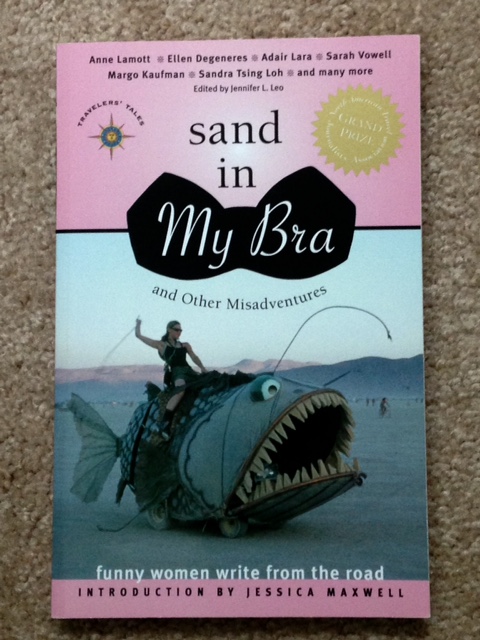
Sand in my Bra short story collection, funny writing, humor writing,
Sand in My Bra
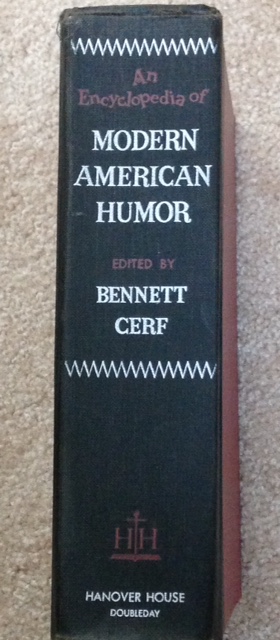
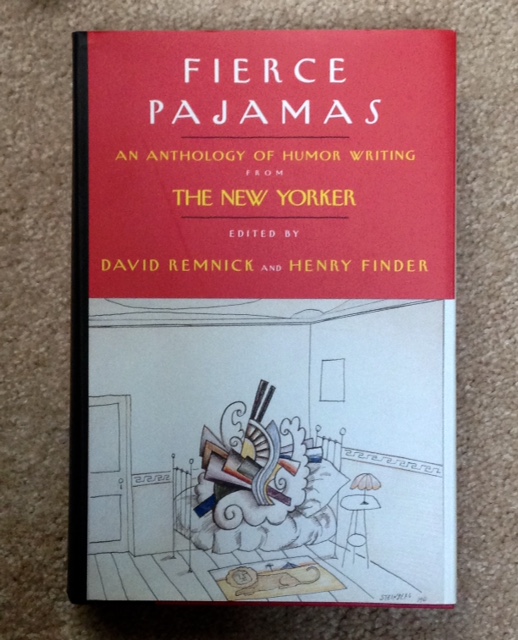
Two great classic collections are Fierce Pajamas: An Anthology of Humor Writing from The New Yorker, edited by David Remick and Henry Finder, and An Encyclopedia of Modern American Humor, edited by Bennet Cerf. Both include dozens of time-tested stories.
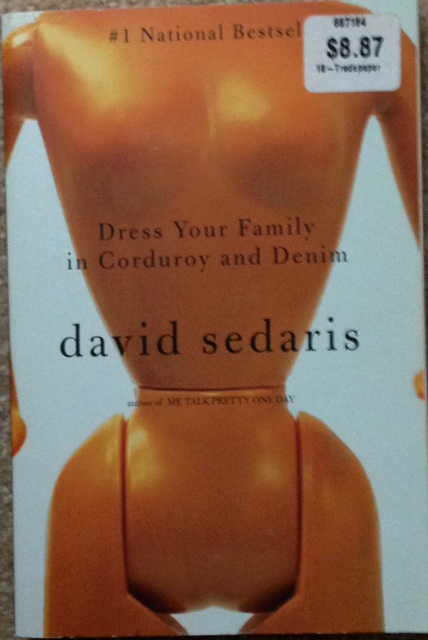
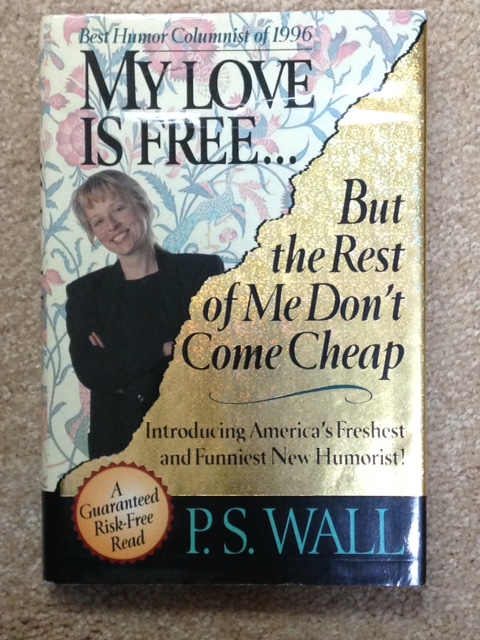
I also enjoy a number of writers who have assembled entire books of their own work. P.S. Wall’s My Love Is Free . . .But the Rest of Me Don’t Come Cheap comes to mind, as does David Sedaris, Dress Your Family in Corduroy and Denim, and Erma Bombeck, All I Knew About Animal Behavior I learned in Loehmann’s Dressing Room.
 
 
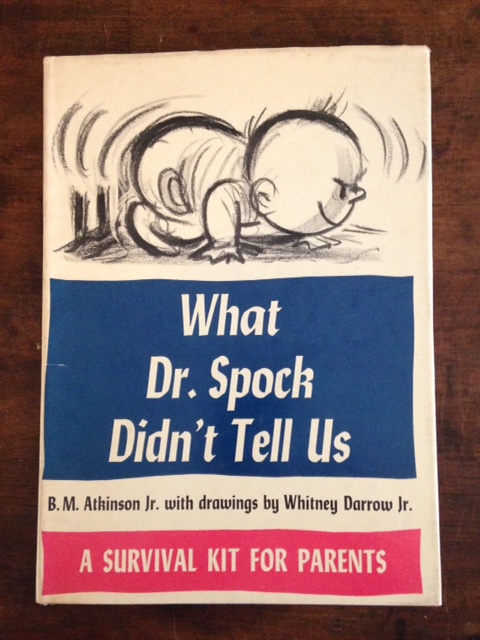
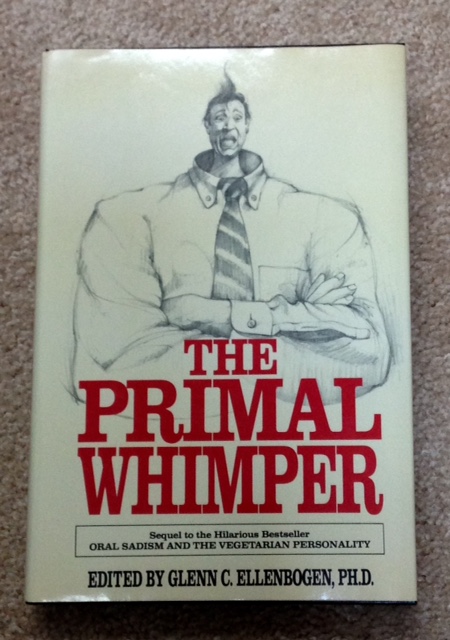
Then there are the humor books targeted to specific groups of readers. The Primal Whimper (Glenn C. Ellenbogen, Ed.) a collection of made-up research that pokes fun at psychologists and psychiatrists. I like What Dr. Spock Didn’t Tell Us: A Survival Kit For Parents (B.M. Atkinson, Jr., with Whitney Darrow, Jr.). I recently found four copies on Amazon to gift to the “children” of friends who are now parents themselves. Maybe part of the reason I like it so much is that the drawings remind me of Thurber!
Perhaps the greatest admiration should go to people who can write entire novels that make us laugh. I’m thinking particularly of Henry Fielding’s Tom Jones.
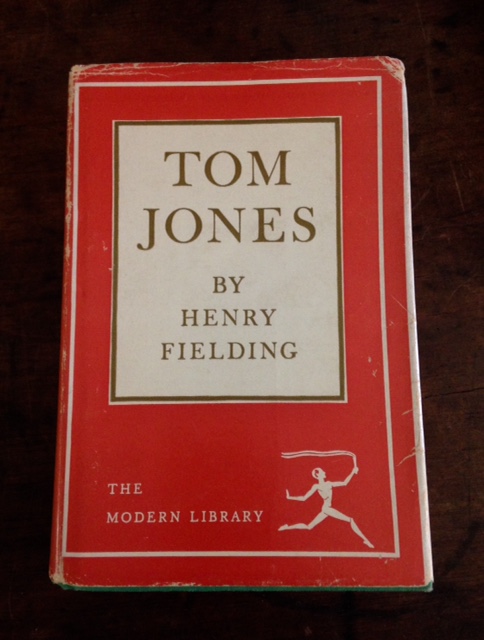
Tom Jones by Henry Fielding, writing humor, humor writing
Tom Jones
Also remember P.G. Wodehouse and Steven Leacock. And who could forget Mark Twain? The Adventures of Tom Sawyer and The Adventures of Huckleberry Finn.  But consider the slim volume The Jumping Frog. It pokes fun at literature in translation!
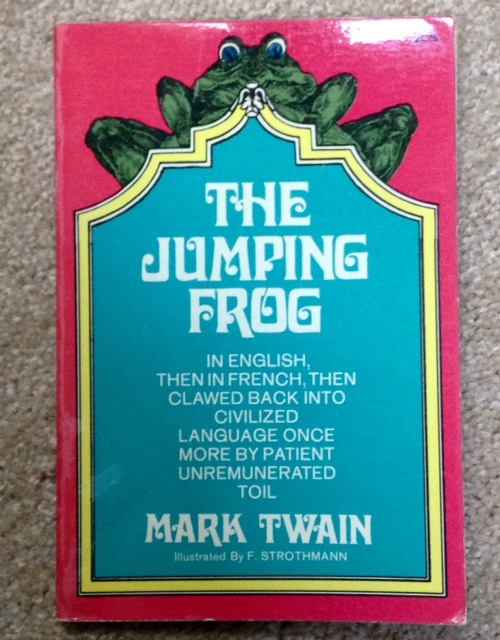
The Jumping Frog, Mark Twain, writing humor, funny writing
The Jumping Frog
And where do I fit in Peg Bracken? Most well-known for The I Hate To Cook Book, she is just as funny in But I Wouldn’t Have Missed It For the World.
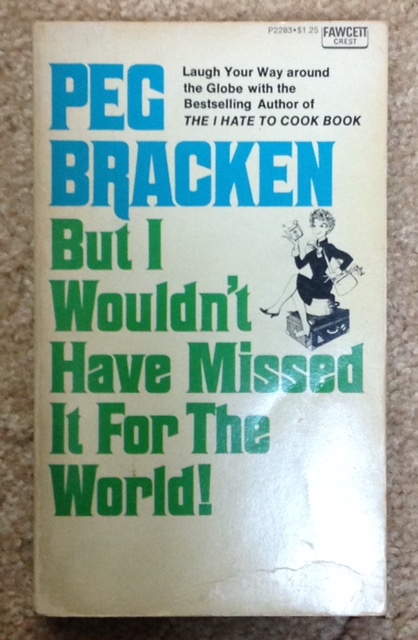
 
But I Wouldn't Have Missed It For The World! by Pec Bracken, writing humor, funny writing
But I Wouldn’t Have Missed It For The World!
 
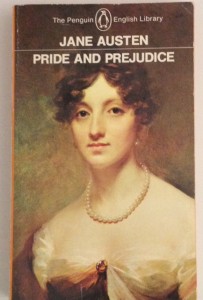
But we mustn’t limit our laughs to books written primarily for humor. Think Jane Austen and Mary Roach. 
Takeaway for Readers

Take your laughs where you can find them.


Takeaway for Writers

Good humor writing is timeless.
 

What books make you laugh? Tell me in the comments below, on Facebook, or Twitter.

Queen of Mystery

No, I don’t mean Agatha Christie. Frankly, Christie’s mysteries usually annoy me—too much alligator-over-the-transom in her solutions—meaning that some completely unforeseen, unpredictable bit of info suddenly appears and unlocks everything. (No offense to Christie fans out there; but reading preferences are very individual. Ask any writer who’s received multiple rejections for a piece of work that someone more on the same wavelength eventually accepts.) No, if I were bestowing the crown, it would be Dorothy L. Sayers.
 
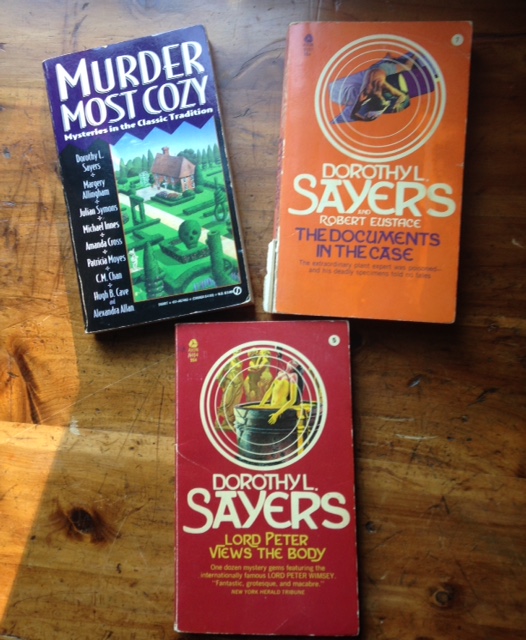
Dorothy L. Sayers novels
 
Sayers was a woman of many achievements. She translated Dante, wrote poetry, and worked as a copyeditor. She was a playwright, essayist, literary critic, and Christian humanist, as well as a student of classical and modern languages. But she is best known for her Lord Peter Wimsey/Harriet Vane mysteries. You may recall from last Friday’s blog that Sayers is one of the few fiction authors I periodically re-read. Now, you might ask, “Why would anyone reread a mystery? Once you know Who Done It—and probably how and why—what’s the point?”


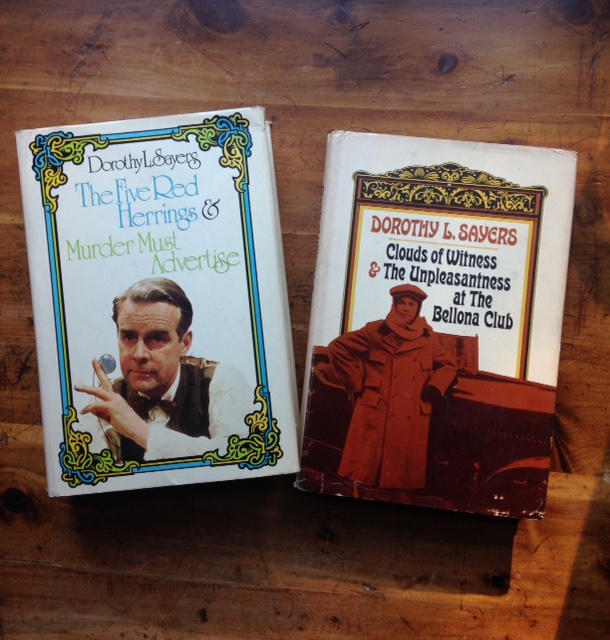
Dorothy L. Sayers The Unpleasantness at The Bellona Club; The Five Red Herrings


In the case of Sayers, my answer is three-fold. First there is her openings that draw me.  The Unpleasantness at The Bellona Club begins, “’What in the world, Wimsey, are you doing in this Morgue?’ demanded Captain Fentiman, flinging aside “The Evening Banner” with the air of a man released from an irksome duty. ‘Oh, I wouldn’t call it that,’ retorted Wimsey, amiably. ‘Funeral Parlor at the very least. Look at the marble. Look at the furnishings. Look at the palms and the chaste bronze nude in the corner.'”


Five Red Herrings opens, “If one lives in Gallowy, one either fishes or paints. . . To be neither of these things is considered odd and almost eccentric.”


Strong Poison begins, “There were crimson roses on the bench; they looked like splashes of blood. The judge was an old man; so old, he seemed to have outlived time and change and death. His parrot-face and parrot-voice were dry, like his old heavily-veined hands. His scarlet robe clashed harshly with the crimson of the roses.”


Have His Carcase begins, “The best remedy for a bruised heart is not, as so many people seem to think, repose upon a manly bosom. Much more efficacious are honest work, physical activity, and the sudden acquisition of wealth.”
 
Dorothy L. Sayers novels


The second reason to reread is to really grasp the intricate plots that often allow me to learn something. And, coincidentally, to appreciate all the ways she foreshadowed the ending and inserted the evidence and clues without telegraphing the ending. In various Sayers novels, I learned the effects of chronic ingestion of arsenic, a lot about English bell-ringing, cyphers, the advertising world, a great deal about the questions surrounding the execution of the family of Czar Nicholas II—among other things.
 
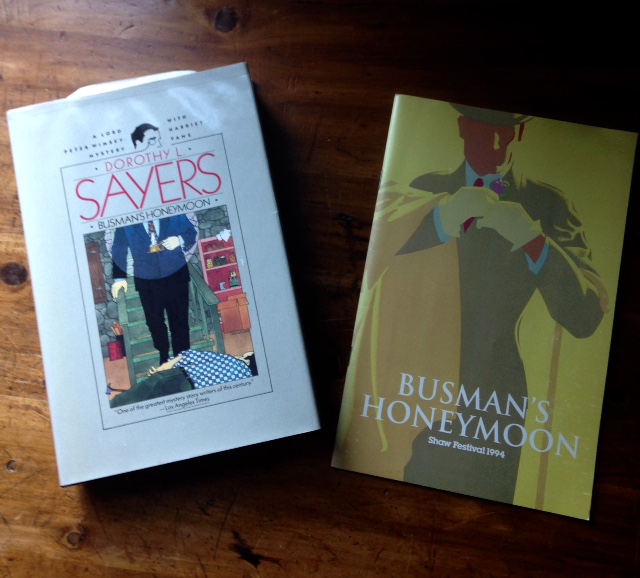
Dorothy L. Sayers books
 
And then there are the characters and their romance. I recently read that Sayers once commented that Lord Peter Wimsey was a mixture of Fred Astaire and Bertie Wooster. I always envisioned Wimsey as Astaire, even when the TV serials starred Ian Carmichael or Edward Petheridge. He’s brilliant, graceful, athletic, debonaire—plus he blathers, and suffers “shell shock” (a.k.a., PTSD). Harriet Vane is highly intelligent, strong-willed, principled, with a low opinion of men—and not really beautiful. I find them appealing in their flaws.


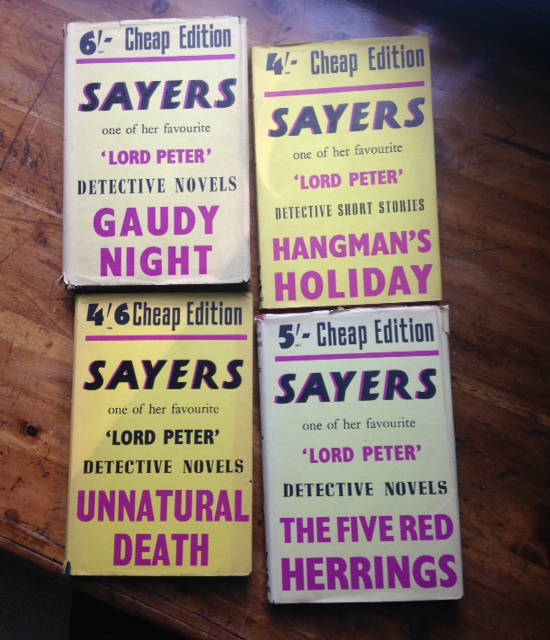
Dorothy L. Sayers books, cheap editions


Sayers set her mysteries between WWI and WWII, but they are still popular today. Masterpiece Theater aired the series. The complete DVD collection was released in 2003.


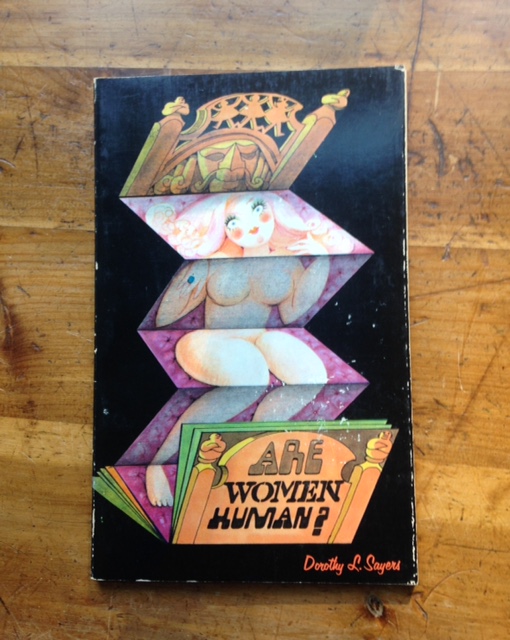
Dorothy L. Sayers, "Are Women Human?"


Harriet Vane was very atypical for her time. Sayers did not devote a lot of time to talking or writing about  or otherwise dealing with her own non-traditional choices, let alone her heroine’s. In Are Women Human, two Sayers essays address the issue of women in society. Her position is that women are first and foremost human beings, and that women and men must be regarded and treated as essentially much more alike than different. Human beings—color, age, background or abilities aside—are equal. Sex does not, a priori, determine anything. Sounds pretty modern to me!


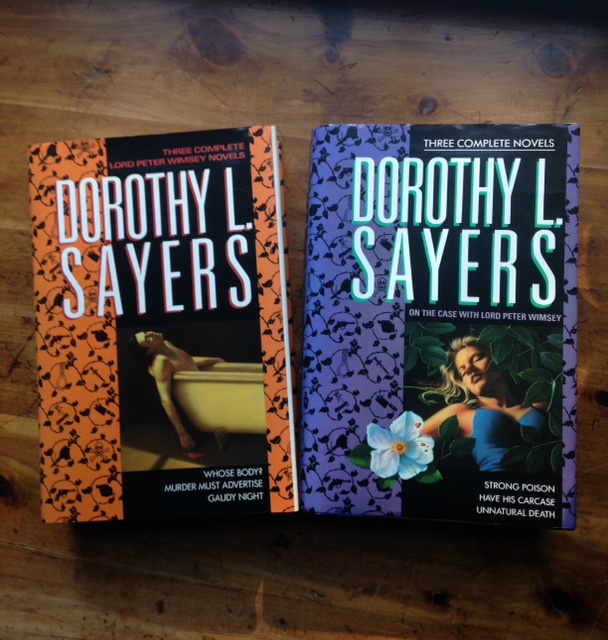
So get thee to the library or Amazon or your favorite bookstore and sample Dorothy L. Sayers. Her first mystery was Whose Body? That’s as good a place as many to start. Unless you’d rather go for romance first, in which case, start with Strong Poison. But do it!
Dorothy L. Sayers,