Writing Illness and Pain
Side Effects
- ability to work
- play with children
- walk
- sleep
- take care of personal needs
- irritability
- anger
- depression
- difficulty concentrating
- exercise
- relaxation
- alternative or complementary treatments: massage, magnetic therapy, ultrasound, energy medicine, acupuncture, herbal medicine
- hired or volunteer helpers
- support groups
- traditional pain meds: consider side effects and possible addiction
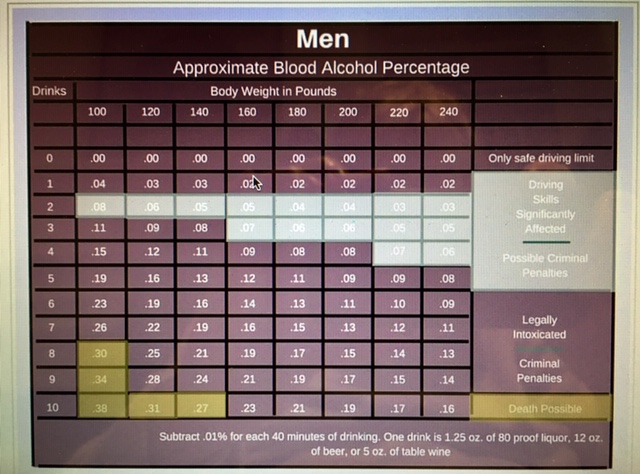
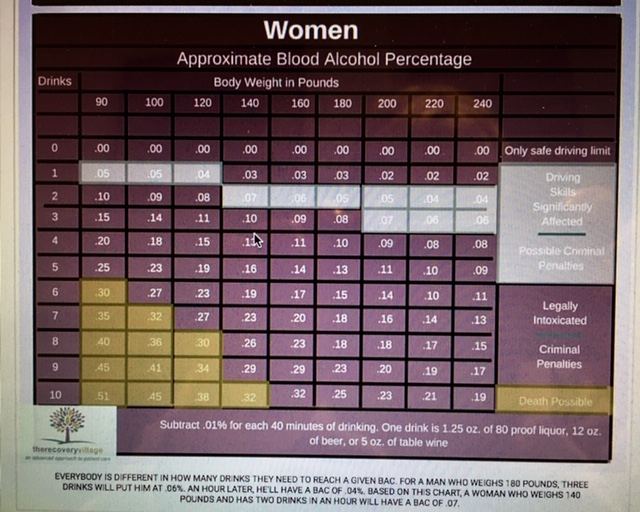
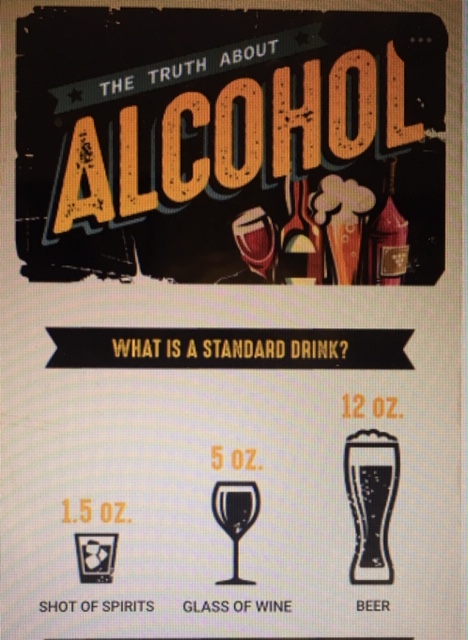
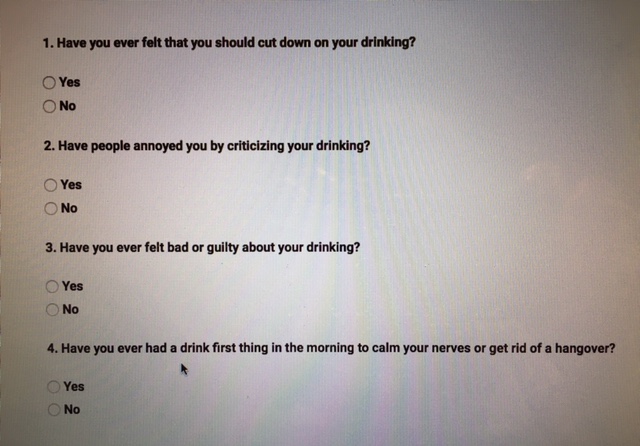
- self-medication (a.k.a., alcohol)
Goodreads Newbie
Happy New Year!
Happy New Year! I hope everyone has a wonderful start to 2019. This is, of course, the time for resolutions to begin… what are your New Year’s resolutions this year?
Celebrating New Year’s: Why December 31?
This blog post was originally published on December 31, 2015.
Currently, most people around the world begin New Year’s celebrations on December 31, the last day of the Gregorian calendar. But as with so much in the modern world, it wasn’t always so. Although people have celebrated the beginning of a new year for millennia, astrological or agricultural events typically marked the new year.
Where did the holiday begin?
The earliest recorded celebration of the beginning of a new year was in ancient Babylon, some 4,000 years ago. For Babylonians, the new year began with the first full moon following the vernal equinox, a date falling in late March. It was a massive religious festival that required a different ritual every day for 11 days.

For early Romans, each new year began with the vernal equinox. A year had 304 days divided into 10 months. Over time, the calendar year deviated significantly from the sun year. In 46 B.C. Julius Caesar consulted astronomers and mathematicians to solve the problem. He added 90 days to that year, adjusted the length of months, and declared January 1 as the first day of the year. January honors the Roman god of beginnings—Janus—who has two faces that look forward and back. In 1582, Pope Gregory XIII established January 1 as New Year’s Day for Christians.

New Year’s Traditions
We’re all familiar with New Year’s celebrations that involve eating special foods for good luck on New Year’s Eve and/or New Year’s Day: legumes, such as lentils or black-eyed peas, signaling financial success; pork, associated with prosperity; ring-shaped cakes and pastries, because the year has come full circle; sometimes cakes or puddings with something hidden inside, to bring especially good luck to the one who gets the nut or prize. Sometimes the number of courses (3, 5, 7, 9, or 12) are specified. In several Spanish-speaking countries, eating 12 grapes, accompanied by 12 wishes, as the clock strikes 12 is traditional. (In Portugal, it’s 12 raisins.)
Making a lot of noise—shooting guns, banging pots and pans, blaring car horns, playing loud music, setting off firecrackers—is supposed to scare away bad luck and evil spirits. Partying with family and/or friends is common, as is fireworks displays or other ritual midnight activities.
In the U.S., the dropping of the giant ball in Times Square, begun in 1907, is now watched by millions. Spin-offs involve publicly dropping items that represent an area’s culture, geography, or history: the Peach Drop in Atlanta, GA; Pickle Drops in Dillsburg, PA, and Mount Olive, NC; the Possum Drop in Tallapoosa, GA; Wylie the Walleye Fish Drop in Port Clinton, OH; the Bologna Drop in Lebanon, PA; a Watermelon Drop in Vincennes, IN; the Midnight Muskrat Dive in Princess Anne, MD; a Big Cheese Drop in Plymouth, WI; a Pine Cone Drop in Flagstaff, AZ; a Grape Drop in Temecula Valley, CA; a Donut Drop in Hagerstown, MD; a Flip-flop Drop in Folly Beach, SC; a Wrench Drop in Mechanicsburg, PA; Beach Ball Drop in Panama City Beach, FL; the Music Note Drop in Nashville, TN; Chile Drop in Las Cruces, Mexico. Surely I’ve missed some! Please feel free to comment on your favorites.
In England, the national icon is the tolling of Big Ben. Similar striking clocks or bells are widespread in Europe. In Albania, people watch a lot of comedy shows because one should enter the new year laughing and full of joy. In the Czech Republic and Slovakia, playing the Czechoslovak national anthem at midnight honors the time they were one nation. In Turkey and Russia, New Year’s involves many of the traditions of Christmas in other parts of the world. In Costa Rica, running across the street with luggage is to bring travel and new adventures in the year ahead. But in Venezuela, only those traveling in January pull a suitcase around the house. In Japan, people clean their homes and Buddhist temples ring their bells 108 times, representing the mental states that lead people to take unwholesome actions.
In the Philippines, many wear new, bright, colorful clothes with circular patterns. In Brazil, wearing white on the beach to ring in the new year is supposed to bring good luck. In Italy, wearing red underwear on New Year’s Eve is traditional. Spanish tradition holds that wearing new red underwear brings good luck. In Venezuela, the underwear is yellow.
In Scotland, Hogmanay is celebrated with First-Footing (going to each other’s houses with gifts of whiskey and sometimes a lump of coal); Edinburgh hosts a 4 or 5 day festival, beginning on December 28th, including cannon fire and fireworks displays.

The practice of making resolutions for the new year is thought to have been popular first among the ancient Babylonians.
And thus we come full circle—a fine New Year’s tradition! What are your favorite traditions?
Happy Holidays!
Today is Christmas, but whatever holiday you celebrate, I hope you and your loved ones have a wonderful, relaxing holiday and a great end to the year.
December 21: More than the Winter Solstice

Holidays
Fogg Wins A Wager Day: From Jules Verne’s Around the World in Eighty Days, in 1872, Fogg walked into the saloon of the Reform Club in London, and said “Here I am, gentlemen!” exactly 79 days, 23 hours, 59 minutes, and 59 seconds after starting his trip. He won a 20,000 pound wager.

On this day…


Mystery Author Collaboration: Theresa Inge
VL: Today’s guest blog is by Teresa Inge, whose novella “Hounding the Pavement” is the opening work in the recently released To Fetch a Thief. Teresa has contributed to several anthologies both as author and as organizer. Today she will share her perspective on collaboration.
Just as writing is a lonely experience, collaboration is a group effort. As a short story author, I’ve been fortunate to collaborate with many authors on several writing projects.
These projects have included the coordination of joint mystery anthologies. Some years ago, I came up with the idea to create the Virginia is for Mysteries series, a collection of sixteen short stories set in and around Virginia. I first discussed the series with the Sisters in Crime Mysteries by the Sea chapter members and the Central Virginia chapter members. Once members were on board to move forward, I organized an anthology committee. This began the wonderful partnership of writers joining together to create great mysteries. Along the way, we teamed up to generate timelines, book titles, number of contributors, submissions guidelines, promotion, and securing a publisher.
VL: As a contributor, I can say Teresa did a great job!
We also learned that working with multiple authors can be challenging with schedules, editing, and finding time to promote the books.
VL: What Teresa may be too polite to say is that it was sometimes a real pain in the neck—or somewhere! For example, people missing deadlines, arguing over suggested edits, and/or never being available for talks or signings.
Next, I created 50 Shades of Cabernet, a mysterious wine anthology with authors I knew from Malice Domestic, a fan-based mystery writer’s conference. But I took a different approach and solicited authors who were established, had a following, and created well-crafted mysteries. I knew from experience that these authors would put in the time needed to make the book successful.
More recently, I collaborated with three authors on To Fetch a Thief, the first Mutt Mysteries collection, featuring four novellas that have “gone to the dogs.” In this howling good read, canine companions help their owners solve crimes and right wrongs. Since I’ve been in several books with this particular group, we now have the knowledge and experience to create well developed mysteries and a strategic marketing plan.
Collaborating with multiple authors combines efforts to develop great mysteries and create a strong network, since there is strength in numbers.
VL: Teresa, thank you for sharing your insights. From your closing remarks, it sounds as though collaboration—like so many other things—gets easier with practice. No doubt many authors would benefit from working with and learning from you!
Going Long
by Rosemary Shomaker
VL: Thanks to Rosemary Shomaker, we have a chance to vicariously experience the struggle of a writer stretching into a new challenge. Although Rosemary doesn’t get into her story in To Fetch a Thief directly, “This is Not a Dog Park” is great. She should definitely go long again/more in the future. And as an added bonus, check out her dog!
I’ve commented to friends (and to anyone asking about my writing) that completing a novella was difficult for me, a short-story writer. As I reflect on this, the words to “Seasons of Love” from the Broadway musical Rent keep floating through my brain. Let me plant the ear-worm for you:
Five hundred twenty five thousand six hundred minutes.
Five hundred twenty five thousand moments so dear.
Five hundred twenty five thousand six hundred minutes.
How do you measure,
Measure a year?
In daylights?
In sunsets?
In midnights?
In cups of coffee?
In inches, in miles, in laughter, in strife?
In five hundred twenty five thousand six hundred minutes.
How do you measure a year in a life?
Now, let me connect the dots. Short stories have a word count of 4,000 to 8,000 words; those are the targets many publishers suggest when soliciting short story submissions. How long is that? At 250 words to a double-spaced manuscript page, you’ll find short stories weighing in at sixteen to thirty-two manuscript pages. What does that mean in a book? For a 5.5” x 8.5” book size, that translates to ten to twenty pages.
In writing a short story, you typically write twice the length and then cut, edit, and rewrite to produce a tight short story—eliminating half of what you initially wrote. I chose short story projects for several reasons. Primarily, I liked the compressed focus—of both the length and the writing period. I could assess my time and plan accordingly. Violà! I’d finish and see results within weeks or months.
For the first in the planned Mutt Mysteries series we aimed to produce a book including four novellas. “What are those?” you ask. Simplistically, a novella is a short novel or a long short story. To check what I tell you, I Googled “novella,” and found one explanation that a “novelette” runs 7,500 to 17,499 words, and a “novella” is 17,500 to 39,999 words. How precise! You guessed it—40,000 words and more is a novel. The varied fiction genres, however, have specific expectations. A mystery novel runs 80,000 to 90,000 words, for instance. The To Fetch a Thief novellas run about fifty pages each.
I wrote my first draft of “This is Not a Dog Park.” My word count was 8,300 words—and that was only the first draft! Remember my comment about expecting to cut half of a first draft? I was sunk. Clearly, this novella task was a different animal than a short story. Yes, but I didn’t realize the different animal was a beast! I floundered for several weeks, trying to “gin up” my plot and visualize the long mile to 17,500 words. (“Gin up”? Who says that? I looked up the idiom—see * below for the very interesting origin—I love words—but I digress!)
My first attempts at adding volume to the story were horrible. I found myself cranking up meaningless descriptions. I added useless comments. Each time I did this, my short story writing training rebelled at the waste and at the imprecision of the prose.
It took me adjusting to a completely different mindset to make any useful progress. The place to start for me was the plot. In a novella, I could have more happening than I could in a short story, and I explored that. In addition, my characters could interact more and build their relationships over several scenes. I gave myself permission to relax the compactness of short story boundaries. Still, my product was unfocused. It’s only when I deleted some useless scenes and repurposed others that I felt progress.
Back to the song. Here’s how the words translated to my novella ordeal:
Seventeen thousand—then add five hundred words.
Up to thirty-nine thousand nine hundred ninety-nine.
More than seventeen thousand five hundred words.
How do you measure,
Measure a plot?
In action?
In hours?
In scenes or in lines?
In pages, in edits, in words by the ton?
Seventeen thousand—then add five hundred words.
How do you measure when your novella is done?
The beauty of this novella-writing exercise for me was that finally the “organicness” (that’s a dodgy word—“organicity” is worse—that layers on medical meanings) of writing emerged, finally, and I received the gift of having a glimpse of the work of a true novelist. Yikes, that’s some hard work! My regard for any novelist has increased, and my awe of good novelists compounds exponentially.
In my learning experience writing this novella, I did, as “Seasons of Love” reminds us, “You got to, you got to remember the love.” I do love writing!
* “Gin up” – one Googled source yielded the explanation below. You bet I checked the definition of “feague”! That definition used the euphemism “fundament” . . . I love words!
“Gin up” means enliven, excite or enthuse. Its probable derivation is from the 1800s British slang term “ginger up,” which referred to the practice of putting ginger up a horse’s butt to make him spirited and prance with a high tail, for purposes of show or sale. The other term for this practice is the verb “feague.” This is confirmed both by the online Phrase Finder from the UK and the OED. (https://www.urbandictionary.com/define.php?term=Gin%20up)
VL: Thank you Rosemary! I appreciate your candidness and rich language. In addition, I think you are an inspiration to other writers striving to expand their writing lives. I do hope we collaborate again sometime. And to close out, just one more great photo.
Rosemary Shomaker has called Virginia home for decades. After a state government career writing inspired nonfiction, she now writes fiction. You can find a few of her short stories in anthologies such as Virginia is for Mysteries – Volumes I and II, 50 Shades of Cabernet, and several of the Shaker of Margaritas anthologies. Her “This is Not a Dog Park” novella is included in the Mutt Mysteries collection To Fetch a Thief. You may recognize her if you shop at thrift stores, attend estate sales, visit historic sites, or poke around abandoned buildings—she cannot resist the lure (and lore) of the past.
Story Nuggets: Where Does a Writer Find Them?
by Jayne Ormerod
VL: When I invited the four authors who have stories in To Fetch a Thief to contribute something to my blog page—interview, blog, rant, whatever—I was hoping for diversity. And they are coming through!
I’m a writer. I write cozy mysteries. When I’m not huddled in my writing hut, I’m out and about, either physically or cyber-ly, mingling with readers. The number one question I am asked is “Where do you get your ideas?” My answer: I collect “story nuggets” everywhere I go and in everything I do and all the crazy stuff I see in the news. All it takes is a teeny tiny event and my imagination is off and running. It’s no secret I am particularly influenced by things in my life and events that occur in my coastal community.
For my most recent publication, I was challenged to write a novella (about 15,000 words) that involved a dog, a theft, and a murder. Two years later, a book was born. To Fetch a Thief is a collection of four novellas. My story is titled “It’s a Dog Gone Shame!”
Fortunately, I had a cache of “story nuggets” at the ready.
The “dog” part of the story was easy. Although dog-less at the time, we’d been lucky enough to have been adopted by four wonderful rescues over the years. I knew how to write “dog.”
The “theft” part of the story was a snap. We have a wonderful place in our neighborhood to honor dogs that have crossed the rainbow bridge. It’s called The Dog Gone Garden. A local artist paints a colorful rock to represent each dog as it passes. The rocks are huddled under the shade of a Crepe Myrtle tree. Our own Norwegian Elkhound, Jamaica, has a rock there. One summer’s day all of the rocks disappeared! Just gone! Nobody knows where or why or how. (There were a lot of them so it was a heavy load!) Aha! my mystery-writer self said. A theft! I tucked that into my carton of story nuggets. (Although I solve this little mystery in my story, the real rock theft remains on the loose.)
The murder part? We live on the Chesapeake Bay. It is a semi-annual occurrence for a body to wash ashore. Mostly they are traced back to a drug gang further up the bay. Sometimes it’s a result of too much drink and too little sense when a person climbs aboard their trawler to sleep it off. One misstep and they splash in the bay and end up sleeping with the fishes. The beauty of being a cozy writer is the amateur sleuth only has to discover a dead body. We don’t have to know how to kill. Interviewing neighbors who’ve discovered the “floaters” has given me enough “nuggets” for a dozen mysteries.
To answer the perennial question, “Where do you get your ideas?”; I get them from life. Once the “story nugget” is planted, I turn it over to my imagination. I then stand back and watch the words fly! (Most end up on the cutting room floor, but that’s another story for another day.)
VL: Big thank you to Jayne Ormerod! No doubt readers have enjoyed this peek into your writing process—and some may decide to emulate you! To read more about the stories in To Fetch a Thief and the writers who wrote them, check out www.MuttMysteries.com
About Jayne Ormerod: Jayne Ormerod grew up in a small Ohio town then went on to a small-town Ohio college. Upon earning her degree in accountancy, she became a CIA (that’s not a sexy spy thing, but a Certified Internal Auditor.) She married a naval officer and off they sailed to see the world. After nineteen moves, they, along with their two rescue dogs Tiller and Scout, have settled into a cozy cottage by the sea. Jayne has penned over a dozen novels/novellas/short mysteries.
Website: www.JayneOrmerod.com
Blog: www.JayneOrmerod.blogspot.com