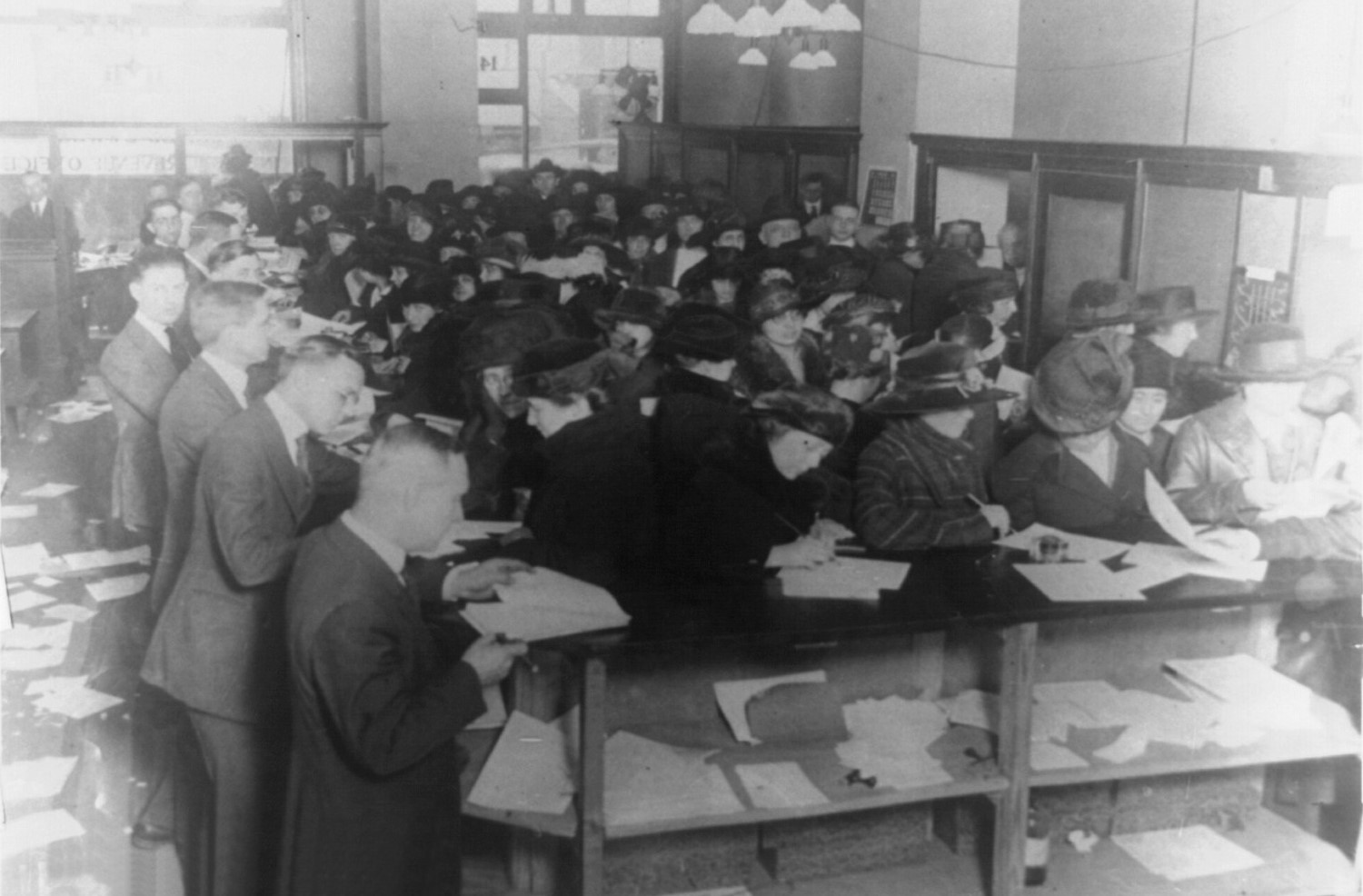
I suppose there might be people out there who can file their annual tax returns stress-free. Congratulations! For the rest of us, condolences!
Money and Stress
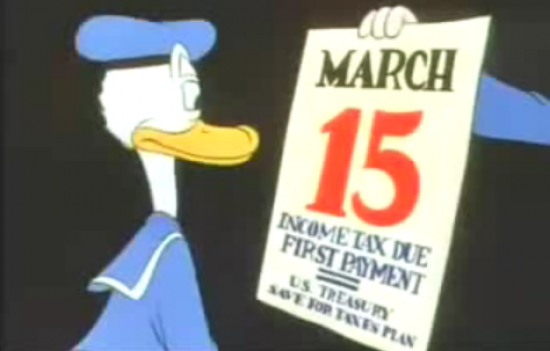
In 1943, the US government enlisted the help of Donald Duck to educate Americans about how to pay their income tax and why it was important to the war effort.
“Money is a major source of stress on people, and what tax season does is shine a great big spotlight on the issue,” Michael McKee, a Cleveland Clinic psychologist and president of the U.S. branch of the International Stress Management Association, told WebMD. “Money takes center stage at tax time, even if you might have been able to push it to the wings the rest of the year.”
A 2004 survey sponsored by the American Psychological Association found that nearly three-quarters of Americans cited money as a significant source of stress. Money is also consistently among the top causes of marital contention, says Olivia Mellan, a psychotherapist and financial self-help author based in Washington, D.C.
Heightened Tax Stress
And nothing focuses us on money like tax time. Anyone can face the stress of having money due and too little money on hand. For those who itemize, there are additional sources of stress:
eFiling comes with the risk of computer glitches or internet lag affecting your tax returns.
The frustration of the forms’ language
Finding time to do the work
Filing for an extension
Missing documents
(This is a biggie. It could be anything, but it’s often receipts. I won’t go into the time my husband inadvertently threw away all of our 1099s.)
Then there are miscellaneous stresses:
You finally wedged a CPA appointment into a jammed schedule only to discover that said CPA has moved, you can’t find the office, miss the appointment, etc.
Your CPA retired last summer
A bigger accounting firm absorbed your old one and now communications are via a headquarters in South Carolina (or wherever)
Sources of Financial Stress
But virtually every item on the topic index is rife with sources of stress. These may or may not be directly related to the taxes due, but dealing with them at tax time could well trigger strong emotions. Here is a select list:
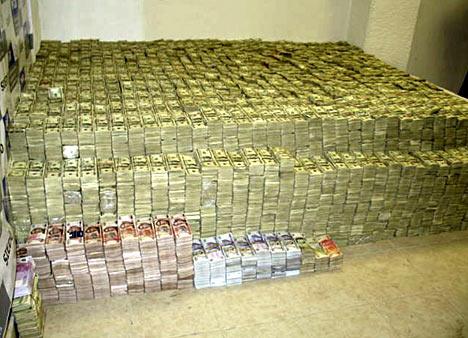
Tax season causes everyone financial stress. These stacks are just some of the $110,000,000 worth of stamps the IRS used to send out tax forms in 1914.
Alimony paid or received (or not)
…and associated hostility
Business use of home
…and the strain it puts on family
Casualty or theft loss
…and the aftermath of being a victim of crime
Child and dependent care expenses
…meeting them, but also finding such services in the first place, and possibly the precariousness of arrangements
Contributions
…a willing tithe to church, or possibly being pressured to support your alma mater
Education expenses
…and doubts about whether the degree is worth it
Foreign assets, expenses, taxes, and income
…and what to do about off-shore accounts and tax shelters, should you be one of those people
Gambling winnings (or losses)
…and whether to join Gamblers Anonymous
Gifts
…to whom and what and whether they were freely given
Medical and dental expenses
…and the trauma of diagnosis, surgery, recovery (or not)
This income is from an Etsy shop, right? Nothing nefarious to report here!
Miscellaneous income and adjustments
(They really expect people to report illegal income??)
Mortgage or education loan interest paid
…and the continuing burden from years ago
Moving expenses
…and whether the move was up or down, willing or forced
Sale of home, stock, or other capital assets
…and why the sale? Was the market down at the time or up?
Unemployment compensation
…and whether it was enough, whether it ended too soon, whether filing for it was humiliating
Sale of home, stock, or other capital assets
…and why the sale? Was the market down at the time or up?
Unemployment compensation
…and whether it was enough, whether it ended too soon, whether filing for it was humiliating
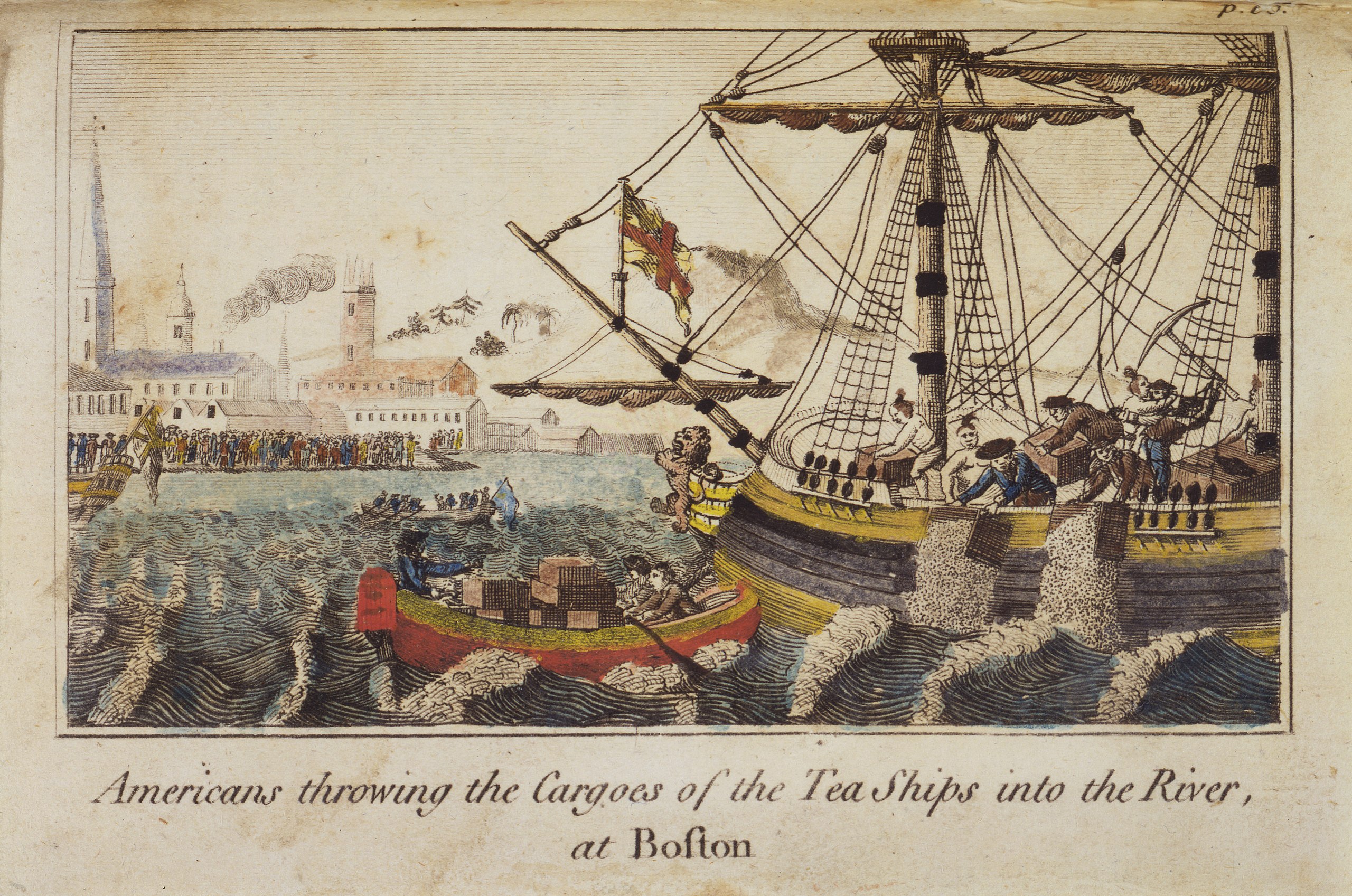
Whether taxes are justified …and if you ought to throw tea in the harbor to protest.
If you are filing a joint return, remember (and remind your spouse if necessary) not to displace anger/frustration rooted in the process.
Other Sources of Tax Stress
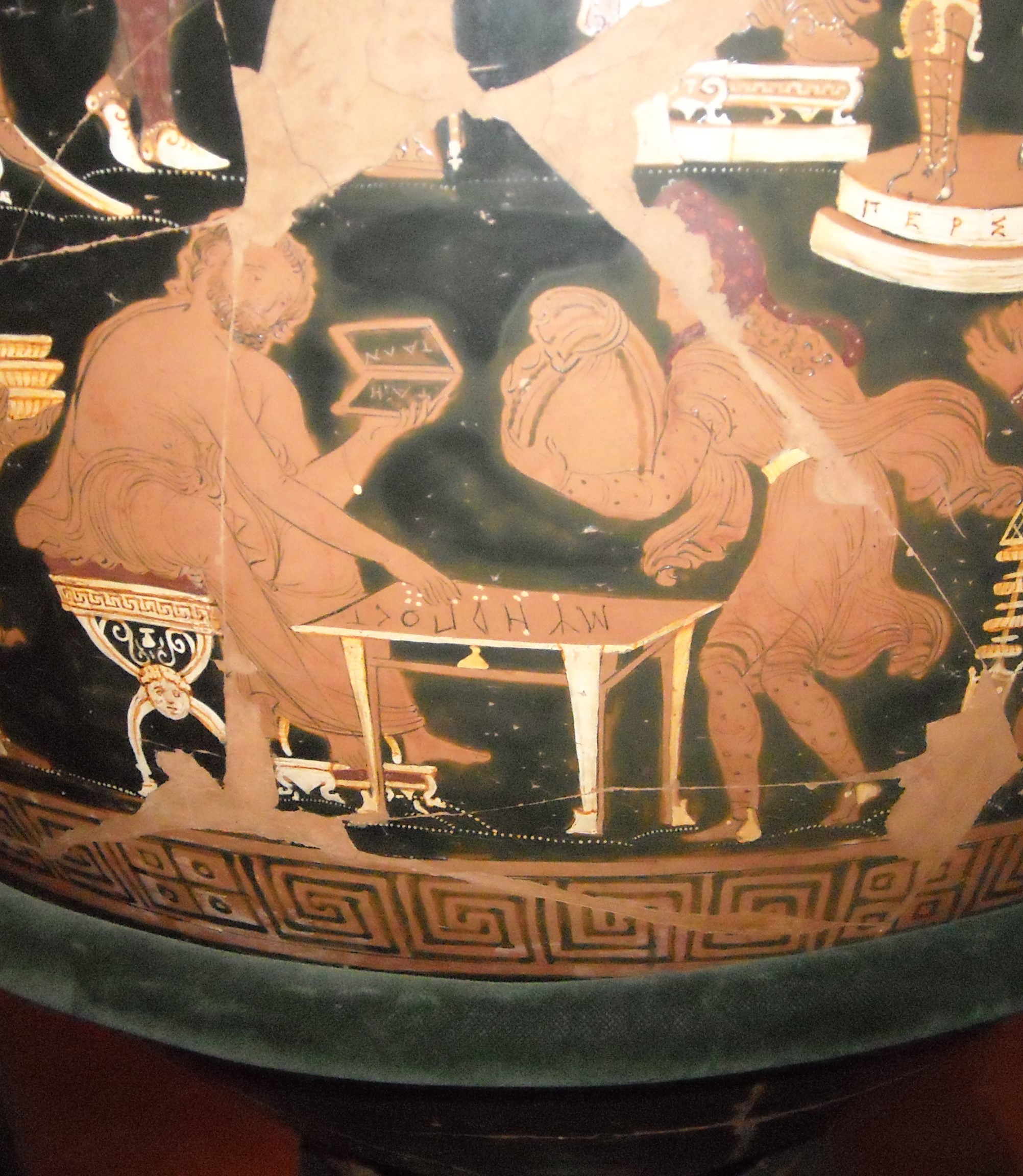
The Darius Vase depicts, among other scenes, the Royal Treasurer receiving taxes from conquered nations of the Persian Empire, circa 340 BCE.
Then, too, sometimes there are ongoing issues about money. For example, if one partner is a spender while the other partner is a saver and a worrier. This can result is resentment at tax time, when a couple may examine how their habits are affecting their lives and marriage.
“Of course, we all bring our individual emotional baggage to tax preparation. Fear of the government also emerges at tax time. Some clients of financial counselor Karen McCall are so afraid of the IRS that they won’t take even the most innocuous deduction. “They’re paralyzed because the IRS is an authority figure, and if they have unresolved issues around authority figures in their lives, that can cause a lot of fear.”
Sometimes, that fear of filing taxes stems from is understandable. As Michael McKee says, people who have been through audits can suffer from post traumatic stress syndrome during tax season for years afterward.
Avoiding Tax Stress
You may not be able to avoid all stress at tax time, but consider ways to lessen it. Mellan and McCall offered these tips in a WebMD article on coping with tax stress.
Little known fact: if you set all your money and assets on fire, you won’t have to declare them as assets to the IRS!
To avoid last-minute stress, file early and break up the job into little pieces, Mellan suggests. Do your taxes while listening to music or whatever else makes you feel relaxed.
For filers with math anxiety, Mellan recommends hiring a preparer or investing in tax software. Tax software typically collects information through an “interview” and the computer does all the calculations.
Fractious couples should strategize on ways to avoid chronic money fights, Mellan says. For example, try communicating financial information through notes or other modes that won’t carry an accusatory tone.
McCall suggests channeling tax-time stress into a resolution to track your finances more carefully. Better money management is the best way to avoid unpleasant surprises each year, she says.
Finally, if you’re feeling overwhelmed, you can turn to your buddies at the IRS. Options include filing an extension or setting up an installment plan for tax payment. For more details, visit the IRS website at www.irs.gov.
This would all be so much easier if the IRS explained taxes like they would to a preschooler.
Bottom Line: Tax time is stress time. You’ll just have to deal, starting with recognizing the danger zones and ameliorating as best you can.
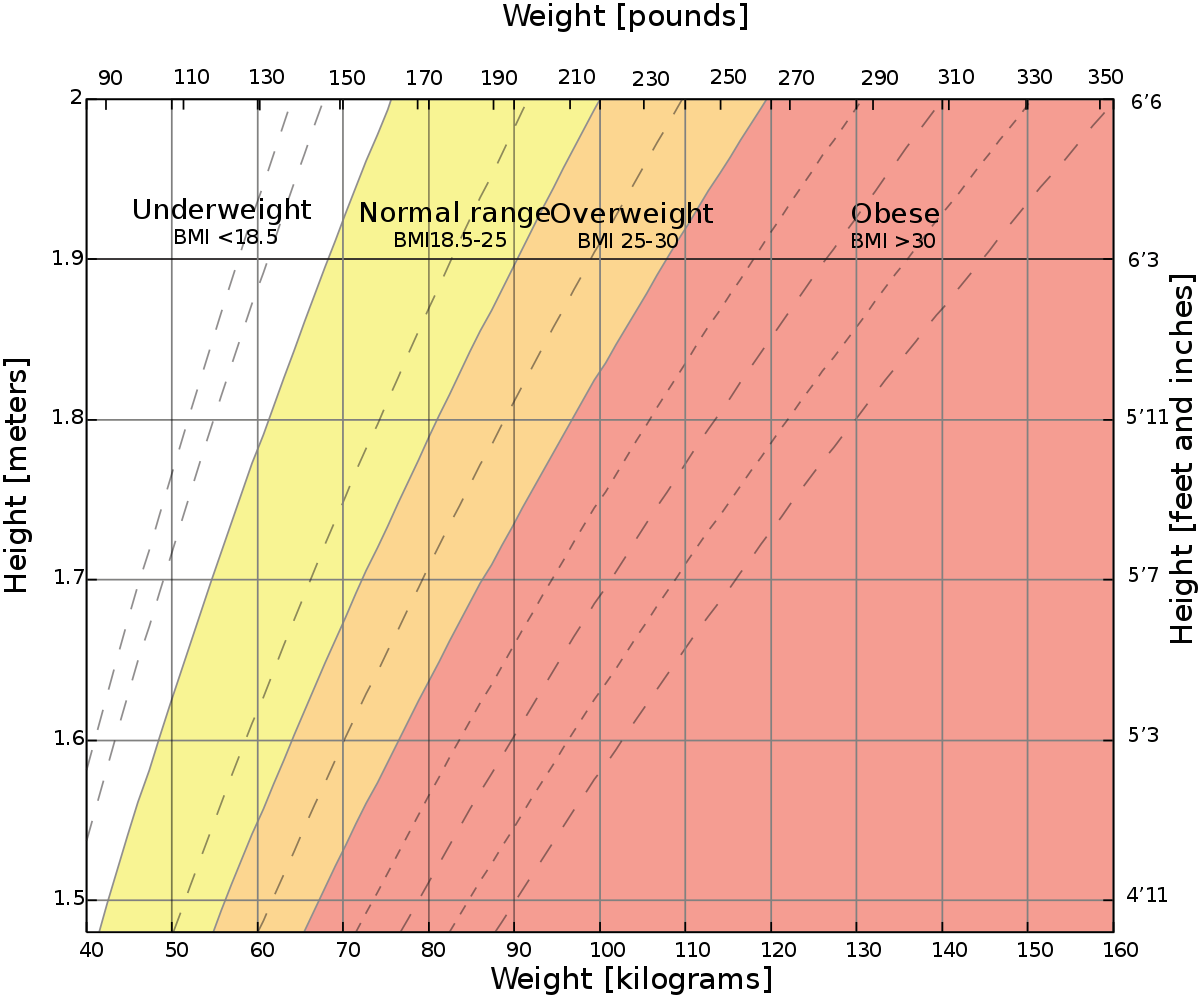
According to Harvard University School of Public Health, 33% of adults in the U.S. are overweight and 36% are ob⁶ese. Although percentages vary, several sources claim two thirds of American adults are overweight or obese.
With these numbers, one might expect a certain amount of heft to be perceived as acceptable, perhaps even desirable. But not so. Instead, in the United States, labels like fupa, lard, chunker, fatso, and jelly belly are slapped on. And how is this for humor? A collective noun for a group of overweight/obese people: A blubber of fat lads.
Even people who are trying to be polite or helpful say things that sting:
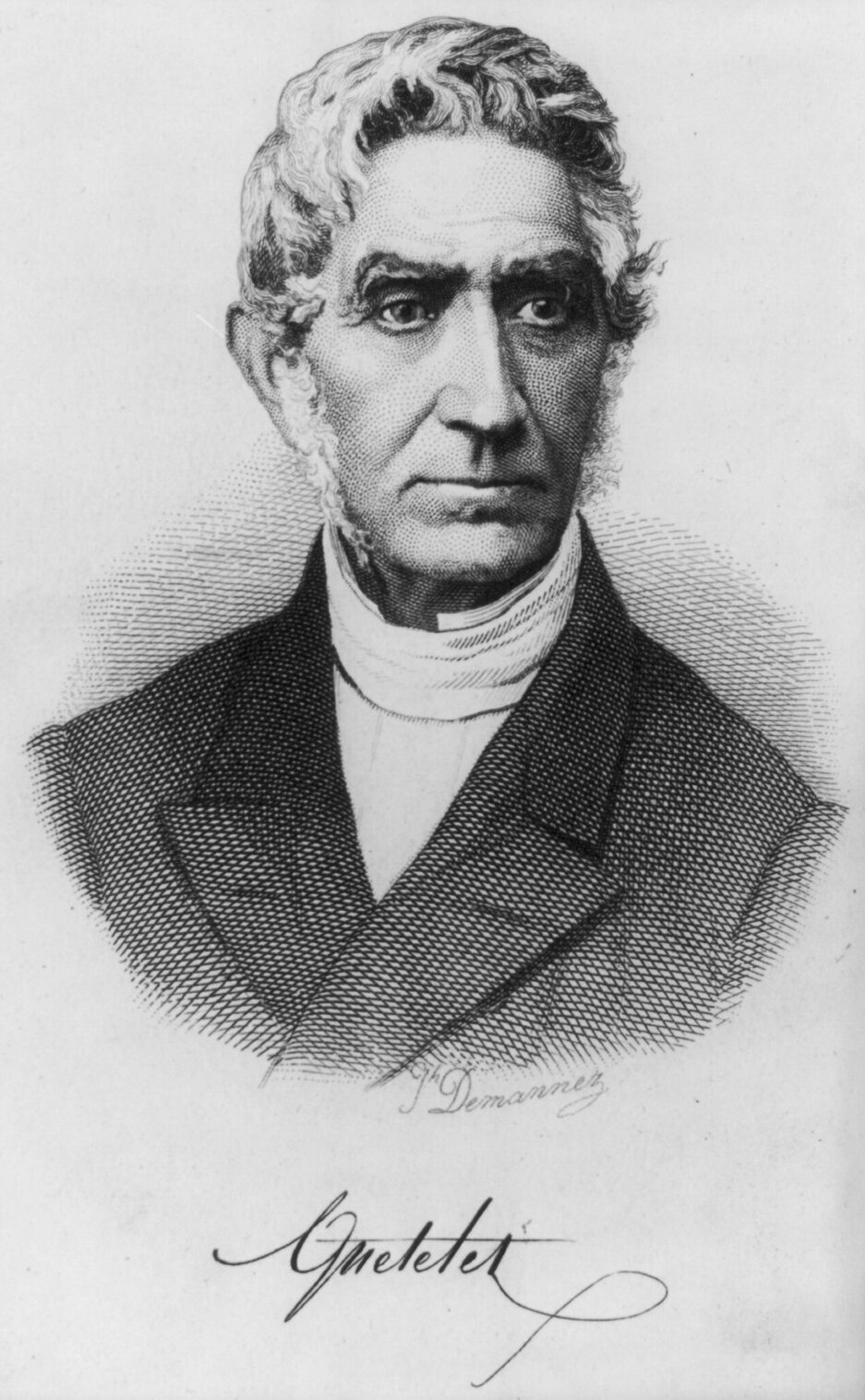
Lambert Adolphe Jacques Quetelet, the man responsible for the obesity epidemic (in a way).
Lambert Adolphe Jacques Quetelet, a Belgian mathemetician, developed Quetelet’s Index (later called the Body Mass Index or BMI) in the 1842 as a method of determining the average measurements of French and Scottish men. Quetelet prized homogeneity and thought that the ideal person should be as close to the center of the statistical bell curve as possible. At the time of its creation, Quetelet was very clear that “Quetelet’s Index” was useful solely as a means of predicting the average body size of a population, not to measure or predict anything for an individual, including health.
In 1867, Mutual Life Insurance of New York started using an adaptation of Quetelet’s BMI tables to determine how much to charge policy holders. Within a few years, every insurance company in the market was using different BMI tables with wildly varying numbers to define “healthy” weights, which they then used to set prices for clients.
Even when Ancel Keyes adapted Quetelet’s original findings as a way for doctors to use during medical consultations, he admitted that the BMI was only accurate as measure of obesity about half the time. He also included data only from men, almost entirely white men from relatively wealthy countries.
These early limitations of the BMI calculator continue to cause serious challenges for those trying to use it as a diagnostic tool. Women’s bodies store fat differently than men’s bodies. The cut-offs for defining someone as overweight or obese vary widely among ethnic groups. Scientists created the BMI for children by simply extending downward the existing trend lines for small adults, which makes the data for children particularly unreliable. Older adults have different metabolic needs and may benefit from having a higher BMI altogether.
In 1995, the World Health Organization change the definitions of overweight and obese according to BMI. The American National Insitute of Health (NIH) adopted those standards in 1998; overnight, millions of people became overweight or obese without gaining a pound. This marked the start of the “obesity epidemic” and the “war on obesity” (which has not really had any effect on actual health.)
Obesity Today
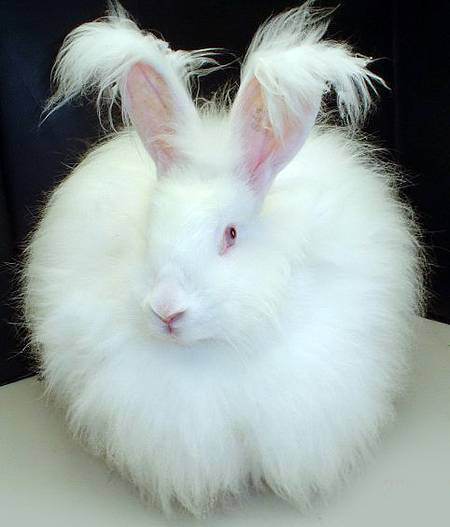
“It’s not fat. It’s floof!”
Today, the NIH classifies about 1 in 11 adults (9.2%) as having severe obesity.
As a rule of thumb, you are likely morbidly obese if you are more than 100 lbs. over your ideal body weight or have a BMI of over 40.
Other obesity data reflect much of the data on other health issues.
Recent national data show that 54.8 percent of Black women and 50.6 percent of Hispanic women are obese compared to 38.0 percent of White women. Rates of obesity are also higher for Hispanic men, in the South and Midwest, in nonmetropolitan counties, and tend to increase with age. However, as discussed above, inherent problems in calculating BMI may misrepresent actual health of people in these populations.
Who Is Fat? Who Is Obese?
Kimberly Truesdale and June Stevensfound that perception of one’s own weight may be skewed. Surprisingly, to me, only 22.2% of obese women and 6.7% of obese men correctly classified themselves as obese.
How can this be? Fat people have all kinds of euphemisms for fat. (Curvy, plump, voluptuous, plus-size, zaftig, heavyset, Rubenesque, queen-size, large, thick, plush, stout, hefty, buxom, portly, ample-bodied, curvaceous, puffy, fluffy, etc.)
In the Media
As I reported in an earlier blog (September, 2020) Greenberg et al. reported on their findings of television actors’ BMI after analyzing 5 episodes of the top 10 prime time shows.
“The ears add ten pounds.”
In comparing television actors’ BMI to that of the American public, they found that only 25 percent of men on television were overweight or obese, compared to almost 60 percent of American men.
Almost 90 percent of women on TV were at or below normal weight, compared to less than 50 percent of American women.
Popular television shows that include people who are obese portray them as comedic, lonely, or freaks. Rarely if ever are they romantic leads, successful lawyers or doctors, or action stars.
In addition, shows like The Biggest Loser promote the perception that obesity is caused by individual failure rather than a mixture of individual, environmental, and genetic sources.
Weight and Mental Health
“Do these feathers make my bum look big?”
Defensive self-labeling aside, the results of fat shaming are apparent in many correlates of mental health. Societal stigmas and biases mean that carrying extra weight is hard on one’s mental health.
Socially competent people using better strategies for solving interpersonal problems are more readily accepted by peers and valued by adults. Obese individuals, especially teenagers, have deficits in several social skills, which lead to damage to relationships, lower self-esteem and devaluation by social agents.
Many individuals who are obese also struggle with issues related to their mood, self-esteem, quality of life, and body image. This emotional distress likely plays a role in treatment seeking but also can impact successful treatment.
Obesity is associated with a higher risk of having certain mental health disorders, including anxiety, depression, bipolar disorder, and eating disorders. Often, this relationship is due to the effects of weight discrimination.
People with a weight problem are more likely to feel alone and describe themselves as lonely. They may feel they might not ever meet the ‘right person’, feel uncomfortable with intimacy, feel they are being judged for their weight, and just want to hide sometimes.
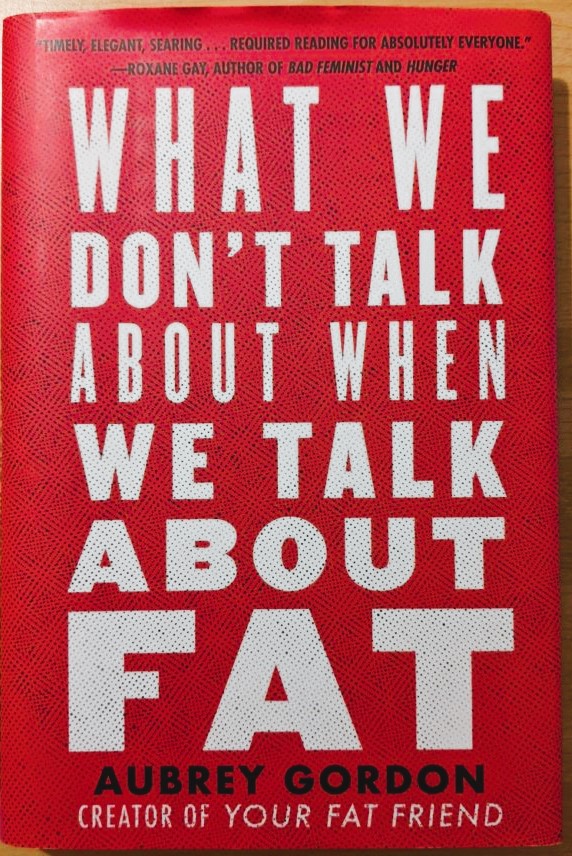
Medical professionals are often guilty of fat-shaming. Patients seeking treatment for problems that have nothing to do with size are instead lectured about why they need to lose weight. As Aubrey Gordon says, “It is one of the great fears of my life, that I will die of a totally treatable or preventable thing because my doctor can’t conceive of me having any other health problem than just being a fat person. That is a fear that follows me every time I go into a doctor’s office.”
“Just getting ready for winter.”
The vast majority of people who are overweight or obese according to BMI also have some form of eating disorder, according to Dr. Erin Harrop at Denver University. However, because these patients don’t fit the common perception of looking dangerously thin, the medical establishment classifies thesm as having “atypical anorexia.” This distinction makes it much more difficult to receive an accurate diagnosis. Not only are doctors more reluctant to treat overweight patients with disordered eating, insurance companies are reluctant to cover those treatments.
The social and emotional effects of obesity include discrimination, lower wages, lower quality of life and a likely susceptibility to depression.
To be clear, the mental health issues that are correlated with being overweight or obese are caused by our fat-shaming culture. In societies where people value weight, these stigmas are not prevalent.
Does Personality Cause Obesity?
Who are these overweight and obese people?
In analyses of separate personality traits, openness and conscientiousness were significantly associated with obesity in men, and only agreeableness was associated with obesity in women.
“It’s just feathers. I’m cold!”
Introverts are more likely to be at a healthy weight. They have lower rates of obesity. In one study of nearly 2,000 people over a span of 50 years, extroverts were heavier than introverts, with more body fat, larger waists, and bigger hips.
The BIH has found positive associations between obesity and the personality traits neuroticism (OR: 1.02) and extraversion (OR: 1.01), and negative associations between obesity and openness to experience (OR: 0.97) and agreeableness (OR: 0.98). (Recall, a positive association means as one goes up, so does the other; a negative association means as one goes up, the other goes down.)
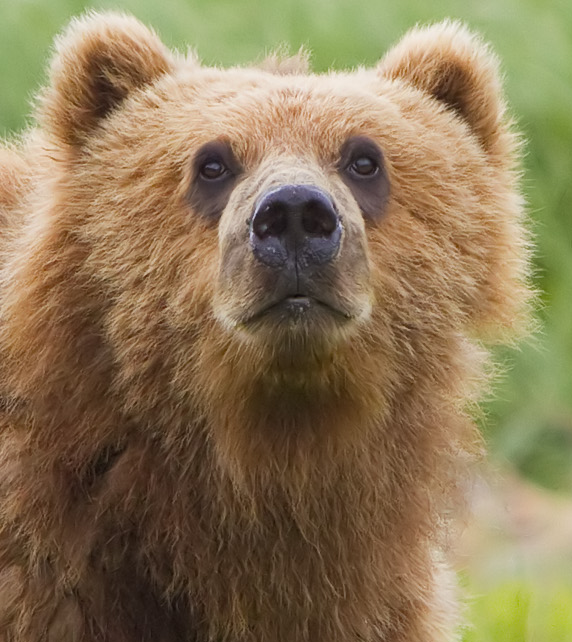
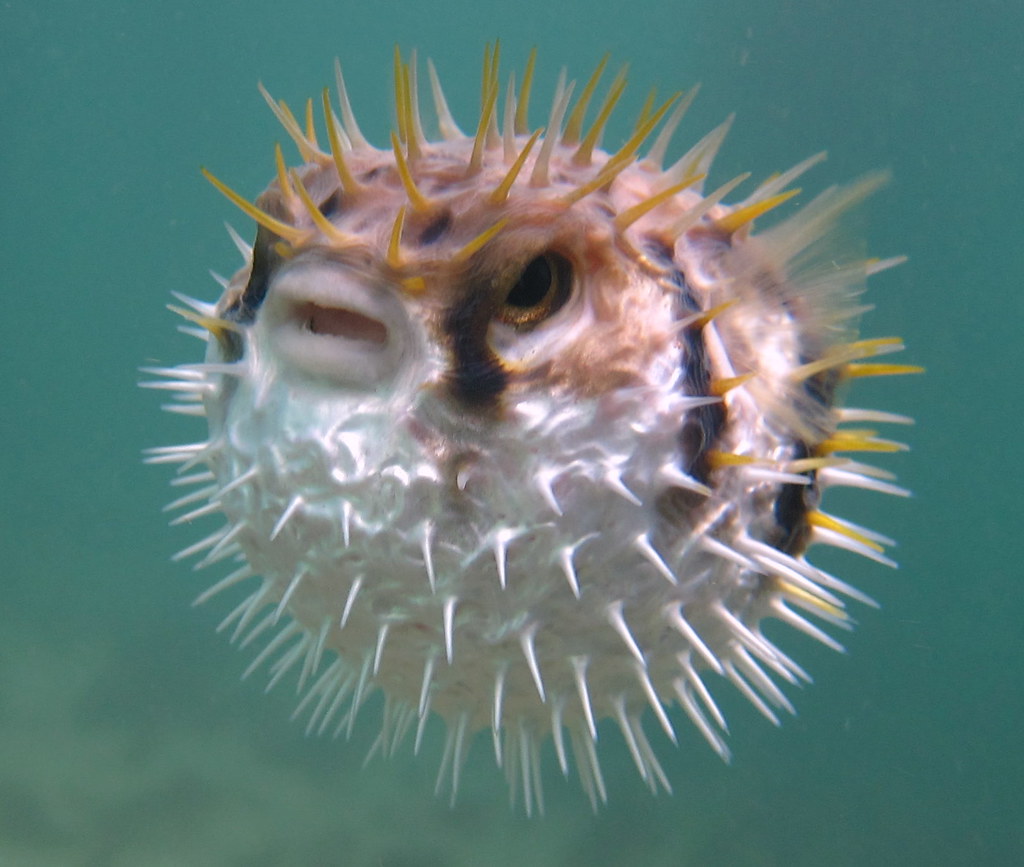
“It’s water weight!”
Although there is no single personality type characteristic of the morbidly obese, they differ from the general population as their self-esteem and impulse control is lower. They have passive dependent and passive aggressive personality traits, as well as a trend for somatization and problem denial.
Over-eating may be the result of self-sabotage. A person gets into a cycle of low self-worth and shame, using food to soothe. Obesity can also be seen as a way of showing the world ‘I am worth nothing, stay away, because I am bad.’
Researchers have found four characteristics that typify the ”overweight personality.” You may have low self-esteem, poor self-control (or even eat compulsively), experience mood swings, or be prone to depression and anxiety.
Physical Causes of Obesity
Genes contribute to the causes of obesity in many ways, by affecting appetite, satiety (the sense of fullness), metabolism, food cravings, body-fat distribution, and the tendency to use eating as a way to cope with stress. Some researchers believe they may have identified “missing” genes that potentially contribute to obesity.
It’s important to remember that obesity is a disease, and we shouldn’t blame individuals for it because the causes are not always something they can control. In other words, it’s not your fault if you are obese.
Obese and Healthy
Obesity is definitely a physical health hazard, but poor health is not necessarily inevitable. In a database at McGill University, about 15% or slightly over half a million people were categorized as being obese and metabolically healthy.
If a person is 300 pounds and does not have any other diseases or health complications, then that person is considered healthy. However, the chances of staying healthy with 300 pounds weight are low. Around 99% of individuals weighing this much suffer from several other health complications.
“There is a lot of data that says that fat people generally and fat women in particular postpone care because they know that they are going to be overtly, directly judged by their health care providers and they know that they will get substandard care because of that judgement.”
Essentially, people with obesity can still be healthy. However, what a McGill University study, and prior research, shows is that obesity even on its own carries a certain cardiovascular risk even in metabolically healthy individuals.
Some People Do Manage to Lose Weight
The annual probability of achieving normal body weight was 1 in 210 for men and 1 in 124 for women with simple obesity. The probability declined with increasing BMI category. In patients with morbid obesity, the annual probability of achieving normal weight was 1 in 1290 for men and 1 in 677 for women.
Good news! Children who successfully reduced weight may have equal levels of self-esteem or even better social self-esteem than those being always underweight/normal weight.
The disease of obesity, no matter what it means for your physical body, is not your whole self or your whole life. Obesity does not define you as a person.
Bottom Line: For many people, too much weight is a fact of life. Be aware of the possible (probable) effects of fat shaming on your mental wellbeing!
Procrastination has been my long-term companion, and I’ve got to tell you, it isn’t all bad. We procrastinate when we voluntarily put off an unpleasant task, often against one’s better judgment.
I have an attack of seasonal procrastination annually, at the end of the year. I have hundreds of carved wood Santas all over the public areas of the house, from Thanksgiving through Christmas. Crating them up again is definitely unpleasant. Procrastination allows me to enjoy my favorites longer!
I never want to see them packed away for another year!
We typically see procrastination as a bad thing. Research indicates that procrastination generally leads to lower-quality work performance reduced feelings of well-being. As a group, students who procrastinate get lower grades. Procrastinators put off a lot of unpleasant tasks, for example, getting medical treatments and diagnostic tests.
Why We Procrastinate
So why do it? (Or why not do it?)
Here are 5 reason for procrastination, according to Psychology Today.
Absence of structure
Unpleasant, boring tasks
Timing: when present activities are rewarding and longer-term outcomes are in the future
Lack of confidence about one’s ability to do the task
Anxiety: postponing getting started because of fear of failure
My personal favorite isn’t on this list: the ego-defensive function of feeling better about oneself. This related to #5 above. Whatever the outcome, the procrastinator can always say to him/her self, “Not bad for the amount of time I spent on it. Of course, I could do better.”
There is also, as in the case of crating away my Santas after Christmas, not wanting to do a task because we don’t really want it to be done. Packing away holiday decorations means holiday celebrations are well and truly over for the year.
Can Procrastination Be Good?
The universe (or society or fate or something) often rewards exceptionally bright, capable people for procrastination. Examples include cooks who create fantastic meals from whatever is in the fridge when they’ve forgotten to shop for groceries. Teachers who get good reviews when they lecture spontaneously. Students who get A’s without studying. (I know a young man who defended himself against a plagiarism charge in university by procrastinating. He called on classmates, who testified that they’d seen him frantically typing the assignment in the computer lab an hour before it was due.)
It grants you the space to take inventory of your life. Procrastination can give us opportunities to be curious and learn, says life and business coach Lindsey Eynon.
It makes you work more efficiently.
It gives you a chance to take a break.
Procrastination gives you time to consider divergent ideas, to think in nonlinear ways, and to make unexpected leaps.
According to Stephanie Vozza, we tend to give procrastination a bad rap. She listed 6 reasons why procrastination can lead to greater success and happiness.
Procrastination gives you a chance to train your muscles to lift super heavy weights!
Structured procrastinators get more done. While putting off one thing, they do something else.
Procrastinators make better decisions. I’m doubtful about this one, but if while delaying making a decision a person is gathering relevant information, it could be.
Procrastination leads to creativity. When a task seems too hard to do, you might invent a better way.
Unnecessary tasks disappear when you procrastinate.
Procrastination leads to better apologies.
Procrastination reveals what you find important.
As David d’Equainville wrote in his Manifesto for a Day Put Off, it “is urgent to procrastinate against all the trends breathing down our neck. Procrastination is an art that brings doubt and skepticism to unquestioned standards of efficiency.” He has declared March 26 to be International Procrastination Day, a day to rebel against the constant rushing and panic of modern life.
To Procrastinate or To Act?
When considering any deadline, ask yourself, “Whose deadline is this? Where did it come from? What will happen if it isn’t met?” Especially if the answer to the first question is, “self-imposed,” weigh the answer to the last question!
My ultimate criterion for getting something done on schedule—or at all—is this: If small children will not die, it probably isn’t that important. This attitude relieves a lot of stress, anxiety, and self-blame.
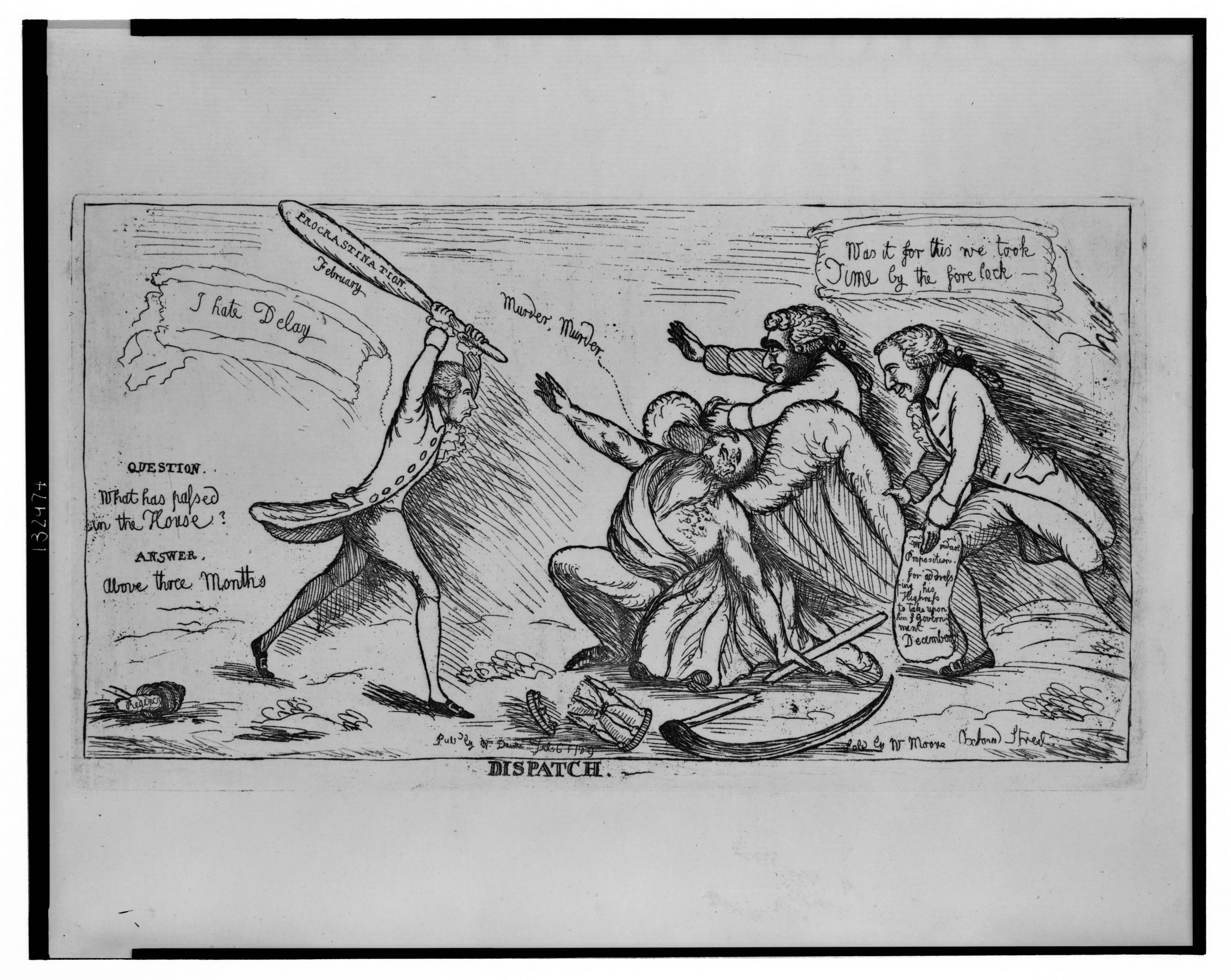
Procrastination is certainly not a new phenomenon. This British cartoon from 1789 shows a man bludgeoning Father Time to death with procrastination.
Here are several quotes from Larry Kim, which he originally published on Inc.com:
Procrastination breeds efficiency.
If you’re the type of person who works more efficiently and can be more productive while under the pressure of the ticking clock, work with it. You’ll still get your work in on time and will be happier than if you’d spent the week mulling over how weak you are.
Putting tasks off reduces unnecessary efforts.
Putting tasks off until closer to the deadline might just cut out some unnecessary efforts when these things change.
You can be open to more enjoyable things.
If procrastinating means you get to enjoy something today and can still complete whatever is required of you before it has to be done — even if it’s just hours or minutes before — you’ve still accomplished what you set out to do. And you’ve had fun in the meantime.
Procrastination can reduce anxiety.
We often put off things we really, really don’t want to do — things that make us uncomfortable, or anxious, or even afraid. If you can take the time to mentally prepare yourself and tackle it when you’re ready, you can reduce your overall anxiety about the task.
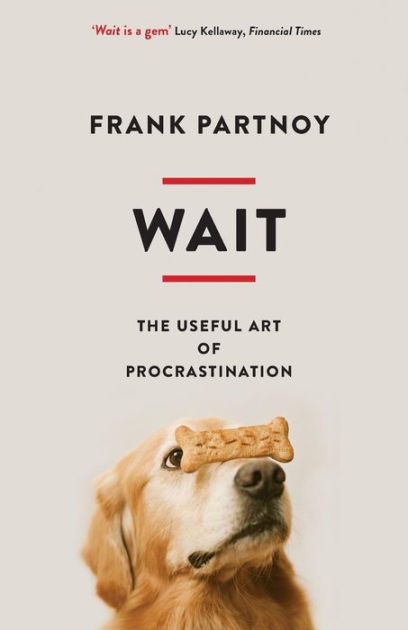
Frank Partnoy wrote a whole book about the upside of procrastination!
Time can bring greater ideas or other improvements.
University of San Diego professor Frank Partnoy wrote extensively about the benefits of having time to assess issues in his book, Wait. Procrastinating gives your ideas time to percolate; it allows you to sit down and tackle the task after your subconscious has chewed it over. The result just might be a better outcome.
It makes you a rebel… sort of.
Only insomuch as you can rebel against modern day norms, though. Ancient Roman and Greek nobles highly regarded and even respected procrastination.
Finally accomplishing the task gives an adrenaline rush.
Whoo-wee! And you’re done, doesn’t that feel great? If you’re hooked on the rush you feel when you’ve finally hammered something out at the very last minute, don’t rob yourself of that pleasure.
I believe that people always choose their perceived best option, even if that choice doesn’t seem rational to an outside observer. By weighing perceived costs and benefits of procrastination in various situations, under various circumstances, people can procrastinate rationally!
BOTTOM LINE: Although there’s sometimes a down side to procrastination, embrace the up—side!
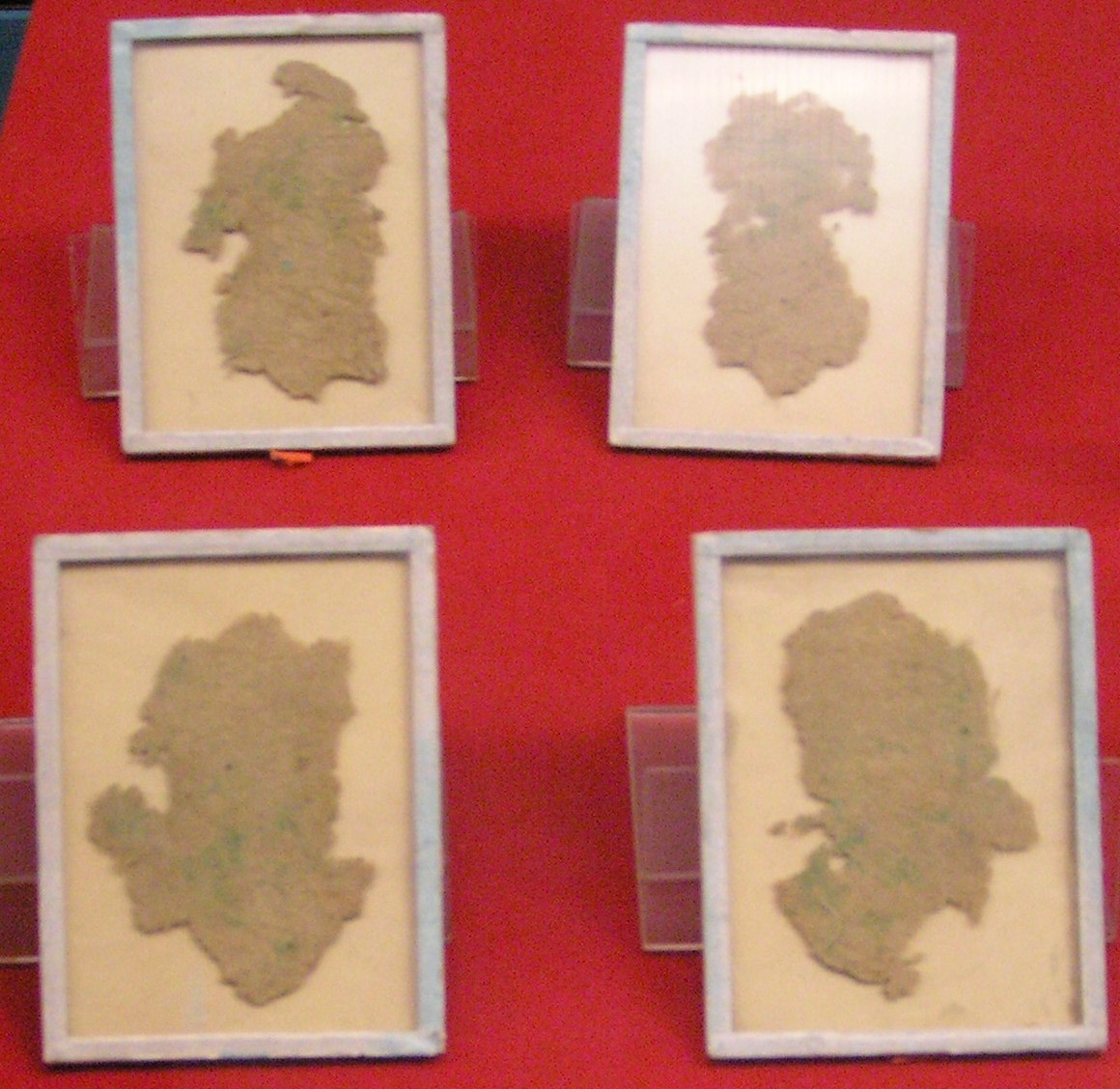
Hemp paper used to wrap gifts two thousand years ago
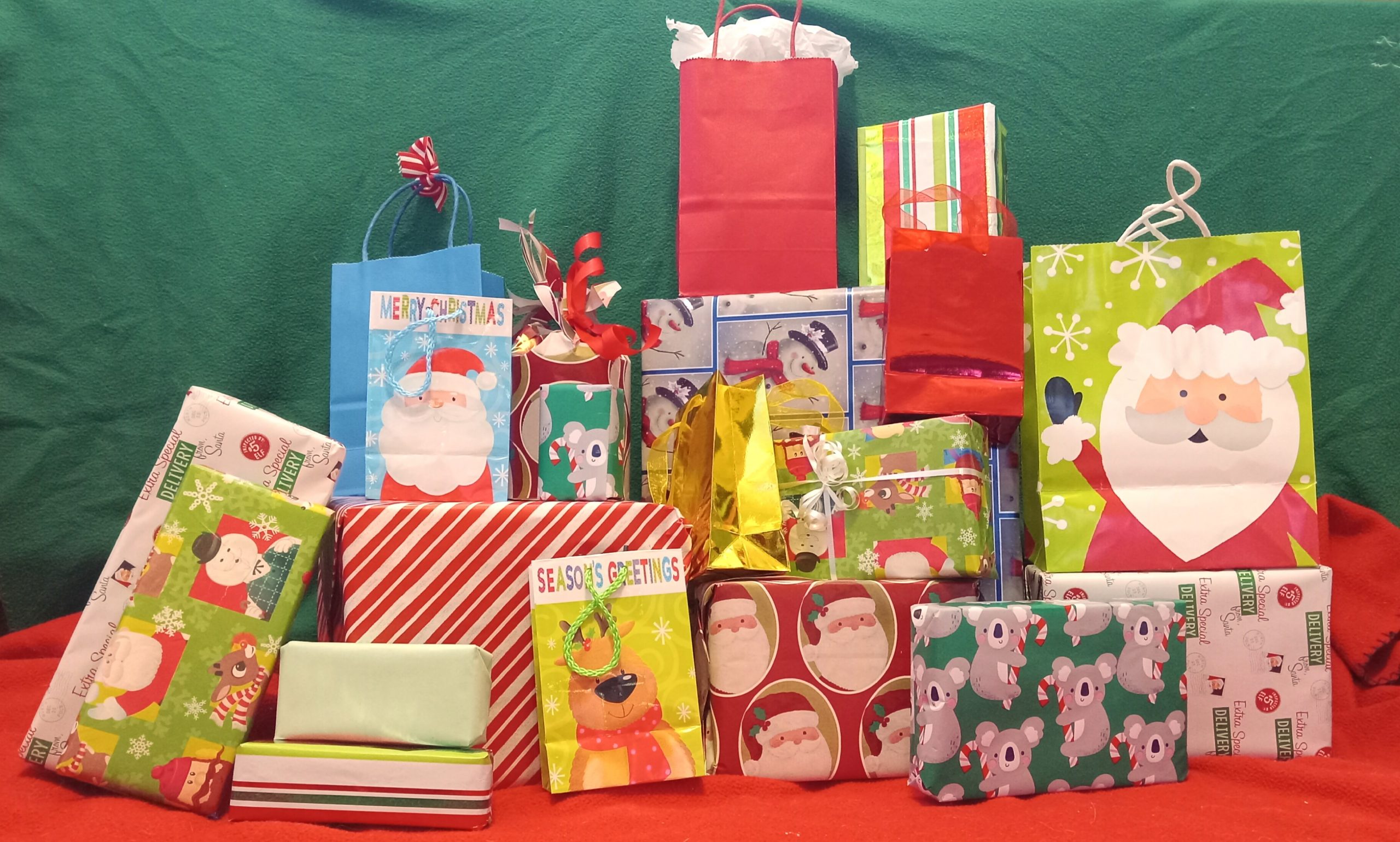
People of many cultures give more gifts at this time of year than any other. And sometimes, they wrap those gifts! More often than not, actually. Even if you give someone a car (!) you’ll probably go all-out and put a big red bow on top.
People have been wrapping gifts for thousands of years. In China, people used hemp and bamboo paper to wrap gifts as early as the Song Dynasty, in the 2nd century BCE.
But gift wrapping is like housework: different folks have different priorities. And also like housework, it’s better to have done than to be doing!
The Perfectionist
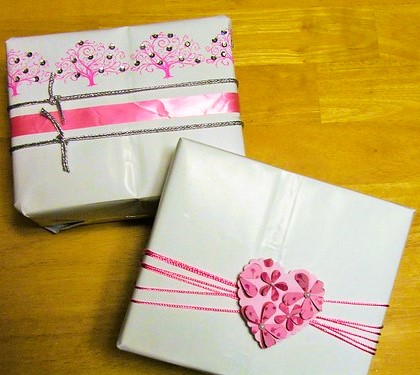
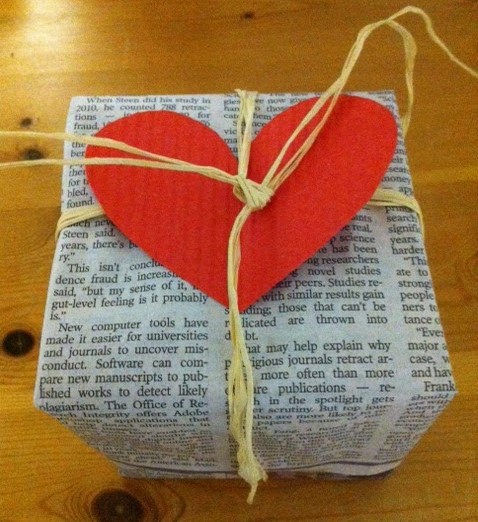
Lots of people (you know who you are) want every gift to be perfectly wrapped—beautiful, inviting, mouth-watering, even. This involves brand new paper, tissue, and ribbons. The pattern of the paper is perfectly aligned. The seams are folded over and creased so that the tape holding them together is invisible. Ribbons are required, wrapped at least once around the package, topped with a splendid bow, often handmade. And they must coordinate the name tags with the paper!
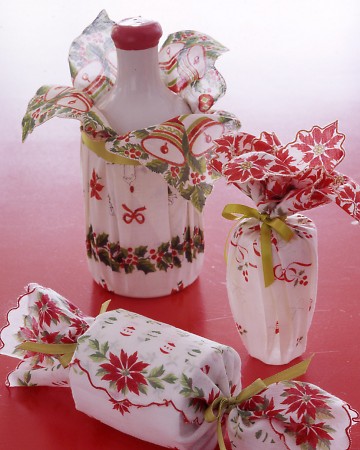
There are many online sources to tell/show you how to do this. Depending on the materials used, this can also be economical and/or environmentally friendly.
The Time-Saver
By contrast, the time-saver buys decorative boxes, tapes the lid on, and adds a name tag—maybe a stick-on bow. For added time-saving, they might even buy gift boxes with a bow already attached!
A close second for fast wrapping is the decorative gift bag: just open and fill. It’s second because the “wrapper” must add tissue paper to obscure the contents until time to open. (Some people skip the tissue and just rely on the bag to keep the surprise. In such cases, gift bags might be the fastest wrapping option!) Tying the handles together is optional, but you might as well, assuming you need to affix a name tag.
Gift bags have the advantage of accommodating oddly-shaped presents, and sometimes combining things in one bag can cut out the need to wrap multiple small items.
Sending gifts can be the biggest time-saver of all: order the gift and have it sent directly to the recipient. Sometimes gift wrapping is available. But the efficiency expert doesn’t really care about that.
Sometimes the time saver might just as well be labeled “easy does it.” A variation on this is gift cards. They need only an envelope, sometimes an address and a stamp. And they cut hours off shopping time.
The Penny-Saver
The penny-wise wrapper saves boxes, bags, bows, ribbons, etc., from one year to the next. Wrapping paper can be trimmed of tape and rough edges and go on indefinitely, wrapping ever-smaller packages. Another money-saving habit is to cut a piece of the wrapping paper to make the name-tag. The frugal wrapper uses as little tape as possible, both to save tape and to mess-up less of the surfaces. (See below for “free” wrapping paper ideas.)
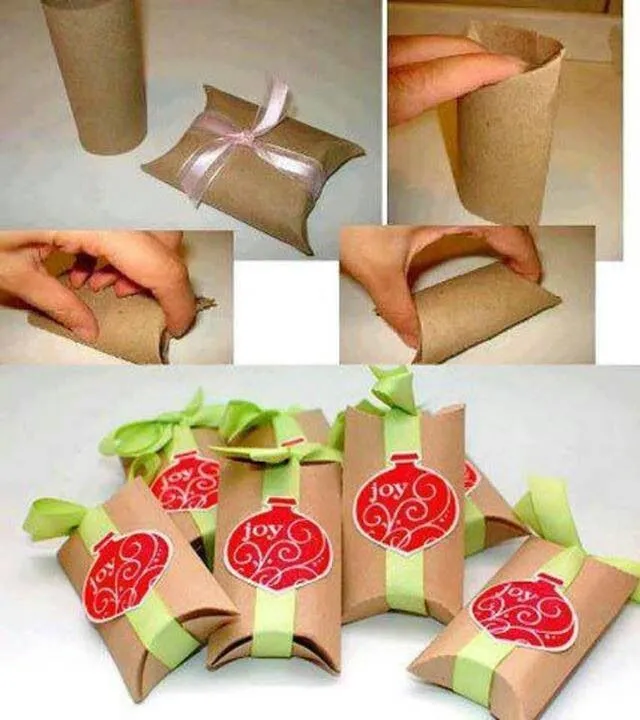
And for a most unusual option: use the paper towel or toilet paper rolls for any gift they can accommodate, fold in the ends, and decorate with markers or stickers. Amazingly, you can use decorative cookie tins to gift more than cookies (or sewing supplies)!
The Eco-Wrapper
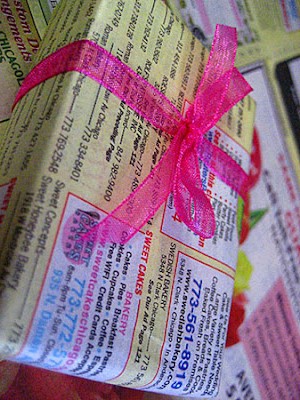
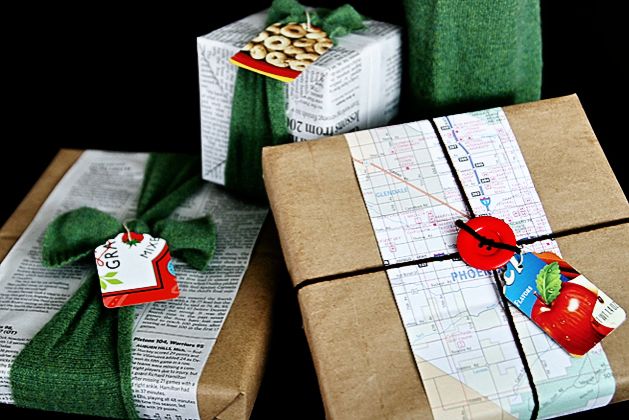
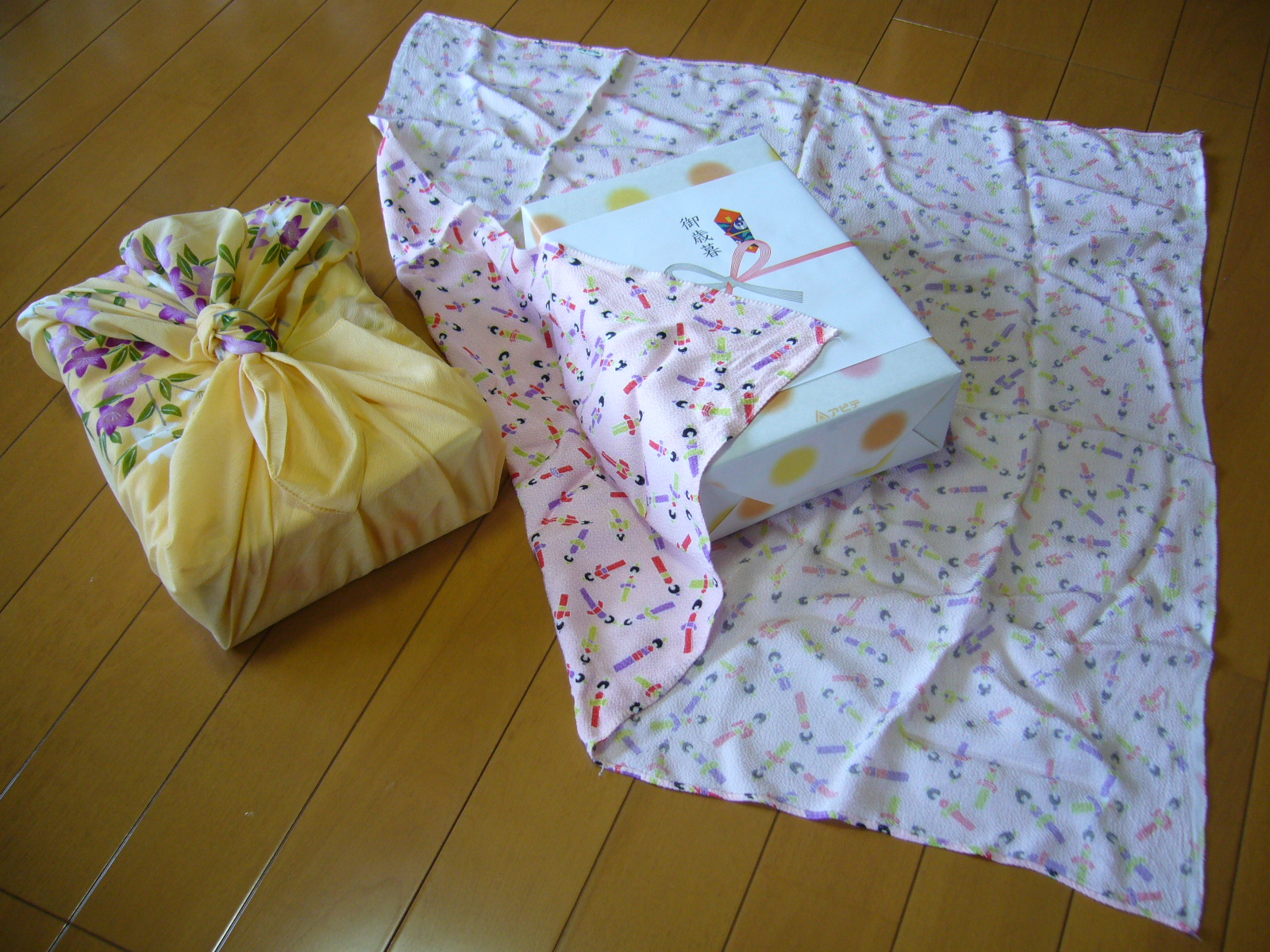
The environmentally aware gift-wrapper uses several of the practices mentioned above. Reusing wrapping materials keeps them out of landfills. Shipping gifts directly from the manufacturer saves one whole layer of wrapping materials. And all materials must be recyclable: no glitter or metallic paper, Styrofoam peanuts, plastic ribbons or bows. Alternative materials are also desirable. These include but are not limited to
These environmentally aware people use minimal packaging altogether, so gift-card envelopes are perfect containers.
Devious Wrappers
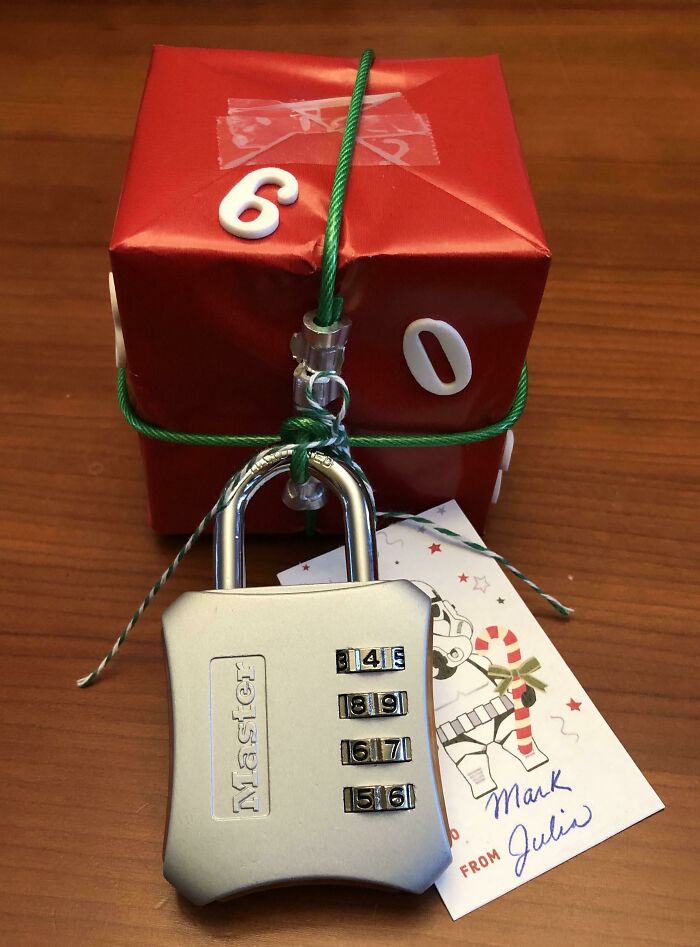
For some people, watching the recipient open the gift is a key part of the enjoyment. For others, watching a recipient struggle to open a deviously wrapped gift is even better! These people deliberately wrap gifts to obscure the contents.
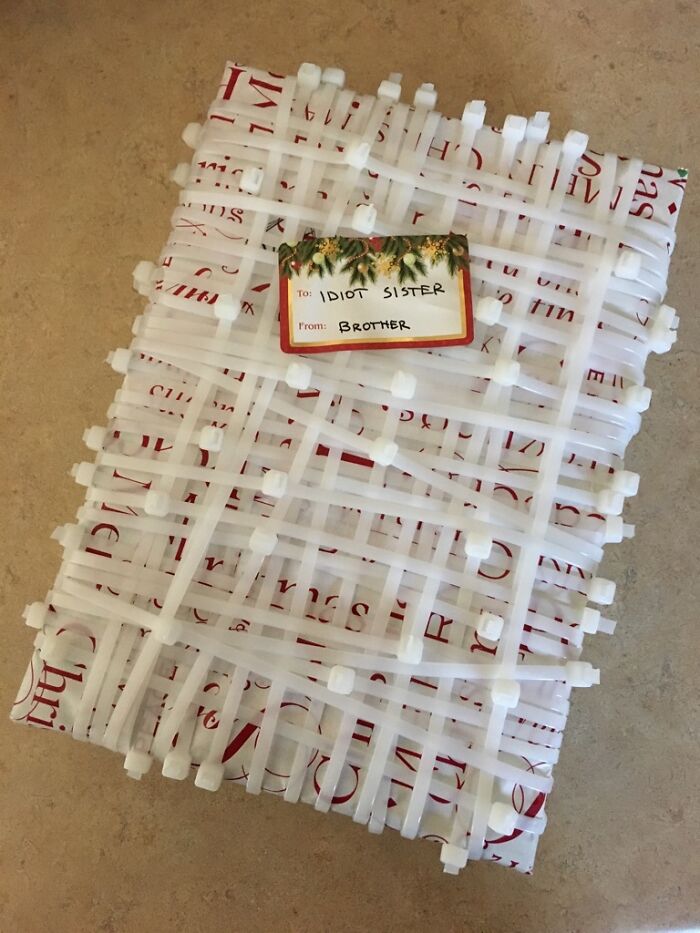
Covering a box in multiple layers of tape
A small box inside a bigger box inside a bigger box inside a bigger box, and so on
Including riddles or clues about the gift’s contents on the tag
Secreting gifts around the room and instead giving the recipient clues to find them
Encasing the gift inside concrete or a welded-shut steel box
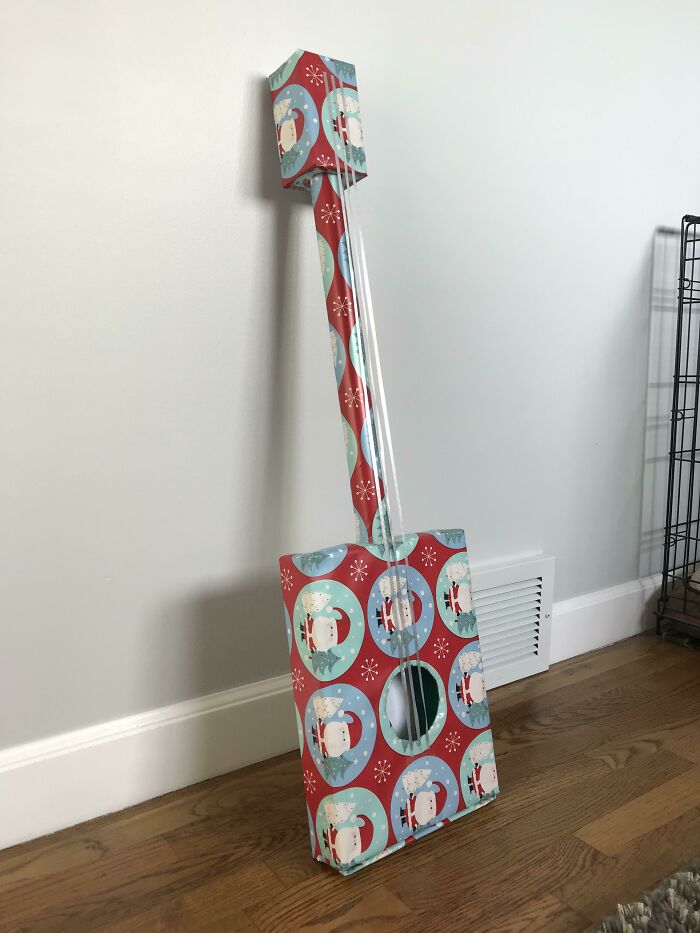
Using cardboard or wrapping paper to obscure the shape of the gift or make it look like another gift
Concert Tickets
Alternatives to Wrapped Gifts
Rather than gifts or general gift cards, some people elect to give an “experience” perhaps shared with the giver
Tickets to sporting events: baseball, football, basketball, soccer, golf, etc.
Ski passes or lift tickets
Movie tickets
Trips to rock climbing gyms
Indoor sky-diving tickets
Lottery tickets
Passes to a theme park
Some gifts of this type are more than “one off” experiences
Museum, zoo, or botanical garden membership
Magazine subscription
Gym or sports club membership
Meal delivery services
Season tickets to anything from an amusement park to the theater
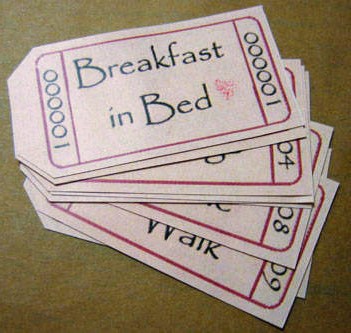
When lack of money might otherwise hinder a gift-giver, they may turn to other methods of showing love and appreciation. The giver can even “wrap” these gifts in nice cards or writing them on fancy paper.
Providing free child or pet care
Gifts of food, whether making future meals or covering a casserole in foil and putting a bow on top
Offers to help with housework, transportation, yard chores, cooking, etc.
Skilled labor from gifters with particular skills, such as a manicure, massage, tax prep, music lessons, personal training, or anything else the giver can do well
A puppy!
(Disclaimer: Though adopting a pet can be a great experience, experts recommend everyone in the family choose the pet together. Please do not put an animal in a gift-wrapped box.)
Bottom Line: Beauty, economy, speed, environmental awareness, or deviousness—you don’t have to choose just one!
The authors at the Discover Building Sets blog explain the relationship between imagination and creativity this way: “Creativity is commonly referred to as the ability to create something real using imagination. Whereas imagination is the capability to create in one’s own mind what does not exist. The imagination come first and is necessary for creativity but not the other way around.
Oxford Languages defines imagination as the faculty or action of forming new ideas, or images or concepts of external objects not present to the senses. And creativity is the use of the imagination or original ideas, especially in the production of an artistic work.
The obvious question is, who’s the most creative of them all?
Determining the most creative person ever is highly subjective but there have been lots of people who have made groundbreaking contributions in various fields, demonstrating exceptional creativity. Quoting Kriti Roy (writing at Quora), some people often mentioned for their creativity include:
Leonardo da Vinci: Leonardo da Vinci is renowned for his extraordinary artistic skills, scientific explorations, and inventive mind. His diverse talents and imaginative thinking exemplify creativity across multiple disciplines.
Pablo Picasso: Picasso’s innovative and influential approach to art, particularly through his development of Cubism, challenged traditional artistic conventions and expanded the boundaries of visual expression.
Marie Curie: Marie Curie’s pioneering work in radioactivity and her groundbreaking discoveries in physics and chemistry demonstrate her innovative and creative approach to scientific research.
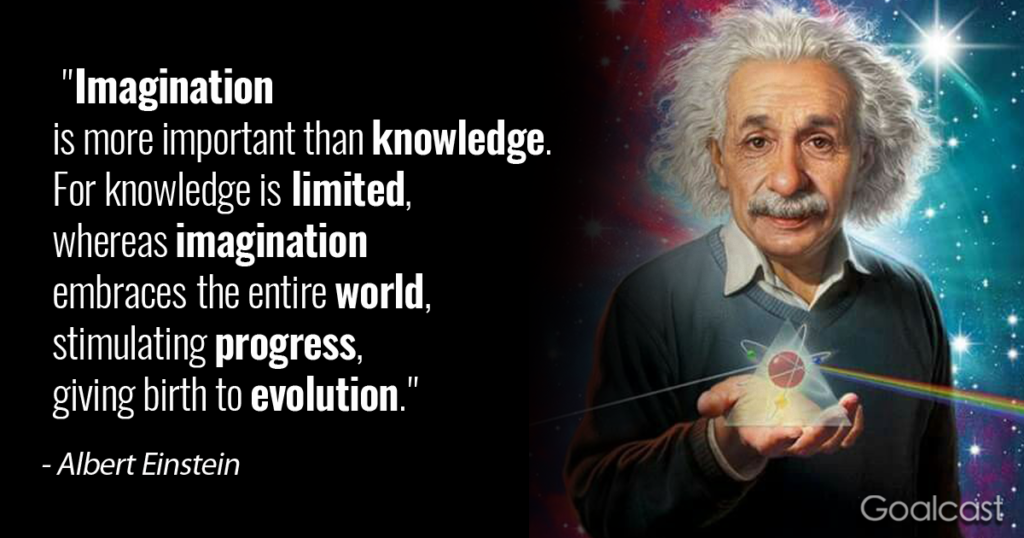
Albert Einstein: Einstein’s revolutionary theories in physics, including the theory of relativity, transformed our understanding of the universe. His ability to think beyond conventional boundaries and imagine new possibilities exemplifies creative thinking.
William Shakespeare: Shakespeare’s literary works, such as his plays and sonnets, showcase his exceptional storytelling abilities, linguistic creativity, and profound insights into human nature.
These are just a few examples, and there are many other individuals throughout history who have made significant creative contributions in their respective fields.
It’s important to note that creativity can manifest in various domains, including arts, sciences, literature, philosophy, and more. Each person’s creativity is unique and shaped by their context, cultural influences, and personal experiences. Defining the “most creative” person ultimately depends on individual perspectives and the specific criteria used to evaluate creativity.
Traits of Creative People
Here are twelve traits that creative people possess and use in their daily lives, as discussed at indeed.com:
In short, by my reading, any personality type can be creative, though not always by the same means.
“Creative people like to daydream and imagine the possibilities and wonders of the world. They can immerse themselves in imagination and fantasy, yet remain grounded enough to turn their daydreams into reality. They are often described as dreamers, but that doesn’t mean that they live with their heads in the clouds.”
Although imagination is necessary for creativity, not all imagining is productive. An individual with an overactive imagination is one whose tendency to focus on their fantasies is so frequent and central to their waking hours, as to distract them from actually working toward achieving their own goals, or developing real-life, fulfilling relationships.
There is a strong overlap between imagined and hallucinatory phenomena in the sense that both are internal representations of external things that are not present at the time.
Some people actually develop fantasy-prone personalities. Cases of FPP have a harder time distinguishing between external reality and their own, internal fantasies. They have also been found to be more easily hypnotized than the general population.
The ability to imagine—and then dwell on—things that are not actually happening can contribute to mental health problems such as anxiety and delusions.
But imagination can also play a powerful role in healing. Guided imagery can be used to help with pain, sleep, nausea, anxiety, anger and fatigue.
Bottom Line: As far as I can determine, there is no downside to creativity, whereas imagination is a two- edged sword.
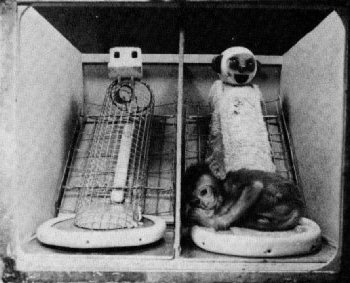
Psychologists believe that contact comfort forms the foundation for attachments. As far back as the 1950s, Harry Harlow’s studies demonstrated the importance of physical comfort. In his lab, young monkeys preferred snuggling with a soft, cloth-covered mannequin over a wire mannequin. Even when the wire mannequin provided food, the baby monkeys chose to cuddle with the mannequin that provided contact comfort.
Similarly, human babies need to feel safe and comforted. From this secure base, they develop the confidence interact with and explore their worlds.
John Bowlby
According to John Bowlby, who saw first-hand the effects of World War II on civilian populations, children need two things to develop a healthy attachment:
The caregiver must be responsive to the child’s physical, social, and emotional needs
The caregiver and child must engage in mutually enjoyable interactions
As Bowlby observed, even infants try to prevent separation from their parents. When such separation is imminent, babies cry, refuse a stranger’s comfort, and wait for the parent to return.
Erik Erikson
Eric Erikson, a contemporary of Harlow and Bowlby, theorized that human psychosocial development occurs in eight stages. Erikson was in agreement on the importance of a secure base, arguing that the most important goal of infancy was the development of a basic sense of trust in one’s caregivers. Infants are dependent and must rely on others to meet their basic physical needs as well as their needs for stimulation and comfort. A caregiver who consistently meets these needs instills a sense of trust in the world is a trustworthy place.
In 1982, Erikson concluded that a lack of this basic trust could contaminate all aspects of a person’s life and deprive the person of love and fellowship. For example, a premature infant who has to spend their first weeks in an incubator might not develop a strong bond with parents. A child born unwanted or with physical problems that make them less desirable to a parent is more likely to develop a mistrust of the world. Under these circumstances, the parent isn’t likely to provide what the child needs to develop trust. Not being able to trust others, even family and close friends, has profound effects in teens and adults.
Children who have not had ample physical and emotional attention are likely to develop emotional, social, and behavioral problems when they are older.
Lack of Contact Comfort
The human brain changes extensively during infancy. Children from deprived surroundings such as orphanages, show vastly different hormone levels than parent-raised children even beyond the baby years.
Human babies can actually die from lack of touch.
In the nineteenth century, most infants in orphanages and institutions in the United States died of marasmus (“wasting away”). In the 1930s, doctors called a child’s physical decline when separated from caregivers anaclitic depression or hospitalism. A survey of institutions in 1915 reported that the majority of children under age two who had died exhibited “failure to thrive” symptoms. The lack of touch and affection drastically decreased their ability to grow, maintain a healthy weight, and develop.
James Prescott (1971) found that deprivation of touch and movement contributed to later emotional problems. In cultures in which people were very physically affectionate towards infants, levels of adult aggression were relatively low. On the other hand, in cultures that did not encourage as much physical touch, level of adult aggression were higher.
Everyone Benefits!
Mental Benefits
Skin to skin contact benefits both the child and the parent. It reduces parental stress and depression.
According to an article at itspsychology.com, the benefits of contact comfort for adults are numerous. It can help to reduce stress and anxiety, regulate emotions, and increase the production of feel-good hormones. It can also help strengthen relationships and build trust between people. As mentioned earlier, infants who don’t have a foundation for trust have a much tougher time trusting as adults.
For those with mental health issues, such as anxiety and depression, physical contact can be an invaluable source of comfort and security, safety and connection. Research has shown that the physical touch of another person can help reduce feelings of fear, anger, and sadness.
When people are mourning a death or other loss, a typical response is to hug the person, or at least touch the person’s arm, hold hands, or offer a pat on the back.
In stressful situations (like a court or doctor’s office), you are likely to see people holding hands or leaning on the shoulder of a loved one while waiting. In times of heightened stress or fear, people unconsciously reach for comfort from those around them. Children who usually consider themselves too old for cuddles will climb on a parent’s lap. Siblings who otherwise don’t get along might hug or simply lean together. Even complete strangers often feel compelled to seek or offer a pat on the shoulder or hand on the back, as the situation dictates.
Physical Benefits
In addition, contact comfort can help speed up the healing process for physical wounds. For example, patients who are touched on the shoulder by nurses and other medical personnel heal faster. Other studies have shown that physical touch can help reduce pain and inflammation. This is because the body releases oxytocin and endorphins, which can help reduce stress and promote relaxation.
Touching can help strengthen relationships and build trust between people. Studies have shown that physical touch increase feelings of closeness and connection, and levels of trust and understanding.
As with infants, when adults are physically touched by another person, it can help us feel safe and connected. This can be especially helpful for those struggling with insecurity or feeling disconnected from their partner.
Make sure to give and receive physical affection regularly. This can be as simple as a hug or holding hands.
Take time to be intentional about physical contact with those you love. Make sure to focus on the connection and the feeling of being held or touched.
Try to be mindful of the effect that physical touch can have. Pay attention to how it makes you feel and how it can help create a deeper connection with those around you.
Make sure to establish boundaries around physical contact. Respect the wishes of those you touch and be aware of their comfort level.
Under a huge range of circumstances—you can imagine what those might be—an adult’s needs for physical closeness and touch just aren’t satisfied. Those people might decide to find a professional cuddler (or cuddlist). You can hire a professional cuddle-buddy for $60-$100 per hour for non-sexual hugs and cuddles. Both people remain fully clothed. The permissible touching is clearly delineated—much like when getting a massage in the U.S.
Bottom Line: Non-violent physical touch is comforting, and beneficial in many ways. Contact comfort is a good thing!
Surveys and studies in developed countries around the world have investigated the relationship between age and happiness. Psychologists measure happiness by looking at “emotional well-being”—i.e., when a person consistently reports more positive than negative feelings. They have discovered that, by this measure, seniors are happier than their juniors, as a Scientific American study explains.
Better With Age
Plenty of recent research agrees. For example, the Journal of Clinical Psychiatry published a study in 2016, in which researchers analyzed data collected from a random sample of 1,546 people from ages 21 to 99 in San Diego.
Older people were physically more disabled and had more cognitive impairment than younger ones—the natural deterioration of aging—but in mental health, the advantage flipped. People in their 20s and 30s reported having the highest levels of depression, anxiety, and stress. They also report the lowest levels of happiness, satisfaction and wellbeing.
Older people, surprisingly, were the happiest, as Mandy Oaklander writes in Time.
The U Shape of Happiness
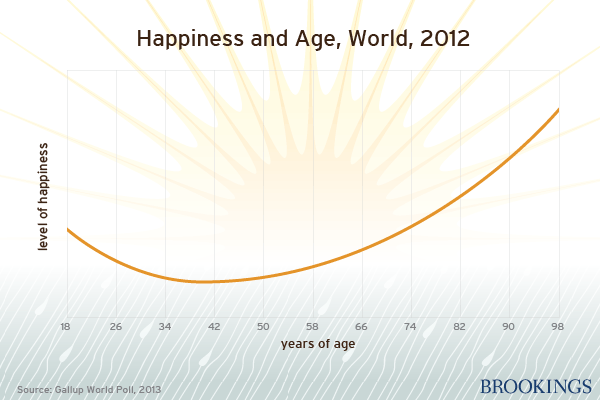
Yew-Kwang Ng, an economist at Monash University in Australia, compared research from the past twenty years in his 2021 paper “Age and Happiness.” He found that overall happiness throughout life tends to follow a U shape. Younger children are generally fairly happy; the beginning of adolescence coincides with a decline in “subjective well-being.” Yew-Kwang Ng theorizes that this may result from changes in sleep patterns adolescents experience.
After a period of low happiness in middle age (roughly ages 40 to 65), the majority of people begin to feel an uptick in overall happiness later in life. Over time, this upward trend plateaus again, and reported happiness levels don’t reach the same heights as those from earlier ages. An Australian study found that many people experience another decline in happiness in the last years of their lives.
The following chart illustrates this relationship, starting during teen years.
Elders’ happiness has to do with what Laura Carstensen, professor of psychology and director of the Stanford Center on Longevity calls emotional wisdom.
“As we age, our time horizons grow shorter and our goals change. When we recognize that we don’t have all the time in the world, we see our priorities most clearly. We take less notice of trivial matters. We savor life. We’re more appreciative, more open to reconciliation. We invest in more emotionally important parts of life, and life gets better, so we’re happier day-to-day.”
Close relationships, more than money or fame, are what keep people happy throughout their lives. Those ties protect people from life’s discontents and help to delay mental and physical decline. Research at Harvard suggests these ties are better predictors of long and happy lives than social class, IQ, or even genes. That finding proved true across the board among both Harvard men and the inner-city participants.
I’ve taken these recommendations from the Fortune article cited above.
1. Maintain Friendships
Consider spending more or all your time with people who make you feel good. Try to maintain friendships with people in a range of ages, some older, some younger, some the same age. Esty suggests that we all need three different types of friends to really thrive:
Neighbors and others who provide practical help when we need it, such as running errands or watching pets.
Confidants with whom we can have open, honest communication about feelings or inner conflicts. We shouldn’t have to hide major parts of ourselves from good friends.
Friends who are fun to be with and with whom we can do fun activities.
2. Ask for Help
Although help is often easier to give than to receive, “The best relationships are two-way—where we give and receive help,” says Waldinger.
For midlifers thinking about retirement, “… many people aren’t certain what they want to do with their lives after retirement. They need to have a sense of purpose,” Esty says. “It works well to form a small group of friends who meet on a regular basis to discuss the issues in their lives and talk about their dreams for the future.”
3. Take on Responsibility
Many people consider shedding personal responsibilities and work duties to be one of the perks of growing older. However, this gift may come with unexpected pitfalls.
As Esty explains, a study of elderly residents in a nursing home showed that “more choices, more decision-making possibilities, and more responsibility raise the level of happiness in older people.” The key, she says, is to take on only responsibilities that you enjoy and to say no to other requests.
It may help to take on responsibilities related to an activity you enjoy. You might join a book club and offer to host meetings. If you enjoy a sport, consider becoming involved in a local league or even coaching a youth team.
And one more happy note: Although studies find that satisfaction with life and positive emotions decline with mobility problems and the deaths of spouses and other loved ones, research by Anthony Bardo of the University of Kentucky and Scott Lynch of Duke University shows that the cognitive impairment that can accompany aging does not preclude happiness and a high quality of life.
Note: age and happiness are correlated; however,getting older doesn’t cause happiness. We can all name several causes of (un)happiness, everything from not having enough money to an unsatisfying marriage/partnership. But all that is beyond the scope of this blog.
Bottom Line: Nobody will be happy all of the time, but we can expect to be more happy than not with age, especially if we lay a good foundation.
“Self-soothing” refers to behaviors people use to regulate their emotional state by themselves. It’s a strategy used to regain equilibrium after an upsetting event, or when facing a stressful situation. (For example, when a child’s parents argue, or an older person has to make a public presentation.)
Self-soothing behaviors are often apparent early in life, and are calming or comforting for a child or adolescent. Infants, for example, may be seen repeatedly sucking fingers or thumbs, hugging a toy or blanket. These habits may continue for years.
Self-soothing behaviors are repetitive/habitual in nature—and are often not consciously applied. Do you touch your hair, twist a ring, straighten your tie, etc.? Noticing when you engage in such behaviors can help you recognize mildly tense or stressful situations. It’s another form of self-awareness.
Following a shock, a traumatic or upsetting event, all people need soothing. In these more intense situations, two common self-soothing behaviors include reaching for an alcoholic drink or a tub of ice cream or other emotional eating. However—as you no doubt know—these kinds of self-soothing behaviors can cause additional problems.
Several self-soothing behaviors can lead to other problems: binge-watching TV, compulsive gaming, or internet surfing. Many superheroes have unhealthy self-soothing behaviors, including Jessica Jones and Iron Man.
If possible, just change the environment for a few minutes. Go outside and focus on greenery or find a soothing indoor space with a pleasant view or ambiance.
(The origin of the “Green Room” in theaters may stem from Elizabethan actors resting “on the green” between scenes to calm their eyes and their nerves. As the wavelength of green light causes the least strain on the human eye, those Elizabethans may have been on to something!)
2. Stretch for Five Minutes to Move Any Blocked Energy
For best results, try to put your chin between your heels.
Often, after upsetting news or a shock, our bodies respond by freezing and energy gets blocked. A few simple trunk twists, neck rotations, or bends at the hip to touch the toes can help shift stagnant energy.
(Even without a shock, our bodies tend to store tension and stress in our backs, shoulders, and necks. Stretching these areas can prevent headaches and improve circulation.)
3. Take a Warm Shower or Bath
Treat yourself with soothing body wash or bubbles and a fresh, soft towel afterward.
(For best results, do not use overly hot water and avoid scrubbing too hard. If hot water is not available, you can turn to oil, smoke, some types of mud, or simple cold water to achieve cleanliness and promote peace of mind.)
4. Soothing Imagery
Find soothing things to look at such as a burning candle, soft lights, pictures of loved ones, favorite places, or perhaps some framed inspirational resilience quotes or affirmations.
(The color green is most restful to the human eye, but some evidence suggests that other colors may have a calming effect on stress and mood. According to the principles of chromotherapy, surrounding oneself with blue, purple, or white can calm, soothe, and relax the central nervous system.)
Listen to favorite tracks that have a calming effect or one of the many relaxing music videos for stress relief that are available online.
(Harp music in particular has a soothing effect on the body as well as the mind. Research has shown that listening to harp music improves pain management, blood pressure, and heart rate regularity.)
6. Soothing Smells
Create pleasant smells by using an essential oil diffuser, scented candle, or incense. Also, try using scented hand lotion.
(The most soothing scent of all!)
7. Self-Compassion
Speak compassionately to yourself aloud. Talk to yourself like a good friend would. Give yourself the grace to be off-balance and the space to just be as you are for a while.
Soothing Every Sense
When people experience high levels of stress or discomfort often, some therapists recommend making a self-soothing box that includes objects or reminders of how to soothe all five senses:
Comforting smells such as scented candles, essential oils, or body lotion
Pleasant tastes such as herbal teas or favorite snacks
Soothing things to touch such as a favorite sweater, wrap, or stress ball
Comforting sights such as photos of loved ones, pets, or favorite places
Soothing sounds such as a favorite piece of music or guided meditation track
Most of us are familiar with people soothing other people—a hug, a back-rub, a shoulder to cry on. During COVID, when interpersonal soothing was less available, researchers studied the benefits of self-touching (Dreisoerner et al., 2021). They found that both self-soothing touch (in this study, most participants chose to place their right hand on their heart and their left on their abdomen while focusing on the rising and falling of their breath) and receiving a hug from another person were equally effective at lowering stress levels.
When adults are distressed, it’s difficult to regulate potentially disruptive emotions like anger, fear, and sadness, especially in a public space such as the workplace. If you want to explore self-soothing further, just look online. You will find lists of techniques from 8 to 100. Surely there’s something there for everyone.
Bottom Line: Everyone experiences distress of various sorts and at various levels. Self-soothing is a life skill worth learning.
So, you look in the mirror and mutter, “What you see is what you get.” But is it? Not really. We have at least two, and I would argue three, faces.
In 1932, W.H. Auden wrote, “Private faces in public places are wiser and nicer/ Than public faces in private places.” (Dedication, The Orators)
PUBLIC
A noble hound, loyal and fierce! (Picture by fotomorgana)
A public face refers to the image an individual, a company, political party, or any institution presents to outsiders or the public in general. As with any image, a public face is composed of a mixture of reality, myth, and lie. For purposes of this blog, I’ll focus on individuals.
For people, the face shown to the world everyday is projected by eye contact, tone of voice, a smile or an expressionless face. It’s who we are in the daily commute sitting next to someone on the train, standing in the checkout line, walking in a botanical garden. Some people talk, are cordial or engaging, while others avoid engaging and stay heads down.
The Japanese refer to this as omote (表), literally surface or exterior. Omote governs etiquette in public, personal grooming, patterns of speech, and even levels of social conformity.
PERSONAL
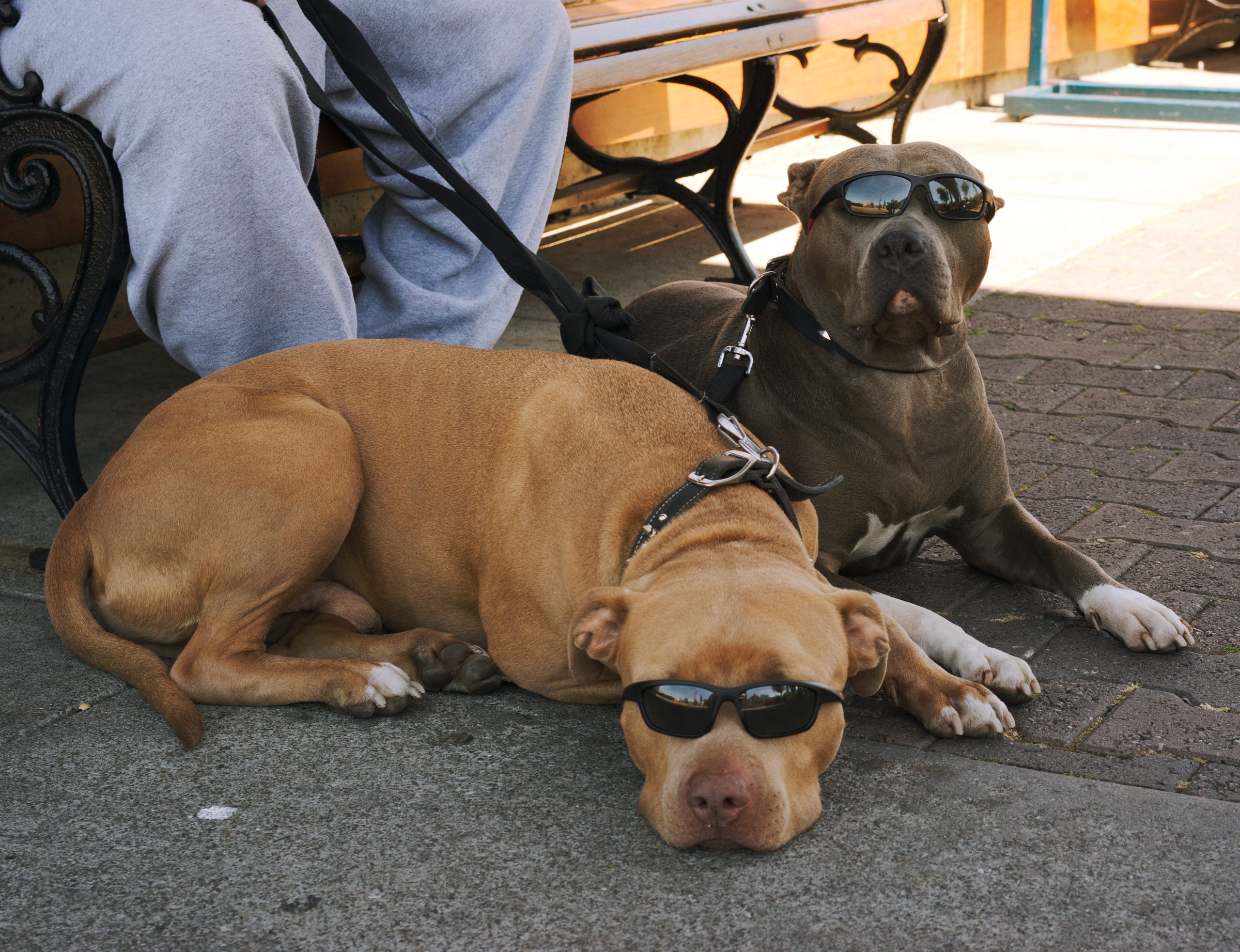
Just a couple of buddies chilling…. (Picture by Dllu)
Our personal face is the one we show to the people we know and care about the most. We might feel comfortable enough to show it to our family, friends, maybe some co-workers. Depending on the level of these relationships and how deep or trusting they are, one’s personal face—via behavior—can display character, integrity, and even flaws.
PRIVATE
A private face isn’t shown to anyone—at least not willingly—with the possible exception of a therapist—and is sometimes unclear even to the individual. It is the most honest and truest reflection of who we are. It includes our deepest and darkest secrets. It carries weight because it includes raw experiences from the past, things we are ashamed of, self-doubt, fears and insecurities, things people cover up and pretend don’t exist. Although private, this face influences decisions, relationships, and how one lives life each day.
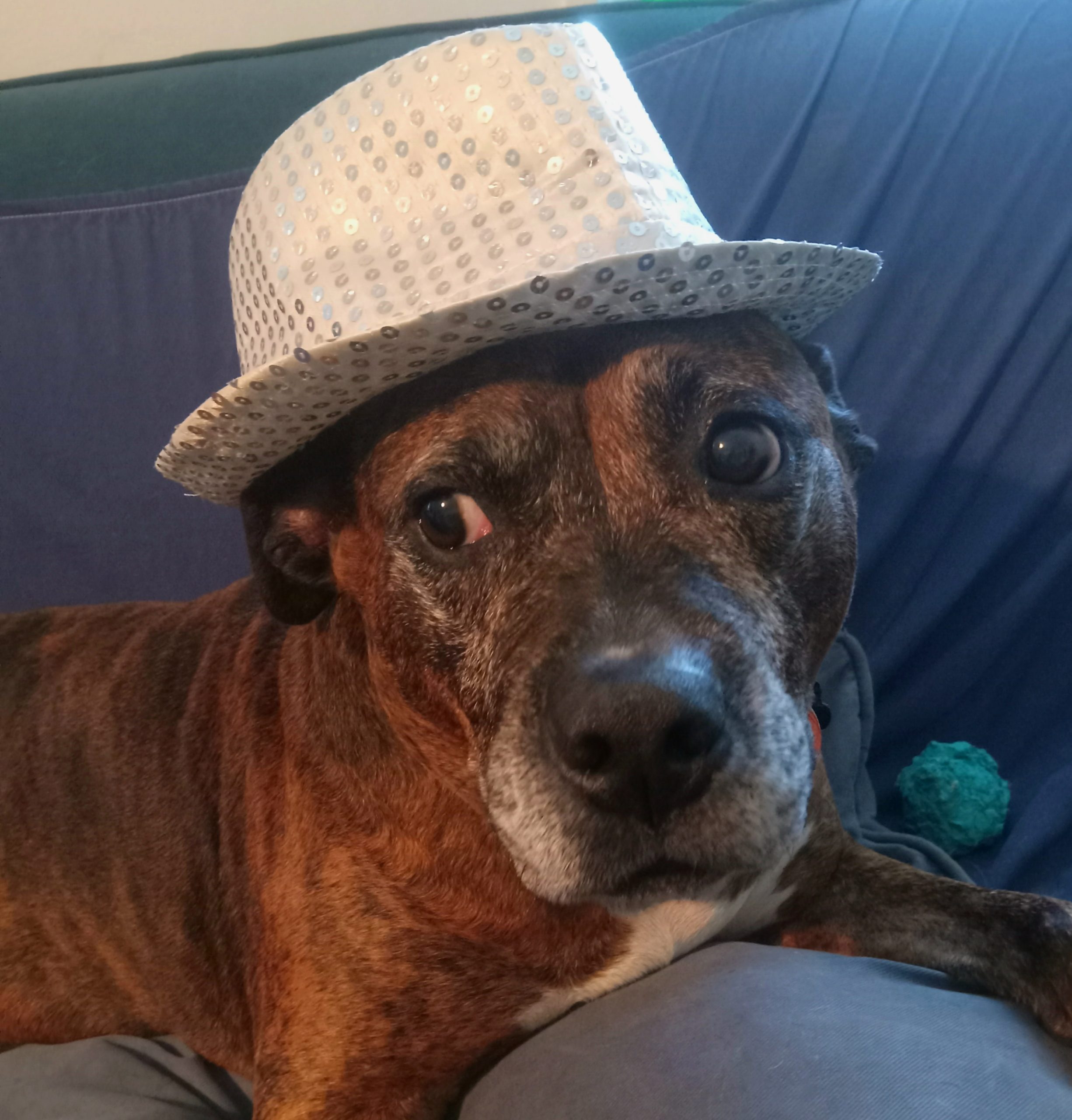
Derpity derpity derp…
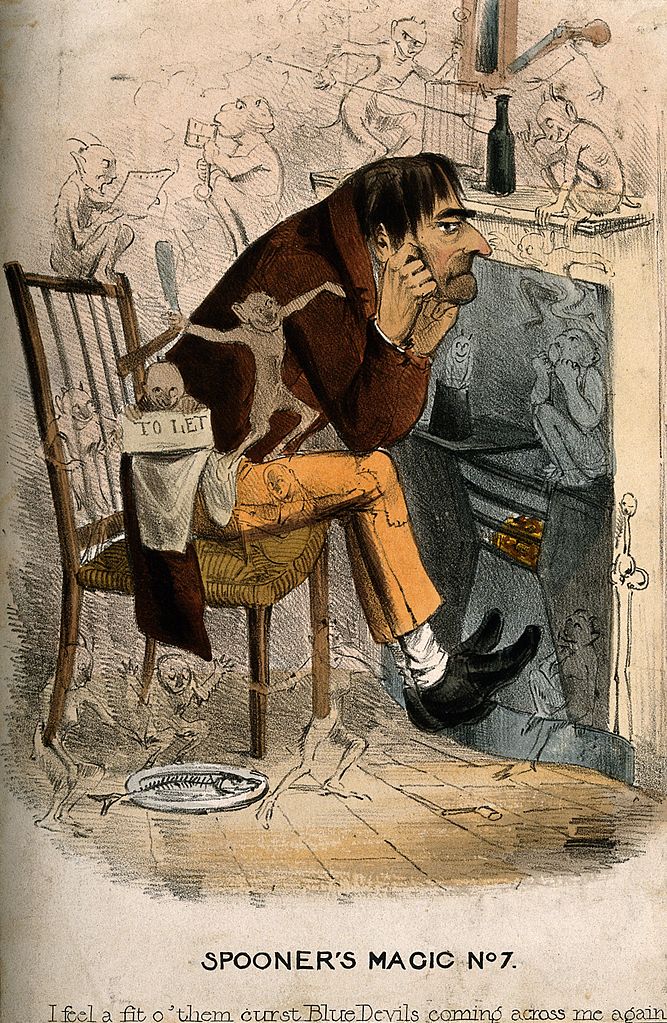
“A wretched man with an approaching depression; represented by encroaching little devils“ W. Spooner, c. 1930, Wellcome Library no. 11872i
In Japan, ura (裏, literally bottom or rear) is the opposite of omote. It is the reality behind the omote image with the myth and lies of the image stripped away. Ura is the wrangling behind the scenes, the tensions among family members, or the outpourings of a drunk on a late night commuter train. Omote usually covers ura. Unexpectedly exposing ura comes with a sort of danger. There might be great damage or embarrassment or both because the unreality of the omote is revealed for all to see.
Similarly, when one reveals one’s private self, sometimes even to family or friends, the results can be hurtful, ending, or damaging relationships. Etiquette, or manners, are an aspect of public and personal faces which the individual puts on. Although what is appropriate differs in these two instances—generally looser and less formal in our personal lives—nevertheless it is extremely important.
MODERN FACES
“It’s the latest style! You wouldn’t understand.”
Times change, of course. Check a bit of classic Miss Manners advice for enlightenment and laughs. Though her overall message of using etiquette to show respect for others has remained the same, her prescribed methods have certainly changed over time.
Then, too, there are fads, and what is cool becomes rad becomes bad, etc. Content and acceptable public behavior, not just words, change with time.
John Broening (of the New English Review) makes the case that the breakdown between public and private is everywhere, across all types of media.
“The private face has made itself at home in the public place, loudly sharing intimate details on its cell for everyone within earshot to share, wearing its laundry day clothes every day of the week, eating and drinking with an admirable lumpen unselfconsciousness that Rousseau would have approved of, treating the entire world as its living room.”
Some people don’t even wear swimsuits at the beach! (Picture by Nikki Attree)
“In the world of literature, the private face has dominated the public space for some time now. What is called either the personal memoir, or misery lit, or—my favorite—autopathography, has become the defining genre of our time. Autopathography can be about addiction to alcohol (Happy Hours, Dry), pills (Pillhead), heroin (Permanent Midnight) or meth (Tweaked). There are also misery-lit memoirs on anorexia (Wasted), depression (Prozac Nation), bipolar disorder (An Unquiet Mind) and sex addiction (Love Sick, The Surrender).”
But even in these times of show and tell all, and do it publicly, I believe there’s always some secret corner of oneself that is not/cannot be shared with anyone.
Bottom Line: What are your public, personal, and private faces? How different are they?
Today’s guest blog post was written by Kathleen Corcoran.
Mental health and cognitive decline can have a serious impact on a person’s ability to maintain regular hygiene and grooming routines. At the same time, changes or lack of regular hygiene and grooming routines can seriously impact a person’s mental health. Today is World Mental Health Day, a good day to consider how hygiene and mental health are woven together.
You’ve probably heard the saying “cleanliness is next to godliness” at some point. Many people subconsciously apply this moral judgement to the personal hygiene of those around them. As society’s standards of hygiene and grooming have changed over the centuries, so have the judgements on those who do not meet those standards.
This can have deleterious impacts on people already struggling with mental health or cognitive ability. Social stigma can deter people from reaching out for help, whether to mention their struggle to a therapist or ask for physical assistance. Self-consciousness about grooming standards may then contribute to isolation and loneliness.
“Unfortunately, at both ends of the spectrum, a lack of personal hygiene or an obsession with personal hygiene create additional stress and anxiety for the sufferer,” says Carla Manly, PhD, a clinical psychologist and author.
When mental health issues get in the way of regular showering or bathing, many people turn to alternative methods of maintaining hygiene.
Depression
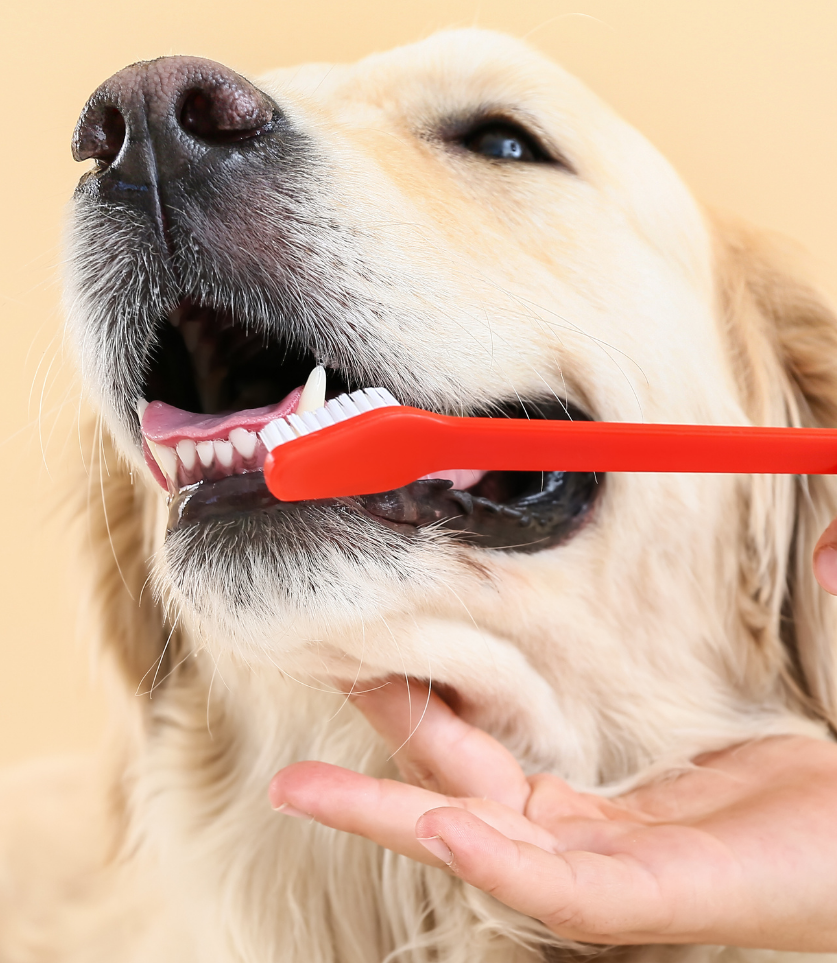
Maybe chicken flavored toothpaste makes oral hygiene easier?
The fatigue and lack of motivation that often characterize depression make otherwise routine tasks monumentally impossible. Executive dysfunction can be paralyzing in the face of all the minor steps needed to shower or bathe.
Additionally, depression sometimes causes sensory issues that make bathing physically painful. The temperature changes, scents, or lights can be overwhelming for someone with severe depression.
Instead of traditional bathing practices, those with mental health challenges might turn to alternative methods of hygiene. Dry shampoo, mouthwash, and wipes can enable someone with depression to stay clean when everything is difficult.
Alzheimers and Dementia
People with cognitive decline issues, such as Alzheimer’s and dementia, often have trouble maintaining regular bathing and grooming routines. They may bathe repeatedly, forgetting that they have already done so. Or they may forget to bathe entirely. Alternatively, they may have physical issues that prevent them from bathing. Issues with regular bathing can lead to health complications, such as skin infections or gum disease.
People who can live alone may be able to address this by setting alarms or writing reminders. Maintaining a routine for daily grooming and hygiene can help it become automatic rather than something to remember. Adjustments like hose attachments and rubber mats can remove some of the physical impediments to routine bathing.
People in advanced stages of dementia may require help from caregivers to perform regular bathing and grooming.
Nurses, caregivers, and health aides can help patients who need more assistance with bathing. Keeping up habits established over the course of a lifetime can make assisted bathing easier. Bathing at the same time, using the same products or scents, might make a patient less agitated. Focusing on hygiene rather than grooming can help eliminate stress.
Ablutophobia
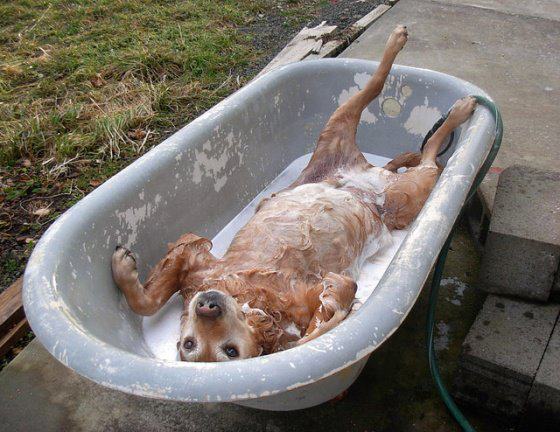
Humans with ablutophobia are not alone in the animal kingdom.
Many young children fear taking a bath or shower, but they generally grow out of it as they become more familiar with the routine or associate the bath with pleasant sensations. However, some people develop ablutophobia, an extreme fear of bathing or washing. This may be due to a sensory processing disorder, a traumatic experience, changes in brain function, or an underlying anxiety disorder.
When people with ablutophobia try to perform routine hygiene or grooming rituals, they may experience the symptoms of a panic attack or dissociation.
In the short term, people with ablutophobia can use alternative forms of cleaning, such as wipes or dry shampoo. However, treating ablutophobia will ultimately require psychotherapy or medication, which may allow a patient to uncover and address an underlying cause.
PTSD and Anxiety Disorders
Both post traumatic stress disorder (PTSD) and anxiety disorders can cause difficulties with regular standards of cleanliness. These mental health challenges can cause people to go to either extreme of hygiene and grooming. Sometimes people avoid bathing entirely because it triggers traumatic memories or causes a spike in anxiety. At other times, people fixate on removing dirt, performing ritualized grooming behaviors, controlling elements of their environment, or perfecting their outward appearance.
At either extreme, a person will likely feel an increased sense of social stigma and isolation, compounding the pain from mental illness.
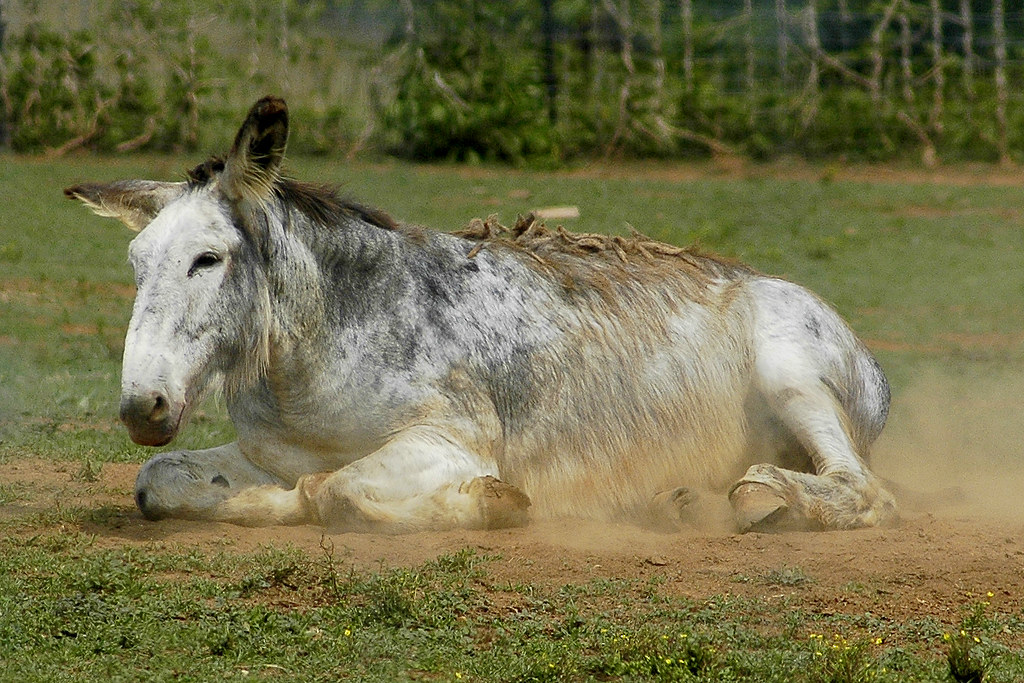
Some people may prefer to take dust baths rather than water baths.
Short-term solutions may include changing the method of bathing, such as cleaning body parts individually to limit vulnerability, or switching from baths to showers. Changes to the bathing environment may also help, such as removing or installing locks on doors, turning down the temperature of the water heater in the home, or removing harsh scrubbers.
“The ultimate goals with such behaviors are to reduce a sense of being violated and ‘dirty’ and to increase a sense of safety,” says Carla Manly.
Schizophrenia
People struggling with schizophrenia often have difficulty maintaining regular routines and lose interest in daily activities. This includes habits like showering, brushing teeth, or changing into clean clothes.
Additionally, many medications to treat schizophrenia have side effects that contribute to problems with hygiene or grooming. Antipsychotic drugs often cause dry mouth, which can lead to gum disease, cavities, and halitosis. These medicines may also cause incontinence, which makes maintaining hygiene very difficult.
Some people find written reminders or alarms helpful to encourage regular hygiene or grooming rituals. Adjusting medications or dosages may help with side effects. Chewing gum and drinking lots of water can help with dry mouth, improving oral hygiene.
Bottom Line: Hygiene and grooming serve two different functions in our lives. When mental health issues make everything more difficult, focus on hygiene rather than grooming.