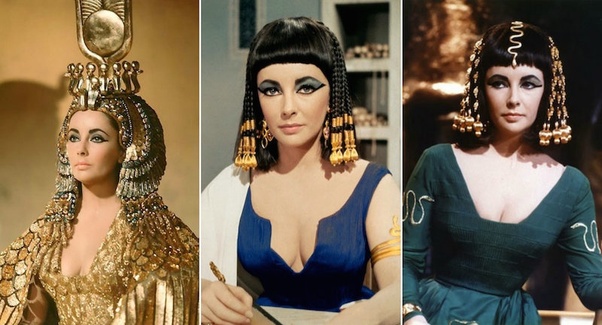
Elizabeth Taylor as Cleopatra in the 1963 film of the same name
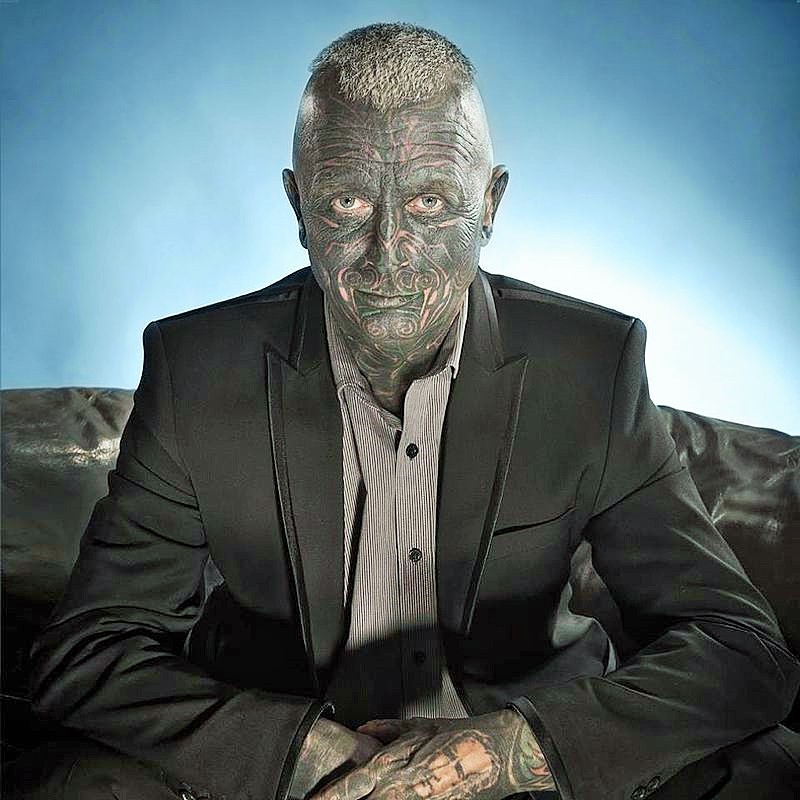
Vladimir Franz, a candidate for the Czech Presidency in 2013
Last week, a woman said to me (approximately), “People think permanent make-up is a new thing, but Cleopatra’s famous eyes were tattooed on. Soot was applied with knives.” I’d never heard such a thing, and I’ve actually been to Egypt. I always assumed her face was painted. As with anything that pricks my curiosity, I googled it. Lo and behold, it’s a much more complicated topic than I ever considered.
Basically, any time an indelible design is created by inserting pigment under the epidermis, the result is a tattoo. Tattooing has been practiced in various cultures over centuries.
How Many Centuries?
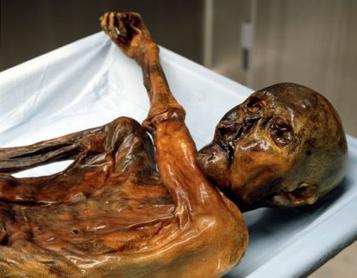
Ötzi the Iceman
As for bodily evidence of tattoos, for a long time the oldest known examples were Egyptian mummies, dated about 2000 BCE. However, Ötzi the Iceman, found on the Italian-Australian border in 1991, pushed that back. His mummified skin has at least 60 tattoos and was carbon dated a thousand years earlier, making him 5,200 years old.
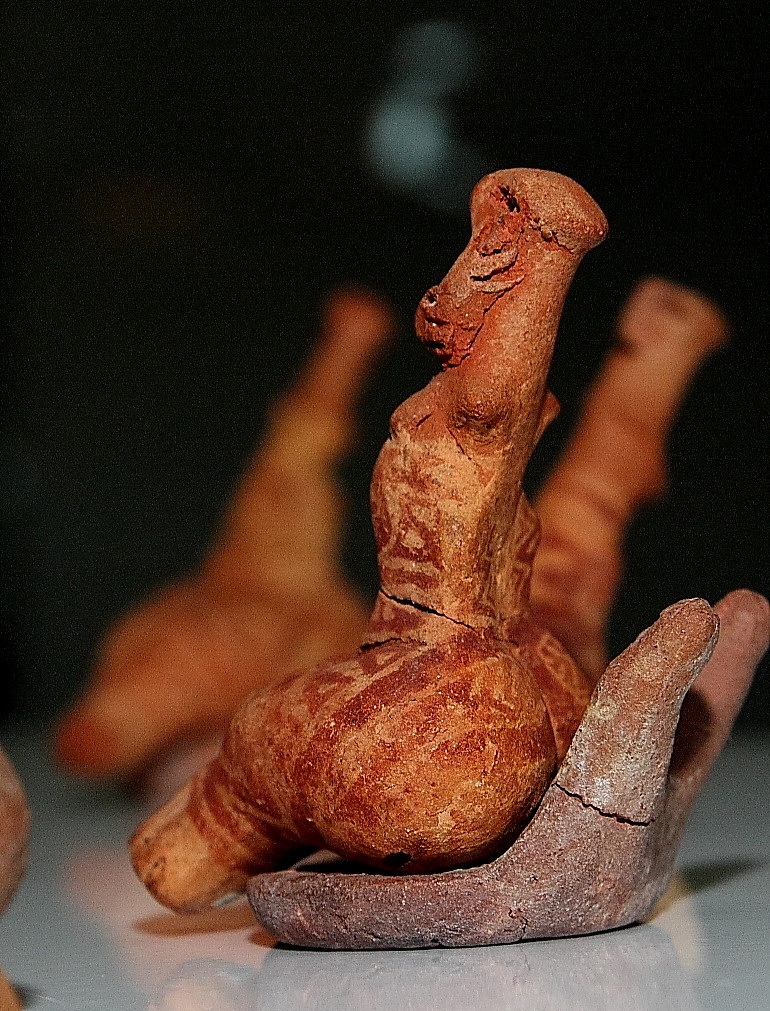
This pre-Cucuteni figurine was made sometime between 4900 and 4750 BCE, with what look like evidence of cultural tattoos.
If one considers non-body evidence such as figurines and and paintings, then tattooing was practiced in Egypt in the Predynastic period, around 3100 BCE.
Tattooing Was Everywhere
Moana was also the first Disney film to feature characters with tattoos!
Tätowierung Inuitfrau, an Inuit woman painted by Jens Peder Hart Hansen, circa 1654
The word tattoo started as the Polynesian word ta, meaning to strike. It evolved into the Tahitian word tatatau, meaning to mark something. As seen in the animated film Moana, these traditional tattoos were applied by means of rapidly striking a bamboo rod to drive an inked thorn into the skin.
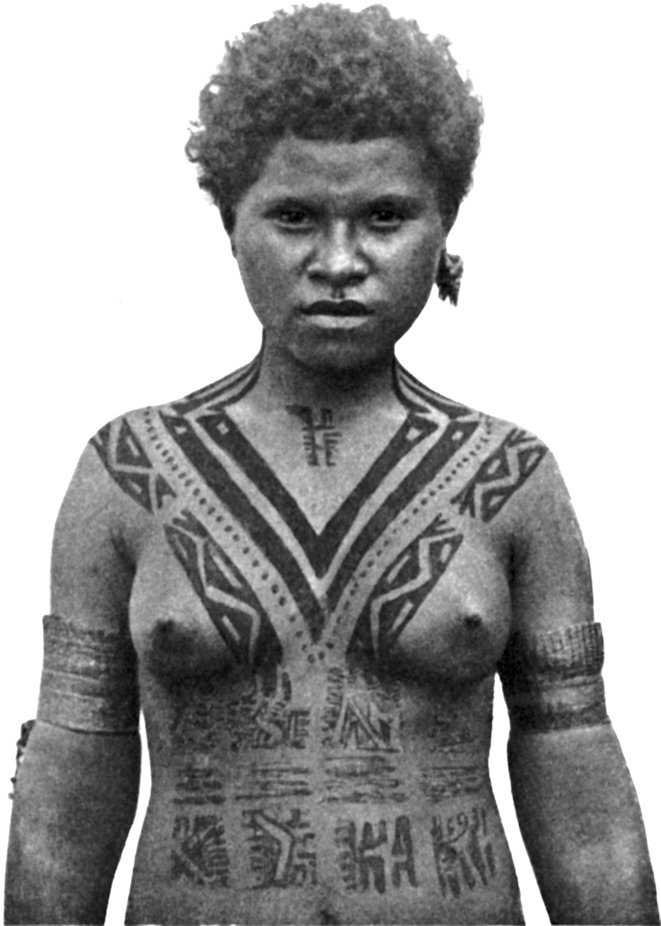
A marriageable girl of the Koita people of Papua New Guinea, who had new tattoos added every year since she was five years old
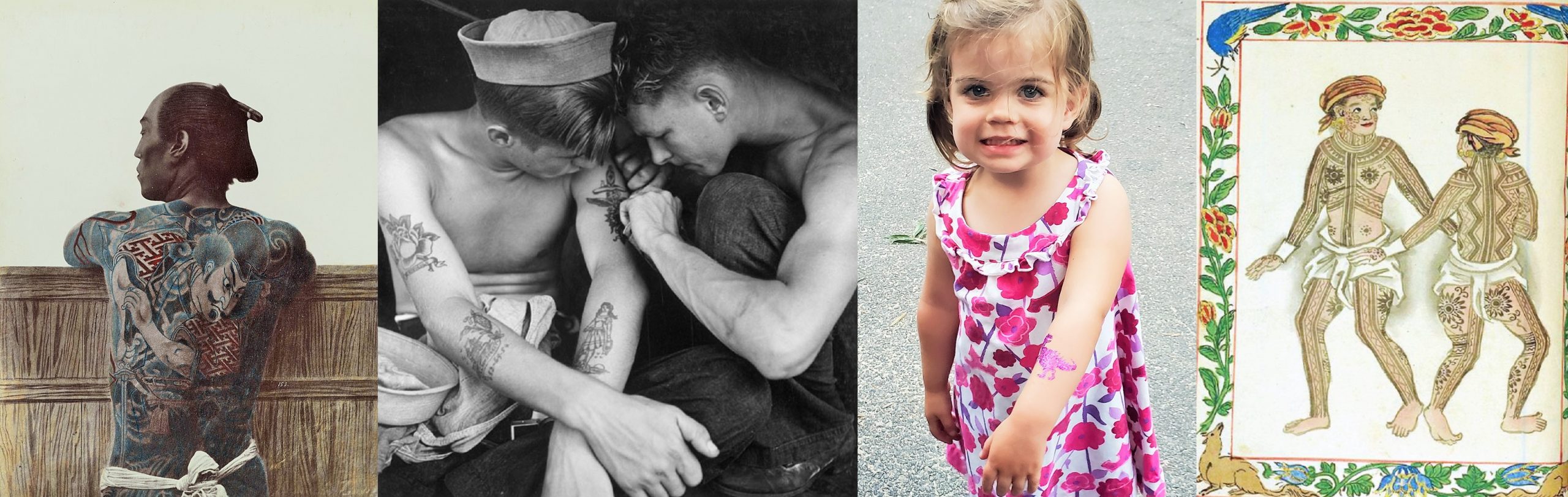
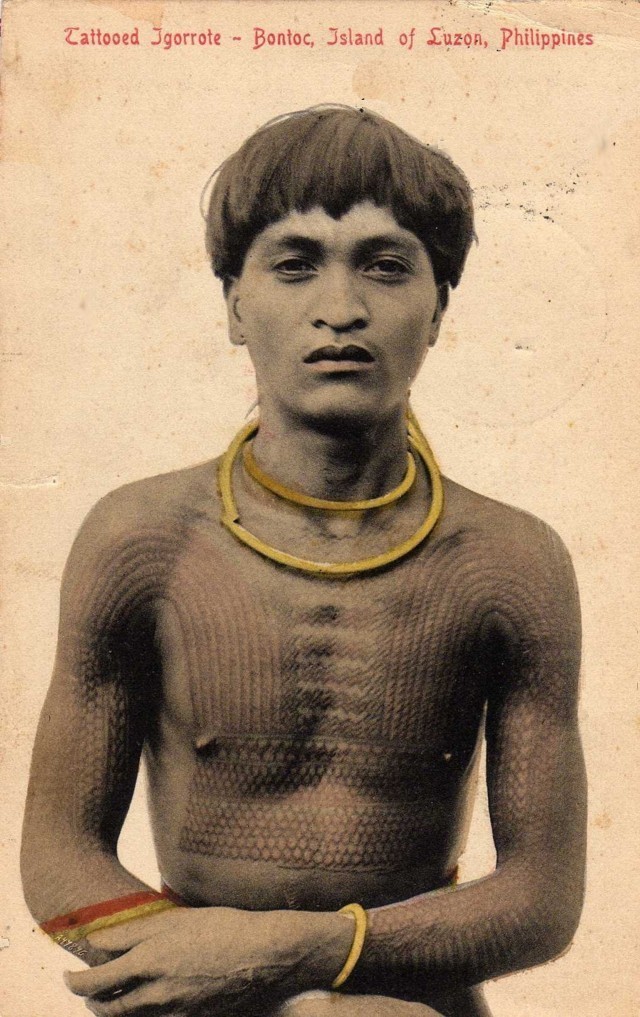
In nearly every ancient culture, such as those in Greece and Rome to Native Americans, Japanese, sub-Saharan African, Australian Aboriginal, and Innuit, evidence has shown that tattooing was and most modern cultures tattoos were and are everywhere.
But Why Tattoo?
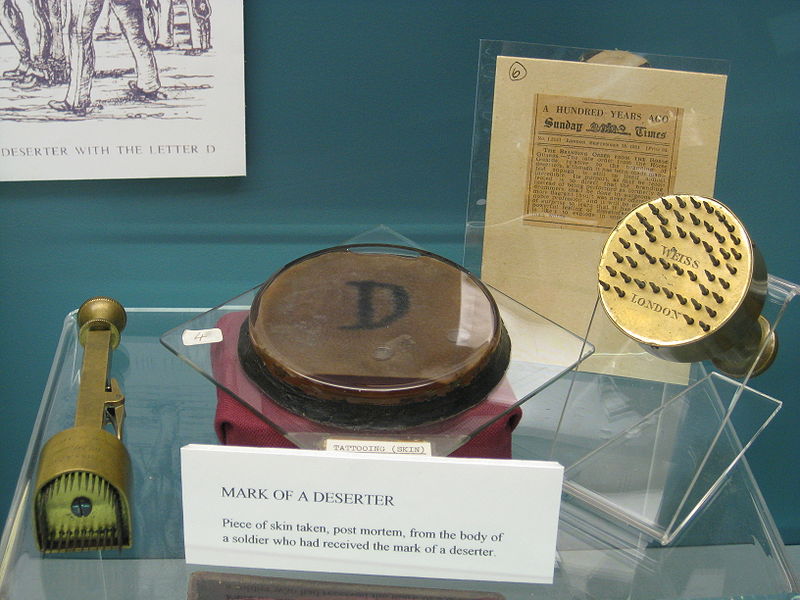
Preserved skin of a British military deserter, tattooed with a D
A cultic symbol dedicating the wearer to a specific god or belief
For example, Amunet was a priestess of the goddess Hathor.
As a brand signifying servitude/slavery/shame
For example adulterers marked with an A, T for thief, etc.
As a professional identification (e.g., prostitute, priestess)
As a permanent amulet seeking protection
Sailors having anchor tattoos or miners with lamps tattooed on their foreheads were trying to bring good luck.
The patterns of tattoos on Egyptian women’s abdomens and thighs seem to have been for fertility and for protection during pregnancy and childbirth.
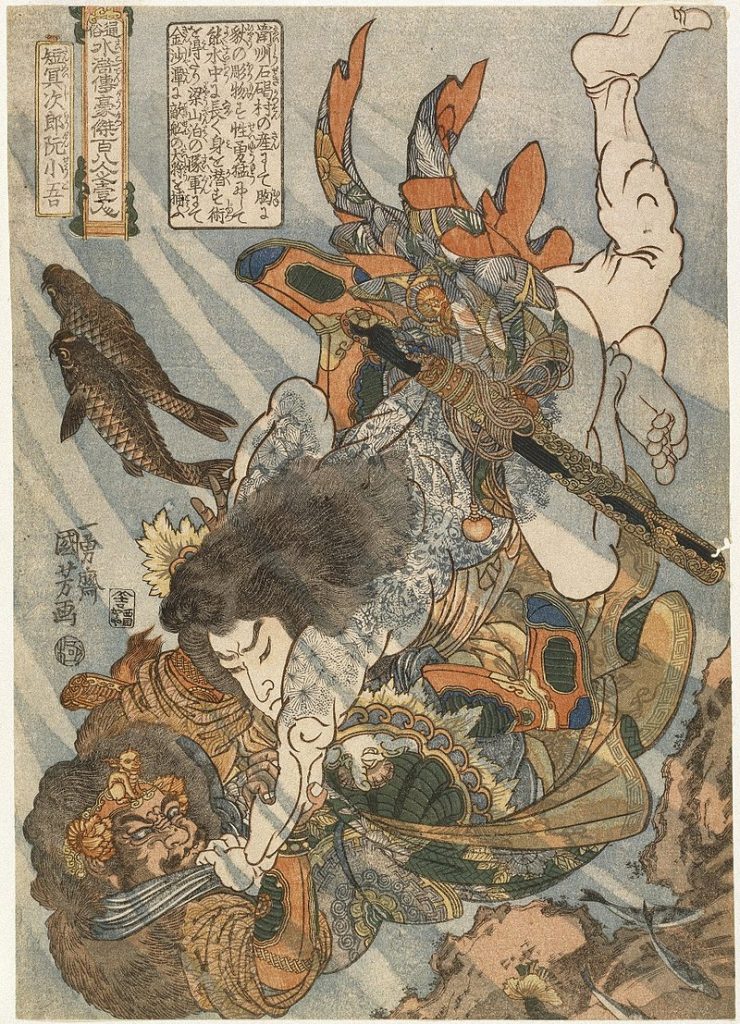
Japanese prostitute of the Kansei Era (circa 1888) painted by Tsukiok Yoshitoshi
Tattoos may have been a therapeutic tool, similar to acupuncture.
The Ice Man had tattoos on his hands, lower back, and feet in areas that showed signs of stress damage.
As a declaration of group membership (think Marines, college fraternities, or Nazis)
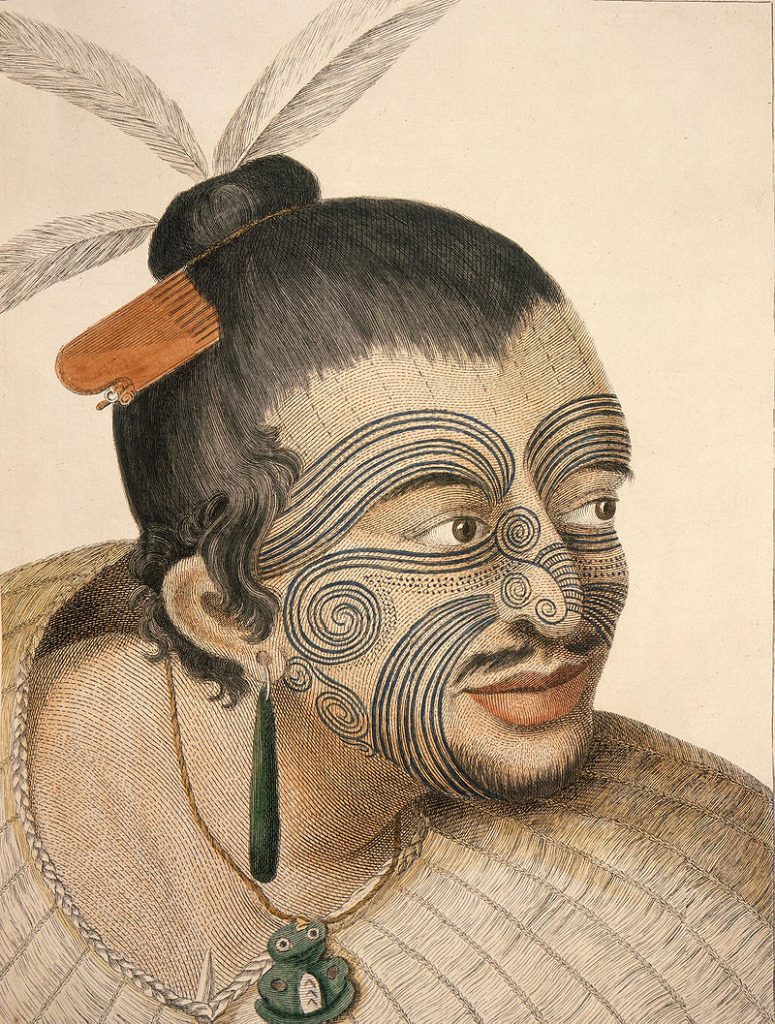
As a visible means of intimidating the enemy (think Maori warriors) or showing bravery or success in battle
As a personal symbol of a meaningful event (e.g., birth of a child) or belief (sayings of Jesus or Buddha), or tribute to a beloved person
And, of course, as pure body art/decoration
Tattoos used by gang members and prisoners are often extraordinarily complex and will be covered in a separate blog post of their own.
The tattoos used by the Nazis in concentration camps were a form of branding, not in the same class as voluntary markings prisoners have chosen to put on their bodies for various reasons.
Today, plastic surgeons often work with tattoo artists to cover scars, burns, the effects of alopecia or vitiligo.
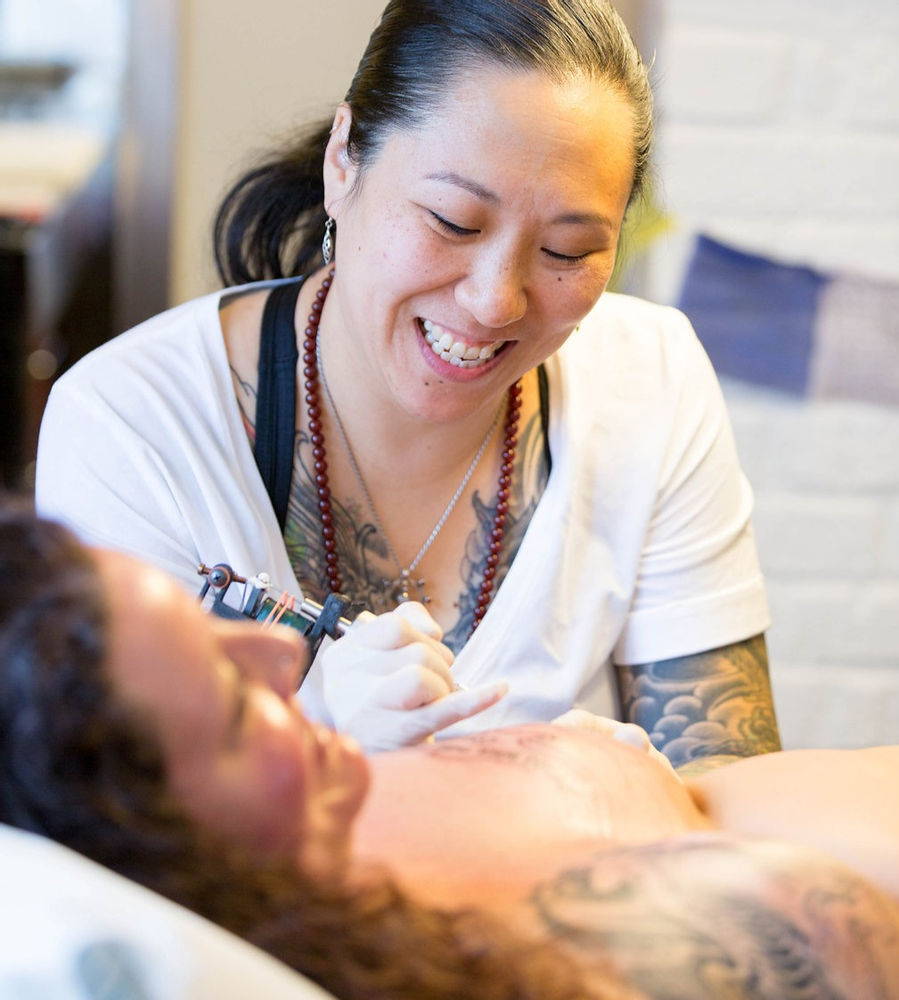
Many women get tattoos on their breasts after cancer surgery.
Along with her other artistic work, Amy Black (Pink Ink Fund) is a tattoo artist well known in the Richmond, VA area, for creating realistic-looking nipples or other art for women who have had cancer surgery.
Permanent Make-Up, the Daughter of General Tattooing
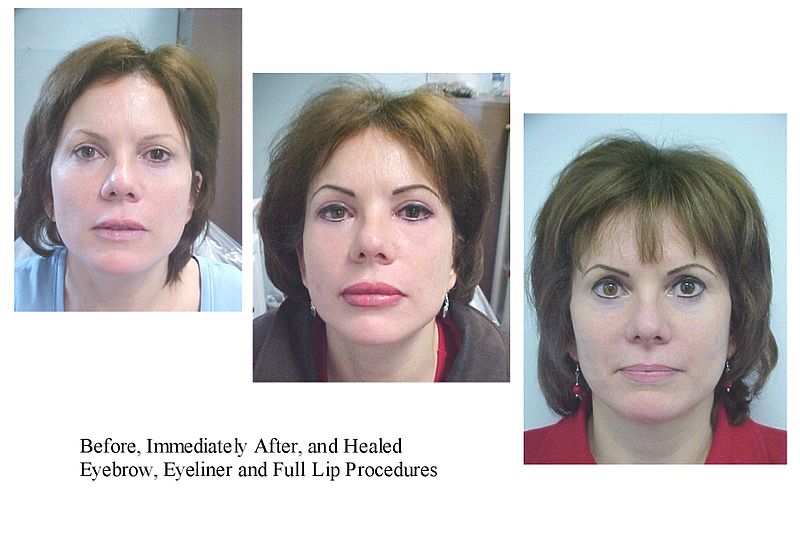
The goal is to look natural, or like externally applied makeup, enhancing colors on the face, lips, eyebrows, and eyelids. This type of tattooing (also known as cosmetic tattooing, dermapigmentation, micropigmentation) is also older than one might think.
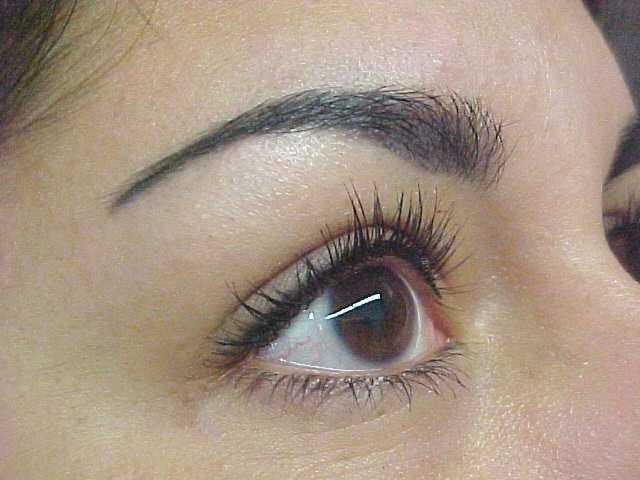
Tattooed Eyebrows and Eyeliner
The first documented permanent makeup artist was Sutherland MacDonald, in the U.K. in 1902! His specialty was “all-year-round delicate pink complexion”—i.e., rouged cheeks. By the 1920s, it was popular in the U.S. The tattooist George Burchett wrote about beauty salons that tattooed women using vegetable dyes without their knowledge under the rise of “complexion treatment.” (Personally, I can only imagine that those women were willfully ignorant, given that tattooing is generally an uncomfortable procedure with visible aftereffects, such as temporary scabbing.)
Mrs. M Stevens Wagner, 1907
As with all matters of fashion, popularity varies over time. During the 1960s and 1970s, the popularity of tattoos took a sharp uptick. According to one article (the guardian.com) in 2016, a US poll revealed that 29% of people had a tattoo, up from 21% four years earlier. Of people born between 1982 and 2004, 47% have at least one.
General Considerations
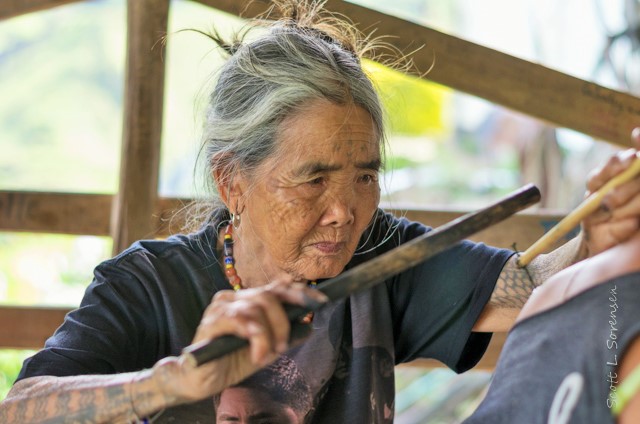
Whang-od Oggay is the last Mambabatok (master practitioner of the traditional Kalinga tattoo method) of the Butbut people of the Philippines.
Do multiple tattoos create a different impression from a single one? And if so, in what way? What difference does the reason for the tattoo make? What about the nature/content of the tattoo?
But Back to Cleopatra
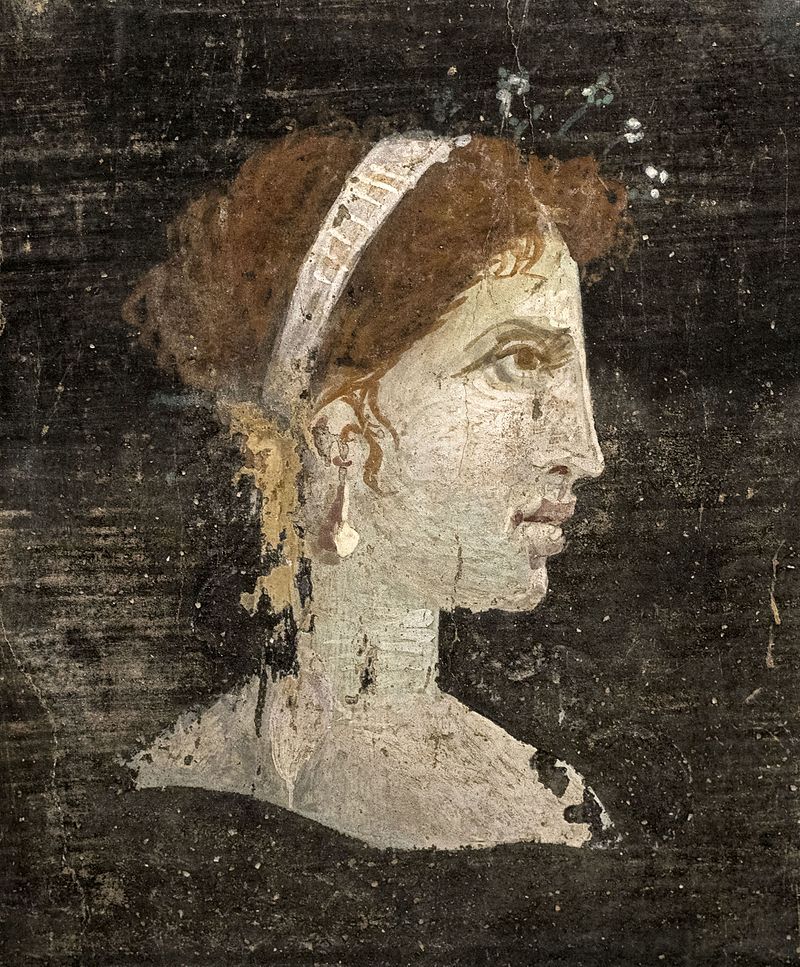
Retrato Femenino: Fresco of a woman believed to be Cleopatra from a villa in Roman Herculaneum, circa 1st Century CE
According to accepted academic evidence, in Egypt—unlike most cultures—only women were tattooed. The tattoos most often seemed related to fertility and childbirth, or identifying the woman as high ranking. However, I found nothing specific to Cleopatra’s face. Bummer.
Bottom Line
Permanent body decoration serves psychological and/or practical purposes for the tattooed one. In addition, body decorations send out a range of social signals—intentional or not. Think about it.
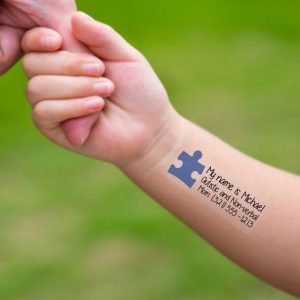
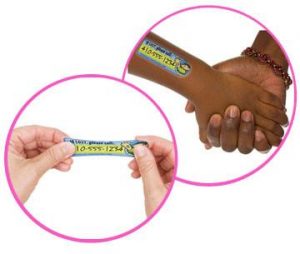
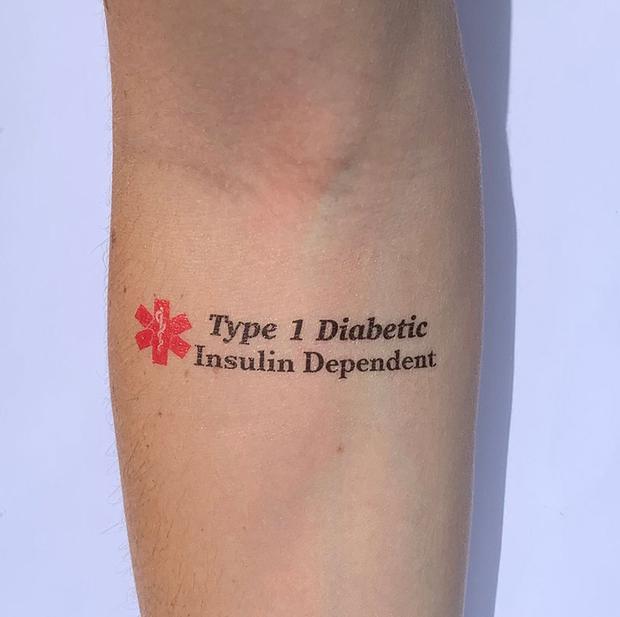
The opposite might be temporary tattoos. Several companies, including SafetyTat, Child Safety Store, TempToo, Pimp My Diabetes, and independent creators on Etsy, offer safety designs with children’s allergy information, medical conditions, or guardians’ contact information. Childcare and law enforcement experts have encouraged caregivers to use these tattoos for crowded events, children with life-threatening illnesses or allergies, and children unable to speak or memorize phone numbers.
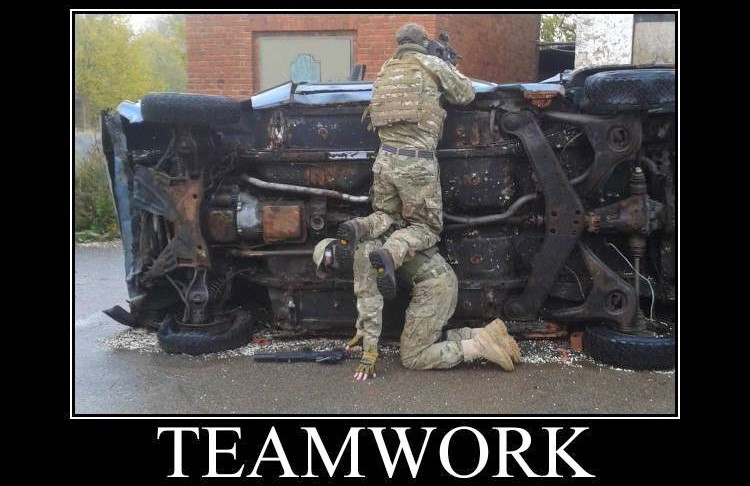
In last week’s blog, I discussed nom de guerre, literally war name, that in current French usage has come to mean any pseudonym. Like any other in-group, soldiers develop their own jargon—which often lingers in subsequent slang, often with a morphed meaning.
This blog will showcase just a few such words/phrases.
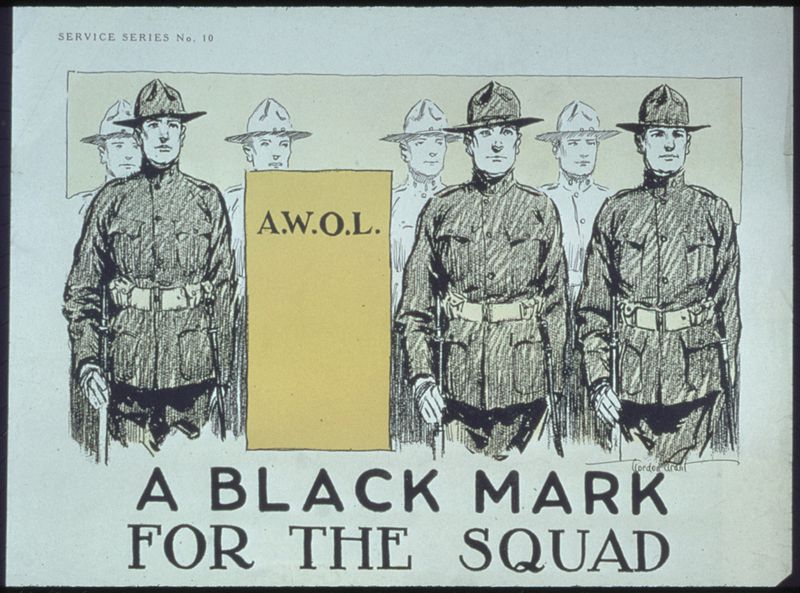
A.W.O.L. (Absent Without Leave) Even before the Civil War, this meant a soldier who has gone off without permission. Now business executives, teenagers, spouses—virtually anyone—can be AWOL, pronounced A-wall. The unexplained or unexcused absence is often trivial.
S.N.A.F.U. (Status Normal: All F*cked Up) The Marines are usually credited with this particular acronym, which originated during World War II. There is some evidence that radio operators came up with the phrase to give humorous meaning to a commonly used set of letters from coded messages. In modern usage, this acronym has essentially the same meaning, lacking only the cynical mocking of commanding officers. (S.U.S.F.U. [Situation Unchained: Still F*cked Up] was coined as a follow-up, but it has largely fallen out of use.
F.U.B.A.R. had several variations of meaning, though “F*cked Up Beyond All Repair” pretty much covers it. Occasionally, it was defined as “F*cked Up By A**holes in the Rear” to express frustration with military command issuing orders from the comfort and safety of their offices well out of harm’s way. Like SNAFU, it originated as military slang during World War II, and it has retained its original meaning in modern slang.
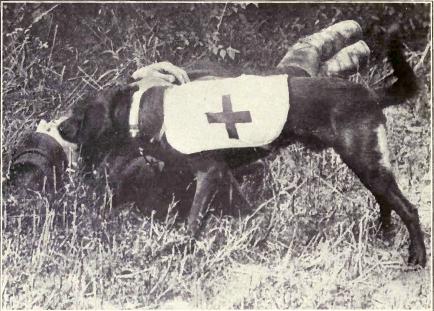
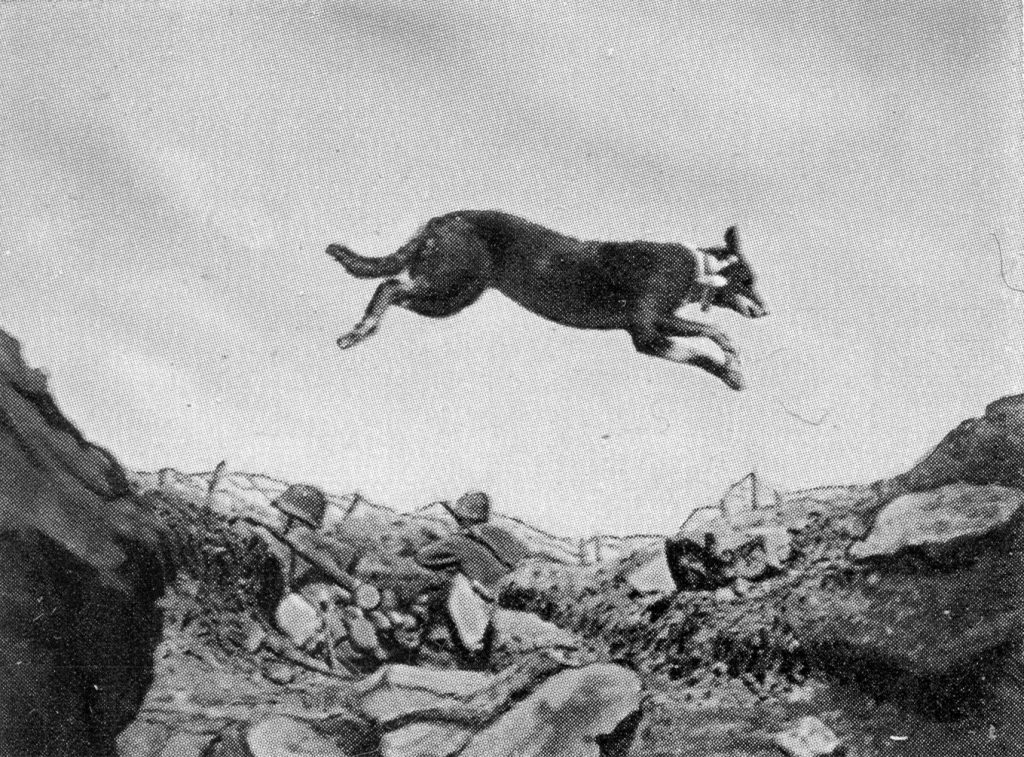
Ambulance Dogs in WWI were sent with medical supplies to find wounded soldiers who could not be otherwise reached. They were also called Mercy Dogs because, very often, all they could do was comfort the dying.
Basket case is used in a fairly lighthearted way today (often describing someone who repeatedly makes stupid mistakes, or who crumbles under pressure), but it has a strange history. Shortly after World War I, rumors circulated of multitudes of soldiers who had been so badly injured that they had to be carried from the battlefield in a barrow or basket, usually having lost all four of their limbs. This belief was so strong that it persists in the public imagination today despite direct evidence to the contrary. In 1919, the Surgeon General of the Army made a public statement that this was not the case, and only one quadruple amputee from the war is known to have survived. Ethelbert Christian lost all four limbs at the Battle of Vimy Ridge in 1917, but he learned how to walk on prosthetics and lived what appears to have been a full and happy life.
Booby-trap has been in use since the mid-19th century for a fairly harmless prank or practical joke. A “booby” was used in English slang to mean a stupid or gullible person as early as the late 17th century. But in WWI, it morphed into meaning an explosive device deliberately disguised as a harmless object. The English journalist Sir Philip Gibbs (1877-1962) said, “the enemy left … slow-working fuses and ‘booby-traps’ to blow a man to bits or blind him for life if he touched a harmless looking stick or opened the lid of a box, or stumbled over an old boot.”
As a nickname for body lice or head lice, cooties first appeared in trenches slang in 1915. It was presumably derived from the coot, a species of waterfowl known for being infested with lice and other parasites. Today it’s a children’s term for an imaginary germ or a repugnant quality transmitted by obnoxious or slovenly people.
In the 19th century, dingbat was used like thingamajig or whatchamacallit as a placeholder for something or someone whose real name the speaker couldn’t come up with at the moment. It came to be used for a clumsy or foolish person during the First World War, before morphing to mean shell-shocked, nervous, or mad. Now it’s used for a stupid or eccentric person.
In a Flap
Unflappable
In British English, “to be in a flap,” meaning “to be worried,” dates from 1916. It was originally a naval expression derived from the restless flapping of birds, but quickly spread into everyday English during the First World War. The adjective unflappable, meaning unflustered or imperturbable, calm in the face of crisis, appeared in the 1950s as a reference to the British Prime Minister Harold Macmillan.
Son of a Gun is generally held to originate as a euphemism for the child of a military father away on a lengthy deployment (and thus somewhat suspicious paternity). In current usage, it is an epithet similar to “son of a bitch,” with positive or negative meanings depending on the speaker.
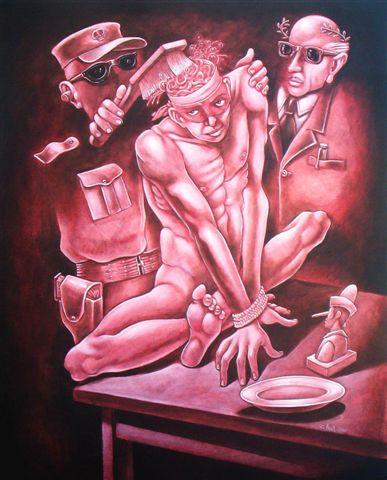
Brainwashing is a literal translation of the Chinese phrase xi nao, to wash the brain. During the Korean War, military reports estimated that 30% of American prisoners of war collaborated with their Korean and Chinese captors. To explain how this was possible, the media created the term brainwashing: systematic, intensive interrogation techniques and indoctrination procedures used by hostile forces to change allegiances of prisoners of war. The term gradually came to be used to label any change of opinion or allegiance—though it still implies unsavory, unfair, or unethical methods!
Skedaddle, meaning to run away or desert from military service, became popular during the American Civil War. Now it means to leave quickly or hurriedly, to run away. In true American fashion, the etymological origins of this word are a mix of many possible languages or perhaps none at all.
OMG(Oh My God!) is very often used as an abbreviation in electronic communication. The first appearance of OMG was in a sarcastic letter Lord Fisher, a retired Naval Admiral, sent to Winston Churchill in 1917, complaining about the number of knighthoods being bestowed upon Naval officers. It has become so common that people sometimes use it as an acronym when speaking aloud: “ohemgee!”
At the testing site on Bikini Atoll, 1945
Carved into the World War II Memorial in Washington, DC
From a tunnel in Richmond, VA in 2008
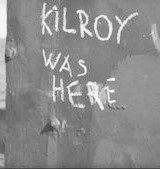
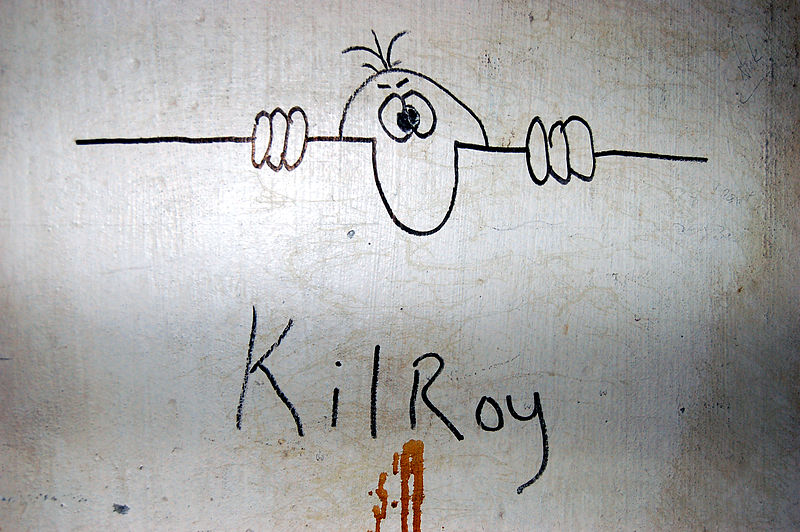
Kilroy or Kilroy Was Here might be considered a bit of visual military jargon that has made its way into common use. James Kilroy wrote his name on sections of Navy ships under construction to certify that he’d personally checked the welding. Because his name seemed to be everywhere, British and American service members took to writing it on every surface imaginable in Europe and Asia, most likely as good-luck totem. (The origins of the accompanying long-nosed, bald man are unknown, but it may have started as a British cartoon.) Kilroy is still one of the most commonly graffitied images in the world today, with or without his name.
Bottom line: Word meanings are fluid, so be aware of timeline and context in order to truly understand what the speaker is trying to communicate.
In 1716 France, a war name was mandatory, and in some ways was functionally similar to a dog tag for soldiers today. Soldiers were identified by their first name, family name, and war name. The war name was typically either the hometown or a particular physical or character trait. Examples would be Jean Louis of Paris, or Pierre Renaut the Red Haired One.
Some famous noms de guerre were chosen deliberately to the warlike, violent, or intimidating characteristics of the bearer. Pirates Captain Blackbeard and Montbard the Exterminator are examples of this.
Sometimes the alias replaced the family name.
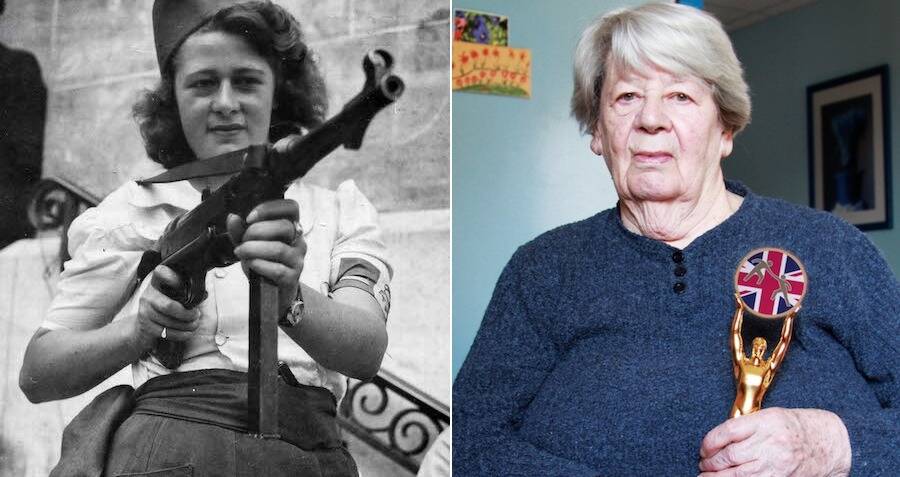
Simone Segouin used the nom de guerre Nicole Minet when fighting Nazi occupation of France.
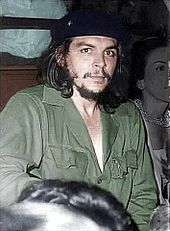
Ernesto Guevara was better known to his comrades as “el Che” or Che Guevara.
During Word War II, noms de guerre were adopted by the French Resistance for security, and to protect family members from the enemy. Today mercenaries, resistance fighters, terrorists, and guerrillas adopt war names for the same reason.
Nom de plume has retained its specific meaning of a writing name that differs from a given name. Over time, the usage of nom de guerre became much more general, such that in ordinary French today, it’s a generic descriptor, like pseudonym.
By now, soldiers and writers are a small minority of people who take different or additional names. And their reasons for doing so offer great plot points!
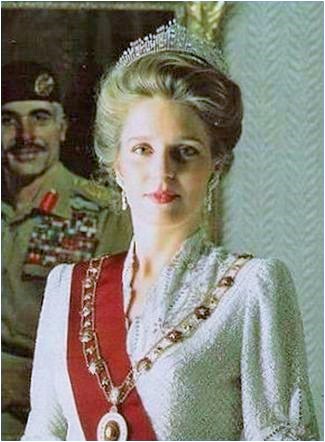
Members of a royal family often adopt a public name when they marry or assume the throne. Queen Noor of Jordan was born Lisa Najeeb Halaby.
Taking or keeping a professional name different from the family name
Personal identity
Wanting a less or more ethnic name
To fit gender identification
Simple dislike of one’s current name: too common, too outlandish, too juvenile, too likely to be embarrassing if mispronounced or misspelled, etc.
Marriage
Changing a name after divorce
Husband taking wife’s name
A couple choosing to combine parts of their names or hyphenate the two last names to make a new family name
Partners sharing a surname
Changing a child’s surname to mother’s, father’s, or adoptive parents’ name
Religious reasons
Criminal history or association
To be more or less closely associated with a famous (or infamous) relative
Political reasons
Entering witness protection program
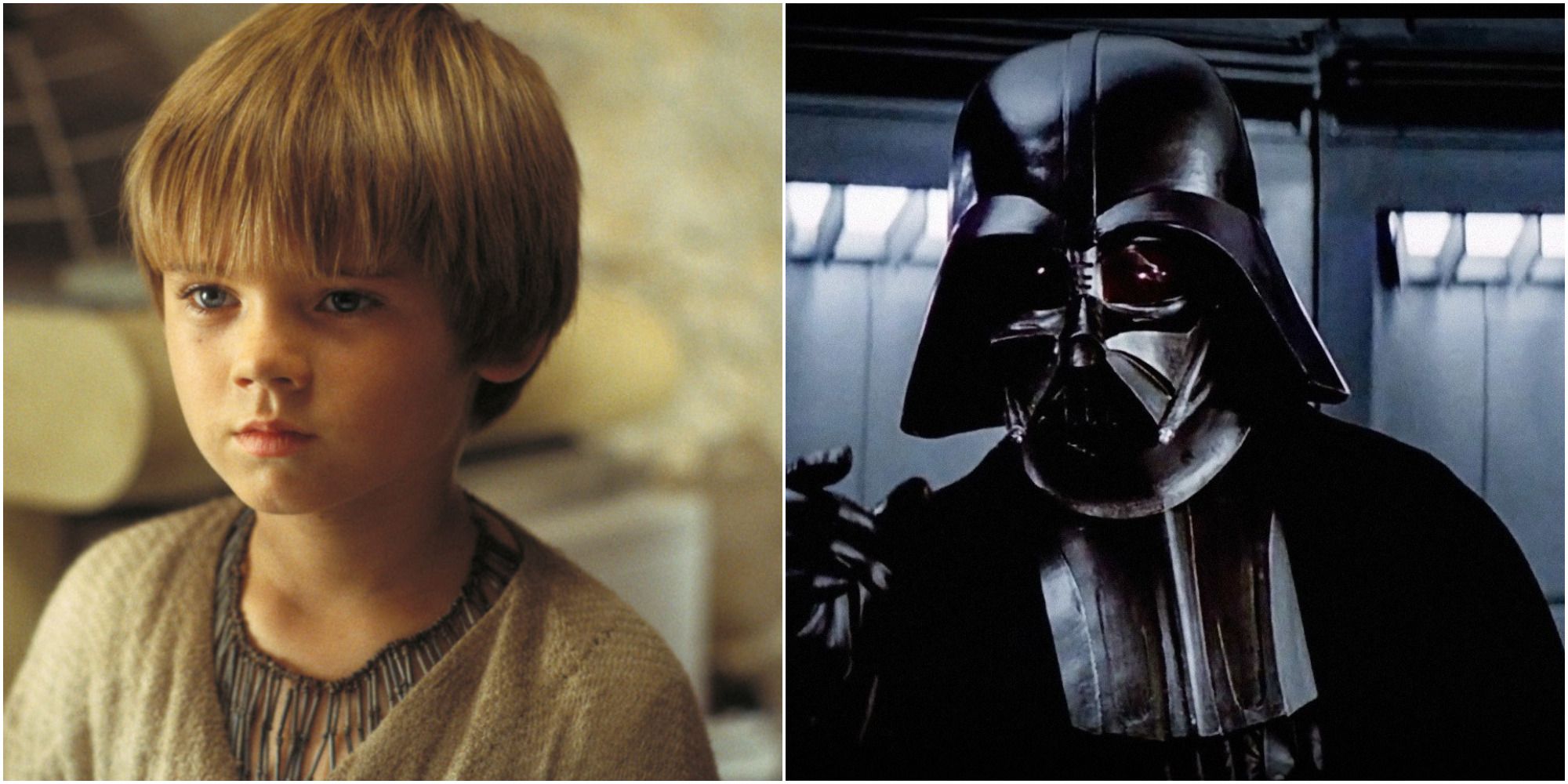
Sith Lords took new names upon completing their training, either given by their masters or chosen by the Force. Anakin Skywalker is better known by his Sith title: Darth Vader.
A small sample of well-known people who changed their names. If you don’t know why these people changed names, the info is available on line.
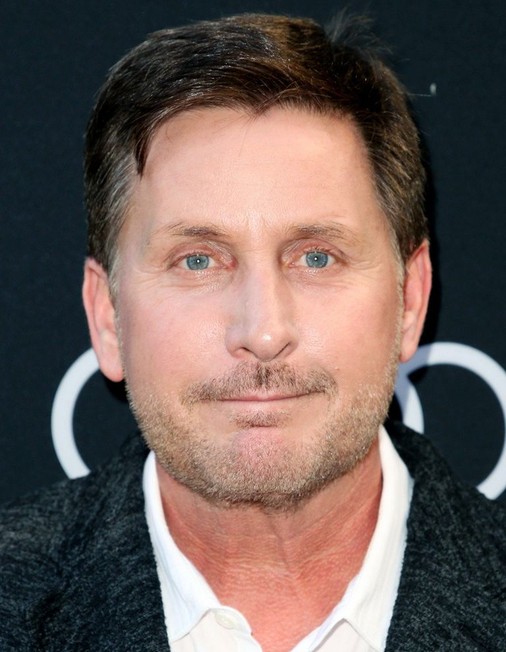
Emilio Estevez deliberately did not share his father’s nom de guerre because, as he said, he “didn’t want to ride into the business as ‘Martin Sheen’s son’.”
Harpo Marx had two name changes. Born Adolph, he changed his first name to to Arthur avoid anti-German in childhood; “Harpo” was bestowed as a nickname by a friend.
Many modern surnames have similar origins, derived from occupations, geographic origins, political or religious affiliations, or personal characteristics. Consider some of the most common family names in the world today.
Malcolm X also adopted a new name twice. He changed his surname from Little to X to signify the loss of his African heritage; after going on pilgrimage to Mecca, he took the Muslim name el-Hajj Malik el-Shabazz.
Wang (the most common, registered surname in the world) is the Chinese word for “king,” and there are historical records of several families adopting this surname for various reasons.
During intra-family arguments, descendants of a disgraced former royal often changed their family name to remind people of their origins.
Local custom sometimes meant that the family of whoever was in power at the time all be addressed as “Wang.”
Conquerors, usurpers, and invaders might change their family name to “Wang” as a way to validate their claims to the throne after the fact.
Entirely unrelated to their Chinese name-sharers, Scandinavian and Germanic families with the surname Wang are more likely to have been associated with a grassy meadow (vangr in Old Norse) or their presumably distinctive cheeks (wangl in Middle German).
Singh, the Sanskrit word for “lion” or “hero,” was used by Guru Gobind Singh (born Gobind Rai) to replace family names among all male Sikhs as a way of eliminating the caste system and demonstrating community equality.
Nguyễn was a powerful Vietnamese royal dynasty, and many families adopted the name to ally with the rulers.
Ahmed means “the highly praised one” and was one of the names of the Prophet Muhammed listed in the Quran. It was adopted by many families originally as a sign of religious devotion or of descending from the Prophet.
Devi is both the Sanskrit word for goddess and the mother goddess in the Hindu faith. Many women, especially in rural areas today, adopt Devi as a surname when they marry.
Silent film star Rudolph Valentino was born Rodolfo Alfonso Raffaello Pierre Filiberto Guglielmi di Valentina d’Antonguella. He changed it when he came to the US in 1913.
Many of the most common surnames in the US are the result of emancipation, immigration, or assimilation.
Former slaves were often assigned a surname shortly after Emancipation. This was often the name of a former owner, but it might also be a trade, a defining characteristic, a local landmark, a parent’s first name, or any other surname chosen by the individual. According to the 2000 Census, 90% of Americans with the surname Washington are of African descent.
Immigrants coming through Ellis Island and Angel Island did not (as myth would have us believe) have their names changed by confused or lazy immigration officials. However, it was not uncommon for recent immigrants to the US to change their surname to one that was easier to spell with the English alphabet or to one less likely to attract anti-immigrant biases.
Changing surnames was a means of removing identity and forcing assimilation of people already living in America before Europeans. People were assigned names, often at random, as part of the effort to break up nations and outlaw traditional identification.
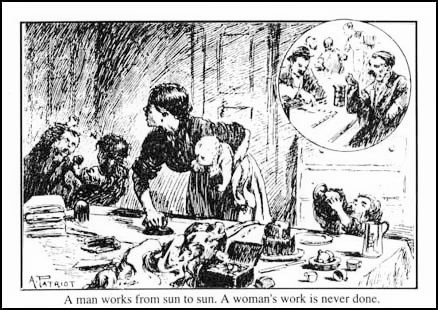
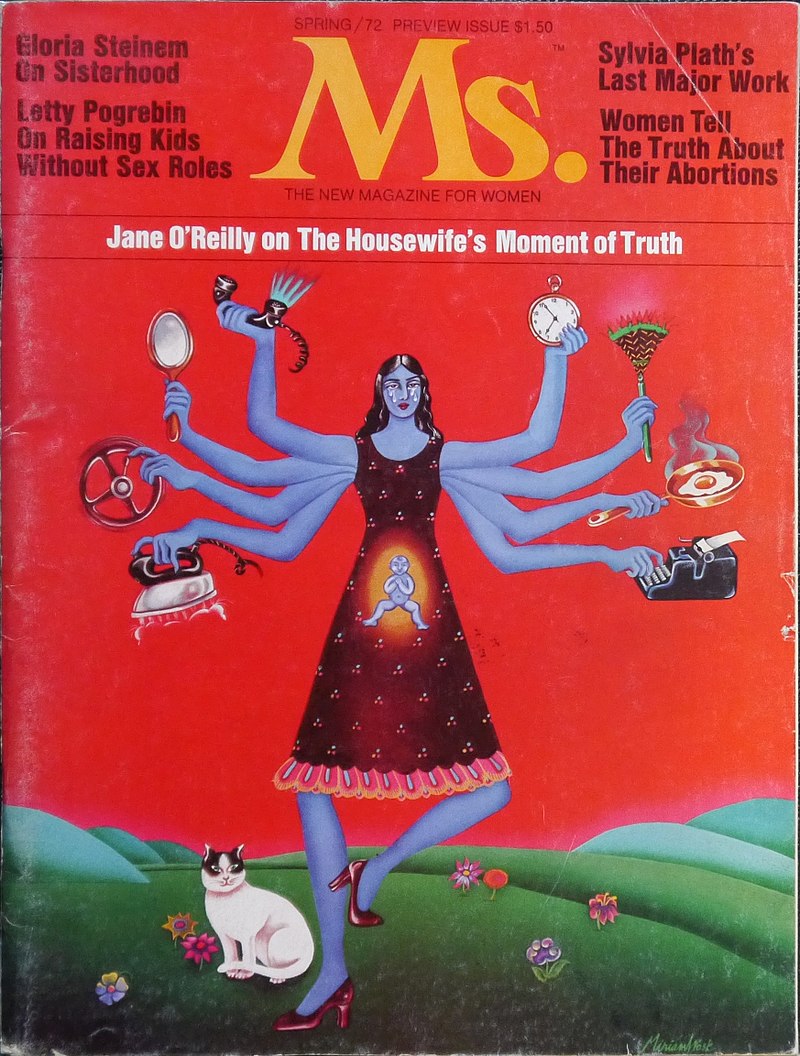
First the rant: When I started researching this blog, all I found was a history of paid employment. I’m not alone in bemoaning the fact that women’s household contributions, care for household members, kitchen gardens, work on family farms, etc. is largely discounted, and vastly undervalued!
“A man works from sun to sun. A woman’s work is never done.”
According to Investopedia, in 2019, Salary.com put a dollar value on the work of a stay-at-home-parent. Depending on the size of the house, family, pets, and numerous other conditions, a stay-at-home parent may work upwards of 96 hours per week, providing services worth a median annual salary of $178,201!
Analysis from Oxfam in 2020 reported on stay-at-home women (who still outnumber men) doing unpaid labor in the U.S. Using minimum wage per hour for its calculations, their unpaid labor in 2019 was worth $1.5 trillion.
Unfortunately, no matter how valuable the unpaid labor, it remains unpaid. When women enter the paid labor force, the job is typically in addition to the unpaid labor.
In 2018, 57.1 percent of all women participated in the labor force. This was about the same as the 57.0 percent who participated in 2017, and about 3 percentage points below the peak of 60.0 percent in 1999.
In 2019, there were 76,852,000 women aged 16 and over in the labor force, representing close to half (47.0%) of the total labor force. 57.4% of women participated in the labor force, compared to 69.2% of men.
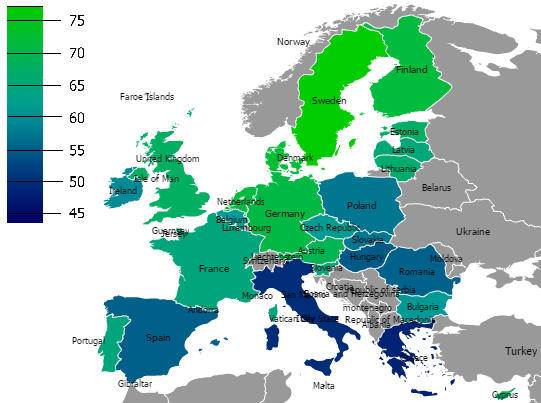
Percent of women aged 20-62 in the workforce in the European Union (2011)
Women are now making 83% of what men earn for the same job. (The gap is even wider for women of African or Latin American heritage.) This isn’t a perfect number, but it is improving — thanks to women in the workforce.
By striving to obtain more education, women have a better chance of finding jobs, getting better opportunities and entering fields that were previously male-dominated.
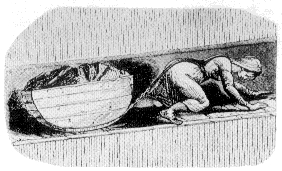
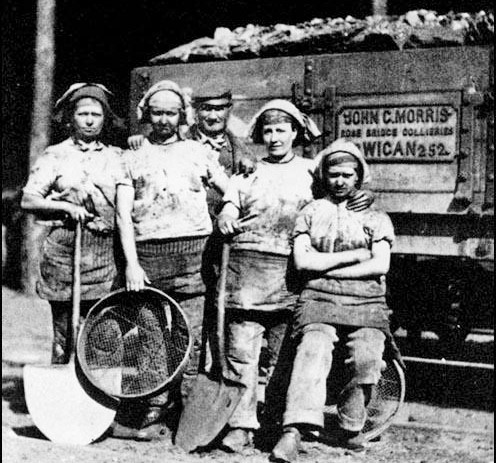
“The Industrial Revolution of the late 18th and early 19th centuries changed the nature of work in Europe and other countries of the Western world. Working for a wage, and eventually a salary, became part of urban life. Initially, women were to be found doing even the hardest physical labor, including working as “hurriers” hauling heavy coal carts through mine shafts in Great Britain, a job that also employed many children.”
Wikipedia, Women in the workforce.
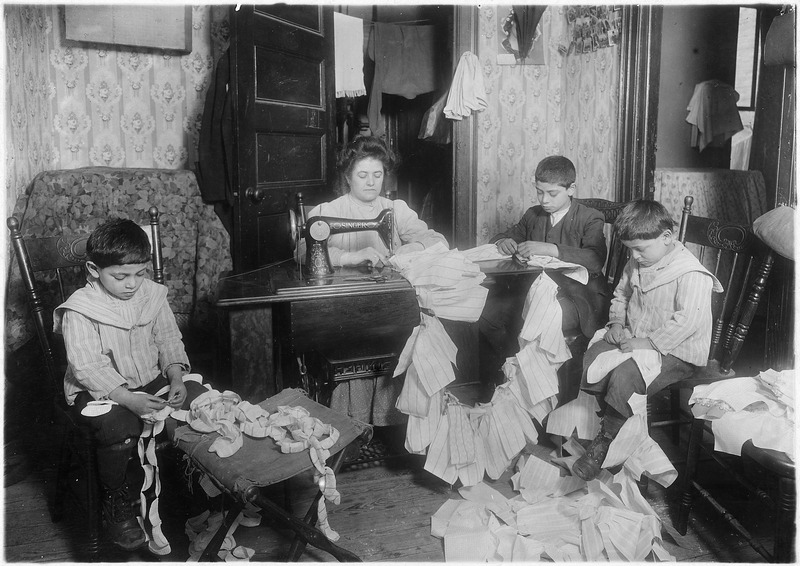
Mother and children making doll clothing, New York, 1912
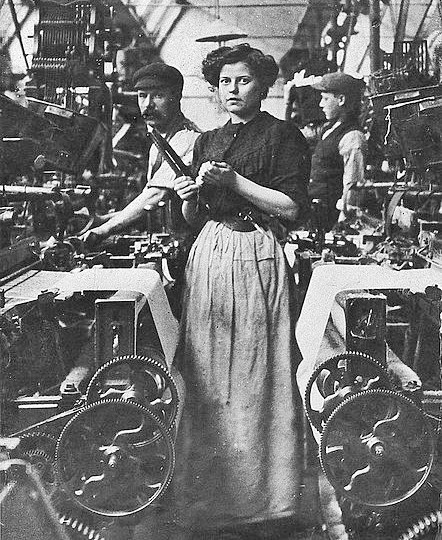
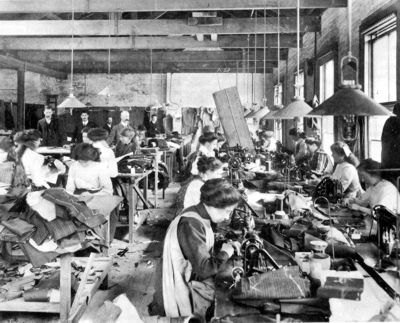
During the 19th century, the number of women working in factories drastically increased. Prior to the Industrial Revolution, the most common form of employment for women in Europe and North America was piecework, which involved needlework (weaving, embroidery, winding wool or silk) that paid by the piece completed. It was poorly paid and involved long hours, up to 14 hours per day to earn enough wages to survive.
According to the 7th Earl of Shaftsbury, employers often preferred to hire women, because they could be “more easily induced to undergo severe bodily fatigue than men.” Pregnant women worked up until the day they gave birth and returned to work as soon as they were physically able. In particular, employers liked to hire married women: “They are attentive, docile, more so than unmarried females, and are compelled to use their utmost exertions to procure the necessaries of life.”
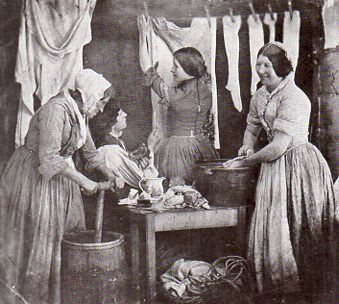
Taking in washing was a potential source of income but was not included in the Census
The 1870 US Census was the first to count “females engaged in each occupation” and provides a snapshot of women’s history in the workplace. Women workers showed up in interesting places. The majority of women working outside the home held typically “feminine” positions, such as childcare, dress-making, millinery, and tailoring. Two-thirds of teachers were women.
Women were 15% of the total work force (1.8 million out of 12.5). They made up one-third of factory “operatives.” Women could also be found in relatively unexpected places.
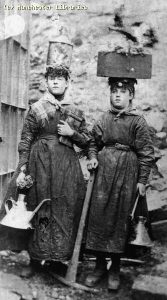
Female mine workers in Wales scandalized Victorian society by wearing trousers
Iron and Steel Works (495)
Mines (46)
Sawmills (35)
Oil Wells and Refineries (40)
Gas Works (4)
Charcoal Kilns (5)
Ship Rigger (16)
Teamster (196)
Turpentine Laborer (185)
Brass Founder/ Worker (102)
Shingle and Lathe Maker (84)
Stock-herder (45)
Gun and Locksmith (33)
Hunter and Trapper (2)
20th Century
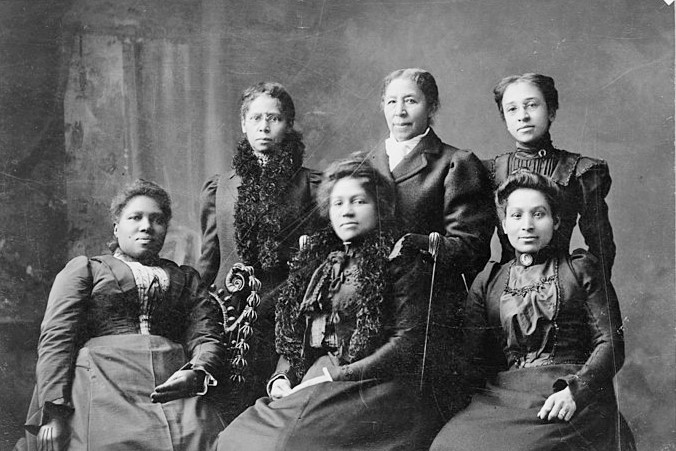
Women’s Leagues, like the one run by these ladies in Newport, RI in 1899, worked toward a variety of social welfare goals. Improving education and working conditions for women and children were major efforts of the Leagues.
Education was a major driver toward equality, both among the lower classes and for girls in particular. At the turn of the 20th century, attitudes towards educating girls were changing. Women in North America and Western Europe were more educated, largely due to the efforts of women to further their own education, defying opposition by male educators.
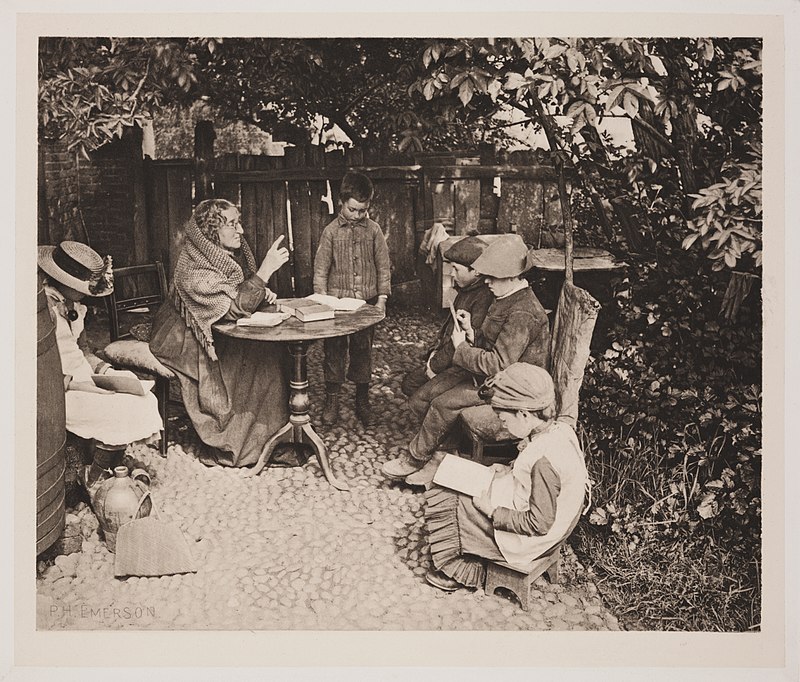
Dame school in East Anglia, circa 1900
Many women organized “dame schools” for local children, teaching elementary literacy and arithmetic to students who probably would not have learned otherwise.
By 1900, four out of five colleges accepted women and the concept of coed education was becoming more accepted.
In the United States, the rise in demand for production from Europe during World War I (among other economical and social influences) facilitated the entry of women into the workforce.
England
Switzerland
Pennsylvania
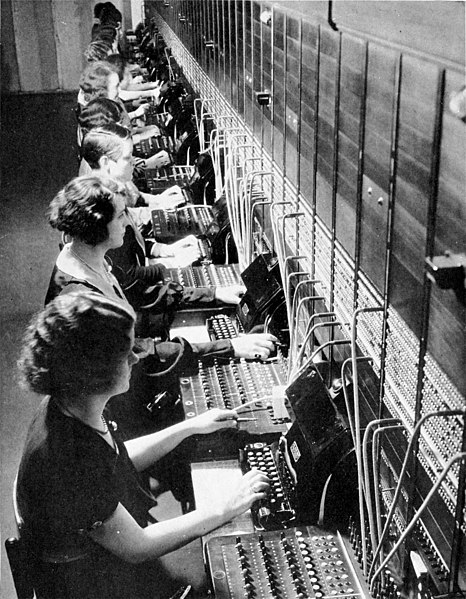
Bell Telephone switchboard in 1922
In the first quarter of the century, women mostly occupied jobs in factory work or as domestic servants, but as the war came to an end they moved on to other jobs: salespeople in department stores, clerical, secretarial, and other so-called, “lace-collar” jobs. Broadening telegraph and telephone networks provided appropriately ladylike work in operation centers.
Towards the end of the 1920s, married women exited the work force less often. Labor force productivity for married women 35–44 years of age increased from 10% to 25%. There was a greater demand for clerical positions and, as the number of women graduating high school increased, they began to hold more “respectable,” steady jobs.
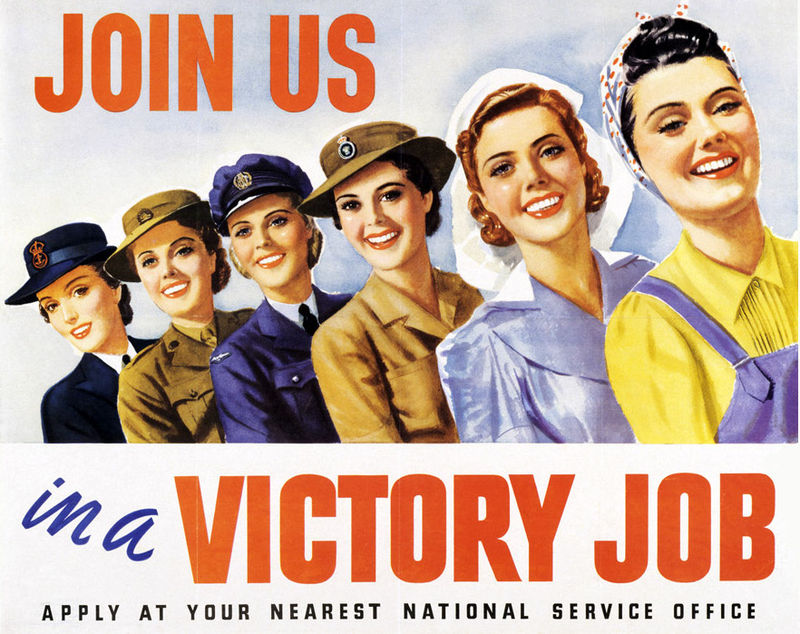
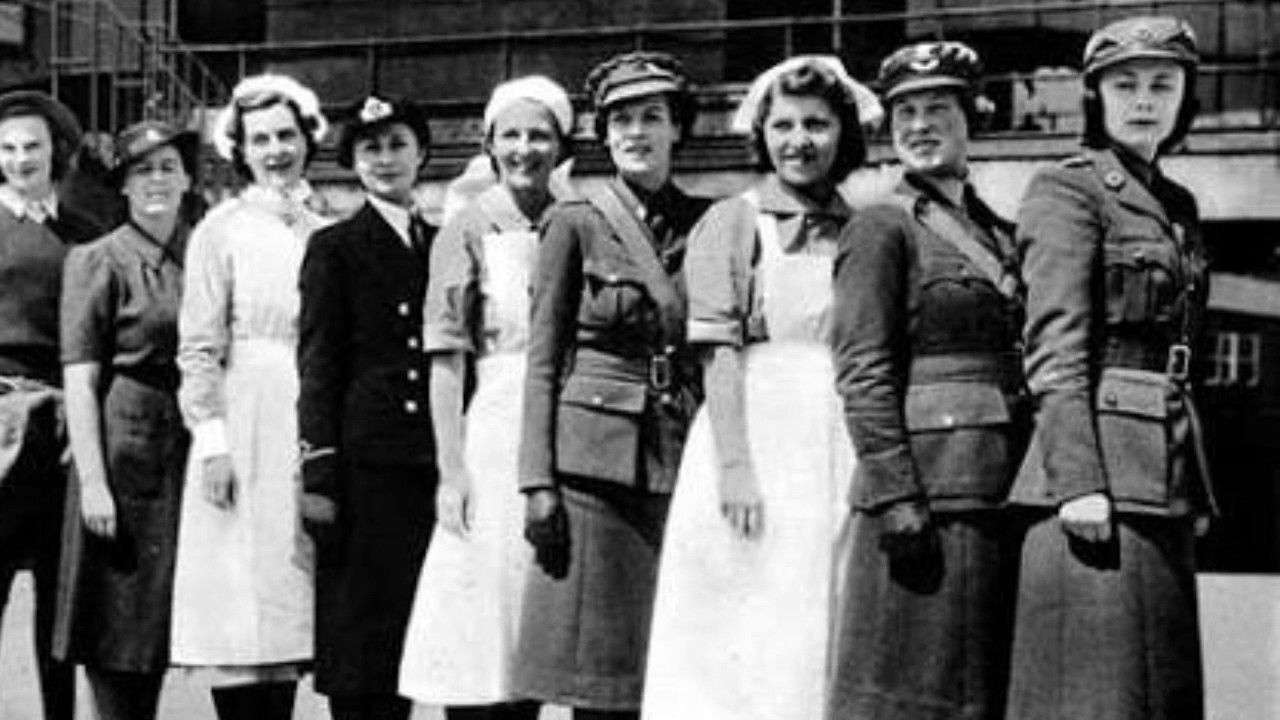
Australian women, like their American sisters, stepped up to join the military effort in World War II
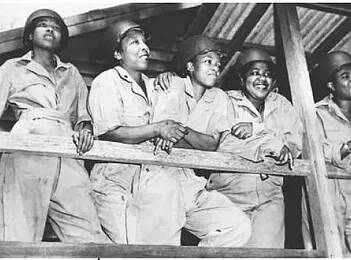
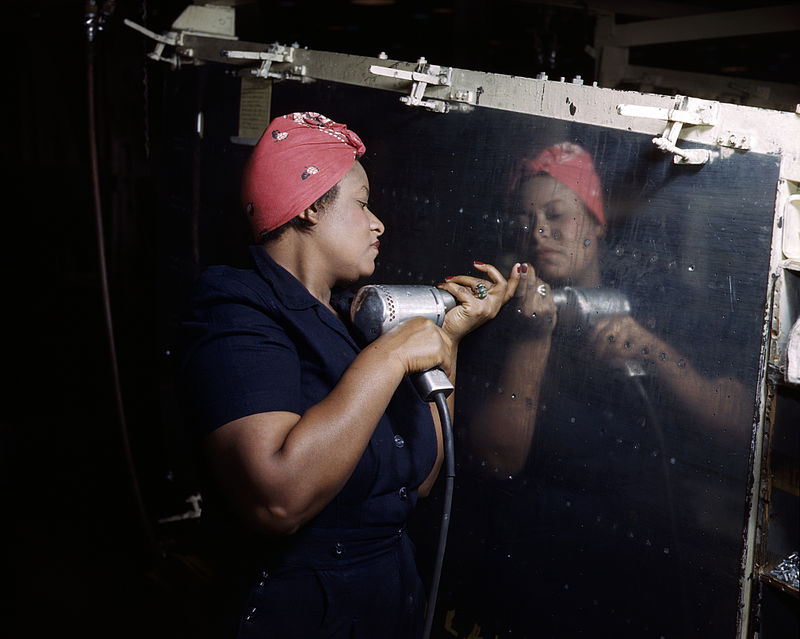
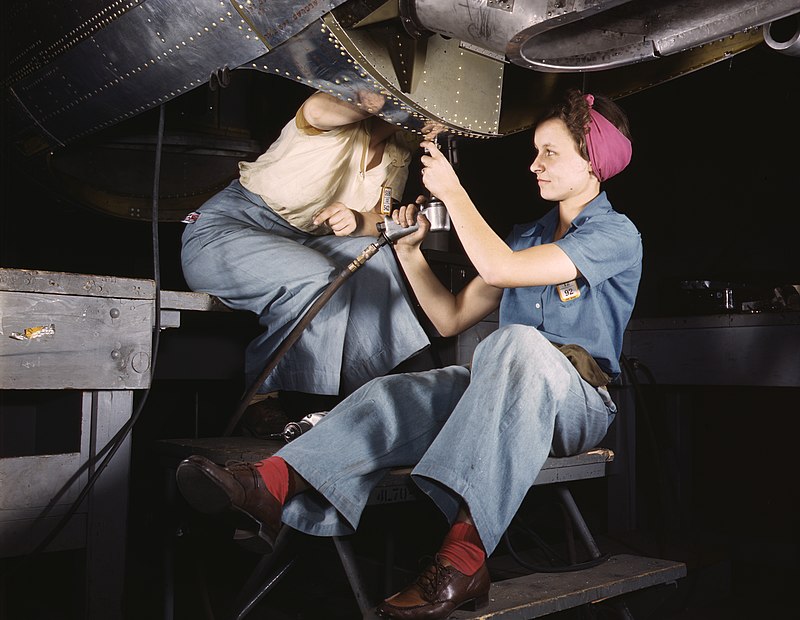
Although almost none of the women in the military saw combat, they replaced men in noncombat positions and got the same pay as the men would have on the same job!
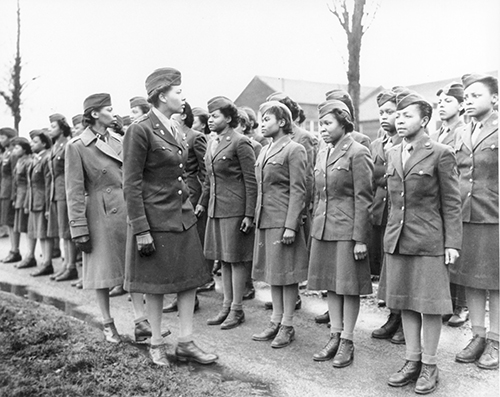
One of the most interesting (and often overlooked) units of the US military during World War II was the 6888th Central Postal Directory Battalion. It was the only all-female, all-African American Army unit. The “Six Triple-Eights” was an entirely self-contained unit, not attached to any male unit. Major Charity Adams led her troops to the European Theater of Operations (being bombed twice just getting there) to sort the problem of years’ worth of mail sent to the front. The 6888th Battalion was given six months to sort out and deliver the warehouses full of letters and parcels that had been untouched for more than two years; they had everything sorted in three.
Texas
Tennessee
California
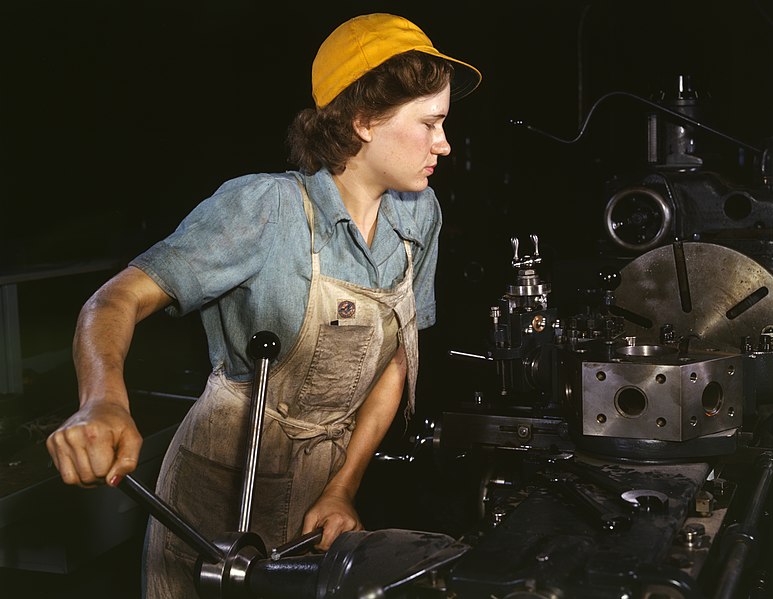
As 16 million men left their jobs to join the war in Europe and elsewhere, even more opportunities emerged for women to join the job force.
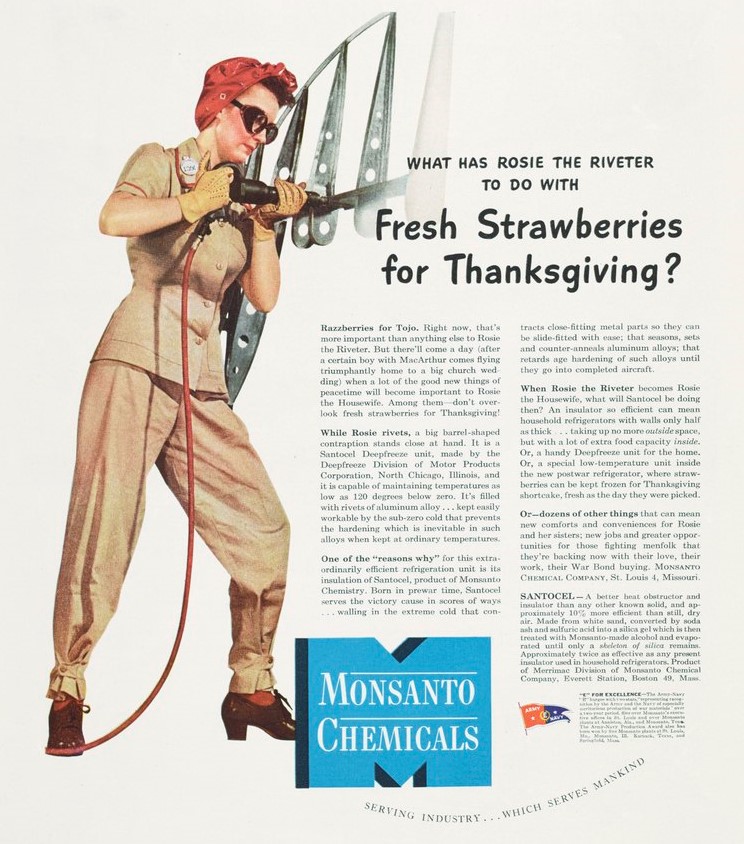
A friendly reminder from Monsanto that women did not belong in the workforce and would be sent back to the kitchen as soon as the War was over
Although two million women lost their jobs after the war ended, female participation in the workforce was still higher than it had ever been. In post-war America, women were expected to return to private life as homemakers and child-rearers.
Nevertheless, jobs were still available to women.
They were mostly what are known as “pink-collar” jobs such as retail clerks and secretaries.
The Quiet Revolution
Transition Era refers to the time between 1930 and 1950, when the discriminatory institution of marriage bars—which forced women out of the work force after marriage—were eliminated. Additionally, women’s labor force participation increased because there was an increase in demand for office workers. However, women did not normally work to fulfill a personal need for a fulfilling career or social worth; they worked out of necessity.
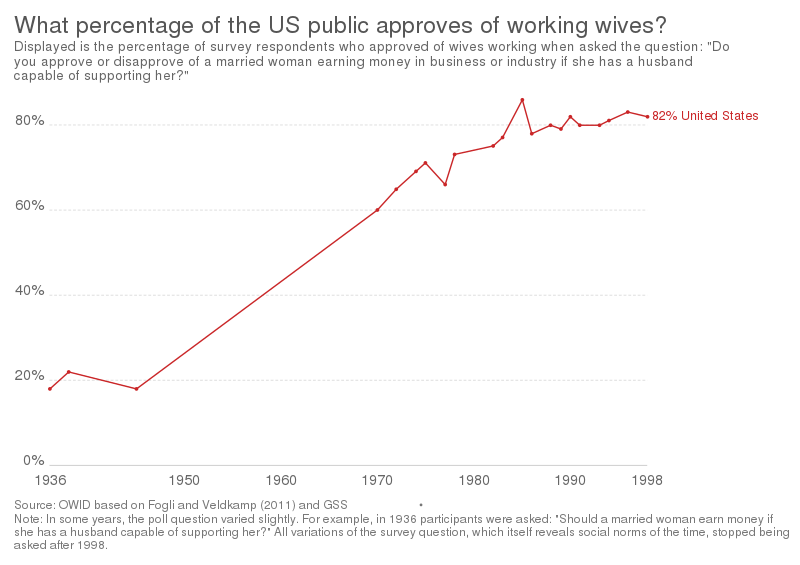
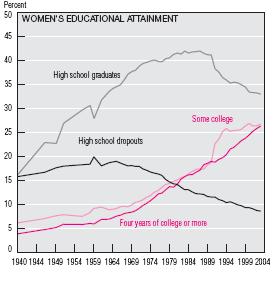
From 1950 to mid-to-late 1970s, the movement of women into the workforce began to show signs of a revolution. Women’s expectations of future employment changed. They began to see themselves going on to college and working through their marriages, even attending graduate school.
Many had brief and intermittent work force participation, without necessarily having expectations for a “career.” Most women were secondary earners, and worked in “pink-collar jobs” as secretaries, teachers, nurses, and librarians.
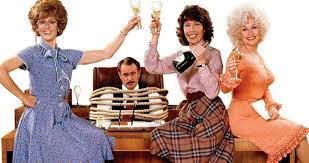
The sexual harassment experienced by these pink collar workers is depicted in the film 9 to 5. Nevertheless, labor force participation by women still grew significantly.
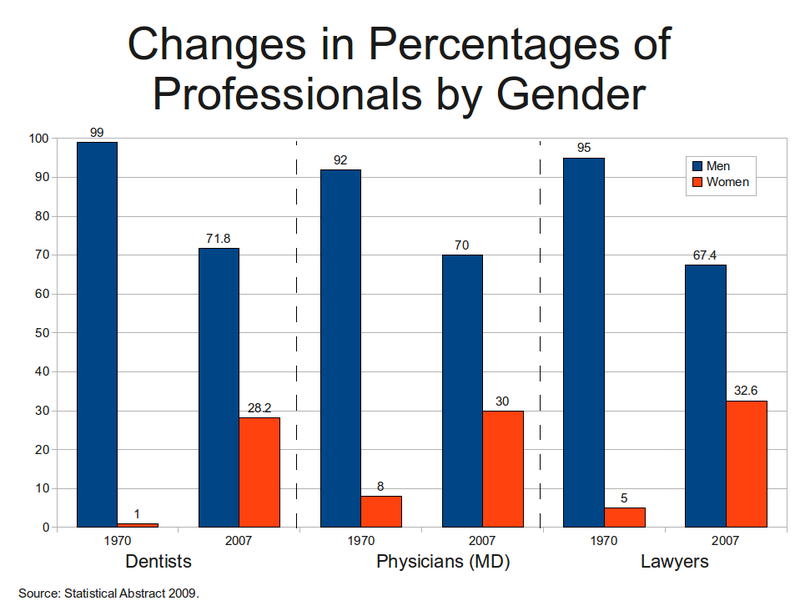
The fourth phase of the “Quiet Revolution” began in the late 1970s and continues today. Beginning in the 1970s women began to flood colleges and grad schools. They began to enter profession like medicine, law, dental, and business. More women were going to college and expected to be employed at age 35, as opposed to past generations that only worked intermittently due to marriage and childbirth. These women defined themselves prior to a serious relationship.
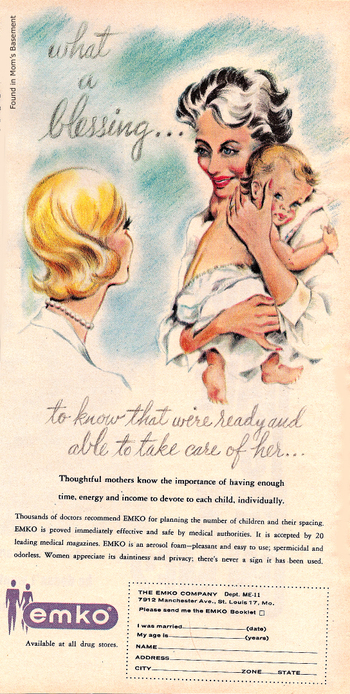
“What a blessing… to know that we’re ready and able to take care of her…”
Research indicates that from 1965 to 2002, the increase in women’s labor force participation more than offset the decline for men.
Some scholars have attributed this big jump in the 1970s to widespread access to birth control pills. While “the pill” was medically available in the 1960s, numerous laws restricted access to it. By the 1970s, the age of majority had been lowered from 21 to 18 in the United States (largely as a consequence of the Vietnam War), which affected women’s right to make their own medical decisions.
Since it had become socially acceptable to postpone pregnancy even while married, women had the option of pursuing education and work.
Also, due to various labor-saving devices, women’s work around the house became easier leaving with more time to pursue school or work. Due to the multiplier effect, even if some women were not blessed with access to the pill or , many followed by the example of the other women who entered the work force for those reasons.
The Quiet Revolution is called such because it was not a “big bang” revolution; rather, it happened and is continuing to happen gradually.
Still Not a Bed of Roses
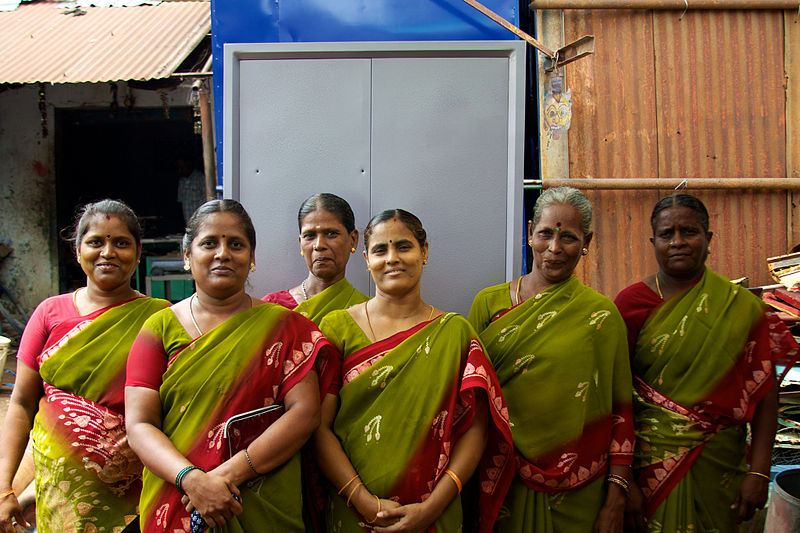
Women in India who created and run an all-female cabinet making company
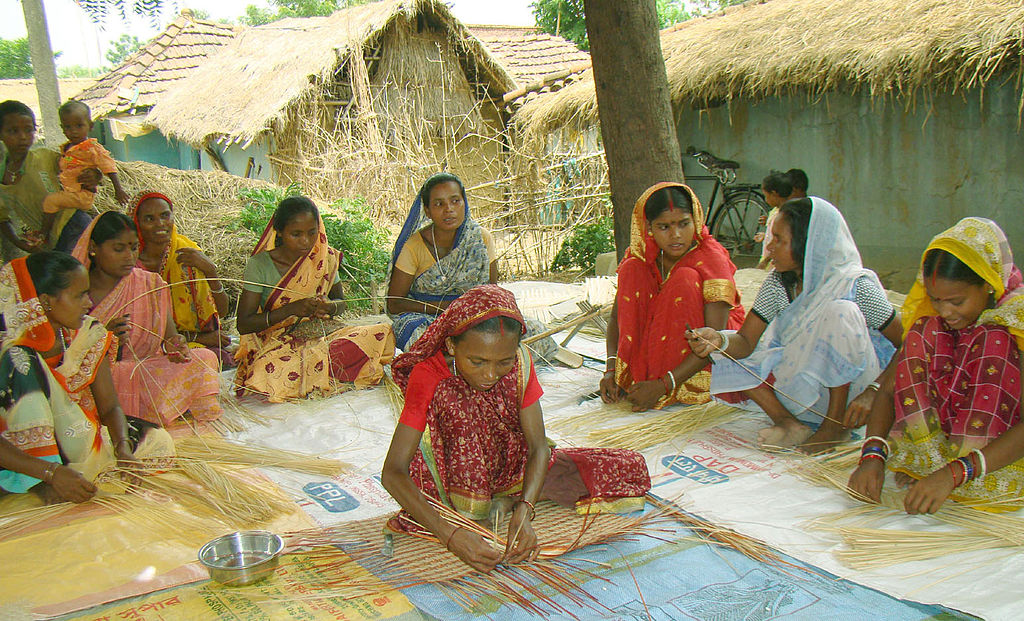
Women in Dumka, Jharkhand making items from bamboo and reeds to sell at market
Working women get carpal tunnel syndrome, tendonitis, anxiety disorders, stress, respiratory diseases, and infectious diseases due to their work at higher rates than men. Women’s higher rates of job-related stress may be due to the fact that women are often caregivers at home and do contingent work and gig work at a much higher rate than men.
Another significant occupational hazard for women is homicide, which was the second most frequent cause of death on the job for women in 2011, making up 26% of workplace deaths in women.
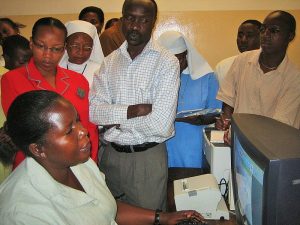
Tanzanian woman leading training session in software systems
Female scientists at St FX Physical Sciences Lab
Nevertheless, women are at lower risk for work-related death than men, probably (at least partially) due to their lower proportion of workers in certain high-risk job such as lumberjacks and garbage collectors.
Cuban doctors fighting COVID-19 in South Africa wearing PPE designed for men
Even so, personal protective equipment is usually designed for typical male proportions, which can create hazards for women who have ill-fitting equipment.
Immigrant women are at higher risk for occupational injury than native-born women in the United States, due to higher rates of employment in dangerous industries.
Some women are able to compromise by bringing their children to work with them
Women overall are at higher risk for occupational stress, which can be exacerbate by balancing roles as a parent or caregiver with work.
Many job opportunities for women are still limited. For example, skilled workers who train by getting apprenticeships with certified professionals (such as electricians or plumbers) include few women—and these are high paying jobs.
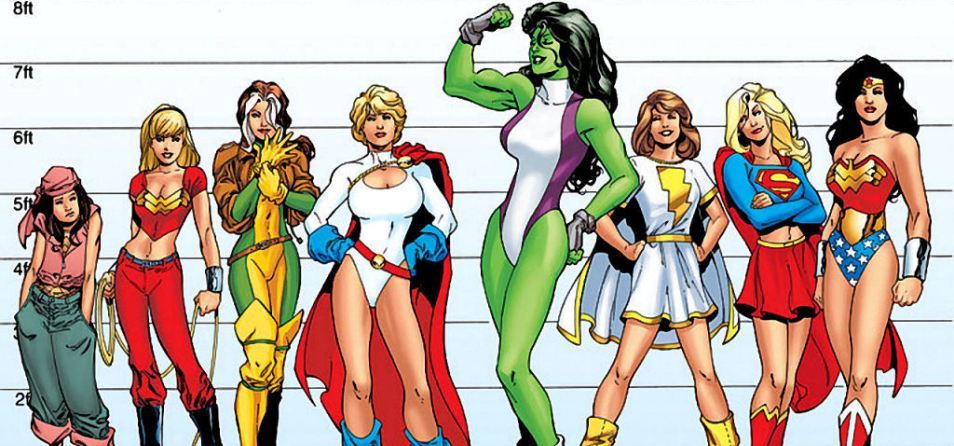
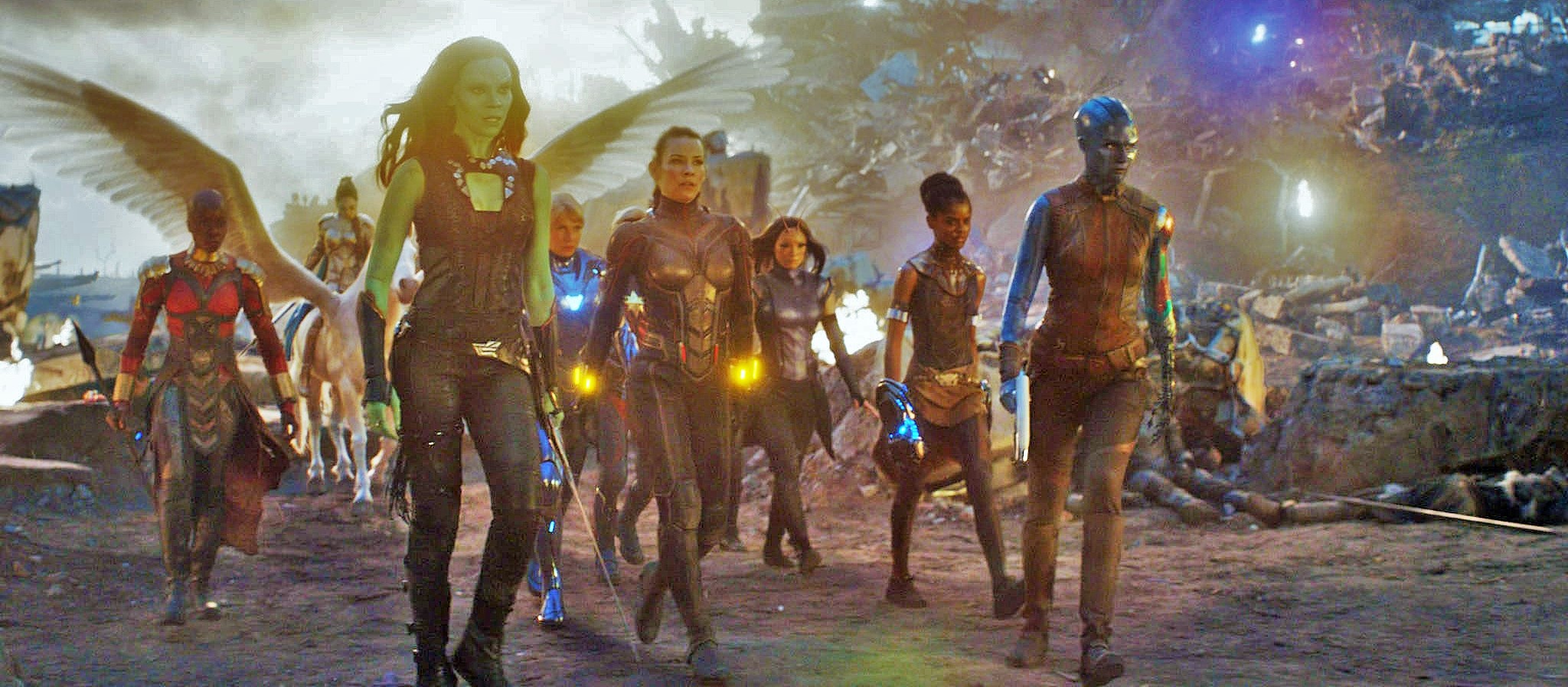
There are rumors of an upcoming Marvel movie focused on the A-Force, an all-female group of superheroes. This screenshot from the end ofAvengers: Endgame highlights several members of the A-Force ( l-r: Okoye, Valkyrie, Gamora, Rescue, Captain Marvel, Wasp, Mantis, Shuri, and Nebula).
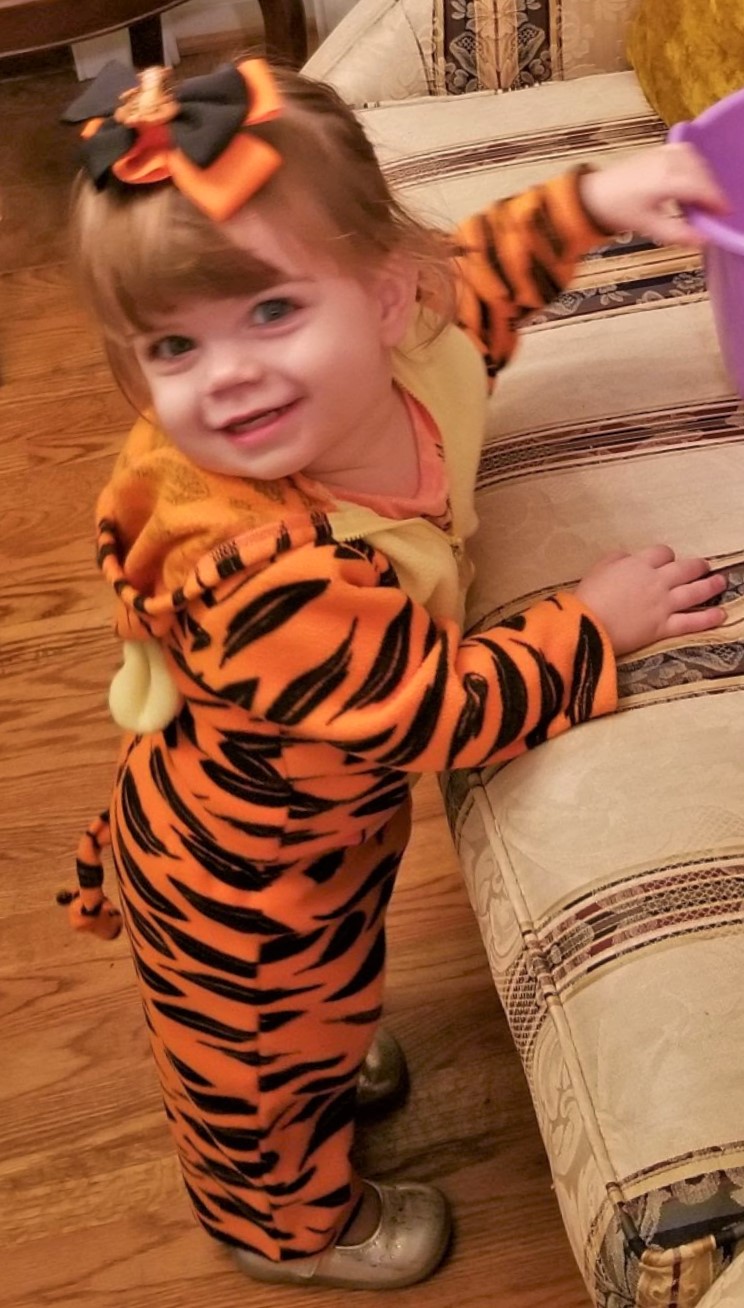
Tiger Baby
I’m sure there are many people out there who know a lot more about superheroes than I do. Before researching this blog, I would have been pressed to name any beyond Wonder Woman, possibly coming up with Bat Girl and Sheena, Queen of the Jungle. Like so many things on the internet, seek and ye shall find!
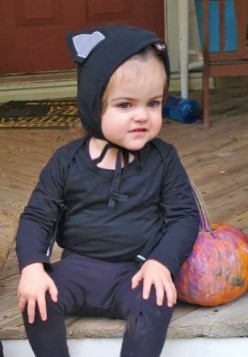
Bat-Baby
The Golden Age of creating these female superheroes seems to have been 1940-1941. Subsequently, many of them made it to both the small screen and the big one, and—like James Bond—appeared and reappeared. (See those marked with *.)
Here, in chronological order, are a few of the very first female superheroes who might interest you as a reader and/or a writer. This is Part 1 of 2, covering female comic stars who debuted through 1940. Heroic ladies who debuted in 1941 and after will be covered on Tuesday, March 23rd.
If your character has a superhero interest, who and why? What superpowers might they wish for? How about a secret superhero crush?
1938
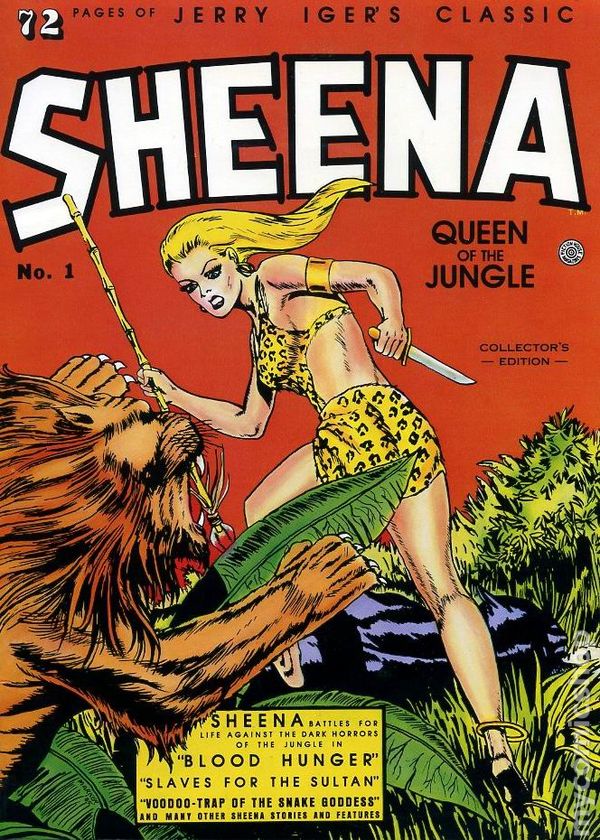
Sheena, Queen of the Jungle
Sheena debuted almost four years before Wonder Woman. She was the guardian of the jungle, with numerous superpowers: superhuman strength, the ability to talk to animals, and expertise with several weapons, mostly blades. Sheena was one of the most powerful superheroes.
1940
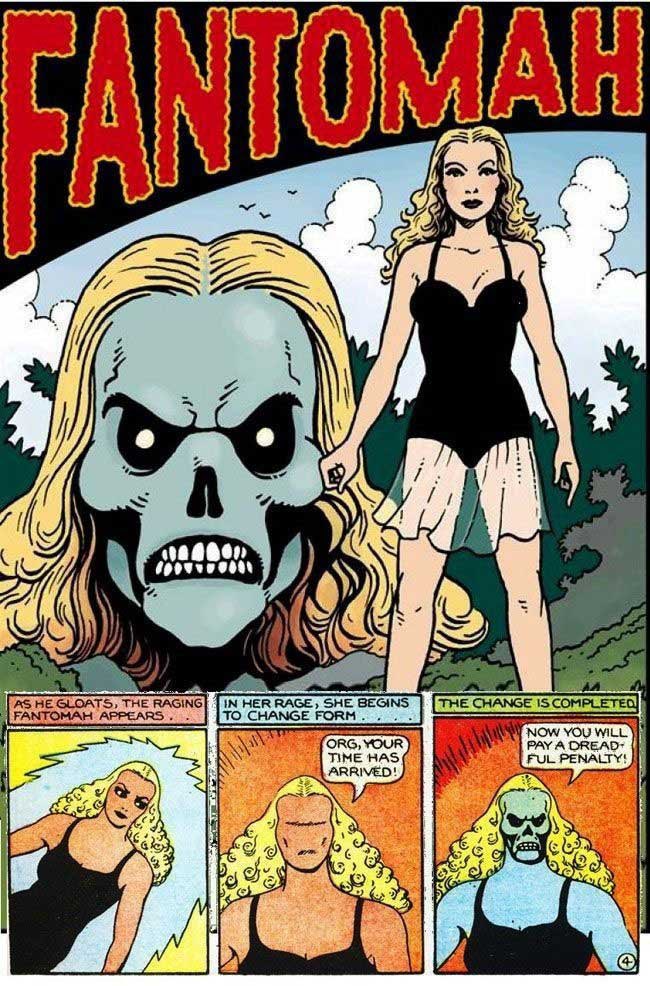
Fantomah
The “Mystery Lady of the Jungles” was the protector of the entire continent of Africa. Fantomah was a supernatural being with superhuman abilities, including telekinesis and the ability to turn into a blue-skinned monster. Her origins were never revealed, nor was the reason she had fair skin and had blond hair.
Initially, Fantomah was almost identical to Sheena. As she developed, Fantomah became nearly omnipotent, creating some truly bizarre punishments for slavers, poachers, thieves, and others she decided to punish. At one point, she became the queen of a lost civilization descended from the Egyptians. The writers got tired of that storyline, and the civilization became lost again.
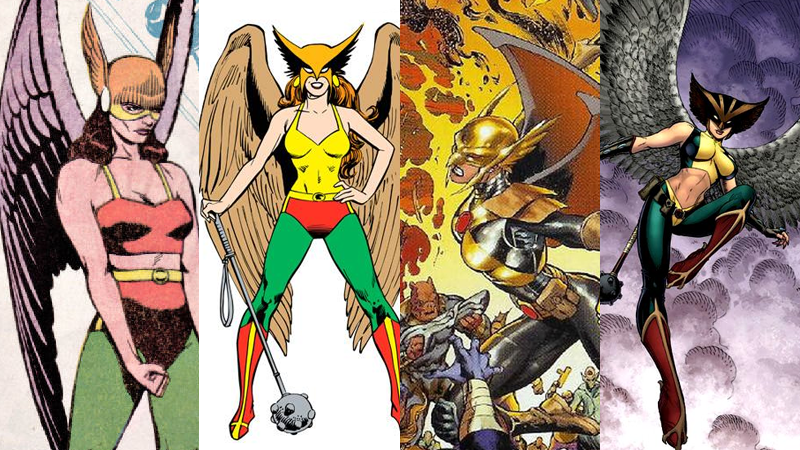
*Hawkgirl/ Hawkwoman
Depending on the comic run, Hawkgirl is either the reincarnation of an Ancient Egyptian princess or an alien police officer from planet Thanagar. Or she is both at the same time but in parallel universes. Or maybe she is the reincarnated spirit of an Ancient Egyptian priestess who is actually the avatar of a goddess who is now inhabiting the body of a winged alien police officer. The writers kept changing their minds.
Hawkgirl’s costume from 1940 to 2015
However she came by her powers, Hawkgirl has superhuman strength, speed, durability, and advanced healing. Her wings are incredibly strong for their size and let her perform extreme acrobatic flight maneuvers.
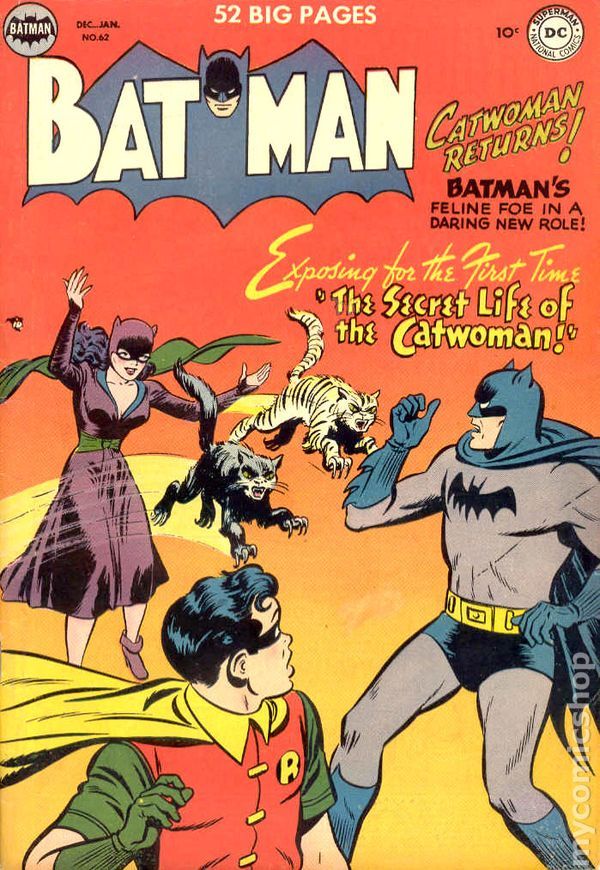
*Catwoman
In her first appearance in Batman #1, Selina Kyle was simply known as The Cat. Originally, she was either an orphan who learned thievery to survive on the streets or a former flight attendant with amnesia who turned to crime with no memory of any former skills. An enduring love interest of Batman, Catwoman was recently (partially) reformed from her more criminal activities. She’s an expert cat burglar with acrobatic prowess. She prefers to rely on her brains and a whip. She prowls the streets helping those who need her most, but she also steals from the evil rich to help those in need and fill her own coffers.
*Catwoman was reintroduced in 1989, but this time she was portrayed as either a prostitute or a dominatrix who was inspired to become a costumed cat burglar after watching Batman’s antics.
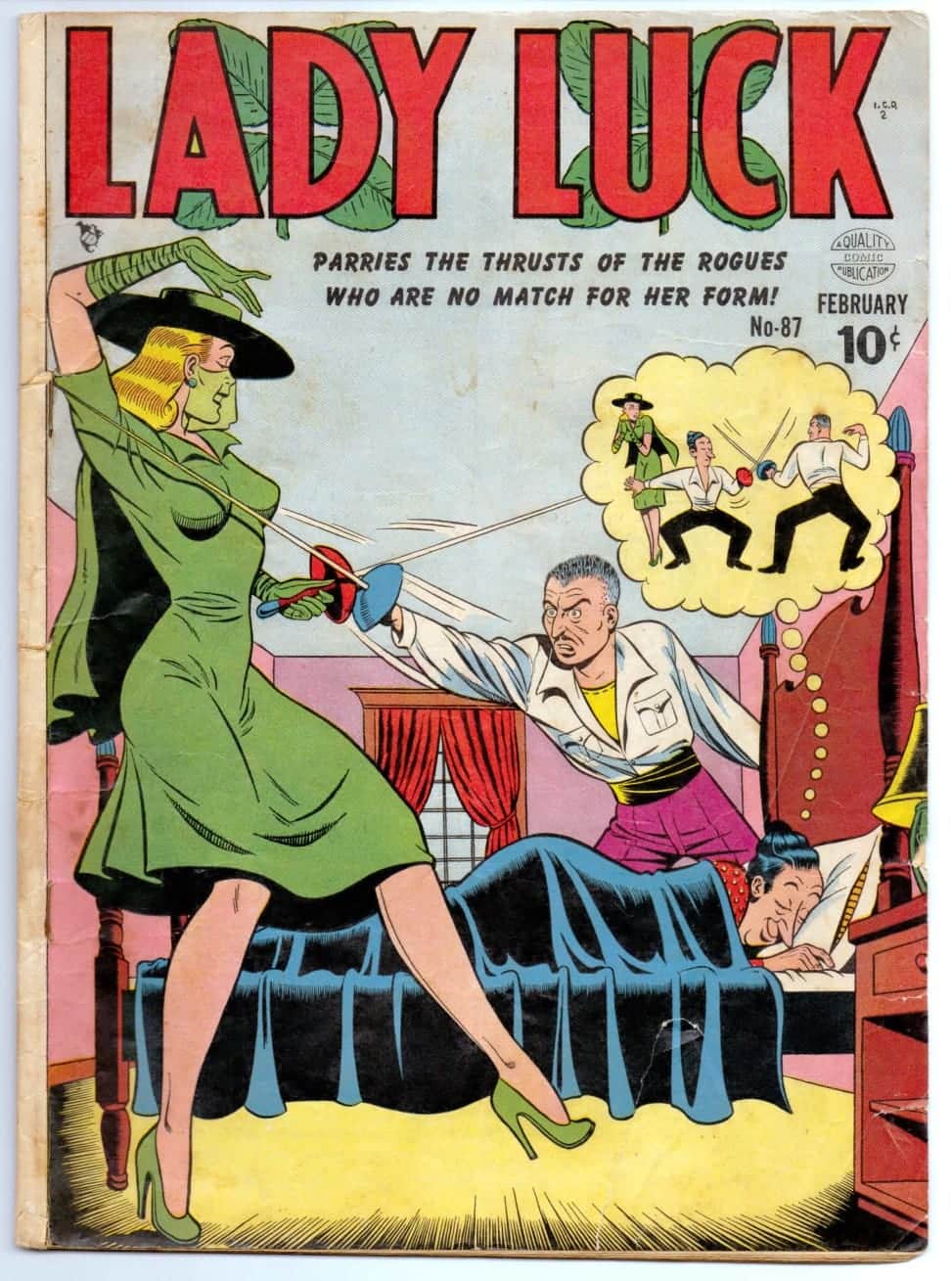
Lady Luck
Brenda Banks was the very rich daughter of wealthy Irish mine owners who simply got bored and decided to put on a disguise and fight evil. She was aided by her chauffeur (sometimes a burly Italian man and sometimes a woman trained in martial arts). Lady Luck has no superpowers (other than being Irish), but she was a terrific fighter. The storyline revolved around her being in love with the Chief of Police.
Golden Girl
Making her first appearance in the world of Captain America, Elizabeth “Betsy (originally Betty)” Ross became a costumed hero in her own right after impressing Allied intelligence forces. She started out as a WAAC officer and FBI agent before she became part of the SSR project to create supersoldiers. After World War II, Ross put on a bulletproof cape and joined the third Captain America as Golden Girl. Because of her various careers (soldier, spy, teacher, dancer, etc.), Golden Girl had many talents, but no superpowered abilities. Her intelligence kept her in the ranks of superheroes.
This Betty/ Betsy Ross is not related to Betty Ross, the romantic interest of Bruce Banner/ The Incredible Hulk.
Red Tornado
Abigail Mathilda “Ma” Hunkel was initially intended to be a parody of the superhero comic genre, but the Red Tornado grew so popular that she became a regular co-star in the Scribbly Jibbet comics. A shopkeeper and housewife in Brooklyn, Ma Hunkel stood up to a gang harassing her neighborhood by taking inspiration from her son’s obsession with the Green Lantern. She became a caped vigilante by wearing a t-shirt over red long-johns, a black cape, and a cooking pot with eye holes. The Red Tornado was extremely strong and durable but not superhuman (she was sometimes mistaken for a man). She eventually had two sidekicks, her daughter and niece, Sisty and Dinky. Additionally, Ma Hunkel was a fantastic cook and honorary member of the Justice League.
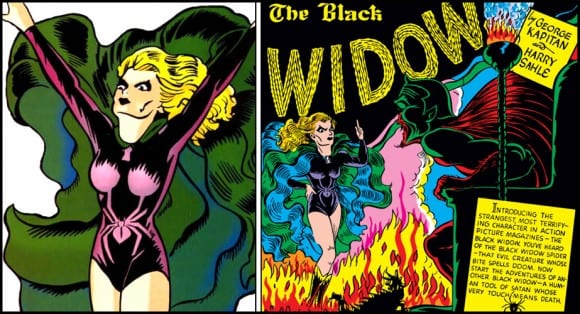
*Black Widow
Claire Voyant, created in August, 1940, by Timely Comics (later known as Marvel Comics), might be the first female superhero to be possessed by a mystical being. She and her family were murdered, and she made a deal with the devil in order to return to seek revenge. Her superpowers: she could use psychic powers, defy physics, curse enemies with severe bad luck, and kill people instantly with a touch. Black Widow was resistant to disease and aging, and could suppress and/or replace memories.
During World War II, she helped the Allies by spying and by killing Nazis to send their souls to Satan. In the Battle of Berlin, Black Widow was captured by Nazi scientists and put in suspended animation with several other superheroes. The Twelve were found and woken up in the 21st Century to continue working for the US government.
She is not related to the Black Widows created by the Soviet Red Room program.
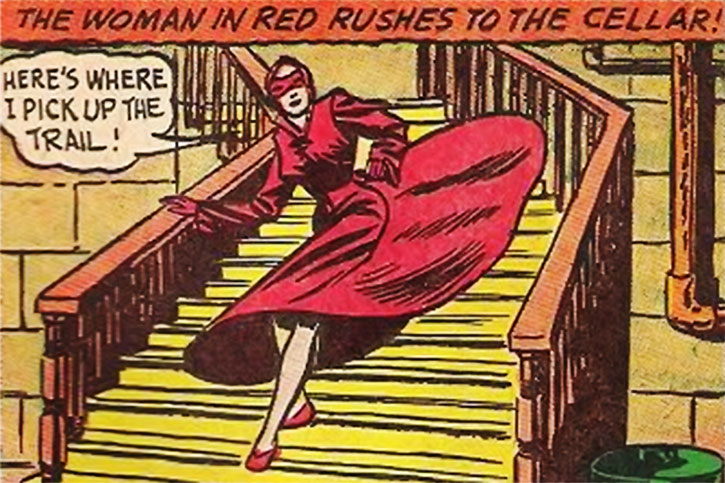
1940 Woman in Red
The Woman in Red
She first appeared in March 1940 in Thrilling Comics. Along with Lady Luck she was one of the first vigilante female superheroes. Peggy Allen donned red after getting fed up with criminals manipulating the legal system and avoiding justice. Her real job was as a police officer specializing in undercover work, so one might label her a rogue cop. The Woman in Red had no special superpowers, but was highly skilled in hand-to-hand combatant and a brilliant tactician.
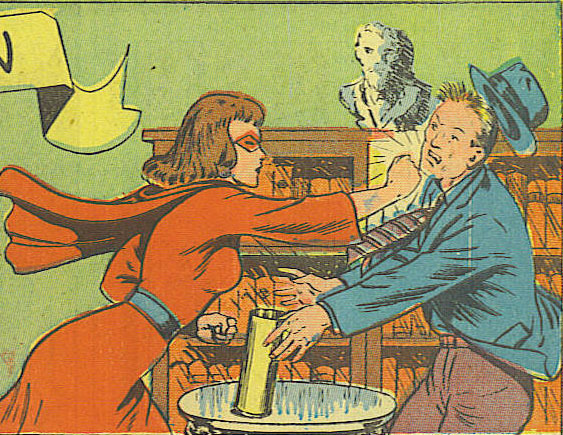
1943 Woman in Red
There were essentially three versions of the Woman in Red, depending on the writer.
Initially, Peggy Allen was taller and stronger than most men, knew a bit of jiu-jitsu but quite a lot about shooting her pistol, and was not trusted by the police.
In the middle of 1941, Peggy Allen became a woman of average size and strength, a very good detective, and an ally of the police.
The Peggy Allen of 1943 had near superhuman strength and agility, was a skilled martial artist and pilot, and worked with the police, who knew her secret identity. In 1943, the Woman in Red also got a costume change before disappearing.
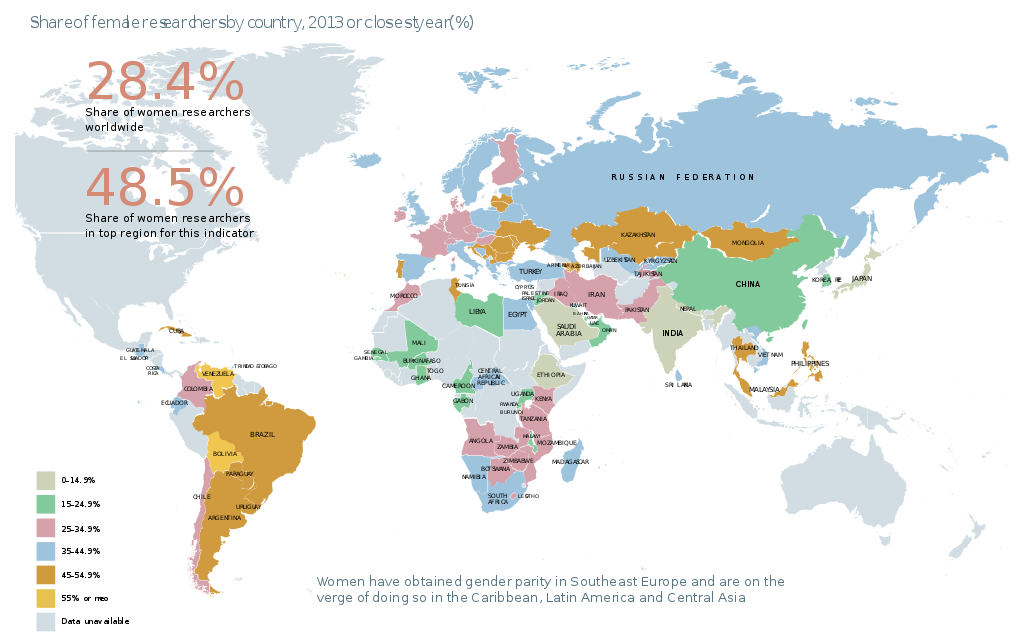
Share of female researchers by country: 2013 or closest year Source” UNESCO Science Report towards 2030 data from UNESCO Institute for Statistics
Like so many professions, psychology has been male-dominated. Asked to name a psychologist, men like B. F. Skinner, John B. Watson, Stanley Milgram, and Sigmund Freud are likely to be mentioned —even though Freud was actually a medical doctor who founded psychoanalysis. But many of the most important movers and shakers in psychology were women. Here—in no particular order—is a brief introduction to just a few of them. I’m not including references; they are available on line in many forms.
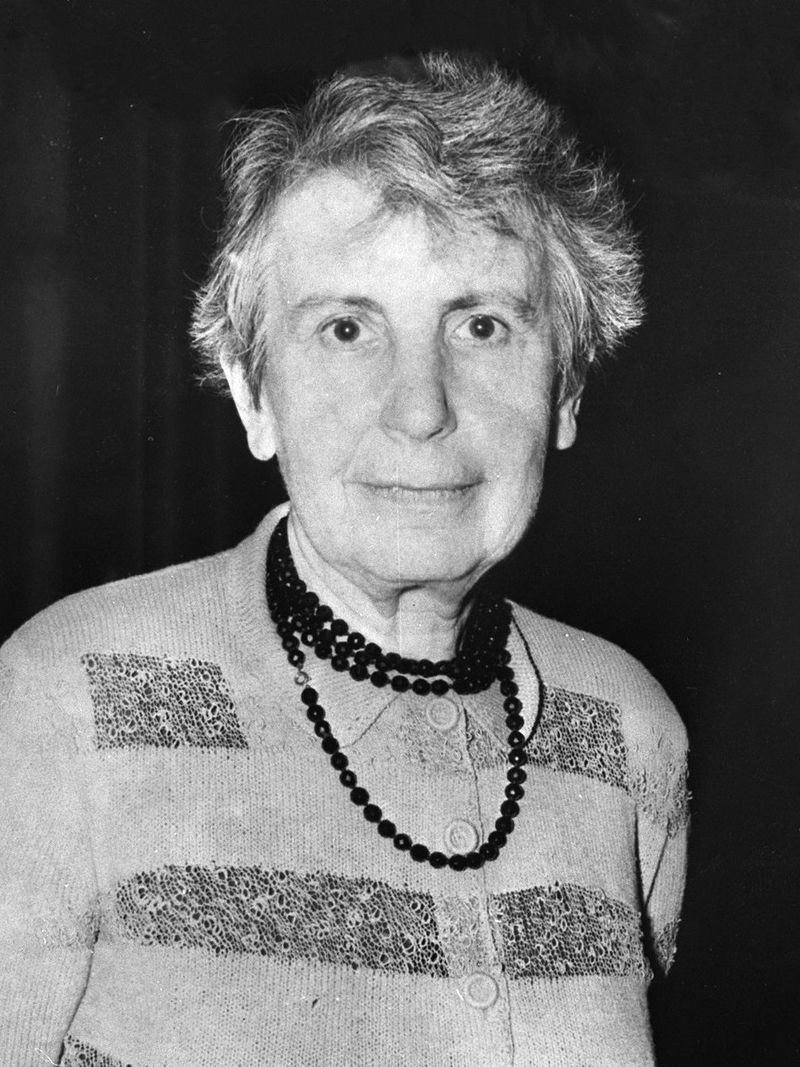
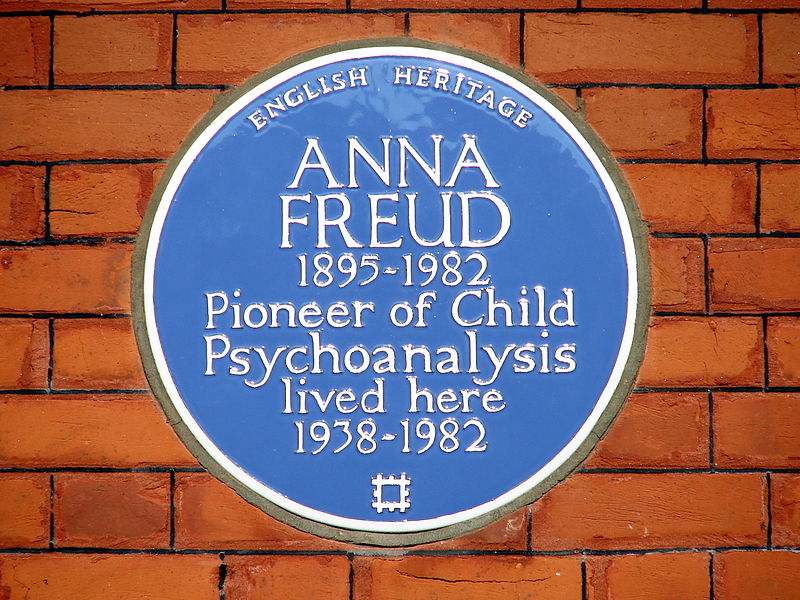
Anna Freud
(3 December 1895 – 9 October 1982) Anna Freud was born in Vienna, the sixth and youngest child of Sigmund Freud and Martha Bernays. She is reported to have had an unhappy childhood, and she did not have a close relationship with her mother. Her older sister Sophie was the family beauty; Anna the one with brains. She may have suffered from depression, and she went to health farms to rest, exercise, and gain weight, implying eating disorders. At the same time, Anna was a lively child with a reputation for mischief.
Contrary to other members of her family, she had a close relationship with her father—something both of the psychoanalytic Freuds must have had thoughts about! Anna made good progress in most subjects, apparently mastering English and French and basic Italian easily.
Anna left her teaching career to care for her father. Sigmund Freud was diagnosed with cancer of the jaw in 1923. He underwent many operations and required long-term nursing assistance, which Anna provided. She also acted as his secretary and spokesperson, notably at the bi-annual congresses of the International Psychoanalytical Association, which her father was unable to attend.
Ultimately, she followed in her father’s footsteps into psychoanalysis. Alongside Hermine Hug-Hellmuth and Melanie Klein, Anna Freud may be considered the founder of psychoanalytic child psychology. She is credited with expanding interest in child psychology.
Anna expanded on her father’s work. Although Sigmund Freud recognized the id, ego, and superego, Anna’s work emphasized the importance of the ego. Among her many accomplishments, my favorite is her development the concept of defense mechanisms.
Anna Freud never married. Her only partner of record (as far as I know) was Dorothy Burlingham.
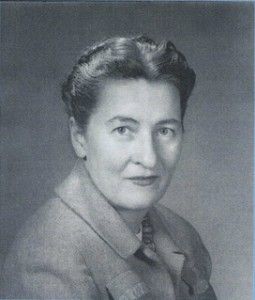
Mary Salter Ainsworth
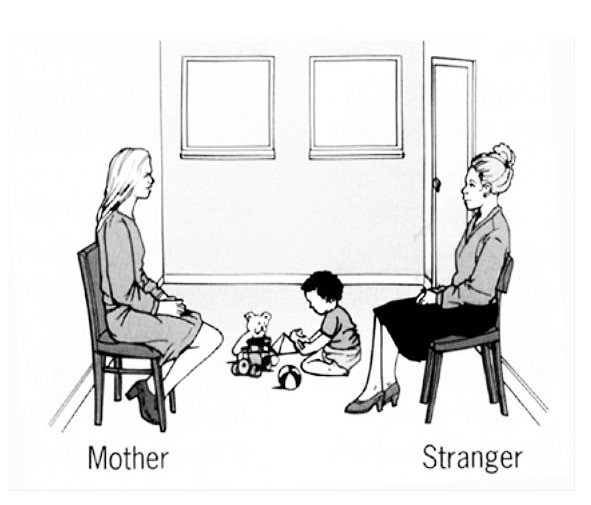
(December 1, 1913 – March 21, 1999) Mary Dinsmore Salter Ainsworth was an American-Canadian feminist, army veteran, and developmental psychologist who specialized in child psychology. Ainsworth devised an experiment called the “Strange Situation” in reaction to John Bowlby’s initial finding that infants form an emotional bond to its caregiver.
In Ainsworth’s experiments, the infant was placed in scenarios with or without the mother as well as with or without a stranger. The child’s behavior was observed in these “anxious” conditions. Ainsworth stated that infants react in 4 different attachment patterns (secure, ambivalent, avoidant, or disorganized) based on the extent of their bond to their primary caregiver.
The “Strange Situation”
The eldest of three daughters, Mary Dinsmore Salter was born in Ohio to Mary and Charles Salter. Although he possessed a master’s degree in history, her father worked at a manufacturing firm in Cincinnati. Her mother, who was trained as a nurse, was a homemaker. Both valued education highly. In 1918, her father’s manufacturing firm transferred him to Toronto, Ontario, Canada, where Salter spent the rest of her childhood.
Salter was a precocious child. She began reading by the age of three. Similarly to Anna Freud, she was close with her father, who tucked her in at night and sang to her. Also like Anna Freud, Salter did not have a warm relationship with her mother.
Mary Salter excelled in school, and decided to become a psychologist at the age of 15. She began classes at the University of Toronto at age 16, where she was one of only five students admitted to the honors course in psychology. She earned her bachelor’s degree in 1935, her master’s degree in 1936, and her PhD in 1939, all at the University of Toronto.
Salter’s dissertation, “An Evaluation of Adjustment Based on the Concept of Security,” shaped her subsequent professional interest. Her dissertation stated that “where family security is lacking, the individual is handicapped by the lack of a secure base from which to work.”
In 1942, Salter left teaching to join the Canadian Women’s Army Corps. She left the military in 1945 with the rank of Major. She married Leonard Ainsworth, a graduate student in psychology, in 1950. They divorced in 1960.
While working at Johns Hopkins, Ainsworth did not receive the proper treatment considering her skills and expertise: she was paid less and had to wait two years for an associate professor position even though her qualifications surpassed the job description. At the time, women and men had to eat in separate dining rooms, which ultimately meant women could not meet powerful male faculty members in the same informal way men could.
She eventually settled at the University of Virginia in 1975, where she remained until her retirement in 1984. As a professor emerita she remained active 1992.
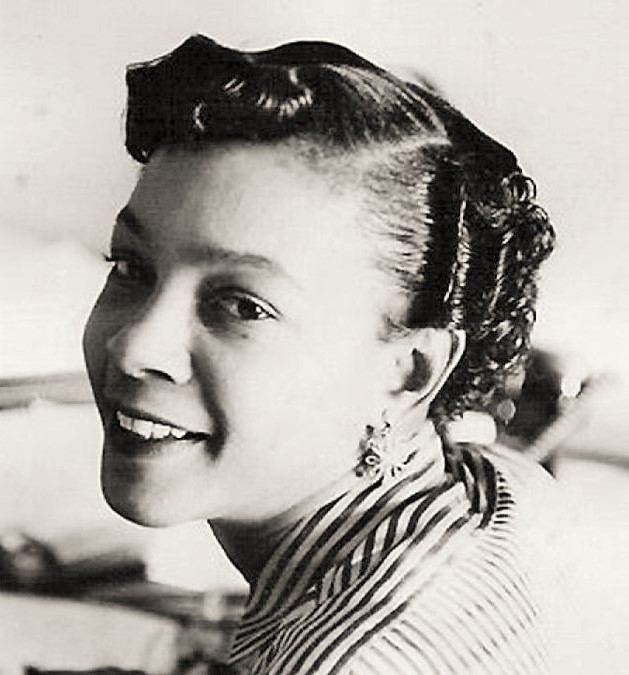
(April 18, 1917 – August 11, 1983) Mamie Phipps was born in Hot Springs, Arkansas and died of cancer in New York City in 1983. She was the first Black woman to earn a degree from Columbia University, and the second Black student to earn a doctorate (after her husband Kenneth).
She entered Howard University in 1934 to study math and physics. While still an undergrad, she met her future husband. Kenneth Clark was a master’s student in psychology and urged her to switch to psychology. Both her B.A. and M.A. degrees were from Howard. After graduating magna cum laude, she worked in a law office for a time before matriculating at Columbia. Before graduating in 1943, she had had two children!
While working as a testing psychologist at an organization for homeless Black girls, Clark noted how limited mental health services were for minority children. In 1946, Clark and her husband founded the Northside Center for Child Development, which was the first agency to offer psychological services to children and families living in the Harlem area of New York City. Mamie Clark served as the Northside Center’s director until her retirement in 1979.
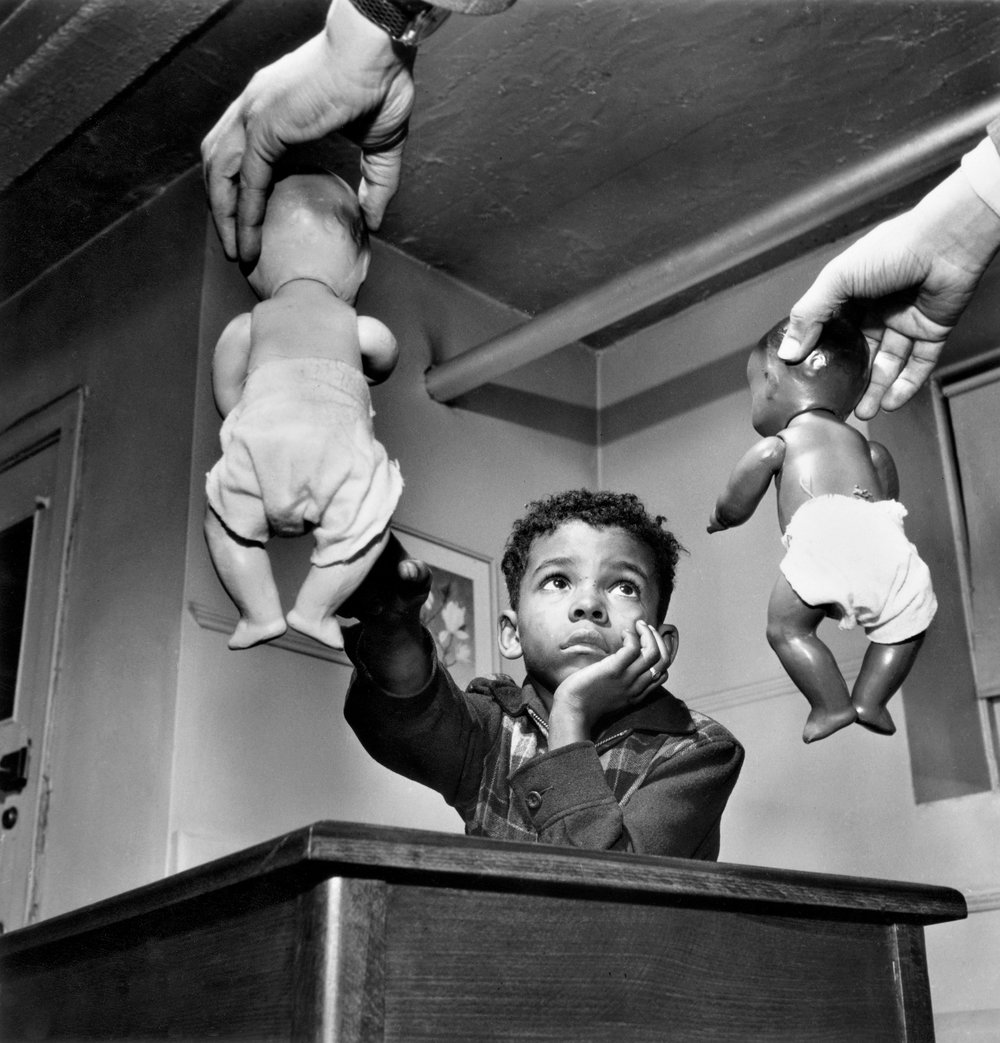
In her now-classic experiment, the Clarks showed Black children two identical dolls, one Caucasian and one Black. The children were then asked a series of questions including which doll they preferred to play with, which doll was a “nice” doll, which one was a “bad doll,” and which one looked most like the child.
The researchers discovered that not only would 59% the children identify the Black doll as the “bad” one, nearly 33% selected the white doll as the one they most resembled. Her research was central to demonstrating that separate is not equal.
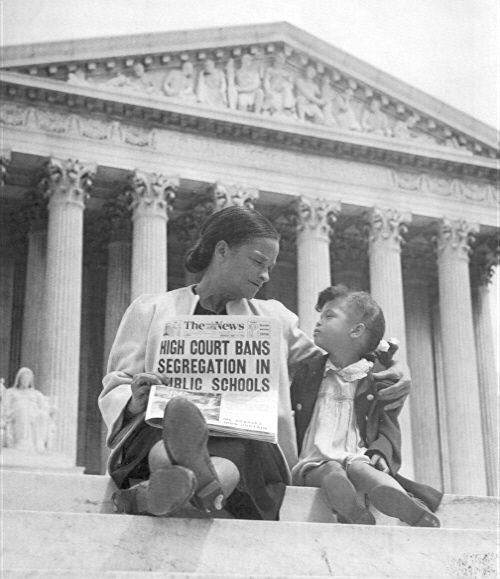
Yes, she faced prejudice based on both her race and sex, but she went on to become an influential psychologist. She developed the Clark Doll Test as a tool for her research on racial identity and self-esteem. Her research on self-concept among minorities was ground-breaking. She played a role in the famous 1954 Brown vs. Board of Education case.
Clark’s work on racial discrimination and stereotypes were important contributions to developmental psychology and the psychology of race. Her effort on the identity and self-esteem of Blacks expanded the work on identity development.
Clark is not as famous as her husband. It has been noted that she adhered to feminine expectations of the time and often took care to “remain in the shadows of her husband’s limelight.” She often seemed shy. She achieved professional success while maintaining a fulfilling home life. She received a Candace Award for Humanitarianism from the National Coalition of 100 Black Women in 1983.
Leta Stetter Hollingworth
(May 25, 1886 – November 27, 1939, of abdominal cancer) An early pioneer in U.S. psychology, Leta Stetter Hollingworth made her mark by her research on intelligence testing and giftedness. In particular, contrary to her contemporaries beliefs in genetic determination, she believed that education and environment were important factors.
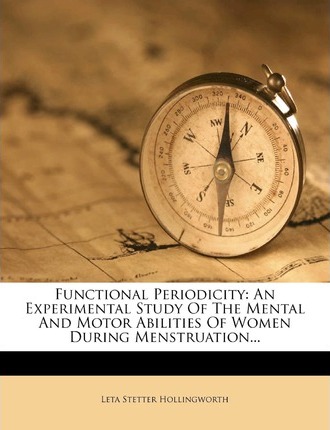
Important as that work was, I admire her especially for her research on the psychology of women! At the time, women were believed to be inferior to men, and their intellect and emotions were at the mercy of their menstrual cycle. Hollingworth’s research demonstrated that women are as intelligent and capable as men, no matter where they are in their monthly cycles.
When her mother died giving birth to her third child, her father abandoned the family. The children were reared by their mother’s parents for a decade, until her father reclaimed the children and forced them to live with him and his new wife. Stetter later described the household as abusive, plagued by alcoholism and emotional abuse. Her education became a source of refuge.
Stetter left home when she graduated high school in 1902, at the age of 16, and enrolled at the University of Nebraska at Lincoln. Leta completed her bachelor’s degree and teaching certificate in 1906 and married Harry Hollingworth in 1908. She moved to New York so that her husband could pursue his doctoral studies. Originally she planned to continue teaching, but New York did not allow married women to teach high school at that time!
As a prime example of “when life gives you lemons, make lemonade,” she enrolled at Columbia University and earned a master’s in education in 1913. Leta Hollingsworth took a position at the Clearing House for Mental Defectives where she administered and scored Binet intelligence tests (testing for IQ). She completed her Ph.D. in 1916 and took a job at Columbia’s Teachers College, where she remained for the rest of her career.
She is also known for her work in the first two decades of the twentieth century that contributed in a small way to changing the views toward women that led to women having the right to vote in a nation that had too long denied them that right. One of her students who became well known is Carl Rogers.
Although she died at age 53, her influence on psychology has been impressive.
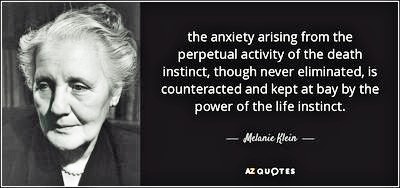
Melanie Klein
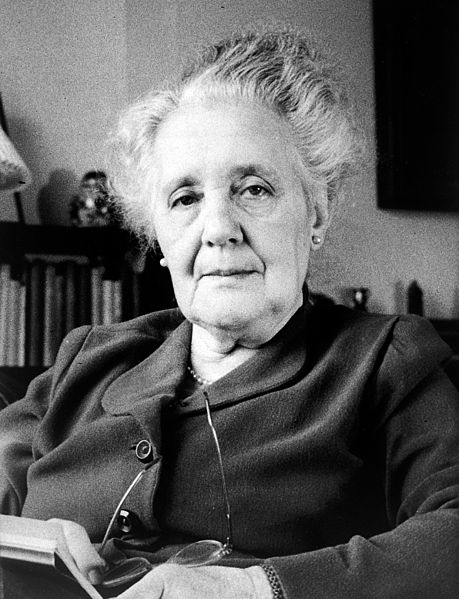
(30 March 1882-22 September 1960) Melanie Klein was a psychoanalyst who was pivotal in developing play therapy. Working with children, she observed that they often utilize play as one of their primary means of communication. Play therapy is commonly used today to help children express their feelings and experiences. Young children aren’t able to participate in some of the more commonly used Freudian techniques, such as free association. Klein used play as a way to study children’s unconscious feelings, anxieties, and experiences.
Note: This was a major disagreement with Anna Freud, who believed younger children could not be psychoanalyzed. Today, Kleinian psychoanalysis is one of the major schools of thought within the field of psychoanalysis.
At the age of 21 Melanie Reizes married an industrial chemist, Arthur Klein, and soon after gave birth to their first child; subsequently, she had 4 more children. She suffered from clinical depression, and these pregnancies taking quite a toll on her. This and her unhappy marriage led Klein to seek treatment. She began a course of therapy with psychoanalyst Sándor Ferenczi, during which she expressed interest in studying psychoanalysis.
In 1921, Klein moved to Berlin and joined the Berlin Psycho-Analytic Society under the tutelage of Karl Abraham. Even with Abraham’s support for her pioneering work with children, neither Klein nor her ideas received general support in Berlin. As a divorced woman who did not even hold a bachelor’s degree, Klein was a clear outsider within a profession dominated by male physicians. Nevertheless, Klein’s early work had a strong influence on the developing theories and techniques of psychology.
As I said in the beginning, these are just a few examples of women who deserve more recognition and credit. There are many.
For example, Mary Whiton Calkins attended Harvard without being formally admitted. Although she had completed all of the requirements for a doctorate, Harvard refused to grant her the degree on the grounds that she was a woman. Even so, she became the first female president of the American Psychological Association in 1905.
Similarly, Christine Ladd-Franklin studied at John Hopkins and completed a dissertation, but the school did not grant women Ph.D.s at the time. Finally, in 1926, nearly 44 years after completing her degree work, John Hopkins awarded her a doctorate.
Bottom line: Choose any profession that interests you, look for members who made significant contributions to that profession but are under appreciated, and you will find women!
Editor’s Note: One of the reasons women are under appreciated for their work is that they are missing from the historical record. To correct that problem, Suw Charman-Anderson declared the second Tuesday of every October to be Ada Lovelace Day, an opportunity to raise the profiles of women in STEM fields. One of the ways everyone can participate is by creating or improving the Wikipedia pages of significant women who are not as well-known as they should be.
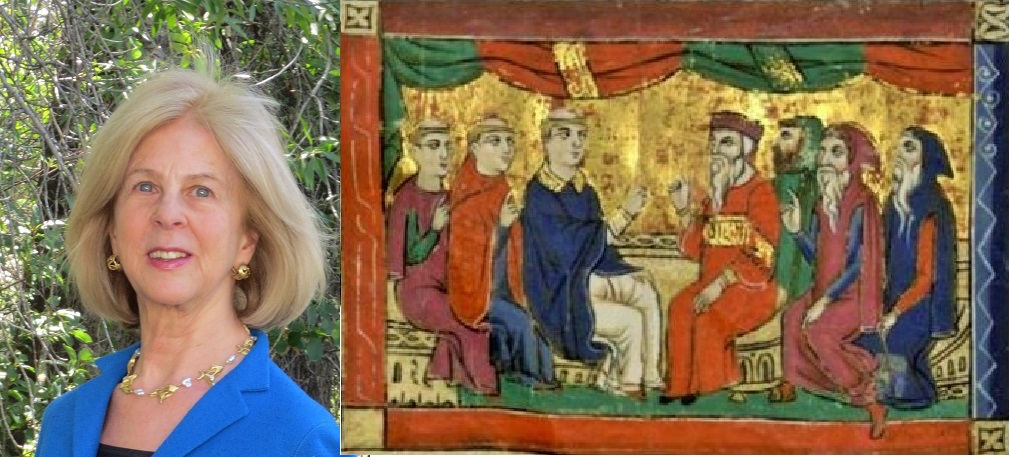
You may be aware by now that March is Women’s History Month. This year, it is also Lent in most Christian faiths, nearly Passover by the Jewish calendar, and almost Ramadan in Islam. I thought it a good time to focus on a female scholar of Abrahamic religious history who has had a great deal of impact on me (and on the entire field of religious study: Elaine Pagels (pronounced Pay-gulls).
I grew up in the Evangelical United Brethren Church, but by the time I reached high school science courses, I had concluded that the entire King James Bible couldn’t be literally, factually true. In addition, I resisted many biblical teachings about women and women’s roles in the world and in the family. And I started doubting that the words of the bible were the words of God.
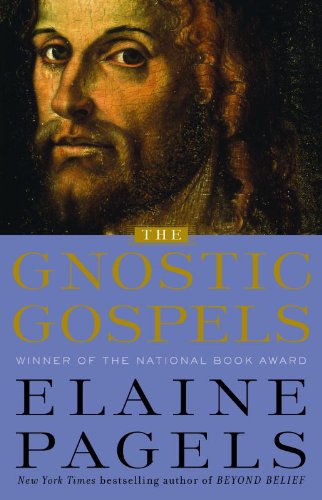
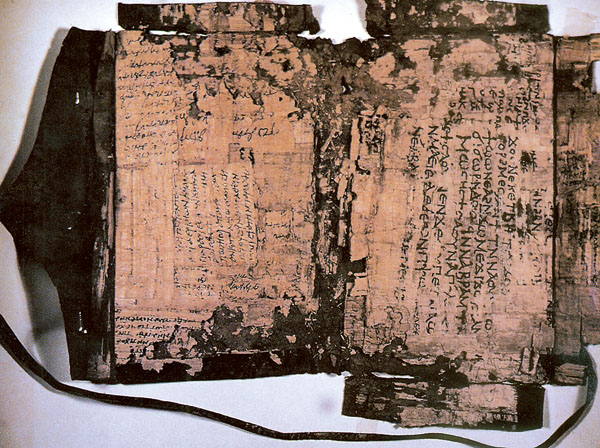
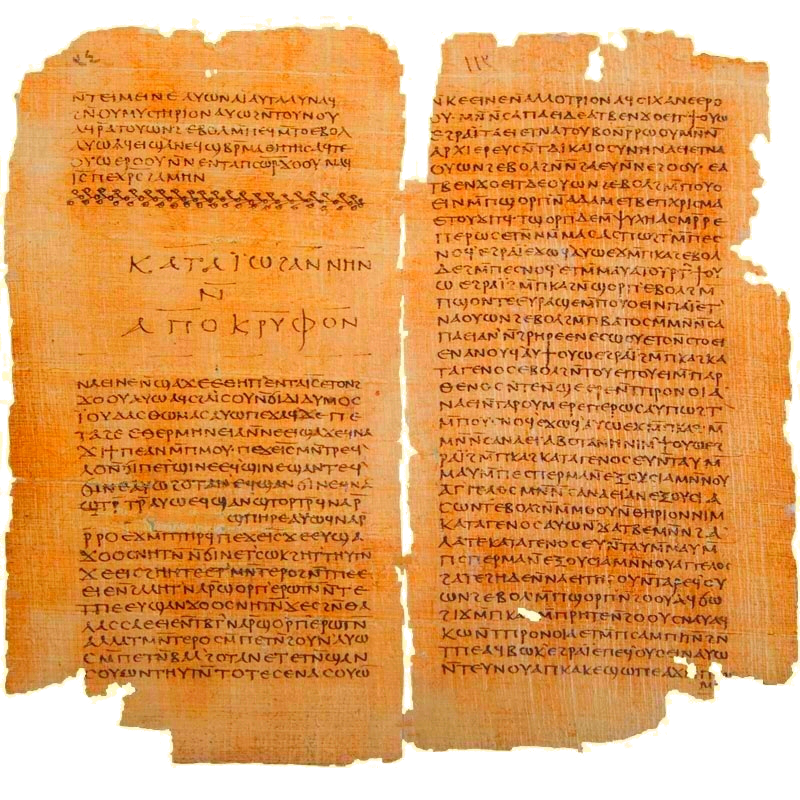
I first became aware of Elaine Pagels (pronounced Pay-gulls), née Elaine Hiesey, by reading her book The Gnostic Gospels. This groundbreaking book examines the divisions in the early Christian church, and the way that women have been viewed throughout Jewish and Christian history.
Gnostic
Adjective: relating to knowledge, especially esoteric mystical knowledge.
I came away with many questions, some of which I haven’t resolved to my satisfaction to this day:
What role did the patriarchal cultural and political structures of the time affect which of the various early Christian” books” would be brought together to become “the Bible”?
How many women were among the early followers and disciples of Jesus?
To what extent are the names attached to the books of the Bible accurate? (Except for Paul, little is known about any of the presumed authors.)
How much do the English translations of the Bible truly reflect the original language?
When whole panels of historians and scholars gather to make a revised Bible (e.g., The New Revised Standard Version), how can people believe that the Bible isn’t open to interpretation?
Modern Library named The Gnostic Gospels as one of the 100 best books of the twentieth century.
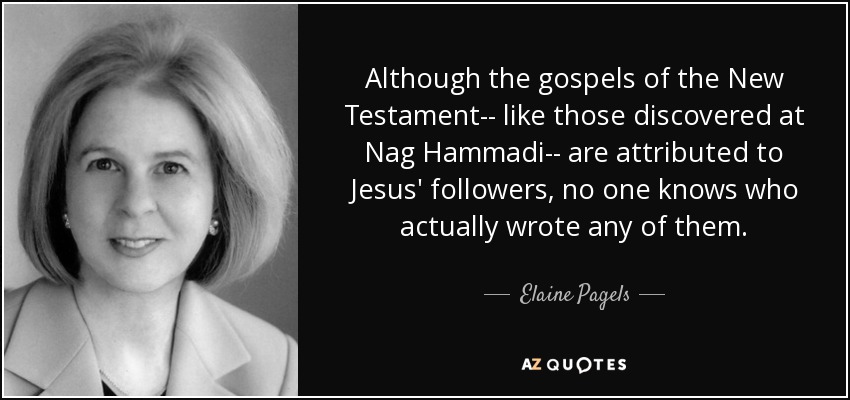
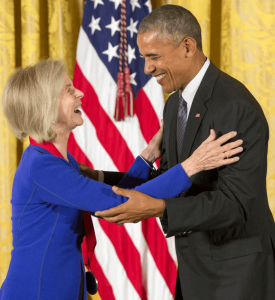
Elaine Pagels, née Hiesey (born February 13, 1943), is an American religious historian. She is the Harrington Spear Paine Professor of Religion at Princeton University. Pagels has conducted extensive research into early Christianity and Gnosticism. She started to learn Greek when she entered college, and read the Gospels in their original language.
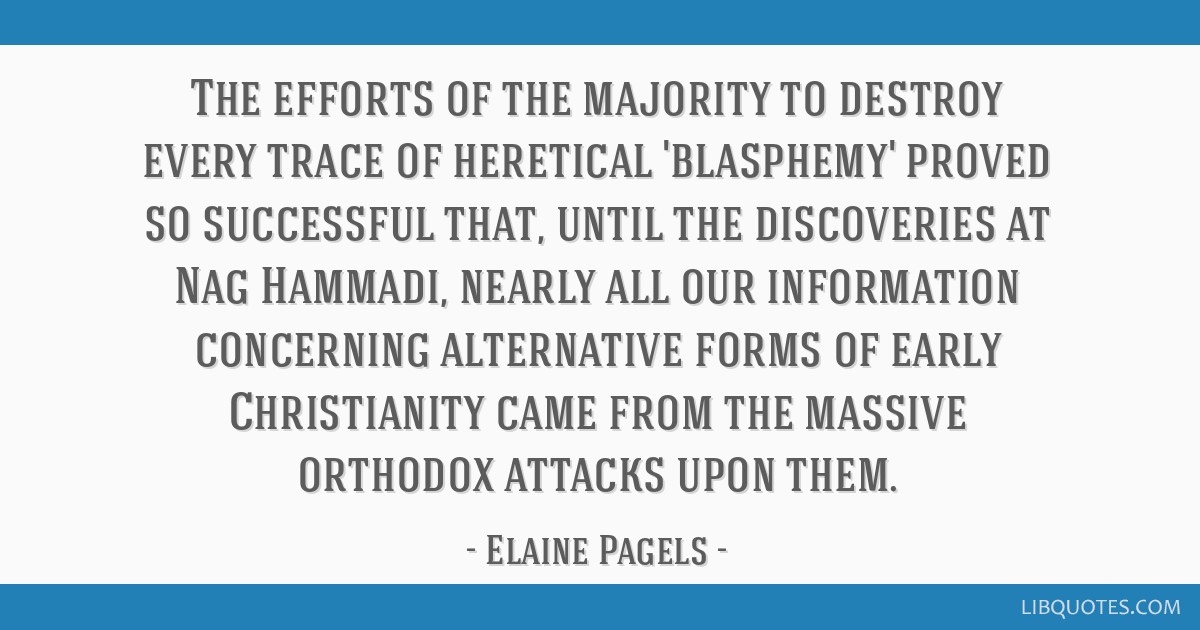
Pagels received a MacArthur Fellowship in 1981 for her work with the Nag Hammadi research and how it related to the development of early Christianity. With archaeological evidence, she demonstrated how controversies over scriptural interpretation relate to certain social and political situations. She has published widely on Gnosticism and early Christianity, and continues to pursue research interests on topics that include sexuality and politics, visions, and the origins of Christian anti-Semitism.
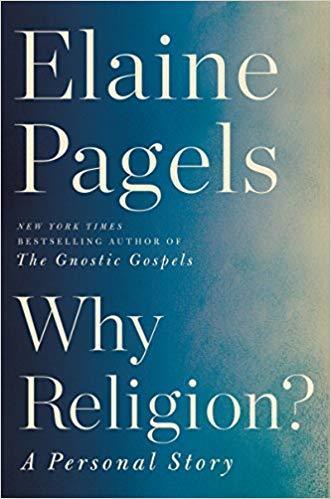
Elaine Pagels’s most recent book is very different from her publication. Why Religion? A Personal Story is a description of her own relationship with religion and how it changed over time. She discusses what originally led to her questions of faith in 7th grade and how studying religion helped her get through the loss of her young son and husband. With her own story, Pagels confronts questions of religion’s place in modern society and how religious traditions shape personal experiences.
Pagels deserves attention during Women’s History Month because she has led so many to separate scholarship, belief, and doctrine, and to examine the role of each.
In March of 2018 I posted “Unwritten History of a Thriver,” a Women’s History Month homage to my paternal grandmother, one of the strongest and most influential people in my life. Much of what follows was included then, but with a couple of factual corrections. I always think of her on March 1, because that was the day she was born in 1903.
Margaret Louisa Butcher, the ninth of twelve children, was born on Yost Branch in Johnson County, Kentucky. Some of her siblings couldn’t pronounce that name and thus she was known as “Lucy” from her infancy on.
.
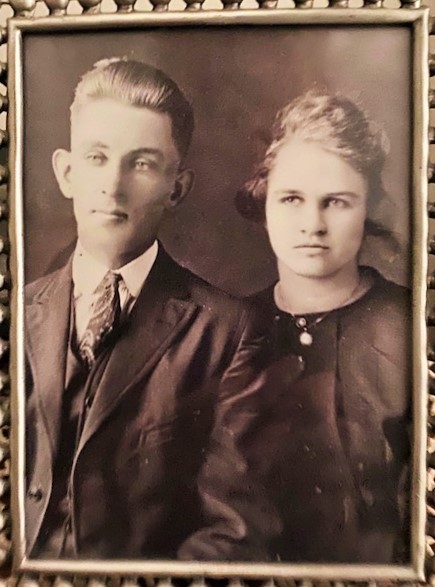
She married Allie Howard Parker and from then on was officially Lucy Butcher Parker. For many decades they lived at the head of old House Creek in Rowan County, Kentucky.
. .
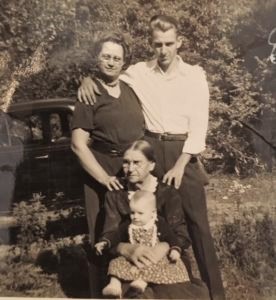
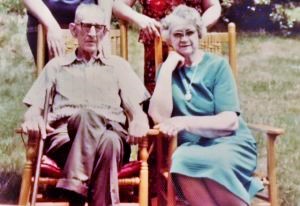
This picture of Granny, my father, Granny Butcher, and me was taken in the yard there. The Old Home Place (as everyone in the family called it) was four rooms and two porches. The front porch was for rocking, swinging, and whatever work could be done outside.
.
Diagram of the Old Home Place
The back porch was for churning butter and washing clothes. Eventually there was a wringer washer, but before that it was a washboard and two tubs. Washing on the washboard was so laborious that Granny would note in her diary how many items of clothes she washed in a day.
The house had electricity by the time I knew it but no running water or indoor plumbing of any sort. The well was in the backyard and the outhouse sat over a little tributary to Old House Creek.
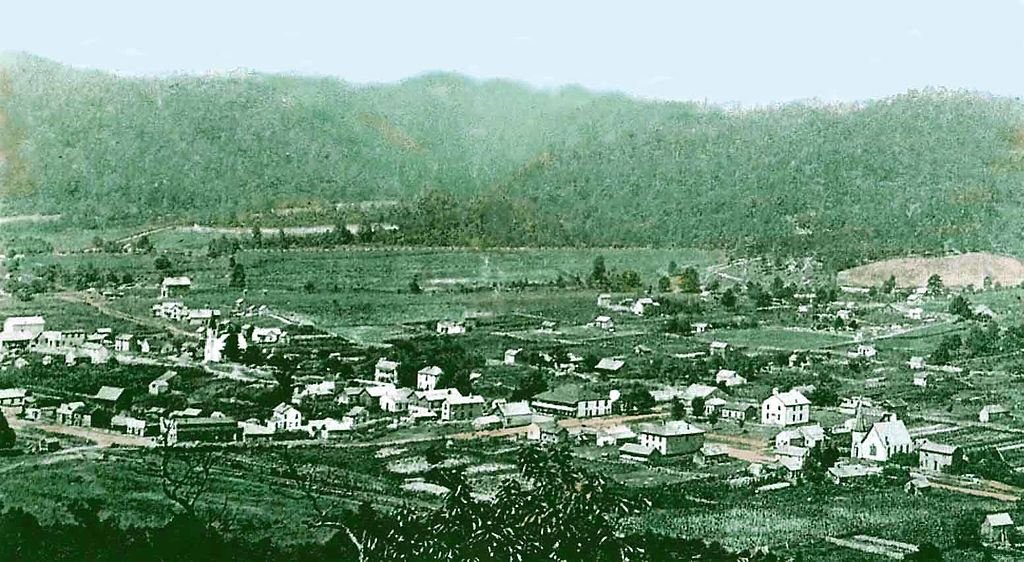
Rowan County, Kentucky circa 1890
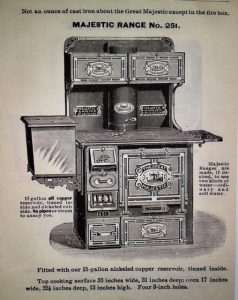
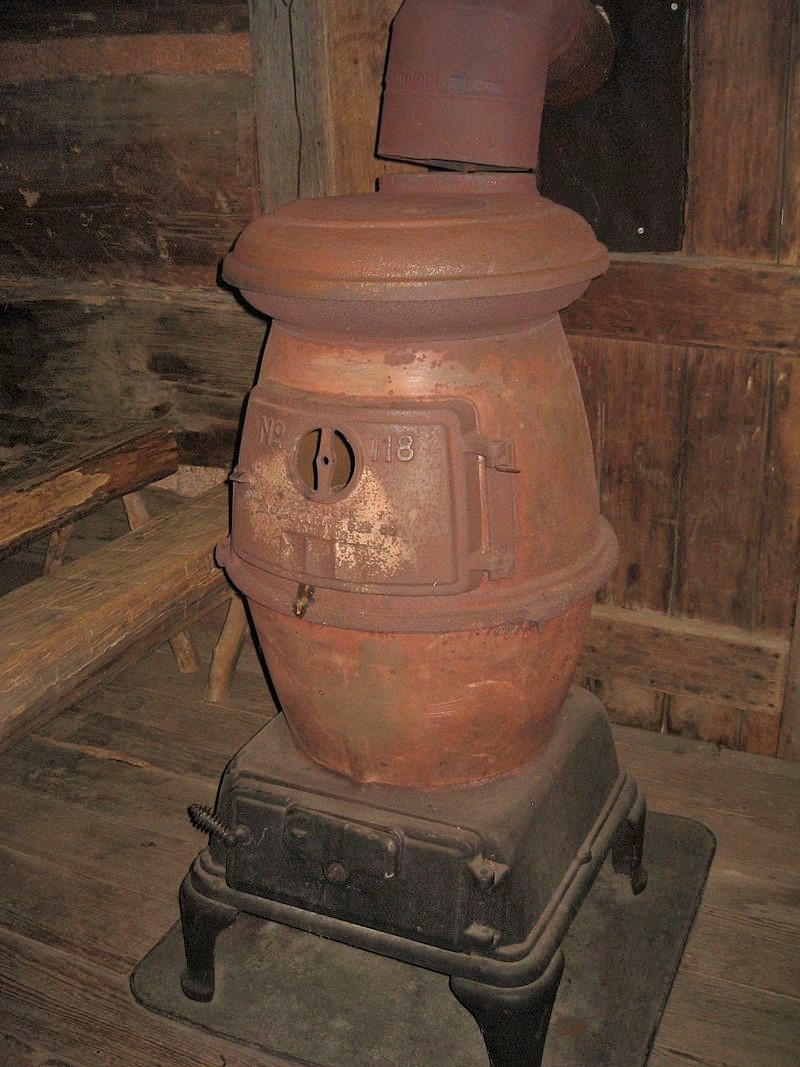
Granny cooked on a cast iron, wood-burning stove, and two of the other rooms were heated with potbellied wood/coal burning stoves, similar to those pictured below. Cornbread and biscuits were staples.
Of course the cook stove had no temperature indicators. Granny stuck her hand into the oven to determine the degree of heat by how long she could hold it there.
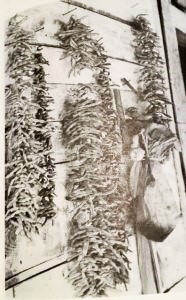
I used to play on the stacked wood behind the kitchen stove, where it was warm and close to where Granny worked. On the wall above me were strings of dried apple rings and leather britches beans (dried green beans).
One time I sneaked a snack of dried apples and it tasted so good that I ate the whole string. Then, being really thirsty, I drank dipper after dipper of well water. Granny didn’t punish me for the apples. She said the apples would punish me for her. As the apples rehydrated in my stomach, I thought I was going to burst and hurt something awful. Once the stomach ache passed, I had diarrhea so bad I had to run to the outhouse again and again.
From my adult perspective, I marvel at how Granny could be so cheerful given her arduous daily labor. She had a vegetable garden, the harvest followed by canning, drying, and root-cellaring for the off-season. She kept chickens and milk cows, requiring tending every day, regardless of weather.
Churn, butter, churn. Churn, butter, churn. Johnny’s at the garden gate Waiting for a butter cake. Churn, butter, churn.
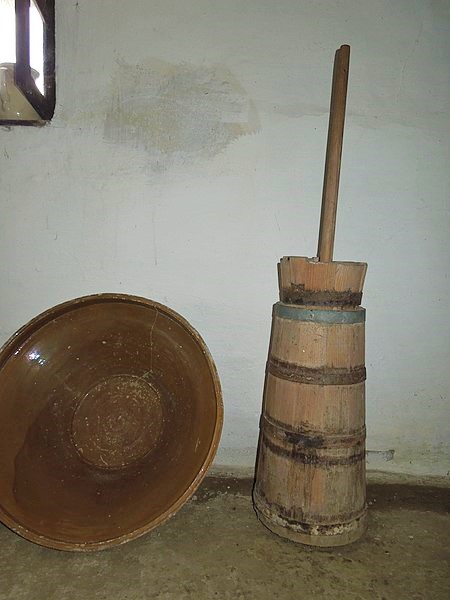
Granny churned her own butter and sold some of it to the general store out on the highway. I sometimes helped churn, though I didn’t have the stamina to do the whole job. The churning rhyme helped keep the rhythm smooth, moving the dasher up and down word by word.
According to my Aunt Mary, Dad’s younger sister, the VA Hospital sent Grandpa home in 1933 to die because they couldn’t cure his illness. He was a coal miner in his earlier years, before being gassed in France during WWI. He didn’t die, but while he struggled to regain his health, Granny and the children struggled to get by.
Corn Cobs and Husks
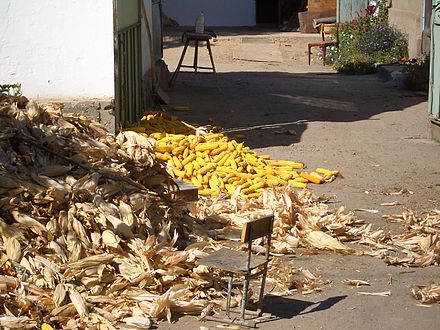
In the late 30s and early 40s, Aunt Nora and Dad set traps for fur-bearing animals, and sold the pelts. They also raised, dried, shelled, and shipped popcorn to add to their income, as well as picking blackberries for five cents a gallon. They shelled corn for a neighbor to take to the gristmill. The inner husks from dried corn was used for filling, like feathers for a feather bead.
Granny and Grandpa
Granny had a hard life—perhaps not by Appalachian standards of the time, but certainly by anyone’s standards today.
Wooden Birthing Chair
All their children were born at home, Granny sitting on Grandpa’s lap, his knees spread to make a birthing chair. Only five of her children grew to adulthood.
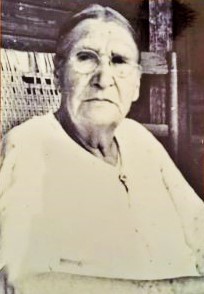
Her widowed mother, Granny Butcher, spent nearly all of her last seventeen years living with Grandpa and Granny. I’m told Granny Butcher was a kind, gentle woman. By the time I knew her, she was old and nearly blind.
Granny Butcher
Still, she did what she could to help—snapping beans, shelling peas, churning, and the like. Granny Parker nursed her through her last decline and did the same for Grandpa.
What I most remember about Granny—besides her never-ending work—was her laugh. She loved a good joke or humorous stories. I don’t remember her ever complaining. She read the Bible every day and Reader’s Digest as often as it came. She encouraged me to do all that I could, as well as I could.
I grew up wanting to be like her: strong, capable, and self-sufficient. I see a straight line between Granny’s influence and me earning a Ph.D. by age 25. I was the only one in my parents’ generation or mine to go to college.
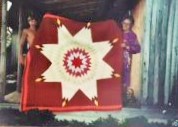
Two of Granny’s Quilts
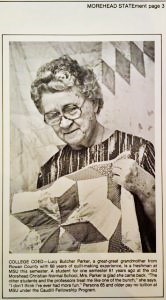
Granny made all the quilts for her family. I have several of her quilts, and have passed some along to my children. In her later years she sold quilts to people from most if not all of the United States.
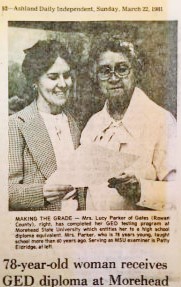
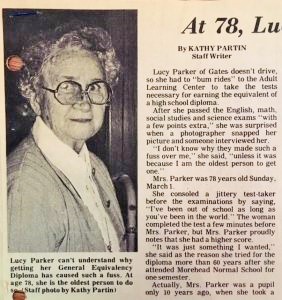
As a widow, she continued to make and sell quilts. I thought her life was pretty much as it always had been until she sent me this newspaper clipping about being the oldest person in Kentucky to earn her GED.
A Few of Granny’s Press Clippings
By then Granny had a phone and I called her. “You never had a high school diploma? How can that be? Didn’t you teach school before you got married?” She said, “No I never had a diploma. I studied at Morehead Normal School to be a teacher and then took the state examination. Don’t you remember me telling you that I was licensed to teach by examination? I was in the first group that had to go to Frankfort to be tested.”
Granny’s Quilts in the Newspaper
And the next thing I knew, she had enrolled in college! If I remember correctly, Morehead State University created a senior citizens scholarship to cover her tuition and fees. Granny never learned to drive, so she had to plan her classes around the bus schedule and when she could get a ride.
I saw Granny shortly before she died at age 81. I asked whether, if she had it to do over again, she would change anything about her life. I expected her to say something about how her life could have been made easier.
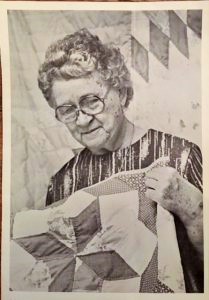
Granny Making a Quilt
What she did say was, “The only thing I regret is that I’m a junior and won’t live long enough to get my college diploma.”
During Women’s History Month, consider the important women in your history. And let me know about them!
Goldenrod, State Flower of Kentucky by T. Parrish of T. Parrish
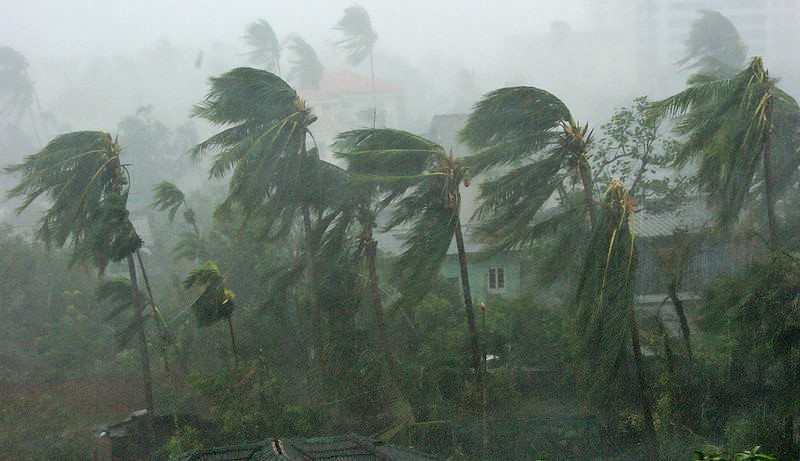
Wind interacts with water much the way it interacts with land. Local breezes are of most significance to athletes such as golfers, tennis players, sailors, and football players—anyone whose goal requires a precise interaction between object and wind, even a light one.
Unpredictable Winds
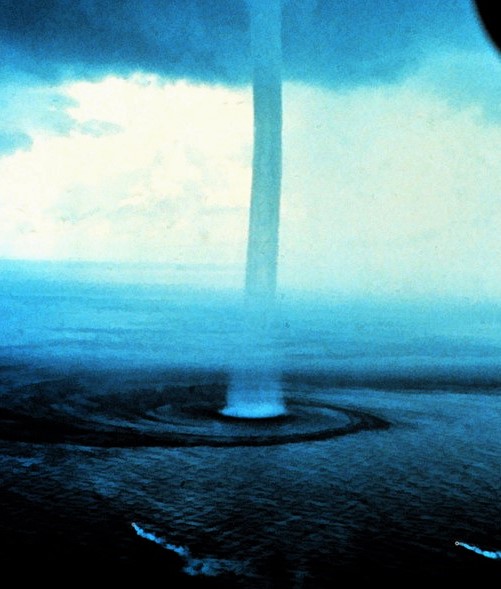
Waterspout
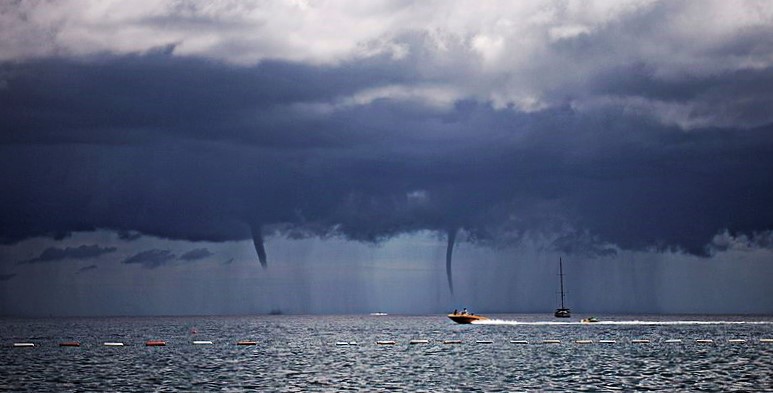
Tornadic Waterspouts in Budva
Waterspouts are largely comparable to dust devils on land. They fall into two categories: fair weather waterspouts and tornadic waterspouts.
Fair weather waterspouts are generally not associated with thunderstorms. A waterspout develops on the surface of the water and works its way upward. Fair weather waterspouts form in light wind conditions, so they normally move very little. Typically, fair weather waterspouts dissipate rapidly when they make landfall, and rarely penetrate far inland.
Tornadic waterspouts develop downward in a thunderstorm, and form over water—or (less often) move from land to water. Except for their development, they have the same characteristics as land tornados. They are associated with severe thunderstorms, and are often accompanied by high winds and seas, large hail, and frequent dangerous lightning.
Steam Devils
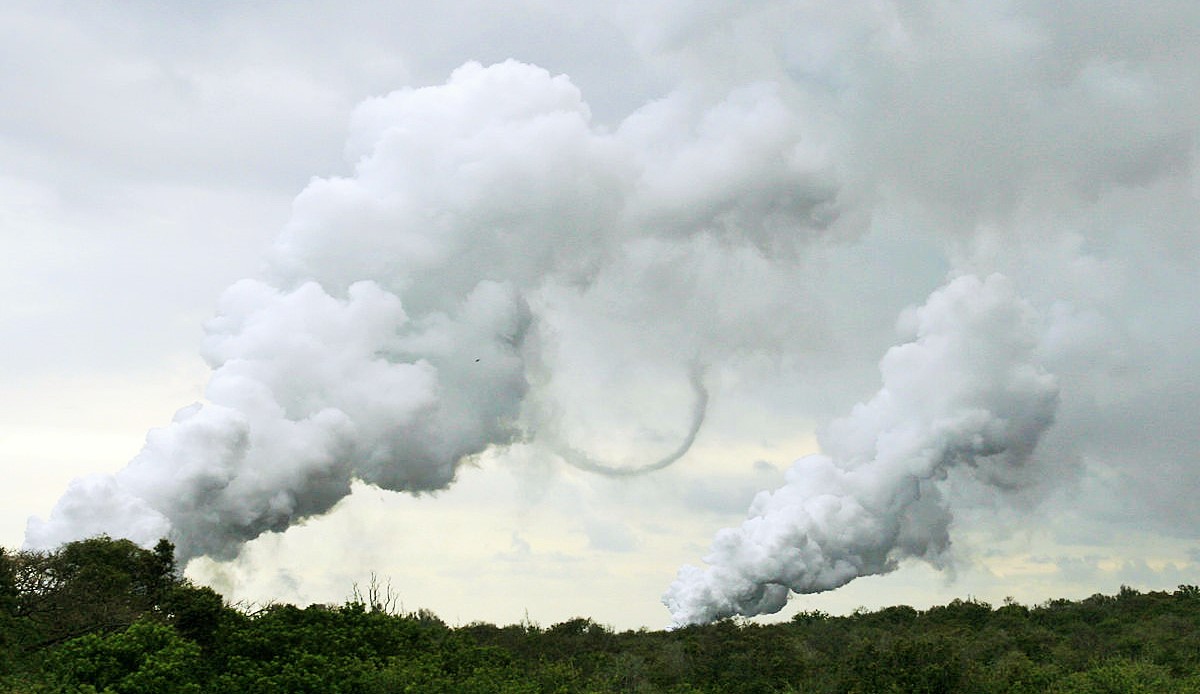
Steam Devils in Yellowstone Park
A steam devil is a small, weak whirlwind over water (or sometimes wet land) that has drawn fog into the vortex, which makes it visible.
Steam devils form over large lakes and oceans during cold air outbreaks while the water is still relatively warm, and can be an important mechanism in vertically transporting moisture. They are a component of sea smoke.
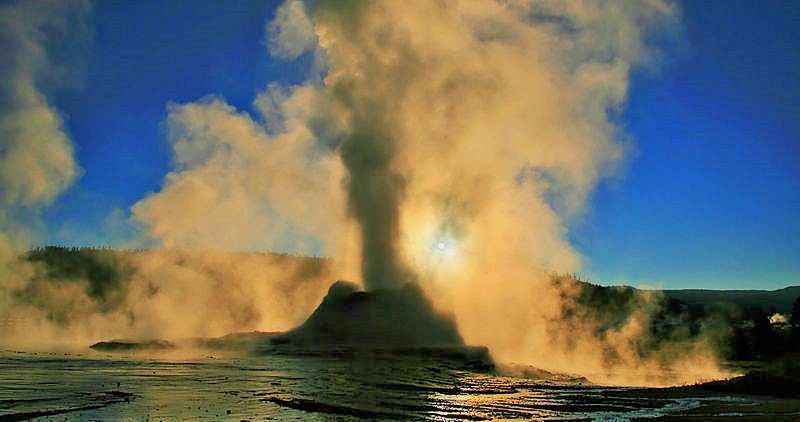
Castle Geyser in Yellowstone Park
Smaller steam devils and steam whirls can form over geyser basins even in warm weather because of the very high water temperatures. Hot springs in Yellowstone Park produce them on a daily basis, though they tend to be rare in nature.
Steam devils and steam whirls look very ethereal and frequently give rise to stories of ghosts and spirits. Because some of these geysers and temperature changes are regular and some are not, characters living by or traveling through areas “haunted” by steam devils could be seen as cursed, magical, outcast, guarded, etc. by nearby communities.
Tornadoes and Invisible Tornadoes
Invisible Tornado (Mostly)
A tornado is a narrow, violently rotating column of air that extends from a thunderstorm to the ground. We’ve all seen tornados, at least on the news or in movies. As if they weren’t dangerous enough, tornadoes can sometimes be invisible if they don’t pick up any water or debris while spinning around.
Tornadoes can be among the most violent phenomena of all atmospheric storms we experience. The National Weather Service categorizes tornadoes by a number rating, from zero to five, based on the twister’s inflicted damage according to the Enhanced Fujita Scale.
As a narrative tool, tornadoes offer immediate, often unforeseen danger. Even with modern meteorology tools, there is very little warning before a tornado touches down. The destruction caused by tornadoes is often very narrow, arbitrarily destroying one house while leaving its neighbor untouched.
Hurricane, Cyclone, Typhoon
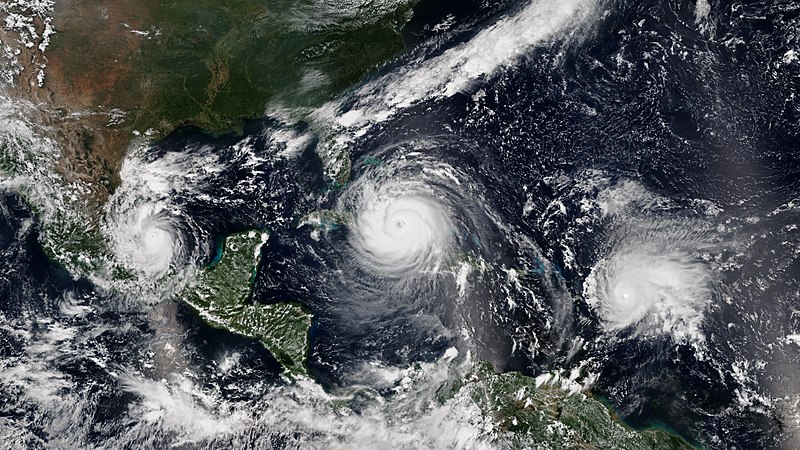
Hurricanes Katia, Irma, and Jose as Seen from Space
A tropical cyclone is a rotating low-pressure weather system that has organized thunderstorms. Tropical cyclones with maximum sustained surface winds of less than 39 miles per hour (mph) are called tropical depressions. Those with maximum sustained winds of 39 mph or higher are called tropical storms.
When a storm’s maximum sustained winds reach 74 mph, it is called a hurricane. The Saffir-Simpson Hurricane Wind Scale is a 1 to 5 rating, or category, based on a hurricane’s maximum sustained winds.
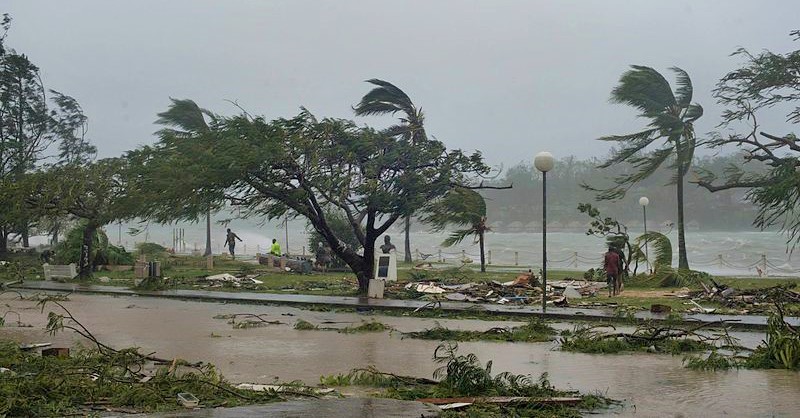
Aftermath of Cyclone Pam in 2015 (photograph by Graham Crumb)
Generally, hurricanes originate in the Atlantic Basin; storms of the same force in the Pacific Basin are called typhoons. “Hurricane” is thought to have originated in Taino, meaning “Wind God.” “Typhoon” may have come from ancient Greek “tuphon” meaning “whirlwind” or “big/ heavenly wind.” According to language, our ancestors thought these enormous storms had a supernatural origin.
Predictable Winds
Although much about the weather is unpredictable—or at least most predictable short term, other weather patters are almost like clockwork. These generally predictable winds are called Periodic or Trade Winds.
Sea Breezes and Land Breezes
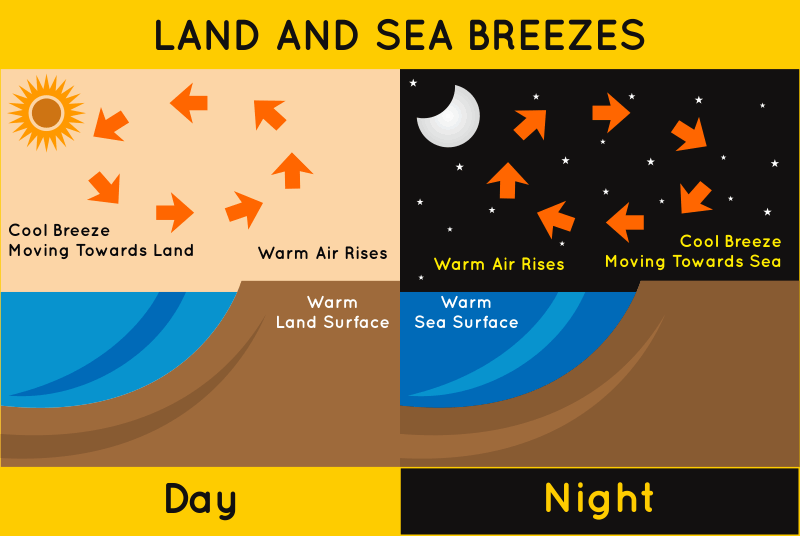
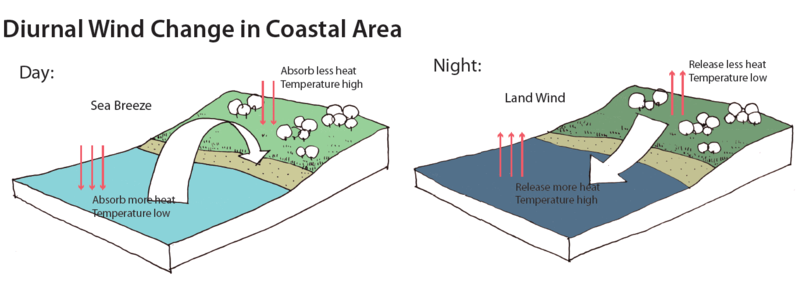
Illustration by Bharat Choudhary
These develop due to differences in the temperatures between water and dry land. A sea breeze or onshore breeze is any wind that blows from a large body of water toward or onto a landmass, carrying some moisture; land/offshore breezes blow to sea and are dry.
These breezes are periodic because they are generally predictable, morning and evening. Also, they are relatively localized, and much beloved by beachgoers.
Monsoons
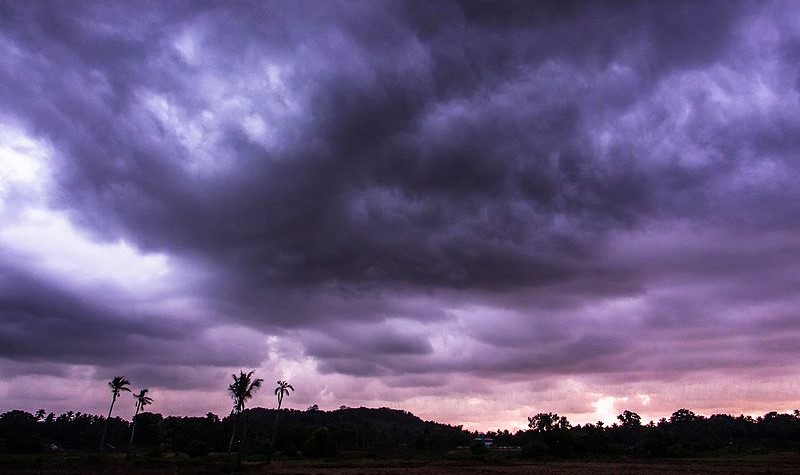
Incoming Monsoon Clouds in Goa, India
A monsoon is a months-long, seasonal, prevailing wind in the region of South and Southeast Asia. Between May and September, the wind blows from the southwest and brings rain (the wet monsoon). Between October and April, the wind blows from the northeast (the dry monsoon).
These rains blow in from the Indian Ocean and Arabian Sea in the southwest bringing heavy rainfall to the area. The temperature difference created by the Indian Ocean, Arabian Sea, Bay of Bengal and Himalayan wall forms the basis of monsoons in the Indian subcontinent.
The regularity of monsoon seasons governs the agricultural patterns in these areas. Changes to the monsoon—if it comes late, brings more or less water than expected, or moves its path—can cause enormous hardship to communities that rely on the crops grown according to expected patterns.
Mountain and Valley Breezes
Illustration by Yue Gan
Valley breeze is the hot air blowing from the valley up to the slopes of mountain slopes. In contrast, mountain breeze is the valley breeze that is the cold air from the mountain flow towards the valley.
Trade Winds and Westerlies
Prevailing Westerlies near Duloch, photographed by Peter Standing
These are permanent, prevailing winds. Indeed, the trade winds and westerlies are the most regular winds on earth. They blow with great force and in constant direction, which is why they are preferred by sailors. The trade winds bring heavy rain falls and sometimes contain intense depressions.
Trade winds blow from North east towards the equator in Northern hemisphere and South East Towards equator in southern hemisphere.
The directions of the Westerlies are opposite to trade winds and that is why they are also called antitrade winds. Trade winds are closer to the equator, in both the northern and southern hemispheres. Westerlies are closer to the poles
Characters might rely on regular trade winds to deliver supplies, escape a coming danger, relay news, or make a profit. Because of their regularity, meetings and departures can be worked into plots as scheduled, expected events.
Bottom Line: When wind meets water, it can be friend or foe.
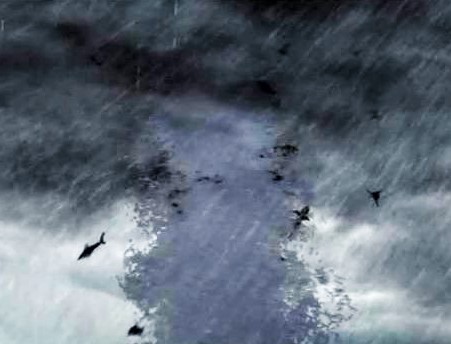
The most unpredictable wind of all is the dreaded Sharknado, which begins as a massive waterspout and sucks up sharks into its vortex. As the Sharknado moves over land, it flings these sharks into the flooded streets to chase down newly available human prey, much to the amusement of movie audiences.
A week ago, I wrote about all the packages that hadn’t arrived before Christmas. Well, as 2021 began, the backlog continued. Again, drawing from my circle of family and friends, the waiting continued.
Some local offices haven’t switched to the newest technology yet.
. .
LJ: I’m SO frustrated. We mailed a box of gifts to Virginia on December 7. It sat in Cuyahoga Falls [Ohio] PO till December 15 before it arrived 7 miles away in Akron regional distribution center, arriving on December 17. It has been sitting there since, no movement shown in the tracking system! I know all the problems they have been having this year, but what is going on now? It only needs to get to Fredericksburg now. Just a little farther…
. .
NP: We’ve had the same problem here. A package G was expecting sat 10(!) miles from our house for more than a week.
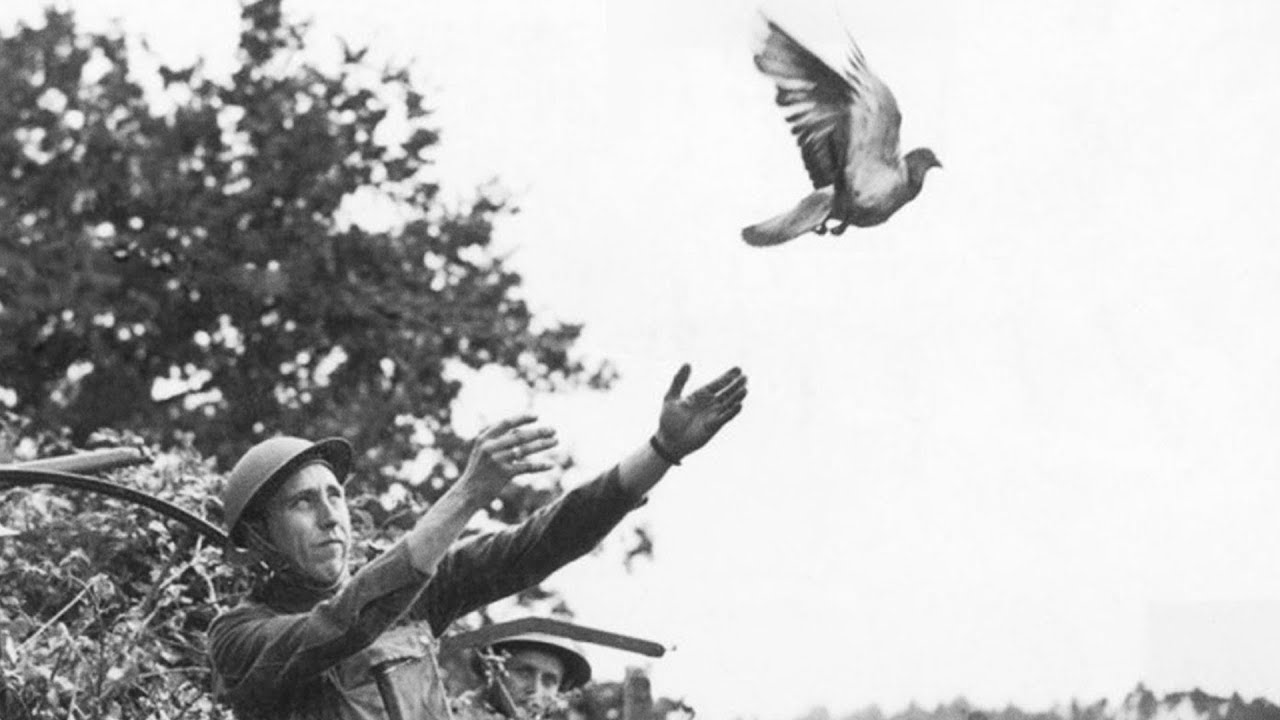
Pretty soon, the packages might start opening themselves.
. .
KC: My box is still in Akron. No movement. The cookies are stale.
. .
TB: Me too, L! I hope EL finally got hers.
DA: BTW—we were not nearly as happy with UPS & FedEx. Several packages were randomly tossed “somewhere” in the vicinity of the house. One package (of nice chocolates) sat for a day and a half out in the rain before the meter man saw it & alerted us.
LJ: MJ had a photo of a package he sent to his sister in Buffalo. The Amazon guy left it in the snow. M got the delivery photo notice and he sent it to his sister. If they can’t get up to the house because of heavy snow, delivery people should have some way of notifying the recipient. At least Amazon’s photos help with that.
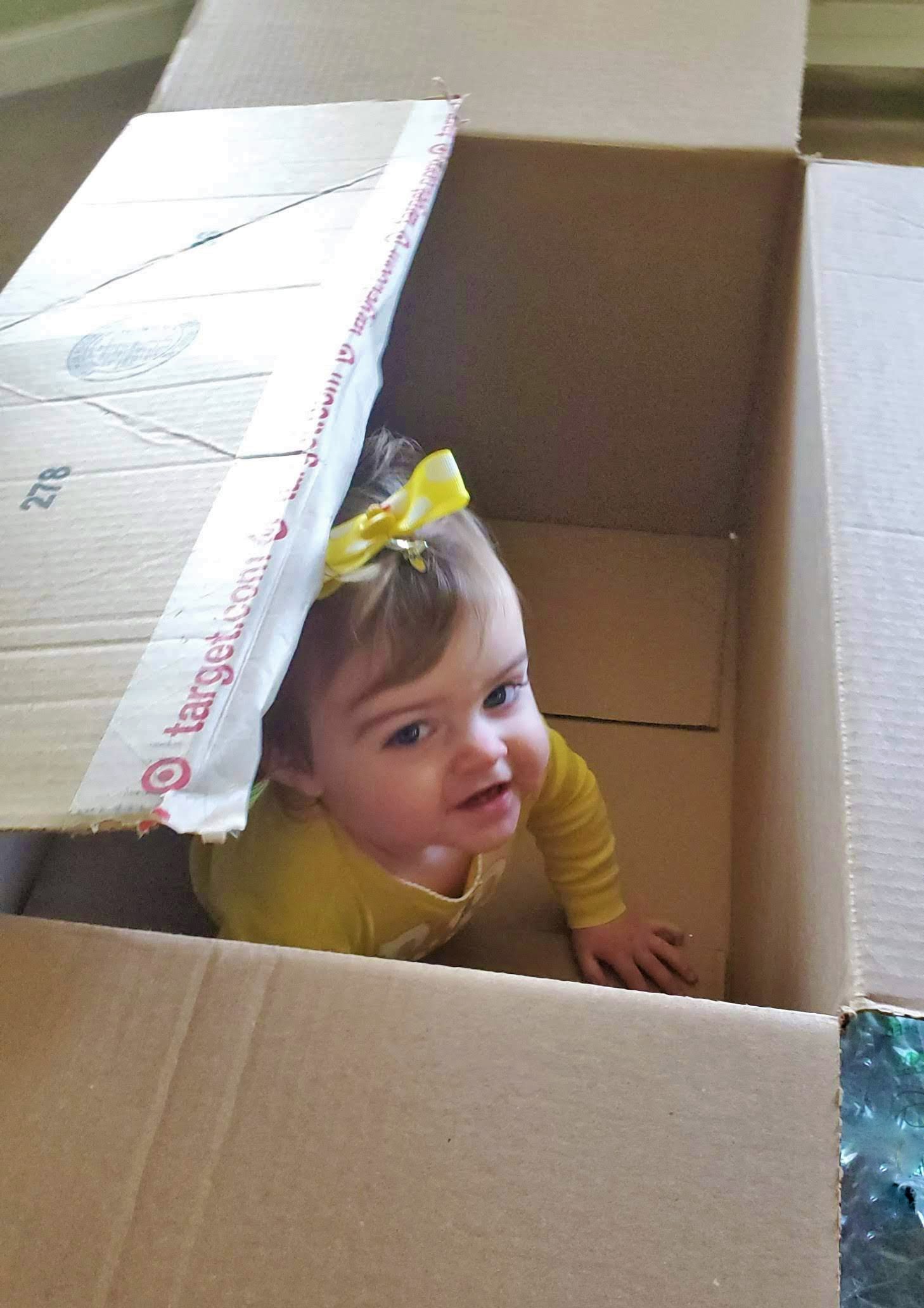
Good thing this one wasn’t left out in the snow.
TB: Our son’s pkg took almost 3 weeks from Oregon [to Ohio].
LJ: Weird, since the packages I sent to Florida and Memphis arrived at their destinations in time for Christmas with time to spare. Only my East and West destinations were screwed up. Arizona made it yesterday and Virginia is the one still traveling. That was the shortest journey by road mileage.
LJ: Mine is still at Dulles in Virginia; this is the 31st day. It needs to get to Fredericksburg. I’m happy you got yours before the New Year, however.
KC: I received a message on Dec 20 that my package was to be delivered Dec 3! It arrived on the 22nd!
There is a network distribution center in Cleveland that has been severely backlogged since September. Perhaps the letter carriers should upgrade from tricycles.
MH: I think Ohio is the problem! D had an order for pants from LLBean and there were in the center near Columbus for a month! It wasn’t a Christmas present so it didn’t matter. We didn’t realize so many people were having this problem. In Ohio’s defense, I’m sure the diversion of trucks for vaccine delivery and the major storms were a factor.
LJ: There is something wrong with the Ohio to Virginia connection.
SB: Yup, still waiting for mine. Jan 6th now.
DM: My friend ordered a Christmas present for her husband on 12/2 and by 1/4 it still hadn’t arrived!
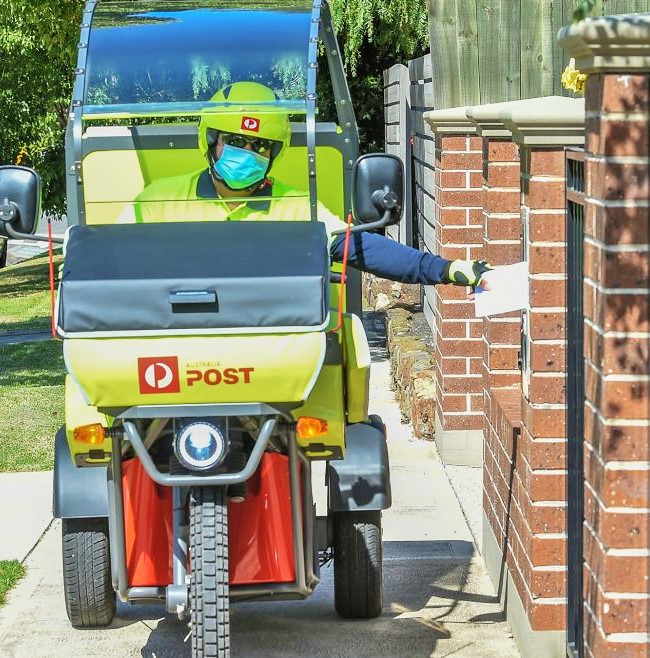
Australian mail is delivered faster because their tricycles are yellow.
DA: We must be the only people alive who had no (zero, null, nada) problems with package delivery. Our mailings to California, New Jersey, and Boston were delivered exactly when the tracking said they’d be. On the other hand, “normal” mail is quite another thing: no regular magazine deliveries (New Yorker, etc.), one priority mail that was sent from Hiram to our Hiram PO Box (for $3.80) took seven days. (Simply bizarre.) Not a single package or card from Europe has arrived yet—but Australian mail has exceeded all expectations. Tell me it’s not a plan to destroy the USPS so that it can be privatized….
[You may recall that in my blog about the Great Delivery Debacle posted 12/29, I offered three possible explanations—other than sheer overload—but an effort to privatize wasn’t one of them!]
Since January 1, a dam seems to have broken—but still no rhyme or reason I can find!
My order of poodles has finally arrived!
January 2-4, I received 11 packages, everything from nutritional supplements to a present I’d ordered to give as a present. Saturday and yesterday packages were delivered morning and afternoon.
Because you must be waiting with bated breath to know about the package from my sister, I won’t keep you in suspense: box of presents she mailed in Lancaster, OH, 12/11, arrived Saturday, 1/2! I was sorry to see that she had paid $20.40 for priority shipping!
Similarly, a standard 8.5X11-inch family calendar mailed from Massachusetts, $9.90 for two-day delivery, arrived after 5 days.
The other packages, mailed from all over the country between December 18 and 28, all arrived together. I noticed that two from Florida on the same day, one priority and one first class arrived together.
Surprise, shock, and awe! An item scheduled for delivery on January 6 arrived January 4!
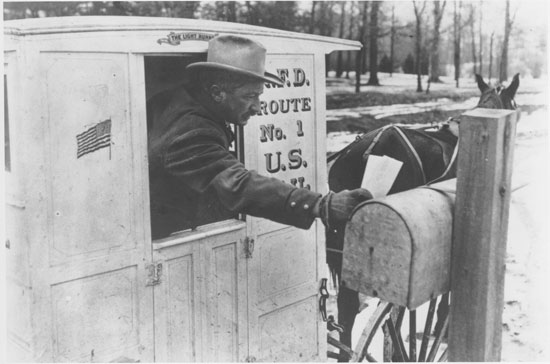
Some of the delivery vehicles are a bit out of date.
There is a method to all of this madness… sort of. Several factors combined this year to delay mail and package delivery schedules in every company. The various delivery services—US Postal Service, FedEx, UPS, Amazon, and others—often work together to carry goods to their destinations.
In particular, the Post Office is often responsible for delivering mail to individual residences in less populated areas, regardless of which company began the shipping. This means that a delay in any of the delivery services almost always ripples out.
Holiday delivery surges happen every year, but this year was extra special! You may remember some disruptions in US mail services from this past year, highlighted again at election time. Many of those disruptions are still in place.
I still think the new guy looks shifty.
Sorting equipment that was removed and destroyed has not been replaced. Delivery trucks have not been serviced and so have broken down. Employees are still exposed to COVID, and many are sick or have passed away.
Kim Frum, a senior public relations representative for USPS, released a statement that read, in part, “While every year the Postal Service carefully plans for peak holiday season, a historic record of holiday volume compounded by a temporary employee shortage due to the COVID-19 surge, and capacity challenges with airlifts and trucking for moving this historic volume of mail are leading to temporary delays.”
Employees at Amazon, FedEx, DHL, Hermes, and UPS also interact regularly with the public and thus are exposed to increased risk of COVID. International service has been disrupted because of travel restrictions. Everyone is dealing with increased volumes because people are ordering things online to comply with quarantine orders.
. .
The Postal Police take their job pretty seriously.
The madness comes from playing Russian roulette with your packages. Will your box be the one in the back corner of the truck? Will your letter be the one that won’t fit in the bag and has to be left for the next round? Will your parcel be the one that hasn’t been sorted by the end of the shift and must stay in the warehouse until tomorrow? Most chancy of all: whose mail will that shifty new guy take to the TV studio with him?
. .
Bottom line: I’m waiting to see what the new mailing normal will be.