
KNOW WHICH WAY THE WIND BLOWS

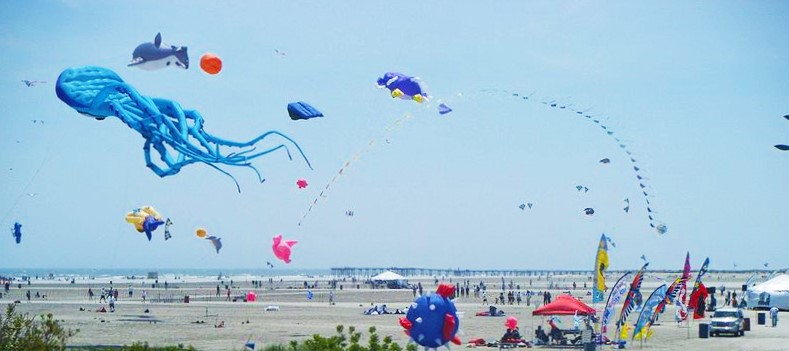
According to the wind sock above, the wind when the photo was taken was blowing at about 6 knots (7mph). The sky is clear, the sun is bright, and there are no flying sharks. Unless you live in England or Seattle, this is nothing to write home about.

Even though you can’t actually see it, wind can create some pretty incredible things to write home about. Our ancestors definitely thought the wind was worth writing about, especially when it picked up everything around and sent it flying through the air.

Like snow, there are seemingly endless names for specific types of winds. If you really want to know about the difference between piteraq and bora winds, check out the World Meteorological Organization or National Oceanic and Atmospheric Administration websites. I’ve included some of the most spectacular and most mythological wind events here.

Dust Devils
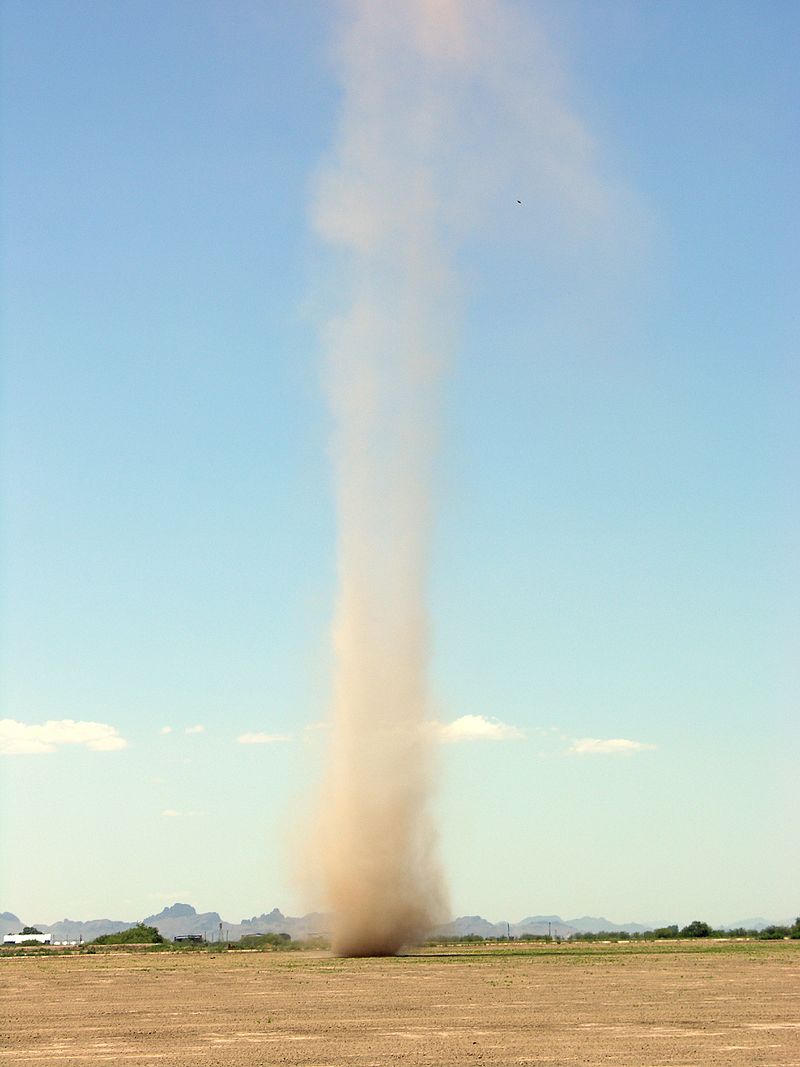
Arizona

Suppose you experienced a Dust Devil? A small dust devil, say 18 inches wide and a few yards tall is a sight to behold. A BIG dust devil—say 33 feet wide and 1000 feet tall—can be terrifying!

An extreme dust devil can reach 60 mph and last up to 20 minutes. In the process, it could lift more than 12 tons of dirt, and the friction between wind and surface can create sparks often mistaken for lightning. In fact, dust devils are not associated with storms.
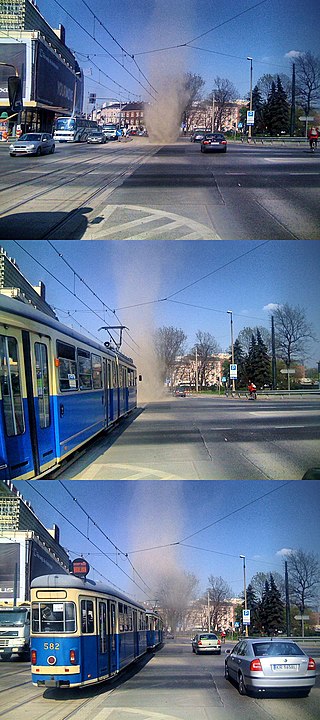
Krakow

Dust devils have been known to lift roofs and collapse buildings, sometimes killing people. They’ve been reported to fling animals and 10-year-old children about. Inflatable bounce houses are especially vulnerable.

Where do they come from? When hot air at ground level rises quickly and hits a pocket of cool/cold air, it can start to spin, forming a column of air. The spinning, along with friction from the surface, allows the column to move, picking up dust along the way. Dust devils are especially likely in deserts. Usually they cause little damage.

Other Names for Dust Devils
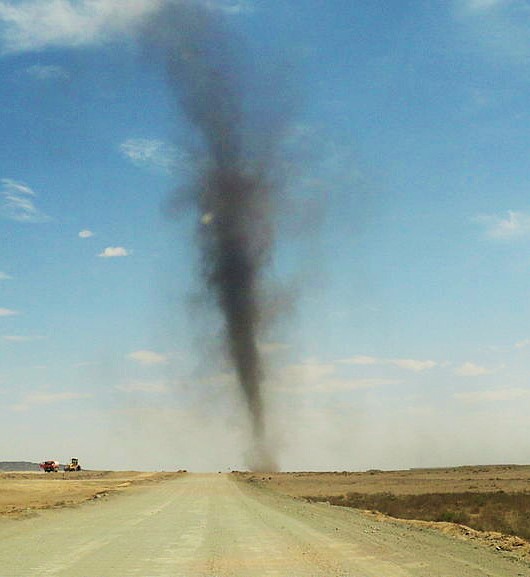
Coal devil in Mongolia
  • Dancing devil
  • Dirt devil
  • Dust whirl
  • Sand auger
  • Sand pillar
  • Redemoinho in Brazil
  • Remoinho in Portugal 
  • Willy willy or whirly whirly in Australia 
Beliefs About Dust Devils
Saci-Pererê by J. Marconi
  • Chindi is the Navajo term for spirit or ghost
    • Good spirits whirl clockwise; bad spirits spin counterclockwise
  • Ngoma cia aka is the word for women’s spirit/ demon or women’s evil among the Kikuyu in Kenya
  • Fasset el ‘afreet from Egypt, meaning ghost wind
  • In Brazil, Saci-Pererê is said to live inside the dust devil and grant wishes to anyone who can steal his magic cap

Other Weird Winds
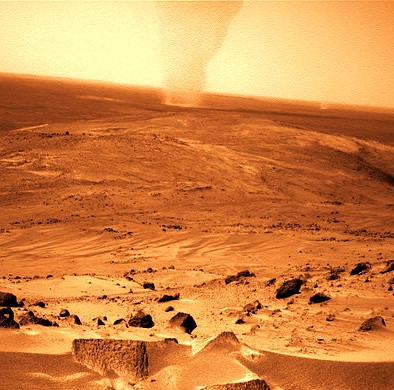
Everything is more awesome on Mars, even dust devils.

Martian dust devils form the same way as on Earth, but bigger: up to 10 times as high and 50 times as wide, with mini-lightning flashes. Dust devil trails on earth’s deserts usually disappear in a couple of days; on Mars, they remain visible (so I’m told) for weeks.
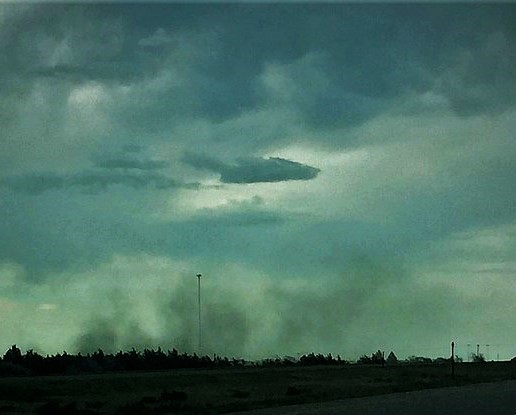
Gustnado in Colorado

Gustnadoes are closely related to dust devils, short-lived and ground based, but they have stronger winds (maybe as strong as weak tornadoes) and develop over open plains areas of the U.S. They don’t form funnels and may go unnoticed. Though a gustnado can cause serious damage, it’s not tall enough to register as a tornado.
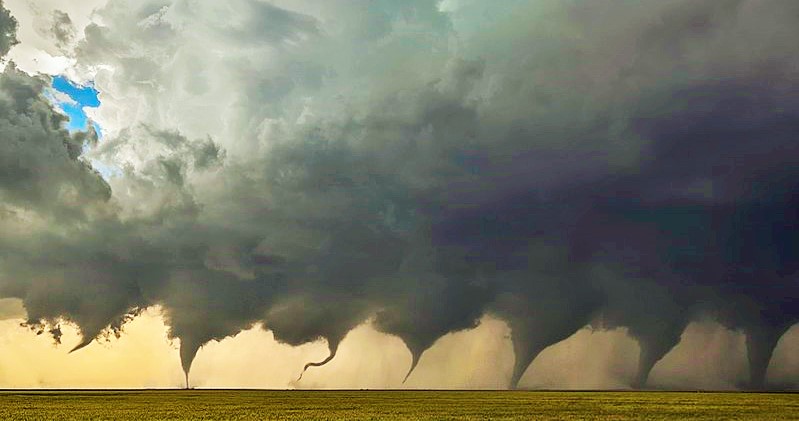
Composite photo showing the development of a tornado

The actual definition of a tornado is a bit fuzzy, even among the experts. They can’t seem to agree on when one tornado stops and another starts. The swirling wind tunnel has to touch the ground and the clouds at the same time before it counts (that’s why gustnadoes aren’t really tornadoes). Tornado strength is judged by size, wind speed, and distance over the rainbow it can throw a farmhouse.
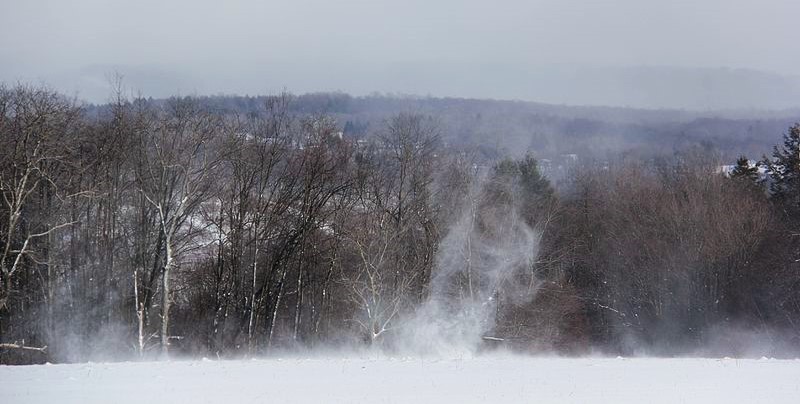
Snow devil

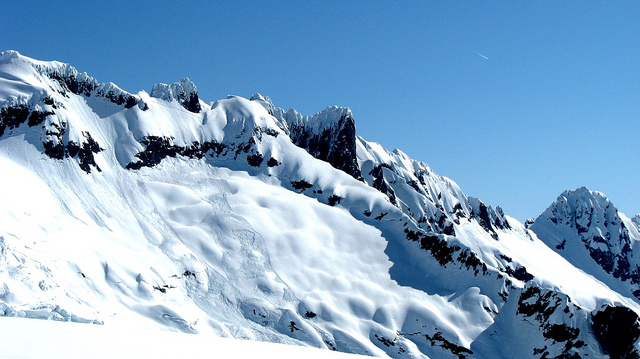
Snow devils develop when a strong wind hits a solid object (like a mountain), spins downward and lifts up snow, creating a vortex. They usually last only a few minutes, and they are small (seldom more than 30 feet across). Still not something one would want to be out in.
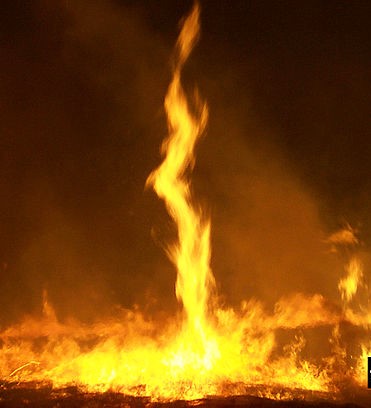
Fire whirls, aka fire devils or fire tornadoes, develop a vortex inside a wildfire. They are whirling columns of fire rising up into the air. They carry ash, debris, and smoke and feed the fire and spread it. Fire whirls have also been reported at volcanos and during earthquakes.
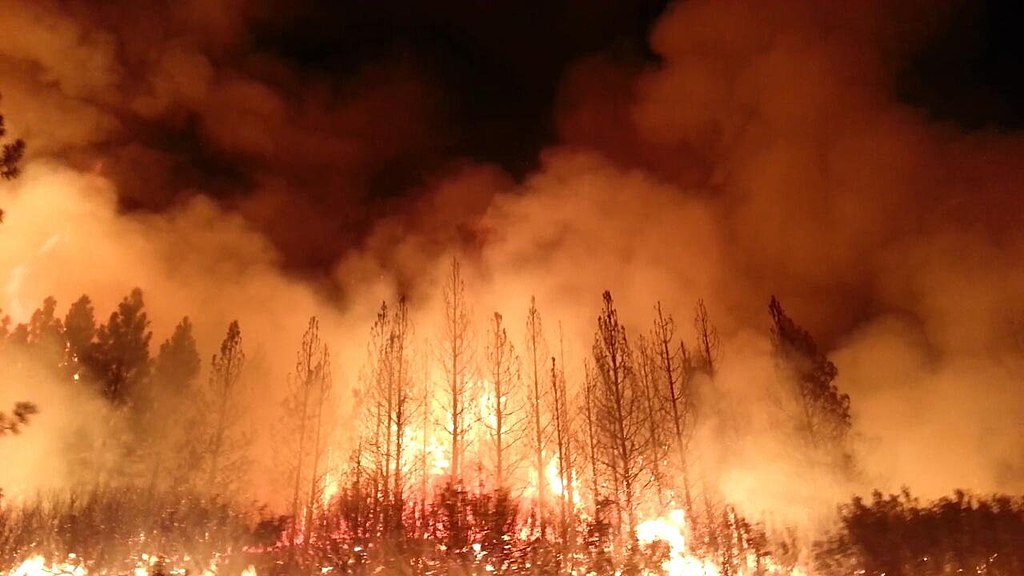
California Rim Fire, 2013

A firestorm develops when a fire becomes so big and intense that it creates its own storm-force wind systems. Firestorms are most often associated with wildfires and brush fires, but they can also be created when large sections of densely built cities catch fire.

Haboob in Texas

Haboob (هَبوب‎) is a kind of huge dirt devil found in deserts around the world, including the U.S., associated with thunderstorms. When the rain is released, it causes sand to blow up, making a wall of sand that precedes the storm. Haboobs can be several miles high and 60 miles wide.
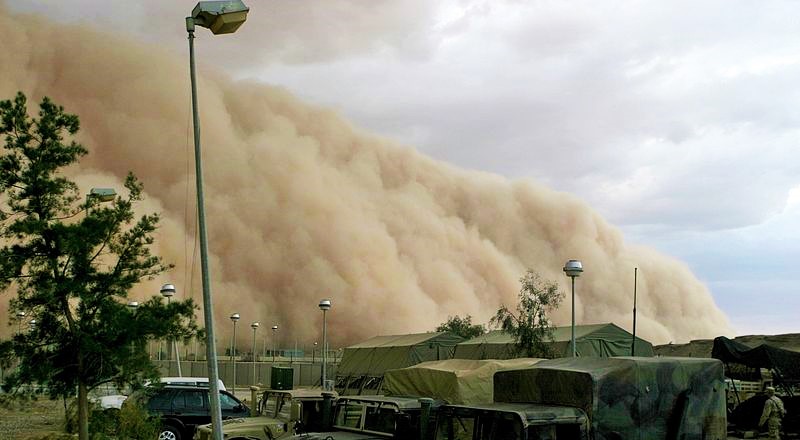
Sandstorm in Al-Assad, Iraq

Sandstorms (aka dust storms) don’t whirl or spin. It’s essentially a wall of wind that pushes sand in a more-or-less straight line. Entire dunes can be picked up and moved great distances. Sandstorms occur worldwide, wherever deserts are found.
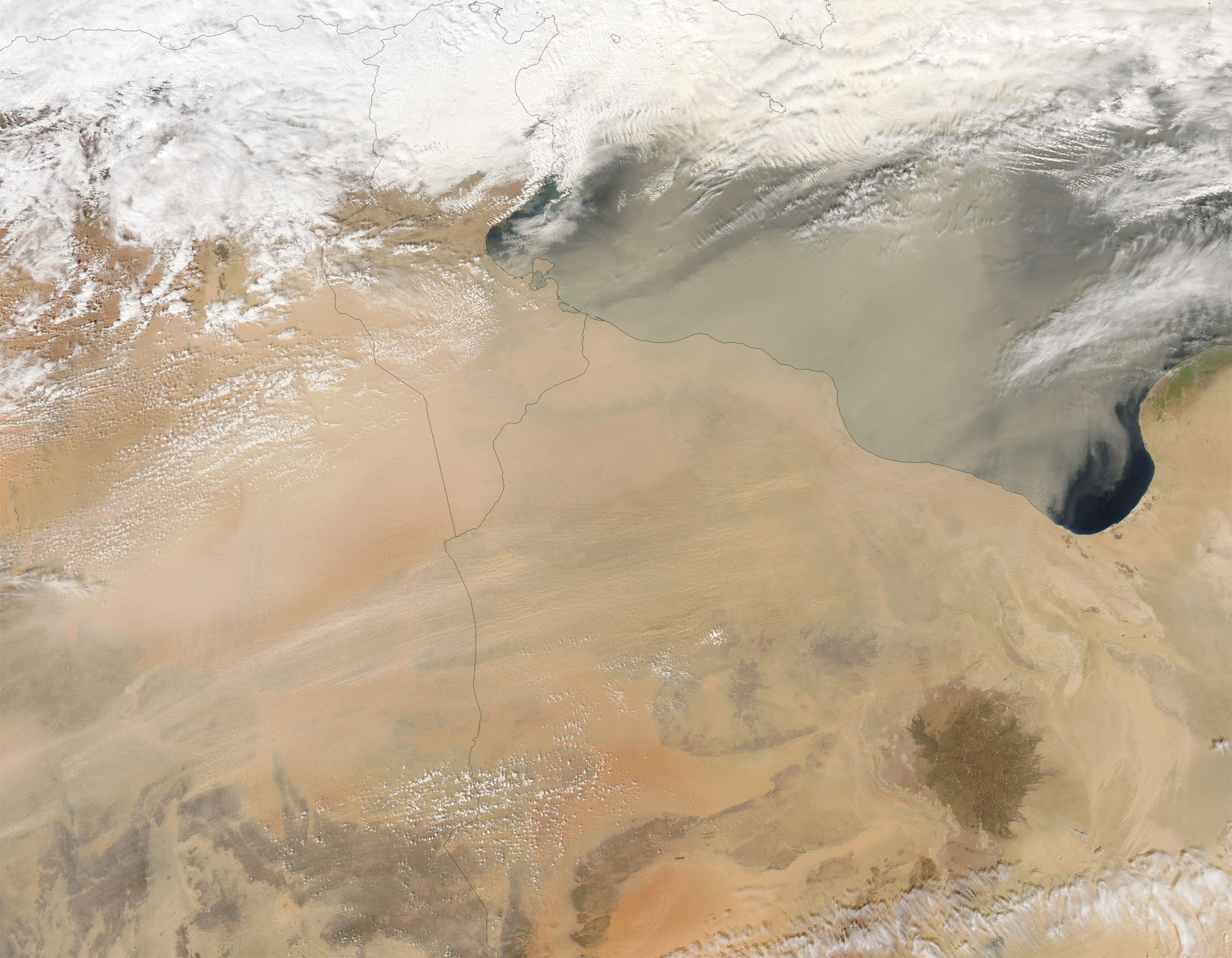
Khamsin over Libya, seen from space

Each spring, areas along the eastern Mediterranean, North Africa, and the Arabian peninsula are hit by a khamsin (خمسين from Arabic word for 50).  The khamsin is a 50-day wind that coats everything in sand and dirt. In 2009, remains were found that appear to be those of a Persian army of more than 50,000 that vanished in 525 BCE. A strong wind that blew up from the south is suspected of covering them in suffocating mounds of sand.
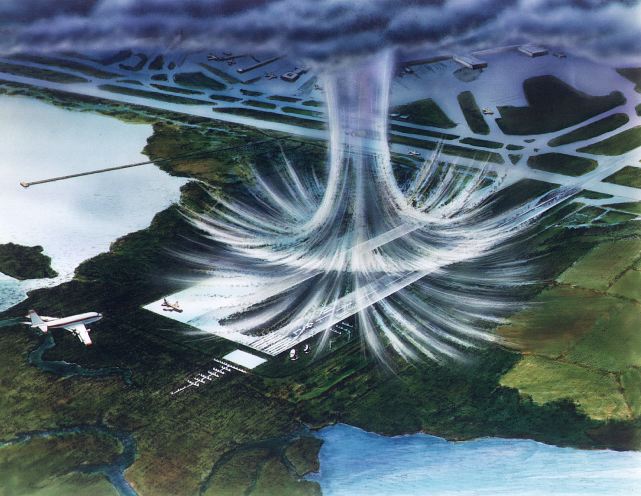
Illustration of a downburst

A downburst occurs when the downdraft of a thunderstorm hits the ground and forces the air to gust outward and curl backward. As it moves horizontally, the wind can cause extensive damage to everything it passes over. The wind curling backward can cause further damage, creating tornadoes, waterspouts, snow devils, sharknadoes, and fire whirls.

Downburst (micro) caught on film
  • macroburst happens when an extremely strong downdraft hits the ground. Horizontal gusts cover an area more than 4 km in diameter. These gusts can be as destructive as a tornado.
  • Microbursts are smaller in size and shorter in duration. A microburst is less than 4 km across and short-lived, lasting only five to 10 minutes, with maximum windspeeds sometimes exceeding 100 mph.
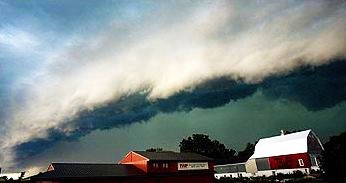
derecho is a widespread, long-lived wind storm that is associated with a band of rapidly moving showers or thunderstorms. A typical derecho consists of numerous microbursts, downbursts, and downburst clusters. By definition, if the wind damage swath extends more than 240 miles (about 400 kilometers) and includes wind gusts of at least 58 mph (93 km/h) or greater along most of its length, then the event may be classified as a derecho.
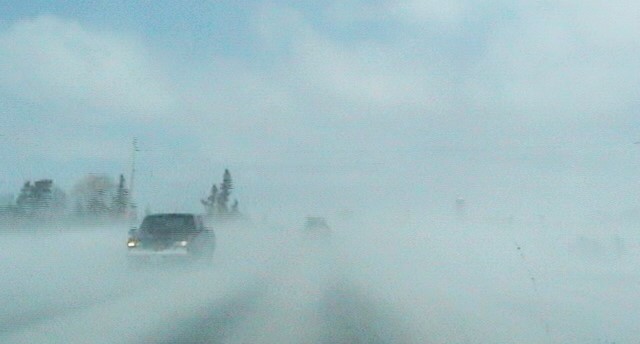
Ground blizzard with blue skies

Ground blizzards don’t involve any snow falling from the sky, but they are still deadly. Instead, snow that is already on the ground is whipped into whiteout conditions by an extreme cold front. Temperatures plummet, and snow on the ground is picked up by wind gusts up to 60mph. The Arctic cold fronts that cause ground blizzards also cause extreme low temperatures.
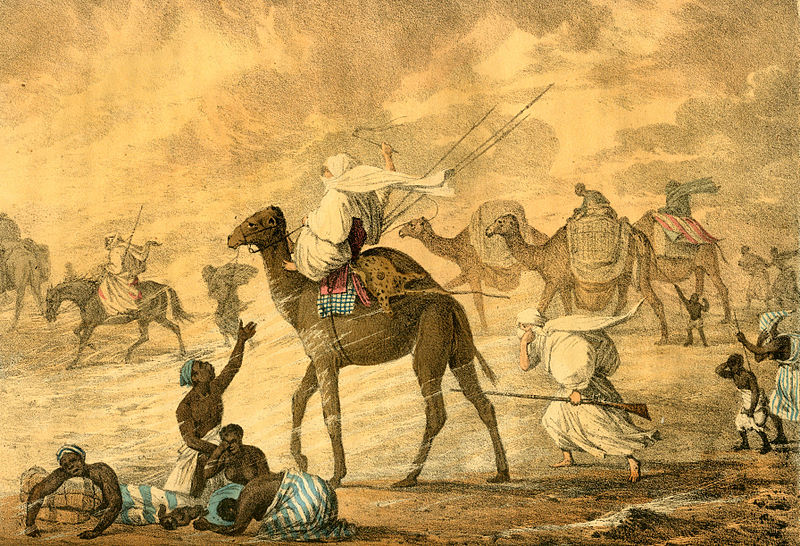
A Sand Wind on the Desert by George Francis Lyon

Every one of these wind events have been known to kill people! In addition, extremely hot or cold winds can do the same. Though we usually can’t see the air itself, the effects are pretty amazing!

Godly Winds

Riders of the Sidhe, by John Duncan 1911
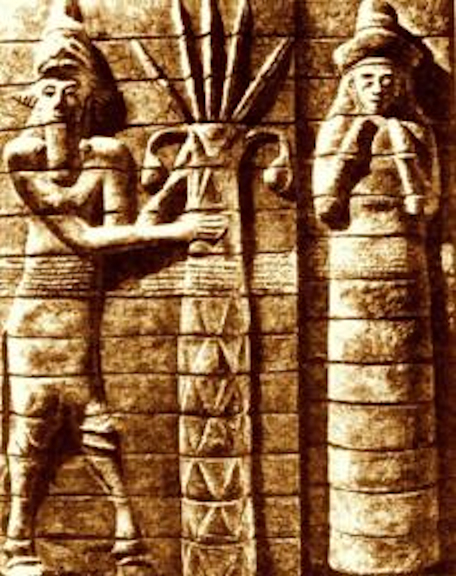
In Irish folklore, the Sidhe or Aos Si are the supernatural pantheon. Sidhe is used to mean fairies, but the Old Irish translation is “wind” or “gust.”

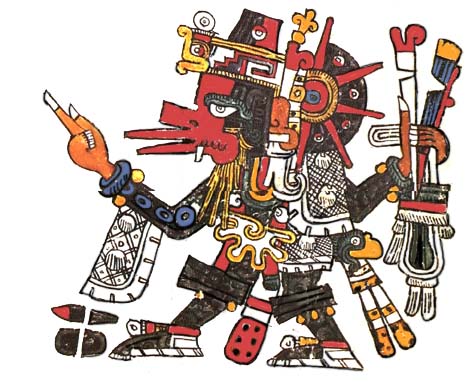
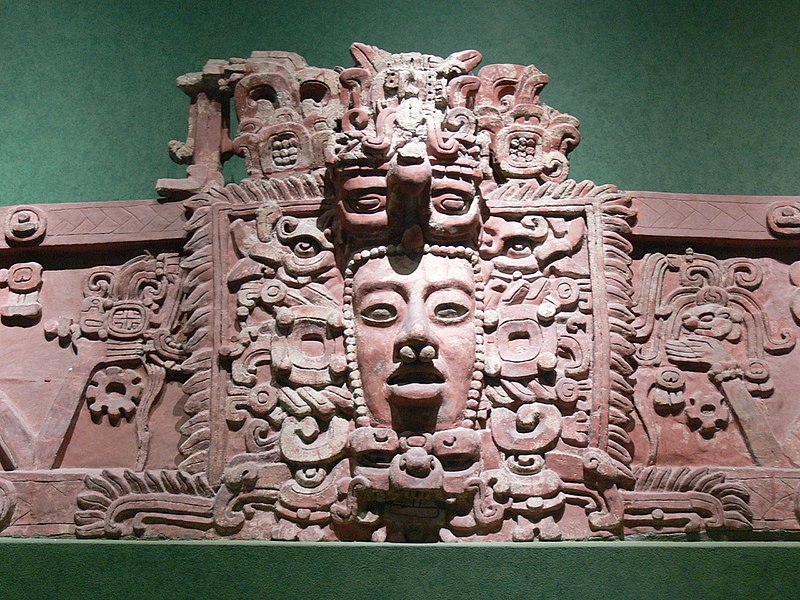
Deities connected to the wind are often closely related to those of the air. In many traditions, the air and the wind are governed by the same deity. Cultures heavily reliant on changes in the wind, such as seafaring communities or nomadic groups on open plains, tend to have more detailed and powerful wind and air gods.

One of the most famous wind gods in mythology is Aeolus, the Greek god governing all winds, who was closely involved in Odysseus’s voyage home. He is certainly not the only supernatural being in charge of the wind and air.
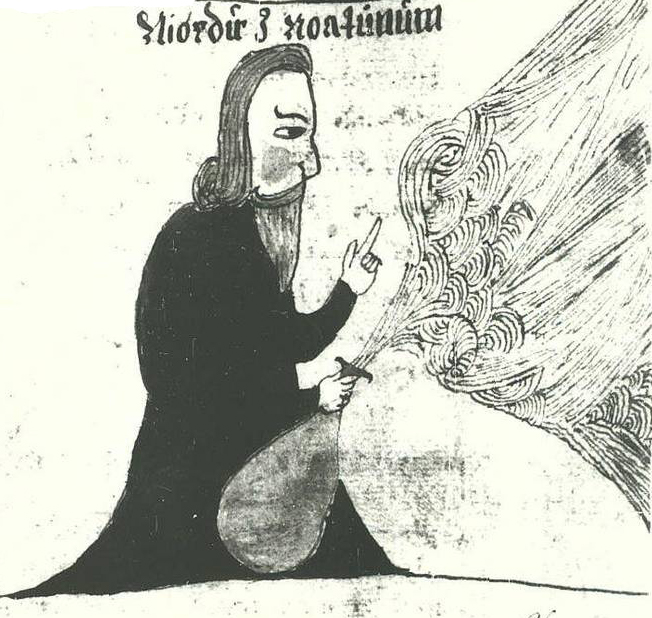
If that’s not enough to convince you that wind and air hold a prominent position in our collective subconscious, just look at how many modern superheroes (and villains) have the names and powers of wind phenomena.

Bottom line: We tend to think in terms of breezes or stiff winds, but there’s so much more to wind than that!

Stay tuned, coming on Friday: When wind meets water, they create some of the most extreme weather.
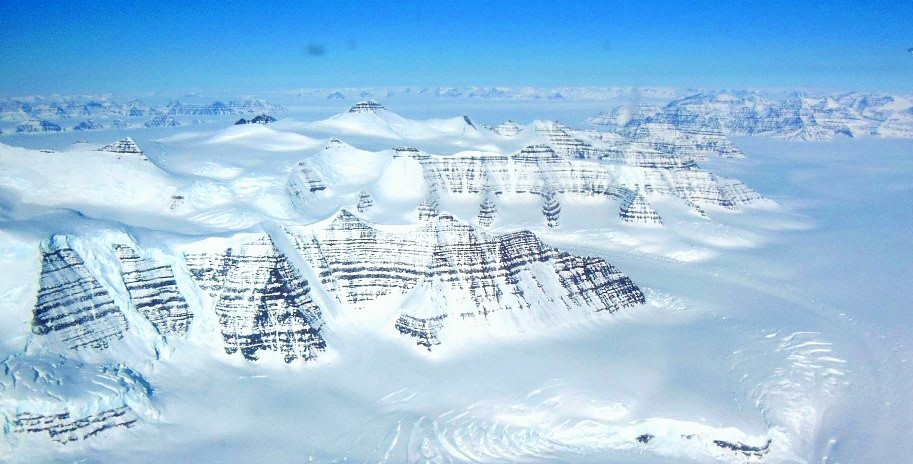
BETTER KNOW YOUR SNOW

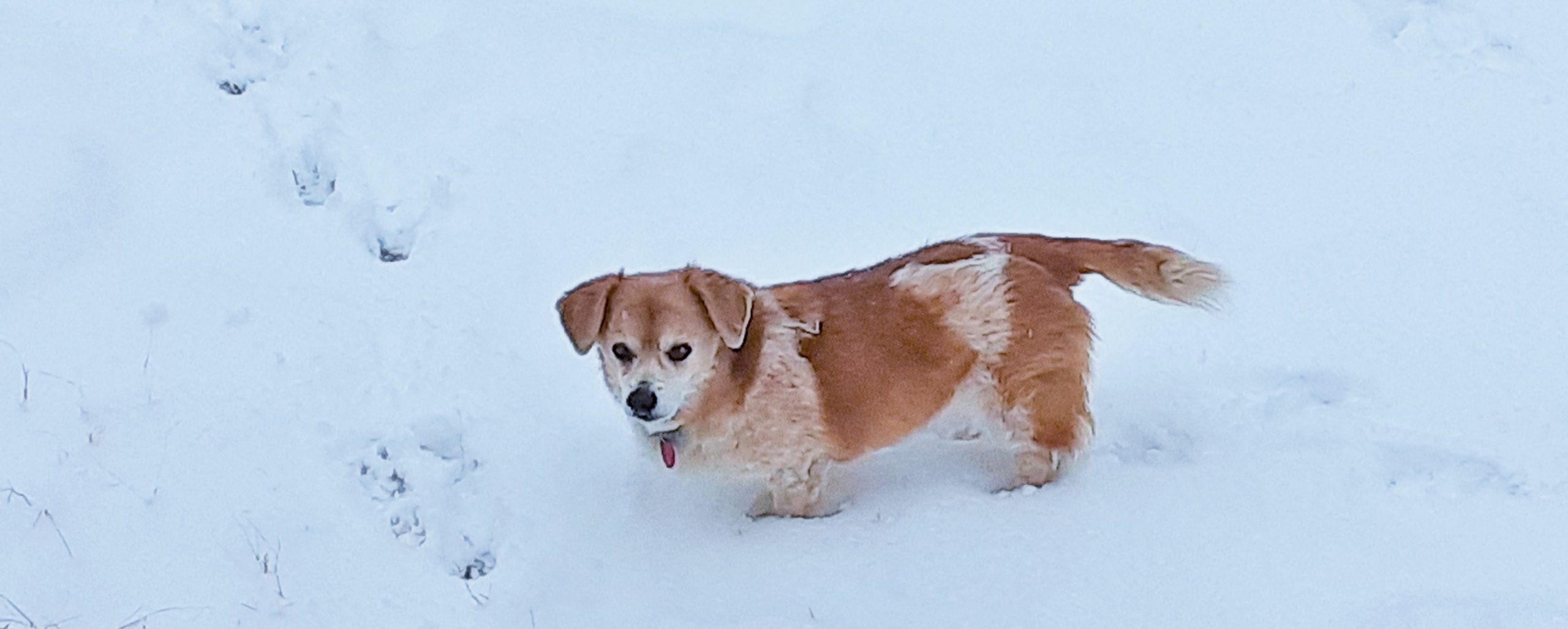
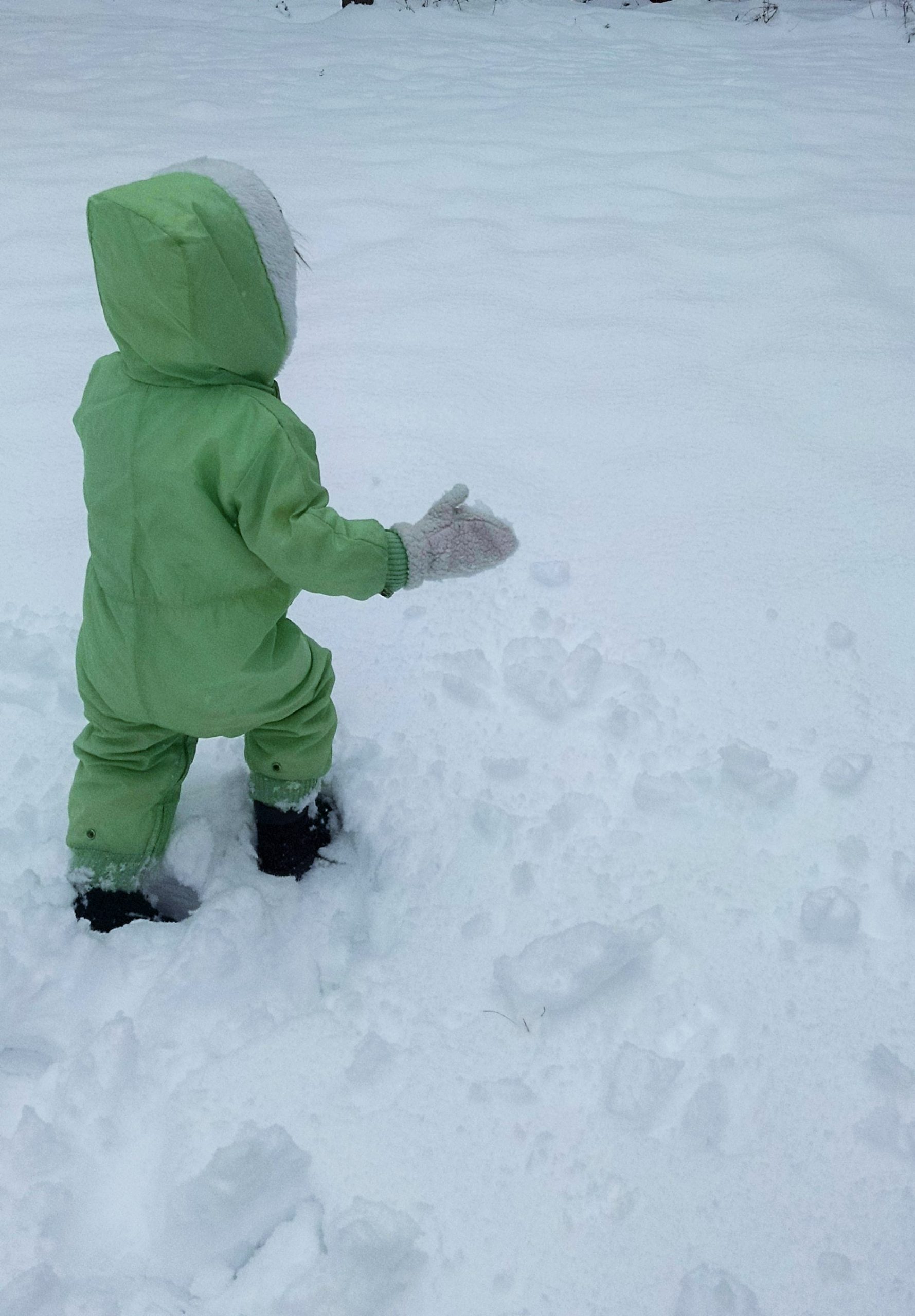
Short legs make moving in snow extra difficult.

By itself, “snow” is a weasel word, like beautiful or bird, that could mean almost anything. And it can be used for almost anything! Eating, recreation, insulation, magic…

Recreation

Beijing is scheduled to host the 2022 Winter Olympics.

The sports in the Winter Olympics are almost entirely based around snow. Next year (COVID permitting), we’ll be able to watch the very best athletes in the world slide around on crystalized or frozen water. Some of them will jump off a cliff with a bit of plastic strapped to their feet. Some will climb into little tubes and slide down slightly bigger tubes. Some will slide around on two bits of plastic and shoot things.

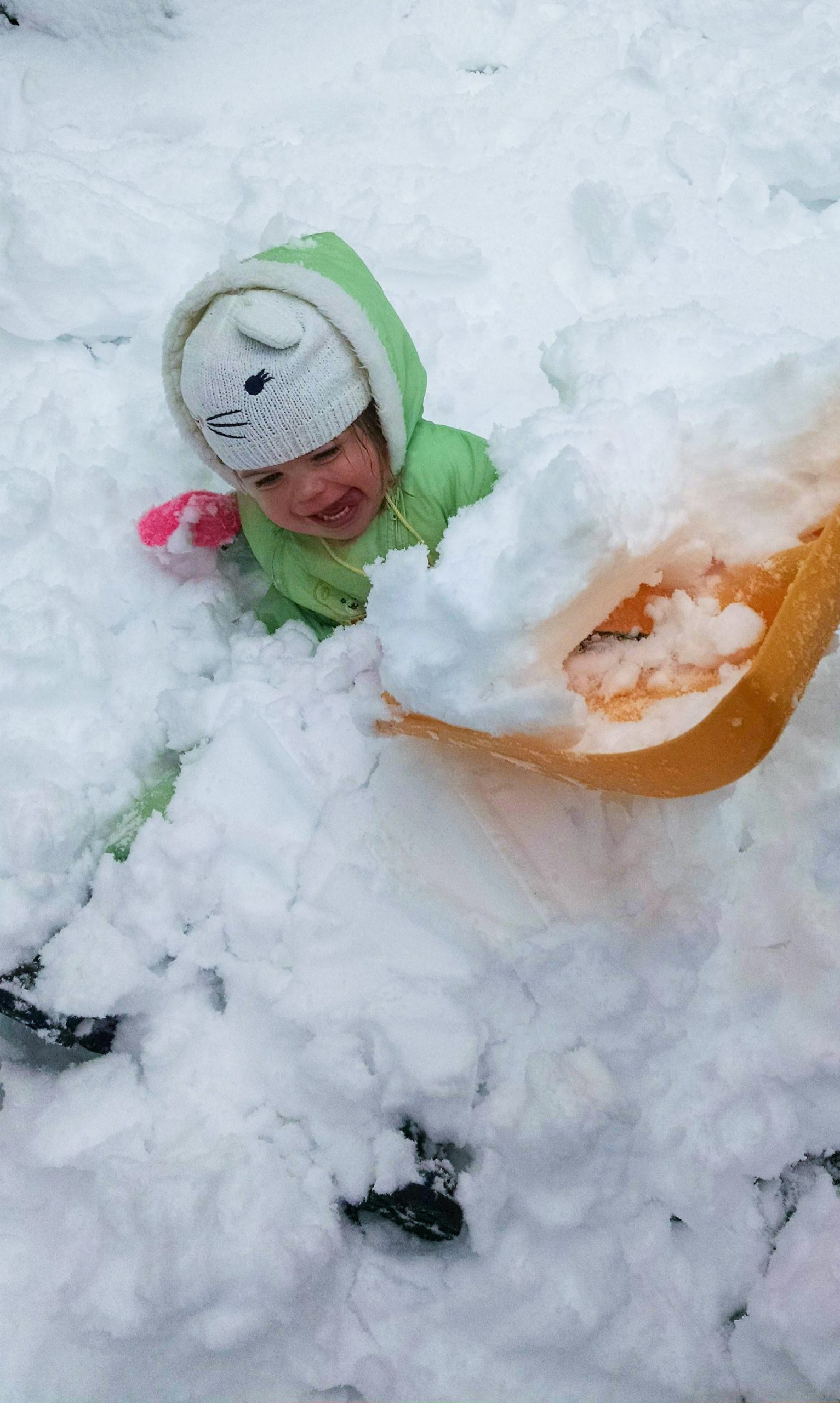
Kidnapping small children while sledding is extra fun!

For those of us who don’t train 50 weeks out of the year, having fun in the snow generally means not sliding quite so fast.

  • Sledding 
    • One of the cheapest and easiest options, sledding only requires a slope/hill and something to sit on.
    • If you “borrow” the cafeteria’s trays to go sledding, make sure you return them.
  • Snowshoeing
    • To get an idea of how to walk in snowshoes, try wearing the flip-flops of someone with huge feet the next time you shovel the sidewalk.
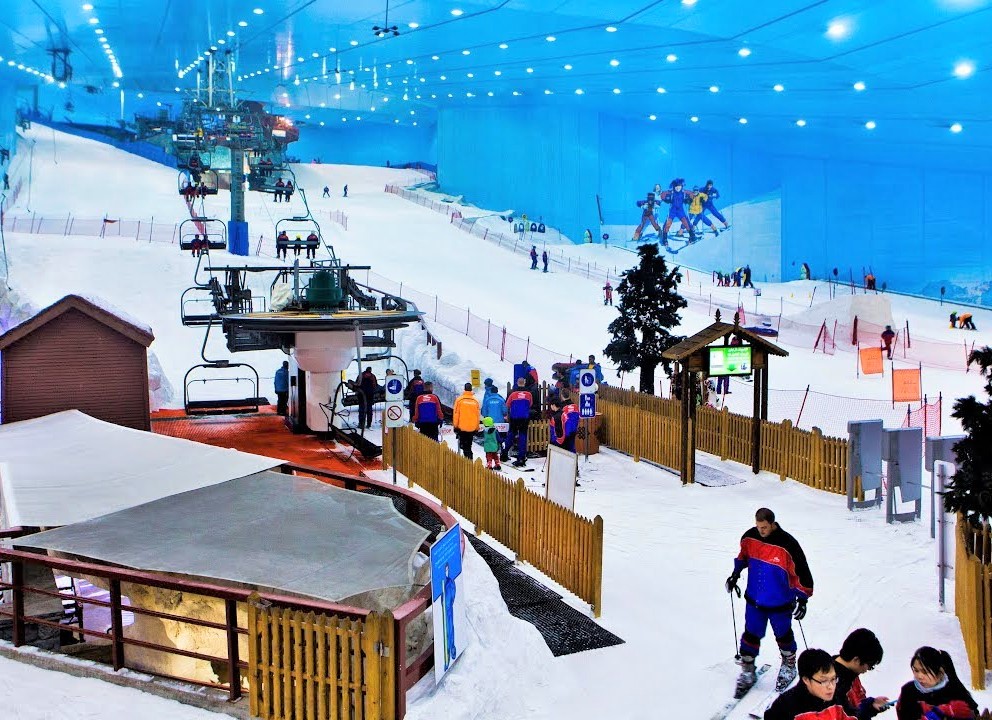
Indoor ski slope in Dubai
  • Snowmobiling 
    • This is the preferred method of chase for James Bond villains.
    • Descending a mountain via snowmobile may be the only method of travel faster than Olympic athletes.
  • Skiing
    • There are indoor ski slopes in China, Dubai, and the US, so you can ski in the desert in the summer!
  • Dog Sledding
    • Unless you are a very small child, do not attempt this by attaching a sled to your dog’s leash. No one will be happy with the outcome.
  • Child Labor
    • For the fullest enjoyment of this spectacle, do the following
      • Hold a mug of hot chocolate or coffee, perhaps with a splash of brandy
      • Sit in comfort, inside by the window
      • Look out at the neighbors’ kids who have been duped into shoving your walk, steps, etc.,
      • Listen to their grunts as they strain to lift snow shovels far too big for their tiny hands
      • Cackle
    • This is surely the most entertaining part of snow!

Building Material

Dining hall of the Snow Castle in Kemi, Finland

Depending on the region, snow can be used to build very temporary structures or nearly permanent. Even in areas where snow remains year-round, snow used as a building material is at risk of shifting or compacting.

  • Snow Maze
  • Fort
    • Can use a sand or brick mold to make bricks
  • Furniture, most often made by backpackers. 
    • Want lawn chairs on a break?
    • A dinner table in your cook tent?
    • With a good avalanche shovel, your dream home is just a little digging away.
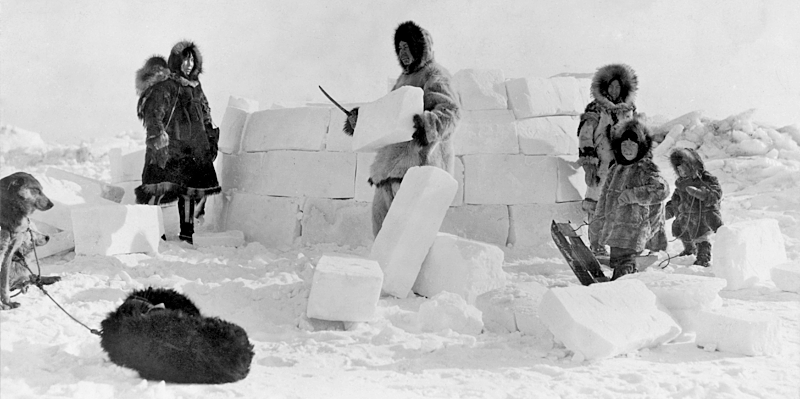
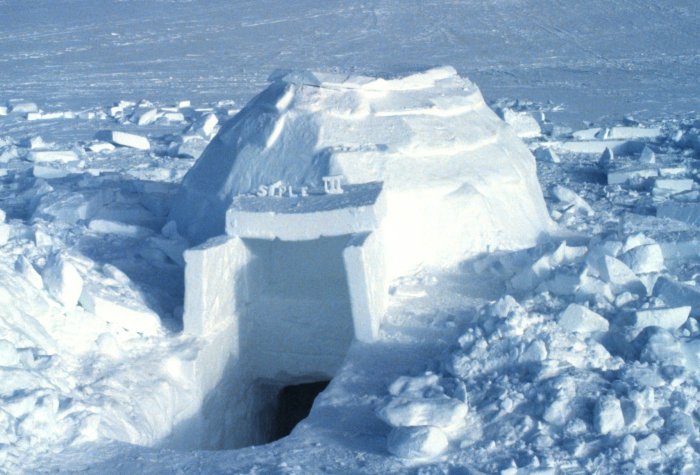
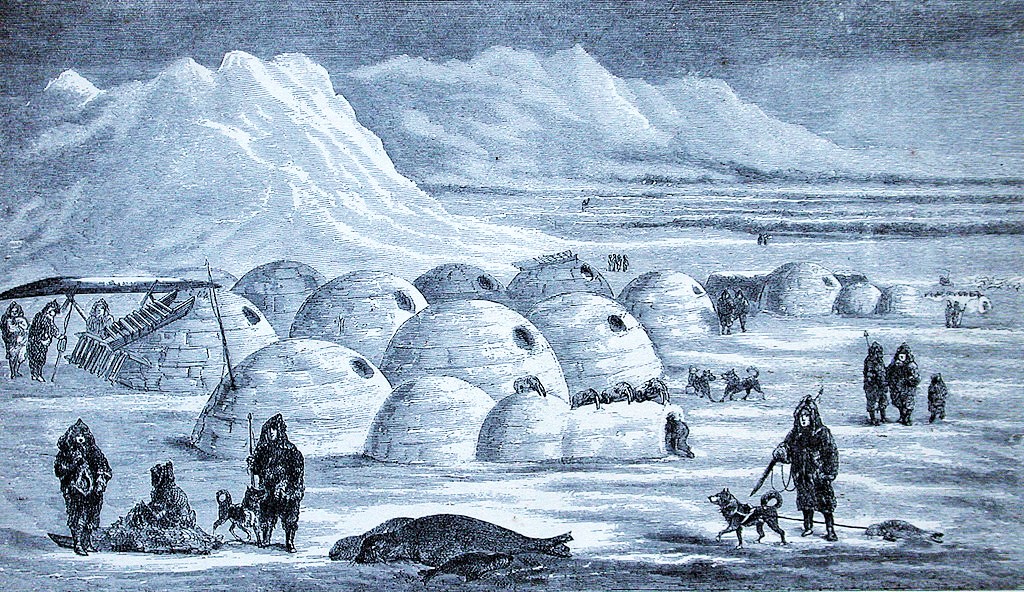
  • Igloo
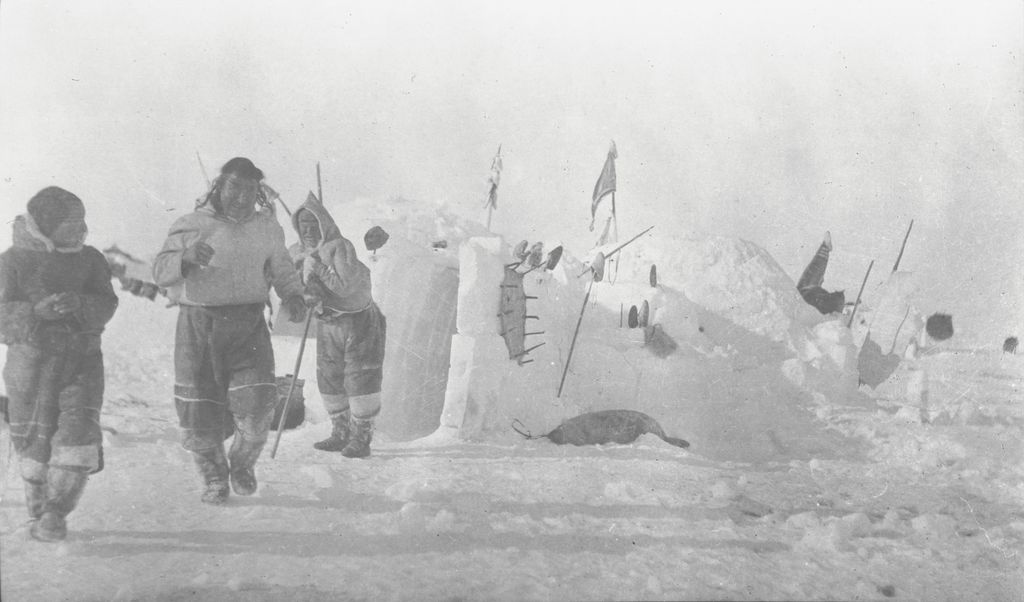
    • Entire villages can be built of snow domes, which are surprisingly warm inside.
    • Temporary shelters can be erected quickly while travelling.
Inuit building an igloo, circa 1950

Snow Art

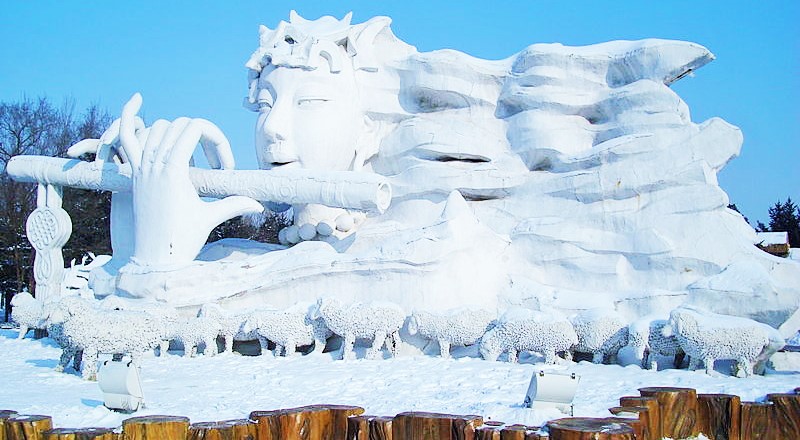
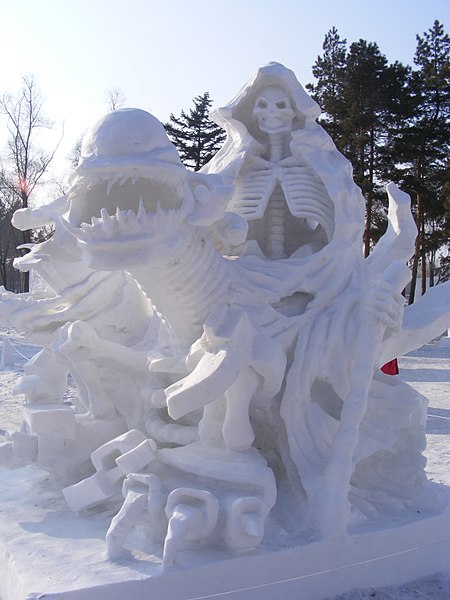
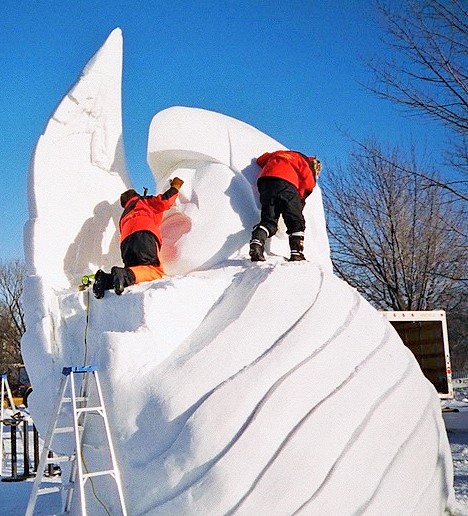
Snow sculpture in Harbin

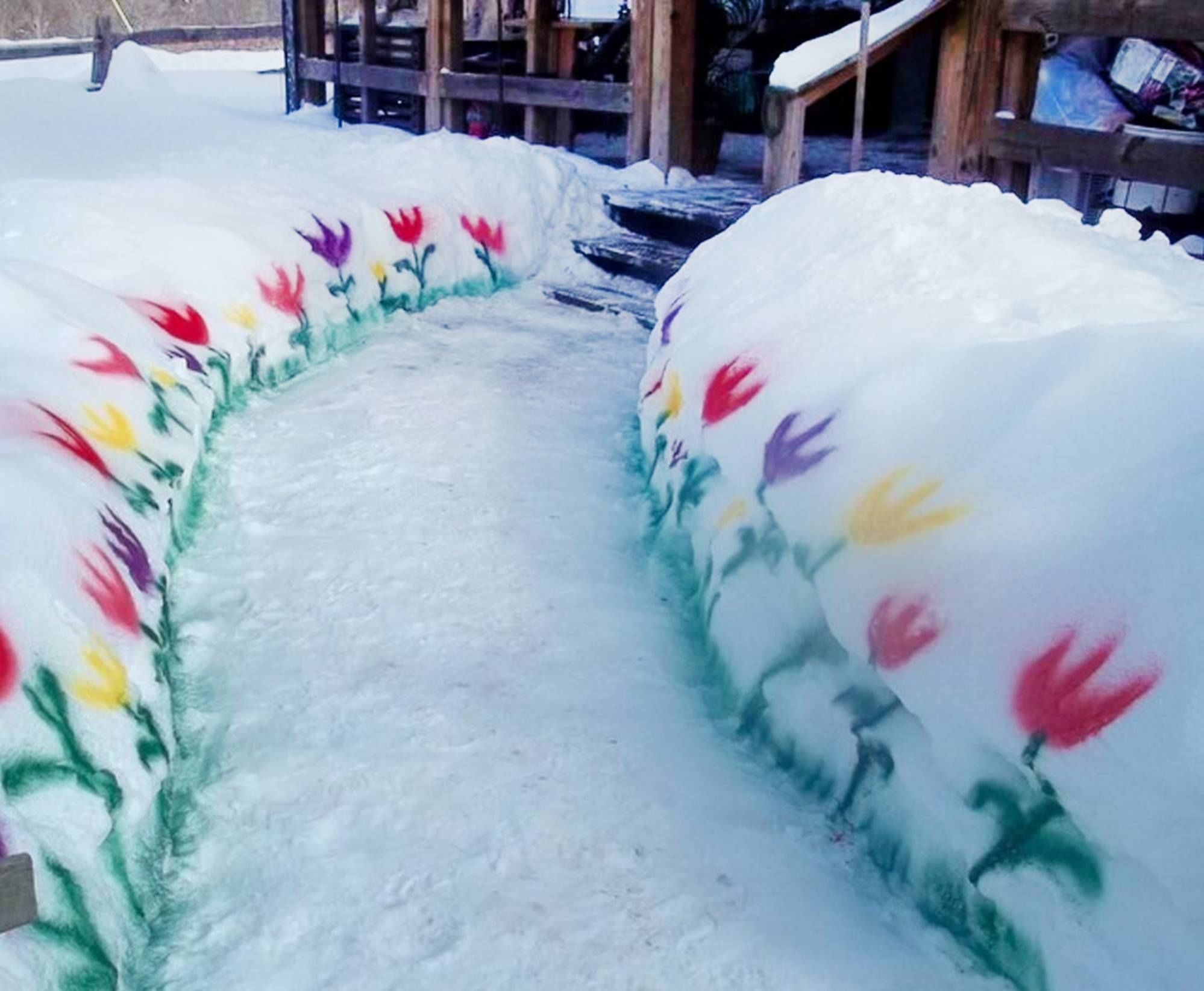
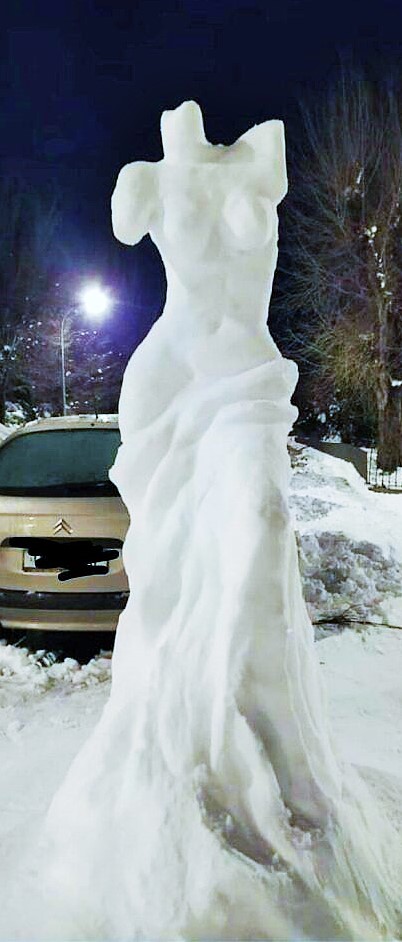
Because of its malleability and lack of color, snow makes an excellent creative medium for a patient artist with steady hands.

  • Painting
    • Use watercolors or food coloring mixed in water
    • The trick is find the balance between freezing the paint and melting the snow
  • Sculpting
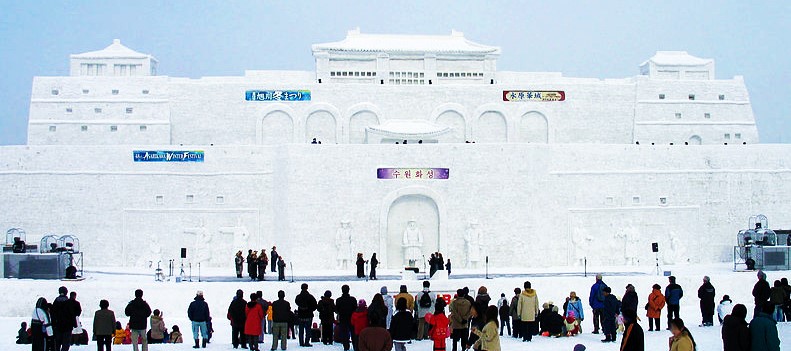
    • Snow sculpture festivals and competitions are held around the world every year
    • Some artists can sculpt snow several stories high
    • Architecture and sculpture blend together in snow just as in any other building medium
  • Snow Angels
    • Flop backwards onto fresh snow
      • Hope there are no hidden rocks or other nasty surprises under the surface
    • Wave arms and legs to create wings and a skirt shape
    • Look ridiculous as you attempt to stand without stepping on and ruining your creation

Eating Snow

Make sure it’s clean and uncontaminated. Best is fresh and away from traffic and animals. (You heard it here first: don’t eat yellow snow.)

  • Basic Hydration
    • Consumed as is or melted in whatever quantity
  • Snow Cones/Slushies
    • The most obvious culinary choice.
    • Although most often made with shaved ice, they can be made with actual snow.
    • Adults might want a beer version; see recipes online.
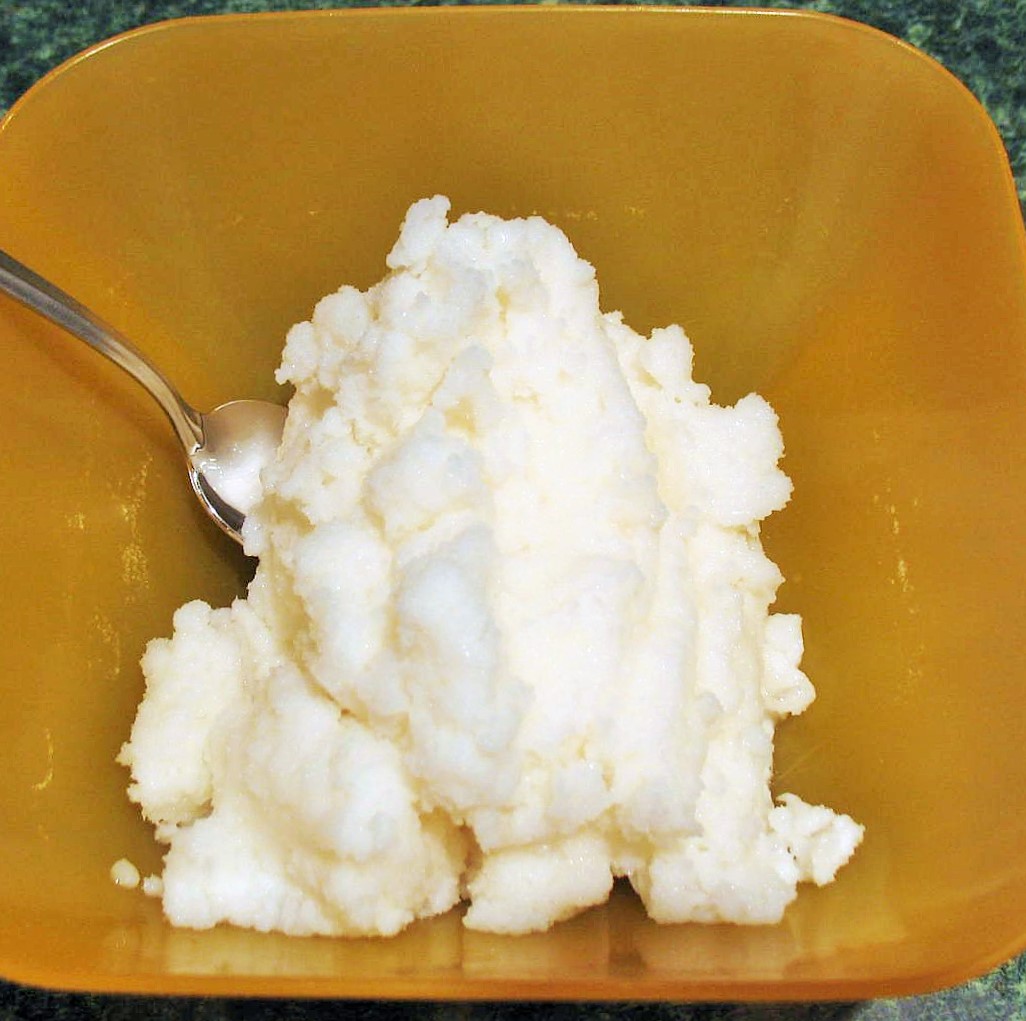
  • Snow Cream
    • Much like ice cream: 
      • Heavy cream or milk,  real sugar or Splenda, with or without eggs
      • The basic version includes vanilla
      • Best made in an ice cream maker
    • Get precise directions from Granny or online
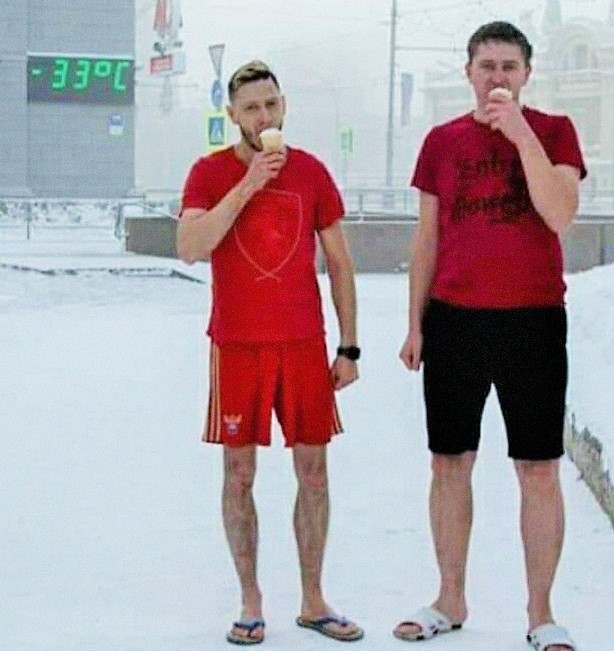
Russians always eat ice cream in the snow
  • Candy
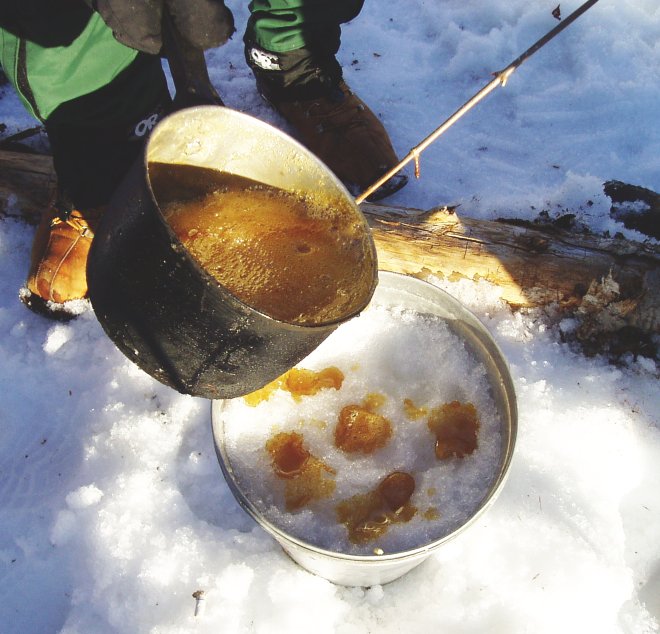
    • Boil honey or maple syrup in a pot and pour it onto fresh, packed snow
    • It will freeze into a chewy, toffee-like treat  
  • Lighten Pancakes
    • Fold a cup of snow into pancake batter directly before adding it to the pan
    • The water and air content will give your flapjacks a lighter texture
  • Margaritas or Daiquiris
    • Recipes online
  • Anything you would use shaved or crushed ice for
  • In extreme circumstances, eating snow can temporarily ease hunger pain

Snow for Survival

Russian ski medic evacuation during the Sino-Japanese War

Consult backpacker sites or magazines for a plethora of uses specific to campers, but here are a few more general examples.

Quinzhee, a temporary snow cave
  • Insulation
    • Snow has high air content (up to 95 percent by volume) making it an excellent insulator.
    • To survive outdoors, dig a trench to escape high winds or carve a snow cave into a deep drift by tunneling parallel to the ground. You’ll need to insulate your body from the frozen tunnel floor.
    • People have been known to survive an avalanche this way.
  • Personal hygiene  
    • Unlike a dead leaf or smooth stone, snow is moldable, and the white color makes it easy to monitor a thorough cleaning.
    • There is also no danger of grabbing poison ivy snow by mistake!
Ski Patrol
  • Medical
    • Reduce swelling 
    • Compress snow and apply it to injuries to calm inflammation
    • Wrap the snow in a towel or bandana to prevent damage to tissues
    • Cleaning wounds when nothing else is available
    • Lowering core body temperature in case of fever
  • Keep food or drink cold
  • Refill aquifers for summer water reserves
Yeti tracks
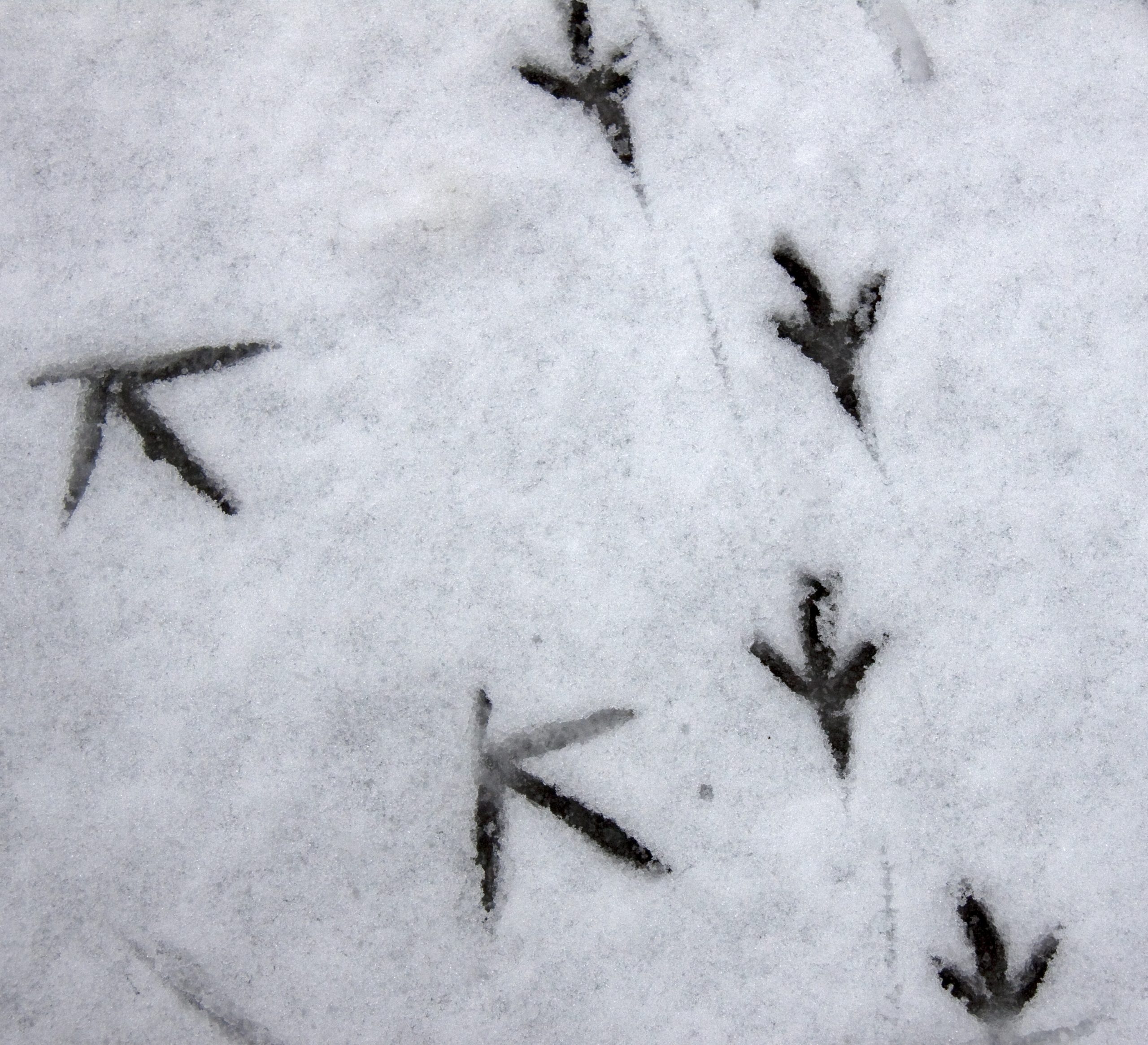
  • Tracking
    • Human
    • Dog
    • Cat
    • Rabbit
    • Squirrel
    • Deer
    • Sasquatch or Yeti
    • Any animal that frequents the area

Military

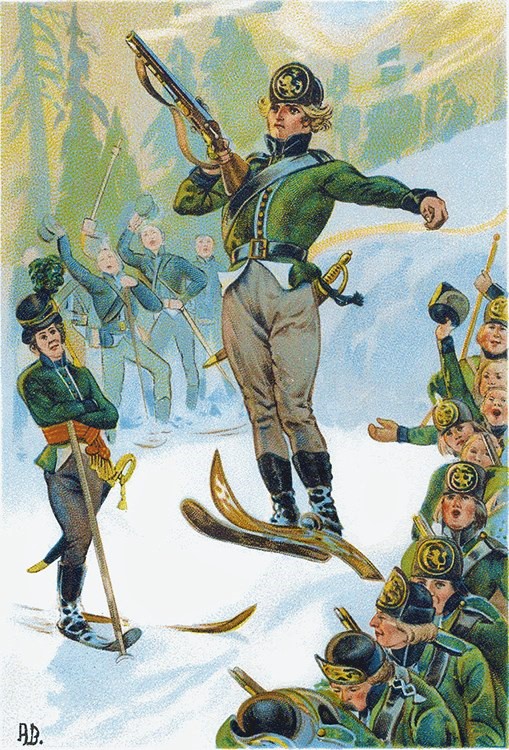
Skiing Birkebeiners Crossing the Mountain with the Royal Child (Knud Larsen Bergslien, 1869)

Snowballs are said to have been the first missiles at the Boston Massacre in the Revolutionary War. Impromptu weapons are not the only military use of snow. Armies in countries with lots of snow tend to learn how to use it to their advantage.

Northern Shaolin Temple Kung Fu Masters
  • Northern Shaolin Temple
    • Northern Style Shaolin Kung Fu differs from Southern Style in many ways, including the adaptations for terrain.
    • In northern China, Shaolin temples tend to be in areas with cold, snowy, rocky mountains.
    • Kung Fu learned under these conditions requires stronger legs and compensating for thick, warm clothing.
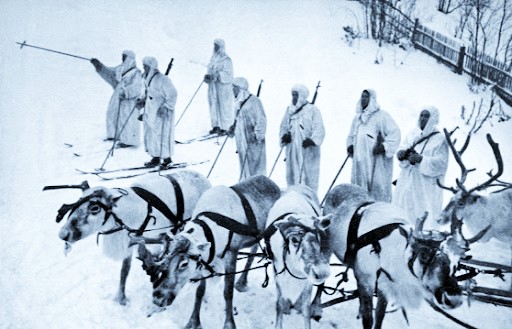
Finnish soldiers with the terrifying trifecta of machine guns, skis, and reindeer
  • Winter War (1939-1940)
    • Finnish skiiers with submachine guns repelled invading Soviet troops in the Winter War.
    • According to legend, Soviet soldiers carried a how-to manual for skiing in their packs.
    • The Finns found these manuals highly amusing.

Killer Snow

Mulan holds the dubious honor of being the Disney Princess with the highest body count (the avalanche she caused wiped out an entire army – eat your heart out, Cinderella).

Believe it or not, snow is generally accompanied by rather cold weather. It can also make travel a bit inconvenient. These conditions, along with unstable surfaces, mountain terrain, decreased visibility, and changing landmarks make snow potentially deadly, even for experienced snow-dwellers.
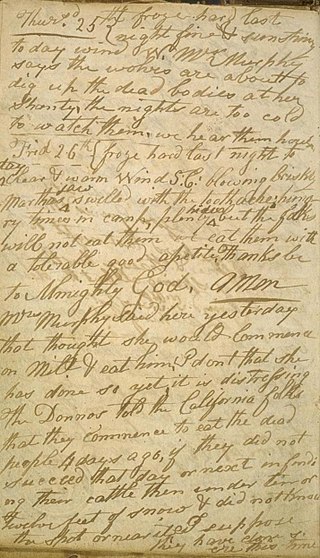
Patrick Breen wrote in his diary, “Mrs Murphy said here yesterday that thought she would Commence on Milt & eat him. I dont that she has done so yet, it is distressing.”
  • Donner Party
    • American migrants in a wagon train from Missouri to California in 1846-1847
    • Only 47 of the original 84 migrants survived the winter
    • The wagon train was snowbound near Truckee Lake in the Sierra Nevada Mountains
    • Many migrants died of sickness, hypothermia, and starvation in the snow-bound camp
    • Some survivors claimed that they had resorted to cannibalism during the winter
    • After rescue, some survivors changed their stories repeatedly, sometimes admitting to cannibalism and sometimes denying it ever occurred
    • Archaeologists and historians have not been able to state definitively whether members of the Donner Party actually resorted to cannibalism
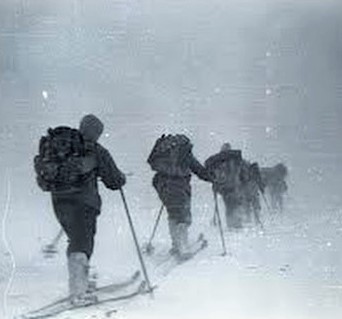
  • Dyatlov Pass Incident
    • A group of nine hikers died mysteriously in the Ural Mountains in 1959.
    • The hike was meant to be the final step in earning the highest certification for hiking instruction, so all participants were very skilled and able.
    • Their tent was found ripped open from the side and flattened.
    • All of the bodies were found wearing inadequate clothing, some without shoes or coats.
    • The bodies were discovered in several places on the mountain, some very far from the camp.
    • Several of the bodies had no sign of injury; others had very strange, unexplained injuries.
    • Soviet authorities called a halt to the investigation and sealed all records.
It’s never a good idea to tangle with the mob.
  • Snowdrops
    • Alcoholism often goes along with extreme winter weather
    • A drunk person who falls down or falls asleep outside in the snow is likely to die of hypothermia quickly
    • Heavy snowfall would soon cover the body, not melting all winter
    • In spring, when snow begins to melt, corpses are uncovered
    • This is so common in some communities that these corpses are called snowdrops
    • This is also a good method to get rid of a body, destroying murder evidence

Language of Snow

Ski Snow

Asahikawa Winter Festival Snow Sculpture

As with so many things, the more important something is in our own lives, the more precise our language and the finer the distinctions we make. For example, skiers and snowboarders: for these people, snow and its condition are so important that they have a vocabulary all their own.

  • Powder
    • Freshly fallen snow, the preferred kind
  • Champagne powder
    • Extremely light, fluffy powder
    • The best 
    • Usually found in Utah, Colorado, and British Columbia.
  • Hero snow
    • A lot of powder, ideal for doing tricks because it gives a soft landing
  • Freshies/untouched
    • Untracked powder
  • Packed powder
    • They had powder the day before that is now compacted
  • Bumpy, choppy, or tracked out
    • Usually occurs later on a powder day when hoards of people have gone through
    • Makes the athlete bounce around and gives knees a workout
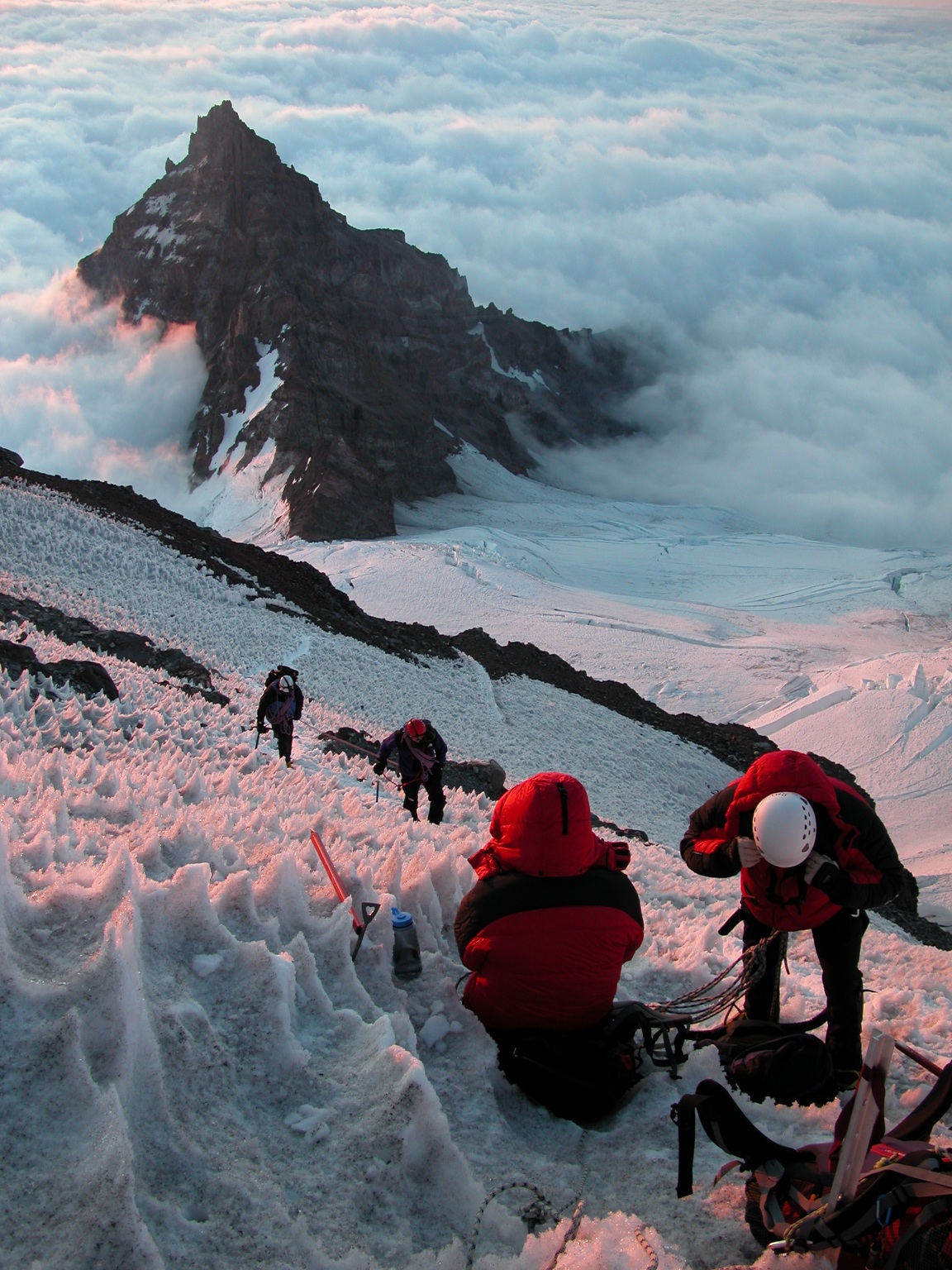
Mt. Rainier (July 2004)
  • Concrete
    • Heavy, deep snow that feels like riding through concrete
  • Corduroy or cord
    • Ridges in the snow left by groomers
    • They create sound and sensation under your feet
  • Crust
    • After the snow has softened a little, when it gets cold again, leaving an icy layer on top
  • Dust on crust
    • A bit of fresh snow on top of hard, icy snow
  • Dusting
    • A tiny bit of new snow that probably won’t last more than an hour or so
  • Groomers
    • A run that has been groomed, giving a smooth, easy ride
  • Hard pack
    • Snow compressed so much it doesn’t move when stood on; requires good edges
  • Sticky
    • Feels like sticky tape on skis or board, making runs slow
  • Ice
    • Frozen snow, makes for hard landings
  • Slush or spring snow
    • Wet, soft, very forgiving
  • Man made
    • Actually machine made

Inuit Snow

No doubt you have heard/read that Eskimos have a huge number of words for snow. This is more or less true. In fact there are several languages in a family of Eskimo-Aleut languages. For this group of languages, “snow” is an example of polysynthesis: a  base word attached to suffixes that clarify the meaning.

So, what in English might take a phrase or a whole sentence to communicate can be accomplished in fusional languages with one (sometimes quite long) complex word.  Readable.com gives these not-so-long examples:

  • Qanuk: ‘snowflake’
  • Kaneq: ‘frost’
  • Kanevvluk: ‘fine snow
  • Qanikcaq: ‘snow on ground’
  • Muruaneq: ‘soft deep snow
  • Nutaryuk: ‘fresh snow
  • Pirta: ‘blizzard’
  • Qengaruk: ‘snow bank’

Weather Snow

The type of snow is often important, for reasons I’ll go into below. 

  • Powder snow
  • Crud: the next phase from powder
  • Graupel: also called snow pellets or soft hail 
  • Crust 
  • Slush: snow that has started to melt and therefore becomes more wet 
  • Ice

Often, the most salient feature of snow is how it comes down, because this determines how we function in it. Business and school closures, road safety, transportation delays, power outages, physical injuries (with accompanying ambulance and hospital activity), and structural damage all depend heavily on the type of snow.

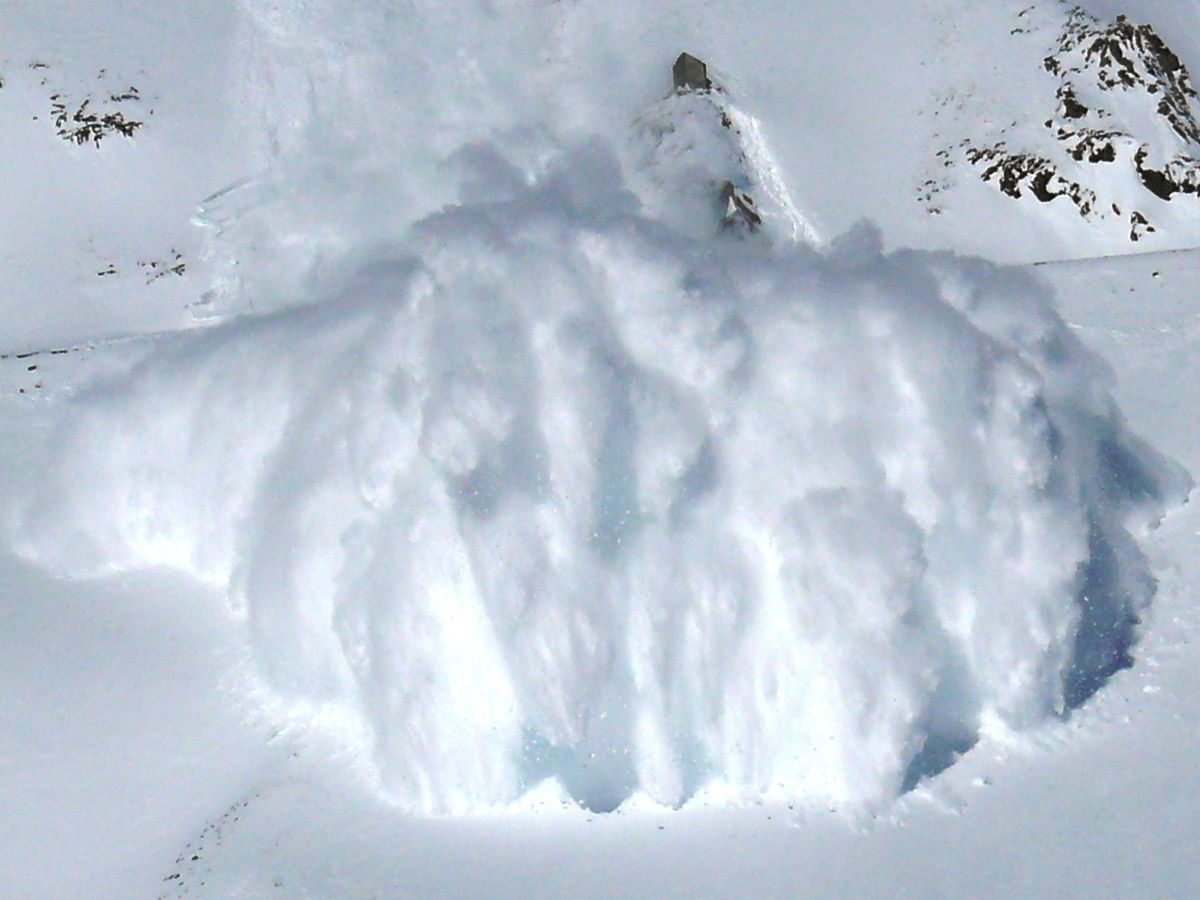
Avalanche in Couloir

The National Snow and Ice Data Center (NSIDC) recognizes these types of snowfall:

  • blizzard is a violent winter storm, lasting at least three hours, which combines subfreezing temperatures and very strong wind laden with blowing snow that reduces visibility to less than 0.40 kilometers (0.25 miles).
  • snowstorm features large amounts of snowfall.
  • snow flurry is snow that falls for short durations and with varying intensity; flurries usually produce little accumulation.
  • snow squall is a brief, but intense snowfall that greatly reduces visibility and which is often accompanied by strong winds.
  • snowburst is a very intense shower of snow, often of short duration, that greatly restricts visibility and produces periods of rapid snow accumulation.
  • Blowing snow describes airborne snow particles raised by the wind to moderate or great heights above the ground; the horizontal visibility at eye level is generally very poor.
  • Drifting snow is snow on the ground that is blown by the wind to a height of less than 1.5 to 2 meters (5 to 6.5 feet) above the surface.

In extreme cases, rural or mountainous communities may be cut off from their neighbors for weeks or months at a time by heavy snow.

Magic Snow

Tilda Swinton as the White Queen of Narnia
  • Wet, sticky snow gathered during a raging blizzard might be used in workings related to high energy and power 
  • A jar full of light fluffy snow collected during a soft, quiet snowfall could be incorporated into a ritual for peacefulness and tranquility
  • Snow in divination 
    • In love spells
    • In beauty spells and infusions of lemon balm, rosemary, and basil and add to bath when moon is waxing or full
      • Can be frozen in ice cube trays for later use
    • To make ice candles
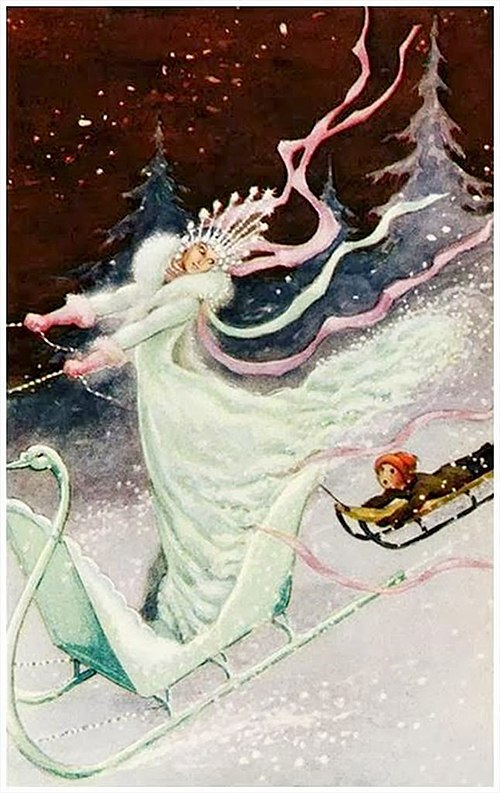
The Snow Queen – Rudolf Koivu
  • Make  a snowman or snowman to use as a magical poppet to guard the entrance
  • Make bad habits into snowballs and throw them away
  • Use actual snow as you would quartz crystals in work related to wishes and goals
  • Write the name of a nuisance on a slip of paper, pack it in snow in a jar or bowl, place in a bag in the freezer to “chill out.”
  • Freeze some snow in a bag or jar for use later on in the year, when fresh snow isn’t available

Go for a walk in the woods to enjoy the silence, and the magic of the snowfall, and perhaps receive messages from the Divine.

Bottom line: Consider the multitude of ways snow is and/or can be part of your life.

BETTER KNOW YOUR CHARACTER: DOG OR CAT?

Cats and dogs have notoriously different needs and characteristics, but either can be good models for characters. 

The first large dogs appeared in Russia about 15,000 years ago. There were smaller dogs in Western Europe at about the same time, and other wolves were domesticated in China a little later. Modern dogs are mostly a mixture of all three types.  Worldwide, there are 360 recognized breeds, not counting those being created but not yet recognized.

There are 40 recognized cat breeds.  Domesticated cats have been around since 3600 B.C., 2000 years before Egypt’s pharaohs.

Question: Is your character from an old/first family? A pillar of society? A mix of different cultures and upbringings? 

Athleticism

Speed: On average, cats run 50 kph and dogs run 32 kph.  In other words, house cats can run at a speed of 30 miles per hour.

Flexibility: Cats have free-floating bones (clavicles) which allows them to move more freely, making them more flexible.  Cats are able to get through any openings they can get their heads through.

Appetite: Dogs win hands-down in eating contests, sometime gorging a whole meal in just a couple of bites; cats tend to eat more gracefully, and slowly.  (FYI, this is because cats cannot move their jaws horizontally; they can only  open and close.)

Agility: Unlike dogs, cats are able to jump (up to six times its length) and climb, which aids them in hunting and makes it easier to flee from danger. Their sharp, retractable claws provide a distinct advantage when it comes to catching prey and defending themselves from bigger predators. Because of this, cats have no need to work together to care for themselves. It also makes them territorial. 

Balance: Most female cats prefer using their right paw, while males are more likely to be “left-pawed”.

Lifespan: Cats live 25% longer than dogs (15 vs. 12 years).

Question: Are your characters’ strengths and/or weaknesses more cat-like or more dog-like?

Brain Power

Memory: Research under controlled laboratory conditions have demonstrated that both dogs and cats exhibit what’s called episodic memory—i.e., their brains make possible the conscious recollection of events as they were previously experienced. It’s a rare trait in animals.

Cats have a longer-term memory than dogs, especially when they learn by actually doing rather than simply seeing.

Training: Dogs are generally the easier of the two to train. A dog’s pack mentality makes him ready to follow a leader and makes him generally more obedient by nature.  You can teach an old dog new tricks. Although eager puppies soak up information (just like human children), dogs can learn at any age (also like humans).

Cats can be trained, but not as thoroughly as dogs. It requires a lot of patience and consistent practice to get past their willful nature. With cats, it’s best to focus training on establishing boundaries.

A cat’s cerebral cortex (the part of the brain in charge of cognitive information processing) has 300 million neurons. That’s almost double a dog’s.

Emotion: A cat’s brain is 90% more similar to a human’s than to a dog’s. Cats and humans have nearly identical sections of the brain that control emotion.

Dogs don’t feel guilty. They might look guilty at having done something wrong, it’s just their reaction to being reprimanded. Over the millennia, dogs have evolved to mimic human facial expressions to ingratiate themselves and get more treats. However, dogs do feel intense affection for their favorite people. Researchers demonstrated that dogs’ heart rates increase when their owners speak to them or call their name.

Dreaming: Both cats and dogs dream, as evidenced by brainwave patterns similar to humans.

Questions: Is your character more a pack animal or a loner? What are his/her strongest brain functions?

Character/ Personality

Pack or Solitary: Dogs are hardwired with pack instinct that generally makes them social, friendly, and all too happy to belong to a group. Dogs instinctively go wherever their pack goes, which makes them more readily accepting of new experiences, such as travel or moving. Dogs are good followers.

By contrast, with the exception of lions, most cats in the wild are solitary nocturnal hunters. Cats have no need to work together to thrive.  As solitary animals, they are okay alone all day.  Their independence may make them seem aloof.  Cats can be content as long as they have the essentials.  They do enjoy social interaction, though.

Stimulation: Cats would do much better in COVID lockdown or other confinement than dogs!

Dogs need lots of stimulation, fresh air and regular exercise.  Dogs enjoy days out and traveling.  Dogs often tend to be more expensive to care for than a cat (food, toys, accessories, grooming, etc.).

Schedule: Dogs are diurnal; cats are nocturnal and like to roam the house at night. Cats sleep 70% of the times.

Question: what is hard-wired in your character?

Communication

Body Language: A cat’s whiskers pointed forward is a sign of inquiry or curiosity; pointed back is a sign of fright/not wanting whatever is coming its way.

The way a dog wags its tail can tell you its mood. It’s suggested a wag to the right means happy and to the left means frightened. Low wags indicate they’re insecure.

Within a pack, dogs communicate almost entirely through body language. Much of this body language can be copied by humans to communicate with dogs, including eye contact, head position, torso angle, and invading or conceding personal space.

Vocalization: Dogs are able to understand 200 words, the same number as a two-year-old human.

Cats make more than 100 different sounds whereas dogs make around 10. The basenji is the only breed of dog that can’t bark. However, they can yodel!

One study indicated that hungry cats ‘meow’ in the same frequency as a crying baby, hitting the human brain right in the obnoxious evolutionary hindbrain (especially in the middle of the night).

Question: Does your character communicate (send and/or receive) better with verbal, non-verbal, or paraverbal skills?

Sensitivity

Smell: A dog’s sense of smell is up to 100,000 times more than humans.  Bloodhounds are able to trace scents that are over 300 hours old.

Vision: Cats see more colors than dogs do.  Dogs see primarily on a blue and yellow scale; they can’t tell the difference between green and red.  Visual acuity is better for dogs, but cats see better in the dark.

Cats’ whiskers help them detect motion changes.

Hearing: Cats can hear almost a full octave higher than dogs (sounds as high as 64 kHz), and both can hear in the ultrasonic level.  Hearing is the strongest of a cat’s senses. 

The ability of a cat to find its way home is called “psi-travelling.” Experts think cats either use the angle of the sunlight to find their way or that cats have magnetized cells in their brains that act as compasses.

Question: Which of your characters’ senses are most highly developed? Did that come naturally? Was it/them honed on purpose?

Bottom line: Considering your characters’ physical and psychological traits will contribute to a richer, more compelling character.

DANDELION

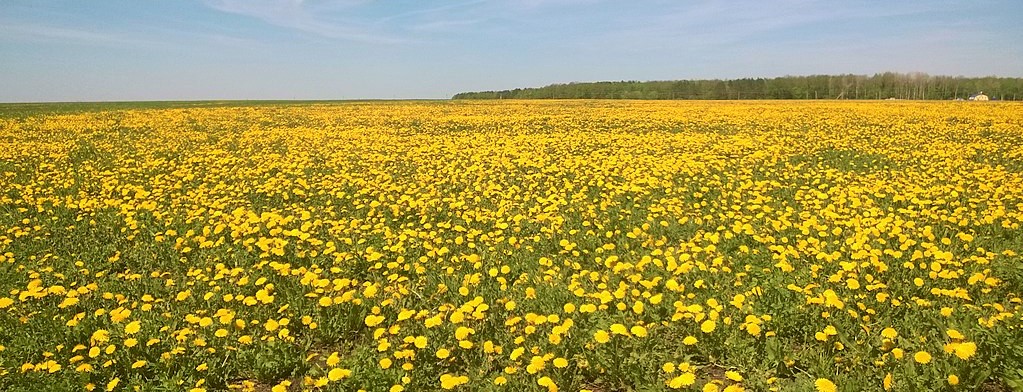
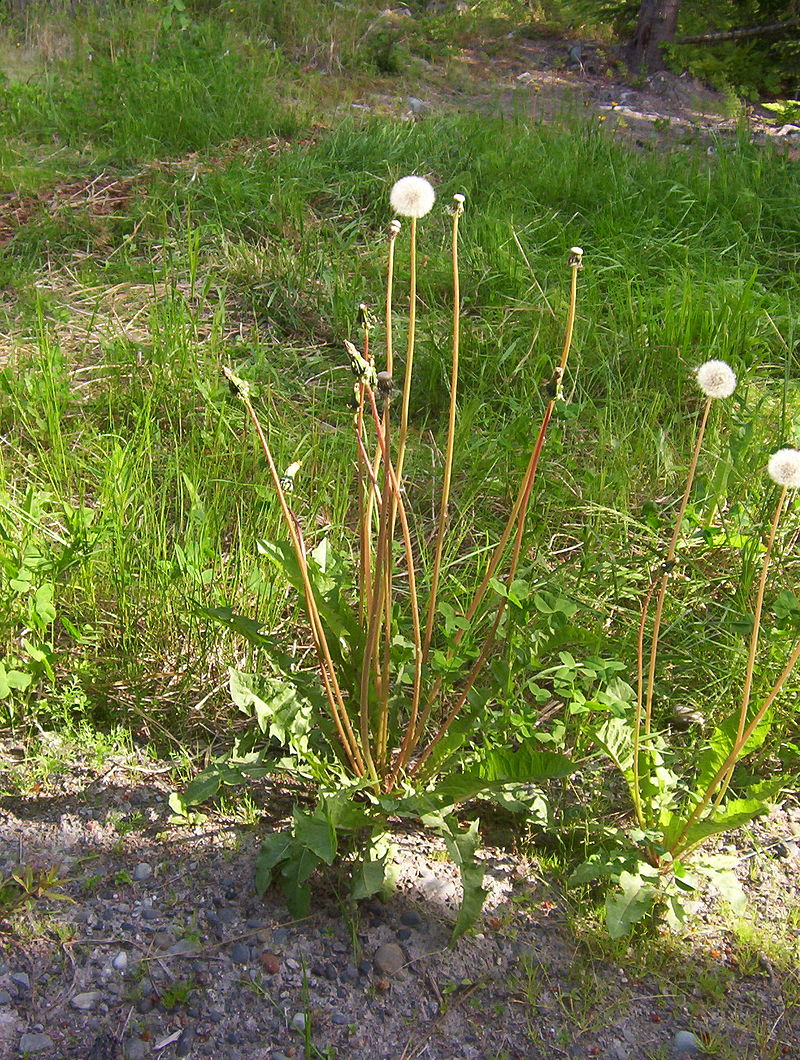
On Wednesday I saw my first dandelion (Taraxacum officinale) of the season—and my thoughts have been returning to it since! Is that weird our what? It turns out that in being struck by the first dandelion I’m not alone.

Poetic Dandelions

The First Dandelion” by Walt Whitman

Simple and fresh and fair from winter’s close emerging,
As if no artifice of fashion, business, politics, had ever been,
Forth from its sunny nook of shelter’d grass—innocent, golden, calm as the dawn,
The spring’s first dandelion shows its trustful face.

Indeed, if you look up poetry about dandelions on discoverpoetry.com, you will find the following:

Most Famous Dandelion Poems
  1. The First Dandelion by Walt Whitman
  2. To the Dandelion by James Russell Lowell
  3. The Dandelion by Vachel Lindsay
Short Dandelion Poems
  1. Dandelion by Hilda Conkling
  2. The First Dandelion by Walt Whitman
  3. I’m a Pirate by Annette Wynne
  4. The Dandelion by Vachel Lindsay
  5. The Dandelions by Helen Gray Cone
  6. The Hawkbit by Charles G. D. Roberts
  7. Dandelions in the Sun by Annette Wynne
Dandelion Poems for Kids
  1. Dandelion by Nellie M. Garabrant
  2. Dandy Dandelion by Christopher Morley
  3. I’m a Pirate by Annette Wynne
  4. Little Dandelion by Helen Barron Bostwick
  5. Dandelions in the Sun by Annette Wynne
Imaginative and Fun Dandelion Poems
  1. The Dandelion by Vachel Lindsay
  2. Dandy Dandelion by Christopher Morley
  3. Dandelion by Nellie M. Garabrant
  4. The Dandelions by Helen Gray Cone
  5. I’m a Pirate by Annette Wynne
  6. Little Dandelion by Helen Barron Bostwick
  7. The Dandelion by Ida Celia Whittier
  8. Dandelions in the Sun by Annette Wynne
  9. Dandelions by Florence May Alt

But dandelions are more than just pretty faces! More than harbingers of spring. More than cheerful chips of sunshine come to yards and roadsides.

Delicious Dandelions

Sautéed Dandelions with Wehani Rice

Have you eaten a dandelion recently?  When I was a child, a “mess of greens” meant dandelions.  But that fell by the wayside before I even reached adulthood. Something to reconsider?

Botanists consider dandelions to be herbs. People use the leaves, stem, flower, and root—raw or cooked—for various purposes. It’s one of the earliest edible plants to emerge in the spring. Native Americans and early European colonists eagerly awaited this addition to their diets.

The bitterness of raw dandelion leaves is similar to arugula—thus not for everyone.  If raw dandelion leaves don’t appeal to you, they can also be steamed or added to a stir-fry or soup, which can make them taste less bitter. The flowers are sweet and crunchy, and can be eaten raw, or breaded and fried, or even used to make dandelion syrup or wine.

And dandelions are safe! There are no poisonous lookalikes for the common dandelion.  Dandelions are found on 6 continents and have been gathered for food since prehistory, but the varieties commercially cultivated for consumption are mainly native to Eurasia and North America. A perennial plant, its leaves grow back if the taproot is left intact (to many gardeners’ frustration). You can forage your yard!

So, people can consume dandelions in many ways and forms.  But why would you?

Health Benefits of Dandelions 

In terms of nutritional content, from root to flower, dandelion are highly nutritious plants, loaded with vitamins, minerals and fiber.  Dandelion greens can be eaten cooked or raw and serve as an excellent source of vitamins A, C, and K. They also contain vitamin E, folate, and small amounts of other B vitamins.  What’s more, dandelion greens provide a substantial amount of several minerals, including iron, calcium, magnesium, and potassium. 

  • Antioxidants 
    • Dandelions contain beta-carotene, which is an antioxidant that helps protect cells from damage.  Research shows that carotenoids such as beta-carotene play a vital role in reducing cell damage.
    • The flower of the dandelion is also full of polyphenols, which are another type of antioxidant.
  • Blood pressure
    • Dandelions are a good source of potassium. There is clinical evidence that shows that potassium can help reduce blood pressure.  For example, research has found that people taking a potassium supplement saw a reduction in their blood pressure, especially if they already had high blood pressure.
  • Blood sugar 
    • There is some evidence to suggest that dandelions contain compounds that may help with regulating blood sugar.
  • Bones 
    • Very little research has been conducted on dandelion’s effect on bone health, though some of its individual nutritional components contribute to the maintenance of strong, healthy bones.  Dandelion greens are a good source of calcium and vitamin K — both of which are associated with the prevention of bone loss. Inulin, a fiber found in dandelion root, may also support healthy bones through improved digestion and the promotion of healthy gut bacteria.
  • Cancer risk 
    • So far, studies have looked at dandelion’s impact on cancer growth in test tubes and found that it may help with slowing the growth of colon cancerpancreatic cancer, and liver cancer. As with other potential benefits, more research is required to show how effective dandelions can be as part of cancer treatment.
  • Cholesterol 
    • Dandelions contain bioactive compounds that may help lower a person’s cholesterol.
    • So far research has been with animals.  However, testing on humans is still needed.
  • Digestion 
    • Some people use dandelion as a traditional remedy for constipation and other digestion issues.  The root of the dandelion is rich in the carbohydrate inulin, which is a type of soluble fiber found in plants that supports the growth and maintenance of a healthy bacterial flora in your intestinal tract.
  • Immune system 
    • Researchers have found that dandelions show both antiviral and antibacterial properties. For example, one 2014 study found that dandelions help limit the growth of hepatitis B in both human and animal cells in test tubes.
  • Inflammation 
    • Some studies indicate that dandelion extracts and compounds may help reduce inflammation in the body.
  • Skin 
    • Some research indicates that dandelion may help protect the skin from sun damage.
  • Weight control 
    • Dandelion could help people achieve their weight loss goals, based on the plant’s ability to improve carbohydrate metabolism and reduce fat absorption.
    • Strong evidence to support this claim is lacking, however.

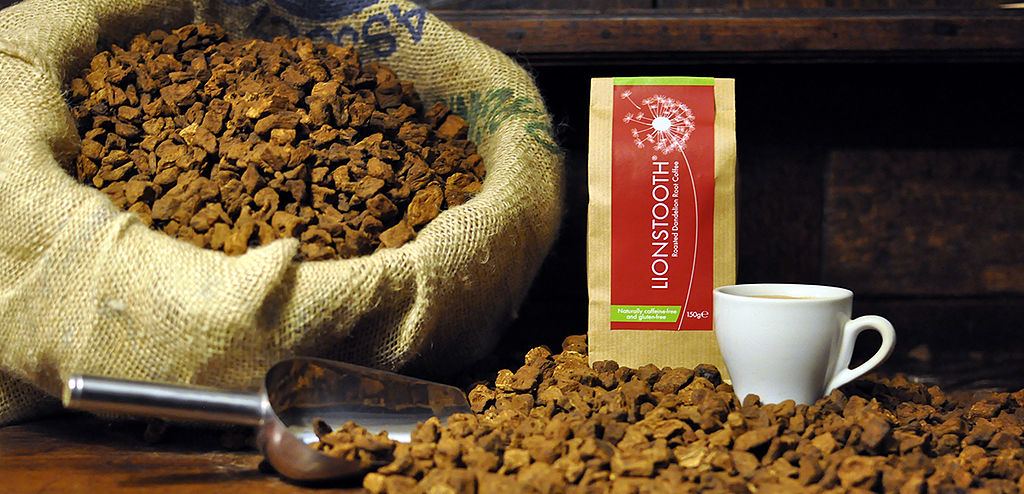
Dandelion root is often dried and consumed as a tea but can also be eaten in its whole form. The root can also be dried and roasted to be made into a substitute for coffee. Dandelion wine is considered quite a delicacy among those who know these things.

Dandelion root coffee from Lionstooth Coffee

But Beyond Food

Because dandelions can endure almost any living condition, they represent overcoming every hardship by standing strong and proud. The word “dandelion” comes from the French name for the flower: ‘dent de lion’ or ‘teeth of the lion.’

  • Dandelion Symbolism
    • Healing from emotional pain and physical injury alike
    • Intelligence, especially in an emotional and spiritual sense
    • The warmth and power of the rising sun.

When dandelions start popping up on your front lawn, consider it to be an omen of good luck. That is because Dandelion belongs to the planet Jupiter which is the planet of wealth.

Throughout the ages, dandelions have been used for divination, as a way to tell fortunes or make wishes.

If you rub a dandelion under your chin and your skin turns yellow, you like butter — at least according to an old wives tale found in cultures worldwide. Dandelions are the favorite flower of children

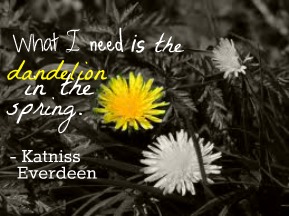
In The Hunger Games, the dandelion becomes a symbol of hope for Katniss, and evidence of her resourcefulness and expert foraging. When she sees the field of dandelions, she gains confidence in her ability to feed her family.

Whole essays have been written on dandelions as our favorite weeds. Indeed, there are whole worlds of dandelion info out there. Seek and ye shall find.

BOTTOM LINE: Dandelions are ubiquitous. Surely there is a place for them in your life and/or writing!

GLOBAL BELLY LAUGH DAY

Join The Belly Laugh Bounce Around the World:  on January 24 at 1:24 p.m. local time, smile, throw your arms in the air and laugh out loud.

Suggestions for acts and activities can be found at bellylaughday.com
Why bother? Because laughter is good for your physical and mental health! 

According to the Mayo Clinic:
When it comes to relieving stress, more giggles and guffaws are just what the doctor ordered. Here’s why.  

[NB: I’ve changed some formatting and left out some bits, but you can fill those in by going to the Mayo Clinic website.]

Short Term

A good laugh has great short-term effects.  When you start to laugh, it doesn’t just lighten your load mentally, it actually induces physical changes in your body.

  • Stimulate many organs. 
    • Laughter enhances your intake of oxygen-rich air, stimulates your heart, lungs, and muscles, and increases the endorphins that are released by your brain.
  • Activate and relieve your stress response. 
    • A rollicking laugh fires up and then cools down your stress response, and it can increase and then decrease your heart rate and blood pressure. The result? A good, relaxed feeling.
  • Soothe tension. 
    • Laughter can also stimulate circulation and aid muscle relaxation, both of which can help reduce some of the physical symptoms of stress.

Long Term

Laughter isn’t just a quick pick-me-up, though. It’s also good for you over the long term.

  • Improve your immune system. 
    • Negative thoughts manifest into chemical reactions that can affect your body by bringing more stress into your system and decreasing your immunity.
    • By contrast, positive thoughts can actually release neuropeptides that help fight stress and potentially more-serious illnesses.
  • Relieve pain. 
    • Laughter may ease pain by causing the body to produce its own natural painkillers.
  • Increase personal satisfaction. 
    • Laughter can also make it easier to cope with difficult situations.
    • It helps you connect with other people.
  • Improve your mood. 
    • Many people experience depression, sometimes due to chronic illnesses. Laughter can help lessen your depression and anxiety and may make you feel happier.

How’s Your Sense of Humor?

  • Ask the professionals.
    • Find a few things that make you chuckle, such as photos, greeting cards or comic strips, and hang them up at home or in your office.
    • Keep funny movies, books, magazines or comedy videos on hand for when you need an added humor boost.
    • Look online at joke websites.
    • Go to a comedy club.
  • Find a way to laugh about your own situations and watch your stress begin to fade away.
    • Even if it feels forced at first, practice laughing. It does your body good.
    • Consider trying laughter yoga: people practice laughter as a group. Laughter is forced at first, but soon turns spontaneous.
  • Share a laugh. 
    • Make it a habit to spend time with friends who make you laugh.
    • And then return the favor by sharing funny stories or jokes with those around you.
  • Knock, knock. 
    • Browse through your local bookstore or library’s selection of joke books and add a few jokes to your list that you can share with friends.
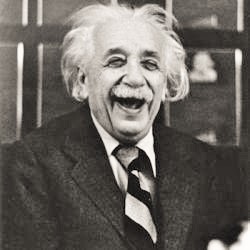
    • Retelling jokes or anecdotes that are stale or dated could be a good indicator of a character’s age or social awkwardness.
  • Know what isn’t funny. 
    • Don’t laugh at the expense of others.
    • Some forms of humor aren’t appropriate.
    • Use your best judgment to discern a good joke from a bad or hurtful one.
    • A hurtful sense of humor might indicate a character’s villainous nature before any deliberately villainous acts.

Go ahead and give it a try. Turn the corners of your mouth up into a smile and then give a laugh, even if it feels a little forced. Once you’ve had your chuckle, take stock of how you’re feeling. Are your muscles a little less tense? Do you feel more relaxed or buoyant? That’s the natural wonder of laughing at work.

Dr. Lee Berk and Dr. Stanley Tan (Loma Linda University) have found the following physical health benefits:

  • Lowers blood pressure
  • Reduces stress hormone levels
  • Works your abdominal muscles
  • Improves cardiac health
  • Boosts T-cells
  • Triggers the release of endorphins
  • Produces a general sense of well-being

Humana.com adds the following:

  • Relieves pain
  • Burns calories
  • Increases blood flow

Still not convinced?  Go online and read for yourself!

And while you are at it, better know your laughter!  There are as many words for laughter as there are for types of laughter. Consider the positive and negative connotations of the following: 

  • Guffaw
  • Giggle
  • Snigger
  • Chuckle
  • Chortle
  • Titter
  • Howl
  • Roar
  • Snicker
  • Cackle
  • Shriek
  • Snort

Bottom line: When it comes to laughter, too much of a good thing is still a good thing!

WHAT’S A CAR FOR, ANYWAY?

Parking in front of a fire hydrant is illegal, and this is why. If they need to, firefighters will smash in a car’s windows to attach their hoses effectively. In addition to smashed windows, broken glass, and water all over the car, the driver will also get a ticket.
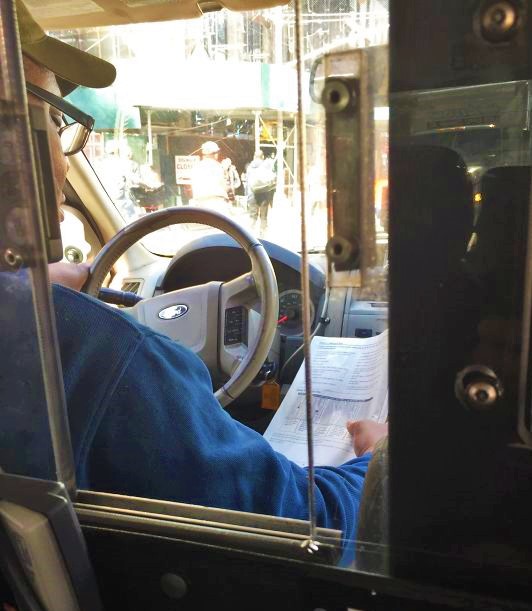
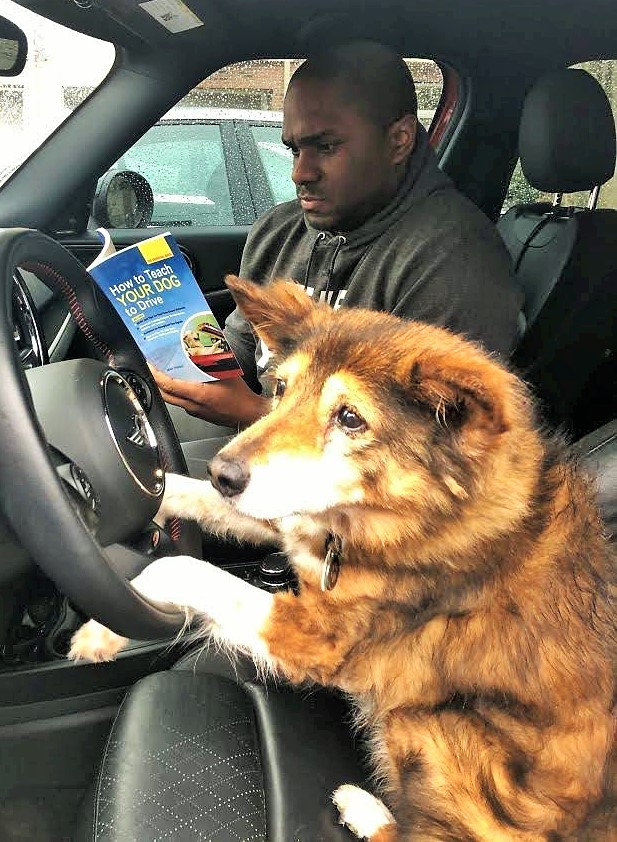
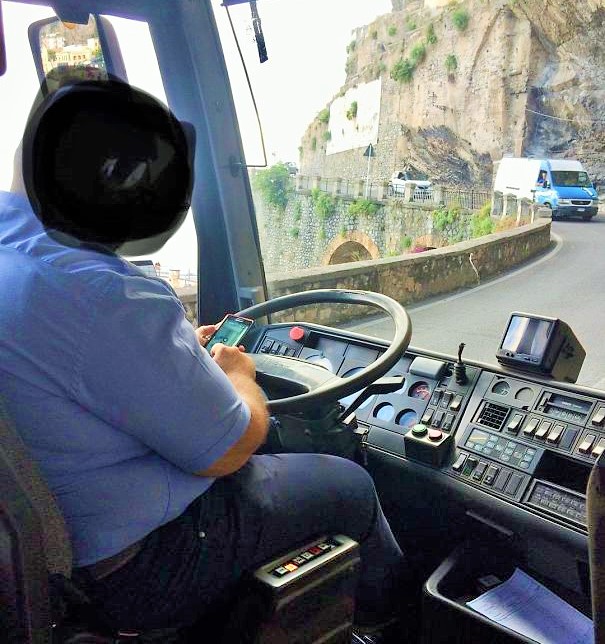
If you’re reading the driving manual while driving the cab, it may be too late.

I don’t know whether I’m on a roll or in a rut. Having considered the variety of bed activities people indulge in, I was primed to notice what’s going on on the road. The other day, I stopped at a traffic light and saw a woman in the car next to mine was putting on mascara and eyeliner. So here we go!

Besides driving and riding. . .

Please note: Some of these are much better done while riding than while driving! (Or not being done at all…)

Deliberately driving your car into the path of a drunk driver to prevent it running over pedestrians.
  • Catch up on email
  • Brush or floss teeth
  • Needlework, especially knitting
  • Play travel games, such as “I spy…” or rhyming
    • Usually involves at least one child
Drive along scenic or historic routes
Sleep, with or without snoring and drooling
  • Meditate or pray
  • Eat, sometimes an entire meal
  • Drink
  • Read
    • eReader or physical book
    • Listen to audiobook
  • Listen to music
    • Learn music
  • Talk on the phone
  • Text
  • Update social media
  • Apply or fix makeup
  • Comb/style hair
Actively seek death
  • Argue
  • Get a man to really talk
    • Research has established that men driving, eyes straight ahead, are more likely to engage in sustained and/or intimate conversation
  • Translate vanity plates into words
  • Watch videos
  • Work on laptop
  • Catch up on the news
  • Save money on insurance by driving safely
  • Urinate in a bottle
    • Not easily accomplished for females
Hang feet out the window
  • Change glasses
    • Put in contact lenses
  • Change masks
  • Pick nose
  • Trim nose hair
  • Groom fingernails
    • File
    • Glue
    • Polish
    • Clip or polish toenails
  • Prop one or both feet on dashboard
  • Smoke or vape
    • (In many states, it is now illegal to smoke near hospitals or with a child in the car)
Shave
  • Change clothes
  • Steer with knees or forearms
  • Get a massage Some car seats are made for it now
  • Pick up hitch-hikers
  • Suffer road rage
    • Honk the horn
    • Flip someone the bird
    • Turn headlights on/off
  • Take pictures
  • Practice a foreign language
  • Crying or weeping
  • Sing along with the music in your head
  • Ask “Are we there yet?” every thirty seconds

Bottom line: can you spell distracted driving?

MULTI-PURPOSE FURNITURE: BEDS!

Lectrology, the study of the bed and its associated surroundings, can be extremely useful and tell you a great deal about the owner, even if it’s only that they are a very knowing and savvy installations artist.”
from Unseen Academicals by Terry Pratchett

Well, yes, we all know about sex and sleep for energy recovery—separately or together, in no particular order! But for writing and/or personal reasons, think more broadly. What else happens in bed?

Plotting escape
  • Cuddling, before or after sex or on its own. One can actually hire a professional cuddler, female and/or male, paid by the hour for fully-clothed non-sexual cuddling.  
  • Getting/staying warm. Also think winter with no heat in the house.
    • In many parts of the world, it is customary for entire families to spend any free time in bed together, doing homework, making or repairing tools, or any other relatively stationary work, to conserve heat
  • Binge-watching TV (much more comfortable than on a sofa)
Escaping!
  • Getting sucked down the rabbit hole of YouTube
    • Or Tumblr, Cracked, Buzzfeed, Pinterest, etc.
  • Reading: books, magazines, newspapers, electronic devices
  • Eating and/or drinking
    • Sometimes this is just snacking, but on special occasions one may have a full meal delivered in bed
  • Working the Sunday Times crossword puzzle
Feeding your baby sister to the lions
  • Solving sudoku
    • Throwing the half-completed sudoku across the room when you realize there are two nines in the row
  • Playing a board game (carefully or with magnetic pieces)
  • Playing solitaire
  • Staring at the ceiling or into the dark and discuss serious issues with your bed partner
    • You can do this alone, but then it’s more of a monologue than discussion. 
      • Hearing a response to your monologue when you think you’re alone…!
Striking a pose
  • Indulging in catastrophic thinking about some personal issue, a family matter, and/or the future of humankind
    • What is the worst thing that could happen?
    • How could that come about?
    • And what might it lead to?
  • A refuge to escape an unpleasant task or situation by feigning illness
    • Often this is only a temporary fix, delaying the inevitable
Laying on the hard floor next to your bed without using it just to be stubborn
  • Recovering from an actual illness or injury
    • Applying ice or heat
    • Elevating a body part to reduce blood flow
    • Physical therapy exercises
  • Practicing modified choreography
  • Composing music
  • Cower with your head under the covers during a storm or earthquake
  • Playing with children or pets
Being the monster under the bed
  • Having a pillow fight
  • Jumping on the bed
  • Using bedding to stifle loud weeping, moaning, etc.
  • Toss, turn, and knot the bedclothes because you can’t get to sleep
    • Often with added frustration if someone is sleeping soundly beside you
  • Doing back exercises before getting up for the day
  • Nursing a hangover after being knee-walking drunk the night before
Yoga
  • Getting a massage: back, front, scalp, feet, calves, neck—whatever aches, feels good, or is your body-part fetish 
  • Sleeping excessively, possibly as a symptom of depression, illness, boredom, etc.
  • Thinking about plot points or themes for fiction and blog writing
    • In this instance, it helps to have a note pad and pen that light up when in use, or a device for dictating notes. Do not trust your memory!
  • Talking on the phone, usually for a l-o-n-g time
Levitating
  • Posting to Facebook, Twitter, or other social media
  • Sexting – NOT RECOMMENDED
  • Doing work/schoolwork, especially in the time of COVID
  • Getting bitten (bedbugs, spiders, humans. . .)
  • Deleting old emails, cleaning up the in box(es)
  • Mentally working out math problems and theorems using a base-6 rather than a base-10 number system

Bottom line: If you can imagine doing it in bed, you probably can—or can come up with a reasonable approximation.

Experiencing the outside world for the first time ever

PSYCHOLOGY OF CULTS

Cults are nothing new. Indeed, if asked to name a cult, you could probably name a few. In ancient Greece and Rome, a cult was simply the care owed to a deity, the rituals carried out at a shrine or temple. A mystery cult was a religious group that celebrated a minor god or goddess or a lesser-known aspect of a deity’s history. The word “cult” has different connotations today.

Janja Lalich, Ph.D., professor emerita of sociology at California State University, Chico, is a big gun in cult research.  Her website, Cult Research, provides extensive information about the mental mechanics involved in cults. She has also included resources for recognizing signs of a cult and how to help others who may have been impacted by a cult.

Modern Cults

There have been too many cults to count throughout history, but the vast majority have been small and soon forgotten. A post on Insider.com listed the six most notorious cults in history. (These cults have been extensively discussed and researched by people who were kind enough to share their findings online.) 

  • The (Charles) Manson Family famously murdered seven people over the course of two nights. Their stated intention was to start a race war. The Manson Family was formed in the late 60s.
  • Members of Heaven’s Gate were told that their leader was the reincarnation of Jesus, that God was an alien, and that the end of the world was near. In 1997, 39 members died after ingesting barbiturates and putting plastic bags over their heads. It is the largest mass suicide on US soil.
  • The Children of God was founded in 1968 as a system of communal living under the strict teachings of preacher David Berg. Multiple former members have testified that the church used prostitution as a recruitment tool and engaged in widespread child trafficking and sexual abuse. The organization later rebranded to The Family of Love International, and it is still active online.
  • Jim Jones founded The People’s Temple in Indianapolis in 1955 but moved the band to Guyana, and called the place Jonestown, in 1977. Reports of member abuse followed the group from place to place. In 1978, Jones instructed all of his followers to drink cyanide-laced Flavor Aid. More than 900 people died. This is the origin of the slang expression “Drinking the Kool-Aid,” meaning a person who believes in a possibly doomed or dangerous idea.

From the Wikipedia entry on cults:

“In modern English, a cult is a social group that is defined by its unusual religiousspiritual, or philosophical beliefs, or by its common interest in a particular personality, object, or goal. This sense of the term is controversial, having divergent definitions both in popular culture and academia, and has also been an ongoing source of contention among scholars across several fields of study.  The word ‘cult’ is usually considered pejorative.”

Cults are attractive because they promote a feeling of comfort, and because they satisfy the human desire for absolute answers.

Characteristics Common to Cult Leaders 

Lists of characteristics vary in inclusiveness and contain both personality and behavioral characteristics.

Personality
  • Narcissism shows up on every list
  • Charisma is an essential quality
  • Personal proclivities that shape what’s expected of group members
  • Need for control/maintain power imbalance
  • Psychopath
  • Often delusional, believing their own teachings 
Behavior
  • Offer tantalizing promises
  • Be unpredictable (reactions, appearances, next demands)
  • Organize “love bombs” for new recruits
  • Promote an us vs. them mentality, feelings of superiority
  • Isolate members from family, former friends
  • Public humiliation of established members
  • Demand detailed acknowledgment of individual fears and mistakes
  • Repeat various lies and distortions till members can’t recognize reality
  • Promote paranoia: a group, family or government is out to get members
  • Encourage members to spy on each other

Writing in Psychology Today in 2012, Joe Navarro, M.A., presented his personal list of 50 clues to identifying cult leaders.  Listed below are several of his items.

  • A grandiose idea of who he is and what he can achieve
  • Preoccupied with fantasies of unlimited success, power, or brilliance
  • Demands blind, unquestioned obedience
  • Requires excessive admiration
  • Has a sense of entitlement or power
    • Expects to be treated as special at all times
    • Expects to be able to bend rules and break laws without repercussion
  • Arrogant and haughty
  • Hypersensitive to how he is seen or perceived by others
    • Is highly dependent on tribute and adoration and will often fish for compliments
    • When criticized, lashes out with rage
    • Anyone who criticizes or questions him is called an “enemy”
  • Hates to be embarrassed or fail publicly; often reacts with rage
  • Publicly devalues others as being inferior, incapable, or not worthy
    • Habitually puts down others as inferior
  • Ignores the needs of others, including biological, physical, emotional, and financial needs
  • Frequently boastful of accomplishments
  • Needs to be the center of attention 
    • The word “I” dominates his conversations
  • Behaves as though people are objects to be used, manipulated, or exploited for personal gain
  • Is deeply offended by signs of boredom, being ignored, or being slighted
  • Doesn’t seem to feel guilty for anything he has done wrong, nor does he apologize
  • Believes he possesses the answers and solutions to world problems
  • Works the least but demands the most
  • Sees self as “unstoppable” and perhaps has even said so

Characteristics Common to Cult Members

  • Female: world-wide, 70% of cult members are women
    • Explanations for this vary
  • Generally average sorts of people. No trends in location, income, etc.
  • Suffer low self-esteem, making them especially susceptible to love bomb (compliments, etc.)
  • Many have rejected standard religions
  • Intelligent
  • From sheltered environments
  • Blame others for their failures
  • Strive for perfectionistic goals
  • Often have no idea they are in a cult!

Characteristics Common to Religious Cults 

  • It opposes critical thinking
  • Isolates members and punishes them for leaving
  • Emphasizes special doctrines outside accepted scriptures
  • Seeking inappropriate loyalty to leaders
  • Devalues the family unit
  • Crossing boundaries of behavior (especially sexual) set in accepted religious texts
  • Separation from the main religious structure

Common Recruiting Tactics 

  • Target people who are stressed, emotionally vulnerable, have tenuous or no family connections, or are living in adverse socioeconomic conditions.
  • People who were neglected or abused as children may be easily recruited because they crave the validation denied them in their childhood
  • High school and new college students are good targets for cult recruitment since they’re still forming their identity and (in the case of college students) have recently been separated from their families
    • One old (1980) study of 1000 high school students in the San Francisco Bay Area found that 54% reported at least one recruitment attempt by a cult member, and 40% reported 3 to 5 contacts
  • I can only imagine that the rise of various social media platforms would have exploded those numbers.

Damage to Cult Members 

Various research has established that former cult members suffer long-term negative effects. Dr. John G Clark, Jr, of Harvard University works with former cult members and their families identifies the following 

  • Increased irritability
  • Loss of libido or altered sexual interest
  • Ritualism
  • Compulsive attention to detail
  • Mystical states
  • Humorlessness
  • Heightened paranoia

Because these are symptoms similar to temporal lobe epilepsy, it’s reasonable to assume that membership in a cult is a brain-changing experience. 

Bottom line: There is much we can and should learn about cults—possibly in our lives, certainly in the world around us. Many of these qualities and behaviors are present to some degree in people who aren’t actual cult leaders or members. Still, they provide fodder for compatible/consistent constellations of attitudes and behaviors. Think character creation!

Hot Fuzz, in addition to being a great movie, provides an example of two cults working against each other and destroying individuals in the way.

Betrayed by the Tongue

Today’s blog entry was written by Kathleen Corcoran, a local harpist, writer, editor, favorite auntie, turtle lover, canine servant, and English as a Foreign Language (EFL) teacher.

Believe it or not, not everyone speaks English as a native language. To strain credulity further, consider that not every character learned English as a native language. Shocking, I know!

But how to convey through written words that a speaker has an accent?

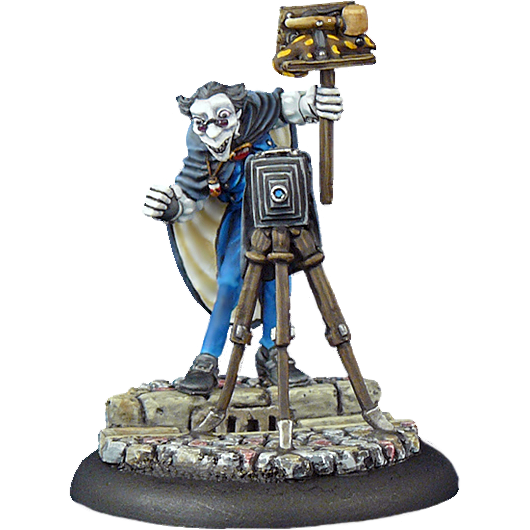
Otto von Chriek, vampire photographer

One method is to transcribe phonetically the way a character speaks, as the late, great Sir Terry Pratchett demonstrated so well. A vampire in his fantasy universe of Discworld, deliberately emphasizes his accent when he wants to appear odd rather than threatening.

“Vell, I’m not official,” said Otto. “I do not haf zer sword and zer badge. I do not threaten. I am just a vorking stiff. And I make zem laff.”
from Thud! by Terry Pratchett

But what about a subtler signifier of a character’s foreign origins? There could be a million reasons to let your audience know that a character was originally not a member of the “in” group.

  • Signal that a character will have a different cultural perspective when reacting to events.
  • Sign that a character, by virtue of a different upbringing, has insight or expertise others may need.
  • Foreshadowing of any kind of discrimination practiced against a group designated as “others.”
  • Mockery of any slight difference shows the character of the people mocking as well as those standing by and those reacting.
  • Very subtle differences can clue in a reader that something is off, for example a spy or an imposter.

Fortunately for our purposes as writers, English is weird. So many rules have exceptions or no reasonable guidelines of when to apply them…. it’s enough to drive any ESL student mad. If any of these rules (that you probably follow without noticing) are broken, that’s enough to make a reader notice that something is off.

Articles

Should a noun have a definite or indefinite article? Or no article at all? Go ahead and try to explain the rules without looking it up. I’ve been an EFL teacher for years (and occasionally an ESL teacher), and I still mix things up. Like most native English speakers, I tend to rely on what sounds right.

If your non-native English speaker hails from a real country on Earth (as opposed to another planet or a fantasy realm), you can simply have the character follow the rules of their native language. A native French speaker would be likely to overuse articles. A native Russian speaker might skip articles altogether.

Consider these examples:

  • Quick brown fox jumping over lazy dog.
  • The dog, she is lazy. A fox jumps over the dog, no problem.

Of course, if the character learned a language you’ve made up, the rules are entirely up to you.

Word Order

English, like Bulgarian and Swahili, is a SVO language; Subject Verb Object is the typical sentence structure. The meaning of a sentence can be changed simply by changing the word order. The most common word order is SOV– the verb comes at the end of the sentence, after the object. Qartuli and Mongolian are SOV languages.

Other common sentence structures include VSO (Hawaiian), VOS (Malagasy), OVS (Hixkaryana), and OSV (Xavante). Trying to fit English sentences into any of these other structures can create some very awkward conversations.

Just to be contrary, Latin word order makes no difference to the meaning of a sentence and is often jumbled deliberately for poetic effect. (I’m looking at you, Virgil!)

Yoda is one of the most widely known characters who speaks English with inverted word order. Although he has no obvious accent, his speech immediately lets the audience know that he is alien.

Agreement

Some languages have declensions and conjugations and all sorts of ways in which words change form to indicate specifics. Others have separate words to indicate number, tense, intention, etc., though the word itself stays the same. English has both.

Sometimes verbs change when they’re in the past tense (walk-walked); sometimes they don’t (put-put). Just for fun, some verbs change into entirely different words when they change tense (bear-bore).

Nouns are just as bizarre. In kindergarten, the teacher told me I just had to put an S at the end of the word. Then there were geese, children, moose, alumni, crises, and vortices. I still haven’t figured out the rule for the cello.

Naturally, this is an area of difficulty for many people who did not learn English as children. It’s also an area of difficulty for people who have been speaking English since infancy.

Idioms and Connotations

Even if a character speaks English absolutely fluently, there are still a million linguistic tripwires. A native English speaker from Minnesota will still have trouble understanding casual speech in Scotland.

I once watched a Scottish man and a South African man argue about something (I think it was Australian immigration policy, but that’s just a guess). They were mutually unintelligible. As they grew more excited, each slipped further into his native accent and became less understandable by the other. Theoretically, all three of us spoke the same language. In practice, I felt like I was watching a verbal tennis match that gradually turned into frantic hand gestures and facial expressions. It was both surreal and hilarious!
Other Sources

Translators are very useful sources for learning the grammar of a language you don’t know. If you want to have a character be newly arrived in Australia from Siberia, try looking at the translator’s notes in a new edition of War and Peace.

  • Mobi Warren, a translator of Hermitage Among the Clouds by Thích Nhất Hạnh, explained some of the difficulties in translating Vietnamese into English. He wrote, “All this moving between past and present is more easily expressed in Vietnamese, a language in which none of the words have tenses.”
  • Ancient writers can be particularly difficult to translate to modern English, but understanding those difficulties is a great way to highlight changes over time. If you’re trying to invent a language for a fantasy or science fiction setting, try basing the grammar on ancient Egyptian or Shang dynasty Chinese.

Another very useful source for finding ways to indicate non-native English speakers in dialogue is to look at resources for teaching English as a Second Language or English as a Foreign Language. If other teachers point out an area that’s particularly difficult, odds are that a character you write would have trouble with that same area.

Bottom Line: Lack of fluency is not the same as lack of intelligence. Odd speech patterns imply accents without needing to use odd spelling.

DELIVERY DEBACLE REDUX: The Madness Continues

A week ago, I wrote about all the packages that hadn’t arrived before Christmas. Well, as 2021 began, the backlog continued. Again, drawing from my circle of family and friends, the waiting continued.

Some local offices haven’t switched to the newest technology yet.

. .

LJ: I’m SO frustrated. We mailed a box of gifts to Virginia on December 7. It sat in Cuyahoga Falls [Ohio] PO till December 15 before it arrived 7 miles away in Akron regional distribution center, arriving on December 17. It has been sitting there since, no movement shown in the tracking system! I know all the problems they have been having this year, but what is going on now? It only needs to get to Fredericksburg now. Just a little farther…

. .

NP: We’ve had the same problem here. A package G was expecting sat 10(!) miles from our house for more than a week.

Pretty soon, the packages might start opening themselves.

. .

KC: My box is still in Akron. No movement. The cookies are stale.

. .

TB: Me too, L! I hope EL finally got hers.

DA: BTW—we were not nearly as happy with UPS & FedEx. Several packages were randomly tossed “somewhere” in the vicinity of the house. One package (of nice chocolates) sat for a day and a half out in the rain before the meter man saw it & alerted us.

LJ: MJ had a photo of a package he sent to his sister in Buffalo. The Amazon guy left it in the snow. M got the delivery photo notice and he sent it to his sister. If they can’t get up to the house because of heavy snow, delivery people should have some way of notifying the recipient. At least Amazon’s photos help with that.
Good thing this one wasn’t left out in the snow.

TB: Our son’s pkg took almost 3 weeks from Oregon [to Ohio].

LJ: Weird, since the packages I sent to Florida and Memphis arrived at their destinations in time for Christmas with time to spare. Only my East and West destinations were screwed up. Arizona made it yesterday and Virginia is the one still traveling. That was the shortest journey by road mileage.

LJ: Mine is still at Dulles in Virginia; this is the 31st day. It needs to get to Fredericksburg. I’m happy you got yours before the New Year, however.
KC: I received a message on Dec 20 that my package was to be delivered Dec 3! It arrived on the 22nd!

There is a network distribution center in Cleveland that has been severely backlogged since September. Perhaps the letter carriers should upgrade from tricycles.
MH: I think Ohio is the problem! D had an order for pants from LLBean and there were in the center near Columbus for a month! It wasn’t a Christmas present so it didn’t matter. We didn’t realize so many people were having this problem. In Ohio’s defense, I’m sure the diversion of trucks for vaccine delivery and the major storms were a factor.

LJ: There is something wrong with the Ohio to Virginia connection.

SB: Yup, still waiting for mine. Jan 6th now.

DM: My friend ordered a Christmas present for her husband on 12/2 and by 1/4 it still hadn’t arrived!

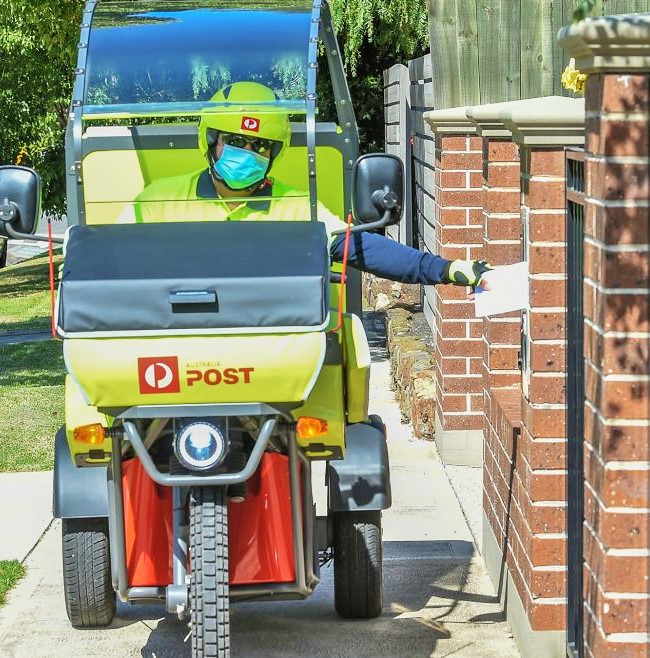
Australian mail is delivered faster because their tricycles are yellow.

DA: We must be the only people alive who had no (zero, null, nada) problems with package delivery. Our mailings to California, New Jersey, and Boston were delivered exactly when the tracking said they’d be.  On the other hand, “normal” mail is quite another thing: no regular magazine deliveries (New Yorker, etc.), one priority mail that was sent from Hiram to our Hiram PO Box (for $3.80) took seven days. (Simply bizarre.) Not a single package or card from Europe has arrived yet—but Australian mail has exceeded all expectations. Tell me it’s not a plan to destroy the USPS so that it can be privatized….

[You may recall that in my blog about the Great Delivery Debacle posted 12/29, I offered three possible explanations—other than sheer overload—but an effort to privatize wasn’t one of them!]

Since January 1, a dam seems to have broken—but still no rhyme or reason I can find!

My order of poodles has finally arrived!

January 2-4, I received 11 packages, everything from nutritional supplements to a present I’d ordered to give as a present. Saturday and yesterday packages were delivered morning and afternoon.

Because you must be waiting with bated breath to know about the package from my sister, I won’t keep you in suspense: box of presents she mailed in Lancaster, OH, 12/11, arrived Saturday, 1/2! I was sorry to see that she had paid $20.40 for priority shipping!

Similarly, a standard  8.5X11-inch family calendar mailed from Massachusetts, $9.90 for two-day delivery, arrived after 5 days.

The other packages, mailed from all over the country between December 18 and 28, all arrived together. I noticed that two from Florida on the same day, one priority and one first class arrived together.

Surprise, shock, and awe!  An item scheduled for delivery on January 6 arrived January 4!

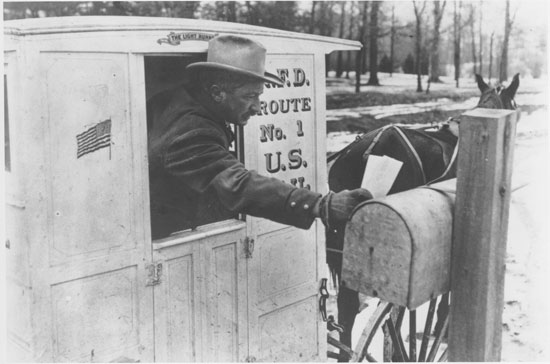
Some of the delivery vehicles are a bit out of date.

There is a method to all of this madness… sort of. Several factors combined this year to delay mail and package delivery schedules in every company. The various delivery servicesUS Postal Service, FedEx, UPS, Amazon, and othersoften work together to carry goods to their destinations.

In particular, the Post Office is often responsible for delivering mail to individual residences in less populated areas, regardless of which company began the shipping. This means that a delay in any of the delivery services almost always ripples out.

Holiday delivery surges happen every year, but this year was extra special! You may remember some disruptions in US mail services from this past year, highlighted again at election time. Many of those disruptions are still in place.

I still think the new guy looks shifty.

Sorting equipment that was removed and destroyed has not been replaced. Delivery trucks have not been serviced and so have broken down. Employees are still exposed to COVID, and many are sick or have passed away.

Kim Frum, a senior public relations representative for USPS, released a statement that read, in part, “While every year the Postal Service carefully plans for peak holiday season, a historic record of holiday volume compounded by a temporary employee shortage due to the COVID-19 surge, and capacity challenges with airlifts and trucking for moving this historic volume of mail are leading to temporary delays.” 

Employees at Amazon, FedEx, DHL, Hermes, and UPS also interact regularly with the public and thus are exposed to increased risk of COVID. International service has been disrupted because of travel restrictions. Everyone is dealing with increased volumes because people are ordering things online to comply with quarantine orders.

. .

The Postal Police take their job pretty seriously.

The madness comes from playing Russian roulette with your packages. Will your box be the one in the back corner of the truck? Will your letter be the one that won’t fit in the bag and has to be left for the next round? Will your parcel be the one that hasn’t been sorted by the end of the shift and must stay in the warehouse until tomorrow? Most chancy of all: whose mail will that shifty new guy take to the TV studio with him?

. .

Bottom line: I’m waiting to see what the new mailing normal will be.