This is an update of an earlier blog entry from December 30, 2015. I wrote this as part of a series that might be characterized as Darwin’s Christmas, tracing the evolution ofa number of our current Christmas traditions.
Gift Giving Origins
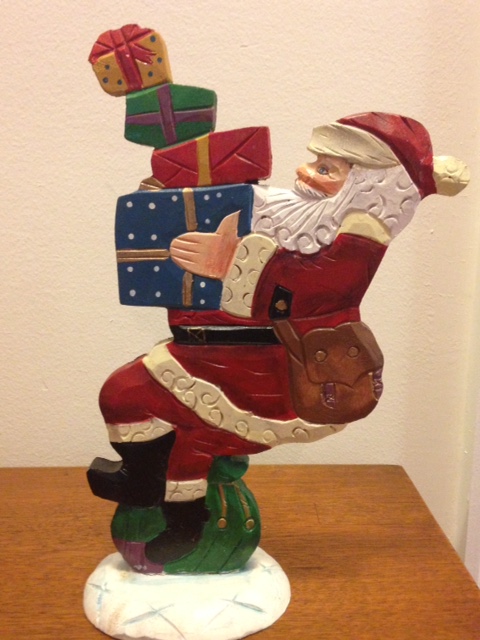
Blue-robed Santas reflect the influences of Odin, Saturn, Grandfather Snow, and Tovlis Babua.
The earliest gift-bringer I read about was Odin, a Pagan Germanic god who is thought to have influenced concepts of Father Christmas in numerous ways, including sporting a long white beard and riding through the night sky. Odin wore a blue-hooded cloak and rode through the midwinter sky on an eight-footed horse named Sleipnir, visiting his people with gifts. According to pre-Christian Norse tradition, he entered through chimneys or fire holes on the solstice.
The Germanic goddess Holda presided over the summer and winter solstices. In the winter, she presided over the first snow, bringing joy and good fortune, traveling in her sleigh and dressed in a red or white cloak.
In 16th century England (during the reign of Henry VIII), Father Christmas was pictured as a large man in green or scarlet robes lined with fur. Popular custom associated Father Christmas more with good cheer, peace, joy, good food and wine, and revelry. In 1616, Ben Johnson presented at court the play Christmas: His Masque in which the character of ‘Old Christmas’ presides over holiday parties with his children ‘Misrule’, ‘Carol’, ‘Mince Pie’, ‘Mumming’, ‘Wassail’, and ‘New Yeares Gift’.
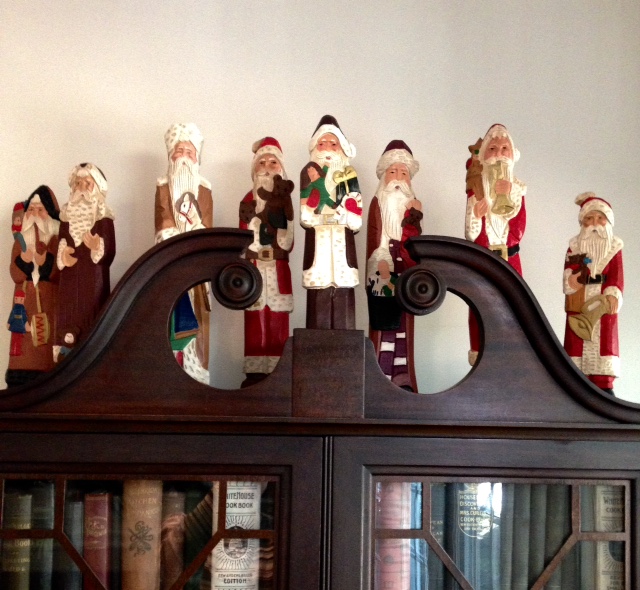
Representations of Santas around the world, L-R: Hungary, 1884; Austria, 1904; Russia, 1903; Canada, 1930; U.S.A., 1935; Mexico, 1923; U.S.A., 1925; Holland, 1920.
Father Christmas merged with St. Nicholas (Sinterklaas), which morphed into Santa Claus. Suffice it to say that most people around the world who celebrate Christmas also have a tradition of a Christmas gift-bringer: Santa Claus, St. Nicholas, Pere Noël, Father Christmas, Christkindl, the Wise Men (Els Tres Reis), Olentzero, Grandfather Snow (თოვლის ბაბუა), or an old gift-giving witch called Befana (in Italy). In Scandinavia a jolly elf named Jultomten delivered gifts in a sleigh drawn by goats. And in Russia, an elderly woman named Babouschka (grandmother) leaves gifts by children’s bedsides on January 5th.
Mythical gift givers leave presents in different places. In much of Europe, children put their shoes or boots by the door, ready for presents. In Italy, the UK, and the USA presents are left in stockings—and, of course, under the Christmas tree.
Gift Giving Timing
People open presents on different days as well. Children in Holland often receive the earliest presents, on December 5th for St. Nicholas’ Eve. On St. Nicholas’ Day (6th of December), children in Belgium, Germany, Czech Republic, and some other European countries open some of their presents. Christmas Day (25th of December) is the most popular gift day for the UK, USA, Japan, and many other countries. In religions that follow the Julian or Orthodox calendar, children open gifts on Orthodox Christmas Day, which typically corresponds to January 7th. Many people in Catholic countries such as Spain and Mexico don’t open gifts until the Feast of the Epiphany, on January 6th.
Gift Receivers
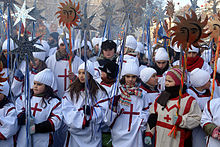
Alilo in Tbilisi
Who gets presents has shifted dramatically over the centuries. At the Roman midwinter festival of Saturnalia, the rich gave gifts and hosted banquets for the poor. Odin gave presents to “his people.” The goddess Holda spread good fortune to all those who honored her. St. Nicholas gave to the poor.
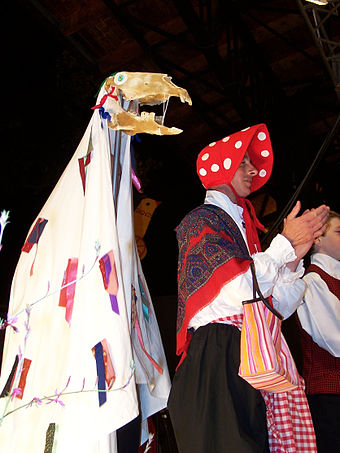
Dawnsyr Y Fari Lwyd
According to the Christian Science Monitor, in early modern Europe, gift giving also had roots in Christmas begging, when bands of young men, often rowdy, would wassail from house to house, demanding handouts from the gentry. The Welsh Y Fari Lwyd or Mari Lwyd custom includes revelers dressed as skeltal horse arguing with households to demand entry and beer, all in rhyme and song. For Alilo, Georgian Orthodox children dress in white or in religious costumes and sing carols house to house in exchange for wine, sweets, and an egg. It wasn’t till the mid-1800s that gift-giving shifted from the poorer classes to children.
On the other hand, giving gifts to heads of state, kings and queens, emperors, etc, pre-dates the birth of Jesus.
Modern Gift Givers
Today, it seems everybody gives gifts to everybody—an impression strongly supported by advertising and merchant specials! Christmas begging from charities is rampant. Salvation Army kettles (which first appeared in 1891) are on sidewalks all over the world. Employers often give actual gift baskets or holiday bonuses. Co-workers, neighbors, and friends exchange gifts. Parents give gifts to children, but people also give gifts to parents, grandparents, aunts, uncles, siblings and step siblings, and second cousins twice removed.
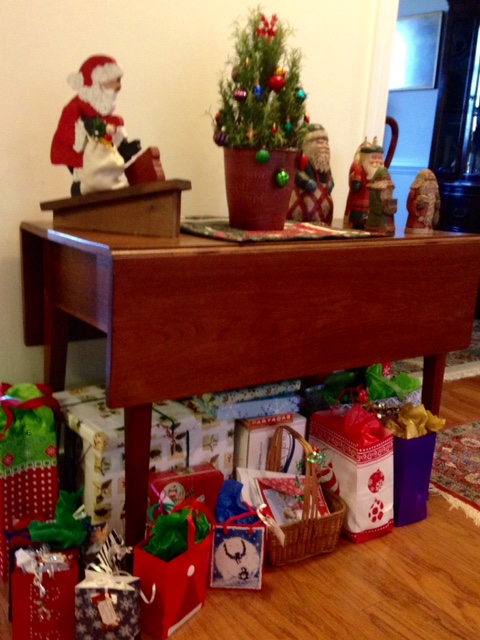
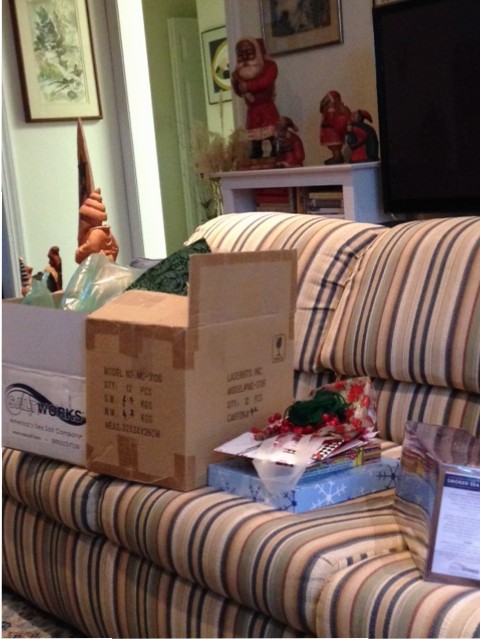
By now, all the glittery wrappings are probably torn asunder, the gifts put away, exchanged, maybe saved for re-gifting, and the leavings look more like this.
And I’m left wondering: How many Christmas presents are gifts and how many are perceived obligations?.
Unless you’re a writer, you probably don’t think of yourself as a storyteller. But consider this: Whether face-to-face, by phone, by letter (for the few old-schoolers out there)—even by text, though that tends to be a tad disjointed—every time you “catch up” or spread news to family or friends, you are telling a story.
Some cultures consider oral storytelling to be an integral part of society and honor the storyteller as an esteemed member of the community. (World Storytelling Day is celebrated every year on or near the Spring Equinox, March 20th.) Storytellers still play in important role in Inuit, Irish, Indian, Iranian, … perhaps it’s something to do with the I. West African, Such storytellers hone their craft by training, practicing their skills, sometimes even undergoing formal apprenticeships. Pass on history, teach survival skills, warn about social taboos, and entertain.
Don’t always depend on what you see or hear. Sometimes focus on what you feel, smell, or taste. Use all your senses. Were you dizzy? Hot or cold?
Details
Be specific. When you report on fall foliage, say whether you’re talking about oaks or maples. What flowers are in the garden or bouquet? Is that Christmas tree a white pine or a blue spruce?
Showing
We tend to talk about telling a story, but it’s better to show. “My boss really pissed me off” versus “My face must have been rage red, and I had to bite my tongue to keep from yelling back.”
Motivation
Actions can be interpreted many ways. Your listener/reader wants to know why it happened. The more drastic the action, the stronger the motivation. Even something as simple as slamming a door means little unless you set the stage for anger, fear, time pressure, etc.
Conflict
Conflict makes for a good story. Do people want different things? It could be as simple as dinner in vs. dinner out. Or it could be as important as whether to adopt a child. Or maybe you are talking about someone who has to overcome an obstacle—pay off a loan, recover from an injury, etc. But sometimes people are in conflict with themselves: whether to buy a car or a truck; whether to find a second job or cut spending; whether to break up for good this time.
Context
People want to know when and where things are happening. Is this news or a review of past events? When did the theft happen? And where? And where is the speaker now?
Focus
And stay focused. Is what you were wearing when your spouse went to the ER important? Does it matter that the food was similar to what you ate at Auntie Milicent’s retirement dinner?
“There is no greater agony than bearing an untold story inside you.”
A couple of weeks ago, I blogged about makeup for men. Researching that topic took me deep into the worldwide history of cosmetics. But discussions of cosmetics for African Americans or Native Americans were glaringly absent.
There are many reasons for this, ranging from forced relocations disrupting a community’s access to materials traditionally used for beautification, to societal beauty expectations, to cultural practices, even to the way film development parameters affect the way darker skin tones appear in photos and movies. The history of makeup use in darker-skinned communities in America also reflects the segregation and discrimination non-white people have faced. Cosmetics marketed to lighten or bleach skin, hair care products advertised to change texture, and a variety of treatments purported to change one’s racial appearance have been on the market for as long as the market has existed. The idea that one must mimic European ideals of beauty to be attractive is slowly changing.
Native American Cosmetics
In researching Native Americans, I found little that was specified for beautification, but many practices that would improve appearance. Across the entire North American continent, many different environments present very different challenges and materials for skin care and beautification. A Miccosukee person living in the heat and humidity of Florida would have a very different beauty regimen than a nomadic Assiniboine person living on the northern Great Plains. Better Nutrition identifies these 5 specific sources of health and beauty for Native Americans commonly used in the Mojave Desert. The article does not specify which tribe used these methods, but the author mentions researching in Sedona Arizona, where the Yavapai, Tonto Apache, Hopi, and Navajo lived at various times in history. (Bolding added.)
“Desert-dwelling Native Americans used aloe vera gel to expedite wound healing, soothe sunburn, and hydrate skin. Aloe is antimicrobial, antibacterial, antifungal, anti-inflammatory, and it contains antioxidants. Aloe also has phytosterols that help soothe itches and irritation. The bioactive compounds in the plant are rich in vitamins A, B, C, D, and E as well as magnesium, potassium, and zinc that aid healing.
“Agave nectar is antimicrobial and was mixed with salt by Native Americans to heal skin conditions. Agave’s sugars soften skin and lock moisture inside hair. These sugars form complex bonds with internal proteins to add strength, resiliency, and elasticity to skin and hair.
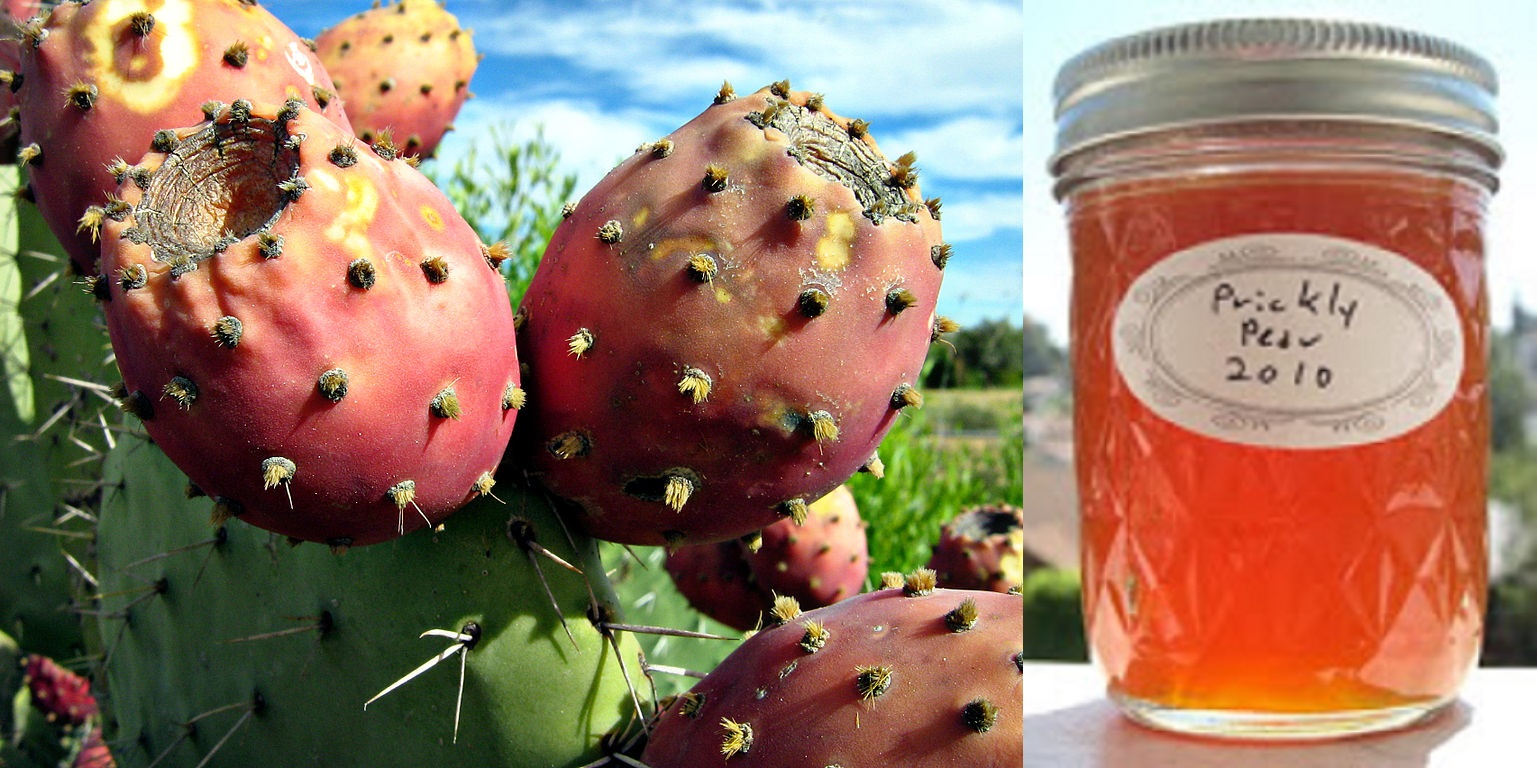
“Native Americans ate the prickly pear and used oil from the fruit’s seeds to help strengthen skin and hair. The oil contains twice as many proteins and fatty acids as argan oil, and is rich in vitamin E, making it an excellent remedy for damaged or mature skin and dry hair. Linoleic and oleic fatty acids help moisturize and restore skin’s elasticity. The vitamin K in prickly pear helps to brighten dark spots and undereye dark circles.
w
“Native Americans discovered that juniper berries produce a stimulating, astringent, and detoxifying oil. They used it to remove impurities. Today, juniper oil is a key ingredient in detox skin products. It can balance oily skin and open blocked pores and keep them clear. Juniper improves circulation and reduces swelling, making it an ideal ingredient in massage oil.
“Native Americans used the juice from the yucca root to make soap and shampoo because of its ability to lather. Since it’s packed with vitamin C and other antioxidants that soothe and nourish the skin and scalp, they also used it to treat ailments from acne to hair loss. Yucca is also anti-inflammatory, antibacterial, and detoxifying.”
Many ingredients in modern beauty products were first used by Native Americans. In areas where maize was a prominent crop, people ground corn to use as a skin cleanser. It was often rubbed on to the skin to remove impurities from the body, sometimes for ceremonial purposes.
By “cosmetics” one usually means preparations intended to make the wearer more attractive, used as part of one’s regular toilet. Such cosmetics are typically removed daily.
Although not cosmetics in the above sense, the oldest materials used in Native American face paint were derived from animal, vegetable and mineral sources, with earth or mineral paint being the most common. White and yellow paint was obtained from white and yellow clays along river beds, and buffalo gallstones produced a different kind of yellow.
A growing number of cosmetic and skincare brands owned by Native people make use of traditional materials. Cosmopolitan recently published an article highlighting makeup brands owned and run by Indigenous Americans, including Prados Beauty, Cheekbone Beauty, Ah-Shí Beauty, and Sḵwálwen Botanicals. Huffington Post wrote about how some of these brands are using marketing and product design to break down harmful stereotypes and educate consumers about distinctions among the many, varied tribal cultures.
Black Cosmetics
By comparison, searching for African American/Black cosmetics turns up a long history of a population underserved by commercial cosmetic companies.
A black man born during slavery, Anthony Overton, opened the Overton Hygienic Manufacturing Co. in Kansas in 1898, to sell baking powder and other products to drug and grocery stores. Recognizing the absence of cosmetics in skin tones for women of color prompted his foray into makeup.
In the early 1900s, large department stores did not stock products for people of color, so Overton developed a network of salespeople who visited small stores with samples. People could also send for his products by mail.
Sales of Overton’s “high-brown” face powder boomed in the United States and countries like Egypt and Liberia. Overton Hygienic relocated to Chicago’s South State Street in 1911, and the next year went on to manufacture more than 50 products, including hair creams and eye makeup. The face powder expanded from “high brown” to include darker and lighter shades, such as “nut-brown,” “olive-tone,” “brunette,” and “flesh-pink.” Importantly, Overton (who had a chemistry degree) insured that his makeup was safe, unlike many products then on the market.
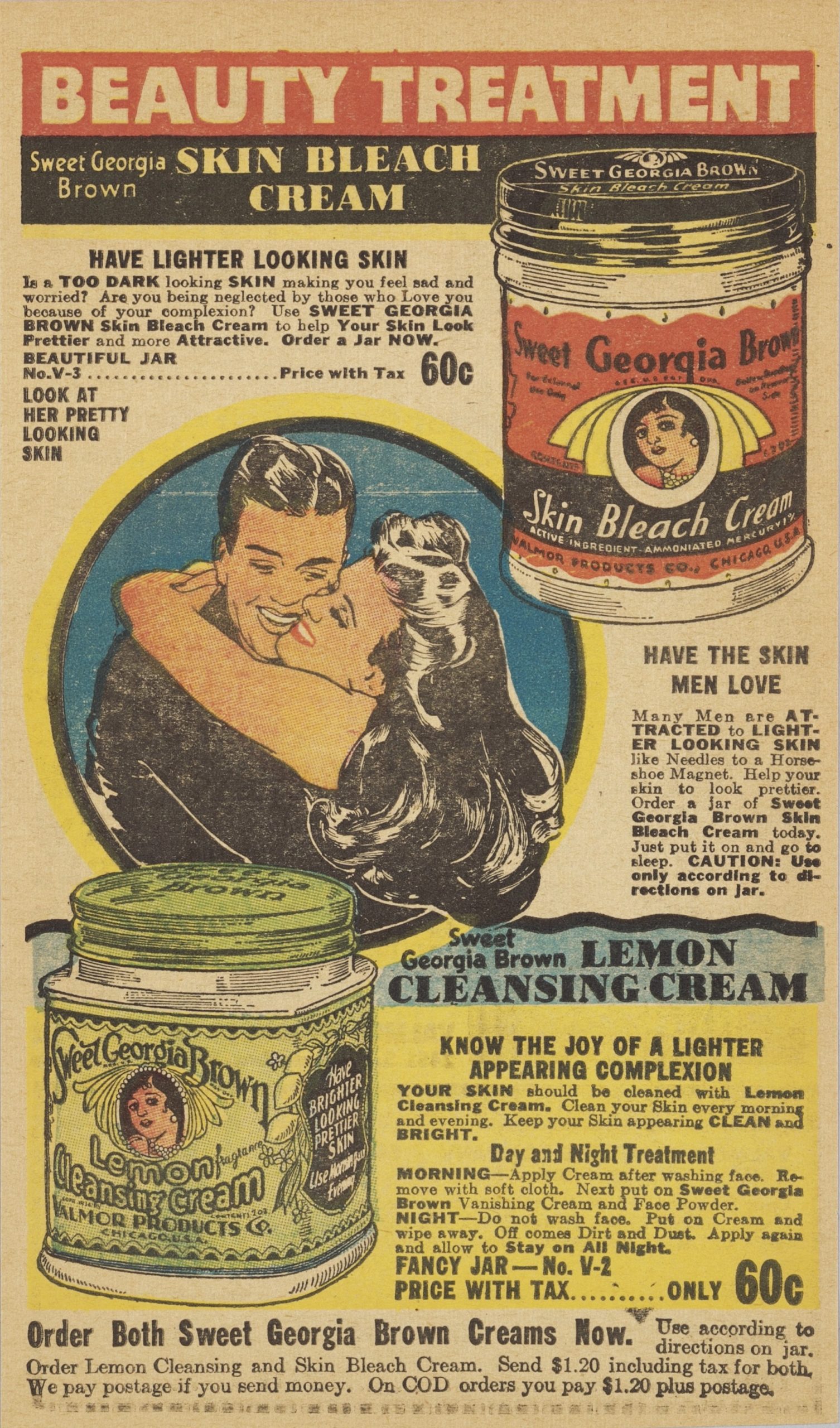
Valmor Products’ Sweet Georgia Brown skin lightening creams
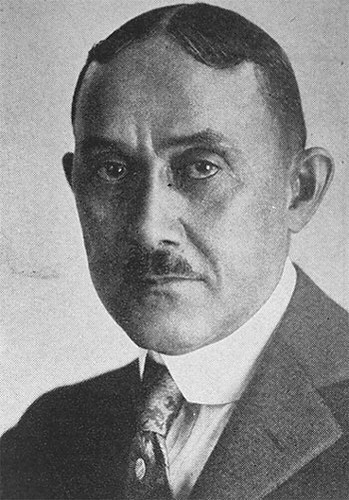
In 1926, Morton Neumann, a Hungarian American also a chemist who grew up in Chicago, established Valmor Products Co., which largely targeted black customers. A big seller was Sweet Georgia Brown face powder, then available for 60 cents in colors like “tantalizing dark brown,” “aristocratic brown,” “sun-tan,” and “teezum [tease ’em] red.” Sweet Georgia Brown also widely marketed skin bleaching creams, reflecting the continuing trend trend of equating lighter complexions with beauty and desirability.
What does it tell you that one ad for the face powder promised a “lighter appearance in 10 seconds” and pointed out that the powder “is specially made to give tan and dark complexions the BRIGHTER attractive beauty that everybody admires.”
In 1923, two white, Jewish chemists — Morris Shapiro and Joseph Menke — opened Keystone Laboratories in Memphis. They split up, and Shapiro launched Lucky Heart Laboratories in 1935. Lucky Heart products were sold only by representatives, often community members, to show the cosmetics “to friends, neighbors, people you know at work, church or in social groups.”
“Both Keystone and Lucky Heart are still in business today. They primarily sell hair and skincare products, with some relics of the past, such as Lucky Heart’s beauty bleaching cream. Lucky once offered makeup products like tint cream and a Color-Keyed Cosmetics line. However, another Memphis cosmetics business, the Hi-Hat Company, prided itself on offering “smart shades for every complexion.” Hi-Hat’s Jockey Club face powder came in hues such as ‘Harlem tan,’ ‘Spanish rose,’ ‘chocolate brown,’ and ‘copper bronze.’”
In the 1960s, mainstream brands like Maybelline and Avon got into the act. During the five years that ended the 1960s, a half-dozen cosmetics lines for black women debuted. One of them, Flori Roberts, bills itself as the first such line that department stores carried.
In earlier years, women of color mixed shades to make the right foundation shade for their skin. But that didn’t address issues of oil or silicone.
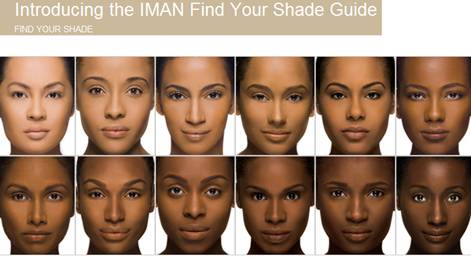
IMAN Cosmetics Shade Guide
In 1994, Somali supermodel Iman Abdulmajid started IMAN Cosmetics, to serve women whom other makeup manufacturers had overlooked — blacks, Latinas, Asians. The basic premise was/is that skin tones overlap, so cosmetics companies shouldn’t target one ethnic group.
Today, women of color have more options when looking for cosmetics to match or complement their skin tones. Mainstream brands such as AJ Crimson, B.L.A.C Minerals, Plain Jane Beauty, M.A.C., Bobbi Brown, Cake Cosmetics, Makeup Forever, Nars, Lancôme, and others have widened their color palettes in foundation, eyeshadow, lipstick, liners, and contouring. Ulta Beauty, one of the largest makeup retailers in the country, has an entire section of Black-owned brands of skincare, hair care, and makeup products.
Bottom Line: Where there’s a will, there’s a way. And today women (and men) have more makeup and cosmetic options than ever before.
Unless the author uses an omniscient point of view to tell a story, the narrator’s voice will affect the reader’s understanding of events. Dr. Watson helps the reader to understand the habits and reasoning of Sherlock Holmes. Harry Potter serves as the reader’s guide to all the strangeness of Hogwarts as he experiences it for the first time. Ursula K. LeGuin and Terry Pratchett both wrote stories from the point of view of trees, with a tree’s perspective and understanding of the world.
There are loads of books out there with varied, interesting narrators’ voices that add to the tone and understanding of the story. Here are a few of my favorites.
First Person Narrators
Writing a story from the point of view of a single character creates a relationship between the audience and the narrator, especially when the author uses first person point of view. When the narrator has a limited or distorted understanding of events, the audience must fill in the blanks.
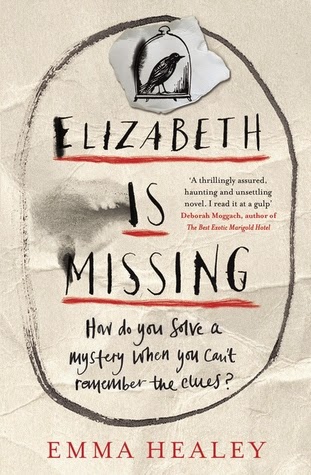
Elizabeth is Missing by Emma Healey Maude, the narrator, has dementia. The reader must piece together the events surrounding a possible murder through Maude’s disjointed and confused understanding.
.
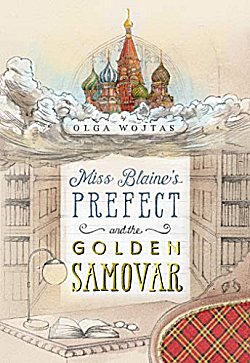
Miss Blaine’s Prefect and the Golden Samovar by Olga Wojtas Shona McMonagle has an absolute certainty in her superior intelligence and understanding of human nature. When she is sent back in time to fulfill a vague mission in 19th century Russia, she jumps to every conclusion possible and misreads every other character’s intentions. This juxtaposition of the narrator’s understanding of what is happening with the reader’s understanding of what is happening is the source of much of the comedy in the book.
.
Room by Emma Donaghue Jack, a five-year-old who has lived his entire short life imprisoned with his mother in a small shed, has a limited understanding of the world and of things happening around him. The vocabulary and language of the novel reflect the narrator’s voice.
.
Hollow Kingdom by Kira Jane Buxton – S.T., a domesticated crow, describes the collapse of human society during the zombie apocalypse. He applies a crow’s logic to other characters’ motivations and physical symptoms. This book also answered a question I’ve had for a while: when the humans turn into zombies, who feeds their pets?
.
Multiple Narrators
Sometimes, the author can best tell the story by employing multiple narrators’ voices. Each narrator’s voice and style tells a different aspect of the story. Varied and sometimes conflicting points of view provide the reader with a more rounded understanding of what is happening and why.
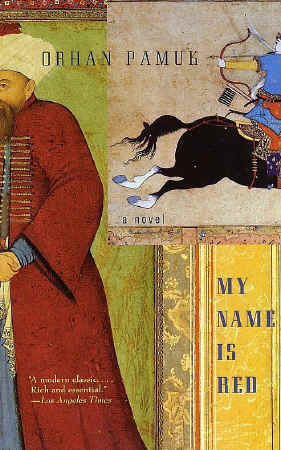
My Name is Red by Orham Pamuk Every chapter has a different narrator, sometimes characters in the story, sometimes animals, sometimes abstract concepts. While ostensibly solving a mystery in 16th century Istanbul, the various narrators discuss philosophy and the nature and purpose of art.
.
The Sound and the Fury by William Faulkner Each of the narrators Faulkner used is unreliable in a different way. When they describe the same episode, the reader gets a fuller understanding of events and significance, with the contradictions and tone shifts each employs.
.
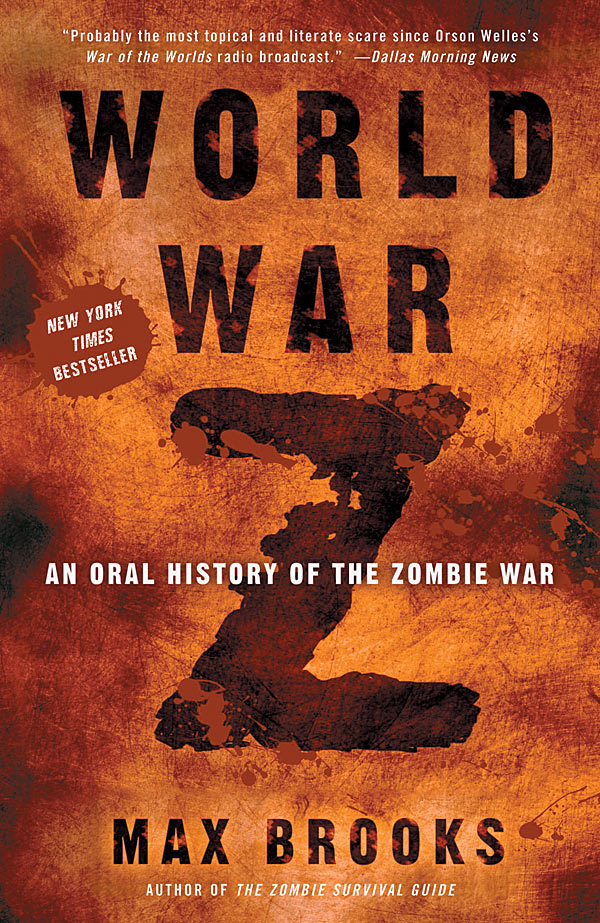
World War Z: An Oral History of the Zombie War by Max Brooks Brooks wrote the novel as a series of interviews with various people, each describing the events leading up to and during a zombie apocalypse. The unnamed interviewer has very little to say, but each character interviewed has a different cultural perspective and explanation of motivations. Descriptions of events vary wildly in what’s emphasized and what’s left entirely unmentioned.
.
Developing Narrators
Writing teachers talk a lot about character development, and with good reason. A character that does not change over the course of a story becomes boring. When the narrator’s voice develops and changes over the course of a story, the reader’s understanding of the world in the story changes as well.
Flowers for Algernon by Daniel Keyes As the narrator undergoes an experimental medical treatment, the language used to keep a journal becomes increasingly complex. The narrator’s voice reflects the mental changes experienced by the test subject, with a drastically changing understanding of the world. When the treatment wears off in the second part of the book, the language and understanding becomes more limited again.
.
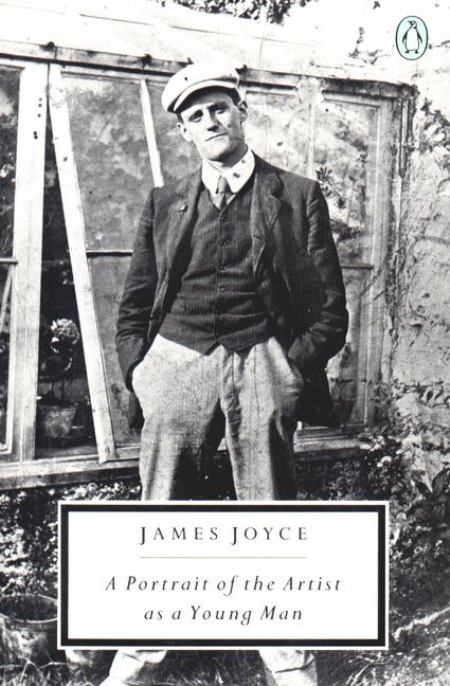
A Portrait of the Artist as a Young Man by James Joyce As the young man of the title grows, so does his style and understanding of the world. The language becomes more complex, and the narrator’s voice develops from that of a child to that of an adult.
.
Hunger by Knut Hamsen The narrator’s voice is Knut Hamsen, as this story is autobiographical. The author used stream-of-consciousness writing to describe the physical and psychological hunger he experienced during his struggles as a writer. As the narrator became increasingly alienated and self-destructive, his writing style reflected his changing obsessions and eroding mental stability.
.
There are many more books out there with unique and interesting narrators, but there’s not enough blog space in the world to list every book I’ve read and loved. For example, the narrator in The Murder of Roger Akroyd by Agatha Christie contributes a great deal to the reader’s understanding of what occured. I can’t go into much detail without spoiling the plot entirely, so you’ll just have to read it for yourself to see what I mean. You might even have to read it again immediately, like I did!
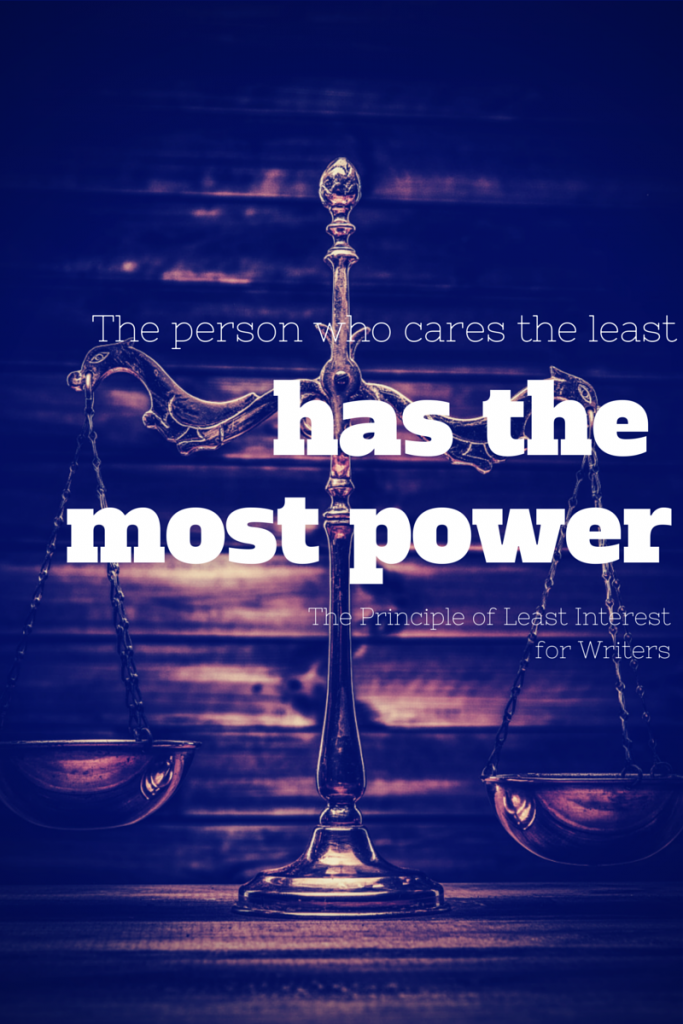
Sociologists, economists, therapists, and every other sort of -ists have studied The Principle of Least Interest, but it’s incredibly important for writers as well. This is one of those areas in which science has confirmed what common sense has long maintained: the person who cares the least has the most power. This principle works everywhere from the housing market to the marriage market. (I wrote about this topic previously in 2015.)
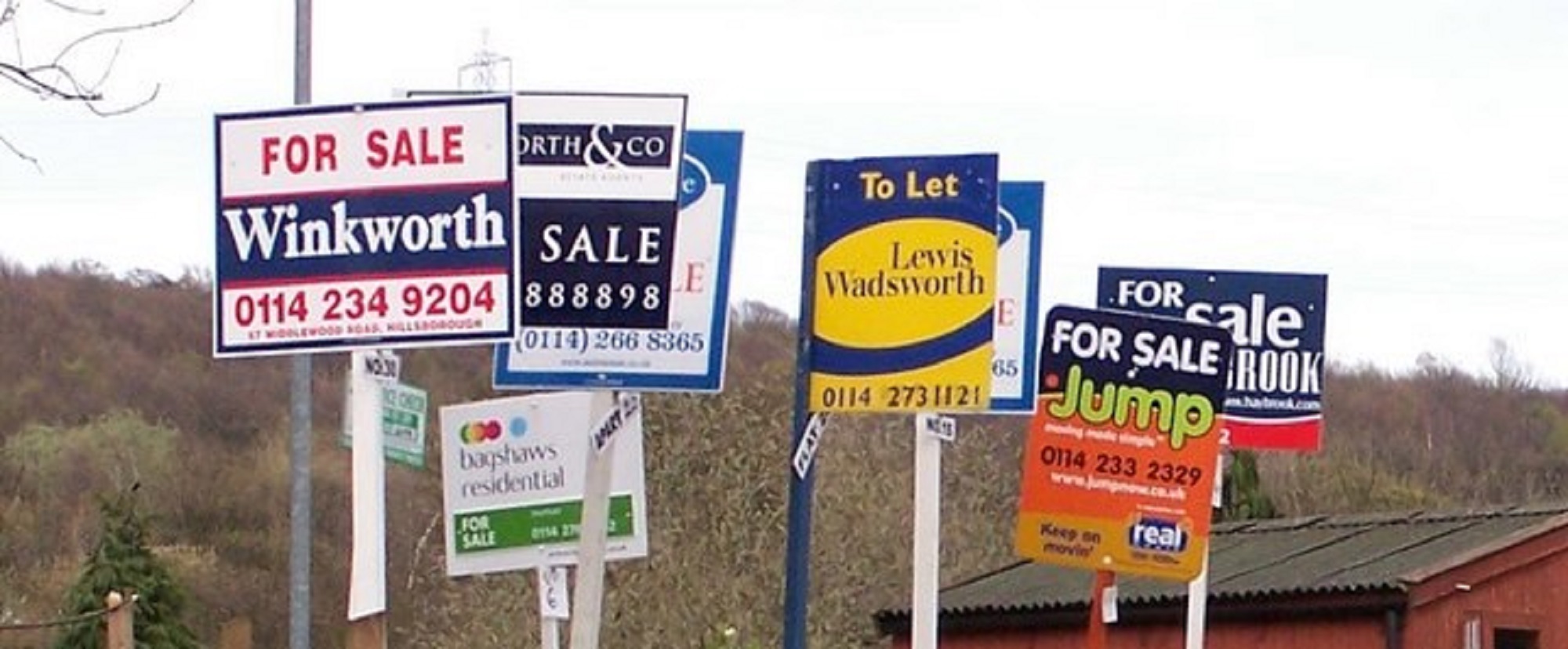
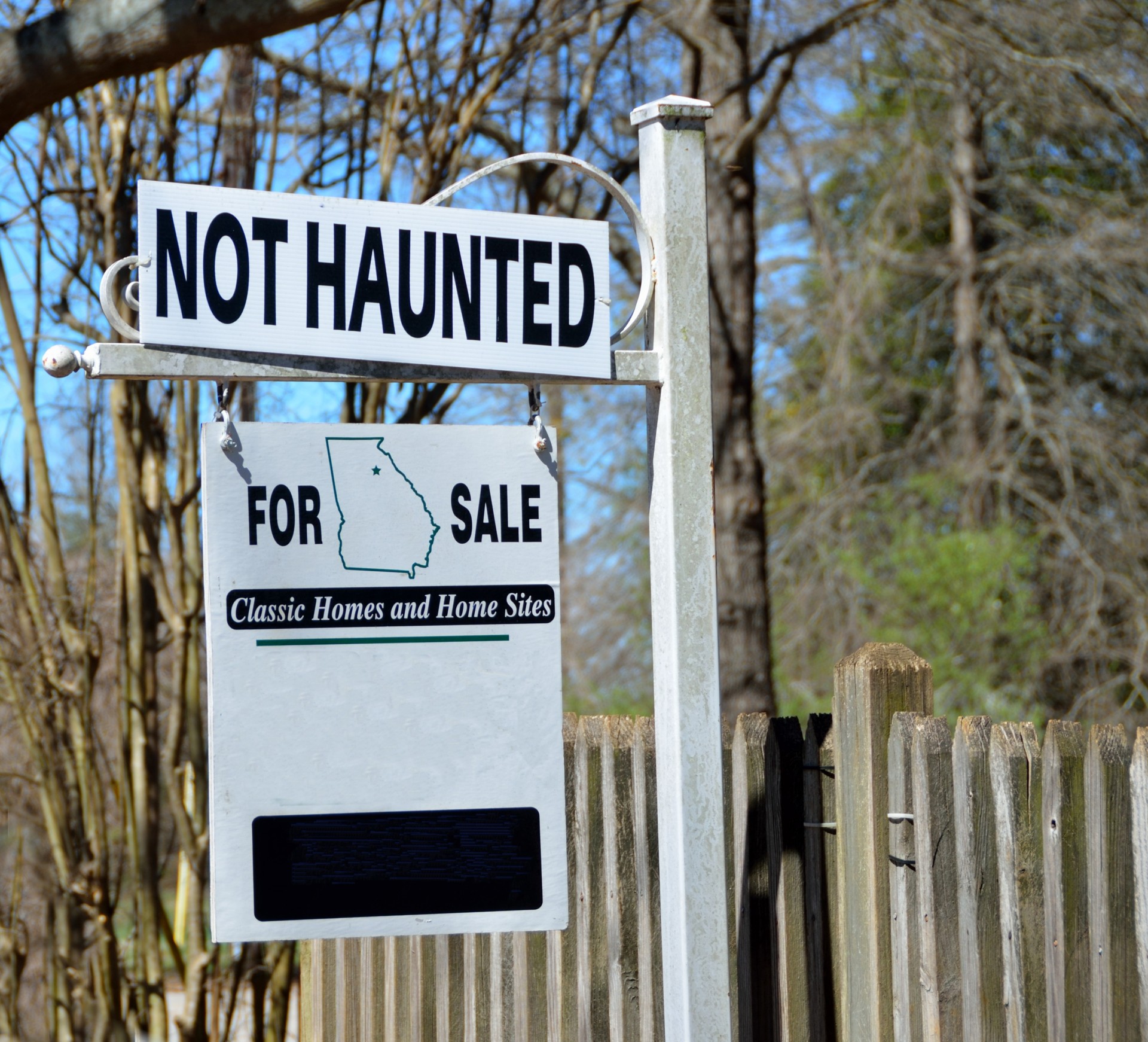
That’s definitely a selling point.
If the buyer is more eager to buy than the seller is to sell, the seller will determine the selling price. If he loves her more than she loves him, he could end up the proverbial hen-pecked husband of so many comedies; vice versa and she is a candidate for the downtrodden foot-wipe—perhaps abused—wife of so many tragedies.
This principle is so well understood that sometimes people try to disguise their true levels of caring/interest (talk of other great offers forthcoming, flirting with or dating a rival). Inherent in disguise is the understanding that what counts is often the perception of least interest.
The First Take-Away for Writers:
For your characters, know who has the power (the least interest) and who is perceived to have it. And if your work has more than two characters, you need to understand the power relationships for each pair.
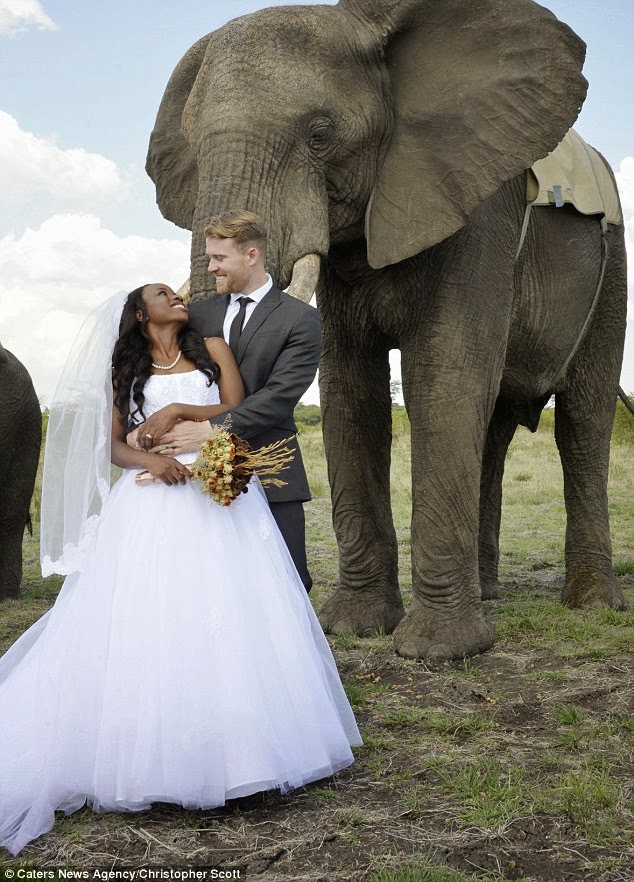
The elephant has the least interest in this relationship.
Unlike a credit score, people can’t go on-line and check out their power ratings. The primary reason that power relationships are often unclear is that the bases of power are virtually limitless: expertise, physical attractiveness, intelligence, wealth, athletic ability, knowledge of secrets, ability to make the other’s life miserable, being popular, great sense of humor—anything and everything that is important to that pair. Knowing the facts doesn’t tell you/the reader who has the power.
If she married him for the money and he married her for the Green Card, who cares more? What if we add in that she is beautiful and he’s a great problem-solver; she’s moody and he’s uncommunicative; he’s a natural athlete and she manages their money; they’re both extremely intelligent and care mightily for their two children. As the author, you can determine who has the power by giving weight to these factors based on the characters’ perceptions of what is important.
The Second Take-Away for Writers:
Anytime you think humans have total power over dogs, just remember which one is picking up the other’s poop.
Power is seldom one-dimensional, and if you don’t recognize the complexity, your characters will be flat and unrealistic.
In many relationships—for example, boss/employee, parent/child, older sibling/younger sibling, teacher/student—the general expectation would be that the total power package would favor the former. But my guess is that most readers don’t read to confirm the norm; they like to be surprised.
The Third Take-Away for Writers:
You should at least consider writing against common power expectations.
And just to end on a high-brow note: according to Lord Acton, “Power corrupts. And absolute power corrupts absolutely.” Consider how less-than-absolute power might corrupt your character(s).
Bottom Line
Know who has the power and who is perceived to have it.
Power is seldom one-dimensional, and if you don’t recognize the complexity, your characters will be flat and unrealistic.
You should at least consider writing against common power expectations.
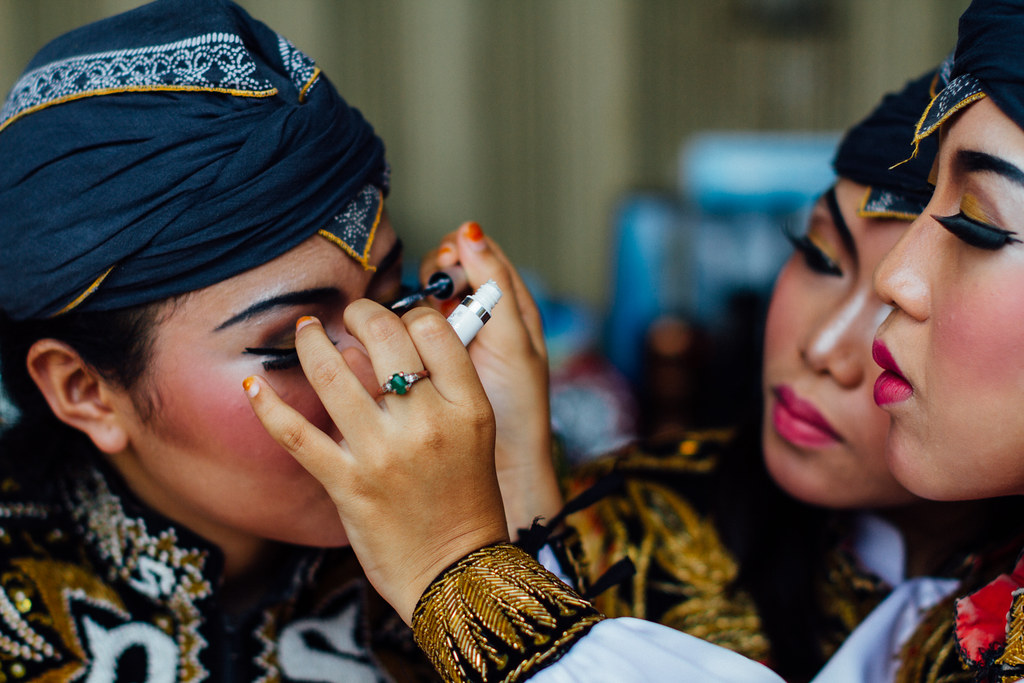
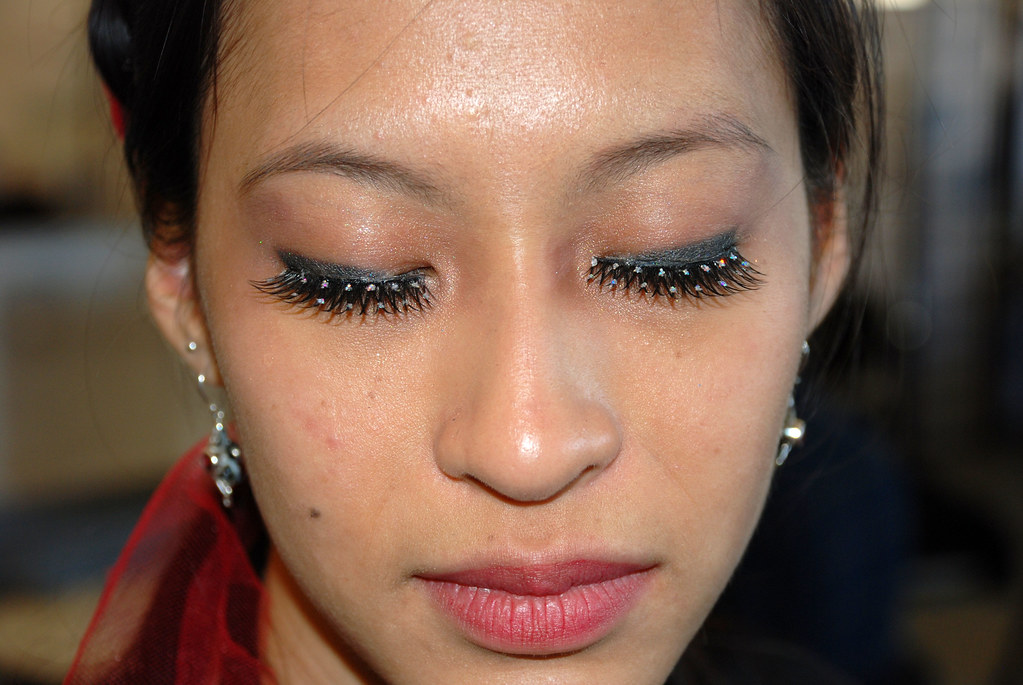
Chinese Opera Performer Denise Chan – Chinese Opera, CC BY 2.0
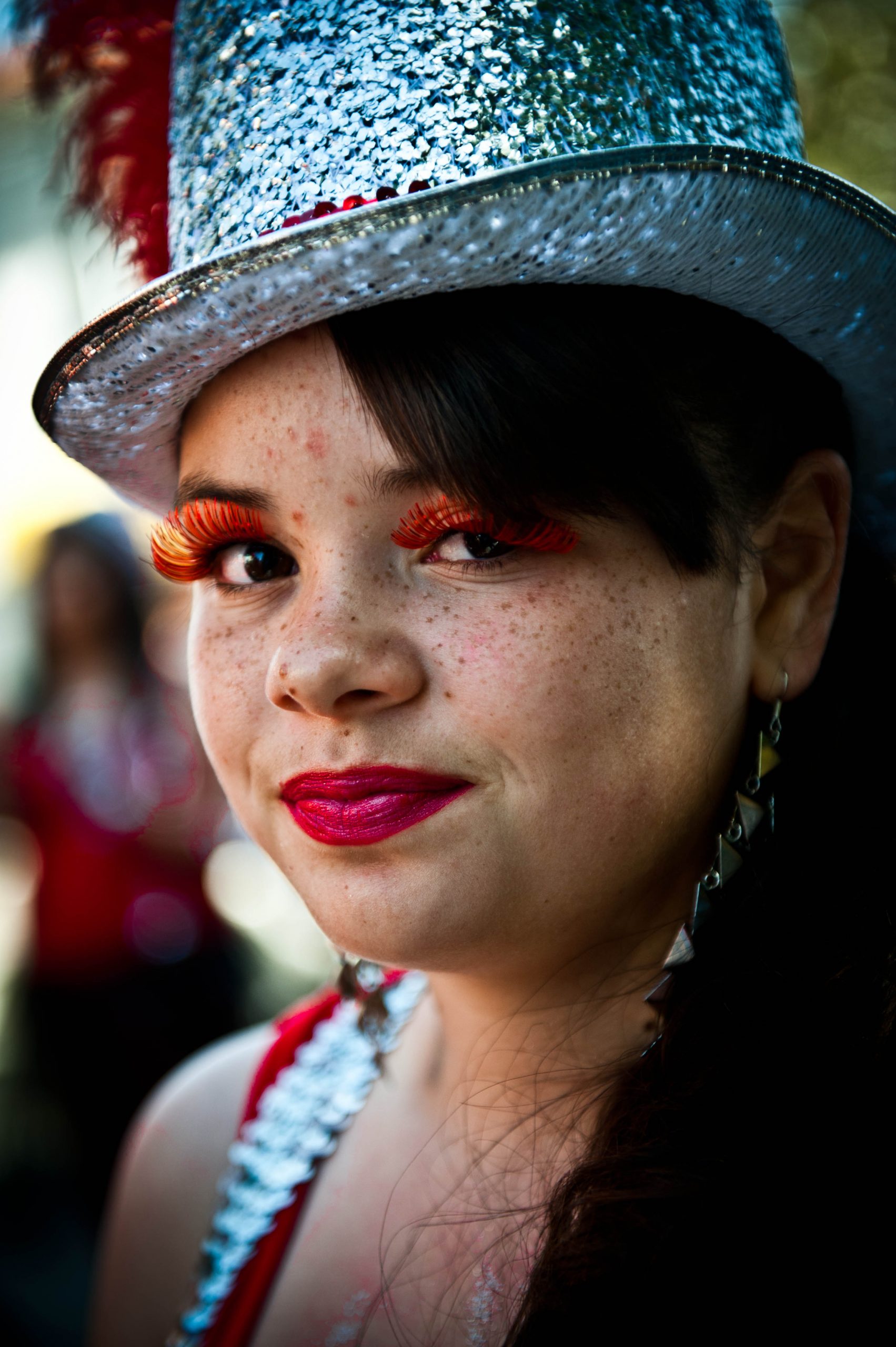
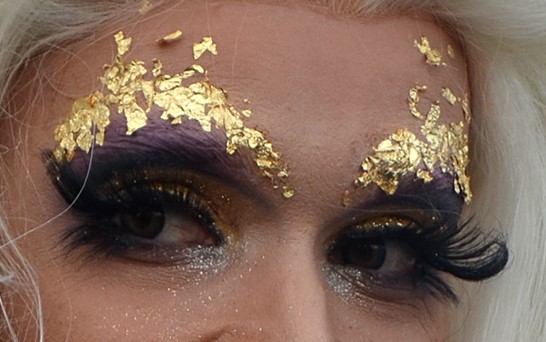
The men’s beauty and makeup market, already a billion-dollar industry, is expected to grow to nearly $20 billion by 2027.
A recent survey on Ipsos found that among heterosexual men ages 18-65, 15% reported currently using male cosmetics and makeup, and another 17% say they would consider doing so in the future.
Who were the nay-sayers? 73% of men 51 and over, compared to 37% of men 18-34.
Makeup on Ancient Male Faces
Some might wonder “What’s the world coming to?” A more accurate question might be, “What’s the world getting back to?” An article—with pictures—at humanistbeauty.com makes the following five points about men’s early use of cosmetics.
“Hubei Zaoyang Jiu Lien Dun No. 1 Chu tomb unearthed “portable” makeup box, the box is divided into bronze mirror, wooden comb, scraper, powder box, and small wooden comb.” from New Hanfu
Men were wearing makeup as long ago as 3000 BCE in China and Japan. Men used natural ingredients to make nail polish, face powder, rouge, and eyeliners, all signs of status and wealth. Archaeologists found a “portable” makeup box with a bronze mirror, large and small wooden combs, a scraper, and powder box. In the Han Dynasty, civil servants known as Lang Shi Zhong wore elaborate makeup and hairstyles when they appeared in court. Male attendents of Emporer Hui (210-188 BCE) of the Han Dynasty were forbidden “to go on duty without putting on powder.”
Horus, depicted wearing khol, from the Tomb of Nefertari
In ancient Egypt, men rimmed their eyes in black “cat” eye patterns as a sign of wealth (it also helps to reduce sun glare — as modern baseball and football players have found). They also wore pigments on their cheeks and lip stains made from red ochre. Makeup was an important way of showcasing masculinity and social rank.
Silla envoy visiting the Tang Emperor 6th century, China
In ancient Korea, the Silla people believed that beautiful souls inhabited beautiful bodies, so they embraced makeup and jewelry for both genders. Hwarang, an elite warrior group of male youth, wore makeup, jade rings, bracelets, necklaces, and other accessories. They used face powder and rouge on their cheeks and lips.
Skipping to Elizabethan England: the goal was for skin to look flawless. Men powdered their faces to whiten the skin as a sign of wealth, intelligence, and power. Fashionable courtiers dyed, curled, starched, and waxed their beards and moustaches into elaborate arrangements. To achieve the desired effect, men spent hours painting their faces, necks, hands, and hair into fantastic conifgurations that lasted for days before being removed. However, cosmetics during the Elizabethan age were dangerous due to lead, mercury, arsenic, and allum in the majority of products. These cosmetics could lead to blindness, seizures, hair loss, sterility, and premature death.
Men’s love affair with makeup—for specific purposes, traditions, and enjoyment died a slow death in the 18th century when Queen Victoria associated makeup with the devil and declared it a horrible invention.
I read somewhere or other that George Washington issued a pound of flour with each soldier’s rations for use on his wig or hair. Though few soldiers wore full wigs, many attached fake plaits to their own hair or the backs of their hats. During the Revolutionary War, American wig and hair fashions were much less elaborate than those of British aristocrats, like the simpler fashions for ladies’ dresses on this side of the Atlantic. (Washington himself curled and powdered his own hair rather than wearing a wig; he was a natural redhead!)
After the American Revolutionary War, the use of visible “paint” (color for lips, skin, eyes, and nails) gradually became socially unacceptable for both sexes in the U.S. Painting one’s face was considered vulgar and was associated with prostitution and actresses/actors. But did people stop using them?
Of course not! True, few cosmetics were manufactured in America during most of the nineteenth century. However, folks (mostly women) went DIY, using recipes that circulated among friends, family, and sometimes printed in women’s magazines and cookbooks.
Lip Salve Take 1 ounce of white wax and ox marrow, 3 ounces of white pomatum, and melt all in a bath heat; add a drachm of alkanet, and stir it till it acquire a reddish colour.
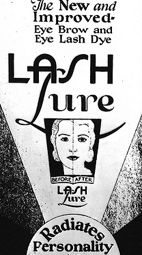
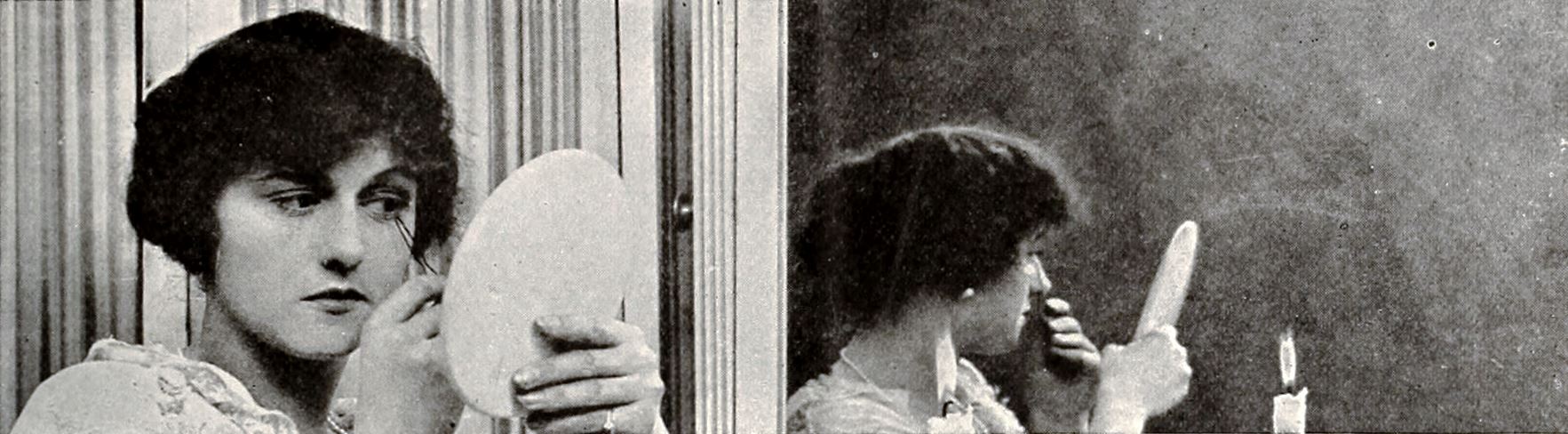
To Blacken the Eye-lashes and Eye-brows The simplest preparation for this purpose are the juice of elder-berries; burnt cork, or cloves burnt at the candle. Some employ the black of frankincense, resin, and mastic; this black, it is said, will not come off with perspiration.
Pearl Powders, for the Complexion 1. Take pearl or bismuth white, and French chalk, equal parts. R educe them to a fine powder, and sift through lawn. 2. Take 1 pound white bismuth, 1 ounce starch powder, and 1 ounce orrispowder; mix and sift them through lawn. Add a drop of attar of roses or neroli.
Scientist at the Departmnt of Agriculture tests cosmetics for lead acetate and other potentially harmful materials.
Of course, the simplest way to “lighten” the complexion was with starch, applied with a hare’s foot or soft brush. Pale skin indicated social class/wealth: brown skin signaled outdoor labor.
Thus lotions, powders, and skin washes—to lighten complexions and diminish the visibility of blemishes or freckles—remained in use.
Druggists sold ingredients for these recipes, and sometimes ready-made products. Given the association of “paint” with prostitution (and actors), products needed to appear “natural.” Some secretly stained their lips and cheeks with pigments from petals or berries, or used ashes to darken eyebrows and eyelashes.
Victorian men typically adorned their faces with hair rather than cosmetics.
Technological advances in photography, interior lighting, and creating reflective surfaces led to a rise in “visual self-awareness” throughout the 19th and 20th centuries. This, coupled with a rise in wide-spread advertising through print mediums, created a wider market for commercially produced cosmetics.
In the late 1960s, norms again celebrated ideals of natural beauty—as in the Victorian era—including a rejection of make-up altogether by some. Cosmetics companies returned to touting products for a “natural” look.
Makeup for actors never went out of fashion, so it’s no surprise that the recent increase in makeup use for men has been led by entertainers. Performers used cosmetics as part of costumes or to ensure their facial features remained visible on stage or on screen. Stylized makeup designs correspond to specific roles in classical forms of Japanese, Thai, Indian, and Chinese theater traditions.
The popularity of the Ballet Russe in Paris in the beginning of the 20th century led to an increase in the social acceptability of wearing makeup. When the Ballet went on tour, there was a corresponding boom in cosmetic sales and advertising in countries where they performed.
Goth Metal fan
Waves of glam rock, heavy metal, goth, and punk musicians in the 1970s and 1980s inspired legions of fans to don makeup to perform and to disrupt social norms. Just think of KISS, Mötley Crüe, Marilyn Manson, King Diamond, Boy George, or Alice Cooper.
The elaborate makeup and costumes of Glam Rock stars such as Boy George and David Bowie challenged gender expectations.
Heavy Metal performers such as Alice Cooper and Marilyn Manson are as recognizable for their stage makeup as for their stage costumes and music styles.
1985 Theatre Of Pain – Mötley Crüe (L.P U.S.A Elektra Records 60418-1-E)Alice CooperBoy George
.
Makeup on Modern Male Faces
Men are now open to using a variety of products, including facial cleansers, exfoliants, serums, moisturizers, and most recently, cosmetics.1
Li Jiaqi, a Chinese makeup blogger and lipstick tester
For centuries, gender binaries established during the 17th and 18th centuries influenced who typically wore makeup–women! But make-up for men (and those who identify as male) may be here to stay—and goes way beyond entertainers and political statements.
Young Yuh, who has 1.6 million followers on TikTok and posts skin care and makeup tutorials full-time, says makeup is key to his self-expression. His view is that it’s like hygiene, or hairstyle, or any number of other personal choices and should not be bound by gender identification. His daily routine includes cleanser, toner, some type of serum, moisturizer, sunscreen, primer, concealer, contour, blush and eyeliner—no doubt a bit much for many!
The hashtag #meninmakeup has more than 250 million views on TikTok. And The New York Times Style Magazine article “Makeup Is For Everyone” gives a great overview of the most recent developments and resources online.
Manny Gutierrez
In 2017, Maybelline launched their Collosus mascara campaign featuring Manny Gutierrez with the tagline “Lash Like a Boss.” Patrick Starr, a Filipino-American makeup artist and fashion designer, collaborated with MAC makeup to launch a collection of his own design. In 2016, Gabriel Zamora became the first male makeup artist to join Ipsy makeup. Advertisements both reflect the current culture and feed it.
Bottom line: Men are now open to using a variety of products, including facial cleansers, exfoliants, serums, moisturizers, and most recently, cosmetics.
(Writers note: depending on your audience, you might want your guys’ grooming to include more than a shave and a hair cut.)
Kamil woman applying khol to her son’s face to ward off the Evil Eye by Etan Doronne
Suku Jahai from Penang, Malaysia – Suku Jahai, CC BY-SA 2.0 By Muhammad Adzha
English is pretty anaemic when it comes to scent. We have to attach adjectives like “putrid” or “mown grass.” On the other hand, the Jahai people of Malaysia have words attached to specific smells, with meanings like “to have a stinging smell, to smell of human urine,” and “to have a bloody smell that attracts tigers.’
Researchers at Rockefeller University estimated that humans can detect at least a trillion distinct smells. That leads me to conclude that need determines what we do with specific ones. This conclusion is supported by other evidence: in tribes that have recently switched from hunting and gathering to farming, smell words often vanish.
Abigail Tucker explores the sense of smell in the Smithsonian Magazine article “Scents and Sensibility.” (Full reference below). Do read it! To whet your appetite, here are some bits that I found particularly interesting.
Scents and the Body
Females are more sensitive to smells than males.
Research indicates that infants are habituated via mothers’ milk to react more positively to the smell of things the mothers eat.
The human nose comes in 14 basic shapes and sizes.
(FYI, not in the article: noses and ears do not continue to grow during adulthood. They do change shape, however, due to skin changes and gravity.)
Many “tastes” are actually smell; chocolate, for example.
(I remember a classic psychology experiment that demonstrated that, without olfactory or visual clues, people couldn’t tell bits of apple from bits of onion.)
The exposed nature of scent receptors in the nose make them especially vulnerable to environmental toxins.
Apparently olfactory receptors can become fatigued.
The sense of smell declines with age, especially in those over 50. By age 80, 75% of people exhibit what could be classified as a smell disorder. (Oh, sigh.)
Pretty much everyone has “blind spots” when it comes to smell. For example, not everyone can smell asparagus in their pee—but if you can, you can smell it in anyone’s urine.
Also not covered in this article: virtually everyone can become noseblind when exposed to the same smell for a prolonged period of time. Consider entering a room and noticing an odor at first but not later.
Scent Power
A human without visual or auditory cues can track a scent through the grass of a public park—but not as well as a dog can.
Some psychological conditions affect sense of smell. For example, research has linked autism to an enhanced sense of smell. On the other had, depression and Parkinson’s disease are related to decreased sensitivity.
Culture affects what we smell and how we react to specific smells.
Besides genetic and cultural factors, certain smells evoke a visceral reaction specific to the individual, depending on life history. Research participants are able to access more emotional memories when exposed to a smell as opposed to a picture of the source of the smell.
Andreas Keller, a prominent neuroscientist specializing in olfaction, has opened a gallery, Olfactory Art, where smell is central to the experience!
How does the nose know? We still don’t know! “Olfaction has always been an underdog sense. It’s both primitive and complex, which makes it hard to study and harder still to transfer to our increasingly digital existence. … smells cannot at this point be recorded or emailed or Instagrammed.”
In a 2011 survey, more than half of the young adults said they’d rather give up their sense of smell than their cell phones. Little did they know what that sacrifice would entail.
BOTTOM LINE: COVID’s notorious effects on the sense of smell has triggered a new appreciation of the role of scents in our lives, for both pleasure and safety.
“Scents and Sensibility” by Abigail Tucker, Smithsonian Magazine, October 2022, pp 66-80.
It’s human nature to have an energy slump in the afternoon, sometime between 1:00 and 4:00. It’s tied to our circadian rhythm. Two ways to combat midday fatigue: napping and exercising. This blog deals only with the former! (I’ve previously written about sleeping habits here.) On average, adults who nap do so 94.3 days each year.
Power Naps
In the 1990s, James Maas, a social psychologist and sleep expert coined the term power nap, 10 to 20 minutes long, to boost energy and alertness. A power nap is reputed to allow workers to get back to work right away because this amount of sleep does not yet reach the deeper states of a sleep cycle. The napper stays in the lighter stages of non-dreaming sleep. And for some, apparently, it works; 42.7% of U.S. full-time workers say they regularly nap during a break in a typical workday,
Avoid 30-minute naps.
They cause “sleep inertia,” a groggy state that can last for another 30 minutes after waking up. This is because the body is forced awake right after beginning, but not completing, the deeper stages of sleep.
A 60-minute nap might be okay.
Sleeping for 60 minutes includes the deepest type of sleep, slow-wave sleep. Because of this, the one-hour nap is ideal for helping an individual better remember faces, names, and facts. However, your brain will not complete a sleep cycle in only 60 minutes, so you may not be very alert for some time after waking up.
The ideal nap is 90-minutes.
This is the length of one full sleep cycle, which includes all the light and deep (REM and dreaming) stages of sleep. A full sleep cycle nap improves procedural and emotional memory (e.g. for playing musical instruments and driving). A 90-minute nap can also significantly boost one’s creativity. Because the nap is a full sleep cycle, waking up should come much easier. (This according to the National Sleep Foundation.)
On the other hand, the Mayo Clinic is very specific: the ideal nap occurs between 2pm and 3pm and lasts between 10 and 30 minutes. This takes advantage of one’s normal post-meal dip in energy and, if finished by 3pm, poses the least risk for causing sleeplessness at night.
Among older adults, shorter naps (less than 30 minutes) are reported by adults with better health; long naps (e.g., longer than 90 minutes) have been linked to cardiovascular problems and diabetes, declining cognitive function, and increased mortality.
Benefits of Napping
There are lots of benefits to sneaking in power naps every once in a while.
Curb the side effects of temporary sleep deprivation. If you missed getting adequate sleep the night before, a quick nap can be restorative.
Note: Temporary sleep deprivation refers to a night every once in a while in which you don’t get enough sleep.
Improve memory function and job performance. Younger people definitely benefit from a quick nap in the afternoon, which can help them immensely with their studies, if they are in school. People of all ages can enhance job performance (and physical performance, in general) with a brief period of shut eye. If you feel sluggish while at work or in school, you may be able to improve the situation with a nap.
Lower blood pressure.
Prevent mistakes in judgment or accidents while driving or operating machinery. Drowsy driving is dangerous and can strike anybody at any time.
Heal the body. A brief nap can help relieve stress, allow the body to heal inflammation and injury, and improve mood.
Napping Can Be Problematic
If you have insomnia, you might exacerbate or even cause it by taking naps. If you take long naps or nap later in the afternoon, they may alter your circadian rhythms, leading to trouble with falling asleep at bedtime. On the other hand, people with severe insomnia might find themselves only ever able to take short naps, rather than sleeping all night.
If you have unidentified or poorly addressed sleep disorders—for example obstructive sleep apnea (OSA)—you will not cure it with naps.
If you are diabetic, or likely to develop diabetes, note that recent research has linked long afternoon naps (over an hour) to Type II Diabetes. Observational studies of more than 300,000 people by the University of Tokyo found a link between long napping and a 45 percent increase in the incidence of diabetes when naps lasted at least 60 minutes.
If you don’t know what is causing your daytime fatigue, it might be better to avoid napping altogether. Aside from sleep disorders, there’s a whole range of other causes, from prescription medications to underlying health problems to depression and mood disorders.
The prevalence of napping in older adults ranges from 20% to 60% in different studies, but is consistently reported to be higher than in other age groups. Age-related changes in circadian rhythm and sleep patterns, cultural beliefs, chronic conditions, medications, and lifestyle changes contribute to the high prevalence of napping in older adults.
(FYI: If people lived alone in total dark, “days” would be about 25 hours each. However, our body clocks reset each day based on the sun’s light/dark cycles—plus alarm clocks, work schedules, and the world in general.)
Bottom Line: Both short and long naps can increase alertness and be useful. Choose depending on personal rhythms, why you are napping, and environmental constraints.
We’ve just celebrated the biggest candy month of the year! The day of the year with the most candy sales is October 28th. And of all the 365 days in the year, the top five candy selling days are all in October.
Just How Sweet Is It?
Over 10% of annual candy sales happen the days leading up to Halloween — that is nearly $2 billion dollars in sales.
Chocolate is the preferred choice of sweets for many. Of the $1.9 billion sold in Halloween candy each year, $1.2 billion was for chocolate candy and only $680 million for sugar candy.
Consumers buy an incredible 90 million pounds of chocolate candy during Halloween week, giving it a strong lead compared to other holidays. Almost 65 million pounds is sold during the week leading up to Easter but only 48 million pounds during Valentine’s week
The average American household spends $44 a year on Halloween candy.
Americans purchase nearly 600 million pounds of candy a year for Halloween.
These “facts” popped up during multiple searches about candy. Could all of these “facts” be true? I don’t know. But without vouching for truthfulness or accuracy, I hereby present candy info from across the web.
When Thinking Halloween, Candy Corn Comes to Mind
The Wunderle Candy Company first produced candy corn in 1888, but they called it “chicken feed.”
Americans purchase over 20 million pounds of candy corn a year. With that said, it’s unlikely that every last one of those millions of candies was actually consumed. For one thing, it is the most hated Halloween candy of all. (See below)
After the beloved and beleaguered candy corn, the leading best sellers are as follows: Snickers, Reese’s, Kit Kats, and M&Ms.
Candy corn is the most searched-for candy term in Google — more popular than candy apples, gummy worms, and candy pumpkins.
Looking Beyond October
Candy, at its simplest, is the result of dissolving sugar in water. The different heating levels determine the types of candy: Hot temperatures make hard candy, medium heat will make soft candy, and cool temperatures make chewy candy.
In Europe during the middle ages, the high cost of sugar made sugar candy a delicacy available only to the wealthy.
About 65% of American candy bars were introduced more than 50 years ago.
Gummy worms first appeared on July 15, 1981, the 50th anniversary of gummy bears.
U.S. chocolate manufacturers currently use 40 percent of the almonds produced in the United States and 25 percent of domestic peanut.
Fairy Floss was the original name of cotton candy. William Morrison, a dentist, invented it. In the United States, National Cotton Candy Day is celebrated on November 7th.
Americans over 18 years of age consume 65 percent of the candy produced each year.
Frank and Ethel Mars, who created the Snickers candy bar in 1929, named it after the family horse.
Retailers sell more than 36 million heart-shaped boxes of chocolate every year for Valentine’s Day.
In the 1800’s, physicians commonly advised their broken-hearted patients to eat chocolate to calm their pining.
Not A New Thing
Fry’s Chocolate Cream: Candy as we know it today, was first recorded in 1847. This can be considered the first candy ever made and sold officially on the market. The candy was created by Joseph Fry. He used bittersweet chocolate. Today, Cadbury manufactures this “Rich dark chocolate with a smooth fondant center.”
Good & Plenty is believed to be the oldest candy brand in the USA. The pink-and-white capsule-shaped chewy licorice was first produced in 1893 in Philadelphia. It’s still found at concession stands everywhere, which makes Good & Plenty a treat that can be enjoyed by candy lovers of all ages.
Dryden & Palmer dates back to 1880 when rock candy enjoyed great popularity as a cough-cold remedy and delicious confection. Every bar and saloon had its own creation of rock candy dissolved in rye whisky to “cure their patrons’ colds” or at least make them forget they had a cold in the first place. Prohibition hit the rock candy industry hard and, of the original manufacturers, only Dryden & Palmer remains today.
John Ross Edmiston may have been the accidental creator of saltwater taffy in Atlantic City in 1883. His jokingly offered “saltwater taffy” to customers after his boardwalk shop was flooded, soaking his taffy stock with salt water.
World War I Tootsie Roll Patriotism
Tootsie Rolls debuted in 1896, introduced by Leo Hirshfield of New York who named them after his daughter’s nickname, “Tootsie”.
The War Office added Tootsie Rolls to soldiers’ rations during World War II due to their durability in all weather conditions.
According to USMC apocrypha, marines used Tootsie Rolls as emergency first aid to plug bullet holes during the Korean War.
In the 1940s and 1950s, “Captain Tootsie” fought crime with his sidekick Rolo in a daily ad comic strip.
Milton Hershey of Lancaster, PA introduced the first Hershey milk chocolate bar in 1900. Hershey’s Kisses appeared in their familiar foil wraps in 1906.
NECCO wafers are pastel-colored candy disks that first appeared in 1901, named for the acronym of the New England Confectionery Company.
Baby Ruth candy bars were first sold in 1920, named for President Grover Cleveland’s daughter – not the famous baseball player.
Milky Way Bar is the first of many candies to be introduced by the Mars family in 1923. It was created to taste like a malted milk that would be available anywhere, anytime. One of the earliest advertisements for Milky Way listed “sunlight and fresh air” as primary ingredients.
M&M/Mars introduced the Snickers Bar in 1930. It is the number-one selling candy bar in the U.S. today.
M&M/Mars debuted the 3 Musketeers Bar in 1932. It was originally made as a three-flavor bar featuring chocolate, vanilla and strawberry nougat. In 1945, M&M/Mars changed to making them with only chocolate nougat.
Soldiers’ rations in the Spanish Civil War inspired Forrest Mars, Sr to create M&Ms: plain chocolate candies in a shell of hard sugar.
Mars joined Bruce Murrie (son of Hershey executive William Murrie) to produce M&Ms in 1941, marketing them as durable in response to slack chocolate sales in summer.
During World War II, M&Ms were sold exclusively to the US military because of their durability.
They were the first candies to go into space, sent with the crew of the NASA shuttle Columbia in 1981.
Hershey’s had an exclusive contract with the American military to supply chocolate for soldiers’ rations during World War II.
They specifically created the D-Ration Bar to “taste a little better than a boiled potato” to discourage soldiers from eating only their chocolate ration and nothing else.
The recipe for these emergency chocolate rations made a viscous liquid so thick that it clogged the regular manufacturing machines and had to be packed into molds by hand.
Hershey produced a Tropical D-Ration specifically designed to withstand the high temperatures in the Pacific Theater.
Multiple sources claim to be the creators of Skittles, including the Wrigley’s candy company and a nebulous British man named Skittle. Today, 200 million Skittles are produced each day.
Sugar Daddies, the caramel lollipops, were originally called Papa Suckers.
Dum Dums “mystery” flavor is always a mix of two flavors. The machine creates them when it switches to producing a new flavor.
Reese’s Peanut Butter Cups are the No. 1 selling candy brand in the United States, consisting of white fudge, milk, or dark chocolate cups filled with peanut butter. H.B. Reese invented them in 1928 after he founded the H.B. Reese Candy Company in 1923.
Most Popular Candy by Country
US and Canada: Kit Kats and Reese’s Peanut Butter Cups
11/7 National Bittersweet Chocolate with Almonds Day
12/7 National Cotton Candy Day
12/19 National Hard Candy Day
12/26 National Candy Cane Day
12/28 National Chocolate Candy Day
What Candy Does to Your Body
It makes everything sticky!
Less than two percent of the calories in the American diet come from candy.
A one-ounce piece of milk chocolate contains about the same amount of caffeine as a cup of decaffeinated coffee.
When we eat sweet foods, we activate the brain’s reward system — called the mesolimbic dopamine system. Dopamine is a brain chemical released by neurons and can signal that an event was positive. When the reward system fires, it reinforces behaviors — making it more likely for us to carry out these actions again.
The recommended dose of candy is just two to three pieces of candy a day.
While eating too much candy in one sitting can do a number on your blood sugar and your teeth, it’s true that occasional excess probably won’t do major lasting harm. In the long-term, however, repeated indulgence in high-sugar foods can increase your risk for a number of health problems.
The effects of added sugar intake — higher blood pressure, inflammation, weight gain, diabetes, and fatty liver disease — are all linked to an increased risk for heart attack and stroke,
Candy has some physical health benefits: Decreasing your risk of stroke and heart attack — Dark chocolate is rich in antioxidant flavonoids, which are healthy for your heart. Regularly eating this rich treat can decrease your risk of stroke and heart attack by 39 percent.
Chocolate has been shown to improve depression and anxiety symptoms and to help enhance feelings of calmness and contentedness. Both the flavanols and methylxanthines are believed to play a role in chocolate’s mood-enhancing effects.
Chocolate can’t replace traditional treatment options for depressive feelings with mood disorders, but science may support its role in your diet. Approximately 70% of people in a cross-sectional survey were less likely to report depressive symptoms if they’d eaten dark chocolate within the last 24 hours.
BOTTOM LINE: Some ways good, some ways bad, always sweet!
I can’t help it: every October my thoughts turn to bones. Bones—especially skulls and skeletons—are sort of my thing. Athletics, not so much.
Still, I have it on the best authority—an authority, anyway—that October is the best month for sports, too. Sammy Sucu (bleacherreport.com) ranks October #1 for sports fans.
Clearly, this is a biased list. There are roughly 200 sports that are internationally recognized, and besides those listed above, dozens of them are played in October: ice skating, rugby, weight lifting, cricket, badminton/table tennis, sailing, tennis, beach volleyball, chess, karate, golf, various motor sports, swimming, field hockey, skiing, and gymnastics, among others. Plus, October is National Roller Skating Month!
Put them together, and October might also be the month with the most broken bones.
Most Breakable Sports—Where Broken Bones are Common
Bones that are most commonly fractured during sports are in the wrist, hand, ankle, foot, and collarbone. (FYI, in talking about bones, a break is the same as a fracture.)
Types of Fractures
Stress fractures are most commonly seen in athletes whose sports require repetitive movements such as marathon runners. I know a woman who developed stress fractures in her ankle while training for a marathon but decided to run anyway. She ran 26.2 miles on a fractured ankle, in a tremendous amount of pain.
A fracture occurred in 20.6% of the emergency department visits for sports-related injuries.
Most of the fractures occurred in football players (22.5%).
The OR (odds ratios) for fracture was highest for inline skating (OR, 6.03), males (OR, 1.21), Asians, whites, and Amerindians (OR, 1.46, 1.25, and 1.18, respectively), and those older than 84 years (OR, 4.77).
Fractures are most common in contact sports such as basketball, rugby, and football. The most commonly fractured bones in contact sports are the hands, wrist, collarbone, ankle, feet, and the long bones of the lower extremities. Overall, contact sport athletes have a high risk of fractures in ankles and feet because they get into vulnerable positions while playing.
Among High School athletes, the highest rate of fractures was in football (4.61 per 10 000 athlete exposures) and the lowest in volleyball (0.52). Boys were more likely than girls to sustain fractures in basketball and soccer.
Most fractures heal in 6-8 weeks, but this varies tremendously from bone to bone and in each person. Hand and wrist fractures often heal in 4-6 weeks whereas a tibia fracture may take 20 weeks or more.
But broken bones aren’t the biggest risk. I’m surprised that the top 7 most frequent sports injuries seldom involve bone fractures.
Knee Injury. About 55% of sports injuries occur in the knee.
ACL Tear. Your anterior cruciate ligament (ACL) is responsible for connecting your thigh to your shinbone at your knee.
Tennis or Golf Elbow
Shin Splints
Groin Pull
Sciatica
Hamstring Strain
Safest Sports—Where Broken Bones are Rare
Common hand injury from repetitive golf swings
1. Swimming It’s easy on the joints and can be an aid in recovery after an injury as well as being the safest sport in America.
2. Cheerleading Occasional falls may cause broken bones, especially during practice new routines.
3. Golf Anytime players are not required to physically touch one another will more than likely make for a safer sport. Golf injuries most often occur from the repetitive action of swinging the golf club.
4. Track and Field The most common types of injuries are running injuries such as ankle arthritis, sprains in the knees, shin splints and knee injuries.
5. Baseball Also not a contact sport, the most common injury is rotator cuff tears, especially for pitchers. Other injuries include the ulnar collateral ligament, knee injuries, and muscle sprains. Additional possible injuries include a pitched ball hitting a batter’s face and concussions from falls while fielders go for a catch.
FYI, Top 10 broken bones overall (not just athletes)
Clavicle
Arm
Wrist
Hip
Ankle
Foot
Toe
Hand
Finger
Leg.
Not all fractures get a cast! A clavicle, for example. Also a coccyx.
Sports That Help Prevent Broken Bones
Athletes participating in weightbearing sports have an approximately 10% higher Bone Mineral Density than nonathletes, and athletes in high-impact sports have a higher BMD compared with medium- or low-impact sports.
Investigators found that soccer and gymnastics participants have the highest bone density in most body segments and the lowest fat mass, while swimming had the lowest bone mineral density at most skeletal sites.
Boxing improves bone mineral density. The forces through the hands and arms stimulate bones to mineralize and strengthen, ultimately reducing the risk of developing osteopenia or osteoporosis and potentially even reversing the conditions in some cases.
Osteoporosis is a disorder characterized by low bone density and impaired bone strength, an important risk factor for fracture. Low bone mass poses a particular challenge for athletes because it predisposes to stress-related bone injuries and increases the risk of osteoporosis and insufficiency fractures with aging.
My Personal Bone Break Stories
1) In second grade I climbed to the top of the swing set and fell, breaking my left arm. That was pretty cool, getting attention, signatures, and artwork on the cast.
Sacral Insufficiency Fracture
2) The first time I tried downhill skiing, I sat down on the edge of my ski and I broke my tailbone. The local ski injury doctor (!) said I should sit on a rubber donut and then he gave me a prescription for pain pills that I could refill ten times. (This was decades ago, of course.) When I asked whether there was nothing he could actually do about it, he said that if still had trouble — if I still had difficulty riding in a car — a year or so down the line, a doctor could surgically remove it.
(Last year, I posted a blog about human bones/skeletons in general and another about the all-important spine. Still good info there.)
Bottom line: Choose your activities carefully and take care of your bones.