A Wrinkle in Time Redux

tuck austin associates wrinkle time redux
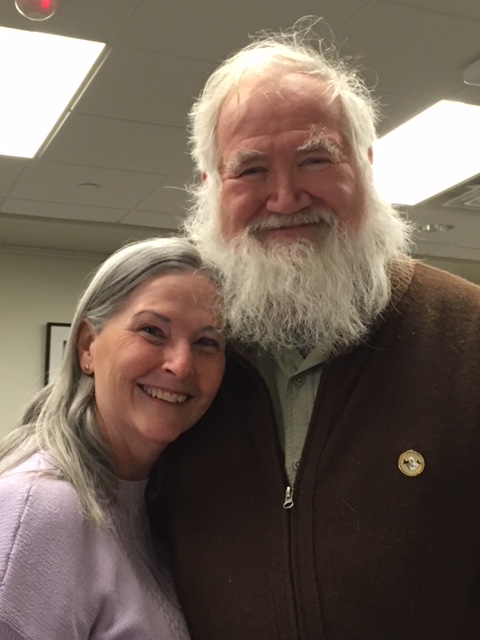
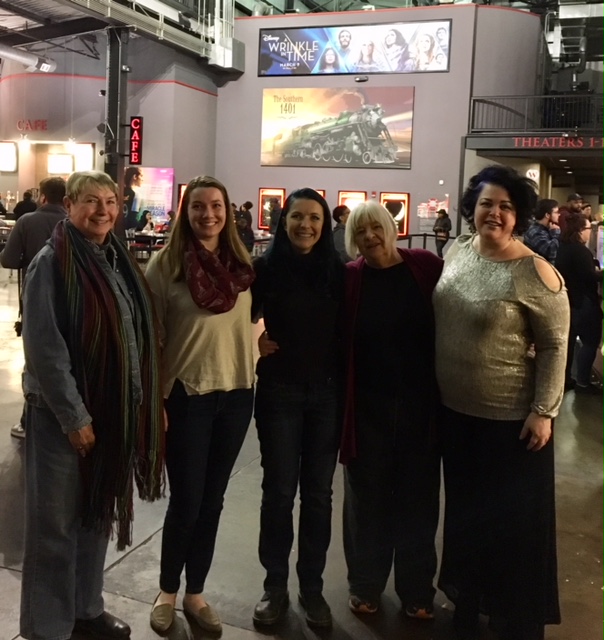
(L-R: me, Christina Cox, Kristi Tuck Austin, Lenore Gay, Diane Major)
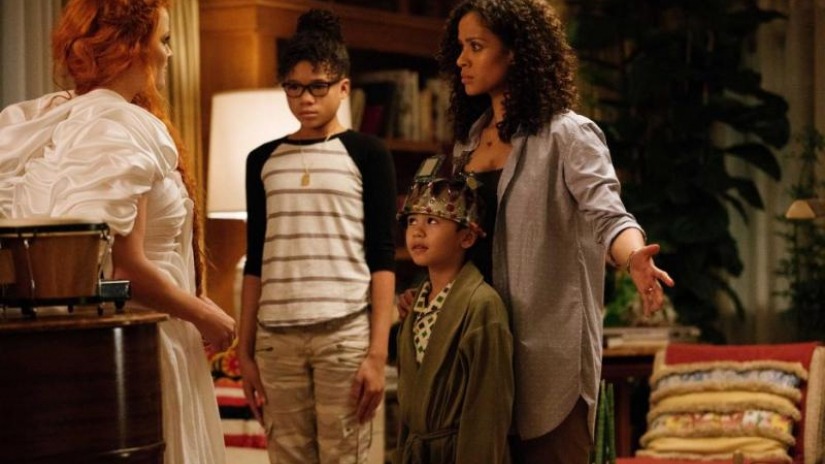
Last Friday 5 A Wrinkle in Time (Re)Readers met at Bowtie Cinema for the movie. Great conversations before and after. I’ve often said that I never met a boring writer! And frankly, socializing was the Friday night gold; the movie, on the other hand, was barely bronze.


wrinkle in time movie poster
[Photo Source: Collider]
In the interests of full disclosure, I admit to a bias against Disney movies. They have “prettified” great fairy tales, which I find hard to forgive. But that said, there are specific reasons I think that in this case the book is much better.
 
One expects some things to be cut when a book becomes a movie. I, for one, didn’t mind that two of Meg’s brothers were cut. They played virtually no part in the book. On the other hand, I’m disappointed that all the science was cut, limited to a few scenes showing science-looking equipment. And contrary to the book, Meg’s father uses the phrase “wrinkle in time” right up front.


oprah mrs which wrinkle time redux
[Source: HelloGiggles]
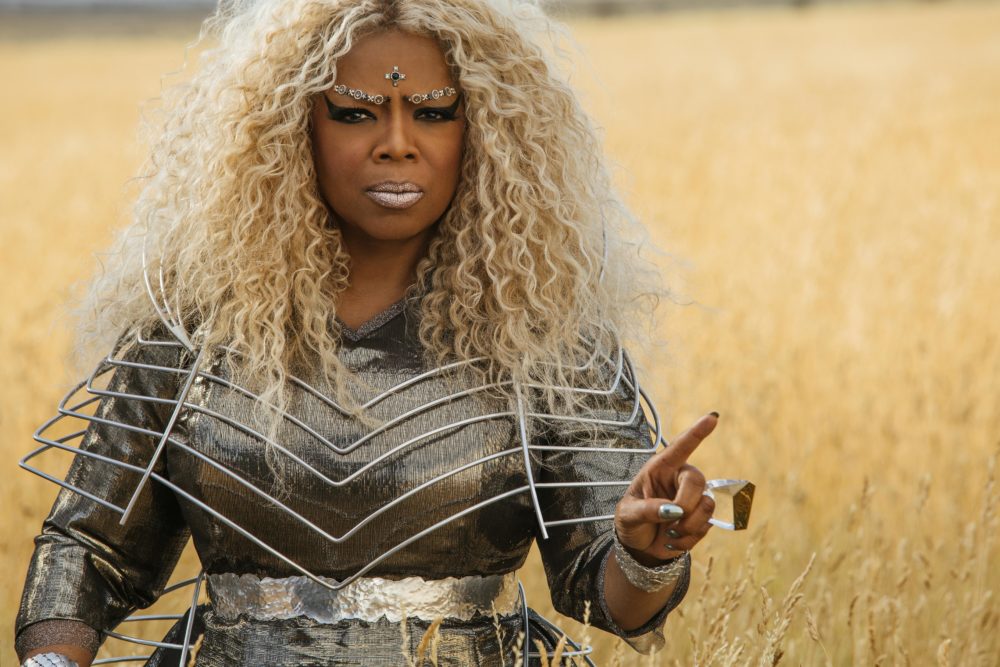
But my biggest disappointment was that the movie changes the characters! In the book, Mrs. Which is barely there physically, having difficulty maintaining a corporeal form. In that role, Oprah Winfrey is the opposite. She is introduced as larger than life, a giant with sparkling makeup and clothes that reminded me of armor. Even at a human size, she dominates every scene in which she appears, and I was constantly aware that I was watching Oprah Winfrey playing a role.


wrinkle in time redux
[Source: Cosmopolitan]
I found the performance of Reese Witherspoon very appealing. I liked her insouciance and asides. But in the book Mrs. Whatsit never doubted Meg, her commitment, or her ability.


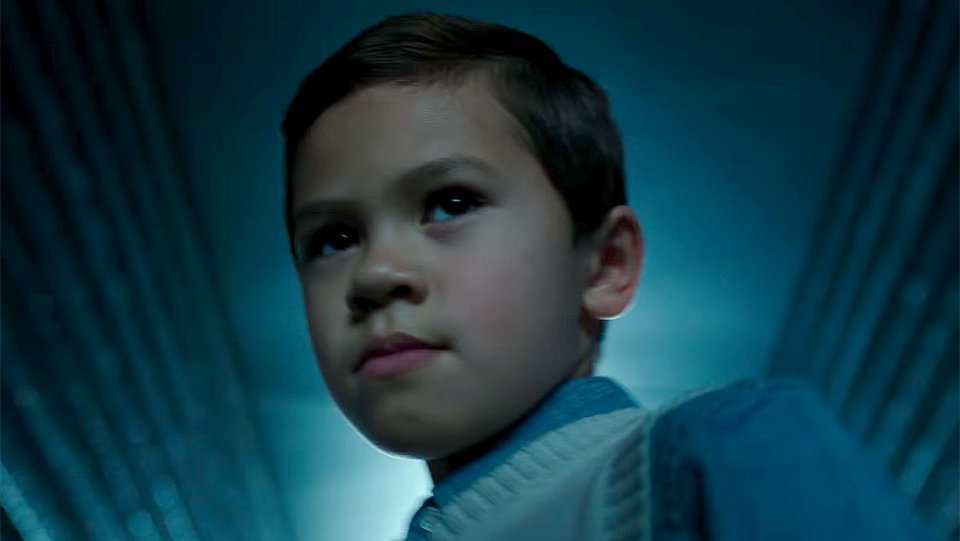
evil charles wallace wrinkle time redux
[Source: Disney Wiki]
I didn’t really mind the combination of the ultimate evil and the IT. I wasn’t sure what their separate spheres were in the book. And in the movie, I liked the images of the evil snaking out into the universe.


Which brings me to what I liked about the movie. Disney does special effects well. I especially liked the images of Mrs. Whatsit flying through space with the children on her back—though in the book, I don’t remember that the children also flew.


wrinkle time redux
Storm Reid and Deric McCabe were great as Meg and Charles Wallace! They were believable, rich, and true to their characters in the book.


I applaud the cross-cultural, cross-race depictions. On the other hand, by the end of the movie, I felt as though making sure every couple as well as the three Mrs. were multiracial was a bit forced.


Last but not least, where the book is sophisticated the movie is a sledge hammer: light and love conquer darkness and evil. But I guess however one gets the message, the message is good.
wrinkle in time 1970
[Source: Wikipedia]
Read the book and see for yourself! What do you think?

Bits and Pieces

bits pieces
[Source: Pixabay]
I never set out to collect random bits of information, but things just stick in my brain—for no particular reason and in no particular order. Some comes from life experiences but many come from books. I enjoy coming across these nuggets, and so I drop them into my own writing upon occasion. Just for the fun of it, I’ll share some of these with you.


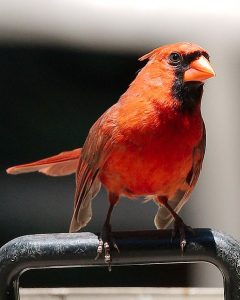
The Northern Cardinal is the most popular state bird, adopted by Illinois, Indiana, Ohio, West Virginia, Virginia, North Carolina, and Kentucky. Other bits and pieces about birds come to mind as well. When both the male and the female sit on the clutch of eggs in the nest, there is little differentiation in plumage between the two; when only the female sits, she is always the dull looking one. Female goshawks are significantly larger than the males, as much as 25% bigger, and this is called reversed sexual size dimorphism. Didn’t you always want to know?


murder crows
Goshawks are secretive and tend to fly solo, but other birds are considerably more social. Hence  we have a flock of geese, a murmuration of starlings, and a murder of crows! This is one of my favorites.
crash test dummies
[Creative Commons]
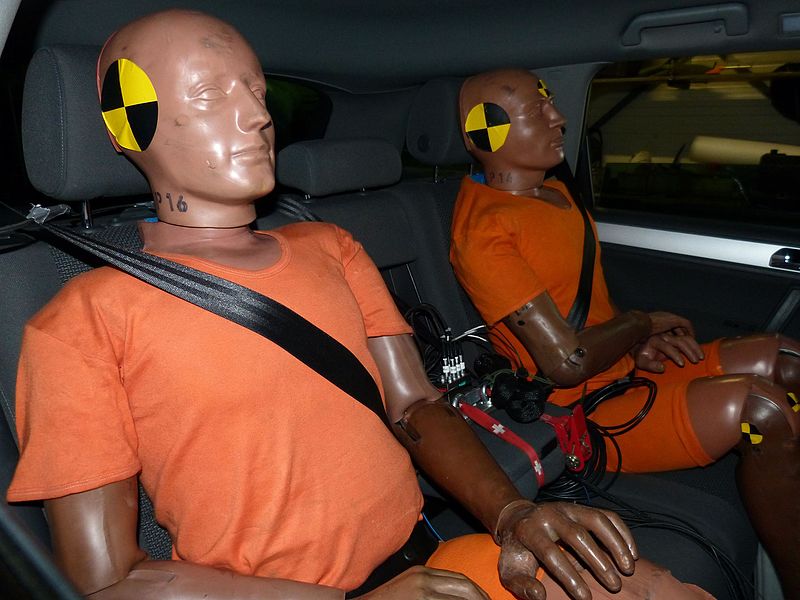
Real cadavers are used to calibrate crash-test dummies. At one time, before more modern—and reliable—methods of determining death were available, the fear of being buried alive was so great that in Germany they constructed death houses (I forget the term for them) where corpses were left unburied until they began to decompose.


skeleton bits pieces
[Creative Commons]
Together, the hands and feet make up more than half of all the bones in the human body, 27 per hand and 26 per foot, 106 of the 206 total. And check out disappearing human bone disease!
bits pieces daffodils
You Are One-third Daffodil is the title of a book which includes this tidbit: humans share 35% of their DNA with daffodils. Could this be the reason voles don’t eat daffodil bulbs or humans? Consider the possibilities for fantasy fiction.


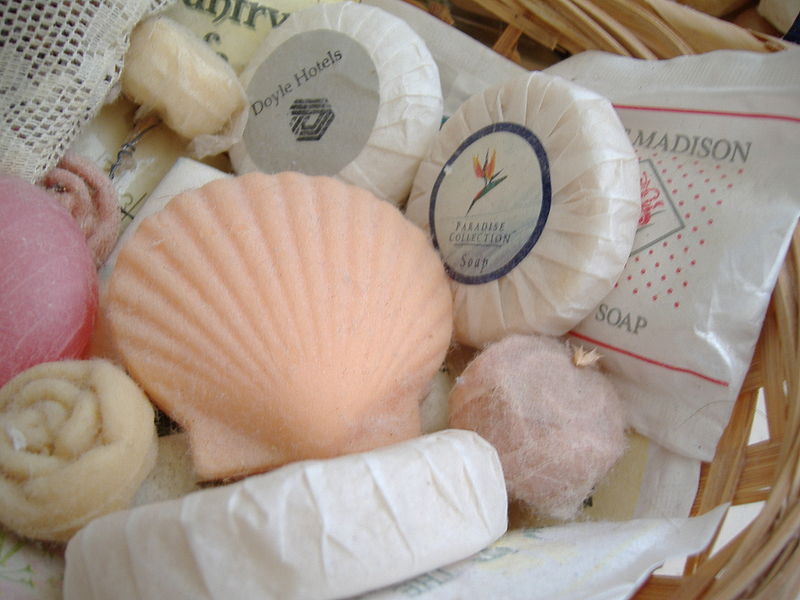
And speaking of eating. . . Queen Anne’s lace is also known as wild carrot and the roots are edible when young. Hominy was originally made using dried corn and wood ash lye, which is still the way to have homemade hominy—which I don’t. Sort of related: lye soap is made using leftover cooking fat and wood ash lye. My maternal grandmother made it in big flat trays in the basement.
lye soap bits pieces
[Creative Commons]
In junior high school I learned that the Battle of Hastings was fought in England in 1066. I haven’t been able to unlearn it!


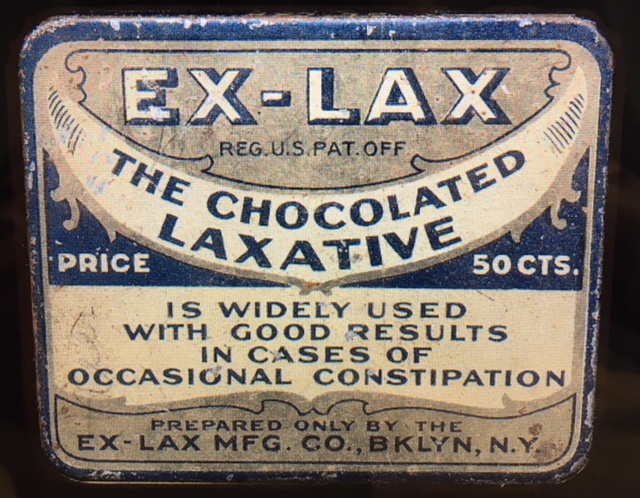
During the Great Depression ham was 10 cents a pound and gasoline was 10 cents a gallon. The first “rubber boots” were when people in South America coated their feet in latex from the rubber tree. Ex-Lax has been around since 1906, created by a Hungarian immigrant in New York. My list could go on and on, for there is no good stopping place.


ex lax
BOTTOM LINE: In addition to journaling about story ideas, drafts, etc., consider keeping your own list of bits and pieces that might fit into your writing life. Even if not, it’s entertaining.

Renowned Planetary Astronomer Heidi Hammel on A Wrinkle in Time

I’m very pleased that Dr. Heidi Hammel agreed to a print interview about this book! I’ve long believed in the power of books, especially for young minds. My childhood home didn’t have children’s books but I recently read A Wrinkle in Time for the first time. Dr. Hammel’s experience makes me wish I’d had it as a child!

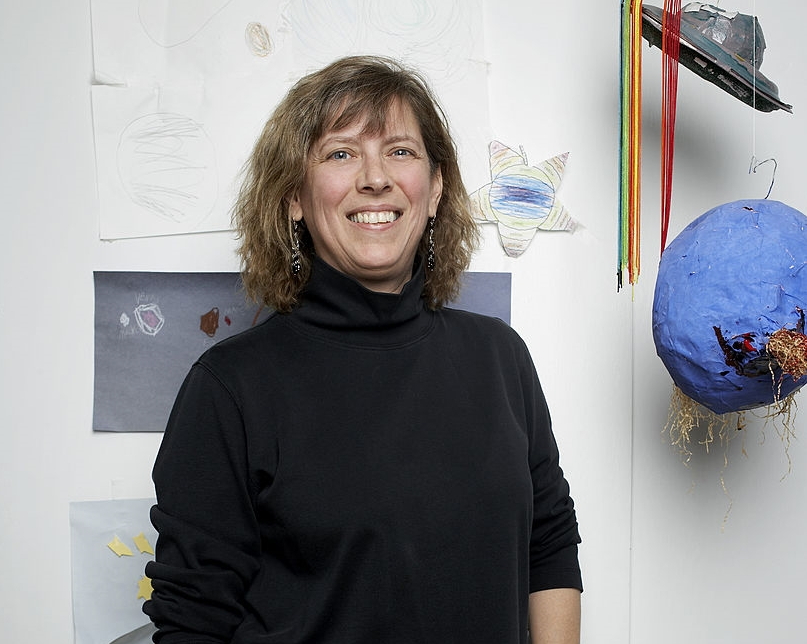
Planetary astronomer Heidi Hammel
[Photo credit: Mike McGregor]
VL:  How did you come to read A Wrinkle In Time?

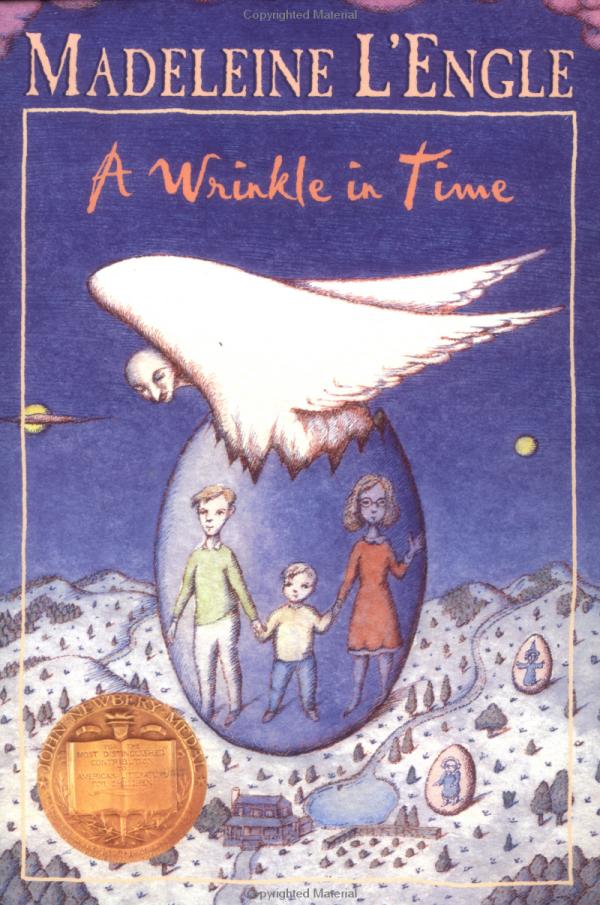
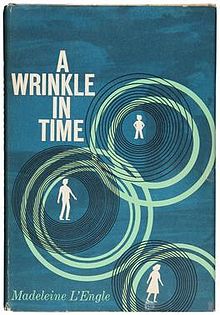
HH: On my tenth birthday, in 1970, my 11-year-old brother gave me a copy of A Wrinkle in Time. This was the scholastic paperback edition, blue with series of concentric rings around three small characters.

wrinkle in time 1970
[Source: Wikipedia]

VL: What was going on in your life at the time?

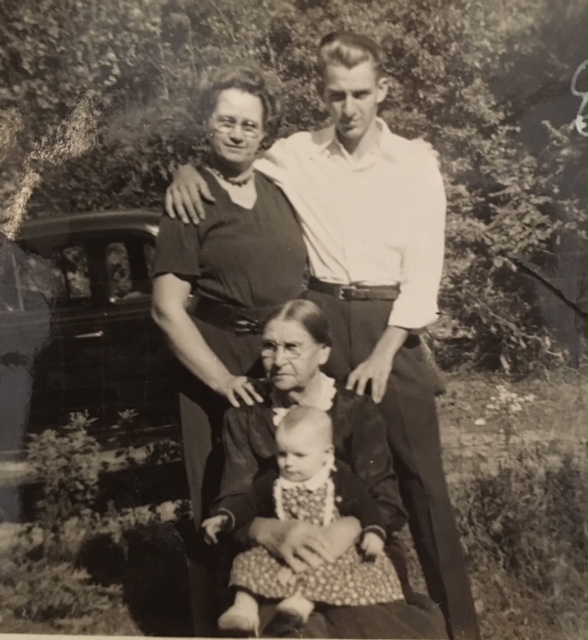
HH: I was just a kid, a young girl specifically, at a time when girls did just girl things. Sugar and spice and everything nice. Glass ceilings everywhere. Invisible glass ceilings—most girls didn’t even THINK of doing things other than being a wife, a nurse, or a teacher. Maybe a daring girl could be a flight attendant or a secretary. But no real girls did science or space research or math. (Madame Curie was a unicorn, a historic anomaly, not a real regular person.)
VL: I can absolutely identify with that. I read the Cherry Ames series about the adventures of a nurse. Although she was a great role model in many ways—daring and caring and a problem solver—in high school I wanted to become a surgeon. Although I was valedictorian of my class, I was counseled to become a nurse instead—albeit with a B.S. degree so I could move up in administration. I do admire your determination! But tell me, in what way(s) did the book affect you?

HH: The book blew my mind. Here was a girl like me – her physical description was mine, from the limp non-descript hair to the glasses and teeth that would need braces; her school life was like mine – interested in things that other girls were not like atomic particles and space, and not really accepted as “popular.” Yet, for all her faults – indeed, specifically BECAUSE of her faults – she completed a hero’s journey. What an eye-opener. What a LIFE opener. A literal literary role model. If an ordinary girl like Meg could find her father across all of space and time, then all things were possible for me. When, years later, a special teacher suggested I apply to MIT for college, I had a “WWMD” (what would Meg do) moment, and said “sure!” The rest is history, as they say.
wrinkle time storm reid
Meg Murry will be played by Storm Reid in the 2018 film [Source: IGN]
VL: Did you ever reread A Wrinkle In Time? When and why?

HH: I’ve reread A Wrinkle in Time many times over the years. During my high-school years, as an undergraduate at MIT, while in graduate school for physics, as a young mother, and even now. I reread books I love, because the stories ring true, and because I sense different overtones based on who I am and what I have experienced in my own life. Things that may not have registered to me as a 10-yr-old, or 30-yr-old, or a 50-yr-old take on new meaning when viewed through the lenses of varied experience.

VL: So true! In my younger years, when my primary escapist reading was murder mysteries, I never reread them. Once you know “who done it,” what’s the point? The exception back then was Jane Austen, whom I discovered in college and have reread many times since. Now, since I started writing them, I seldom read mysteries. My escapist reading goes in all sorts of directions and I reread often! I also tend to give books I love to others. Have you ever given A Wrinkle in Time to others? If so, who and why?

HH: I gave this book as gifts to friends as a young girl, especially those friends who I thought might share in the vision of what young women could be and could do.

I read it aloud to my own children, so they could travel through the tesseract with me to worlds so different from – yet so like – our home planet.

VL: What other books by Madeleine L’Engle have you read?

HH: I’ve read all of her books. The complete Kairos and Chronos series, as well as her books for adults.  I admit to enjoying the “young adult” books more than the books specifically for adults.

[Source: BellaOnBooks]
[Source: BellaOnBooks]
VL: Has any other book been as influential in your life? If so, please elaborate what, when, and why.

HH: I think the only other book that comes close to having a visceral impact on me would be Ray Bradbury’s The Martian Chronicles. In this book, Bradbury paints a tapestry of human exploration on Mars through a series of short stories that are as much poetry as science fiction. The stories are deeply human emotional stories, but told from the perspective of Martian natives. It was brain-bending in an orthogonal way to A Wrinkle in Time but nearly as powerful and evocative.

martian chronicles bradbury
[Source: Book Addicts]
VL: What a recommendation! Perhaps I have my next escapist read lined up. But to close out here, what else would you like to say about A Wrinkle in Time and/or Madeleine L’Engle?

HH: My hope is that each generation of girls and boys have Madeleine L’Engle’s books placed in their hands at a young age.

VL: I join you in that hope! And thank you again for sharing your experience with and thoughts about this powerful book.


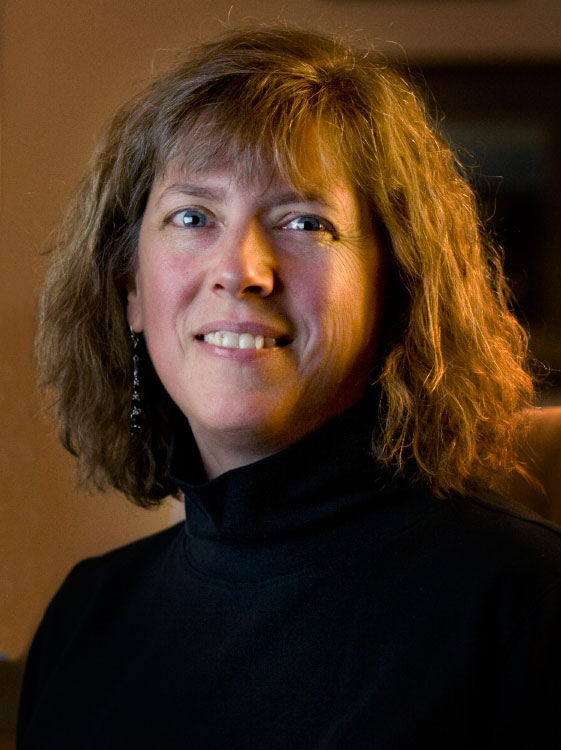
Planetary astronomer Heidi Hammel
[Photo credit: Mike McGregor]
Planetary astronomer Heidi B. Hammel graduated from MIT and the University of Hawaii, and did her post-doctoral work at NASA’s Jet Propulsion Lab. She is Executive Vice President of AURA, which operates astronomical observatories including the Hubble Space Telescope. Dr. Hammel is also an interdisciplinary scientist for NASA’s next great space observatory: the James Webb Space Telescope. She has been profiled by The New York Times and Newsweek Magazine, and in 2002 Discover Magazine identified her as one of the 50 most important women in science. Dr. Hammel has been lauded for her work in science communication, including the San Francisco Exploratorium’s 1998 Public Understanding of Science Award. Asteroid “1981 EC20” was renamed 3530 Hammel in her honor. You can read more about Dr. Hammel here.


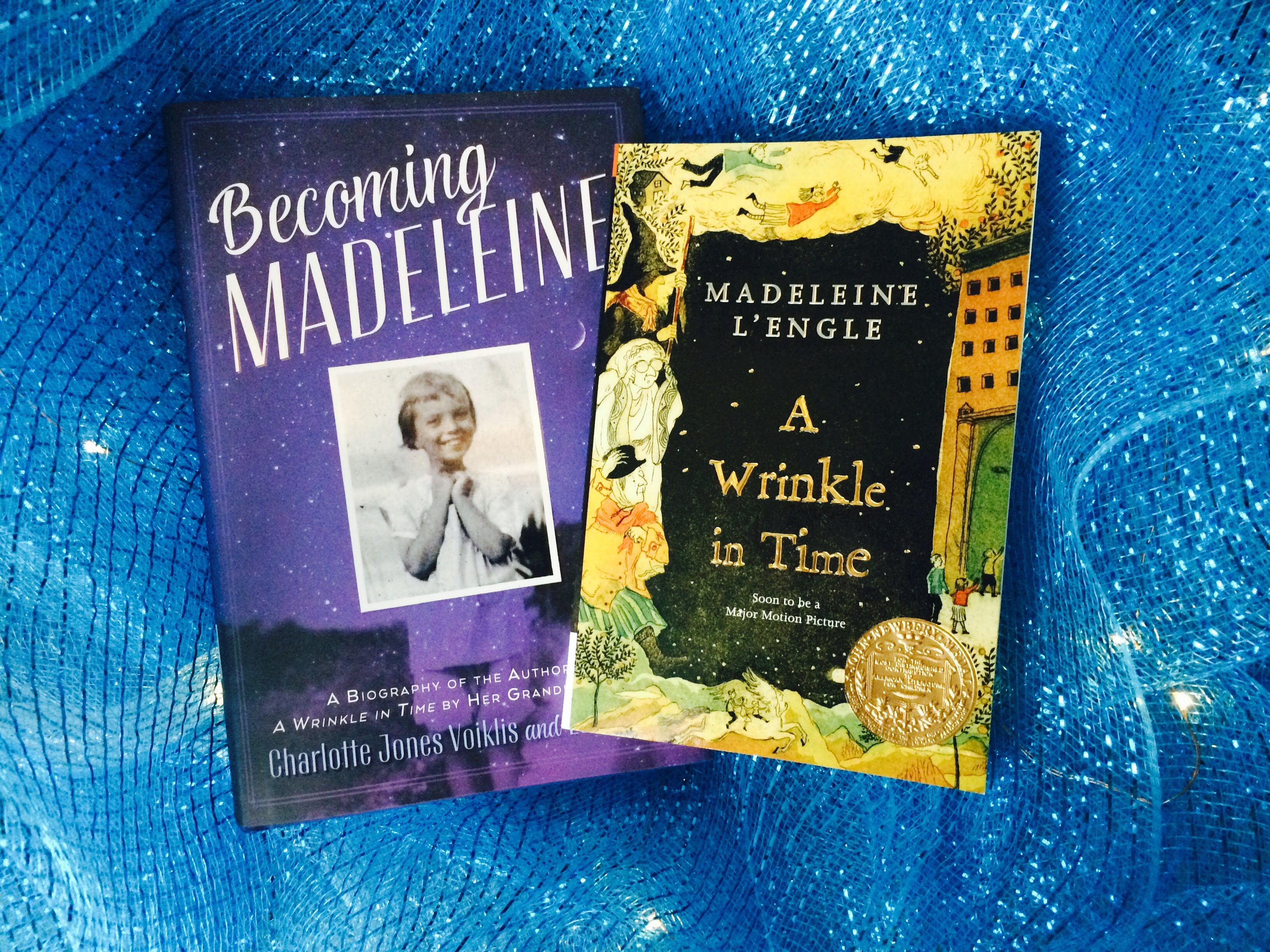
Stay tuned for our #WrinkleReRead giveaway of A Wrinkle in Time by Madeleine L’Engle and Becoming Madeleine, a biography of the life and works of Madeleine L’Engle written by her granddaughters.

Your Writing Tools: Search and Rescue Info

writing tools search rescue info
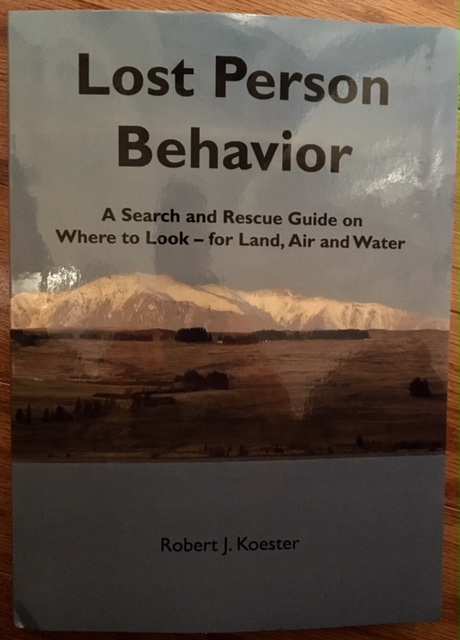
Robert J. Koester studied lost person behavior in a systematic, scientific, statistical way and the result is what many consider to be the best book on search and rescue ever written. So maybe you’re thinking Whoopdedoo. I’m into fiction. Maybe you’re yawning and about to browse elsewhere. Read on instead.
 
This book contains invaluable nuggets to make your writing not only accurate but also richer. Its usefulness for mystery writers might be more apparent than for more general literary fiction, but consider all the ways and reasons someone might go missing—either as the primary plot line, or as a subplot that complicates everything.


This book is useful whether you are writing from the POV of the missing person or the searcher(s). For example, it delineates strategies lost people use to try to get unlost, including the effectiveness of each.


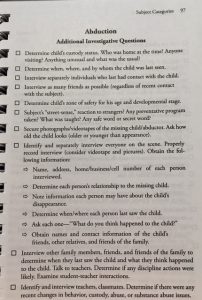
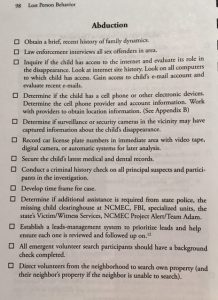
To aid the searcher, data are organized into 34 subject categories, ranging from Abduction through Urban Entrapment and Worker. Data about children are partitioned by age. Data on Skiers are partitioned by Alpine and Nordic. And so it goes. And for each Subject Category, there is an brief introduction, followed by guidelines for getting the search started and—perhaps of most interest to writers—pages of Additional Investigative Questions. For example, consider the usefulness of these questions concerning abductions.


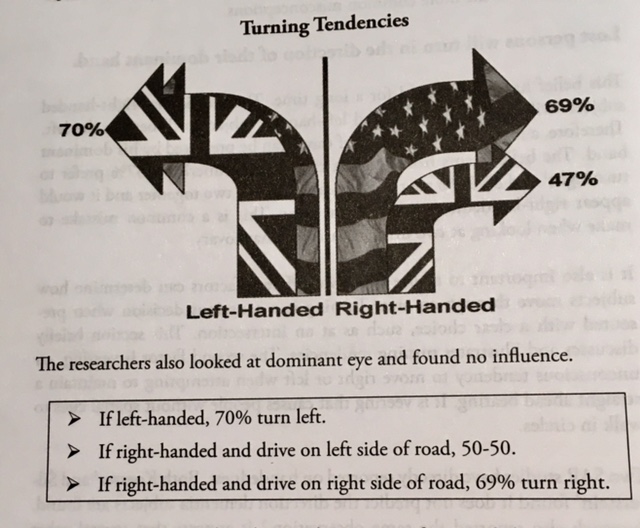
Perhaps my favorite chapter is 6. Lost Person Myths and Legends.  For example, is it true that lost people will turn in the direction of their dominant hand? To some extent. When forced to make a clear choice between right and left, handedness matters. But the extent to which it matters is influenced by learned driving patterns.


writing tools search rescue info
People without visual cues do, indeed, walk in circles. Why? When blindfolded and told to walk in a straight line, whether one circles clockwise or counterclockwise is strongly influenced by which leg is longer. Too bad that bit of information is seldom available to searchers!


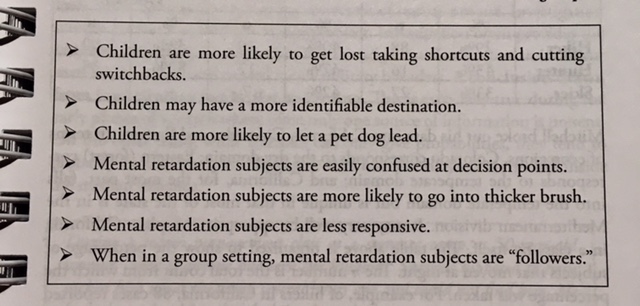
Potentially relevant information is everywhere in this book. Do the mentally retarded and children behave similarly when lost? Yes and no. The distances traveled from the initial planning point are quite similar for those with mental retardation and children 7-12 years of age. But there are important differences.


writing tools search rescue info
Dementia wanderers essentially travel straight ahead till they get stuck. Therefore, the most important first question to ask is, “Which door did he go out of?” Despondents, on the other hand, are most likely to just walk out and are most often found on a path, trail, or at their destination. Despondents are not truly lost.


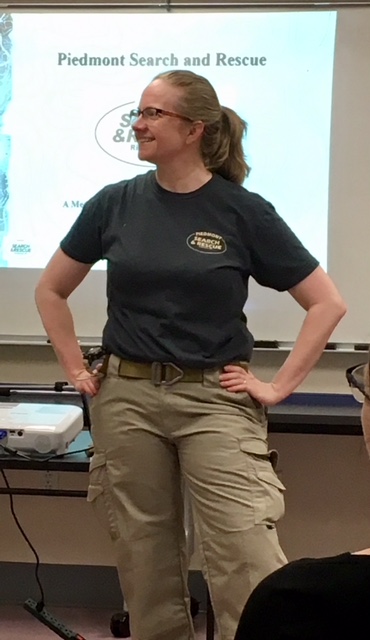
I became aware of Koester’s book during a SinC/CentralVA program by 4 members of the Piedmont Search and Rescue staff. The book is expensive but you might well find it worth adding to your shelf.
writing tools search rescue info
The organization has an enormous amount of information and experience. You can find lots of it online.

Apples and Oranges in Fantasy Fiction

As you may recall from earlier posts, I recently read the Throne of Glass series by Sarah J. Maas, and I committed to reading A Wrinkle in Time by Madeleine L’Engle before the March premiere of the movie.


I’ve now started reading A Wrinkle in Time, and I’m stunned by the sharp contrasts between the two. While both are fantasy fiction, they are virtual opposites on the major dimensions. Here are a few I’ve noticed so far.


Age in WITMeg is approximately 13, Calvin (her love interest) is 14, and Charles Wallace is 5 years old. Meg and Calvin are typical teens in a realistic school when the story opens.


Age in TOG: Celaena/Aelin is approaching her 18th birthday when the series begins and ages to 20 over the series; her early love interests Sam, Cael, and Prince Dorian are approximately her age; her later love, Rowan, is hundreds of years old. Celaena excels as a trained assassin. Her love interests are assassins, warriors, and magic wielders.


Affection in WIT: Meg and Calvin hold hands, Calvin puts his arm around her (so far).


Affection in TOG: Lots of sensuality, moderately explicit, including nudity, sharing beds, and sexual union.


Commonality: In both books, the heroines feel safe and protected by their loves.


Assistants in WIT: Gentle, helpful assistants in the form of supernatural beings with names such as Mrs. Whatsit, Mrs. Who, Mrs. Which, The Happy Medium, and Aunt Beast.


Assistants in TOG: Fae Warriors, a shape-shifter, Ironteeth witches, assassins from the desert, armadas from other kingdoms


Evil in WIT: IT, a bodiless telepathic brain who controls people, making them do the same things together in the manner of robots—absolute conformity; and The Black Thing, who is the source of all evil in the universe, and that’s about all the specificity about him.


Evil in TOG: The ultimate evil is Erawan, who enslaves others to be his minions (e.g., the King of Adarlan) in conquering everyone, everywhere using death and destruction, torture, beings who can take over another’s skin, and a magic “key” that allows him to gather beasts from the realm beyond the portals and create animal/human hybrids.


Why these stark differences? I can only speculate. It may be partly that the target audience of WIT is younger than the target audience of TOG. Then again, WIT was published in 1962 and TOG was published in 2012. Maybe young adults now are older than they were fifty years ago.
Stay tuned: I’ll blog again when I finish A Wrinkle in Time.

What Sadistic Sob Would Do That?

More than 1,000 people gather at Seattle-Tacoma International Airport, to protest President Donald Trump's order that restricts immigration to the U.S., Saturday, Jan. 28, 2017, in Seattle. President Trump signed an executive order Friday that bans legal U.S. residents and visa-holders from seven Muslim-majority nations from entering the U.S. for 90 days and puts an indefinite hold on a program resettling Syrian refugees. (Genna Martin/seattlepi.com via AP)
[Source: Concord Monitor]
You can find stories all over the internet of people increasingly being treated inhumanely while trying to enter the U.S.—preschoolers being handcuffed, weeping mothers and young children separated for hours at a time, people held for twenty hours without food… Sometimes such stories suggest that it’s because of the things Pres. Trump says and does. His supporters are likely to reply, “No way in hell would he order such things! These are the acts of a few sick individuals.”


As writers, we don’t need to prove or disprove either of these causes. As writers, we know that almost anyone is capable of almost any act if the motivation is sufficient. What we may not have considered is just how easily ordinary people can be led to do extraordinary things.  
 
In 1963 Stanley Milgram first published his research on obedience to authority figures. The beginning of his research (1961) was with the trial of Nazi war criminal Adolf Eichmann in Jerusalem. He started with the question, “Could it be that Eichmann and his accomplices in the Holocaust were just following orders?”
 
The short answer is “Yes.” A very high proportion of people would fully obey the instructions, even if reluctantly, even if the acts ran counter to their own consciences.
 
The basic paradigm was that the subject thought he was the teacher, assisting the experimenter by delivering electric shocks to a learner whenever the learner gave a wrong answer. With each wrong answer, the apparent shock level was increased, finally to a point where the shocks—if real—would have been fatal. In the initial experiment, 65% of subjects gave the maximum shock level at least three times.


The important thing to remember is that the experimenter had no real authority over the subject delivering the shocks. The experimenter wasn’t a parent, a supervisor, a friend, a lover. The subject was not physically restrained from leaving. You can read all about it, in detail, in his 1974 book.


stanley milgram book 1974
[Source: HarperCollins]
Variations on the original experiment revealed that a less official looking setting decreased obedience slightly. When the teacher was physically closer to the learner, the level of compliance decreased—but even when the teacher had to physically hold the supposed learner’s hand on what was supposed to be a shock plate, 30% completed the experiment. When the experimenter was physically farther away, compliance decreased. For example, when the experimenter gave instructions over the phone, compliance dropped to 21%. There was no significant difference in results when all women were used.


To write convincingly about obedience, it’s important to note that the people were greatly stressed by what they were doing. They objected verbally, questioned the experimenter, and reported high levels of distress when debriefed.
 
So, can we conclude that someone is telling people to get rough with those trying to enter the United States? NO! 
 
[Source: TED]
Enter Philip Zimbardo. In 1971 he conducted The Stanford Prison Experiment. It was specifically intended to investigate issues of the relationships between prisoners and guards. Did the behaviors of prisoners and guards reflect inherent personality differences between the two groups?


Volunteers for a two-week prison experiment were screened and those with criminal backgrounds, psychological impairment, or medical problems were excluded. The research team chose 24 men they deemed most psychologically stable and healthy. Participants were paid $15 per day (the equivalent of $92.91 in 2018).


The subjects were randomly divided into prisoners and guards.


stanford prison experiment
[Source: HowStuffWorks]
The guards were instructed not to physically harm the prisoners or withhold food or drink, but Zimbardo emphasized that “…in this situation we’ll have all the power and they will have none.” Guards were told to call prisoners by their assigned numbers rather than their names. But otherwise, guards improvised their roles. Prisoners were given no instructions.


prison experiment
[Source: SF Gate]
On the second day the three prisoners in one cell rioted, blocked the door with their beds, tore off their caps, and refused to come out or obey the guards. Guards from other shifts agreed to  work overtime to quell the riot and eventually they attacked the prisoners with fire extinguishers (while not being supervised by research staff).


sadist stanford prison experiment
[Source: Daily Maverick]
The experiment was terminated after only 6 days. By then, about a third of the guards had exhibited “genuine sadistic tendencies”; prisoners were emotionally traumatized and five of them had to be removed from the experiment early. You can read about this experiment in any social psychology textbook. Online you can also view video clips.


Arguably, the most important outcome of the study is that the behavior of two equivalent groups diverged dramatically after one was labeled “guards” and the other was labeled “prisoners.” 
 
To answer the initial question of what sadistic SOB would do such a thing: the perfectly ordinary, likable, friend, colleague, or neighbor.
 
As a writer, keep that in mind as you create characters behaving badly.

Stories Within Stories

stories within stories h hawk
[Source: Amazon]
H Is for Hawk is my most recent book purchase—as in, I downloaded it to my Kindle last night. I am looking forward to a great read.


Yesterday, the teacher in my Creative Nonfiction class read aloud from Macdonald’s book as an example of exceptional nature writing—though if you look it up online, it’s labeled a memoir. The section she read revealed the process Macdonald went through before finally naming her goshawk Mabel. The writing was rich and compelling.


stories within stories macdonald hawk
[Source: wbur]
Several people in the class had already read the book and they all praised it to high heaven—which isn’t surprising, given that it’s not only a bestseller but also the winner of the Samuel Johnson Prize for Nonfiction, the Costa Book of the Year Award, and the Prix du Meilleur Livre Étranger in France.


Class discussion revealed a very complex book. It’s factually fascinating, with all sorts of information about falconry and training a hawk. It has quite a lot about an earlier British falconer White. And it’s about grieving her father’s death. As Dwight Garner put it in The New York Times, “Helen Macdonald’s beautiful and nearly feral book, H Is for Hawk, reminds us that excellent nature writing can lay bare some of the intimacies of the wild world as well. Her book is so good that, at times, it hurt me to read it. It draws blood, in ways that seem curative.”
Over lunch, another long-time writing friend whose work I admire said H Is for Hawk is her all-time most loved book. Who could resist endorsements such as these? Would you care to read with me?

Upside, Downside: The Writing Life

upside downside writing life
 
The upside to writing is almost limitless! Which is fortunate, because few of us gain significant income for our efforts. Here are some of the best things about the writing life for me.


1) It’s good for your brain. Writing requires rational thought, planning, focus, and practice, all of which is good exercise for maintaining one’s intellectual health.
2) It helps develop empathy. Getting inside heads other than one’s own, being able to take the other’s perspective, even express an opinion not one’s own are all conducive to a broader world view.
nimrod hall summer arts program 2016
L-R, kneeling: Foust, Kristy Bell, Nancy Hurrelbrinck, Jennifer Dickinson, Judy Bice, Ruth Gallogly; L-R standing, Terry Dolson, Jane Shepherd, Kit Wellfod, Charlotte Morgan, Cathy Hankla, me, Sheri Reynolds, Molly Todd, David Cooper, Betsy Arnett, Amelia Williams, Frances Burch.
3) Writers are interesting people. I’ve never met a boring writer—although I can’t say the same for all their spouses! But writers all seem to have rich, complex lives and thoughtful views on everything from history to art.
4) Writing is good for your physical and mental health. Yes, there is actually evidence of this! You can look it up online. Writers get sick less often, heal faster, and are less likely to be depressed.
5) Writing gives you something to think and talk about besides your poor health, job complaints, etc.
6) It makes you a more discerning reader. You notice bad, poor, sloppy writing. You may even drop some formerly favorite authors—which I guess could be a downside, if you look at it that way. But you will appreciate good writing more than ever.
[Source: Amazon]
[Source: Amazon]
7) When you finish a piece of writing, and especially when something is published, you have a rewarding sense of achievement.
The downsides are fewer, but powerful.
 
1) It’s difficult and time consuming. Enough said.
upside downside writing life
2) When it becomes a habit, you feel guilty when you don’t do it.
3) Writing to deadlines can raise your blood pressure and exacerbate your ulcers. (However, you’re less likely to have these issues if you write. See above.)
BOTTOM LINE:
upside downside writing life its-a-wonderful-life
[Source: Stafflink]

Dialogue Dos and Don’ts

dialogue dos donts

Dialogue is essential to every genre of fiction; however, sometimes it’s hard to get it just right. Bad dialogue can trip up a reader, and sometimes doing so will make them want to stop reading altogether. That being said, here are a few dialogue dos and don’ts that can help you with writing speech:

Do

  • Try breaking up characters’ dialogue with action. Full pages of dialogue tend to make the reader’s mind wander (that being said… don’t overdo dialogue tags, e.g. said, exclaimed, whispered).
  • Do research. Sit in a coffeehouse, restaurant, movie theater, etc. and listen to the conversations around you (make sure you’re not caught!). This can help you establish natural ways of speaking without needing to rack your brains.
  • Read your dialogue out loud and act it out if necessary. Does it feel unnatural? Edit it out.

Don’t

  • Don’t have characters tell each other things they already know just because the reader doesn’t know those things. For example, if two sisters are talking, it’s highly unlikely that one would say, “When Mom and Dad adopted our brother John, I was devastated.” Find another way to convey relevant relationships or bits of backstory to the reader.
  • Don’t have an exchange between two people weighed down by repeatedly calling each other by name. “Hello, John.” “Hi, Sharon.” “How are you doing, John?” “Oh, Sharon, I am so low I have to reach up to touch bottom.”
  • Don’t put in greetings and leave-takings that are pro-forma, tell us nothing about the characters, or don’t move the story forward. Just because they would happen in real life doesn’t mean that every amenity has to be spelled out to the point of diluting the scene.

There are many more resources online that can help you with writing dialogue. Check them out for more inspiration!