Enjoy the holiday, and I’ll be back next week!

Enjoy the holiday, and I’ll be back next week!

Recently I had a dream that involved seeing how many words I could make from “Texas Hold ‘Em.” That felt so weird that the memory stuck with me. Subsequently I decided to give it a go, and ended up with 78 words using those letters, only those letters, and each letter only as often as it appeared in those words—i.e., words with two e’s were acceptable but two t’s, d’s, etc., weren’t.

That led me to thinking about other word games. As so many do these days, I started my search online. And, as so often is the case, up popped Wikipedia.
Wikipedia defines Word Games as spoken, board, card or video games often designed to test ability with language or to explore its properties. I couldn’t find any other definitions online.
Most people see word games as a source of entertainment, but they can serve an additional educational purpose. Among the academically best performing children, 35% had parents who encouraged them to play word games. Many young children enjoy playing games such as Hangman, while developing language skills like spelling. ESL teachers often include word games in their classrooms to help students learn to recognize and use English words in context.
Contrary to the stereotype of young people being the primary demographic for online games, word games attract players of all ages. A 2020 Statista report suggested that people aged 25 to 54 make up nearly 60% of word game players.
And adults can reap benefits of such brain work as well. Researchers have found that adults who regularly solved crossword puzzles, which require familiarity with a larger vocabulary, had better brain function later in life.

Indeed, over time, playing word games improves problem-solving and analytical skills. Often these games require players to think and use other cognitive skills at the same time.
According to a 2024 article in Parade, the reason word games are good for brain health is that they can improve attention, verbal fluency, memory, and processing speed. All these skills can decline with age. One 68-year-long study found a link between playing word games and better cognitive health in old age.
According to a 2022 PBS broadcast, people who have a high need for cognition tend to seek out mental challenges like word game and puzzles. The results cited above are all correlational results, i.e., that is, as game playing habits go up, the positive brain measures go up as well, but maybe the cause, is actually something else, like a high need for cognition that accounts for both.
Depending on the situation, word games can play a soporific role as well. Because they require concentration and lateral thinking, they can distract the player from stress and anxiety. Many require nothing but the player’s mind, making them perfect to play in bed, on a plane, while stuck in a boring meeting, etc. A friend told me she plays an alphabet game when she has trouble falling asleep. I seem to be playing anagrams even after I’ve fallen asleep!
(Unless otherwise noted, the following information is from the Wikipedia article.)

The goal of a letter arrangement game is to form words out of given letters. In addition to testing vocabulary skills, these games test lateral thinking skills. Scrabble, UpWords, Bananagrams, and Countdown are popular examples of letter arrangement games.
FYI: Around the world, approximately 150 million copies of Scrabble have been sold.
Note: This is where anagrams would fit best, although not mentioned in the article. On the other hand, it involves paper and pencil, so maybe it also fits the following.

Paper and pencil game players write down their answers, following the specific constraints laid out in the game rules. Crossword players fill in a grid by following clues or solving riddles. Hangman players try to guess their opponent’s word or phrase before their opponent is able to draw a stick figure hanging from a gallows. Categories, Boggle, and word searches are other popular examples of paper and pencil word games.
Semantic games focus on the meanings and context of words. Players rely on their shared knowledge of denotation and connotation to combine words in amusing ways. Popular semantic games include Mad Libs, Blankety Blank, and Codenames.
Game designers have taken advantage of technological advancements to create non-traditional word games for computers or mobile phones. Many of these newer games take advantage of the technology to include more complex rules.
Codenames, Decrypto, and Anomia all have popular digital formats, allowing players to participate on teams while in different physical locations. Modern audiences also eagerly play word games with mobile formats, such as Letterpress, Words with Friends, and Word Connect.
Since Spelling Bee first aired on the BBC in 1938, the first televised game show, word games have been a constant offering on radio and television. Airing continuously since 1975, Wheel of Fortune is the longest-running syndicated game show in the United States.

The popularity (and relative low cost) of word games has led producers to adapt many word games to fit a radio or television format. Some shows revolve entirely around a word game, while others include elements of popular word games mixed in. Shows like Lingo, Says You!, Task Master, Catchphrase, Family Feud, and Only Connect are among the highest-rated shows on television.

Wordle was the most frequently downloaded game of the year after it was launched in January 2022. Its player base grew to tens of millions worldwide. Players claim it involves a lot of strategy as well as a broad vocabulary.
As of 2022, the annual number of word games app downloads is 1.42 billion. And nearly half of Americans believe that playing word games is a productive way to spend time. With 78.03% of word games app revenue generated in the U.S. ($1.74 billion) players are everywhere! And there are games for virtually every taste, so choose your poison.
Many of these games allow the player to select the language of play. This makes those games an ideal method of practicing vocabulary for people learning a new language. Playing June’s Journey or Drops is a lot more fun than memorizing Spanish flash cards.
Several word games suit both sociable and loner players. Games like Scrabble virtually always involve multiple players. Many online games are played alone but players can get comparative stats for others who use the app. Still other games—such as anagrams—can be done informally and alone, but can also be made competitive when multiple people start with the same prompt and there is a time limit.

Texas Hold ‘Em was so enjoyable that I did other anagrams:
Let me know if/when you beat my numbers!
Bottom Line: Games are everywhere, they may be good for your brain, and they seem to pose no threats. So go for it!

Operational definition of beach reads: anything that’s read at the beach! Many of you know that I poll family members about their reading during our annual gathering at the beach. This year we were fourteen people, ages 15-93.

Actually, there was less reading than usual going on this year. One woman was submitting her thesis for a master’s degree in public health and another was job hunting. One man had two work-related zoom sessions. Two people had major cold symptoms, and one of those spiked a temperature a bit over 102—with weakness, sweats, and chills—and ended up in the ER from 11:00 p.m. to 4:00 a.m., with two others in attendance.
Nevertheless, without attribution, in no particular order, here is the list:


Bottom Line: I can’t speak for or against any of these, merely put them forth as books chosen by people I love.

There’s nothing like a road trip to make me notice license plates even more than usual. I recently spent twelve days in Rehoboth Beach, Delaware and, not surprisingly, their iconic plates were everywhere.
A local confirmed what I had heard before, that lower numbered plates are more prestigious, and that license plate numbers can be bequeathed, bought, or sold. In order to retain ownership of a license plate, before completing the sale or finalizing the trade of a vehicle, the owner must bring the title to the DMV. The fee to retain a plate is $35. There is a $20 fee to take the plate out of retention.
As I looked into Delaware plates, I learned a lot about other states as well.

License plates, also known as vehicle registration plates and license tags, must be displayed on every car and truck on the road in the United States these days. But identifying vehicles is far from a recent development.
The earliest references to vehicle registration and possibly license plates date back to ancient Rome at the time of Julius Caesar (102 – 44 B.C.). There are references to the licensing of chariots, but whether a number was marked on the chariot itself or onto an attachment to the vehicle is not known.
What may have happened during the intervening centuries is a mystery. However, there must have been developments in Victorian England in the 1880s. In The Hound of the Baskervilles by Sir Arthur Conan Doyle, Sherlock Holmes and Dr. Watson try unsuccessfully to catch a public Hansom cab. Holmes, however, got close enough to the cab to spot its license number, which became a major clue in cracking the case.

Delaware first required its residents to register their motor vehicles in 1905. Registrants provided their own license plates until 1909, when the state began to issue plates.
However, as of April 25, 1901, New York became the first state to require license plates on cars. The first New York plates were homemade, displaying the owner’s initials without any numbers. These first license plates were typically handcrafted of leather or metal (iron) and were meant to denote ownership via the initials.
California required license plates the next year.

Massachusetts was the first state to actually issue plates, beginning in 1903. The first such plate, featuring just the number “1,” was issued to Frederick Tudor, who was working with the highway commission. One of his relatives still holds an active registration on the 1 plate.
These early Massachusetts license plates were made of iron and covered in porcelain enamel. The background was cobalt blue and the number was white. Along the top of the plate, also in white, were the words: “MASS. AUTOMOBILE REGISTER.” The size of the plate was not constant, growing wider as the plate number reached into the tens, hundreds, and thousands.
Massachusetts was the first to issue license plates, but by 1918, all 48 of the contiguous United States were issuing license plate. Although territories at the time, Alaska and Hawaii began issuing plates in 1921 and 1922, respectively.

Although the first license plates were meant to be semi-permanent, by the 1920s, states had begun mandating renewal for personal vehicle registration. Individual states tried various methods for creating the plates. The front typically contained registration numbers in large, centered digits while smaller lettering on one side dictated the abbreviated state name and a two- or four-digit year the registration was valid during. States often varied plate color from one year to the next to make it easier for police to identify expired registrations.

Since 1957, most types of North American plates have been a standard size, six by twelve inches. Prior to that, different sizes and shapes were common. Most were rectangular, but some plates used oval, square, round, and triangular shapes as well. For a number of years, Kansas and Tennessee cut their plates to match the shape of the state itself.
Delaware was the last state to adapt to the 1957 changeover to standard-size 6″x 12″ license plates, and remains the only state with [historic] non-standard size plates in current use.
The majority of Delaware’s black porcelain plates in use today are reproduction copies of the original series one style. In 1986 Delaware’s Division of Motor Vehicles legalized the manufacture of accurate replicas due to popular demand. There is only one company actively supplying the demand for these plates, the Delaware Historic Plate Company. Delaware is the only state that allows the private manufacture of legal license plates, and the only state to have retained the famous (among license plate aficionados) porcelain plates in the modern era.

The modern Delaware style of reflective gold on blue was first introduced in 1958. Delaware DMV added “THE FIRST STATE” slogan four years later.
The style of Delaware’s license plate has not changed much in about 50 years. The black onyx and heritage gold colored Centennial License Plate [2005] was a celebration of 100 years of state-issued license plates.
In the U.S., each state’s Department of Motor Vehicles issues vehicle registration plates. The only plates issued by the federal government are for their federal vehicle fleet or for cars owned by foreign diplomats.

Note: some Indigenous groups in America also issue their own registrations to members, but many states now offer a special registration.
New Mexico is the only state that specifies “USA” on its license plates, in order to avoid confusion with the country of Mexico, which it borders.
Initially, license plates were issued in pairs. During WWII, due to material shortages, most states dropped the requirement for a front plate. As of 2023, the “Rugged Nineteen” states still require only one plate:
| Alabama | Arizona |
| Arkansas | Delaware |
| Florida | Georgia |
| Indiana | Kansas |
| Kentucky | Louisiana |
| Michigan | Mississippi |
| New Mexico | North Dakota |
| Oklahoma | Pennsylvania |
| South Carolina | Tennessee |
| West Virginia |
Even today, there’s no nation-wide standard for how many letters/numbers are on a license plate. Some states have six-character plates, some have seven-character plates and yet others have eight-character plates.

As of 2023, the four oldest plate designs in use – each with slight to moderate cosmetic changes since inception – are those of Delaware (in production since 1959), Colorado (since 1960, continuously since 1978), the District of Columbia (since 1975, and Minnesota (since 1978).
It’s been many years since all of a state’s license plates looked alike. Today, the 50 states and the District of Columbia offer 8331 different vehicle license plate designs.

Jon Keegan, an investigative data reporter, has published a complete list of all license plate designs in the US. He found that Maryland has the most plate designs of any state: 989, nearly twice as many as runner-up Texas (476). Hawaii has the fewest, with just 14. You can discover more intriguing tidbits from Keegan’s survey and search the database for yourself here.
License plates in Delaware feature up to seven characters. Prefixes indicate the type of vehicle or organization they represent. The state originally used the letter C only for trucks and vans. However, they introduced “CL” when they started to run out of numbers.
The number of possible license plate numbers depends on the format of the license plate. If the plate consists of 6 digits and letters, then there are 2,176,782,336 possible license plate numbers. If the plate consists of 7 digits and letters, then there are 78,364,164,096 possible license plate numbers.

Virginia offers 333 basic plate designs. Drivers can personalize most of these designs for an additional fee. Vanity plates such as HRD TME, GR8 BOD, etc., are common. In fact, one out of every ten personalized license plates in the United States is registered to a Virginia driver. Perhaps this high take-up of vanity plates is due to the fact that a personalized plate in Virginia costs just $10 more than a randomly-assigned number.

Look, too, for vanity in New Hampshire, Illinois, Nevada and Montana, but car and truck owners in Virginia are the vainest of them all.
In Delaware, the DMV will no longer accept or process new vanity plate requests. The DMV has already stopped processing all pending vanity license plate requests as of Tuesday, May 14, 2024. Existing vanity license plates that have been issued prior to the Court’s decision currently remain eligible for renewal.
Politicians and elected officials have long had access to colorful, special, low-numbered plates. In Virginia, if you see a regular license plate that is 1, that is the Governor’s official car. The Lt. Gov. is 1A, the Attorney General A1, the Governor’s unofficial car is A, and prior Governors are 2, 3, 4, etc.

In Delaware, 1 is for the Governor, 2 for the Lt. Governor, and 3 for the State Attorney General.
In fact, in most states the No. 1 plate is assigned to the Governor’s limousine, while No. 2 is provided to the Lieutenant Governor.
North Dakota has a unique approach to providing low numbers to their elected officials. The North Dakota Governor gets plates No. 1 and 5, while the state’s senior U.S. Senator receives plate No. 2. The junior U.S. Senator from North Dakota gets plate No. 3, and the lone at-large Congressman can drive a car with plate No. 4. The Lieutenant Governor of North Dakota receives plate No. 6. However, officials who don’t want to attract attention—for whatever reason—will choose not to display such identifiable license plates. Such special plates are very sought after by collectors.
Serious U.S. license plate collectors consider the 1921 Alaska plate to be the holy grail of license plates and perhaps the rarest of all U.S. license plates. As recently as 2008, just four were known to exist, with their worth being somewhere around $60,000 each at the time.

But for dollar value? In 2008, someone bought the No. 6 Delaware license plate at auction for $675,000. In 2018, Butch Emmert auctioned off the No. 20 tag for $410,000.
For Delawarians, there may be no status symbol greater than the coveted low-digit license plate. Not just anyone can buy these rare Delaware plates, though. You have to be a Delaware resident with a Delaware driver’s license.
Although the biggest draw is low numbers, Delaware complicates the situation by starting some tags with letters: C for commercial, PC for passenger car, T for trailer, MC for motorcycle, RT for recreational trailer, and RV for recreational vehicle.
Bottom Line: Even something as mundane as a license plate has history. What might you learn about your own?

When people think plants, they are likely thinking flowers, vegetables, fruit trees, flowering trees, shrubs, etc. But going forward, also consider the leaves!
I picked up this Alice Thoms Vitale book years ago—because that’s the sort of thing I do—and I must admit that I set it aside for quite a while. Big mistake! It’s fascinating.
Here, for your entertainment and enlightenment, are samples and quotes from that book. All such are from Leaves unless otherwise noted.
It’s native and ubiquitous and, besides creeping, it trails and climbs. I work hard to keep it from overpowering nearby plants in my back yard. Nevertheless, in late autumn, the leaves turn deep scarlet, one of the few spots of color then.

They played an important role in American folk medicine as an emetic, purgative, and sweat producer. Not surprisingly, they taste bad. According to Vitale, some people also considered them mildly stimulating. To cure a headache, people smelled the juice of the leaves, or took an infusion of the leaves and berries. It had other medicinal uses as well. And, “An old belief claimed that a strong tea of Virginia creeper leaves healed even the worst hangover.” Maybe it will come back!
Vitale saw vendors selling it in pots as “American Vine” under the Rialto Bridge in Venice. If I saw it there, I didn’t recognize it.

Although Vitale discusses English Ivy, it grows robustly—some would say invasively—here, so read on.
This evergreen vine has been central to magic, mythology, and medicine at least as far back as the ancient Greeks. Looking only at medicinal uses, Vitale lists twenty such uses, everything from bad spleen and baldness to ulcers and wounds.
“It is now scientifically established that all parts of the ivy plant are poisonous if ingested …can cause … illness—even death.” On the other hand, researchers in Romania have recently established ivy’s effectiveness as an antibiotic and antifungal treatment.

Most people know apple trees primarily for their beauty and fruit; the leaves, not so much. The Greek physician Dioscorides said, “The leaves and blossoms and sprigs of all sorts of apple trees are binding.” Centuries later, an English herbalist said, “The leaves of the tree do coole and binde, and also good for inflammations in the beginning.”
Vitale’s book says no more about apple leaf medicine, but online I read that apple leaves have cooling and astringent properties. Some people use them therapeutically for stomach acid issues – heart burn, reflux, and all the way down to soothing digestive issues of the bowel such as diarrhea.
Various parts of the apple tree have many applications, and are widely used in oriental medicine. For the leaves in particular:

Currently, experts have discovered that the apple tree contains compounds that help fight HIV, which is a good signal in the search and preparation of drugs to treat this century’s disease. In addition, the extracts from the leaves of the apple tree have anti-fungal effects on skin diseases, inhibit the vascular donor activity associated with a number of diseases such as diabetic retinopathy, arthritis, solid tumors…
And we can’t forget the famous Johnny Appleseed (aka John Chapman) who carried apple seeds from a cider press in Pennsylvania across the country. While traveling the Ohio River Valley, he planted more than 35 apple orchards in Ohio, Indiana, and Illinois.
Beware: apple seeds contain cyanide, and eating a cupful of them can cause cyanide poisoning. But who would do that?

Vitale writes quite a bit about European mistletoe. But my focus is on American mistletoe, so what follows is from sources across the web. The two differ primarily in the shape of the leaves and the number of berries in the clusters.
American mistletoe grows only in the Americas, from New Jersey to Florida and west through Texas. Most people know it best for its ornamental and sentimental uses at Christmastime.
As for kissing under the mistletoe, that seems to have immigrated from Europe. In Norse legend, the trickster god Loki played a sinister trick on the beloved god Baldur, killing him with a mistletoe arrow. After his death, mistletoe berries somehow brought Baldur back to life, so Frigga declared mistletoe to be a symbol of love. According to Smithsonian magazine, “Mistletoe would come to hang over our doors as a reminder to never forget. We kiss beneath it to remember what Baldur’s wife and mother forgot.”
American mistletoe (Phoradendron leucarpum), also called eastern or oak mistletoe, is a parasitic shrub that grows on the branches and trunks of trees across Virginia. It grows most commonly on oaks, red maples, and gum trees and is most abundant in the swampy forests of Virginia’s Coastal Plain.
Both American and European mistletoe can be toxic in high doses, but neither has been convincingly shown to cause clinically apparent liver injury when given in conventional doses.
The leaves, stems and berries were used in traditional medicine to treat hypotension, constipation and as an abortifacient. The active component of American mistletoe appears to be a phoratoxin which causes vasoconstriction, perhaps the basis for its purported uses. High doses can induce delirium, hallucinations, bradycardia, hypertension and cardiac arrest. Nevertheless, there have been few reports of serious complications from accidental ingestion [of up to] 20 leaves or up to 5 berries of American mistletoe … American mistletoe is available as an oral extract in several forms and is purported to be beneficial for hypotension and constipation, but its clinical efficacy has not been shown in prospective clinical trials. There is no recommended dose. Side effects can include gastrointestinal discomfort, nausea, vomiting and drowsiness. American mistletoe is believed to be embryotoxic and an abortifacient.
NIH — LiverTox: Clinical and Research Information on Drug-Induced Liver Injury
American mistletoe was once used to counteract fertility. Native Americans employed the muscle-contracting medicinal properties of the plant to induce abortions.
Yet despite their parasitism, mistletoes may well be the Robin Hoods of plants. They provide food, shelter and hunting grounds for animals from birds to butterflies to mammals — even the occasional fish. Fallen mistletoe leaves release nutrients into the forest floor that would otherwise remain locked within trees, and this generosity ripples through the food chain.
The Biology of Mistletoe, Smithsonian Magazine

The nightshade family is one of the largest plant families and is related to potatoes, tomatoes, peppers, and eggplants, among others. However, plant lovers also know woody nightshade as deadly nightshade or poisonous nightshade because all parts of the woody nightshade are dangerously toxic if eaten raw. Nevertheless, the leaves and green branches have historically played an important role in folk medicine.
In the second century, Galen (a Greek physician) recommended its use for treating cancer, tumors, and warts. According to Vitale, “…recent scientific studies prove that this plant does indeed contain a tumor-inhibiting element.”
Other authorities over the centuries have recommended the juice of the leaves for treating those who have been beaten or bruised, shingles, “hot inflammations,” and chronic rheumatism.
Mashed leaves in cream was recommended as a poultice for poison ivy and to treat sunburn. Modern chemists have found that this nightshade does contain solanine, “…a substance effective for healing obstinate skin disorders and ulcers.”
And if that isn’t enough, this plant is reputed to have healing magic!

Flowering oleanders—whether the clusters of blooms are pink, rose-red, or white—are gorgeous. They have a variety of scents—vanilla, lemon, apricot, and floral with a hint of spices—depending on species, time of day, and developmental stage.
Warning: all parts of the shrub are poison. Eating a single leaf or eating meat cooked on a skewer of oleander wood can be deadly. In India, it’s called “horse killer” but it is lethal for dogs, mules, and many other animals.
At the same time, historically, people treated venomous bites by drinking the juice of oleander leaves with wine. The juice relieves scabies, mange, and abscesses. It’s also useful as a pesticide and rat poison. Modern researchers have developed a treatment for weak heartbeats from oleandrin, a glycoside in oleander.
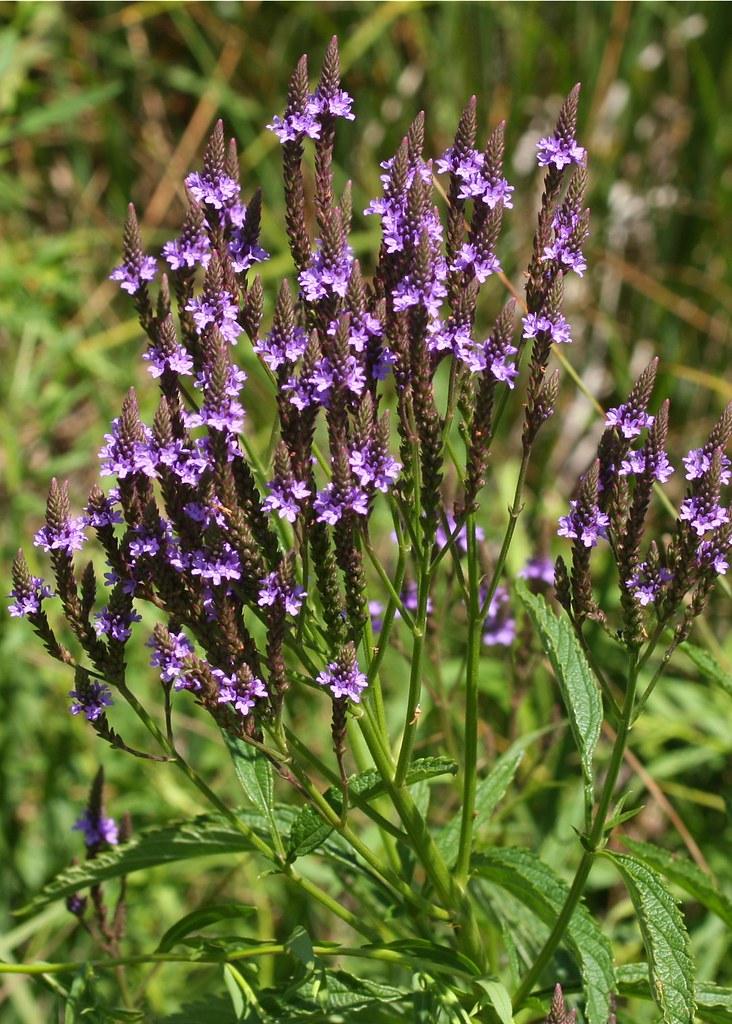
Although many (most?) leaves are some combination of pros and cons, plusses and minuses, lemon verbena is all about loving it.
Wherever lemon verbena grows, the leaves perfume the air around. The dried leaves retain their scent for years, hence their popularity for potpourri and sachets.
Lemon verbena oil is a frequent ingredient in perfume, and in other cosmetics and creams.
The leaves haven’t contributed much to medicinal uses. However, decoctions have been taken as a sedative and for indigestion.
Tea made from lemon verbena leaves is widely popular for the flavor alone (for example, in Brazil). In southern Italy, women wishing to get pregnant often drink such tea—although there is no science supporting that tea as a fertility aid.
Bottom Line: Leaves are often useful as well as ornamental! Whether you take a leaf or leave it depends on your goal—and risk tolerance!

Life is hard for a parasite. … As a parasite, you do know where your next meal is coming from most of the time. In return for that security, you have probably given up most of your nervous system and sense organs. Considering that you probably live in the mire of someone’s intestine or their bile duct, not having sense organs is probably a plus.
Roger M. Knutson, Fearsome Fauna: A Field Guide to the Creatures That Live In You
There are three main types of parasites that can affect humans: protozoa, helminths, and ectoparasites. They can live on or in the human body and cause various diseases. The Cleveland Clinic provides clear, succinct descriptions, as follows.
Ectoparasites live on the outside (exterior) of the body. They carry diseases between other animals and humans and usually carry infections through blood. They generally include the following:

Helminths are worms that usually live in your gastrointestinal (GI) tract. They are visible to the naked eye in their adult stage — and range from greater than 1 millimeter to a little longer than 39 inches (slightly smaller than the width of a doorway).

The main types of helminths that affect people include the following:
Protozoans are one-celled organisms that live in your intestines or blood and tissues. You can’t see them without a microscope. They can spread through several means, including contaminated food or water and person-to-person contact.

There are tens of thousands of types of protozoans. Experts classify them according to how they move. The main types that affect people include the following:
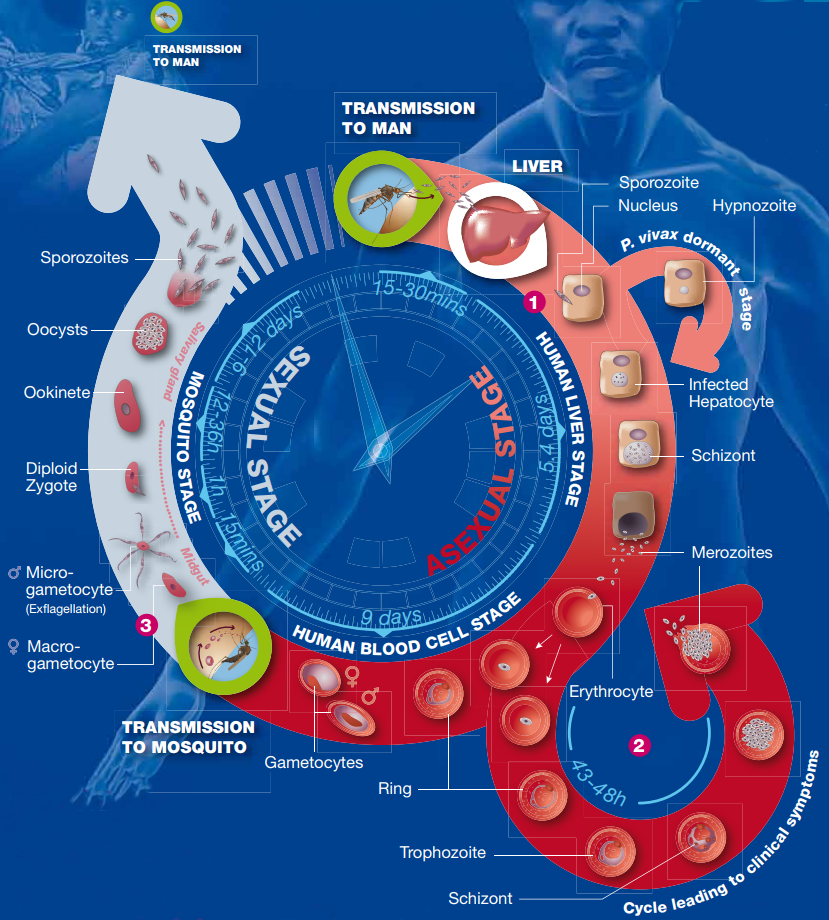
According to Knutson, the parasites that live in humans are generally ugly, not smart, and extremely motivated to reproduce.
Given where they live, parasites have little need for such sense organs as eyes or a sense of smell. As Knutson says, “Better you should have a good set of hooks, suckers, or clamps or a mouth for hanging on or the capacity to swim with vigor.”
According to the CDC, more than 60 million people in the US are infected with parasites. The overall prevalence of intestinal parasitic infections was 16.1%, according to the NIH. Soil-transmitted helminth infections (14.3%) were more common than protozoan infections (1.8%).
I’ve focused on the U.S., where neglected parasitic infections are not rare. NIH says neglected parasitic infections affect at least 12 million Americans, either through new infections (e.g., trichomoniasis) or from prevalent persistent infections resulting in chronic conditions. Limited access to clean water and sanitation are major factors. Practicing good hygiene, thoroughly cooking meat, and drinking clean water also helps prevent many parasites.
“One or another of them [parasites] can live in nearly all our internal spaces or cells, and sometimes during an adolescent ‘walkabout’ they wander from our skin to our bloodstream to our lungs to our gut and during the wandering create their own small spaces where we had none before. They drink our blood, eat our cells, infest our muscles, and compete with us for the food we have already eaten and for the vitamins we need to keep us healthy.”
Roger M. Knutson, Fearsome Fauna: A Field Guide to the Creatures That Live In You

Treatment is extremely important. You may develop a serious infection with severe symptoms if you don’t get treatment and follow your doctor’s orders carefully.
Treatment specifics depend on what type of parasite you have.
For treating ectoparasites such as lice, fleas, and ticks:
For other types of parasites, your healthcare provider may prescribe:
With a proper diagnosis and treatment, most people make a full recovery. So carefully follow your provider’s instructions. If you don’t, your parasite may come back.
How can you know? Because there are so many different types of parasites, the symptoms also vary widely. According to the Cleveland Clinic, common parasite symptoms include:

You may have a parasite and no symptoms, or the symptoms may appear a long time after infection. You may also not have any symptoms and accidentally pass a parasite to another person who develops symptoms.
NIH estimates that there are between 75,000 and 300,000 helminth species alone parasitizing vertebrates. But they have no credible way of estimating how many parasitic protozoa, fungi, bacteria, and viruses exist. According to an article in Salon, several estimates suggest that parasites actually outnumber “free living” organisms by about 3 to 2. In short, they’re everywhere.
Conclusion: although you might feel queasy to learn that you have a parasitic infection, don’t take it personally. Instead take appropriate steps to recover and to avoid having anything eating you in the future!
Bottom Line: Parasites are an ugly fact of life. But you don’t have to despair. And learning about them can be fascinating.

“God made dirt, and dirt don’t hurt.” So chant young children when they don’t want to take a bath. And mostly, that’s true.
As it turns out, the average person ingests about 100 milligrams of dirt every single day. Overall, that equates to roughly six pounds of dirt in an average lifespan! This is mostly unintentional.

On the other hand, some people crave dirt. It’s a form of the disorder pica (the strong urge to eat items that aren’t food). Geophagia is the official term for craving and eating dirt, including earth, soil, or clay. Eating dirt may relieve gastrointestinal pain for some people, but it can also cause health problems such as anemia and lead poisoning.
Eating dirt is not a recent phenomenon by any stretch of the imagination. Archaeologists have found evidence that our ancestors ate dirt at least 2 million year ago, back when Homo sapiens was still Homo habilis. Hippocrates wrote about the practice more than 2 thousand years ago.
If a pregnant woman feels the desire to eat earth or charcoal and then eats them, the child will show signs of these things.
Hippocrates. Oevres Complètes d’Hippocrate, Vol. 8, Little E, transl. Paris: Baillière, 1839: 487
Children sometimes choose to eat dirt, and it has also been linked to pregnancy cravings and nutrient deficiencies. If you have iron deficiency anemia, you may feel an urge to eat dirt. While soil does contain minerals and nutrients, it’s not a safe way to get them into your body. Overall, dirt eating happens more often in places where there is famine and poverty.
In fact, exposure to a diverse range of microorganisms, including those found in soil and on farm animals, can actually have significant benefits on your gut microbiome, supporting digestive and immune health.
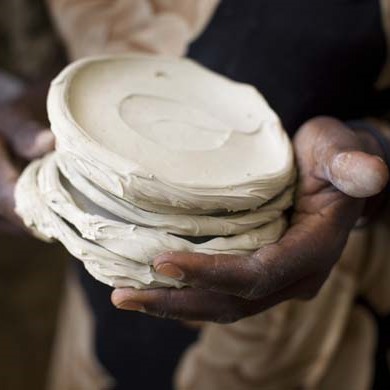
Despite headlines claiming desperately hungry people in Haiti eat “galette” out of necessity, these mud cakes actually play a different role in traditional medicine. Due to their mineral content, some people traditionally recommended these mud cookies as a dietary supplement for pregnant women and children. A small minority of Haitians believe they contain calcium (which can act as an antacid and provide nutritional benefits), but doctors warn this can also cause tooth decay, constipation, and worse.
To make sour dirt, spread soil on a cookie sheet, season with vinegar or your choice of flavorings, and then bake in a wood-burning oven for an hour or smoke in the chimney. After preparation, the dirt tastes sour with an acidic taste, crunchy, and smooth; reputedly, it melts in the mouth like chocolate. (I haven’t tried it and do not recommend it.)
Dr. Sera Young, a research scientist at Cornell University’s College of Human Ecology, published Craving Earth, which documents more than 2,000 years of human consumption of clay, starch, and chalk worldwide. In the United States, there is a Southern tradition of eating white dirt, largely a function of geography. “White dirt” is actually a soft, chalky clay.

The southeastern North American coastline is especially rich in minerals. Chuck Reese wrote an article about the southern history of eating white dirt in The Bitter Southerner. “One of the most valuable of those mineral resources, historically, was kaolin. Look at the list of its uses, and you’ll see why:

“It’s pretty clear in the medical community that this [eating dirt] is not necessarily a deadly idea, but it’s not a good idea,” Adam Forrester says.
Chuck Reese adds, “People who eat white dirt are mostly, but not entirely, African-American. They are mostly, but not entirely, women. And mostly, women eat it when they are entirely pregnant.”

Studies using mice have found healthy bacteria that live in the soil increase serotonin levels and reduce anxiety. But mice are pretty different from humans.
There’s a safer way. “Putting your hands in the soil releases ‘feel good’ chemicals in the brain and grounds the nervous system,” Hannah Brents, LICSW, of Safe Talk Therapy in Boston, told Psycom.
Actually, there are many benefits of gardening and spending time outdoors.
As you no doubt inferred from the above discussion of white dirt, there are many types of dirt. If you are a gardening nerd, you probably already know one type of dirt from another. For the rest of us:
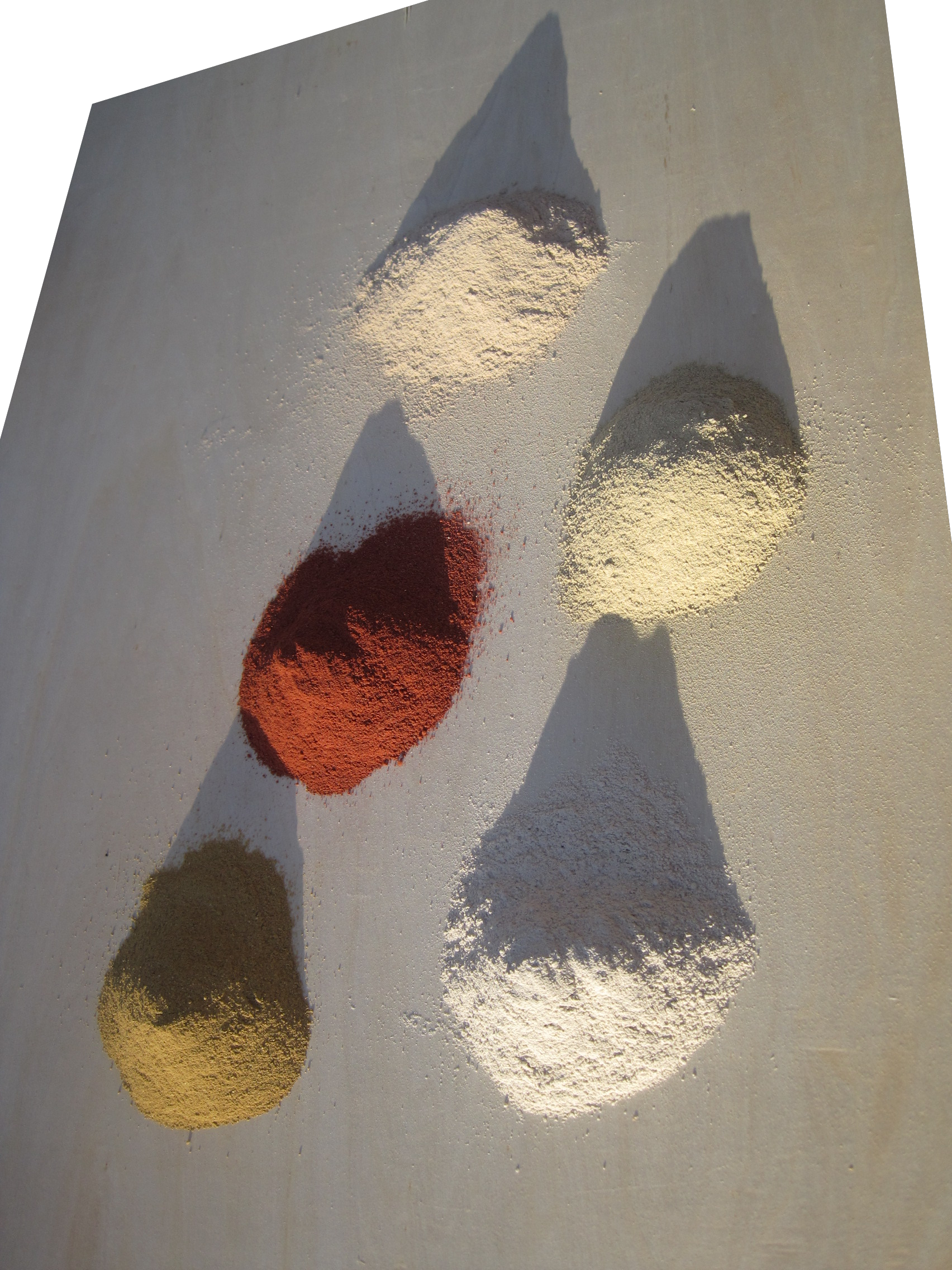
And then there are other distinctions known to gardeners: fill dirt, top soil, potting soil…

But when it comes to dirt, whether you are playing in it, eating it, or working with it, beware: there are many soil born diseases and illnesses. People with compromised immune systems, whether due to a congenital condition, following an organ transplant, or certain medication, must avoid gardening or soil contact for this reason. In addition to tetanus, anthrax, and botulism, soil bacteria may cause diseases in the gastrointestinal tract, infections in open wounds, skin lesions, and respiratory tract disruptions. Non-responsive, overwhelming, or chronic pneumonia may be connected to dirt as well. Typically, the growth of disease-producing microorganisms is favored by particular soil characteristics and may involve complex life cycles including amoebae or animal hosts. Infection may come from direct inoculation, ingestion of contaminated food, or inhalation.

Because there are so many benefits of getting close to dirt, do it! Just take appropriate cautions and use protective gear as needed.
Bottom Line: Getting down and dirty can be a beautiful thing!

How could I not love tomatoes? I grew up in Ohio, where the official state drink is tomato juice! In 1870, Reynoldsburg resident Alexander Livingston began growing tomatoes commercially, and in 1965, the Ohio General Assembly made tomato juice the state’s official beverage. Now there is an annual Tomato Festival honoring Livingston and the role of tomatoes in Ohio’s economy.

I’ve always loved tomatoes. As a child I sometimes took a saltshaker to the garden and gorged on warm tomatoes seconds after plucking them from the vine.
I’m just one of the millions—billions?—who have loved tomatoes over the centuries.
We are so accustomed to modern, home-grown, hothouse, farmers’ market and store-bought tomatoes that it’s hard to imagine them growing wild. Indeed, today’s tomatoes (Solanum lycopersicum) have undergone centuries of cultivation and hybridization. Chances are, we wouldn’t even recognize their ancestors as tomatoes. Today, there are more than 10,000 varieties of tomatoes.

Results of researchers’ genetic studies indicate that the modern cultivated tomato is most closely related to a weed-like tomato group still found in Mexico. At that time, tomatoes were a wild, blueberry-sized fruit.

Once upon a time, tomatoes grew wild in the Andes of western South America. These were a semi-domesticated intermediate type of tomato. Ana Caicedo and Hamid Razifard, leading a team of researchers at the University of Massachusetts Amherst, recently published the results of their research into how tomatoes evolved. Their findings show that “about 7,000 years ago, the weedy tomatoes may have been re-domesticated into the cultivated tomato.”
The indigenous people cultivated them. When the Spanish arrived in the early 16th century, they found the inhabitants growing a food crop called “tomatl” in the native language.
Deborah J. Benoit serves as the Extension Master Gardener at the University of Vermont. She writes, “Tomato seeds were brought from Mexico to Spain by those early explorers. From there the plant spread to Italy by the mid-1500s where it began to be incorporated into regional cuisine. Over the following decades, tomato plants were cultivated throughout Europe, but primarily as an ornamental plant.”

Tomatoes have had many nicknames, including wolf peach and gold apple. In France, new tomato fans called them love apples and thought they might be an aphrodisiac. (Actually, amorous humans have thought dozens of foods work as aphrodisiacs over the years. You can look it up!)

Because many Europeans mistakenly considered the tomato to be poisonous, they also referred to it as the “poison apple.” True, tomatoes are related to deadly nightshade (Atropa belladonna). Also true, the leaves, stems and roots of tomato plants contain solanine, a neurotoxin, and so humans should not eat them.
Because of its similarity to nightshade, some people even thought that tomatoes were a part of potions that allowed witches to fly and turned unsuspecting men into werewolves!
But the strongest “proof” of tomatoes being poisonous was the fact that upper class Europeans did die after consuming tomatoes. However, the fault was not with the tomato but with the pewter dinnerware the rich used. The high level of acidity in tomatoes leached lead from the pewter, and those wealthy enough to afford pewter dinnerware died from lead poisoning after eating tomato-based dishes.

Much like the turkey, the tomato travelled to Europe and back to the New World in the 1700s before American colonists thought it fit to grace their tables. Thomas Jefferson reportedly grew tomatoes at Monticello and enjoyed eating them. It wasn’t until the early 1900s that tomatoes became popular throughout the United States (pizza may have had a hand in tomatoes’ social acceptance). Today, tomatoes are the most popular home-grown vegetable crop in the country.
In spite of the general acceptance and use of tomatoes as a vegetable, botanically they are a fruit (actually a berry). But, as a result of the case of Nix v. Hedden, which the Supreme Court decided in 1893, legally tomatoes are a vegetable according to the Tariff Act of March 3, 1883.

And surprise! Early ketchups didn’t involve tomatoes at all. Ketchup originated in China. The first version was based on pickled fish and looked more like a soy sauce – dark and thin. People called it “keh-jup” or “koe-cheup,”
The condiment made its way west via European merchants, taking with it Westernized pronunciations. Early recipes for ketchup (or catsup) used a wide variety of ingredients, e.g., mushrooms, walnuts, and shellfish.
In 1812, the first recipe for tomato-based ketchup debuted. Historians credit James Mease, a Philadelphia scientist, with developing the recipe. He wrote that the choicest ketchup came from “love apples,” as Philadelphians then called tomatoes.
Bottom line: Tomatoes have come a long way, baby. But what’s not to love?

This blog has nothing to do with anything except that I really like Eastern Box Turtles. I hope you enjoy it.
If I were a box turtle, I could eat nearly anything, never have to build a shelter, would be nearly impervious to predators, could live virtually anywhere in the eastern half of the U.S., and live up to 100 years! Plus, I’d be beloved across time and cultures.
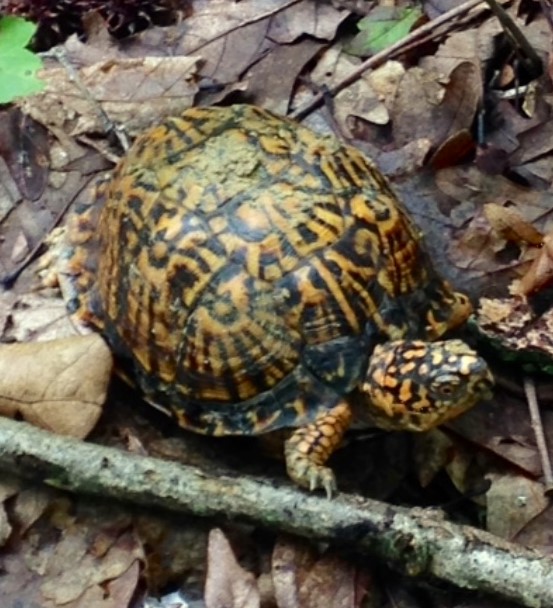
I first paid attention to them when I was a summer research assistant during graduate school. The professor I was working for eschewed buying lab animals. Instead, he had his graduate students do things like trap dump rats. One spring, he had his students collect box turtles from roadsides and fields for a class project. I worked for him the following summer.
The brick animal holding building near the river was old, dim, and dank. I worked in the basement where the box turtles lived in a huge terrarium. We fed them lettuce, blueberries, and raw hamburger.
I set up a T-maze, which looks just like it sounds. As I recall, the stem as well as each arm was two feet long. One arm led to food; the other arm led to a drop-off into a big box of shredded paper. I measured several things:
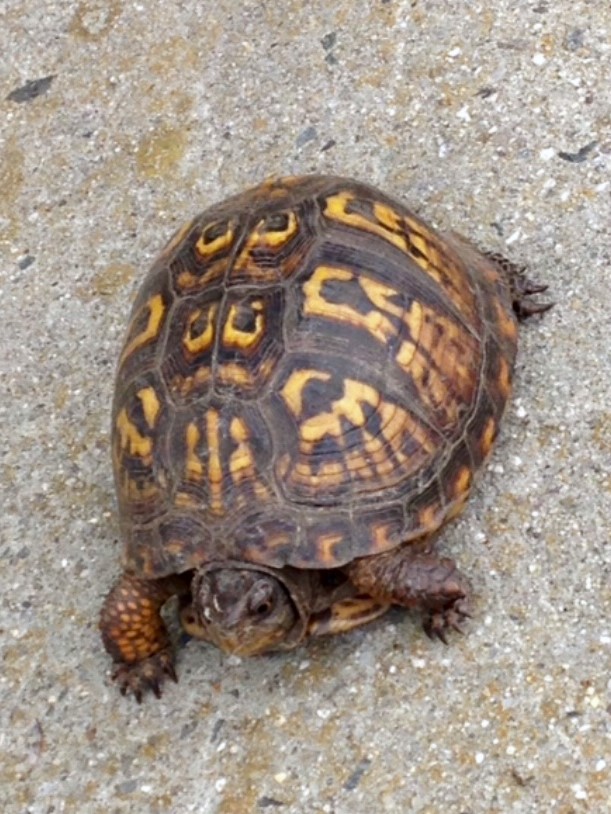
It was a l-o-n-g summer of l-o-n-g workdays. Sometimes, a single trial for a single turtle took more than an hour.
The hypothesis being tested was that the more VTE’s, the fewer trials to learn. Not supported.
However, over some weeks, we noticed aberrant behavior. For example, we saw several instances of males mounting males or turtles eating newly-laid eggs. So, we wrote a paper about the effects of crowding on eastern box turtles. As far as I know, that paper never saw the light of day.
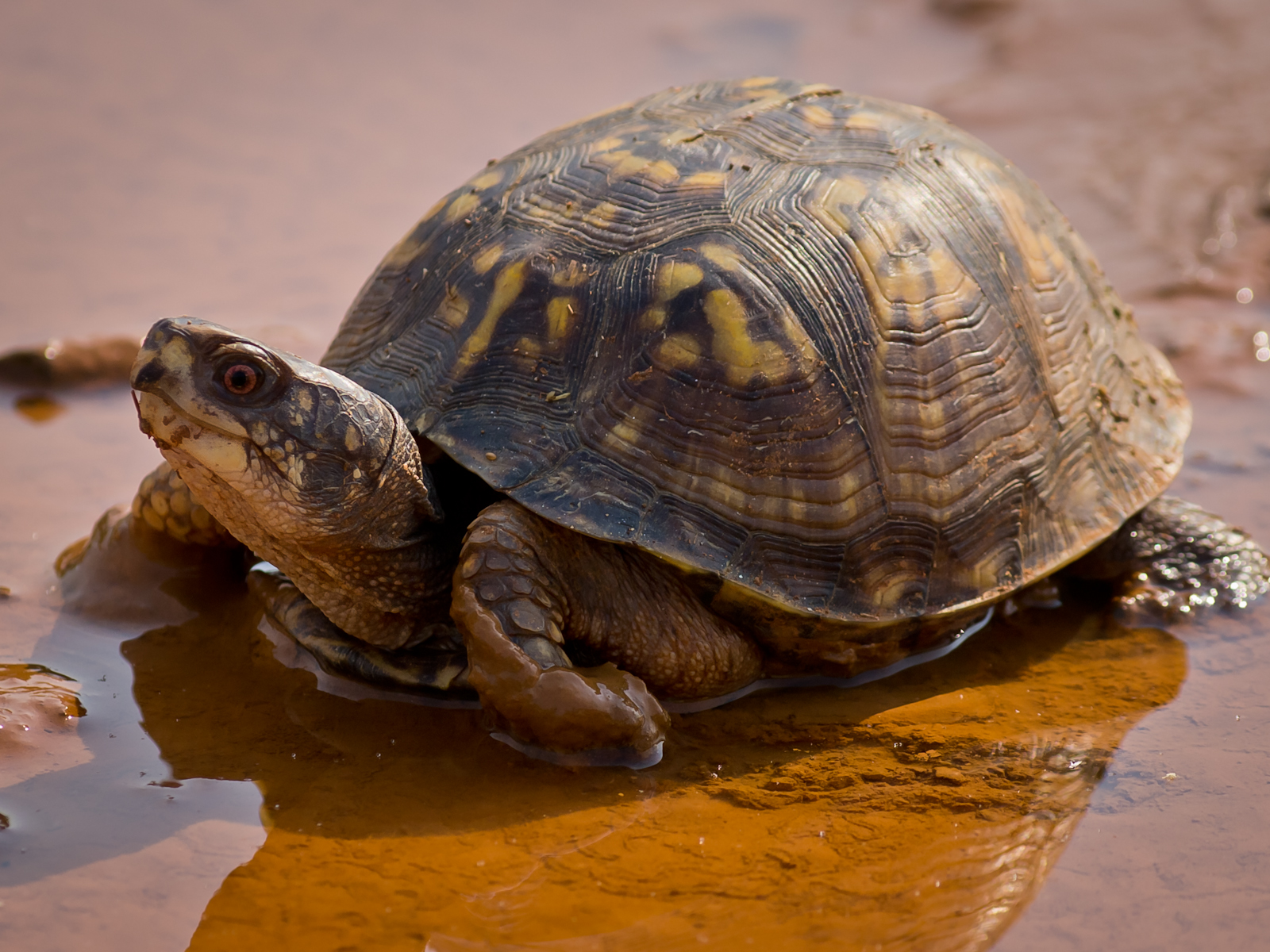
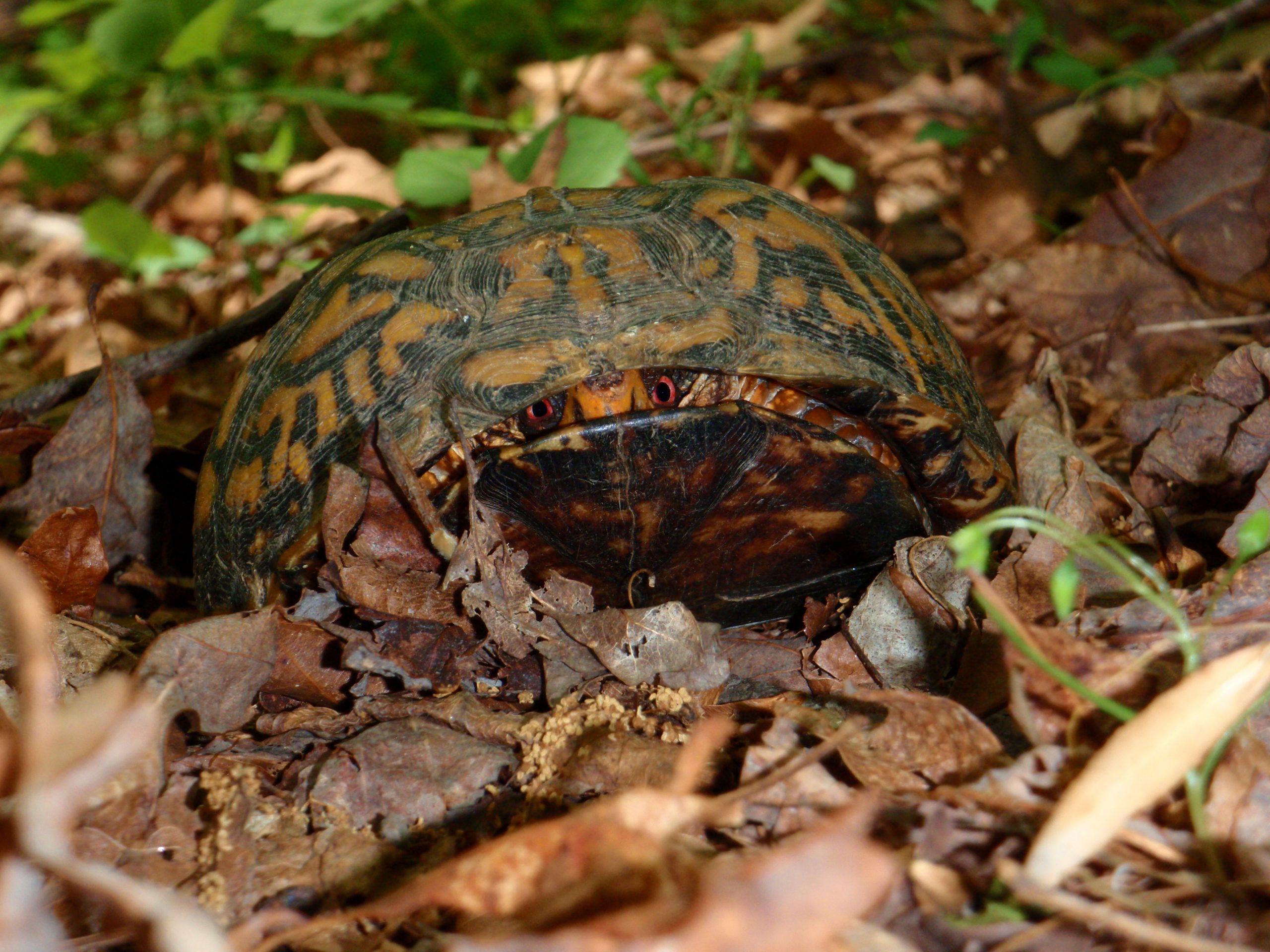
But I learned a great deal about Eastern Box Turtles that summer, starting with how to “sex” them, quick and easy: bright red eyes distinguish males from the brown-eyed females. In addition, male box turtles’ heads and shells are often more brightly and distinctively colored than females. The underside of female box turtle shells are flat; males are concave. There’s more, but not as obvious.
Subsequently, I’ve picked up a lot of interesting (to me) information. For example, the temperature of the nest determines the sex of the hatchlings; eggs incubated at 70-80 degrees Fahrenheit are more likely to be males, and those incubated above 82 degrees Fahrenheit are more likely to be females.
Periodically, I see eastern box turtles in my backyard. Once I saw two on the bank, mating. Never before, and not since!

.
Eastern box turtles live in a wide variety of habitats including forests, forest edges, meadows, and rural or suburban backyards. Depending on the habitat quality, Eastern box turtles can have a home range between 2 and 13 acres. If their habitat provides enough food, water, shelter, and occasional contact with other box turtles, they have all they need and rarely leave their home range.
Box turtles will always go back to where they are most familiar with their surroundings. Researchers call this adaptation homing behavior. Home ranges often overlap regardless of age or sex.
Actually, you shouldn’t disturb turtles in the wild. (Little did we know when embarking on the turtle project all those years ago!) Don’t disturb, pick up, or move a box turtle unless it has a visible injury or is in imminent danger. If you find a turtle in the road, move it to the other side in the direction it was going. Don’t attempt to relocate it. Turtles have small home territories and should be left where they are found.

Turtles typically show no antagonism toward each other. While aggression between individuals is uncommon, competing males will spar each other. This involves biting at each other’s shells.
Box turtles reach sexual maturity around age five. Mating season generally starts in the spring and continues through fall. After rain, males become more active in their search for females. Males may mate with more than one female or the same female several times. Females can store sperm for up to four years. They lay fertilized eggs at will, so they don’t mate every year. A female could lay fertile eggs up to four years after a successful mating!
In the wild, eastern box turtles walk energetically with their heads upright. They may walk about 55 yards in one day. A homing instinct helps them find their way back home. Box turtles generally live for 25-35 years but have been known to survive to over 100! They grow to only about 4 inches by six inches.
If you do need to pick one up, hold it like a sandwich with both hands.
And they like to be scratched with a stiff brush!
Eastern box turtles are omnivores, and in the wild eat whatever is available: a variety of plants, fruits, insects, fish, small amphibians, eggs, and even animal carrion. They can even eat mushrooms that are toxic to humans!
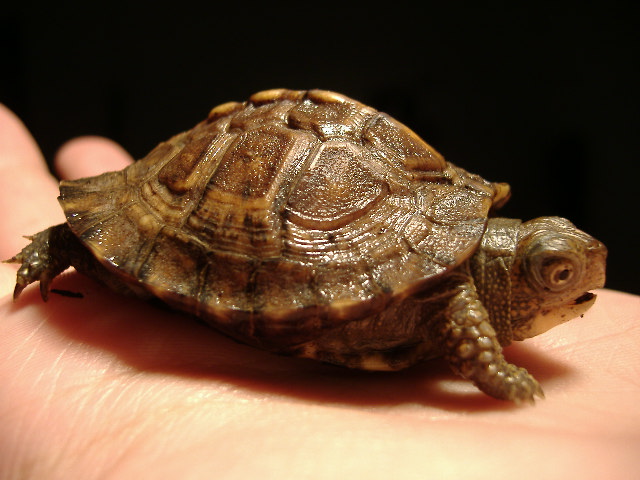
Younger box turtles grow very rapidly and tend to be preferentially carnivorous (for the needed energy). Younger turtles tend to be more carnivorous than adults, hunting in ponds and streams for food. After five to six years, they move onto the land and shift to a more herbivorous diet.
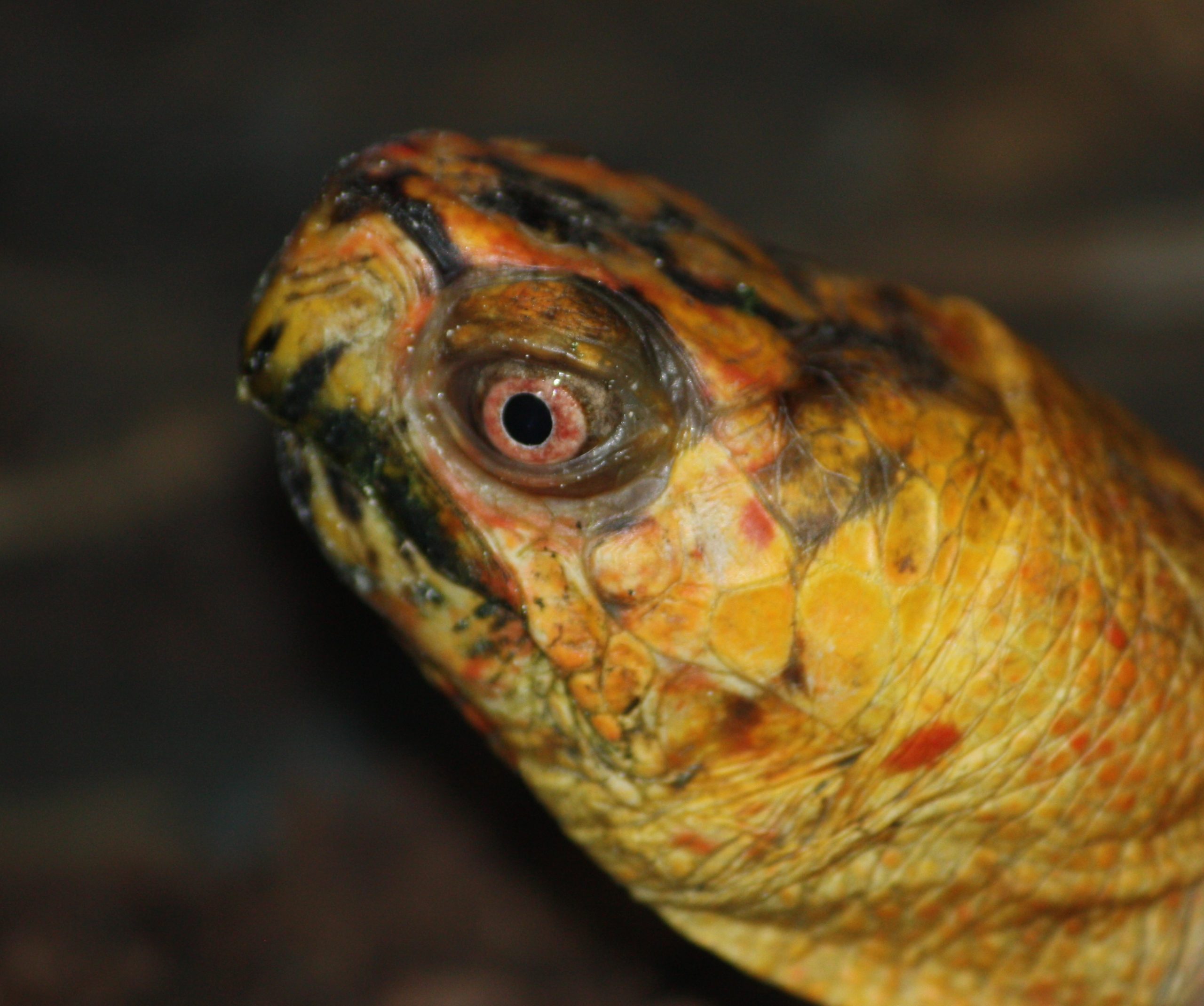
Box turtles have great eyesight for recognizing food surroundings, and potential danger. Not only can they tell the difference between ripe and unripe fruit, but they can also identify other individual box turtles based on the colors and patterns on their shells and bodies.
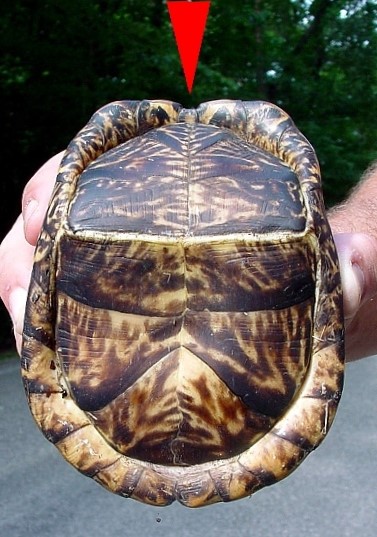
The underside of its shell (its plastron) is dark brown and hinged, which allows them to almost completely shut their shell. When threatened, the box turtle can pull its head and legs into its shell and wait for the danger to pass. Very few predators can effectively prey upon adult box turtles because of this technique.
Its shell is also unique in that it can regenerate. In one reported case, the carapace of a badly burned box turtle completely regenerated.
Wonderful as they are, box turtles are not good pets. They don’t like to be petted or handled, and without special lights they are prone to bone and other health problems. Also, most turtles carry salmonella infection asymptomatically, in that they do not show signs of illness, but can pass it on, which can be an issue for children, especially.
However, you can still have turtles around you! Turtle jewelry is easily found, and very variable. Just ask me! Besides the turtle image itself, the power of the metal and stones may be protective, too.

Besides appealing to me generally, I like the symbolism of turtles. Many Native American cultures believe turtles to have a strong and ancient understanding of the world they hold upon their shell. The Chippewa, Menominee, Huron-Wyandot, Abenaki, Shawnee, Lenape, and Iroquois tribes all have Turtle Clans. In other tribes, turtles represent healing, wisdom, spirituality, health, safety, longevity, protection, and fertility.
Many cultures associate turtles with water. Some concentrate upon the fertility that this connection can suggest.
In addition, some cultures view the turtle as a symbol of spiritual rebirth and transformation. The turtle has the ability to submerge underwater and then resurface, representing renewal and spiritual protection.

Around the world the tortoise and/or turtle can be seen as a symbol of wisdom and knowledge, and is able to defend itself on its own. According to Yoruba foklore, the trickster Alabahun is a tortoise who performs heroic deeds. In other traditions, turtles signify water, the moon, the Earth, time, immortality, and fertility.
The turtle is one of the Four Fabulous Animals of Chinese mythology, the ruler of the North. Seen in ways similar to those of Chinese tradition, the Japanese turtle spirit minogame (蓑亀) represented longevity, support, and good luck. Although they don’t have Eastern box turtles in China and Japan, they do have the Yellow-margined Box Turtle (Cuora flavomarginata).

Turtles in Oceania tend to be more representative of strength. According to Tahitian legend, the tortoise is the shadow of the gods and the lord of the oceans. Polynesian warriors would tattoo the symbol of the war god Tu on themselves, often in the form of a huge turtle.
Sometimes, a turtle’s strength and perseverance is marked on its shell. A folktale from the Amazon tells the story of how the turtle broke its shell when falling from the sky in an attempt to reach the King of Heaven. In Cherokee legend, the patterns on a turtle’s shell serve as a reminder of when the gods took pity on a turtle with a broken shell.
All in all, turtles are considered to be symbols of good luck because they embody positive qualities that are associated with prosperity, longevity, and perseverance.
Bottom Line: May turtles live long and prosper!

I think the best of people, always—until proven wrong. Maybe that’s why I believe that virtually all rudeness is unintended. If I’m right, why do so many people, so often, behave rudely?
Rudeness can take many forms. It is generally defined as a display of disrespect, a breaking of social norms or expectations, a breach of etiquette, or ignoring “accepted” behavior. It can also mean someone behaving inconsiderately or aggressively.
People are not always aware of how their words or actions are perceived by others, and they may not intend to be rude.
As with any other behavior, there are two dimensions to rudeness: intentional or unintentional, acts of omission and commission. In this blog, I’m dealing with unintentional acts of commission or omission.
By that I mean unintentional rudeness caused by something you did and rudeness resulting from something you failed to do. Either way, you didn’t mean to offend anyone, but offend them you did. It’s the perception of the other person that determines whether a statement or action is rude.
People like to feel that they matter. When they tell a story, or have a conversation, they like to feel that you care about it, and you’re interested in it. Most offense comes when you don’t show interest in their lives, or don’t show interest in what they’re saying.

Then there are occasions when you are rude by inattention, like getting into a checkout line without noticing that someone else was in line a step or two back.

Perhaps you’ve taken a seat where someone else was sitting when that person intended to resume the seat.
Consider a time when you had a cold, allergies, or similar symptoms. You coughed, sneezed, etc. You may have wanted to be friendly by shaking hands when leaving, but offering a germy hand is actually rude.
Many people behave these ways. To avoid being seen as rude, at least act like you care. Listen to people. Let them speak. Act like you care about what they’re saying. Give them positive feedback, like a smile, or nodding your head. This may seem fake, but it is social intelligence, which separates popular people from unpopular people. Popular people often understand how to make other people feel good, and most of all, they care enough to do it

Your cell phone rings at an inappropriate time—e.g., during a play, concert, lecture, because you failed to turn it off. You didn’t intend to be disruptive, but unintentional rudeness is still rudeness. And, unfortunately, it is very easy to commit.
Not responding promptly to an e-mail, text, or voice message. This kind of passivity is rude! (Note: promptness is a social construct and can vary widely. See below.)
Not responding/acknowledging what you consider a distant event but others see otherwise. For example, not sending a card (or check) when your sister’s stepdaughter’s stepson graduates from high school.
Not sending holiday greetings.
Not welcoming/admiring someone’s pet or plant, art or outfit, or the arrival of his/her twelfth great-grandchild.

The secret to not being rude by omission again lies in making other people feel like they matter. This can often be as simple as paying attention to what others see as important. If a friend mentions their pet lizard frequently, constantly sends photos of their garden, or voices worries about an upcoming medical appointment, they probably see those things as fairly significant. Acknowledging or asking about something subjectively important goes a long way toward establishing yourself as a polite person.
If someone sends you holiday greetings, send a message in response. If someone has done you a favor, thank them. Keep in mind that, if someone has to remind you about a message they sent or question they asked, perhaps they’re sending you a gentle message that they’d prefer more prompt responses from you.

Many things beyond our control can cause us to be rude unintentionally.

There can be cultural differences to consider as well. For example, in Japan, something as seemingly innocent as laughing with your mouth open is a no-no. In many areas of the Middle East, showing someone the soles of your feet is an insult. So, it’s important to be aware of these possibilities, especially if you are in a culturally diverse situation or setting.
And then there are sub-cultural differences. For example, among ladies of a certain age and upbringing, not sending hand-written thank-you notes is rude. But among teens or college students, a text saying “Thanks a bunch” is likely considered acceptable and sufficient.
Other behaviors particularly prone to sub-cultural differences or expectations include:
The best way to avoid being unintentionally rude is observing the current situation and picking up on social cues.
When trying to decrease rudeness around you, start by being a good role model. Don’t ignore it, because it won’t go away. Deal directly (but privately) with the culprit, perhaps by asking what the person intended; then follow-up with “When you xxx, it makes others feel yyy.”

Whether to apologize after realizing you’ve been rude is a personal decision. Depending on the seriousness of the offense, the relationship,
However, if you’re dealing with petty people, people who take offense just for the sake of being offended, don’t reward that behavior!

If you frequently feel you’ve been rude—or people have told you you are—and it is truly unintentional, consider whether there is a pattern to your rudeness.
Finding patterns may help you find a root cause and deal with it.
In addition, my advice would be to be present. Pay attention to people and what they are saying. Look for social or situational cues. Avoid simultaneously trying to solve some other problem on your mind.
Finally, assume other peoples’ rudeness is unintentional and don’t take offense if you can manage that.
This isn’t something I’ve taken up here. But in my opinion, those behaviors might better go by a different name. “Rudeness” can be a way to display power within a family, social or work setting. Or it could be an attempt to get your own way on something. Or maybe you could be trying simply to provoke a reaction.
This is closely related to bullying.
Then there is “mean” behavior which aims to hurt or deprecate someone.
Alternatively, being deliberately offensive can be a way of discouraging future interactions.
Bottom Line: Rudeness is everywhere. In my opinion, it’s usually unintentional. My rule of thumb: If small children do not die, it isn’t really important. Chill.

