A horrendous bout of bronchitis has plagued me for weeks, going from bad to worse. I’m talking about coughing so long, hard, and often that my entire ribcage ached. I’m talking about such congestion that every time I changed positions, I could hear as well as feel fluids sloshing around in my lungs and sinuses, and would cough all the more. I’m talking about flushed face and frigid fingers. I’m talking about no energy, and sleeping (albeit poorly) twenty hours a day, till my whole body felt stiff and sore from lack of movement. (Yes, oh, poor me!)
At times like these, I like cold drinks, something warm and cozy to wrap up in, and no body bugging me with, “How are you feeling?” And as I sleep less and ache less, I like comfort reads.
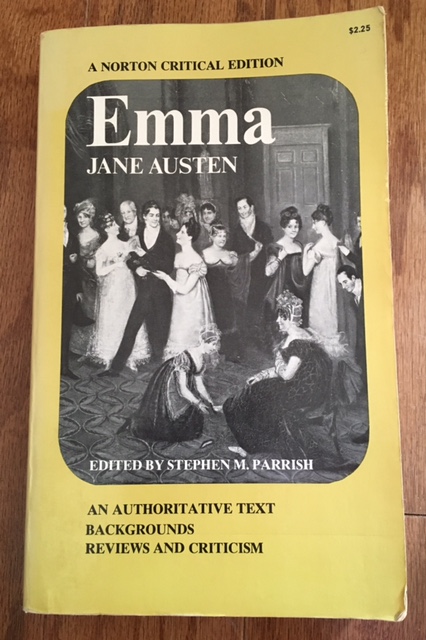
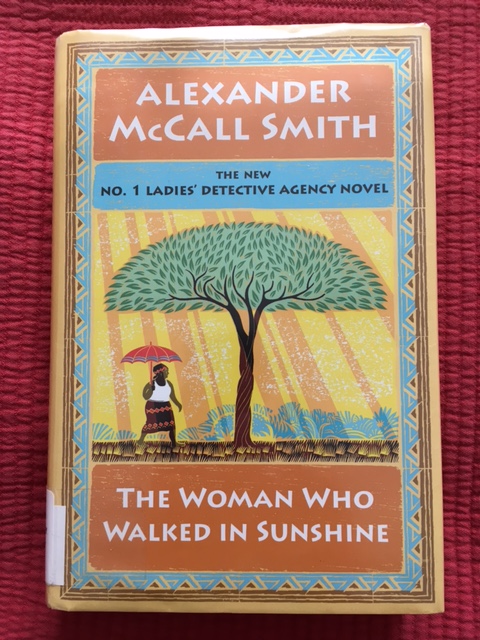
A prime requirement for my sickbed reading is familiarity. Hence, Jane Austen is a go-to choice. I know what’s going to happen and that all anguish will come to naught. I can even get this sort of read with a Jane Austen fan fiction variation. The characters remain the same and the action is still low-key. Which brinks me to another criterion for sickbed reading…
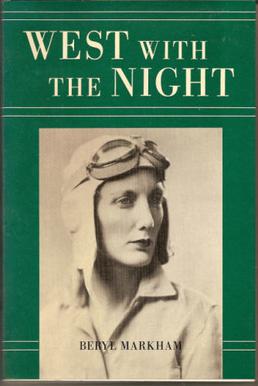
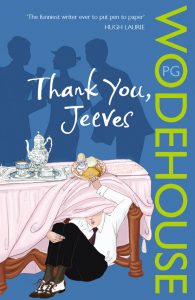
A second criterion for my good sickbed read is that it be low-key. Absolutely no action/adventure here. Consider Markham and Bryson. I want the emotion to be relatively mild and generally upbeat.
[Source: Tui Books]
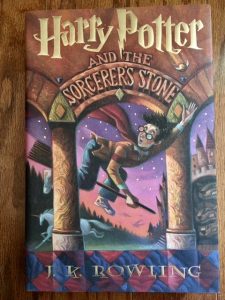
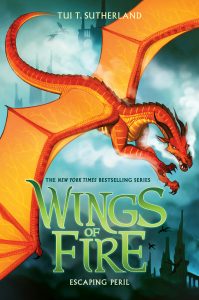
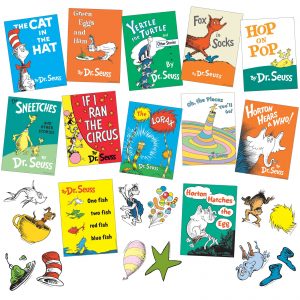
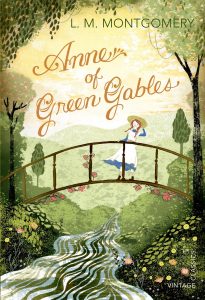
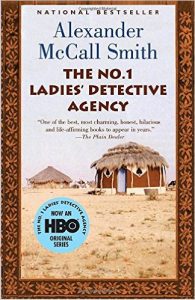
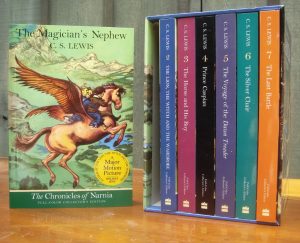
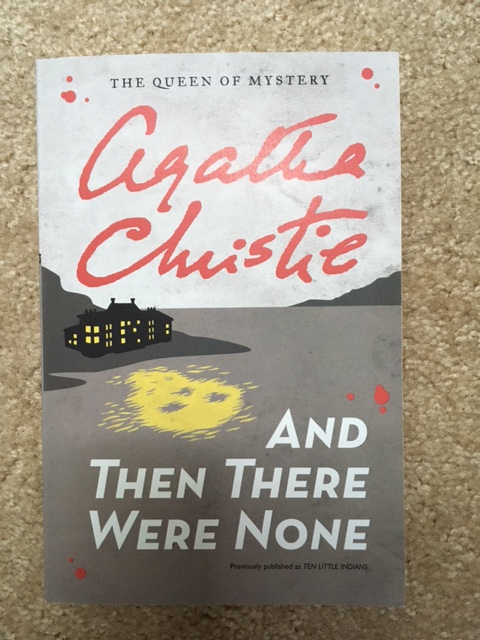
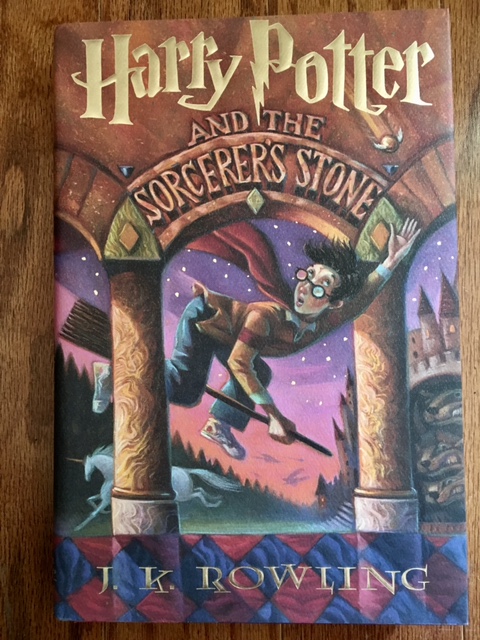
I’m not alone in these criteria. I have a granddaughter who recently reread Harry Potter while ill, and her sister reread the Wings of Fire series. Various friends and acquaintances go off in various directions. Here are some of the most popular, returned to again and again.
I’ve turned the corner on this bronchitis—I hope and trust. I’m ready to rebuild my sickbed shelf for next time. What do you read when you’re sick? I’d love to know.
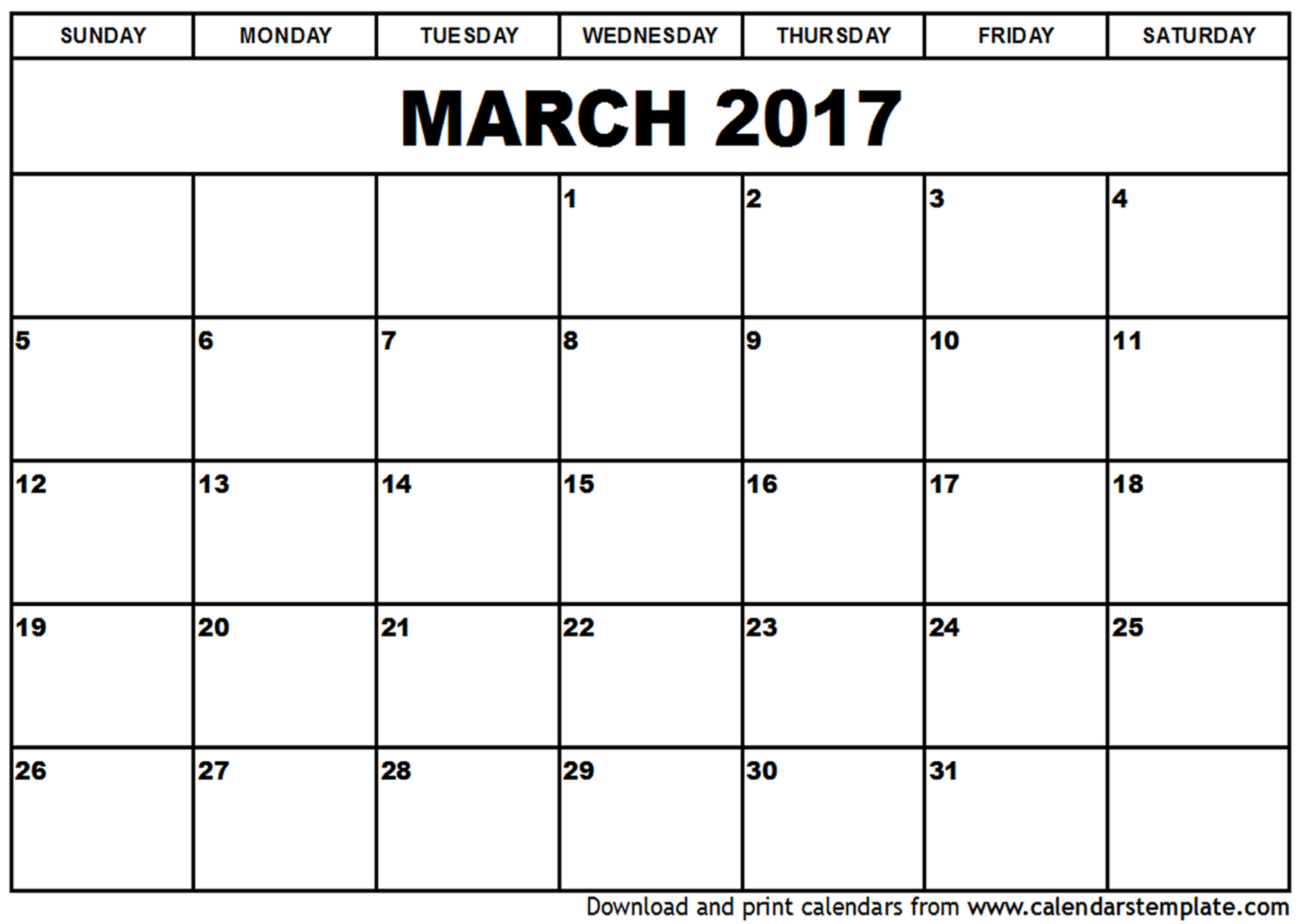
[Source: printablecalendar.com]Yes, March 3 is International Ear Care Day. It’s also Bonza Bottler Day—the day of the month when the number of the day is the same as the number of the month—which is as good an excuse for a party as any. But it is so much more than these! March is rife with awareness and celebration, and these are golden opportunities for writers. Celebrations make excellent background for conflict, humor, intrigue, and the revelation of character.
Here, for your writing and partying pleasure, is a list:
Allport Syndrome Awareness Month coincides with National Kidney Month to raise awareness of kidney disease and the benefits of organ donation.
American Red Cross Month, to make people aware of the activities and programs of approximately 600 offices nationwide.
Celebrate Your Name Week (first full week in March), to honor your name and make sure it is a respected part of your personhood.
Colic Awareness Month, to educate parents on safer soothing techniques. Colic is defined as an otherwise healthy baby crying for three or more hours a day, three or more days a week, for three or more weeks in a row.
Colorectal Cancer Education and Awareness Month, focusing on the need for early diagnosis, education, and treatment.
Credit Education Month, designed to remind people of the need to develop skills needed to manage their finances efficiently and effectively.
Employee Spirit Month urges employers to do things to raise the spirits of their employees. Duh! Apparently holiday office parties aren’t enough.
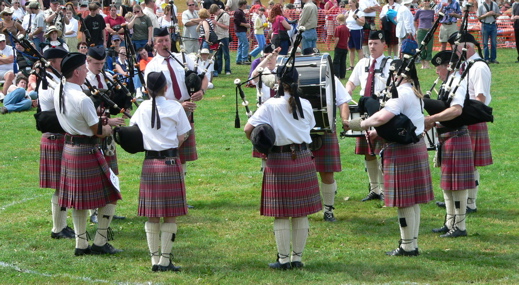
Mad For PlaidMonth: We think of plaid as originating in the British Isles, but it was really in Central Europe in the sixth century BCE. Consider more than Black Watch. Go for madras, gingham, check, as well as tartan.
Malignant Hypothermia Awareness and Training Month: Malignant hypothermia is is a reaction to commonly used volatile gaseous anesthesia, and untreated can kill a person within minutes.
Music in Our Schools Month to increase public awareness and support of music as part of a balanced curriculum.
National Caffeine Awareness Month is intended to reduce dependence on caffeine.
National Cheerleading Week (1-7)—exactly what the name says.
National Clean Up Your IRS Act Month is to focus on resolving problems with the IRS.
National Colorectal Cancer Awareness Month—exactly what the name says.
National Craft Month lauds the fun and creativity of crafts and hobbies.
National Eye Donor Month: You can figure this one out! Coincides with Save Your Vision Month and Workplace Eye Wellness Month.
National Frozen Food Monthtouts convenience, quality, and nutrition.
National Multiple Sclerosis Education and Awareness Month: The aim is compassion as well as awareness.
National Nutrition Month—as if anyone doesn’t know about the importance of nutrition for good or ill!
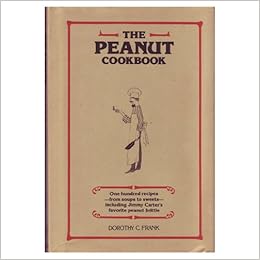
National Peanut Month promotes peanuts in all their glory, from in the shell to pie. (I have an excellent recipe for peanut pie from ThePeanut Cookbook.)
National Procrastination Week (1-7) celebrates the benefits of procrastination—but might also interfere with other activities of the month!
National Umbrella Month honors one of the most versatile and underrated inventions of all time.
National Women’s History Month celebrating women’s contributions and achievements that are too often overlooked or ignored.
National Write A Letter of Appreciation Week (1-7), though I suppose in this day and age, an email of appreciation is more likely.
Optimism Month: Research documents that optimists have better health, greater prosperity, and are happier than pessimists.
Play-The-Recorder Monthbrings public performances in places such as libraries, bookstores, museums, and shopping malls. You might even find a workshop on playing the recorder.
Poison Prevention Awareness Month is for the prevention of accidental poisoning.
Professional Pet Sitters Week (first full week in March): Yes, people really do make a living this way. Imagine the opportunities for everything, from romance to murder!
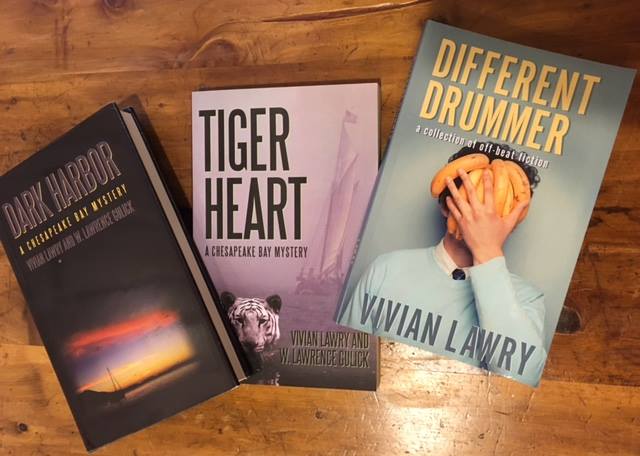
Read an E-Book Week:Self explanatory. Why not try Different Drummer?
Return the Borrowed Books Week: Think personal loans as well as libraries.
Sing With Your Child Month promotes families singing, dancing, and making music together.
Social Work Month celebrates the services social workers provide to vulnerable populations.
Telecommuter Appreciation Week focuses on the benefits to workers, families, employers, and society.
Vascular Anomalies Awareness Month includes hemangioma, malformations, and tumors. Who knew?
Youth Art Month promoting the value and importance of art and art education for children and youths.
Should you accept the challenge of writing a March scene, story, or poem based on something in this list, you can find out more about any or all of them online. Cheers!
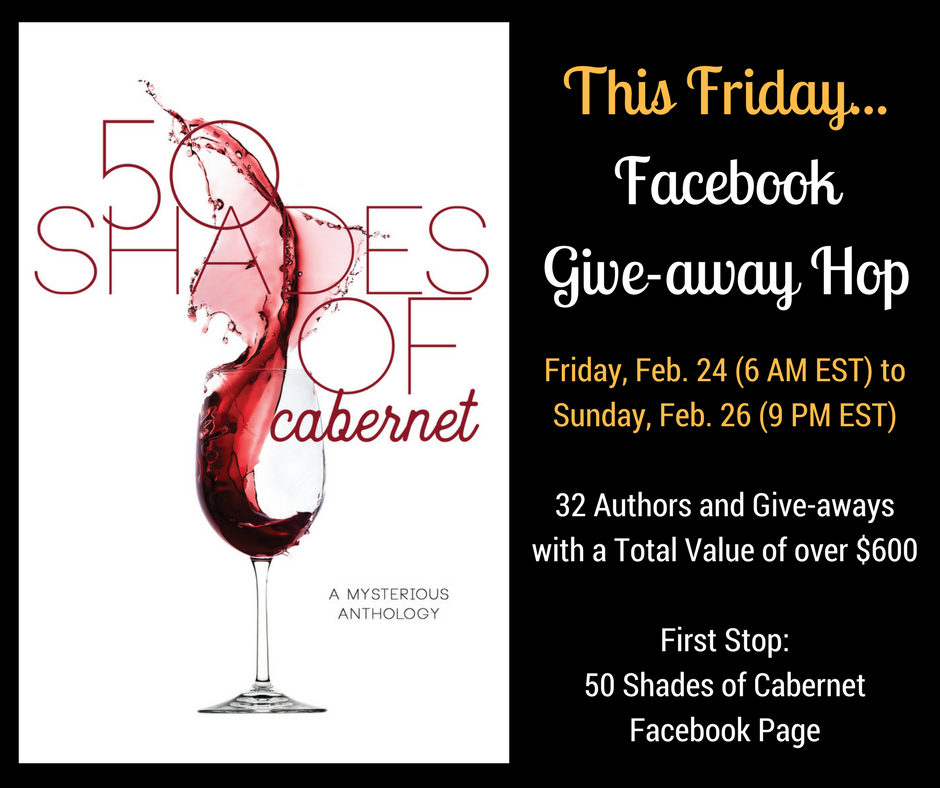
This past weekend I participated in a Facebook Hop to help promote the 50 Shades of Cabernet mystery anthology which is about to be published. It was a first for me. People were encouraged to hop from one FB page to the next and register for whatever that person was offering. It seems to have been very popular.
My giveaway was signed copies of my books. In order to qualify, I asked people to answer the question, “If you could be reincarnated as any writer, any time, anywhere, who would it be? Why?” Given that this was associated with a mystery anthology, it isn’t surprising that many people cited mystery writers. But not all! Here, in alphabetical order, are all the writers mentioned.
Jane Austen—who can count the reasons?
Agatha Christie—a classic choice by several for reasons from youth reading, to she went to exotic places, to she solved crimes before technology
Beverly Cleary—even though she’s still alive
Blaise Clement—b/c her pet sitting books are great
Jackie Collins—b/c her books are fun
Michael Creighton—b/c the reader learns something new in every book
Tim Dorsey—b/c he seems to really enjoy his life
James D. Doss—writes clean mysteries with hilarious acerbic asides
Jessica Fletcher—b/c she is fictional and will live forever!
Dick Francis—b/c he got to ride horses, worked for the Queen, and lived a long life
Robert Frost—b/c his poetry is wonderful
Homer—and who needs a reason?
Colleen Hoover—b/c she is just damned AWESOME
P.D. James—insert your own reasons
Carolyn Keene—b/c she was a favorite youth read (for more than one responder)
Alexander McCall Smith—b/c he’s charming, witty, and down-to-earth (listed here b/c his last name is McCall Smith)
Margaret Mitchell—b/c of Gone With the Wind and loving the Civil War
L. M. Montgomery—b/c she lived on Prince Edward Island
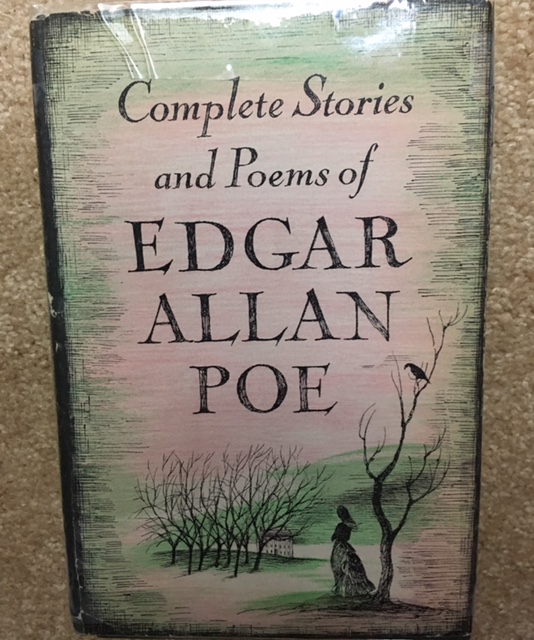
Edgar Allen Poe—b/c of his fascinating imagination
Mary Roberts Rinehart—b/c she was such an interesting woman
Nora Roberts—b/c I love her book
J. K. Rowling—right before she became famous for Harry Potter
Ann Rule—b/c she has a really special mindset
Dr. Seuss—b/c of his wonderful imagination
Anna Sewell—wrote Black Beauty, etc.
J. R. R. Tolkien—b/c he has a rich imagination
Laura Ingalls Wilder—b/c she wrote what she lived
Virginia Woolf—b/c she felt so deeply and expressed those feelings wonderfully
I’ve edited some of the responses to fit the “because” format, but tried to keep the meaning. All of these come recommended. Why not pick up an author you haven’t read?
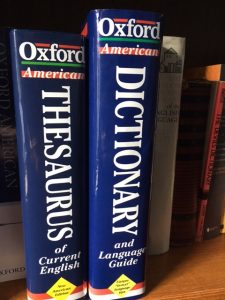
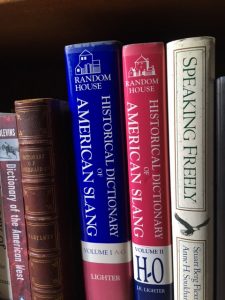
During my first trip abroad, I was amused to learn that Europeans make a distinction between speaking English and speaking American. No doubt I was just naive. This was before I started collecting dictionaries, or surely I would have noticed.
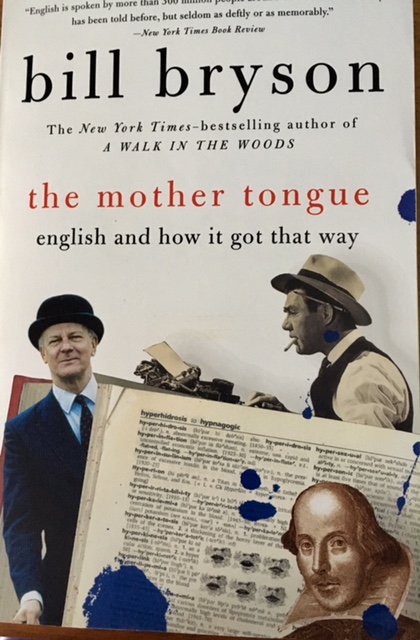
It was sometime later that I read Bill Bryson’s wonderful book The Mother Tongue: English and HowIt Got That Way.
Bryson leads us on a wonderful romp through English from the beginnings of language to its future. It’s a laugh-out-loud read, but fair warning: there is a lot of information here. My sister-in-law never finished it, she said because she could never remember all that detail. I read it for the laughs and the big picture, so no problem.
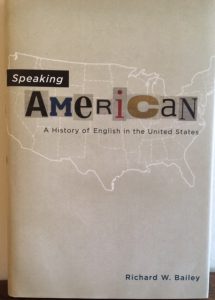
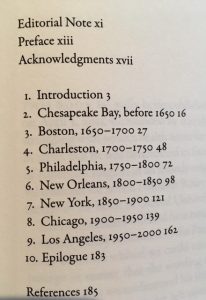
Bryson’s book was published in 1990, and it’s still a great read. Richard W. Bailey’s Speaking American was published in 2012, and is more focused. As you can see from the Table of Contents, he follows a timeline by exploring key cities. Bailey was a long-time professor at the University of Michigan, and his book is academically solid—but it’s very accessible and much more entertaining than you might expect!
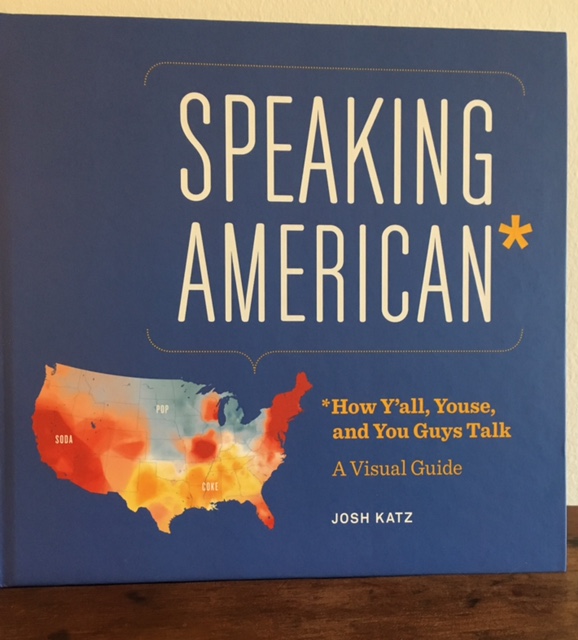
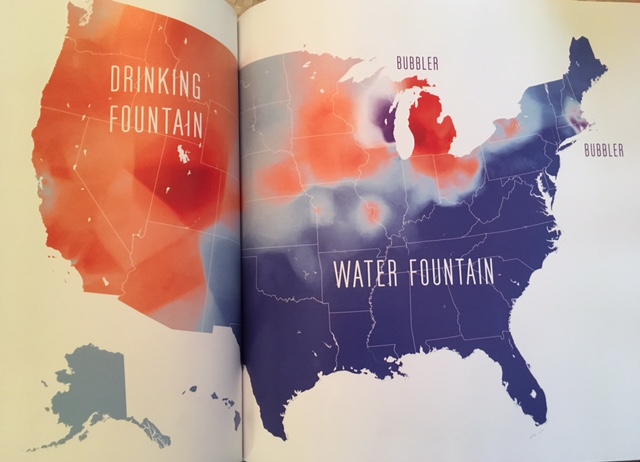
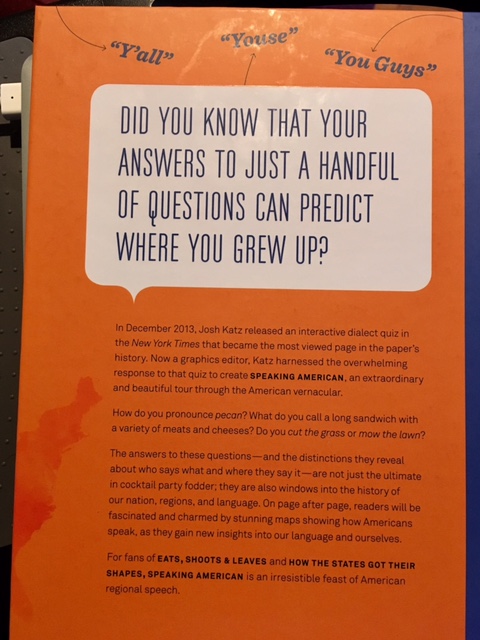
So why did I start this blog with an image of Speaking American?Because this is a book writers can use as well as enjoy! As the cover indicates, it is a visual guide. In Speaking American* How Y’all, Youse, and You Guys Talk, Josh Katz highlights some of the myriad quirks of American English and literally shows you where people talk that way.
For example, he gives the big picture of where people say drinking fountain versus water fountain, but also the really weird spots (my label) in Michigan and New England where they say bubbler. Think what a delightful detail that could be if you have a scene set in a bubbler locale.
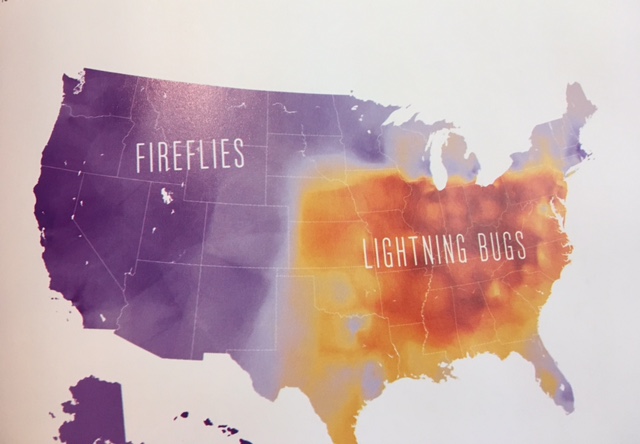
You can glean other helpful details as well. For example, besides knowing where, in general, people say firefly rather than lightning bug, you can also get down to very specific locales.
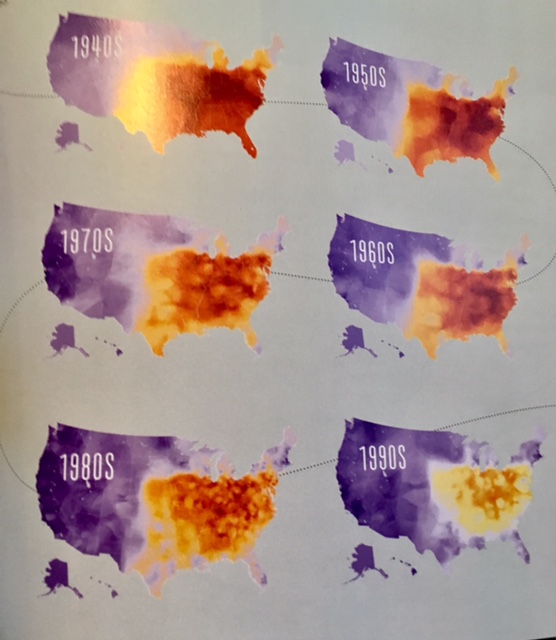
And you can choose a label according to the time when your story is set.
I grew up saying lightning bug. I mourn that they seem on their way to language extinction.
Finally, by cross-referencing, you can learn whether the same people who are likely to cut the grass (as opposed to mow the lawn or mow the grass) are likely to be wearing tennis shoes, gym shoes, or sneakers; would refresh themselves with soda, pop, or coke (not necessarily Coke); and spend time catching crayfish or crawdads. This book is a writer’s delight. Even if you don’t need or want it to write authentic dialogue, it’s a fun read and is likely to make you appreciate even more the nuance in the stories you read.
Here’s a name you should know: Alexander McCall Smith. He is a British author—a prolific British author—born in Zimbabwe, best known for his #1 Ladies’ Detective Agency series. The series features Precious Ramotswe and contains 17 books to date, all set in Botswana. Some of these were presented on HBO.
My sister-in-law lived in this area of Africa for seven years, and she said the depictions are absolutely authentic. But McCall is so much more than one series! His writing is excellent, his characters grab your heart, he uses lots of humor, and he’s an all-around feel-good read!
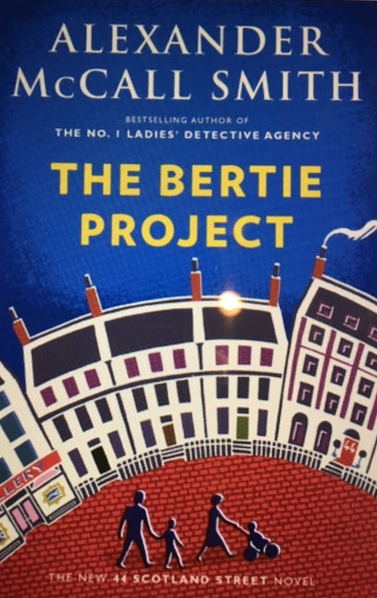
Set in Edinburgh, the 44 Scotland Street series contains 11 novels, with wonderful people portraits and gentle satire. Bertie is the center of it all.
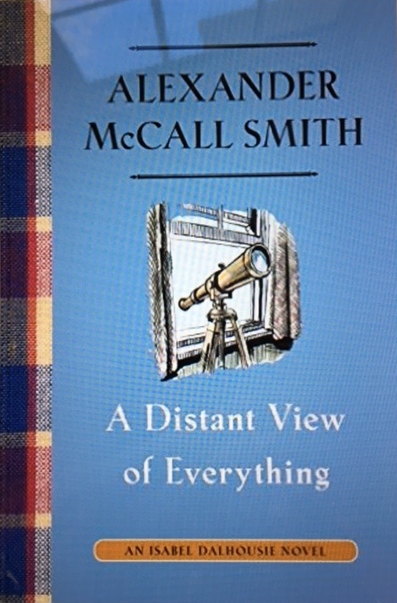
Also set in Edinburgh, The Sunday Philosophy Club series, featuring Isobel Dalhousie, contains 14 books. Isobel is a professional philosopher and amateur sleuth. USA TODAY said “Isobel is a force to be reckoned with.” NEWSWEEK said, “Remarkable. . . [Isobel] is such good copany, it’s hard to believe she is fictional.”
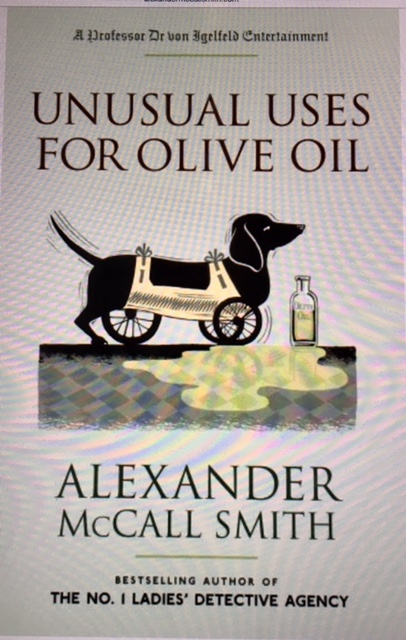
Professor Dr. Von Igelfeld is the somewhat bumbling academic sleuth in the Portuguese Irregular Verbs series. Only 4 books to date, but we can hope for more. I don’t know what McCall’s experiences are with his setting in Germany, but he certainly nailed the academic politics and atmosphere!
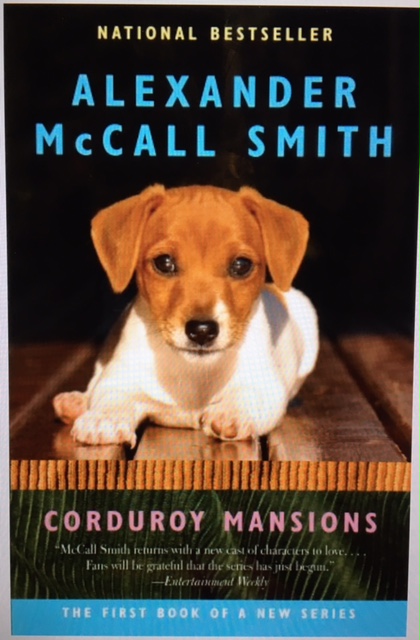
So far there are 3 books in the Corduroy Mansions series. The location is Pimlico; the cast of characters are the residents of Corduroy Mansions, plus McCall Smith’s first canine star, Freddie de la Hay.
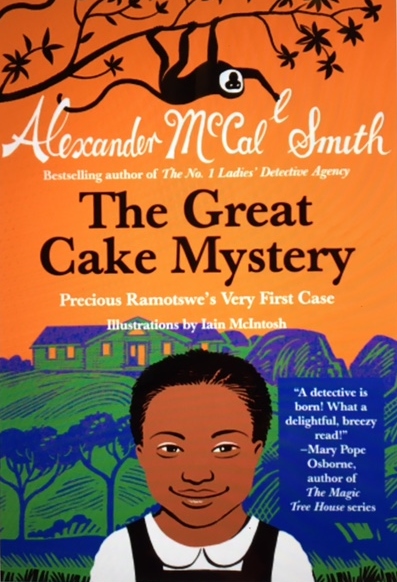
McCall Smith has written 5 books in two series for children: School Ship Tobermory Children’s Series and the Precious Children’s Series/Precious Ramotswe Mysteries for Young Readers.
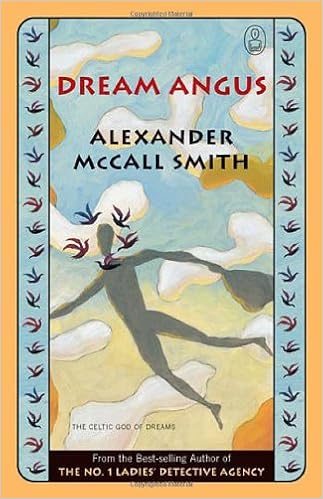
As if all of that were not enough, Alexander McCall Smith has published 11 stand-alone books, set in various times and places. For example, Dream Angus is set in twentieth-century Scotland. Dream Angus comes at night bestowing dreams. He’s also the god of love, youth and beauty. Magical realism, anyone?
TWO REASONS TO READ ALEXANDER McCALL SMITH: 1) If you like series, you can stick with him for a long time, and 2) if you are a writer, skip hither and yon among his offerings to sample one writer’s diversity.
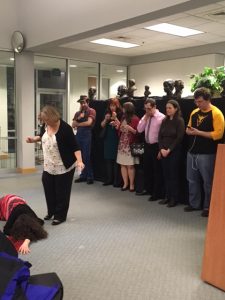
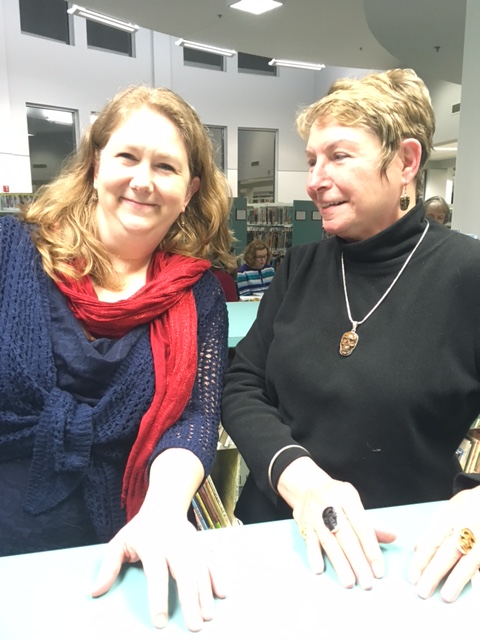
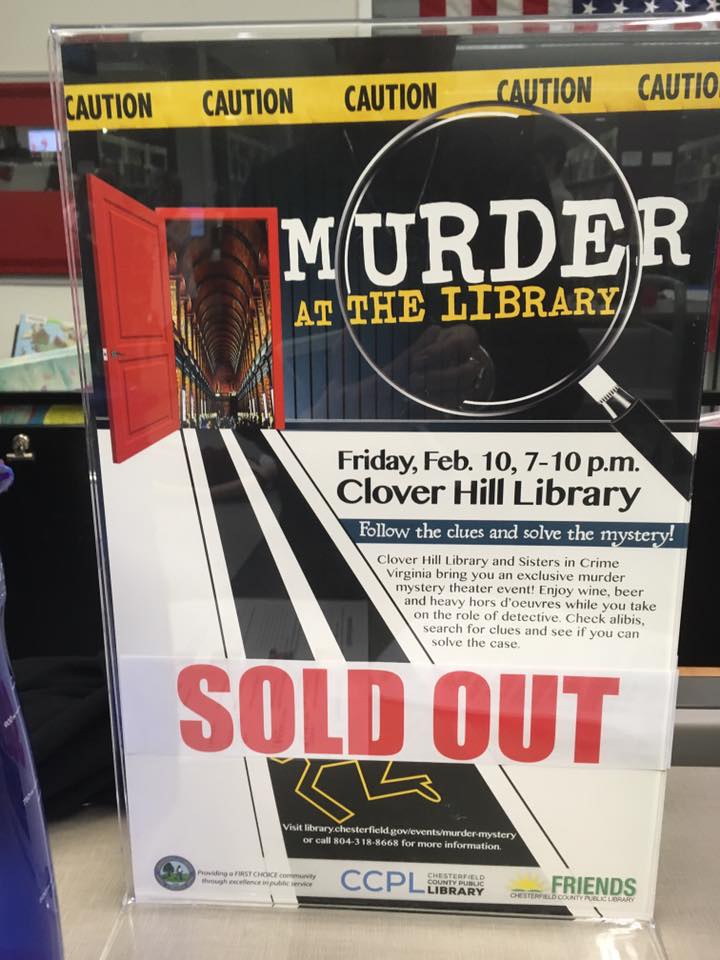
It wasn’t a dark and stormy night, but a week ago tonight was perfect for murder. For the second year, Sisters in Crime/Central Virginia worked with Clover Hill Library for their Friends of the Library fundraiser, Murder at the Library.
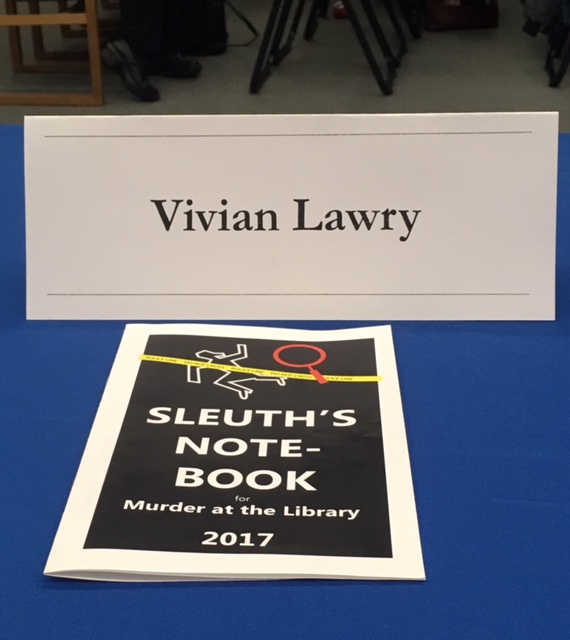
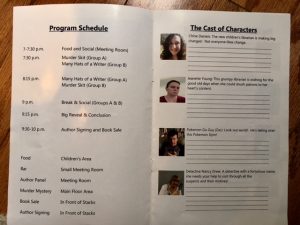
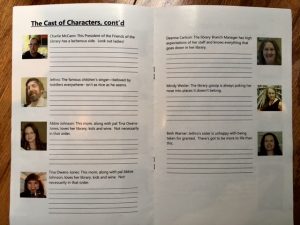
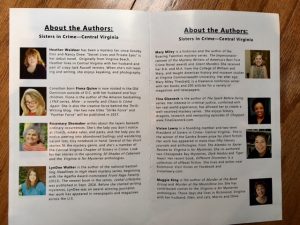
I can’t rave too much about this event. It was very well organized. For one thing, they provided a sleuth’s notebook that included photos and thumbnail sketches of the potential suspects. In addition, it contained the program, author photos, and bios.
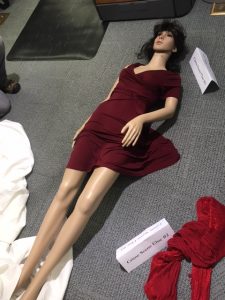
The skit ended with the discovery of the body.
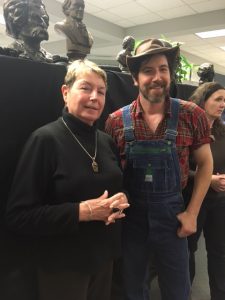
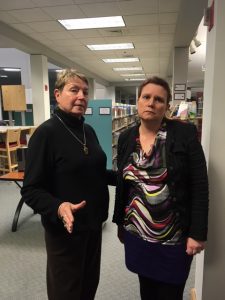
Then attendees mingled with the suspects, asking questions, gathering more info. Here you see me taking with the Branch Manager who had “borrowed” money from library funds to pay for her expensive red scarf. This would be the same scarf found near the body.
Then there were the lecherous president of the Friends of the Library rejected by the victim and the library gossip who knew the victim since college and held a grudge.
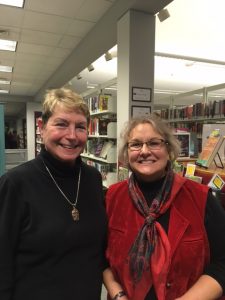
This famous children’s singer was the victim’s lover and an all around not-so-nice guy. Jeanette was grumpy because she hated change, and expected to get her old job back now that the librarian who had replaced her was dead.
And let’s not forget those not pictured! Pokemon Go Guy, two boozing mom’s on Xanax and wine, the singer’s sister, and Detective Nancy Drew who called on those present to help find the person who had motive, means, and opportunity.
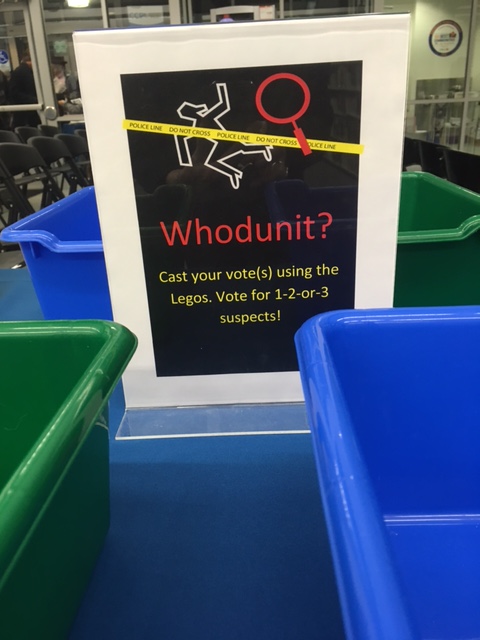
Votes were cast by tossing legos into the labeled bin of the suspect one favored, and reasons were given for the suspicions. I’m proud to say, I was right! (And no, I won’t name the killer.)
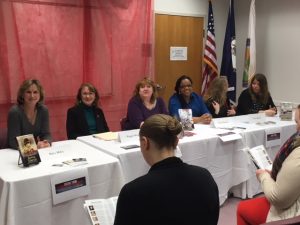
Several of the authors presented a discussion of the sub-genre’s of mysteries: Mary Miley, Maggie King, Heather Weidner, Tina Glasneck, Fiona Quinn, and LynDee Walker. Rosemary Shomaker and I facilitated the sleuthing.
Besides the pleasure of all the murder and mayhem, a ticket to this event allowed attendees to have heavy hors d’ oeuvres, beer, wine, and soft drinks. Watch for notices of the event next year and to be sure you don’t miss it, get your tickets early!
I have two favorite anecdotes about my children’s language. The first was when Helen was four and Sara was three weeks old. Helen had an appointment for her annual check-up and Sara had a terrible diaper rash, so we were on our way to the pediatrician’s office. Helen was anxious and asked question after question about what was going to happen. Eventually she asked whether he would see her first or Sara. I said, “I don’t know—whichever he chooses.” She said, “Oh. It’s his prerogative.” Yes, this really happened.
Time passed. When Sara was four and Helen was eight, I scolded Helen for hitting her sister and sent her to her room. Helen ranted about it not being fair, Sara had grabbed her book. Sara said, “But you hit me. You know the contingencies!”
Truth: I’ve sometimes told these anecdotes for their entertainment value. But I’ve recounted them here for different reasons. First: just because it really happened doesn’t make it believable. If you were to use this dialogue in a scene, you would have to lay the groundwork carefully. Let the reader know the parents are Ph.D.s who never talked baby talk to their children.You might want to let readers know that the father is an English professor and the mother a psychologist.
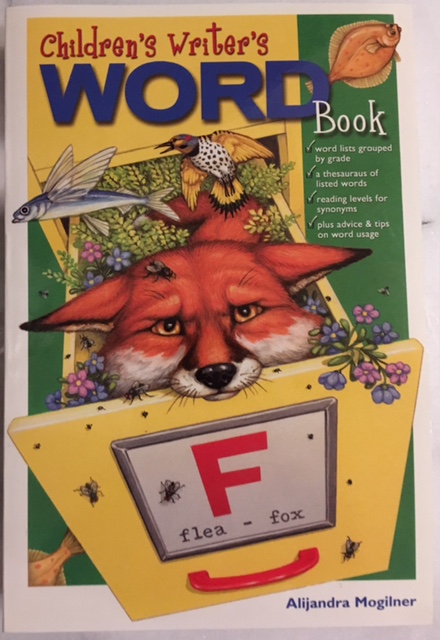
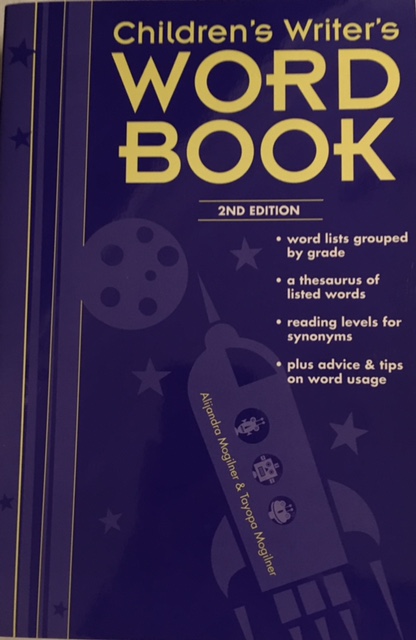
If you are writing stories for children or scenes involving children, choose your words carefully. There’s help out there. Although this reference is for people writing books for children, it’s a great resource for words children would understand and/or use. The words are grouped by grade level, beginning with kindergarten. It also includes synonyms.
Use the most recent word book you can find. A lot of words enter the language in fifteen years. Keep up.
These particular books start with kindergarten. For younger children, consult Dr. Spock or a good child development textbook. The usual tendency is to have children speaking too old for their years. But writers missing the target of believability ruins their credibility.
Not that these authors should be read only in February, but this is a great opportunity to sample authors you might not have read before. Choose any of the authors/books listed below and you can’t go wrong!
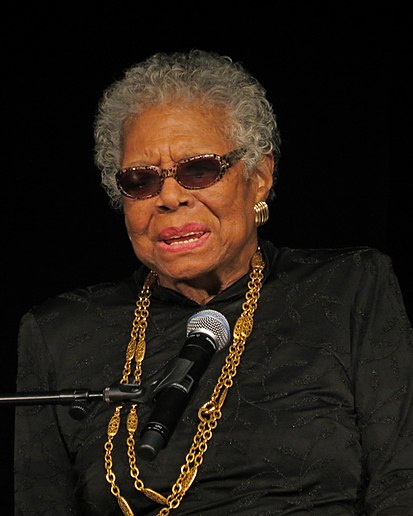
MAYA ANGELOU: I Know Why the Caged Bird Sings (autobiography—first of seven), Just Give Me a Cool Drink of Water ‘fore I Diiie (poetry)
JAMES BALDWIN:Go Tell It On The Mountain (novel), Giovanni’s Room (a novel dealing with race and homosexuality), and three collections of essays, Notes of a Native Son, Nobody Knows My Name, and The Fire Next Time
OCTAVIA BUTLER: Kindred and many others (science fiction). She’s won two Hugo Awards, two Nebula Awards, and was the first sci-fi writer to win a MacArthur fellowship.
RITA DOVE:Thomas and Beulah, Sonata Mulattica, Mother Love Poems, and others.Poet Laureate, her poems and essays are everywhere.
Rita Dove at 2012 Fall for the Book, George Mason University [Source: S L O W K I N G (Creative Commons)]
W. E. B. DU BOIS: The Suppression of the African Slave-Trade to the United States of America is still an authoritative work on the subject, The Emerging Thought of W. E. B. Du Bois: Essays and Editorials from “The Crisis” (essays)
RALPH (WALDO) ELLISON: Shadow and Act (essays), Invisible Man (fiction)
LANGSTON HUGHES: The Weary Blues (poetry), Not Without Laughter (novel). He’s also written plays, short stories, and several other books.
Langston Hughes photographed by Carl Van Vechten, 1936 [Creative Commons]
ALEX HALEY: The Autobiography of Malcolm X, Roots: The Saga of an American Family.
ZORA NEALE HURSTON: Their Eyes Were Watching God, but also more than 50 published novels, short stories, plays, and essays.
TONI MORRISON: The Bluest Eye, Sula, The Song of Solomon. She’s a Nobel Prize and Pulitzer Prize winning novelist.
Toni Morrison lecture at West Point Military Academy in March, 2013 [Creative Commons]
ALICE WALKER:The Color Purple (novel)—she won the National Book Award and the Pulitzer Prize for Fiction.
RICHARD WRIGHT: Native Son and Black Boy (novels), Uncle Tom’s Children (short stories)
THIS IS ONLY A SAMPLE! Explore and read, read, read.
I recently started reading Hillbilly Elegy by J. D. Vance. Change the names, and it could be my memoir!
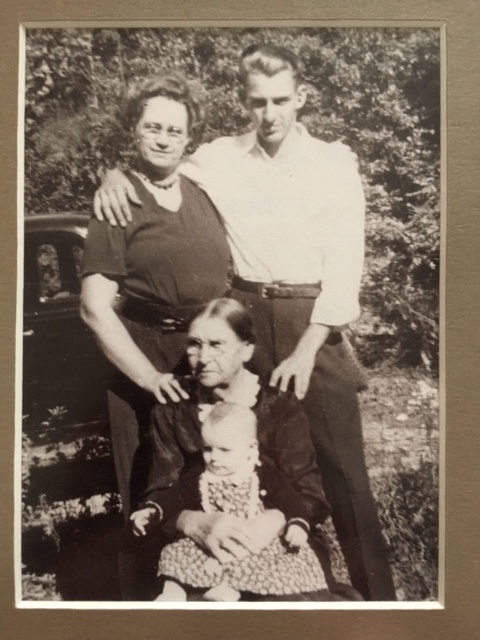
Yep. Roots in the hills of Eastern Kentucky. An old home place—where my paternal grandparents lived—in the holler at the head of Old House Creek. Granny Butcher, Granny’s mother, lived there, too. Here’s a picture taken in the yard there when I was a baby, me in Granny Butcher’s lap, with Dad and Granny standing.
To make Vance’s memoir my own would require a lot of tweaks. For example, it was my parents who didn’t finish high school. We both graduated from state universities in Ohio, but he went on to become a lawyer while I got a Ph.D. in psychology. Still, the broad picture is the same: unbreakable family ties, work-related migration from Kentucky to Ohio, and the emotional upheaval of upward mobility.
Which brings me to the point: good memoir evokes a strong emotional response in the reader. The basis of my response to Hillbilly Elegy is obvious, but there must be more to it than personal relevance. It didn’t become a bestseller on the basis of me alone! I was strongly affected by West With The Night (Beryl Markham) and Glass Castle (Jeanette Wall) without nearly so much shared history.
When you sit down to write memoir, start by asking yourself, “Why would anyone else care?” What is the emotional chord I am trying to strike? Horror or humor? Nostalgia or dysfunction?
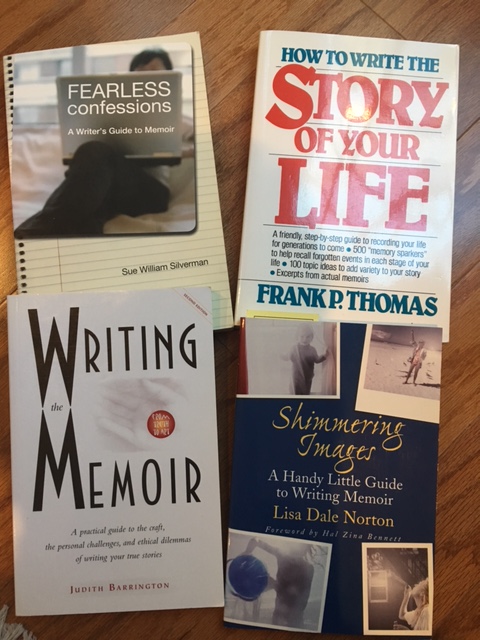
And then, get some guidance. Writing good memoir draws on many of the same skills required for writing good fiction. But there are some issues and concerns unique to telling one’s life story. There are tons of good books out there. Here are a few samples.
Memoir is the fastest growing genre among writers today. But if writing it isn’t for you, at least read some. And ask yourself, “Why do I care?”