RATS: WHO KNEW?

And who would want to?  
The Country Rat and the Town Rat

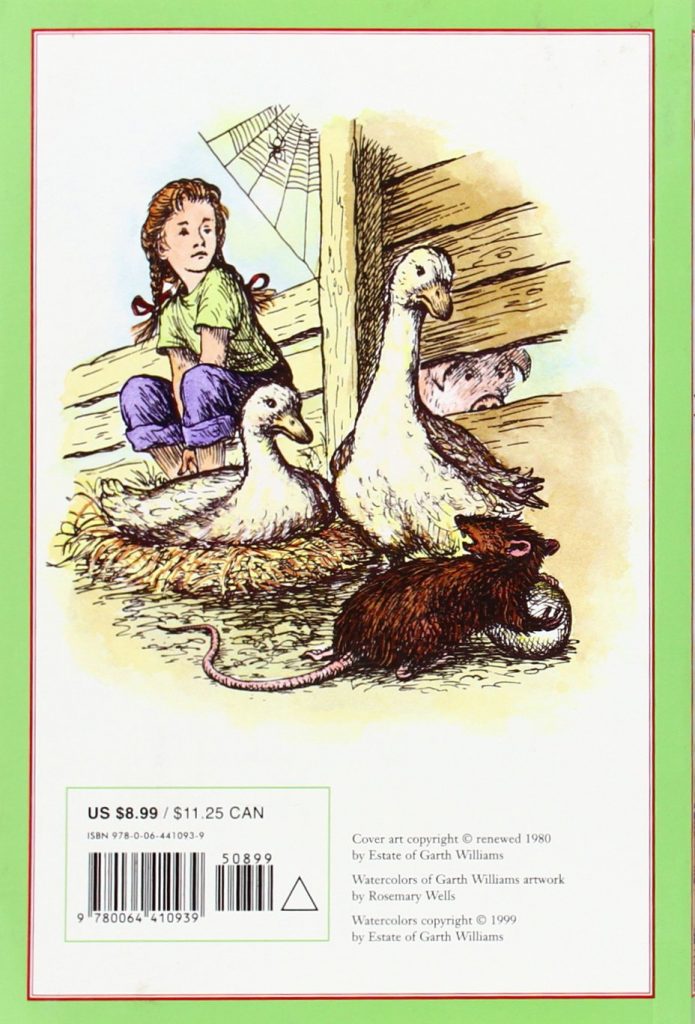
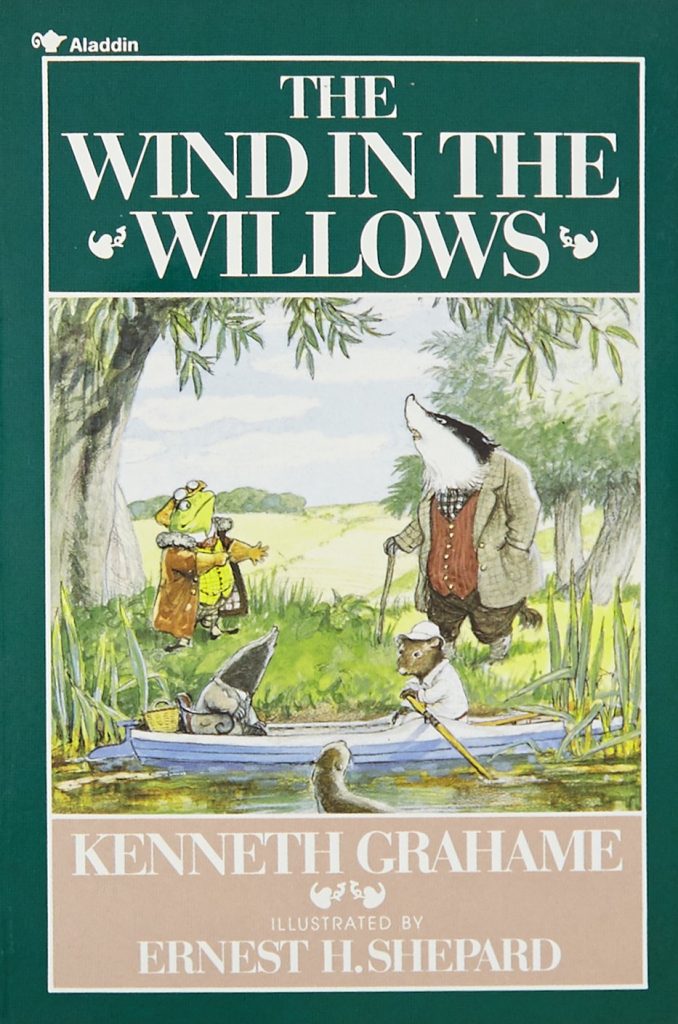
Writers, that’s who. Rats have long been characters—sometimes major—in literature old and new. Fables from around the world feature rats/mice and the moral usually relates to survival in one form or another.  In these fables, rats are often presented as clever and resourceful. Aesop’s Fables, the Fables of Bidpai, and Panchatantra all feature rats involved in moral lessons.

In some languages, rats and mice are interchangeable. When there is a distinction made, rats usually come off worse. In fiction and in popular consciousness, rats are almost always portrayed as more devious or dirty than mice.
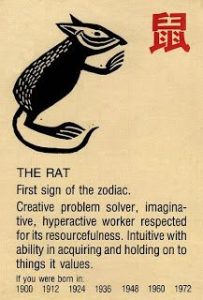
Rats are extremely important in Chinese mythology. The rat is the first of twelve animals in the Chinese Zodiac, corresponding to Sagitarius.  Both are assigned the traits of creativity, hard work, generosity, and optimism.

The Year of the Rat is reputed to be one of prosperity and hard work. FYI: 2020 is a year of the rat.  The rat rules daily from 11:00 p.m. till 1:00 a.m. and its season is winter. 

N.B. writers: if you are inclined to write a rat fable, this might be the place to start.

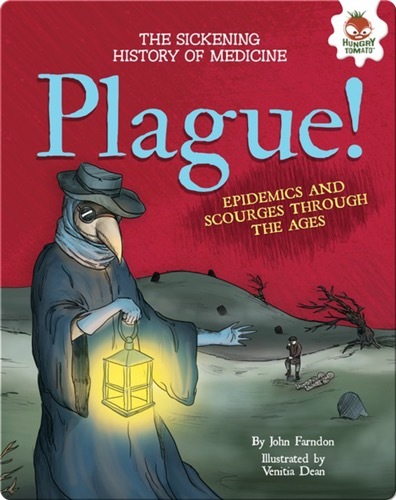
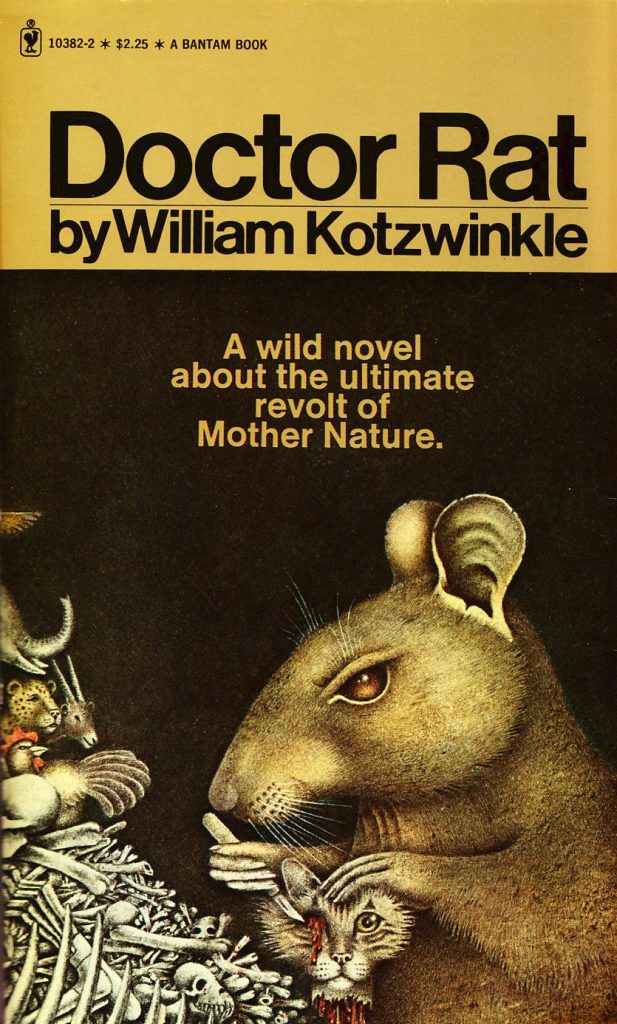
The German cover is so much more horrifying.

Often rats are included in stories to add a touch of horror to scenes involving dungeons, torture chambers, vampires, the unknown… Authors from Edgar Allen Poe (“The Pit and the Pendulum“), to George Orwell (1984) to Stephen King (“Graveyard Shift” and “1922,” for example) have made effective use of rats. Shakespeare included rats in eight of his plays. Perhaps the epitome of horror would be The Coming of the Rats by George H. Smith (1961), suggesting the aftermath of the H-bomb.
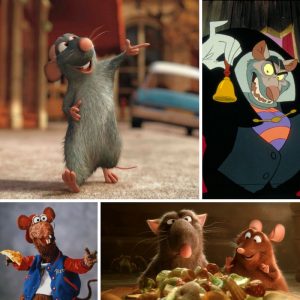
And of course, if it’s in books, it’s in movies as well. Think Indiana Jones and the Last Crusade.  Some movies, such as Ratatouille, Chicken Run, The Fantastic Mr. Fox, and Flushed Away, include rat characters who are funny and likeable in addition to being clever. Willard, Of Unknown Origin, and The Missing are Deadly are horror movies that focus on twisted relationships between humans and rats. Many films, especially The Food of the Gods, Deadly Eyes, Rodentz, and Rats: Night of Terror, focus on swarms of rats pitted against humanity.
Rats and mice are depicted very differently in The Secret of NIMH.

If you do write about rats, it may help to know the terminology.

  • A group of rats — a mischief
  • Male rat — buck
  • Female rat — doe
  • Infants — pups or kittens
  • Musophobia (suriphobia) — fear of rats and mice
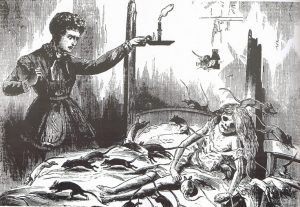
Rats have such a horrific reputation that threats of being eaten, taken, overrun, etc., by rats are a common tool used around the world to frighten naughty children into better behavior. In Canada—Newfoundland—rat threats were second only to bear threats, and twice as frequent as big fish (in third place out of seven). 

Writers consider the possibilities: “I’ve got an attic/cellar full of rats for naughty little girls and boys like you.”
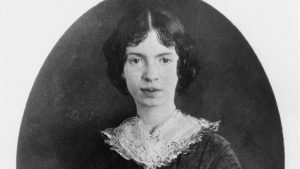
As mentioned above, rats are often depicted as smart, and turn up in unexpected places. Consider this poem by Emily Dickinson:

The rat is the concisest tenant.
He pays not rent—
Repudiates the obligation,
On schemes intent.
Balking our wit
To sound or circumvent,
Hate cannot harm
A foe so reticent.
Neither decree
Prohibits him,
Lawful as
Equilibrium.

Emily Dickinson

Rat Facts 

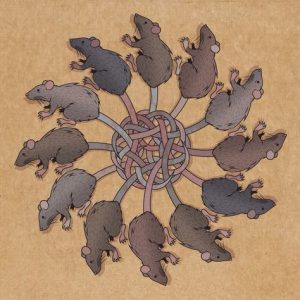
A Rat King was a group of rats whose tails were knotted together, often ascribed mystical powers by rat catchers.
  • Rats are everywhere in the world except Antarctica, where it’s too cold for them to survive outside and there are too few humans to provide for them.
    • In some places, especially islands, aggressive rat control policies have reclaimed the land.
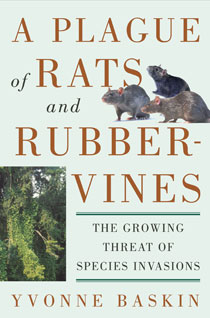
  • Rats are one of the world’s worst invasive species.
    • Transported around the world on ships, rats have been credited with the extinction of untold number of small native animals and birds.
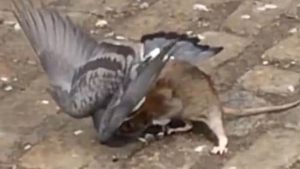
New York City rats can take down pigeons.
  • Rats often live with and near humans (commensals).
  • Rats carry many zoonotic pathogens, all sorts from The Black Death to foot-and-mouth disease.
  • Many rats in the wild live only about a year due to predation.
  • By and large, rat vocalizations are pitched beyond the range of human hearing.
  • Rats have been kept as pets at least since the late 1800s, most often brown rat species, and are no more of a health risk than cats or dogs.
  • Rats are omnivorous.
    • Rats are cannibals.
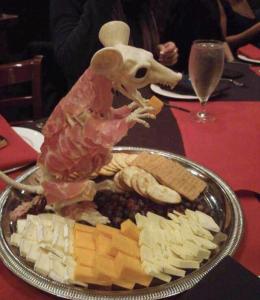
Rats made of food?

Rats as Food 

The Bible forbids eating rats, and  parts of the world, particularly in the Middle East, consider rat meat to be diseased, unclean, and socially unacceptable. Islam, Kashrut, the Shipibo people of Peru and the Sironó people of Bolivia all have strong taboos against eating rats. However the high number of rats and/or a limited food supply have brought rats into the diets of both humans and pets worldwide.
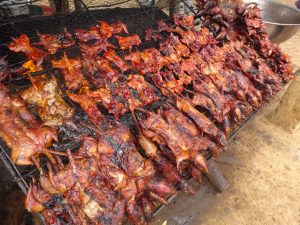
  • Human food
    • Rat meat is part of the cuisines of Vietnam, Taiwan, and Thailand.
    • National Geographic (March 14, 2019) featured Vietnamese rat meat.
    • In India, rats are essential to the traditional Mishmi diet, for women are allowed to eat only fish, pork, wild birds, and rats. In the Musahar community, rats are farmed as an exotic delicacy.
    • Aboriginal Australians’ diet regularly included rats, as did traditional Hawaiian and Polynesian cultures.
    • Rice field rats were an original component of paella in Valencia (the rat later replaced by rabbit, seafood, or chicken). These rats were also eaten in the Philippines and Cambodia.
    • Rich people ate rat pie in England in Victorian times, and others ate rats during the World Wars when food was strictly rationed.
    • Alcoholic rats trapped in wine cellars in France became part of a regional delicacy – grilled rats, Bordeaux-style.
    • Rat stew was (and maybe still is) eaten in West Virginia.
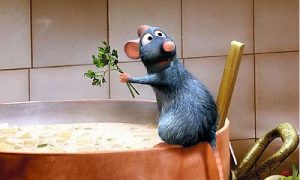
Remy insists that rat food of any kind must be properly seasoned.
  • Animal food
    • Snakes, both wild and pets, eat rats and mice. The rats are available to snake owners both live and frozen. However, in Britain, feeding any live mammal to another animal is against the law.
    • When included in pet food, rats are counted as “cereals” in the ingredients list.
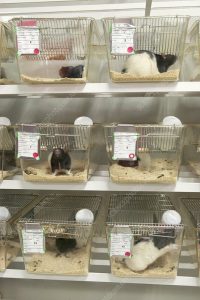
Rat Contributions to Science 

The first rat research I know of was conducted at Clark University (Worcester, MA) in 1895. Since then, rats have been used to study disease transmission, genetics, effects of diet, cardiovascular conditions, and drug effects. 

Psychologists have studied rats to further our understanding of learning, intelligence, drug abuse, ingenuity, aggressiveness, adaptability, and the effects of overcrowding (the “behavioral sink”).
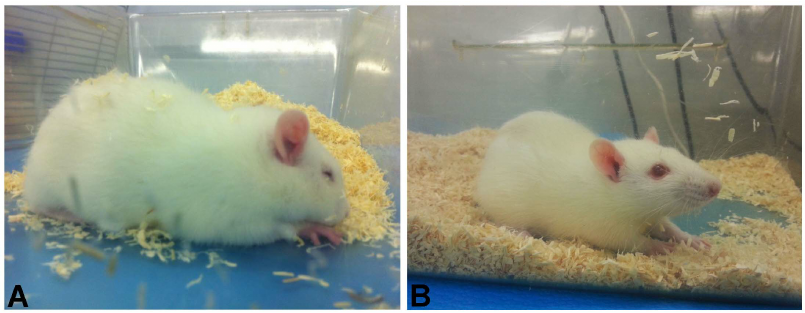
Working Rats
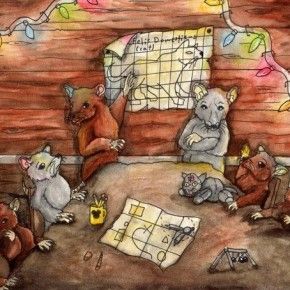
Besides acting in movies, rats are good a sniffing out gunpowder residue, land mines, and tuberculosis. They also can be trained for animal-assisted therapy. 

N.B. writers: consider a PI or amateur detective who has a trained rat sidekick!

The stereotypic rat: Besides the horror aspects of ratness, their image is mainly that of pest. 
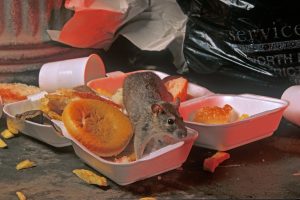
They infest urban areas, particularly multi-family housing. They like areas with access to food, water, and a moderate environment, such as under sinks, near garbage, in walls, cabinets, or drawers.
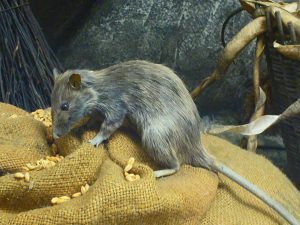
In rural areas, rats are a threat to both grain supplies and small birds. (Think chicks.) They live in fields, barns, cellars, basements, and attics. 

And as with so many things, rats are a bigger bane for the poor, whether rural or urban.  Picture this: a baby crib is set in the middle of a room, all four legs in buckets of water to try to keep rats and mice from climbing into the crib. Meanwhile, beady eyes stare from darkened corners.
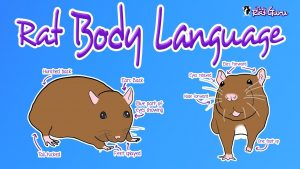
Rat in Everyday Language 

Any way you cut it, rat is not positive.
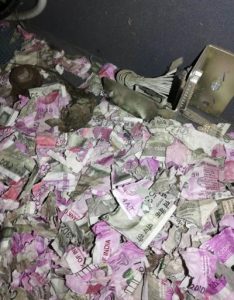
Rats shredded nearly $19,000 worth of rupees in a safe in India in 2018.
  • Noun: backstabber, betrayer, blabbermouth, canary, deep throat, double-dealer, fink, informant, sneak, snitch, source, squealer, stoolie, stool pigeon, tattler, turncoat, whistle-blower.
    • In unionized workplaces, anyone who doesn’t pay dues and/or crosses picket lines is called a rat.
  • Verb: the act of doing any of the above.
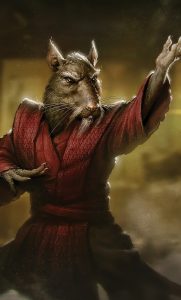
Master Splinter is living proof that rats can train turtles and fight ninjas!
  • Rats!—exclamation of surprise, frustration 
  • Drowned rat
  • Gutter rat
  • Mall rat
  • Rat’s ass (as in, I don’t give a…)
  • Rat faced
  • Rat fink
  • Rat hole
  • Rat king
  • Rat’s nest (hair or residence)
  • Rat pack
  • Rat race
  • Rats from a sinking ship
  • Rat tail (hairstyle)
  • Rat tail comb
  • Ratted hair
  • Rat trap
  • Ratty
  • Smell a rat

Bottom line for writers: it’s worth your while to know about rats!
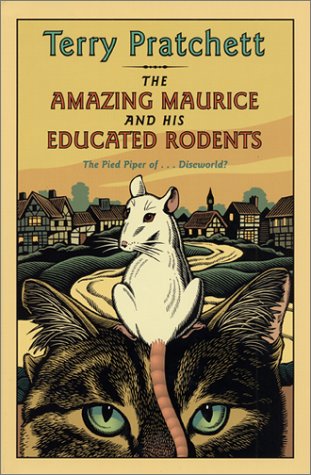
WHO KNEW?

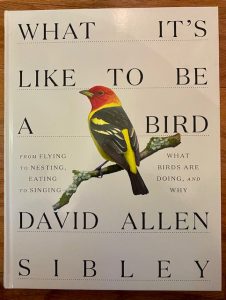
My most recent book purchase arrived on my doorstep today, and I immediately went into a flurry of browsing.  It’s wonderful!

This is Sibley’s most recent book, published in April, 2020. When I sought it out on Amazon, it was already back ordered!  Not being particularly patient, I ordered it on Kindle and started reading immediately. 

N.B. It’s better  as a physical book. For one thing, the illustrations are dazzling, and that comes across much better in hardcover. Sibley does his own paintings.

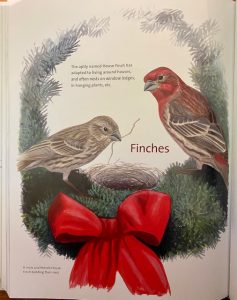
I recently learned that what I’d been calling a purple finch is actually a house finch, so went immediately to the finch section. There I learned that all red, orange, and yellow colors in songbirds come from the carotenoids in their diet, and therefore, the brighter the colors the healthier the bird.  What It’s Like to be a Bird  isn’t meant to be read straight through, cover to cover. And I, for one find it easier to flip back and forth in a physical book. 

Sibley is well known for his books on birds. His various guides are “must haves” for bird identification. These guides are organized, as most field guides seem to be, for the purpose of identification.  This isn’t my kind of nature book.

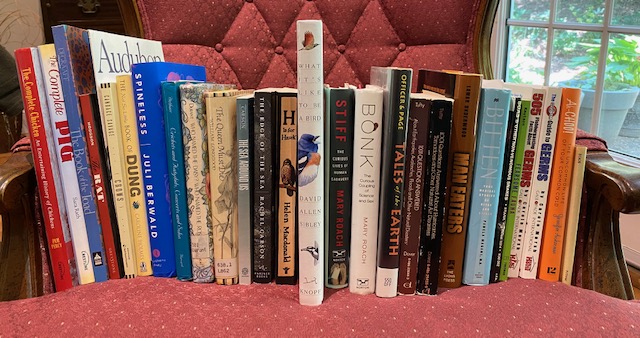
Which raises the question, “What is my kind of nature book?”  I easily plucked more than two dozen books off my shelves that, by my classification, are nature books. Here are a few of my favorites.

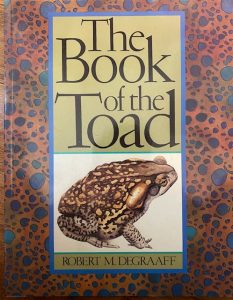
I acquired this book years ago solely because it was written by a colleague at St. Lawrence University. It is delightful! Robert DeGraaff styled The Book of the Toad as “A Natural and Magical History of Toad-Human Relations.” It’s an engaging mix of toad lore, symbolism, biology, use as hallucinogens, etc. The toad’s role in everything from art to witchcraft is in this book.

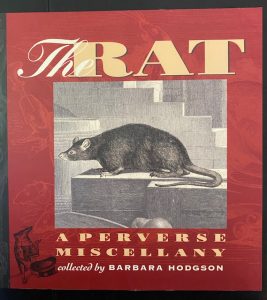
I have a similar book about rats. The Rat: A Perverse Miscellany is filled with fascinating (to me) tidbits about rats, including how they live and are treated around the world. You’ll find rats everywhere, in fables, literature gothic and modern, and in film. Of course, Barbara Hodgson included the role they played in plagues.

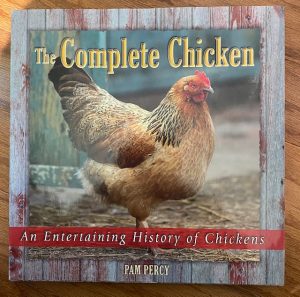
Having farms in my background perhaps explains why I picked up The Complete Chicken on a bargain shelf once upon a time. As a child, I was afraid to gather eggs for fear the hens would peck me. To this day, I can still “smell” the acrid unpleasantnesses of chicken droppings and the wet feathers of chickens killed for the table being scalded for plucking. But Pam Percy‘s book gave me a whole new appreciation for chickens rooting in trees, the best breeds for eating and laying, and the all-around appeal of buff orpingtons. If you tend to think a chicken is a chicken, browse the breeds around the world, from Australia to Zimbabwe.

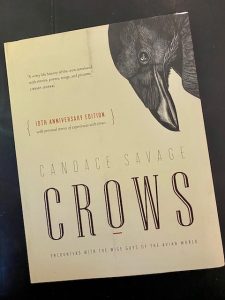
Crows fascinate me. They’re smart. They learn from the older generation about which places/people/sites to avoid without ever experiencing them directly. They communicate. They avoid places where a crow has died. And they’ve adapted beautifully to urban living! Candace Savage, among her many other non-fiction works, wrote Crows: Encounters of the Wise Guys of the Avian World.

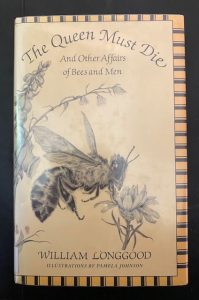
Given the current concern over the future of honeybees, and thus the world, you might want to pick up a copy of The Queen Must Die (not the young adult historical fantasy novel, though that also looks pretty interesting).  My copy of the book was discarded at some point by the Fond Du Lac Public Library in Wisconsin, and I have no idea how it came to be on my shelf.

According to author William Longgood, “Bees are more than a hobby; they are a life study, in many respects a mirror of our own society.” Longwood presents the life of bees as a “work or die” society, with only collective wealth (honey), each bee so dependent upon the whole that an isolated bee, even with the right food and temperature, will soon die. Lots of interesting (to me) bits of info, such as one hive filled with honey can weigh 80 pounds. Bees were studied and written about by the ancient Greeks.  A queen can lay as many a 2,000 eggs a day. And then she dies.

Perhaps you’ve noticed that the above books all deal with animals, and I guess that is a recurring choice—perhaps because they are animate, and thus more likely to have personalities.

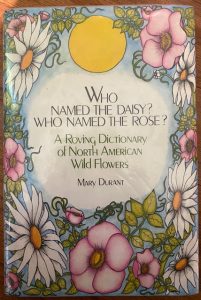
But I’ve recently spent more time on flowers and plants than before, and I find there’s more to them than their looks and uses. One of my favorite finds was Who Named the the Daisy? Who Named the Rose? A Roving History of North American Wildflowers.

Here’s a quote from Mary Durant: LUPINE, by its own choice, thrives on poor oil. But in ancient days the concept of cause and effect were reversed, and it was believed that lupine destroyed the soil, that it wolfed the nourishment out of the earth. Thus it was named after the wolf—lupus, in Latin. 

I’m now more interested in knowing what I am seeing. There are at least two free plant identification apps available for smart phones, as well as several subscription services for sale. I’m much more likely to snap a picture and find out immediately what I’ve seen than try to remember the details necessary to look it up in a guide.

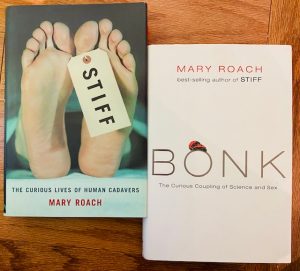
Mary Roach, though she claims to “fake her way through interviews with experts she doesn’t understand,” manages to write fascinating non-fiction books a wide variety of subjects. The titles say all that is necessary about why virtually anyone would find these books entertaining as well as informative.

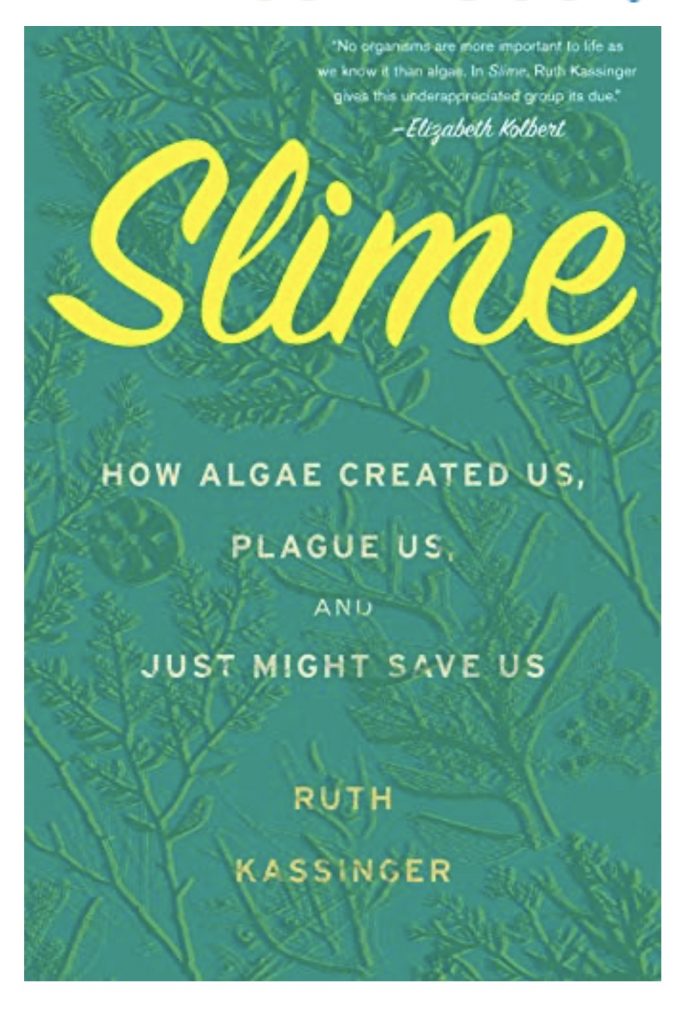
Then, too, I have books on earthly things, dangerous things, and invisible things. But this has gone on long enough. Suffice it to say, whatever aspect of nature catches your interest, there’s a book on that!

Before I wrote this blog, I’d never have characterized myself as a nature buff. But now?

ARE ANY OF YOUR CHARACTERS BIRDS?

Some people I know could definitely be harpies!
During more than fifty days of staying at home, I’ve become increasingly attentive to the flora and fauna in my yard.  Is this happening to you? 

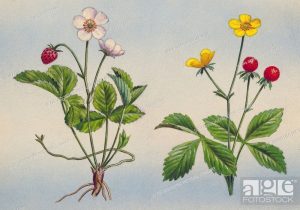
Wild strawberry (Fragaria vesca) and mock strawberry (Potentilla indica or Duchesnea indica)

For the first time I bothered to identify the wild strawberries invading my flower beds as Indian or mock-strawberry, not the luscious Virginia wild strawberry. (Big clue is the white vs. yellow flower.)

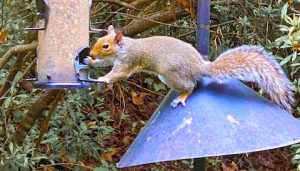
Stanley jumps from the bayberry tree onto the bird feeder several times a day.

But in spite of Stanley, we are gifted with a wide variety of bird visitors, too. As I watch them day after day, noticing patterns is inevitable. (To all the bird lovers and watchers out there: I realize that this reveals a certain—shall we say—naiveté. But there are more of us around than you might believe.) Watching our feeder, one of the main characteristics I’ve noticed is, for want of a better term, sociability.

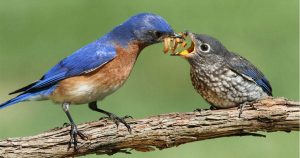
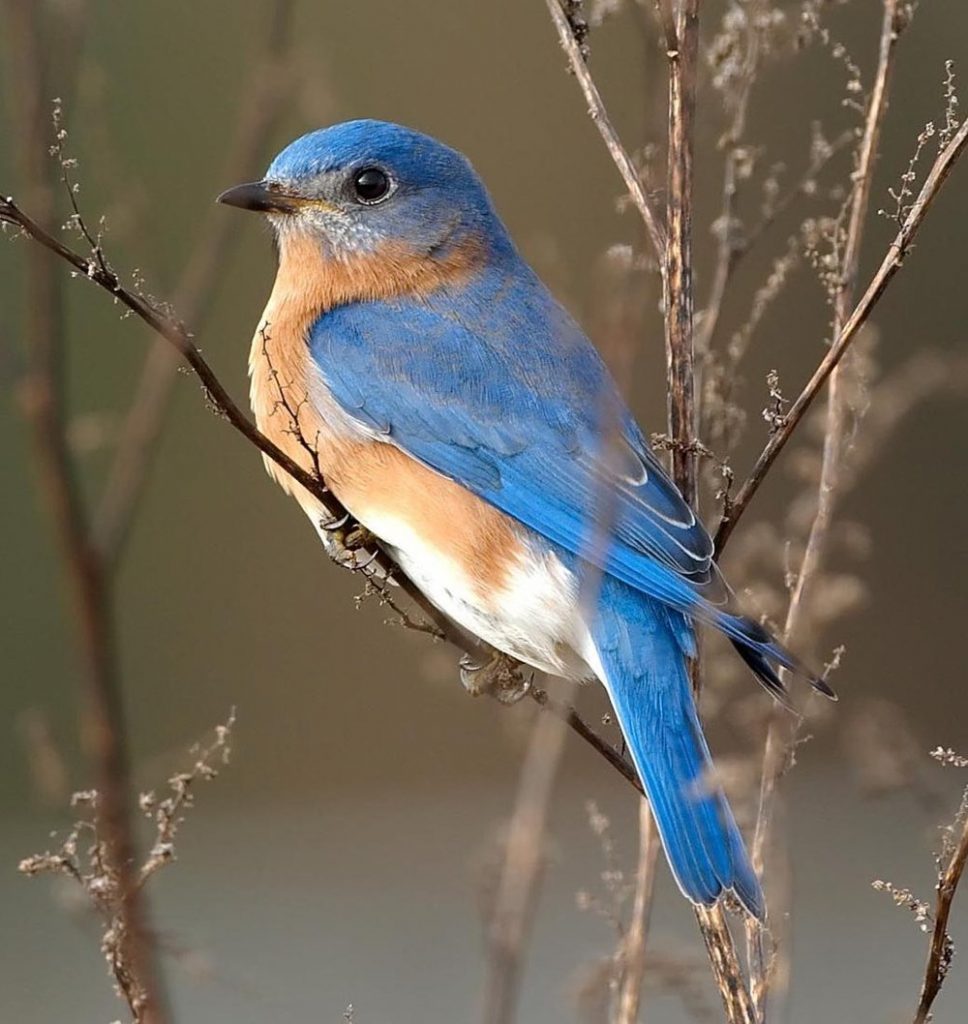
Bluebirds always come in pairs or with their young.
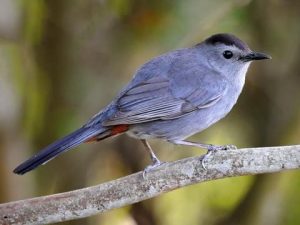
Catbirds come one at a time.
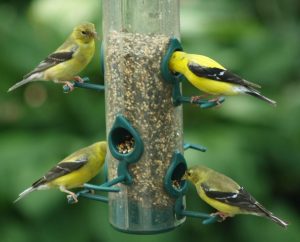
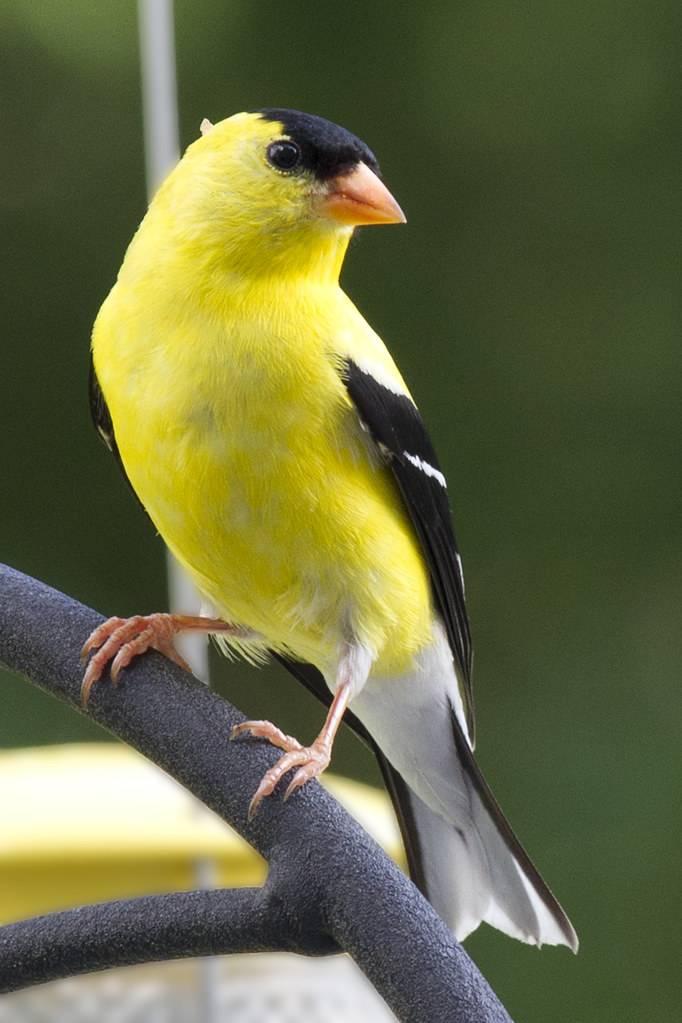
Goldfinches come in small groups.
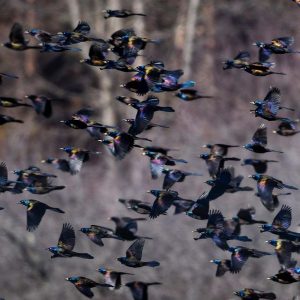
And grackles, crows, and starlings tend to flock.

.

.

Writers: Based on sociability, what sort of bird would your character be?

.

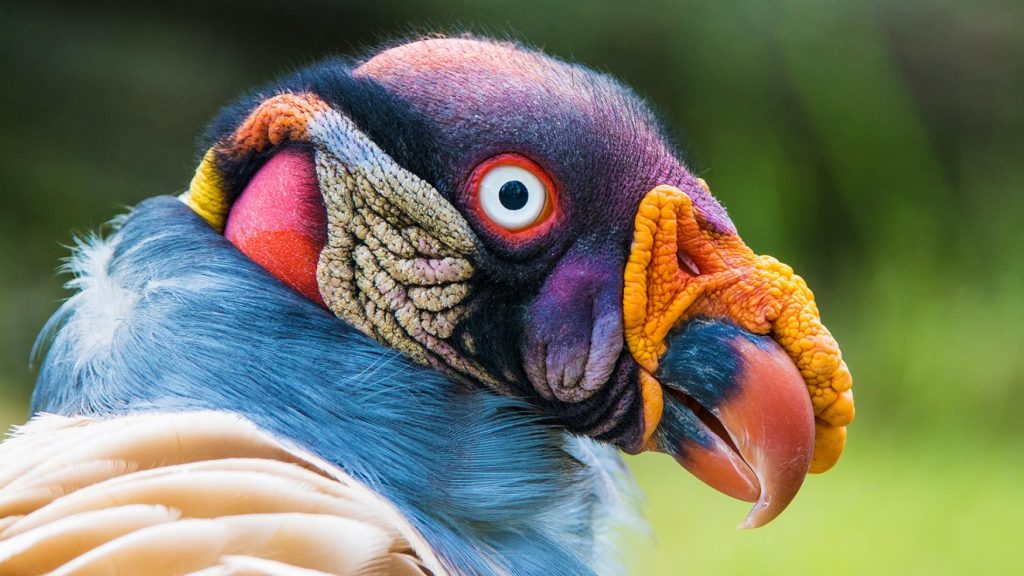
Perhaps a King Vulture?

While finches are happy to share the feeding stations, and linger for communal eating, bluejays tend to chase other birds away, and they don’t settle. They dart in, grab a bite, go back to a tree, and repeat.

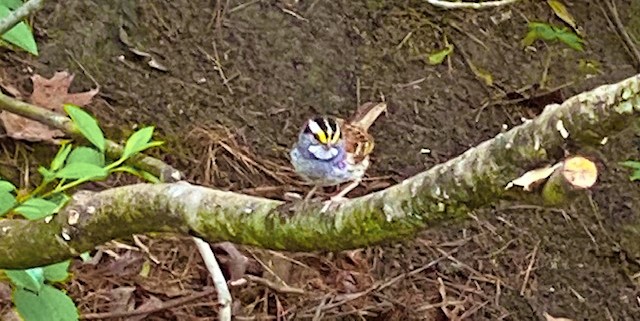
I’ve always been interested in birds in a casual sort of way. I have three daughters whom I’ve associated with white throated sparrow, goldfinch, and bluebird based on their coloration and behavior. 

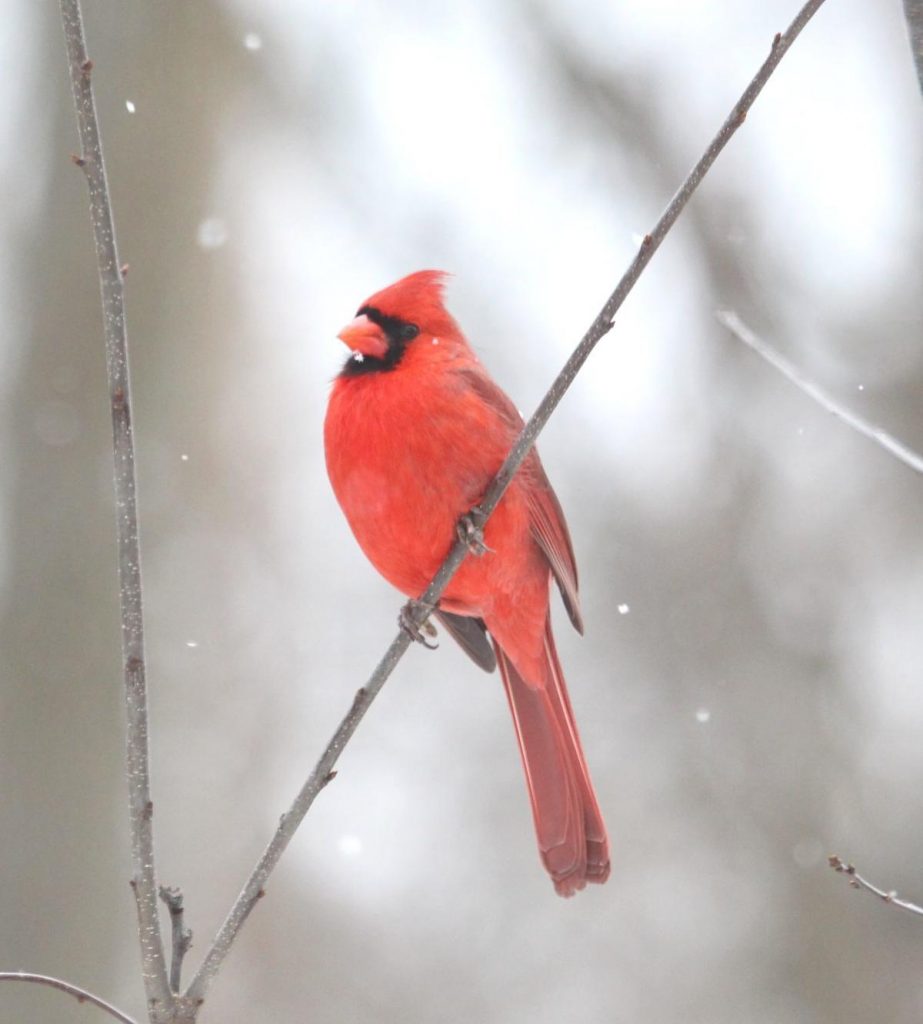
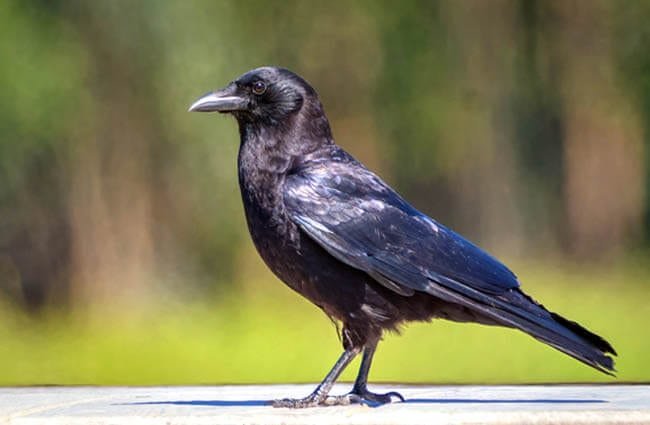
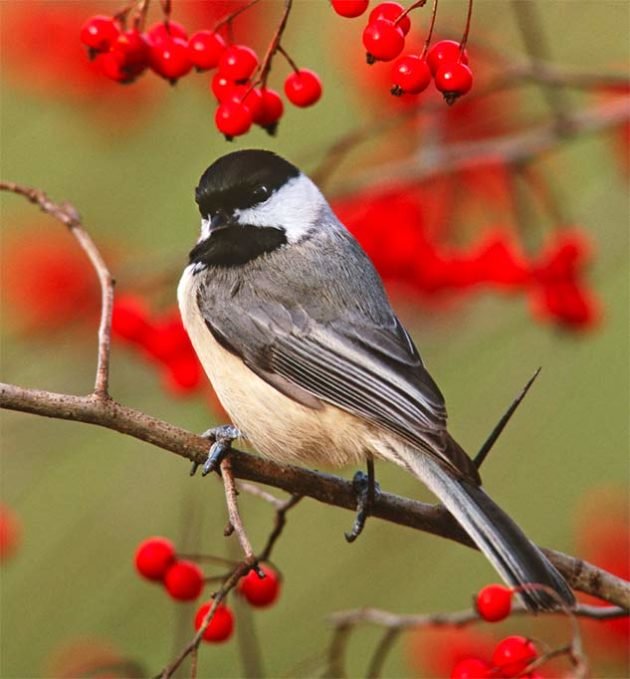
My grandson is a cardinal, theatrical and flamboyant.  My older granddaughter is a crow, based on her black hair, her preference for wearing black and her keen intelligence. My younger granddaughter is a chickadee, based on her liveliness and sociability.

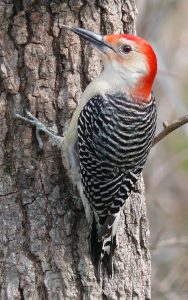
And my husband is a red bellied woodpecker, because that bird has red, black, and white markings and links the three grandchildren together.

So, I have my own personality profiles of various birds. Do you?

Although I’m convinced that birds—typically by nature of their species—have personality types, being a scientist at heart, I wanted a bit of authority to back me up here. But while searching online for bird personalities, again and again I came up with the same question—“Which one are you?” And the answer was a multiple-choice of four, the DOPE model: dove, owl, peacock, or eagle. 

So, writers, for what it’s worth, here it is.

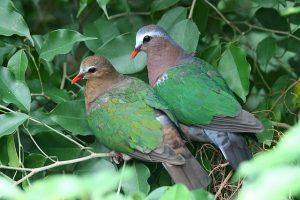
Emerald dove

DOVES are associated with terms such as neutral, loving, and kind. Although passive in communication, they are highly emotional. Dove people exhibit a long list of personality traits, both positive and negative.

Laughing dove
  • Positive traits
    • Patient
    • Giving
    • Trustworthy
    • Introverted
    • Avoids risk-taking
    • Respectful
    • Honest
    • Reliable
    • Easygoing 
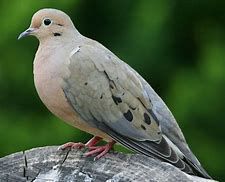
Mourning dove
  • Negative traits  
    • Dependent
    • Predictable
    • Follower
    • Gullible 

.

.

Spotted owl

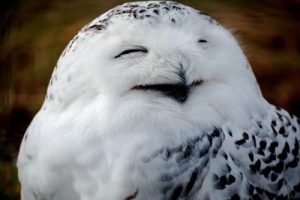
OWLS are perceived as logical and intelligent, but conservative, introverted and not communicative. 

.

.

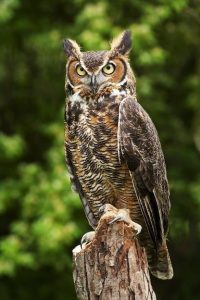
Great horned owl
  • Positive traits  
    • Calm
    • Meticulous
    • Just
    • Mindful
    • Determined
    • Detail-oriented
    • Careful
    • Curious 

.

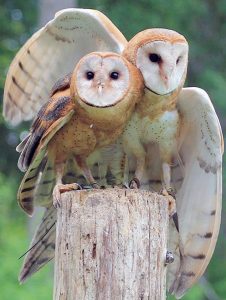
Barn owl
  • Negative traits  
    • Distrustful
    • Self-centered
    • Indecisive
    • Vindictive
    • Short-sighted

.

.

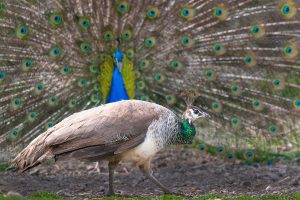
Peahen with blue peacock

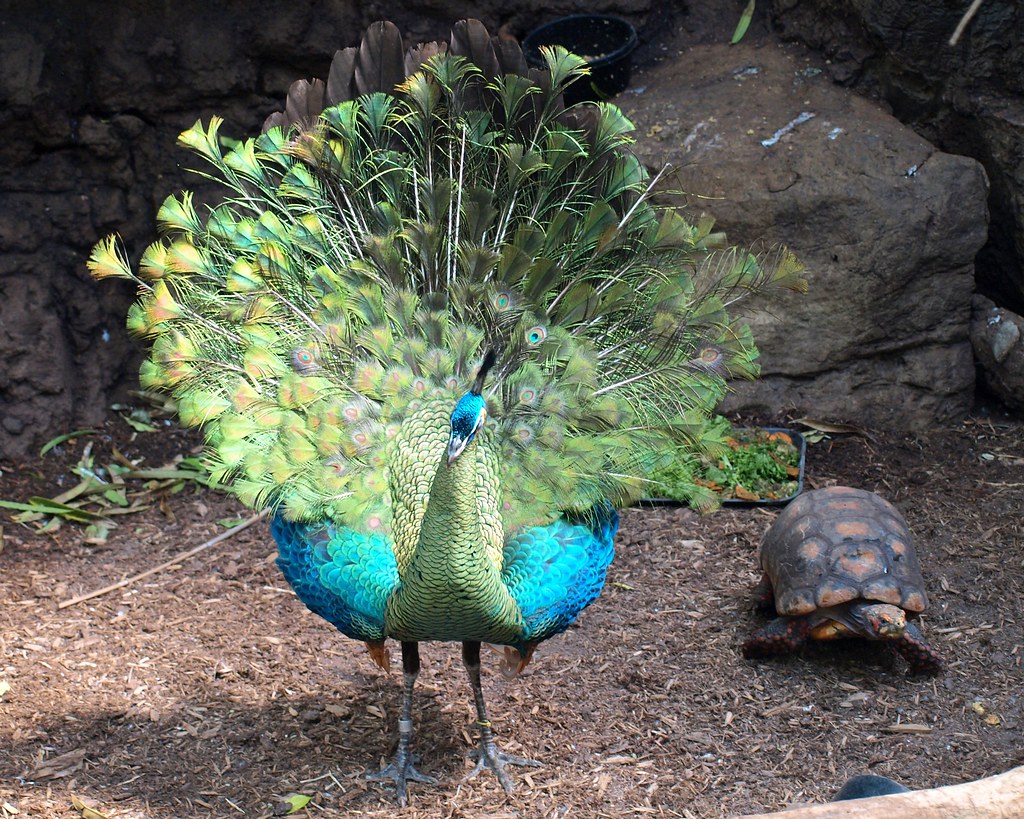
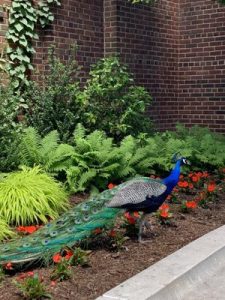
PEACOCKS are showy and outgoing, very active communicators—i.e., talkative—and possess high “emotional intelligence.” These are competitive, emotional birds. 

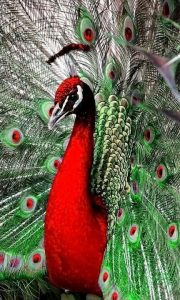
Red peacock
  • Positive traits  
    • Open-minded
    • Energetic
    • Charismatic
    • Social
    • Enthusiastic
    • Adventurous 

.

.

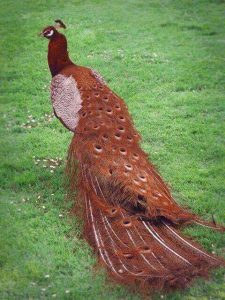
Brown peacock
  • Negative traits  
    • Scattered
    • Selfish
    • Controlling
    • Dominating 
    • Power-hungry

.

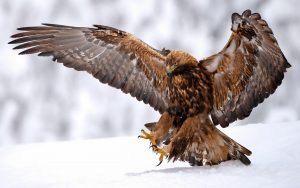
Golden eagle

EAGLES are bold, decisive, and aggressive. They have high logical intelligence and are very active communicators.  Within the general population (allegedly) 29% of people are eagles.

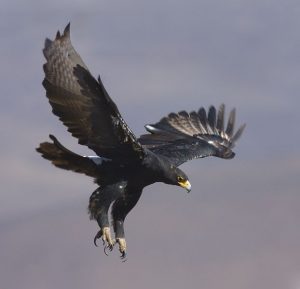
Black eagle

.

  • Positive traits  
    • Charismatic
    • Honest
    • Initiator
    • Independent
    • Driven
    • Motivated
    • Compelling
    • Fearless 

.

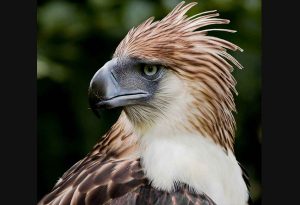
Philippine eagle
  • Negative traits  
    • Blunt
    • Unsympathetic
    • Egotistical
    • Controversial
    • Impatient
    • Pushy
    • Stubborn

You can take the 40-question, 4-bird, DOPE personality test online. Click here. 

Writers note: Be aware that any given personality trait could be either helpful or not, positive or not, depending on the demands of the situation.

Writers’ option: identify a bird of your own choosing and research it, finding how/whether it reflects one of your characters.

Why bother? Assigning birds to your characters helps keep them consistent and distinctive.

WRITING ISOLATION

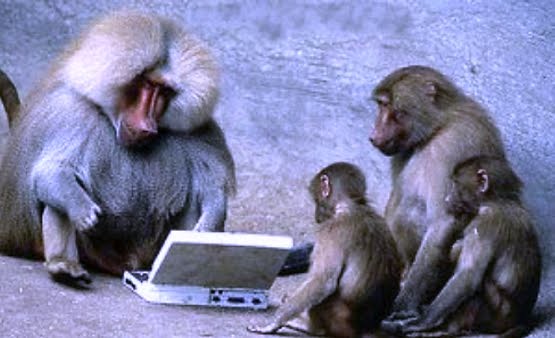
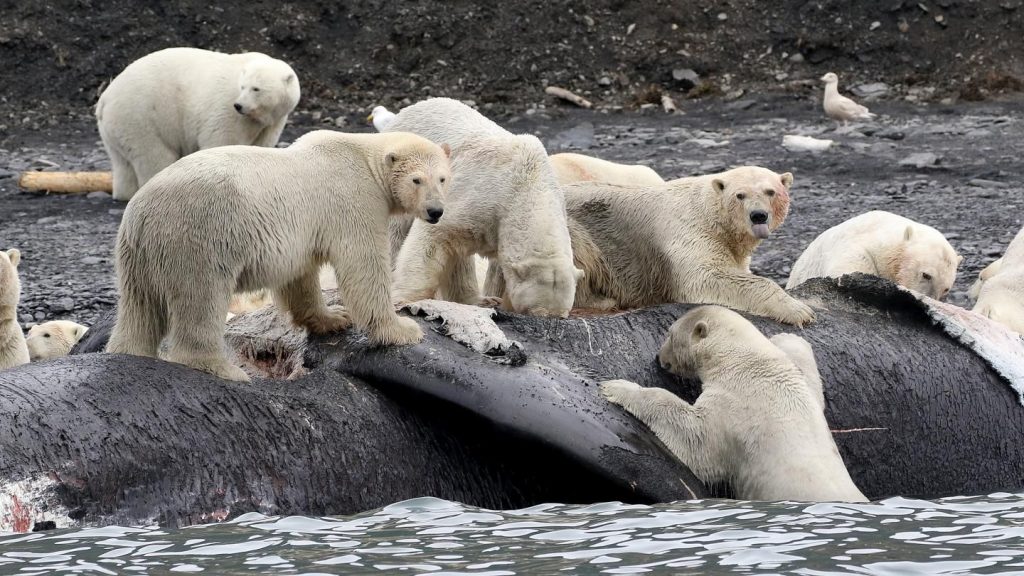
Sleuth of Bears

There is a whole cadre—Heidegger (1889-1976) arguably the most famous—who argue that being-with-others is part of the “structure of human existence.” In other words, we are hard-wired to socialize. Whether you believe that or not, there are a gazillion (by actual count) studies that have found isolation to be harmful to humans, both physically and psychologically. 

Litter of Puppies

(Editor’s note: Including photographs of isolated and lonely people was too depressing, so I invite you to enjoy these photos of animals not social distancing instead.)

For writers, bad is good

Pod of Dolphins

How bad is it?  Some researchers posit that social isolation and loneliness are twice as harmful as obesity. Others compare the effects on mortality to be equal to smoking 15 cigarettes per day. Others say the magnitude of risk is right up there with physical inactivity and lack of access to health care.

N.B.  Degrees or levels of isolation are difficult to define and measure.  Perceived isolation is what produces feelings of loneliness. In many ways, it is easier to study social isolation, though they are closely linked.

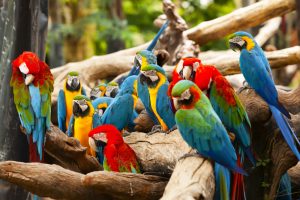
Pandemonium of Parrots

As a writer, the first question is, “Why is your character isolated?” Your options may be more numerous than you think. Here are a few examples.

  • Death of a loved one
  • Divorce
  • Move to a new place
  • Researcher in isolated places, like Antarctica 
  • Mission/mission training, e.g., astronauts
  • Immune compromised
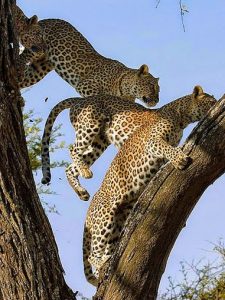
Leap of Leopards
  • A child/infant in understaffed orphanage
  • Being shunned for any reason  
    • Behavior  
    • Appearance 
    • Membership in a marginalized subgroup
  • Medical quarantine
  • As a form of torture
    • Solitary confinement in prison (currently about 80,000 in the U.S. each year)
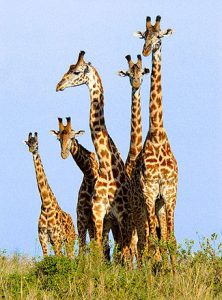
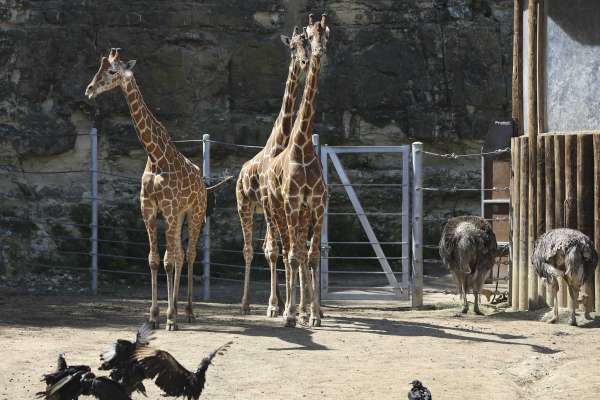
Tower of Giraffes

The second set of questions for a writer:

  • How complete is the isolation?
  • How long does it last?
  • Is it repeated?
  • In general, the more complete the isolation, the longer it lasts, and repetition all increase the number and seriousness of the effects. 
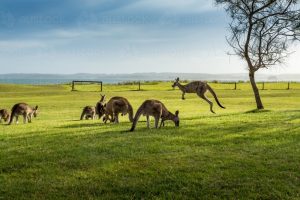
Mob of Kangaroos

The third question is, which effects will your character display? 

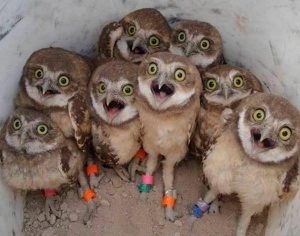
Parliament of Owls
  • Fatigue
  • Insomnia
  • Headaches
  • Sweaty palms
  • Heart palpitations
  • Lowered immunity
  • Increased inflammation 
  • Trembling
  • Diarrhea
  • Stomach pains
  • Lack of appetite
  • Drastic weight loss
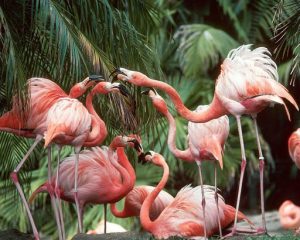
Stand of Flamingos
  • Muscle pains (esp. neck and back)
  • Oversensitivity to sensory stimuli
  • Difficulty concentrating
  • Dizziness
  • Distorted sense of time
  • Severe boredom
  • Impaired memory
  • Inability to think coherently
  • Apathy
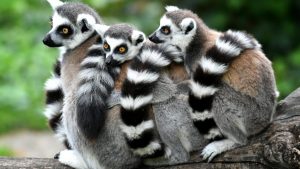
Conspiracy of Lemurs
  • Anxiety
  • Panic
  • Feelings of inadequacy
  • Feelings of inferiority
  • Irritability
  • Withdrawal
  • Rage/anger/aggression
  • Confusion
  • Paranoia
  • Depression
  • Suicidal thoughts
  • Hallucinations

Many of these effects mimic PTSD and, like PTSD, can last for years after the event.

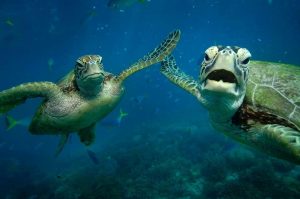
Bale of Turtles

In the last couple of months, researchers are finding that COVID-19 isolation tends to evoke one of two responses.

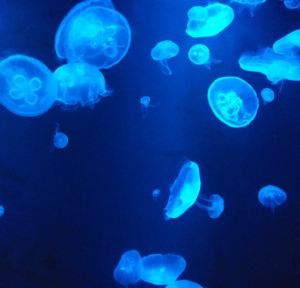
Smack of Jellyfish
  • Those who hunker down and enjoy it—take it as a time to relax, read, bake, pursue a hobby, accomplish things around the house. In short, they’re getting along fine.
  • But for others—especially extroverts—the isolation can be harmful to both mind and body.

Not surprisingly, the effects of COVID-19 isolation are many of the same effects as other reasons for isolation.

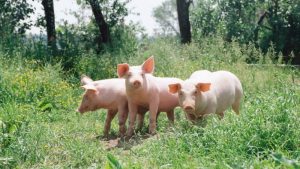
Drift of Pigs
  • Boredom
  • Lethargy
  • Anxiety
  • Depression
  • Distorted sense of time
  • Poor sleep quality
  • Develop or increase unhealthy habits

Dr. Samantha Brooks wrote in The Lancet: “A huge factor in the negative psychological impact [of isolation] seems to be confusion about what’s going on, not having clear guidelines, or getting different messages from different organizations.” In addition, not knowing how long isolation will last exacerbates the negative effects of isolation. Think of the current differences within the U.S. and how similar circumstances could be applied to a fictional setting.

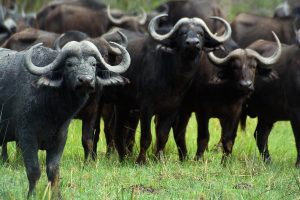
Obstinacy of Buffalo

People who are at increased risk from COVID-19 isolation are those at heightened risk for social isolation in the first place:

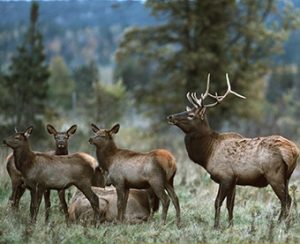
Gang of Elk
  • Older adults, especially with physical limitations and/or poor family support
  • Men who didn’t develop social networks outside work
  • Being non-white is a bigger risk factor than sex
  • Lower income people who may not afford the technology for distance socializing
  • Anyone who is marginalized (LGBTQ, survivor of domestic abuse, living in an isolated rural area)
  • People incarcerated for any reason
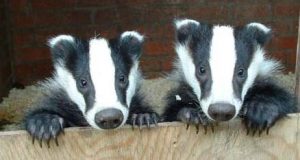
Cete of Badgers
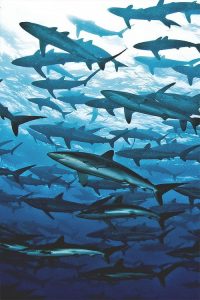
Shiver of Sharks

Evidence of stress is apparent in the increased number of calls to suicide prevention (1-800-273-8255) and addiction (1-844-289-0879) hotlines.

Bottom line for writers: consider isolating your character and/or increasing his/her loneliness. You can take it almost anywhere.

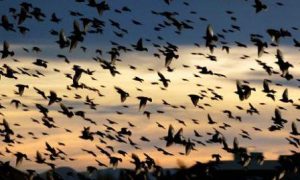
Murmuration of Starlings

1:56 AM

And it hit me: I hadn’t written a blog! Where did the days go since Friday?
Fauna

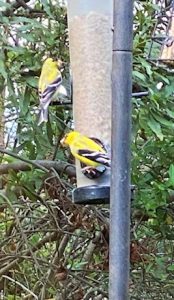
Well, I spent a lot of time birdwatching, and was rewarded with titmice, chickadees, bluebirds, goldfinches, purple finches, house finches, grackles, bluejays, cardinals, red bellied woodpeckers, downy woodpeckers, mourning doves, white throat sparrows, wrens, brown thrashers, and—of course—robins. 

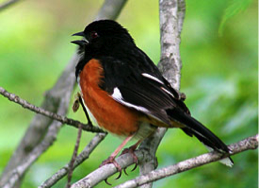
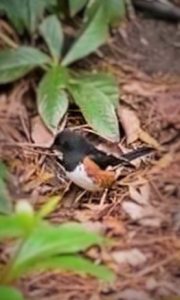
Today for the first time ever, I saw a pair of Eastern towhees! They’re usually very shy, but the males sing and show off their tails in flashy displays to attract mates in the spring. Remind you of any characters or real people you may have encountered?
I had a chance to enjoy the acrobatics of Stanley and Ollie at the bird feeder.  They’re better than a professional circus troupe, but without the spandex and sequins! (For more about their antics, check out an earlier blog I wrote about the behaviors and habits of squirrels in my yard and elsewhere.)
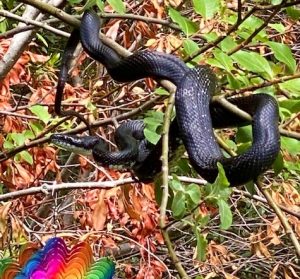
And a couple of days ago I spotted a five-foot long black racer coiled in a pussywillow tree behind my house. (Black racers are very common in the southern US, but they are not venomous or dangerous. Random fact — these snakes can vibrate their tails, making a sound very similar to a rattlesnake.)

Flora

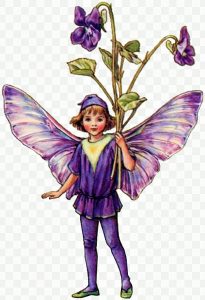
Visiting yard plants is always interesting this time of year (sometimes a bit confusing). I found that a purple baptisia planted by the front door has migrated to a side garden near the back—clearly the work of fairies.

I have a single rose bud opening (although my neighbors’ roses are hanging heavy).

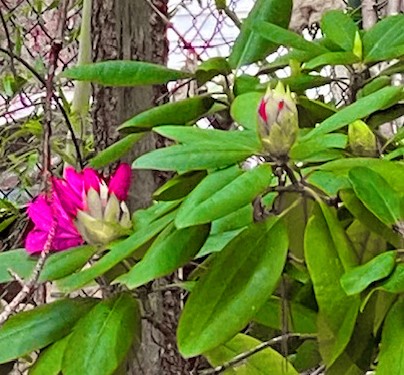
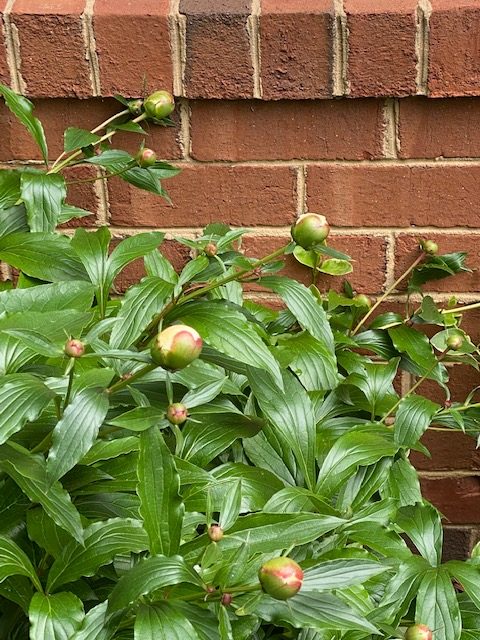
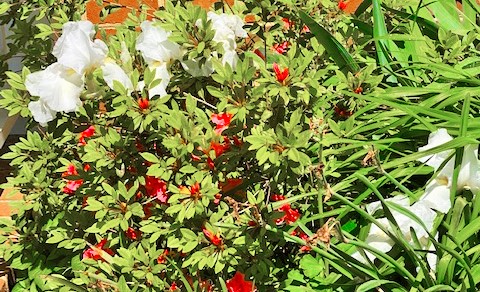
The rhododendron has its first bloom, and azaleas are going wild. Irises are so heavy-headed that they are resting on nearby azaleas. My peonies aren’t as far along as they were three years ago, but they’re showing lots of buds for the future.

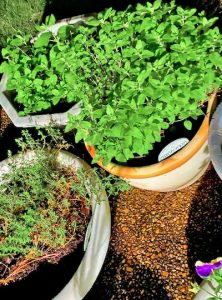
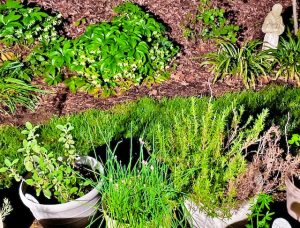
The patio pots have flourishing mint, chives, oregano, thyme, sage, and—surprisingly—dill and parsley that wintered over.

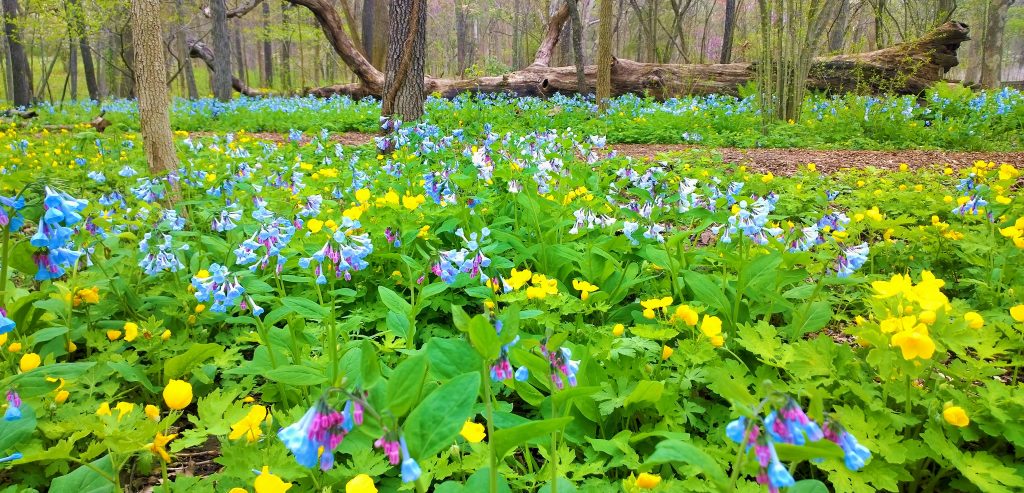
I’ve walked in the park and along nature trails, finding wild rhododendron, a.k.a. early azaleas. Also spotted were Virginia bluebells, wood ferns, phlox, pink lady slippers, cinquefoil, dandelions, and creeping buttercup. 

Fiction

Then, too, there were writing tasks. COG Literary Magazine is preparing to print “Pawpaw” and I had to approve the page proof. “Running on About My Mother’s Body” received a second acceptance, so I needed to respond to that and offer a replacement piece. I even wrote the first draft of “Pandemic.”

And I’m involved with two critique groups on zoom and Google hang-out, both new to me.

Fraternizing

All of that doesn’t even touch on communications with family and friends.

I’ll try to get out of myself for Friday!

Bottom line for writers: Life happens.

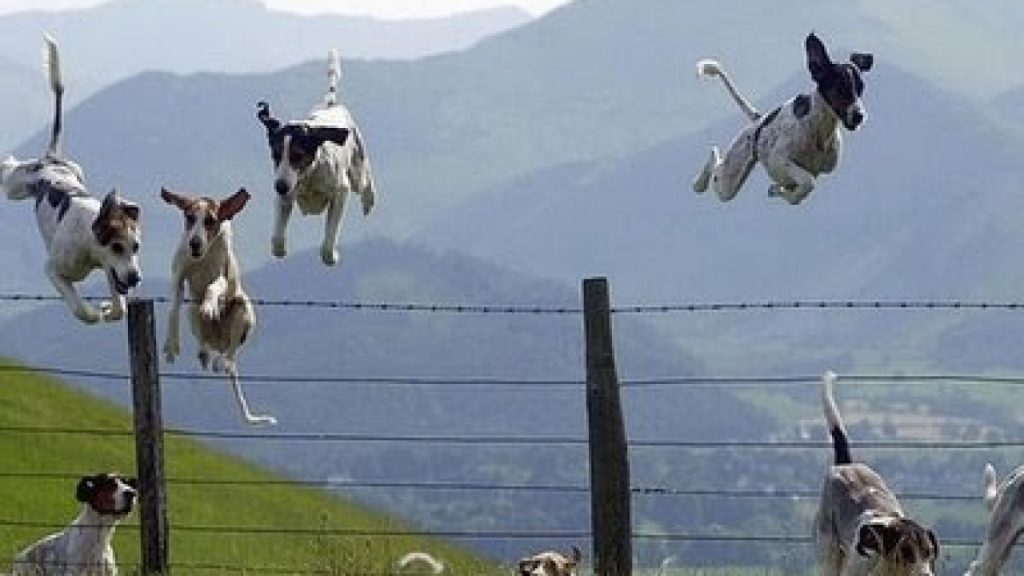
W.H.O. Let the Dogs Out?

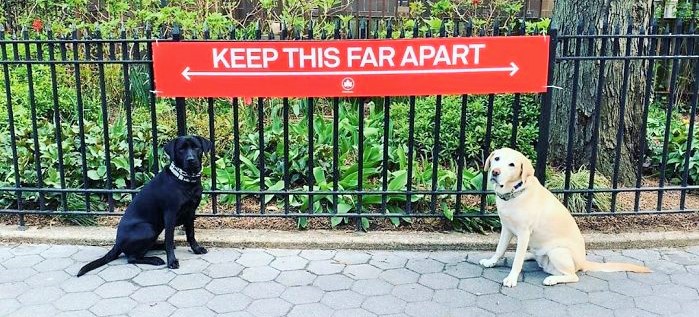
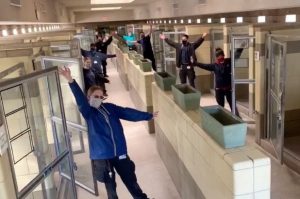
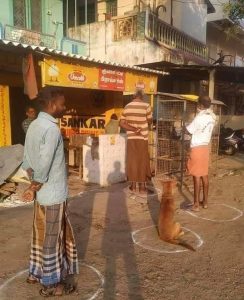
These dogs are better at social distancing than most humans I know.

Today’s blog entry was written by Kathleen Corcoran, a local harpist, teacher, writer, editor, favorite auntie, turtle lover, and dutiful servant of a fluffy tyrant masquerading as a dog.

By this point, most of us have seen something in our lives change as a result of the COVID-19 pandemic, but we understand (at least a bit) why things have changed. Our animal companions just see that the humans’ behaviors are suddenly different.

“Humans are staying in these circles, so I guess I’ll stay in a circle. Do I get treats now?”

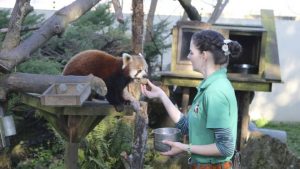
Despite various quarantine and lockdown orders around the world, animals dependent on humans still need care. Many zoos and animal parks house animals that cannot be released into the wild because they were born in captivity, they are still recovering from injuries, their homes have been destroyed, or other circumstances that prevent them being able to thrive. Animal shelters, zoos, rescue and rehabilitation centers, and emergency veterinarians have adjusted to provide food, socialization, attention, playtime, and everything else to keep their charges happy.

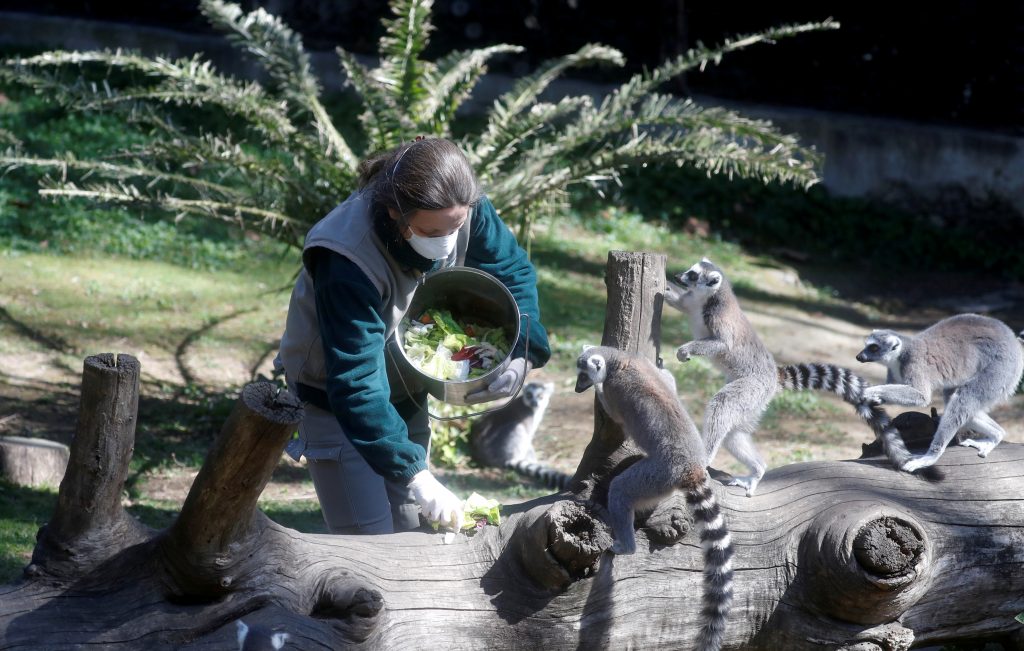
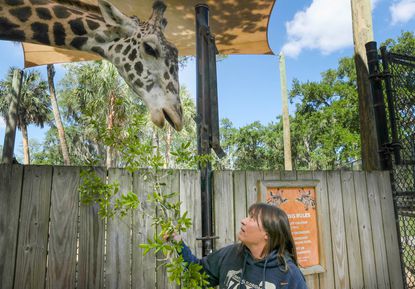
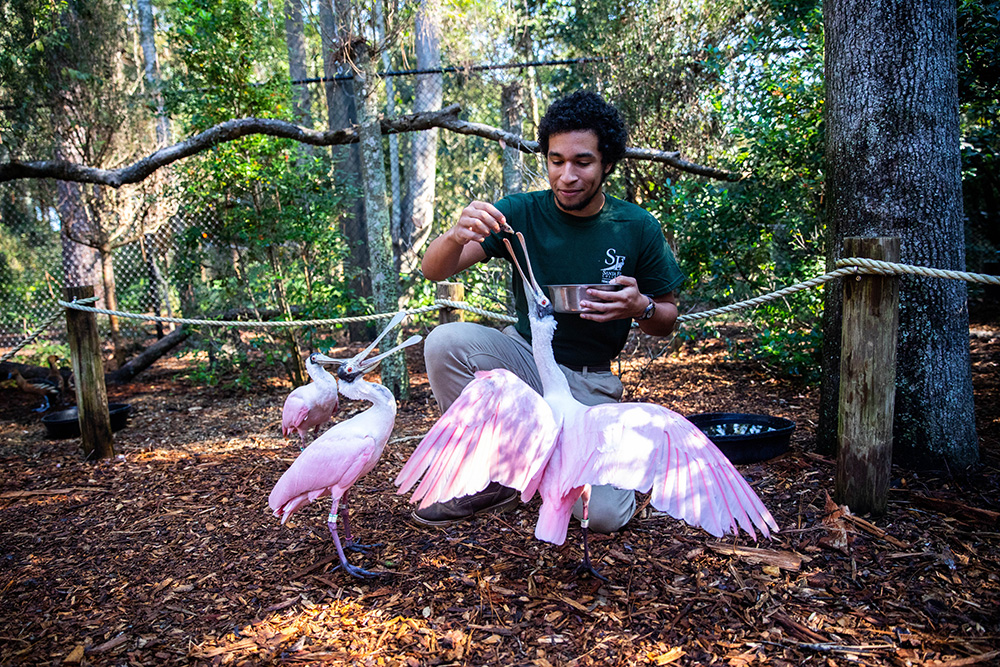
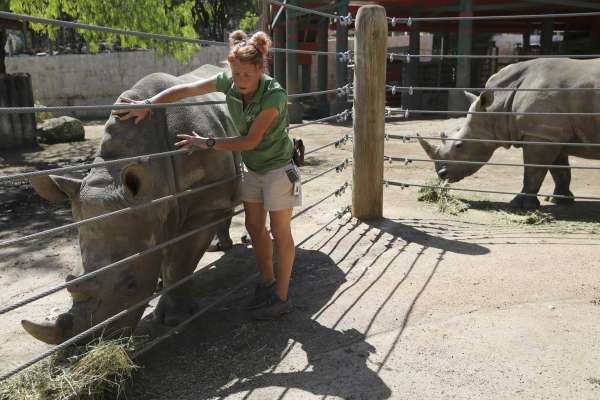
Zoos have closed to the public, but zookeepers are still reporting for work. Some keepers have temporarily moved into the zoos themselves to be closer to their charges and to avoid any chance of carrying any infections into the zoo or home to their families. They’re camping in the cafeterias and staying in veterinary isolation huts.

In Cornwall, England, four keepers at Paradise Park have moved into the original house of the family that owned the property. Other keepers rotate in and out to assist, maintaining a strict schedule so that they are not in the zoo at the same time.

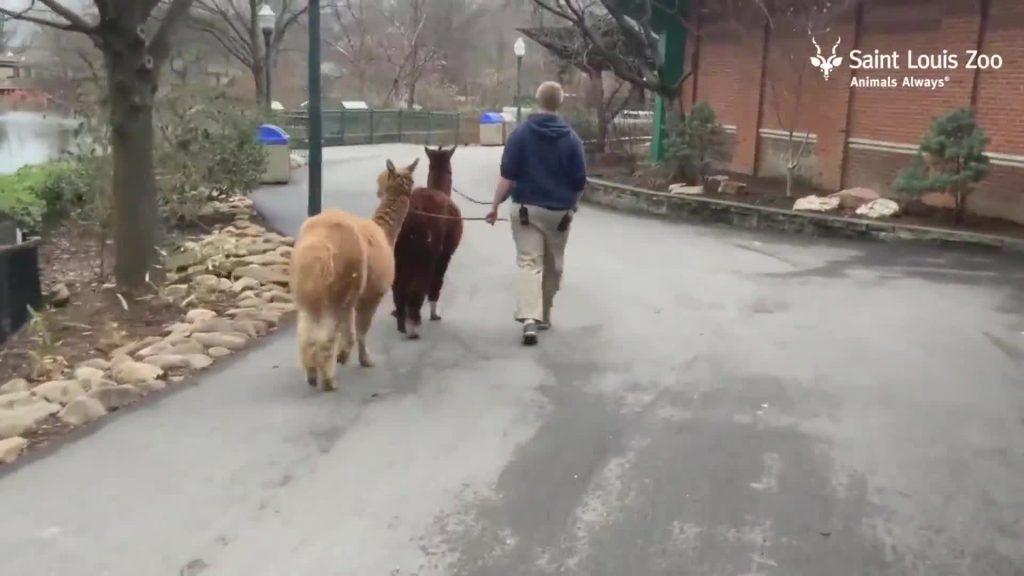
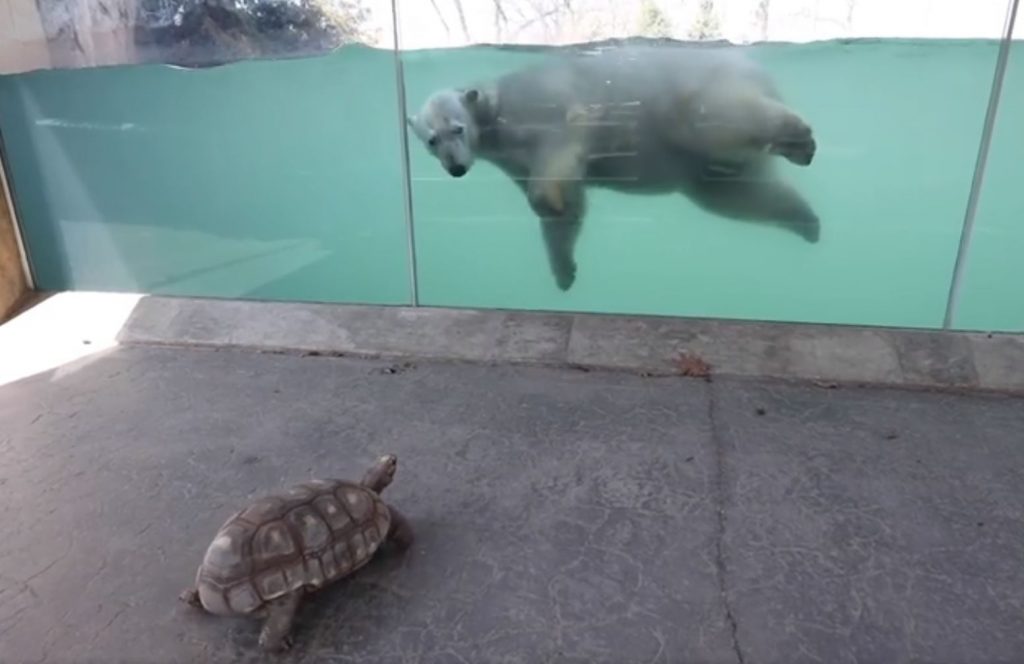
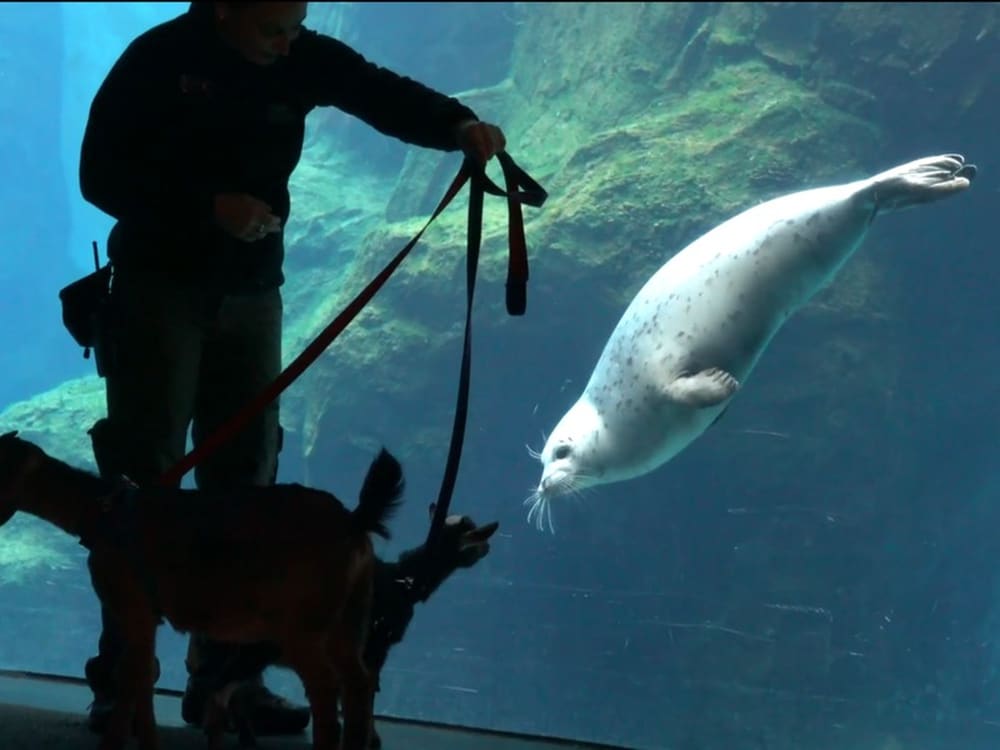
Without visitors around all the time, zookeepers have more freedom to take animals to visit their friends in other areas of the parks.

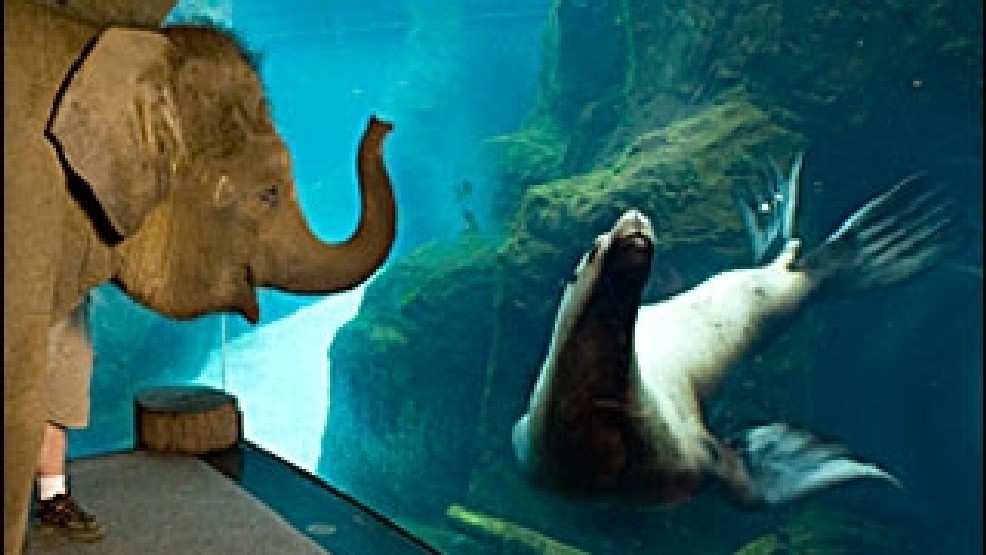
Because most zoos are making do with skeleton crews, keepers don’t have as much time as they’d like to play with the animals in their care. Many animals have been taking their own tours around zoos to see each other and keep each other entertained. (That doesn’t mean that bunnies have been jumping into the lion pens to say hello.)

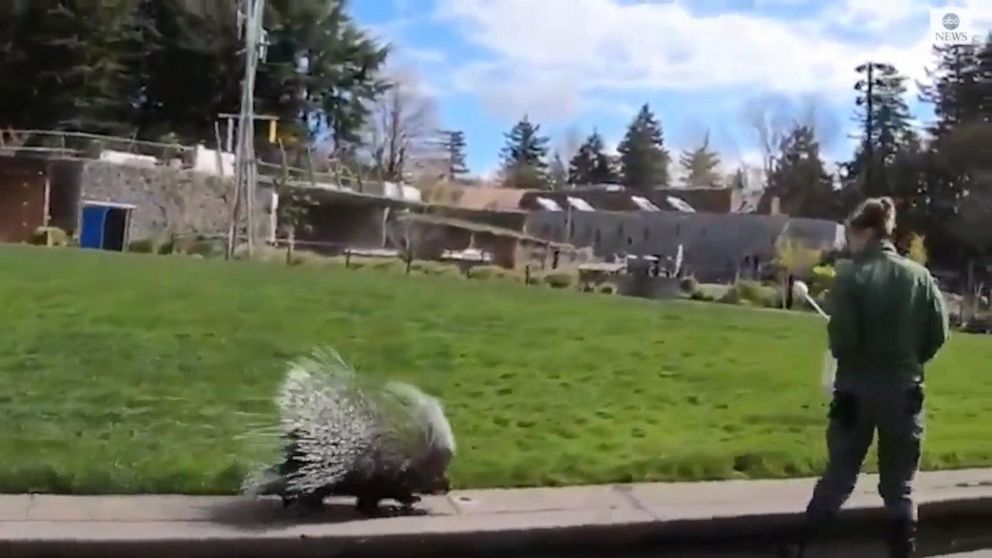
The tamer animals have been allowed to wander the parks freely while there are no visitors. Territorial animals like geese have taken over bridges and tried to block keepers from crossing to feed other animals. Many zookeepers report that the more social animals still follow them around during rounds, without any leads or harness.

Some animals have left the zoo altogether and gone to explore the world. Peacocks from the Bronx Zoo took a stroll through Prospect Park.

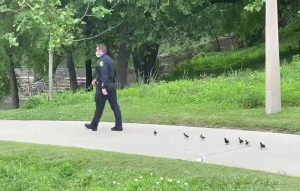
Police in a closed park in Houston helped a gaggle of ducklings find their way back to their mother.

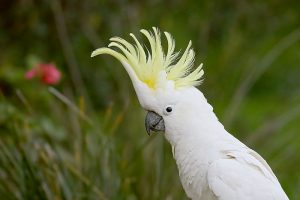
This cockatoo learned how to sing “Row row row your boat” and loves to sing along with kids who come by her enclosure. Without her backup singers, she has started humming to herself in the quiet. Zookeepers report that they can sometimes hear her start the song by herself but trail off sadly when no one joins in.

Without visitors to interact with, many animals are behaving differently. Keepers try to give each animal extra attention during feeding and rounds, but it’s hard to replace a steady stream of admirers. Some animals miss the interaction and get very excited to see anyone. Other animals feel more comfortable without an audience and venture out of hiding spaces more regularly.

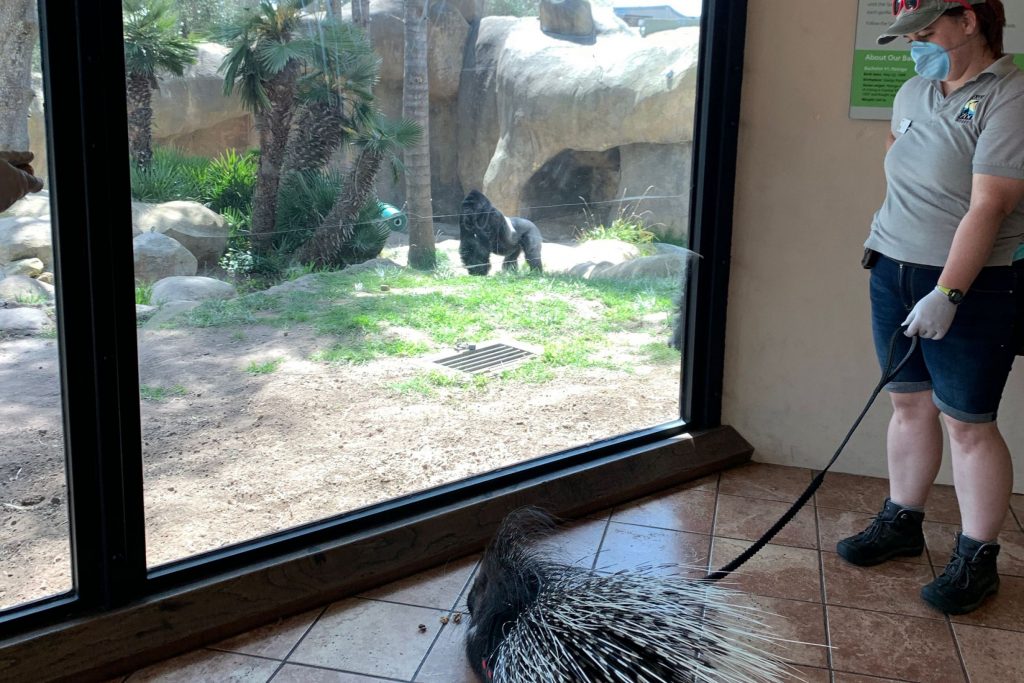
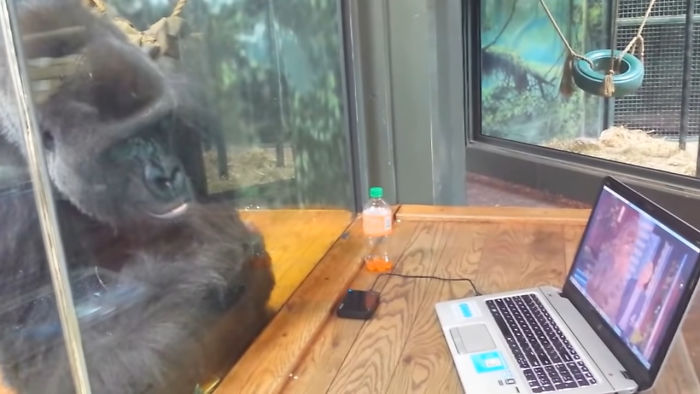
Zookeepers come up with activities to keep animals entertained and socialized. Gorillas who regularly mirror gestures and pose for selfies with visitors are shown videos of people talking to them. Leopards at Rosamond Gifford Zoo in Syracuse, NY have to “hunt” for food in cardboard tubes to keep teeth and jaws strong.

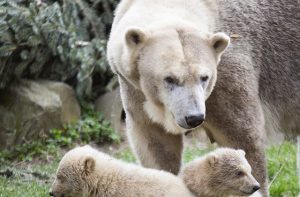
Polar bear cubs at Ouwehands Zoo Rhenen in Holland didn’t have to worry about public crowds when they left the maternity den for the first time.

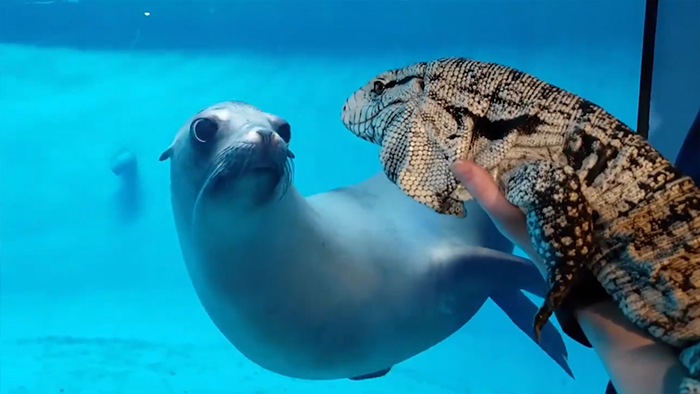
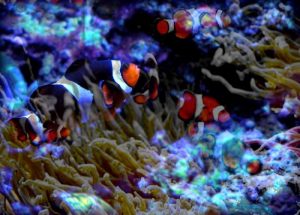
Snakes, alligators, stingrays, etc. haven’t shown any sign that they’ve even noticed a change. However, one zookeeper noticed that some types of fish have become very attention-seeking.

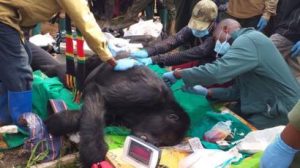
Veterinarians at the Dubai Camel Hospital in Abu Dhabi have kept their enclosures open to treat their patients. After surgery, the very large patients need plenty of space and lots of help to get over that first hump in their recovery. (Ha! I crack myself up!)

Q: Where does the 800 lb gorilla sit for surgery?
A: Wherever the anesthesiologist wants.

Most veterinarians are only open for emergency cases to lessen the chances of spreading COVID-19. The CDC has confirmed that two pet cats have tested positive for COVID-19, but both showed mild symptoms and are expected to make a full recovery. Updated guidelines for interacting with cats and dogs have been posted on the CDC website. Although pets cannot become infected, there is a chance that they could spread virus surviving in droplets on their fur or paws.

There have been no reports of tortoises catching or spreading the virus, which makes them the perfect quarantine buddies!

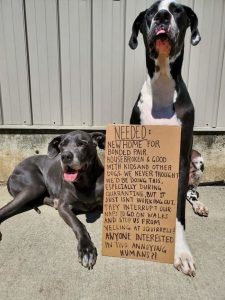
One of the positive side effects of this awful pandemic has been the emptying of animal shelters. All over the world, people are adopting or fostering quarantine buddies. Shelter managers warn that permanent adoption may not be the best choice for families who will not have the time and resources to continue to care for pets when lockdown restrictions are lifted.

Some pets are not excited about constant supervision.

Some shelters are offering to cover food or vet bills for adopted or fostered pets as an incentive. While we’re all stuck inside, what could be better than spending extra quality time with our favorite furry buddies? They must be loving it, too. People home all day!

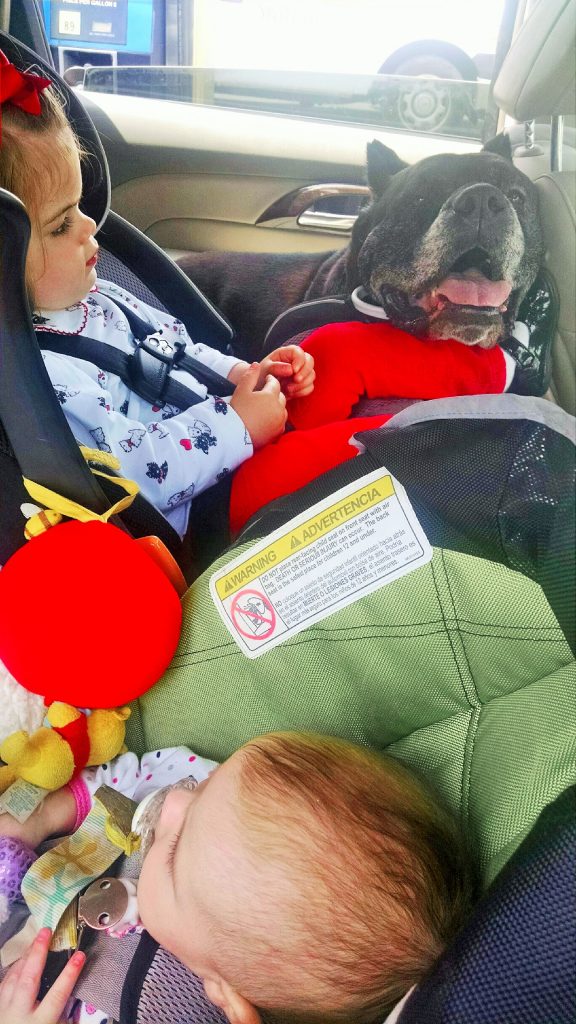
Mental health experts recommend furry, feathery, or scaly companions to mitigate the feelings of loneliness and depression some people are bound to develop while self-isolating. Pets can also be a huge help to parents trying to keep children entertained while they are out of school and have no place to run off all that energy.

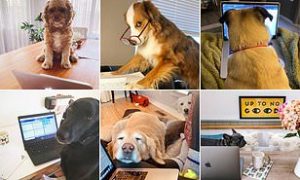
Depending on the intelligence and motivation of the pet you adopt or foster, they may be able to help you complete some of your work at home.

Therapy dogs who can no longer visit patients in hospitals and nursing homes are sharing their affection and calm over video.

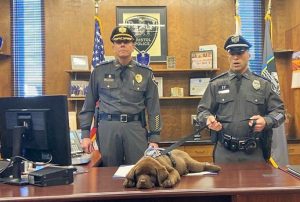
Some therapy dogs are so calm, they sleep through their own swearing-in ceremonies. This is Brody, the newest and sleepiest member of the Bristol, RI police force.

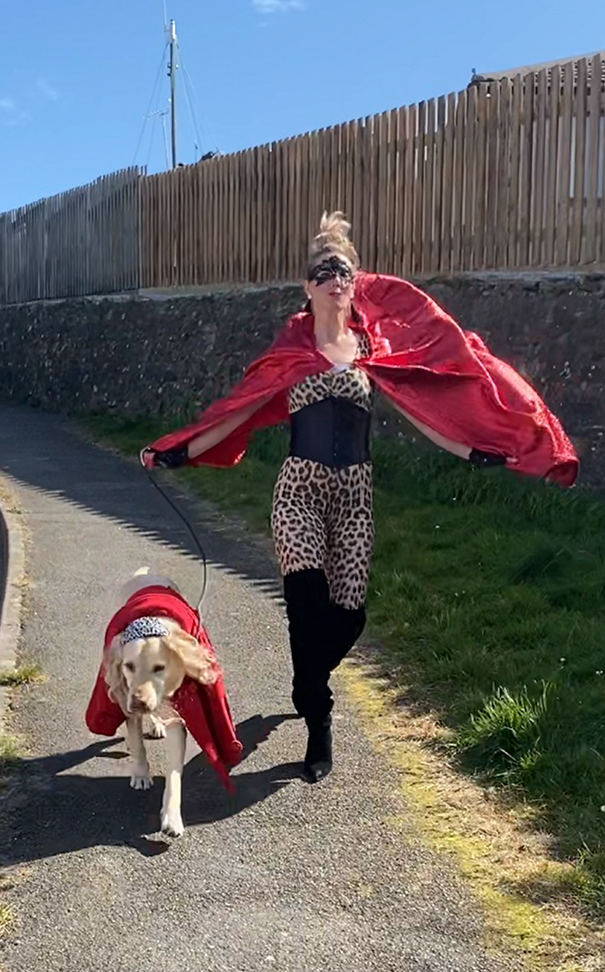
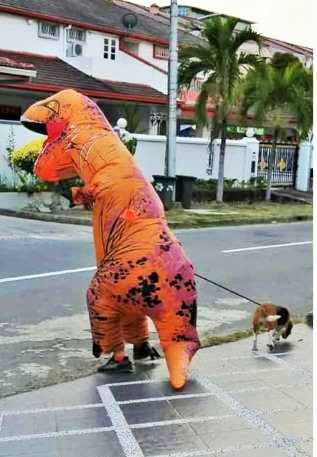
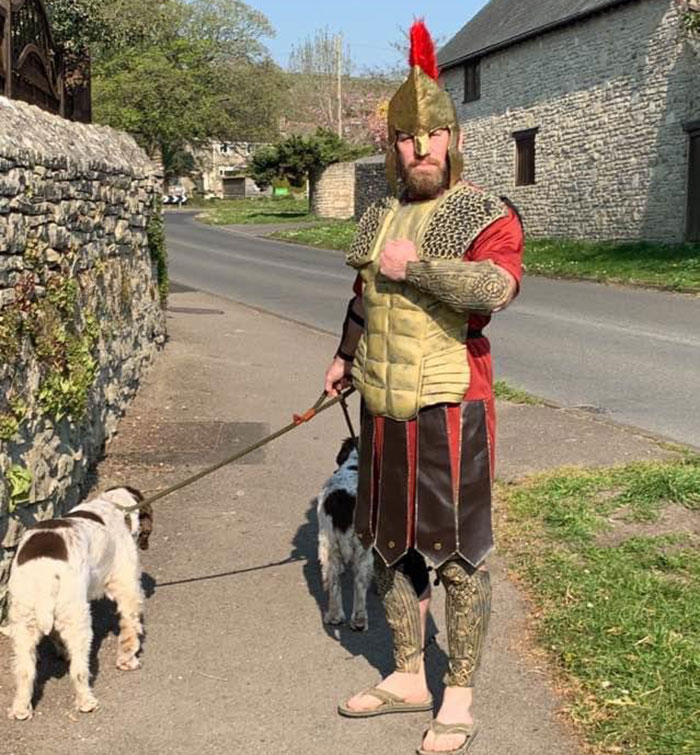
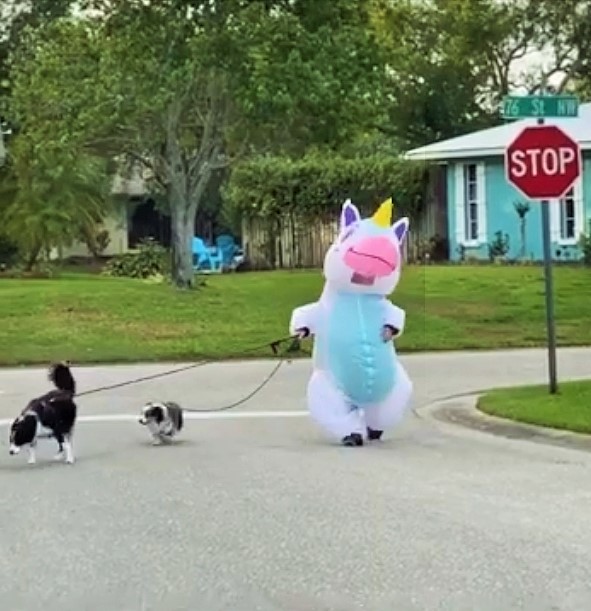
Several localities are under extremely strict lockdown measures that residents are only allowed outside for specific errands, such as walking the dog. If walking the dog is the only opportunity you have for going outside, you might as well do it in style.

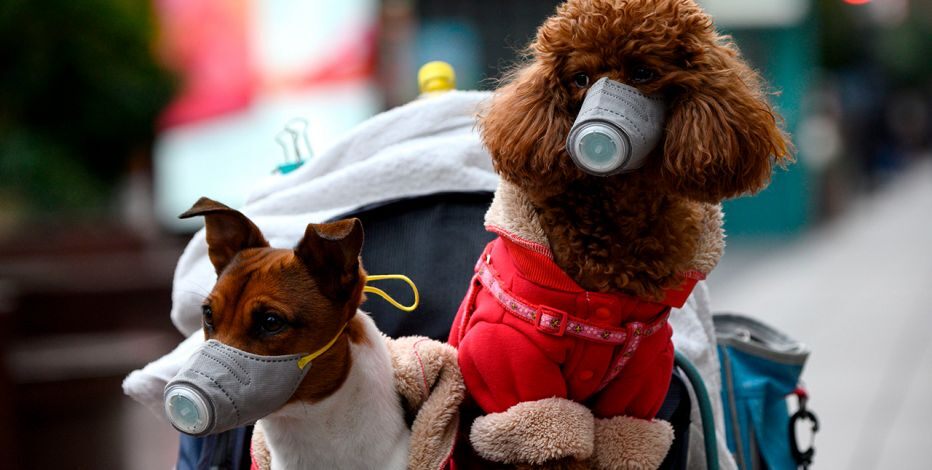
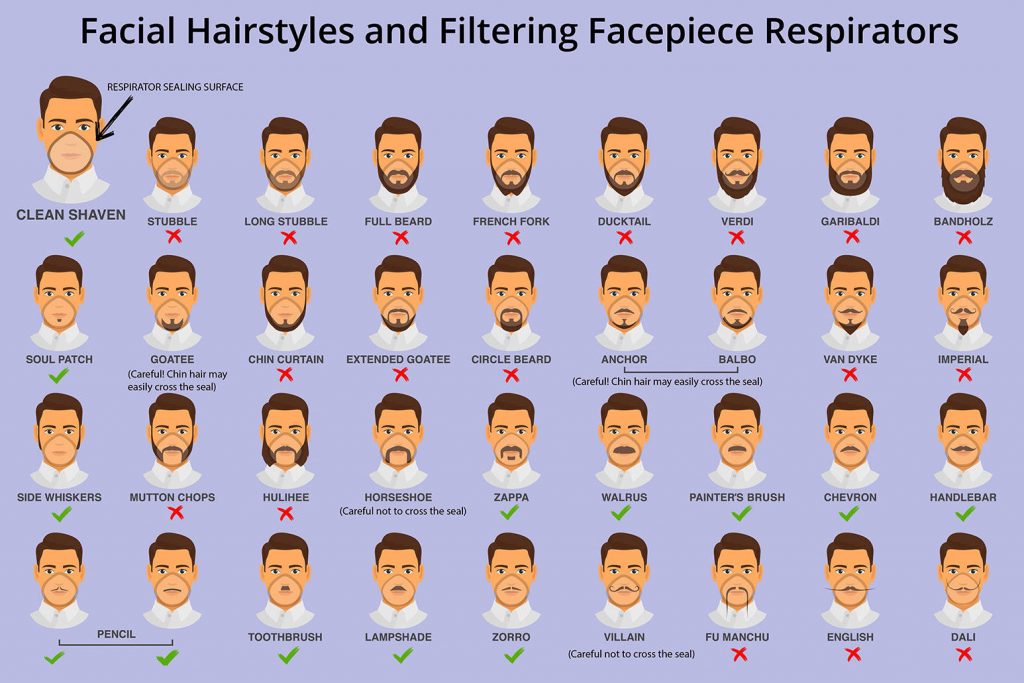
Don’t put a facemask on your dog. It doesn’t help anything, and it annoys the dog.

While the zoos and aquariums are closed and everyone is staying home, take a virtual trip. Many parks and zoos have installed virtual tours and live-feeds of animals. These are a few of my favorites.

The World Health Organization has announced that dogs cannot contract COVID-19. All dogs previously held in quarantine will now be released. To be clear, WHO let the dogs out!
Who? Who? Who?who!

HAIR IN THE TIME OF COVID-19

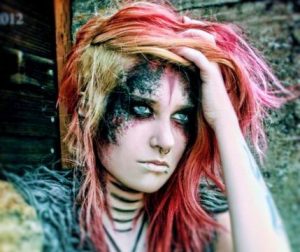
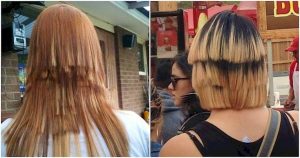
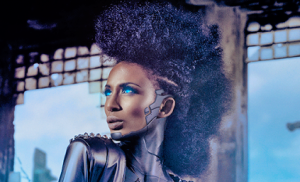
A while back, I posted a blog on hair and what it says about a character—or at least what impression it makes on others. So what can we glean from how a person (or character) deals with hair now that beauticians and barbers are deemed “nonessential”?

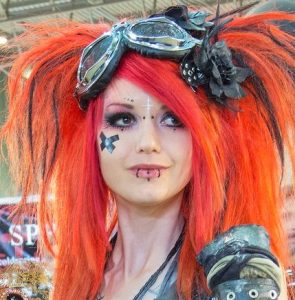
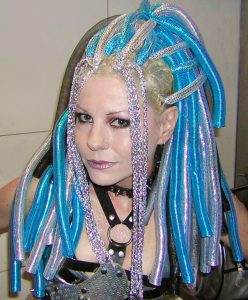
As best I can tell, there is a big divide in hair care priority between those who are deemed essential in jobs that require working onsite and those who are staying home. The former are under more pressure to keep up appearances. But both groups include essentially three subgroups: those who are happy to let it all flow, those who try to recreate professional techniques on their own, and those who create entirely new styles to fit the situation.

Go With the Flow

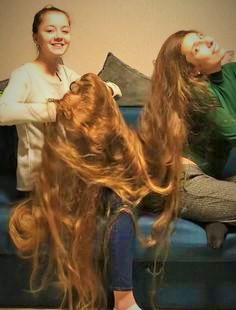
Theses people are doing nothing beyond washing and brushing their hair. The result may be tri-color—for example, dark chestnut coming in, the remnants of highlights, and gray in front or at the temples. Such people may resort to caps or scarves. Over time, ponytails, braids, barrettes, bands, and ties come in handy. And think wigs! They can be ordered online.

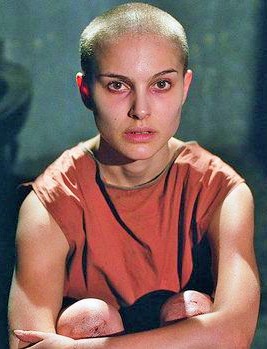
Some would claim this choice is tougher for a man to carry off, to the extent that many men are simply shaving their heads. Women are less likely to choose this option.

Choosing to do nothing is sometimes characterized as “giving my hair a break” from chemical treatments and elaborate coiffures.

DIY

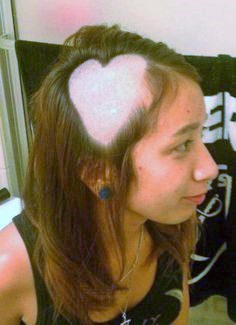
Technically, shaving one’s head might be a form of DIY for people who hadn’t already adopted that look. A close alternative is men who have their spouses or partner’s cut their hair, even if they have never cut hair before. Some women opt for this option as well

Some women are cutting their own hair—definitely easier with some styles than others.

But not all households have the basic equipment—hair scissors, clippers, a mirror that allows a steady view of the back of the head. In such situations, what are the alternatives? Think kitchen shears, pinking shears, nail scissors, and safety razors.

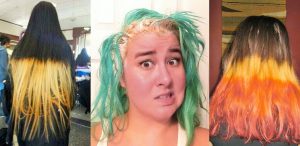
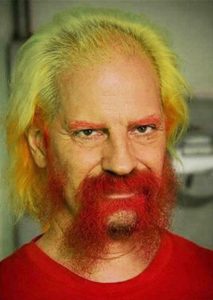
Those who color their hair have denuded the shelves of supermarkets and drug stores of home dye. Professionals strongly recommend against DIY color, saying one may severely damage one’s hair. But, hey, it’s only hair. It’ll grow back, right?

A friend suggested to me that I could color the tips of my hair with red food coloring. She said that my hair is so short, it would be cut off soon. It reminds me that when I was in seventh grade a redheaded friend and I experimented with food coloring. She chose green and I chose blue. We (erroneously) thought it would wash right out. So, no red tips. But blue to match my eyes? Maybe.

And that reminds me: so-called temporary hair color is permanent if you have previously had your hair lightened.

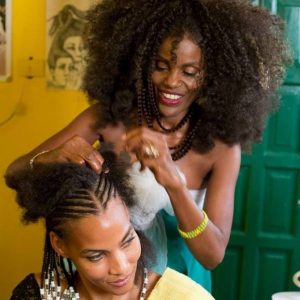
DIY may be exceptionally difficult for Black women. The importance of hair care has resulted in a massive industry, worth $2.5 billion at least, including chemical relaxers, braiding services, hair pieces, and so forth. Women may feel uncomfortable wearing “natural” hair, and many more are unable to create their customary look from home.

Rebels

These are the people who have decided hair care is essential and therefore defy the stay at home/social distancing injunctions. Either the client goes to the home of her/his hairdresser or the practitioner comes to the home of the client. Both greatly increase the risk of spreading the virus, of course.

Getting Help

I’m not a YouTube fan, but there are a gazillion (by actual count!) options for videos of home hair care. Recently, salon experts have been posting and advising their clients to take a look. Some salons are delivering professional supplies and equipment to their clients’ homes in sanitized packaging. And some practitioners are setting up video chats with clients to talk them through coloring or braiding their own hair.

Bottom line for writers: How a character responds to the hair care crisis is a clear reflection of personality. Use it!

WHAT’S THE TOILET PAPER PANIC COME TO?

Toilet paper wedding gowns!

Surely everyone out there is aware of the (apparent) worldwide toilet paper shortage. Although people who claim to know say there is plenty of TP to go around, what shoppers actually see are miles of empty shelves. And there’s no denying that the TP panic has led to weirdness.  Lots of weirdness.

Writers note: if anything in this blog is useful for your writing, it’s purely incidental to what I hope is the smile factor. (I won’t be able to reference every individual incident. They’re all over the internet. You can look it up!)

Ingenuity or Desperation

A thief in Eugene, Oregon smashed the entire back window of an SUV to steal two 30-roll cases of TP, along with any miscellaneous valuables within reach. That turns out to be small potatoes. Police in Guilford County recovered a stolen 18-wheeler loaded with over 18,000 pounds of TP.

In Hong Kong thieves held up a supermarket delivery driver and made off with hundreds of rolls. Authorities estimated that the value of the TP was $218 (HK$1700) but could be sold for much more on the black market.

A man in the UK crammed his van so full of scarce paper products that he was over the legal weight limit for his vehicle and had to pay a fine worth more than $370 (GPB 300).

Hoarders and others with a supply have offered TP and other scarce items online at sites like eBay and Facebook Marketplace for extreme prices to such an extent that efforts to curb price-gouging have been put in place. Several customers have had their accounts suspended.

One man jumped ahead of the curve, going to small towns in his area and buying out the TP and hand sanitizer from the shelves of mom-and-pop stores, Dollar Stores, etc., and then offering them online at such excessive prices that he’s been barred and is stuck with a garage full of supplies he cannot sell.

A similar scalper in Australia had his hoard seized by police and donated to local shelters.

Brick and mortar stores have started imposing limits on how many of each item individual shoppers can buy. Once stores moved to control bulk buying—such as limiting the number of packages customers can buy in one day—desperate people took desperate measures. For example, each member of the family going into the store separately to buy the maximum. When Wegman’s limited people to two packages of TP per day, someone bought the TP and then came back ten minutes later wearing a hat and sunglasses and tried to buy more. 

Some people are not happy with the limiting of purchases. Near Richmond, VA, a man arrived at the supermarket check-out with a cart full of paper napkins. When told he could buy only two, he yelled, “F**k you!” then upended the cart and walked out.

The situation has gotten so crazy in some parts of Australia that police are having to guard pallets of toilet paper in stores, handing packages to customers one at a time.

Recently, my endodontist’s receptionist told me that they had locked up their supplies of  toilet paper, hand sanitizer, and other items that had begun to disappear. Public restrooms in gas stations, fast food restaurants, and convenience stores have done the same.

Perhaps they should follow the lead of a convenience store worker in Japan. She hung signs with images of eyes and kanji characters in front of the TP to curse the rolls. The symbols imply that anyone pilfering the TP will be hunted down and eaten by a hungry monster. And the pilfering stopped! Never underestimate the power of superstition.

Security cameras were also watching this TP thief at a hotel.

An Internet cafe in Florida posted the following hand-written note in the bathroom: “Stealing toilet paper at this point in time is not funny. I pray that you do not get the virus— But if you do . . . God was watching!” There was no report of the note’s effectiveness.

Once shelves were denuded of TP, people started stocking up on tissues, paper towels, wipes, and napkins. But flushing such things is likely to screw up the plumbing, septic systems, and sewers. City officials in Ankeny, Iowa tweeted the plea to flush only human waste and TP. The city of West Des Moines posted similar pleas not to flush wipes, paper towels, napkins, diapers, feminine hygiene products, socks, dryer sheets, or facial tissue. Johnston, IA, added toothbrushes and toys to the list! 

Iowa isn’t the only place where such warnings are needed. A Tacoma, Washington plumbing company reported an instance of people flushing pieces of T-shirts down the toilet. They routinely give a roll of TP to people who have called them in. 

An Arkansas florist turned his pre-COVID-19 stash of TP into “floral bathroom tributes” just $75 (for about 9 rolls). And TP is becoming a welcome wedding gift.

TP has become such a valuable commodity that retailers are rewarding customers with rolls of it. A pizza restaurant in Milwaukee, offered a roll of TP for every large pizza bought.  Other large restaurants from coast to coast have started similar TP giveaways. And some establishments accept toilet paper in lieu of money!

An Australian newspaper, NT News, included eight blank pages in the middle of the printed pages to be used as TP, complete with cut lines so customers could get the maximum number of squares.

An LA jewelry store decided to use toilet paper as a marketing ploy, as advertised here.

Arcade owners in the UK and Hong Kong have replaced the usual plush toys in claw game machines with rolls of TP. Other similar vending machines offer hand sanitizer and other personal hygiene products to the prize pool.

No doubt, somewhere out there, someone is standing in the median of a roadway holding a sign that says, “Will Work for Toilet Paper.”

On the Flip Side: Acts of Generosity

In Coral Gables, FL, Church by the Glades announced a day and time for people to pick up free toilet paper.

In Summerville, SC, police issued rolls of TP to drivers in lieu of tickets.

NT News, an Australian newspaper, has begun including extra sheets of blank paper in the centerfold, specifically for use as toilet paper.

Traveling/Keller (an Atlanta-based marketing firm) is one of many companies that are temporarily closed. Having enough TP on hand for 1,000 employees, they decided to give it away. Employees threw rolls of TP through the open windows of cars driving by in their “Toilet Paper Tosses” initiative.

On a smaller scale, many people have been offering a roll or two to friends or family in need, going to the store for those who can’t make it out, or donating hygiene products to local homeless and women’s shelters.

The New Currency

Venezualans have experience using toilet paper and diapers as currency, after skyrocketing inflation. It seems the rest of the world may be catching on.

Alternative Methods of… You Know

There is a fatberg under London that is the size of a bus!

There are plenty of other materials with which to maintain your personal hygiene when you don’t feel up to facing the hordes at the stores. Be aware, though: many of these alternatives cannot be flushed. Sewage systems around the world are becoming clogged by “fatbergs” of flushable wipes (that aren’t flushable), paper towels, diaper, sanitary napkins, and all the other alternatives people experimented with.

Stop. Think. 

Do you really need to buy TP right now? Most standard 2-ply, 1000 sheet rolls should last about a week. But for a number tailored to your household, there’s an online calculator for that.

P.S. Police departments around the country are reminding people: Don’t Call 911 If You Run Out Of Toilet Paper. It is not a life-threatening emergency.

What to Do When You Realize You Can’t Return It

Some people have already realized the folly of buying pallets of squished-up trees in preparation for a respiratory illness, but most stores have policies in place refusing returns. Here are some other ideas! (These photos were taken before February 2020.)

Anyone care for a slice of cake?

FINDING JOBS THAT FIT YOUR CHARACTERS

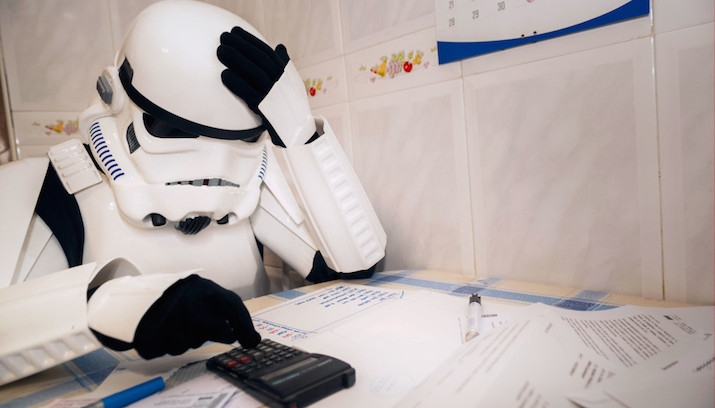
They say there is an ideal job for every person, and in an ideal world every worker would find a job that absolutely suited their skills and interests. The world we live in is, alas, not an ideal world. The world you create through your writing can be as ideal as you choose, and the jobs held by characters can be a perfect fit. Or not.

Is being Scottish a career?

A perfect job match for a character can demonstrate their talents and background. An imperfect job match can be a source of conflict, humor, or even plot development. The ways in which characters find a career path can be just as revealing as the job itself: some people join the family business whether they have the aptitude and interest or not; some people slowly work their way up the ladder to the job they actually want; some people have an innate talent, honed by practice. Some careers are dependent on the setting (such as a snowshoe maker or dinosaur wrangler), but most types of work have some equivalent in every genre.

Jobs for people who love working with their hands.  Educational requirements, apprenticeships, licenses, etc., vary by job. Some have no requirements beyond on-the-job training. Both introverts and extroverts can find tactile jobs to suit their interests (in theory, at least).

  • Carpenter
  • Casino dealer
  • Chef/baker
  • Construction worker
  • Electrician
  • Hairstylist
  • Massage therapist
  • Mechanic
  • Sign language interpreter
  • Stagehand
  • Welder

High-paying, low-stress jobs for introverts.  These are jobs for characters who prefer independent tasks and interactions with smaller groups of people/coworkers. They typically require post secondary education. Apart from convenient plot devices, these jobs are unlikely to include terrifying catastrophes and world-ending deadlines. Usually.

  • Atmospheric scientist
  • Computer and information research scientist
  • Electronics engineer
  • Software developer
  • Technical writer
  • Technical translation

High-paying jobs with good work/life balance.  Education/training varies, but a common thread is that these jobs typically don’t require on-call or emergency response. (Actually, most writers earn very little from their writing, but the possibility is always there.)

  • Physical therapist
  • Dental hygienist
  • Web developer
  • Postsecondary teacher 
  • Writer/author

Jobs that require good observational skills.  Educational requirements vary, as do salaries. Despite high demands on the personal time and physical strength of people working in these fields, many have salaries significantly below the U.S. median.

  • Registered nurse
  • Veterinary technologists and technicians
  • Sociologists
  • Police and sheriff’s patrol officers
  • Private security
  • Environmental scientists and specialists
  • Childcare workers

Jobs that offer the possibility of frequent crises. Some people are perfectly suited for staying calm and doing their job in the middle of an adrenaline rush; some people simply love the adrenaline rush. Contrary to what television would have us believe, these professions are not a constant stream of accidents and terror. However, characters working in these jobs could be a very handy source of action to drive a plot.

  • Firefighter
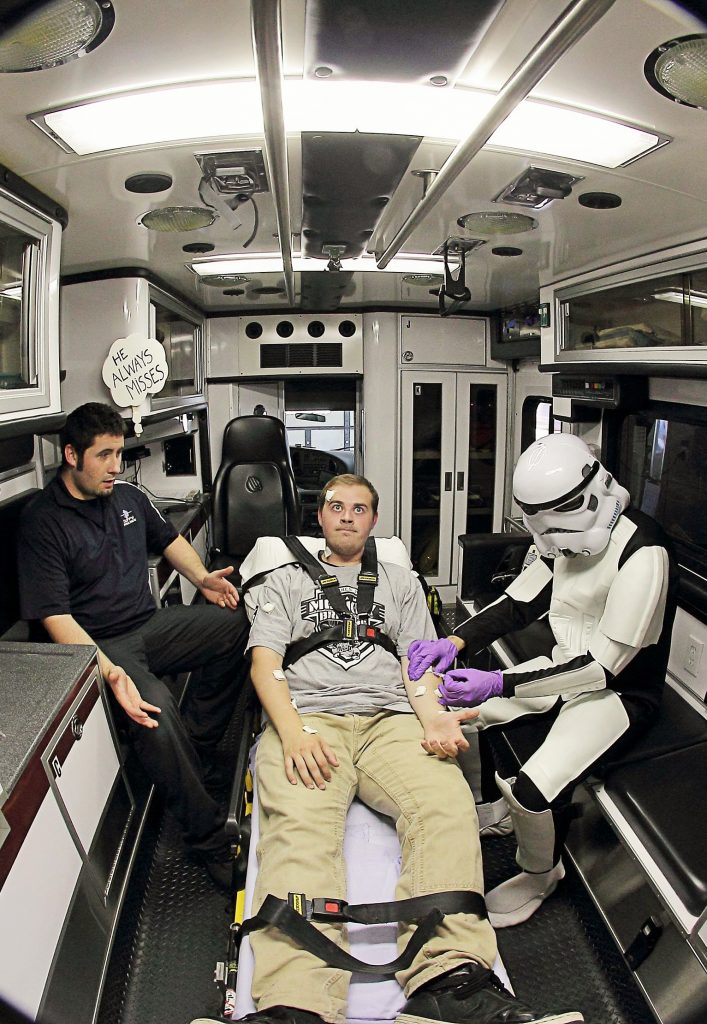
  • Paramedic or EMT
  • ER surgeon
  • Personal security
  • Test pilot
  • Stunt driver
  • Middle school teacher
  • Parent of a toddler

Jobs that do not require reading.  Approximately 800 million adults worldwide are functionally illiterate; in the US, 36 million adults cannot read or write above a third grade level. The reasons for illiteracy are almost as varied as the people affected by illiteracy: inadequate or inappropriate education, poverty, social prejudice, learning disability, mental disability, physical disability, poverty, gender bias, etc. There are few jobs that require absolutely no reading, but there are several that don’t rely heavily on that skill.

Side Note: Functionally illiterate adults develop a variety of methods to get around in society; consider how you might write such a character.

  • Animal care and service workers
  • Crafts artists
  • Dancers
  • Fishing and hunting workers
  • Photographers
  • Agricultural work
  • Musicians/singers

Jobs that require little or no prior training. The eternal question “How can you get job experience if no one will hire you without experience?” applies in just about every career you can choose. Being born into a family of royals, subsistence farmer, or reincarnated dragon whisperers kind of limits career choices. For the rest of us, we have to start with anything we can find. That does not mean these jobs are any easier or less vital.

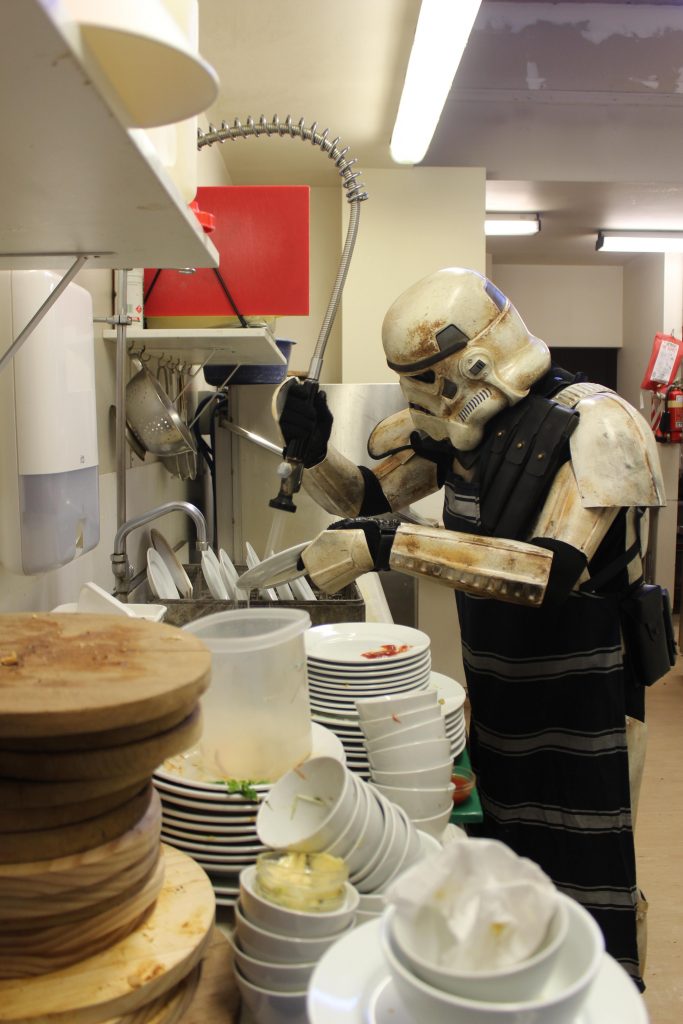
  • Dishwasher
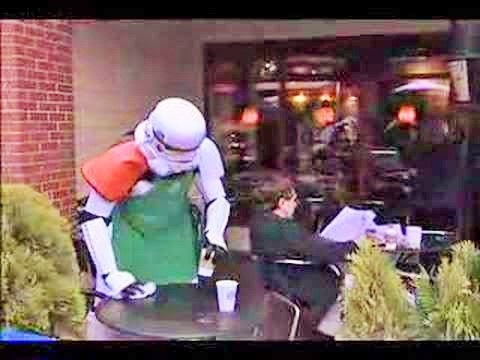
  • Waiter or tables busser
  • Retail customer service
  • Housekeepers
  • Home delivery
  • Window washers
  • Shelf stockers
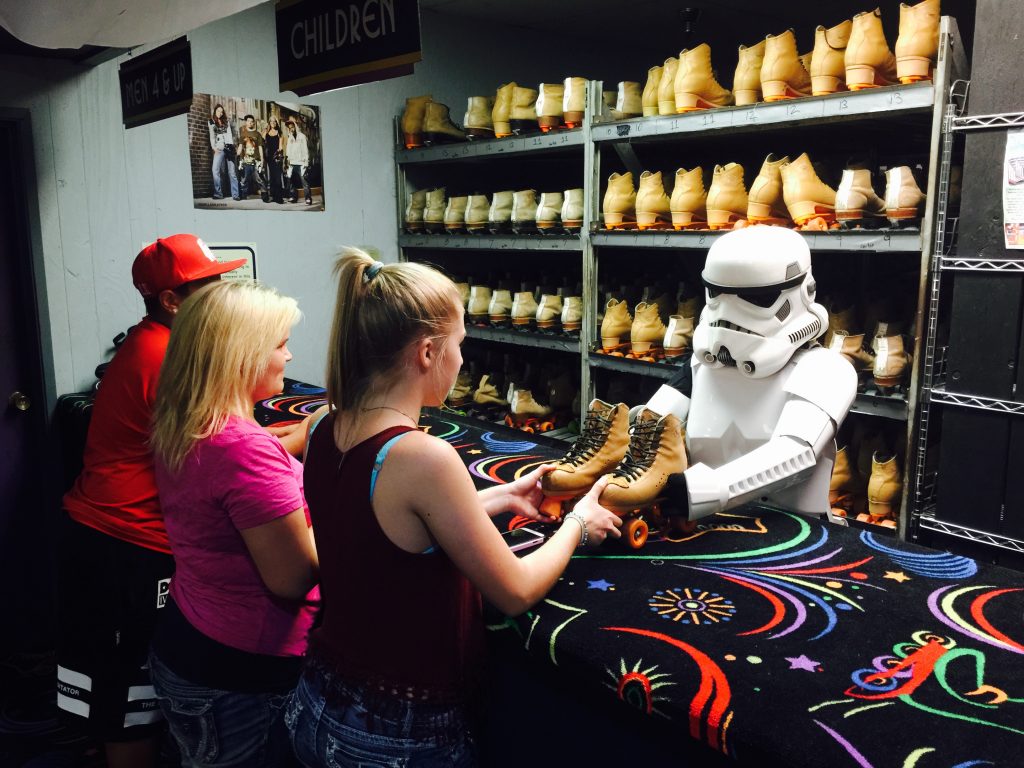
There’s always one…

Bottom Line for writers: if you are creating a new character, consider jobs that fit!

Public Service Announcement: The Red Cross is in desperate need of blood donations right now. Please take a trip to your nearest donation center if you possibly can.

JOBS YOU PROBABLY NEVER THOUGHT OF

In these days of the pandemic, I spend my days going to doctors’ appointments, watching my flowers bloom, and wandering around the internet. I recently browsed several jobs lists, and thought you might be interested in the following. 

Writers note: Maybe they could contribute to characters or plots.

  • Scuba Diving Pizza Delivery 
    • Yes, there is such a job. An underwater hotel in Florida (a bit of an oddity itself) offers pizza which is brought in a watertight case by a scuba diver. (Although food delivery is still allowed, I doubt the hotel has guests just now.)
Yum.
Mr Marmite
  • Marmite Taster 
    • Why not? After all, there are tea tasters, coffee tasters, wine tasters, etc. Indeed, there is a whole team of Marmite tasters who check for texture, consistency, and flavor.  Marmite—6,000 tons a year of yeasty by-product of beer brewing that very strange [British] people like to spread on toast—is made in Staffordshire, England, and has been since 1902. A taster might eat the equivalent of about 100 jars per year. St John Skelton, also known as Mr. Marmite, retired in 2016 after 42 years as the head of Marmite’s tasting team. He estimates he’s eaten the equivalent of 264 jars over the course of his career.
  • Stunt Taste Tester
I think this pet is confused.
  • Pet Food Taster 
    • One might expect dog foods–including canned food, dry food, bones, chews, etc.—to be tested by dogs, and maybe they are. But they’re also sampled by humans who rate the flavor and texture compared to rival brands and human food. Indeed, pet food tasting is mostly pet food testing and development. These tasters usually hold doctoral degrees, and do a lot of things besides tasting, but in the end they must smell and taste the products. Smell may be as important as taste, given that pet owners are very picky about smell—and probably don’t taste the product themselves.
  • Nose 
    • And speaking of smell, being a “Nose” is an actual job in the perfume industry (and in other industries, though not as commonly) . Also known as a perfumer, a Nose must have an extraordinary sense of smell, used to select and combine elements to create designer fragrances. This job requires more talent than training. Although primarily identified with perfume fragrances, Noses in the food industry create synthetic and natural aromas to be added to prepared foods. The salary range is very broad, but the median salary (in 2010) was $68,320.
  • Dice and Card Inspector 
    • Gambling is a highly regulated industry. Part of the process is having someone measure all the sides of the dice to ensure that they are equal, that the corners are square, and that they haven’t been manipulated to land on a certain number. They are also in charge of periodically destroying cards and dice. They may be employed by state authorities, casinos, or manufacturers. Best estimates of pay range from low 5- to low 6-figures.
Those gloves don’t look thick enough to stop any fangs.
  • Snake Milker 
    • Technically, only mammals produce milk. So what do snake milkers collect? Venom of poisonous snakes, such as asps, vipers, cobras, corals, mambas, kraits, and rattlesnakes. This is hands on—right behind the head, getting the snake to release venom into a jar, beaker, etc. The venom is used to make anti-venoms and other medicines. 
Ancient Egyptian mourners had a well-established pricing structure for their services.
  • Professional Mourner 
    • In many parts of the world, both Ancient and Modern, a loud funeral is supposed to help the dead travel to the afterlife. (It is also a sign of respect from the surviving family members and a chance to display wealth.) Therefore, the crying and weeping of family and friends is augmented by the weeping and wailing of people paid to do so. Modern mourners, technically known as moirologists, can be found online and often charge per service, such as having hysterics and trying to jump into the grave.
    • You can also hire yourself out as a wedding guest or bridesmaid, with extra charges for making fantastic toasts or getting the dancing started.
  • Train Pusher 
    • As far as I know, this job exists only in Japan. These people, “oshiya,” are paid to push passengers into subway cars in order to reach maximum capacity before the doors close.
Pizza and beer not provided. Pizza shirt possibly provided.
  • Full-Time Netflix Viewer 
    • Yep, people are actually paid to do that. Before content is released to the public, an employee views it and assigns a tag, which aids viewers in finding exactly the type of program they want.
  • Drying Paint Watcher 
    • Someone can actually earn a living painting sheets of cardboard to test how long new paint takes to dry, watching for whether it changes color or texture. Hmmm… I wonder whether a colorblind person could do that.
Not creepy at all
  • Living Mannequin
    • For those who have very precisely proportioned bodies and dreams of making everyone’s deepest nightmares come true, working as a living mannequin is the ideal profession. They wear selected clothes and accessories, sometimes with very specific makeup and hairstyles, and pose as part of the store display. Staying very still, staring blankly into the distance, ever-so-subtly shifting as they breathe… And now I’m off to have nightmares!
    • Human Scarecrows are also available to make sure no one ever runs out of nightmare fuel. They’re technically paid to keep pests out of crop fields, but that’s really just a side gig.
Some agencies offer the service for free, but they tend to shed all over the blankets.
  • Professional Sleeper 
    • This is my personal favorite, though I don’t know how many hotels actually have such a person on the staff. Basically, the sleeper sleeps in a different bed each night and makes an evaluation of the bed’s comfort and how satisfying the night’s sleep was. But don’t quit your day job. A professional sleeper earns about $15,000 a year. If paid by the hour, it’s about $10.
    • Professional Bed Warmers perform an essential service for the most discerning hotel customers – huddling under the covers until the patron is ready to go to bed, ensuring there is no shock of cold mattress and chilly sheets. Hot water bottles and electric blankets lack that personal touch.
  • Professional Cuddler 
    • These people aim to make people feel respected, accepted, and worthy by one-on-one, fully clothed, platonic cuddle sessions. Depending on the level of contact, cuddling may also be an effective treatment for skin hunger, the human need for physical contact with other people. Cuddle sessions may be preferable to professional sleeper, for cuddlers earn about $80 per hour.

Bottom line for writers: novelty and variety are good things!