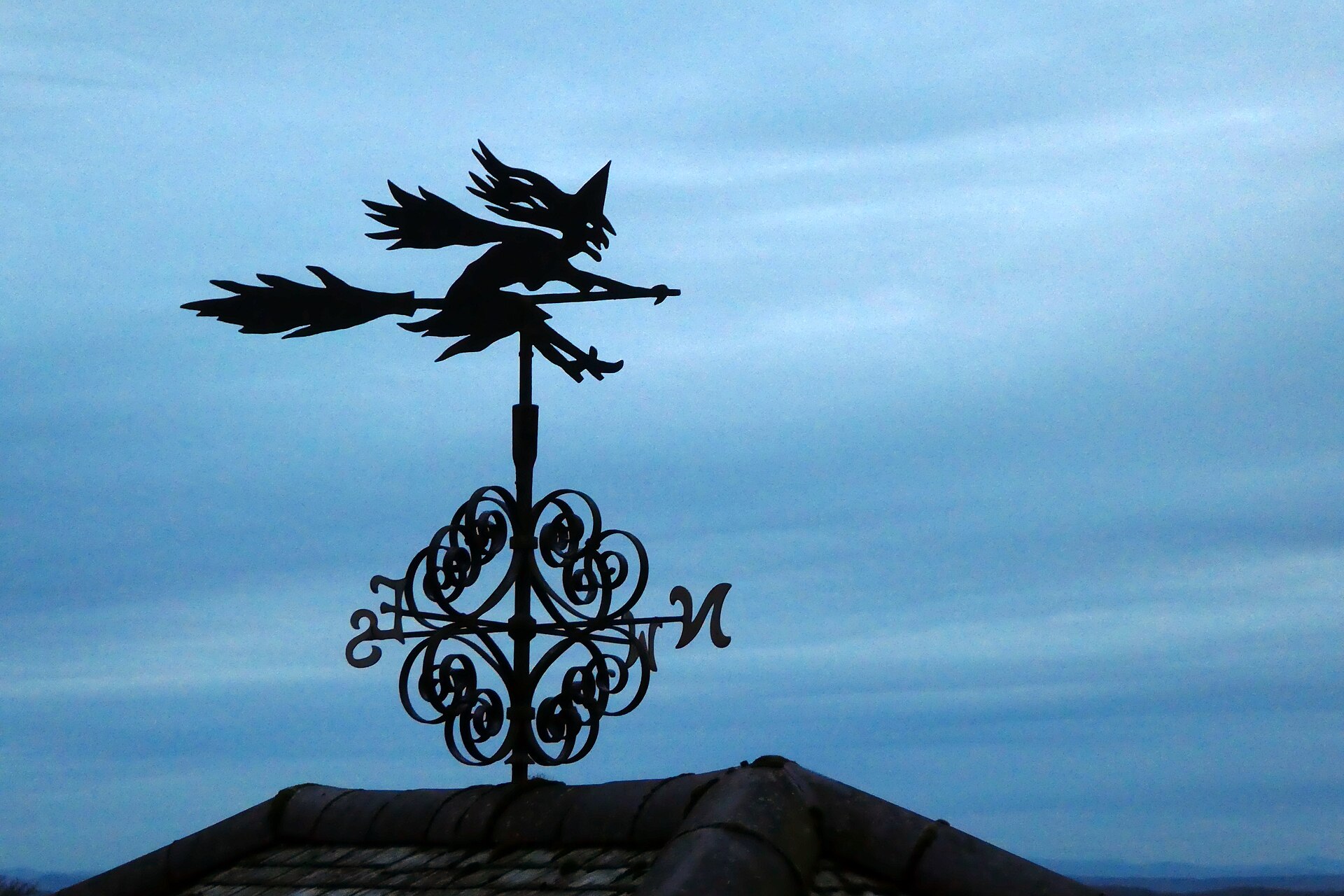
Halloween is nearly upon us, and witches seem to be everywhere, from costumes for trick-or-treating and Halloween parties to yard displays. But why? Granted, popular society associates Halloween with all sorts of horrific, scary things: ghouls, ghosts, skeletons, death… Witches are lumped in with them. But really, what is a witch?
Witchy History
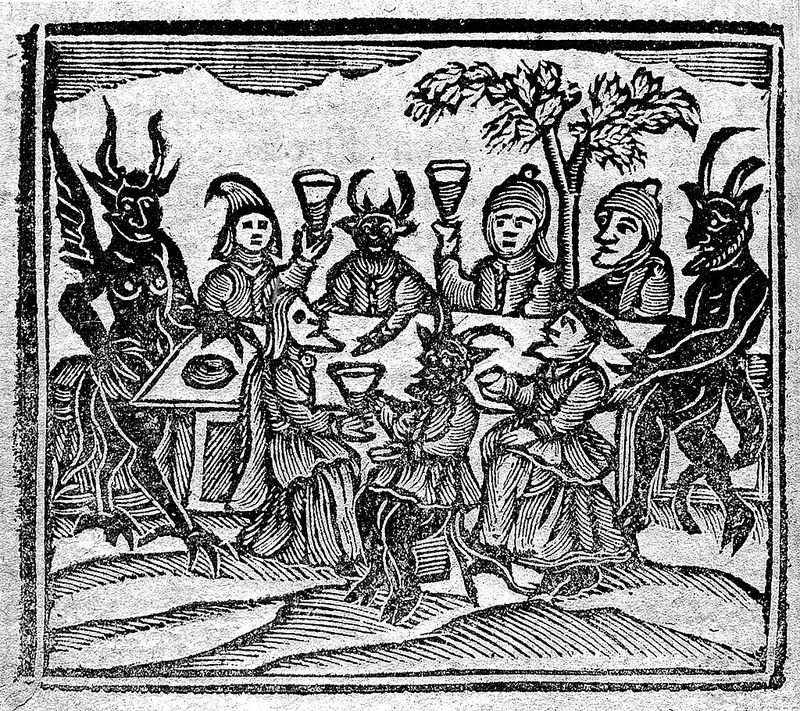
The English word witch—from the Old English wiċċe, rooted in European folklore and superstition—means a practitioner of witchcraft, magic or sorcery. Associated with malevolent magic, those accused of witchcraft were the target of witch-hunts. Consider the Salem witch trials.
In the modern era, the term has taken on different meanings. (In current colloquial English, witch typically refers to women, with the male equivalent being warlock or wizard.) Contemporary dictionaries currently distinguish five meanings of the noun witch:
- A person (especially a woman) credited with malignant supernatural powers
- A practitioner of neo-pagan tradition or religion (such as Wicca)
- In this instance, the word Witch is typically capitalized, much like Catholic or Buddhist would be capitalized.
- A mean or ugly old woman
- A hag or crone
- A charming or alluring girl or woman
- This figurative use—as in literature—began in the 18th century.
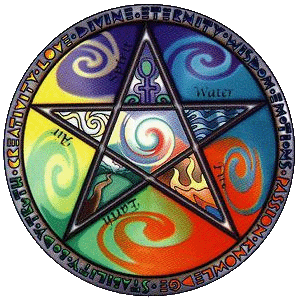
Wicca is the largest of the modern Pagan, or Neo-Pagan, religions. Its followers, who are called Wiccans, typically identify as witches and draw inspiration largely from the pre-Christian religions of Europe. Influenced by earlier forms of Western esotericism, Wicca publicly emerged in England during the 1950s. At that time most Wiccans were members of initiatory groups called covens, although by the early 21st century most followers were instead operating as individuals. Today, Wiccans are mostly in English-speaking Western countries. Followers often use the pentagram, or five-pointed star, as the main symbol of their religion. In neopagan religions such as Wicca the term Witch has been adopted as a label for adherents of all genders.
“Wicca’s rapid spread through the United States during the 1960s and ’70s was part of the broader countercultural zeitgeist, and many of those Americans joining Wicca were also influenced by the new social movements of the period. Informed by second-wave feminism, Dianic Wicca was formed in 1971 by Hungarian émigré Zsuzsanna Budapest as a women’s tradition placing central focus on the goddess. Drawing on the gay rights movement, the Minoan Brotherhood was established in 1977 by Eddie Buczynski as a Wiccan tradition for gay and bisexual men. Growing environmentalist sentiment also had an impact on Wicca, which by the 1970s was increasingly presenting itself as a “ nature religion.” Radical left-wing politics came to the fore in the work of Starhawk), an American practitioner who helped establish the Reclaiming tradition in San Francisco and wrote an influential book, The Spiral Dance (1979). Although many of Wicca’s early proponents espoused conservative and right-wing views, by the close of the 20th century the Wiccan community had more people with progressive and left-leaning opinions.” (Encyclopedia Britannica)
from Encyclopedia Britannica
It is estimated that there could be around 1.5 million witches in the U.S. (This according to Helen Berger, of Brandeis University, 2021 data.)
Witches Today
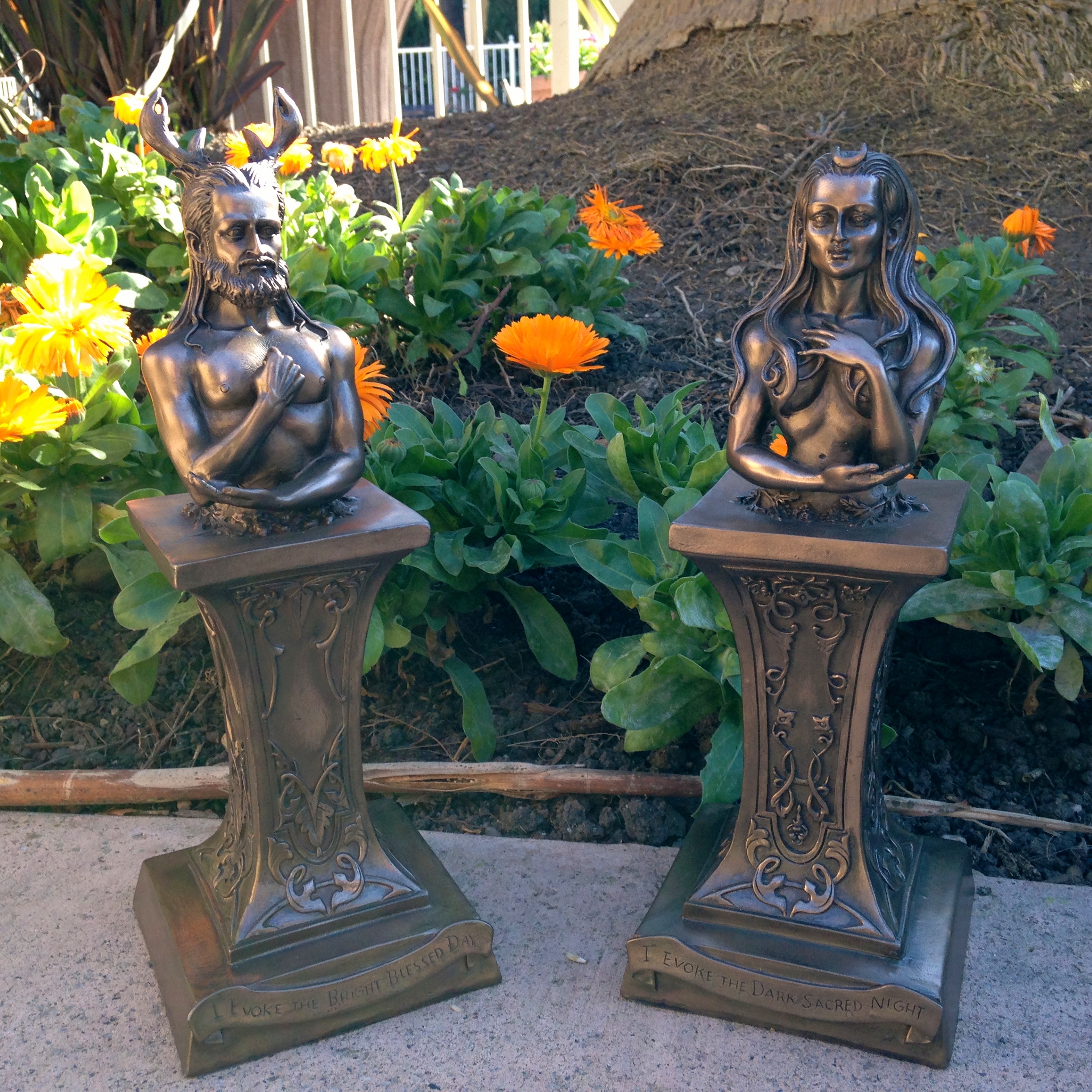
Wicca and Witchcraft are part of the larger contemporary pagan movement, which includes druids and heathens among others. All these spiritual paths, as pagans refer to them, base their practices on pre-Christian religions and cultures.
Berger points out that not all witches consider themselves Wiccans. Based on her most recent survey data, approximately 800,000 Americans are Wiccans. Increasing numbers have self-identified as Wiccan in surveys. The growth of such groups as those on TikTok, suggest that the religion is continuing to grow.
Wicca differs from more mainstream religions, such as Christianity, in multiple ways.
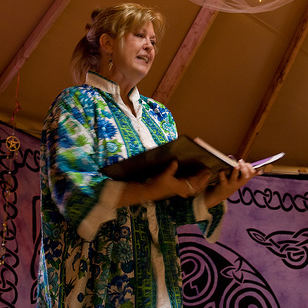
- Celebrating a Goddess as well as a God
- Having no formal institutional structure such as a church
- Putting more emphasis on ritual and direct spiritual experience than belief
- Refering to themselves as practitioners, not believers
- Marking a yearly cycle of rituals, known as sabbats, to celebrate the beginning and height of each of the four seasons of the Northern Hemisphere
- Holding rituals encouraging participants to celebrate the changes the seasons bring to nature and to reflect on how those changes are mirrored in their own lives
- Having no single religious text that they draw beliefs from
- The overriding rule, “Harm none and do as you will”
Today most Wiccans practice alone and are free to develop their own unique practice.
According to Berger, most Wiccans practice magic, to heal themselves and others or to find a new home or job, among other things, and emphasize that magic must not cause harm. “Magic is viewed as changing the practitioners as much as their circumstances, encouraging adherents to pursue self-growth and self-empowerment.”
Bottom Line: For hundreds of thousands of practitioners, Witch has been an identity that has nothing to do with Halloween.