DUOMAIEUSIOPHOBIA – DOUBLE TROUBLE

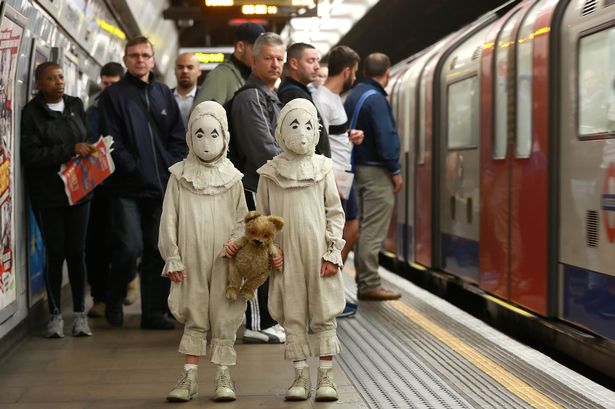
A suspected publicity stunt for Miss Peregrine’s Home for Peculiar Children terrified London commuters.

Today’s blog entry was written by Kathleen Corcoran, a local harpist, teacher, writer, editor, favorite auntie, and reluctant sister, niece, and granddaughter of twins.
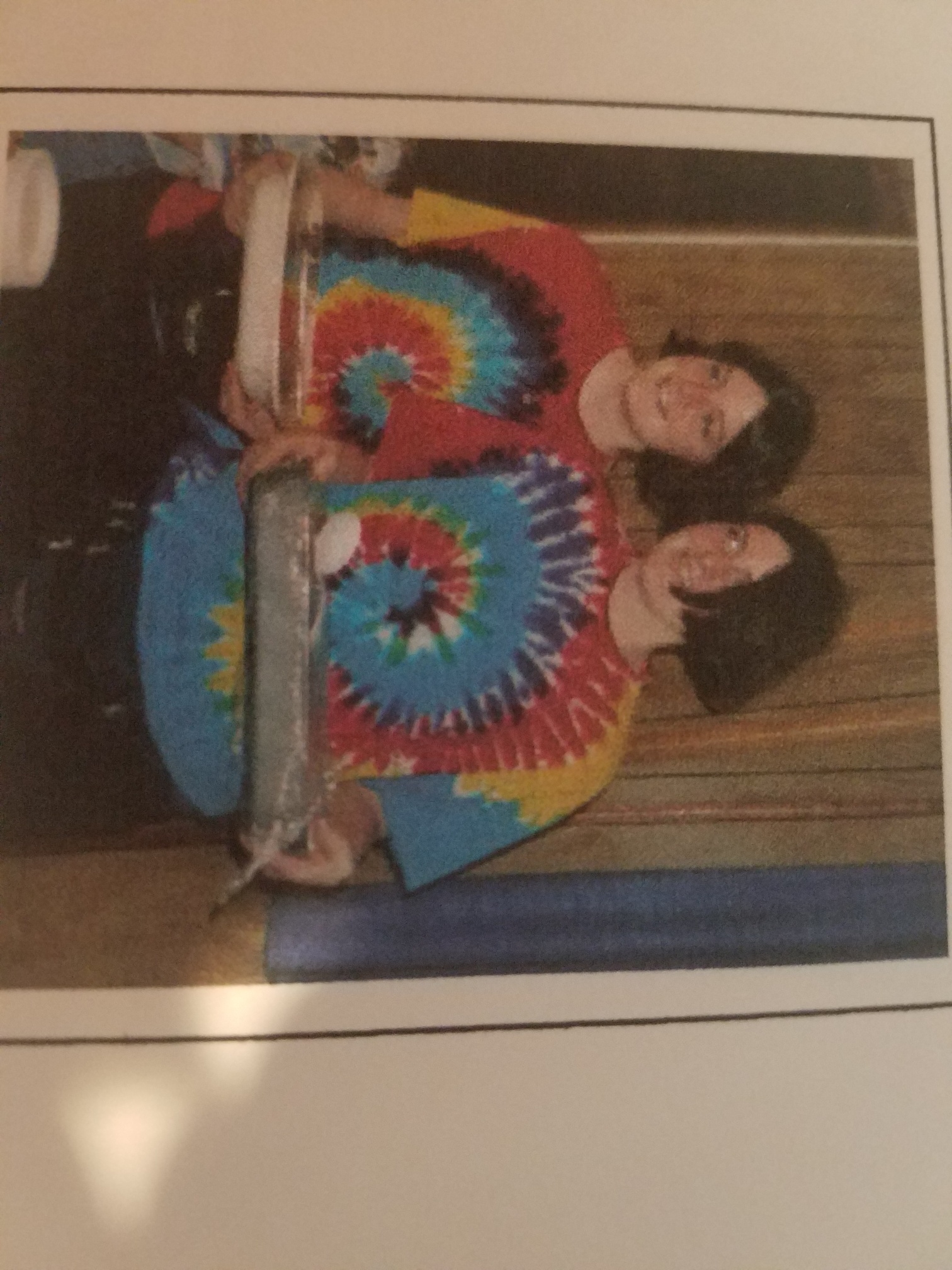
Even they cannot tell who is who in this photo.

Duomaieusiophobia (literally the fear of double childbirth) is the scientific name for the fear of twins, though it can refer to the fear of any multiple birth.  Twins are a very common element in movies and TV, whether identical, fraternal, or imaginary.
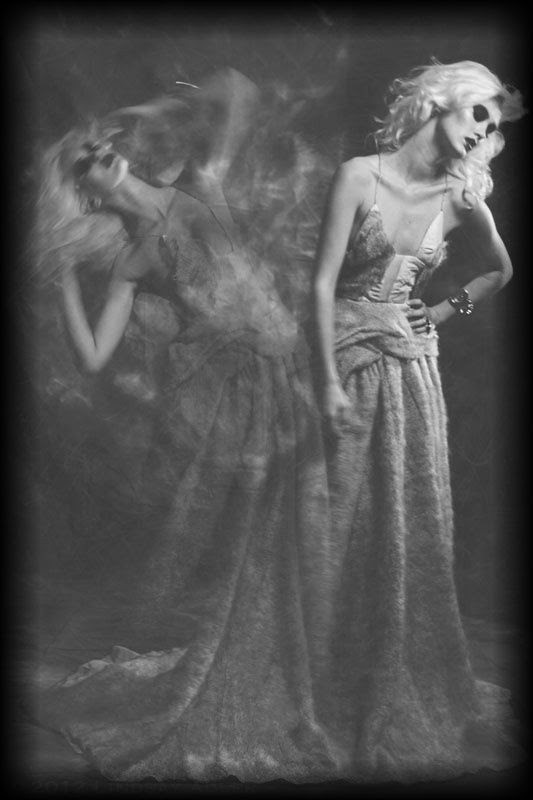
I bet they share absolutely everything!

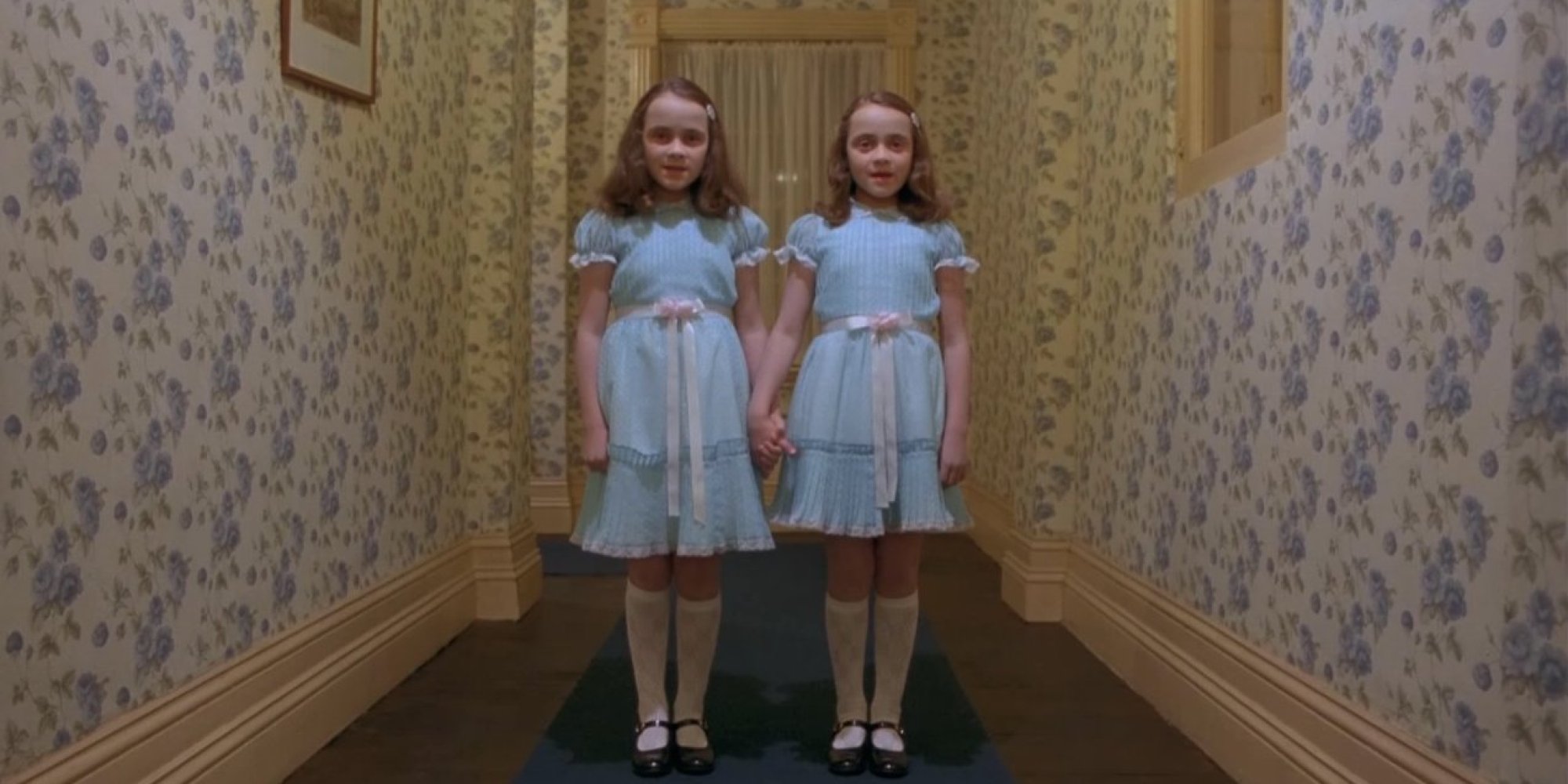
In the horror genre, twins often serve to add an extra element of creepiness even if their relationship is not the primary driver of the plot.  Consider the twin girls in The Shining or the Merovingian’s twin assasins in The Matrix: Reloaded.  Though they are minor characters, their appearance on screen is chilling.
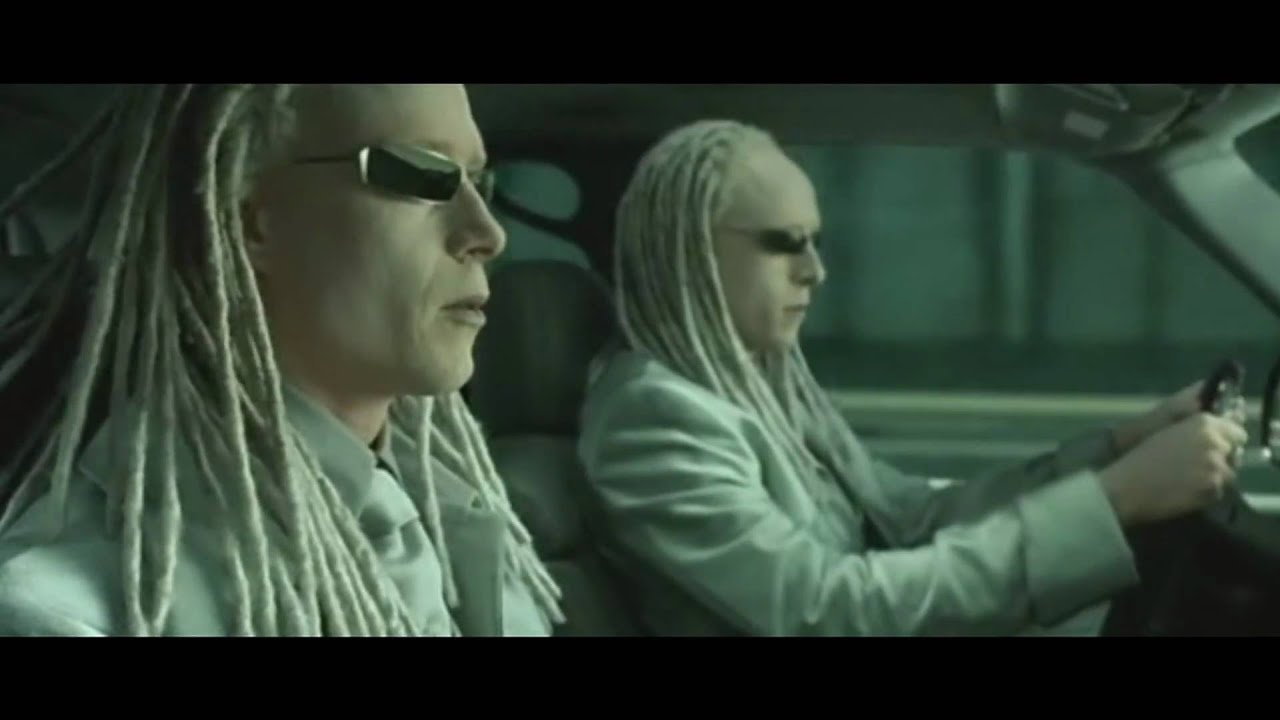
And this is before they turned into glowing electric ghosts

A big factor for this (beyond saving money by only paying one actor for two roles) comes down to our own subconscious: twins pose a threat to our understanding of self-identity and to the way the world works.  In some cultures, twins are seen as lucky or even venerated as having a direct link to the divine.

The Yoruba people have one of the highest concentrations of twins in the world, and they celebrate all of them.

In other cultures, twins are seen as the result of or the bringers of evil and are ritually killed.  At either end, twins are outside of the norm.
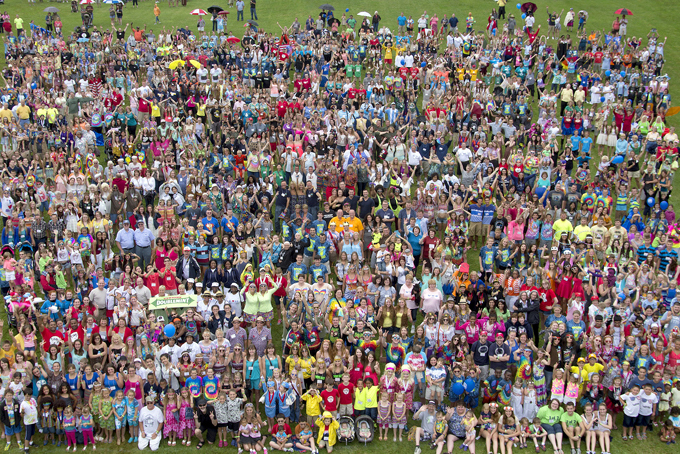
The Twins Days Twins Festival in Twinsburg, Ohio. Just being there was very unsettling.

The Evil Twin

Anthropologists have theorized that twins were originally seen as personifying the duality of nature – day and night, summer and winter, birth and death, etc.  This carried over into mythology, in which twins often played opposite roles, such as Apollo and Artemis controlling the sun and the moon.  Opposite moralities are also a common element in mythology; one twin is good and the other is evil: Cain and Abel, Romulus and Remus, etc.

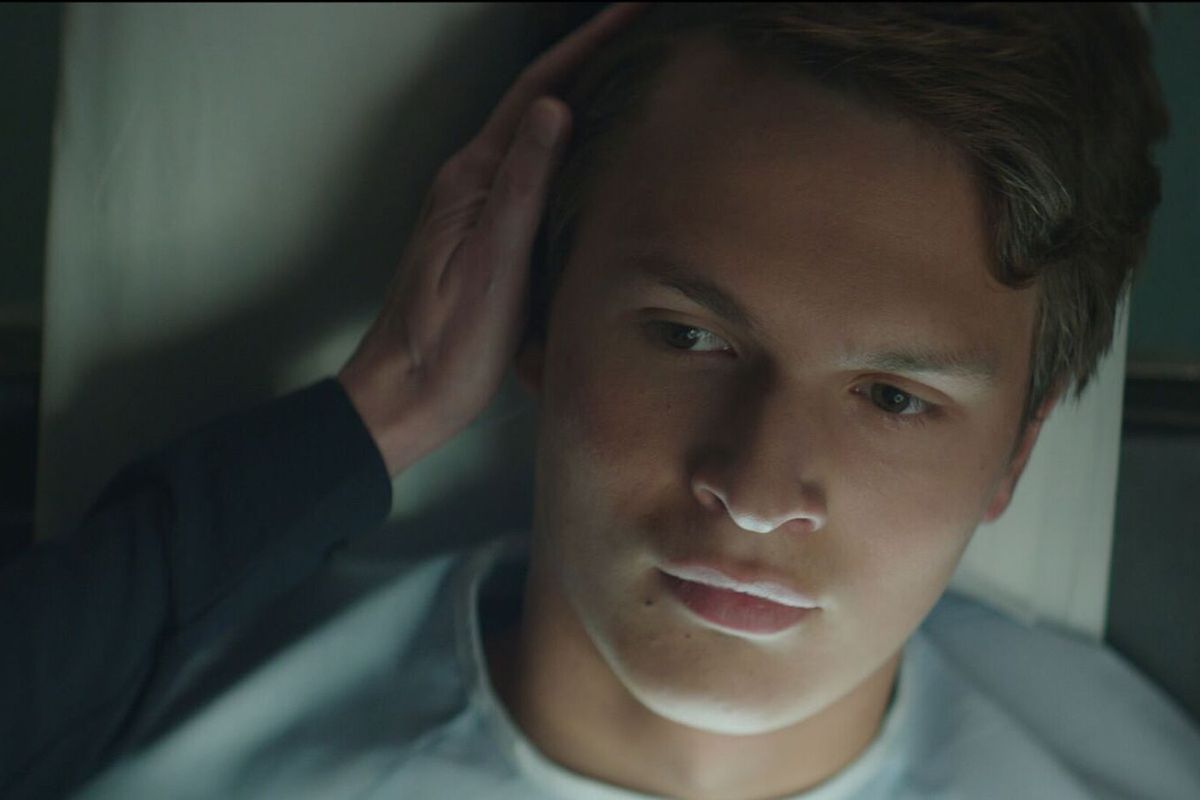
Jonah and Seth Trimble in Seconds Apart. Can you spot the evil twin?

Many horror movies play on this trope.  Twins are identical in every way except for the body count.  This idea is so common that an entire page of TVTropes is dedicated to good and evil twins or clones.  My sisters like to claim that they are both the evil twin.

Bette Davis played both good and evil twins in Dead Ringer.
Margot Kidder played a twin who was so possessive of her sister that she murdered any potential rivals in Sisters.
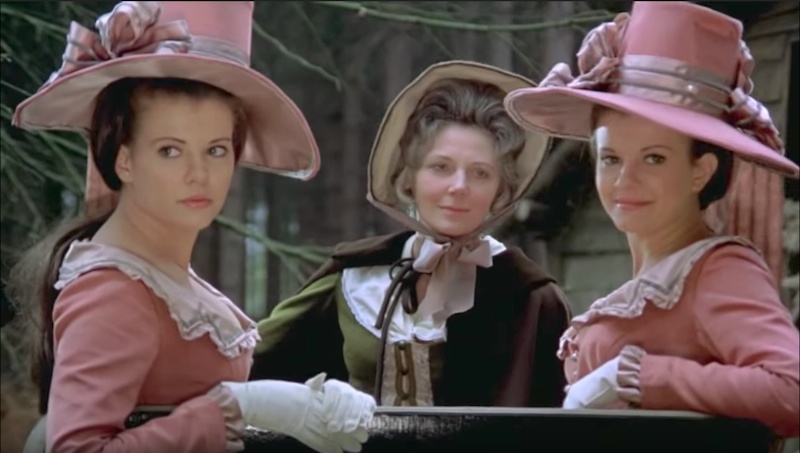
Twins of Evil starred actual twin sisters Mary and Madeleine Collinson, one of whom is turned into a vampire.

Closely linked to the idea of one twin being good and the other evil, there is a common theme of one twin taking the other’s place.  In comedies, this generally results in zany hijinks, as when the Marx brothers all put on Groucho Marx’s iconic mustache and glasses and caused mayhem all over the mansion in Duck Soup.
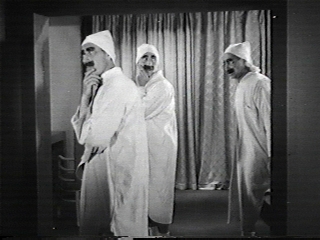
They weren’t actually twins, but Groucho, Chico, and Harpo could certainly pass!

In horror movies, the evil twin generally steps into the life of the good twin for personal gain or allows the good twin to take the fall for nefarious deeds.

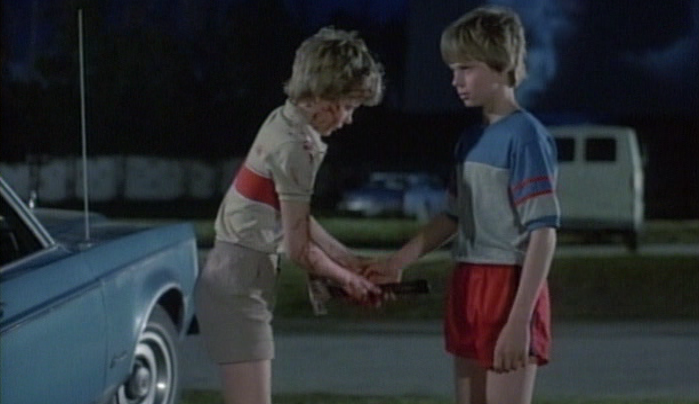
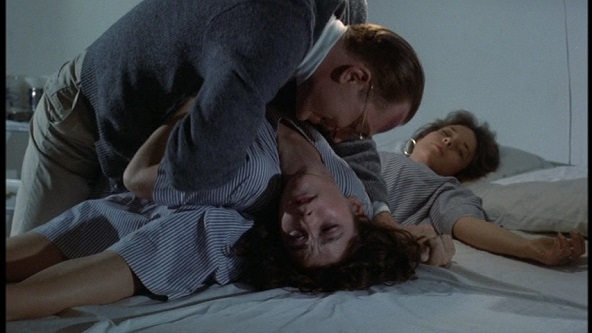
Good twin Holland is punished for evil twin Niles… or so it would seem in the 1972 film The Other.
Blood Rage features a psychotically evil twin who frames his brother for several murders.

The Devil’s Double (2011) features both the good/ evil twin trope and the impostor/ scapegoat trope as well as being based on a true story.  Dominic Cooper plays Saddam Hussein’s son Uday as well as the soldier called up to be Uday’s fedai (a political decoy and body double).
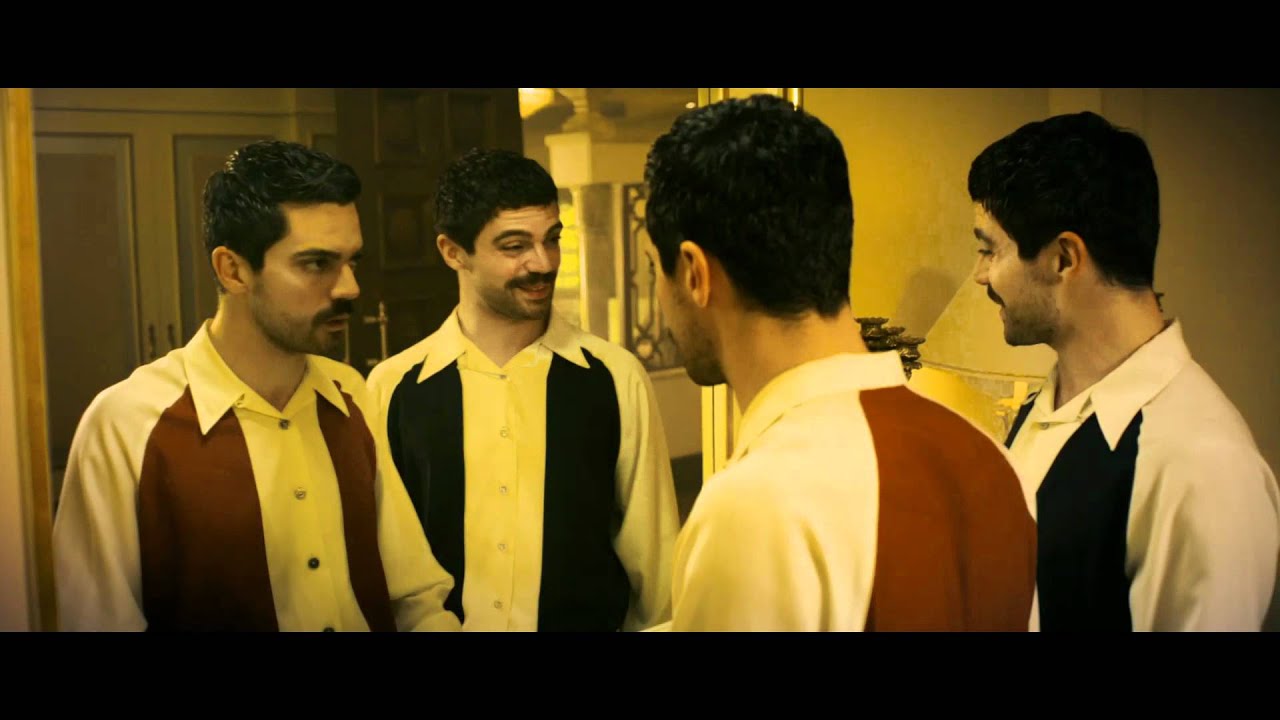
Letif Yahia is rumored to be living in Ireland or Germany now.

Both Twins Are Evil

In many areas of the world, particularly West Africa, twins (or triplets or quadruplets) are viewed as harbingers of doom or even inherently evil.  Chinua Achebe’s novel Things Fall Apart mentions the village custom of abandoning twins in the forest to die.  Some even blame the devastating 2016 earthquake in Tanzania as the work of angry twins.
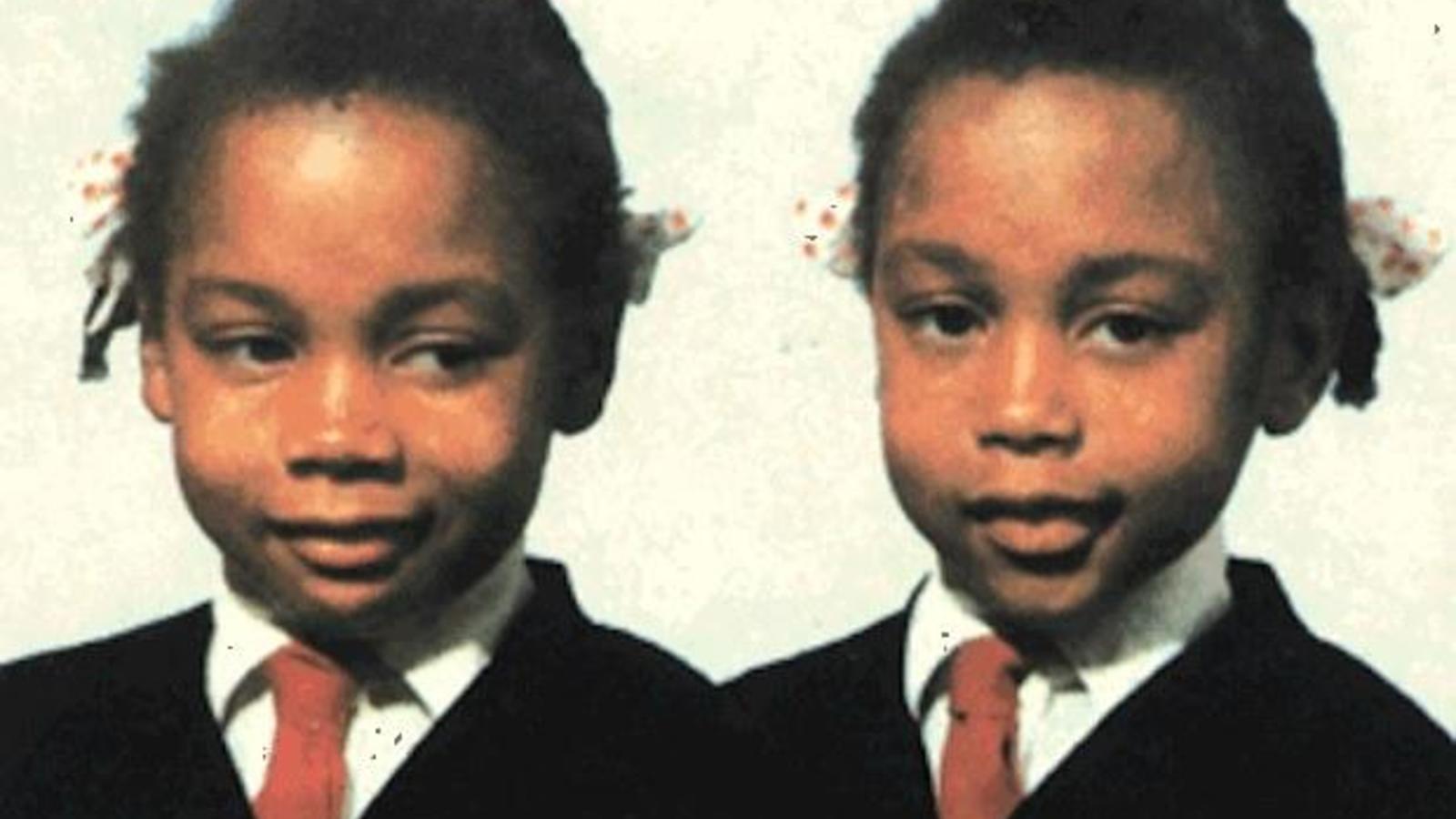
June and Jennifer Gibbons are a real-life pair of twins, born in 1963, who spoke only to each other and committed several acts of theft and violence.

Despite a concerted effort by government and foreign aid groups, twins in Nigeria and Madagascar are frequently buried alive with their mother or sealed in a room to starve to death.  Though for different reasons, Hollywood shares many of these ideas of twins being unnaturally synchronized, lacking empathy for all others, possessing some form of supernatural ability, or even providing a gateway for evil spirits or ghosts.
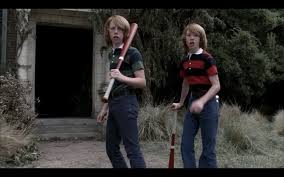
The twin boys in American Horror Story: Murder House are condemned to spend eternity trapped in the house where they tormented others.
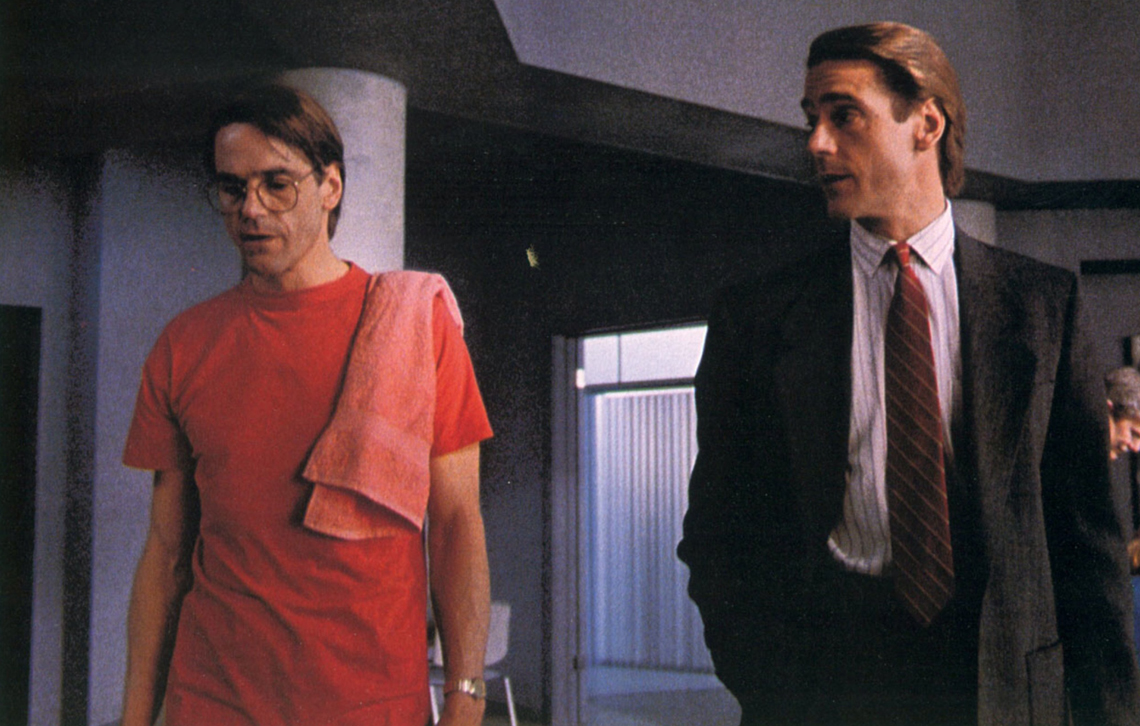
Jeremy Irons played both psychotic doctors in the film Dead Ringers, horrifyingly based on a true story.
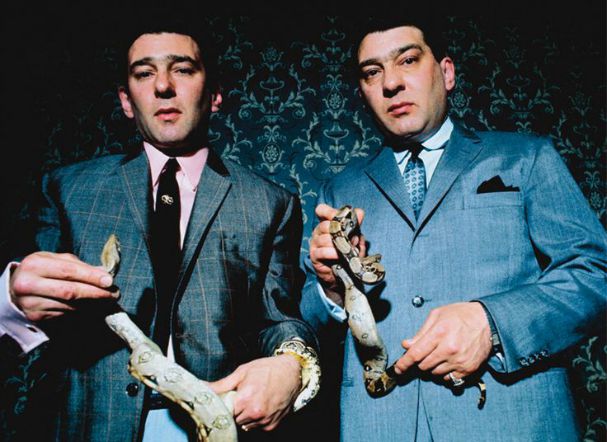
Legend was also based on a true story, of the London gangster twins Ronnie and Reggie Kray, though Ronnie was arguably a little more evil.
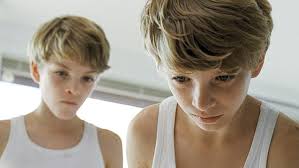
The German film Goodnigt Mommy features a pair of twin boys who torture and kill their mother when they think she is an impostor.

Twins Separated or Left Alone

Because twins are so close, strange things tend to happen when they are raised separately or when one dies.  This is often called the Twinless Twin effect, and it touches the parents of twins and other siblings as well as the twins themselves.  Both Elvis Presley and Liberace lost a twin very early in life, and they both cited their missing twin as having a major influence on their creative work.
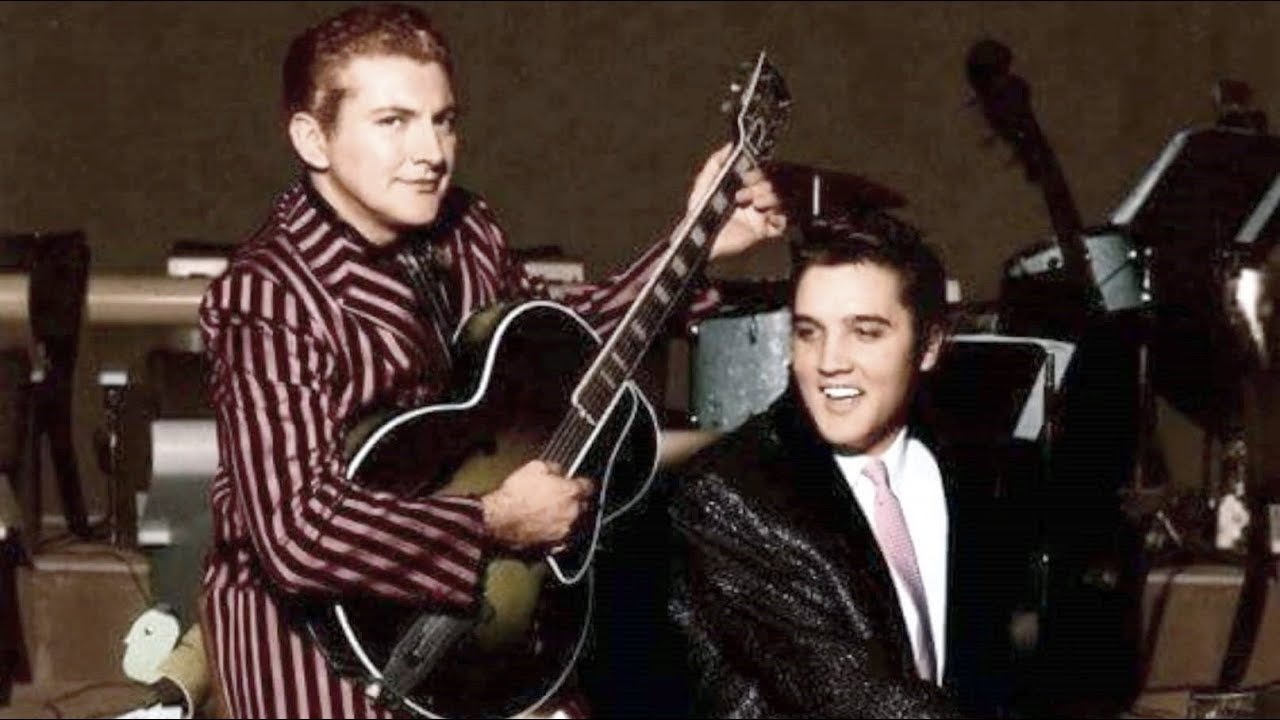
Both performers felt that they were living for their twin as well as themselves.

This particular grief felt by twinless twins, coupled with the assumption of twins’ psychic link, creates perfect fodder for horror movies.  Several of the films listed above have a surprise ending in which it is revealed that one twin has already died and is a hallucination or delusion of the remaining twin.  No spoilers!
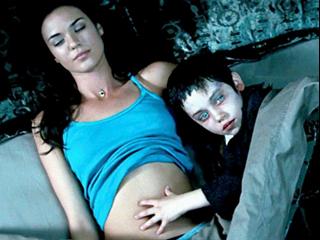
A stillborn twin comes back to haunt his sister and serve as a bridge for the ghosts of other twinless twins in The Unborn.
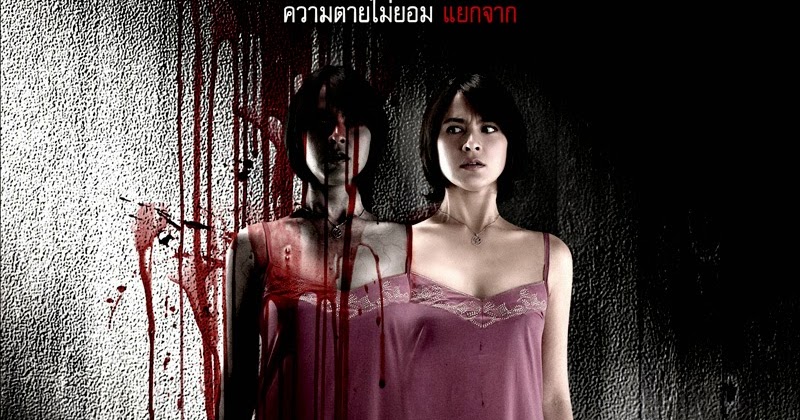
Alone is a Thai horror movie about a conjoined twin who dies during separation surgery and comes back to possess her sister. It also features the trope of the good/evil twin pair.
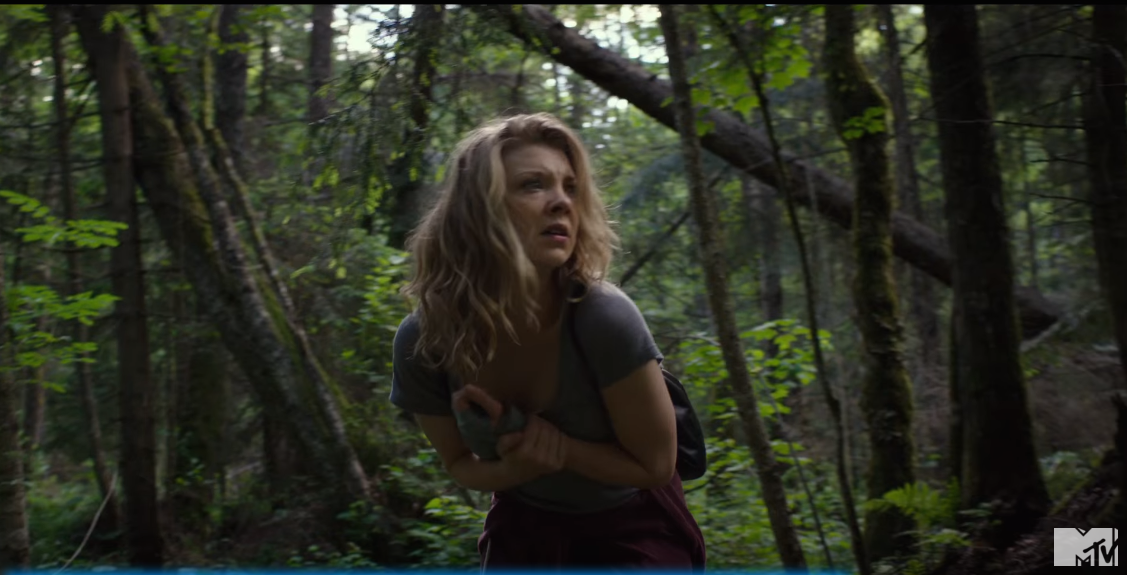
Calling upon her supposed twin bond, the heroine of The Forest enters Aokigahara (the “Suicide Forest”) in Japan to search for her sister, whom she believes is planning to commit suicide.
The film Jonathon is an interesting twist on the idea of the twinless twin: both brothers inhabit one body, switching off every twelve hours, so they can never meet or interact.

Every year, at the Twins Days Twins Festival in Twinsburg, Ohio, an entire section of the festival grounds is set aside for researchers looking for volunteers.  Twins throw balls into cups, test their memories, fill out questionnaires about mental health, and let themselves be weighed, measured, observed, and questioned to shed light on all those pesky questions people can’t answer by experimenting on babies.
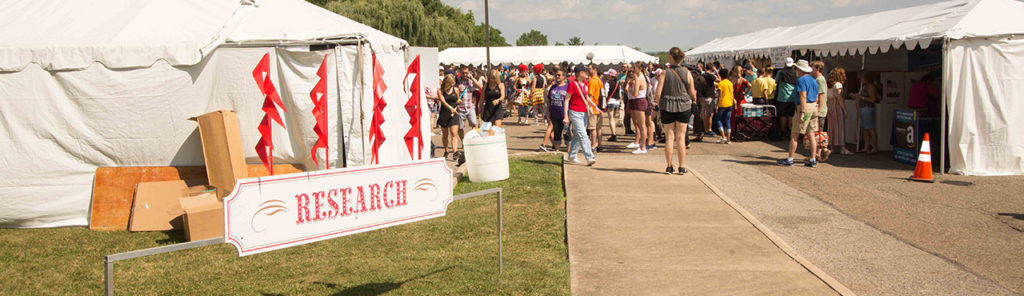
Most researchers offer gifts or money in exchange for participation. My sisters won so much cash in prizes that I made them pay for the hotel.

Scientists are fascinated by twins because of what they can reveal about genetics and the role of environment in supposedly hereditary traits.  Anthropologists are fascinated by twins because of what they can illustrate about a culture’s understanding of self-identity.  Doctors are fascinated by twins because of what they can demonstrate about the contraction or treatment of illness.
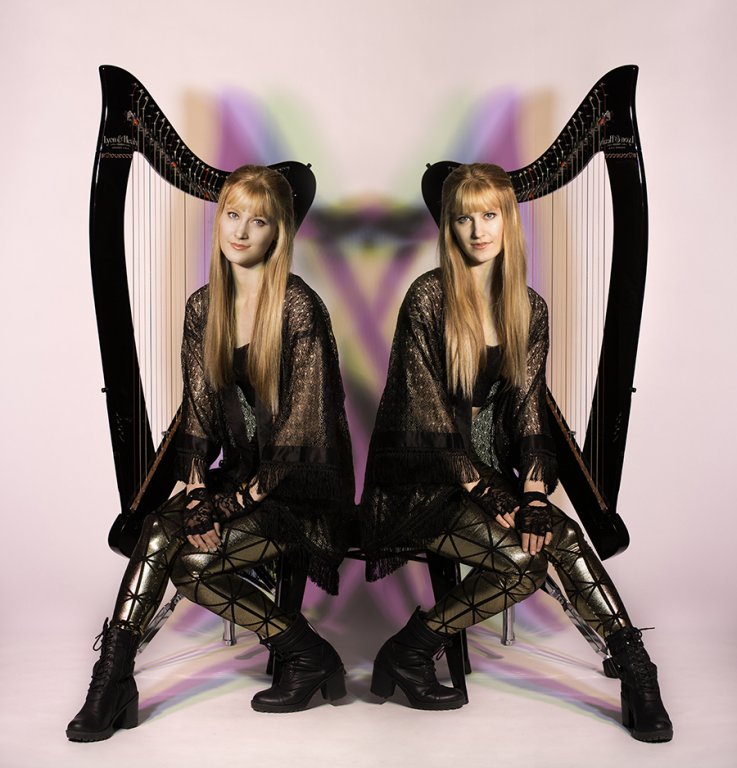
Is the ability to play the harp standing up and backwards hereditary? You’d have to ask Camille and Kennerly Kitt, the Harp Twins.

Artists, filmmakers, writers of any sort are fascinated by twins because of what they can show us about human nature, because of the opportunity for wacky confusion, because they have a bond that is very rarely found in any other grouping of characters.  Twins are a source of comedy, drama, terror, tenderness, and every other aspect of writing… doubled!

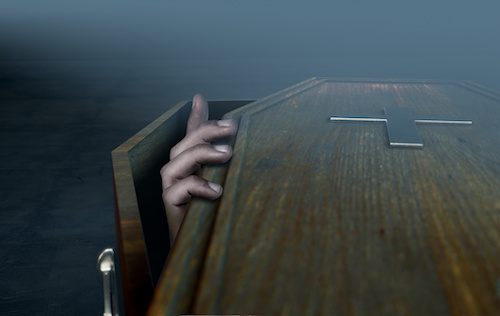
This is by far the most terrifying image I found online. Can you tell which one is Bruce Willis?

BURIED ALIVE

 
Fear of being buried alive is called taphephobia.  Also known as live burial, premature burial, and vivisepulture, it’s been around forever—and is with us still!  Those buried alive often die of asphyxiation, dehydration, starvation, or hypothermia.  If fresh air is available, the buried person can last days.
 

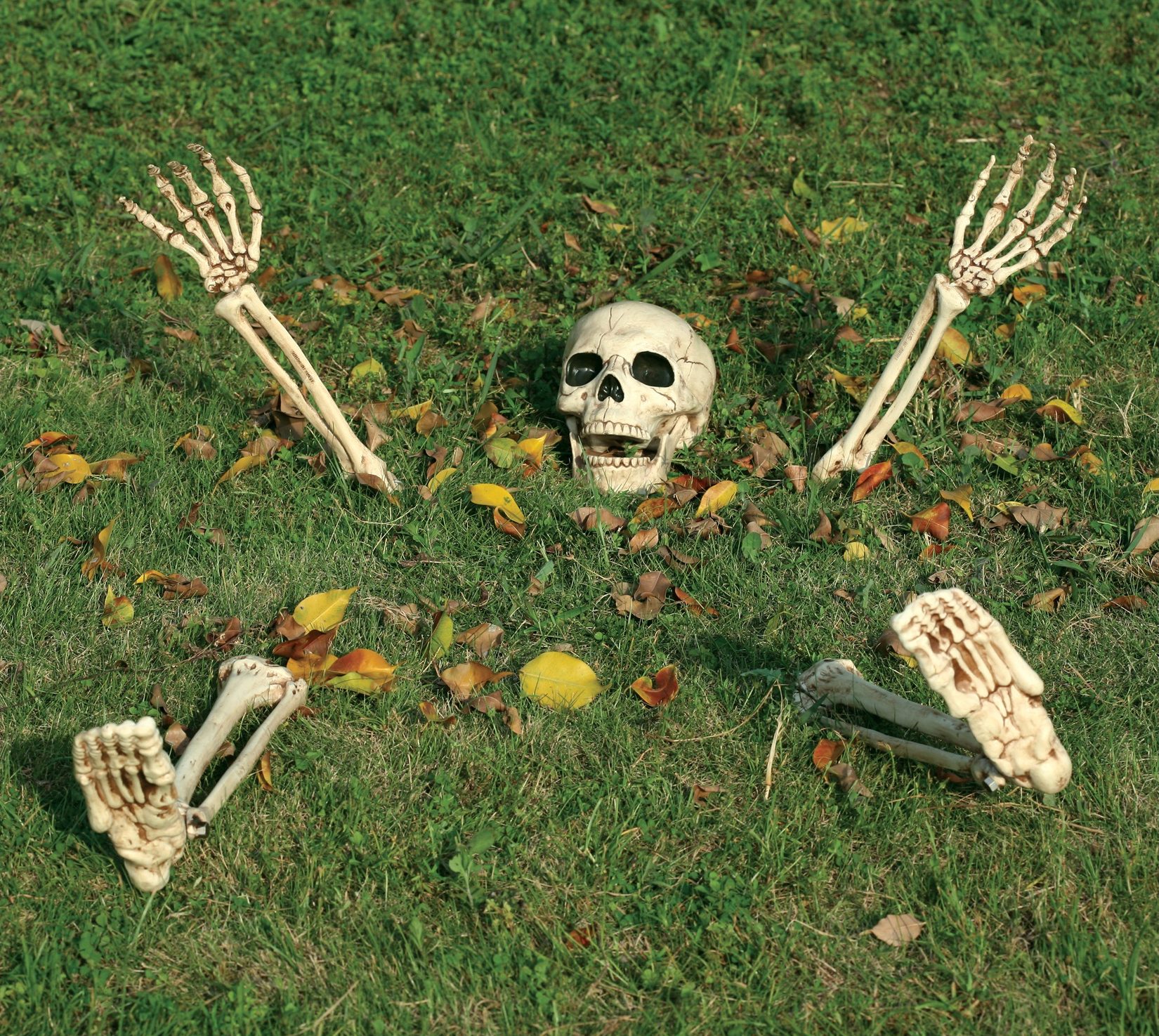
This guy seems pretty happy about the situation.
Fear of being buried alive reached a peak in 19th century England.  More than 120 books in at least five languages were written about it, as well as methods to distinguish life from death.  (See below.)


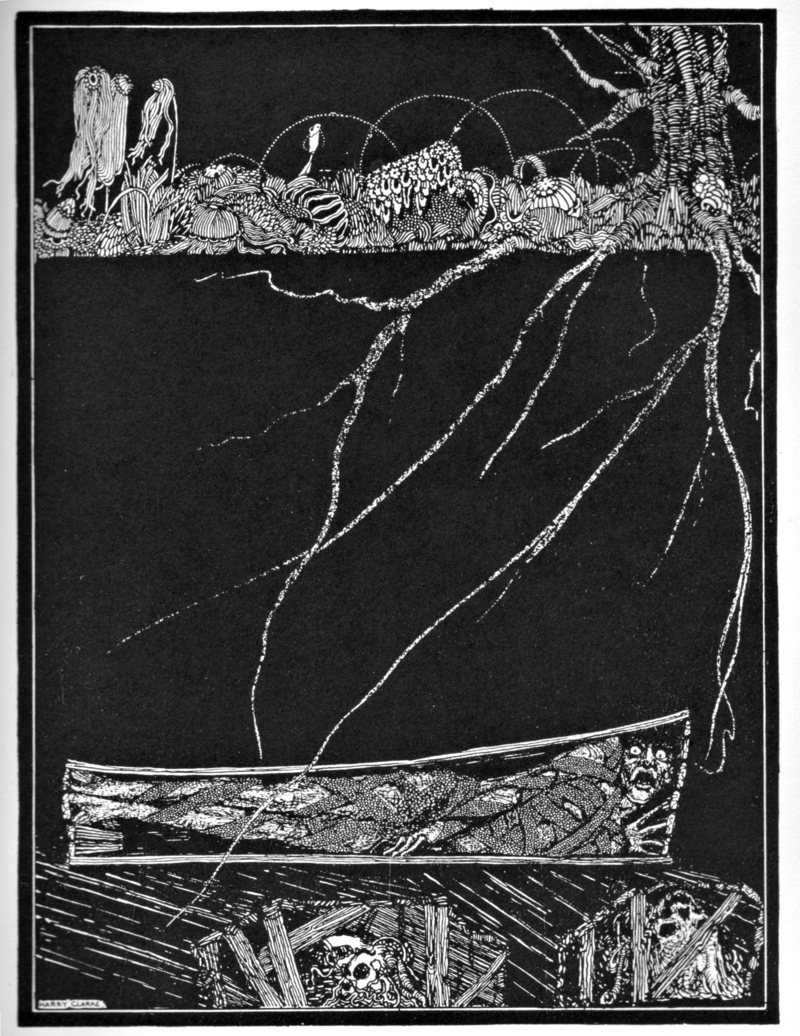
Harry Clarke’s illustration for Premature Burial by Edgar Allen Poe
A Fine Literary Tradition
 
Consider Edgar Allan Poe’s “The Premature Burial,” The Fall of the House of Usherand Berenice.  More recently, Stephen King’s 1987 novel Misery includes Paul Sheldon’s Misery’s Return, a book within a book.
Farinata and Cavalcante de’ Cavalcanti in Level 6 of the Inferno, painted by Suloni Robertson

Dante’s Inferno references several classes of sinners punished with some form of eternal burial:

  • The Sullen in Level 5 are kept just below the waters of the River Styx, forever near drowning.
  • The Heretics in Level 6 are trapped in flaming tombs.
  • Murderers in Level 7 are covered by a river of boiling blood.
  • In Level 8 (where all types of fraud are punished)
    • Flatterers are encased in human excrement.
    • Simonists are buried head-first while flames burn their feet.
    • Fraudulent Counselors are encased in flames.
  • The Treacherous in Level 9 are buried in ice of varying levels depending on their sin.
Accidental or Unintentional Burial
 
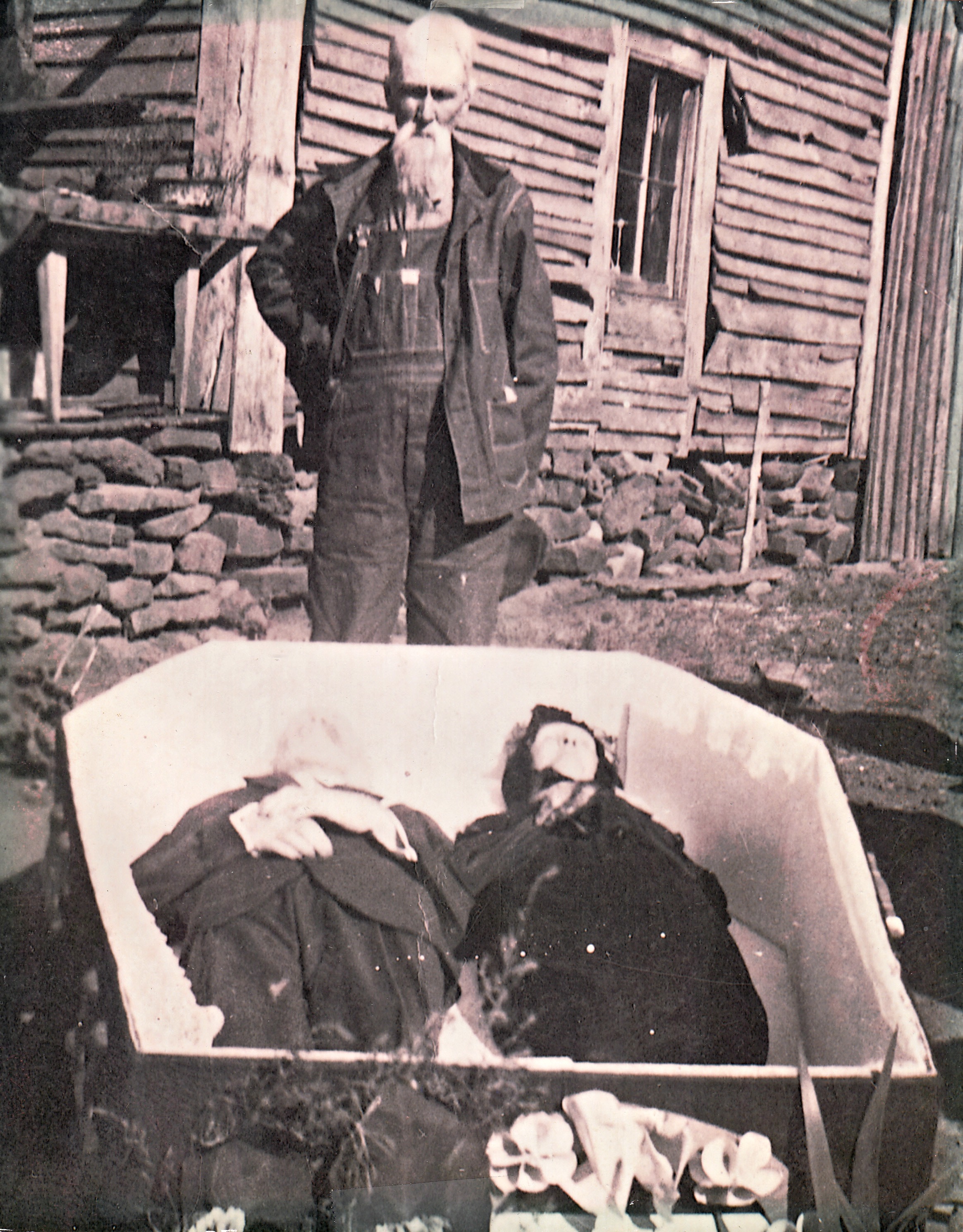
It’s easier to handle if you bring a buddy along.
Reports of being buried alive date back to the fourteenth century.  In spite of hype and hysteria, as late as the 1890s patients have been documented as being declared dead and accidentally sent to a morgue or encased in a steel box, only to “come back to life” when the coffin is dropped, the grave is opened by grave robbers, or embalming  or dissection has begun.


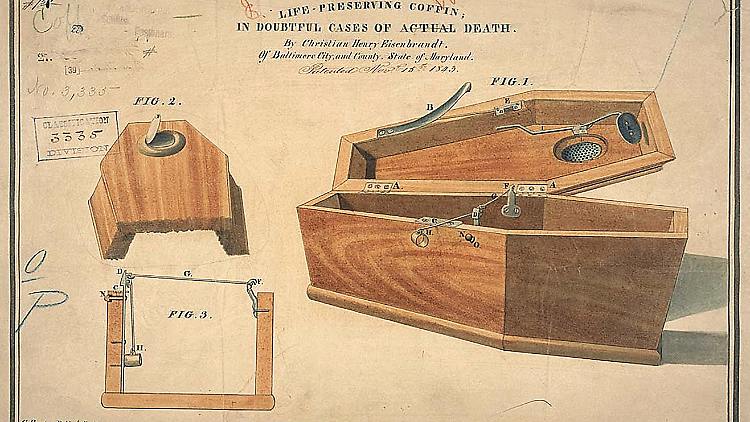
“Life preserving coffin in doubtful cases of actual dead,” a safety-coffin model by Christian Eisenbrandt
During centuries when embalming wasn’t common practice, coffins were mostly for the rich, and rapid burial was the norm especially during major pestilences such as cholera, bubonic plague, and smallpox.  In these cases, rapid burial was an attempt to curb the spread of the disease.


The Great Plague by Rita Greer
Several medical conditions can contribute to the presumption of death: catalepsy, coma, and hypothermia.


How to Know When Someone Is Really Dead


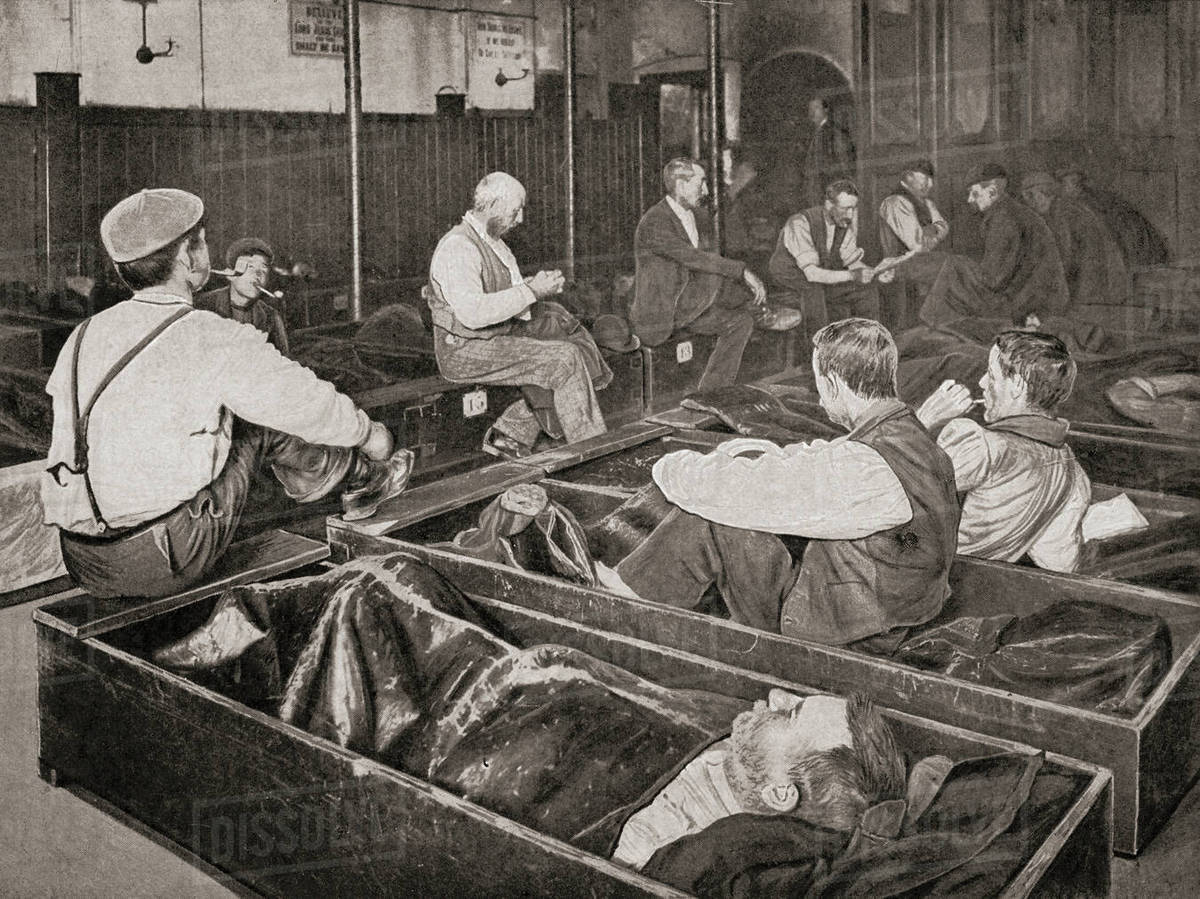
Snoring is a pretty good sign. (This is actually the Fourpence Coffin flophouse, the first homeless shelter in London.)
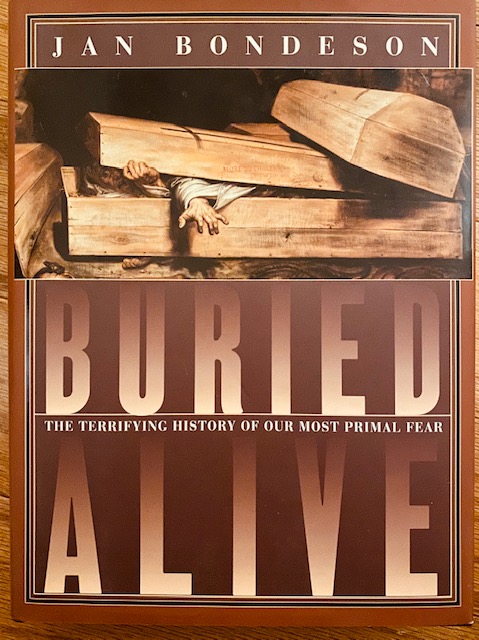
Jan Bondeson, author of Buried Alive, identified methods of verifying death used by 18th and 19th century physicians.  (Personal reaction: shudder!)  The methods were any acts the physician thought would rouse the unconscious patient, virtually all imaginatively painful.
  • Soles of the feet sliced with razors
  • Needles jammed under toenails
  • Bugle fanfares and “hideous Shrieks and excessive Noises”
  • Red hot poke up the rectum
  • Application of nipple pincers
  • A bagpipe type invention to administer tobacco enemas
  • Boiling Spanish wax poured on patients’ foreheads and warm urine poured into the mouth
  • A crawling insect inserted into patient’s ear
  • A sharp pencil up the presumed cadaver’s nose
  • Tongue pulling (manual or mechanical) for at least three hours


The traditional Irish wake was (and is) an occasion for family and friends to celebrate the life of the deceased while watching the body for signs of movement.

Most agreed that the most reliable way to be sure someone was dead was to keep an eye on the body for a while.  To that end, waiting at least 72 hours from apparent death to burial was mandated.  In the mid-1800s, Munich had ten “waiting mortuaries” where bodies were stored awaiting putrefaction.  Each body was rigged to bells to summon an attendant should the corpse come back to life.


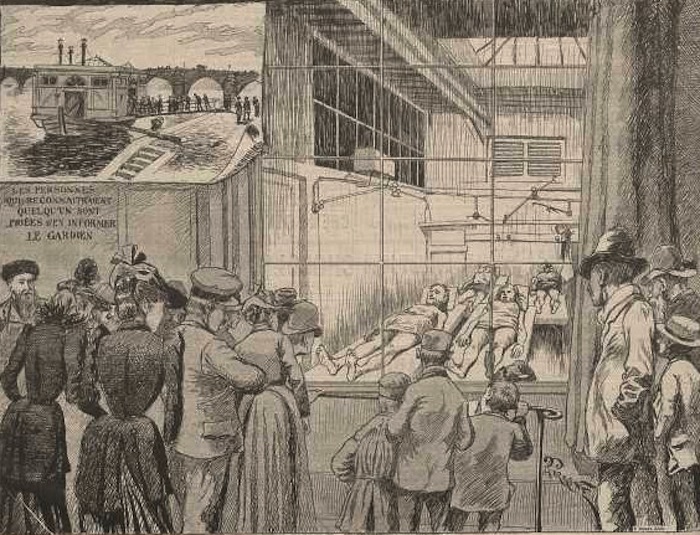
Waiting morgues, like this one in Paris, were often left open to the public for macabre entertainment

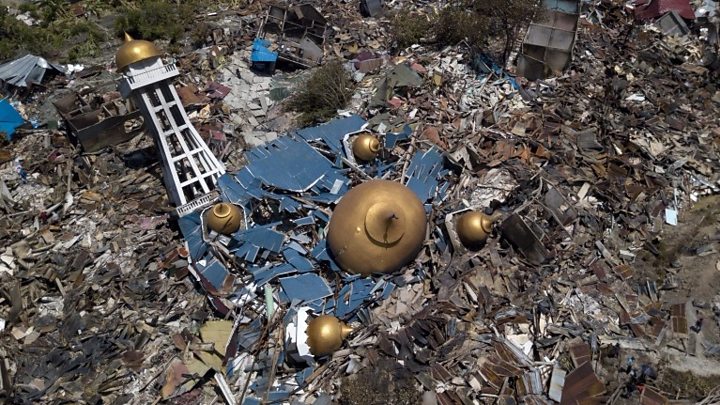
We presume that modern science has surpassed this sort of mistake, defining death as brain death.  Even so, earthquakes and other natural disasters often result in people being accidentally buried alive.

 
Victims of the 2018 tsunami in Nepal were not so fortunate.

But Wait: Sometimes People Are Buried Alive on Purpose!
From the Museum of Torture in Venice

Sometimes live burial is a method of execution.  Documented cases exist for China, German tribes, Persia, Rome, Denmark, Faroe Islands, Russia, Netherlands, Ukraine, and Brazil.

Confucian scholars were buried alive while their books were burned in 3rd century BCE
Interestingly, most of the laws demanding live burial as a form of execution were for crimes committed by women.  Men convicted of comparable crimes were more likely to be beheaded.


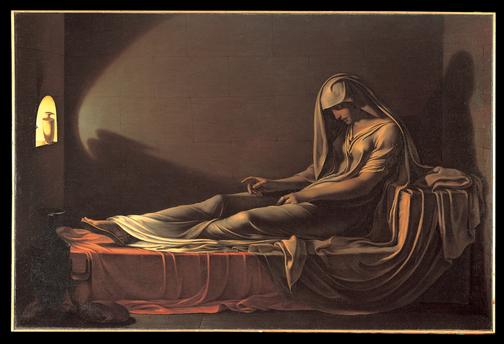
Vestal Virgins were sealed in caves for breaking their vow of chastity, as shown in this painting by Pietro Saja
When death was not enough, often a spike was driven through the body of the person executed by live burial, perhaps as a way to prevent the person from becoming an avenging, undead Wiedergänger.


In some parts of the world, live burial is still practiced as a means of execution.  Often, the victim is buried upright with only their head above ground.  In these cases, death is very slow and painful, often the result of dehydration or wounds caused by animal scavengers.


And sometimes live burials are another horrific act of war.
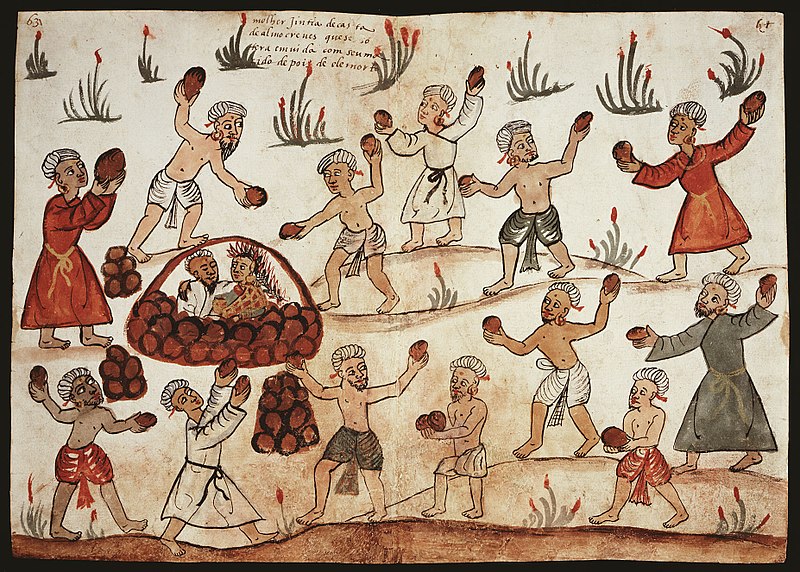
Codice Casanatense, a Portugese artist, recorded this scene of a Hindu widow being sent alive to her husband’s grave.

Very rarely people willingly arrange to be buried alive, for any number of reasons.  Sometimes it is to demonstrate their ability to survive it.  The Indian government has made voluntary live burials illegal because the people who try it so often die.  In 2010, a Russian man was buried to try to overcome his fear of death, but was crushed to death by the weight of the earth over him.

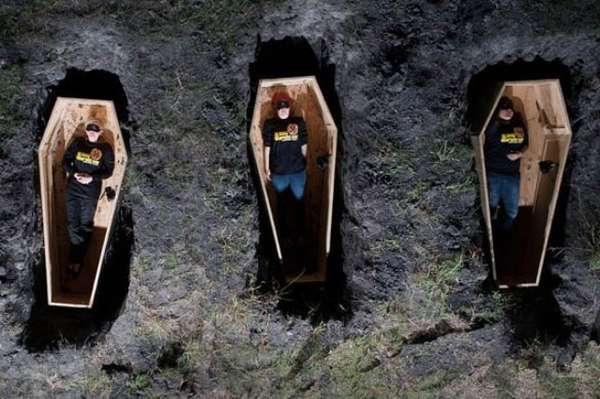
Four “lucky” contest winners

There are even performances in which people have an opportunity to be buried alive for fifteen or twenty minutes.  As a publicity stunt for the opening of the 2010 film Buried, a lottery was held for a few fans to have a very unique viewing experience.  Four winners were blindfolded, driven to the middle of nowhere, and buried alive in special coffins equips with screens on which they could watch the film.  (A 2003 episode of “Mythbusters” demonstrated that, even if a person buried alive was able to break out of a coffin, they would be crushed or asphyxiated by the resulting dirt fall.)

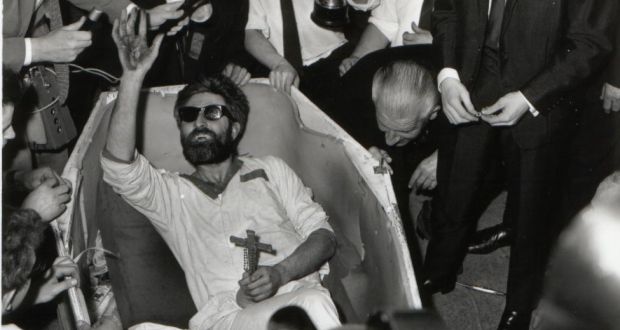
There is now a monument to Mick Meaney on Kilburne Street.

Irish barman Mick Meaney remained buried under Kilburne Street in London for 61 days in 1968, mostly to win a bet.  Tubes to the surface allowed air and food to reach him in his temporary, underground prison.

Parents are often unwillingly volunteered for vivisepulture on the beach.
Bottom line for writers: consider a character being buried alive—or being threatened with it—as a way to up the tension. 
 
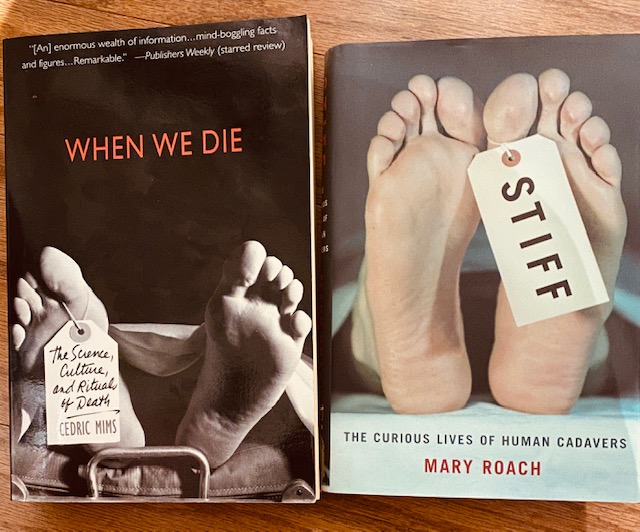
Live burial isn’t the only attention-worthy aspect of dead bodies.  For more, check out books such as these.

OCTOBER IS FOR HORROR: VAMPIRES

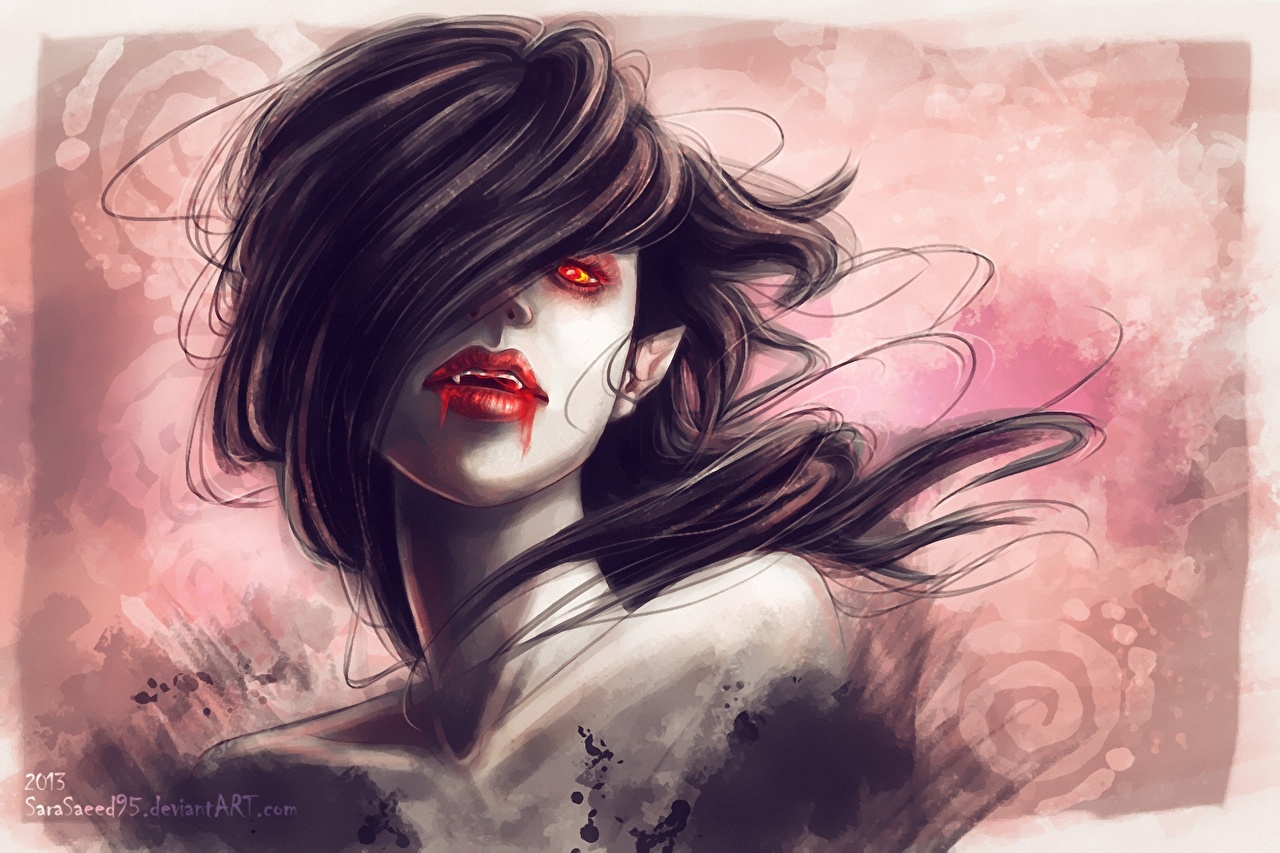
Drawn by shamad
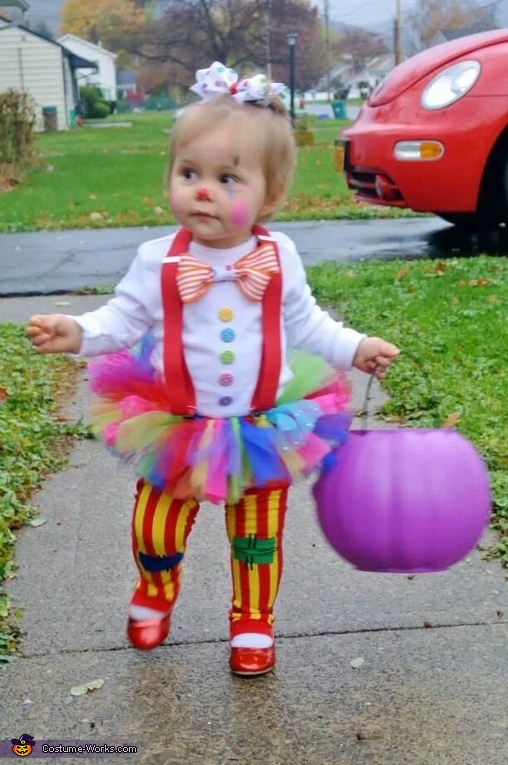
A friend recently told me that the horror villains we fear are subconscious stand-ins for things we’re afraid of in real life.  Vampires stand for a fear of change; zombies for a fear of crowds or strangers.  Fear of clowns is a sign you’re a normal, well-adjusted, perfectly rational person.


The anthropomorphic personification of EVIL!

Inquiring minds want to know!  I started with vampires—and I never got past vampires!


When I went online to learn what it means if we fear vampires, what popped up was an article by Ralph Blumenthal, “A Fear of Vampires Can Mask a Fear of Something Much Worse.”  He was writing in 2002 about villagers in Malawi believing that the government was colluding with vampires to collect human blood in exchange for food.


Mobs of vampire hunters killed dozens in Malawi

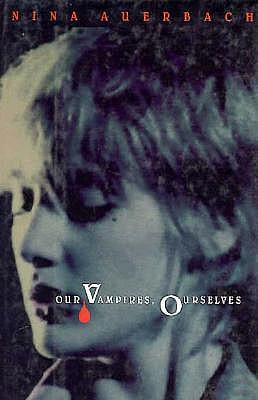
At the time, Malawi was in the grip of starvation, a severe AIDS epidemic, and political upheaval.  He cited Nina Auerbach, author of Our Vampires, Ourselves, to the effect that stories of the undead embody power ”and our fears of power.”

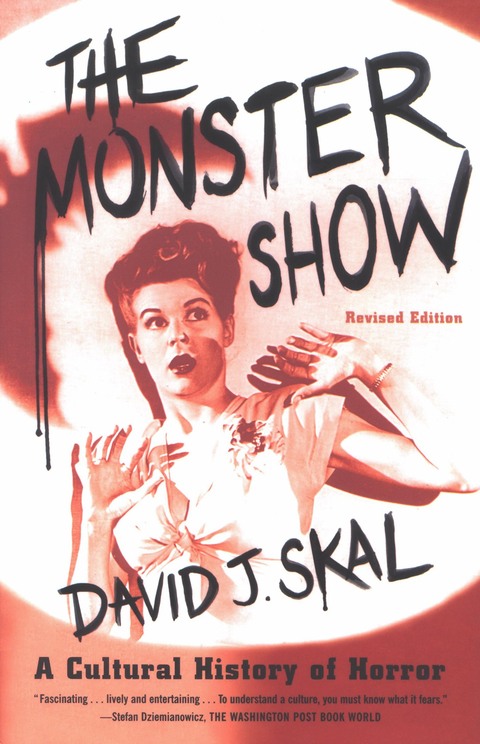
David J. Skal, author of The Monster Show: A Cultural History of Horror claims that a fixation on demons often accompanies periods of national stress.  “In times of social upheaval, the vampire asserts itself.”


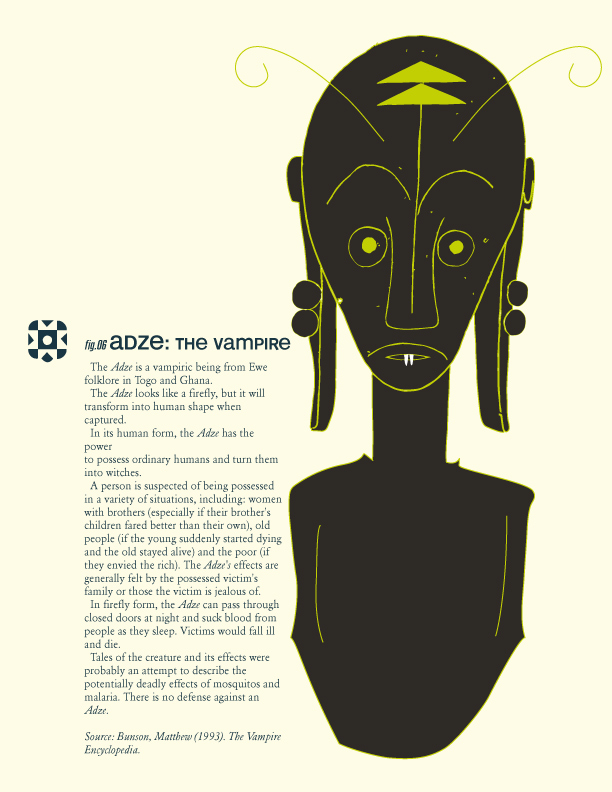
In nearly every culture in the world, there is a legend of some variation of vampire-like creatures—the dead who reanimate and come back to feed on the living.  And there is general agreement that the roots of vampire legends are in the misunderstanding of how bodies decompose and of how certain diseases spread.


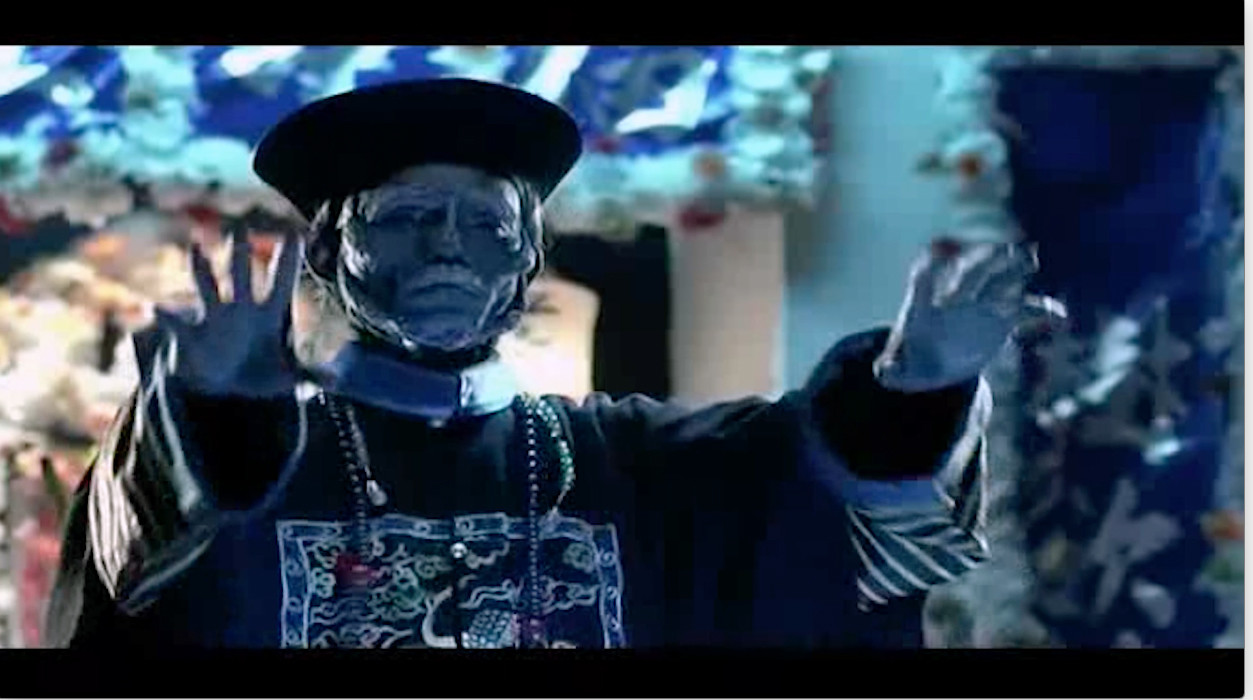
The Chinese Jiangshi hunts by “hopping” because of rigor mortis.

In an October 26, 2016 article in National Geographic titled The Bloody Truth About Vampires, Becky Little wrote, “As a corpse’s skin shrinks, its teeth and fingernails can appear to have grown longer.  And as internal organs break down, a dark ‘purge fluid’ can leak out of the nose and mouth.  People unfamiliar with this process would interpret this fluid to be blood and suspect that the corpse had been drinking it from the living.”

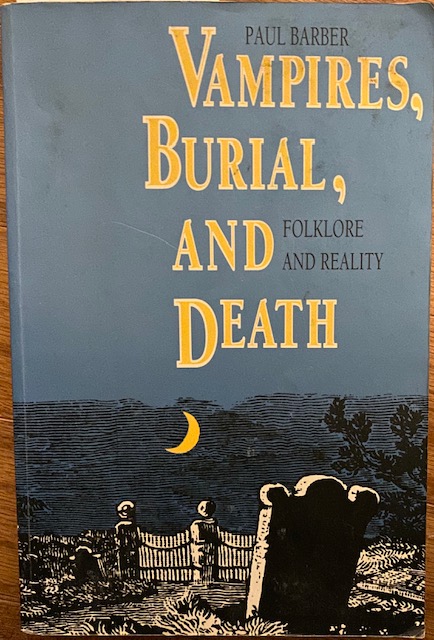
Paul Barber, author of Vampires, Burial, and Death: Folklore and Reality, made several telling points in the introduction to his book.  One is that there is little similarity between the vampires of folklore and the vampires of fiction.
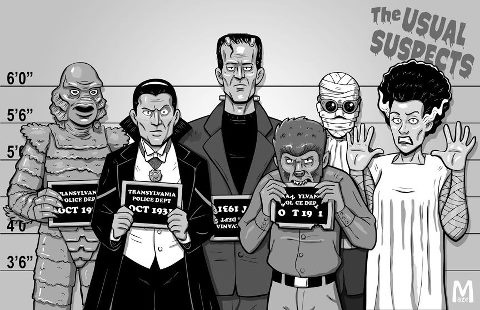
Modern images of vampires are pretty stereotyped: fangs that bite the necks of victims; drinking human blood; can’t see themselves in mirrors; can be warded off with garlic, killed with a stake (or silver nail) through the heart; are aristocrats who live in castles and may be sexy.  This image was popularized by Bela Lugosi’s portrayal of Count Dracula in the 1931 film adaptation of the Broadway show of the same name.  Unlike Bram Stoker’s description of the monster in the 1897 novel Dracula as a repulsive old man with huge eyebrows and bat-like ears, Lugosi showed audiences a mysteriously elegant gentleman in evening dress.


The 1922 film Nosferatu (on left), though an unlicensed adaptation, portrayed the vampire as described in Stoker’s novel.


In European folklore, vampires typically wore shrouds, and were often described as bloated, with a ruddy or dark countenance.  Specific descriptions varied among regions: sometimes male, sometimes female, might have long fingernails, a stubby beard, the mouth and left eye open, a permanently hateful stare, red eyes, no eyes, etc.  Fangs were not always a prominent feature, and blood was generally sucked from bites on the chest near the heart rather than the throat.
Polish strzyga
But perhaps the most important theme of Barber’s book is that, lacking a scientific background in physiology, pathology, or immunization, the common response of ancient societies was to blame death and disease on the dead.  To that end, the interpretations they came up with—while wrong from today’s perspective—nevertheless were usually coherent, covered all the data, and provided the rationale for some common practices that seemed to be otherwise inexplicable.


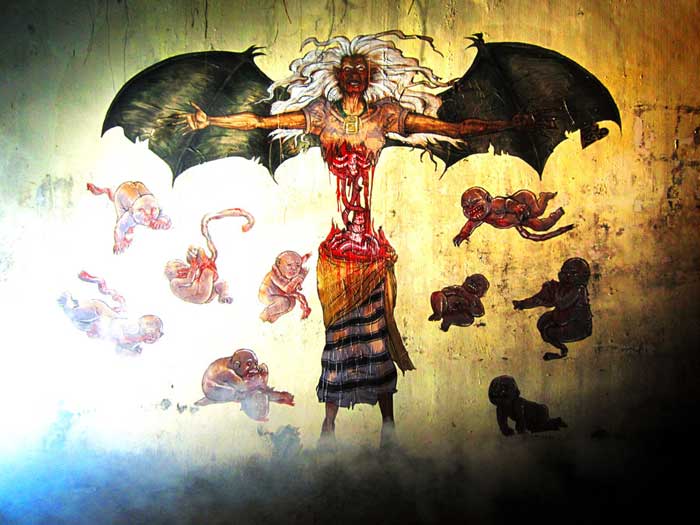
A manananggal from the Philippines will send its detached head and torso to hunt.
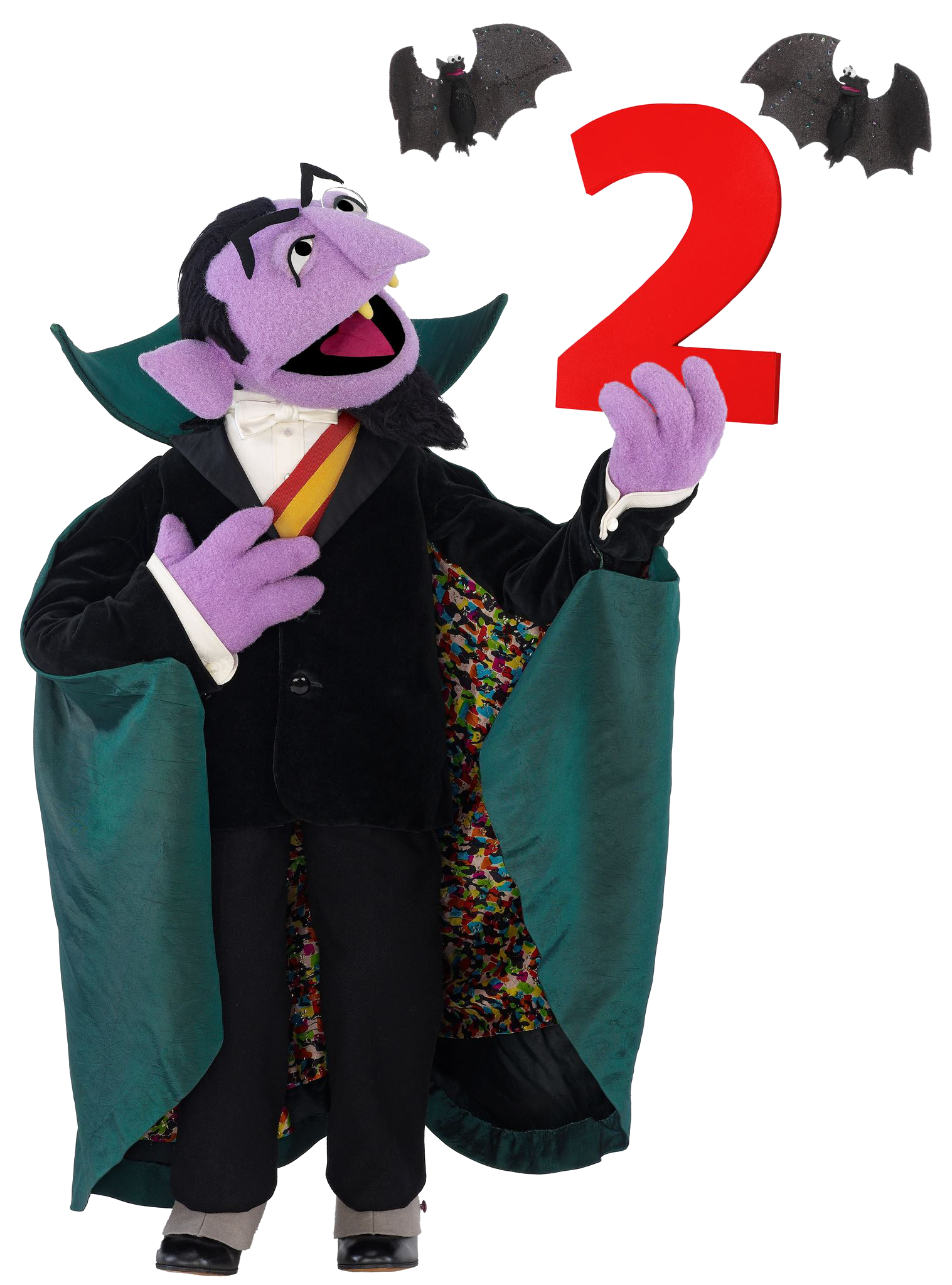
Should you ever be pursued by a vampire, fling a handful of rice, millet, or other small grain in its path.  The vampire will be compelled to stop to count every grain, giving you time to escape.  I found no information on how vampires came to be associated with arithmomania, but it endures: remember The Count von Count on Sesame Street?


He’s the color of a rotting corpse, but cloth fangs are pretty harmless.
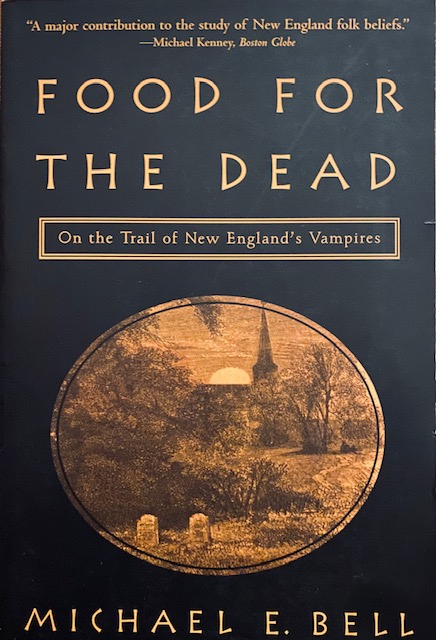
At this point, I realize that getting into methods of identifying vampires, protecting against vampires, ways to destroy vampires, and cross-cultural variations on vampirism is way beyond the scope of this blog.  Instead, I refer you to books such as this:


And should vampires show up in your dreams, according to DreamBible: the answers to all your dreams, pay attention.  Their appearance could mean many things.
  • Seeing a vampire in your dream symbolizes an aspect of your personality that is parasitic or selfishly feeds off others.
  • Alternatively, a vampire may reflect feelings about people you believe want to pull you down to their level or convert you to thinking negatively in a way similar to theirs.
  • To dream of being a vampire represents a selfish need to feed off others.
  • To dream of being bitten by a vampire represents feelings about other people using you or feeding off you and being unable to stop it.
  • Vampires may be a sign of dependence, problems with addiction, social pressure, or ambivalence.
  • A dream vampire might be telling you that you need to start being more independent and relying less on others resources or accomplishments.
  • To dream of killing vampires represents overcoming dependence on others.
  • Repeated dreams of vampires hovering over your shoulder and correcting your spelling or suggesting topics for research and expansion is almost certainly a sign that you are writing a blog entry about vampires.
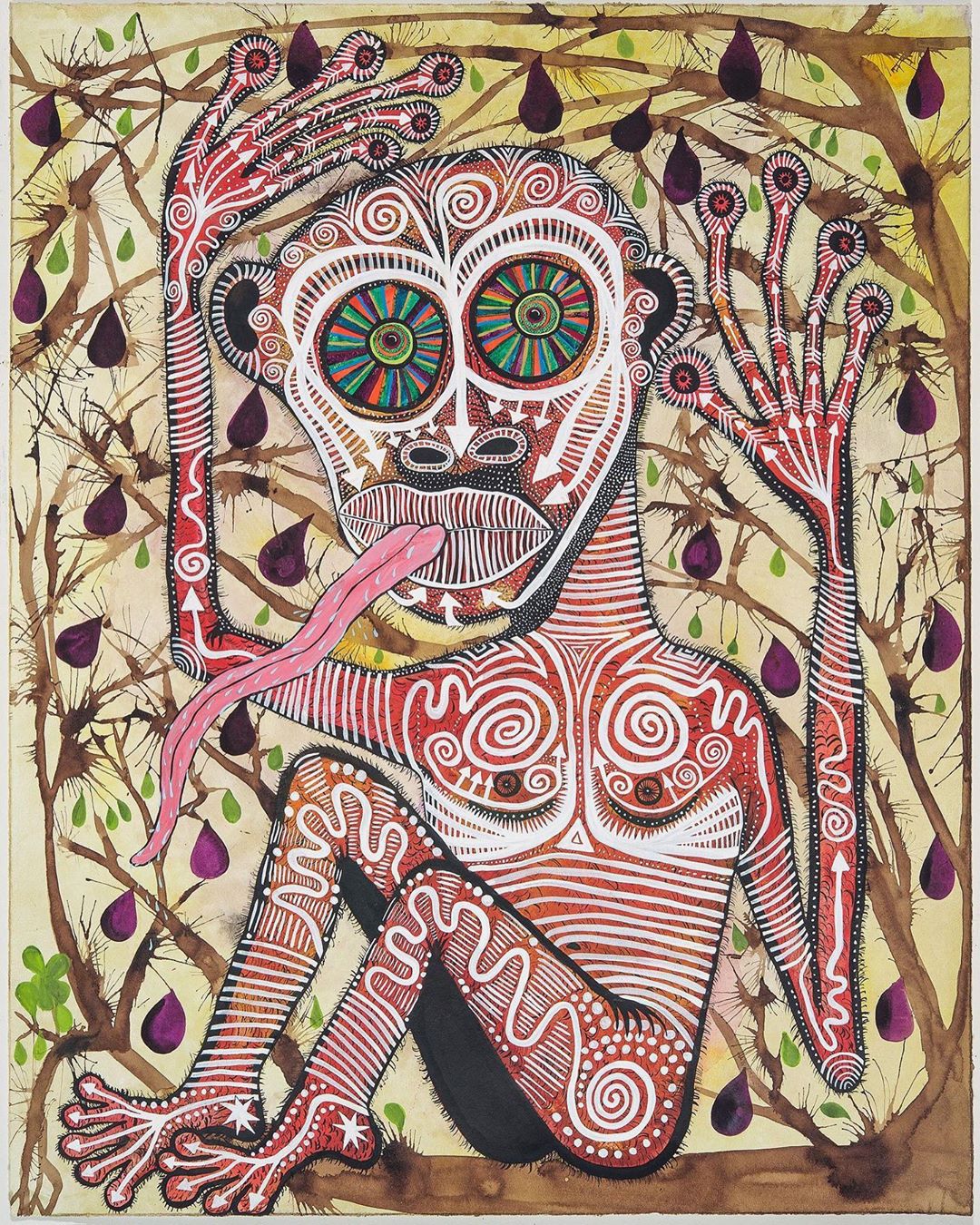
The yara-ma-yha-who in Australia drains a victim of almost all blood before swallowing and regurgitating the body, which then becomes a copy of its killer.
Bottom line for writers: consider whether a vampire is a fit metaphor for your character.
 
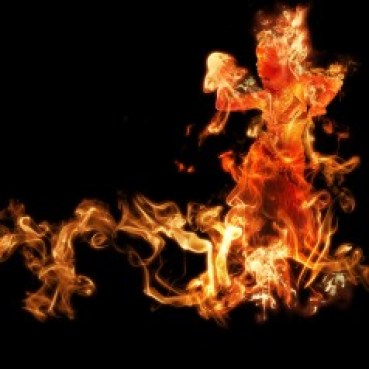
The soucouyant appears in the Caribbean by day as a harmless old woman, but she sheds her skin at night to hunt as a ball of fire.

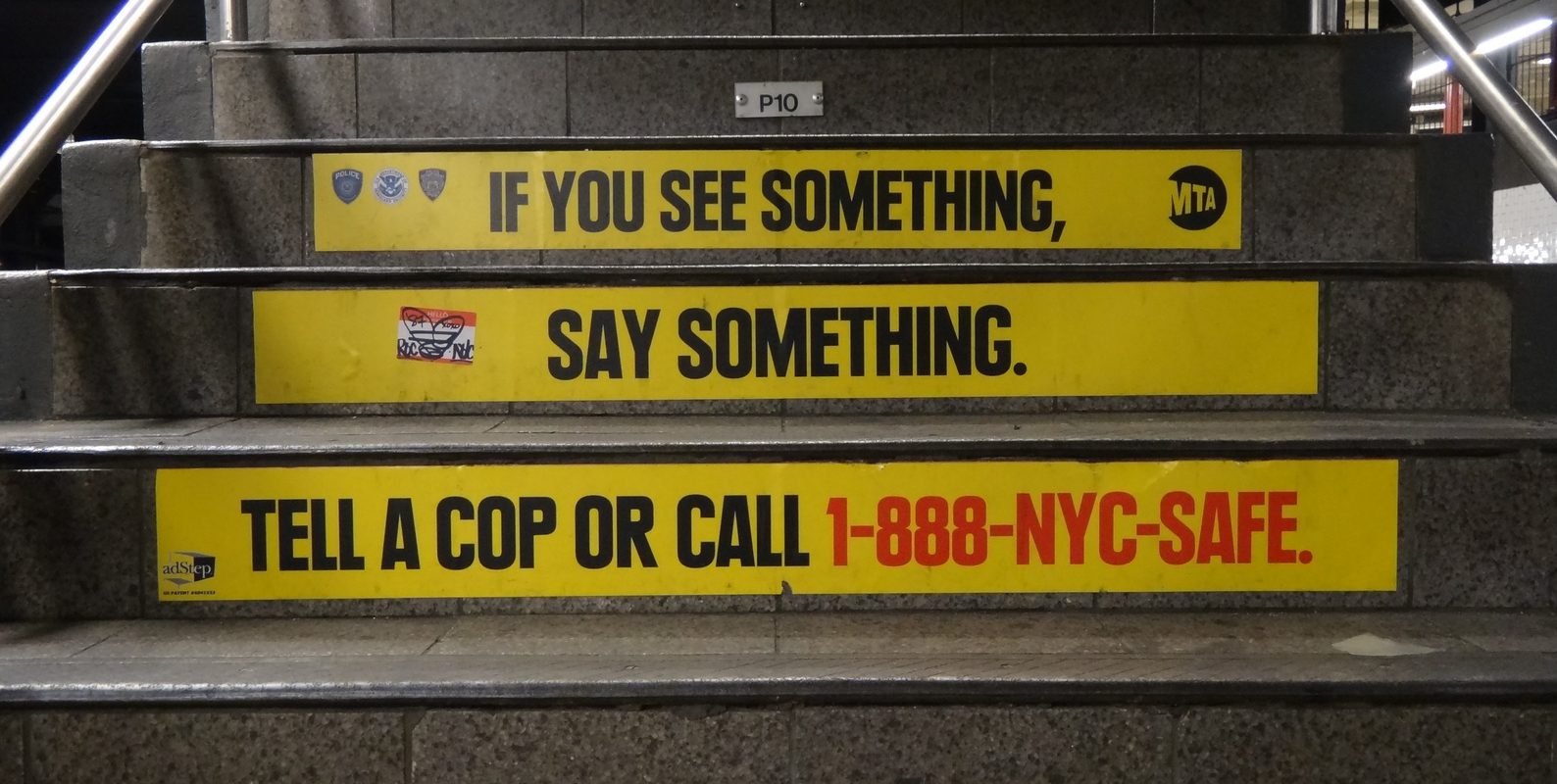
SEE SOMETHING, DO SOMETHING—MAYBE

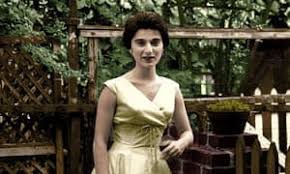
Kitty Genovese
The March 13, 1964 murder of Kitty Genovese led to an entirely new field of research in psychology.  Genovese was attacked while walking home from work at 3:20 a.m. in Queens, New York.  She was stabbed, sexually assaulted, and murdered over a period of 30 minutes.  Subsequent reports said 38 witnesses watched the attack from nearby apartments but neither intervened nor even called the police until the attacker fled.  Kitty Genovese died on the way to a hospital.


Two psychologists, Bibb Latané and John Darley, conducted extensive research to examine and try to explain such apparently callous indifference to the suffering of another human being.  Over time, these and other researchers teased out several factors that will affect the likelihood of bystander intervention.


  • Diffusion of responsibility is one of the earliest and most powerful variables identified: the more people who are bystanding, the less likely it is that anyone will intervene.  Responsibility is diffused among all.
    • Contrarily, Philpot et al. just this year published the results examining real-life video recordings from three countries and found that someone intervened in over 90% of cases.  Even if the likelihood of any one person responding was infrequent, someone in the crowd intervened.


Note the lack of assistance offered by the bystander
  • Emergency vs. non-emergency situations. The following conditions are relevant.
    • Notice that something is going on.
    • interpret the situation as an emergency.  Others not reacting provides social influence against acting,
    • Feel responsible: does the victim deserve help, is the bystander competent, what is the bystander’s relationship to victim.
    • The form of assistance needed (e.g., medical emergency, harassment protection, etc.).
    • Implement the action choice.
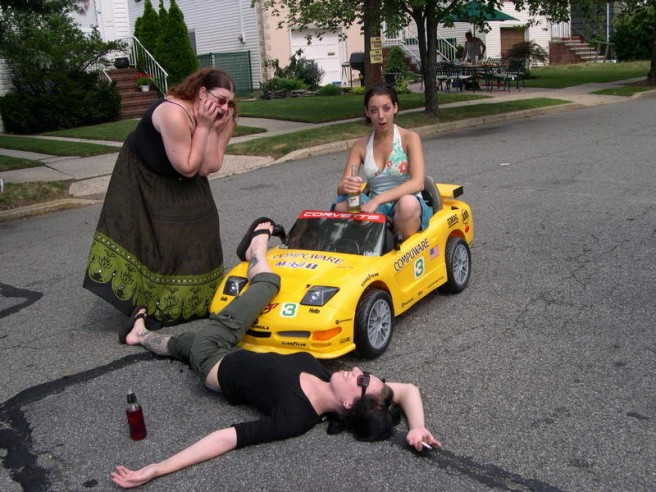
CPR? Thermal blankets? Take away the vodka?
  • Ambiguity and consequences: ambiguous situations take up to five times as long to respond to, and even then bystanders will often not intervene until after assessing their own safety.


No one will slip or fall. There is no room to land.
  • Cohesiveness and group membership: the more cohesive a group, the more likely it is that the norm of social responsibility will lead to helping.  Bigger cohesive groups are quickest to react.


When punching a small child is perfectly acceptable
  • Cultural differences affect intervention—both broad/national culture and subculture.


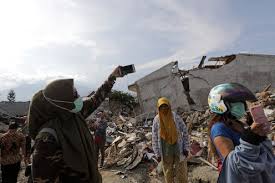
Taking a photo is far more important than looking for survivors.
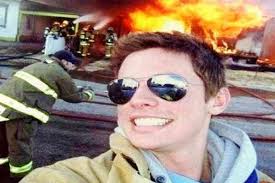
  • Digital interference is a relatively new phenomenon.  With the spread of cell phones and social media, bystanders at a scene are becoming more likely to try to film the incident (whether as “armchair activism” or simply to attract online attention) than they are to intervene or call for help.  This has the doubled impact of overloading nearby cell towers so that actual phone calls to emergency services are not connected.
Plus, it makes you look like a total jerk!
Bystander apathy can be counteracted by raising awareness of bystander effects ad consciously taking steps to overcome it and help; and victims can overcome the diffusion of responsibility in groups by singling out a single member and asking for help from that one person.


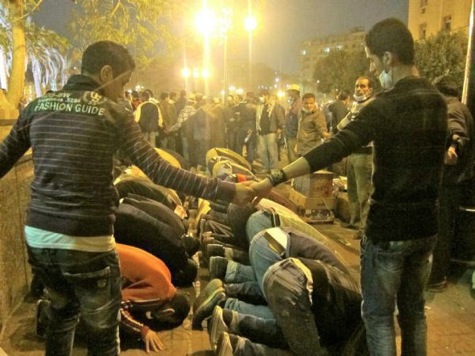
In 2011, Muslims and Christians in Tahrir Square took turns forming protective circles to allow the others a safe place to pray.
Bottom line for writers: make your readers understand why your character does or does not intervene!


Any kind of intervention was clearly doomed.

ALTRUISM? REALLY?

Altruism: an individual performing an action that is at a cost to him/herself (e.g., time, effort,  pleasure, quality of life, probability of survival or reproduction) that benefits – either directly or indirectly – another individual or group, without the expectation of reciprocity or compensation for that action.


Helping behavior may or may not be altruistic.  There are many factors affecting the urge to help, including the following.


1) Kin selection: both animals and humans are more helpful toward close kin that to distant kin or non-kin.  Perception of kinship is affected by whether the other looks like the giver, shares a family name (especially if it’s an unusual name), has a familiar scent (in animal groups), etc.  Think of kin as the in-group.


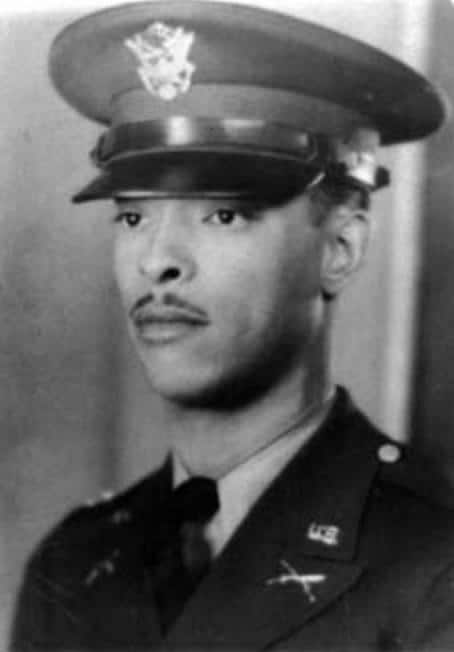
2) Vested interests: helping friends, allies, and similar social in-groups (besides avoiding vicarious suffering to the individual) may eventually benefit the altruist.  Extreme self-sacrifice may be adaptive if a hostile outgroup threatens to kill the entire group.  During the Allied campaign in Italy in the World War II, First Lieutenant John Robert Fox ordered an artillery strike on his position in Sommocolinia, sacrificing his own life to take out invading German forces and allow US troops to retreat safely.  He was posthumously awarded the Congressional Medal of Honor.


First Lieutenant John Robert Fox
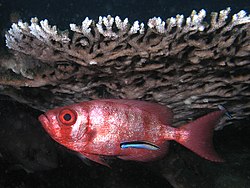
3) Reciprocal altruism: helping others is more likely if there is a chance that they can and will reciprocate.  Therefore, people are more helpful it is likely that they will interact again in the future.  If a person sees others being non-cooperative, they are less likely to be helpful.  If someone helps first, the recipient of the help is more likely to help in return.  Think charities that give small gifts of stickers, notepads, or holiday cards when asking for a contribution.


Cleaner wrasse servicing a big-eye squirrelfish
4) People are more likely to cooperate on a task if they can communicate first.


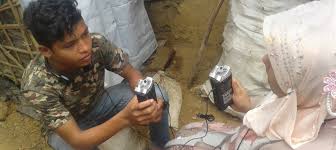
Technology assisting Rohingya in getting aid
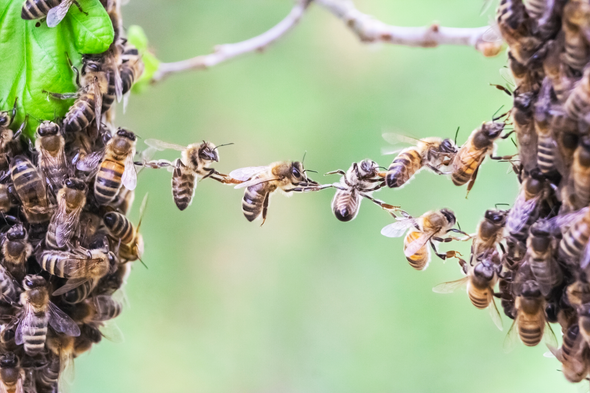
5) Groups of people cooperate more if they perceive a threat from another group.  In the insect world, this frequently happens when a colony or hive finds safety in numbers while moving larvae, a queen, or the entire group.  Ants, bees, termites, etc., form large masses and structures to complete the move.


Moving a beehive
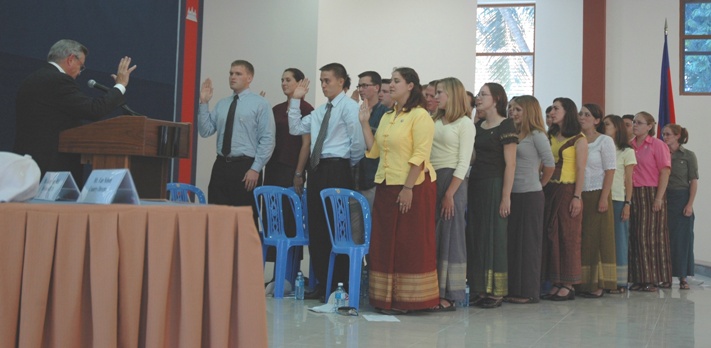
6) People will help more when they know that their helping will be communicated to people they will interact with later, is publicly announced, is discussed, or is simply observed by someone else.


Peace Corps volunteers swearing in
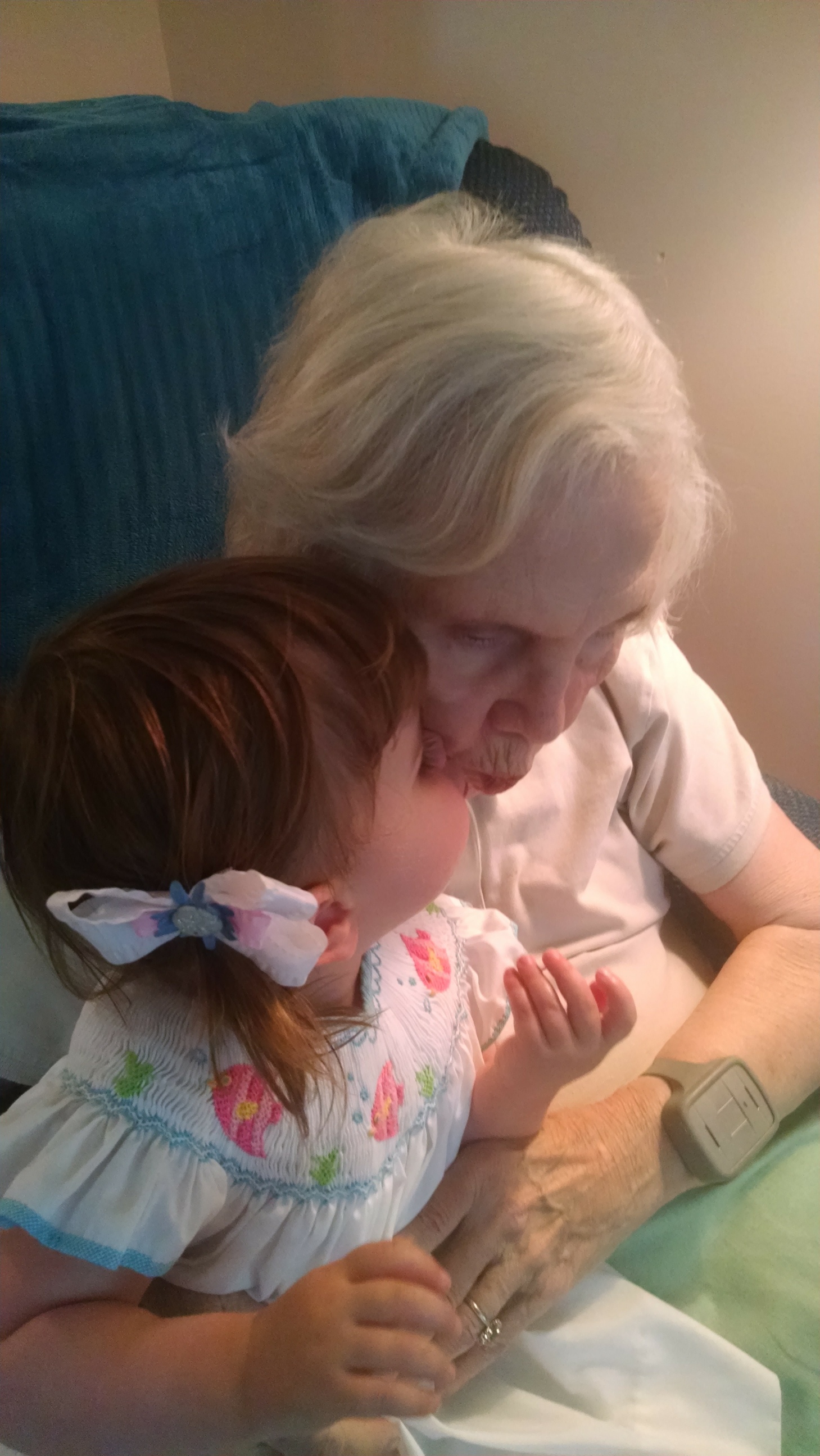
7) Selective investment theory proposes that close social bonds, and associated emotional, cognitive, and neurohormonal mechanisms evolved in order to facilitate long-term, high-cost altruism benefiting those depending on another for group survival and reproductive success.  Humans, like many other animals, care for members of the species who cannot care for themselves, ultimately benefiting the species as a whole.


Very young and very old humans often require assistance and care
8) Microbiologists are studying whether some strains of microbes might influence the hosts to perform altruistic behaviors that are not immediately obvious as beneficial to the host.  There is a possibility, currently being researched, that the bacteria in a person’s gut could affect their behavior and that changes in the bacterial makeup (such as from taking antibiotics) might result in a change in personality.


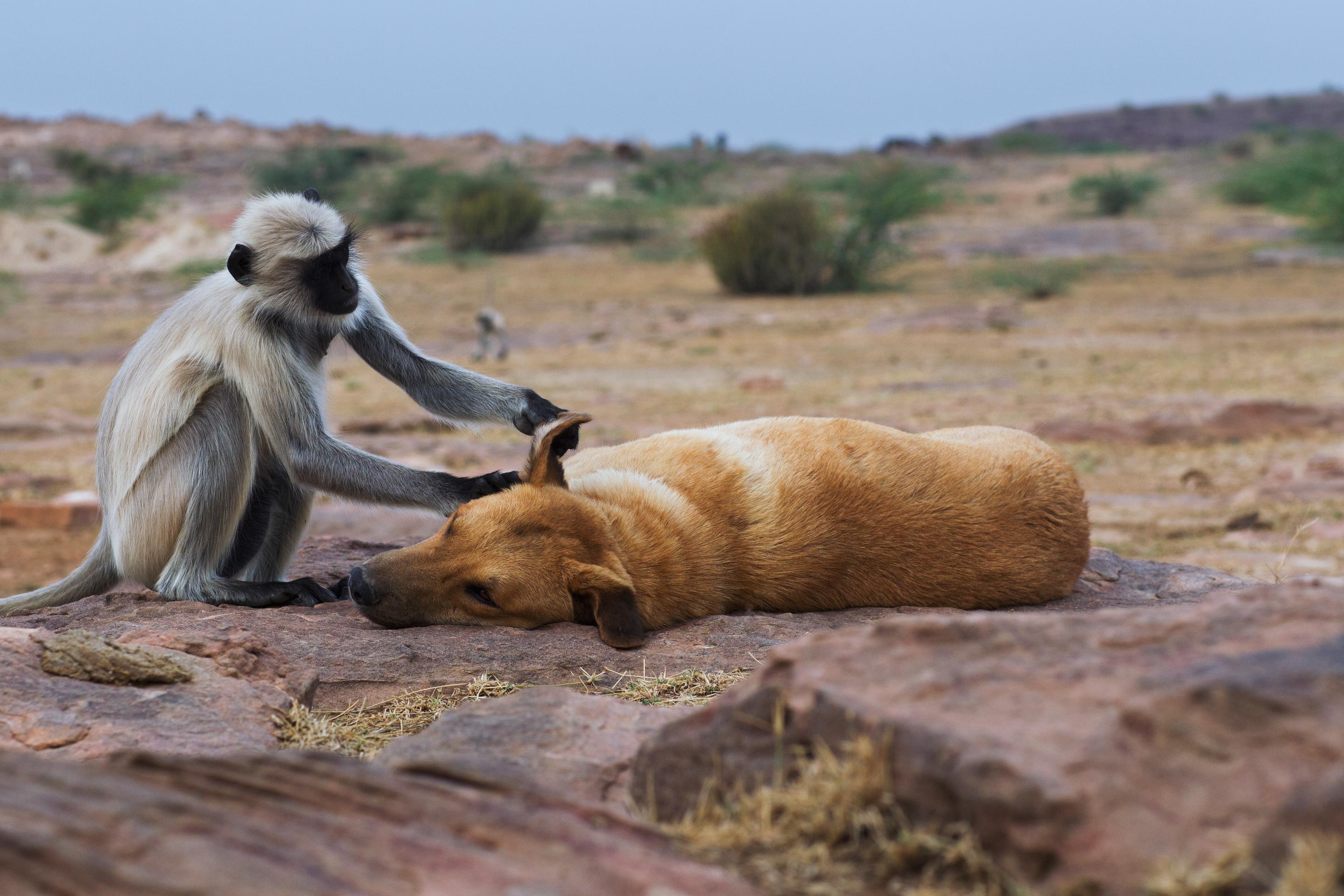
At first glance, this monkey grooming a sleeping wild dog must be suicidal
Psychology has defined psychological altruism as “a motivational state with the goal of increasing another’s welfare.  Some definitions specify a lack of external rewards for altruistic behaviors.  Even when not immediately obvious, altruism is often rewarded in various ways (see above).  When there is no tangible reward, feeling good about oneself can be rewarding.  Regardless of whether an act is “true” altruism, there are many psychological studies that document the conditions under which people are more likely to help.
  1. Helping is more likely when the recipient is clearly in need.
  2. Helping is more likely when the giver feels personal responsibility for reducing the other person’s distress.
  3. A person with a high level of empathic concern is likely to help regardless of how many bystanders are around.
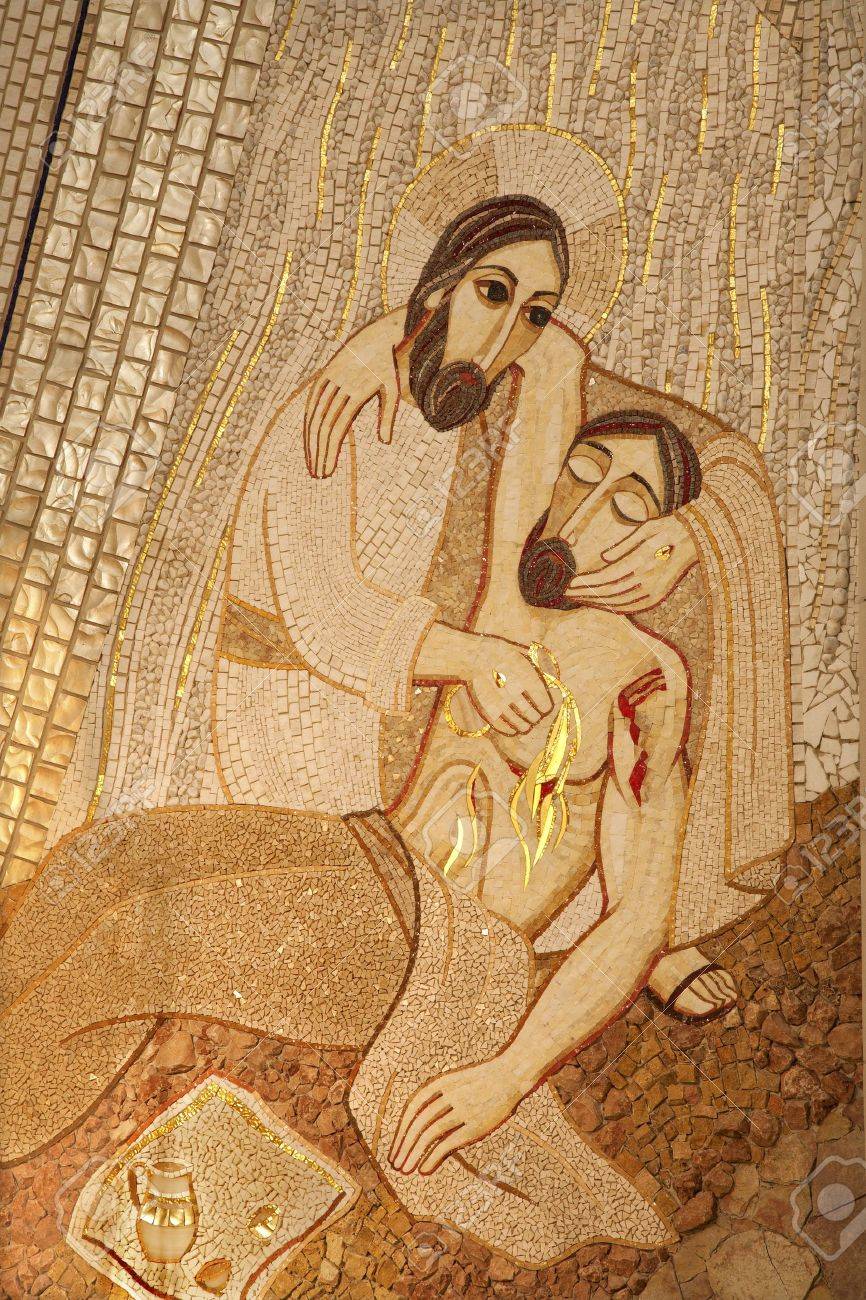
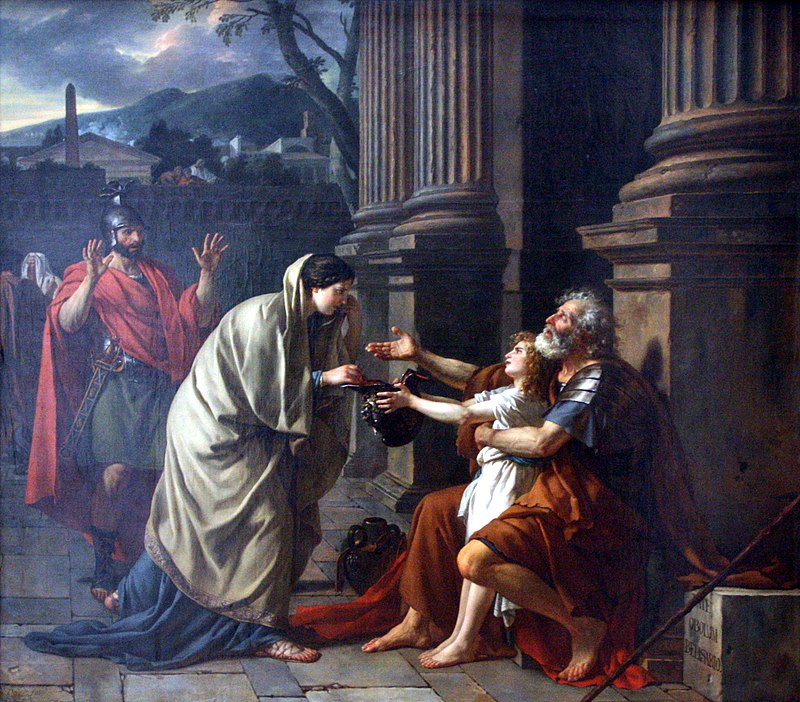
The Good Samaritan mosaic by Fr Marko Rupnik
The up-side of helping: volunteerism is strongly related to current and future health and well-being.
  • Older adults who volunteered were higher in life satisfaction and will to live, and lower on measures of depression, anxiety, somatization.
  • A 30-year study of the physical health of mothers found that 52% of those who did not volunteer experienced a major illness, compared to 36% of those who did.
  • A 4-year study of people 55 and older found that those who volunteered for two or more organizations had a 63% lower likelihood of dying.  Controlling for prior health status indicated that volunteerism accounted for a 44%reduction in mortality.
  • Research supports the idea that altruistic acts bring out happiness but it also works in the opposite direction: happier people are also kinder.
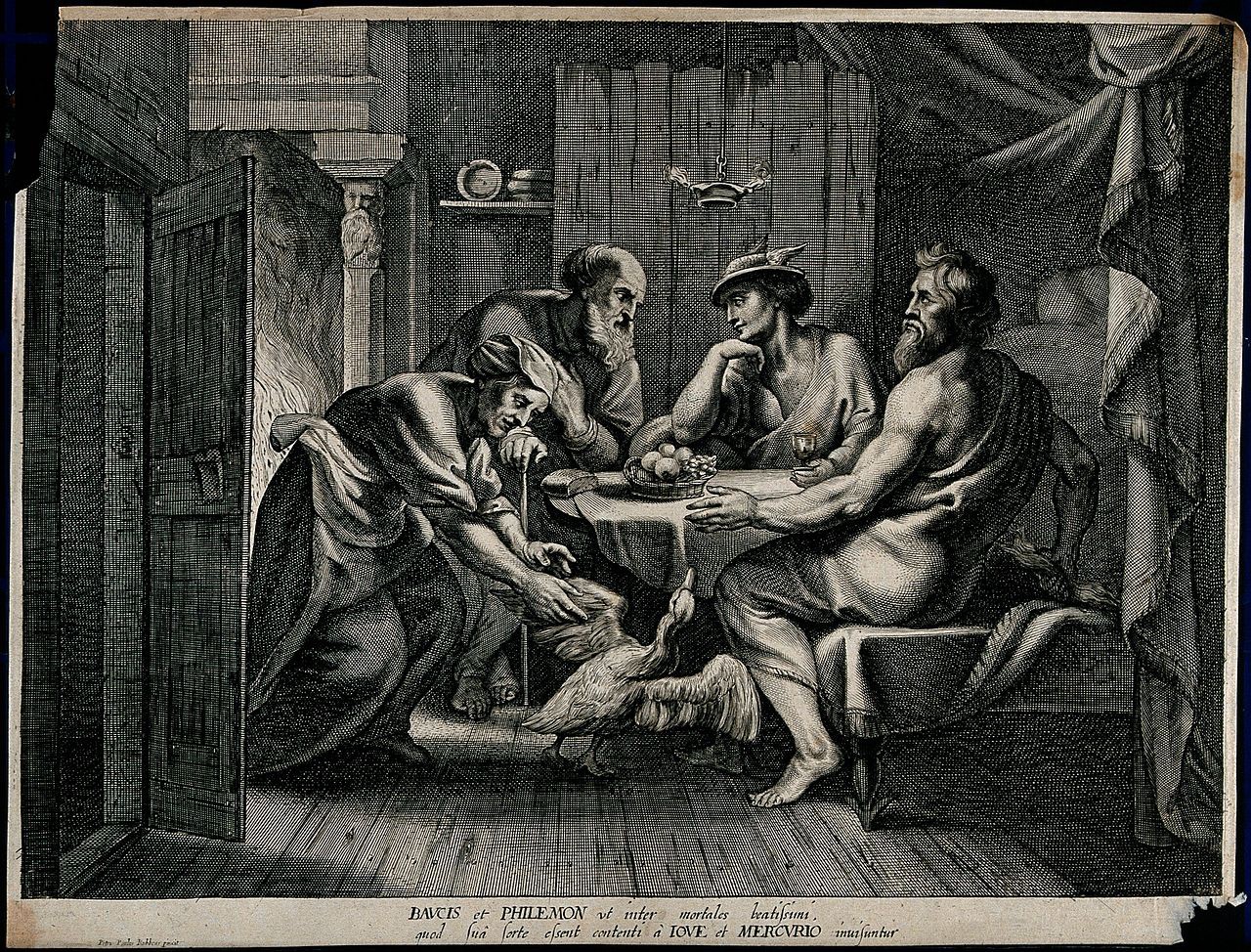
Philemon and Baucis offered complete hospitality to Zeus and Hermes in disguise, despite being paupers
When too much of a good thing is no longer a good thing:
 
  • Although positive effects of helping were still significant, one study of volunteers found that feeling overwhelmed by others’ demands had an even stronger negative effect on mental health.
  • While generous acts make people feel good about themselves, it is also important for recipients of assistance to appreciate—and show that their appreciation—for kindness and help.
  • Research indicates that a conscious focus on gratitude led to reductions in negative affect and increases in optimistic appraisals, positive affect, offering emotional support, sleep quality, and well-being for the grateful person.
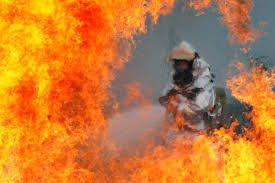
  • Volunteer burn-out is especially common in high-stress positions, such as volunteer firefighters and medical providers at refugee camps.

Altruism is an important moral value for virtually all of the world’s religions:
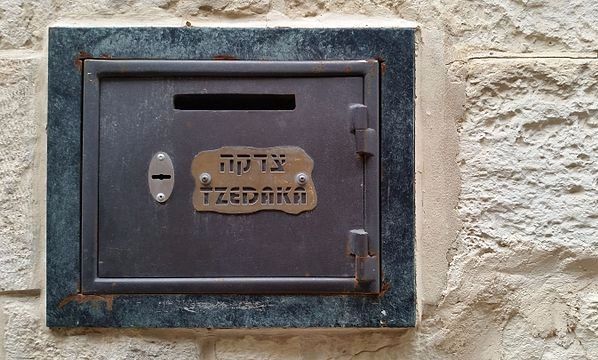
  • Jews practice tzedakah, righteous behavior, providing support to make the world a more just place

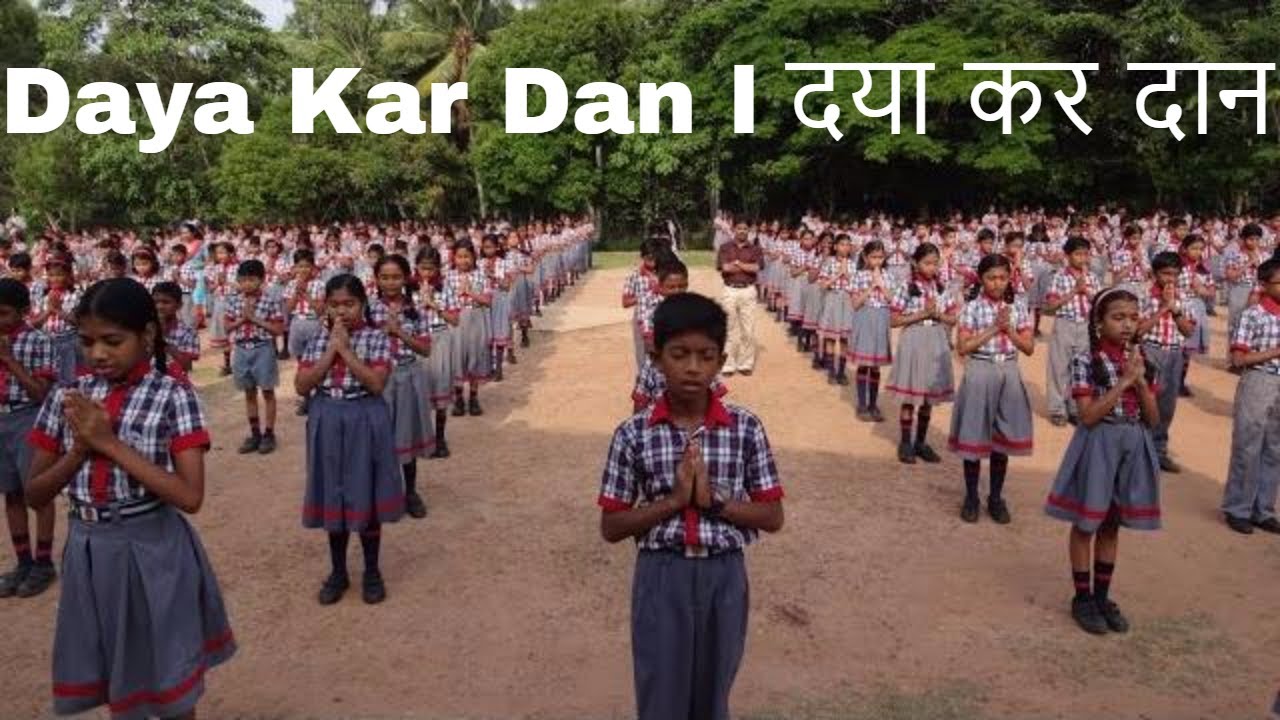
  • Daya (compassion) and Daan (chairty) are two of the fundamental teachings of Hinduism

  • As part of aparigraha (non-attachment), Jains give away possessions and harm no living creature

  • Many Christian churches still practice tithing, donating 10% of all earnings

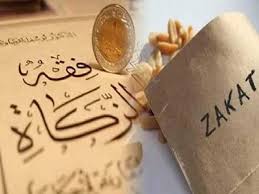
  • One of the five primary tenets of Islam is zakat, giving to charity

  • Sikhs practice seva, which is unselfish and unbiased aid to all

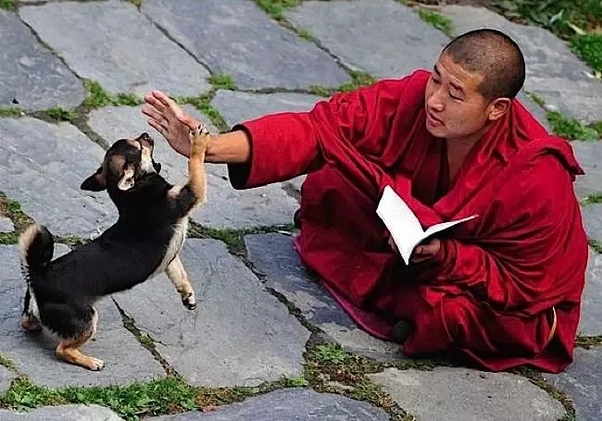
  • Buddhism teaches kindness toward all beings

Bottom line for writers: helpful characters are a good option, but be clear in your own head who, why, and under what circumstances the person helps.


PREJUDICE: WHAT IT IS, WHAT IT ISN’T

Is fear of grey people racism or able-ism?
Prejudice is generally defined in one of two ways: 


1)  A preconceived opinion that is not based on reason or actual experience.  This is the broadest definition and allows for being biased in a positive direction (such as assuming that harpists are poised and elegant).  Wikipedia goes a step further, saying an affective feeling towards a person based on that person’s perceived group membership.

Deborah Henson-Conant

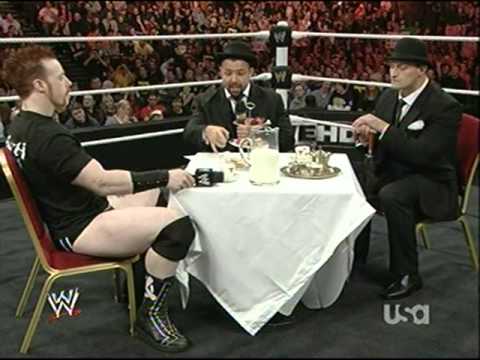
2)  An unfavorable opinion or feeling formed beforehand or without knowledge, thought, or reasons; unreasonable feelings, opinions, or attitudes, especially of a hostile nature (like thinking all wrestlers are vulgar and uncouth), regarding an ethnic, racial, social, or religious group.

Prejudice is one of the root causes of human conflict.  Conflict, in turn, can result in crime, war, systemic repression, and mass murder.  Writers note: anything that creates conflict between characters or between a character and society can be used in your writing.


Where prejudice comes from:
 

1) We tend to take on the attitudes—including prejudices—of the social groups to which we belong.  Social groups include gender, race, ethnicity, nationality, social class, religion, sexual orientation, profession, etc., etc., etc.  Adopting the attitudes of one’s social groups, including family, is often a means of fitting in and being liked.  Thus, prejudice may serve a social adjustive function.

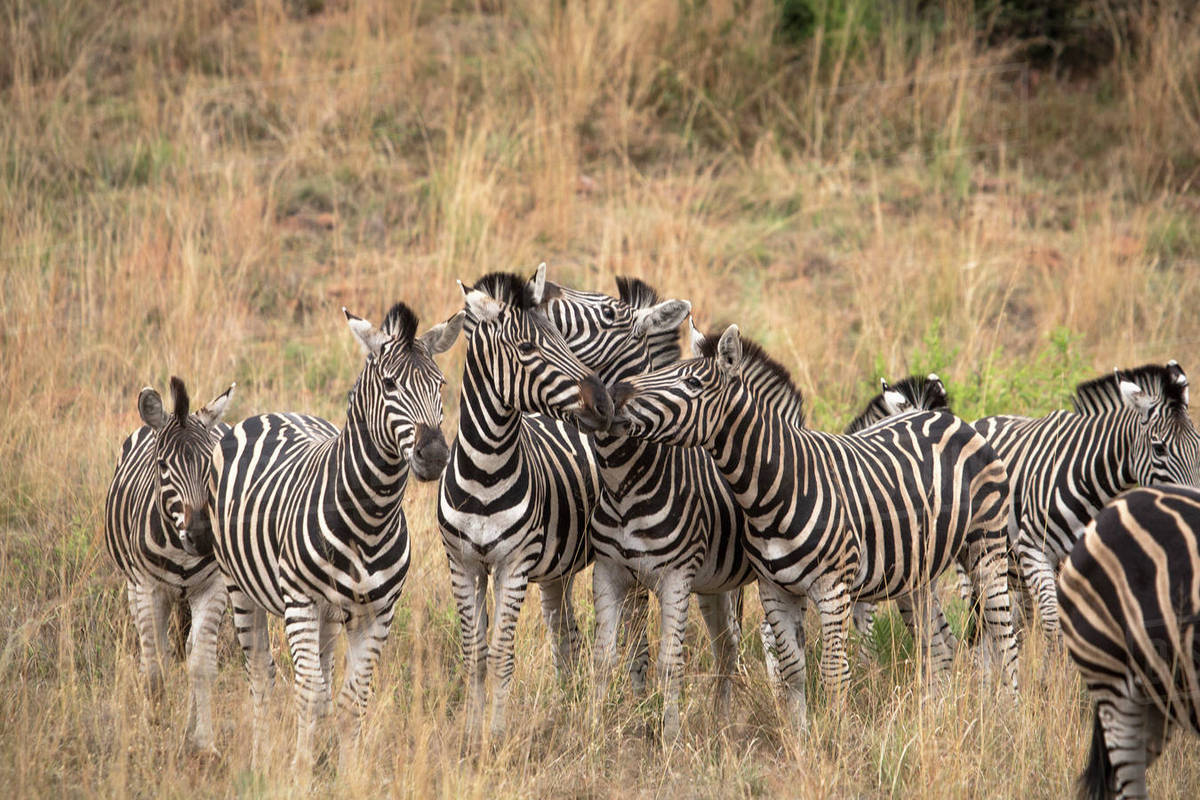
Zebras always vote the same way in local elections.

2) Sometimes assuming a host of characteristics based on knowing one is cognitively efficient.  We don’t have to spend time gathering information or even stopping to think.


Cartoon by Dan Allison
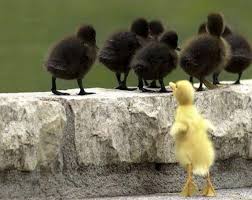
3) And sometimes, prejudice serves an ego-defensive function.  If simply by being who we are we can feel superior to whole groups of people—e.g., all women, all blacks, all immigrants, all yellow ducklings—it helps counterbalance negative information about oneself (such as being chronically unemployed, ugly, or unpopular).


Like other attitudes, prejudice has cognitive, affective, and behavioral components.
 
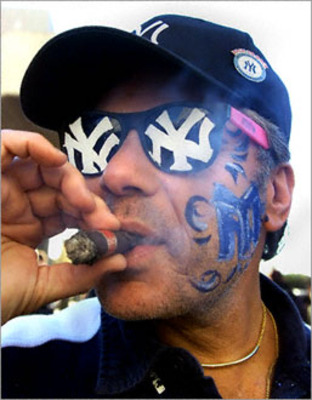
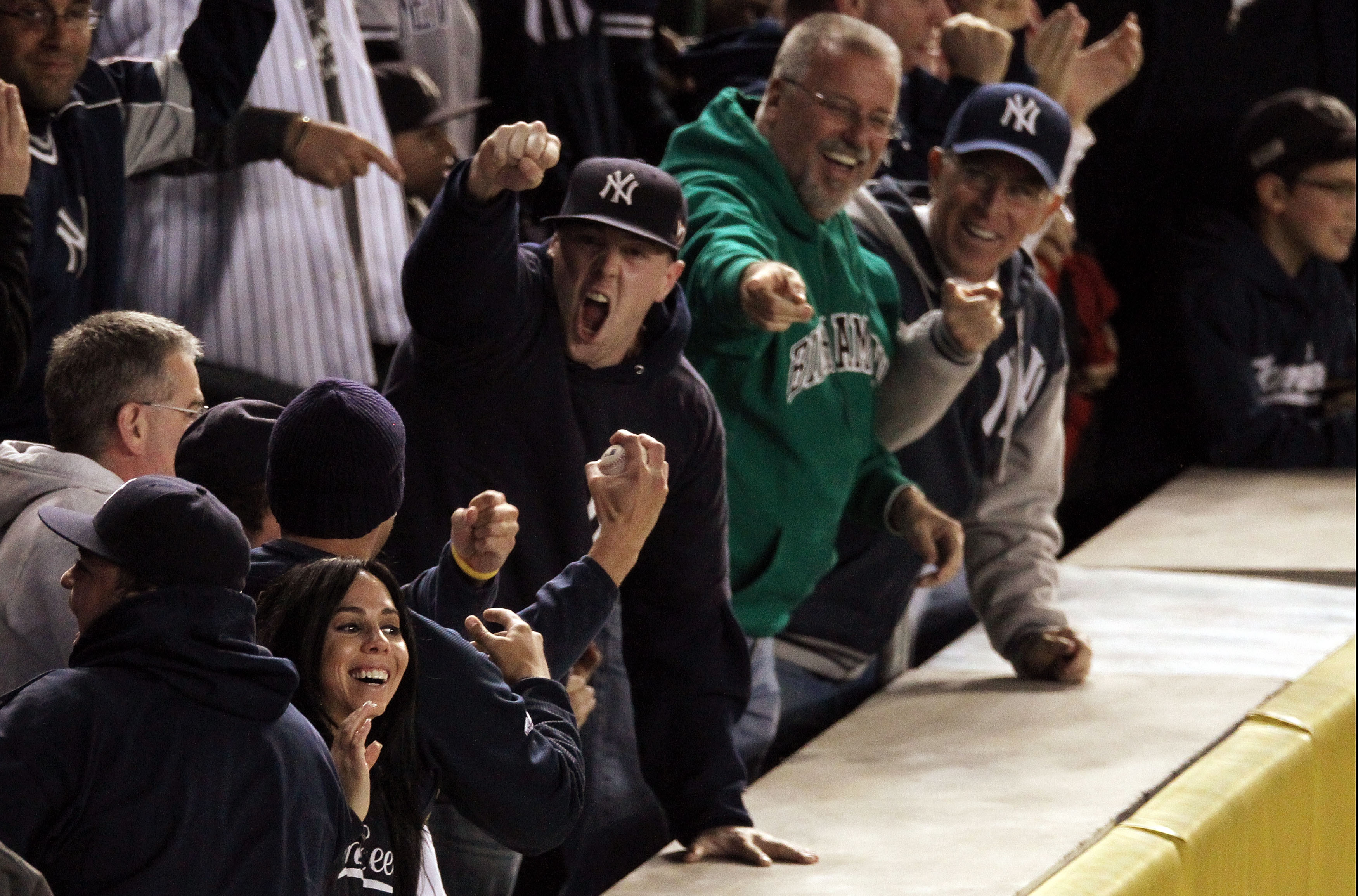
  • Cognitive: overgeneralized beliefs or stereotypes.  E.g., Yankees fans are arrogant and obnoxious.
  • Affective: prejudice, feelings about people that could be positive but are more often negative.  For example, I hate Yankee fans They make me angry.
(Photo by Al Bello/Getty Images)
  • Behavioral: the treatment of others.  When negative, it is discrimination, and may lead to excluding, avoiding, or biased treatment of group members.  Example: I would never hire or become friends with a person if I knew he or she were a Yankees fan.
Although people can hold positive stereotypes, prejudices, and discriminatory actions based on group membership—for example, giving preferential treatment to people who are like themselves—it behooves us to focus on the negative because that is what is most problematic.


“How It Works” by xkcd
First impressions: When meeting new people, we automatically note race, gender, and age because these social categories provide a wealth of information about the individual—albeit, based on stereotypes.


Categories of bias: Racism, sexism, ageism, sexual orientation, nationalism, class-ism, religious discrimination, linguistic discrimination, and more.
Self-fulfilling Prophecy: An expectation held by a person about how another person will behave, which leads to treating the person according to our expectations.  The treatment can influence the person to act according to our stereotypic expectations, thus confirming the original stereotypic beliefs.  (Think teacher expectations, employer expectations, etc.)


Confirmation Bias: Paying more attention to information that is consistent with our stereotypic expectations than to information that is inconsistent with our expectations..


In-groups and Out-groups: An in-group is a group we see ourselves as belonging to, involving a strong sense of belonging and emotional connection that leads to in-group bias and preferences.  Out-groups are seen as different in fundamental ways, less likable, often resulting in discrimination.  When an in-group’s goals are delayed or thwarted, an out-group is often blamed.  This is scape-goating.
 
Bottom line for writers: stereotypes, prejudices, and discrimination can define characters and situations.  Think thoughts, affects, and actions and how each can work with POV and plot.


Species-ism?

CHARACTERS’ ATTITUDES AND BEHAVIOR


Attitude is a favorable or unfavorable reaction toward something or someone (often rooted in one’s beliefs and exhibited in one’s feelings and intended behavior).  It is tempting to assume that there is a direct line between these favorable or unfavorable reactions and behavior.  Good news for writers: people’s expressed attitudes seldom predict their actual behavior.  This is because an attitude includes both feeling and thinking, and both affect behavior.


I don’t FEEL wet. I THINK I’m walking on water. I must have an uplifting ATTITUDE!
Attitudes predict behavior when these conditions are present:
  • Social influences on what we say are minimal (little social pressure, fear of criticism).  For attitudes formed early in life (e.g., attitudes toward authority and fairness) explicit and implicit attitudes often diverge, with implicit being a stronger predictor.
I’m a good boy. I’m a good boy. I’m a… that treat is mine!
  • Other influences our behavior are minimal: situational constraints, health, weather, etc.
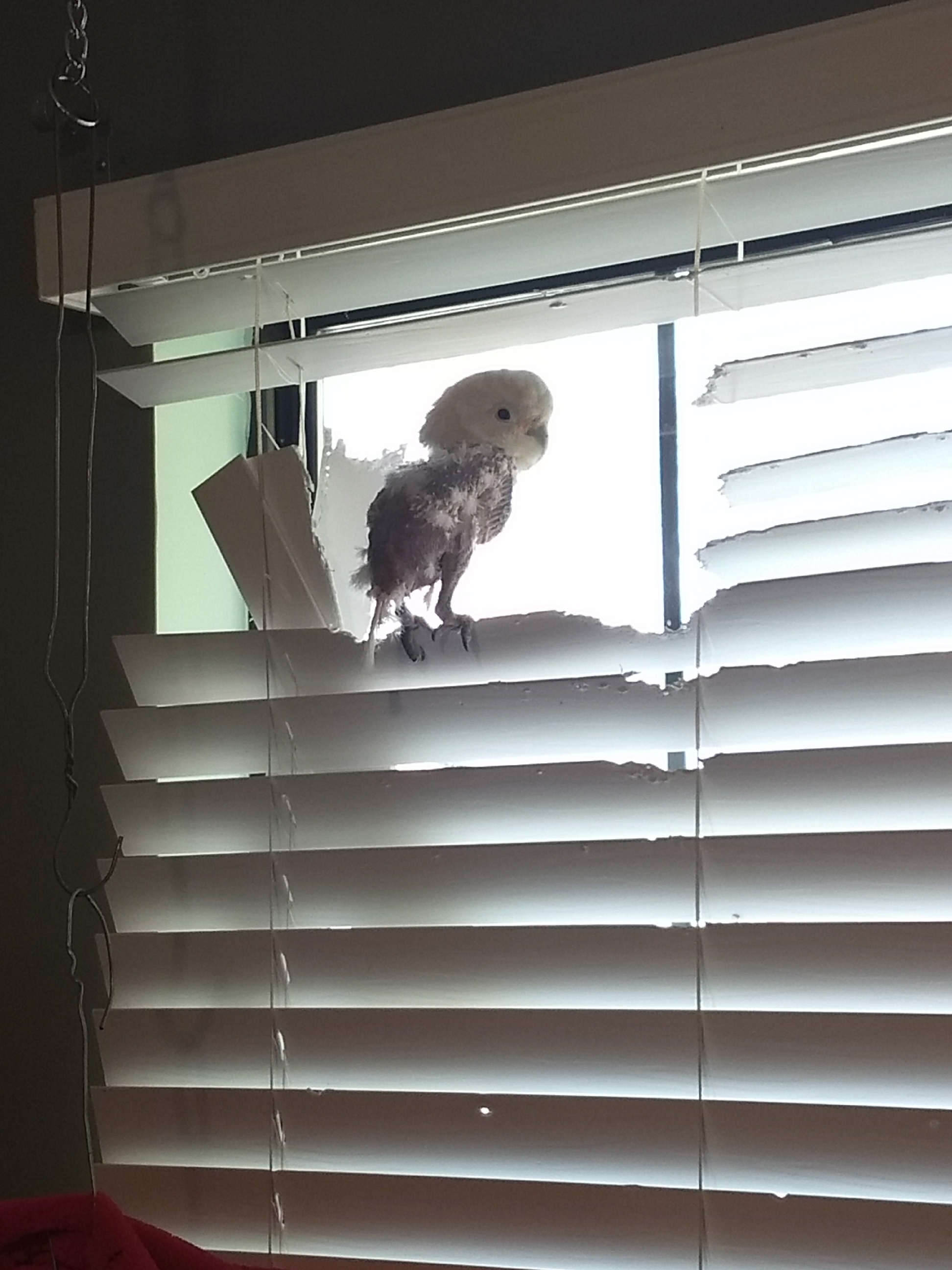
I’m supposed to stay in my cage, but that open window is right there…
  • Attitudes specific to the behavior are examined: e.g., expressed attitudes toward poetry don’t predict enjoying a particular poem, but attitudes toward the costs and benefits of jogging predict jogging behavior.
You’re getting up early tomorrow to go running. Sure. I totally believe you.
  • Attitudes are potent: stating an attitude and an intention to do something makes the attitude more potent and the behavior is more likely (recycling); asking people to think about their attitudes toward an issue also increases potency.
Someday, I WILL be taller than you.
  • Attitudes that are developed through direct experience are more accessible to memory, more enduring, and have a stronger effect on behavior.
Once a diva, always a diva.
Behavior affects attitudes when these conditions are present:
  • Actions prescribed by social roles mold the attitudes of the role players.  (Think prisoners and guards.)
  • What we say or write can strongly affect subsequent attitudes.  (Think being assigned a side in a debate.)
  • Doing a small act increases the likelihood of doing a larger one later.  (Think foot-in-the-door technique.)
  • Actions affect our moral attitudes.  We tend to justify whatever we do, even if it is evil.
  • We not only stand up for what we believe in, we believe in what we have stood up for.  (Think adopting a rescue animal or donating to a food drive.)
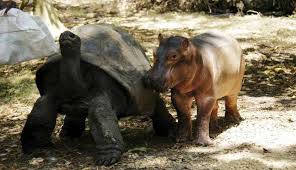
I adopted this pet hippo. You should adopt one too. All turtles should have a hippo companion.

The question of whether government should legislate behaviors to change attitudes on a massive scale is compounded by the question of whether it is even possible.

Every day, I come a little closer to my dream of being a balloon.
Why does our behavior affect our attitudes?
  • Self-Presentation Theory says people (especially those who self-monitor their behavior hoping to make a good impression) will adapt their attitude reports to appear consistent with their actions.  Some genuine attitude change usually accompanies efforts to make a good impression.
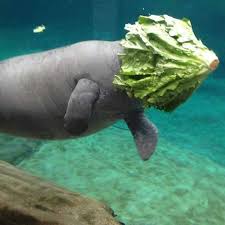
I meant to do that; I really wanted a lettuce hat.
  • Dissonance Theory explains attitude change by assuming we feel tension after acting contrary to our attitude or after making difficult decisions.  To reduce that arousal, we internally justify our behavior.  The less external justification we have for undesirable actions, the more we feel responsible for them, thus creating more dissonance and more attitude change.  (Think threat or reward.)
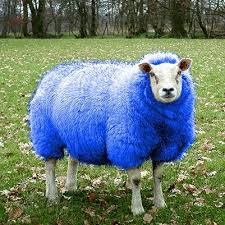
This color looks spectacular on me, and blue is a perfectly normal color for a sheep.
  • Self-Perception Theory assumes that when our attitudes are weak, we simply observe our behavior and its circumstances and infer our attitudes (correctly or incorrectly) rather than the other way around.  “How do I know what I think till I hear what I say?”  And conversely, rewarding people for doing something they like anyway can turn their pleasure into drudgery—the reward leading them to attribute their behavior to the reward rather than the enjoyment of the behavior itself.
I like grass because I have a lot of it.

Bottom line for writers: to present a character’s attitudes to the reader, write what they are doing, thinking, and/or feeling.  And note that each of these affects the other two and is affected in turn.  Dissonance among the these creates lots of opportunity for tension, conflict, and misunderstanding!

Wednesday’s Child

Monday’s child is fair of face
Tuesday’s child is full of grace
Wednesday’s child is full of woe . . .

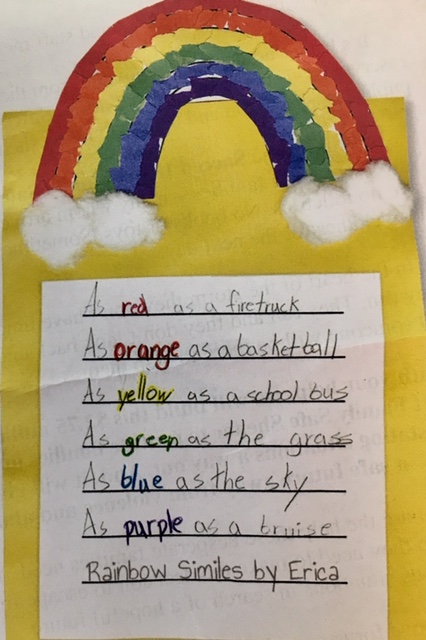
A Child’s Similes

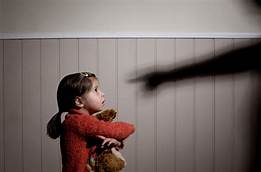
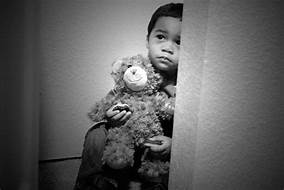
This was part of a solicitation on behalf of a shelter for women fleeing domestic violence with their children.  The last line is heart-wrenching,and it raises a question: was the bruise on Erica or someone she loved?  All of this led me to explore two topics—child abuse and child bystanders in families experiencing domestic violence and abuse.

Writers, note: it behooves you to know about these things so your writing is realistic.

It turns out that data on child abuse is relatively easy to come by.  From the National Children’s Advocacy Center:

  • 91.6% of victims (all types of abuse) are maltreated by one or both parents.
  • 90% of victims of child sexual abuse know their abuser.  Besides parents, other perpetrators known to the victim included foster parents, other relatives, neighbors, and daycare providers.
  • Rates of physical abuse and neglect are affected by socioeconomic status, being more common for families living near or below the poverty line.
  • Child sexual abuse occurs at all economic levels of society.
  • Most children delay or never disclose child sexual abuse to friends, family, or authorities.
  • Few children falsely report being abused (2-10%).
  • Medical evidence is found in less than 5% of substantiated child sexual abuse cases.
  • Child neglect is the most common type of abuse in the home.
  • At least 20% of substantiated child sexual abuse cases are perpetrated by females.
  • Male and female victims of sexual abuse are equally traumatized.
  • Children with disabilities are two to three times more likely than children without disabilities to be abused.

Writers: any one of these statements could be a plot point.


The National Children’s Alliance provides additional data:

  • In 2015, an estimated 1,670 children died from abuse and neglect in the United States.
  • Nearly 700,000 children are abused in the U.S. annually.
  • Children in the first year of life have the highest rate of victimization, 24.2 per 1,000 children.
  • Types of abuse vary, but three elements are most common: neglect, 75%; physical abuse, 17.2%; sexual abuse, 8.4%.
    • NB: some children suffered more than one type of abuse.
  • 90% of alleged abusers are related in some way to the child victim.
  • 40% of abusers were a parent or caregiver.
  • Nearly 25% of abusers were themselves children.

Writers: consider these behaviors for your villains.

Several studies have analyzed the cycle of child sexual abuse, including at the Royal Free Hospital School of Medicine in London and the University of New South Wales Faculty of Law in Sydney.   Among 747 males studied, being a perpetrator was correlated with their reports of having been victims of sexual abuse.  The overall rate of having been a victim was 35% for perpetrators and 11% for non-perpetrators.  Of 96 females studied, 43% had been victims but only one became a perpetrator.  Males who were abused in childhood by a female relative or who had lost a parent in childhood were more likely to become a perpetrator.  The bottom line: there is evidence of a victim-to-victimizer cycle for a minority of male perpetrators but not for females.

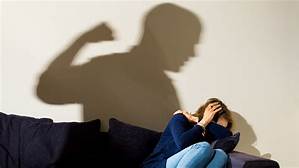
When someone says “abuse” images of physical abuse are likely to come first to mind.  However, as I learned when I volunteered at Hanover Safe Place (providing services for those suffering sexual assault and/or domestic abuse), there are at least five types of abuse.

  1. Physical abuse: hitting, slapping, shoving, grabbing, pinching, biting, hair pulling, etc.  This type of abuse may include denying medical care or forcing alcohol and/or drugs on the victim.
  2. Sexual abuse: coercing or attempting to coerce any sexual contact or behavior without consent, including marital rape, attacks on sexual parts of the body, forcing sex after physical violence, or treating someone in a sexually demeaning manner.
  3. Emotional abuse: undermining a person’s sense of self-worth and/or self esteem by constant criticism, denying one’s abilities, name-calling, or damaging one’s relationship with children.
  4. Economic abuse: making a person financially dependent by taking total control of financial resources, withholding access to money, forbidding attendance at school or employment.
  5. Psychological abuse: including—but not limited to—intimidation; threatening harm to self, partner, children, or partner’s family or friends; destruction of pets or property; forcing isolation from family, friends, school and/or work.

Writers: if you have a domineering character, consider the last three forms of abuse as tools to use.

DoSomething.org posted 11 facts about child abuse.  Some of those facts not covered in the preceding:

  • Approximately 5 children die every day because of child abuse.
  • 1 out of 3 girls and 1 out of 5 boys are sexually abused before they turn 18.
  • In 2012, 82.2% of child abuse perpetrators were between the ages of 18-44, of whom 39.6% were between the ages of 25 and 34.
  • Victims of child abuse/neglect are 59% more likely to be arrested as juveniles, 28% more likely to arrested as adults, and 30% more likely to commit violent crime.
  • About 80% of 21-year-olds who were abused as children meet the criteria for at least one psychological disorder.
  • 14% of all men and 36% of all women in prison were abused as children.
  • Those abused as children are less likely to practice safe sex, putting them at greater risk for STDs.
  • They are also 25% more likely to have a teen pregnancy.

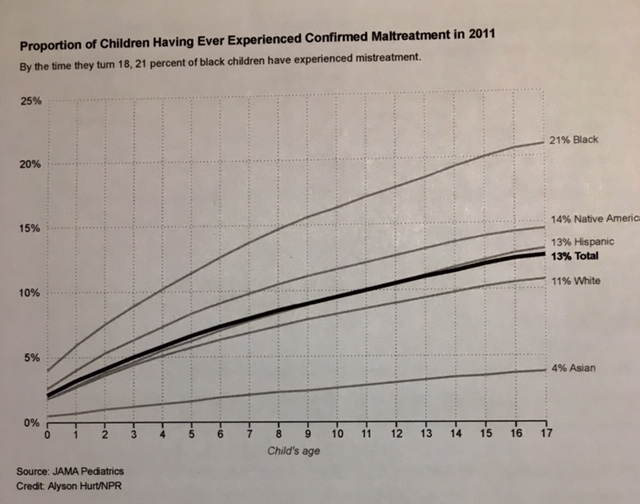
Last but not least, according to National Public Radio, through WBUR, the effects of abuse and mistreatment add up over children’s lives.  Abuse and neglect survivors are much more likely to have physical and mental health problems later on, including higher risk of suicide and running afoul of the law.  Summing across years, 12.5% of children overall have experienced at least one episode of abuse or neglect by age 18.  The numbers are worse for minority children: 21% of African-American children, 14.5 percent of Native Americans, and 13% of Hispanic children.

Minority Children Affected by Abuse


HOW CHILDREN LIVING WITH DOMESTIC ABUSE ARE HARMED

It turns out that finding data on this topic was more difficult than finding info on abuse of children per se, but there are indices of the harmful effects of witnessing abuse.

Development and Psychopathology (Vol 15, Issue 2) included a research report documenting that children exposed to high levels of domestic violence had IQ’s that were, on average, 8 points lower than unexposed children.  The researchers attribute this to the harmful effects of extreme stress on brain development.

The Journal of Consulting and Clinical Psychology (Vol 71(2)) included a meta analysis of 118 studies of the psycho-social outcomes for children exposed to “interparental violence.”  Child witnesses exhibited more child problems, and witnesses’ outcomes were not significantly different from those children who were physically abused themselves.

Child Abuse & Neglect: The International Journal (Vol 32, (8)) reported that children and adolescents living with domestic violence are at increased risk for emotional, physical, and sexual abuse.  They’re more likely to develop emotional and behavioral problems, and they’re more vulnerable to other adversities.  The researchers concluded that the impact of living with domestic violence can endure even after the child is safe.

Children exposed to complex trauma (including witnessing domestic violence) often experience lifelong problems that put them at risk for additional trauma and cumulative impairment (e.g., psychiatric and addictive disorders, chronic medical illness, legal, vocational, and family problems).  These may extend from childhood through adolescence into adulthood. (Psychiatric Annals, 35(5).)

Children exposed to maltreatment, family violence, or loss of their caregivers often exhibit depression, attention-deficit/ hyperactivity disorder (ADHD), and disorders of anxiety, eating, sleep, communication, separation anxiety, and reactive attachment.

The literature on complex trauma suggest seven primary domains of impairment in exposed children: attachment, physical illness/disease, affect regulation, alterations in consciousness, behavioral regulation, cognition, and self-concept.

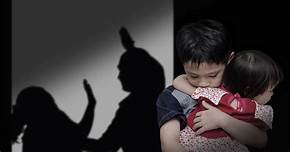
Writers: consider the POV of a child witness to domestic abuse.

Emma Katz in Child Abuse Review points out that the forms of domestic abuse beyond the physical are still harmful to children.  Perpetrators’/fathers’ coercive behavior toward women (psychological, emotional, verbal, financial abuse; isolation and monitoring their activities) spills over to children.  They often prevented children spending time with their mothers and/or grandparents, visiting other children’s houses, getting involved in extra-curricular activities at school.  These non-violent acts isolate children, dis-empower them, and create a constrained world that stunts children’s resilience and development and contribute to emotional/behavioral problems.

Bottom Line for Writers: domestic abuse as it affects children is a rich vein for writers to mine.  Consider the complex possibilities: whether a character, whether now a child or adult, was a child also abused, the child’s gender and age, and the time since exposure to the abuse.  Consider whether a child witness would actively support the mother/victim (e.g., urge her to leave her abuser) or identify with the aggressor.  Take it anywhere!

This Gun for Hire

Information Writers Need About Contract Killers

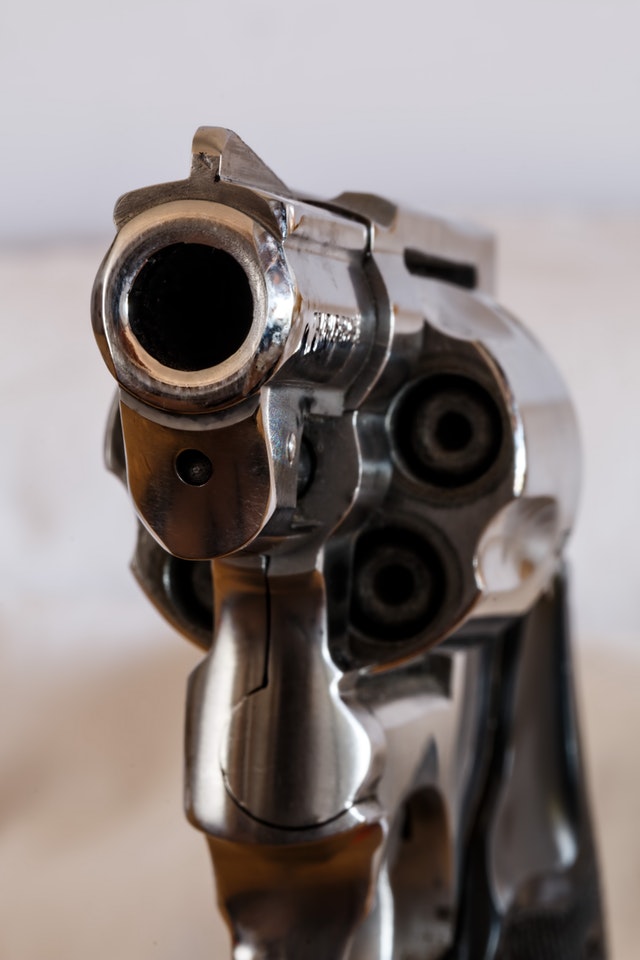
handgun
I recently blogged about the going rates for body parts on the black market, and for human trafficking. Given how my mind works, that led me to murder for hire. Murder for hire is so much a part of popular culture and fiction—and so much info seems to be out there about illegal activity—that I was surprised to find only sparse and conjectural data about murder for hire. But here’s what I found, starting with the most concrete and mind-blowing.

Cost Per Hit

list of contract killers cost
Although the average payment for a “hit” is $15,000, if the offered rates are anything to go by, it can range from a few hundred dollars to a few hundred thousand dollars. And per the above list, it varies greatly by country.
From what I could find, hitmen are almost always men, between the ages of 25 and 49, unmarried. Murder for hire might stem from revenge, expediency (easier than getting a divorce), or a misplaced wish to spare the victim hurt. But by far the most common reason for murder-for-hire is either insurance policy payouts or a romantic relationship gone wrong. A study in Australia (supported by less rigorous data in the U.S.) indicates that contract killings account for 2%-4% of murders. The most common weapon is a firearm.  In determining a fee, the hitman needs to consider both risk and expected expenses.
Reliable information on the cost of murder for hire is hard to come by for several reasons—most especially that successful contract killers go unpunished and don’t talk about it. But fees depend on a number of factors, including:
  • the difficulty of the hit
  • the prominence of the target
  • the financial standing of the employer
  • the financial needs of the hitman

And from low to high cost:

  • straightforward murder
  • murder that looks like suicide
  • murder that looks like an accident
  • murder that looks like natural causes

HOW TO HIRE A CONTRACT KILLER

  • search online
  • check for references (really)
  • don’t meet the killer in person
  • don’t exchange names
  • don’t give a reason for the hit
  • pay in bitcoin to avoid traceability, use an escrow to pay when job is done
  • other than bitcoin, if you do know the hitman, consider jewelry, barter, etc.
  • don’t pay 50% up front because he might take the money and run
  • if you advertise, don’t accept the first two respondents, who are probably undercover law enforcement
  • to hire anonymously on line, don’t give real name, address, credit card, or phone number, and hide your IP through Tor Browser

WRITERS BEWARE

You can’t just troll around on sites like 18th Street Gan Hitmen on the dark web marketplace. If you try to get info by pretending to be a hitman, you will be asked to prove yourself by hurting a specific person in specific ways.

Why might no one take on your job?

  • You don’t have the deep pockets for an assassin who specializes in political targets, disguising homicide, or disappearances.
  • If you don’t have a reputation within the criminal world, you are a liability: you might be an undercover cop, get cold feet, or brag about it when drunk.
  • You don’t seem to have enough to lose if it fails.
police car with lights illuminated

Reasons for failure.

  • Most people who want someone killed don’t know the criminal underworld, so look to family, acquaintances, neighbors, or others who are inept or inexperienced.
  • Most people won’t do it, and would likely call the police.
  • Talking publicly and widely about wishing someone dead.
  • Mistakenly believing that not actually doing the act means no criminal liability.
Bottom line for writers: Murder for hire could be a powerful part of your story

What You Think Upon Grows Day

What You Think Upon Grows Day (2)

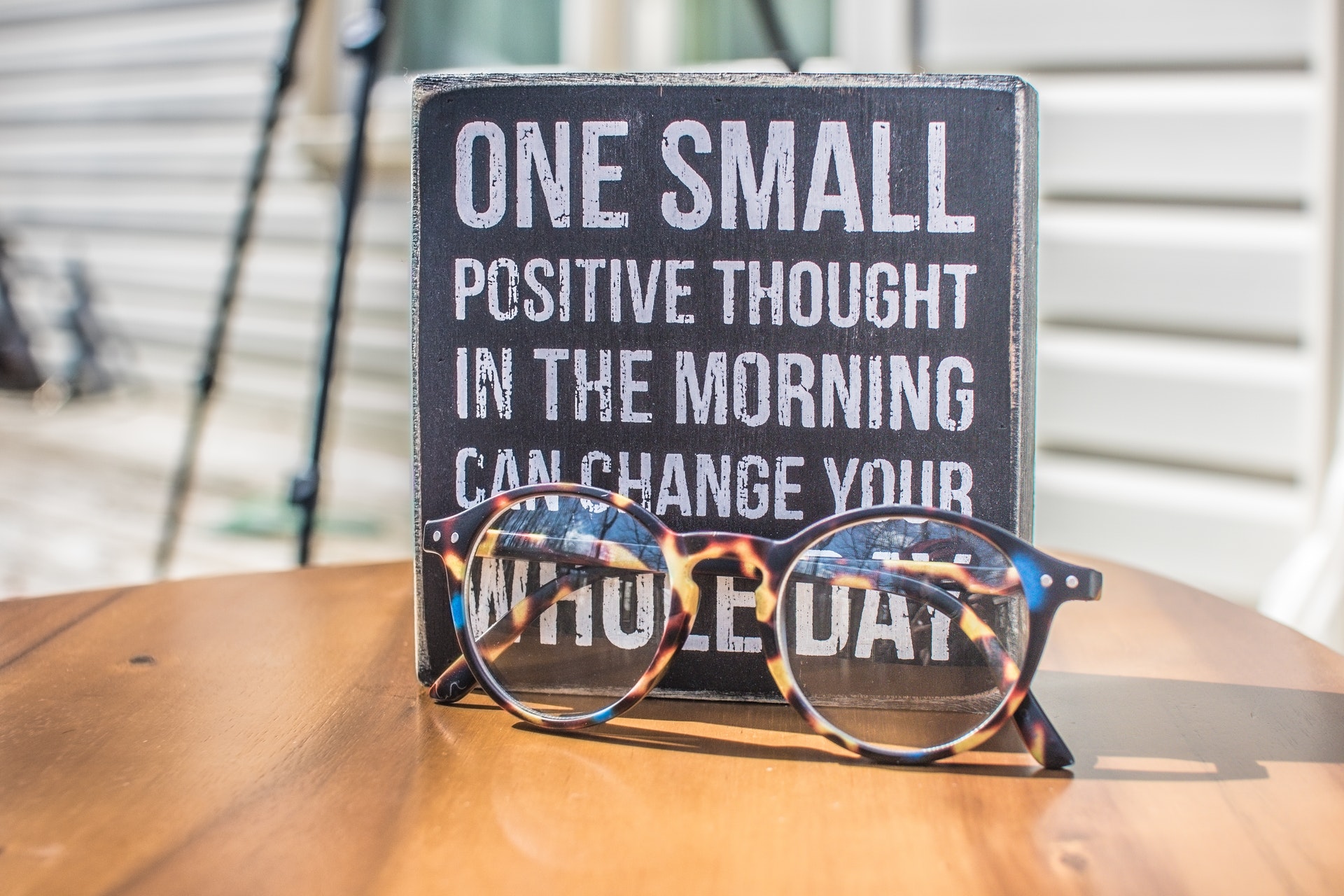
Today is What You Think Upon Grows Day. It’s a day to remind oneself and others of the power of positive thinking. Studies have shown that there is a major difference in the lives and health of optimists and pessimists.

According to the Mayo Clinic,

Positive thinking doesn’t mean that you keep your head in the sand and ignore life’s less pleasant situations. Positive thinking just means that you approach unpleasantness in a more positive and productive way. You think the best is going to happen, not the worst.

What You Think Upon Grows Day

Positive thinking like this does lead to health benefits, such as:

  • Increased life span
  • Lower rates of depression
  • Lower levels of distress
  • Greater resistance to the common cold
  • Better psychological and physical well-being
  • Better cardiovascular health and reduced risk of death from cardiovascular disease
  • Better coping skills during hardships and times of stress

What You Think Upon Grows Day

If you consider yourself a negative thinker, it’s a good idea to identify those negative thoughts and begin to reprocess them as positive. For instance, if you think to yourself, “There’s no way this will work,” you can rephrase the thought to say, “I can try to make this work.”

What You Think Upon Grows Day

Remember, these thoughts and actions do not go away overnight. It takes time and practice to become a positive thinker. Why not start on What You Think Upon Grows Day? It might be the perfect start to a new, healthier lifestyle.