There is a joke (based on stereotypes, as so many jokes are) that goes like this: on the Winter Solstice, the English woman says, “Oh. The shortest day of the year.” while the French woman says, “Oooh, la la, the longest night of the year.” My point is that this date means many things to many people.
I love this book! Just browsing it is entertaining. For the specifics of the importance of this date, I am heavily indebted to Chase’s. But to start with the solstice, in the northern hemisphere winter begins on this day. (Of course, in the southern hemisphere this is the beginning of summer.) This means 12 hours and 8 minutes of daylight at the equator and zero at the Arctic Circle.
Holidays
Celebrate Short Fiction Day: Established in 2013, short stories have been around as long as people have been able to spin a tale about people, places, or things. So, on this first day of winter, when the days are shortest, take advantage of the long night and celebrate short fiction by reading a short story—or two or three! Totally self-serving, consider my collection Different Drummer.
Forefather’s Day: Celebrated mostly in New England to commemorate the landing at Plymouth Rock in 1620. Plymouth Rock, the legendary place of landing since it was first “identified” in 1769 has been an historic shrine since.
Fogg Wins A Wager Day: From Jules Verne’s Around the World in Eighty Days, in 1872, Fogg walked into the saloon of the Reform Club in London, and said “Here I am, gentlemen!” exactly 79 days, 23 hours, 59 minutes, and 59 seconds after starting his trip. He won a 20,000 pound wager.
Humbug Day: Those preparing for Christmas can vent their frustrations on this day. Indeed, twelve “humbugs” are allowed.
Yalda: The longest night of the year is celebrated by Iranians in a ceremony that has an Indo-Irianian origin, where light and good are considered to struggle against darkness and evil. With fires burning and lights lit, family and friends stay up through the night helping the sun battle against darkness. They recite poetry, tell stories, and eat special fruits and nuts till the triumphant sun reappears in the morning.
Yule: This is one of the “Lesser Sabbats” during the Wiccan year. It marks the death of the Sun God and his rebirth from the Earth Goddess.
On this day…
1804: Benjamin Disraeli was born. British novelist and statesman, born in London and died there April 19, 1881. “No government can be long secure without a formidable opposition.”
1824: James Parkinson (born in 1755) died. He was a remarkable English physician and paleontologist who first described the “shaking palsy” that was later named for him, Parkinson’s disease.
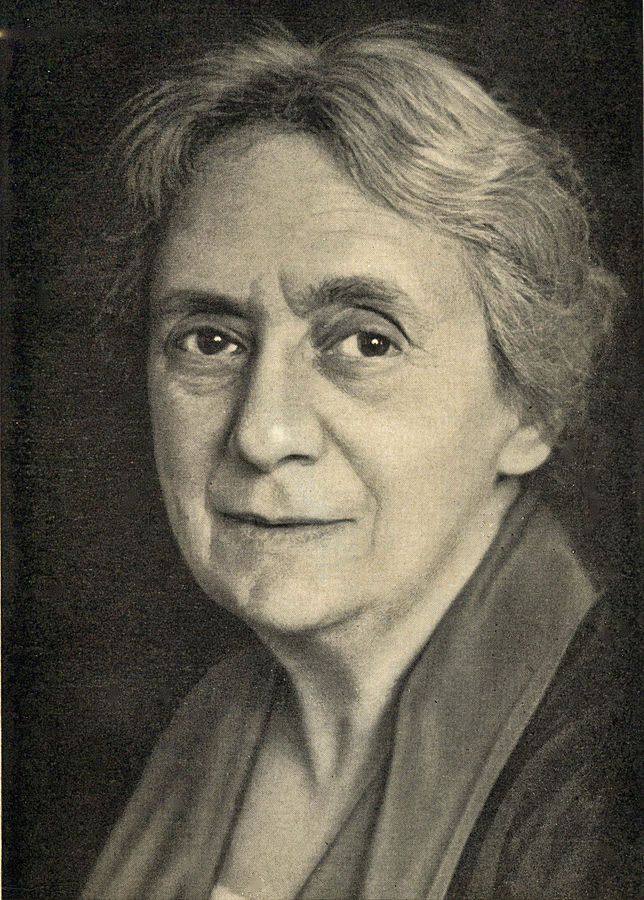
1860: Henrietta Szold was born. She is best known as the founder and first president of Hadassah, the Women’s Zionist Organization of America. She established the first night school in Baltimore, focused on teaching English and job skills to immigrants. She died in 1945.
1864: Sherman took Savannah, despite the defense of Confederate general William Hardee. By marching from Atlanta to the coast at Savannah, Sherman cut the lower South off from the center.
1879: Joseph Stalin (whose family name was Dzhugashvili) was born in Gori, Georgia. He was one of the most powerful and most feared men of the 20th century. He died of a stroke in Moscow, 1953.
1913: The first crossword puzzle (created by Arthur Wynne) was published in a supplement to the New York World.
1917: Heinrich Böll was born. He was a German novelist, winner of the 1972 Nobel Prize for Literature, author of 20 books. Born in Cologne, Germany, he died near Bonn on July 16, 1985.
1937: The film of Snow White and the Seven Dwarfs premiered. It was the first full-length animated feature film, also the first Technicolor feature. It was 4 years in production and involved more than 750 artists and 1500 colors. It featured the songs “Some Day My Prince Will come” and “Whistle While You Work.”
Original theatrical poster for Snow White and the Seven Dwarfs, illustrated by Gustaf Tenggren [Source: Walt Disney Productions]
1968: Apollo 8 was launched. It was the first the first moon voyage, orbited the moon, and returned to earth Dec. 27.
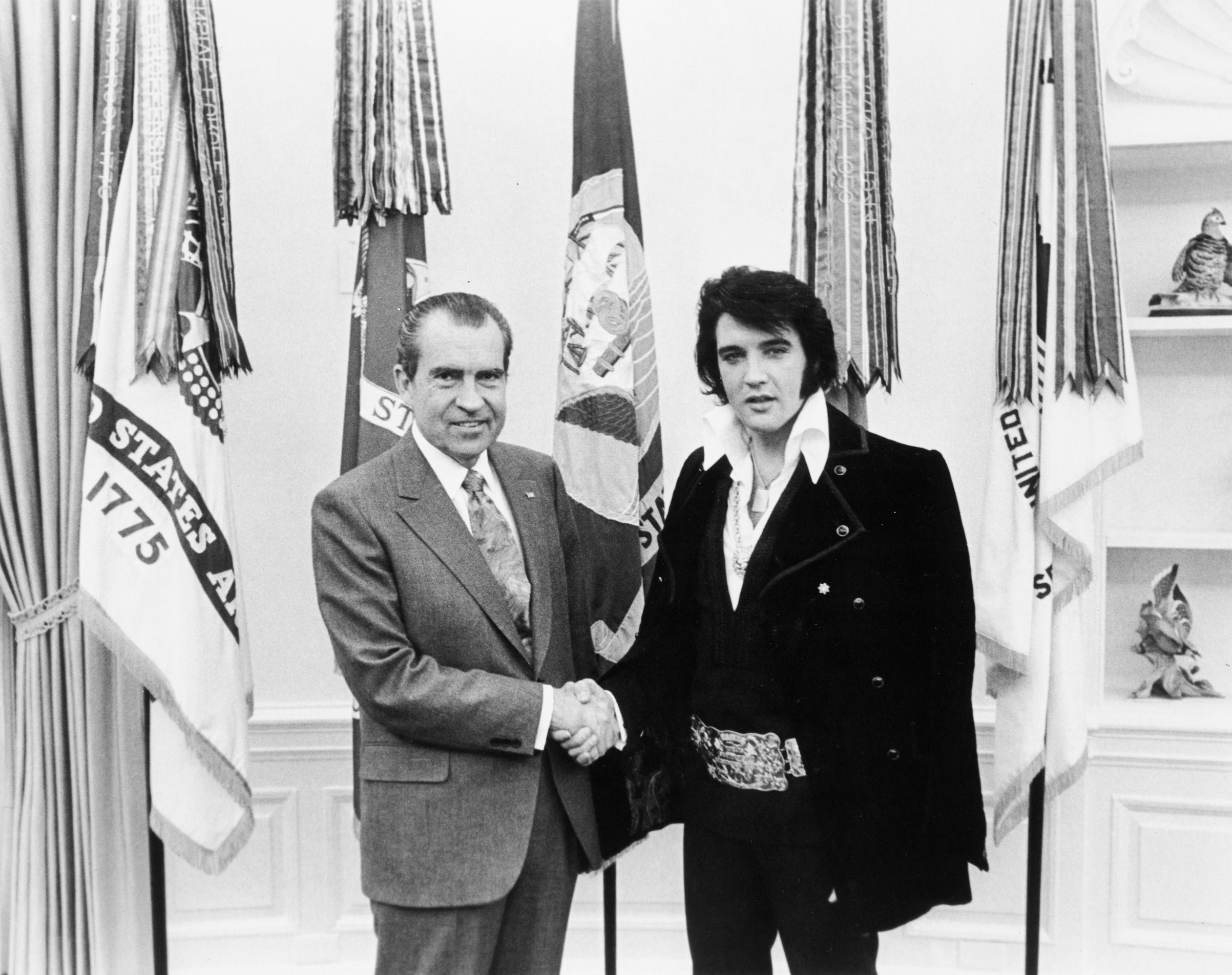
1970: Elvis Presley met with President Nixon. He offered to be “a Federal Agent-at-Large” to fight drug abuse and the drug culture. The meeting was cordial but he was not made a federal agent. Surprising (to me) the picture of them shaking hands is the most requested reproduction from the National Archives (more than the Bill of Rights or the US Constitution).
1972: Joshua (Josh) Gibson was inducted into the Baseball Hall of Fame. He was the greatest slugger to play in the Negro Leagues, perhaps the greatest ballplayer ever. His long home runs are the stuff of legends, and he starred with the Pittsburgh Crawfords. Born in 1911, he died in Pittsburgh June 20, 1947. His recognition was a long time coming!
1940: Frank Zappa was born. He was a rock musician and composer, noted for his satire and for advocating against censorship of music. He formed Mothers of Invention. He died in 1993.
1988: Pan Am flight 103 exploded mid-air and crashed in the heart of Lockerbie, Scotland, the result of a terrorist bombing. Those dead included 259 passengers and crew and 11 people on the ground. It eventually became known that government agencies and the airline knew that the flight was possibly a target of a terrorist attack.
2005: The United Kingdom allowed same-sex civil unions. Pop star Elton John and his partner, filmmaker David Furnish, were among the first to wed on this day.
VL: Today’s guest blog is by Teresa Inge, whose novella “Hounding the Pavement” is the opening work in the recently released To Fetch a Thief. Teresa has contributed to several anthologies both as author and as organizer. Today she will share her perspective on collaboration.
Just as writing is a lonely experience, collaboration is a group effort. As a short story author, I’ve been fortunate to collaborate with many authors on several writing projects.
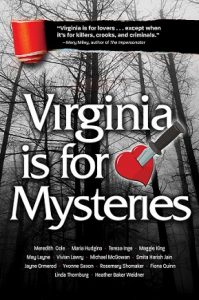
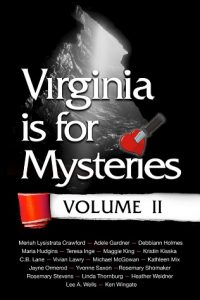
These projects have included the coordination of joint mystery anthologies. Some years ago, I came up with the idea to create the Virginia is for Mysteries series, a collection of sixteen short stories set in and around Virginia. I first discussed the series with the Sisters in Crime Mysteries by the Sea chapter members and the Central Virginia chapter members. Once members were on board to move forward, I organized an anthology committee. This began the wonderful partnership of writers joining together to create great mysteries. Along the way, we teamed up to generate timelines, book titles, number of contributors, submissions guidelines, promotion, and securing a publisher.
VL: As a contributor, I can say Teresa did a great job!
We also learned that working with multiple authors can be challenging with schedules, editing, and finding time to promote the books.
VL: What Teresa may be too polite to say is that it was sometimes a real pain in the neck—or somewhere! For example, people missing deadlines, arguing over suggested edits, and/or never being available for talks or signings.
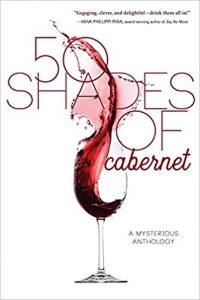
Next, I created 50 Shades of Cabernet, a mysterious wine anthology with authors I knew from Malice Domestic, a fan-based mystery writer’s conference. But I took a different approach and solicited authors who were established, had a following, and created well-crafted mysteries. I knew from experience that these authors would put in the time needed to make the book successful.
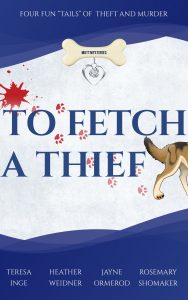
More recently, I collaborated with three authors on To Fetch a Thief, the first Mutt Mysteries collection, featuring four novellas that have “gone to the dogs.” In this howling good read, canine companions help their owners solve crimes and right wrongs. Since I’ve been in several books with this particular group, we now have the knowledge and experience to create well developed mysteries and a strategic marketing plan.
Collaborating with multiple authors combines efforts to develop great mysteries and create a strong network, since there is strength in numbers.
VL: Teresa, thank you for sharing your insights. From your closing remarks, it sounds as though collaboration—like so many other things—gets easier with practice. No doubt many authors would benefit from working with and learning from you!
Teresa Inge grew up reading Nancy Drew mysteries. Today, she doesn’t carry a rod like her idol, but she hotrods. She is president of Sister’s in Crime Mystery by the Sea Chapter and author of short mysteries in Virginia is for Mysteries and 50 Shades of Cabernet.
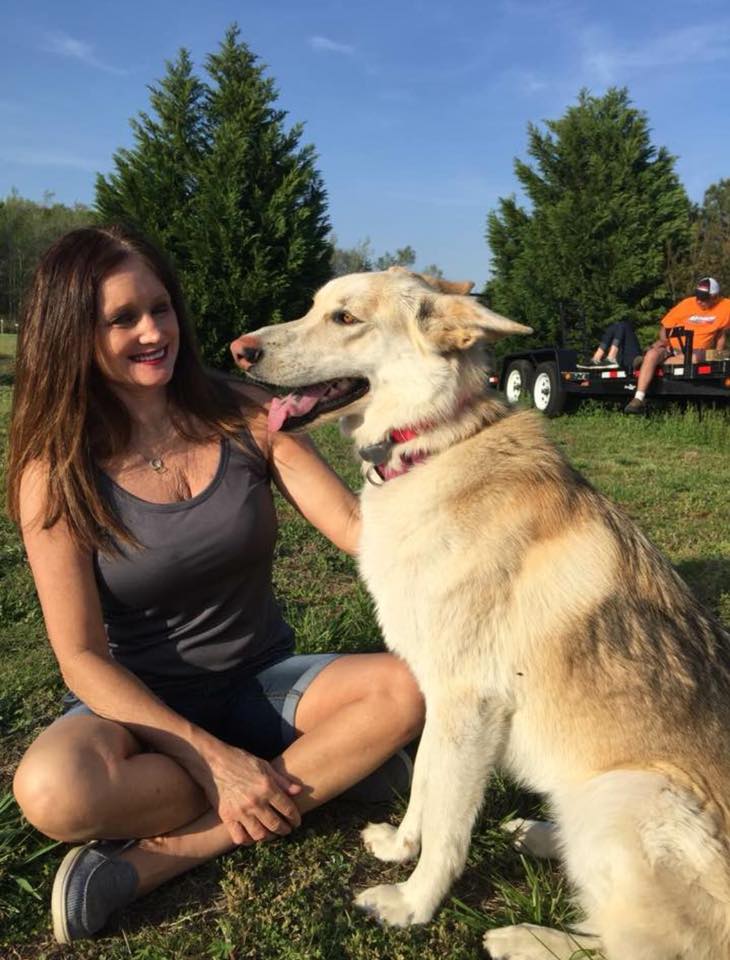
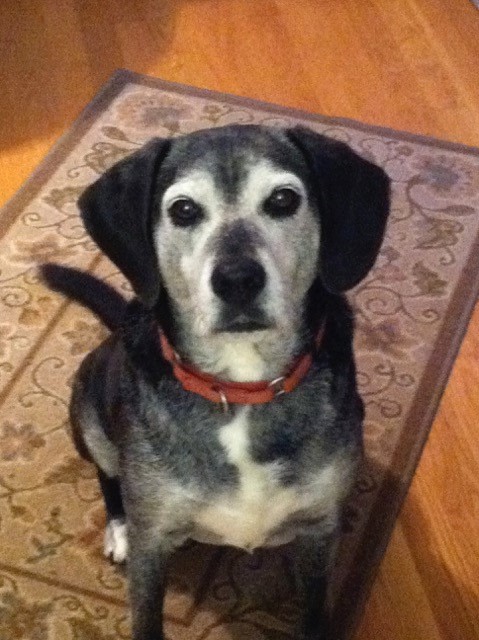
VL: Thanks to Rosemary Shomaker, we have a chance to vicariously experience the struggle of a writer stretching into a new challenge. Although Rosemary doesn’t get into her story in To Fetch a Thief directly, “This is Not a Dog Park” is great. She should definitely go long again/more in the future. And as an added bonus, check out her dog!
I’ve commented to friends (and to anyone asking about my writing) that completing a novella was difficult for me, a short-story writer. As I reflect on this, the words to “Seasons of Love” from the Broadway musical Rent keep floating through my brain. Let me plant the ear-worm for you:
Five hundred twenty five thousand six hundred minutes.
Five hundred twenty five thousand moments so dear.
Five hundred twenty five thousand six hundred minutes.
How do you measure,
Measure a year?
In daylights?
In sunsets?
In midnights?
In cups of coffee?
In inches, in miles, in laughter, in strife?
In five hundred twenty five thousand six hundred minutes.
How do you measure a year in a life?
Now, let me connect the dots. Short stories have a word count of 4,000 to 8,000 words; those are the targets many publishers suggest when soliciting short story submissions. How long is that? At 250 words to a double-spaced manuscript page, you’ll find short stories weighing in at sixteen to thirty-two manuscript pages. What does that mean in a book? For a 5.5” x 8.5” book size, that translates to ten to twenty pages.
In writing a short story, you typically write twice the length and then cut, edit, and rewrite to produce a tight short story—eliminating half of what you initially wrote. I chose short story projects for several reasons. Primarily, I liked the compressed focus—of both the length and the writing period. I could assess my time and plan accordingly. Violà! I’d finish and see results within weeks or months.
For the first in the planned Mutt Mysteries series we aimed to produce a book including four novellas. “What are those?” you ask. Simplistically, a novella is a short novel or a long short story. To check what I tell you, I Googled “novella,” and found one explanation that a “novelette” runs 7,500 to 17,499 words, and a “novella” is 17,500 to 39,999 words. How precise! You guessed it—40,000 words and more is a novel. The varied fiction genres, however, have specific expectations. A mystery novel runs 80,000 to 90,000 words, for instance. The To Fetch a Thief novellas run about fifty pages each.
I wrote my first draft of “This is Not a Dog Park.” My word count was 8,300 words—and that was only the first draft! Remember my comment about expecting to cut half of a first draft? I was sunk. Clearly, this novella task was a different animal than a short story. Yes, but I didn’t realize the different animal was a beast! I floundered for several weeks, trying to “gin up” my plot and visualize the long mile to 17,500 words. (“Gin up”? Who says that? I looked up the idiom—see * below for the very interesting origin—I love words—but I digress!)
My first attempts at adding volume to the story were horrible. I found myself cranking up meaningless descriptions. I added useless comments. Each time I did this, my short story writing training rebelled at the waste and at the imprecision of the prose.
It took me adjusting to a completely different mindset to make any useful progress. The place to start for me was the plot. In a novella, I could have more happening than I could in a short story, and I explored that. In addition, my characters could interact more and build their relationships over several scenes. I gave myself permission to relax the compactness of short story boundaries. Still, my product was unfocused. It’s only when I deleted some useless scenes and repurposed others that I felt progress.
Back to the song. Here’s how the words translated to my novella ordeal:
Seventeen thousand—then add five hundred words.
Up to thirty-nine thousand nine hundred ninety-nine.
More than seventeen thousand five hundred words.
How do you measure,
Measure a plot?
In action?
In hours?
In scenes or in lines?
In pages, in edits, in words by the ton?
Seventeen thousand—then add five hundred words.
How do you measure when your novella is done?
The beauty of this novella-writing exercise for me was that finally the “organicness” (that’s a dodgy word—“organicity” is worse—that layers on medical meanings) of writing emerged, finally, and I received the gift of having a glimpse of the work of a true novelist. Yikes, that’s some hard work! My regard for any novelist has increased, and my awe of good novelists compounds exponentially.
In my learning experience writing this novella, I did, as “Seasons of Love” reminds us, “You got to, you got to remember the love.” I do love writing!
* “Gin up” – one Googled source yielded the explanation below. You bet I checked the definition of “feague”! That definition used the euphemism “fundament” . . . I love words!
“Gin up” means enliven, excite or enthuse. Its probable derivation is from the 1800s British slang term “ginger up,” which referred to the practice of putting ginger up a horse’s butt to make him spirited and prance witha high tail, for purposes of show or sale. The other term for this practice is the verb “feague.” This is confirmed both by the online Phrase Finder from the UK and the OED. (https://www.urbandictionary.com/define.php?term=Gin%20up)
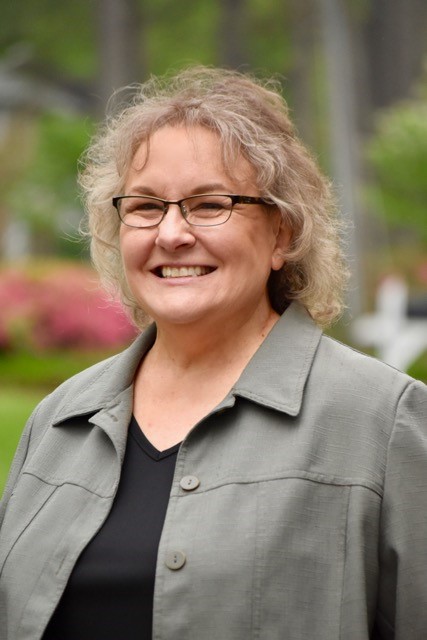
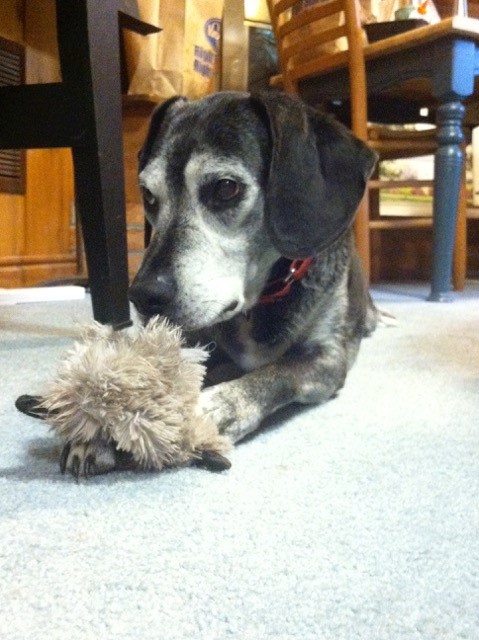
VL: Thank you Rosemary! I appreciate your candidness and rich language. In addition, I think you are an inspiration to other writers striving to expand their writing lives. I do hope we collaborate again sometime. And to close out, just one more great photo.
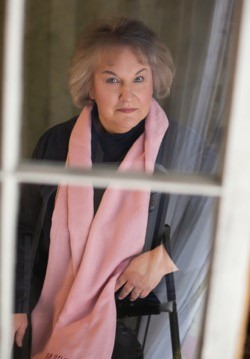
Rosemary Shomaker has called Virginia home for decades. After a state government career writing inspired nonfiction, she now writes fiction. You can find a few of her short stories in anthologies such as Virginia is for Mysteries – Volumes I and II, 50 Shades of Cabernet, and several of the Shaker of Margaritas anthologies. Her “This is Not a Dog Park” novella is included in the Mutt Mysteries collection To Fetch a Thief. You may recognize her if you shop at thrift stores, attend estate sales, visit historic sites, or poke around abandoned buildings—she cannot resist the lure (and lore) of the past.
VL: When I invited the four authors who have stories in To Fetch a Thief to contribute something to my blog page—interview, blog, rant, whatever—I was hoping for diversity. And they are coming through!
I’m a writer. I write cozy mysteries. When I’m not huddled in my writing hut, I’m out and about, either physically or cyber-ly, mingling with readers. The number one question I am asked is “Where do you get your ideas?” My answer: I collect “story nuggets” everywhere I go and in everything I do and all the crazy stuff I see in the news. All it takes is a teeny tiny event and my imagination is off and running. It’s no secret I am particularly influenced by things in my life and events that occur in my coastal community.
For my most recent publication, I was challenged to write a novella (about 15,000 words) that involved a dog, a theft, and a murder. Two years later, a book was born. To Fetch a Thief is a collection of four novellas. My story is titled “It’s a Dog Gone Shame!”
Fortunately, I had a cache of “story nuggets” at the ready.
The “dog” part of the story was easy. Although dog-less at the time, we’d been lucky enough to have been adopted by four wonderful rescues over the years. I knew how to write “dog.”
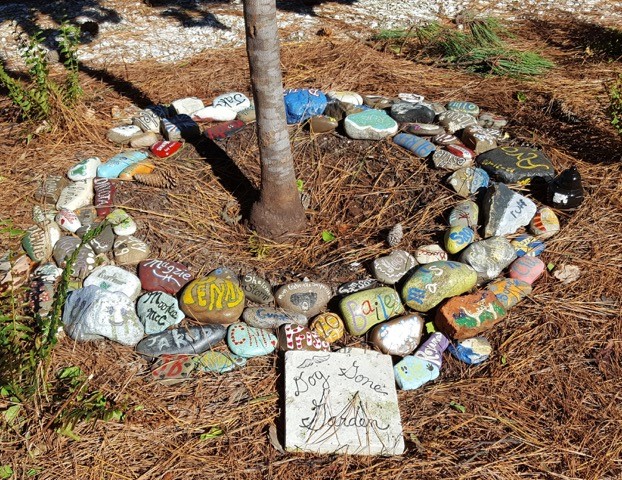
The “theft” part of the story was a snap. We have a wonderful place in our neighborhood to honor dogs that have crossed the rainbow bridge. It’s called The Dog Gone Garden. A local artist paints a colorful rock to represent each dog as it passes. The rocks are huddled under the shade of a Crepe Myrtle tree. Our own Norwegian Elkhound, Jamaica, has a rock there. One summer’s day all of the rocks disappeared! Just gone! Nobody knows where or why or how. (There were a lot of them so it was a heavy load!) Aha! my mystery-writer self said. A theft! I tucked that into my carton of story nuggets. (Although I solve this little mystery in my story, the real rock theft remains on the loose.)
The murder part? We live on the Chesapeake Bay. It is a semi-annual occurrence for a body to wash ashore. Mostly they are traced back to a drug gang further up the bay. Sometimes it’s a result of too much drink and too little sense when a person climbs aboard their trawler to sleep it off. One misstep and they splash in the bay and end up sleeping with the fishes. The beauty of being a cozy writer is the amateur sleuth only has to discover a dead body. We don’t have to know how to kill. Interviewing neighbors who’ve discovered the “floaters” has given me enough “nuggets” for a dozen mysteries.
To answer the perennial question, “Where do you get your ideas?”; I get them from life. Once the “story nugget” is planted, I turn it over to my imagination. I then stand back and watch the words fly! (Most end up on the cutting room floor, but that’s another story for another day.)
VL: Big thank you to Jayne Ormerod! No doubt readers have enjoyed this peek into your writing process—and some may decide to emulate you! To read more about the stories in To Fetch a Thief and the writers who wrote them, check out www.MuttMysteries.com
About Jayne Ormerod: Jayne Ormerod grew up in a small Ohio town then went on to a small-town Ohio college. Upon earning her degree in accountancy, she became a CIA (that’s not a sexy spy thing, but a Certified Internal Auditor.) She married a naval officer and off they sailed to see the world. After nineteen moves, they, along with their two rescue dogs Tiller and Scout, have settled into a cozy cottage by the sea. Jayne has penned over a dozen novels/novellas/short mysteries.
VL: I’m delighted that Heather Weidner agreed to an interview. Her most recent publication, “Digging Up Dirt,” appears in To Fetch a Thief. In addition, Heather has published two mystery novels and numerous short stories—and dogs show up frequently!
VL: Is the dog in your story in To Fetch a Thief based at all on your dog?
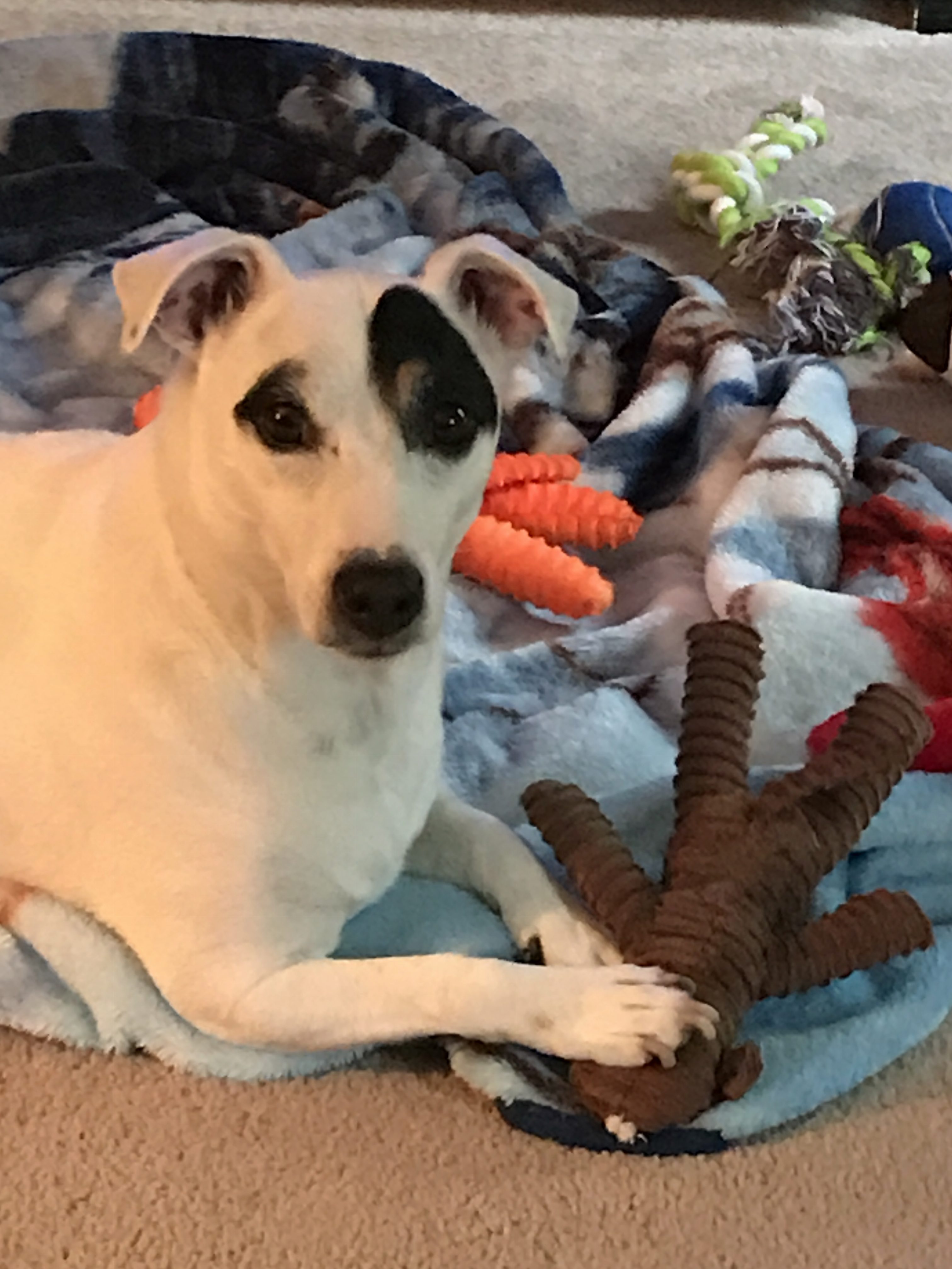
HW: It is. It’s based on my little female JRT Disney. She’s a bundle of energy, a great companion, and she always likes to explore outside. Thankfully, she’s not dug up anything strange.
Heather’s dog, Disney
VL: Disney is definitely cute! I can understand why you would want to put her in a story. But how did you come up with the actual plot for “Digging Up Dirt”?
HW: My husband is a realtor, and people are always leaving things in houses when they move out. That gave me the idea for the random things (that might not be so random) in the story.
VL: No need for a spoiler alert, but I will say I admired the variety of things left behind and how you tied them together. But back to your passion—I don’t think passion is too strong a word—for dogs. Do any of your other stories (or future stories) involve a canine companion?
HW: They do. In my Delanie Fitzgerald Mystery series, my sassy private investigator has a partner, Duncan Reynolds, and Duncan’s best pal is Margaret, the English bulldog. She’s a brown and white log with legs. She has two speeds, slow and napping. But she likes treats, and she’s a great companion.
I’m also working on another cozy mystery, and there is another Jack Russell Terrier in it. Her name is Bijou.
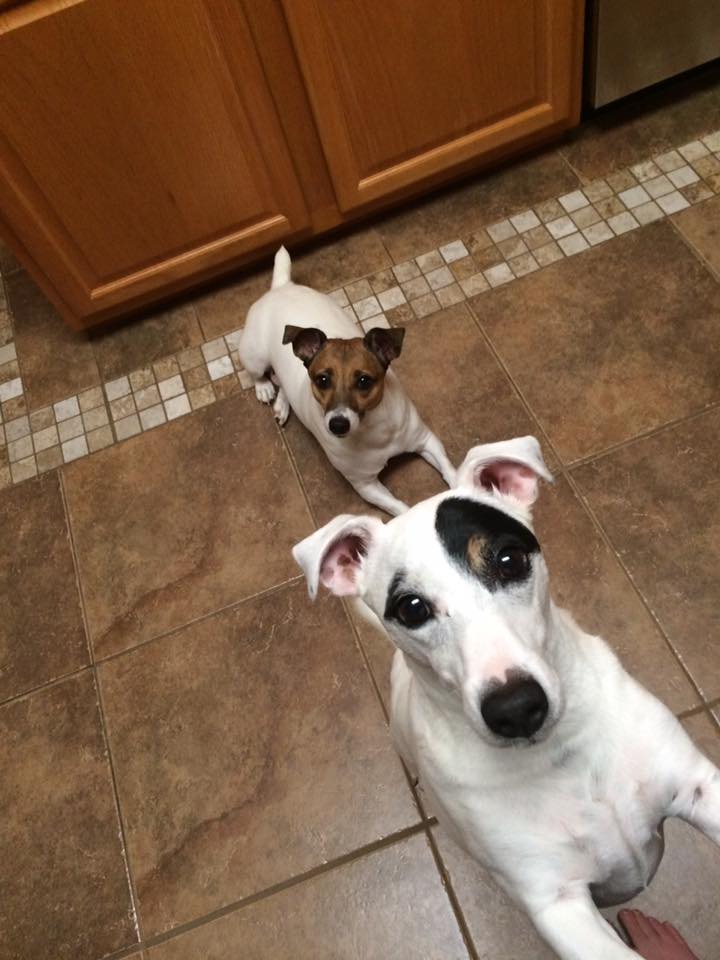
Heather’s dog, Riley
VL: While you are producing stories involving dogs, what do you do with your actual dogs?
HW: There are two dog beds in my office on either side of my desk. If they aren’t roughhousing, then they’re napping.
VL: Most writers are voracious readers. What types of books do you read?
HW: I love all kinds of mysteries, thrillers, history, and biography.
VL: What are you reading now?
HW: I just finished John Grisham’s The Reckoning, and now I’m reading Lee Child’s Past Tense.
VL: What’s your favorite book or movie that has an animal as a central character? Why?
HW: My early favorites were Charlotte’s Web and Where the Red Fern Grows. I have always loved animal stories, and even today, I tend to read mysteries that have pet sidekicks. My favorite mystery authors who include pets are Bethany Blake, Janet Evanovich, Krista Davis, and Libby Klein.
VL: What’s in your “To Be Read” (TBR) pile right now?
HW: I have three TBR piles right now. One’s on my night stand. I have one on a bookcase, and there’s another downstairs in the den. There are always more books than I have time to read. Most of the books in all three piles are mysteries and thrillers. There are a few biographies in the pile.
VL: Based on the locations of your TBR piles, I could probably guess at the answer to this next question, but I’ll ask anyway. Where is your favorite place to read (or write)? Why?
HW: I can read just about anywhere. At home, I like reading on my deck in the early mornings. At night, I like reading in bed with two snuggly Jack Russell Terriers.
As for the writing part of your question, I tend to be a binge writer. At home, I write in my office or on the deck. But I tend to write or proofread whenever I get a free moment, so it could be at lunch at work or in the dentist’s waiting room.
VL: What’s next for you?
HW: I am working on the third novel in the Delanie Fitzgerald series. It’s called Glitter, Glam, and Contraband. I am also working on a new cozy mystery set in Charlottesville, Virginia. I had a nonfiction piece accepted in the Sisters in Crime book marketing anthology, Promophobia, and that will be out next year, along with a short story, “Art Attack,” in the Deadly Southern Charm: A Lethal Ladies Mystery Anthology.
VL: You clearly have a lot going on! Thank you for taking time for this interview.
VL: Thank you, Heather! Congratulations on all you have done so far. No doubt we will see more of your writing in the future, especially Delaney Fitzgerald. Learn more about Heather Weidner below.
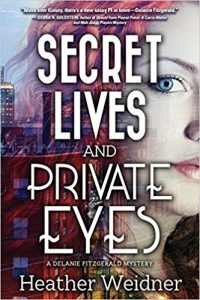
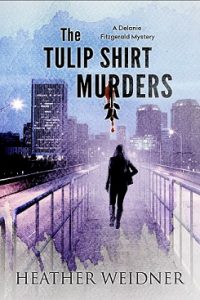
Heather Weidner’s short stories appear in the Virginia is for Mysteries series and 50 Shades of Cabernet. Secret Lives and Private Eyes and The Tulip Shirt Murders are her novels in the Delanie Fitzgerald series. Her novella “Diggin’ up Dirt” appears in To Fetch a Thief.
She is a member of Sisters in Crime – Central Virginia, Guppies, and James River Writers.
Originally from Virginia Beach, Heather has been a mystery fan since Scooby Doo and Nancy Drew. She lives in Central Virginia with her husband and a pair of Jack Russell terriers.
Heather earned her BA in English from Virginia Wesleyan University and her MA in American literature from the University of Richmond. Through the years, she has been a cop’s kid, technical writer, editor, college professor, software tester, and IT manager. She blogs regularly with the Pens, Paws, and Claws authors.
I recently read To Catch a Thief. It’s a light and lively set of cozy mysteries: no violence on the page, no offensive language, and no explicit sex. And, what is just as important for me, amateur detectives and perpetrators know each other.
Four local writers each contributed a novella. And I am pleased to announce that ALL FOUR have agreed to write about it! Here’s the background info. Tune in for their guest posts on 12/7 (Heather Weidner), 12/11 (Jayne Ormerod), 12/14 (Rosemary Shomaker), and 12/18 (Theresa Inge).
Summary
To Fetch a Thief, the first Mutt Mysteries collection, features four novellas that have gone to the dogs. In this howlingly good read, canine companions help their owners solve crimes and right wrongs. These sleuths may be furry and low to the ground, but their keen senses are on high alert when it comes to sniffing out clues and digging up the truth. Make no bones about it, these pup heroes will steal your heart as they conquer ruff villains.
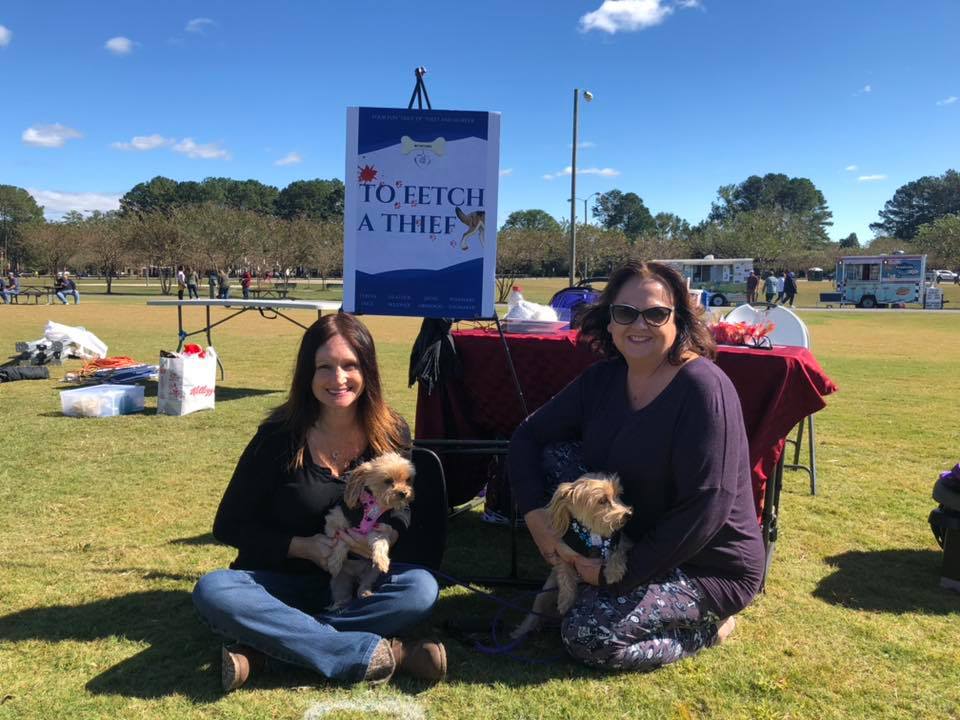
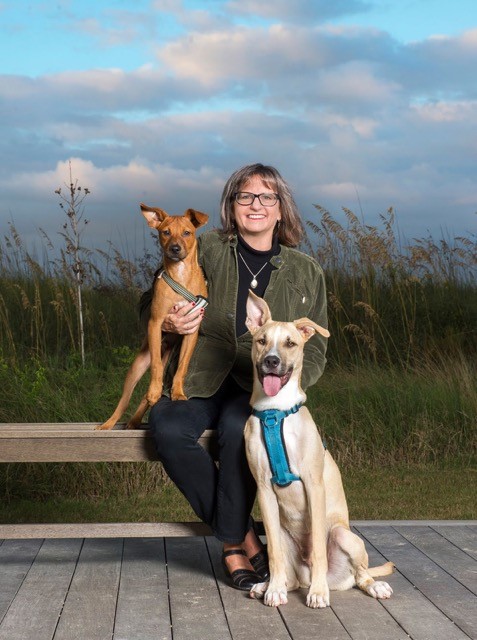
L-R: Teresa Inge, Heather Weidner, Jane Omerod, and Rosemary Shomaker.
The Stories
“Hounding the Pavement”
by Teresa Inge
Catt Ramsey has three things on her mind: grow her dog walking service in Virginia Beach, solve the theft of a client’s vintage necklace, and hire her sister Emma as a dog walker. But when Catt finds her model client dead after walking her precious dogs Bella and Beau, she and her own dogs Cagney and Lacey are hot on the trail to clear her name after being accused of murder.
“Diggin’ up Dirt”
by Heather Weidner
Amy Reynolds and her Jack Russell Terrier Darby find some strange things in her new house. Normally, she would have trashed the forgotten junk, but Amy’s imagination kicks into high gear when her nosy neighbors dish the dirt about the previous owners who disappeared, letting the house fall into foreclosure. Convinced that something nefarious happened, Amy and her canine sidekick uncover more abandoned clues in their search for the previous owners.
“Dog Gone it All”
by Jayne Ormerod
Meg Gordon and her tawny terrier Cannoli are hot on the trail of a thief, a heartless one who steals rocks commemorating neighborhood dogs who have crossed the Rainbow Bridge. But sniffing out clues leads them to something even more merciless…a dead body! There’s danger afoot as the two become entangled in the criminality infesting their small bayside community. And, dog gone it all, Meg is determined to get to the bottom of things.
“This is Not a Dog Park”
by Rosemary Shomaker
“Coyotes and burglaries? That’s an odd pairing of troubles.” Such are Adam Moreland’s reactions to a subdivision’s meeting announcement. He has no idea. Trouble comes his way in spades, featuring a coyote . . . burglaries . . . and a dead body! A dog, death investigation, and new female acquaintance kick start Adam’s listless life frozen by a failed relationship, an unfulfilling job, and a judgmental mother. Events shift Adam’s perspective and push him to act.
The Authors
Teresa Inge grew up reading Nancy Drew mysteries. Today, she doesn’t carry a rod like her idol, but she hotrods. She is president of Sister’s in Crime Mystery by the Sea Chapter and author of short mysteries in Virginia is for Mysteries and 50 Shades of Cabernet.
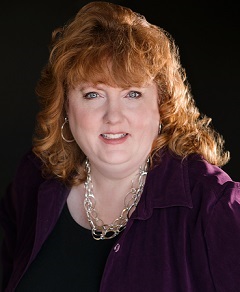
Heather Weidner, a member of SinC – Central Virginia and Guppies, is the author of the Delanie Fitzgerald Mysteries, Secret Lives and Private Eyes and The Tulip Shirt Murders. Her short stories appear in the Virginia is for Mysteries series and 50 Shades of Cabernet. Heather lives in Virginia with her husband and a pair of Jack Russell terriers, Disney and Riley. She’s been a mystery fan since Scooby Doo and Nancy Drew. Some of her life experience comes from being a technical writer, editor, college professor, software tester, IT manager, and cop’s kid. She blogs at Pens, Paws, and Claws.
Jayne Ormerod grew up in a small Ohio town then went on to a small-town Ohio college. Upon earning her degree in accountancy, she became a CIA (that’s not a sexy spy thing, but a Certified Internal Auditor.) She married a naval officer and off they sailed to see the world. After nineteen moves, they, along with their two rescue dogs Tiller and Scout, have settled into a cozy cottage by the sea. Jayne is the author of the Blonds at the Beach Mysteries, The Blond Leading the Blond, and Blond Luck. She has contributed seven short mysteries to various anthologies to include joining with the other To Fetch a Thief authors in Virginia is for Mysteries, Volumes I and II, and 50 Shades of Cabernet.
Rosemary Shomaker writes about the unexpected in everyday life. She’s the woman you don’t notice in the grocery store or at church but whom you do notice at estate sales and wandering vacant lots. In all these places she’s collecting story ideas. Rosemary writes women’s fiction, paranormal, and mystery short stories, and she’s taking her first steps toward longer fiction, so stay tuned. She’s an urban planner by education, a government policy analyst by trade, and a fiction writer at heart. Rosemary credits Sisters in Crime with developing her craft and applauds the organization’s mission of promoting the ongoing advancement, recognition, and professional development of women crime writers.
VL: I’ve often said that I’ve never met a boring writer. Here to prove that point is my interview with Bradley Harper, mystery writer and so much more!
VL: Let’s start with your debut novel, A Knife in the Fog. I loved it! I have been a fan of Sherlock Holmes mysteries since my college days, and when I read your book I found you had the tone spot-on. You evoked the time and the place in a way that took me there—which is no small feat. What drew you to writing a murder mystery in the first place?
BH: Doctors love mysteries in general, as the diagnostic process is much like solving a mystery. You collect data points and, after testing various hypotheses, arrive at a plausible diagnosis. A Pathologist does practically nothing else. Also, I fell in love with the Holmes stories the summer I discovered them at age 13. If you’re going to spend hundreds or thousands of hours writing a novel, it should be in a genre you know and love.
VL: So that’s why you are drawn to mysteries, and why this sort of mystery, but how did you come up with this particular plot?
BH: I discovered the four-year gap between the first and second Holmes stories, and that the Ripper murders occurred in the middle of that period. I became excited at the idea of a novel involving Doyle in the hunt for the killer, and explaining why he returned to Holmes after being soured on crime fiction due to his meager payment (twenty-five pounds), for the first one.
VL: I admire the way you combined real people—i.e., Doyle, his real-life influence Joseph Bell, and Margaret Harkness, a real woman of the time—and wove this wonderful fiction around them.
Reminiscent of Sherlock Holmes himself!
BH: I’m glad I found Miss Harkness. She was an author and Suffragette who lived in the East End of London for a while to do research for her novels featuring the working poor.
VL: I like her character a lot. I hope to see more of her! But let’s change gears here, and look at your work before you retired and started writing fiction. Where did you attend med school?
BH: Uniformed Services University of the Health Sciences, 1979-83.
VL: Well, that answers my next question about whether your medical training preceded joining the Army.
BH: I started as an Airborne Qualified Infantry Officer and at one time was a platoon leader in a Mechanized Infantry Battalion. Due to the draw down after Viet Nam, I was transferred to the Transportation Corps and ran a motor pool in Izmir, Turkey, as part of a NATO Headquarters there. One of the four walls of my motor pool was the remnant of a Roman aqueduct. Thirty-seven years later, I retired as the Deputy Assistant Surgeon General for the US Army in the Pentagon.
In Padua, Italy
BH: During my Army years, I enjoyed many extraordinary experiences. This picture was taken shortly after receiving an award from the Knights of Malta for my assistance to the Italian Army in their preparation for deployment to Afghanistan as part of a NATO mission. The advanced first aid course I helped found has since become mandatory training for all Italian land forces prior to deployment, and was recently taught to the Italian Presidential security detail.
I also had the unique experience of serving as the acting commander of the US Army Hospital in Heidelberg, Germany, on the fiftieth anniversary of General Patton’s death there. I presided over the commemoration ceremony involving both US military and local German dignitaries.
VL: Wow. Quite a progression! Congratulations. But hold on. If you didn’t join the Army to go to medical school, why did you join?
BH: My draft number was 84, so I knew as soon as I graduated from college I was going into the military. I decided to take an ROTC scholarship for my last two years. (My original goal was to be a high school Spanish and History teacher). One day relatively early in my service I went on sick call for an injured ankle, and the doctor who saw me was such an unpleasant person I decided that I and my soldiers deserved better care. So I went to med school with the goal of seeing to it that soldiers and their families got the care they deserved.
VL: What made you stick with it?
BH: I discovered I liked being part of something larger than myself, and found living abroad an amazing experience.
VL: What were the best and worse things about your time in the military?
BH: I enjoyed being reassigned every two to three years into a new job. That allowed me to take on various roles and to develop a wide skill set. Frequent moves did limit my social circle, however, and I didn’t have what I would consider a close friend as an adult until after I retired. Fortunately, I had the love and support of Chere, my wife of 45 years.
BH: In the five years since I retired, she has joined me in my Santa gigs as well. She’s wonderful.
VL: When you addressed the Central Virginia Chapter of Sisters in Crime—an excellent presentation, by the way—you mentioned having a $1.5 million bounty on your head at one time. Tell me about that.
BH: While serving as the Command Surgeon for U.S. Army South, I spent time in Colombia overseeing a joint training course with the Colombian Army. That’s when the bounty was offered.
VL: I never expected to meet anyone wanted-dead-or-alive!
BH: You still haven’t! The bounty was for anyone who could deliver me to the FARC alive. As the highest ranking U.S. officer in the area, I was considered very valuable as a live hostage to ransom. (Offer no longer valid, by the way.)
VL: Hmmm. If there’s no longer a profit in kidnapping you, I might as well get on with the interview. You are Board Certified in Anatomic and Clinical Pathology, and you said you’ve conducted over two-hundred autopsies. What sorts of forensic autopsies did you perform that subsequently informed your writing?
BH: All military pathologists undergo forensic training. We are often sent to remote locations, and are the only game in town. I am not Board Certified in Forensics, however, so any cases which might go to trial would be sent to the nearest military forensic specialist. The cases I did were crib deaths, training accidents, motor vehicle accidents, suicides, or people who died on the job unexpectedly. Two suicides by standing in front of a train and one accident involved being run over by light rail informed my writing in one of the final scenes in A Knife in the Fog. I was involved in one case while in Germany which had mixed jurisdiction between the German civil authorities and the US, so I attended the autopsy performed by my German colleague, and my notes were used to prosecute the US serviceman involved.
VL: You’ve told us quite a bit about your work as Santa. But I’m curious about something you mentioned in the SinC-CV presentation. What prompted you to volunteer in Galicia? Apparently it wasn’t a one-off. Do you do this annually? How long does that take? Are you actually walking the pilgrims’ route?
BH: After I retired from the Army I walked the Camino to Santiago de Compostela in Galicia, Spain. It is an ancient pilgrimage route begun in the ninth century, and millions have walked The Way to the bones of St. James as an act of atonement or contrition. I did it to give me some time to ponder what direction my life would take after thirty-seven years in the military. After a transformative experience I have written about and shared on a local radio program—which is too long to go into here—I wanted to give back, and to help others realize their dreams. I speak five languages other than English, and being functional in so many tongues allowed me to assist pilgrims from most of Europe and, of course, the English-speaking world. I got back as much as I gave. This is the first year I have not volunteered after five consecutive summers. These were fifteen-day stints—with my wife—first in the pilgrim office, and later as a hospitalero, or host, in a pilgrim hostel.
VL: Surely you realize that mentioning a transformative experience more or less in passing means I’m likely to come back to you for more about that! But forging ahead for now, what about your personal life? Do you have hobbies or pets?
BH: I read incessantly, and swim for fitness when my shoulder allows. No other hobbies to speak of, and no pets. I travel a lot, still. Perhaps when I go from the “go-go” phase of life to the “go-slow” or the “no-go,” I’ll add a pet to my life.
Still traveling
VL:I’d like to end with info on your future project(s). What are you working on now?
BH: I am fortunate to have a two-book contract with Seventh Street Books, and am involving my heroine from book one, Margaret Harkness, in trying to stop an assassination attempt on Queen Victoria during her Diamond Jubilee ceremony. It will be titled Queen’s Gambit.
VL: When might fans hope to have Queen’s Gambit in hand?
BH: It’s scheduled for release in October of 2019, on the one-year anniversary of the debut of my first book.
VL: What, if anything, would you like to share with other writers about how you balance family life, Santa duty, volunteer activities, and your writing life?
BH: I don’t multi-task. I don’t believe anyone can accomplish their best work unless they are entirely focused on the task in front of them. So when I write, I go all-in. I do ponder plot points and issues when I’m not writing, but when I am playing Santa, for example, I am totally focused on the people who have come to see Santa. These encounters are brief, but if I can communicate to them that I genuinely wish them well, they will remember that for a long time after.
The best advice I got in med school was: when the body is tired, work the mind. When the mind is tired, work the body. Eat well, walk, laugh, engage with those around you, be grateful for every day, and life will sort itself out.
VL: Let’s end with those words of wisdom! Thank you, Brad, for sharing so generously of your time, your experiences, and your thoughts. I look forward to wrangling another blog sometime down the road!
Follow Bradley Harper online at bharperauthor.com. You will find pictures and notifications of appearances, as well as bits of off-beat information about Victorian England, forensics, and whatever strikes his fancy! You can even get info about Harper’s compilation of four short stories.
VL: My fellow writer Bradley Harper has graciously agreed to share the wisdom he has acquired in his second career as Santa Claus! I believe you will find this blog as moving as I have. Thank you, Brad!
After I retired from the Army, (37 years, 4 months, and 9 days, and yes, someone WAS counting!) I grew a beard because, hey, I could! It came out white, which at my age was no surprise. My wife began hinting that I should try being a Santa. I was very unsure about that suggestion, but over time decided that when she was eight she decided she wanted to marry Santa Claus. So, if she was to become Mrs. Claus … you get the idea.
I auditioned for a local park, and to my surprise, and more than a small amount of panic, I got one of the slots. Now I was in for it. I began walking through the toy section of stores. I memorized “The Night Before Christmas.” I speak various languages to differing degrees of proficiency, so memorized how to say “what would you like for Christmas” in Spanish, French, Italian, and German, (the park gets a fair number of international visitors.) I didn’t have to understand the reply. A smile and knowing wink is universal.
Day three in the throne. I got this! It’s kinda fun. As long as I don’t promise more than “I’ll look into it,” I’m golden.
Then life, as it is known to do, threw me a curve ball. One of the young ladies serving as an elf comes up to me and says, “Santa, you’re about to see three kids. They’ve been orphans for the past year. The foster parents keeping them have just been approved to adopt them, and they want YOU to tell them!”
I took about one deep breath, and there they were. No pressure, right? The girl was the oldest. Around twelve, she was obviously a non-believer by now, but playing along for her younger brothers. The ten-year-old was unsure. That phase where they don’t really think you’re real, but don’t want to blow their chances, just in case. The eight-year-old still had the faith. His eyes were large, brown, and round.
Unsure what to say at the moment, I fell back on the old stand-by, “What would you like for Christmas?” They said something, but honestly I didn’t hear a word, thinking to myself, “What can I say? What CAN I say?”
Then it came to me. I took another deep breath and said, “Those are great ideas. I’ll look into it, but I have something for you today.”
“What’s that Santa?” the oldest asked, obviously the spokesman for the group.
“A family,” I said.
They looked puzzled, but when I explained they would not have to leave the foster family, that they could stay together, well, there wasn’t a dry eye in the house. Yeah, I teared up just now, again, though it was six years ago.
So what did I learn? In the Hero’s Journey, the Hero comes back changed by their Quest. Though I didn’t leave my throne, I had just been on quite a ride.
I learned that I wanted to be Santa Claus more than anything else in the world. I fully embraced the role after that. Santa has made me a kinder, and more patient, man. With my beard, I stand out anywhere I go. I have to be careful what I say and how I act. I never know where or when a child might see me. I have to be in tune with “the better angels of my nature,” whenever I am in public. (OK, I can’t eat ribs in public anymore. But it’s worth it!)
Santa has made me a better person. When I put on my super hero costume and go forth to fight for happiness, I never promise a toy, but I always offer a hug.
I have a photo of my back side as I am hugging an elderly black man. His name was Walter, and I met him at a gift exchange at an Alzheimer’s day care center. Every patient got a gift bag selected for them by the staff. I handed them out and hugged each one. Walter’s face is beaming, and a trick of the lighting perhaps, but I see a small halo around his head.
I got the photo from his daughter who tracked me down. She said her dad had been abandoned as a child, and had never had a visit from Santa his entire life.
The next year I was told that Walter had passed. His daughter told the director of the daycare center the photo of me hugging him had become his favorite, and at his funeral his daughter had that picture blown up and placed on an easel beside his open coffin.
That taught me how powerful even one moment can be in another person’s life. Don’t hold back. This moment may never come again.
The Greek philosopher Heraclitus once said that a man can never cross a river twice, for each time both he and the river will have changed. Every time I assume the role, it may be the first time for whoever I come into contact with. I may define Santa for the rest of their life.
No pressure, right? But here’s the thing. Just like Dumbo and his magic feather, the magic is not in the robe. It was inside me all the time. I just needed the license the costume gave me to tap into it.
You may not wear a red suit, but I hereby deputize you to share love and joy, wherever you go. You can do it. Find that better angel that has been inside you all along, and let them breathe. You, and all those around you, will be the better for it.
Hugs!
PS: Three nights ago, a little girl around five came up to me with her letter to Santa. On it were several letters carefully inscribed but not forming any words I could discern.
Me: “What does it say, Dear?”
Little Girl: “I don’t know, Santa. I can’t read!”
The adventure continues.
PPS: My wife was hired the following year as Mrs. Claus. Adventures are more fun with the right companions.
Bradley Harper‘s writing credits include a short story sold to The Strand and The Sherlock Holmes Magazine of Mystery, as well as his debut novel, A Knife in the Fog, featuring a young Arthur Conan Doyle, Professor Joseph Bell (Doyle’s inspiration for Holmes), and Margaret Harkness. Miss Harkness was an author and Suffragette who lived in the East End of London for a while to do research on her novels featuring the working poor. Together these “Three Musketeers” assist the London Metropolitan Police in the hunt for the man who became known as Jack the Ripper, until he begins hunting them!
When writing food scenes, the eating and drinking are seldom central to advancing the plot, so people have coffee and cake or do lunch, and all the plot and character development are carried by the dialogue. Such dismissal of eating/drinking habits is a big opportunity missed.
“Food-ology links FOOD RELATED HABITS to PERSONALITY TRAITS and BEHAVIORAL TENDENCIES. A PORTAL INTO THE LAYERS OF ONE’S CHARACTER. Learn more about yourself and those around you – to support better judgment, improve relationships, increase effectiveness and empower your life. You are HOW you eat.” ~ Juliet A. Boghossian, Founder, Behavioral Food Expert
Juliet Boghossian is a self-styled behavioral food expert. Her research has spanned 20 years. She’s cited all over the place, so here are her major assertions about eating style and personality. Now, in the interest of full-disclosure, I admit that I read secondary sources. I couldn’t quickly find Boghossian publications. (Make of that what you will.)
The slow eater. According to Boghossian, slow eaters usually prefer to be in control, and they know how to appreciate life. They’re also likely to be confident and even-keeled. Perhaps they put themselves and their needs ahead of others, are selfish, and do not give priority to others.
The fast eater. Fast eaters tend to be ambitious, goal-oriented, and open to new experiences. They may tend to be impatient. May come across as overly competitive. Often finish tasks ahead of deadlines. May be considerate, putting others ahead of their own needs.
The adventurous eater.These people never meet a food they don’t want to try. This person is probably a thrill-seeker and risk-taker in other areas of life, willing to try new things, maybe beyond his/her experience/comfort zone.
The picky eater. Does this really need definition? People who hesitate to try new food, continue childhood food preferences, etc. According to Boghossian, picky eaters are likely to be a little neurotic in general.
Julia Hormes, psychologist specializing in food behaviors at SUNY Albany, notes, “Research on ‘food neophobia’—the reluctance to try new foods—shows that it is related to certain personality traits, including sensation seeking, anxiety, and neuroticism. Those high in food neophobia appear to associate many avoided foods with a sense of disgust.”
The isolationist. These people eat all of one food before moving on to the next food, and so on around the plate. According to Phil Mutz, author of the LittleThings post, “You are a very detail-oriented person, and you are sure to always think things through thoroughly… You are a very careful person.”
Boghossian says, “This behavior conveys a task-oriented personality versus a multi-tasking individual. …Also, it conveys a disciplined and borderline stubborn tendency to complete one task before moving on to another.”
Earlier this year, Tastessence presented opinions on these and other eating habits. They discussed the personalities of people who adapt their eating speed to match the pace of companions, change eating pace based on schedule, experiment with food combinations, order without looking at the menu, take a long time to order, cut all their meat portion at one time, make noises while eating, ask questions about the menu, refuse to share food, and/or keep foods from touching each other. If any of these variations are of interest to you, look it up.
In the meantime, I will turn to findings published in the journal Appetite. This is by researchers at the Swiss Federal Institute of Technology, who maintain that personality informs eating habits. This was a serial survey study of nearly 1,000 participants (not college students). They researched what psychologists have put forward as the five basic dimensions of personality: openness, conscientiousness, extraversion, agreeableness, and neuroticism.
So, in a reversal of the above, here are the five personality types and what their eating habits are, according to who scored high on a personality dimension.
Openness: More likely to stick to a healthy, balanced diet, like the Mediterranean diet; not a huge red meat fan; more likely to have a plant-based diet, perhaps including fish; eats lots of fruits and vegetables.
Conscientiousness: Likely to seek information, control stress factors, and adopt behaviors with health benefits; less likely to eat meat; more likely to be a restrained eater; does not eat emotionally; prefers fruits and vegetables to sweets.
Extraversion: Social, good at networking; engages in social eating, so more likely to respond to external food cues (like smell); eats more meat, sweet foods, savory foods, and sugar-sweetened drinks.
Agreeableness: Less likely to consume meat, but otherwise no significant correlation between this personality dimension and most food choices.
Neuroticism: Diet only when convenient, eat to cope with emotions; tend to eat “comfort foods,” not so many veggies, and fewer whole grains.
Bottom line for writers: Make more of your food scenes! Whether it’s your protagonist or another character, use their eating habits to establish and deepen the portrait of their characters.
As the great communicator once said, “You can tell a lot about a fellow’s character by the way he eats jellybeans.”
Anne Frank House on the Prinsengracht in Amsterdam, Netherlands [Creative Commons]
I’m a fan of history—not so much the names and dates of battles and rulers, but the lives of ordinary people. I might say it’s a sociological and/or anthropological approach to history. I was fascinated by Anne Frank—what she wrote and how she lived—long before I visited the Anne Frank House in Amsterdam a few years ago.
So, of course the cover of the November 2018 Smithsonian magazine caused me to snatch it up. Pages 39-88 are devoted to bringing us voices from the past, long silenced by war.
This page summarizes the point of this coverage: Never forget, lest we repeat the devastations of the past. This month marks the 80th anniversary of Kristallnacht, so the publication is particularly timely.

The first article recounts the twisted path by which a Holocaust diary showed up in the United States. Renia Spiegel, a 15-year-old girl in a small Polish town, wrote a diary. Her diary survived her death almost by accident, and had a profound effect on the lives of others.
The diary was published in Polish in 2016, but is translated into English and published in Smithsonian for the first time. Renia Spiegel was a teenager, not a trained writer, but her words are as powerful an Anne Frank’s, conveying the commonplace, day-to-day against the backdrop and ever impinging horrors of WWII. The diary is a gripping eye-witness record of history in prose, poetry, and sketches.
Just after the diary translation, the article by Dara Horn is thought-provoking exploration of the contradictions in attitudes and behaviors that surround people’s reactions to Jews and Jewishness. It includes a quote from Elie Wiesel: “Those of us who went through the war and tried to write about it… become messengers. We have given the message and nothing changed.” Wiesel was a prisoner in Buchenwold when the camp was liberated in April 1945.
In Lithuania, beginning in 1940, Matila Okin kept a diary of her life and times as a Jew in wartime Europe. Her poetry was published in literary journals and her work solicited by editors, and several are included in the article, which also talks about the Catholic priest who hid Okin’s notebooks in the wall of the church before the Soviets deported him to Siberia.
The last of the articles quotes from diaries written in the Lodz Getto in Poland, but also U.S. internment camps, Bosnia during the Serbian aggression, Syria, Iraq, and considers the impact of today’s digital war diaries.
Bottom line: This Smithsonian makes clear that history isn’t dead—and testifies that it isn’t even past. Every writer should read it.