You may recall that in one of my previous blogs, I mentioned talking with writers about writing as one of the best things about a writing workshop at Nimrod. Although not as interactive, there are lots of ways to get inside writers’ heads.
His short answer is that how much you write (publish) isn’t a reflection of how well you write. But there are many paragraphs of well-crafted opinion that are well worth reading. Of course, you already know that Stephen King wrote one of my favorite books on writing.
Stephen King’s On Writing
On Saturday, August 29, NPR’s Scott Simon interviewed Ursula Le Guin on Weekend Edition. Among other things, she talked about the effect of aging on her writing. She is 85. It’s well worth a listen.
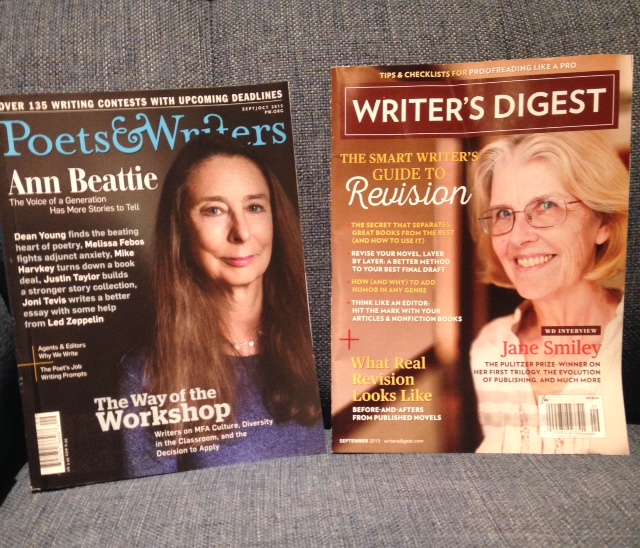
If you are a magazine person, there are many places to get insights about and from writers. Two of the most popular are Poets & Writersand Writer’s Digest.
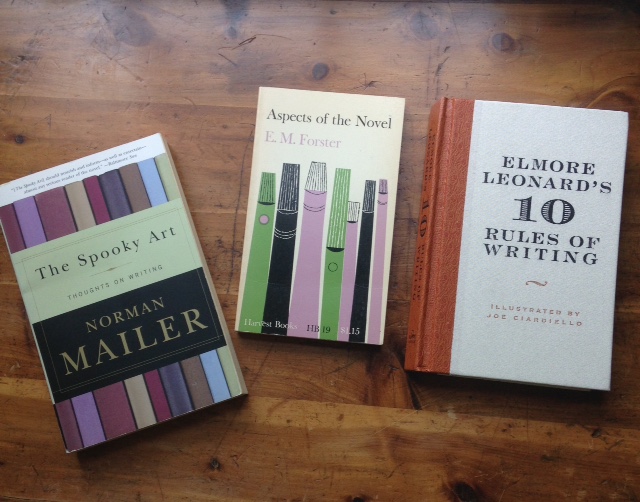
There are many books by writers about writing, both classic and modern.
The Spooky Art by Norman Mailer, Aspects of the Novel by E.M. Forster, Elmore Leonard’s 10 Rules of Writing
One of my favorite bits is one of Elmore Leonard‘s rules: Leave out the parts the reader is going to skip anyway. It doesn’t get much better than that.
UCI Road World Championships are over and congratulations are due to all cyclists, especially Chloe Dygert and Emma White, two US cyclists who came in first and second in the women’s junior road race. Dygert and White were also 1 & 2 in the women’s junior time trial. It made me reflect again on the long-term effects of bicycles in women’s lives.
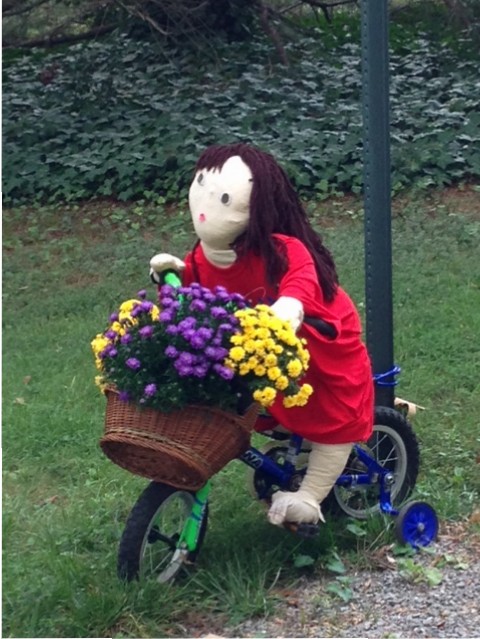
On September 17, I posted this picture on my Facebook page and mentioned that some suffragists called bicycles Freedom Machines because of all they opened up in the lives of 19th century women. I’ve been thinking about bicycles a lot this past week, and it seems this is a topic worth revisiting after the close of race week.
Male domination of cycling ended as a result of the introduction of the safety bicycle in the 1880s. The safety bicycle had smaller wheels, a lower seat, a diamond frame and (soon) pneumatic tires. In 1896, Margaret Valentine Le Long garnered fame (if not fortune) by riding a safety bicycle from Chicago to San Francisco.
A 1889 Lady’s safety bicycle. This work is in the public domain in the United States because it was published (or registered with the U.S. Copyright Office) before January 1, 1923.
Not all women cycled for feminist reasons. Indeed, at the end of the 19th century, some cycled in order to expand Victorian moral and aesthetic tastes and sentiments into the public arena. These women cycled to feminize, domesticate, and civilize public spaces they considered masculine, loud, and rowdy.
Annie “Londonderry” Cohen Kopchovsk was the first woman to bicycle around the world. “Annielondonderry” by Unknown – http://www.annielondonderry.com. Licensed under PD-US via Wikipedia.
But regardless of why women took up cycling, the bicycle took them out of the home and into an expanded world. In addition, practical dress for women cyclists (in addition to eliminating corsets) resulted in divided skirts, bloomers, and knickerbockers. It was practical, facilitating more comfortable riding. But at the same time, it was symbolic in breaking from the dominant norms of appropriate female dress and behavior. In 1896, Susan B. Anthony told the New York World’s Nellie Bly that bicycling had “done more to emancipate women than anything else in the world.”
Bicycle suit, 1895. By http://www.victorianweb.org/periodicals/punch/15.html [Public domain], via Wikimedia Commons
Frances Willard, suffragist and founder of the Women’s Christian Temperance Union, was one of the most famous women of her day with a mass following of independent-minded, often politically active women. At the age of 53 Willard determined to learn to ride a bicycle because she “wanted to help women to a wider world…from natural love of adventure—a love long hampered and impeded…[and] from a love of acquiring this new implement of power and literally putting it underfoot.” Her book, A Wheel Within a Wheel: How I Learned to Ride the Bicycle, was published in 1895. Bicycling magazine called it “the greatest book ever written on learning to ride.”
Frances Willard by English: photo taken before 1898, author not known, Image edited Deutsch: Urheber unbekannt; Das Bild wurde vor 1898 aufgenommen; Bild wurde später (am oder vor dem 30.12.2009) nachbearbeitet. (http://memory.loc.gov) [Public domain], via Wikimedia Commons
In his novel trilogy The Forsyte Saga, John Galsworthy had this to say about cycling: “Under its influence, wholly or in part, have wilted chaperones, long and narrow skirts, tight corsets, hair that would have come down, black stockings, thick ankles, large hats, prudery and fear of the dark; under its influence, wholly or in part, have bloomed week-end, strong nerves, strong legs, strong language, knickers, knowledge of make and shape, knowledge of woods and pastures, equality of sex, good digestion and professional occupation—in four words, the emancipation of woman.” (Quoted in Dave Horton’s “Social Movements and the Bicycle.”)
Some authorities warned against excessive cycling by women, girls, and middled-aged men. Also of concern in the 1890s was the possibility that bike riding might be sexually stimulating for women—which resulted in remodeled “hygienic” seats, high stems, and upright handlebars that reduced the angle at which women would ride. Even so, through cycling, doctors discovered that exercise is healthful—even for women! The bicycle caused the death of the corset and “straight laced” women, leaving only “loose” women. (FYI: during the Civil War, “loose women” were also known as “soiled doves.”)
Willard named her bicycle Gladys, for the “gladdening effect” it had on her health and political optimism.The overall message of her book presented mastery of the bicycle as a metaphor for women’s mastery over their own lives.
So, that’s all ancient history, right? None of this really speaks to women today, right? Unless you are Rosemary Shomaker—or one of the platoons of other women whose experiences still resonate with those of our foremothers. Rosemary posted on my Facebook page: “In the 1970s the bicycle was definitely a ‘freedom machine’ for one girl escaping a less-than-fabulous home life—me! I rode my bike everywhere. To softball and field hockey practices ad gaes. To my part-time job. To friends and boyfriends; houses. To Wolf Trap Farm Park. Along the W&OD bike path. To parks. To tennis courts. Early bike riding shaped my still uber-independent spirit. Go Richmond 2-15 UCI Road World Championships! Best wishes from a bike lover.”
I was never a bike-for-pleasure person. But bike as transportation was a big deal. It allowed me to ride from my house a few miles along a county road to visit with my cousins. My sister and I shared that bike. When I got my first car at 16, my dear sister got sole possession of that dear bike.
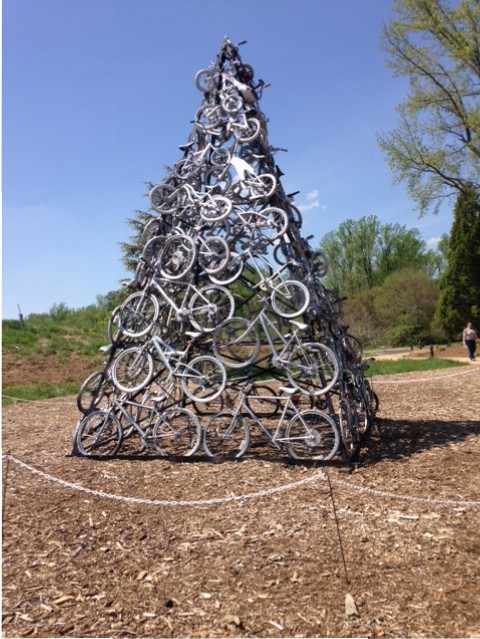
Frankly, I never thought much about bicycles as art. When I first saw this sculpture in the Lewis Ginter Botanical Garden, I thought, “What an odd thing to have here!” That was shortly before Race Week edged into my conscience.
Sculpture in the Lewis Ginter Botanical Garden
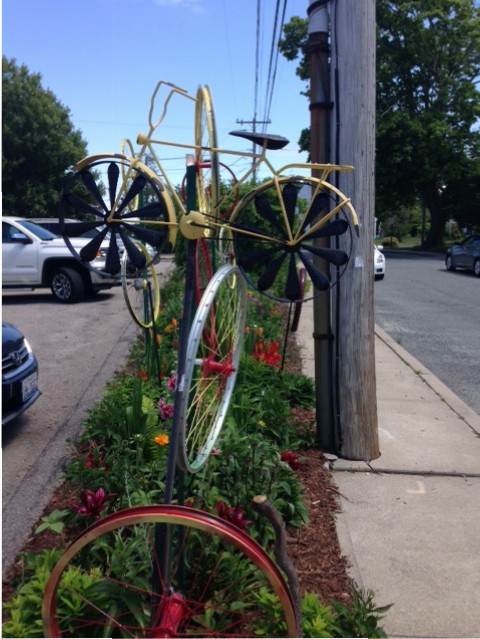
But once I started noticing, bicycle art is—if not rampant—at least frequent. I found this one while vacationing with my family.
Sculpture in Narragansett, RI
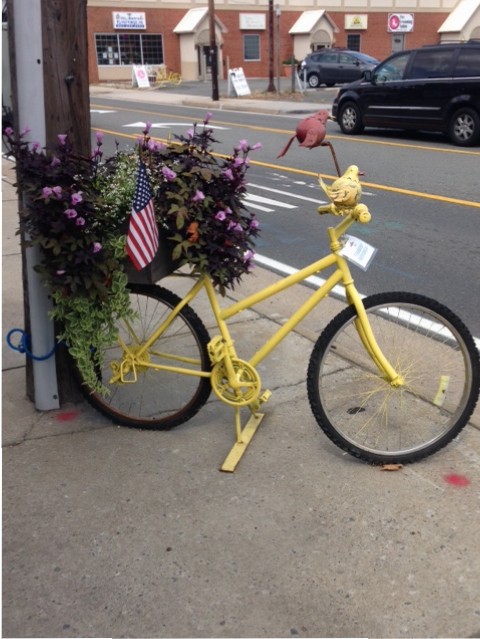
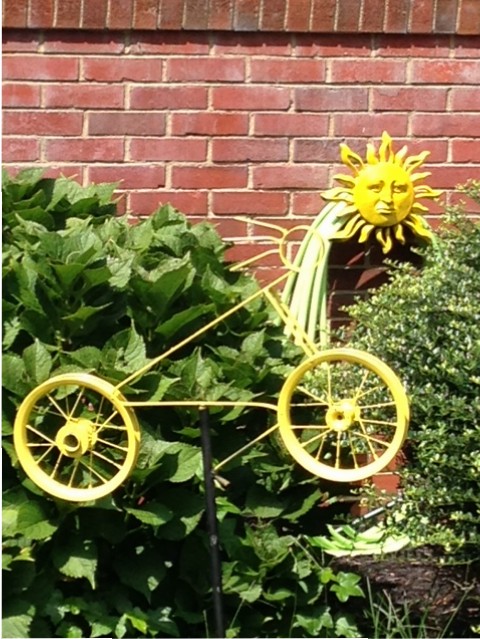
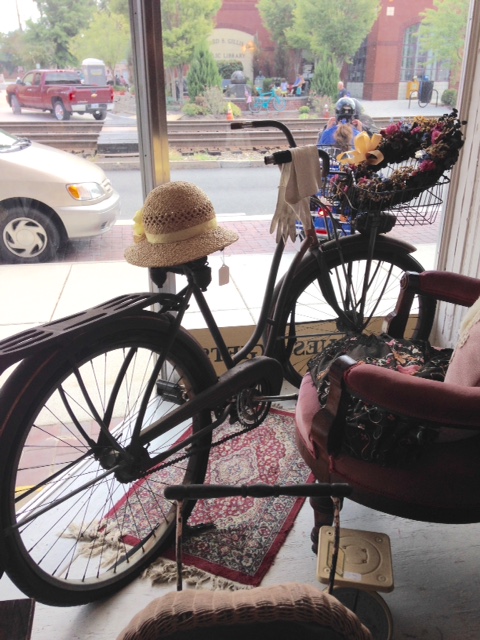
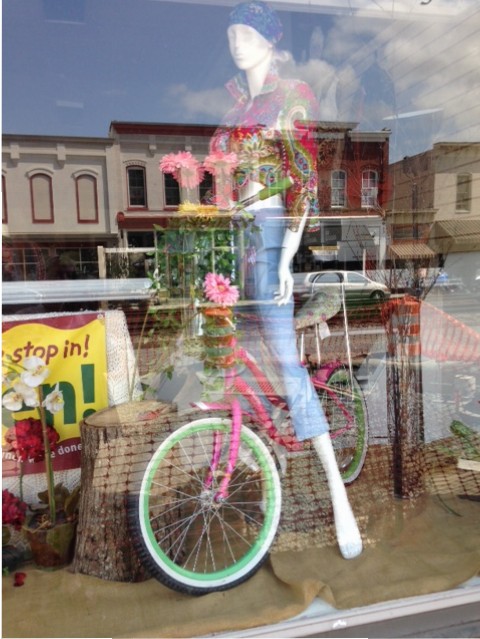
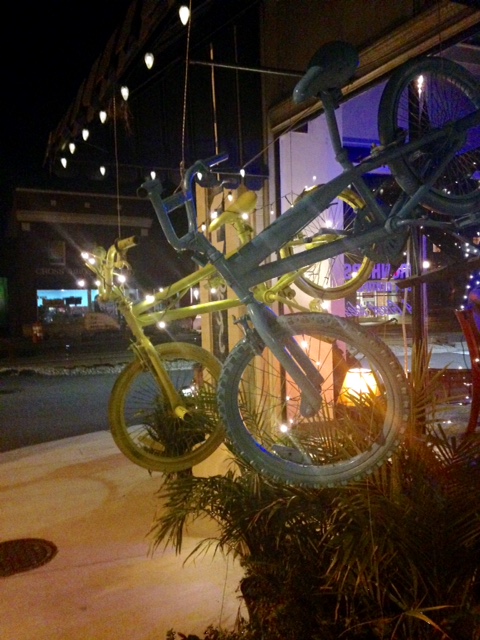
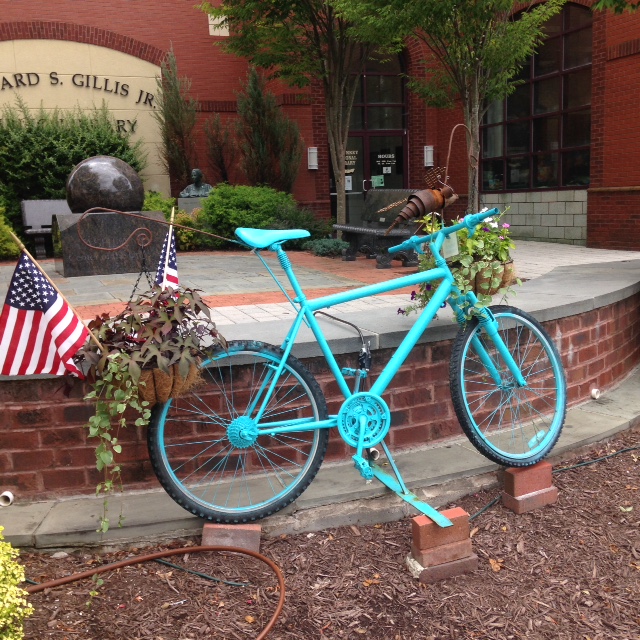
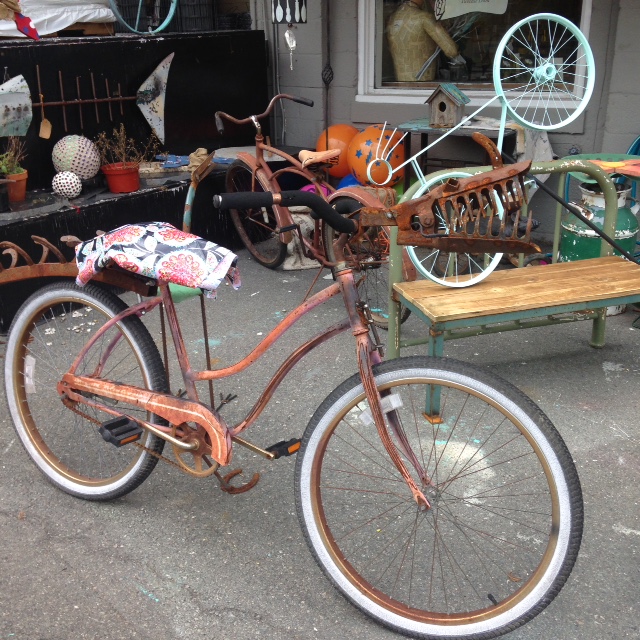
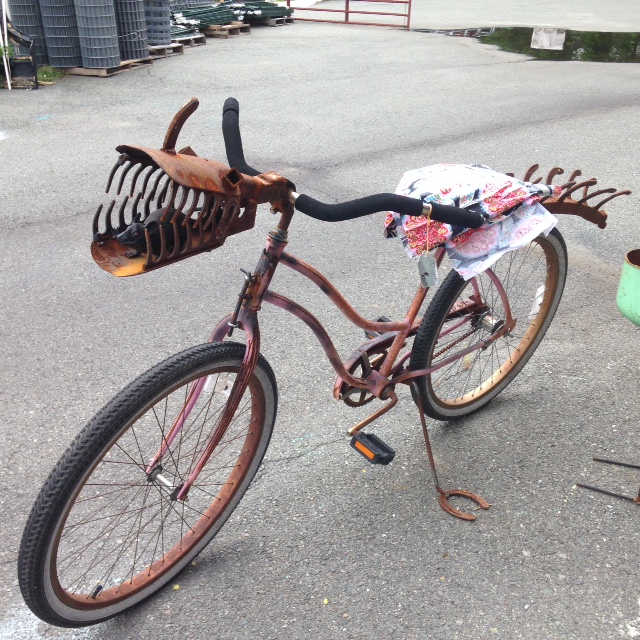
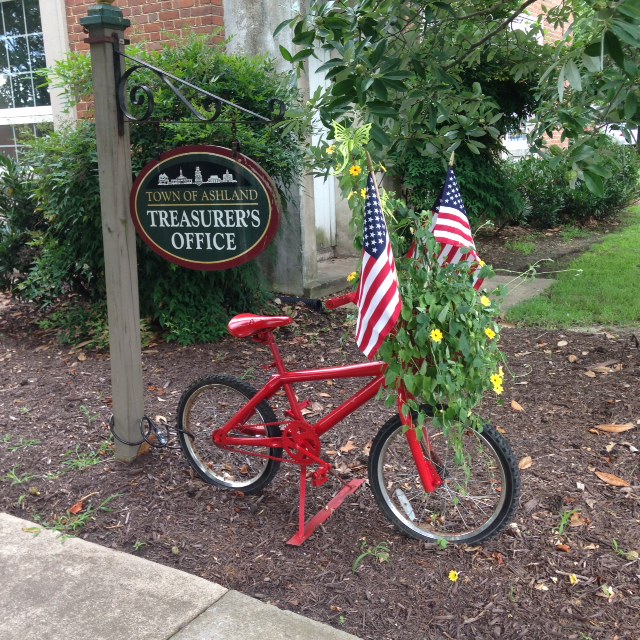
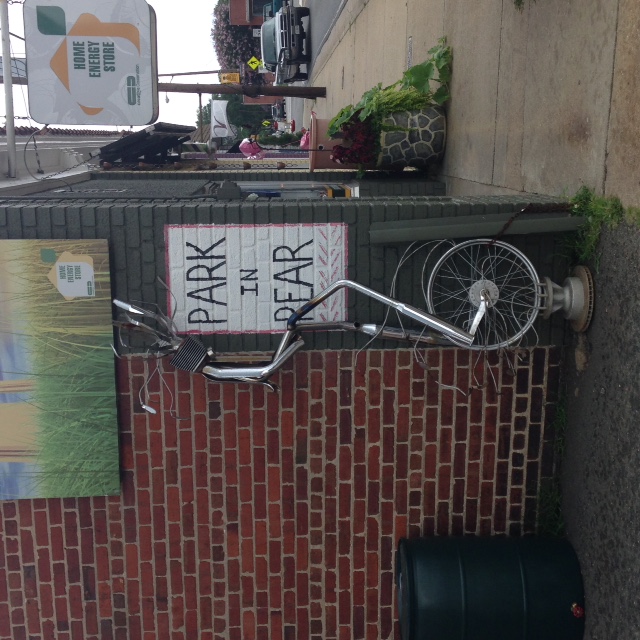
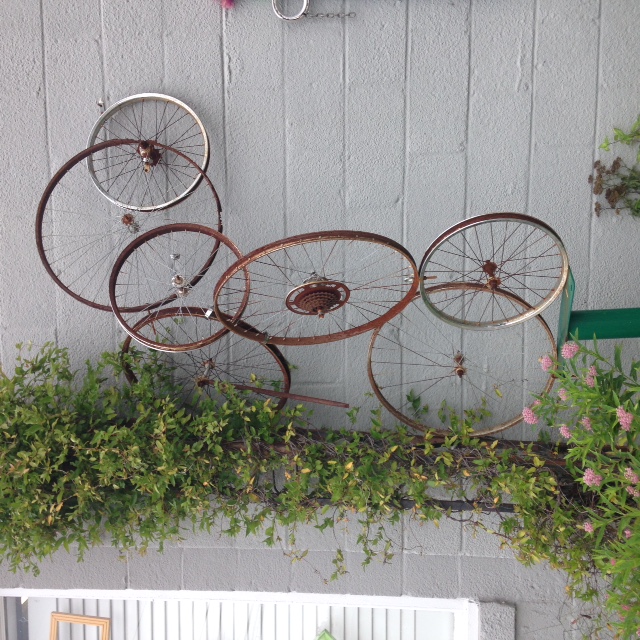
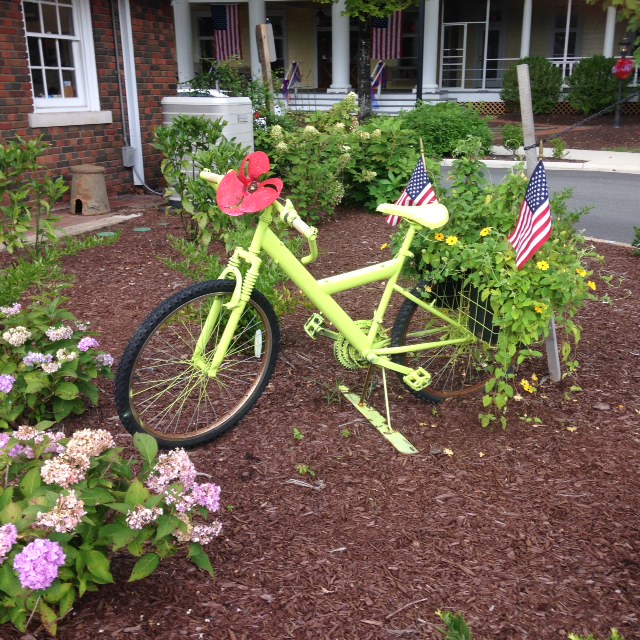
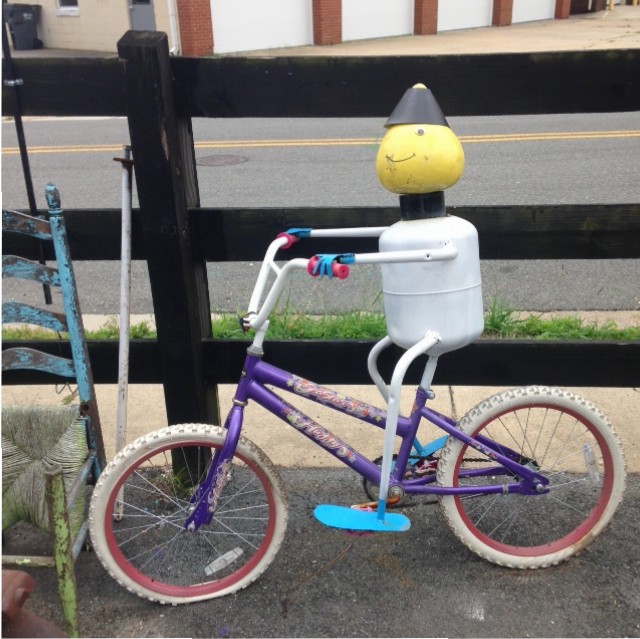
And here are several you can see if you do tour Ashland—as I certainly urged you to do in my most recent blog!
Art in Ashland, VA
Last but not least, consider visiting the Virginia Museum of Fine Arts. Beginning September 6, they will have a teaching program for children titled ArtCycle. It is interactive, allowing a virtual tour of museum holdings related to bicycle art as well as the opportunity to make art using bicycle parts. This program will be available for a time after race week. Check the VMFA calendar.
UCI Road World Championships
From the UCI Road World Championships Richmond 2015 website:
The Road World Championships (Worlds) is cycling’s pinnacle event, held annually in an international city as chosen by the Union Cycliste Internationale (UCI) through a competitive bidding process similar to the Olympic Games.
Worlds is a nine-day event, featuring 12 Championship races for Elite Men and Women, Under 23 Men and Junior Men and Women. It is a rare opportunity for the athletes to compete for their country, just as they do during the Olympic Games.
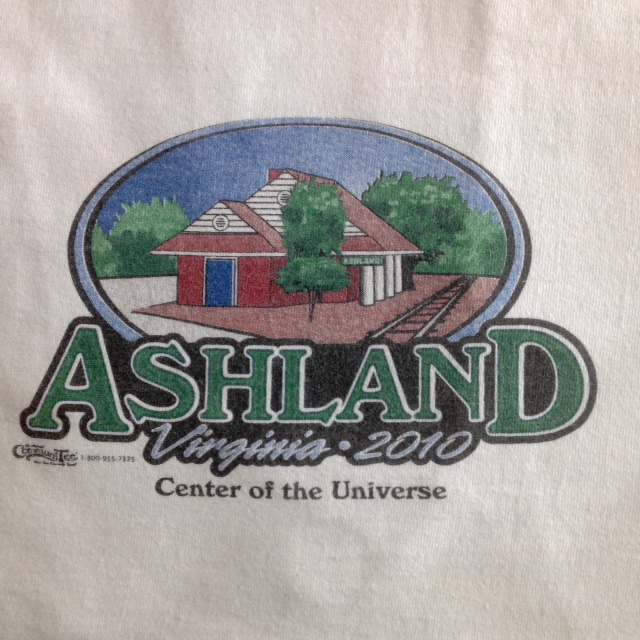
Ashland, Virginia—self-designated decades ago as the Center of the Universe—is a small town about 15 miles north of Richmond, home of Randolph-Macon College. Ashland is a railroad town predating the Civil War, originally built by executives of the RF&P Railroad.
However, that doesn’t stop the town being very bicycle friendly. Every nice weekend day cyclists swarm at Ashland Coffee and Tea, taking breaks during their enjoyment of rural Hanover County roads.
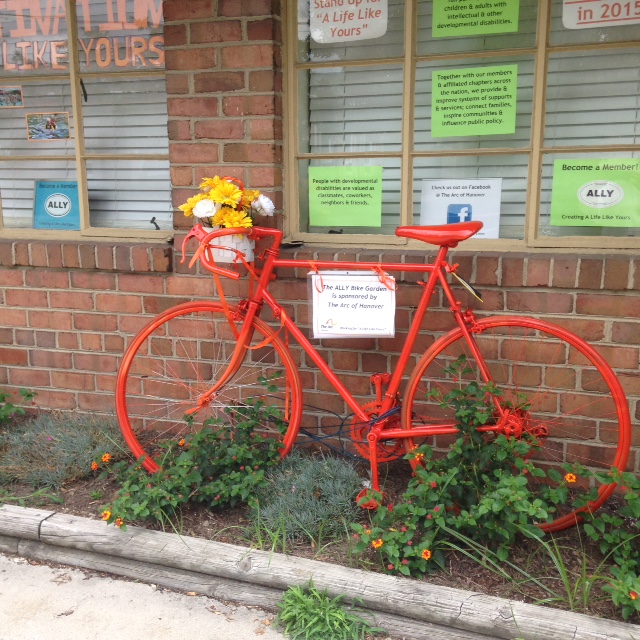
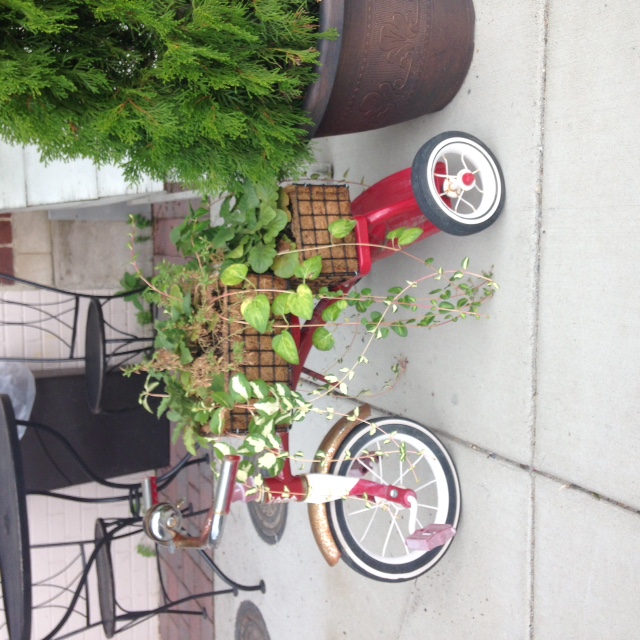
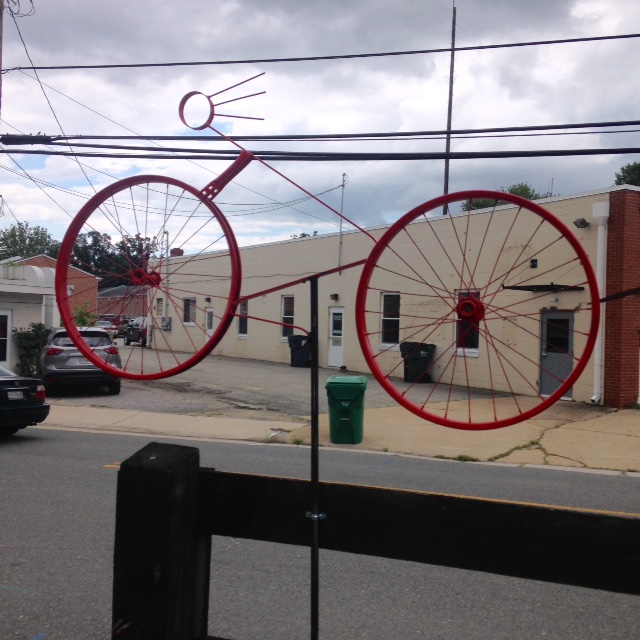
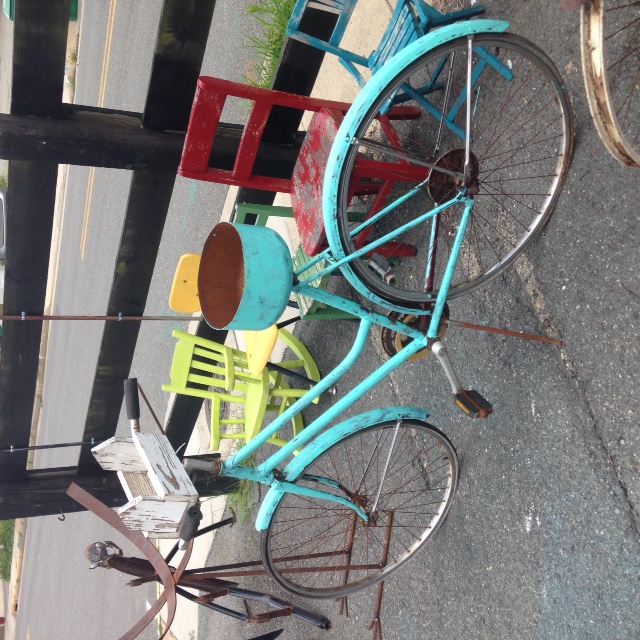
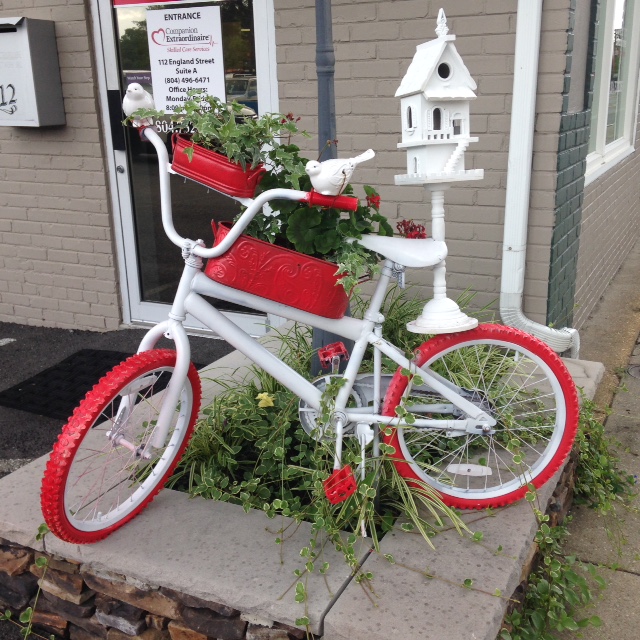
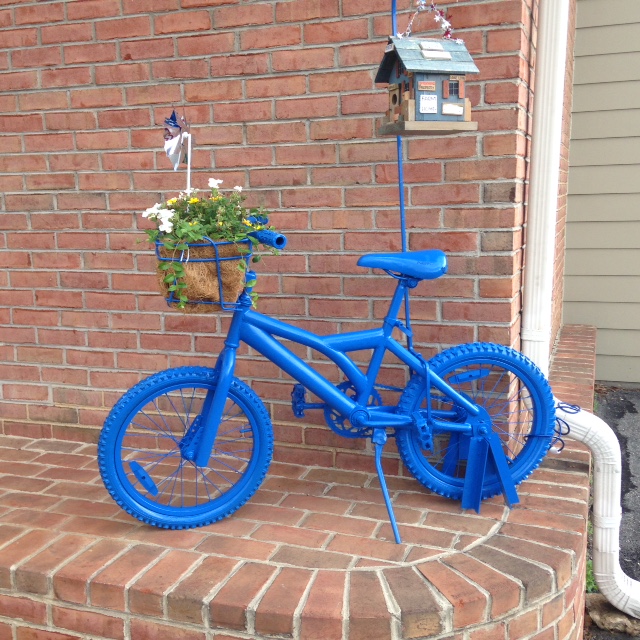
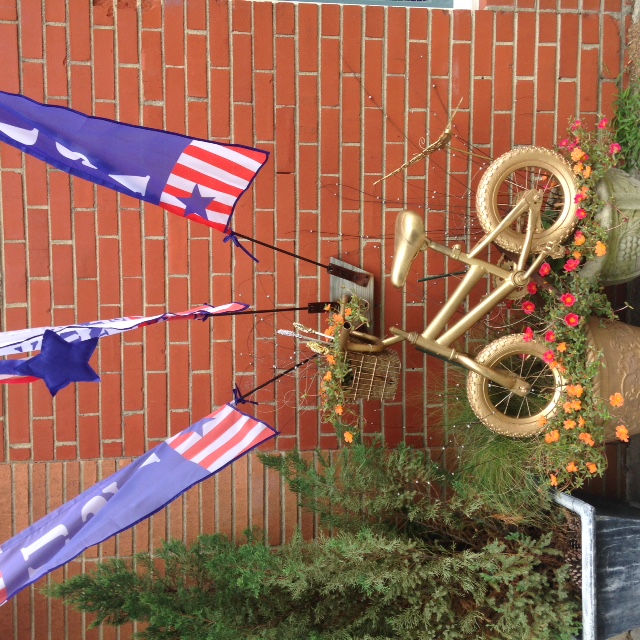
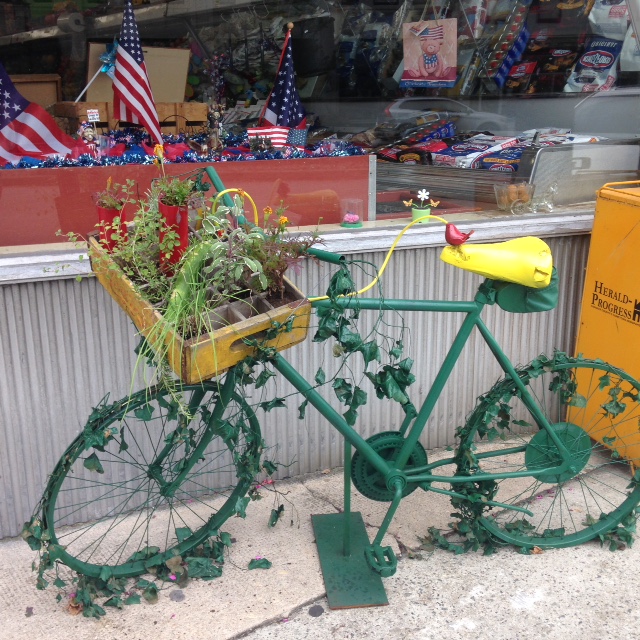
In the spirit of race week, Ashland’s Main Street Association invited merchants and residents to welcome cyclists and fans by decorating bicycles.
I want to share with you a sampling of what you can see if you walk around the bicycle gardens in the center of the Center of the Universe!
Ashland offers tourist information at the Train Station Visitor’s Center. You can get a bike garden scavenger hunt map there, as well as a self-guided walking tour of historic places.
And in downtown Ashland, you can get good food that does not come from a chain restaurant! (Of course, if chains are your thing, there are bunches around the I-95 exit, and along Rt. 1 and Rt. 54, very convenient.) There are antique stores and fun shops. Bottom line: something for everyone. Y’all come!
UCI Road World Championships
From the UCI Road World Championships Richmond 2015 website:
The Road World Championships (Worlds) is cycling’s pinnacle event, held annually in an international city as chosen by the Union Cycliste Internationale (UCI) through a competitive bidding process similar to the Olympic Games.
Worlds is a nine-day event, featuring 12 Championship races for Elite Men and Women, Under 23 Men and Junior Men and Women. It is a rare opportunity for the athletes to compete for their country, just as they do during the Olympic Games.
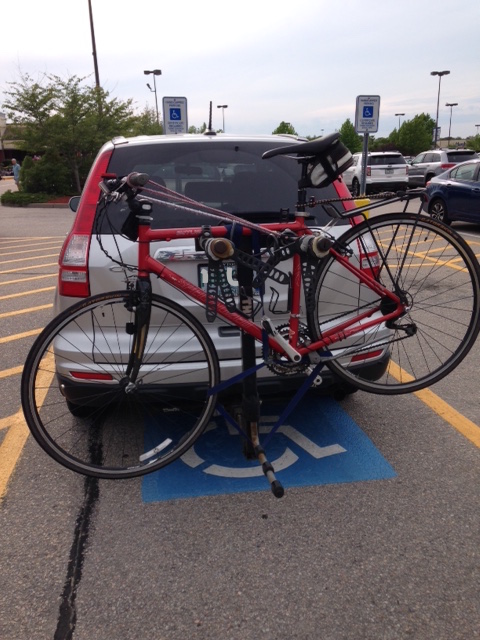
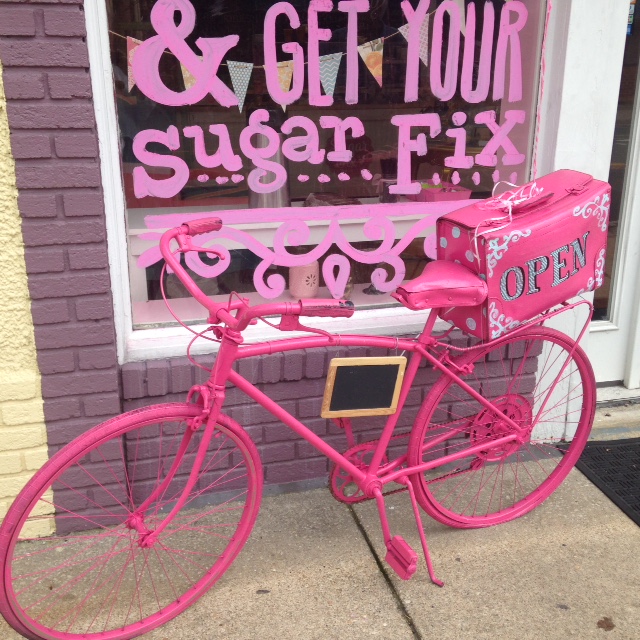
Not that I am a cycling enthusiast, but any event this big piques my interest. Some weeks ago, when I first became aware of the upcoming races, I started noticing bicycles—and they are everywhere! Did you ever count how many clutches of bicycles are fastened to motor vehicles?
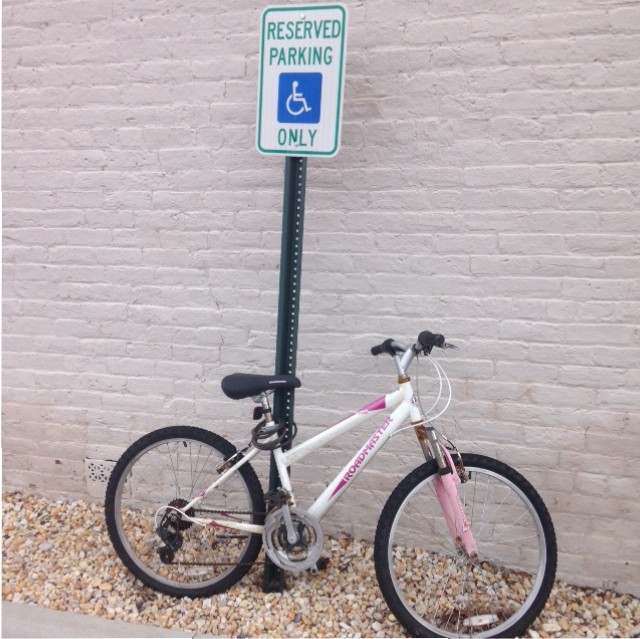
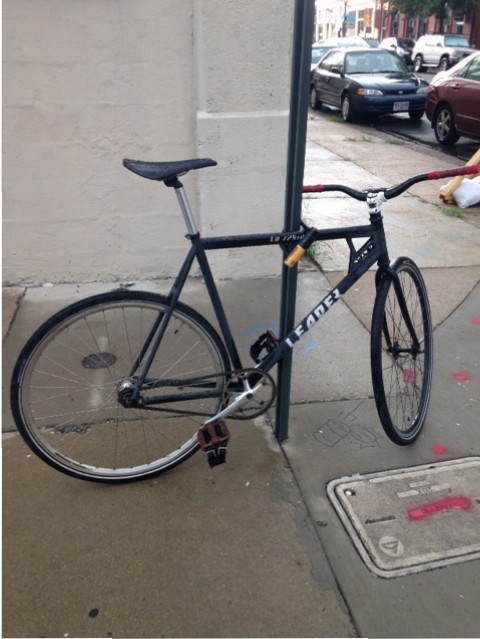
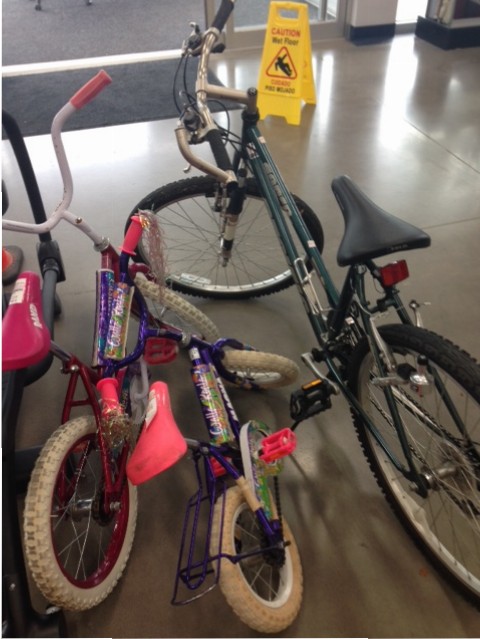
Although the Virginia DOT says that all vehicular laws apply to bicycles, clearly this isn’t the case with parking.
Also, DUI statutes don’t apply to bicycles in Virginia. Although one can be charged with DUI/DWI for drunk bicycling in 22 states, Virginia isn’t among them. Still, in my opinion, one would be stupid to do it. The person most likely to be injured is the cyclist, but think of the trauma to family, and to the motorist who might have killed someone. It’s like riding without a helmet: just because you can doesn’t mean you should!
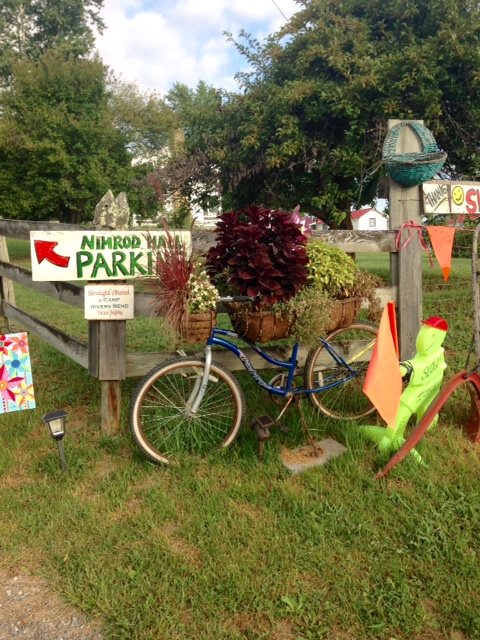
But I digress. I was talking about bicycles being everywhere, and used for all sorts of purposes. When I was a Nimrod this summer, I intentionally saved this picture for now.
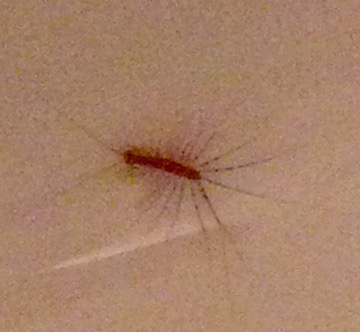
I first saw this little cutie in the bathtub. Not being a firm believer in reincarnation, I snuffed it.
Centipede little cutie
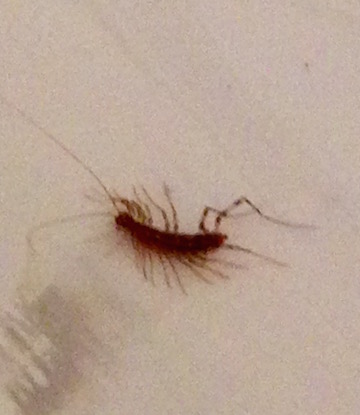
Over the following days and weeks, they seemed to be everywhere: medicine cabinet, kitchen floor, toothbrush holder. . . . But no matter how often they ended up like this,
The end
there were always more of them. They were especially noticeable—and challenging—because we weren’t having problems with ants, spiders, flies, etc. Why these critters?
So I did what any scientist would do—I researched the subject. (You do recall that I’m a scientist by training?) The first thing I learned is that my housemates are Scutigera coleoptrata, or common house centipedes. The second thing is that, oddly enough, centipedes don’t exist. Centipedes never have 50 pairs of legs (i.e.,100 legs). Although some species have as many as 191 pairs, all centipede species have an odd number of pairs of legs as normal adults. The common adult house centipede has 15 pairs of legs. Juveniles are shorter and have fewer pairs, adding pairs as they grow.
If you look closely, a centipede is actually beautiful. The legs are long, slender, and thread-like. Their movement is not only fast (1.3 ft. per second) but graceful. On females, the last pair of legs is more than twice as long as the body, which can be up to 1.5 inches. The bodies are long and flat, with three dark racing stripes running head to back.The legs have black and white banding.
Beauty
One of their most endearing qualities is that they run away from me. But the real reason I have come to love centipedes is that they are good eaters: cockroaches, flies, moths, mosquitos, crickets, silverfish, earwigs, spiders—almost any insect pests. They do kill their prey with venom, but they rarely sting humans and when they do, (I’ve read) it’s much like a mosquito bite. Maybe the reason we aren’t having problems with other insects is that we have our own little squad of live-in exterminators!
I have a long history of public speaking–lectures, workshops, panel presentations-facing with a group of friends or hundreds of strangers makes no difference to me. When I can work from an outline or talking points or questions, no problem. Humorous and lively.
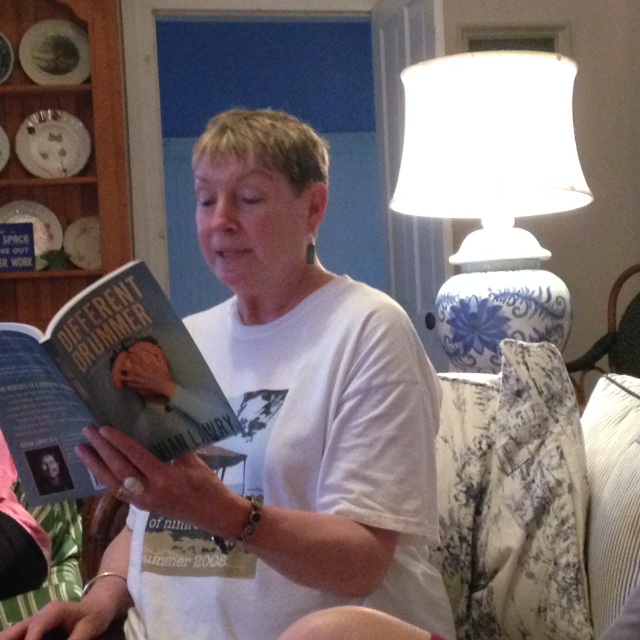
When reading aloud in public, the problem is that it is reading! This photo from my reading during the first week of Nimrod this year depicts the problem perfectly.
I have not yet mastered the ability to read something verbatim while maintaining eye-contact with the audience. Awkward. And distancing.
On the other hand, reading aloud to myself is essential, especially dialogue. It’s like practicing job interview questions and answers aloud in front of a mirror. Sentences are a whole lot smoother in thought than in practice. If the words do not fall smoothly from my lips, it can not ring true in the reader’s ear. It is absolutely necessary for dialect. Does it sound overdone? Reading aloud can work for narrative as well, Identifying sentences that are too long or stilted. Sometimes, it is helpful to have someone read your work aloud while you listen. Good luck!
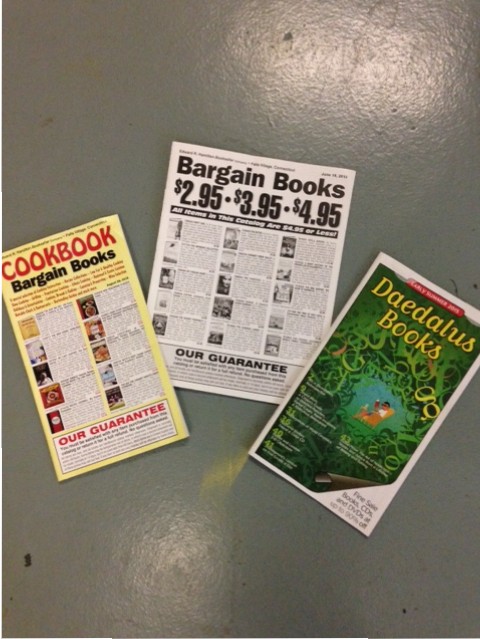
I was sitting in my recliner, much as I am now, sipping iced decaff coffee and leafing through catalogues from discount booksellers. (My favorites among these are Edward R. Hamilton Bookseller and Daedalus Books.)
Catalogs from discount booksellers
After ordering more books than I have shelf-space for—about half cookbooks for a vegan kitchen and half books I think will be useful writing references, such as Funerals to Die For—my thoughts drifted, as they are wont to do. I’ve been collecting cookbooks since long before I started writing fiction. Over the years, I’ve donated and gifted hundreds of cookbooks and mysteries. Even bookcases in every room of the house except the bathroom weren’t enough!
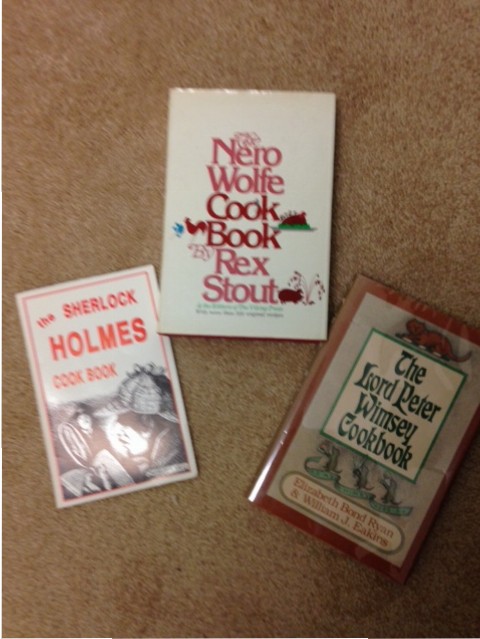
As best I can remember, my first connection between fiction and food was the Rex Stout mystery series featuring Nero Wolf. I’ve had the The Nero Wolf Cook Book so long I can’t remember.
Cookbooks for Sherlock Holmes, Lord Peter Wimsey, and Nero Wolf
I became enamored with Sherlock Holmes in college. But Dorothy L. Sayers is probably my all-time favorite mystery writer. She didn’t make a big deal about food in her Lord Peter Wimsey/Harriet Vane books. Still, I had to have The Lord Peter Wimsey Cookbook.
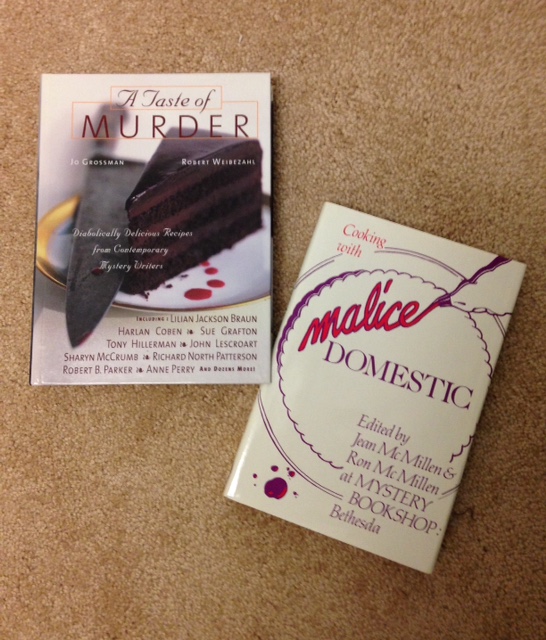
Perhaps mystery writers are especially attracted to food. Think poison? These two books are especially appealing to me.
Mystery writers’ cookbooks
More than one mystery has taken up a food theme. Perhaps the best known is Diane Mott Davidson. She’s written 17 novels featuring Goldy Schulz, a small town caterer who solves mysteries on the sides. Goldy Schulz also has a cookbook, although I haven’t seen it.
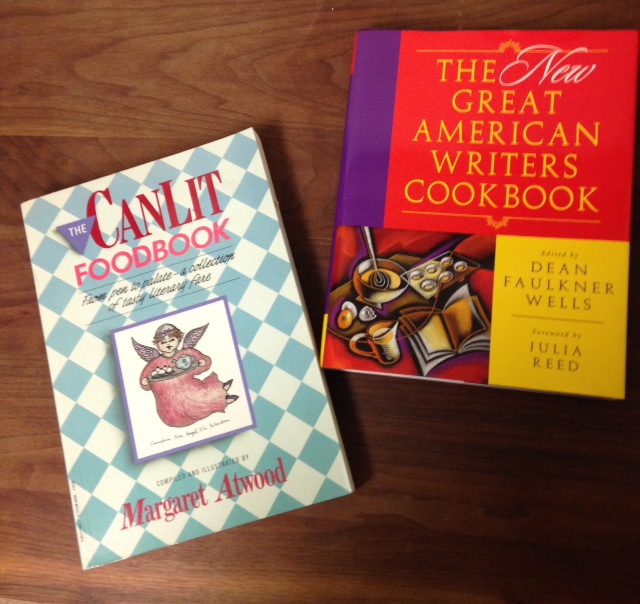
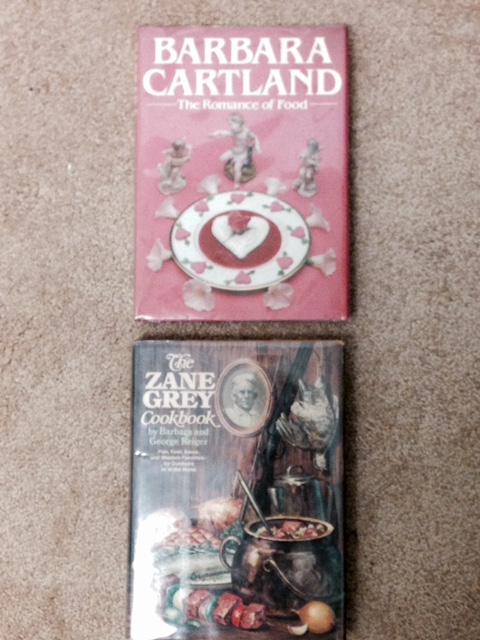
Of course, food isn’t solely the purview of mystery writers. See for yourself.
Non-mystery writers and food
And as in all fan activities, Jane Austen leads the pack. I don’t have them, but look for The Jane Austen Cookbook, Cooking With Jane Austen, Jane Austen and Food, Tea with Jane Austen, Tea With the Bennets, Dinner With Mr. Darcy, What Jane Austen Ate and Charles Dickens Knew.
And the options are never-ending. Consider A Feast of Words, for Lovers of Food & Fiction by Anna Shapiro. It includes excerpts from 25 novels, from Jane Austen to Alice Munro. Shapiro comments on the food scenes and includes her own menus and recipes inspired by each work. Eat Memory: Great Writers at the Table, edited by Amanda Hesser comes from her work as the New York Times Magazine‘s food editor. In this book she presents 26 food memories from leading writers, and the recipes they involve.
If you are more into the words than the food, consider this slim volume: Food Tales: A Literary Menu of Mouthwatering Masterpieces. It presents 8 stories, including “A Vicomte’s Breakfast” by Alexandre Dumas, “The Luncheon” by W. Somerset Maugham, and “Tortillas and Beans” by John Steinbeck.
Once you start on writing and food, it’s a short step to food writers. One of my favorites is M.F.K. Fisher, How to Cook a Wolf. She wrote it in 1942, the point being to cooking during the WWII food rationing.
How to Cook a Wolf by M.F.K. FisherFrom M.F.K. Fisher’s How to Cook a Wolf
But enough! There must be an end somewhere!
Your Links Between Food and Fiction
What are your favorite cookbooks?
Don’t collect cookbooks? Do you have a collection that’s taking up your house?
What’s in a name? Perhaps a rose by any other name would not smell as sweet.
Consider your name.
How was it chosen? What does it mean? How does it look? How do you feel about it?
My father John shared the name with a brother of his mother. My mother’s Alta Wavalene came from her father’s youngest sister and her mother’s youngest sister. There are no Vivian’s on either branch of the family tree. Were my parents consciously striking out in a different direction?
One story I heard growing up is that Vivian was the name of my father’s first girlfriend, and he liked it. So, does this reflect my father’s dominance or my mother’s confidence?
Vivian means lively, and likes bright or vivid colors. The latter definitely applies, and I like to think the former does as well. As for appearance, Vivian is all spikes and angles, especially when written in caps: VIVIAN. Hmmmm. No comment. But I do know I felt out-of-place among the Sharons and Shirleys and Barbaras. As a child, I wanted a nickname and it was never forthcoming. As an adult, I like that I have seldom come across another Vivian, and only an Italian chef ever called me Vi.
Consider character names.
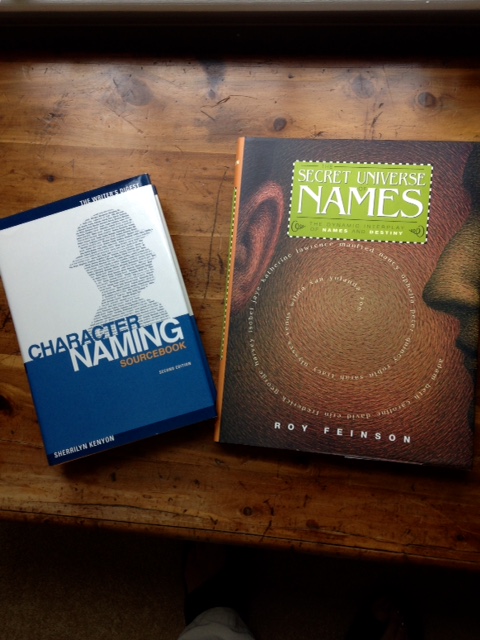
Your characters’ names are as important to them as yours is to you. Give them some thought. As with everything, there are books out there to help. My personal favorite is Character Naming Sourcebook by Sherrilyn Kenyon. For one thing, it starts with an overview of things to consider. In brief, and paraphrased, the ten guidelines are
Capture the persona
Consider heritage, personality, and trade/profession
If you choose a name that breaks the rules, make a point of it
Avoid names that others have made famous
Your character’s name is the usual introduction to the reader. Lydia is harder than Nora. Cynthia is more upscale than Bertha. Bart is stronger than most two-syllable male names.
In deciding on names, avoid not only the beginnings but the endings. Alex, Alice, Amy, and Andrew will confuse readers and turn them off. At the same time, choose nicknames and/or endearments with care. I recently critiqued a manuscript in which William was Billy to the family, Victoria was Vickie,
Margaret was Maggie, Susan was Suzie, and endearments were honey and sweetie. Not a big deal, but if the reader notices, it’s too much.
I like Character Naming because of its breadth, and because it separates names by ethnic roots and meaning. But it isn’t the only book out there. Indeed, you can go to a local telephone directory and mix first and last names.
Character Naming and The Secret Universe of Names
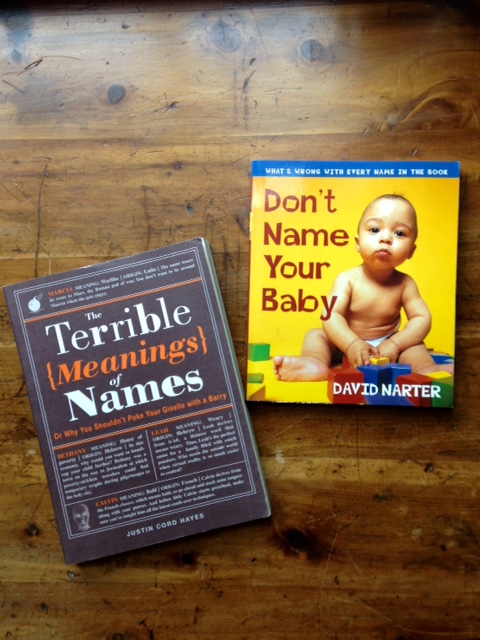
And if you are interested in the humorous side of writing, consider these:
The Terrible Meaning of Names and Don’t Name Your Baby
That way you won’t inadvertently name two friends Barbara Smith and Barbara Morton and end up with BS and BM!
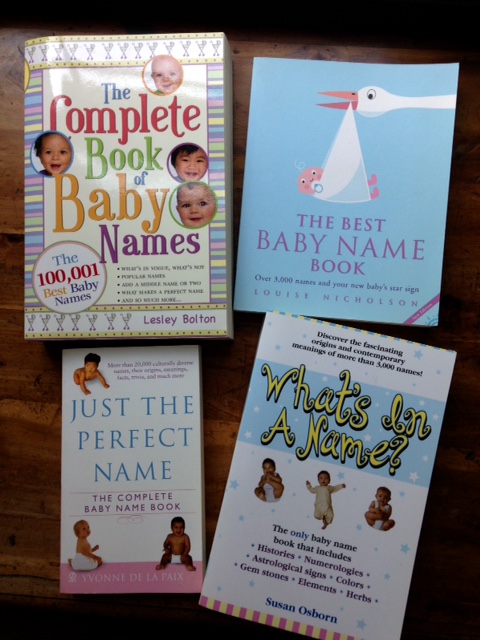
More books on baby names
Consider perception.
Consider the article “13 Surprising Ways Your Name Affects Your Success” by Maggie Zhang and Jenna Goudreau. The main points of their article are highly relevant to writers. If your name is easy to pronounce, people will favor you more. If your name is common, you are more likely to be hired. If your name is uncommon, you are more likely to be a delinquent. If you have a white-sounding name, you’re more likely to get hired. If your name is closer to the beginning of the alphabet, you might get into a better school. If your last name is closer to the end of the alphabet, you’re more likely to be an impulse spender. You are more likely to work in a company that matches your initials. Using your middle initial makes people think you’re smarter and more competent. If your name sounds noble, you are more likely to work in a high-ranking position. If you are a boy with a girl’s name, you are more likely to be suspended from school. If you are a woman with a sexually ambiguous name, you are more likely to succeed. Men with shorter first names are overrepresented in the c-suite. Women at the top are more likely to use their full names (e.g., Deborah, Cynthia).
And one final point for authors: think carefully before giving your main characters long or hyphenated name. You are going to be typing those name a gazillion times!
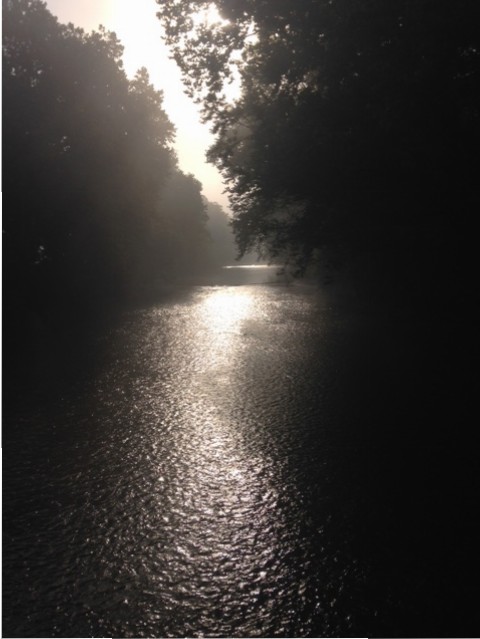
My frequent mentions of walking before breakfast while at Nimrod may have led people to believe that I enjoy exercise. Not so. Walking at Nimrod is necessary because so many hours of the day are spent butt-in-chair. Fortunately, it was also lovely.
Cowpasture River near Nimrod Hall during my morning exercise
I have a neighbor who walks every day and works out at the fitness center several times a week. My guess is that he is somewhere north of 85. Another neighbor asked, “Do you exercise so much in order to live a long time?” His answer was, “I exercise so much in case I live a long time!” That is my attitude toward exercise: I do it because it’s good for me. True confession: I should exercise more. Although I do some stretching and some strength training, my favorite form of exercise is walking, most frequently in the park near my house. There is a spacious paved loop that is very popular, but I hit the pavement only after heavy rains.
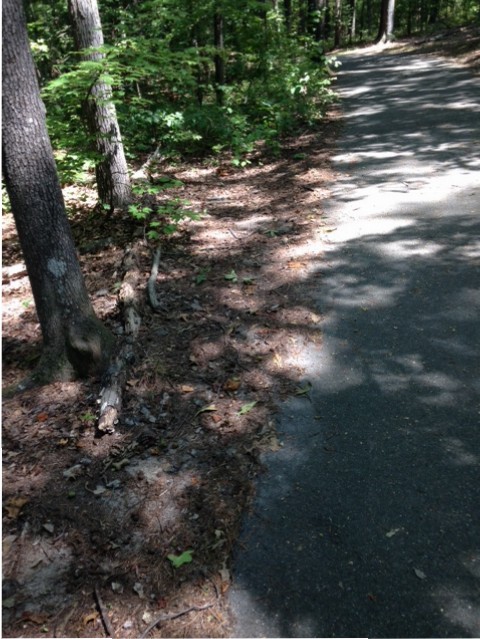
Paved walking loop through the woods
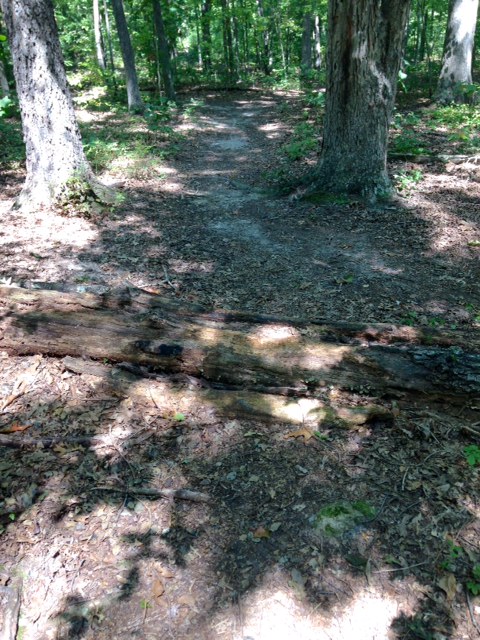
Usually I take a path through the woods. There are several of them, often running parallel to the paved loop, but also criss-crossing the ridge, following the fence line, and veering down to the creek.
Path through the woods where I feed my creativity
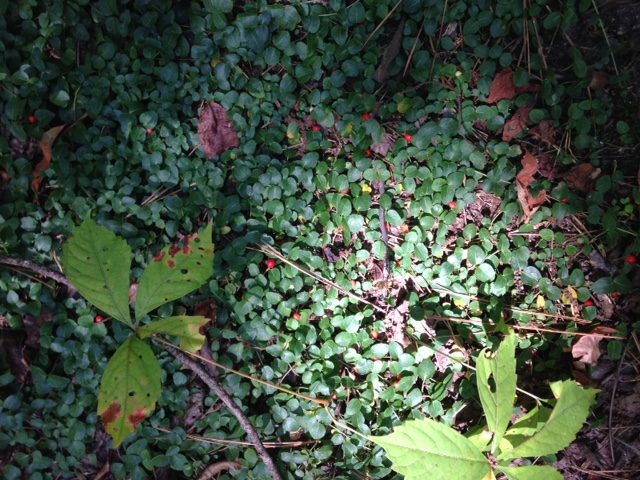
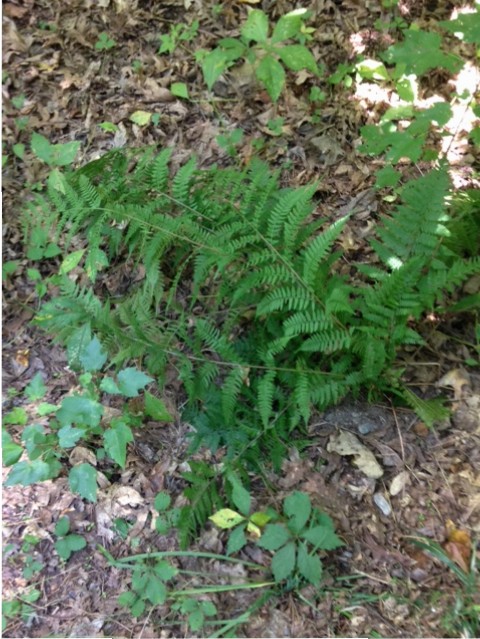
One thing I enjoy about the park is following the seasons there. In spring there are dogwoods and lady slippers. Right now I can enjoy the remains of the lady slippers (i.e., the leaves) and crows foot. The partridge berries are just starting, and I’ll be able to track them as the come on. And always there are ferns.
Lady slipper and crows footPartridge berriesFerns
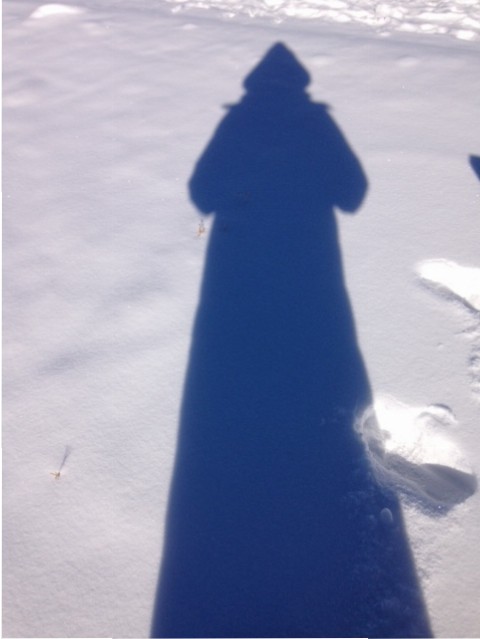
The main intersection of my writing life and exercise is thinking of story starters. For example, last January, walking in a nature preserve, I noticed my shadow on the snow, and thought of the Grim Reaper in winter.
Grim Reaper in winter
This led to the story starter on how what the Grim Reaper does in winter might differ from summer.
Creativity.
There is a ton of research (ton being a precise quantitative term!) indicating that both sleep and exercise increase creativity. Some of us are more adept at the former than the latter—but try to get enough of both. I won’t cite specific studies because this blog can’t go on forever and because the information is so readily available in psychology textbooks and on-line.
Writers who exercise.
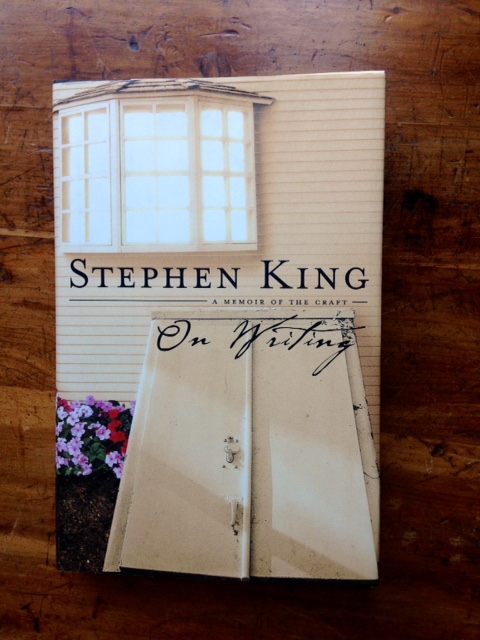
I do not know of writers who directly attribute their writing success/productivity to exercise. If you know such examples, please post a comment. But I do know successful writers who exercise. Stephen King is one example.
Stephen King is one writer who exercises
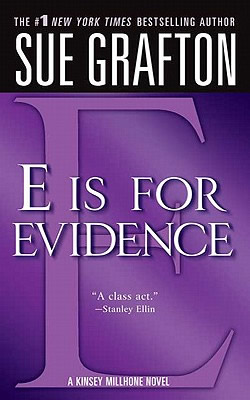
But as a case in point, I’ll cite Sue Grafton. Grafton was born in 1940 and has now completed A through X in her highly successful alphabet mystery series. She has a very regular routine: up at 6:00, walk 3 miles, shower and breakfast by 9:00, write 2 pages, break at 11:30 for lunch, done by 1:30, and exercise again (either more walking or weights, jogging and/or swimming). She has a home gym which she calls a “Jill” because it is composed of 15 Lady Paramounts machines, constructed specifically for women. She eats dinner at 6:00 and is asleep at 9:00, hoping to get in touch with her Shadow side during sleep. You can see many photos of Sue Grafton and her living/working spaces on her website, including a picture of her Jill.
E is for Exercise? Sue Grafton exercises several hours every day
Back to exercise.
The evidence says exercise is beneficial for everything from weight loss to memory loss, energy to mood enhancement, heart health to maintaining hearing, cancer to strong bones. . . . And then there’s creativity! In short, exercise seems to be a silver bullet for quality of life. I’ve almost talked myself into getting serious here!
Does exercise improve your creativity?
Do you know writers who directly attribute their writing success/productivity to exercise?








.jpg)