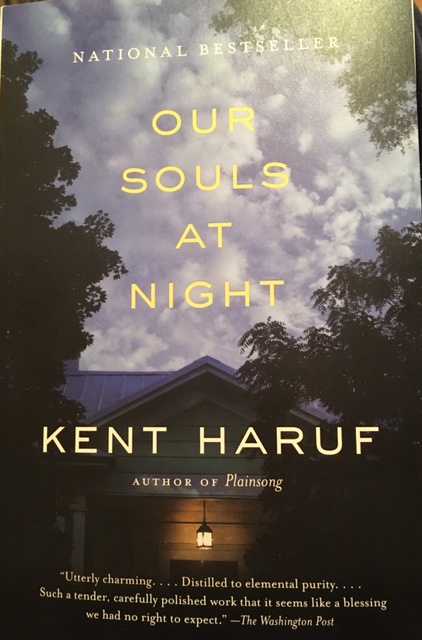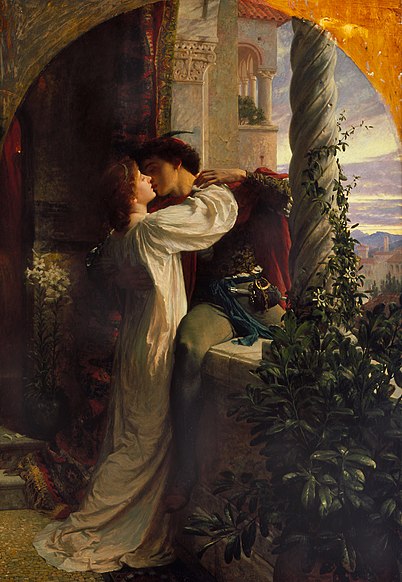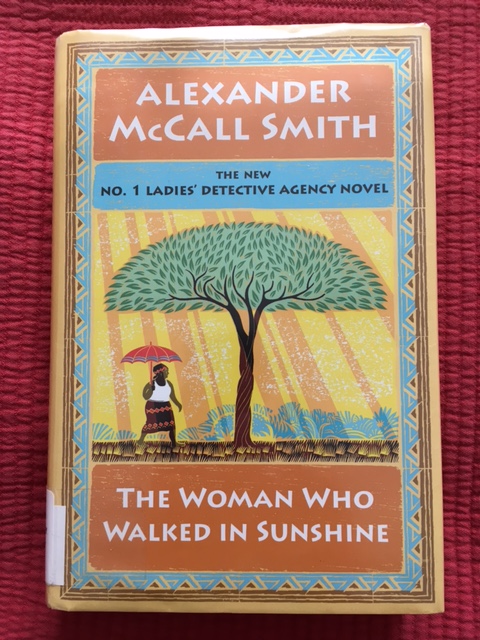


The best written love must overcome obstacles.


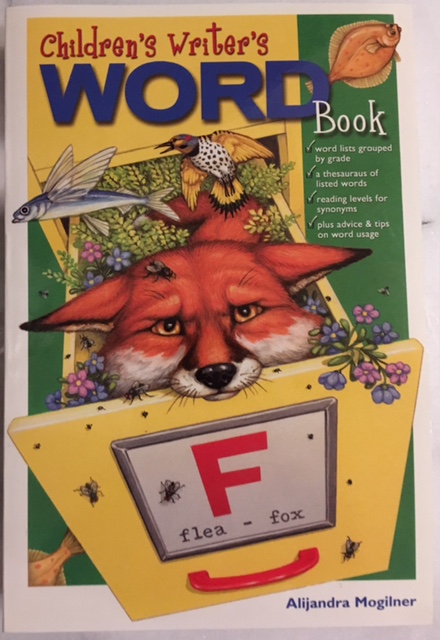
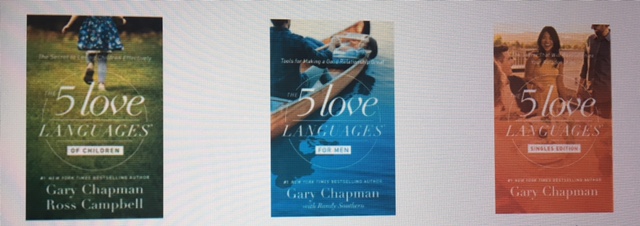
This book explores five ways people express love.
#1 Words of Affirmation
#2 Quality Time
#3 Receiving Gifts
#4 Acts of Service
#5 Physical Touch
According to the author, each person has a predominant mode of expression.
FOR PLOT PURPOSES, you need only have two people with different preferences for expressions of love to go unrecognized.
This book is a NYT #1 Bestseller. The writing is accessible, the examples informative. I recommend it!
And as so often happens, there are now niche sequels.
GO FOR SOME LOVE! After all, Valentine’s Day is coming soon.


Below are a few writing tips I’ve written about before that are definitely still applicable today. What writing tips have you received that have helped you the most?
Don’t have characters tell each other things they already know just because the reader doesn’t know those things. For example, if two sisters are talking, it’s highly unlikely that one would say, “When Mom and Dad adopted our brother John, I was devastated.” Find another way to convey relevant relationships or bits of backstory to the reader.
Another no-no is to have an exchange between two people weighed down by repeatedly calling each other by name. “Hello, John.” “Hi, Sharon.” “How are you doing, John?” “Oh, Sharon, I am so low I have to reach up to touch bottom.”
A third negative is putting in greetings and leave-takings that are pro-forma, tell us nothing about the characters, or don’t move the story forward. Just because they would happen in real life doesn’t mean that every amenity has to be spelled out to the point of diluting the scene.
The basic rule is that short, simple sentences–even sentence fragments–convey more energy than longer, more complex sentences. They are less likely to be beautiful in the poetic sense, but they carry more punch.
Take an emotion such as anger. If it is a long-held, smoldering anger, longer sentences with modifiers and clauses might be appropriate in a narrative passage. But if it is an anger outburst or a heated argument, you are more likely to want short sentences.
If you use lots of ands, buts, whens, and thens, consider if wordiness is sapping energy from your writing. Consider breaking one long sentence into two or more shorter ones.
Whether describing a person, a place, a thing, or a process, long detailed descriptions–unrelieved by action–are likely to be deadly. If very well done, readers will get so involved in the description, in visualizing exactly what the author had in mind, that they are taken out of the story itself. If not well done, those passages are likely to be skipped altogether. Elmore Leonard advises leaving out the parts that readers skip anyway. Replace length with strong, vivid, memorable language.
In describing people, go for details that will help define the character for the reader. For example, describing an employee saying, “Her dress was black and blue and ruffled, better suited to a ballroom than a boardroom,” would not create the same image in the mind’s eye of every reader but it’s likely to convey the same impression–which is generally much more important.
And consider not describing transportation at all. If you need to get your character from New York to Philadelphia, put her in a car, a plane, or a train, get her out again, and let it go–unless something important to the story happens in transit. Even then, skip as much of the before and after as possible.
Finally, leave out the parts of routine actions that the reader can assume. For example, if a man is going out and locks the door behind him, we know without being told that he had already opened the door and closed it again.
Truth: Marathon euchre and cribbage got us only so far. It’s only natural that talk turned to books. So here’s a list of books the four of us recommended to each other.

Another excellent nonfiction read is Escape From Camp 14: One Man’s Remarkable Odyssey From North Korea to Freedom in the West, by Blaine Harden. It’s a gripping story.
The novel The Elegance of the Hedgehog by Muriel Barbery is moving, funny and good writing.

Purity by Jonathan Franzen was described as a “weird” but excellent novel about two young people with strange mothers, searching for their real fathers, one in San Francisco and one in East Berlin.

When we got to mysteries, there were too many to list, so we just went with authors: pretty much anything by Tara French or Donna Leon for books set abroad, Greg Isles, Kathy Reichs, Lee Childs, Jeffrey Dever, Janet Evanovich, Nevada Barr, or Dennis Lebane.
Good reading even when you aren’t snowbound!
NASA has officially recognized a thirteenth constellation, Ophiuchus (pronounced either Oh-FEW-cuss or Off-ee-YOO-cuss, depending on who you read).
We’re all familiar with the 12 constellations associated with the signs of the zodiac for the last 3,000 years. It seems Ophiuchus was always there, but the Babylonians left it out because they needed only twelve.
In the 1970s Stephen Schmitt proposed 13 zodiac signs but it was so controversial that it never caught on.
NASA points out that constellations are matters of astronomy and there are 13 of them. The signs of the zodiac are matters of astrology, and thus somewhat arbitrary.
The 12 signs of the zodiac divide the sun’s ecliptic so that each spans 30 degrees of celestial longitude. Constellations are unequal in size and depend on the positions of stars. Constellations and signs of the zodiac don’t generally coincide. For example, the constellation of Aquarius corresponds to the sign of Pisces.
So, if you add Ophiuchus and adjust the dates for the other 12 constellations to align with their greatest visibility in the night sky, you get the following:
Ophiuchus: Nov. 29-Dec. 17
Sagittarius: Dec. 17-Jan. 20
Capricorn: Jan. 20-Feb. 16
Aquarius: Feb. 16-Mar. 11
Pisces: Mar. 11-Apr. 18
Aries: Apt. 18-May 13
Taurus: May 13-June 21
Gemini: June 21-July 20
Cancer: July 20-Aug. 10
Leo: Aug. 10-Sept. 16
Virgo: Sept. 16-Oct. 30
Libra: Oct. 30-Nov. 23
Scorpio: Nov. 23-Nov. 29
The characteristics of the original 12 signs remain the same. Ophiuchus is from the Greek, meaning “serpent-bearer.” It is associated with healers and physicians.
TRAITS OF OPHIUCHUS are all over the map. POSITIVE: happy, humorous, honest, truthful, intellectual, clever, free-spirited, instinctive, charismatic, creative, driven. IN ADDITION: competitive, secretive, emotional, adaptable, flamboyant dressers, and well-loved by authorities. SO WHAT’S NOT TO LOVE? How about being polygamous, irresponsible, jealous, judgmental, restless, temperamental, and prone to procrastination?
TAKEAWAY FOR WRITERS: Consider making your character an Ophiuchus! You can learn much more about this fascinating sign online.