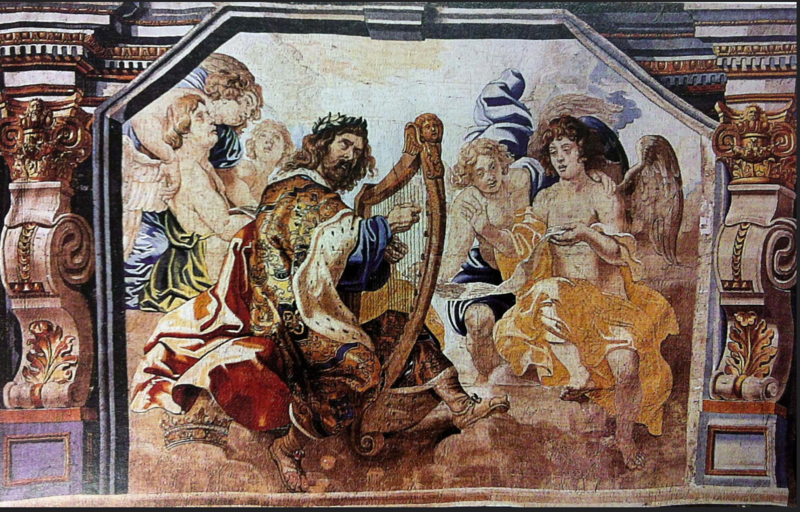
Despite being a legendary harpist, ruler, and monarch, King David said, “But I am merely a worm, far less than human, and I am hated and rejected by people everywhere.” ~Psalm 22:6
Chu Wanning of Er Ha He Ta De Bai Mao Shi Zun is a visual illustration of the power of self-concept. When he appears in other’s flashbacks, Chu Wanning is an extremely handsome young man. When he is the narrator, Chu Wanning is an old, ugly, weak man.
Self-concept is how people perceive their behaviors, abilities, and unique characteristics. For example, beliefs such as “I am a good friend” or “I am a kind person” are part of an overall (positive) self-concept. These perceptions of oneself are important because they affect motivations, attitudes, and behaviors. Self-concept also impacts how people feel about who they think they are, including perceived competence and self-worth.
Low self-worth is having a generally negative overall opinion of oneself, judging (or evaluating) oneself critically, and placing a generally negative value on oneself as a person.
Self-esteem is a similar concept to self-worth but with a small (although important) difference: self-esteem is what we think, feel, and believe about ourselves, while self-worth is the more global recognition that we are valuable human beings worthy of love (Hibbert, 2013). People with low self-confidence tend to have low self-esteem and vice versa.
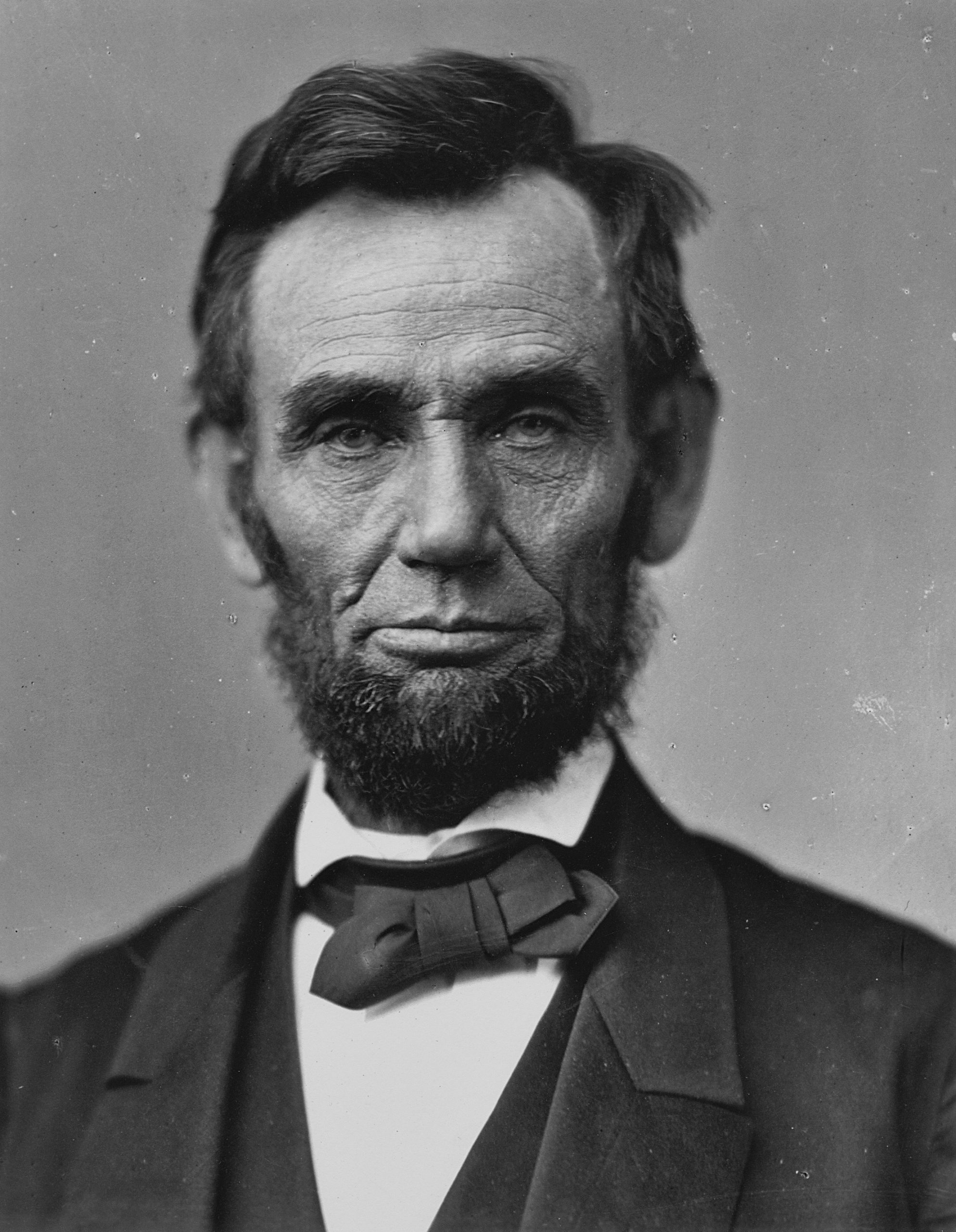
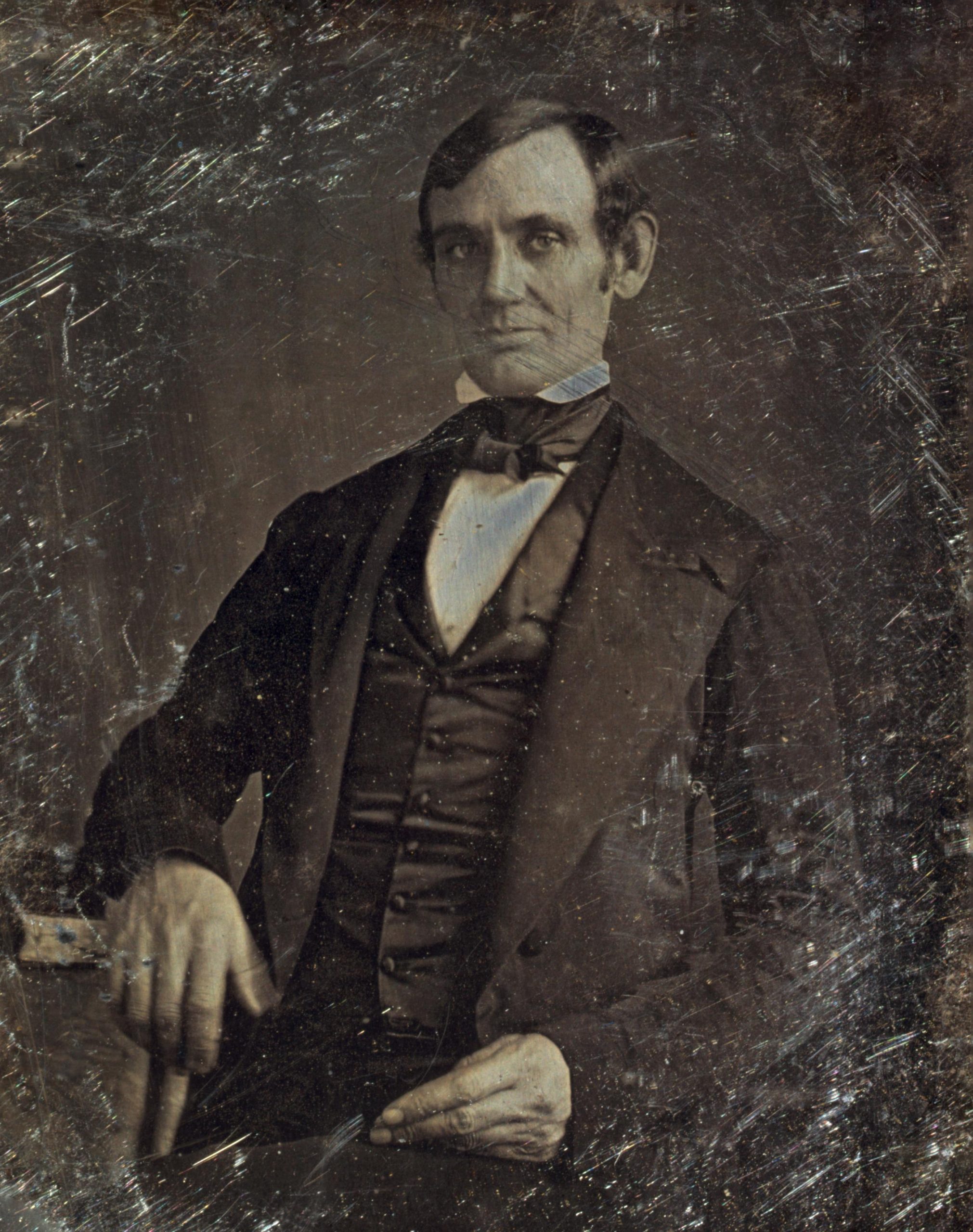
Abraham Lincoln’s “melancholia” is likely to have been influenced by a negative self-concept. “Every man is said to have his peculiar ambition. Whether it be true or not, I can say for one that I have no other so great as that of being truly esteemed of my fellow men, by rendering myself worthy of their esteem.”
Some of the most common characteristics of low self-esteem—of which there are many—also appear in those with low self-worth:
Depression/sadness
Anxieties
Low mood
Feelings of inadequacy
Extreme focus on clothing, makeup, grooming, etc., because of a belief that self worth comes from exterior appearance
Poor confidence
Feeling like a burden to other people
Criticize their appearance and personality regularly in their head and out loud
Feeling a lack of control in life
Negative social comparison
Negative self-talk
Worry and self-doubt
Not trying things out of fear of failure
Neglect of their own needs, particularly emotional ones
Guilt over self-care
(E.g., you feel guilty buying things because you feel you don’t deserve them.)
Some of these characteristics may affect how a person interacts with others in less obvious ways.
Frequent anger and irritability
Difficulty making decisions because of worry about making the wrong one
Needing to be perfect 100% of the time
Over-achieving in general
Overly accepting or not accepting flaws in others
Tendency to criticize other people to make oneself feel better
Jealousy of other peoples accomplishments, instead of being happy for them
Shifting blame to others because they think it is unacceptable to make the slightest mistake
How Did This Happen?
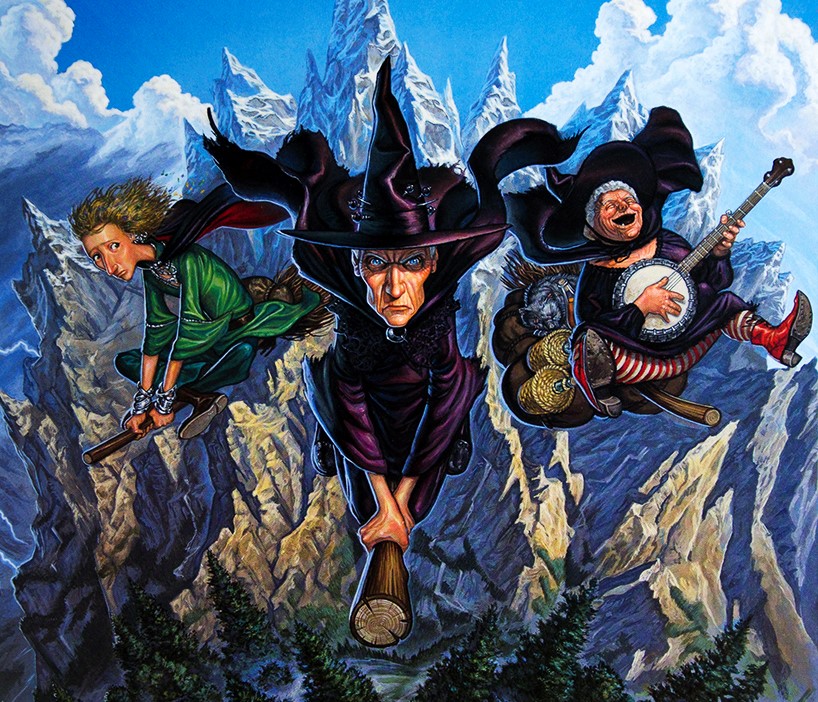
Even after becoming a mother, a senior witch, and Queen of Lancre, Magrat Garlick (left) remained in the shadows of the elder witches in her coven. “She seemed to have spent her whole life trying to make herself small, trying to be polite, apologizing when people walked over her, trying to be good-mannered. And what had happened? People had treated her as if she was small and polite and good-mannered.” (Lords and Ladies by Sir Terry Pratchett)
Causes of low self-esteem can include:
Disapproval from authority figures or parents
Emotionally distant parents
Sexual, physical, or emotional abuse
Contentious divorce between parents
Bullying with no parent protection
Academic difficulties
Guilt associated with religion
Social beauty standards
Unrealistic goal setting
Does It Have To Be This Way?
If these sound all too familiar to you personally, don’t panic! You can retrain your brain and start to replace all the negative things you told yourself with positive things.
Several ways in which one can improve self-esteem:
Low self esteem can lead to anger, depression and anxiety, and generally a miserable life. Therefore, it’s important it is to work on it—and to keep working on it. If you have never worked on your self esteem before, positive affirmations for confidence are a good place to start.
Bottom line: You can identify low self-worth (in yourself and/or others) and portray it in your characters without an explicit label.
Of course, humans are driven by a lot more than two motivations. Various levels of deprivation (of all sorts of needs, such as food, shelter, sleep, sexual release, and much more) can motivate behavior in specific situations. Those are not the focus of this blog. Instead, I’m focusing on two powerful motives that tend to shape behavior across numerous situations and often whole lifetimes.
I’m talking about the need for achievement and the fear of failure.
In the simplest terms (according to me) the difference is striving to be the best versus trying to be good enough.
Need for achievement is the desire to obtain excellent results by setting high standards and striving to accomplish them. It is a consistent concern with doing things better.
People with high need for achievement often undertake tasks in which there is a high probability of success and avoid tasks that are either too easy (because of lack of challenge) or too difficult (because of fear of failure).
An example of the latter would be a 5-ft-tall basketball player with poor leaping ability, ball handling abilities, and passing skills. Such a person high in n-Ach is unlikely to try out for the team!
Recognizing Accomplishment
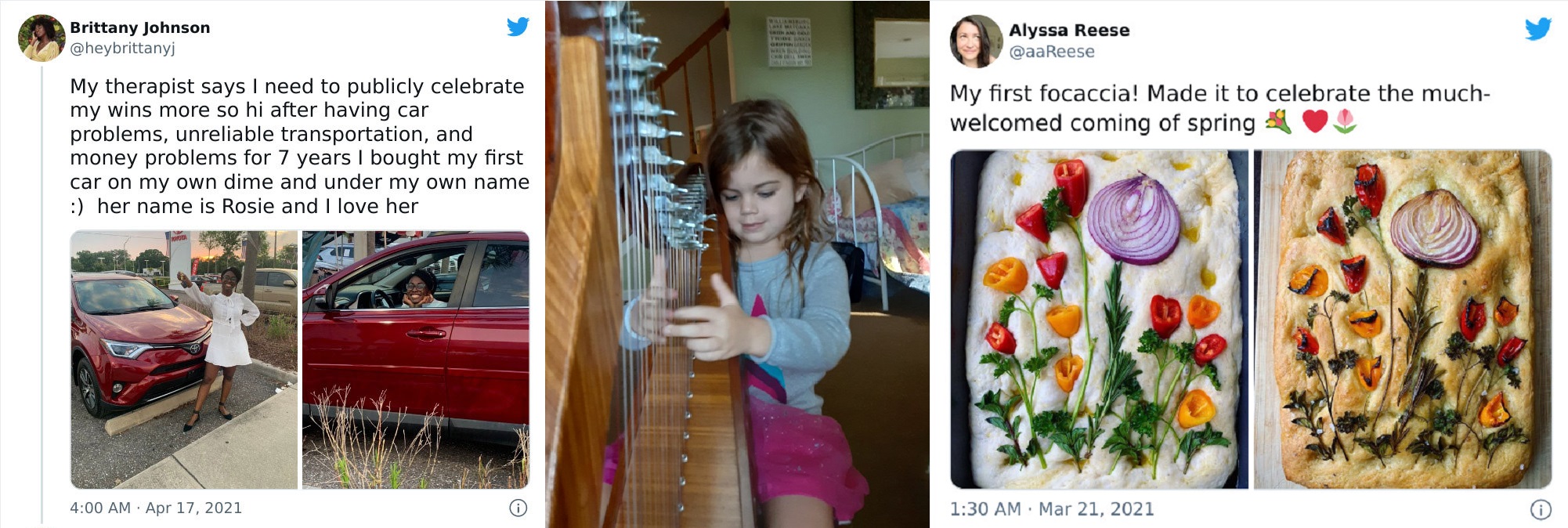
Even “minor” accomplishments deserve to be recognized and celebrated.
Studies have shown that feeling a sense of accomplishment is an important element in students developing positive wellbeing over time.
Research also shows that people with a strong sense of purpose, persistence, and accomplishment perform better at work.
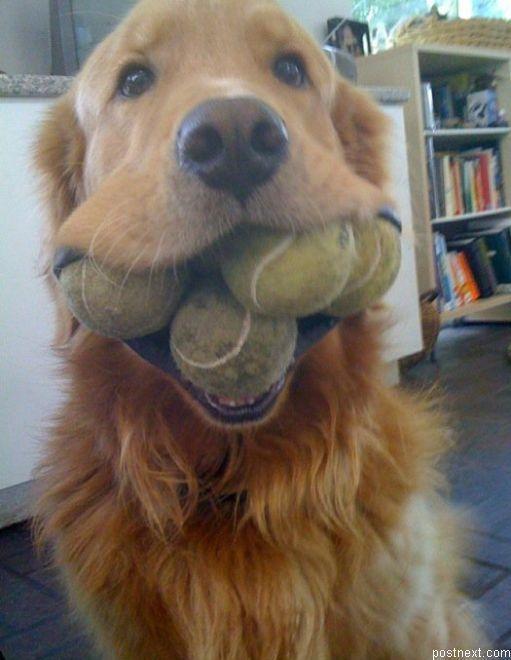
Because one tennis ball is simply not enough
People high in need for achievement present as ambitious, driven, successful … and insecure. The need for achievement drives behavior in school, work settings, even recreational activities. In case it isn’t obvious, this trait can cause problems:
Driven to achieve the task—any and every task
Fails to differentiate “urgent” from merely “important”
Has difficulty delegating
Struggles with producer-to-supervisor transition when promoted
Obsesses about getting the job done at all costs
Craves feedback
No doubt about it, people high in n-Ach put themselves under a lot of pressure. At first glance, it might seem that such people should relax, take it easy, and be happy doing well enough.
Fearing failure in a particular endeavor is experienced by most people, including high n-Ach people, sometimes. Think a new situation or task, or one that’s just being learned. Think public performances. There are times when just not humiliating oneself is success.
Fear of Failure
This is why restaurants deliver.
But the fear of failure, more generally, is an irrational and persistent fear of failing.
(FYI, irrational and extreme fear of failing or facing uncertainty is a phobia known as atychiphobia.)
Sometimes fearing failure might be triggered in only one specific situation/task. Sometimes it’s more generalized. And sometimes it’s related to another mental health condition such as anxiety or depression.
In any case, the fear of failure varies in level of severity from mild to extreme. Here are a few ways it’s commonly exhibited:
A sense of hopelessness about the future
Chronic (versus occasional or limited) worry
Worry about what other people will think about you if you fail or don’t do well
Frequent procrastination
High distractibility, being pulled off task by irrelevant or unimportant things
Avoiding tasks or people associated with a project or general goal
Physical symptoms (fatigue, headaches, digestive troubles, joint or muscle pain) that prevent working toward a goal
Believing that you don’t have the skills or knowledge to achieve something
Feeling like you won’t be able to achieve your goals
Procrastinating to the point that it affects your performance or ability to finish on time
Telling people that you will probably fail so that expectations remain low
Underestimating your own abilities to avoid feeling let down
Worrying that imperfections or shortcomings will make other people think less of you
Failing makes you worry about your ability to pursue the future you desire
Failing makes you worry that people will lose interest in you
Failing makes you worry about how smart or capable you are
Failing makes you worry about disappointing people whose opinions you value (especially family/friends)
You tend to tell people beforehand that you don’t expect to succeed in order to lower their expectations
Once you fail at something, you have trouble imagining what you could have done differently to succeed
You often get last-minute headaches, stomach aches, or other physical symptoms that prevent you from completing your preparation
You often get distracted by tasks that prevent you from completing your preparation which, in hindsight, were not as urgent as they seemed at the time
You tend to procrastinate and “run out of time” to complete your preparation adequately, as a way of protecting your belief in your ability to have done it
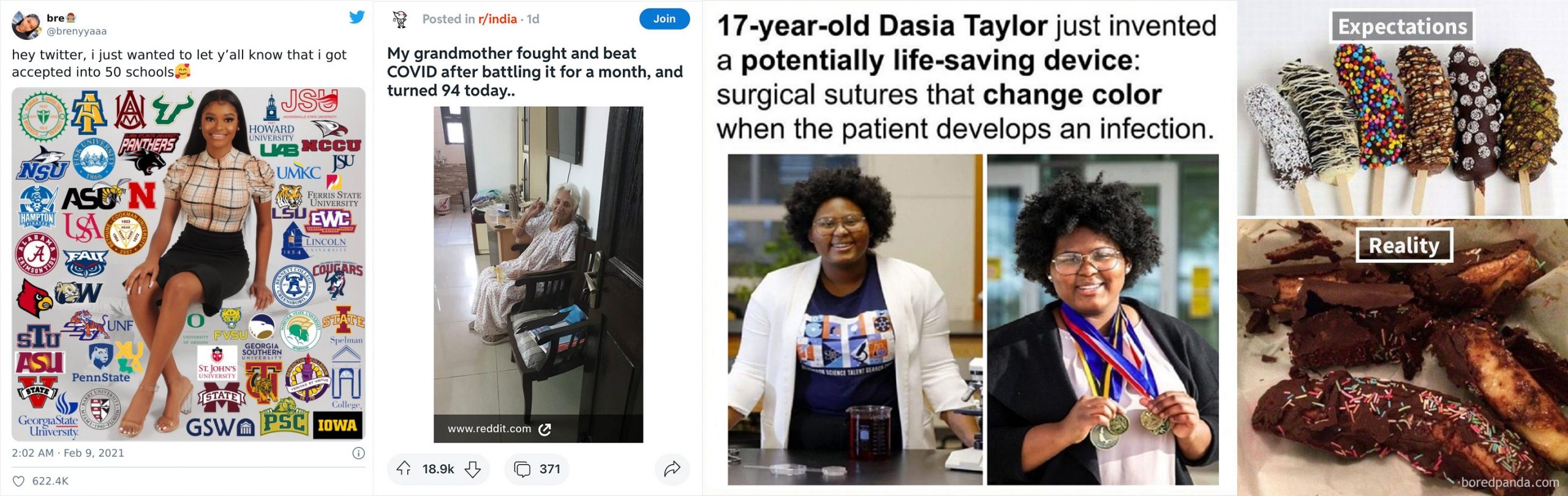
Social Media can illuminate and exacerbate both the need for achievement and the fear of failure. Twitter, Reddit, Facebook, and Bored Panda (just to name a few)
Bottom line: Two people may exhibit the same behavior, even turn in the same objective performance, but their reasons for doing so can vary dramatically.
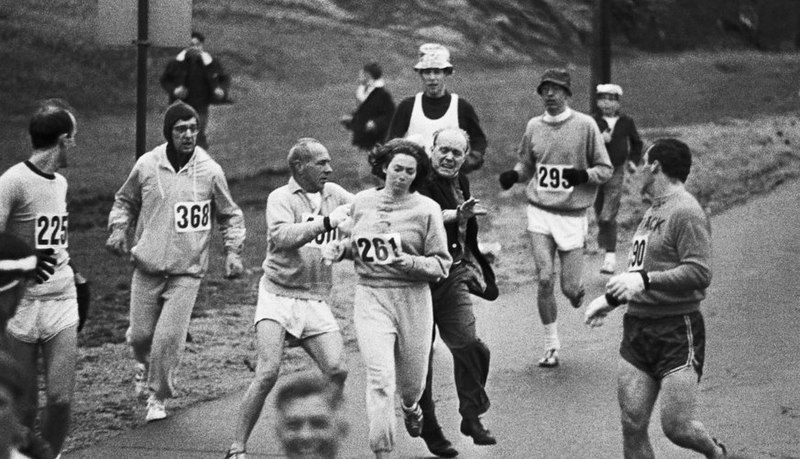
What happens when the unstoppable force of Kathrine Switzer meets the (apparently) immoveable object of the 1967 Boston Marathon officials and centuries of sports misogyny? Kathrine Switzer completes the Boston Marathon, the first woman to do so as a registered participant.
Check a thesaurusfor words related to inertia. You’ll find plenty of alternatives, from attitude to Newtonian physics.
Apathy
Indolence
Idleness
Languor
Lassitude
Laziness
Lethargy
Listlessness
Oscitancy
Passivity
Sloth
Deadness
Dullness
Immobility
Immobilization
Inactivity
Paralysis
Sluggishness
Stillness
Stupor
Torpidity
Torpor
Unresponsiveness
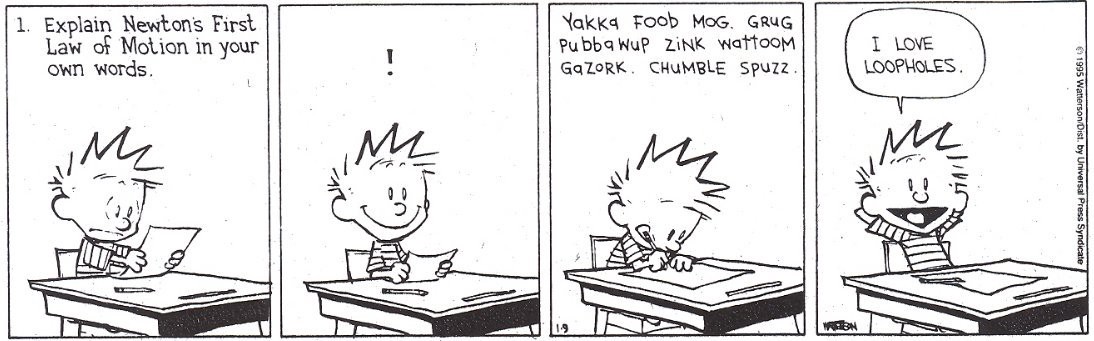
Indeed, the first dictionary definition (n) is a tendency to do nothing or to remain unchanged.
If you ask a physicist (or any one in a beginning physics class) you get a less one-sided view:
Inertia noun
In life in general, including one’s writing life, the remaining-at-rest side of inertia is typically a hurdle to overcome. In its simplest form, the longer one goes without writing (or scheduling a doctor’s appointment, sending condolences, making an apology, weeding the garden, etc.) the more effort it takes to make it happen.
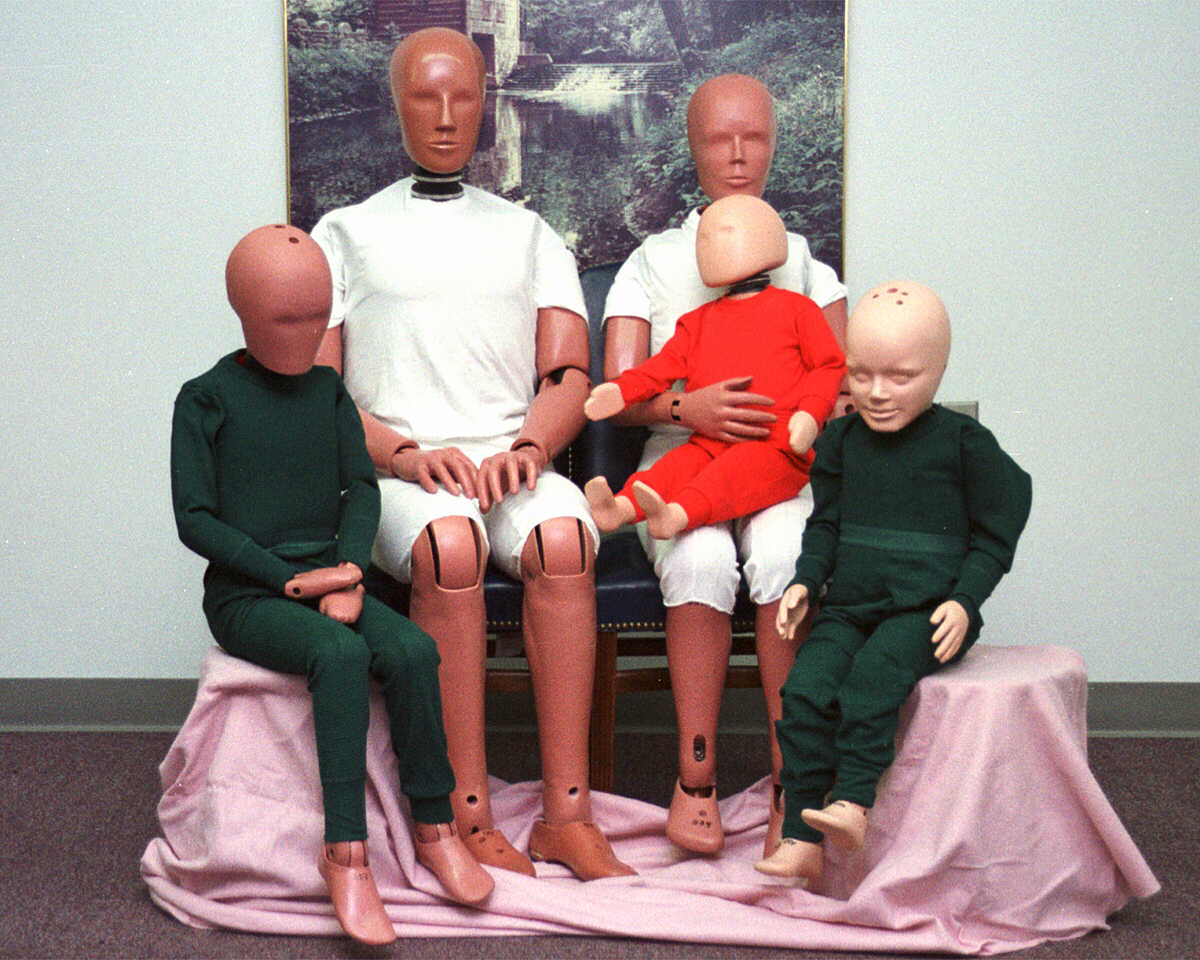
Newtonian and social inertia at work: Despite all the anatomical evidence available, crash test dummies used in car safety tests are modeled on an average male body from 1976. That might be why female drivers are 73% more likely to be seriously or fatally injured in a car accident.
Procrastination is a bear of not getting off the mark. Researchers suggest that it takes approximately 18 to 250 days to train yourself to a new habit. The first 21 days are said to be the most difficult, especially for a physical habit (regular exercise, quitting smoking, etc.).
This holds true for habits of thought, too. It’s a little more difficult to get precise numbers in this area, but studies show that you can train yourself to meditate, think positively, stop apologizing to everyone, even improve your memory. The brain, like the body, wants to remain at rest.
For humans, the continuing movement side of inertia, it seems to me, is both rarer and more beneficial. I think of it as being on a roll.
If you are on a roll, you may be having a run of good luck. (This expression, which alludes to success rolling dice, dates from the second half of the 1900s.) Enjoy it while it lasts, but the nature of luck is that it’s beyond one’s control.
Alternatively, being on a roll can mean enjoying a success that seems likely to continue. Continuing in the same habits will likely lead to a series of successes. This is true of everything from an athletic success to the first book in a popular series.
Gabrielle Émilie Le Tonnelier de Breteuil, Marquise du Châtelet, a French physicist whose postulate for energy conservation in inertia I don’t even pretend to understand.
Being on a roll also means a period of intense activity. This building momentum side of inertia comes to the fore when meeting deadlines, whether work or social (like Halloween preparations).
The outside force part of the physicist’s law of inertia is where a writer’s free will comes into play. There are all sorts of things you can do to overcome inertia in your life. Identify and remove triggers for a behavior you want to change. Set reminders on a timer or a note taped to your wall.
Those outside forces can be the basis for a character’s motivation in your writing as well. Perhaps an overheard comment sparks a character’s curiosity to begin a massive research survey. Perhaps a health scare inspires a character to change jobs and move to the opposite side of the globe. Perhaps new of impending alien invasion encourages an entire planet to move all habitations below ground.
BOTTOM LINE: If you understand both sides of inertia, you can make it work for you!
In honor of International Women’s Day (March 8th), check for biases in your life, in your thought patterns, even in your writing. At its core, bias is often just mental inertia.
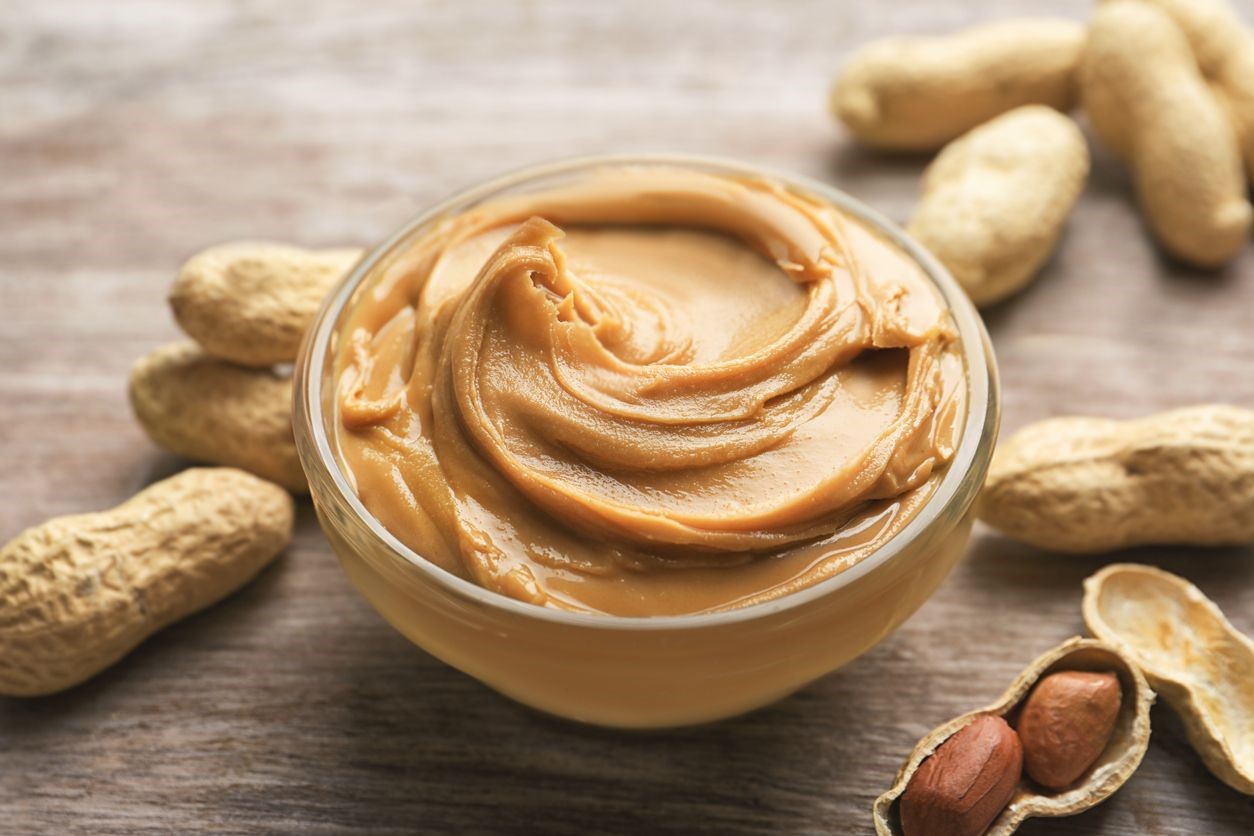
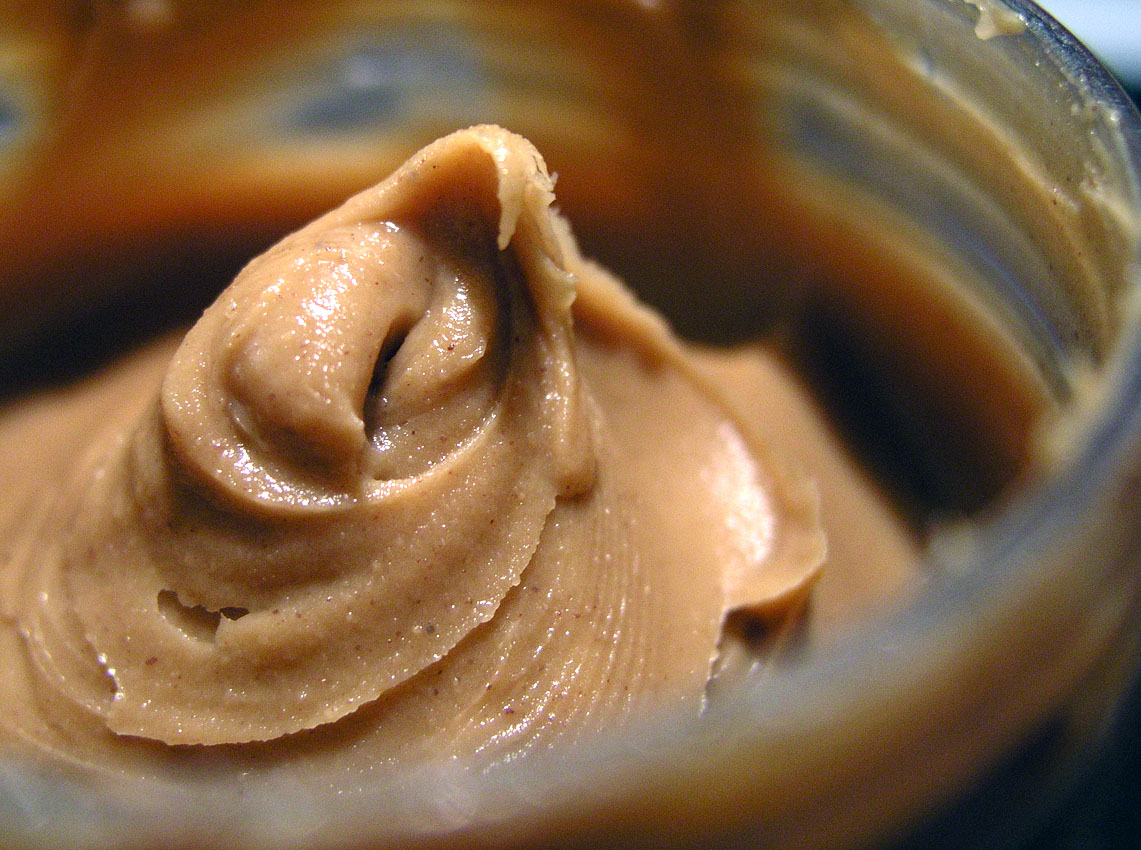
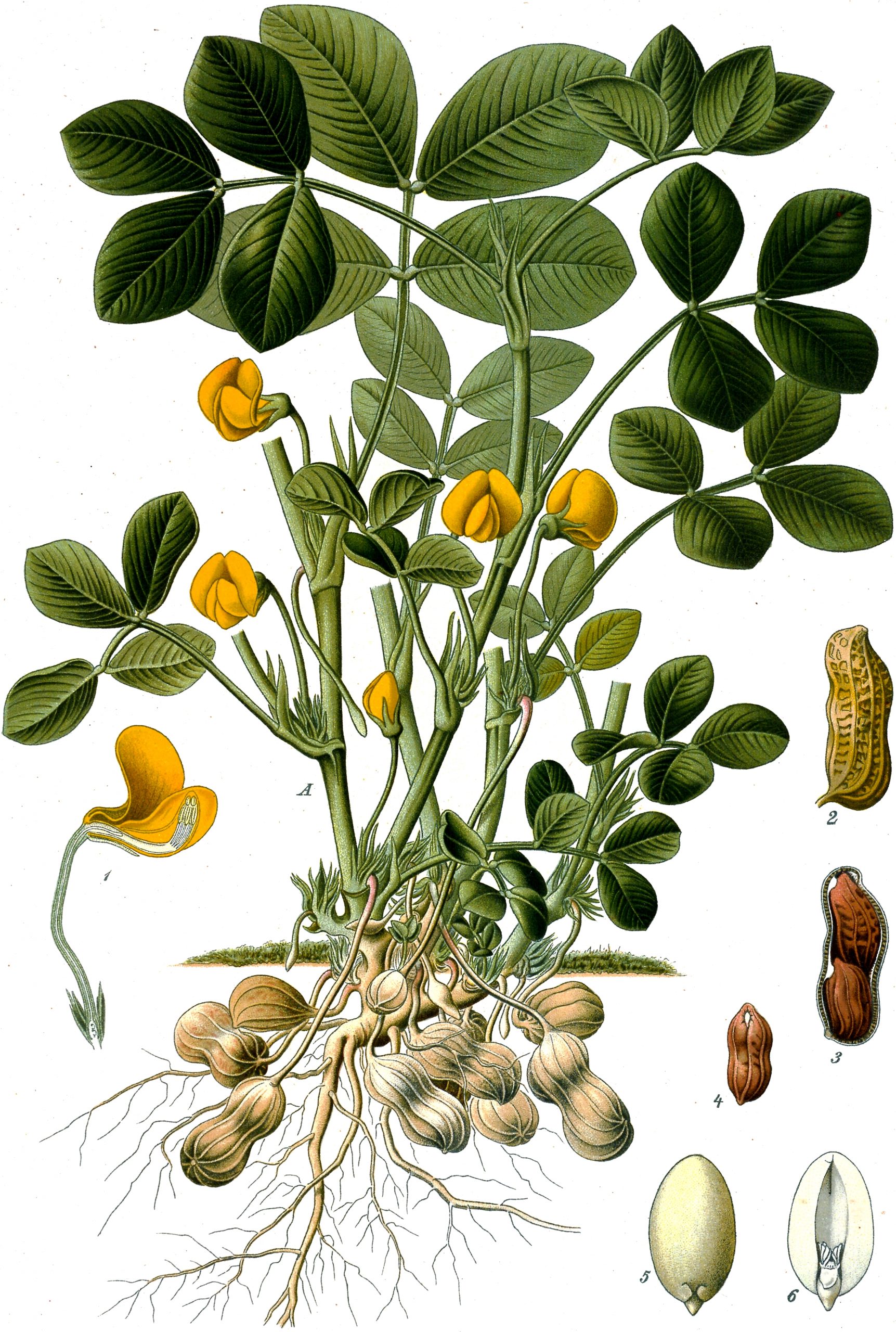
March 1 is your day: National Peanut Butter Lover’s Day. (The whole month of March is National Peanut Month.) Seeing that observance on the calendar is what prompted me to dig into the topic of peanut butter—and peanuts in general.
Peanut Butter with Everything
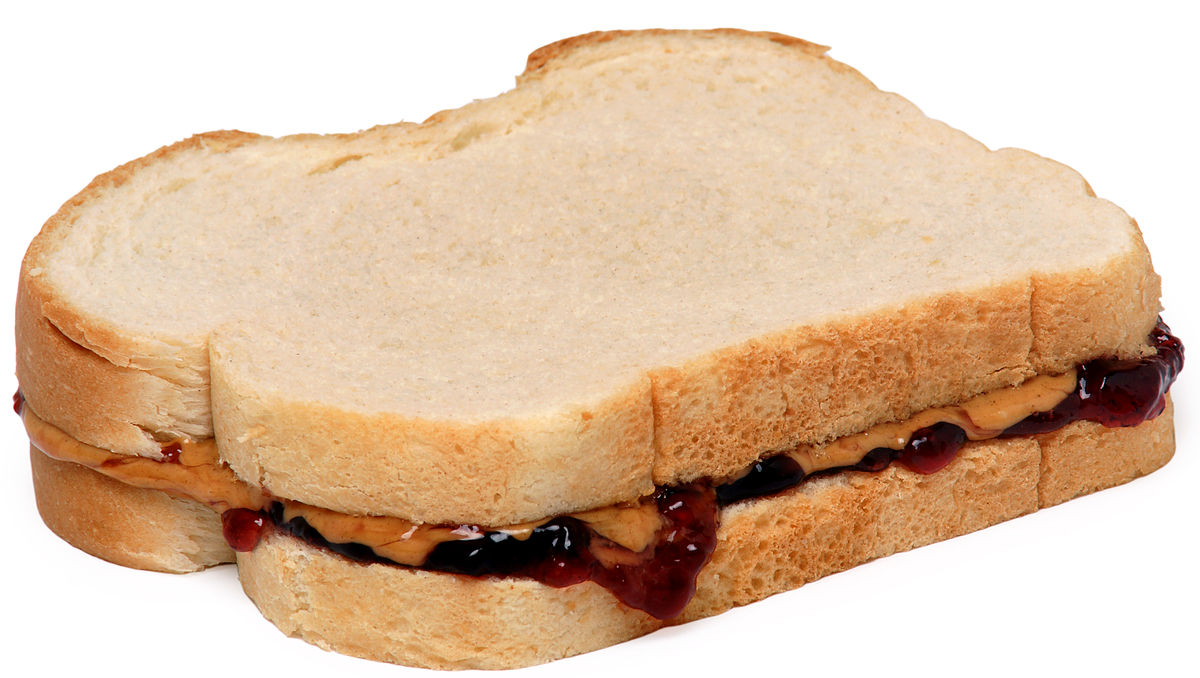
I’ve never been a big fan of PB&J sandwiches—sacrilege, I know, given that the National Peanut Board estimates that the average child will eat 1,500 PB&J sandwiches before graduating high school—but my earliest peanut butter love was peanut butter on pancakes with a splash of maple syrup. My father ate them that way, as did/do all his children and grandchildren. The last time I was in IHOP, my favorite wasn’t on the menu, which I found incomprehensible.
Today I still avoid PB&J sandwiches, just too sticky and soft. But I willingly eat peanut butter on toasted English muffins with jelly, honey, molasses, or bananas.
Twitter user vinceatsass prefers “raw” P,B,&J.
Among my other go-to options are smoothies with peanut butter, bananas, and chocolate. And speaking of chocolate, I’ve been known to swirl peanut butter with chocolate syrup for a sweet treat. Peanut butter is also great on Granny Smith apples, when I want to nod toward healthful. And let’s not forget peanut butter fudge, with or without chopped nuts, chocolate chips, etc. And trail mix. And chocolate chip cookies. And smoothies. And, and, and . . .
Writing my recent blog on snacks and snacking (February 1, 2022) I noted the following among favorite snack pairs, in descending order of popularity
Cchocolate and nuts (some of which must have been peanuts)
Peanut butter and jelly
Peanut butter and apples
Chocolate and peanut butter
Surprisingly, peanut butter and bacon wasn’t on the list
What is/are your favorite combination(s)?
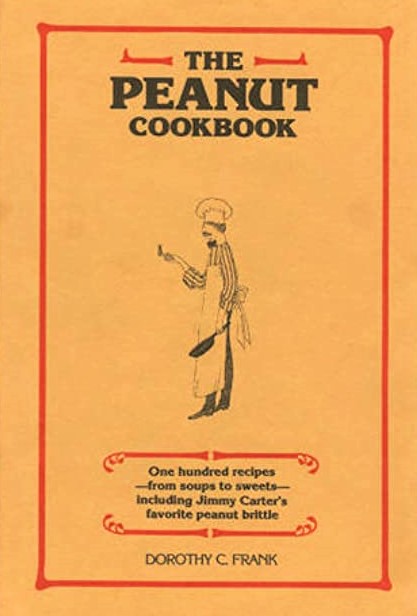
In 1996 I bought The Peanut Cookbook by Dorothy C. Frank, a library discard with a copyright date of 1976. But good recipes never die! Recipes are grouped in the usual categories: appetizers and nibbles; soups, salads, main dishes, vegetables; breads, biscuits, and breakfast; desserts and candies. There are dressings for vegetable salads; sauces for poultry and meat; and “syrups” for sweets. Peanut Butter Meatloaf with Sweet Potato Frosting doesn’t appeal to you? Turn the page! Even recipes that don’t tempt you to attempt are interesting to read.
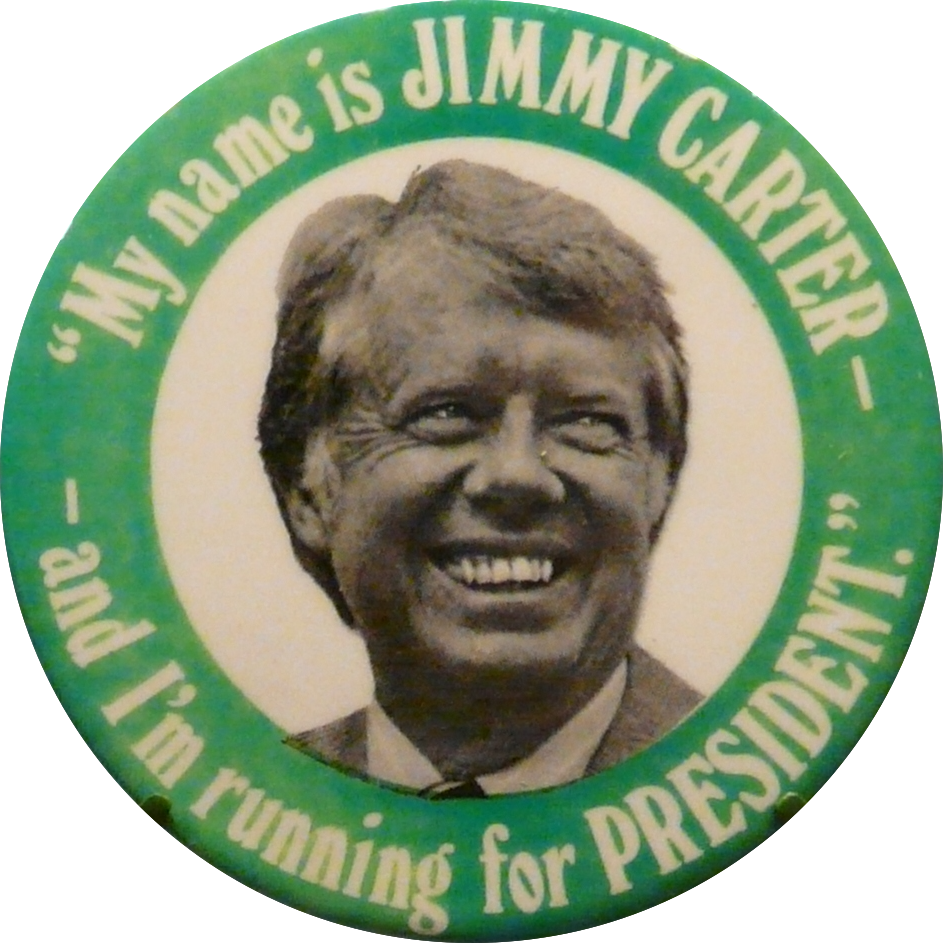
One of the candy recipes is for Jimmy Carter’s favorite peanut brittle recipe.
Have I at least tempted you to check on-line recipes?
Not quite the same kind of peanuts, but I’m sure they’re delicious!
Evolution of Peanut Butter
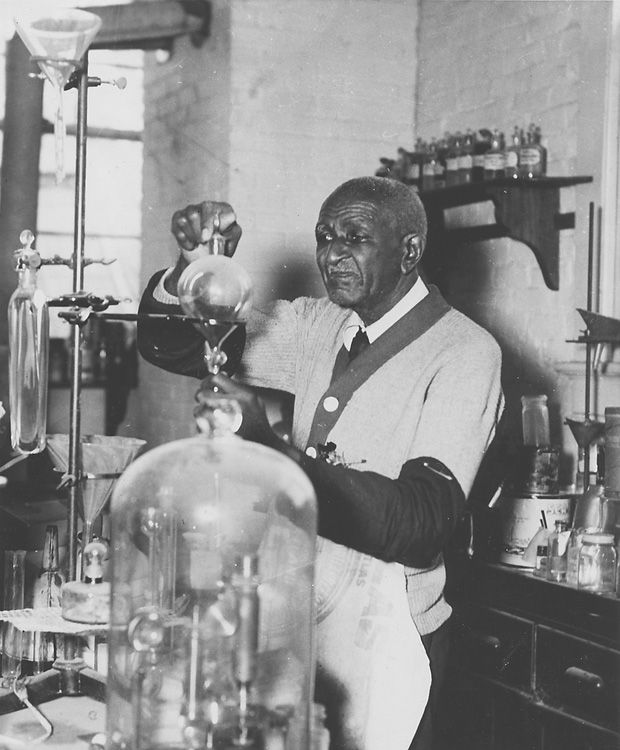
George Washington Carver was an agricultural scientist. He created more than 300 products from the peanut plant, but peanut butter was not one of them! By 1916 when he published “How to Grow the Peanut and 105 Ways of Preparing it For Human Consumption” patents related to peanut butter preparations had been granted to various pharmacists, doctors, and food scientists.
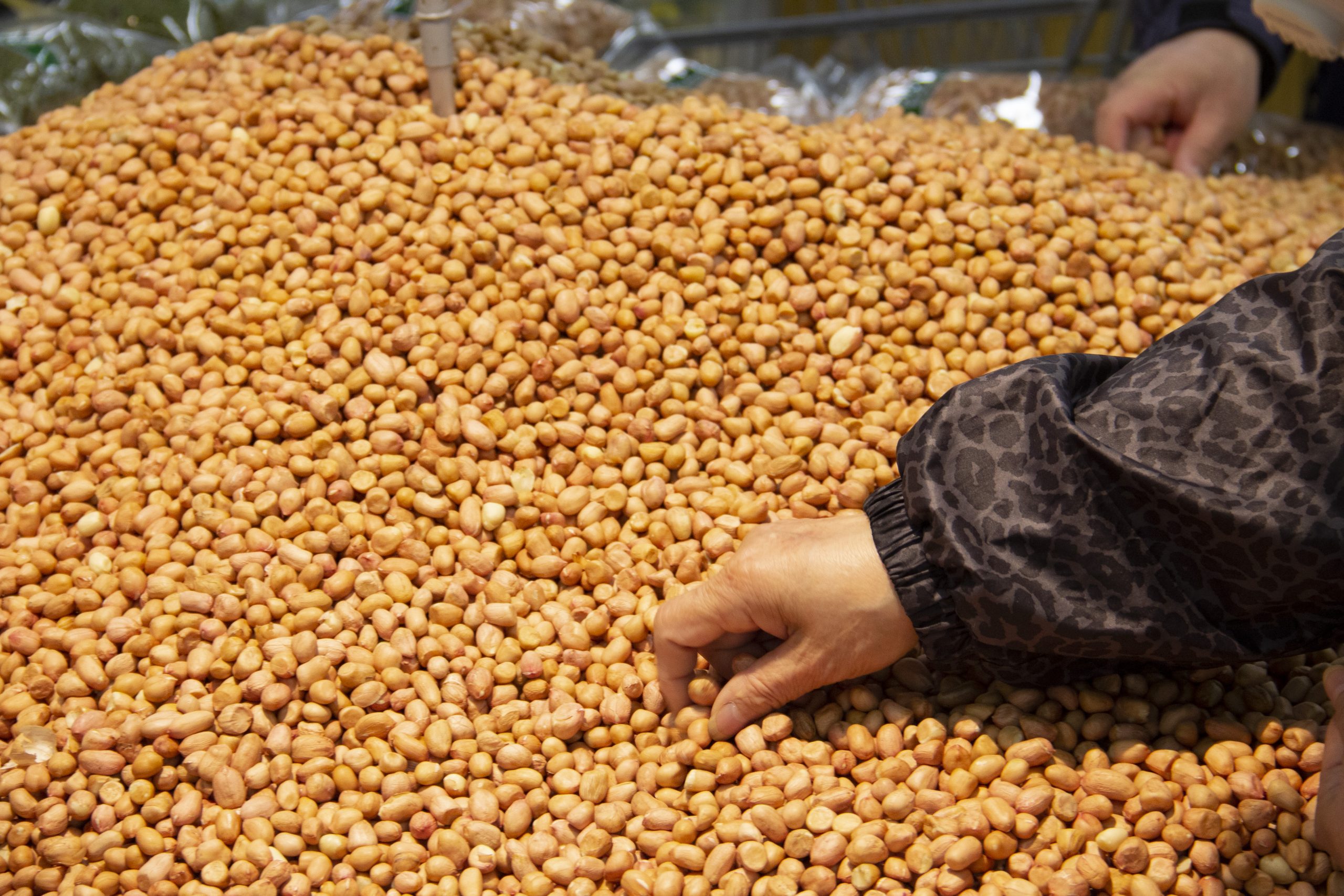
If not Carver, then who? And when? According to the National Peanut Board, there is evidence that ancient South American Inca Indians were the first to grind peanuts to make peanut butter. They speculate that the peanut plant originated in Peru or Brazil. People in South America made pottery in the shape of peanuts or decorated jars with peanuts as long 3500 years ago.
As early as 1500 B.C.E. the Incas used peanuts as sacrificial offerings and entombed mummies with peanuts to help them in the afterlife. Central Brazilian tribes ground peanuts with corn to make a drink.
Flower of the peanut plant (Arachis hypogaea)
But no version of peanuts or peanut plants made a direct trek north. European explorers took peanuts from South America to Spain. Explorers and traders carried peanuts to Asia and Africa. Africans introduced peanuts to the U.S./North America in the 1700s.
By 1783 Suriname had a food called peanut cheese. More solid than peanut butter, it could be sliced and served like cheese.
In the U.S., peanuts were first grown in Virginia and used for oil, as a cocoa substitute, and as food for livestock and the poor. Peanuts were considered difficult to grow and harvest. Their popularity grew (geographically and otherwise) as a result of Civil War soldiers on both sides subsisting on them (and presumably finding them tasty).
P. T. Barnum’s circus vendors called “hot roasted peanuts” for sale as they traveled across the country in the late 1800s.
Before peanut “butter,” there was peanut paste. In 1884, a Canadian named Marcellus Gilmore Edson was granted a patent for his paste, made from roasted peanuts.
Dr. John Harvey Kellogg (of cereal fame) invented a version of peanut butter in 1895, patented in 1898, that he served at his Western Health Reform Institute. Kellogg was a big proponent of plant-based food instead of meat, and for a time it was considered a food for the wealthy because they were the patrons of the expensive health care institutes. Peanut butter, like sushi and lobster, morphed from food for the poor 9and livestock) to food for the elite. But it really burst onto the public stage at the St. Louis World’s Fair in 1904.
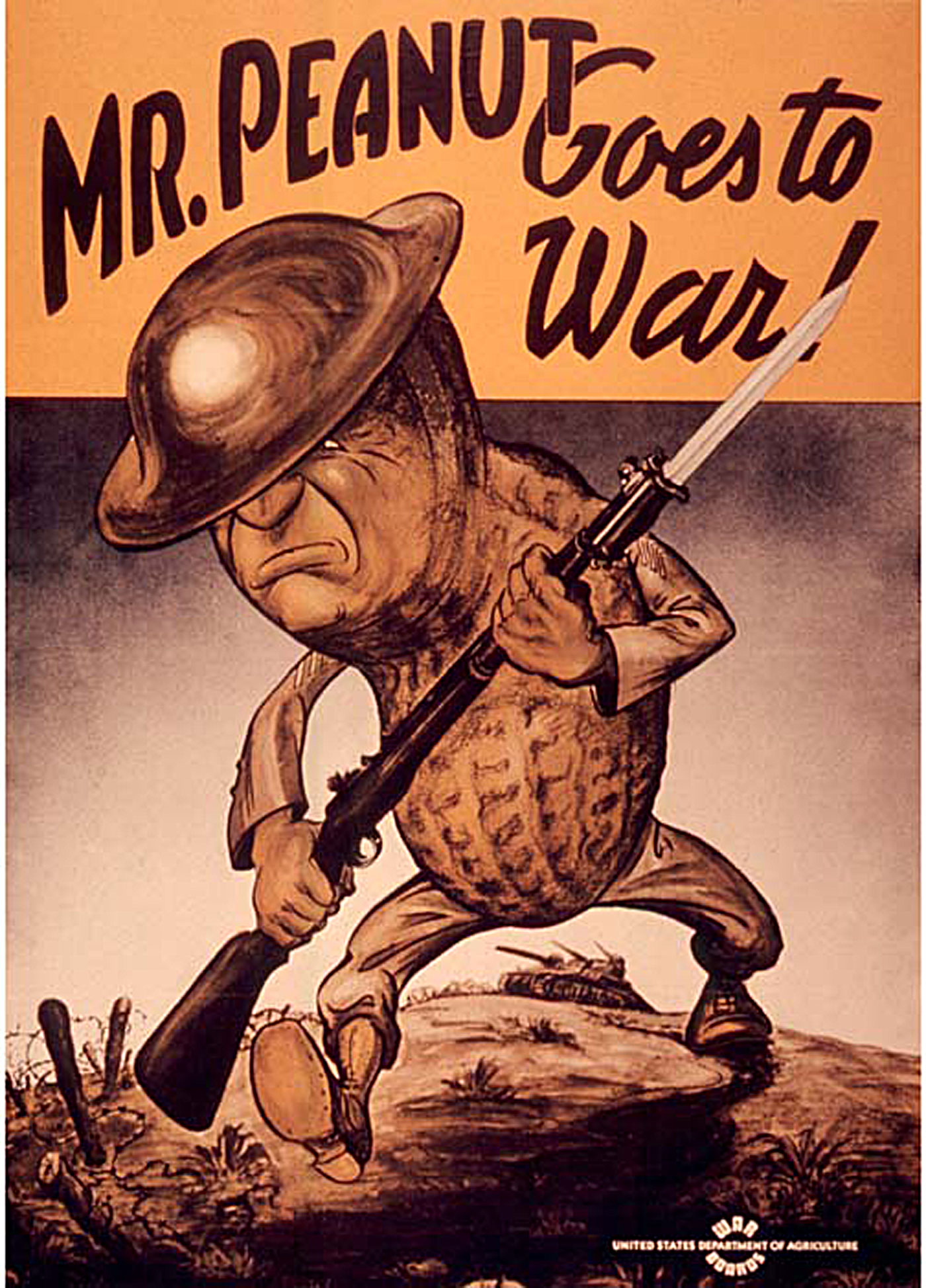
Peanut butter became a popular source of protein during the two World Wars, being provided to troops by the Armed Forces. Recently (2020), on average, Americans ate 7.6 pounds of peanuts and peanut products each—probably even more now. In March 2020, during the COVID-19 pandemic, 299.34 million ate peanut butter; retail sales of peanut butter in the U.S. increased by 75% over the level in March 2019.
Although National Peanut Butter Day is past (January 23), there are more chances to celebrate in 2022!
March is National Peanut Month
March 1, National Peanut Butter Lover’s Day
March 8, National Peanut Cluster Day
April 2, National Peanut Butter and Jelly Day
May 18, I Love Reese’s Day
June 12, National Peanut Butter Cookie Day
September 13, National Peanut Day
November, National Peanut Butter Lover’s Month
November 20, National Peanut Butter Fudge Day
Mark your calendars! And there are plenty of days open to create a peanut celebration of your own!
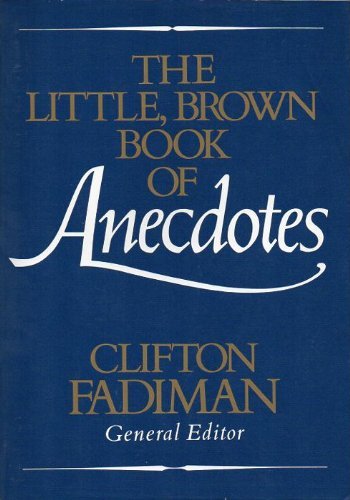
I found an entertaining old (1985) book, edited by Clifton Fadiman. The Little, Brown Book of Anecdotes covers a range of people, periodicals, radio and TV programs, centuries, and topics from Abolitionists to Zoos.
I’ve chosen several anecdotes about famous people, writers, and writing for your pleasure, oldies but goodies.
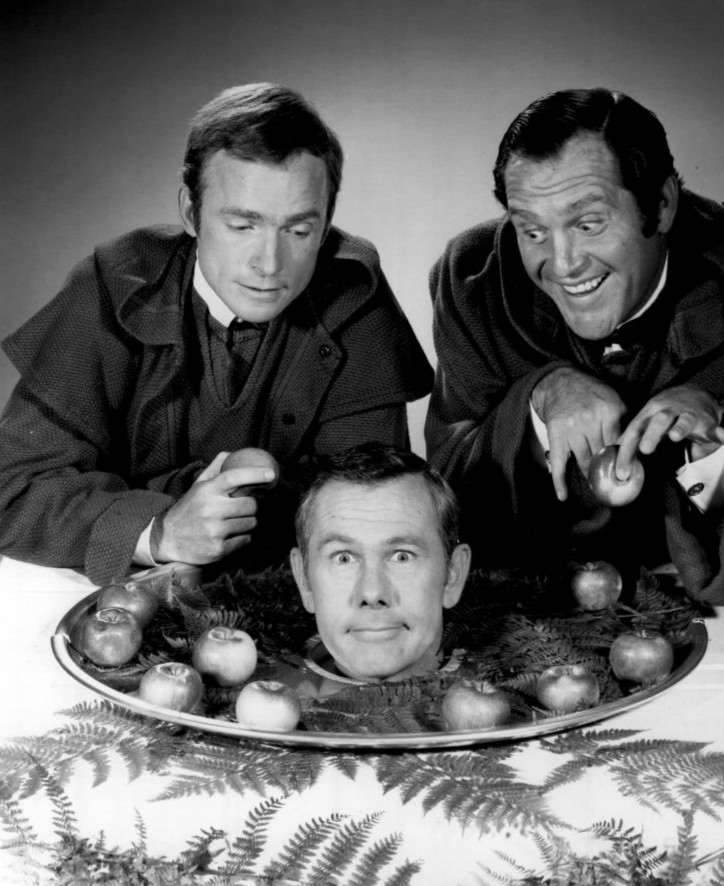
Johnny Carson (1925-2005), host of the Tonight Show on TV
When Carson was signed to host the Tonight Show, he was so plagued by reporters that he compiled a list of 10 answers, which he handed out and invited journalists to provide the questions.
Yes, I did.
Not a bit of truth in that.
Only twice in my life, both times on Saturday.
I can do either, but I prefer the first.
No. Kumquats.
I can’t answer that question.
Toads and tarantulas.
Turkestan, Denmark, Chile, and the Komandorskie Islands.
As often as possible, but I’m not very good at it yet. I need much more practice.
It happened to some old friends of mine, and it’s a story I’ll never forget.
(I found no record of a journalist actually doing that, but there’s nothing to stop you from doing it. And the interviewee needn’t be Johnny Carson!)
Given Carter’s devout Southern Baptist background, reporters often asked him about his stance on moral issues.
When one asked, “How would you feel if you were told that your daughter was having an affair?”
Carter replied, “Shocked and overwhelmed, but then she’s only seven years old.”
(Note to writers: do a little research!)
Maria Feodorovna(Мария Фёдоровна)(1847-1928) empress of Russia as the wife of Czar Alexander III, daughter of King Christian IX of Denmark
She was known throughout Russia for her philanthropy. She once saved a prisoner from transportation to Siberia by transposing a single comma in a warrant signed by Alexander.
The czar had written, “Pardon impossible, to be sent to Siberia.”
Maria’s altered version: “Pardon, impossible to be sent to Siberia.
Abercrombie had expressed an opinion with which poet Ezra Pound violently disagreed. “Dear Mr. Abercrombie,” wrote Pound. “Stupidity carried beyond a certain point becomes a public menace. I hereby challenge you to a duel, to be fought at the earliest moment that is suited to your convenience….”
Abercrombie was distressed by the challenge, knowing of Pound’s skill at fencing. He was relieved to remember that as the one challenged, he had the choice of weapons. “May I suggest,” he replied, “that we bombard each other with unsold copies of our own books.”
Pound, having far more “weapons” than Abercrombie immediately withdrew the challenge.
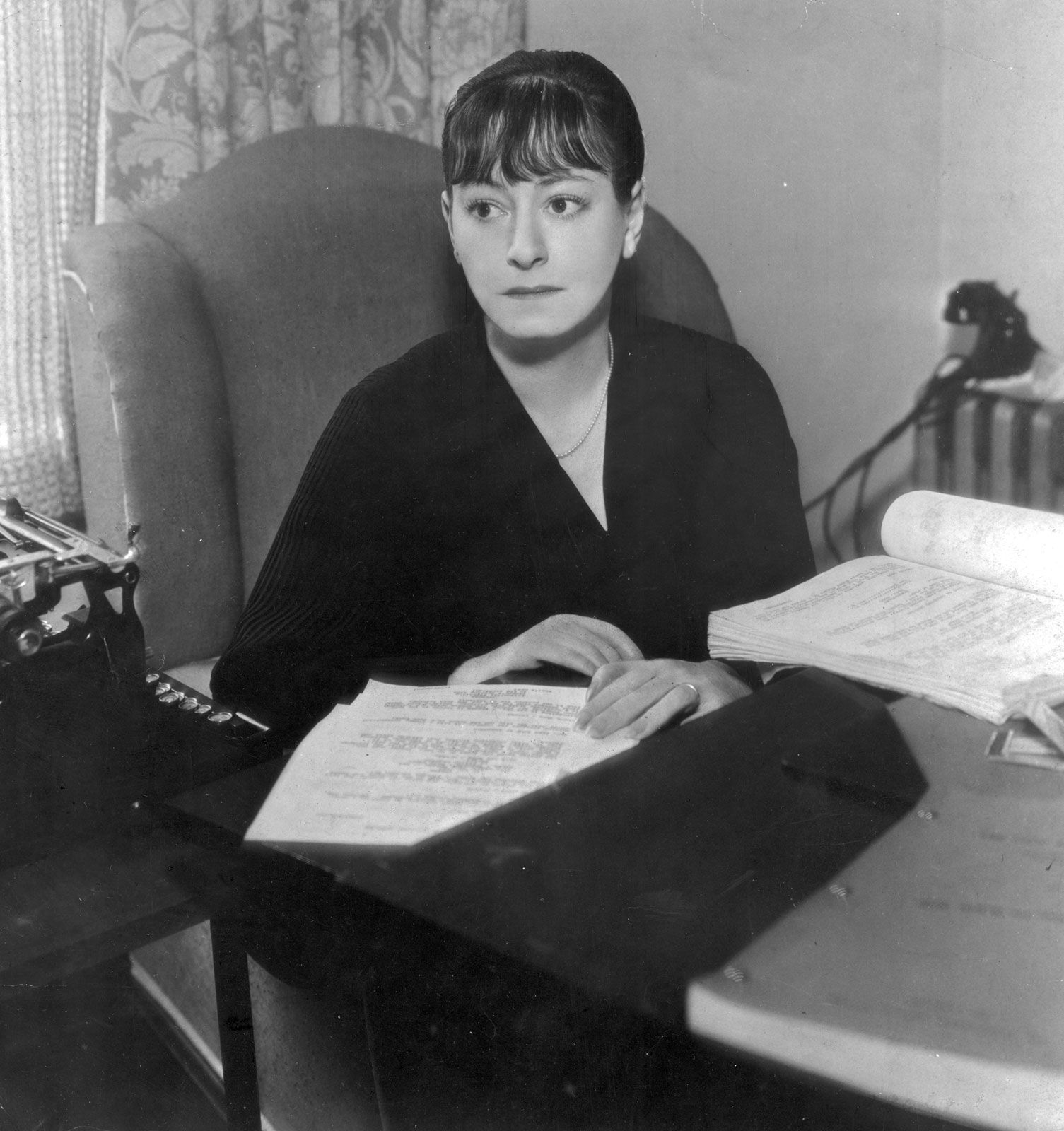
She once attended a party with Somerset Maugham, where the guests challenged each other to complete nursery rhymes. Maugham gave Parker the lines: “Higgledy piggledy, my white hen/ She lays eggs for gentlemen.”
Parker completed it with, “You cannot persuade her with gun or lariat/ To come across for the proletariate.”
(My personal favorite Parker quip is her response when asked to use the word “horticulture” in a sentence. She said, “You can lead a horticulture but you cannot make her think.”)
William Faulkner (1897-1962) winner of the Nobel Prize for literature in 1949
Faulkner was on a shooting expedition with director Howard Hawks and actor Clark Gable. In the course of conversation, Gable asked Faulkner to name the five best authors of the day.
Faulkner said, “Ernest Hemingway, Willa Cather, Thomas Mann, John Dos Passos, and myself.”
“Oh,” said Gable (maliciously?), “do you write for a living?”
“Yes,” replied Faulkner, “and what do you do?”
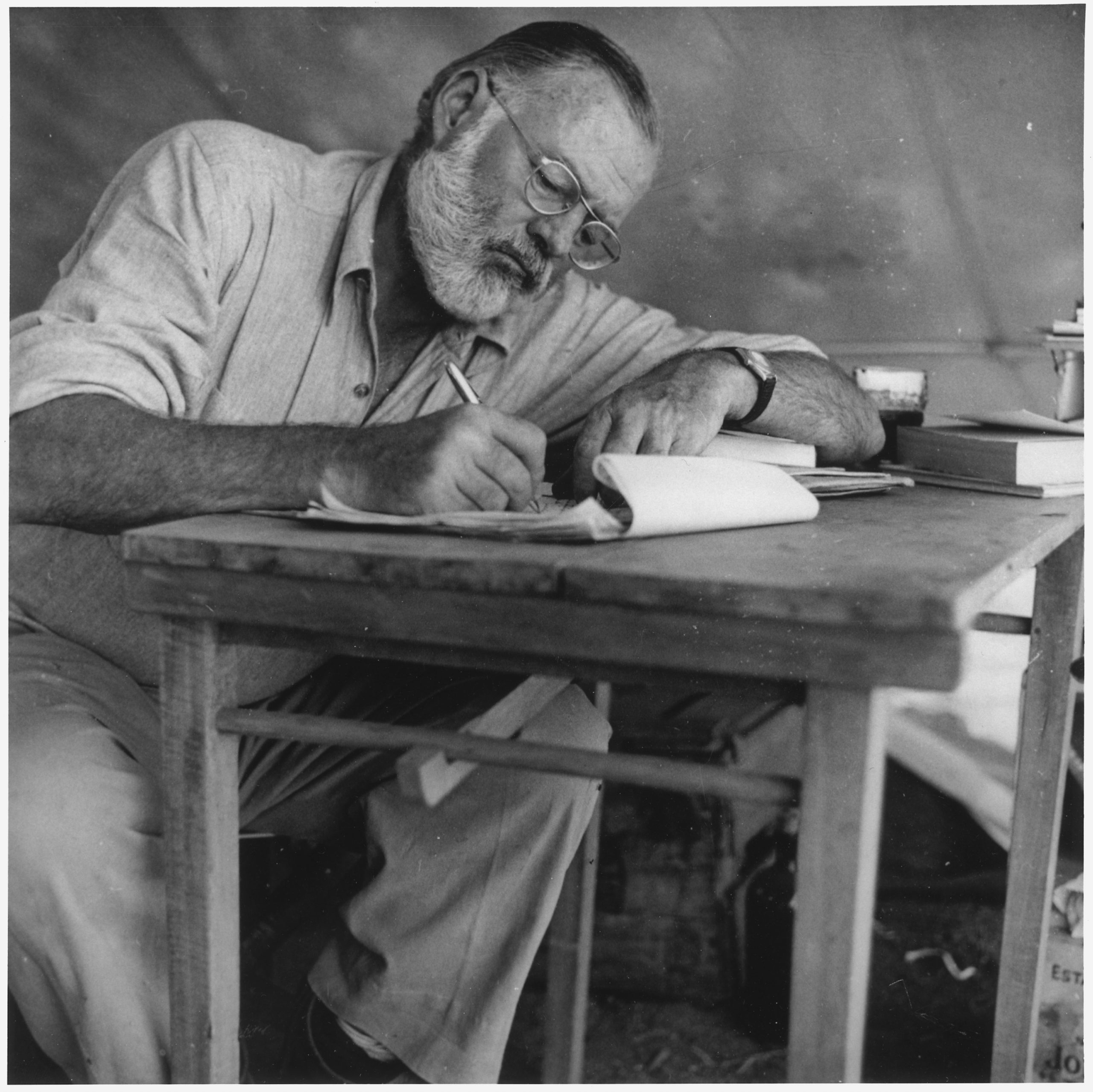
Ernest Hemingway (1899-1961, by suicide), winner of the Nobel Prize in Literature, 1954
Faulkner said that Hemingway had no courage, that “he has never been known to use a word that might send the reader to the dictionary.”
When Hemingway heard that, he said, “Poor Faulkner. Does he really think big emotions come from big words? He thinks I don’t know the ten-dollar words. I know them all right. But there are older and simpler and better words, and those are the ones I use.”
(In case you hadn’t realized it, perceiving a piece of writing as writing is a matter of personal taste.)
As a lawyer, Lincoln discouraged unnecessary litigation. When a man came to him to bring suit for $2.50 against an impoverished debtor, Lincoln tried to dissuade the man. But the man was determined to get revenged would not be talked out of it. Lincoln charged $10 for his service, gave half to the defendant who admitted the debt and paid the plaintiff $2.50.
(The plaintiff was reported to be entirely satisfied. What might a writer make of a character with more money than compassion?)
Edith Sitwell(1887-1964), poet and Dame of the British Empire
When Sitwell told her family that she was leaving the family home, she said “I can write so much better when I’m alone.”
Her father said, “And you prefer poetry to human love?”
Her reply? “As a profession, yes.”
Bottom Line: When you’re at a loss for words, look to the masters!
I’ve accepted that a Nobel Prize, a Pulitzer—even a New York Times bestseller—just isn’t in my future.
Fortunately, I am not writing to put food on the table; I write to feed my soul.
That said, here goes.
The Upside: There’s So Much Of It!
Social Benefits
Good conversation: I’ve never met a boring writer. Some have boring spouses—or occasionally obnoxious ones—but writers themselves are consistently good company.
Because writers tend to turn up in the same places, over time we get to know each other, and often acquaintances turn into friends.
They’re interesting and varied, and generally we are like-minded.
Then, too, fellow writers are likely to listen actively when I talk about writing.
Writers value my short story strengths. I’ve published more than 60 short works in literary journals and anthologies. Writers celebrate these short story publications! They get what it means. Other friends, even family, are likely to offer a polite, “That’s nice,” or, “Congratulations,” without asking so much as the title of the work or the publication! For the general public, “writer” means novels, or other books.
Simultaneously, other writers commiserate with my struggles, setbacks, rejections, etc.
Brain Benefits
Writing boosts my emotional intelligence: motivation, empathy, self-regulation, self-awareness, and social skills.
I’m organized, think clearly, and process things efficiently and analytically. This includes being able to handle negative events/feelings. No, I can’t measure how much difference writing makes for me personally, but psychological research says that these things are true of writers overall.
In general, writing keeps my brain alive. Focusing only on gardening, cooking, TV, hobbies, etc., doesn’t challenge me to think, reason, or explore.
I’m a researcher by inclination and professional training, so I make sure the facts in my fiction are right. In the process, I’m always learning.
Emotional Benefits
These are self-assessments. Such results would not guaranteed for others!
Staves off depression by spending time on something I believe is worth doing
Precludes boredom because the options are endless
Boosts self-esteem by getting positive responses from peers and journal editors
I’m very happy and content! Maybe I’m just lucky, but research indicates that being an author is one of the happiest careers in the U.S.
The Downside: There Isn’t Much For Me
Since I started writing, I’ve become a more critical reader. Now I notice that New York Times bestselling author Mary Burton gives nearly all her women characters ponytails and that her favorite adjective is “simple.” Prolific writer L. T. Ryan consistently uses “sat” when it should be “set.” Such things don’t keep me from enjoying these particular authors’ work, but I do notice.
I’m especially irritated by the language burps of “professionals”: newscasters, columnists, politicians… Oh, sigh.
My Writing Habits
I’m a writing class/workshop junkie! I’m perennially enrolled. Why?
Creative stimulation, taking me places I wouldn’t have gone otherwise
Structure, deadlines, and accountability make me actually produce
Appreciation for the work of others, well-published and/or fellow students
I’ve been in critique groups for years. Whereas classes and workshops are great for generating new ideas, they aren’t usually conducive to developing those ideas, or polishing them for submission.
I learn what’s working (or not)
I find out whether what is on the page is what I intended
I’ve heard horror stories about the destruction wrought by competitive writing groups. Fortunately, I’ve avoided those. The criticism is intended to make the work better, not to belittle me
I submit something at least every two months If I get more than six per year, great, but six is the minimum.
Although I do write brief diary entries daily, my creative writing is most, not all, days.
Reading fees of any sort turn me off. Therefore, contests do not draw me in. For one thing, there are almost always submission fees. Also, I’m content if my writing is “good enough” for publication. It doesn’t have to be “the best.”
I listen for fresh language. For example, I recently came across a FaceBook post that included “the I.Q. of a crayon.”
FYI, my writing time is the late hours of the night, wee hours of the morning. And my writing area is a shambles.
BOTTOM LINE: I’m convinced writing is good for me. I’ll keep on keeping on!
Food that isn’t part of a regular meal, usually a small amount.
In fact, dictionary definitions specify a small amount. However, eating more than a quart of ice cream can be a snack without being small. (For some of the most popular snack foods, see last week’s blog.)
WHEN?
Any time, day or night. Or habitually, the same time every day and/or every night
WHERE?
Anywhere possible!
Wherever you watch TV
Reading chair
Bed
Boat
Car
Bar
At sports events
On fishing trips
Hiking
Pillow fort
Treehouse
In front of the refrigerator
While driving
Backstage
Grandma’s house
In class (not recommended)
Hospital waiting room
Swimming
Camping
Wakes
Wedding receptions
Card parties
Cocktail parties
Retirement parties
Birthday parties
Graduation parties
Virtually any kind of party
WHY?
Duh! Who needs a reason? But let me list a few.
Too hungry to wait for a meal
Too busy to stop for a meal
Too tired to cook a meal
Need to gain weight
Need to lose weight
To maintain blood sugar levels
To explore when traveling
It’s a favorite food, so it’s the pleasure principle
It’s right there
When you see it, you eat it, the convenience factor
To be polite when someone offers food
In many cultures, it is considered rude to refuse an offer of food, particularly from a host
You’re drinking
Well established that people snack more with alcohol
You always eat leftovers
The waste-not principle
You need an energy boost
You feel like celebrating
You’re feeling down or depressed
You want to reward yourself
It’s a habit
You always have a bite to eat at a particular time
Other people are snacking
Psychology has documented that people who’ve stopped snacking when alone in a room start eating again when someone else comes in and starts eating
Bottom line: Snacking is ubiquitous. What can we learn about ourselves and/or our characters based on what, when, where, and why we snack?
While filming The Avengers (2012), Robert Downey Jr routinely hid food around the set so he could snack between takes. When he offered to share with his co-stars, the director let the camera keep filming. And so we end up with Iron Man offering Captain America and Hulk some of his blueberries.
Some people (particularly those who keep outgrowing their sneakers) snack on anything that stays still long enough.
February is National Snack Food Month. It was started in 1989 to “to increase consumption and build awareness of snacks during a month when snack food consumption was traditionally low” according to the Fooducate wellness community. February 15th is a particularly good day to stock up on chocolate!
According to Oxford Languages, a snack is a small amount of food eaten between meals. Snacks often differ from main meals in what they contain, portion size, consumption time, and place as well as why they`re eaten So, theoretically, it can be anything. But certain foods are more likely to be chosen than others. My personal observations—totally not scientific—is that people tend to be primarily salty snackers OR sweet snackers.
Salty or Sweet?
You can find favorite junk food by state, but these are the nation’s most popular snacks, as measured by consumer opinion.
Jif. (peanut butter)
Oreos.
Lay’s.
Pringles.
Fritos.
Snickers.
Tostitos.
Cheetos.
And sometimes, one is not enough: according to a OnePoll survey of 2000 snackers, 60% said snacks taste better when they’re paired together.
According to an article by Bridget Goldschmidt (progressivegrocer.com), Americans are snacking between meals more than ever, and eating snack foods with meals grew by 5% over the ten-year period from 2010 to 2020. She cited several conclusions.
Some people bake the cookies before eating them.
NPD (a national research group) also found that snacking follows a daily pattern in most U.S. households: better-for-you snacks such as fruit or yogurt are eaten in the morning; snacks like potato chips or tortilla chips are likely eaten at lunch; and sweeter snacks like chocolate candy and cookies in the evening.
What drives snacking?
Taste
Satiety (how full the eater is)
Preferences
How easy a food is to eat
Time of day (health-driven motivation gives way to satiety as the day goes on)
The COVID-19 pandemic ramped up snacking. (How surprising is that? Not.) The NPD study cited in the article found that having enough snack foods available during the pandemic is important to 37% of consumers. These consumers’ homes are well stocked with salty snacks and frozen sweets more than other items.
In many cases, the more snack food packages in the home, the more often the item is eaten, which tends to be particularly true of certain kinds of snack foods, such as salty snacks.
Wonder Woman takes her snacking seriously.
Kebabs are wonderful!
According to the survey of 2,000 American snackers mentioned above:
71 percent of all those surveyed consider themselves “snackers”
66 percent said snacking brings them great joy
67 percent said snacking is one of their favorite forms of stress relief
(No wonder snacking is up during the pandemic!)
Snacks? What Snacks?
Conan the Barbarianalways steals Princess Yasimina’s snacks, but at least he shares.
48 percent of surveyed Americans have stashed their favorite treats in hidden spots around the house (often with no plans to share!).
Doctor McCoy tries to hide his snacks, but Vulcans are notorious snack sleuths.
46 percent of those who had hidden snacks said they simply “don’t want to share”
53 percent said the people they live with would “eat them all” if they knew where to look
Of respondents who have ever hidden snacks, 69 percent said they’re currently doing so!
72 percent said their snack stash has been discovered by someone else
The average person has moved a snack stash four times to try to keep it a secret.
71 percent of the time partners and kids were the finders of respondents’ “snackpiles”
Only 6 percent of respondents have never been caught
Does time travel for fries count as a hiding place?
A few creative snack hiding places:
Behind the washing machine
Inside oatmeal containers
Behind books on a bookshelf
In the freezer, behind the broccoli
Under yarn piles in a knitting basket
On a top shelf, out of sight
Among cleaning supplies
At the bottom of the diaper bag
Taped to the underside of the fish tank lid
Behind the butter churn
Suspended from the ceiling, above the ceiling fan
In the wall, behind the vents or outlet covers
And the average respondent believes they could survive almost FIVE full months on their stockpile of snacks alone.
Really? I’d be pressed to live 5 months on my pantry, 2 refrigerators, and a freezer! Surely that was 5 full months of snacks.
BOTTOM LINE: In the U.S., you now know the what of snacking, and a bit of the when.
STAY TUNED: Next week I’ll delve into where and why!
In Western astrology (derived from early Babylonian star charts), your birth sign depends on when during the calendar year you were born. I happen to be an Aries. But the Chinese sign of the zodiac under which one is born depends upon the birth year (based on the Chinese lunar year). I was born under the sign of the Rooster. Many people in the US—most?—are more or less aware of such things.
(This kind of Tiger!)
Similarly, awareness that 2022 is a Tiger year is relatively widespread. But not so many people are aware that Tiger years aren’t all alike: 2022 is the year of the Water Tiger. Say what?! There is a Tiger year every 12 years, but a Water Tiger year cycles every 60 years.
The Five Elements
The Chinese Five Elements (Metal, Wood, Water, Fire, and Earth) also cycle in order, so the alignment repeats every 60 years. The basic theory is that the zodiac sign characteristics are affected by/ interact with the elements. The Five Elements are used in Chinese medicine, philosophy, fengshui, fortune-telling, and martial arts.
Because they are less familiar to most Westerners, I’ll start with the qualities of the five elements:
Wood-benevolence,
Fire-propriety,
Metal-righteousness,
Water-wisdom,
Earth-fidelity/honesty.
The Chinese Five Elements are a bit like scissors/ paper/ rock in that no one element is always the strongest. In the controlling/ overcoming/ destruction/ restraining/ weakening interactions: Fire melts Metal, Metal chops Wood, Wood breaks up Earth, Earth absorbs Water, Water quenches Fire.
In the generating/ begetting/ engendering/ mothering/ enhancing interactions: Metal carries Water, Water nourishes Wood, Wood feeds Fire, Fire creates Earth/ash, Earth bears Metal.
How Do the Elements and Signs of the Zodiac Interact?
Each Chinese Zodiac Sign has a fixed element. This is the element that carries over from year to year. For the Tiger, the fixed element is Wood—and benevolence fits very well with the overall characteristics of Tigers.
How Do We Get a Water Tiger?
This year aligns a Water year and a Tiger year. A person’s characteristics are said to be determined both by the fixed element of their zodiac sign and the element of the year they were born in. Children born this year are supposed to have characteristics of Tigers, Wood, and Water.
On the positive side, Tiger are energetic, brave, ambitious, and confident, and driven to work for justice and the greater good. Male Tigers are talented and charismatic, driven to achieve their goals both professionally and romantically. Female Tigers are intelligent and strong, fearless natural leaders.
However, Tigers are often arrogant, brash, impetuous, and domineering. Their independence can translate to a lack of communication, leaving Tigers surrounded by acquaintances but still lonely. The Tiger is the king of the jungle, but a human Tiger might come across as a dictator.
Water Tigers are more likely to separate family and work life, with better interpersonal skills than the average Tiger. They are calm, careful, adaptable, and quick learners.
For more in-depth horoscope information on Tigers (including forecasts by blood type), check out Your Chinese Astrology.
Writers Take Note: Consider drawing on the Chinese Zodiac and the related elements when developing your character. The traits often seem to be compatible.
How did the zodiac order come to be?
In Western astrology, the astrological signs are based on constellations of stars that typically light the night sky during that month. They are ordered by the calendar year.
How did the Chinese zodiac years come to be Rat, Ox, Tiger, Rabbit, Dragon, Snake, Horse, Goat, Monkey, Rooster, Dog, and Pig in that order? According to chinahighlights.com, the story of the Chinese zodiac is much more entertaining. I’ll quote it here.
The Heavenly Gate Race Story — Reasons for Zodiac Rankings
Long, long ago, there was no Chinese zodiac. The Jade Emperor wanted to select 12 animals to be his guards. He sent an immortal being into man’s world to spread the message that the earlier one went through the Heavenly Gate, the better the rank one would have.
Early Risers: Quick-Witted Rat and Diligent Ox
Rat ranks first.
The next day, animals set off towards the Heavenly Gate. Rat got up very early. On his way to the gate, he encountered a river. He had to stop there, owing to the swift current. After waiting a long time, Rat noticed Ox about to cross the river and swiftly jumped into Ox’s ear.
The diligent Ox did not mind at all and simply continued. After crossing the river, he raced towards the palace of the Jade Emperor. Suddenly, Rat jumped out of Ox’s ear and dashed to the feet of the Emperor. Rat won first place and Ox was second.
Competitive and Fast: Tiger and Rabbit
Tiger and Rabbit came third and fourth because both are fast and competitive, but Tiger was faster. (Rabbit got across the river by hopping on stepping stones and a floating log.)
Good-Looking Dragon and Crafty Snake
Good-looking Dragon was fifth and was immediately noticed by the Jade Emperor, who said Dragon’s son could be sixth. But Dragon’s son didn’t come with him that day. Just then, Snake came forward and said Dragon was his adoptive father; so Snake ranked sixth.
Kind and Modest Horse and Goat
Horse and Goat arrived. They were very kind and modest and each let the other go first. The Jade Emperor saw how polite they were and ranked them seventh and eighth.
Jumping Monkey
Monkey had fallen well behind. But he jumped between trees and stones, and caught up to be ninth.
Last were Rooster, Dog, and Pig.
These 1twelve animals became guards of the Heavenly Gate.
Why No Cat? — Enmity Between Cat and Rat
Although Cat and Rat were neighbors, the former always bullied the latter, and Rat felt very angry but dared not say it out loud; therefore, he sought revenge on Cat.
Upon hearing the Emperor’s decree Rat chuckled to himself and thought: “This is an opportunity”.
The sleepyhead Cat kicked open Rat’s door, ordering Rat to keep him informed of when he was going to the Emperor’s birthday party, and Rat readily promised that he would.
On the morning, however, Rat left quietly without informing Cat. Cat didn’t wake up until the race was over and it was too late — he was not able to make it into the cycle.
After the party, a great enmity grew between Cat and Rat, so that rats scatter in all directions when a cat appears.
An alternative version of the story says that Cat and Rat got as far as crossing the river together on Ox’s head, but Rat pushed Cat into the water (and Cat was washed away and drowned or didn’t get back to the Heavenly Gate in time to get a ranking).
Personality Traits
The ranking story above is made up according to people’s understanding of characteristics of the 12 animals. And when people talk about a person’s zodiac sign, they might think about the zodiac sign’s characteristics.
For example, when talking about Tigers, people think of brave, competitive, unpredictable, and confident people. Oxen are decisive, honest, dependable, and hardworking. There is a wealth of information available online about every aspect of life suggested for each sign, including careers, colors, numbers, flowers, education, and just about anything else a writer might use.
People born under certain zodiac animal signs are also assumed to have varying levels of compatibility with other signs. This goes beyond simple romantic relationships; like the balance of the five elements, each animal offers something different to each other animal. A friend of mine had a daughter in the year of the Fire Monkey and insisted that her sister-in-law (an Earth Rat) be the first person to hold the baby. Rats provide wisdom and guidance to Monkeys, tempering some of their more negative qualities.
How to Behave During Chinese New Year
According to chinesenewyear.net, there is a whole raft of taboo behaviors during this time. The majority of these taboos stem from an overall belief that the year will continue as started – whatever you are doing at the beginning of the year, you will be doing the whole year long.
To prepare for two weeks of partying, traditional “celebrations” can start an entire week before the New Year. Dates vary around the world, but the Laba Festival (腊八, when families pray to their ancestors for luck in the coming year) can be as early as the 8th day of the 12th month of the previous year.
The Little Year (小年) is observed in the days leading up to New Year, generally for about a week. Any festival foods that can be made ahead of time are prepared and stored. Homes, cars, streets, cemeteries, and everything else are scrubbed clean. Hair salons are often extra busy as people rush to fit in a last haircut or manicure before they avoid using sharp instruments. Train and bus stations are nearly overwhelmed when city dwellers travel to their family homes (think American airports on Thanksgiving, but dialed up to 11). New Year’s Markets are popular places to purchase gifts and new clothes in which to start the year.
In 2022, Chinese New Year falls on February 1st. Celebrations continue through February 15th, culminating with the Lantern Festival. Good luck observing all of these taboos for two weeks!
Do not say negative words.
Do not break ceramics or glass.
Do not clean or sweep.
Do not use scissors, knives, or other sharp objects.
Do not demand debt repayment.
Avoid fighting and crying.
Avoid taking medicine, visiting the doctor, perform/undergo surgery, get shots.
Do not give New Year blessings to someone still in bed.
Writers Note: Breaking these taboos could be a source of tension between characters. The lengths a character goes to in order to avoid these taboos could make for interesting tension.
New Year celebrations everywhere include traditions of honoring one’s elders and ancestors, spending time with family, giving gifts, and having a fresh or clean start. Many people make a point of forgiving debts and reconciling with those who have grown distant in the previous year.
Red is considered a lucky color almost everywhere Chinese New Year is celebrated, especially red envelopes. Adults hand out lucky money to children (and sometimes elders) in special red envelopes. Crisp, clean, new bills straight from the bank are preferred, always in an odd number. In America, $2 bills are especially prized!
Because of the Chinese diaspora, the Lunar New Year is celebrated in many countries with large populations of people with Chinese heritage (including America!). Many of these countries have their own traditions and taboos while celebrating. Here are a few examples of different customs:
Celebrations follow the same lunar calendar used for Chinese New Year but usually only last for three days.
Family is a primary focus of celebrations, including offerings to ancestors, visiting elders and other family members. and tending to family graves. The first day of festivities is usually reserved for family gatherings.
Lion dances, setting off fireworks, displays of symbolic fruits and flowers, and “Chinese Markets” are common public forms of celebrating.
Specific methods of celebrating vary widely among regions
White is a very lucky color at this time (Tsagaan Sar literally translates as “white moon”): people ride white horses, exchange white gifts, and eat white foods made from dairy
Honoring elders and making sincere reconciliations with anyone wronged figure prominently in every community
Losar celebrations vary according to regional differences in Buddhist practices
The holiday is often celebrated with prayer and temple visits
Decorations incorporate Buddhist signs, such as the Eight Auspicious Symbols marked on walls
The first three days of Losar focus on specific devotions: Lama Losar – dharma teachers and gurus; Kings Losar – community and national leaders, the Dalai Lama offers greetings and blessings to other national leaders; Choe-kyong Losar – gods and divine protectors
I read in an interview with Ursula K. Le Guin that science fiction has both feet planted solidly in the science of today, that the fictional parts are pushing beyond those roots in a way that is both logical and plausible.
So when I read a blurb for CREATION: How Science is Reinventing Life Itselfby Adam Rutherford, I immediately thought science fiction. According to Rutherford, we are radically exceeding the boundaries of evolution and engineering entirely novel creatures—from goats that produce spider silk in their milk to bacteria that excrete diesel to genetic circuits that identify and destroy cancer cells. Imagine what stories might be told in a world where such creatures are commonplace, where such engineering is taken for granted. Imagine the products, and the governmental involvement.
Fantasy, on the other hand, is making it up out of whole cloth. Even so, it could draw on science for an idea.
For example, another book I came across recently has such possibilities: TEMPERATURE-DEPENDENT SEX DETERMINATION IN VERTEBRATES edited by N. Valenzueta & B. Lance. It contains articles by leading scholars in the field and reveals how the sex of reptiles and many fish is determined not by the chromosomes they inherit but by the temperature at which incubation takes place.
Fantasy could be a story in which human sex is determined by ambient temperature. And perhaps it can vary as the temperature varies. And so forth.
Now, if you wrote a story about a world over-run by snakes and fish because of global warming, you would be back to science fiction. Ditto for a world in which the biological engineering described in CREATION results in changing many species to be temperature-reactive and put that in the context of global warming.
Bottom Line: Check out the latest in science and then let your imagination run wild!