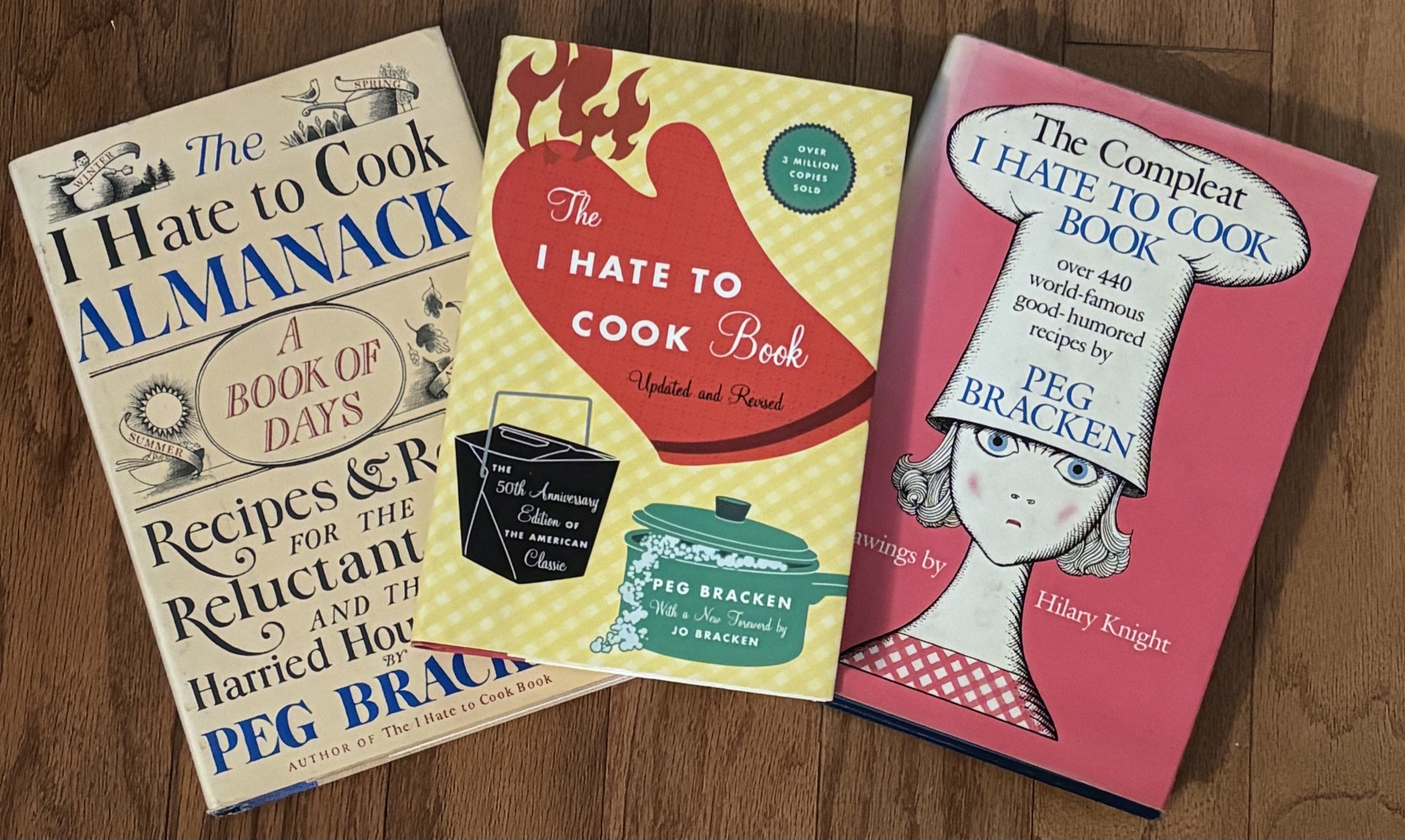
Six editors (all men) passed on Peg Bracken’s manuscript, but ultimately, The I HATE TO COOK Book was published in 1960, and sold over 3 million copies. (For comparison: this was about the same as Craig Clayborne’s The New York Times Cookbook and twice as many as Julia Child’s Mastering the Art of French Cooking, both published in 1961.)
Clearly, Bracken’s humorous guide to spending less time on food prep struck a cord with home cooks.
My thesis is that the entire evolution of how we cook has trended in that direction: less time for food prep.
STOVES
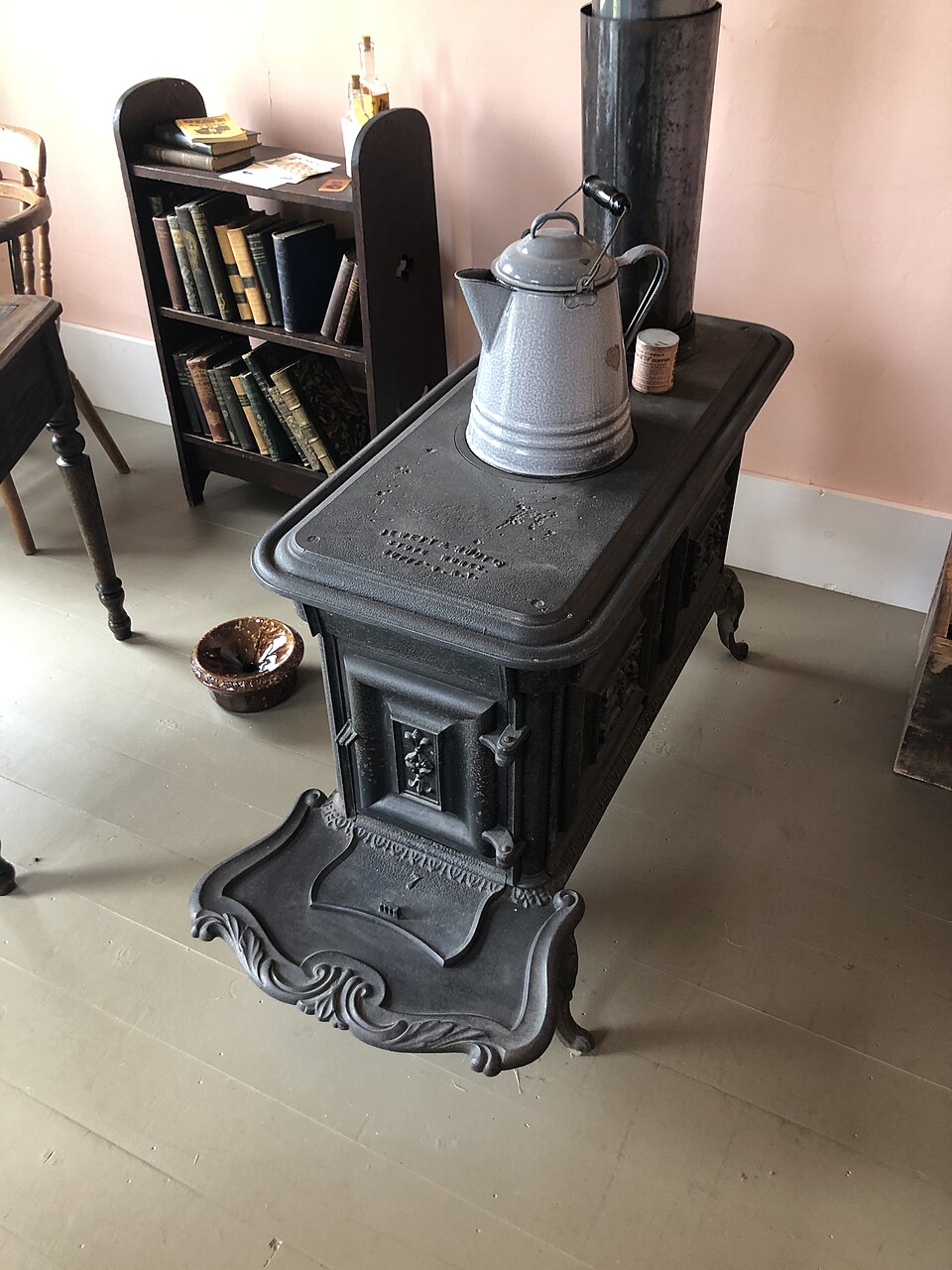
My granny had a cast iron cook stove until the mid-1950s. She started by lighting wood in the fire box at one end of the stove body. Moving pots from burners closer to the firebox to those farther away adjusted the heat. She controlled oven temperature by determining how long she could hold her hand in the oven.
This was certainly old-fashioned, but she was poor, living on a hard-scrabble farm in the hills of eastern Kentucky. Saugus Ironworks manufactured the first cast-iron stove in Lynn, Massachusetts, in 1642. By the 18th century, manufacturers were making cast iron stoves in quantity in the United States. Their use became widespread in the early 19th century.
The first gas stoves were developed in the 1820s, in a factory established in England in 1836. These stoves offered adjustable and convenient cooking compared to solid fuels. A cook could turn the gas flame to the desired heat level immediately. Turning off the flame also immediately extinguishes the heat. However, the exposed gas flame posed more of a fire hazard than other stoves. They may also leak carbon monoxide, benzene, and formaldehyde, even when turned off.
Introduced in the early 20th century, electric stoves provided a safer and more efficient alternative to gas. Later in her life, my granny had an electric stove. She enjoyed the precision of temperature, especially for baking.
Induction cooktops use electromagnetic fields to heat pots and pans directly. Among stove bells and whistles: timers, preheat signal, convection baking, and broiling. Today, a home cook can use a Frigidaire 30″ Electric Range with Air Fry, with a convection oven and five cooking elements. My granny wouldn’t have to use her hand to determine the temperature!
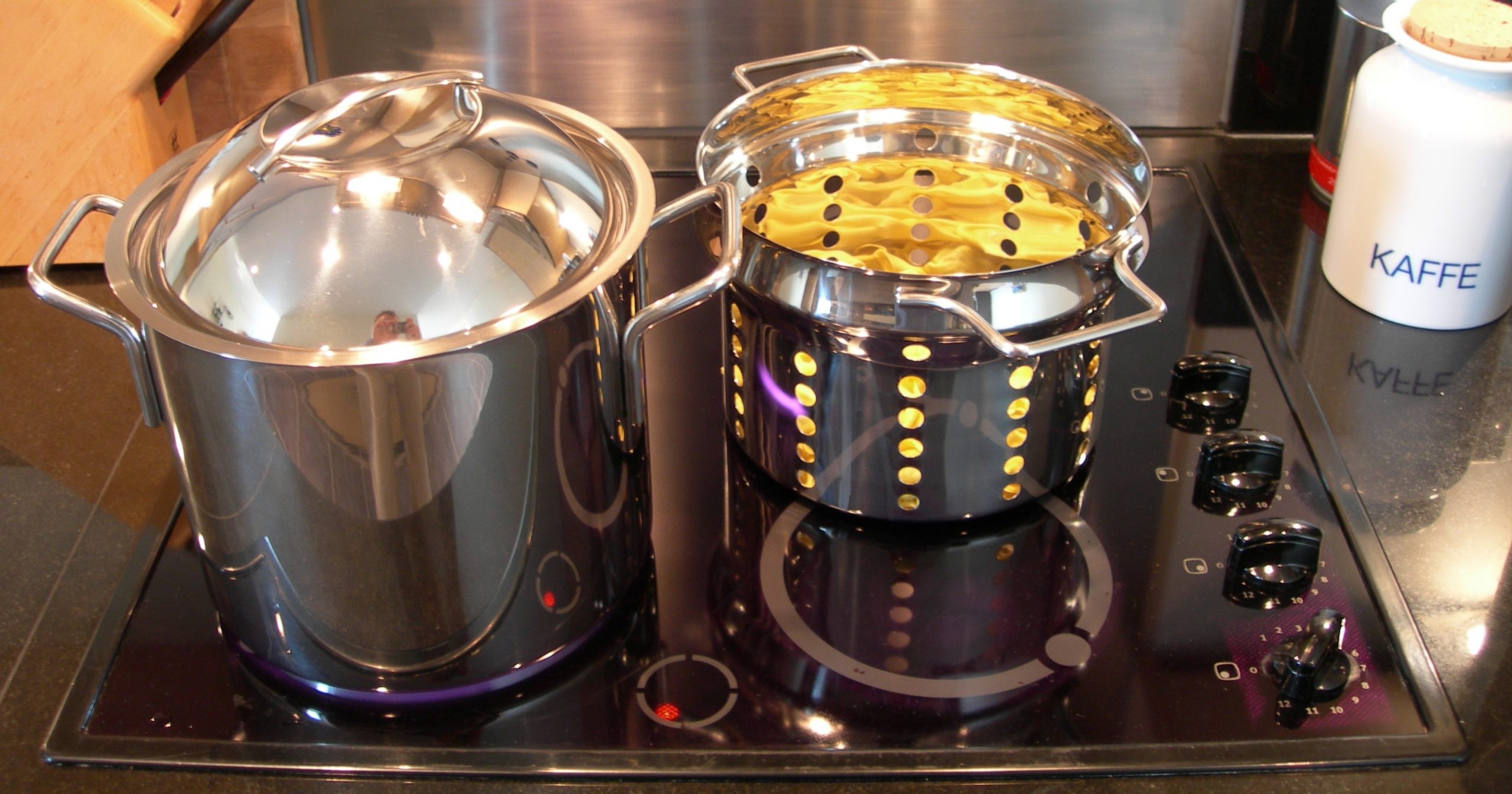
Perhaps the biggest time-saver is not having to build a cooking fire.
REFRIGERATORS
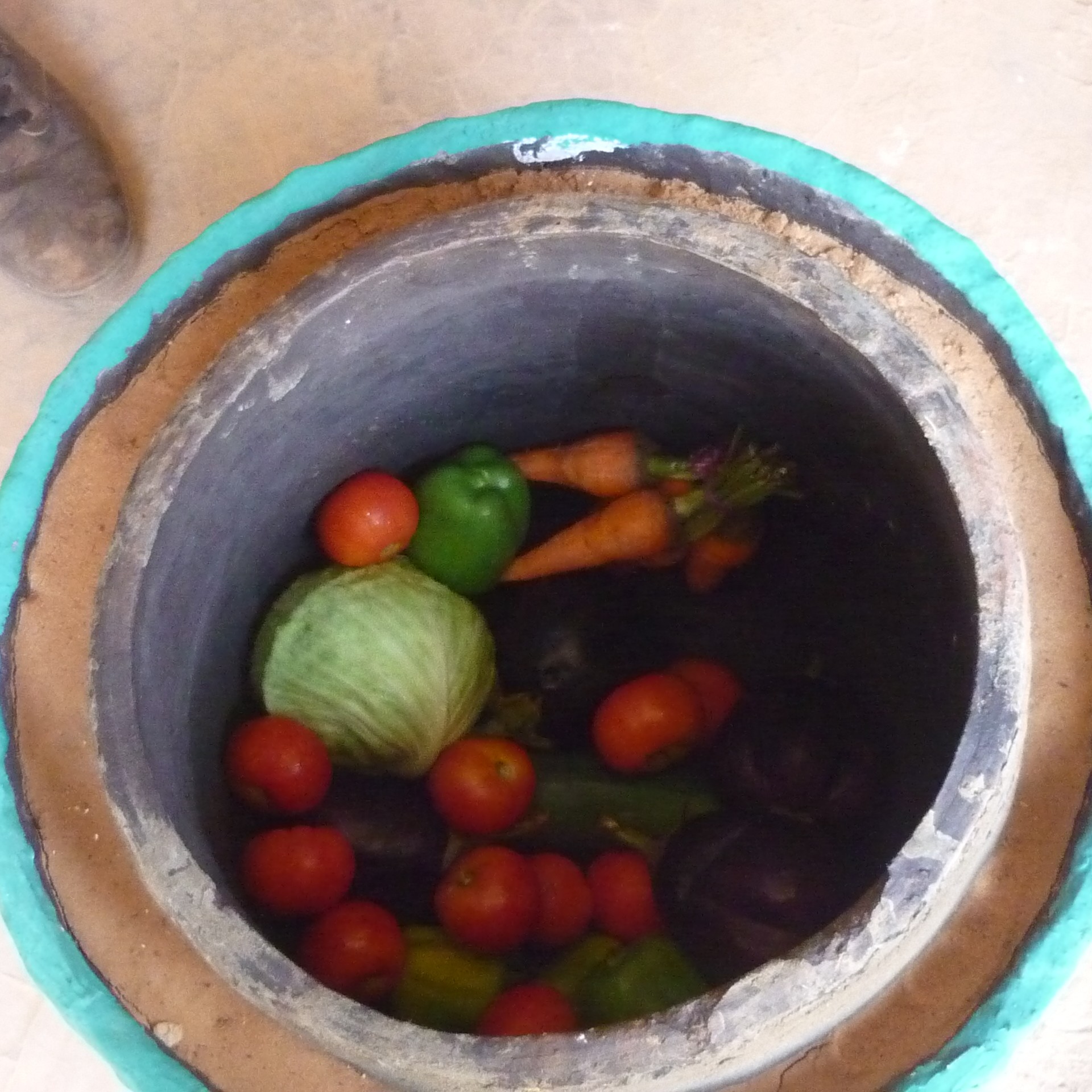
The first appliance that sort of looked like a refrigerator was an icebox. Before iceboxes, people used ice houses and evaporative cooling methods like zeer pots to preserve food. (A zeer pot is a low-cost, evaporative cooling device made of two nested unglazed clay pots with wet sand between them, used to preserve food in hot, dry climates without electricity.)
The only icebox I ever saw personally was wooden, with metal fittings. The top compartment held the ice on a metal tray. The cool air descended to cool the food in the box below. An ice man delivered huge blocks of ice on a set schedule, and “ice cubes” were had by chipping off the block with an ice pick.
Electric refrigerators became common in households starting in the late 1920s and early 1930s. While Fred W. Wolf Jr. invented the first electric refrigerator for home use in 1913, widespread adoption began after General Electric introduced the “Monitor-Top” refrigerator in 1927, which was more affordable and practical for average homes. By the mid-1930s, electric refrigerators had largely replaced iceboxes in many American and European households, becoming a standard appliance in middle-class homes by the 1940s. These refrigerators were smaller than today. The cooling unit was at the top, and it had enough freezing space for a couple of ice cube trays.
Today one can choose refrigerators with freezers top, bottom, or side-by-side. Owners can adjust freezer and refrigerator temperatures separately. They can dispense filtered water and ice in various forms.
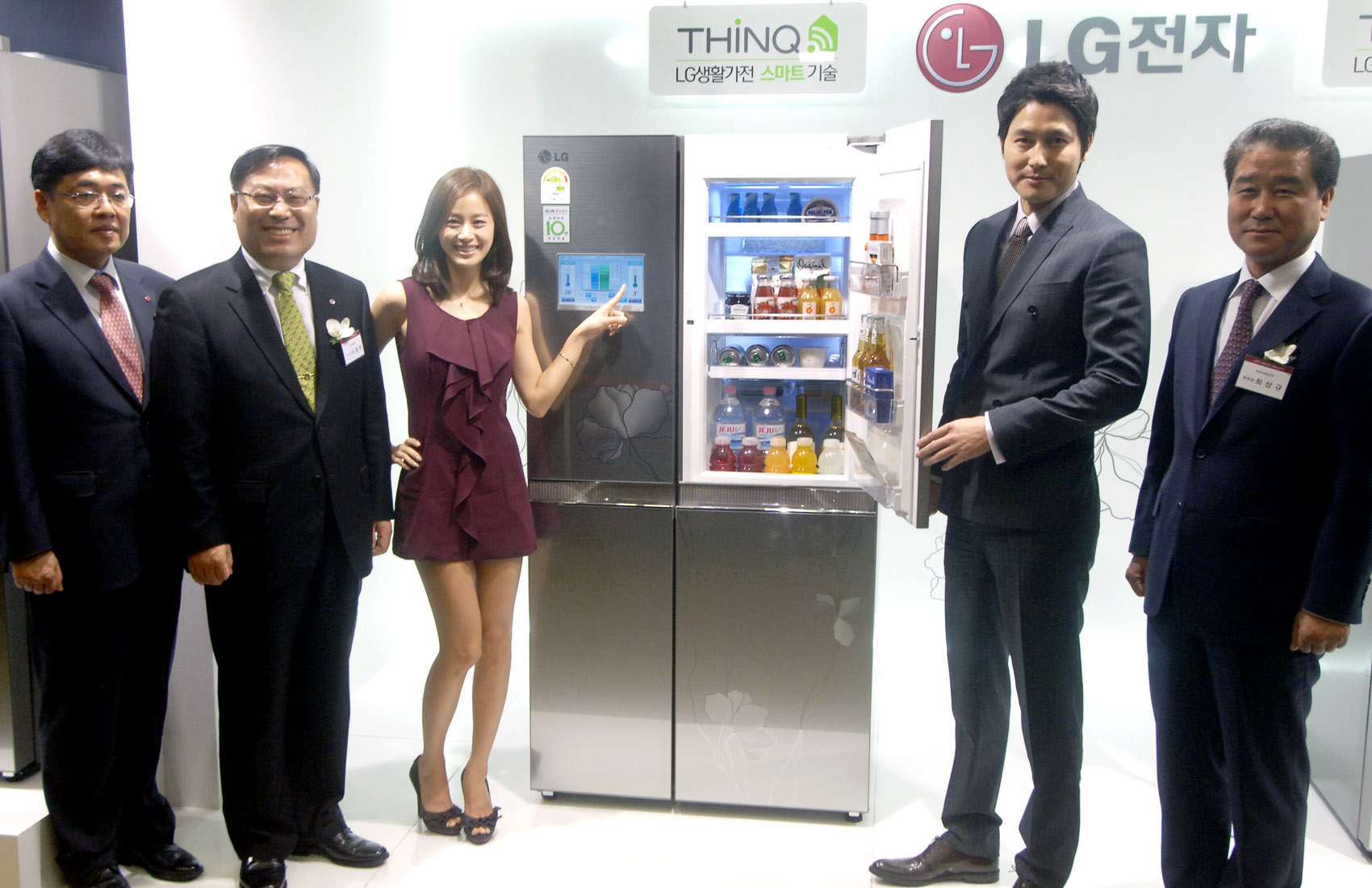
The biggest time-saving factor from refrigerators comes from the handy location in the kitchen, serving iced drinks, and the availability of frozen foods.
Before refrigerators, preservation techniques included salt curing, smoking, and drying.
SMALL APPLIANCES

Early toasters had pull-down doors on each side of the heating unit. Two pieces of bread—one per side—were toasted on the side facing the heating element. When the user opened the doors, the bread would flip, exposing the untoasted side. Closing the doors again started the process to toast the second side. These required monitoring, for there was no timer or automatic turn off.
Then there were pop-up toasters, toasting both sides at once, with heat controls for darkness, sometimes with four slots.
Today, a home cook can use toaster ovens, which I assume need no description, or the toast function in air fryers. They toast faster, take many slices, and turn off automatically.
Mixing stuff up started with a fork or spoon, evolved to a whisk which, with patience, can actually whip cream or egg whites into soft peaks. Hand-held egg beaters (1850s) made that process much faster, and hand-held electric mixers were/are even faster. Counter-top mixers (such as KitchenAid) operate without the cook holding the mixing element, and can even knead bread.
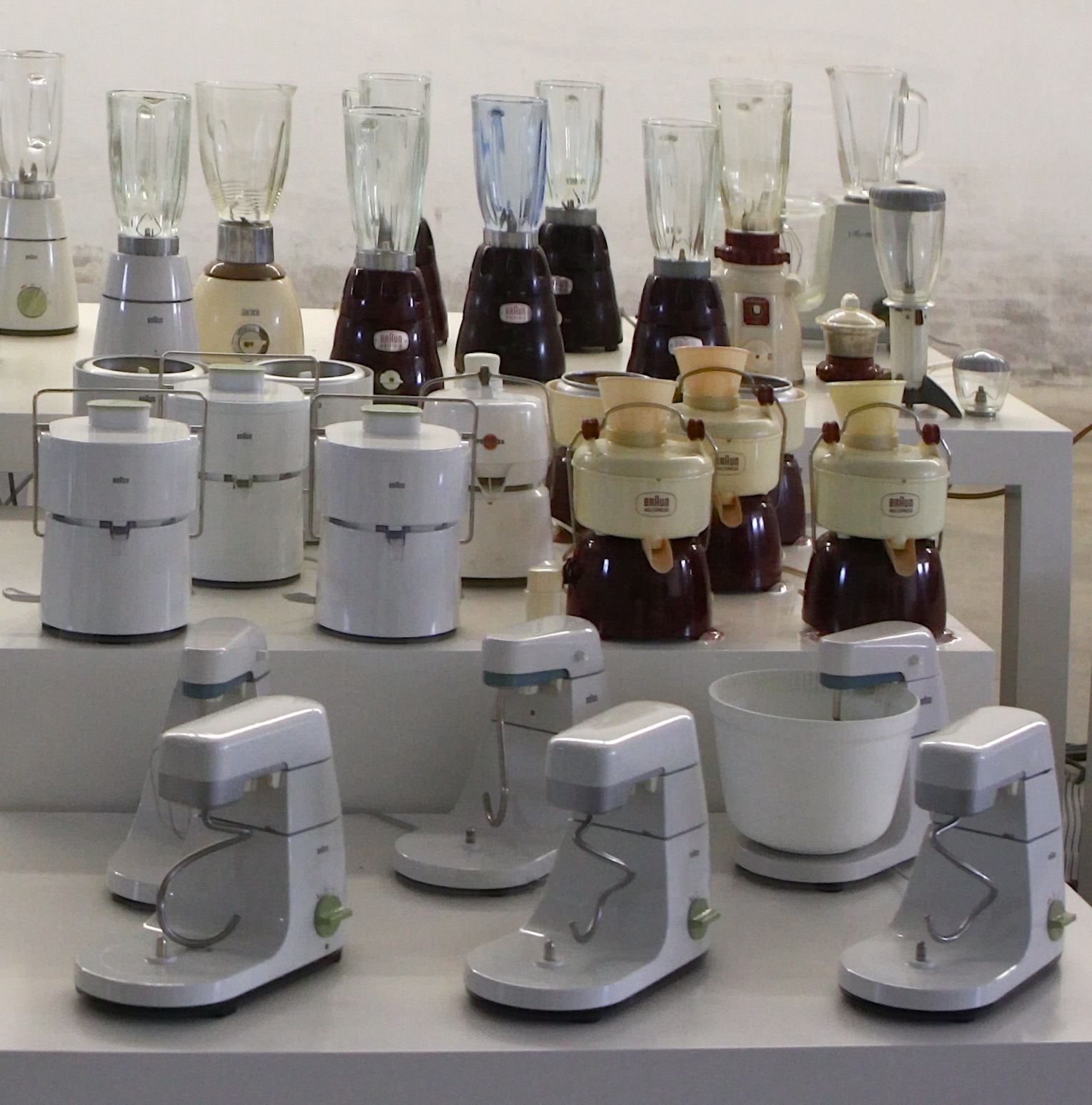
Blenders were introduced in 1922 and food processors in 1946, though their use in home kitchens took time to catch on. Although meat grinders (1840s) streamlined the mincing process, food processors in particular relieved the home cook of clamping a meat grinder to the counter or tabletop and hand grinding.
Making coffee has gone from boiling grounds in a pot of water and waiting for the grounds to settle to using a percolator, with a basket holding grounds at the top where boiling water pours through them. Today coffee makers typically use filters for the grounds and collect the coffee in a carafe. Fancy options can keep it hot, turn off automatically, or even turn on or off at a pre-selected time.
Although some people prefer to grind their own coffee beans, pre-ground beans are readily available.
And now one can make a single cup of coffee in a device such as Keurig using individually chosen pods, which can be flavored. And let’s not forget instant coffee, just add water, though coffee lovers usually prefer not to.
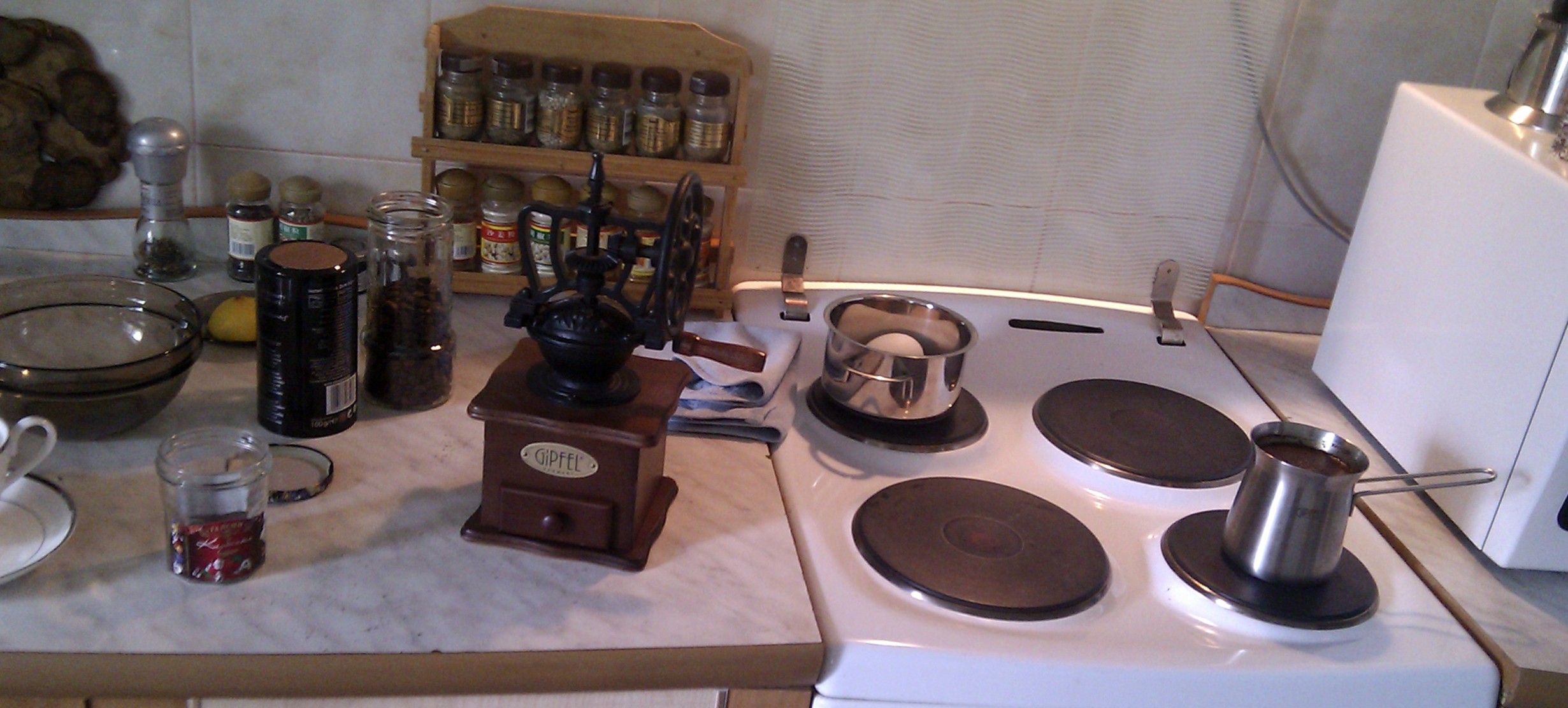
It is possible to make tea the same way, but do keep a carafe dedicated to tea to avoid contamination by lingering coffee flavors. Modern tea aficionados can use a variety of automatic devices, with magnetic tea baskets, calibrated brewing temperatures, or warming surfaces. The quick and easy alternative: teabag and microwaved water.
The mighty microwave was invented in 1945 by Percy Spencer, an engineer with the Raytheon Company. Microwaves became common in households during the 1970s and 1980s as prices fell and their use spread globally. And as everybody must know, it cooks faster than stovetops or ovens.
COOKWARE
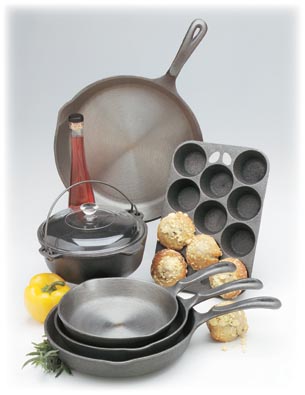
Cast iron cookware was first introduced around 220 CE in China during the Han Dynasty. During the Medieval period (500 – 1500 ) cast iron cookware first appeared in Europe, and became essential for slow-cooking stews and soups. It was popular from the late 19th century through the mid-20th century, peaking in the first half of the 20th century before declining in the 1960s and 1970s.
I have cast iron skillets and a griddle from a great-grandmother, both grandmothers, and my mother! I have added a chicken fryer and stew pot to my inherited collection. Cast iron is great for heat retention, durability, ability to maintain high temperatures for long durations, and non-stick potential. But it is heavy!
Copper pots and pans became popular among European chefs for their even heat distribution. Copper cookware became popular as a status symbol among Europe’s wealthy elite in the 18th century and remained prominent through the 19th century.
The invention of Teflon-coated pans (1960s) made cooking and cleaning easier.
Pressure cookers were an early effort to shorten cooking times. The basic concept was invented in 1679! The modern pressure cooker, as we know it today, became widely popular in the mid-20th century with brands like Presto.
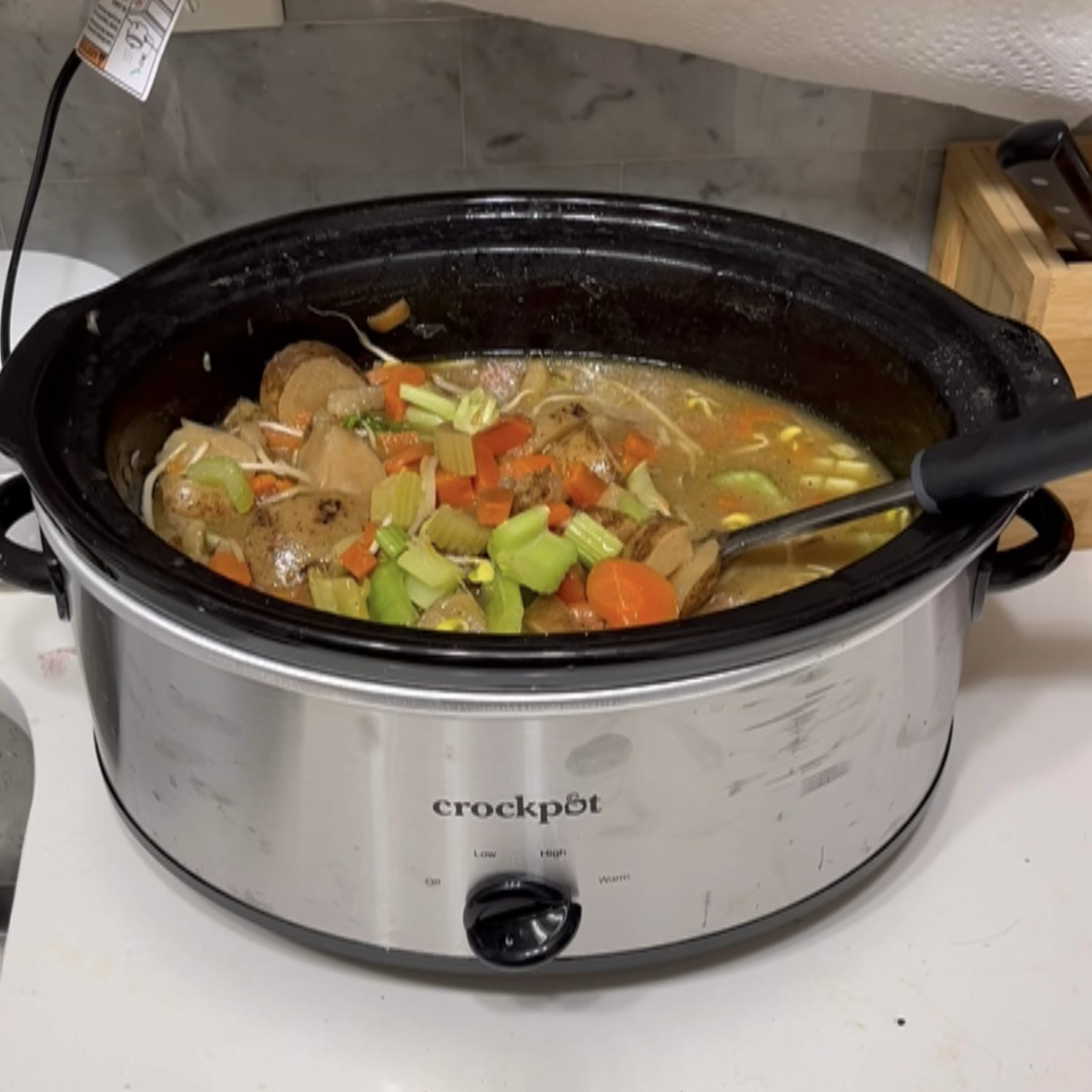
And then slow cookers were introduced. They gained popularity in the U.S. during the 1970s, with sales peaking around this time. This countertop electrical cooking appliance simmers food at a lower temperature than other cooking methods. Dishes like pot roasts and stews can cook for many hours without requiring attendance, unlike with a boiling method. Its primary advantage is allowing the cook to complete prep according to their own convenience and preference.
CONVENIENCE FOODS
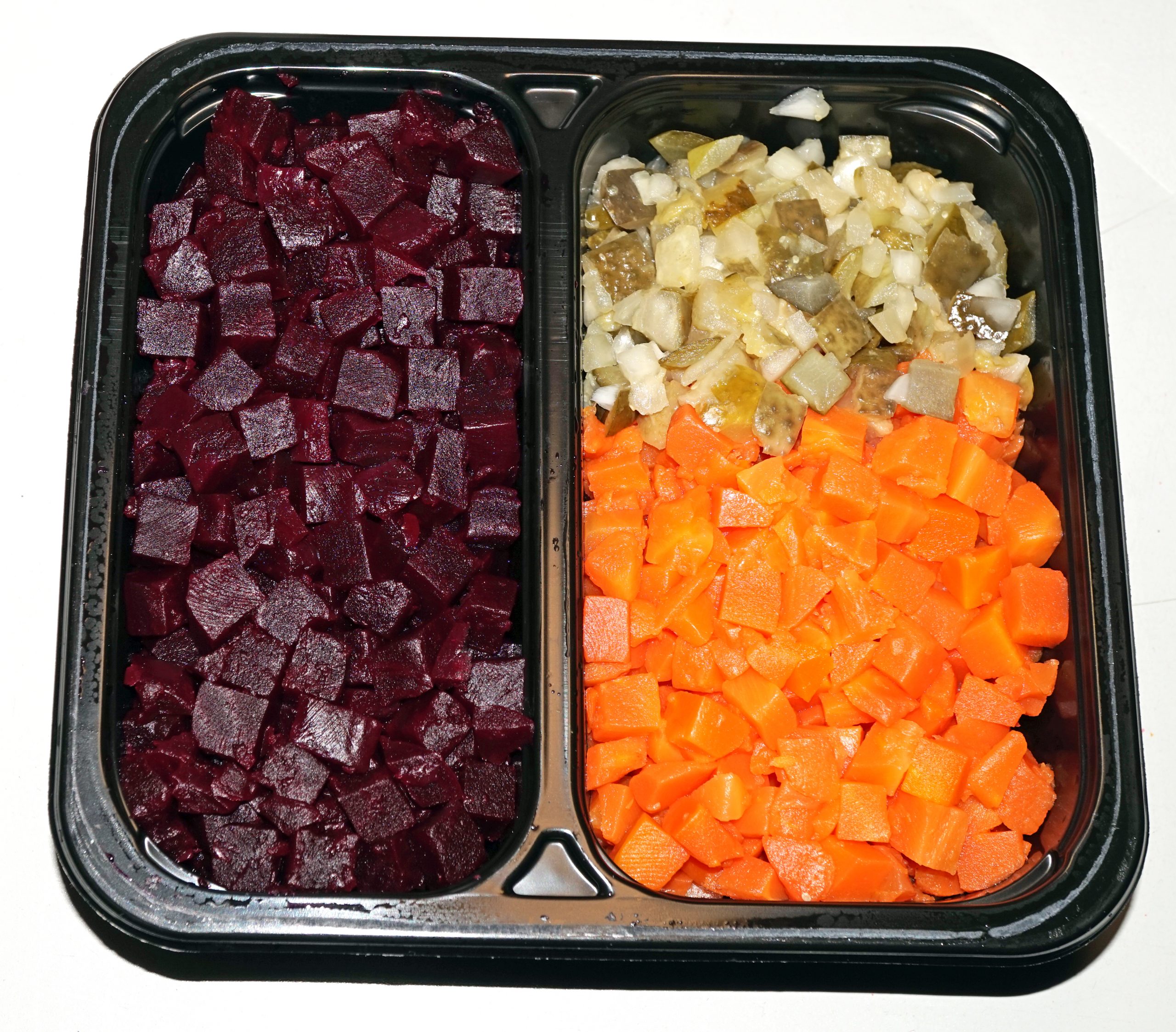
I contend that the most basic convenience foods are frozen and canned products. Many canned foods are “heat and serve,” or even ready to eat. Grocery stores carry a gazillion (by actual count) prepared foods, from cupcakes and bread to quiche and potato salad, already peeled carrots, cut melon and pineapple, etc., etc., etc.
One can order prepared dishes—or meals—from restaurants and have them delivered to the door. And for those who want a fresh, homemade meal, there are services such as HelloFresh: the ordered meal ingredients come proportioned and ready to cook, with all seasonings, and recipes for the preparation.
And now one can use a service such as Tovala, a meal delivery service paired with a smart oven that cooks chef-crafted, fresh meals in under 20 minutes using QR code scanning or pre-programmed cycles.
WE’VE COME A LONG WAY, BABY
Before 3000 BCE, the earliest food prep method, using open flames to roast meat and vegetables on sticks or in pits, required constant attention.
People roasted large animals on spits turned by hand or animal tread mills, a common method in Medieval feasts.
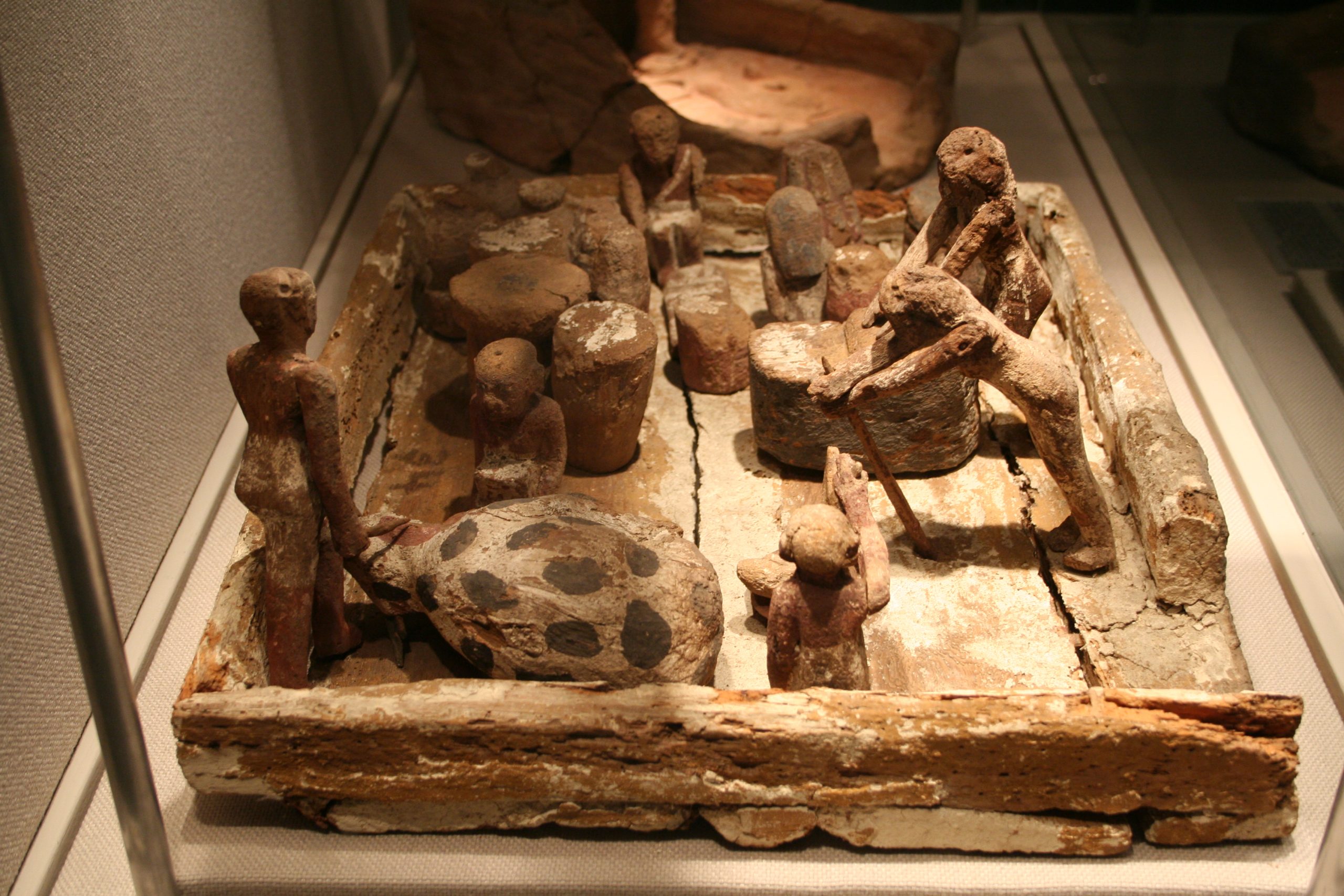
Around 10,000 BCE, humans began using clay pots for boiling and stewing, marking a shift to more controlled heat and less constant attention.
Archaeological research dates the use of earthen ovens for underground cooking to approximately 10,000 years ago. Earth ovens (e.g., Polynesian umu or Native American pit baking) involved cooking food in underground pits with heated stones. The Egyptians used early ovens (around 2500 BCE) for baking bread, a staple of their diet.
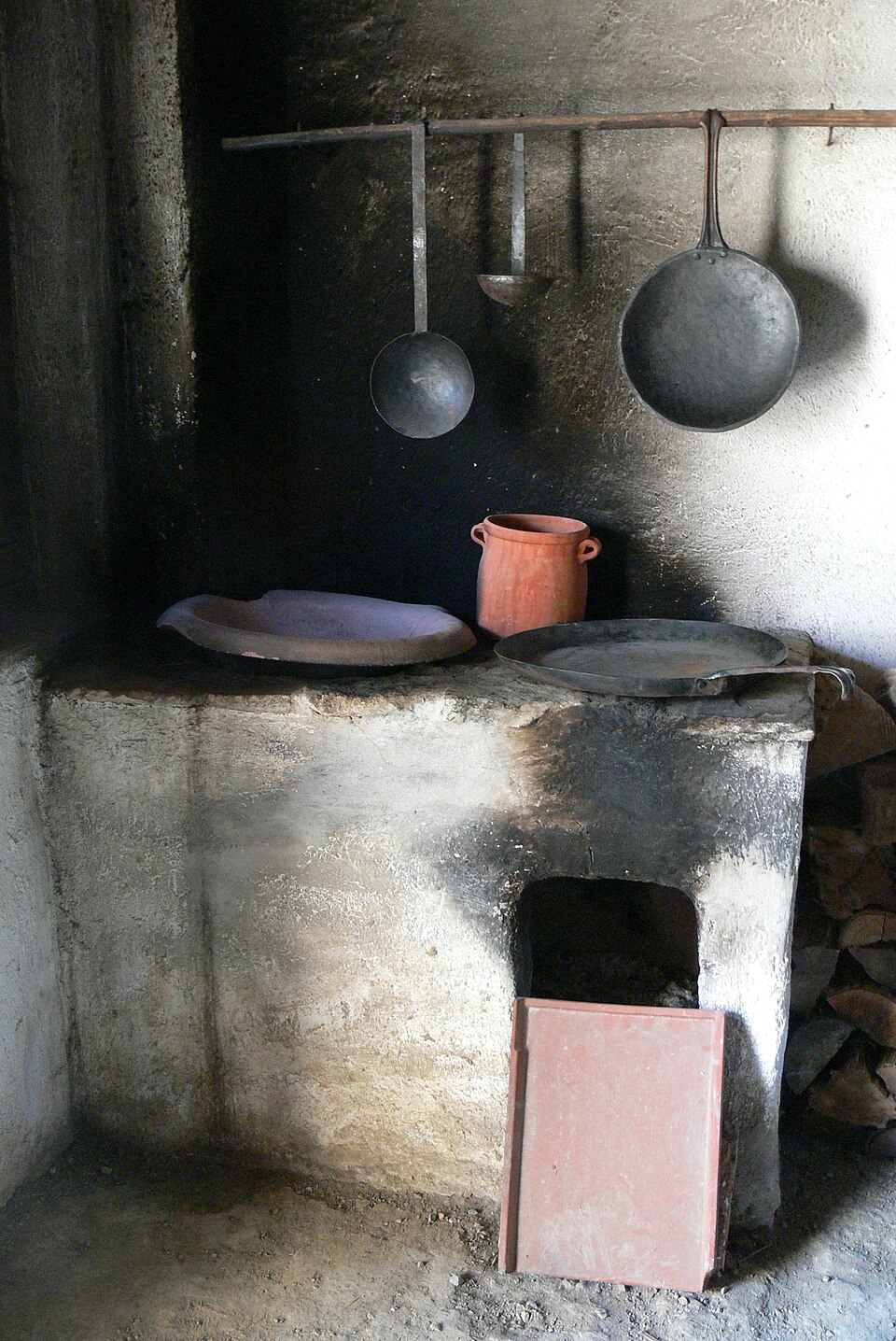
The Romans created early versions of stoves. These stoves were brick or iron structures, knee-high, fired by wood or charcoal through a front hole, with pots placed over or hung into holes at the top.
The earliest fireplaces (as we think of them today) were flat to the floor, used for both heating and cooking. The Romans introduced raised hearths, making cooking more convenient (and heating less dirty).
Cast iron “arms” (chimney cranes) were built into fireplace walls, suspending cooking pots over flames, allowing for better heat control, and swinging out to fill or serve. Many included spits for roasting chunks of meat and small animals such as rabbits or chickens.
AND HERE WE ARE
A recent article in The Wall Street Journal (9/22/26) reported, “When 4:00 p.m. rolls around on any given day, about 80% of Americans still don’t know what they will have for dinner.” Many families turn to ready-to-cook food and meal delivery services, or grazing on things like cheese and crackers, nuts, etc.
This isn’t a new phenomenon. The I Hate to Housekeep Book (Peg Bracken, 1962) has a chapter titled “Dinner Will Be Ready As Soon As I Decide What We’re Having.” (It demonstrates a touching reliance on eggs.)
According to the US Labor Department, women spend an average of 55 minutes per day on food preparation AND cleanup; men, 31 minutes.
Bottom Line: Peg Bracken got it right: apparently, most people hate to cook.