OFFICIAL VIRGINIA

Unakite, lovely though it is, is not among the official symbols of Virginia

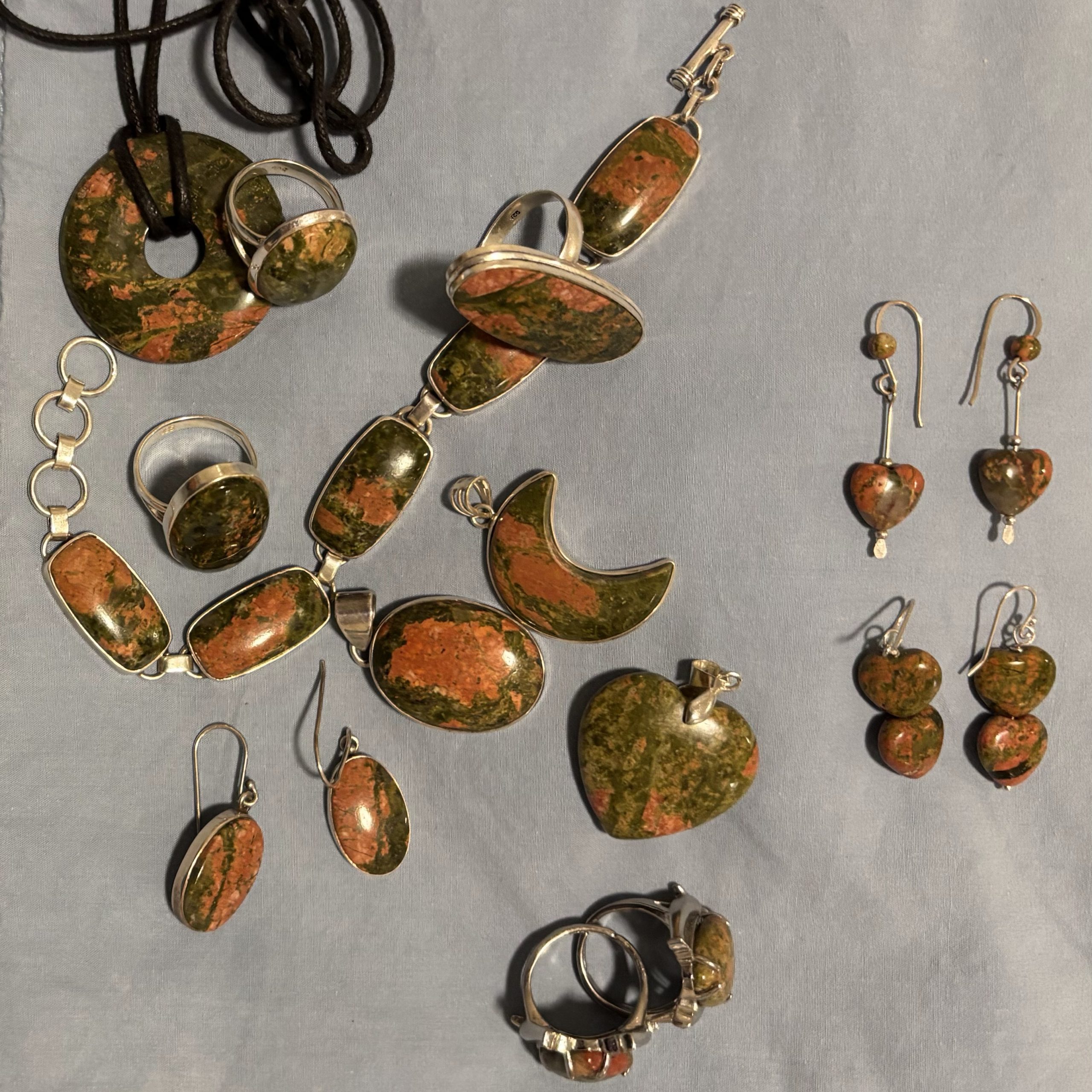
I’m a jewelry junkie. Some years ago, at a shop in the Blue Ridge, I bought several pieces of a lovely sage green and salmon colored stone. The clerk identified it as unakite, and said it is the state gem for Virginia—which pleased me a great deal. Apparently, it is abundant in the Blue Ridge.

Alas, when I started looking for official Virginia symbols, unakite is NOT among them. Virginia Opal is an unofficial State Gem. The official Virginia Rock or Stone is Nelsonite (2016), not nearly as attractive (IMHO).

Earliest Virginia Symbols

Virginia has a rich collection of official state symbols that reflect its history, culture, and natural heritage.
Great Seal Virginia symbols

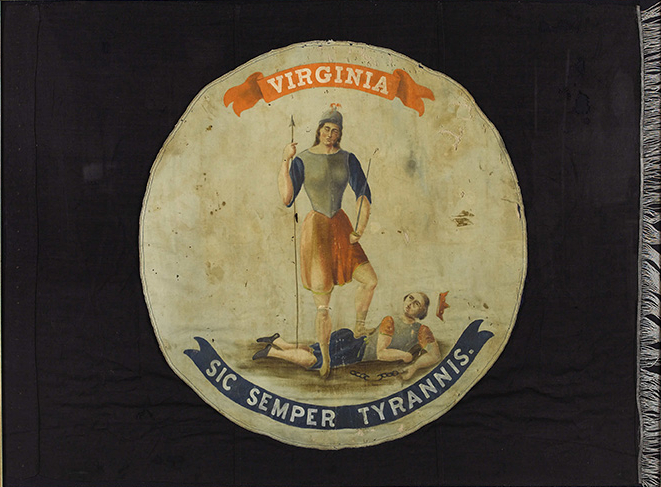
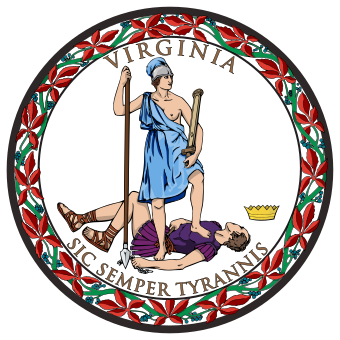
Most of Virginia’s official symbols were designated in the late 20th century, with the significant exceptions of the state motto and seal. Virginia officially declared its Great Seal—designed by George Wythe—on July 5, 1776 (standardized in 1950). It is one of Virginia’s earliest and most significant symbols, adopted during the American Revolution. The State Motto was proposed by George Mason to be included in the State Seal in 1776. Translated from Latin as “Thus Always to Tyrants”, it means that tyrants will eventually be overthrown.

The Virginia state flag prominently features the seal. Although the seal appeared on military flags before April 30, 1861, that is the year that the state legislature placed it on a blue field as the official state flag during the Civil War era (see the banner picture for this blog entry). The flag was last updated in 1950.

Virginia Animal Symbols
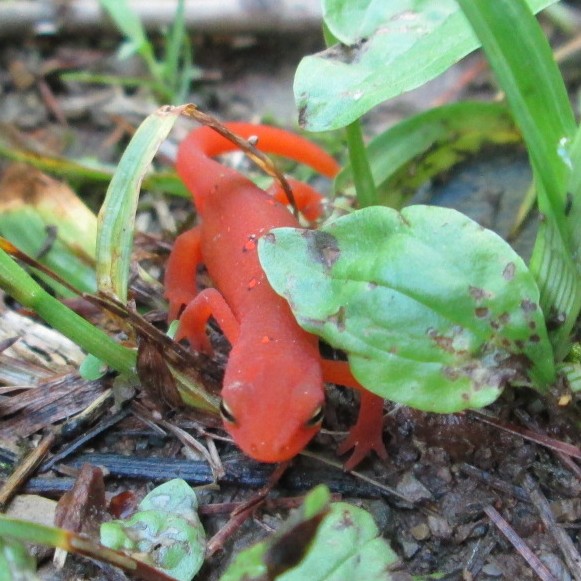
State Amphibian: Red Salamander (2018). This amphibian, unique among its kind, can breathe through its skin.

State Bat: Yes, we have one! It’s the Virginia Big-Eared Bat (Corynorthinos townsendii virginianus). In 2005, legislators chose the bat for its name and endangered status. At the time, Gov. Mark Warner said that a state bat “is no more absurd than the state beverage.” (See below.)

State Bird: Northern Cardinal. Actually, the cardinal is the most popular state bird, also symbolizing Kentucky (1926), West Virginia (1927), Illinois (1929), Indiana (1933), Ohio (1933), North Carolina (1943), and—bringing up the rear—Virginia (1950). If you cross-reference, you will note that five of these states were, originally, part of Virginia! (See below.)
American foxhound Virginia symbols

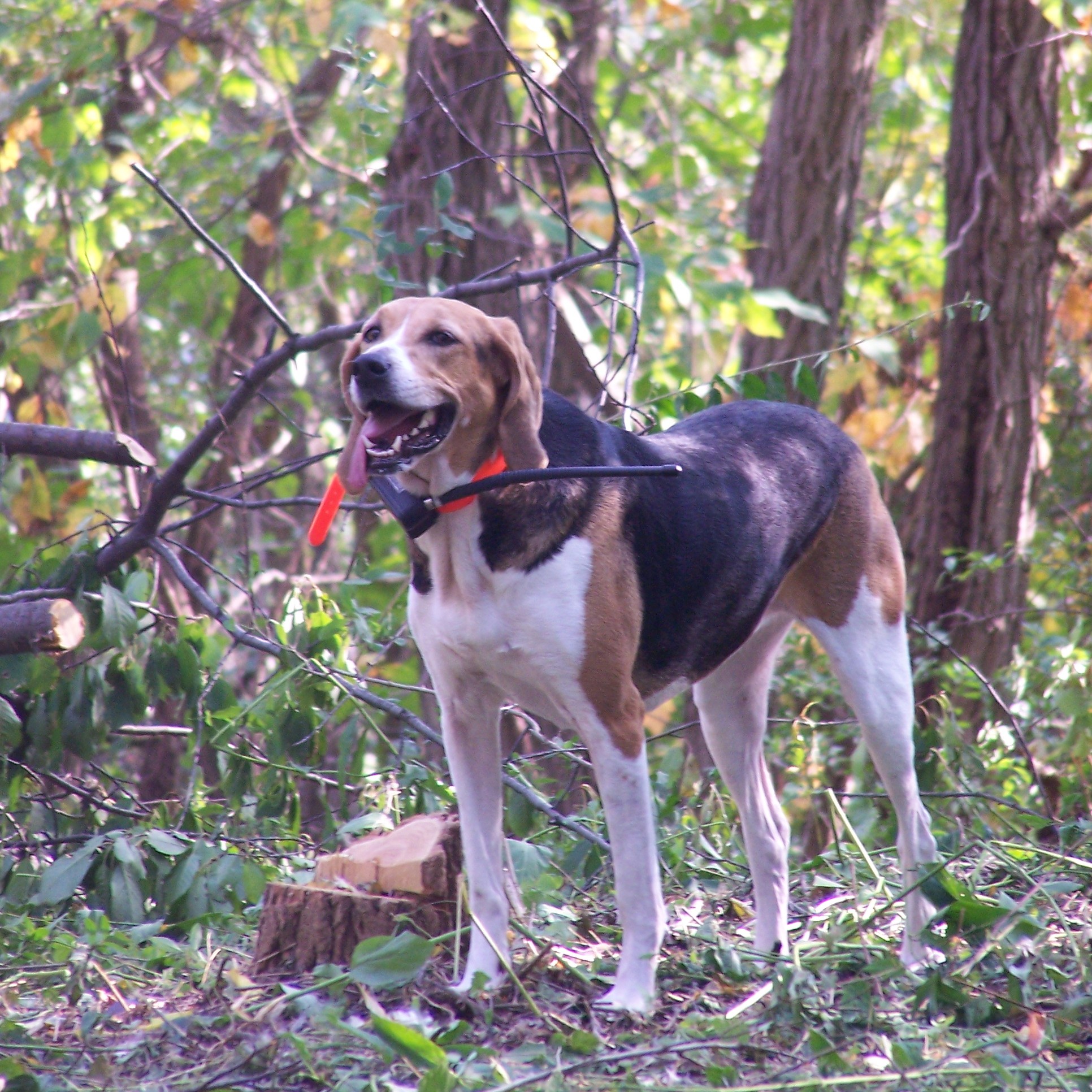
State Dog: American Foxhound (1966). Fox hunting started in Virginia around 1700 as a popular sport among the gentry, and was a traditional activity ever since.

State Freshwater Fish: Brook Trout (1993). Brook trout are actually not technically a “trout”. They are in the Char family, although they are the most “Trout Like” in their family.

State Saltwater Fish: Striped Bass (2011). This fish has distinctive horizontal stripes running along silvery bodies—which help camouflage the fish by breaking up its outline in the water, making it harder for predators to spot.
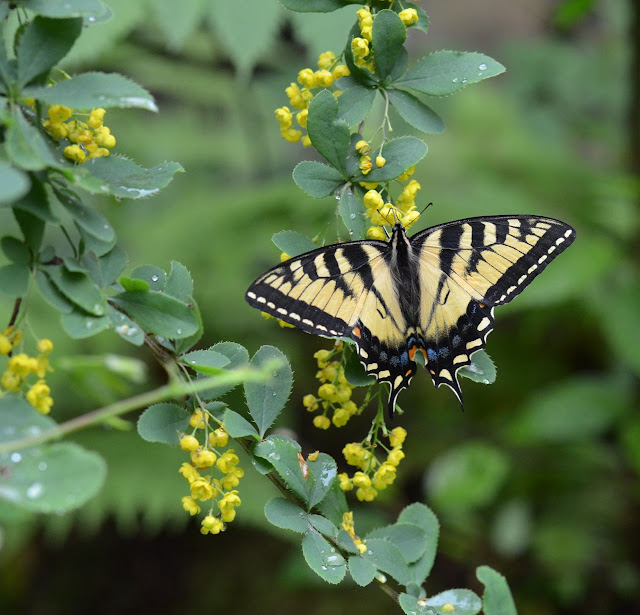
State Insect: Tiger Swallowtail Butterfly (1991) The Eastern Tiger Swallowtail butterfly (Papilio glaucus) is a common but beautiful butterfly that regularly comes to my yard, especially to my butterfly bush for nectar. Keen observers can find them anywhere east of the Mississippi river and a bit farther west into the Great Plains states. There are also populations in several Mexican states.

State Pollinator: European Honeybee (2024) These bees use a “waggle dance” to communicate the location of food sources to other foragers, indicating both direction and distance. So, when you see one, you are likely to see many. They seem to especially enjoy my hyssop, a perennial plant that smells like licorice.
Chincoteague ponies Virginia symbols

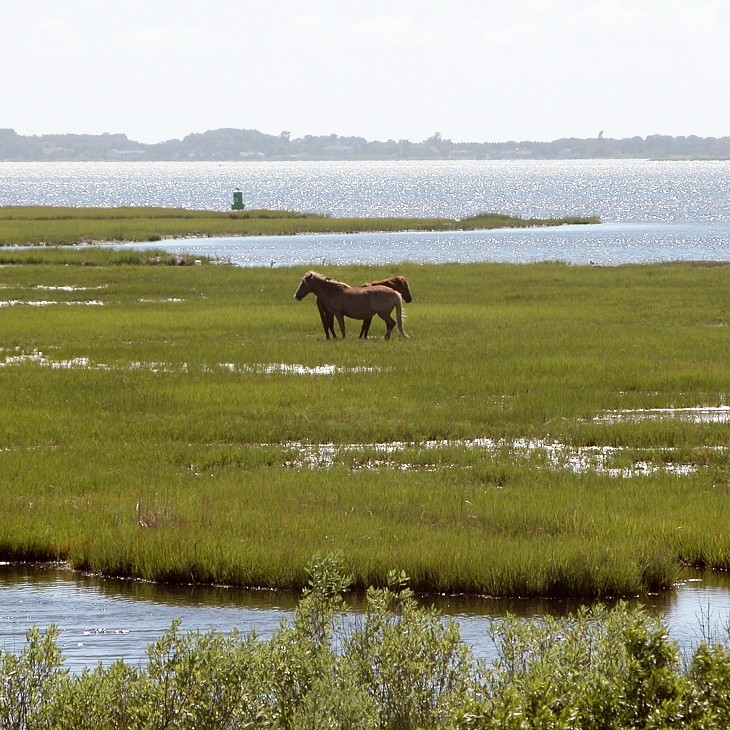
State Pony: Chincoteague Pony (2023). These ponies weren’t an official breed until 1985! Their historical home of Assateague Island straddles Maryland and Virginia. The Maryland herd is controlled with the use of contraceptive vaccines. The Virginia side uses an annual Pony Swim and auction to control the island population.

State Reptile: Eastern Garter Snake (2016) In 2016, Aiden Coleman, then 11 years old, successfully petitioned the Virginia Senate to name the Eastern Garter Snake (Thamnophis sirtalis sirtalis) an official symbol of Virginia. Though only mildly venomous, these snakes can emit a foul odor when threatened, which some have described as “something like a cross between a soiled diaper and a skunk.” Garter snakes, unlike most reptiles, give birth to live young rather than laying eggs.

State Shell: Eastern Oyster (1974). The Eastern Oyster (Crassostrea virginica) is the only species of oyster native to this region. It is a valued food source for humans and other species. As filter feeders, they help clean the water. Centuries ago, in some places, oyster shell reefs were so big that ships had to navigate around them. Since then, in many areas, the populations have dwindled to just a few percent of what they once were due to disease, over-harvesting, habitat loss, and poor water quality.

Other Virginia Symbols

State Beverage: Milk (1982). Milk is the state drink of twenty U.S. states, from New York to North Dakota. This is largely due to lobbying efforts from the dairy industry in the 1980s.

State Boat: Chesapeake Bay deadrise (1988). Very few other states have a state boat, but a couple of exceptions are Maryland (skipjack) and North Carolina (shad boat).

State Dance: Square Dance (1991). Among the 29 states having official state dances, square dancing is the most popular—24!

NB: some states have more than one official dance.

State Flower: American Dogwood (Cornus florida), 1918. Thomas Jefferson grew American Dogwood on his Monticello estate in the 1770s. Legislators chose it as the official flower in 1918. In 1956, it also became the official State Tree.
State Fossil: Chesapecten jeffersonius (1993). This is a fossilized form of an extinct scallop, which lived between four and five million years ago on Virginia’s coastal plain. Colonists first described this distinct fossil in 1687.

State Slogan: VIRGINIA IS FOR LOVERS (1969). The slogan earned a mention in the Madison Avenue Advertising Walk of Fame in 2009, and Forbes declared this one of the top ten advertising campaigns of all time. When the Central Virginia Chapter of Sisters in Crime wanted to use “Virginia is for _“ in a book title, permission was denied for “Murders” but approved for “Mysteries.”

State Spirit: George Washington’s Rye Whiskey (2017) Mount Vernon staff reconstructed George Washington’s original recipe and distilled this whiskey using 18th century methods.

State Song: The state song has gone through some changes over the years. From 1940 to 1997, the official state song was “Carry Me Back to Old Virginny” by James A. Bland. Today, there are two! In 2015, the legislature officially recognized “Our Great Virginia” (traditional), and “Sweet Virginia Breeze” (popular).

Honorable Mentions

In addition to unakite, Virginia has several distinct resources that many people assume must be official symbols.
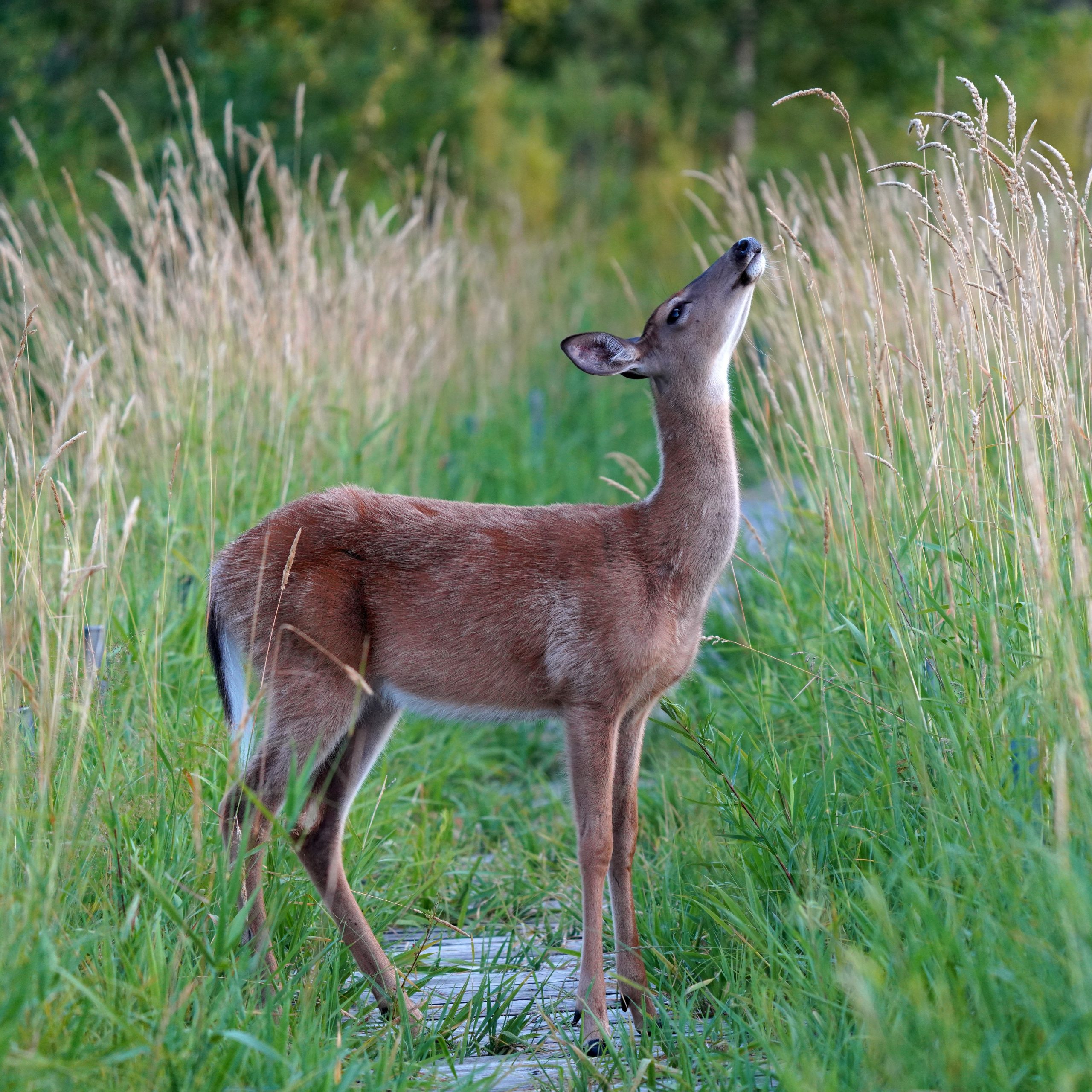
State Animal: Virginia Deer (White-tailed Deer). As far as I could determine, despite showing up on various lists, the white-tailed deer has not been officially designated as the state animal of Virginia. However, its scientific name, Odocoileus virginianus, reflects its historical significance and abundance in the state. Ever popular, it’s the official animal of 10 states other than Virginia.

State Fruit: Tomato. Although one list of state symbols included this, as far as I can find, Virginia does not have an official state fruit, tomato or otherwise. It’s just as well! Although botanically a fruit, the tomato is legally a vegetable for import/export purposes, and is certainly used as such!
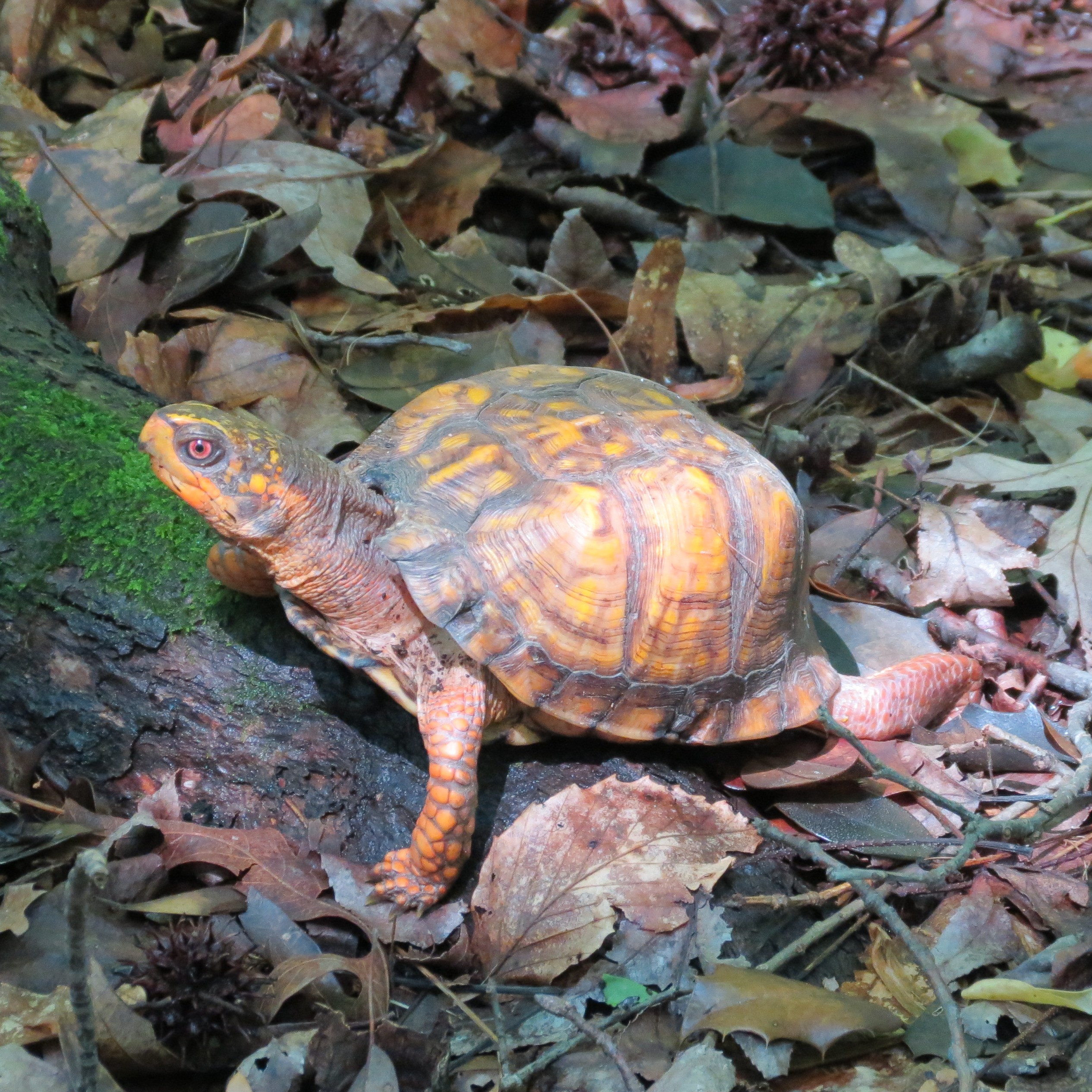
State Turtle: Lawmakers considered naming the Eastern Box Turtle (Terrapene carolina carolina) an official state symbol in 1999 and 2009, but they ultimately rejected it. I’m including it here because (in my opinion), it should be a Virginia symbol; it’s both adorable and interesting! I’ve loved these turtles since graduate school when I did research with them. They tend to be solitary, so a female can fertilize eggs up to 4 years after mating. Signs of sex include eye color, shell pattern, and shell shape. Females have red eyes, a simpler shell pattern, and straight-sided shells. Males have brown eyes and shells with a more vivid pattern, slightly flared at the bottom edge.

Unofficial Virginia Nicknames

Besides official symbols, several more designations for Virginia are traditionally acknowledged.

Map of Virginia and Florida, made by William Blaeu between 1609 and 1623

Mother of States: Since its settlement in 1606, Virginia has been carved into eight more states: Illinois, Indiana, Kentucky, Michigan, Minnesota, Ohio, West Virginia, and Wisconsin.

Mother of Presidents: George Washington, Thomas Jefferson, James Madison, James Monroe, William Henry Harrison, John Tyler, Zachary Taylor, and Woodrow Wilson all were born in Virginia.

NB: Seven U.S. presidents were born in Ohio, too: Ulysses Grant, Rutherford Hayes, James Garfield, Benjamin Harrison, William McKinley, William Howard Taft, and Warren G. Harding.

Old Dominion: A popular legend states that Charles II referred to Virginia as the Old Dominion. Virginia has a public university by that name.
And for a mostly unrelated fact and opinion, included because I was born and reared in Ohio and happen to know it: the official State Beverage for Ohio is tomato juice. The Ohio General Assembly made tomato juice Ohio’s official beverage in 1965. So far, it is the only state to appreciate tomatoes in that way. At that time, Ohio was a leading producer of tomatoes in the United States, second only to California. And in my opinion, Ohio tomatoes have it all over Hanover tomatoes, much lauded here in Virginia.

Bottom Line: Official state symbols celebrate natural beauty, wildlife, and cultural heritage, a mosaic of identity for a state, and Virginia is no exception.
Keeping It All Straight in a Mystery Series

On this day of mashed potato sandwiches and ten dollar televisions, I offer you another reason to give thanks: good friends, good friends who write very good books, and good friends whose latest very good book is now available! Today’s blog was written by my good friend and fellow author (and pet lover) Heather Weidner.

Guest Blog by Heather Wiedner

Many thanks to Vivian Lawry for letting me be a guest on her blog. Vivian and I met when the Sisters in Crime – Central Virginia chapter formed. Through the years, we’ve served as officers, worked on committees and anthology projects, and most recently, as part of the mystery critique group that Vivian chairs.

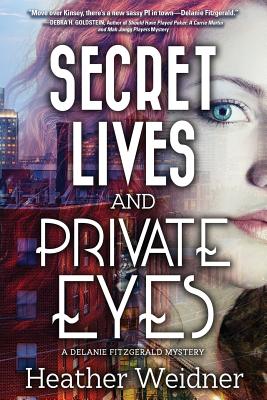
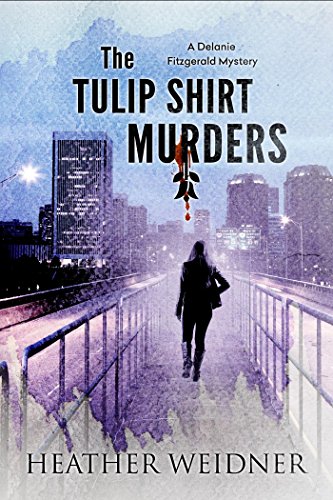
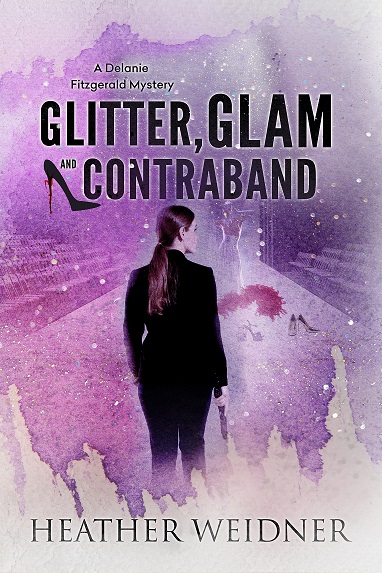
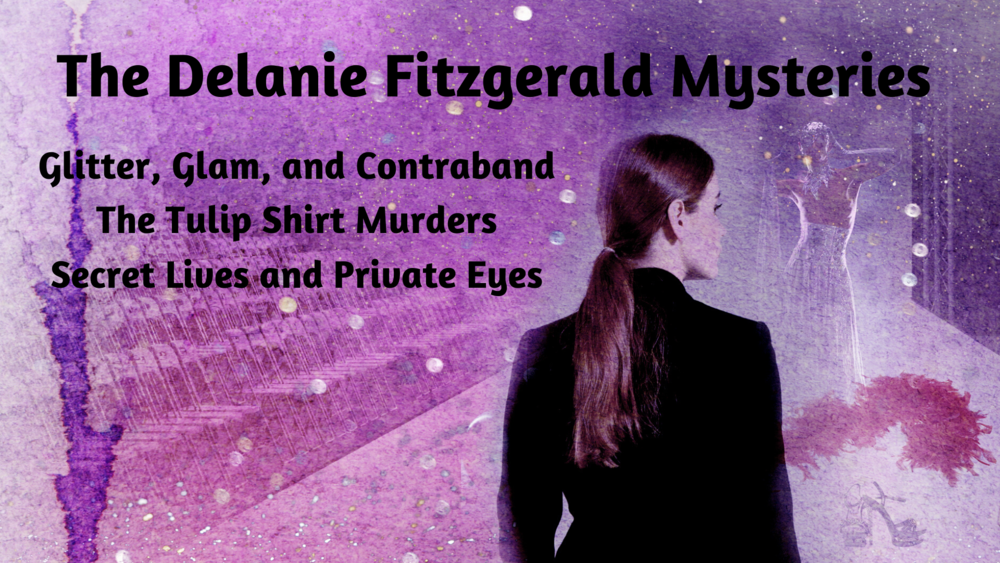
I have loved mysteries since Scooby-Doo and Nancy Drew. I write short stories, novellas, and mystery novels, including two mystery series. While the short stories and novellas are stand-alones, the novels are in two separate series. The first is the Delanie Fitzgerald mysteries (Secret Lives and Private Eyes, The Tulip Shirt Murders, and Glitter, Glam, and Contraband), about a sassy private investigator in Richmond, Virginia. She and her computer hacker partner, Duncan Reynolds, and his sidekick, Margaret the Wonder Dog, work with a variety of clients in Central Virginia to solve crimes, capers, and murders. I am also working on another new cozy series set in Charlottesville, Virginia.

When you write novels and a series of novels, you need to keep the details in order. I make a chart for each book in a word processor, and I list all characters and key places. Then I make a column for the book, and I add all the details. This helps me keep the character names organized and avoid duplication. I also put a lot of backstory and details here. It helps me remember likes, relationships, and descriptive details. (You don’t want a character’s eye color to change between books.) I review and update it as the book goes through the writing process. Then, when I’m ready to start the next book in the series, I add a column and the characters. It also helps me show where all the characters appear. Also, if I change a character’s name during a revision, I use the search/find feature in the word processor to make sure I made all the updates.

In another file, I do a brief outline for each book with what I think appears in each chapter. Then I color-code the crimes, clues, humor, and romance. This gives me a visual sense of the story’s progress. Then I start writing, and that is when all the plotting and planning take a back seat. I find that some of my characters take on a life of their own, and the story progresses down another path. I also update my outline when I’m going through the editing stages. I use this document when I write the synopsis later for querying.

Church Hill in Richmond, Virginia

When you write a series, you also need to think about how much previous information from the other books you want to include. It’s like a skirt: it needs to be long enough to cover the subject. But you don’t want to go on and on and derail your current work with too much backstory. You want readers to remember things from the past books, but not to feel lost if they started reading your book in the middle of the series. You also need to introduce your characters with a brief description when they first appear, but be careful not to do an information dump on their life that reads like a police report.

The details are important. Your readers will notice if things change inadvertently between books. My critique group and beta readers also help me with early reads to make sure particulars are accurate.

When I’m not blogging, I’m working on my next book. The third book in my Delanie series came out in November 2019, and I have a novella in the next Mutt Mysteries (dog-themed mysteries) that comes out in March 2020.

Author Biography

Glitter, Glam, and Contraband is Heather Weidner’s third novel in the Delanie Fitzgerald series. Her short stories appear in the Virginia is for Mysteries series, 50 Shades of Cabernet, and Deadly Southern Charm. Her novellas appear in The Mutt Mysteries series. She is a member of Sisters in Crime–Central Virginia, Guppies, International Thriller Writers, and James River Writers.

Originally from Virginia Beach, Heather has been a mystery fan since Scooby-Doo and Nancy Drew. She lives in Central Virginia with her husband and a pair of Jack Russell terriers.

Heather earned her BA in English from Virginia Wesleyan University and her MA in American literature from the University of Richmond. Through the years, she has been a cop’s kid, technical writer, editor, college professor, software tester, and IT manager.

Synopsis of Glitter, Glam, and Contraband

Private investigator, Delanie Fitzgerald, and her computer hacker partner, Duncan Reynolds, are back for more sleuthing in Glitter, Glam and Contraband. In this fast-paced mystery, the Falcon Investigations team is hired to find out who is stealing from the talent at a local drag show. Delanie gets more than she bargains for and a few makeup tips in the process. Meanwhile, a mysterious sound in the ceiling of her office vexes Delanie. She uses her sleuthing skills to track down the source and uncover a creepy contraband operation.
Glitter, Glam, and Contraband features a strong female sleuth with a knack for getting herself in and out of humorous situations like helping sleazy strip club owner, Chaz Smith on his quest to become Richmond’s next mayor, tracking down missing reptiles, and uncovering hidden valuables from a 100-year-old crime with an Edgar Allen Poe connection.
Contact Information

Book Links

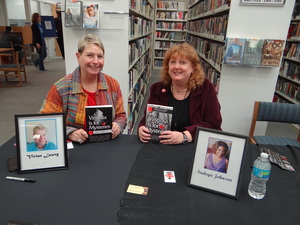
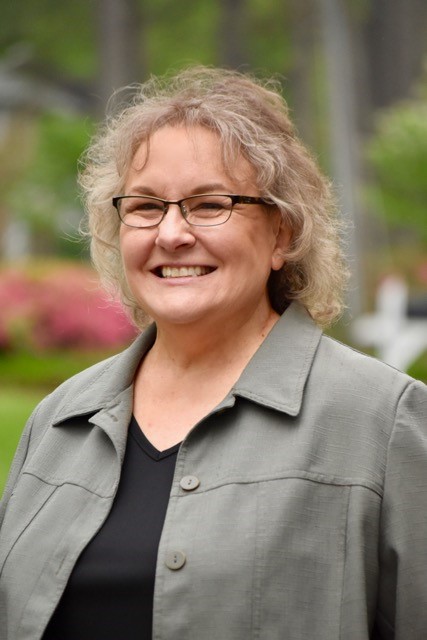
The Author and the Guest Author

Mystery Author Collaboration: Theresa Inge

theresa inge

VL: Today’s guest blog is by Teresa Inge, whose novella “Hounding the Pavement” is the opening work in the recently released To Fetch a Thief. Teresa has contributed to several anthologies both as author and as organizer. Today she will share her perspective on collaboration.

Just as writing is a lonely experience, collaboration is a group effort. As a short story author, I’ve been fortunate to collaborate with many authors on several writing projects.
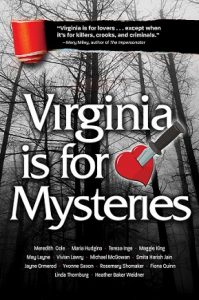
These projects have included the coordination of joint mystery anthologies. Some years ago, I came up with the idea to create the Virginia is for Mysteries series, a collection of sixteen short stories set in and around Virginia. I first discussed the series with the Sisters in Crime Mysteries by the Sea chapter members and the Central Virginia chapter members. Once members were on board to move forward, I organized an anthology committee. This began the wonderful partnership of writers joining together to create great mysteries. Along the way, we teamed up to generate timelines, book titles, number of contributors, submissions guidelines, promotion, and securing a publisher.

VL: As a contributor, I can say Teresa did a great job! 

author theresa inge

We also learned that working with multiple authors can be challenging with schedules, editing, and finding time to promote the books.

VL: What Teresa may be too polite to say is that it was sometimes a real pain in the neck—or somewhere! For example, people missing deadlines, arguing over suggested edits, and/or never being available for talks or signings.

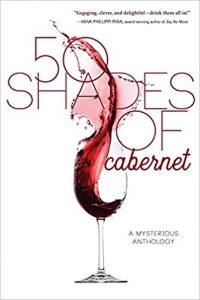
Next, I created 50 Shades of Cabernet, a mysterious wine anthology with authors I knew from Malice Domestic, a fan-based mystery writer’s conference. But I took a different approach and solicited authors who were established, had a following, and created well-crafted mysteries. I knew from experience that these authors would put in the time needed to make the book successful.

mystery author collaboration

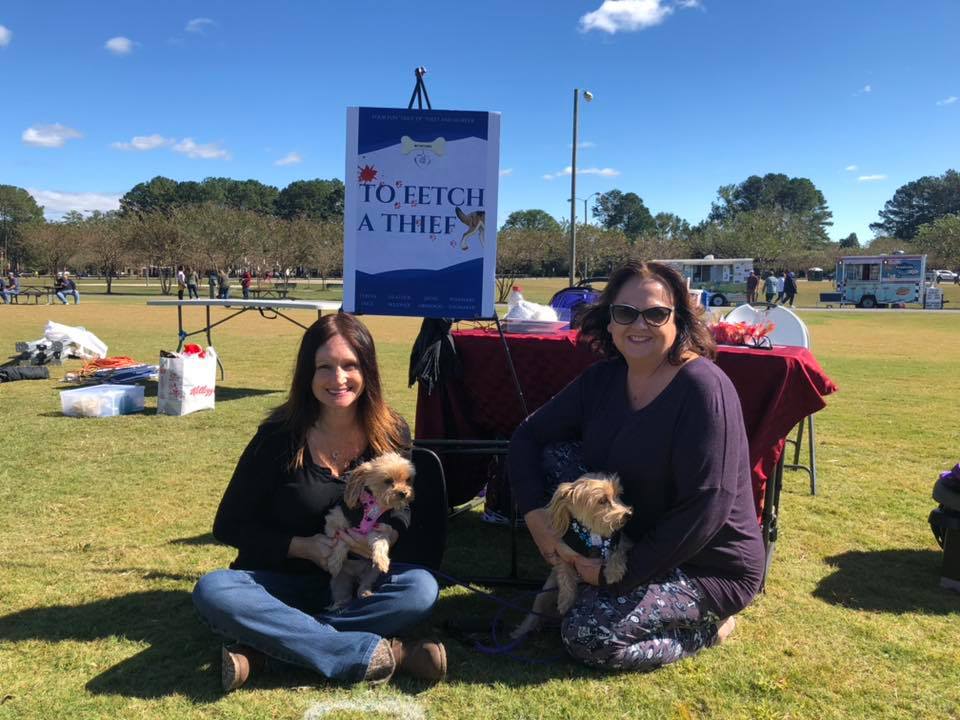
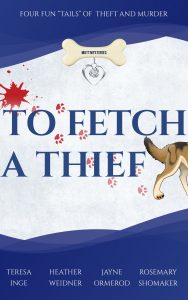
More recently, I collaborated with three authors on To Fetch a Thief, the first Mutt Mysteries collection, featuring four novellas that have “gone to the dogs.” In this howling good read, canine companions help their owners solve crimes and right wrongs.  Since I’ve been in several books with this particular group, we now have the knowledge and experience to create well developed mysteries and a strategic marketing plan.

Collaborating with multiple authors combines efforts to develop great mysteries and create a strong network, since there is strength in numbers.

theresa inge author

VL: Teresa, thank you for sharing your insights. From your closing remarks, it sounds as though collaboration—like so many other things—gets easier with practice. No doubt many authors would benefit from working with and learning from you! 


Teresa Inge grew up reading Nancy Drew mysteries. Today, she doesn’t carry a rod like her idol, but she hotrods. She is president of Sister’s in Crime Mystery by the Sea Chapter and author of short mysteries in Virginia is for Mysteries and 50 Shades of Cabernet.

Going Long

by Rosemary Shomaker

Rosemary Shomaker author

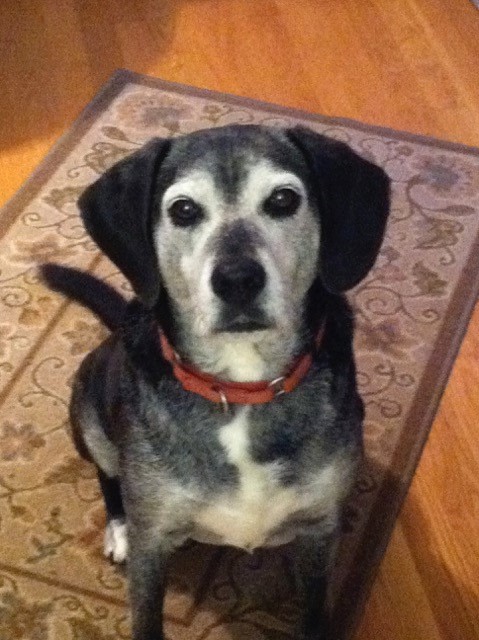
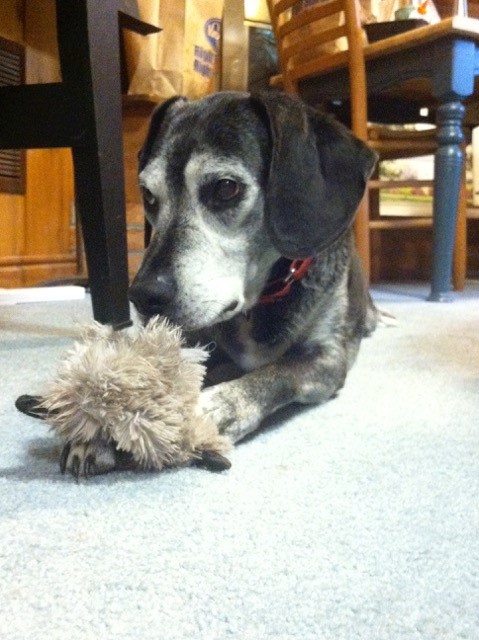
VL: Thanks to Rosemary Shomaker, we have a chance to vicariously experience the struggle of a writer stretching into a new challenge. Although Rosemary doesn’t get into her story in To Fetch a Thief directly, “This is Not a Dog Park” is great. She should definitely go long again/more in the future. And as an added bonus, check out her dog!

 going long


I’ve commented to friends (and to anyone asking about my writing) that completing a novella was difficult for me, a short-story writer. As I reflect on this, the words to “Seasons of Love” from the Broadway musical Rent keep floating through my brain. Let me plant the ear-worm for you:


Five hundred twenty five thousand six hundred minutes.

Five hundred twenty five thousand moments so dear.

Five hundred twenty five thousand six hundred minutes.

How do you measure,

Measure a year?


In daylights?

In sunsets?

In midnights?

In cups of coffee?

In inches, in miles, in laughter, in strife?

In five hundred twenty five thousand six hundred minutes.

How do you measure a year in a life?


Now, let me connect the dots. Short stories have a word count of 4,000 to 8,000 words; those are the targets many publishers suggest when soliciting short story submissions. How long is that? At 250 words to a double-spaced manuscript page, you’ll find short stories weighing in at sixteen to thirty-two manuscript pages. What does that mean in a book? For a 5.5” x 8.5” book size, that translates to ten to twenty pages.

In writing a short story, you typically write twice the length and then cut, edit, and rewrite to produce a tight short story—eliminating half of what you initially wrote. I chose short story projects for several reasons. Primarily, I liked the compressed focus—of both the length and the writing period. I could assess my time and plan accordingly. Violà! I’d finish and see results within weeks or months.

For the first in the planned Mutt Mysteries series we aimed to produce a book including four novellas. “What are those?” you ask. Simplistically, a novella is a short novel or a long short story. To check what I tell you, I Googled “novella,” and found one explanation that a “novelette” runs 7,500 to 17,499 words, and a “novella” is 17,500 to 39,999 words. How precise! You guessed it—40,000 words and more is a novel. The varied fiction genres, however, have specific expectations. A mystery novel runs 80,000 to 90,000 words, for instance. The To Fetch a Thief novellas run about fifty pages each.

I wrote my first draft of “This is Not a Dog Park.” My word count was 8,300 words—and that was only the first draft! Remember my comment about expecting to cut half of a first draft? I was sunk. Clearly, this novella task was a different animal than a short story. Yes, but I didn’t realize the different animal was a beast! I floundered for several weeks, trying to “gin up” my plot and visualize the long mile to 17,500 words. (“Gin up”? Who says that? I looked up the idiom—see  * below for the very interesting origin—I love words—but I digress!)

My first attempts at adding volume to the story were horrible. I found myself cranking up meaningless descriptions. I added useless comments. Each time I did this, my short story writing training rebelled at the waste and at the imprecision of the prose.

It took me adjusting to a completely different mindset to make any useful progress. The place to start for me was the plot. In a novella, I could have more happening than I could in a short story, and I explored that. In addition, my characters could interact more and build their relationships over several scenes. I gave myself permission to relax the compactness of short story boundaries. Still, my product was unfocused. It’s only when I deleted some useless scenes and repurposed others that I felt progress.

Back to the song. Here’s how the words translated to my novella ordeal:


Seventeen thousand—then add five hundred words.

Up to thirty-nine thousand nine hundred ninety-nine.

More than seventeen thousand five hundred words.

How do you measure,

Measure a plot?


In action?

In hours?

In scenes or in lines?

In pages, in edits, in words by the ton?

Seventeen thousand—then add five hundred words.

How do you measure when your novella is done?


The beauty of this novella-writing exercise for me was that finally the “organicness” (that’s a dodgy word—“organicity” is worse—that layers on medical meanings) of writing emerged, finally, and I received the gift of having a glimpse of the work of a true novelist. Yikes, that’s some hard work! My regard for any novelist has increased, and my awe of good novelists compounds exponentially.

In my learning experience writing this novella, I did, as “Seasons of Love” reminds us, “You got to, you got to remember the love.” I do love writing!

* “Gin up” – one Googled source yielded the explanation below. You bet I checked the definition of “feague”! That definition used the euphemism “fundament” . . . I love words!

“Gin up” means enliven, excite or enthuse. Its probable derivation is from the 1800s British slang term “ginger up,” which referred to the practice of putting ginger up a horse’s butt to make him spirited and prance with a high tail, for purposes of show or sale. The other term for this practice is the verb “feague.” This is confirmed both by the online Phrase Finder from the UK and the OED.  (https://www.urbandictionary.com/define.php?term=Gin%20up)

Rosemary Shomaker

VL: Thank you Rosemary! I appreciate your candidness and rich language. In addition, I think you are an inspiration to other writers striving to expand their writing lives. I do hope we collaborate again sometime. And to close out, just one more great photo.

going long


Rosemary Shomaker has called Virginia home for decades. After a state government career writing inspired nonfiction, she now writes fiction. You can find a few of her short stories in anthologies such as Virginia is for Mysteries – Volumes I and II50 Shades of Cabernet, and several of the Shaker of Margaritas anthologies. Her “This is Not a Dog Park” novella is included in the Mutt Mysteries collection To Fetch a Thief. You may recognize her if you shop at thrift stores, attend estate sales, visit historic sites, or poke around abandoned buildings—she cannot resist the lure (and lore) of the past.

Books, Travel, Life is Good!

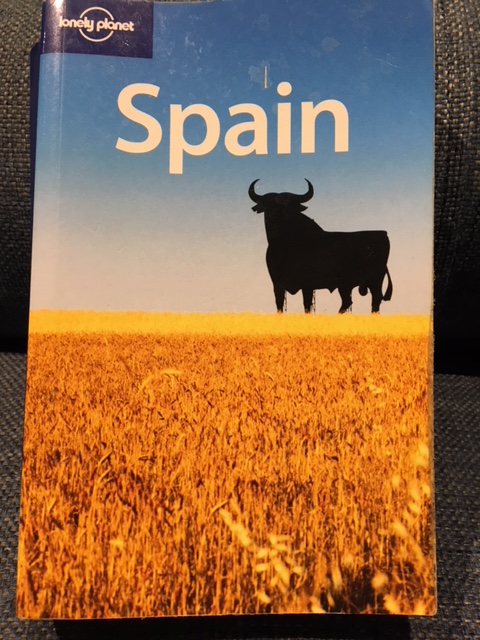
spain book
In a few days I am leaving for Portugal and Spain. For the modern traveler setting off on such an excursion, the expected reading is likely to be a travel guide. In that type of book, I highly recommend the Lonely Planet guides. They are clear, accurate, and comprehensive.


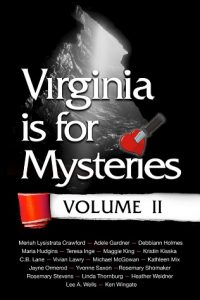
virginia is for mysteries vivian lawry
But those are not the only books people turn to for travel guidance. At one point, Virginia Is For Mysteries was ranked #3 in the Amazon list of travel and tourism—presumably because each story was set in a different Virginia location. People at book signings have said they actually used the book to decide where to go on vacations. One woman said she and her friend were in the process of visiting all the places written about!


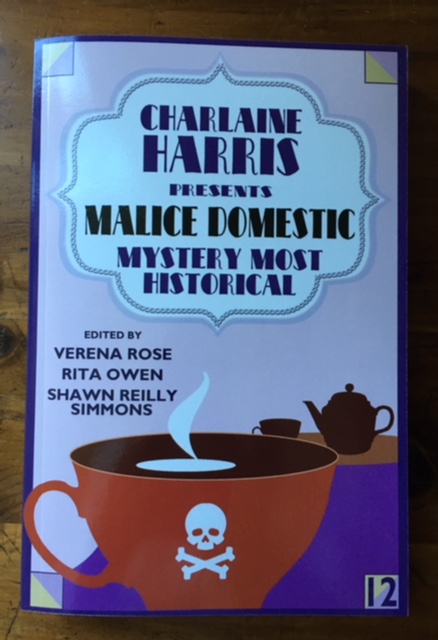
charlaine harris malice domestic mystery most historical
A similar volume is likely to appeal to the armchair traveler. My story in this volume is set in Civil War Richmond, but other authors chronicle death and destruction from Puritan Massachusetts to post-WWII settings, and from Buffalo to Wales.


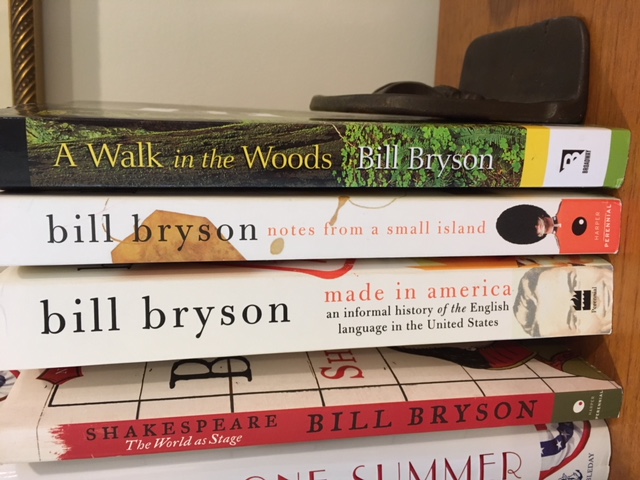
bill bryson books
Although not always writing of travel, when he does, Bill Bryson is one of my favorites. He has a slanted view that appeals to me, along with rich detail, humor, and a fresh take on familiar places.

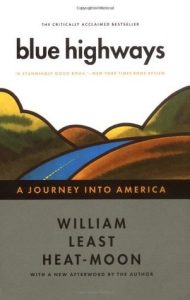
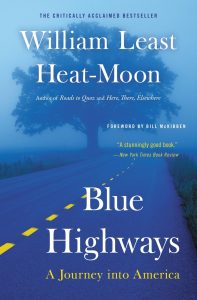
Perhaps you read Blue Highways when it first came out in 1981. It was a bestseller. And it has staying power, for it was reissued in 2012! William Least Heat Moon traveled what one might call secondary roads or scenic byways—the ones shown on road maps as blue lines. He has an amazing voice for taking one off the interstate!


Bottom line: Travel reading is good, and travel is made even better by reading!

In Praise of Anthologies

An anthology is a published collection of writings (such as poems or short stories) by different authors.
vintage short fiction david madden
[Photo credit: Goodreads]
One of the basic characteristics of anthologies is that the works included are relatively short. They are good for days when focusing for a long time may not be feasible, or when one wants a literary bite before bedtime.


By definition, because anthologies include works by different authors, they include different voices, styles, and maybe genres. If you don’t like one story, move on to the next.


When anthologies draw from previously published sources, the work has already been vetted for quality more than once. Indeed, many anthologies are published annually with titles like The Best X Short Stories of (Year).


Anthologies can be selected by format. Most recent anthologies are available both as physical books and ebooks.


Anthologies are often broad in scope.
100 Great Short Stories by Dover Publications
Great Short Short Stories, edited by Paul Negri
The World’s Greatest Short Stories, edited by James Daley
120 Great Short Stories, by Oldiees Publishing
Doubletakes: Pairs of Contemporary Short Stories, edited by T. C. Boyle et al.
40 Short Stories: A Portable Anthology, edited by Beverly Lawn


40 Short Stories: A Portable Anthology, edited by Beverly Lawn
[Photo credit: Amazon]
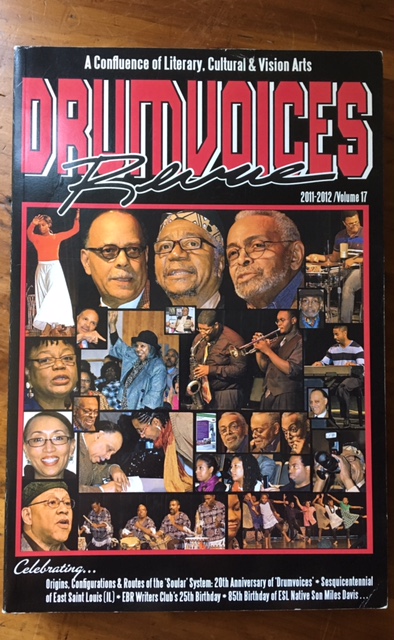
Some anthologies are mission driven. A couple of examples of these would be Drumvoices Revue (where my short story “Aunt Fan’s Private Journey” appeared), which celebrates diversity, and the Chrysalis Reader series, which describes itself as “original essays, poetry, and short stories illuminating the world of spirit.” One volume included my story “Solid Line.”

Sometimes they are focused by geographic region.
The Best American Short Stories, published annually by Houghton Mifflin Harcourt.
Great American Short Stories, edited by Wallace and Mary Stegner
The Anchor Book of New American Short Stories, published by Knopf Doubleday Publishing Group
100 Years of The Best American Short Stories, edited by Lorrie Moore and Heidi Pitlor
The Oxford Book of American Short Stories, Oxford University Press


[Photo credit: Amazon]
 
Themed anthologies are also popular and widely available.  Of course I will start with two mystery anthologies, the two volumes of Virginia Is For Mysteries
 

The Best American Humorous Short Stories, edited by Alexander Jessup
Sand in My Bra and Other Misadventures, edited by Jennifer L. Leo


Sand in My Bra and Other Misadventures, edited by Jennifer L. Leo
[Photo credit: Amazon]
The Best Werewolf Short Stories 1800-1849: A Classic Werewolf Anthology, edited by Andrew Barger
The Best Horror Short Stories 1800-1849: A Classic Horror Anthology, edited by Andrew Barger
The Year’s Best Science Fiction, published annually by St. Martin’s Press
The Mammoth Book of Erotica, edited by Maxim Jakubowski


The Best Werewolf Short Stories 1800-1849: A Classic Werewolf Anthology, edited by Andrew Barger
[Photo credit: Amazon]
Bottom line: Whatever your heart desires, there’s an anthology for you! All you need to do is look.

Radford Reads: Not Your Usual Book Festival!

Collage of images from Radford Reads Festival
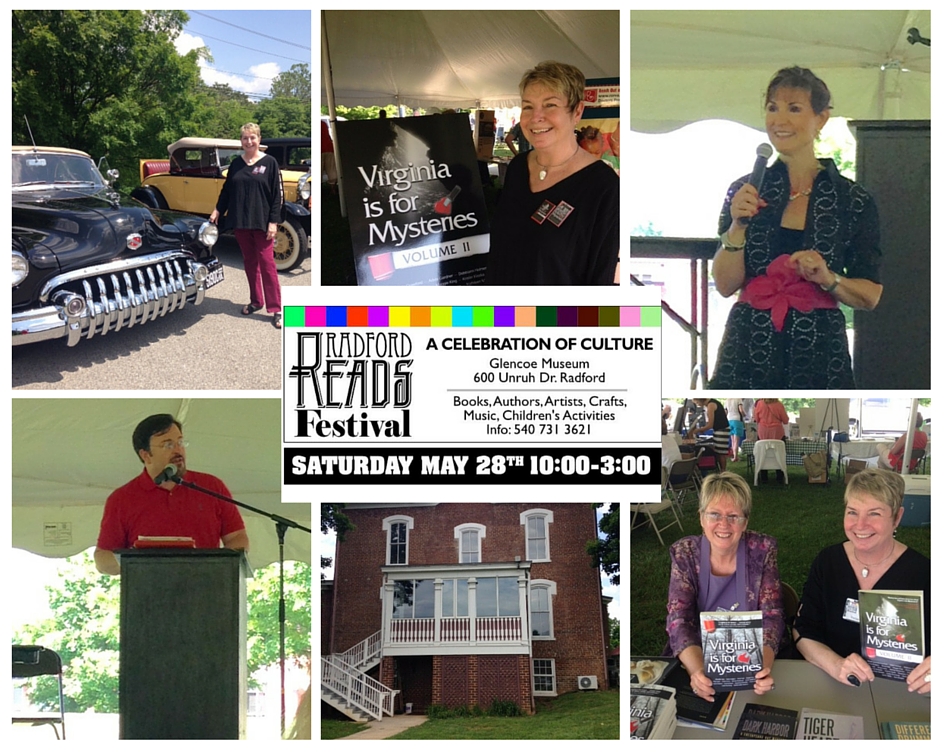
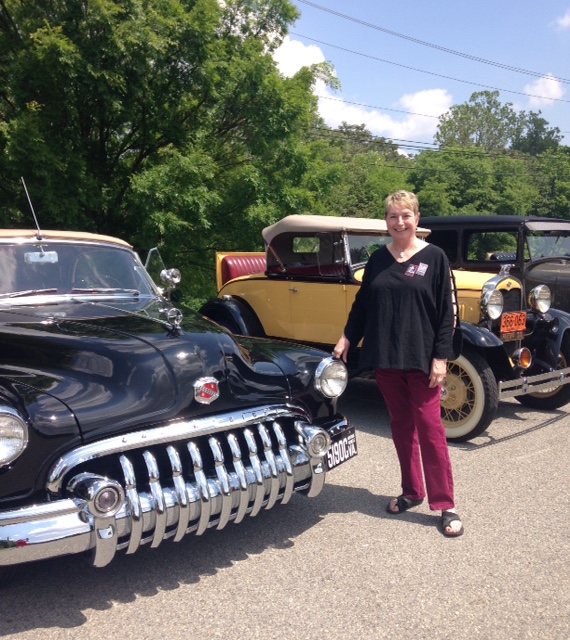
Yes, the Radford Reads Festival had the expected panels, speakers, and workshops (which I’ll get to soon), but it had so much more–just ask any of the attendees who came for the classic cars. . .

Classic cars at Radford Reads Festival and Celebrate Radford Festival

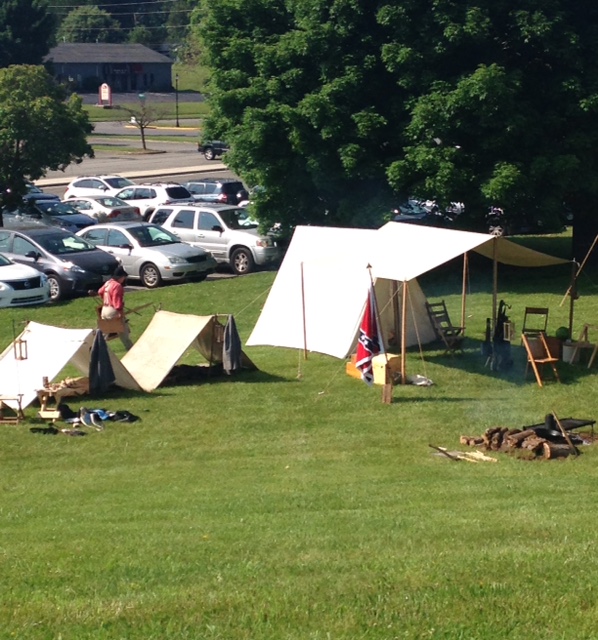
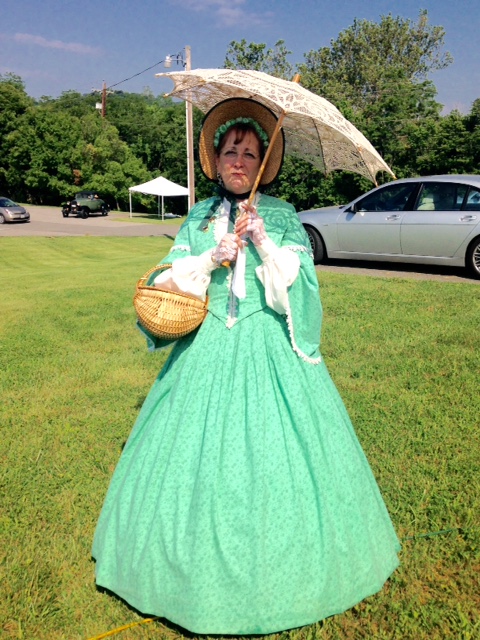
. . . or the blacksmithing, music, quilters, or Civil War reenactors.

There were crafters selling soaps, lotions, jewelry, and leather goods—and books, of course.

two books, Escape from Indian Captivity, Follow the River
Books I purchased at the Radford Reads Festival

This breadth resulted from the joining of Radford Reads with the Celebrate Radford Festival, two events in their 3rd and 4th years, respectively. Both events are free and open to the public.

And then there was the location!

Glencoe Museum

Glencoe Museum
Glencoe Museum hosted Radford Reads

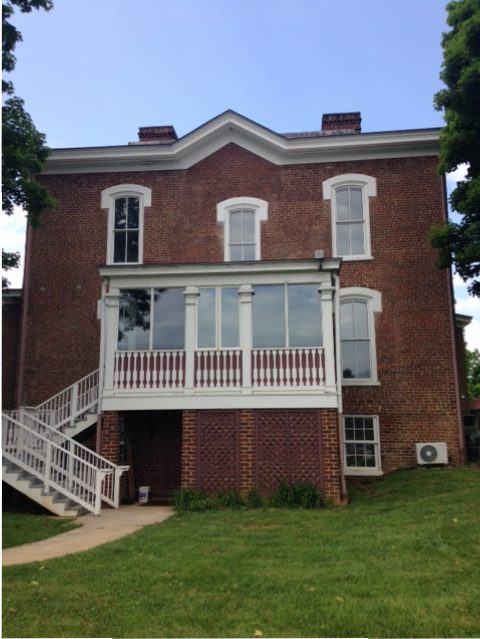
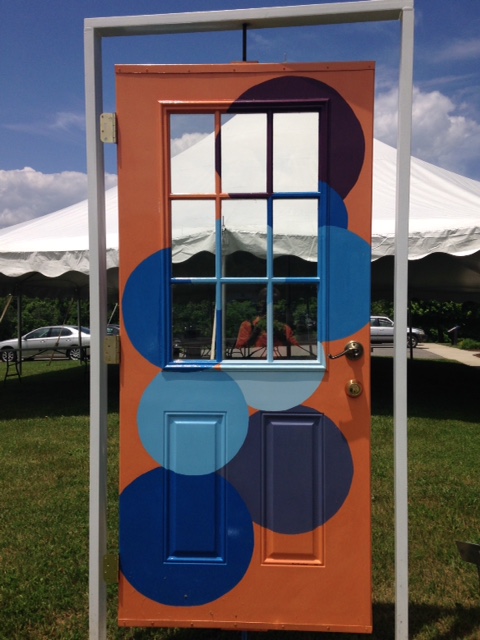
Both events were held on the grounds of the Glencoe Museum, housed in the post-war home of Brigadier General Gabriel C.Wharton, C.S.A., built in the 1870s. The museum includes an art gallery, and for the festival, there was art on the grounds as well.

painted door on display during Radford Reads Festival
Artwork on the lawn of Glencoe Museum

I arrived a day early and toured the museum and art gallery with great pleasure. Even in the midst of preparing for the festival the next day, Scott Gardner, director of the museum, and Maryann Whited graciously guided me.

I loved the woodwork—and the 12 to 13-foot ceilings—as well as the objects, such as this horn, carved in the shape of a fish.

And fascinating historical artifacts—fascinating for me  anyway. Note the exhibit about niter (also called saltpeter). I mentioned train loads of niter in my story “War and Murder at Nimrod Hall” in Virginia is for Mysteries: Volume II.

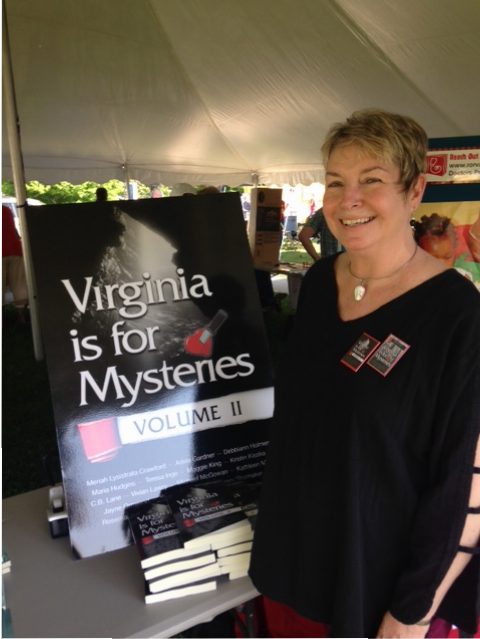
Vivian Lawry standing by signing table at Radford Reads with Virginia is for Mysteries: Volume II
Signing Virginia is for Mysteries: Volume II at Radford Reads

But to the book festival itself.

Radford Reads

Because you are reading this, I assume you are a reader and/or writer, so these are the things that might interest you most.

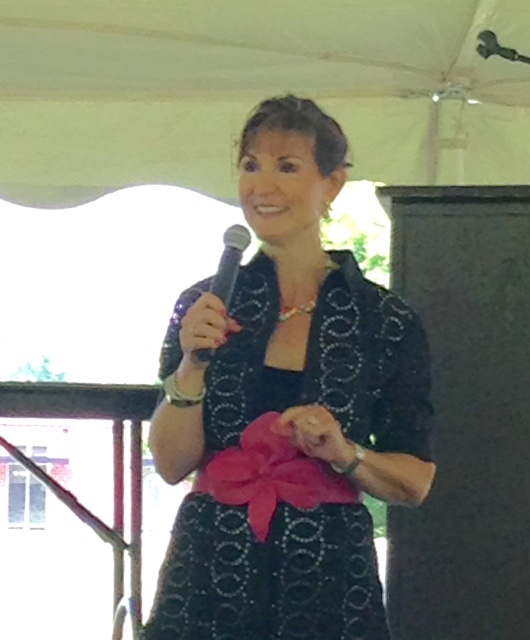
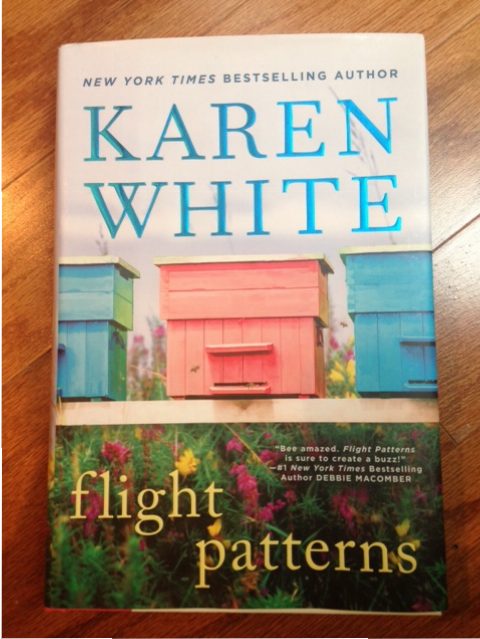
Karen White presented the keynote address. She was terrific! If you have an opportunity to hear her, do. She’s had a number of best-sellers. Her most recent is Flight Patterns. A number of seats had slips of paper taped under them, each giving the holder a free copy of her book—and I was lucky enough to get one! This seems like a great ploy for speaking events. Karen White’s favorite author is Diana Gabaldon, and she says she tries to write the sort of book she likes to read, so I am looking forward to this gift read.

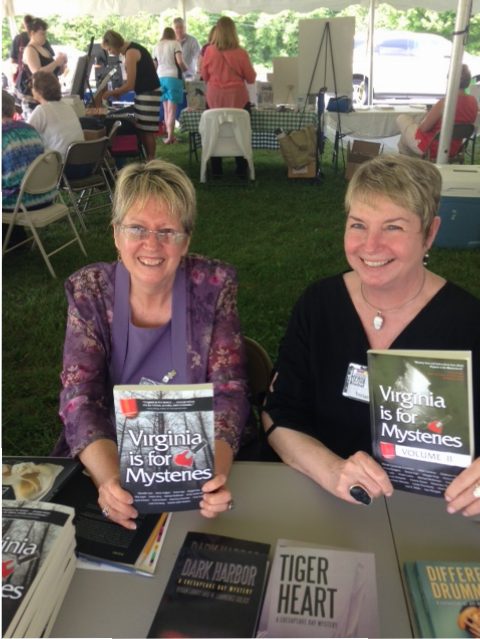
Immediately after that, Linda Thornburg and I presented our workshop on pathways to publication. I thought the attendance was a bit light, but the festival organizer was quite pleased with our attendance compared to the subsequent workshops. Several members of various Sisters in Crime chapters were there, even though our Central Virginia Chapter members were all busy elsewhere. Other workshops covered writing poetry and memoir.

Linda Thornburg and Vivian Lawry holding copies of Virginia is for Mysteries at Radford Reads festival
Linda Thornburg and I signing Virginia is for Mysteries

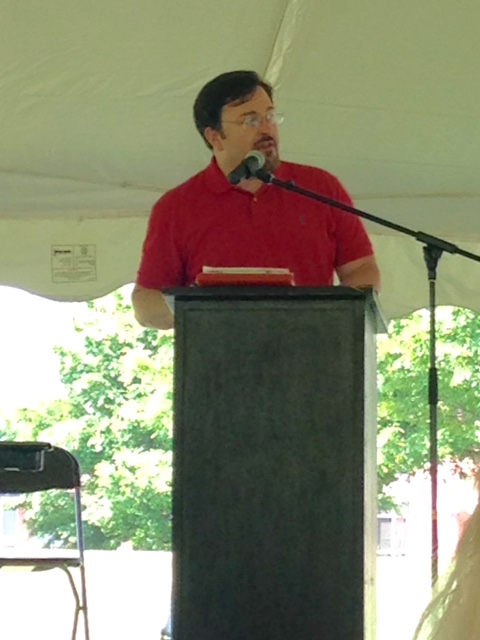
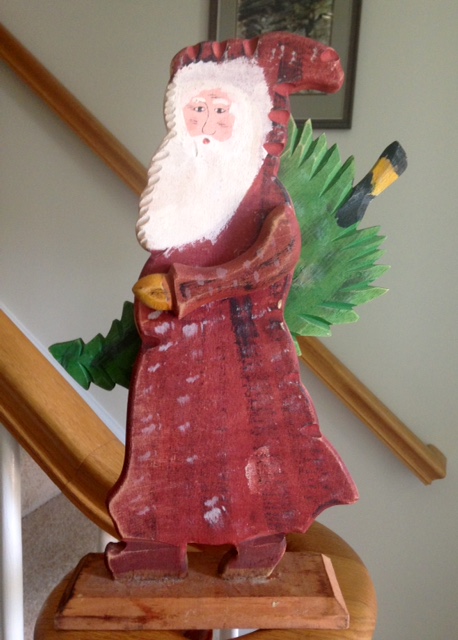
At 1:00, I spoke on the mystery panel. The moderator/host of all the book sessions was David Horton. He was amazing. He had really done his homework on all the presenters. He even mentioned that we share a love of carved wooden Santas!

I enjoyed sharing the panel with Webb Hubbell, Stewart Goodwin, and Mollie Cox Bryan. Check out their books. This panel was sponsored by the Rockwell family.

Other sessions were for writers of children’s and young adult fiction, Southern fiction, memoir, history, and poetry.

The festival had many sponsors. Radford Reads was inspired by the Rockwell family in honor of Jean Rockwell, a former Radford Public Library employee who loved the Virginia Festival of the Book. Besides the Rockwells, other sponsors were the Cheryl Blackwell Book Club, the Jervey Family, Ben Crenshaw Art Studio, The Lamplighters, Radford University Foundation, the Radford Heritage Foundation, Ridge and Valley Reader, the Radford Visitor’s Center, and LaQuinta Inn & Suites—at which I had a very pleasant stay!

It was a real community and family event. Reader or Writer, next year, check it out!  It’s a two-fer, and the price is right.

The Gaithersburg Book Festival: A Premier Event for Writers and Readers!

 Collage of photos taken at Gaithersburg Book Festival, May 21, 2016
Last weekend I participated in the 7th Annual Gaithersburg Book Festival, and I cannot praise it too highly. It had something for everyone! There were writing workshops for adults, teens, and children. The Children’s Village features storytellers, puppeteers, jugglers, authors, and magic, all encouraging reading, writing, and a love of books. There were exhibitor booths catering to adults and children, a variety of food vendors, and live performances by poets and singer-songwriters. And there were book sales!


Books!

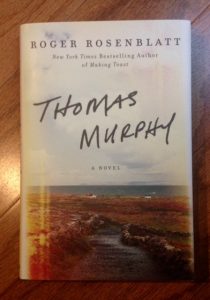
The official bookseller for the even was Politics and Prose. They sold all of the books represented on the program. I bought two, having been captivated by the authors’ presentations I attended after finishing my own presentation and signing. Thomas Murphy by Roger Rosenblatt, who had an engaging conversation/interview with Alice McDermott.


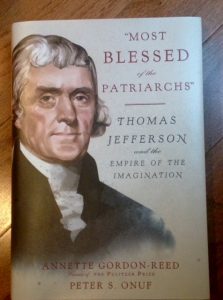
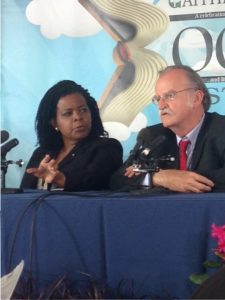
The second book I bought was “Most Blessed of the Patriarchs” by Annette Gordon-Reed and Peter S. Onuf. They presented jointly. She is the author of The Hemingses of Monticello, and a professor at Harvard. He is the Thomas Jefferson Foundation professor of history at the University of Virginia. They were a dynamic duo, talking about what promises to be an atypical biography of Jefferson (e.g., covering music and religion), and answering questions clearly—and patiently!


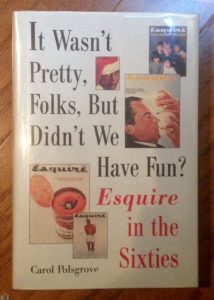
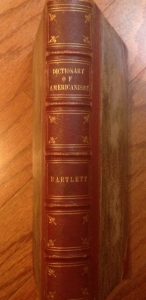
There was also a used book sale by Friends of the Library Montgomery County, MD. I bought two books related to three of my passions: popular culture, old books, and dictionaries! For which I spent a total of $8.


Bartlett’s Dictionary of Americanisms was published in 1848! It explains what a chore is (the equivalent of char in England), and polk, meaning sack. Needless to say, it’s my oldest slang dictionary, and it nicely illustrates that what was slang 200 years ago has moved into—and sometimes through—mainstream English!

Authors!

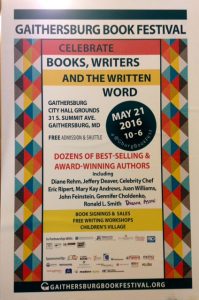
GBF drew participants from near and far. I met authors from New York, Texas, and London—to name a few. Some of the famous authors were highlighted on the festival poster, for example, Juan Williams.


Well-known or not, everyone was articulate and professional.


But enough about attending. As an author presenting there, I couldn’t have been treated better!


Before the event, my primary contact was Carolyn Crosby, the Senior Program Supervisor. She was not only friendly and gracious but well-organized and responsive. She made sure I had all the info I needed ahead of time, from hotel reservation to maps to advice on rain gear.


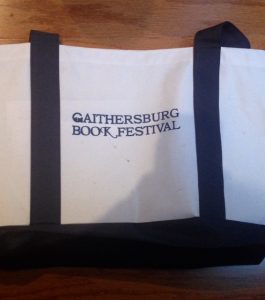
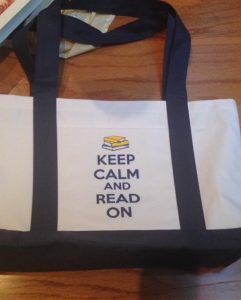
The festival hotel, Homewood Suites by Hilton, was spacious, comfortable, and provided shuttle service to all events. They gave us our GBF book bags, containing all the important stuff (program, shuttle schedule, maps) and no throw-away junk. It’s a classy bag, heavy canvas.


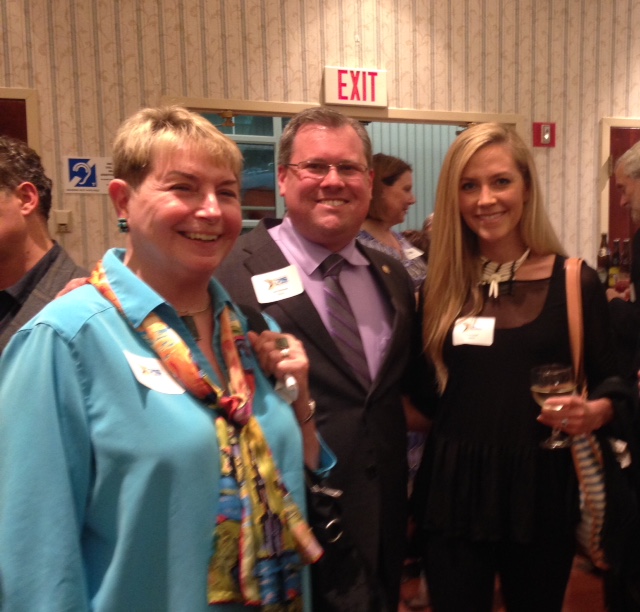
On Friday evening, there was a VIP Reception from 7:00 till 10:00. The food was great and plentiful, and there was an open bar. Presenters mingled with those involved in producing the event. I met Jud Ashman, Founder and Chair of GBH and currently mayor of Gaithersburg. He is articulate and humorous! He’s shown here with me and M.Tara Crowl, who writes fantasy fiction for middle-schoolers.

Vivian Lawry, Jud Ashman, M.Tara Crowl at Gaithersburg Book Festival VIP party
Vivian Lawry, Jud Ashman, M.Tara Crowl

Gaithersburg Book Festival is a rain-or-shine event.

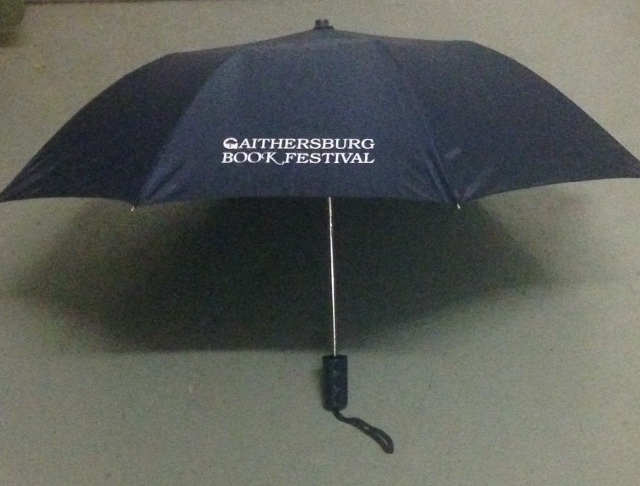
All of the programs are under tents—and this year it was rain, with temperatures in the low-50s. GBH is a class act, and they provided all the presenters with umbrellas.


umbrella with Gaithersburg Book Festival logo
Gaithersburg Book Festival umbrella


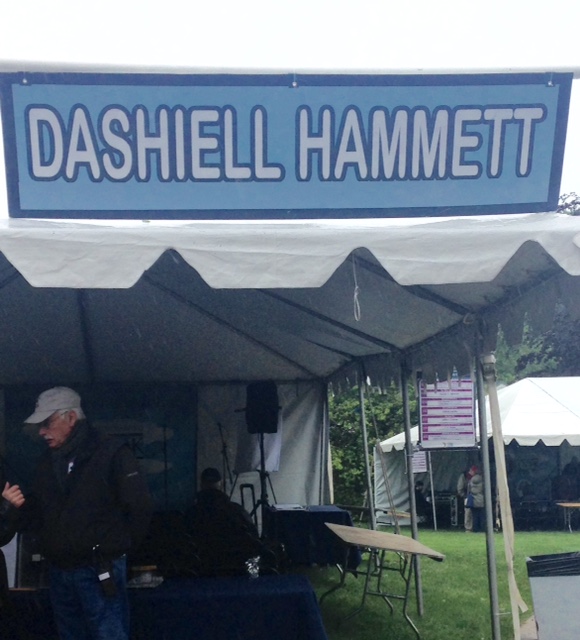
The weather dampened people but not spirits. Attendees could choose among 10 presentations at a time, each in a tented pavilion: Dashiell Hammett, F. Scott Fitzgerald, Edgar Allan Poe, H.L. Mencken, James Michener, Gertrude Stein, Rachel Carson, Jim Henson, Willa Cather, Ogden Nash.

Dashiell Hammett Pavilion at the Gaithersburg Book Festival
Pavilion where I spoke

Speaking!

I was on at 10:00 a.m. in the Dashiell Hammett Pavilion. Debbiann Holmes and I talked about Making Fiction Real. We seem to make a great sister act. Maybe we should take it on the road.

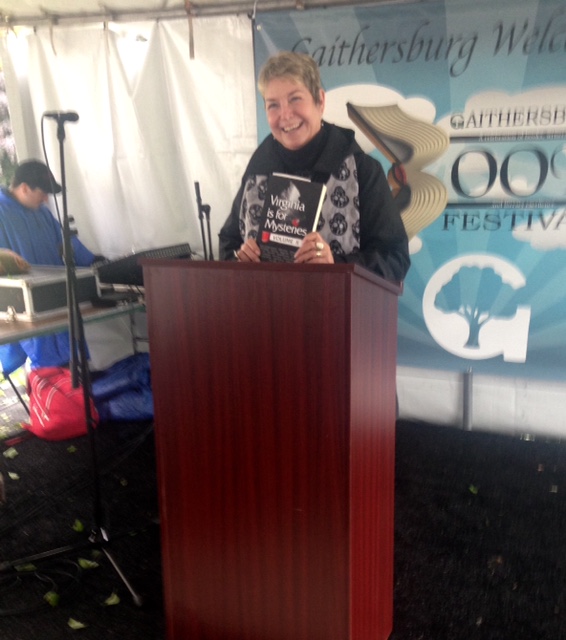
Vivian Lawry speaking at Gaithersburg Book Festival, holding copy of Virginia is for Mysteries
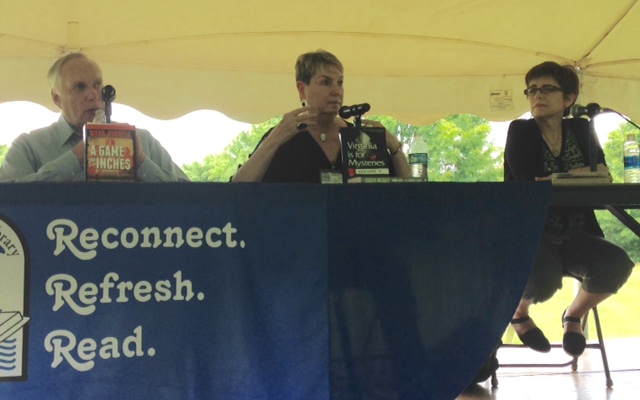
Virginia is for Mysteries was with me at Gaithersburg Book Festival

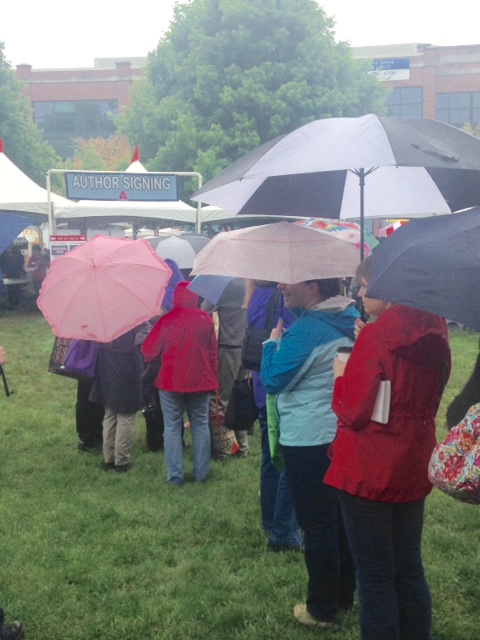
Enthusiastic, upbeat volunteers were everywhere.They kept the presenters on time starting and ending. We were escorted to the pavilion for the presentation, then to the signing area after. People seemed okay waiting in the rain to get books signed.


Readers at the Gaithersburg Book Festival waiting in line for author signing
Signing line

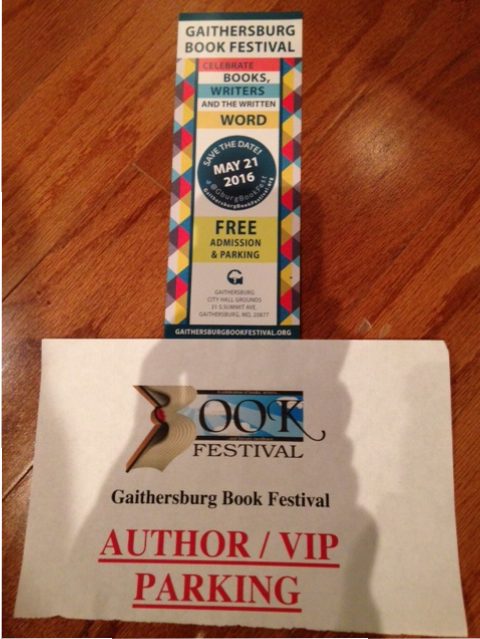
By definition, presenters were VIPs. Besides umbrellas and book bags, we had reserved parking, special registration, and a VIP lounge with refreshments all day.


Gaithersburg Book Festival information and parking pass, "Author/VIP Parking"
Gaithersburg Book Festival information and parking pass

But perhaps the most striking aspect overall was the universal enthusiasm and the breadth of community support. Just look at the number of partners and sponsors they have!


List of Gaithersburg Book Festival partners and sponsors
Partners and Sponsors

I want to go again! And you should go, too. It might even be sunny!

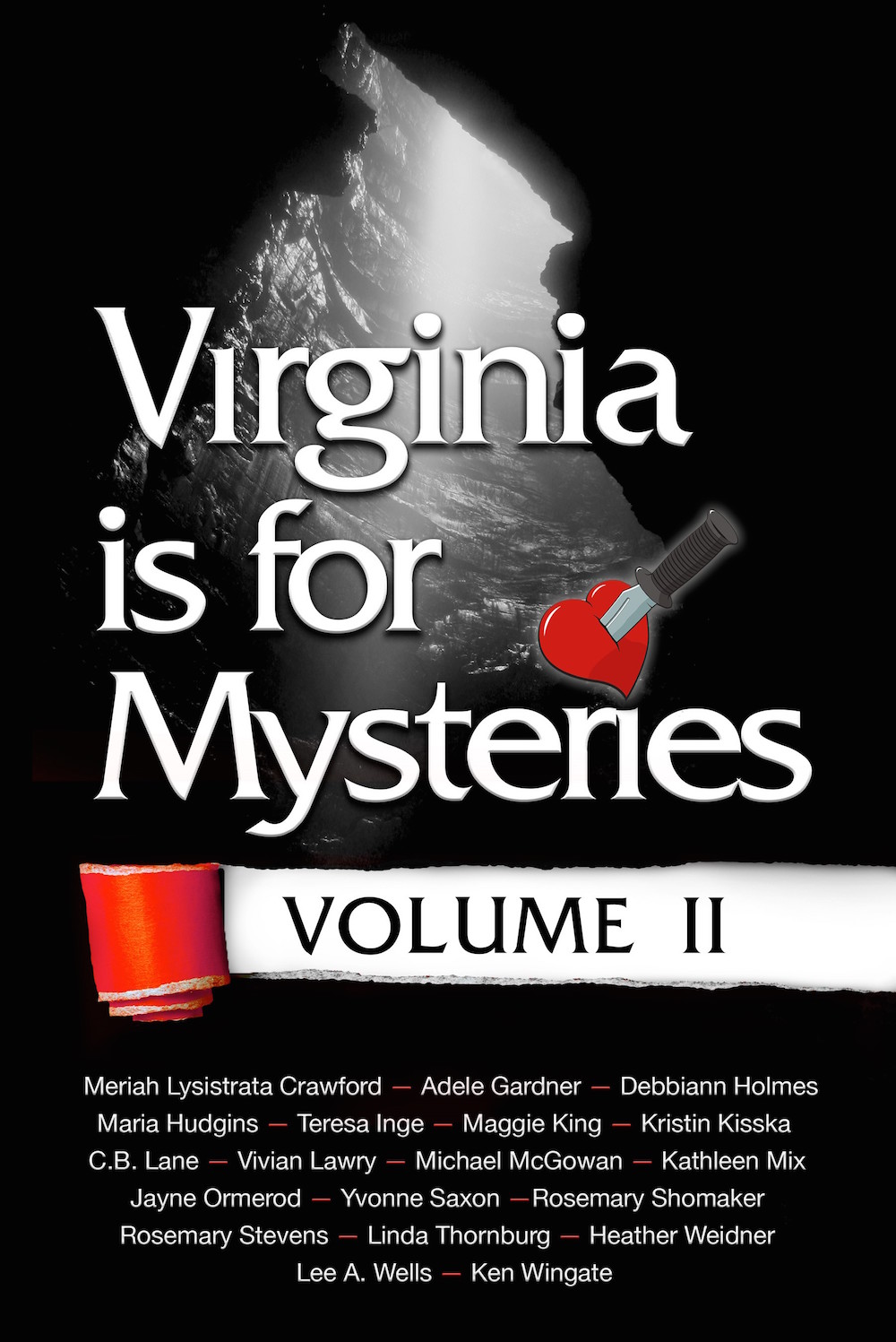
Virginia is for Mysteries: Volume II is out!

I’m excited that Virginia is for Mysteries: Volume II is available!

Virginia is for Mysteries: Volume II
Now available!

You can find it at your bookstore of choice. (Barnes & Noble is releasing the book later this month.)

IndieBound

Amazon

Barnes & Noble

Books-A-Million

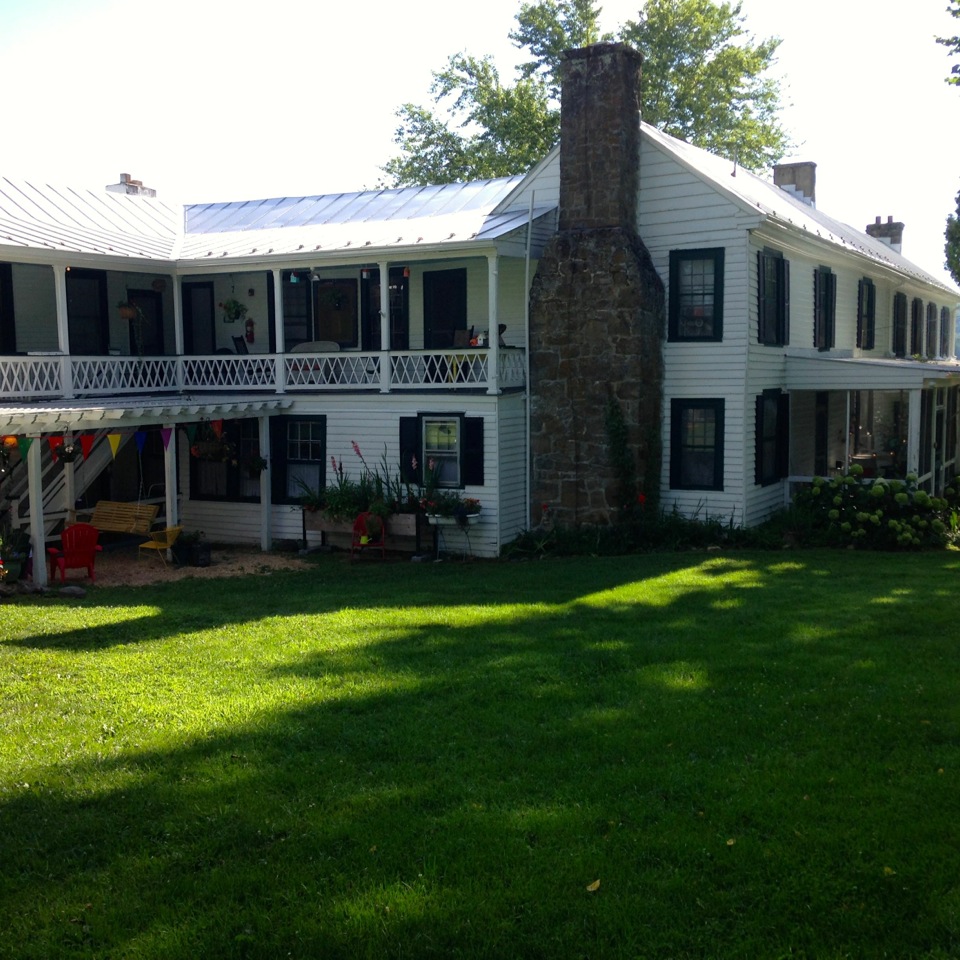
I’m honored to have my story “War and Murder at Nimrod Hall” in the anthology. My story is set at historic Nimrod Hall. Over on the Virginia is for Mysteries blog, I shared how Nimrod Hall inspired me. 

Nimrod Hall main buildling
Nimrod Hall

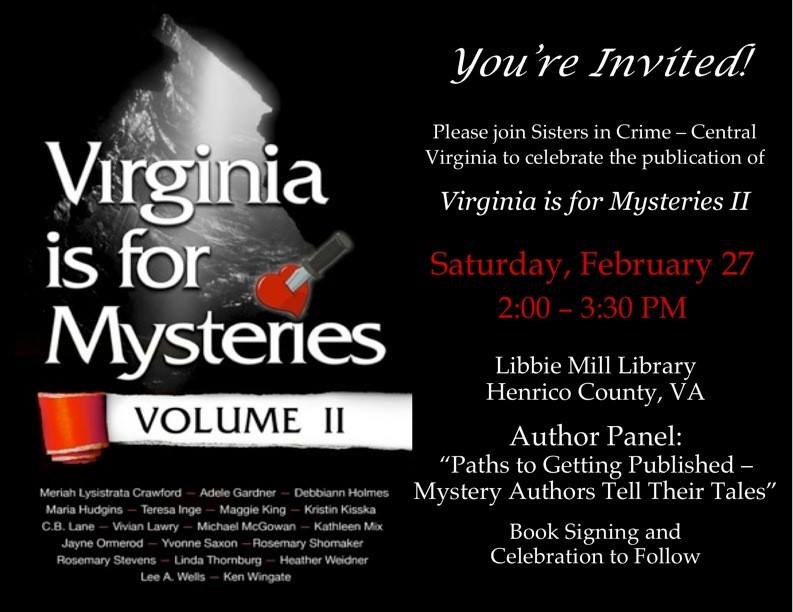
I hope you can join the authors on Saturday, February 27, at Libbie Mill Library for an author panel and book celebration. Thank you for all your support!

Virginia is for Mysteries Book Signing and Celebration

Virginia is for Mysteries Volume II celebration on February 27th at Libbie Mill LibraryI hope you’ll join me and the Sisters in Crime–Central Virginia to celebrate the publication of Virginia is for Mysteries: Volume II on February 27, 2:00-3:30 p.m. We’ll begin with an author panel, “Paths to Getting Published–Mystery Authors Tell Their Tales.” A book signing and celebration will follow.

Click here to learn more about Virginia is for Mysteries or check out our blog.

Pre-order Virginia is for Mysteries: Volume II.

Pre-order at Amazon 

Pre-order at Barnes and Noble 

Pre-order at Books a Million

Pre-order at IndieBound 

Or join us on February 27th!