Christmas Eve Then and Now

Darwin's Christmas! Christmas Eve

This post is part of a series that might be characterized as Darwin’s Christmas. I will be taking a number of our current traditions and tracing their evolution.

For centuries Christmas was celebrated as a season, not a single day, and the beginning of that season was on Christmas Eve. Western Christianity and the secular world recognize December 24th as Christmas Eve. The most widely practiced Christmas Eve tradition or custom that is still practiced today is the attendance at a church service.
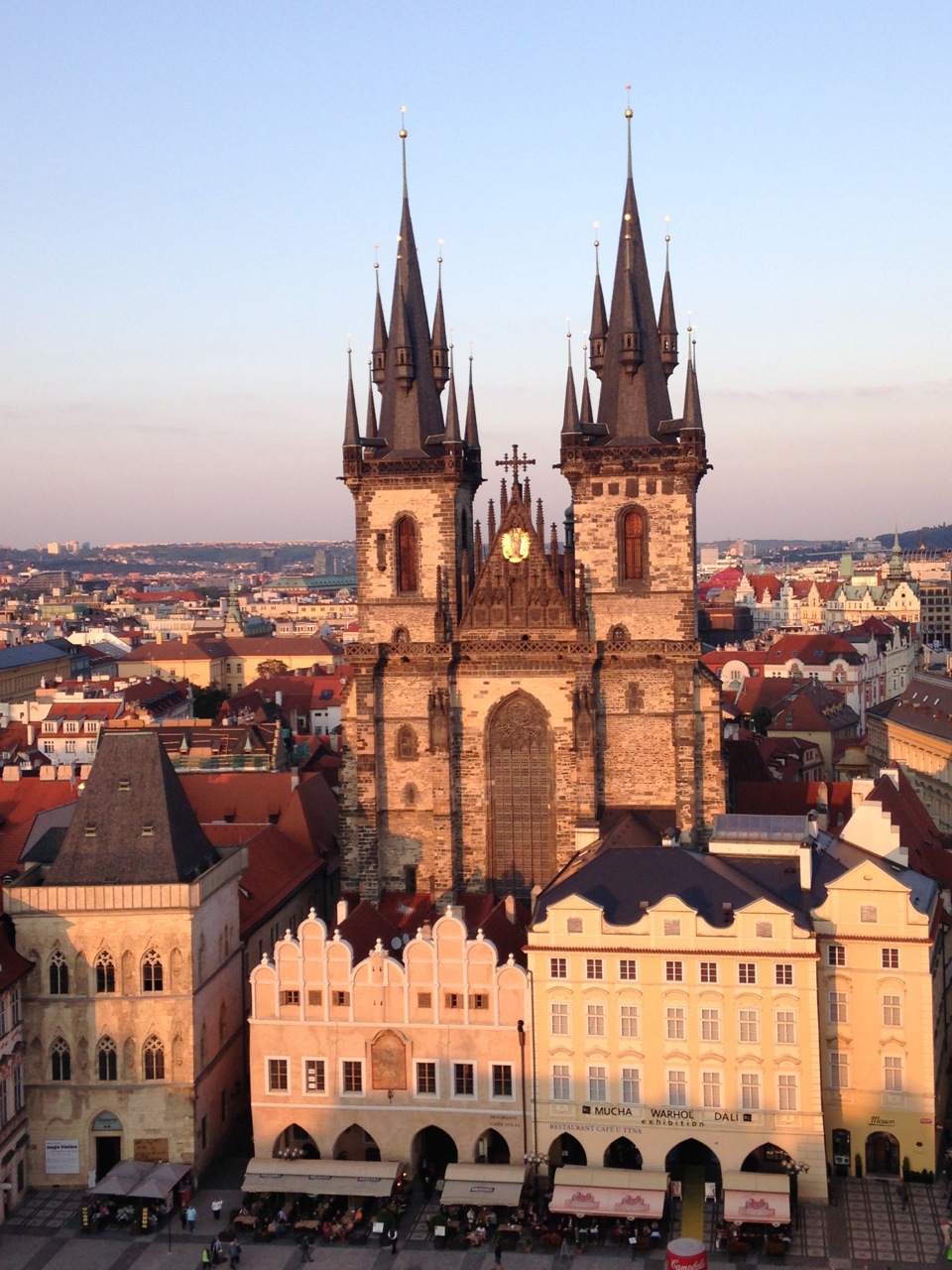
Church of Our Lady before Týn in Prague, Czech Republic
Church of Our Lady before Týn
Prague, Czech Republic
In predominantly Catholic countries (e.g., Spain, Mexico, Poland, and Italy) a Midnight Mass is the most important service in the Christmas season. People often abstain from meat or fish on Christmas Eve and then eat the main Christmas meal after the Midnight Mass Service. In other countries (e.g., Belgium, Finland, Lithuania, and Denmark) the meal is eaten before the Midnight Service.
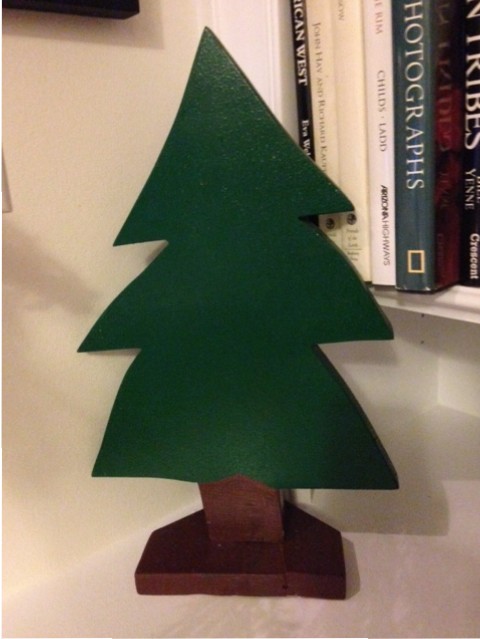
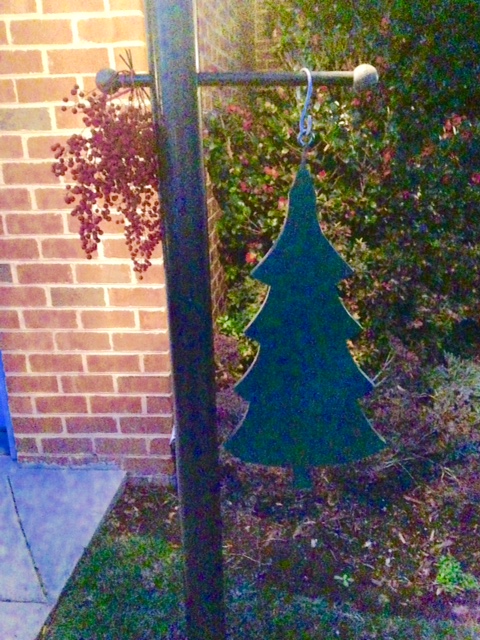
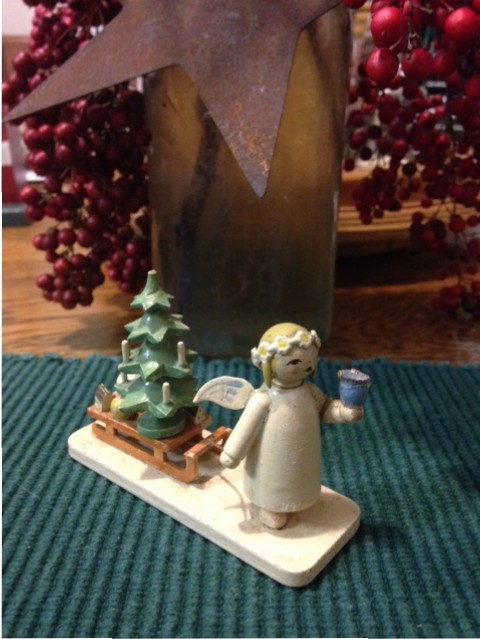
wooden cutout christmas tree
Tradition  dictated that greenery such as holly, ivy, and mistletoe should only be brought into the house on Christmas Eve. We all know what’s happened with that one in the United States! In some European countries (e.g. Serbia and Slovakia) the Christmas tree is brought into the house and decorated on Christmas Eve, as well.


In Norway the decorating of the tree is traditionally done by the parents behind closed doors while the children wait outside. “Circling the tree” follows, where everyone joins hands to form a ring around the tree and they walk around it singing carols. Gifts are distributed afterwards.
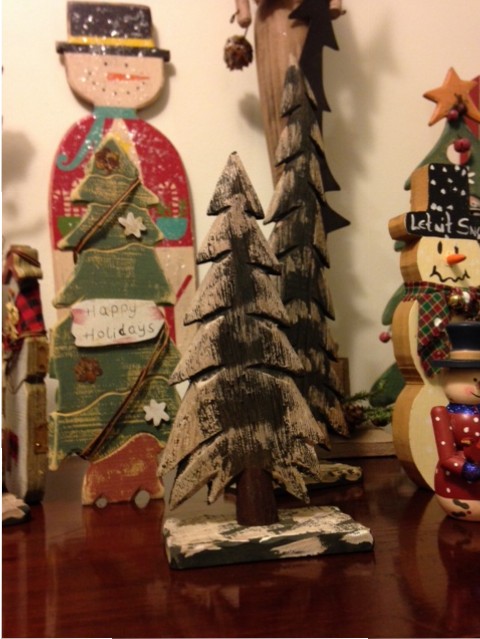
collection of wooden christmas trees
In Germany, the Tannenbaum (Christmas tree) was traditionally decorated by the mother, in secret, with lights, tinsel, and ornaments. It was lit and revealed on Christmas Eve with cookies, nuts, and gifts under it.
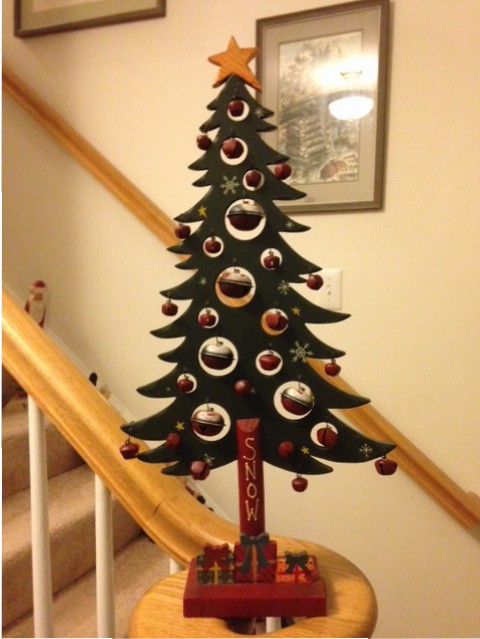
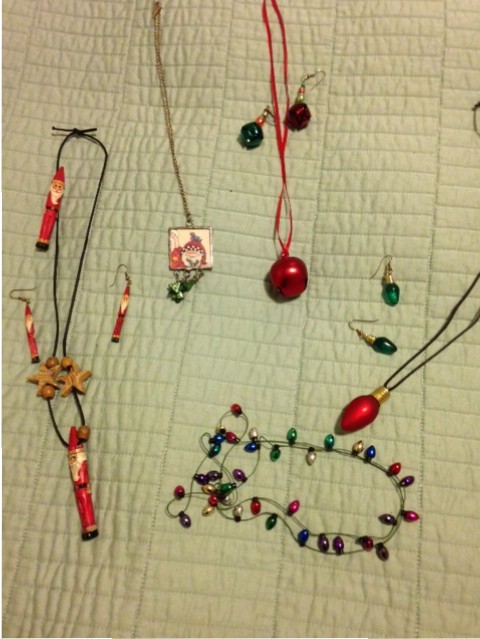
christmas tree wooden cutout with bells
In the United States, the decorating of trees, houses, lawns, and people begins weeks before Christmas.
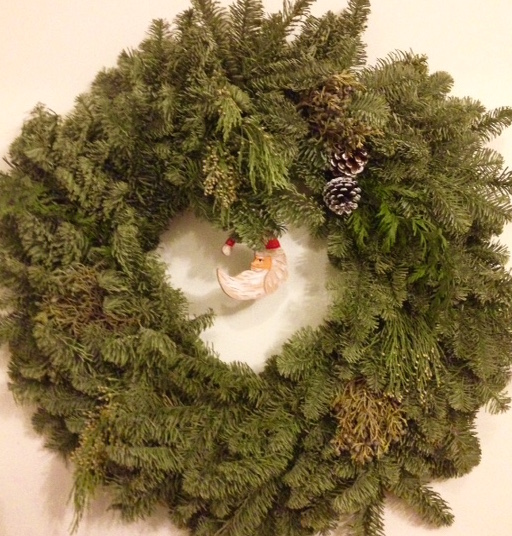
It is also common to go caroling on Christmas Eve. (Click here to read about the evolution of Christmas carols.) In the UK, if not caroling, perhaps wassailing or mumming.
figurine of three snowmen caroling
Another wide-spread custom is the hanging of Christmas stockings, preferably on the fireplace, since that’s where Santa Claus is supposed to enter. Traditionally, Christmas stockings are filled on Christmas eve.
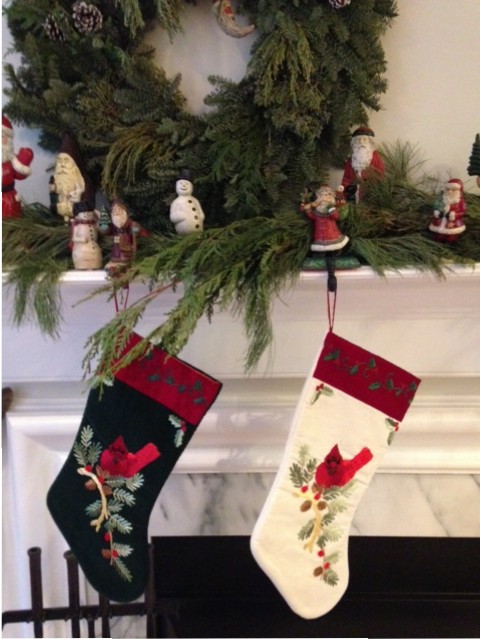
stockings waiting to be filled on Christmas Eve
Even the Smithsonian can’t trace the origins of hanging stockings, but clearly it was well-established by the time Clement Clarke Moore wrote “A Visit From St. Nicholas” (better known as “The Night Before Christmas”). In Tuesday’s blog, I mentioned the legend that St. Nicholas provided dowries for three pious but impoverished sisters. One version of that legend has St. Nicholas coming down the chimney at night and putting a gold ball in the toe of each girl’s stocking, recently laundered and hung by the fire to dry.


Of course families have their own traditions of activities, food, and decoration passed on from generation to generation. But one that is nearly universal is that the bringer of gifts now does so on Christmas Eve.
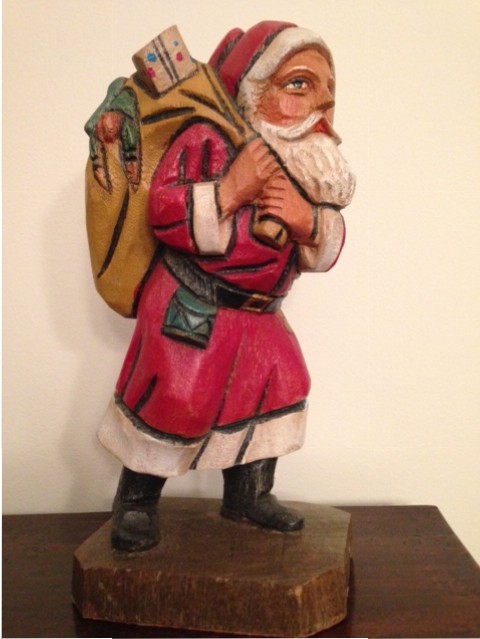
Santa Claus bringing gifts on Christmas Eve
P.S. I have focused on Christmas Eve from the Western Christian perspective. I urge you to explore more broadly, including Eastern celebrations and Jewish Christmas traditions!

Darwin’s Christmas series

Putting Christmas into Carols

christmas carols - Darwinian Christmas

This post is part of a series that might be characterized as Darwin’s Christmas. I will be taking a number of our current traditions and tracing their evolution.


Christmas Carols have always been around, right? No, not exactly.
 
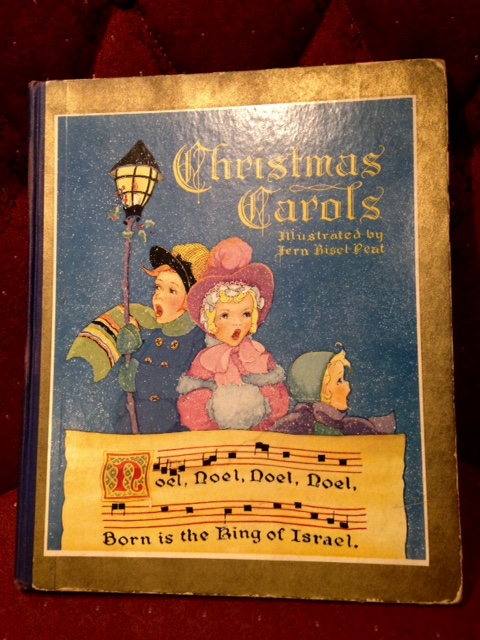
Christmas carol book


Carols were sung in Europe thousands of years ago. The word “carol” means dance or song of praise and joy, and they used to be common during all four seasons. Pagan carols at Winter Solstice celebrations were sung as people danced around stone circles. The Winter Solstice is the shortest day of the year, usually falling around Dec. 22. Carols at other seasons of the year have largely disappeared. Perhaps winter carols have survived because early Christians took over the pagan solstice celebrations for Christmas and gave people Christian songs to sing instead of pagan ones.


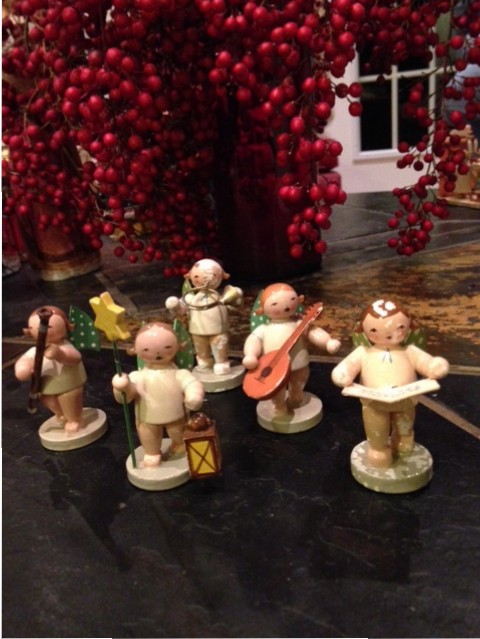
angel carolers figurines


In AD 129, a Catholic Bishop said that a song called Angel’s Hymn should be sung at a Christmas service in Rome. Another early Christmas Hymn was written in AD 760, by Comas of Jerusalem for the Greek Orthodox Church. In subsequent years, composers all across Europe wrote such hymns. They never became popular, some say because they were written in Latin, which common people didn’t understand.


In AD 1223, St. Francis of Assisi started Nativity Plays in Italy. The people in the plays sang canticles that told the story during the plays, normally in a language that the audience could understand and join in. The new carols spread across Europe. In AD 1426, John Awdlay, a Shropshire chaplain, listed twenty-five “caroles of Cristemas,” the first written record in English. During the 15th century and through the Elizabethan Era (ending 1603), these carols were untrue stories loosely based on the Christmas story and intended as entertainment rather than worship. They were sung in homes, not churches. Traveling minstrels freely changed the words to suit the local people wherever they were. For example, I Saw Three Ships might first have represented ships taking the skulls of the three wise men to the Cologne Cathedral, but over time and venues, the travelers on the three ships were sung to be many different Biblical characters.


traveling angel caroler


When Oliver Cromwell and the Puritans came to power in England in 1647, the singing of carols was banned. Carols survived because people sang them in private. During the Victorian period, many new carols were written including Good King Wenceslas. Hark! The Herald Angels Sing (originally Hark! How All the Welkin Rings), The First Noel, and God Rest You Merry, Gentlemen were popularized. The custom of singing carols in the streets became popular and remains so today.


Martin Luther authored carols and encouraged their use in worship. Adeste Fideles had attained it’s modern form in the mid-18th century, although the words might date to the 13th century. God Rest Ye Merry, Gentlemen, The First Noel, I Saw Three Ships, and Hark! The Herald Angels Sing appear in a collection assembled by William Sandys in 1833. It Came Upon a Midnight Clear also dates from this period. In 1865, Christmas-related lyrics were sung to the melodies of traditional English folk songs, such as Greensleeves—think What Child is This.


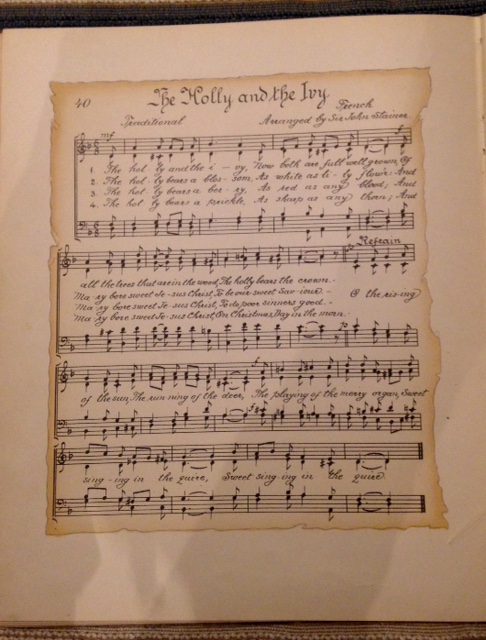
Good King Wenceslas and The Holly and the Ivy can be traced directly back to the middle ages, and are among the oldest musical compositions still sung regularly.


sheet music of Christmas carol "Holly and the Ivy"


In older times, caroling children asked for (and were given) edible gifts such as dried fruit, eggs, nuts or sweets. By the 20th century, the edible gifts had been replaced my money. Caroling is also done by choirs, marching bands, groups trying to raise money for trips, projects, or charity, folk societies, neighbors and well-wishers.


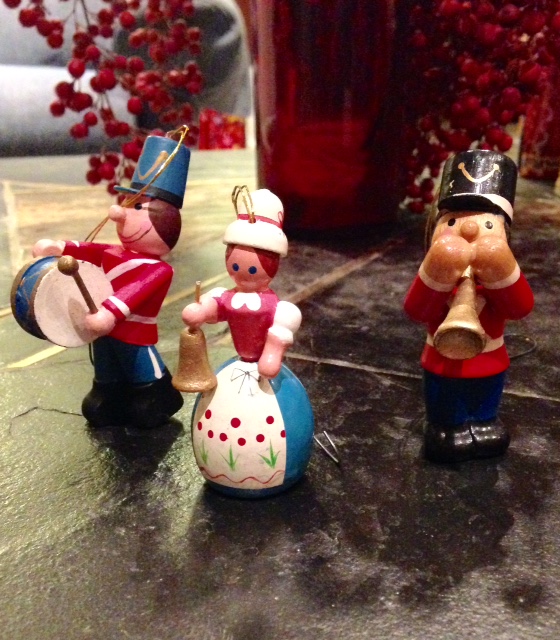
three carolers figurines


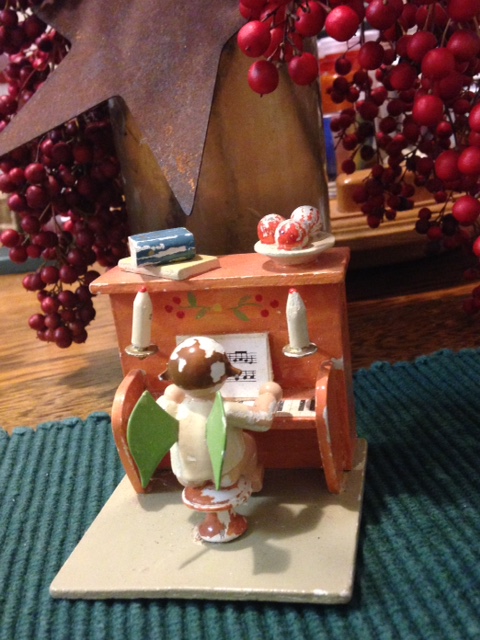
Now caroling often includes secular as well as religious music. Such songs written in the United States range from Jingle Bells and Frosty the Snowman to O Little Town of Bethlehem to Away in a Manger. So gather round the old piano and celebrate the season with songs of your choice!


piano player figurine

A Darwinian View of Christmas Trees and Greenery

darwins christmas greenery

This post is part of a series that might be characterized as Darwin’s Christmas. I will be taking a number of our current traditions and tracing their evolution.

There are those, for example David C. Pack writing in The Real Truth magazine, who denounce the pagan origins of Christmas trees and other greenery. Pack cites Jeremiah 10:2-5 to support his assertion that we should have nothing to do with Christmas trees.

I am not among those. The reality of the world is that things morph and change—the meaning of words, clearly, but other symbols as well. So let’s take a look at the consensus around the evolution of the Christmas tree.

collection of wooden christmas trees, greenery

Long before the advent of Christianity, evergreen plants had a special meaning for people in winter. Ancient people hung evergreen boughs over their doors and windows. In many countries, people believed that these would keep away witches, ghosts, evil spirits, and illness. The Romans used fir trees to decorate their temples at the festival of Saturnalia. Today, Christians use it as a sign of everlasting life with God. Why can’t it symbolize all those things?

Although evergreen trees are the through-line, in parts of northern Europe, cherry or hawthorn plants or branches were brought inside in hopes they would bloom in time for Christmas.

Many early Christmas trees were hung upside down from the ceiling.

The first documented use of tree at Christmas and New Year celebrations was in 1510, in Riga, the capital of Latvia. After the ceremony (involving men wearing black hats) the tree was burned. This is sometimes associated with the yule log.

wooden cutout christmas tree

The first person to bring a tree into the house, in the way we know it today, is thought to have been the German preacher Martin Luther in the 1500s. The lore goes that he was walking home in winter, was impressed with the stars shining through tree branches, and cut a tree to take home. He put small lit candles on the branches to share his vision with his family. There are other stories, for example about St. Boniface of Crediton leaving England to travel to Germany. But this isn’t an encyclopedia, so I’ll move along.

christmas tree wooden cutout with bells

But another point of consensus seems to be that Christmas trees took hold in Germany and spread across the world from there. In Germany, early trees were decorated with edible things like gingerbread and gold-covered apples. But by 1605, they were decorated with paper roses, apples, wafers, gold foil, and sweets.

The Christmas tree came to Britain sometime in the 1830s, and became popular in 1841 when Queen Victoria’s German husband had a Christmas tree at Windsor Castle. From England to the United States, from candles to electric lights, the evolution continued. Artificial Christmas trees have long been popular, from the trees made from colored ostrich feathers in the Edwardian period on. Over the years, artificial trees have been made from feathers, papier mâché, metal, glass, and lots of plastic. Now lawns sometimes sport inflatable trees!

So, if pre-Christians and Christians both found good in the green of midwinter, fine with me! I plant hellebores and other evergreens where I can see them on the shortest days of the year.

hellebore-niger-christmas-rose