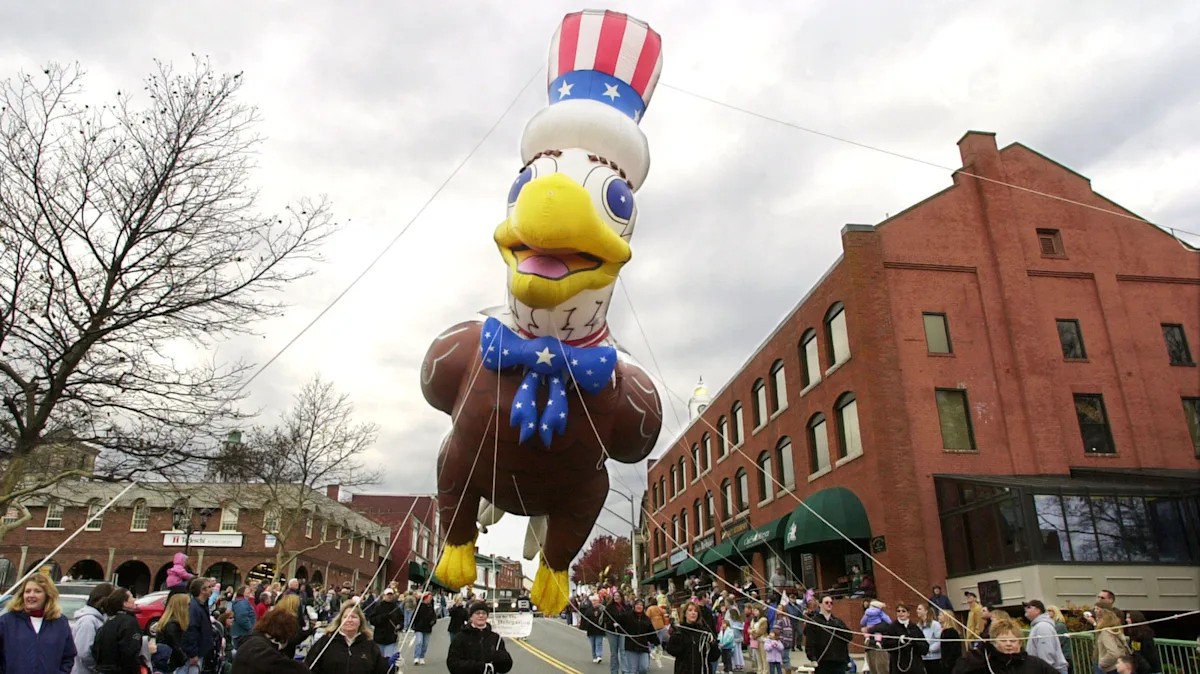
GIVING THANKS AROUND THE WORLD (Part 3: The West and Beyond)

In this last blog of the giving thanks series, I’ll focus mainly on the Americas and nearby islands, but with a P.S. related to American history.

Indigenous North Americans

Centuries before Europeans landed at Plymouth Rock or Newfoundland, agricultural communities along the Eastern seaboard held annual harvest celebrations every year. Though the details varied among tribes and climates, all involved giving thanks for a successful harvest and making preparations for the coming winter.

People preserved food they’d grown or gathered, such as cattails, corn, pawpaws, pumpkins, and fish. They also repaired and reinforced structures to face the coming winter weather. Festivities included music, dancing, and games.

Puerto Rico
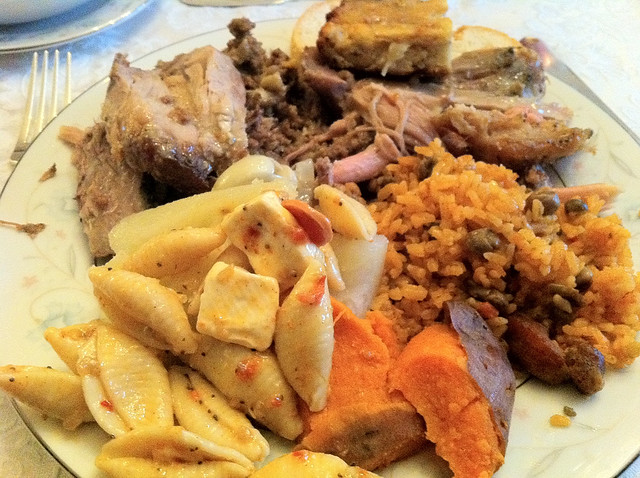
After Puerto Rico became a territory of the United States in the late 19th century, its residents adopted many of the traditions of the American holiday, blending them with Puerto Rican culture. The focus is on a Thanksgiving meal that fuses flavors from both cuisines, with large family gatherings. Puerto Ricans celebrate Thanksgiving on the same day as Americans (the fourth Thursday in November).

But Puerto Ricans have put their own twist on the traditional Thanksgiving Day feast: there’s usually turkey—whether a roasted, seasoned pavochón or a turkey stuffed with mofongo (a mashed plantain dish)—but roast pork is also often on the menu, accompanied with more plantains, rice, and beans. Many Puerto Ricans embrace the same Black Friday shopping frenzy on the following day, and Christmas preparations also start around then.

Canadian Thanksgiving

Like its US counterpart, the first European Canadian Thanksgiving brought Canadian pilgrims together to give thanks for their new lives in the New World. This celebration took place in 1578, when English explorer Martin Frobisher held a feast in what’s now Nunavut to give thanks for the safety of his fleet. This feast actually pre-dated the first American Thanksgiving. (Historians believe that the first American Thanksgiving took place in 1621, over 40 years later.)
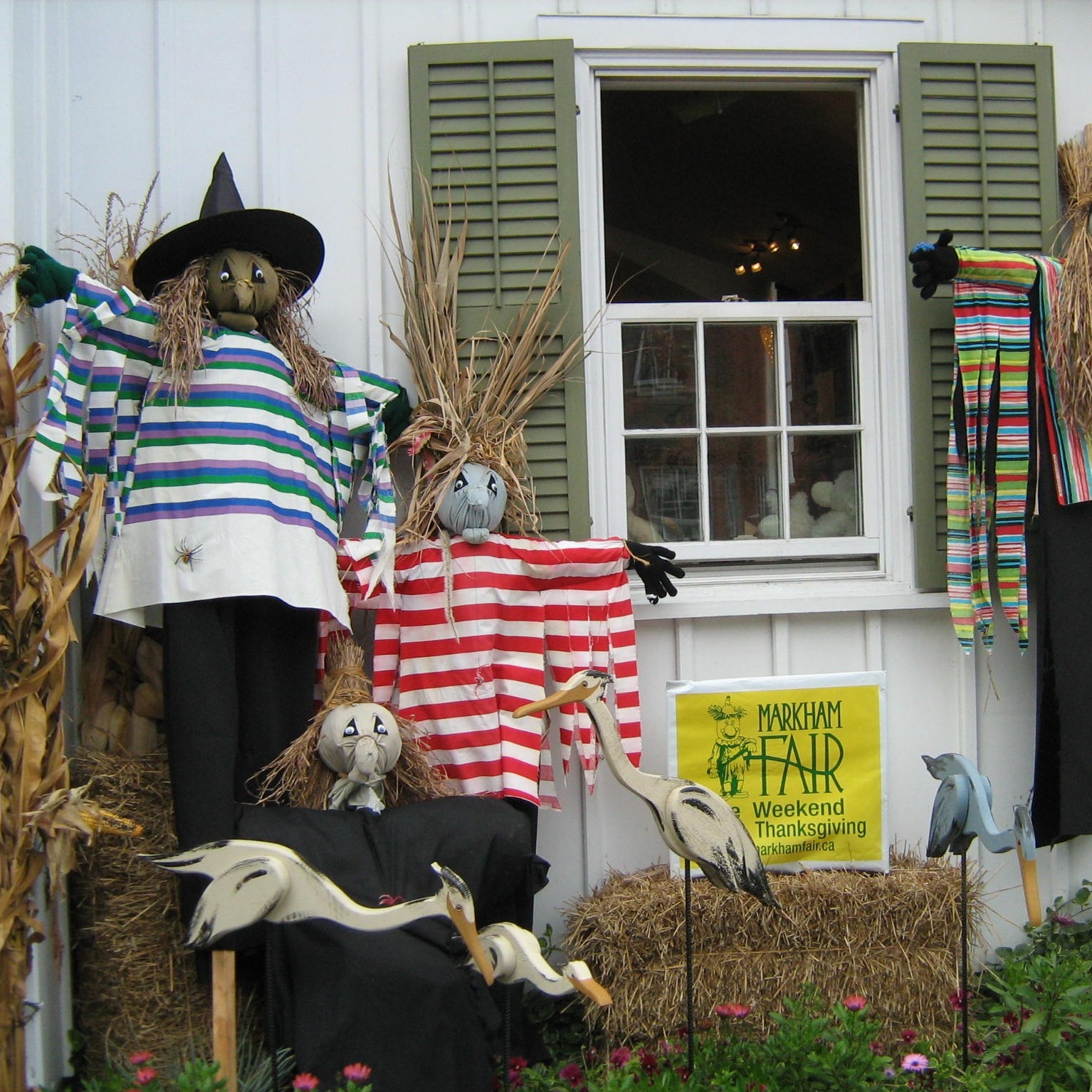
Many Canadian communities hold harvest fairs at Thanksgiving.

Today, Canadian Thanksgiving takes place on the second Monday of October. (First officially recognized in 1879 (November 6), it was moved to the second Monday in October in 1957.) Much like the U.S., it’s a time for gratitude, reflection, and delicious food shared with loved ones.

While Indigenous peoples had long celebrated harvest festivals, it was Loyalists who moved to Canada from the American colonies during the Revolutionary War who introduced turkey, along with some of the other customs from the American Thanksgiving we’re familiar with today. Pumpkin pie, stuffing, and sweet potatoes would certainly be familiar, though traditional poutine (french fries topped with cheese curds and gravy) sometimes appears as well.

Of course, Canada’s Thanksgiving comes with a Canadian twist—think butter tarts and the Canadian Football League’s Thanksgiving Day Classic.

Mexico: Día de Acción de Gracias
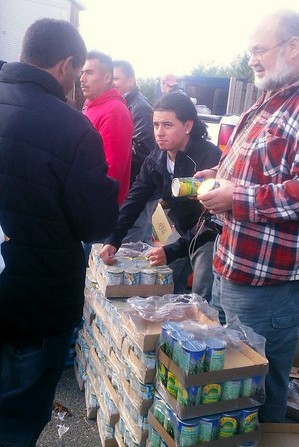
Many communities in Mexico gather to distribute food on Día de Acción de Gracias

With a regional twist on traditional American Thanksgiving dishes, such as mole poblano and tamales, apple pie empanadas and turkey enchiladas, many Mexicans embrace the spirit of giving thanks while spending time with family and friends. Because Mexico is so close to the United States climate-wise, Día de Acción de Gracias usually occurs on the same day as American Thanksgiving. 

While not widely celebrated throughout Mexico, some cities host small community events and tourists-targeted activities, while others observe religious services and harvest celebrations. Traditions may include Mexican elements such as piñatas or pan de muerto, reflecting a non-traditional but increasingly observed blend of customs. As more families travel to and from Mexico during the holiday season, Thanksgiving observances are spreading to more parts of the country.

Brazil: Dia de Ação de Graças  

Brazilian Thanksgiving (Dia de Ação de Graças in Portuguese) follows the American tradition of a harvest feast on the fourth Thursday in November. It became a national Brazilian holiday in 1949 as a way to unify the Brazilian people. The Brazilian ambassador to the U.S. saw Americans enjoying a day of eating delicious food and giving thanks and decided that Brazilians should do the same. It’s been an unofficial holiday ever since.

Brazil is the only country in South America that celebrates Thanksgiving.

Though still not widely celebrated in Brazil, Dia de Ação de Graças is catching on each year. A Thanksgiving feast in Brazil includes many American staples, including turkey (known as peru in Portuguese), mashed potatoes (purê de batatas), and apple pie (torta de maçã). Brazilian specialties, such as the country’s national dish, feijoada, might make an appearance as well. Besides food and family, there are parades and church services to give thanks.

Thanksgiving in Barbados
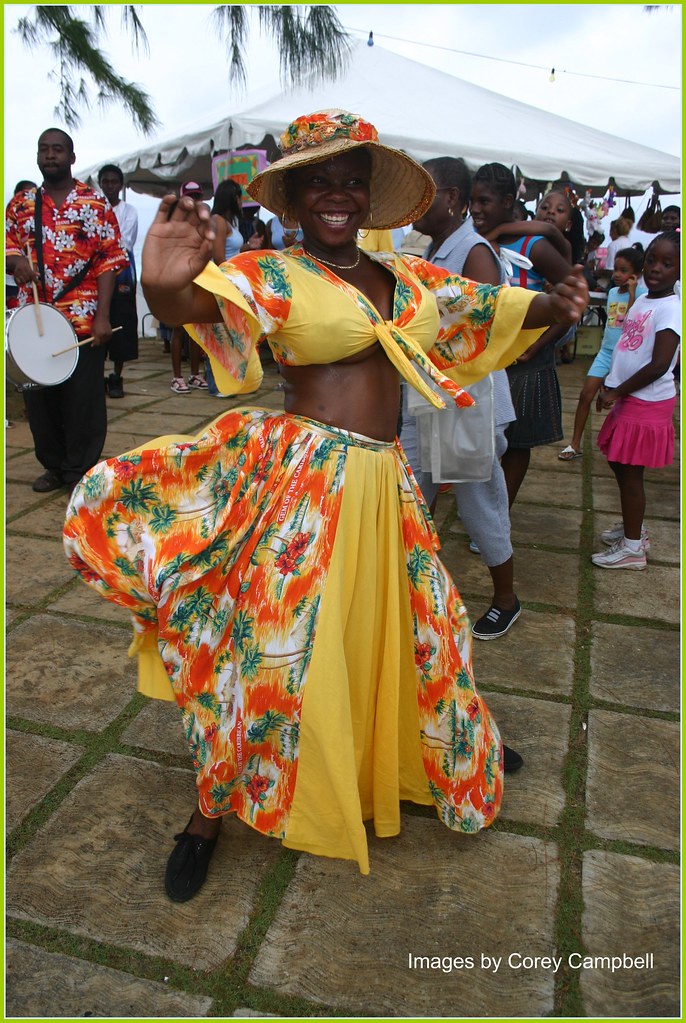
Dancer “wukking up” at Crop Over

The people of Barbados celebrate Thanksgiving with a Crop Over festival at the end of the sugarcane harvest. This is typically held at the end of July through early August. This is a 300-year-old tradition that goes back to those who worked on sugarcane plantations and celebrated the harvest season. The celebrations include dancing, eating, and games.

Crop Over festivities begin with a ceremonial delivery of the Last Canes and crowning the Festival King and Queen. During Cohobblopot, Kadooment bands showcase their skills, and calypsonians perform to huge audiences. Local businesses offer their wares at the Bridgertown Market and sponsor calypso tents. Kadooment Day, the final day of the celebration, culminates in a carnival parade, with huge floats, elaborate dance troupes, and competing calypso bands.

Grenada West Indies

Every October 25, people on this West Indian island celebrate their own Thanksgiving Day, which marks the anniversary of a joint Caribbean and U.S. military invasion of Grenada in 1983. The troops’ arrival restored order after an army coup ousted and executed Maurice Bishop, Grenada’s socialist leader, and put the island under martial law.

While stationed on the West Indian island that fall, U.S. soldiers told local citizens about the upcoming American holiday and some of its traditions. To show their own gratitude, many people in towns and villages hosting the soldiers invited them to dine and celebrate with them, even surprising the soldiers with such non-native island foods as turkey, cranberry, and potatoes. Today, the Grenadian Thanksgiving features formal ceremonies of remembrance in the cities, but largely goes unmarked in more rural areas.

Liberian Thanksgiving

In the 1820s, free Blacks from American purchased Cape Mesurado and settled in the new colony of Liberia. In the 1880s, the Liberian government adopted the first Thursday in November as Thanksgiving, to express gratitude for the year’s blessings. (Unlike Thanksgiving events in other parts of the world, Liberian Thanksgiving isn’t a harvest festival; their harvests are often over by November.) Because English is the primary language of Liberia, celebrants greet each other with “Happy Thanksgiving!”
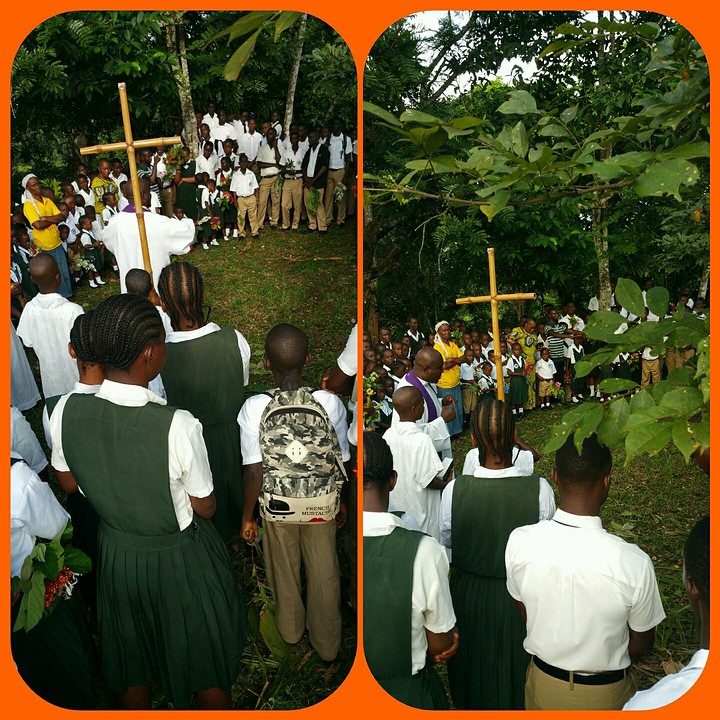
Students at a religious Thanksgiving service

Liberian Thanksgiving combines American traditions with religious rituals to thank God for blessings from the year, including food, health, and good weather. Today, it’s a largely Christian holiday. After services, churches auction off baskets filled with local fruits like papayas and mangoes.

The typical meal consists of a bird (sometimes chicken) with plenty of spices as well as mashed cassava and other traditional West African foods like jollof rice (similar to Cajun jambalaya) or fufu (cassava dough served with meat stew).

Celebrations are lively, marked by food but also music, dancing, and a deep sense of community.

Bottom Line: As these examples attest, giving thanks isn’t the province solely of the United States. Try pursue the topic of giving thanks in Israel, Ghana, Rwanda, and any other locations that interest you.

GIVING THANKS AROUND THE WORLD (Part 2: Europe)

Giving thanks is everywhere, even though others call their thanksgiving by other names, and celebrate on different dates. This blog will focus on our European cousins.

(Check out last week’s blog on how people in Asia celebrate giving thanks!)

United Kingdom: Harvest Home

Baking, canning, and flower contests at a Harvest Home celebration in Chew Stoke

The UK celebrates a harvest festival, also known as Harvest Home. People, particularly in rural villages, celebrate on the Sunday closest to the Harvest Moon – usually in late September or early October. The tradition dates back centuries, with origins in pagan rituals, when communities gathered to celebrate the successful bringing in of crops. In the past, the timing of the festival varied depending on when the harvest was ready, with the whole community, including children, helping until the last load of crops arrived.

“In 1957, there was 120lb cheddar cheese to be consumed and a 6’ x 2’ harvest loaf, which was borne aloft on the shoulders of six men” in the Somerset village of East Brent.

Modern Harvest Home festivals feature a feast of autumn crops and vegetables, as well as food donations and church services, keeping alive the spirit of gratitude for the season’s bounty.

Some say both US and Canadian Thanksgiving have roots in the United Kingdom’s annual Harvest Home. At the least, this tradition has to have influenced the origins of Thanksgiving in both the US and Canada, brought over by British immigrants.

Netherlands: Dankdag

Before leaving for the New World, English immigrants lived and worked for several years in the Netherlands, in the town of Leiden. About 40% of the Mayflower passengers spent over a decade (1609 to 1620) living in this Dutch city before heading to Massachusetts. Some even believe the Pilgrims’ first Thanksgiving was inspired by Leiden’s annual celebration of breaking the Spanish siege in 1574.

Harvest table at a church in Van Halland

They brought many of their customs to their new (temporary) home, including the practice of expressing gratitude for a successful fall harvest.

While Thanksgiving isn’t an official holiday, many restaurants offer special meals. Dankdag is still celebrated in Leiden. Citizens enjoy an American-style Thanksgiving dinner after a church service at Pieterskerk. The city of Leiden also honors its historic ties by holding non-denominational church services at Pieterskerk every fourth Thursday of November!

And if they live near Beschuitsteeg, they can explore the Leiden American Pilgrim Museum as a tribute to their long friendship with the pilgrims.

Germany: Erntedankfest

Like Britain and many other European countries, Germany celebrates the first major harvest of the season with a big festival. Erntedankfest (“thanks for the harvest fest”) doesn’t have an official date. This religious holiday often takes place on the first Sunday in October, which is often also the first Sunday following Michaelistag (Michaelmas) on September 29. Different places celebrate the occasion on various dates in September and October, but it typically takes place between early October and late November depending on the region, sometimes coinciding with Martinstag (St. Martin’s Day).

Erntedankfest decorations at a church in Oberösterreich

Erntedankfest is a community affair, often held outdoors or in churches rather than homes. It’s a lively gathering filled with parades, music, and tables laden with such hearty fare as die Masthühnchen (fattened-up chickens) or der Kapaun (castrated roosters), geese, hearty stews, fresh-baked bread, and local brews. There are plenty of traditional foods and seasonal produce. Colorful decorations like cornucopias are typical. There are also church services to begin the celebration, with lantern parades planned for the evening.

Though rural areas tend to take the harvest festival more literally, many churches in German cities also join in on the celebration, giving thanks for the good fortune their congregations experienced that year. During a typical Erntedankfest, celebrants carry an Erntekrone (“harvest crown”) of grains, fruit and flowers to the church in a solemn procession.

Though it’s more common in rural areas, many Germans observe Erntedankfest through televised events, connecting to their agricultural roots from afar.

Other German-speaking countries, such as Austria and Switzerland, also celebrate Erntedankfest to observe the autumn harvest. Erntedankfest traditions include parades, church services, concerts, fireworks, and a harvest feast, where turkey (Truthahn) is a holiday dinner favorite.

Poland: Dożynki

Harvest wreath parade in Milówka

The Polish harvest festival, Dożynki, dates back to the 16th century when landowners shared the bounty of the harvest with the land’s workers. The historical celebration included dancing, feasting, and crafting harvest wreaths to ensure fertility for the next harvest.

The word Dożynki literally means “last sheaves.”

Today, the festival still includes feasts and harvest wreaths. Modern Dożynki celebrations incorporate religious elements, including a pilgrimage to Jasna Góra in Częstochowa. Many Polish celebrants dress in traditional outfits as they share in the harvest.

Thanksgiving in Rome

Italians do not have a national holiday that celebrates American Thanksgiving.  However, plenty of Italians toast the holiday with their expat friends and family at a home or restaurant. 

Not a modern depiction of Cerealia, but the sentiment is the same!

In addition, Rome celebrates a harvest festival known as Cerealia. This honors Ceres, the goddess of agriculture, grain, and the love a mother bears for her child.  (FYI: In ancient Greek religion Demeter is the goddess of the harvest and agriculture, presiding over crops, grains, food, and the fertility of the earth. She also appeared as a goddess of health, birth, and marriage.) Cerealia occurs every year on October 4th. Roman custom is to present fruits, grains, and animals to the goddess in appreciation. Parades and music are also part of the celebration.

Bottom Line: Celebrations of giving thanks in Europe share roots of giving thanks for food, much like our Thanksgiving.

GIVING THANKS AROUND THE WORLD (Part 1: Asia and the Pacific)

In the United States, Thanksgiving is a significant celebration. But we are far from alone, even though others call their celebration of giving thanks by another name, and celebrate on a different date.

Mid-Autumn Festivals

Many countries in Asia have a harvest celebration in the autumn, such as Cambodia (Bon Om Touk), Laos (That Luang), and Vietnam (Tết Trung Thu). The lunisolar calendar determines the precise date every year, setting it on the 15th day of the 8th month. This corresponds to mid-September to early October of the Gregorian calendar. When the Harvest Moon appears in the eighth month of the lunar calendar, it’s time for giving thanks.

Giving Thanks in China

Chinese Thanksgiving, the Chung Chiu Moon Festival or Mooncake Festival, lasts 3 days. In parts of China and other countries, celebrants mark the Mid-Autumn Festival with feasts, parades, and family celebrations.

Giving thanks Chinese Chung Chiu Moon Festival

Food is a major focus, especially mooncake, a round pastry that typically contains duck egg yolks, lotus seed paste, and sesame seeds. The yolk represents the full moon, and the cakes usually have the baker’s logo embossed on top. Sometimes, mooncakes (made with sweet dough) have fillings of lotus seed paste, red beans, or ice cream. Family and friends share mooncakes with one another to signify unity and peace to come.

Lanterns and moonlight also are a big focus of the Mid-Autumn festival. People write wishes on decorative lanterns and float them in the air or display them in their homes.

Giving Thanks in Korea

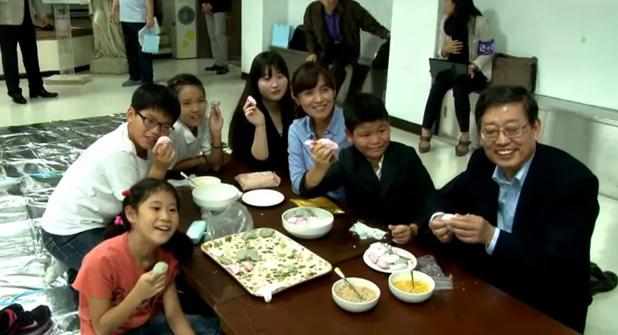
Food, family, and tradition are the focus of the Korean thanksgiving festival, known as Chuseok (autumn evening). The origins of this three-day holiday celebrating family, food, and ancestors traces back to ancient Korean celebrations of Chuseok (often called Hangawi or Korean Thanksgiving). South Koreans travel to their ancestral hometowns to perform charye, a memorial ceremony offering newly harvested foods like rice and fruit to honor their ancestors.

The night before Chuseok, families often gather to prepare songpyeon together. Together, people form finely ground rice flour into small balls, fill them with sesame seeds, chestnuts, red beans, and other ingredients, and shape these into cakes. The traditional cooking method includes steaming songpyeon on pine needles. This time-honored tradition fills homes with the fragrant smell of autumn.

Gift-giving is a modern tradition, with exchanges of fresh fruit, beef, and even Spam gift sets! Crowds pack the roads and crowd stores in the days leading up to this important holiday.

Chuseok predates the division of Korea, but people in North Korea celebrate a little differently. Rather than gathering with family, North Koreans try to visit the gravesites of their ancestors. Those who are able might also visit the graves of founding members of the Kim dynasty.

Giving Thanks in Japan

The Thanksgiving holiday known as Kinro Kansha no Hi (Labor Thanksgiving Day), takes place on November 23rd each year. But even though it’s close to American Thanksgiving on the calendar, it dates back much farther—over 2,000 years!

Historians date the first Japanese Thanksgiving celebration to the 7th century B.C.E. It began as a harvest festival known as Niiname-sai (新嘗祭 Imperial Harvest Ritual) that celebrated the first rice crop of the year. 

The modern tradition of Labor Thanksgiving Day began in 1948. After World War II, people dropped the imperialist roots of Niiname-sai, and the holiday became Kinro Kansha no Hi. Today, the holiday expresses gratitude toward Japan’s laborers, focusing on honoring workers’ rights and contributions (similar to combining Thanksgiving and Labor Day in the U.S.).

Today, the holiday means a day off work or school, writing thank-you notes to laborers, and crafts from schoolchildren for community workers such as policemen, firefighters and other municipal workers. There are no big meals or parades except the Nagano Labour Festival. Local organizations sponsor the Nagano Labour Festival to bring awareness to environmental and human rights issues. Such events are meant to encourage citizens to celebrate the principles of hard work, unity, and community involvement.

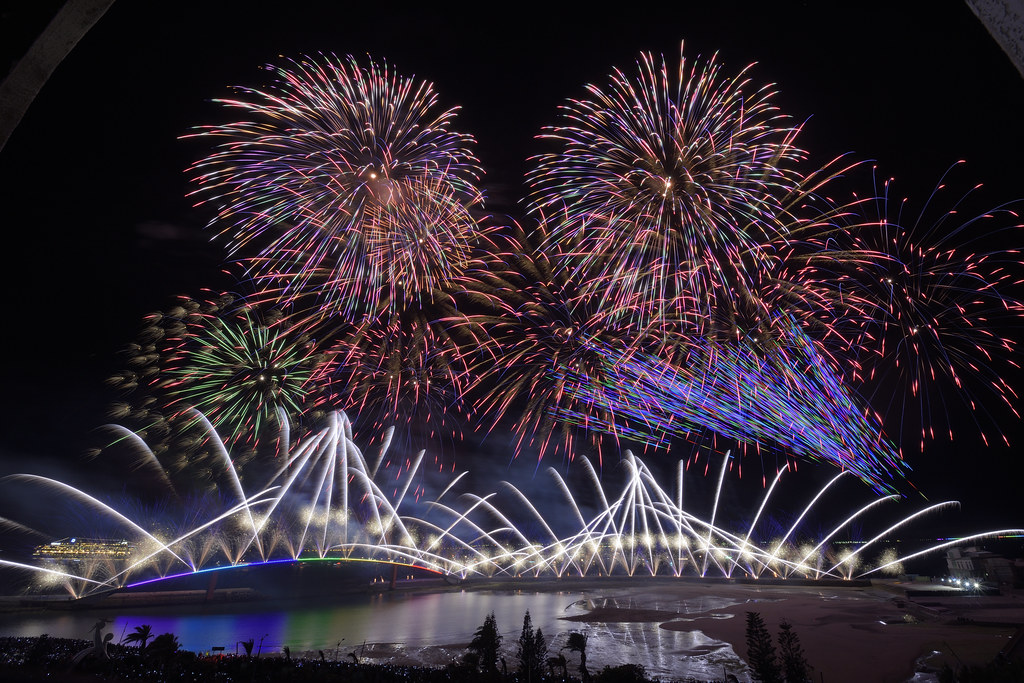
The evening ends with the Nagano Ebisuko Fireworks Festival (長野えびす講煙火大会).

Giving Thanks in South India

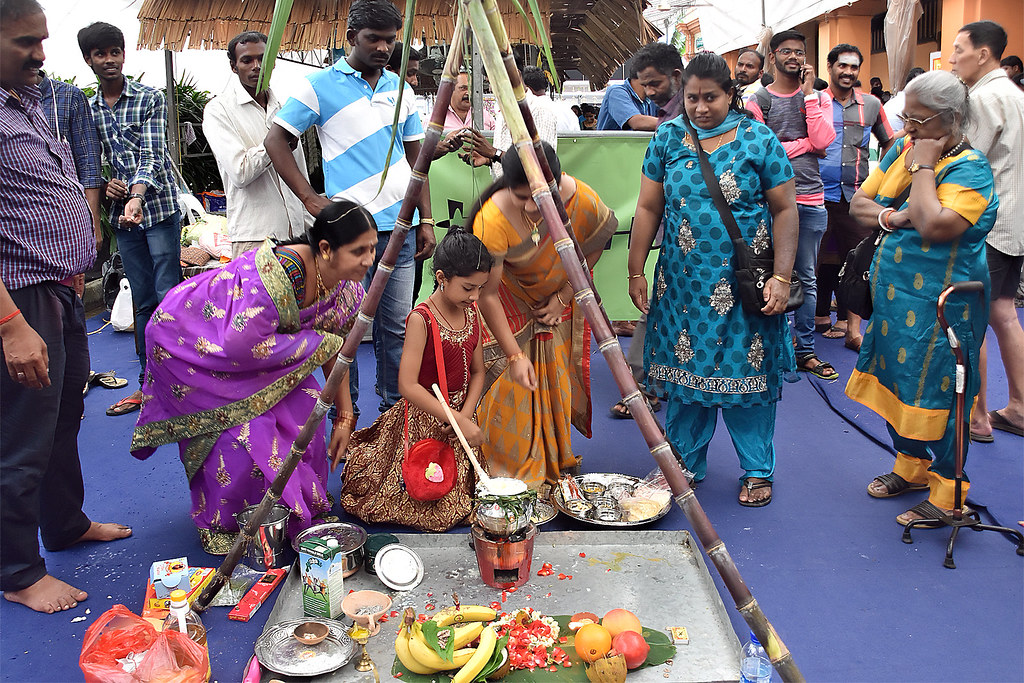
The Tamil people in South India hold a four-day festival called Pongal to thank the sun god, nature, and humans and animals that support agriculture. This is usually held in January or during the Tamil month of Thai. People get together with families and friends to decorate, offer prayers, hold craft fairs, and enjoy traditional foods.

The holiday features Sakkarai Pongal, a traditional Pongal dish made with milk, ghee (clarified butter), and rice. The Tamil culture regards it as a symbol of prosperity, connected to abundance and wealth.

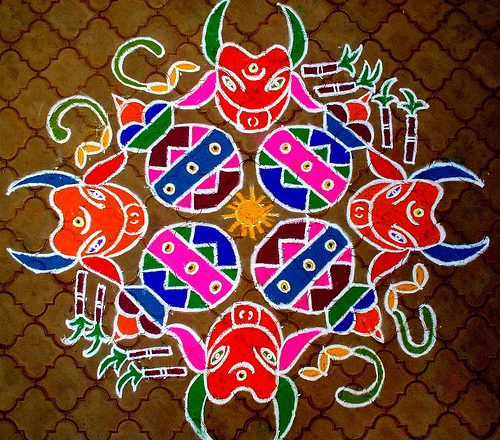
Many people use rice flour to make kolam decorations. They mix it with dyes and draw complex geometric patterns on the ground. A kolam in front of a home’s entrance serves as a welcome sign and invitation to enter.

Giving Thanks in Malaysia

In Malaysia, several ethnic groups celebrate the Kaamatan harvest festival, a two-day public holiday on 30 and 31 May.

The festival is in tribute to the goddess Huminodun, who was sacrificed to save people from famine. Rice is the main ingredient in dishes served during this festival, along with rice wines. The festival ends with a Humabot ceremony complete with games, songs, and dance.

Celebrations include symbolic decorations, family and social gatherings, and activities such as beauty pageants (for both women and men), dance performances, singing competitions, and other art and craft performances.

Giving Thanks on Norfolk Island

New Zealanders and Australians don’t typically celebrate Thanksgiving—unless they live on Norfolk Island, a small Australian territory northeast of Sydney. This remote island is a former British penal colony.

Thanksgiving on Norfolk Island is a holdover from 19th-century American whalers who celebrated the holiday during their stay on the island. In fact, this Thanksgiving tradition dates back to the mid-1890s, when the American trader Isaac Robinson decided to host an American-style Thanksgiving service in the All Saints Church in Kingston in order to attract some visiting American whalers to the celebration. Thus the American roots.

Today, the people of Norfolk Island celebrate the holiday on the last Wednesday in November. People bring fruits, vegetables, and cornstalks to decorate the church and sing American hymns. After the Thanksgiving Day church service, people enjoy a lunch of American Thanksgiving dishes, plus banana pilaf and fish salad.

Celebrants often decorate with corn stalks, pumpkins, and other items reminiscent of American fall, even though November is springtime in their part of the world.

Bottom Line: Giving thanks is everywhere! Look for more next Tuesday.

Thankful for Books—

—AND THE ABILITY AND TIME TO READ THEM!  Although the book mentioned here are Thanksgiving themed, they are good reads any time.


Thankful for books thanksgiving turkey
Murder and mayhem. Janet Evanovich has three Thanksgiving themed mysteries: Thanksgiving, Foul Play, and The Grand Finale. Apparently Evanovich knows the potential of holidays for drama!


Also, Thanksgiving Angels: A Mercy Allcutt Mystery by Alice Duncan.


For more options, click here!
thankful for books thanksgiving
Otherwise, here are some suggestions from Goodreads readers.
  • Thanksgiving Night by Richard Bausch
  • The Ghost at the Table: A Novel by Susanne Berne
  • The Lay of the Land by Richard Ford
  • A Patchwork Planet by Anne Tyler
  • Thanksgiving by Michael Dibdin
  • A Thanksgiving Miracle by Wells Earl Draughon
  • The Thanksgiving Virgin by Charles Haas


thankful for books turkey
 Classics
  • An Old Fashioned Thanksgiving by Louisa May Alcott
  • Oliver Twist by Charles Dickens
thankful for books silver turkey
BOTTOM LINE: Be thankful for online searches, for you can find Thanksgiving books for all ages and genres!
 
thankful for books happy thanksgiving

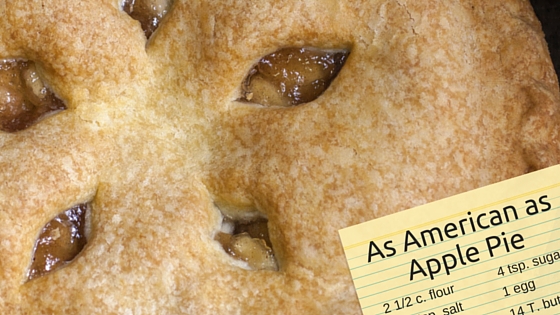
As American as Apple Pie

apple pie

What’s wrong with that?

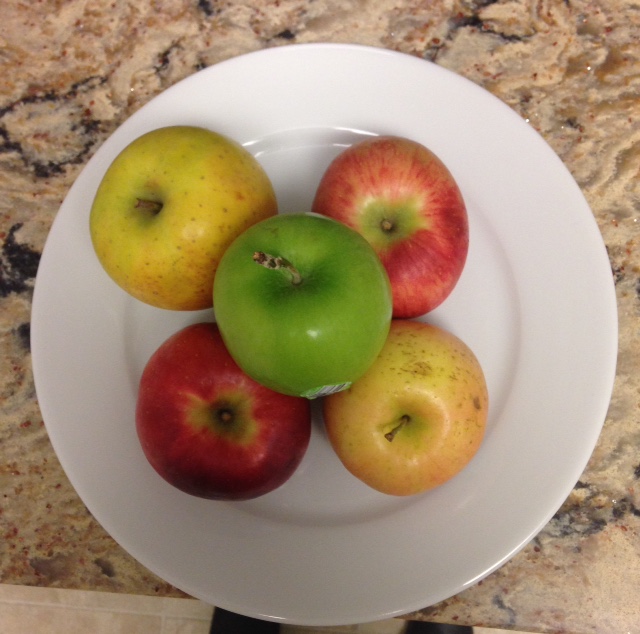
First of all, with the sour exception of crabapples, apples themselves aren’t American. Apples as we know and love them probably originated in Asia and migrated to Europe.


apples in bowl


Apples and apple pie were brought to the colonies by British, Dutch, and Swedish immigrants during the 17th and 18th centuries. In fact, that was pretty late in the history of apple pie.


Fossilized evidence of apples date as far back as the Iron and Stone Ages in Switzerland and other parts of Europe. Although most sources trace apple pie to Europe, there is a minority view that the first apple pie was made in Egypt, 9500 B.C.E.

English apple pie recipes go back to the time of Chaucer. A 1381 recipe calls for good apples, good spices, figs, raisins, and pears in a pastry casing. It is the first known written recipe for apple pie. Fruit sweeteners were typical of the times. Early apple pies had no sugar because of the expense but were sweetened with fruits such as these.

Apple pie was a prized dessert in England by 1577. The first mention of a fruit pie in literature was apple-pyes in Robert Greene’s Arcadia. Greene wrote between 1580 and 1592. A medieval Dutch cookbook (around 1514) has a recipe for apple pie that is almost identical to modern recipes. Such a pie was featured in a Dutch Golden Age painting from 1626.


In 1941, newspaper reporters talked about GI’s fighting for Mom and “good old American apple pie.” This seems to be the origin of apple pie attached to American identity—even though apple pie did not originate here. Vermont even made apple pie the official state pie in 1999.

 
The history of Mock Apple Pie (made with crackers instead of apples) is a bit murky. It may have been invented by pioneers on the move in the 19th century, or possibly in the South during Civil War food shortages. But in the 1930s, Ritz Crackers provided a recipe using Ritz Crackers, water, sugar, cream of tartar, lemon juice, grated lemon peel, margarine or butter, and cinnamon. The one thing that’s clear is that anything that leads to an imitation must be very popular indeed.
 

According to the American Pie Council, Apple pie is the most popular pie in the U.S., the favorite of 19% of Americans (approximately 36 million people at the time of the survey).


And now we get to the downside. Although homemade apple pie hasn’t changed much over centuries, anything that popular has to go commercial, including fast-food chains. McDonald’s started in California in 1940. In 1969, McDonald’s opened 211 new franchises, and the first Wendy’s was born in Columbus, Ohio.


Welcome to the world of food additives. L-cysteine, an amino acid used to condition dough for increased pliability, is derived from human hair and/or duck feathers. It’s used in McDonald’s Baked Hot Apple Pie (among other offerings). McDonald’s is only one of many fast-food providers who rely on L-cysteine in bakery products.


Bonus facts: Sand (silica dioxide) is an anti-caking agent that shows up in chili and other processed beef and chicken products on the menus of Wendy’s and Taco Bell; processed wood pulp (cellulose), used to thicken and stabilize everything from cheese to strawberry syrup, is on the rise because products  can boast less fat and more fiber. For more disturbing food additives, go to mnn.com.


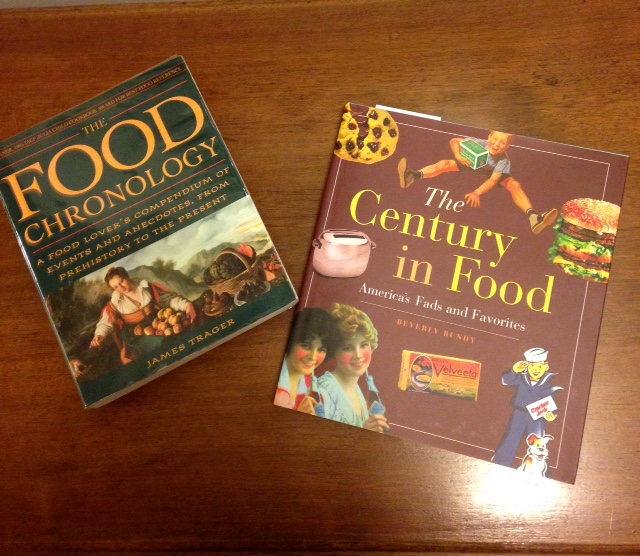
And to know what happened when with food, go to good books!


The Century in Food and The Food Chronology