I hope and trust you all made it through Friday, February 13, without anything too dreadful happening. If so, take a deep breath and gird your loins for Friday the 13th in March and November. Forewarned is forearmed.
And to that end, people from ancient times to today have sought portents of the future.
Omens are signs or phenomena believed to predict or indicate future events, often carrying symbolic meaning. Throughout history and across cultures, people have interpreted omens as messages from the spiritual world, nature, or the universe. Many believe these signs can provide guidance in decisions or forewarning of good or bad outcomes.
Common Types of Omens and Their Meanings
Bird Omens
Birds appearing in certain ways or places can be omens, and there are a ton of them. For example, many see a black crow or raven as a bad omen, while a dove often symbolizes peace or good news.
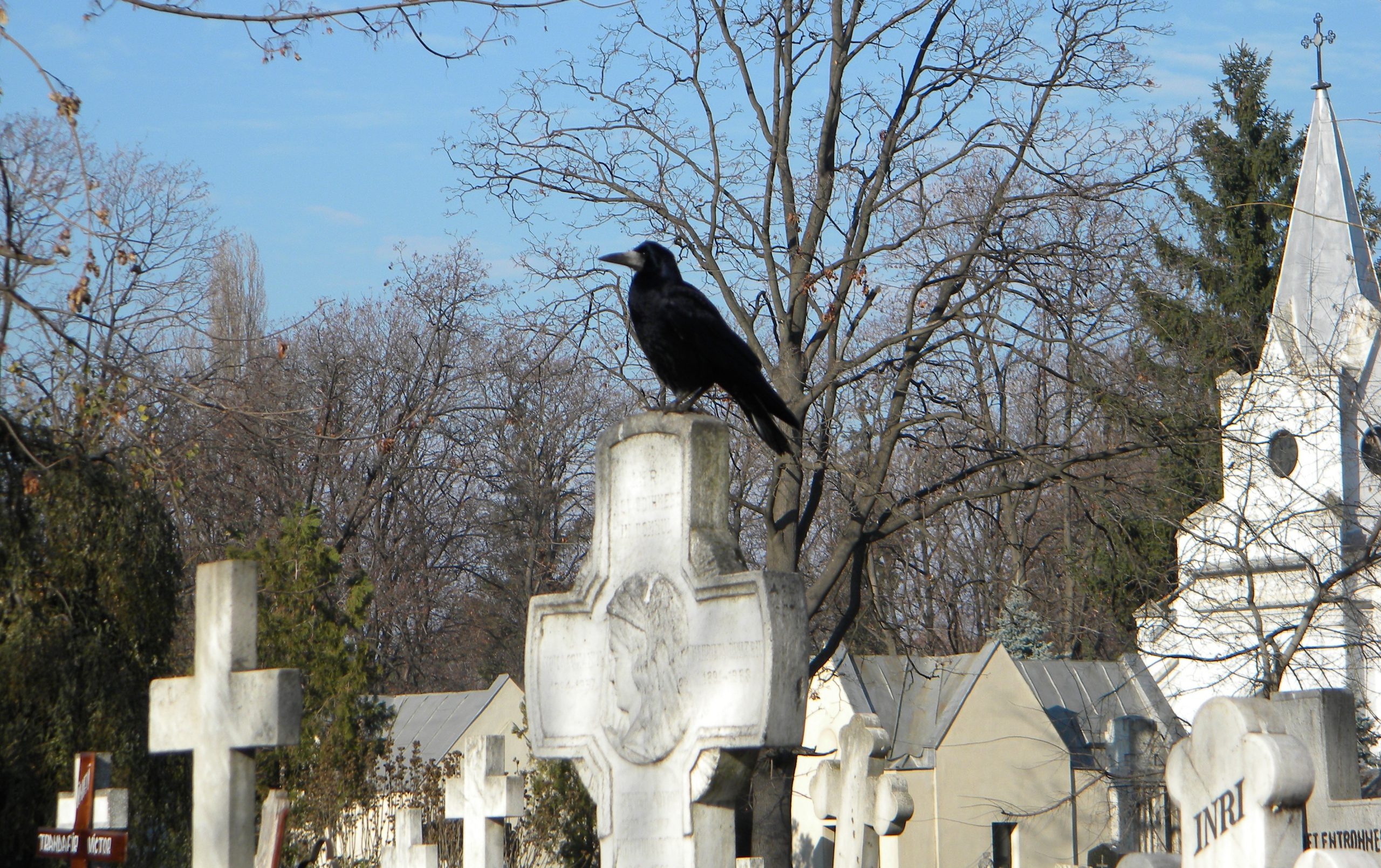
- Crows in a churchyard are a sign of bad luck.
- A bird pooping on your head brings good luck. (Go figure!)
- Bringing peacock feathers into the house is bad luck.
- A woodpecker knocking on a house is a sign of an impending death.
- It is unlucky to kill an albatross. (Fortunately, most of us don’t have to worry much about this one.)
- On the other hand, it is also unlucky to kill or harm a robin, a more common danger, at least where I live.
- Whatever you are doing when you hear the first cuckoo predicts your year. (And I always thought that was New Year’s Day.)
- Carrying a wren’s feather will prevent you from drowning. (I’d tuck it into my life jacket.)
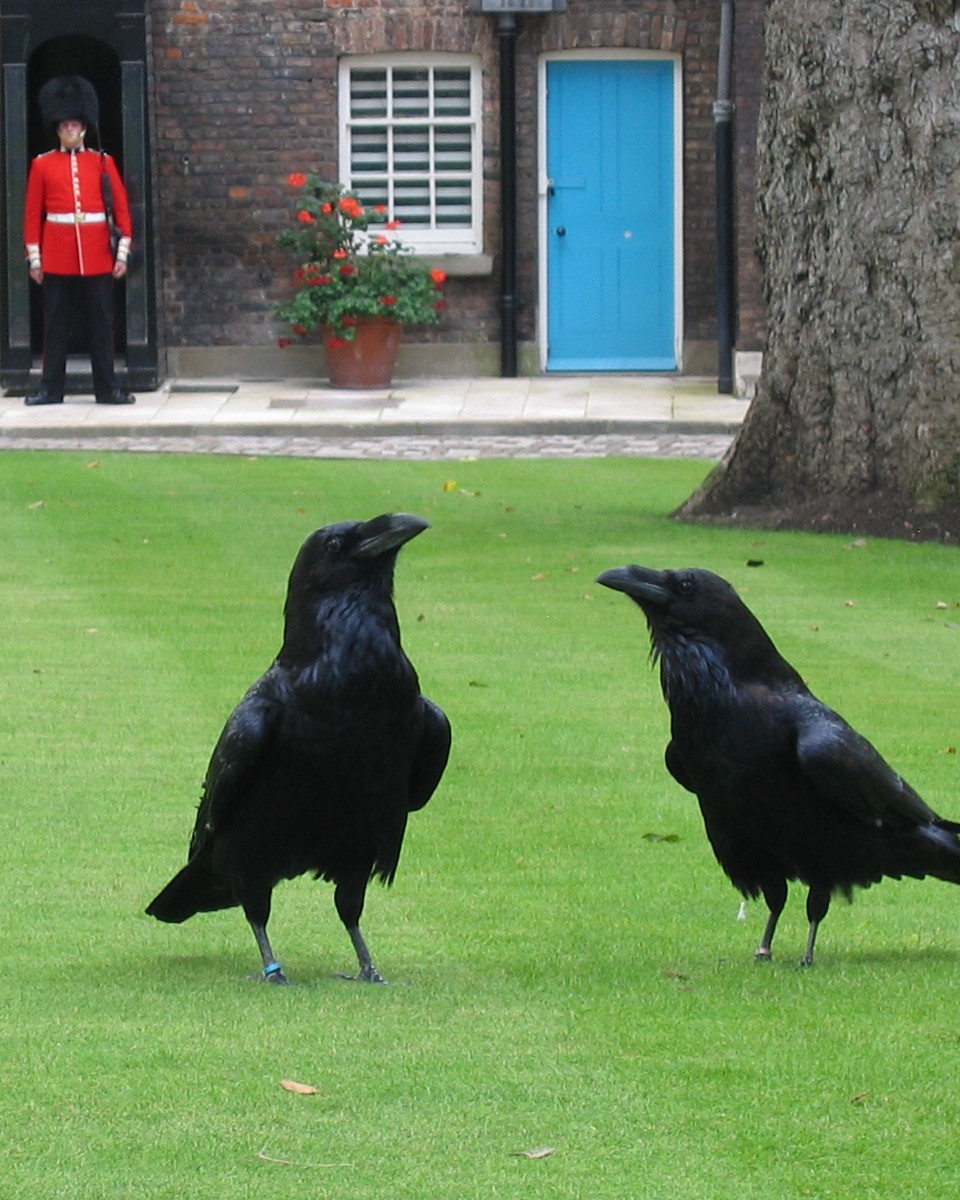
- If the ravens leave the Tower of London, then the Crown and kingdom will fall. (It’s my understanding that even today, steps are taken to keep ravens there.)
- Hearing an owl hooting is a bad omen.
- The stonechat chats with the devil—so don’t join the conversation?
For more about any of these omens, visit Bird Spot’s article on common bird superstitions.
Weather Omens
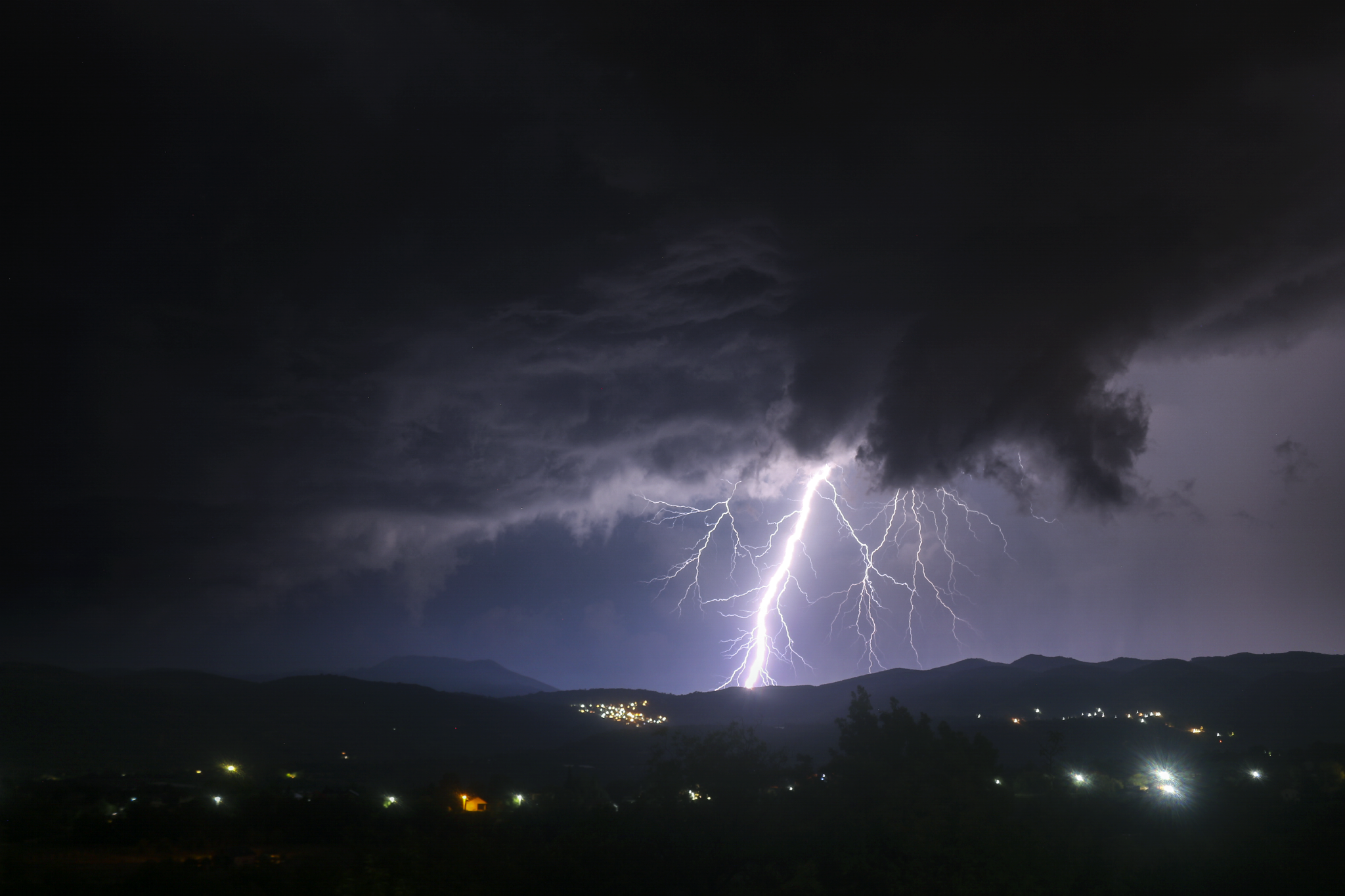
Sudden changes like an unexpected storm or clear skies can be interpreted as omens of change or warning. Several weather omens have been scientifically validated over the years, including the following

- Red Sky in Morning, Sailors Take Warning; Red Sky at Night, Sailors Delight
- High pressure systems typically move from west to east, bringing unstable weather and trapping dust particles in the atmosphere, which causes a red sunset.
- Feeling Bad Weather in Your Bones
- Changes in barometric pressure may irritate ligaments or cause swelling in synovial fluid. Dropping temperatures can also cause muscle tension.
- Using Crickets as Thermometers
- Dolbear’s Law proved that the frequency at which crickets chirp varies predictably with temperature.
- March Comes in Like a Lion and Goes Out Like a Lamb
- In fact, there’s no correlation between inclement weather at the beginning of March and pleasant weather later.

- Cows Lying Down Means Wet Weather Is on the Way
- A possible, albeit tenuous, link between crouching cows and wet weather: they’re conserving body heat.
- Clear Moon, Frost Soon
- Clear nights often mean cold weather, brought to you by a dry, continental high-pressure zone.
- Pine Cones Can Predict the Weather
- Though the number of pinecones does predict the harshness of the coming winter, you can use pine cones to predict weather in another way: watching as they open in sunny weather or close before wet weather.
- Counting Lightning Flashes and Thunderclaps Can Tell You a Storm’s Distance
- For every five seconds between lightning and thunder, the sound travels roughly a mile.
- A Lunar Halo
- Halos that frame the moon (or the sun) are produced by high, wispy clouds made of ice crystals.
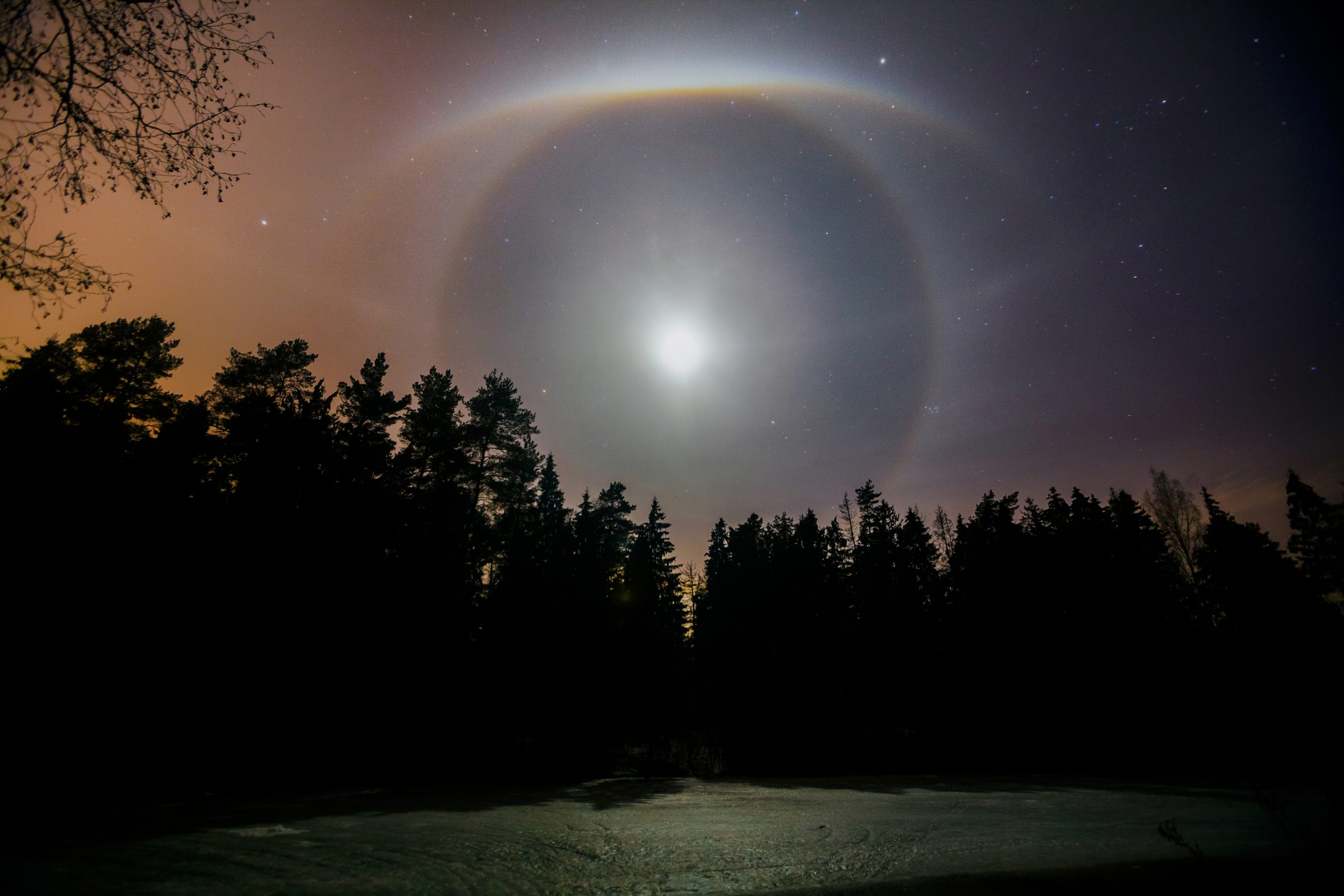
For more elaboration, see this article on How Stuff Works.
Animal Omens
Seeing certain animals, like snakes or owls, can have specific cultural meanings.
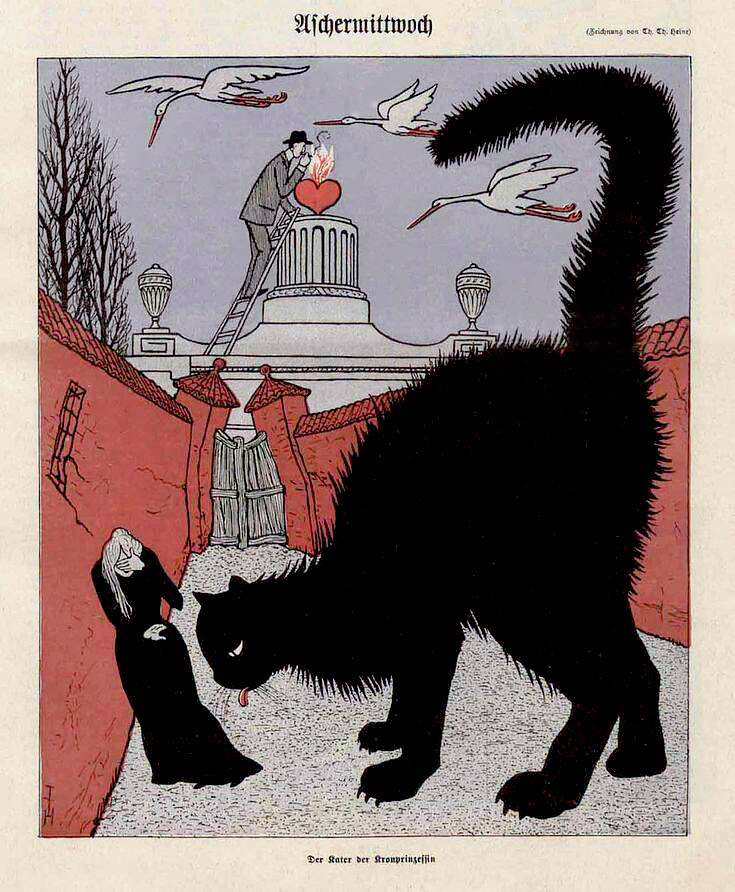
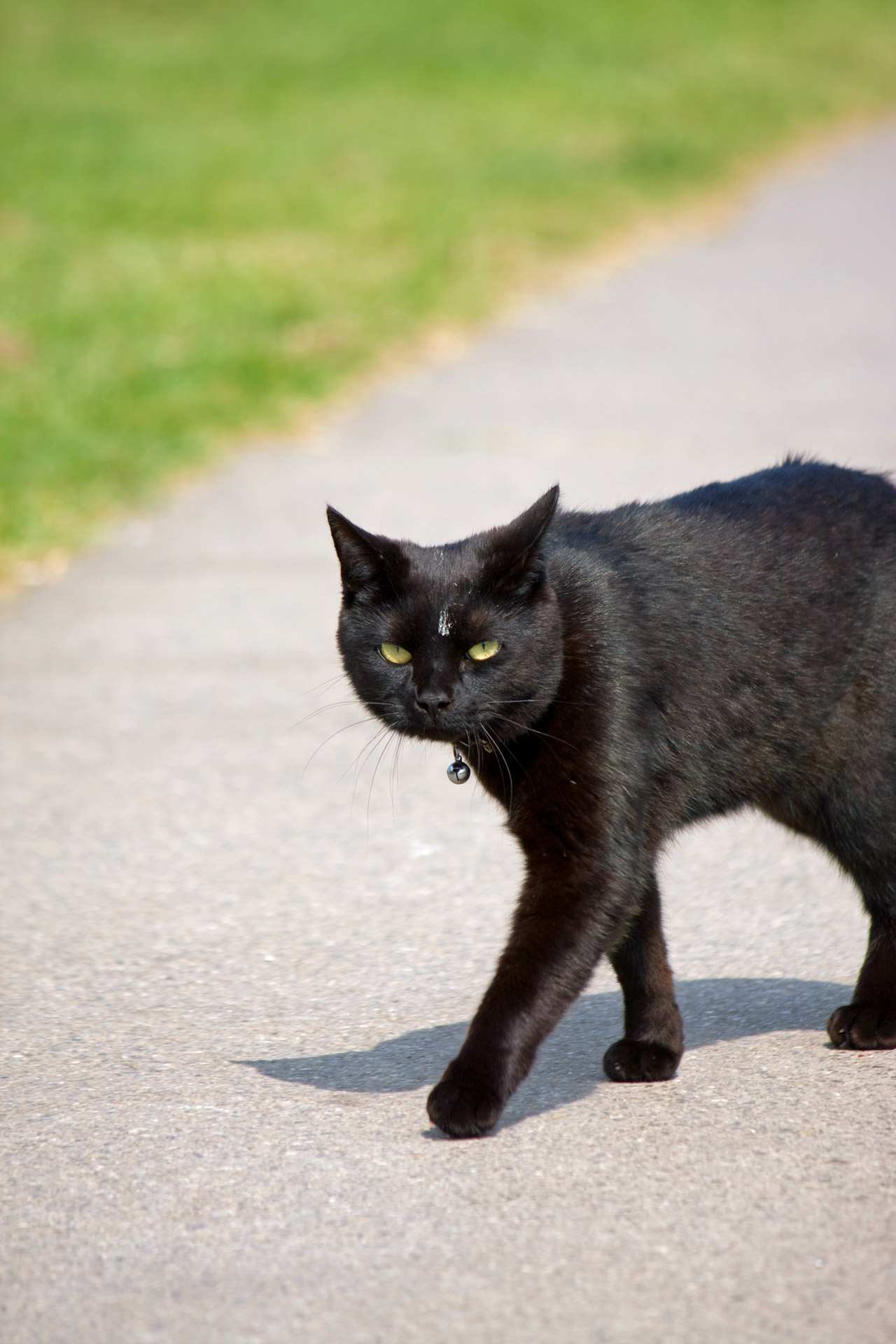
- For example, a black cat in China means good luck! But a black cat in the United States has long been thought to be a bad animal omen, so much so that black cats are the least adopted cat in the shelters.
- In the U.S., owls are frequently seen as an omen of an impending death or illness in the family.
- Similarly, buzzards and vultures are regarded as portents of death.
- The meaning of a deer in your backyard varies but usually means spiritual change or renewal. However, seeing a white deer is a bad omen.
- Nearly any albino animal is a bad omen. An exception: in contrast to the fear of white animals in the East, the birth of the White Buffalo was a good animal sign from the Great Spirit to the Cheyenne and Sioux tribes.
- If a rabbit crosses your path from left to right this is bad luck; multiple rabbits in your yard is a sign of fertility.
- A fox crossing your path is an increase in mental faculties—focus on learning and using your intelligence in tricky situations.
- Seeing a bear could be a sign that’s time to protect your children and family from an invading illness or intruder; or, it may be time for you to dive into the world of herbalism.
- When moles show up in Greece, they are bringing messages from the Underworld, from the goddesses of death and transformation, saying a time of great change is ahead.
- Seeing a coyote (a trickster and a thief) is often a bad omen; the Navajo believed the coyote was associated with “evil magicians” or “witches.”
- The appearance of an antelope means your ancestor have a message for you, according to the Plains Indians’ beliefs; the sight of an antelope is almost always a good animal sign.
- Roosters crowing at the back door is a bad omen—yet another portend of death; however, if the rooster crows at your front door you will have visitors before sunset.
Everyday Signs—and Countersigns
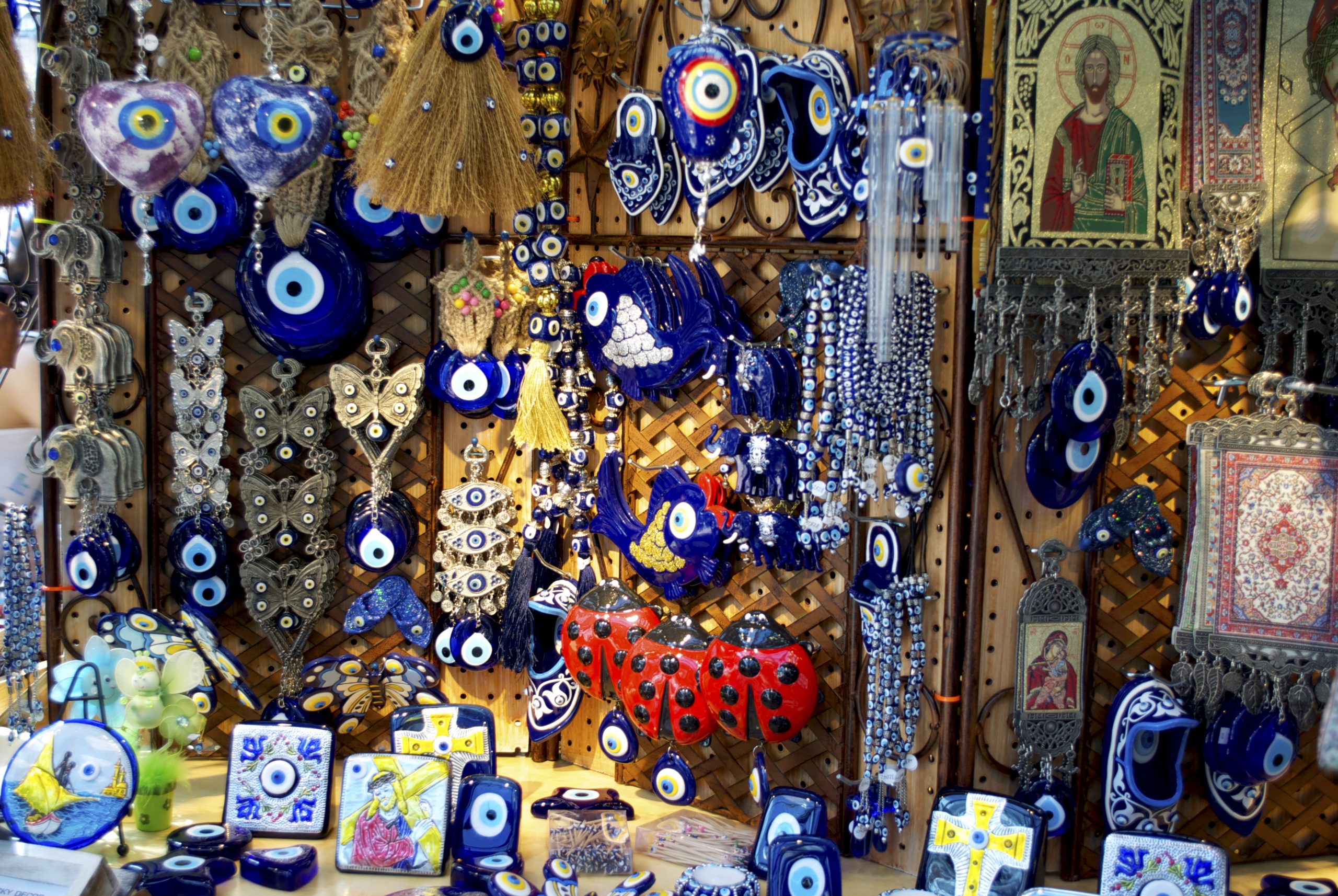
Broken mirrors, spilling salt, and opening umbrellas indoors are common omens of misfortune, but not to worry! By keeping your wits about you (and knowing the correct protections), you may be able to avoid a calamity. Some people carry lucky charms for protection against everyday omens of bad luck.

- If you spill salt, you can toss it into a fire or stove, pour wine into your lap, or throw it over your left shoulder to dispel the bad luck.
- To avoid bad luck after breaking a mirror, you can spin around three times counterclockwise, bury the pieces at night, or throw salt over your left shoulder.
- If you’ve mentioned a potential calamity, you might touch iron or knock on wood to dispel the jinx and prevent misfortune.
- If some people must walk under a ladder, they say a small positive phrase to feel more secure—which can help psychologically.
- To avoid bad luck if you spill wine, dab the spilled wine behind your ears, as this may transform bad luck into good luck.
Heavenly Omens in the Past
Celestial events such as eclipses, comets, etc., often carried deep symbolic weight, sometimes altering decisions or fueling legends. Famous omens have shaped history by influencing leaders, societies, and pivotal events. Here are a few examples from history.
The Eclipse Before the Battle of Gaugamela (331 BCE)
- Omen: A solar eclipse occurred before Alexander the Great’s decisive battle against Darius III.
- Meaning: Some soldiers feared bad luck, but Alexander used it to inspire his troops.
- Outcome: Alexander won, expanding his empire dramatically.
The Soothsayer’s Warning to Julius Caesar (44 BCE)
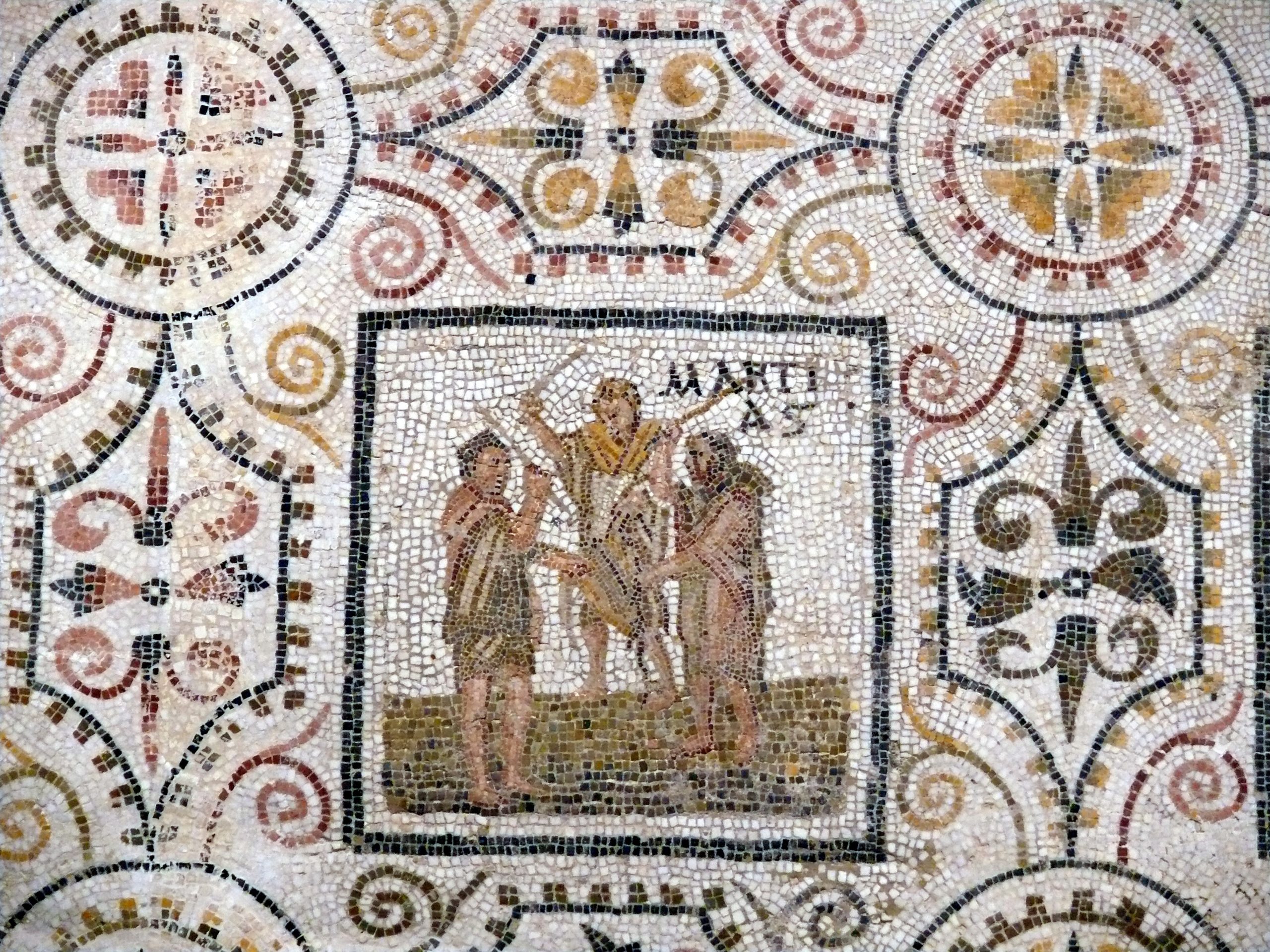
- Omen: “Beware the Ides of March.”
- Meaning: A Roman soothsayer warned Caesar to be cautious on March 15, 44 BCE.
- Outcome: Caesar was assassinated on that very day, making this omen legendary as a symbol of fate and ignored warnings.
Even today, people—more or less seriously—tell themselves or others to beware the Ides of March. Although every month has an ides (the 15th of the month, according to Roman calendars), only March makes people think this way.
Interestingly, Suetonius wrote of another omen foretelling Caesar’s assassination. He claimed that a wren carrying a sprig of laurel flew into the Roman Senate on the 14th of March, but a frenzied crowd of other birds followed the wren and tore it to pieces.
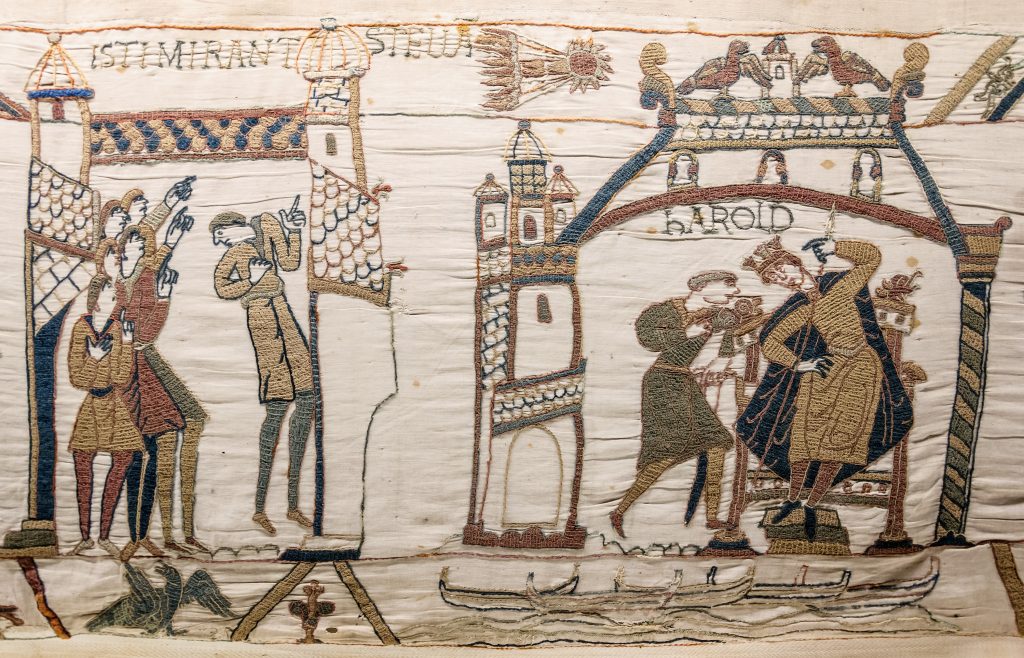
Halley’s Comet and the Norman Conquest (1066)
- Omen: Halley’s Comet appeared in the sky before the Battle of Hastings in 1066.
- Meaning: Many saw the comet as a bad omen, signaling change and doom.
- Outcome: William the Conqueror defeated King Harold, leading to the Norman takeover of England.
King Henry’s Eclipse (1133)
- Omen: Londoners saw a total solar eclipse on August 2, 1133, as contemporary chroniclers recorded.
- Meaning: William of Malmesbury said that “the sun on that day, at the sixth hour, shrouded his glorious face, as the poets say, in hideous darkness, agitating the hearts of men by an eclipse.” William saw the eclipse as a presage of the king’s death, saying “The providence of God, at that time, bore reference in a wonderful manner to human affairs: for instance, that he should embark, never to return alive.”
- Outcome: King Henry I of England left for Normandy, which he also ruled. He died there in 1135, having never returned to England.
The Appearance of the “Blood Moon” Before the Fall of Constantinople (1453)

- Omen: Astronomers saw a red lunar eclipse, called a Blood Moon, before the Ottoman Empire captured Constantinople.
- Meaning: Many interpreted it as a sign of impending disaster for the Byzantine Empire.
- Outcome: The city fell, marking a major shift in history.
Columbus’s Bloody Moon (1504)
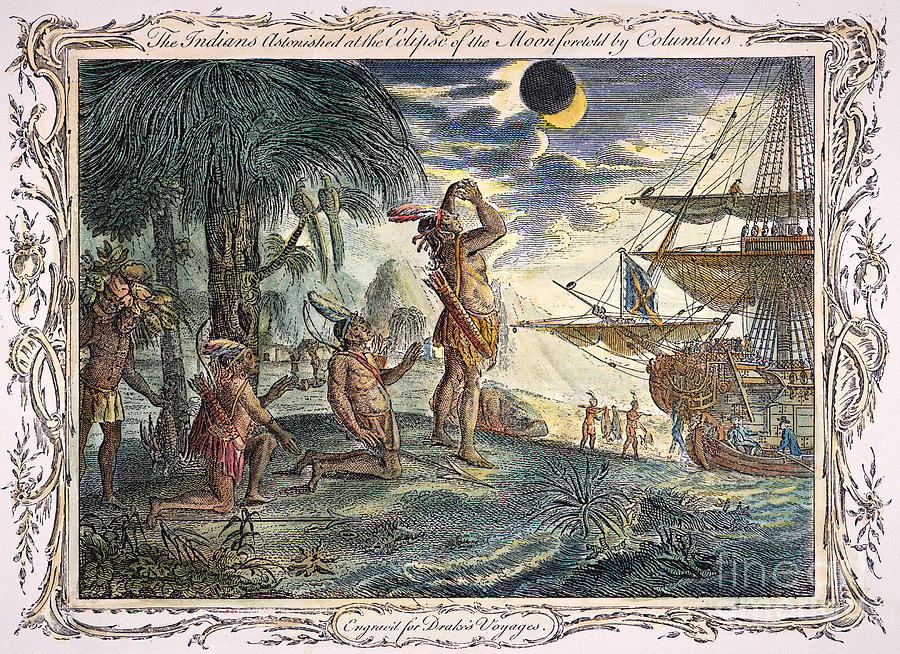
- Omen: A red lunar eclipse. Columbus had with him a book of astronomical tables that predicted a lunar eclipse for February 29, 1504.
- Meaning: Columbus claimed his God was angry with the natives of Jamaica, for denying Columbus’s crew food (which they had done because of months of thievery).
- Outcome: The indigenous people pleaded with Columbus to restore the moon. He said he would intercede with God. The eclipse passed, and the supplies resumed.
The “Angels of Mons” (1914)
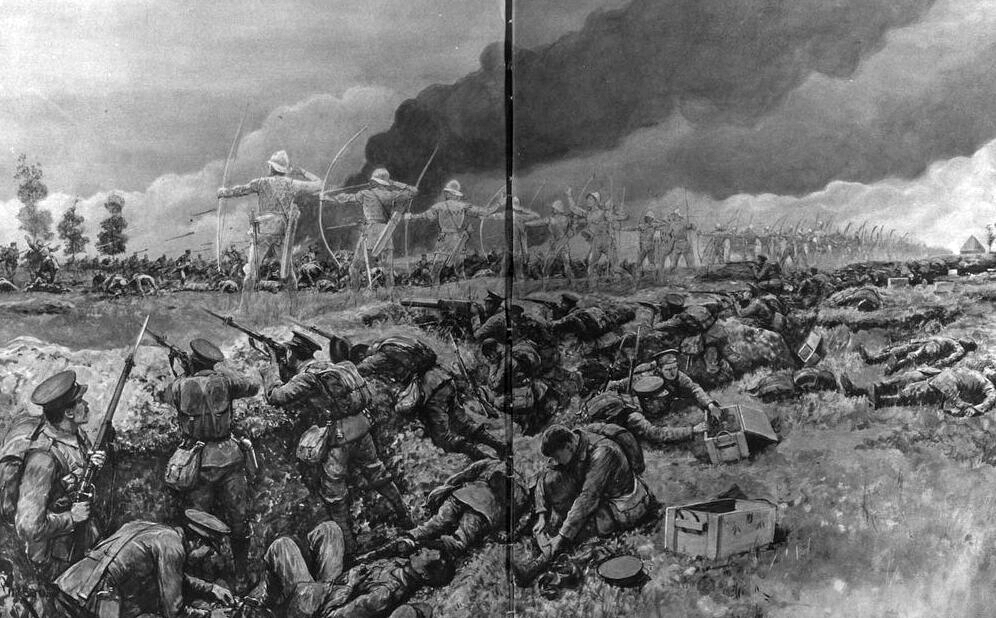
- Omen: British soldiers reported seeing angelic figures, particularly ghostly bowmen, protecting them during the Battle of Mons in World War I.
- Meaning: Many saw these otherworldly figures as a divine omen of protection and hope.
- Outcome: It became a morale-boosting legend during a brutal war.
These omens show how natural or mystical signs were woven into human history, often reflecting hope, fear, or destiny—and probably a dollop of coincidence. But they remind us how deeply humans seek meaning in the world around them. For more examples from history, read the Britannica article Nine Celestial Omens.
Bottom Line: The meaning of omens depends on context, culture, and one’s individual beliefs. But even non-believers are aware of many of these omens.