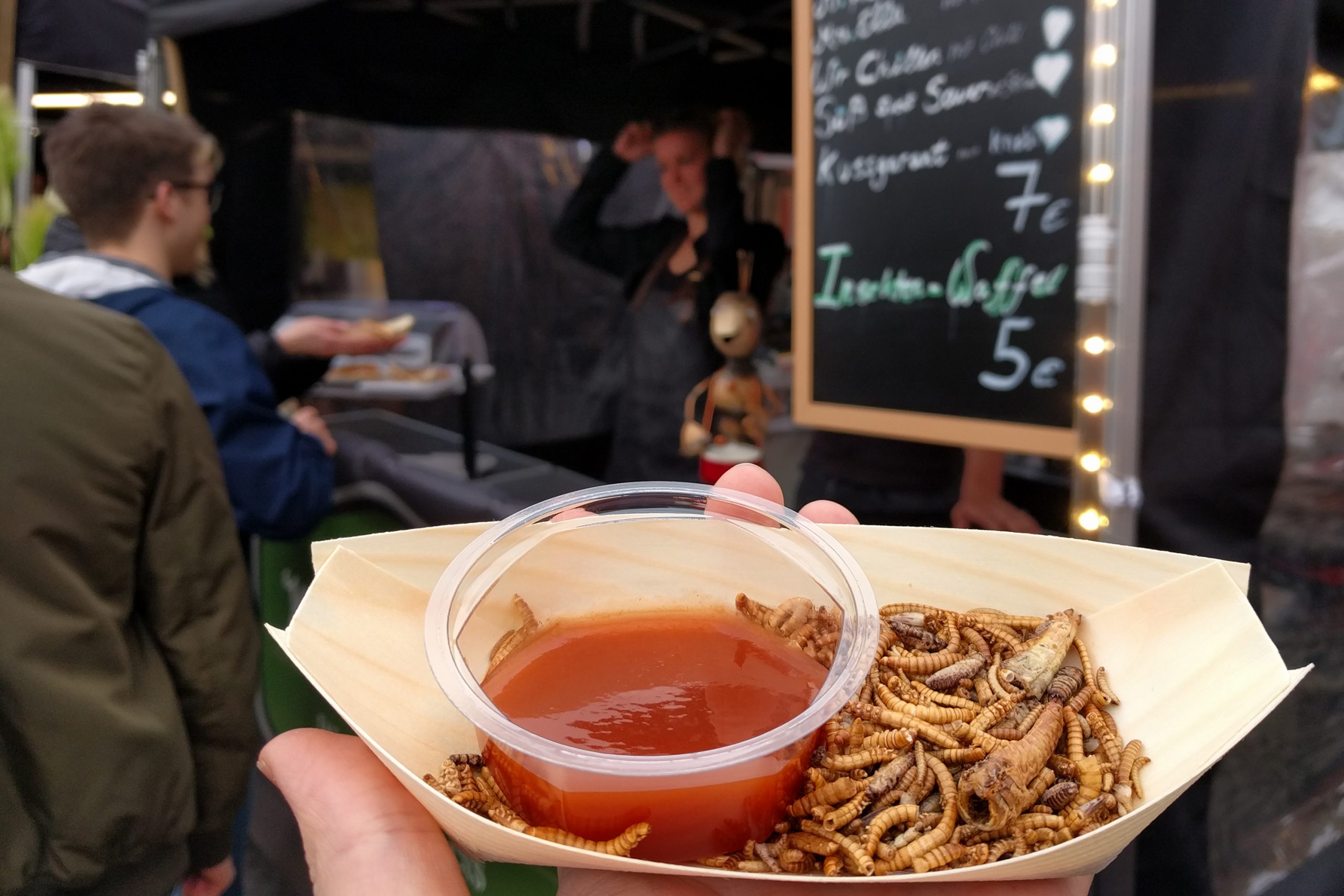
If you are considering eating cockroaches, don’t microwave them! They are so fatty that they explode in the microwave. You just don’t want the mess.
Which is not to say you shouldn’t eat them. According to the EntoMove Project, the cockroach nutritional profile, per mg/100g, (3.53 oz) is 19 g protein, 10 g fat, calcium 38, iron14, zinc 32, potassium 224, niacin 44, magnesium 50, B12 237 mcg.

You might be surprised to learn that the U.S. is listed among countries where cockroaches are either a common or semi-common ingredient in the country’s cuisine or they are offered in at least some restaurants, possibly as a novelty. Other countries include China, Mexico, Japan, and Thailand. (For the Love of Chocolate in Carytown, VA offers scorpion lollipops and ant candy!)
Current research on this topic is non-comprehensive. It is likely that insects are a regular part of the diet in countries not listed above particularly in South America, Africa, and southern Asia. Many traditional cuisines are often more accepting of the idea of insects as a protein source.
And it isn’t just cockroaches. In many cultures around the world, insects are a traditional and nutritious part of the diet. This practice, called entomophagy, is common in regions where insects are abundant, sustainable, and rich in protein, healthy fats, vitamins, and minerals. Here are some cultures and regions where eating bugs is more common.
Latin America
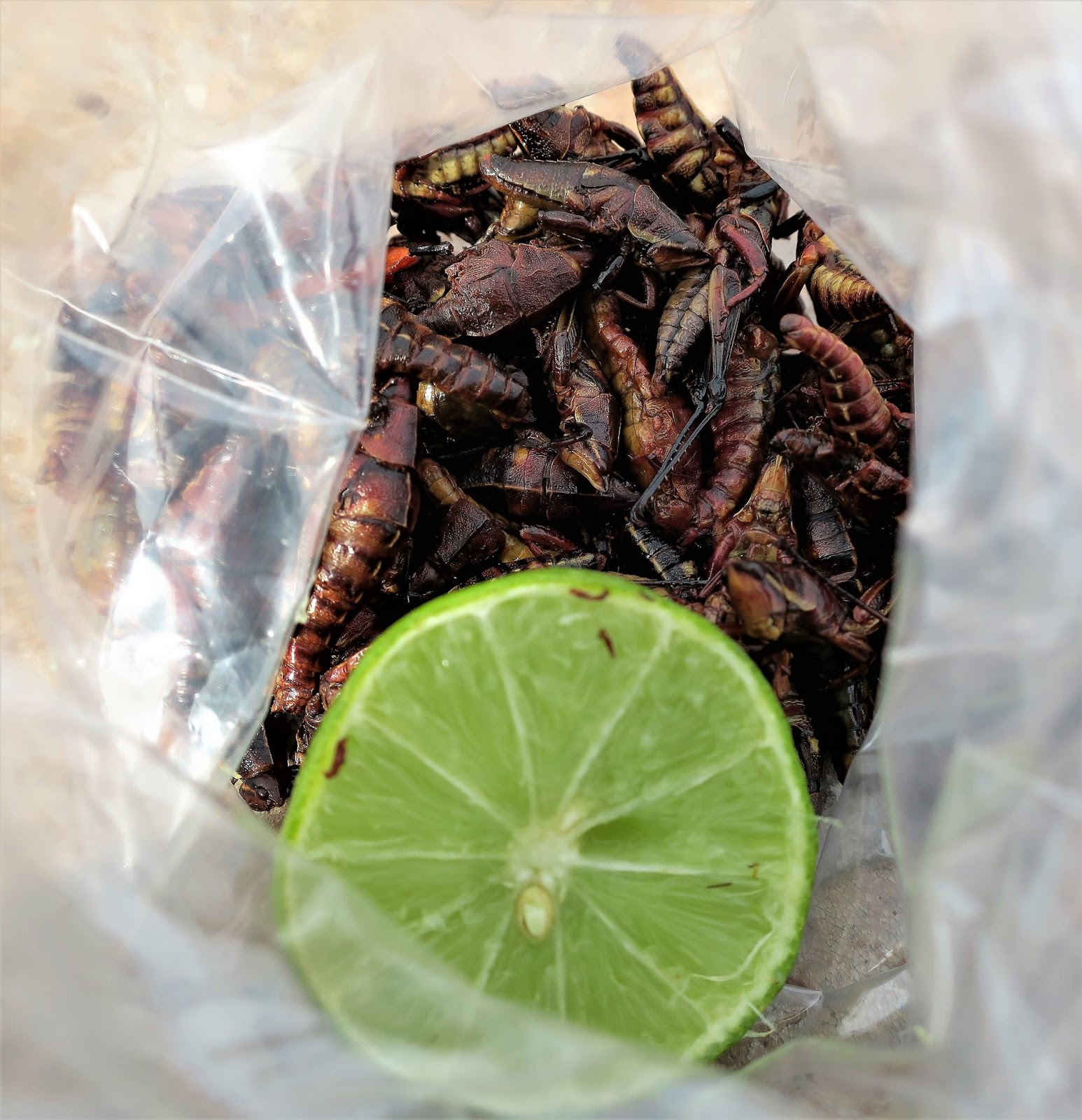
Mexico: Insects like chapulines (grasshoppers), escamoles (ant larvae), and gusanos de maguey (maguey worm) are popular, especially in Oaxaca and central Mexico. Cooks often toast chapulines with chili and lime and serve them as snacks or added to tacos.
Colombia: Hormigas culonas (big-bottomed ants) are a delicacy, particularly in Santander. People often toast them to eat as a crunchy snack.
Brazil: In the Amazon, indigenous communities eat tucum (palm weevil larvae) and suri (palm beetle larvae).
Southeast Asia
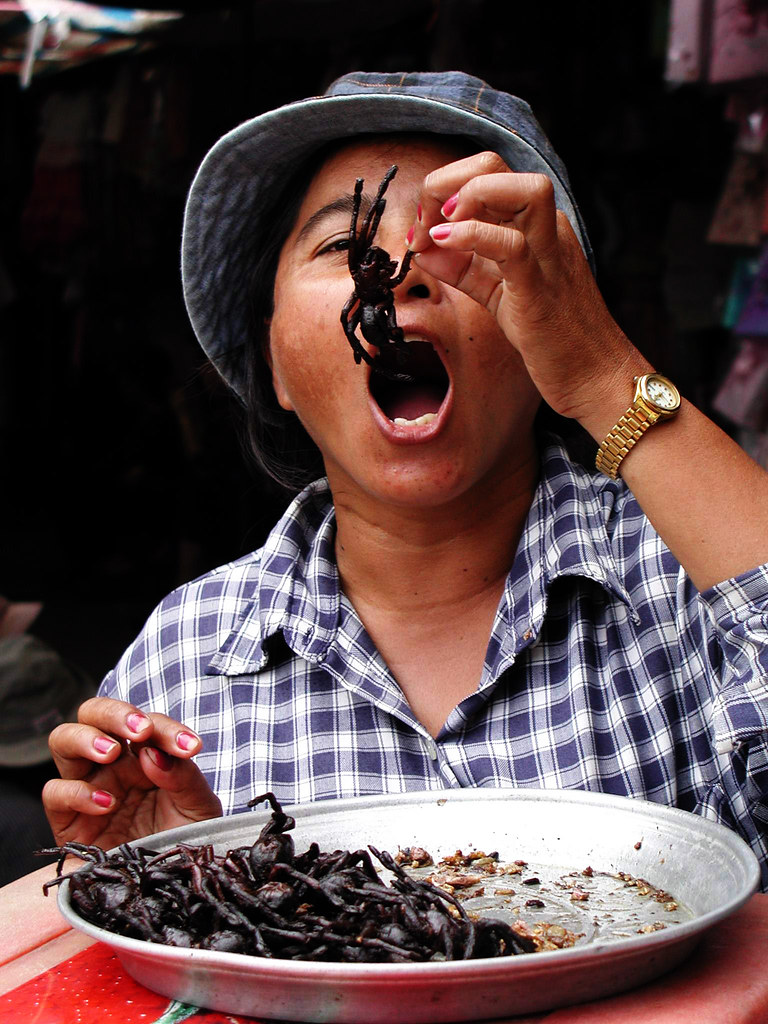
Thailand: In markets and street food stalls, you can find insects like crickets, silkworm pupae, water beetles, and bamboo worms. They are often fried or roasted and seasoned with spices.
Laos: Khao tom mat (ant egg soup) and deep-fried insects are common snacks.
Vietnam: Cricket and silkworm dishes are popular, often stir-fried or used in soups.
Cambodia: Fried tarantulas and water beetles often serve as snacks.
Myanmar: Many cooks include beetle larvae and ants in salads or soups.
Africa
South Africa: The mopane worm (a caterpillar) is dried or canned and eaten as a protein-rich food.
Zimbabwe and Zambia: Madora (larvae of the mopane moth) are a traditional food source.
Congo: Roasted or boiled palm weevil larvae and termites are a popular ingredient and snack.
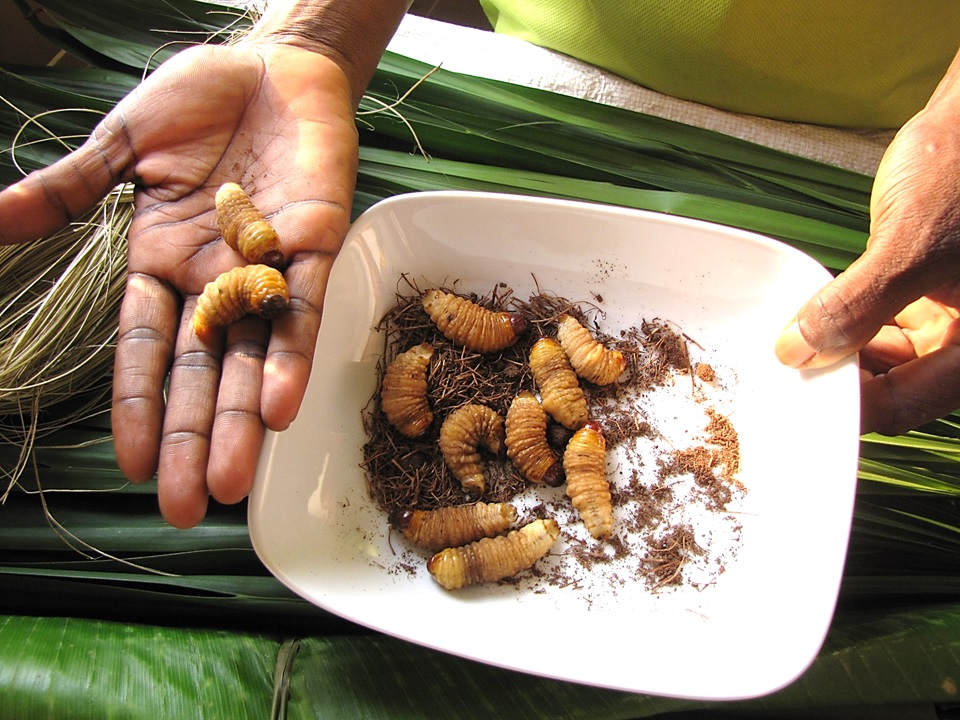
Nigeria: In some regions, rising livestock feed prices are leading people to raise palm weevil larvae and grasshopper as alternatives to chickens and cattle.
Australia and Oceania
Indigenous Australians: Traditionally ate honey ants, witchetty grubs (larvae of cossid moths), and bardi grubs (larvae of palm weevils). People most often eat these raw or only lightly cooked.

Papua New Guinea: Sago grubs (larvae of the sago palm weevil) are a delicacy, often eaten raw or roasted.
East Asia
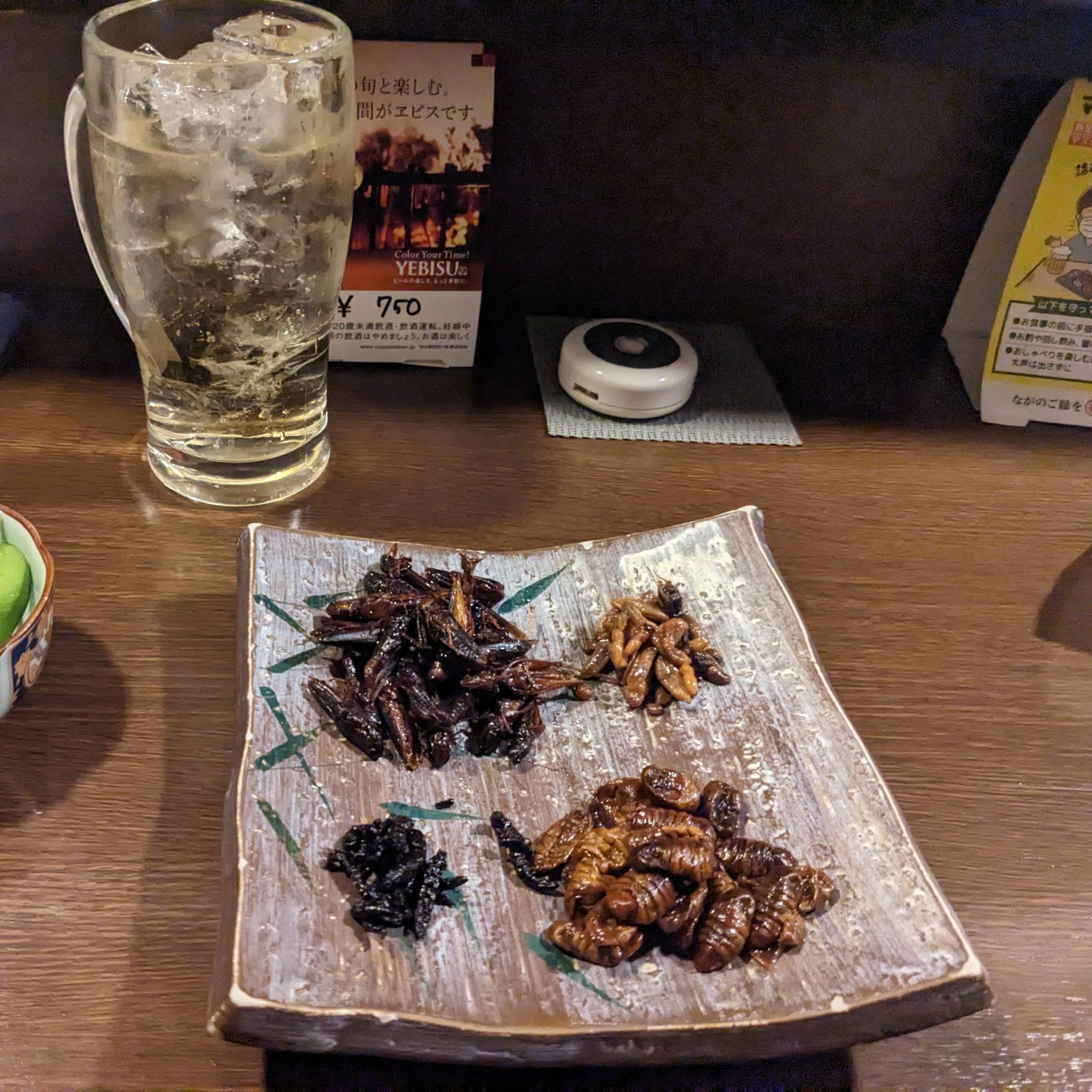
China: In many provinces, including Yunnan and Guangxi, people eat insects like silkworm pupae, cricket, bee larvae, and water beetles. Cooks often stir-fry them or use them in soups.
Japan: Inago (grasshoppers) and hachinoko (bee larvae) are traditional foods, often boiled in soy sauce.
South Korea: Beondegi (silkworm pupae) is a popular street food, steamed or boiled and seasoned with spices.
Middle East
Oman and Yemen: During swarms, locusts and desert locusts make a very handy addition to many dishes, often roasted or fried.
Why Do These Cultures Eat Bugs?

Nutritional Benefits: Insects are high in protein, healthy fats, fiber, vitamins (like B12), and minerals (like iron and zinc).
Sustainability: Insects require far less land, water, and feed compared to traditional livestock, making them an eco-friendly protein source.
Cultural Tradition: In many regions, eating insects is a long-standing practice tied to local ecosystems and food security.
Availability: Insects are often abundant in tropical and subtropical regions, making them a reliable food source.
In many cultures, insects are recognized/consumed for their medicinal as well as nutritional properties.
Bottom Line: Are you open to exotic and beneficial foods?