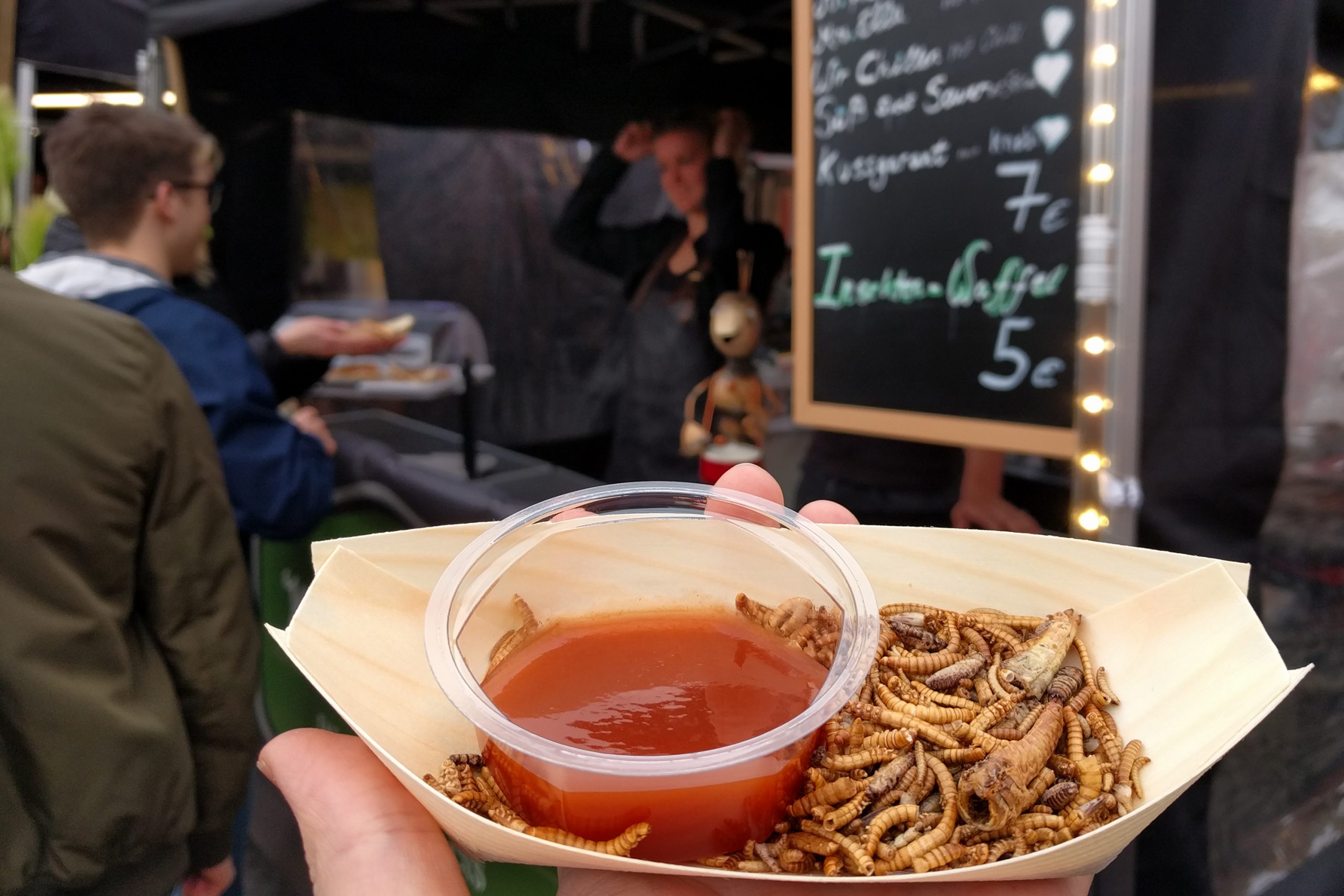
YOU’RE EATING WHAT?

If you are considering eating cockroaches, don’t microwave them! They are so fatty that they explode in the microwave. You just don’t want the mess.

Which is not to say you shouldn’t eat them. According to the EntoMove Project, the cockroach nutritional profile, per mg/100g, (3.53 oz) is 19 g protein, 10 g fat, calcium 38, iron14, zinc 32, potassium 224, niacin 44, magnesium 50, B12 237 mcg.

You might be surprised to learn that the U.S. is listed among countries where cockroaches are either a common or semi-common ingredient in the country’s cuisine or they are offered in at least some restaurants, possibly as a novelty. Other countries include China, Mexico, Japan, and Thailand. (For the Love of Chocolate in Carytown, VA offers scorpion lollipops and ant candy!)

Current research on this topic is non-comprehensive. It is likely that insects are a regular part of the diet in countries not listed above particularly in South America, Africa, and southern Asia. Many traditional cuisines are often more accepting of the idea of insects as a protein source.

And it isn’t just cockroaches. In many cultures around the world, insects are a traditional and nutritious part of the diet. This practice, called entomophagy, is common in regions where insects are abundant, sustainable, and rich in protein, healthy fats, vitamins, and minerals. Here are some cultures and regions where eating bugs is more common.

Latin America
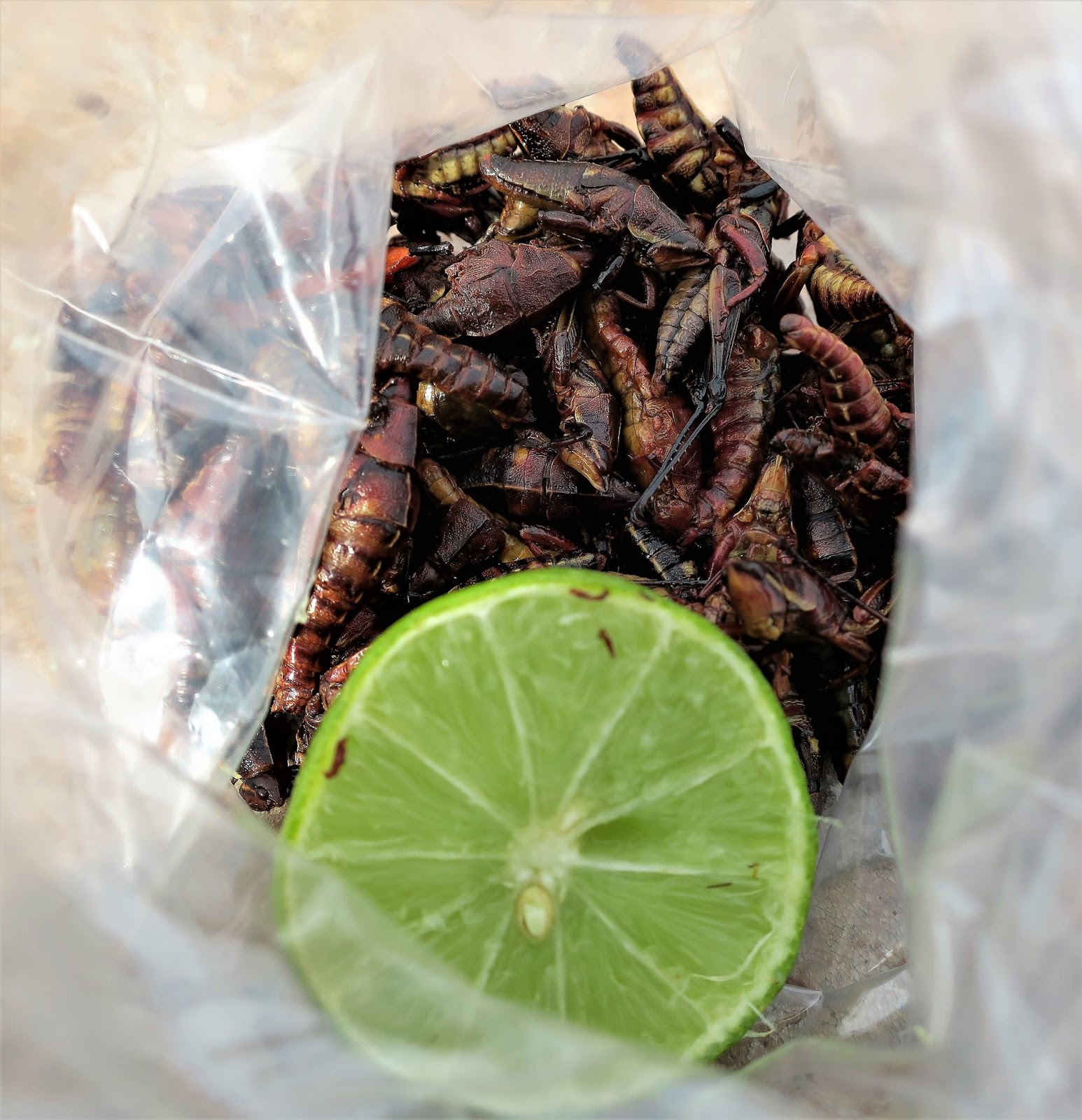
chapulines insects
Chapulines in Mexico

Mexico: Insects like chapulines (grasshoppers), escamoles (ant larvae), and gusanos de maguey (maguey worm) are popular, especially in Oaxaca and central Mexico. Cooks often toast chapulines with chili and lime and serve them as snacks or added to tacos.

Colombia: Hormigas culonas (big-bottomed ants) are a delicacy, particularly in Santander. People often toast them to eat as a crunchy snack.

Brazil: In the Amazon, indigenous communities eat tucum (palm weevil larvae) and suri (palm beetle larvae).

Southeast Asia
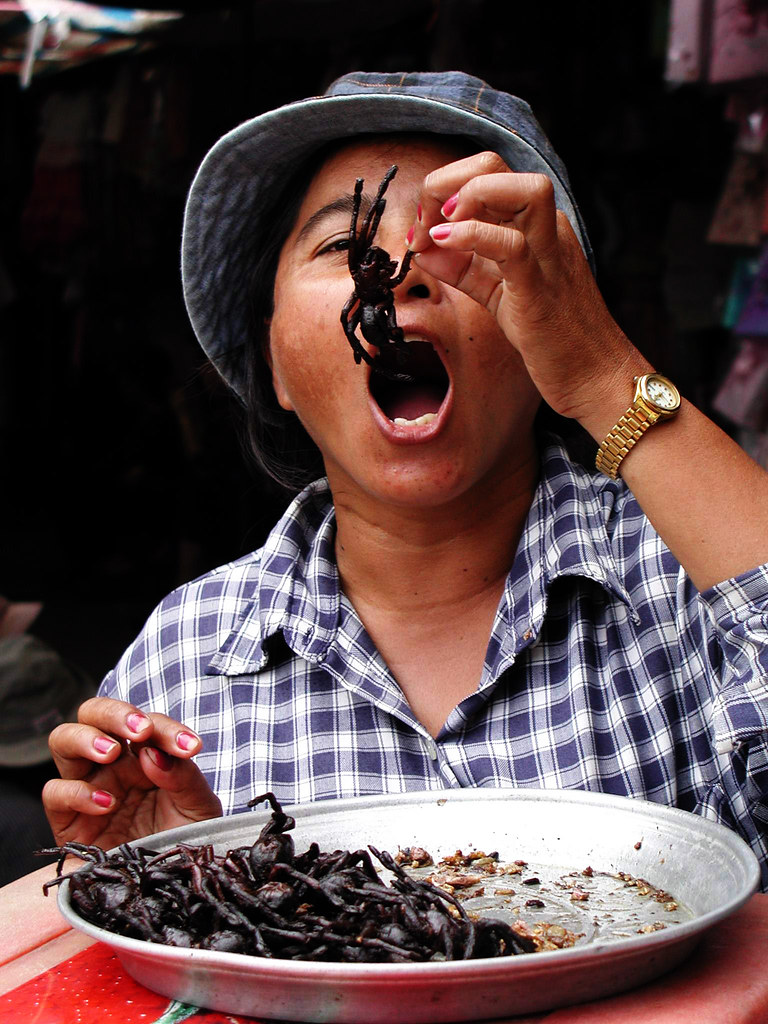
Cambodian fried tarantula insects
Cambodian fried tarantulas

Thailand: In markets and street food stalls, you can find insects like crickets, silkworm pupae, water beetles, and bamboo worms. They are often fried or roasted and seasoned with spices.

Laos: Khao tom mat (ant egg soup) and deep-fried insects are common snacks.

Vietnam: Cricket and silkworm dishes are popular, often stir-fried or used in soups.

Cambodia: Fried tarantulas and water beetles often serve as snacks.

Myanmar: Many cooks include beetle larvae and ants in salads or soups.

Africa

South Africa: The mopane worm (a caterpillar) is dried or canned and eaten as a protein-rich food.

Zimbabwe and Zambia: Madora (larvae of the mopane moth) are a traditional food source.

Congo: Roasted or boiled palm weevil larvae and termites are a popular ingredient and snack.
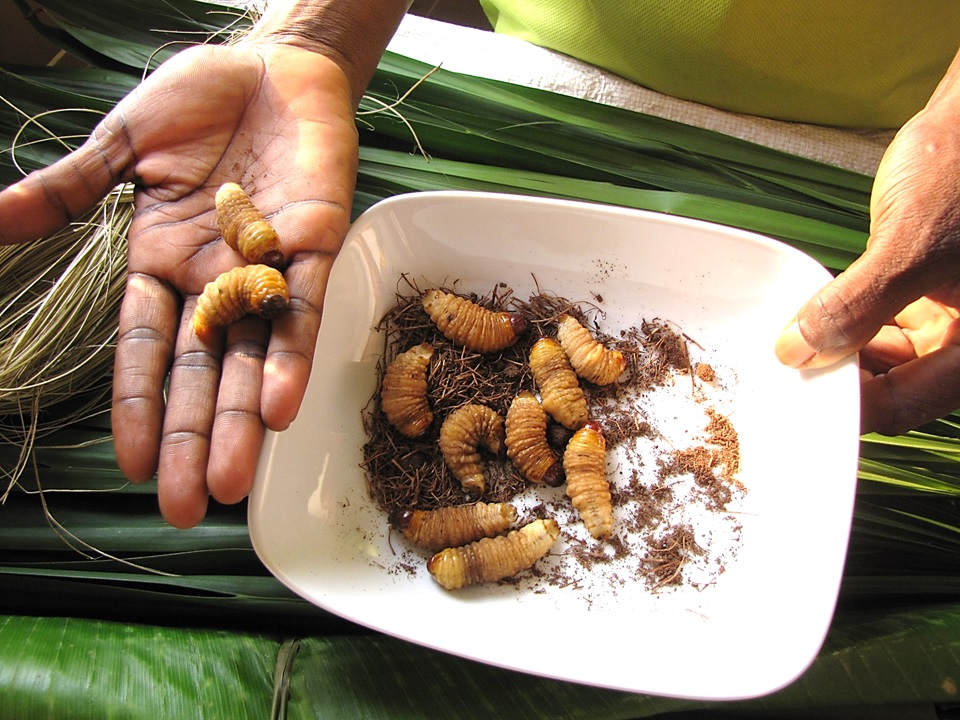
Palm weevil larva farmer, displaying their stock

Nigeria: In some regions, rising livestock feed prices are leading people to raise palm weevil larvae and grasshopper as alternatives to chickens and cattle.

Australia and Oceania

Indigenous Australians: Traditionally ate honey ants, witchetty grubs (larvae of cossid moths), and bardi grubs (larvae of palm weevils). People most often eat these raw or only lightly cooked.

Dora Napaljarri Kitson, hunting for Witchetty grubs (Ed Gold)

Papua New Guinea: Sago grubs (larvae of the sago palm weevil) are a delicacy, often eaten raw or roasted.

East Asia
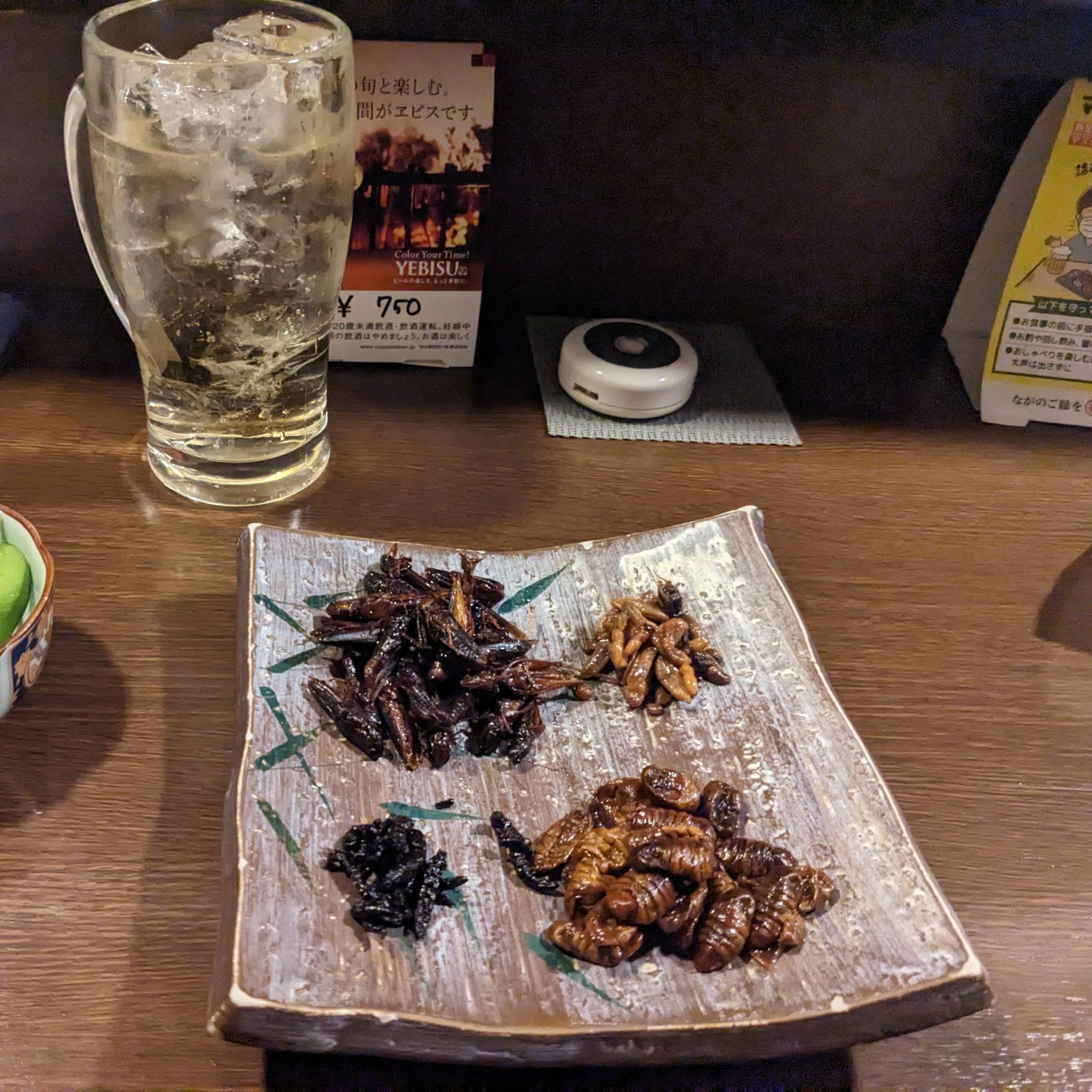
Inago and hachinoko

China: In many provinces, including Yunnan and Guangxi, people eat insects like silkworm pupae, cricket, bee larvae, and water beetles. Cooks often stir-fry them or use them in soups.

Japan: Inago (grasshoppers) and hachinoko (bee larvae) are traditional foods, often boiled in soy sauce.

South Korea: Beondegi (silkworm pupae) is a popular street food, steamed or boiled and seasoned with spices.

Middle East

Oman and Yemen: During swarms, locusts and desert locusts make a very handy addition to many dishes, often roasted or fried.

Why Do These Cultures Eat Bugs?

Fried insect vendor in Thailand

Nutritional Benefits: Insects are high in protein, healthy fats, fiber, vitamins (like B12), and minerals (like iron and zinc).

Sustainability: Insects require far less land, water, and feed compared to traditional livestock, making them an eco-friendly protein source.

Cultural Tradition: In many regions, eating insects is a long-standing practice tied to local ecosystems and food security.

Availability: Insects are often abundant in tropical and subtropical regions, making them a reliable food source.

In many cultures, insects are recognized/consumed for their medicinal as well as nutritional properties.

Bottom Line: Are you open to exotic and beneficial foods?

DISHING ON DIRT

If you look for synonyms or associations, you find words like grime, dust, soot, smut, muck, mud, filth, sludge, slime, ooze, dross, scum, pollution, waste, smudges, stains, crud, yuck, grunge, and the list goes on. Dirt certainly has negative associations.

When one isn’t being literal? Well, there’s scandal, gossip, revelations, rumor(s), tittle-tattle, slander, libel, calumny, smears, lowdown, dope, poop. Yep, dirt has lots of black marks against it.

And that’s not even counting dirty words, dirty dancing, dirty jokes, dirty looks, dirty minds…

The slang meaning of “eating dirt” means to accept blame, guilt, criticism, or insults without complaint; to humble or abase oneself.

Is There Nothing Good About Dirt?

The obvious answer comes from growing plants: any gardener or farmer swears by good dirt.

Not so obvious: exposure to dirt and microorganisms can help train your immune system to fight off foreign substances and build resilience to illnesses.

What follows is for informational purposes only. For medical advice or diagnosis, consult a professional.

Dirt and bacteria in the environment help your immune system learn how to react to foreign substances. 

Early exposure to microbes helps children develop regulatory T cells, which are white blood cells that control how the immune system responds to foreign invaders.  Mycobacterium vaccae, a type of bacteria found in soil, can reduce inflammation and improve mood by influencing the release of serotonin. 

Overzealous hygiene practices can wash away or kill off friendly bacteria, but exposure to dirt can help repopulate them. 

Some Ways to Get Exposure to Dirt

Playing in mud can be beneficial for a child’s health.

Outside activities like mountain biking, camping, and hiking can help people come into contact with a diverse microbial ecosystem.

Don’t constantly clean an infant’s pacifier. A dirty pacifier can stimulate your child’s immune system. 

Having a furry pet in the home, regardless of how clean the pet is kept, will introduce bacteria and pet dander into the atmosphere.

And Then There is Actually Eating Dirt!

Mud cookies in Haiti, by David Levene

Written accounts of humans eating dirt date back more than 2,000 years. For many people, all over the world, dining on dirt is nothing out of the ordinary. Now an extensive meta-analysis reported in the June, 2011 issue of The Quarterly Review of Biology helps explain why.

Dr. Sera Young and her colleagues analyzed reports from missionaries, plantation doctors, explorers, and anthropologists to put together a database of more than 480 cultural accounts of people eating dirt. According to this research, the most probable explanation for humans eating dirt (geophagy) is that it protects the stomach against toxins, parasites, and pathogens.

University of Chicago Press Journals. “Eating dirt can be good for the belly, researchers find.” ScienceDaily. ScienceDaily, 4 June 2011

In one 2017 study, 54% of pregnant women in South Africa ate dirt, and three-quarters of them ate more than 3 teaspoons per day.

Although soil is generally low in nutritive value, deficiencies in iron and zinc may play a role in why some people eat dirt. A 2023 study of children from Sri Lanka suggested that pica (eating things that aren’t food) could indicate a zinc deficiency because the average zinc levels in the children with pica were significantly lower than the average zinc levels in the group without pica.

Note: Eating dirt can be dangerous because soil may contain harmful substances like heavy metals, human waste, and parasites.

Medicinal Uses of Dirt

Actinobacterial strains isolated from Himalayan soil
  • Numerous bacterial genera and species that produce antibiotics in vitro have been isolated from different soils. Actinomycetes, in particular Streptomyces species, have been the primary resource of clinical antibiotics and other therapeutics.
  • Immunologists and allergists in Europe are working on the so-called “farm effect.” Children raised on ecologically managed farms in Central Europe have much lower rates of allergy and asthma than urban children or those raised on industrialized farms. Almost everything points to microbes—in manure, in unpasteurized milk, in stable dust, on unwashed food and, yes, in the soil. How soil microbes and other farm microbes protect against allergic diseases is still a matter of debate.

Bottom Line: With dirt, you take the bad with the good.

You Are How You Eat

When writing food scenes, the eating and drinking are seldom central to advancing the plot, so people have coffee and cake or do lunch, and all the plot and character development are carried by the dialogue. Such dismissal of eating/drinking habits is a big opportunity missed.
 
juliet a boghossian
[Source: Twitter]

“Food-ology links FOOD RELATED HABITS to PERSONALITY TRAITS and BEHAVIORAL TENDENCIES. A PORTAL INTO THE LAYERS OF ONE’S CHARACTER. Learn more about yourself and those around you – to support better judgment, improve relationships, increase effectiveness and empower your life. You are HOW you eat.” ~ Juliet A. Boghossian, Founder, Behavioral Food Expert

Juliet Boghossian is a self-styled behavioral food expert. Her research has spanned 20 years. She’s cited all over the place, so here are her major assertions about eating style and personality. Now, in the interest of full-disclosure, I admit that I read secondary sources. I couldn’t quickly find Boghossian publications. (Make of that what you will.)


you are how you eat
The slow eater. According to Boghossian, slow eaters usually prefer to be in control, and they know how to appreciate life. They’re also likely to be confident and even-keeled.  Perhaps they put themselves and their needs ahead of others, are selfish, and do not give priority to others.
juliet Boghossian
The fast eater. Fast eaters tend to be ambitious, goal-oriented, and open to new experiences. They may tend to be impatient. May come across as overly competitive. Often finish tasks ahead of deadlines. May be considerate, putting others ahead of their own needs.
adventurous eater
The adventurous eater. These people never meet a food they don’t want to try. This person is probably a thrill-seeker and risk-taker in other areas of life, willing to try new things, maybe beyond his/her experience/comfort zone.


Picky eater
[Source: Today Show]
The picky eater. Does this really need definition? People who hesitate to try new food, continue childhood food preferences, etc. According to Boghossian, picky eaters are likely to be a little neurotic in general.


Julia Hormes, psychologist specializing in food behaviors at SUNY Albany, notes, “Research on ‘food neophobia’—the reluctance to try new foods—shows that it is related to certain personality traits, including sensation seeking, anxiety, and neuroticism. Those high in food neophobia appear to associate many avoided foods with a sense of disgust.”


The isolationist. These people eat all of one food before moving on to the next food, and so on around the plate. According to Phil Mutz, author of the LittleThings post, “You are a very detail-oriented person, and you are sure to always think things through thoroughly… You are a very careful person.”


Boghossian says, “This behavior conveys a task-oriented personality versus a multi-tasking individual. …Also, it conveys a disciplined and borderline stubborn tendency to complete one task before moving on to another.”


you are how you eat
Earlier this year, Tastessence  presented opinions on these and other eating habits. They discussed the personalities of people who adapt their eating speed to match the pace of companions, change eating pace based on schedule, experiment with food combinations, order without looking at the menu, take a long time to order, cut all their meat portion at one time, make noises while eating, ask questions about the menu, refuse to share food, and/or keep foods from touching each other. If any of these variations are of interest to you, look it up.
 
eating
In the meantime, I will turn to findings published in the journal Appetite. This is by researchers at the Swiss Federal Institute of Technology, who maintain that personality informs eating habits. This was a serial survey study of nearly 1,000 participants (not college students). They researched what psychologists have put forward as the five basic dimensions of personality: openness, conscientiousness, extraversion, agreeableness, and neuroticism.


So, in a reversal of the above, here are the five personality types and what their eating habits are, according to who scored high on a personality dimension.


mediterranean diet
[Source: Cooking Light]
Openness: More likely to stick to a healthy, balanced diet, like the Mediterranean diet; not a huge red meat fan; more likely to have a plant-based diet, perhaps including fish; eats lots of fruits and vegetables.


Conscientiousness: Likely to seek information, control stress factors, and adopt behaviors with health benefits; less likely to eat meat; more likely to be a restrained eater; does not eat emotionally; prefers fruits and vegetables to sweets.


you are how you eat
Extraversion: Social, good at networking; engages in social eating, so more likely to respond to external food cues (like smell); eats more meat, sweet foods, savory foods, and sugar-sweetened drinks.
grocery store
Agreeableness: Less likely to consume meat, but otherwise no significant correlation between this personality dimension and most food choices.


comfort food
Neuroticism: Diet only when convenient, eat to cope with emotions; tend to eat “comfort foods,” not so many veggies, and fewer whole grains.


Bottom line for writers: Make more of your food scenes! Whether it’s your protagonist or another character, use their eating habits to establish and deepen the portrait of their characters.
ronald reagan
As the great communicator once said, “You can tell a lot about a fellow’s character by the way he eats jellybeans.”