DISHING ON DIRT

If you look for synonyms or associations, you find words like grime, dust, soot, smut, muck, mud, filth, sludge, slime, ooze, dross, scum, pollution, waste, smudges, stains, crud, yuck, grunge, and the list goes on. Dirt certainly has negative associations.

When one isn’t being literal? Well, there’s scandal, gossip, revelations, rumor(s), tittle-tattle, slander, libel, calumny, smears, lowdown, dope, poop. Yep, dirt has lots of black marks against it.

And that’s not even counting dirty words, dirty dancing, dirty jokes, dirty looks, dirty minds…

The slang meaning of “eating dirt” means to accept blame, guilt, criticism, or insults without complaint; to humble or abase oneself.

Is There Nothing Good About Dirt?

The obvious answer comes from growing plants: any gardener or farmer swears by good dirt.

Not so obvious: exposure to dirt and microorganisms can help train your immune system to fight off foreign substances and build resilience to illnesses.

What follows is for informational purposes only. For medical advice or diagnosis, consult a professional.

Dirt and bacteria in the environment help your immune system learn how to react to foreign substances. 

Early exposure to microbes helps children develop regulatory T cells, which are white blood cells that control how the immune system responds to foreign invaders.  Mycobacterium vaccae, a type of bacteria found in soil, can reduce inflammation and improve mood by influencing the release of serotonin. 

Overzealous hygiene practices can wash away or kill off friendly bacteria, but exposure to dirt can help repopulate them. 

Some Ways to Get Exposure to Dirt

Playing in mud can be beneficial for a child’s health.

Outside activities like mountain biking, camping, and hiking can help people come into contact with a diverse microbial ecosystem.

Don’t constantly clean an infant’s pacifier. A dirty pacifier can stimulate your child’s immune system. 

Having a furry pet in the home, regardless of how clean the pet is kept, will introduce bacteria and pet dander into the atmosphere.

And Then There is Actually Eating Dirt!

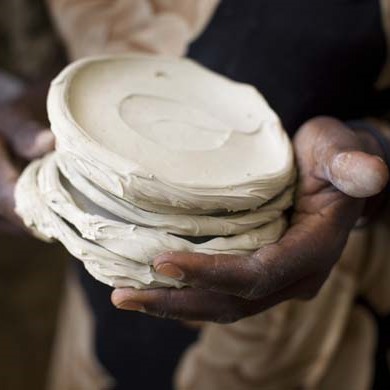
Mud cookies in Haiti, by David Levene

Written accounts of humans eating dirt date back more than 2,000 years. For many people, all over the world, dining on dirt is nothing out of the ordinary. Now an extensive meta-analysis reported in the June, 2011 issue of The Quarterly Review of Biology helps explain why.

Dr. Sera Young and her colleagues analyzed reports from missionaries, plantation doctors, explorers, and anthropologists to put together a database of more than 480 cultural accounts of people eating dirt. According to this research, the most probable explanation for humans eating dirt (geophagy) is that it protects the stomach against toxins, parasites, and pathogens.

University of Chicago Press Journals. “Eating dirt can be good for the belly, researchers find.” ScienceDaily. ScienceDaily, 4 June 2011

In one 2017 study, 54% of pregnant women in South Africa ate dirt, and three-quarters of them ate more than 3 teaspoons per day.

Although soil is generally low in nutritive value, deficiencies in iron and zinc may play a role in why some people eat dirt. A 2023 study of children from Sri Lanka suggested that pica (eating things that aren’t food) could indicate a zinc deficiency because the average zinc levels in the children with pica were significantly lower than the average zinc levels in the group without pica.

Note: Eating dirt can be dangerous because soil may contain harmful substances like heavy metals, human waste, and parasites.

Medicinal Uses of Dirt

Actinobacterial strains isolated from Himalayan soil
  • Numerous bacterial genera and species that produce antibiotics in vitro have been isolated from different soils. Actinomycetes, in particular Streptomyces species, have been the primary resource of clinical antibiotics and other therapeutics.
  • Immunologists and allergists in Europe are working on the so-called “farm effect.” Children raised on ecologically managed farms in Central Europe have much lower rates of allergy and asthma than urban children or those raised on industrialized farms. Almost everything points to microbes—in manure, in unpasteurized milk, in stable dust, on unwashed food and, yes, in the soil. How soil microbes and other farm microbes protect against allergic diseases is still a matter of debate.

Bottom Line: With dirt, you take the bad with the good.

SELFISH? VOUNTEER!

Volunteering is a positive thing, as nearly everyone agrees. A volunteer benefits not just their community but reaps a range of benefits mentally, professionally, and personally.

Maureen Sullivan and Shirley Conn, American Women’s Voluntary Services (F. Palumbo, 1941)

Words associated with volunteering include:

  • Passionate
  • Reliable
  • Team player
  • Patient
  • Creative
  • Energetic
  • Positive
  • Willing to help
  • Compassionate
  • Organized

Why to Volunteer

So, if you volunteer, you are likely to enhance your image. But if your image is “fine,“ why bother? There are many more substantive reasons for people—even selfish people—to volunteer.

Social scientist have studied the phenomenon of volunteering for years, and the benefits are clearly documented for physical benefits, a range of mental and emotional positives as well as a sense of self-worth, and social networking.

Dr. Eric Kim, psychologist, has studied the connection between psychological well-being and physical health. One study, published in the American Journal of Preventive Medicine, followed people who volunteered at least two hours per week over a period of four years. According to Kim, “Our minds and bodies are rewarded when we give to others.” Study participants showed less chance of early death and also reduced “physical functioning limitations.”

Dr. Austin Hall, medical director of the University of North Carolina Center for Excellence in Community Mental Health says, “Volunteering has been shown to have a positive effect on both mental health and cognitive abilities.” In older adults “volunteering can delay cognitive decline.”

Career Benefits

Developing confidence: discovering hidden talents that may change the volunteer’s view of their own self-worth.

Learning new/valuable skills: opportunity to develop transferable skills applicable to any position, such as interpersonal communication, time management, leadership, delegation, communication, leadership
and problem-solving.

Networking: volunteer work can demonstrate to those who may be in a position to recommend you to others or hire you for a paid position based on the kind of person you are (e.g. how you work with others, how you approach tasks, how you take initiative, how you manage your time).

Targeted volunteering gives you the opportunity to develop meaningful connections with professionals in your field of interest.

Career exploration: volunteering is also a great way to explore different career opportunities by engaging with professionals in a variety of fields to better understand your interests, likes and dislikes and determine which fields you might want to pursue further.

Other professional benefits:

  • Gaining professional experience
  • Expand your resume
  • Career advancement
  • Develop social skills

Mental Health Benefits

Mental health professionals agree that focusing on a cause outside of yourself has many benefits for mental health and well-being.

  • Interrupts tension-producing patterns.
  • Increase happiness: reduce stress, combat depression, anxiety and loneliness by releasing dopamine.
  • Moods and emotions, like optimism, joy, and control over one’s fate, strengthen the immune system.
  • Physical health (by encouraging more physical activity)
  • Gratification of giving back
  • Meet new people/make new friends
  • Finding purpose

And bring fun into your life!

Benefits to Your Community

Community cohesion: assisting in uniting people from diverse backgrounds to work toward a common goal and building camaraderie through teamwork.

Personal growth and fulfillment: through working with local non-profit agencies, learn about the functions and operations of our government, gain knowledge of local resources available to solve community needs.

Saving resources: volunteering provides valuable community services so more money can be spent on local improvements. The estimated value of a volunteer’s time in California is $26.87 per hour based on the Corporation for National & Community Service.

Cons of Volunteering

The constraints on time, funding, or manpower can make it tough for volunteers to hit their goals or create a significant impact. Such failures can cause the volunteers to lose faith in the cause or in the benefits of volunteering altogether.

In addition, you may also encounter resistance. Introducing new ideas or initiatives can face pushback, both from within the organization and the community.

Bottom Line: Weighing the pros and cons, even selfish self-interest supports volunteering.

Psychology of Clothing

The relationship between clothing and psychology has been studied for decades. The major point overall is that the relationship between clothing and psychology is bidirectional. Not only do our clothing choices reflect our identity, but they can also influence our thoughts and feelings.

Clothes can be a way to express ourselves without saying a word. As a form of nonverbal communication, clothes can reveal our inner emotional states to others—or hide them.

Mood

On a given day, clothes may be a reflection of one’s mood OR a projection of the mood we want people to think we are feeling. For example, someone who wears bright colors may be feeling outgoing and confident, or want to appear that way. Someone who chooses black may be reserved and serious, or want to seem so. Also, over centuries, dark and dull colors were the colors of mourning, sometimes required more than felt.

On days when we feel happy and positive, we tend to gravitate towards bright colors and playful patterns. Conversely, during times of sadness or anxiety, we may find ourselves reaching for comfortable and cozy clothing in neutral tones. Our clothing can become a reflection of how we are feeling.

Nostalgia

Certain clothing items can evoke nostalgia. As humans, we have an innate ability to attach emotions and memories to objects, including clothing that holds sentimental value or reminds us of a specific time or place in our lives. By definition, nostalgia means thinking of past happy moments filled with joy and warmth.

One reason certain clothing items hold strong nostalgic value is because they were worn during significant events or milestones in our lives. For example, a wedding dress, or a graduation gown that brings back memories of hard work and achievement.

The opposite is also true: some items of clothing or jewelry may bring back powerful memories of loss or grief.

Comfort

Physical comfort is essential for our overall well-being. When we wear comfortable clothing, we feel relaxed and at ease. It allows us to move freely, without restrictions or discomfort. Comfortable clothes can also boost our confidence as we don’t have to constantly adjust or worry about how we look. This sense of ease can positively impact our mood by reducing stress and anxiety levels.

Self-Perception

The clothes we wear can also influence how we feel about ourselves. Studies have shown that people tend to feel more confident when dressed more formally than when dressed more casually. When we feel confident and put together, it can positively affect our mindset and give us a sense of power and control. The explanation posited is that dressing in professional attire signals importance and authority, which can boost one’s self-esteem. This phenomenon, known as “enclothed cognition,” highlights the powerful impact clothing can have on our psychological state.

Clothing Affecting Behavior

Various studies have shown that what we wear can affect not only our confidence levels, but also decision-making abilities, and even physical performance.

The saying “dress for the job you want, not the job you have” holds true in many professional settings. When we dress professionally, we are projecting an image of competence, credibility, and authority. Participants in a study paid closer attention and made fewer mistakes on a test when they wore white lab coats. Women in another study performed either worse or more variably on both athletic and cognitive tasks when required to wear clothing that draws attention to their bodies. This not only affects how others perceive us but also how they respond to us, as a competent authority—further boosting self-esteem and confidence.

Reflective and Affective Color

Color can both affect our emotions and reflect them. For instance, red is associated with passion and energy while blue represents calmness and stability. Our brains associate green with nature, growth, balance, and harmony while yellow represents happiness and optimism. These associations can shape how others perceive us based on the color of clothing we choose to wear.

The colors we choose to wear have a significant impact on our mood and behavior. This is because colors can evoke different emotions and feelings, making us feel happy, calm, energized, or even anxious. The psychology of color has been studied extensively, with research showing that certain hues can trigger specific reactions in the brain.

Personality for Color Preferences

Color preferences are related to personality traits.

Juliet Ju and Jung Hee Ha researched the relationships between personality and color preferences in 2022. Their research reveals a positive correlation between agreeableness and preference for yellow, light blue, and white, and a negative correlation between agreeableness and a preference for red. In addition, they found a positive correlation between conscientiousness and a preference for light blue and dark blue, and a negative correlation between conscientiousness and a preference for red.

Meanwhile, emotional stability was positively correlated with a preference for light blue, dark blue, and white, and negatively correlated with red and yellow. Finally, openness to new experiences was positively correlated with a preference for bright blue and white, and negatively correlated with a preference for orange.

This research found that color preferences significantly predicted all personality traits except extraversion. Agreeableness was significantly predicted by yellow, light blue, and white preferences. They found that the preference for light blue significantly predicted conscientiousness. Emotional stability was significantly predicted by red and light blue preferences. Openness to new experiences was predicted by green, purple, and white preferences.

Good to know if you are trying to manipulate the impression you are making!

Other Color Associations

Other research and discussions across the web indicated additional color associations.

Red is associated with passion, love, and power. It is a bold and intense color that can increase heart rate and blood pressure, making us feel more alert and energized. Wearing red clothing can also make us appear more confident and attractive. On the other hand, too much red can also lead to feelings of anger or aggression.

Blue is known for its calming effect on the mind and body. It is often associated with trust, stability, and intelligence. Studies have shown that wearing blue clothing can lower blood pressure and heart rate while promoting relaxation. This makes it an ideal color to wear during stressful situations or when you need to remain focused. FYI, overall blue is America’s favorite color.

Yellow is a bright and cheerful color that symbolizes happiness, optimism, and creativity. It has been found to stimulate mental activity and boost energy levels. Wearing yellow clothing can help improve your mood on days when you are feeling down or unmotivated.

Green represents nature, growth, balance, and harmony. It has a calming effect on the eyes as it reflects most light wavelengths evenly. Wearing green clothing can promote feelings of tranquility while reducing anxiety levels.

Impact of Clothing Patterns

A study by George K Stylios, Meixuan Chen  indicated that patterns on clothing also affect the mood and behavior of the wearer and the observer. In particular, repeating patterns increase theta brain waves, indicating people take more pleasure in these compared to non-repeating ones. People were also more excited by strong, intense patterns than weak or subtle ones.

from IceWear

So, if you want to attract attention, opt for an intense, repeating pattern. If you’re going for a calming but pleasant effect, wear something with a subtly repeating pattern. Clothing without any patterns tends to have less effect on the brain of the observer, which may be helpful for someone who wishes to be unobtrusive. Wearing an intense, non-repeating pattern will have a very strong, edgy effect.

Values and Beliefs

Values and beliefs can be revealed by clothing. A t-shirt or hat with a slogan will make an immediate statement about the wearer’s beliefs, but other signs may not be as obvious. For example, someone who wears clothing made from sustainable, eco-friendly materials might signal their commitment to environmental causes, while someone who chooses to wear clothing from a particular cultural tradition might be expressing their connection to that culture. In this way, the clothes we wear can serve as a visual representation of our beliefs and values.

Identity Reinforcement

We often choose clothing that reinforces our existing self-concept. If you see yourself as a creative individual, you might gravitate toward unique and artistic fashion choices. On the other hand, if you identify as a professional, your wardrobe may consist of business attire that reflects your dedication to your career.

Social Identity

We tend to dress in ways that align with the social groups we belong to or aspire to be part of. Subcultures, such as punk, goth, or hip-hop, often have distinct fashion styles associated with them. By adopting clothing related to a particular subculture, individuals signal their membership and allegiance to that group. It’s a way of saying, “I belong here.”

None of This is Infallible

It is important to recognize that clothing choice cannot definitively reveal a person’s personality. All of the points covered in this blog are based on group data, and individuals vary a great deal. So, while clothing can provide some clues, it cannot accurately define a person’s personality. Remember that quite a lot of personal fashion is determined by elements outside the wearer’s control!

Bottom Line: Clothing is more than just a practical necessity. Understanding the psychology behind our clothing choices can lead to greater self-awareness and a more intentional approach to the messages we convey through our attire. So the next time you stand in front of your closet, remember that your clothing choices are more than just fabric and threads; they reflect who you are and who you aspire to be.

YOU ARE WHAT YOU WEAR?

What might one infer from these clothes?

Well, yes and no.

There’s no denying that clothes are important. They are (arguably) the first thing people see when they see you—front, back, or sideways. People may infer a lot from your clothes, everything from socio-economic class to what you like. Are they accurate?

Sometimes. In my opinion, there are multiple factors that determine what one wears at any given time. Our clothing choices are not static; rather, they adapt to different circumstances. The way you dress for a job interview will likely differ from how you dress for a casual weekend with friends. Adaptability reflects our ability to navigate social situations effectively. We use clothing as a tool to project the desired image.

Factors Outside Yourself That Affect Clothing Choices

Socio-Economic Standing

As a child, I wore whatever my mother made for me, plus hand-me-downs from older cousins. Although places such as resale stores, Goodwill, and Ashland Christian Emergency Services may provide access to clothes one might not be able to afford otherwise, perfect tailoring, high fashion, and accessories such as fur just aren’t available to most working class/blue- or pink-collar people.

Accessibility

Related to socio-economic standing is the issue of what clothes a person is able to obtain and wear. Wealthy people can afford to have clothes tailored or even custom-made to fit, but everyone else is generally limited to what is available on the rack. Even trying to make or alter your own clothes requires skill, time, and materials. People with measurements outside the average often have to settle for what fits rather than what they like.

Though they have improved a bit in recent years, many clothing lines that cater to plus-size women still offer only dark colors, floral prints, boxy silhouettes, and outdated trends. Additionally, many brands simply scale up clothing designed for thinner bodies, making clothes that don’t fit at the shoulders and hips or don’t bend properly at the knees and elbows.

Exceptionally tall or short fashionistas face similar problems when trying to choose clothing. A friend who is very tall hates tunic style tops but often can’t find anything else long enough for her torso. Her equally tall husband generally settles for shirts too large in the shoulders because those are the only ones that don’t bare his navel. Another friend has to shop for footwear exclusively in the children’s section because those are the only shoes small enough for her feet.

Work

Although the line has blurred since the COVID restrictions made work-from-home and on-line-commuting common, most people can still look at their closets/dressers and identify which clothes are specifically for work—at least for Zoom meetings!

The most obvious work place attire is seen where uniforms are required: members of the military, nurses, fast-food workers, flight attendants, athletic teams, and the like.

But beyond such obvious uniforms, think about what you expect to see on a funeral director; priest, minister, rabbi, or mullah; fashion designer; orchestra member; member of Congress, etc. Although these (and many other) professions do not have a single uniform per se, nevertheless informal or even formal dress codes apply. At one time, when part of my job included overseeing secretarial and clerical staff who met the public, I told the employees (all female at the time) no cleavage, no pits, no crotch, and no jeans on the job.

Astronauts must wear clothing to keep them safe aboard a rocket ship or in the cold vacuum of space.

Some jobs require specific clothing styles for safety or convenience. Locksmiths need to wear shoes with steel toe caps and no laces where shards of metal could work their way inside. General contractors often wear cargo pants and utility belts with plenty of pockets to hold tools and materials. Anyone working in a kitchen is going to prefer shirts with closely fitting sleeves. People with particularly messy workplaces, such as auto mechanics and crime scene cleaners, may opt to wear a full-body coverall at work to protect their regular clothing.

Dress for Success

As jobs change, so does one’s clothing. As a college professor I wore tweeds, wool, boots, and almost no jewelry. For over ten years as an executive in association management and academic administration, I wore skirted banker suits, pearls, a moderate amount of gold jewelry, and two-inch heels with matching handbags and briefcase.

In late1970s and early ‘80s, John T. Molloy published many Dress for Success books. I suspect that his advice is outdated: today, I met with a female bank manager who wore slacks and a cable-knit sweater.

Still, the concept remains the same. Although the specifics vary, dressing for success is still a real thing. Proverbial wisdom says, “Dress for the job you want, not the job you have.” And then there is this hint of who is striving: you can tell who’s on the way up by whose shoes are shined.

In Retirement/ At Leisure

This is where one is likely to get the clearest insight into personal clothing preferences.

No longer dressing for paid work, I wear flat black shoes, comfortable pants, casual tops, and lots of silver jewelry (usually earrings, necklace, bracelet, watch, and multiple rings on each hand). Even so, I’m a little more formal for symphony, opera, or theater. Society still has expectations about what people ought to wear. Regardless of work status, what one wears to a worship service is very likely different from what one wears to a ballgame. (All of the following factors still apply.)

Geographic Location/ Weather/ Season

Not to belabor the point: what is necessary in upstate New York in winter isn’t appropriate in South Carolina, and what is worn in South Carolina is likely inadequate in upstate New York. And all of America tends to dress more casually than the rest of the world.

Just look at traditional national costumes from countries with varying climates and compare that with what is considered socially acceptable now. Along with lightweight fabrics, society is more likely to accept bared shoulders, shorts, open-toed shoes in hot, humid climates. Going to work in a sleeveless shirt and shorts would likely cause raised eyebrows in Norway. Wearing a fur-lined parka to the beach in Thailand might cause heat stroke!

Ceremonies and Celebrations

Think funeral, wedding, employee party, anniversary, baby shower, Halloween party… Again, this is pretty obvious, although it differs over time and by peer group—and personal preference!

In September of the same year, I attended the weddings of my oldest and youngest daughters. For numerous reasons, including geography, I wasn’t involved in the planning of either event. My husband and I gave each daughter a check (for the same amount of money) and said, “Do what you will.”

The older daughter’s wedding was held in an historic meeting house in New England and involved a white dress and veil, 6 attendants in matching dresses, a sit-down reception, and dancing. I wore a dress suitable for the mother of the bride.

The younger daughter was married in the back yard of the house where she and her soon-to-be-husband were living, with baskets of flowers nailed to railroad ties. He wore a tailored green silk suit and shirt; she wore a white, spaghetti-strap mini-dress, a circle of daisies in her hair, and platform sandals. The reception was an outdoor barbecue. The guests sported leather, chains, denim, and tattoos. I wore casual pants and top.

Note: people who dress to the expected norms tell us much less about themselves than the rebels who defy expectations.

Clothes for Functionality

Sometimes, fashion is the result of function, clothing and accessories that allow the body to move and perform in ways otherwise impossible. Think of a soccer player’s cleats or a fly fisher with a many-pocketed vest and rubber boots.

Medically Adapted Clothes

Some people choose clothes for medical reasons rather than fashionable ones, though the two can sometimes be combined. People who use mobility devices like wheelchairs or crutches might choose clothing that drapes nicely when seated or has no chance of tangling. Those who have attached medical devices, such as chemotherapy ports, insulin pumps, or colostomy bags can buy or adapt clothing that allows easier access these devices. Compression tights can help with circulation issues. Nursing mothers are likely to wear shirts, dresses, and bras designed to allow feeding access.

Eyeglasses straddle the line between accessories and medical devices. Though more than 4 billion people worldwide rely on corrective lenses, it is usually possible to choose frames of a shape, size, and color that reflects one’s personal style preferences.

People with sensitive skin and those who spend a lot of time outside have an increasing range of options for sun protection. Long-sleeved swimsuits and UV protective workout clothes share shelf space with wide-brimmed hats, sunglasses, and sunblock creams.

Hobby Clothes

The clothes you wear for your hobbies are likely very different from those you’d wear to work or an evening out with friends. If those hobbies are active ones, you may choose clothing that makes it easier to enjoy those hobbies.

A gardener wears gloves and sturdy pants for protection rather than fashion. A skier’s suit provides insulation but still allows movement. Leotards, running shorts, rock-climbing gloves, line-dancing shoes, and sweat bands all allow the wearer to move in comfort while enjoying their hobbies.

Clothes that Enhance

Wearing a dragon’s wings allows small children to take flight, as everyone knows.

And then there are clothes that allow the wearer to surpass their previous athletic or artistic performance. A ballet dancer wears pointe shoes not for the sake of fashion but because they redistribute weight and support her foot while balancing on the tips of her toes. Weight lifters wear friction gloves and intra-abdominal pressure belts, allowing them to lift heavier loads without injury. A marathon runner and a hurdler will choose very different shoes for competition, as shoe designs can provide athletes with different advantages.

Competitive swimmers faced controversy at the 2008 Olympics for wearing Speedo’s LZR Racer suits. These suits provided swimmers with extra buoyancy, reduced drag, and muscle compression. Ultimately, competitive swimming advisory boards banned these suits, claiming they were the equivalent of “technological doping” for athletes.

Artistic Performance

Belly dancers typically perform in costumes that accent their hips.

Performance clothes often mix fashion with functionality, chosen not just for the way they look but for how they enhance the wearer’s movements. A Chinese long-sleeve dancer wears a costume with sleeves extended far past her fingertips to highlight the graceful movements of her hands and arms. Tap dancers and Irish dancers might choose sparkly socks and shoe buckles to draw attention to their fancy footwork. A harpist or flautist might wear sleeves that flutter attractively when they play their instrument.

When Clothes Get Truly Personal

Overall, despite external expectations, clothes can still be a form of self-expression.

Style Choices

Whether you opt for a bohemian maxi dress, a tailored suit, or a vintage band t-shirt, your clothing sends a message about who you are and what you stand for. According to the fashion industry, there are several basic style choices in American clothing, including the following.

Classic/ Traditional

Gabrielle Union

If you would describe your style as classic or traditional, you choose plain fabrics, or maybe a discreet pinstripe at most. You like clean and crisp fabrics that have some structure. You are drawn to timeless fashion, preferring to invest in quality fabrics and timeless styles rather than jumping on trends. A person with a classic style typically has a rather formal wardrobe and always look polished and put together. Matching and co-ordinated looks are your preference over those that incorporate bold colors and prints. Your jewelry and accessory choices are not overbearing; they compliment your outfits without being the focal point.

Natural/ Relaxed

Tilda Swinton

Feeling comfortable in your clothes is most important to you, and your easygoing nature tends towards more casual outfits. Simple lines and designs are your preferred choices over anything too detailed or fussy. In keeping with this carefree attitude, you tend to buy easy care, wash and wear garments. You prefer fabrics such as denim, cotton jersey, and lightweight knits. Your jewelry choices reflect your minimal look, and you tend to wear basic and durable accessories. Your footwear also is chosen for comfort. You are not a pattern lover, but choose a stripe or check and sometimes a tweed. You like some texture and also are attracted to the colors of nature. Lots of denim, khaki, and button-front styling.

  • Gamine—a smaller/shorter version of sporty/natural. The gamin woman looks great in pixie hairstyles and sporty/natural clothing styles.

Dramatic/ Edgy

Lupita Nyong’o

If you have a dramatic streak, you will like brighter colors, big bold patterns, or high contrast patterns, perhaps fabrics with shine or a more structural appearance. You may also like animal prints, large and spectacular accessories. Wearing the latest fashion takes precedence over comfort, and you are willing to give most new trends a go. This means your wardrobe consists of many different styles and one-off pieces ready to make a statement. Your look is striking and well-thought-out. Details such a lip color and eye-catching shoes provide the finishing touch to your look. Jewelry and accessories in shiny metal finishes or bold one-of-a-kind wearable art pieces compliment your statement-making looks.

Artistic/ Creative

Josephine Baker

If you have a creative personality you may like patterns that are more about ‘wearable art’, abstract prints, or mixtures of prints and patterns all in one garment. Your way of dressing is innovative and individualistic, and you aren’t overly influenced by current trends or traditional rules. You use your clothing choices to reflect your personality and put together unique and interesting outfits with items purchased from varied sources. Different colors, textures, and prints fill your wardrobe, and your jewelry collection is bold while your footwear and accessories are usually statement-making.

Romantic/ Feminine

Zoe Saldaña

Women with this style prefer floral prints, or nature inspired ones (such as butterflies, or plants). If your style leans toward the feminine and romantic, you will choose soft, floaty fabrics that drape over your body. You may like sequins and beading detail on clothes. You have a soft appearance and generally prefer flowing silhouettes and muted colors. Your clothing choices are pretty, and include details such as bows, ruffles, pleats, and lace. Even with simpler styles, you will most likely choose them in pastel colors or with decorative details. Your footwear and accessory choices are delicate and minimal with fine necklaces and ballet flats among your staples.

If you think of yourself as Romantic, you like dressing with lots of fullness and softness. You choose large plaids, large printed designs on fabrics, and large details (Women like large ruffles, lace and bows; men like baggy pants and full cut shirts & sweaters).

“Timeline of Spring Fashions” by a-little-bit-lexical

Your style is much more than clothes or accessories. It includes all the little things that you do to make yourself look and feel good, from hair style and makeup to nail care and grooming.

Bottom Line: Be aware of what you wear. Within situational contexts such as those discussed above, clothes can reflect your personality AND how you want to be perceived. They may reflect social status, current activity, as well as your current mood or mindset.

MORTAL REMAINS

A person dies. The body is still there. Someone, somewhere, somehow must deal with the human remains.

Burial

Interment is a fine old tradition, as testified to by all the graveyards and cemeteries. Essentially, a burial is putting a body somewhere where it is likely to remain, usually undisturbed, into the foreseeable future.

  • In the ground
  • In a building: mausoleum, crypt, wall
  • At sea

FYI: Although, historically, graveyards were attached to churches and did not allow cremated remains, there is no functional difference today between graveyards and cemeteries.

In Ground Burial

The Mushroom Burial Suit, invented by Jae Rhim Lee, is threaded with mushroom spores to help the body decompose after burial.

In-ground burial usually means a cemetery and involves a funeral home/director who makes sure all requirements are met. It’s the sort of thing most of us are familiar with.

Except in California, Indiana, and Washington State, it is legal to bury a corpse on private property, although rules and regulation apply.

  • Obtain a permit for burial/transportation
  • Follow local regulations regarding zoning laws embalming, refrigeration, and burial depth
  • Get written approval. The local board of health and governing body may need to be notified in writing
  • The property must be under the control of deceased’s family

So called “green burials” are growing in popularity. Natural burial grounds, cemeteries, and preserves all bury without embalming, liners, or vaults, and use biodegradable containers, whether caskets, shrouds or nothing at all. A variety of entities own and operate these cemeteries: municipal governments, religious groups, individuals, nonprofits, for-profits, and others. Many use GPS units or non-native stone markers to mark grave sites rather than carved headstones.

Both some Native American and Jewish communities traditionally use green burials.

Indoor Burials

Some mausoleums are grander than others.

In buildings, sometimes special requirements apply.

Most mausoleums require that a licensed funeral director has embalmed the body. Caskets must meet specific size requirements, and sometimes must have a self-sealing air valve.

Mausoleums are usually located in a cemetery or other place dedicated to the dead. They shouldn’t be noisy areas and should be well-maintained.

If you’re building a family mausoleum on private property, you must abide by local zoning rules.

Crypts are typically smaller than mausoleums and are often located in religious buildings or cemeteries. Owners often reserve crypt spaces for notable people.

Where space is scarce, people often turn to ossuaries for skeletal burial. After temporary burial in the ground (typically for a pre-determined period, such as ten years), a caretaker exhumes a corpse and transfers skeletal remains to a final—much smaller—resting place. Sometimes the bones go into an ornamental container; sometimes people display them in elaborate (if macabre) artwork.

Burial at Sea

People are still buried at sea, not just out of necessity but by choice—a choice growing in popularity.

The US Navy offers free burial at sea for eligible families of service members and veterans. The Navy performs such burials for an average of 1,500 cremated remains and 15 casketed remains per year.

Anyone can choose a burial at sea. The US Environmental Protection Agency has parameters for such burials and require a permit. The burial must take place at least three nautical miles from land. The ocean waters must be at least 600 or 1800 feet deep, depending on location. And the presiding entity must take measures to ensure that the remains sink rapidly and permanently.

Burning

The word cremation stems from the Latin word ‘crematio‘, meaning ‘to burn or destroy by heat’.

The form of body burning most common in the United Sates today is the modern cremation process, defined as the burning of a corpse using a column of flames at a temperature of around 1000 degrees Celsius in a furnace powered by natural gas or oil.

After the cremation procedure is complete, what remains are typically gray fragments including ashes from the cremation container and bone particles. Pulverizing these remains is typically the last step in the process.

Besides putting the cremains in an urn or box for burial or a place on the mantle, they can be

Funeral pyre in Ubud, Indonesia

There are legal rules in many places that require a waiting period before cremation. This wait is also important for things like completing all the necessary paperwork.

Of all world religions, Islam opposes cremation the most strongly. Islamic teaching considers cremation to be an unclean practice.

Conversely, funeral pyres are an essential part of a Hindu funeral, which is why people still used traditional pyres in India, Nepal, Bangladesh, and Indonesia.

Water “Burning”

So called “water cremation”—aquamation—doesn’t actually involve burning. An alkaline hydrolysis machine contains a single air-tight and water-tight chamber. The chamber holds approximately one hundred gallons of liquid. A technician places the deceased into the chamber, then seals it. The contents may be subjected to heat (199 to 302 degrees Fahrenheit), pressure, and/or agitation (varying with equipment) to ensure proper cremation.

At the completion of the process, bone fragments and a sterile liquid remain. The bone fragments, now called cremated remains or hydrolyzed remains, appear pure white in color. Because the process uses water, the last step of the process is thoroughly drying the remains before pulverization.

Aquamation results in approximately 32% more cremated remains than flame-based cremation and may require a larger urn. On the other hand, it has less environmental impact (less air pollution and less energy needed).

On average, aquamation is slightly more expensive than traditional cremation because of the expense of the machines used. Typically, water cremation costs between $2,000-3,000, while flame cremation costs around $1,100-2,000. A traditional burial can cost between $7,000-12,000.

Exposure

The Lakota Sioux, Mandan, Cheyenne, Ute, and Navajo tribes often practiced tree burial, constructing platforms like a scaffold or tree to bring the deceased closer to the sky. Animals consume the body, bringing the life cycle full circle–similar to a Zoroastrian or Tibetan Sky burial.

Vultures at a Tibetan Sky Burial

In the Tibetan Sky burial, a celestial burial master chops the human remains into pieces and mixes them with barley flour. Then, a body carrier takes the mixture high into the mountains and leaves them for vultures. Everyone involved smiles and sings throughout the process to help guide the dead from darkness to the next stage. Tibetans see sky burial as a last gift to the universe — a way to show the insignificance and the impermanence of our earthly lives.

A Zoroastrian Tower of Silence holds human remains high above the ground, removing any chance of contamination. After carrion birds have stripped the bones clean of flesh, nusessalars (ritual pallbearers) transfer any remaining bones to an ossuary, mix them with lime, and allow them to disintegrate and return to the soil.

Preservation

Mummification, ancient as it is, is seldom practiced today. Natural mumification may occur, such as of people lost in the desert, but very few people choose mummification.

However, some villagers in Papua New Guinea still mummify their ancestors today. They believe that spirits will roam the earth after death unless their descendants maintain the body of the deceased. After death, family members place the bodies in a hut and smoke them until the skin and internal organs have desiccated. Then they cover the remains in red clay, which helps maintain their structural integrity, and placed the mummy in a jungle shrine. Villagers bring the bodies down from the shrine for celebrations, and loved ones visit the mummies to consult with their ancestors.

Sunflowers preserved in liquid silicone oil, by Marc Quinn

Cryogenics is, essentially, the opposite of mummification. The motivation is to preserve one’s body (or body part, typically the brain) in the hope that in the future, science will be able to correct or heal whatever the person died of, and the frozen person can live again. Today, liquid nitrogen tanks hold approximately 500 people globally for preservation, the vast majority in the United States. Around 4,000 people are on waiting lists of cryonics facilities around the world.

Useful as Well as Ornamental Remains

Some people plan before death to put their dead bodies to good use. Years ago, Mary Roach published Stiff: The Curious Lives of Human Cadavers. Old, but still a great read!

Organ and tissue donation is well known. Just check the box on your driver’s license.

If you record your consent in the donation register, you can specify which organs or tissue you would like to donate. Several factors determine whether organs or tissue are actually useable for transplant, like their quality and whether or not a donor died in a hospital.

The donor must die in a hospital to be able donate organs. Organs need a supply of oxygen-rich blood to remain suitable for transplantation. After death, doctors hook up the donor’s body to artificial respiration to keep the heart beating, so that oxygen-rich blood continues to circulate.

By contrast, tissue donation is often possible if the donor dies in a non-hospital setting.

Not all organs and tissue types are suitable for transplant. Organs eligible for transplant are the heart, kidneys, liver, lungs, pancreas, and intestines. The skin, bone tissue (including tendons and cartilage), eye tissue, heart valves and blood vessels are transplantable forms of tissue.

Even if you are a registered donor, transplant teams may reject your organs or tissue after your death for medical reasons, for instance if you:

  • Had blood poisoning (sepsis)
  • Had an active viral infection
  • Acquired a tattoo or piercing in the 6 months before your death

There is no general age limit on donation. Although the heart of an 80-year-old person would be too old for transplantation, their skin or corneas might still be suitable.

Medical Education

“Muscles of the back: partial dissection of a seated woman, showing the bones and muscles of the back and shoulder”
Color mezzotint by J.F. Gautier d’Agoty, 1745/1746

Medical students use whole bodies for education. None of the tissue goes for transplant into a living person (which distinguishes whole body donation from organ donation). Physicians, EMS personnel, even dental healthcare professionals practice their skills through studying donated bodies.

Some specialized educational purposes require “fresh” bodies or parts. For example, plastic surgeons cannot use embalmed heads in the course of their education.

But typically, when a donated body reaches the end of its usefulness, it goes for cremation. Upon request, the family might then receive the cremated remains.

Science

Some medical conditions or circumstances of death can make a body unacceptable for scientific study. Depending on the nature of the research, these include:

  • Obesity/emaciation
  • Amputations
  • Unhealed open wounds
  • Contagious diseases

For example, real human bodies were/are necessary to calibrate crash test dummies accurately for impact tolerance. Similarly, the military studies effects of bullets and bombs.

Whole body donation is not possible after an autopsy has been performed.

The Body Farm

The Body Farm is a special case of donating one’s body for science. The University of Tennessee Forensic Anthropology Center is commonly known as the Body Farm.

At the Body Farm, students intentionally leave corpses out in the elements to study what happens as the body decomposes. The placement might expose the body to air, submerge it in water, bury it in a shallow or deep grave, allow access to scavenging animals, or any other circumstance. The goal is always the same: to simulate crime scenes so that students can document decay and learn to identify future victims (or the time and circumstances of their death).

Just as you can become an organ donor when you die, you can also choose to donate your body to the Body Farm. Medical examiners who cannot identify a corpse or locate next of kin are also primary providers of bodies to the facility. Since the inception of the Knoxville, TN lab, body farms have sprung up in Illinois, Texas , Colorado, Illinois, Florida, and North Carolina—and even exist outside the U.S. Facilities have opened in Australia, Canada, India, and the United Kingdom!

Bottom Line: Something will be done with your mortal remains. If you care, make provisions before you die, and tell your next of kin of your wishes!

WHO KNEW?

People are funny, strange, and wondrous creatures! Just read on.

Hobbies

Estimates are that 400,000-500,000 people in the U.S,—more than 95% of them women—play Mah Jong with the National Mah Jong League card. Another 350,000,000 play thirteen versions of Mah Jong in Asia. Game experts have long recognized mah jong as the world’s most played game, with an estimated player base in Asia, Europe, and North American ten times bigger than poker. 

Who are the most optimistic pet owners in the U.S.? Tortoise owners, because tortoises can live 80-150 years! (I couldn’t find a number specifically for tortoise owners, but approximately 18% of American households keep tortoises or turtles as pets.)

Only 1-2% of the U.S. population has gone skydiving at least once.

Rock climbing? It depends on what type of climbing you are looking at. Women are 59% of sports climbers, but only 39% of those in mountaineering, ice, and traditional climbing combined. Then there is indoor vs. outdoor climbers, and boulderers, each of which have different gender makeups.

Among U.S. households, 52% have at least one person, age 5 or older, who is currently playing a musical instrument.  Two-thirds of Americans (66%) learned to play a musical instrument at some point in their lives.  The most popular musical instrument is the guitar.  The double bass is probably the least played instrument.

The average American spends only 19 minutes a day reading. The average number of books read by adults over the age of 65 is higher than any other age group, at around 20 books per year. Men tend to read non-fiction books more often than women.

Gender

Tiffany Hadish performing stand-up in 2013

Men tell more jokes professionally than women do. In the United States, 11.3% of stand up comedians are women and 88.7% of stand up comedians are men. Over an 11 year period, these percentages have shifted approximately 2% in favor of women. Systemic sexism in the industry (venue directors reluctant to book female comedians, backstage abuse, pay disparities, hostile crowds, etc.) are a bigger driver in this divide than any difference in innate funniness.

Being in love is biochemically the same as having a severe obsessive-compulsive disorder, according to researcher Dr. Donatella Marazziti.

Research on liking and loving between engaged couples found that the men loved their partners more than they liked them. The women both liked and loved their partners.

Equal numbers of males and females are conceived. Approximately 105 males are born for every 100 females.

Women survive famine and epidemics better than men. On the other hand, research has shown that women disproportionately suffer the impacts of disasters, severe weather events, and climate change.

One study found that men with longer ring fingers than index fingers had slightly longer penises. However, the common misconception that hand size predicts penis size has been widely discredited.

Research shows that women with larger breasts tend to have higher estrogen levels; breast size may therefore serve as an indicator of potential fertility.

Health

Approximately 60% of people are side sleepers. Only about 7% are stomach sleepers—which is fortunate, because stomach sleeping is the least healthful position.

Depth of sleep is related to brain waves. Convincing yourself you slept well can trick your brain into thinking it did.

A feel-good life is not necessarily a healthy one. Stress can be good for us. Stress is a powerful motivator. It can enhance your resilience and problem-solving skills, strengthen relationships, promote personal growth and self-improvement, and improve cognitive function.

Female pattern baldness affects about one-third of all women and people assigned female at birth (AFAB). The chances of getting female pattern baldness increase with age.

Caucasians experience the most hair loss; people of Afro-Caribbean heritage tend to experience the next highest levels of hair loss, with Asian men having the lowest hair loss rates.

On average, male pattern baldness begins in the late twenties to early thirties. By the age of 50, approximately 50% of men will experience some degree of hair loss.

For both men and women, pattern baldness tends to cluster in families. Having a close relative with patterned hair loss appears to be a risk factor for developing the condition.

Outlook

Nationally forty-seven percent of Americans are either very or somewhat optimistic, while the other 53 percent are more inclined to be somewhat or very pessimistic about the future.

Speaking in a foreign language might change your decisions or the reasons for those decisions.

In addition, speaking multiple languages gives a person a sense of reality and identity that is separate from monolinguals and monoculturals.

US research published in the Journal of Consumer Research indicates bilinguals may unconsciously switch personalities depending on the language they are using.

The type of music you listen to affects the way you perceive the world. According to results from a 2014 study done by Laura Getz and colleagues, those with a higher perceived idea of stress and those with higher optimism preferred more upbeat and popular music. Both also used this kind of music for emotional regulation.

Wisco and Nolen-Hoeksema (2009) found that those who were already unhappy had more negative memory associations [to songs] than those who were not unhappy.

90% of people text things they can’t say in person.

The food you make may not taste the same as the food someone else makes, despite following the same recipe. Minor differences in things like water hardness and oven temperature affect flavor, but the diner’s experience (happy or sad occasion, food presentation, level of hunger, speed of eating, etc.) also changes the taste of food.

Research indicates that those eating with others eat up to 48% more food than solo diners. This phenomenon is known as ‘social facilitation’.

People After Death

Barbara Kemmis, head of the Cremation Association of North America, says the cremation rate is almost 60 %, compared to 40% who opt for traditional casket burials.

Beyond urns, there are many options for ashes: made into jewelry, or different types of objects, such as  glass art, sculptures, diamonds, keychains, or hunting bullets. You can even turn your loved one’s ashes into a  vinyl album  or get them tattooed into your own skin.  Of course, many people choose to scatter cremains in special places. 

Bottom Line: Whatever you want to know about human behavior or characteristics, someone has studied it and shared those answers online.

SNAIL MAIL

Can you mail an emu to your sister in Ohio? Yep.

You want to send your brother-in-law’s ashes to his son in Taiwan. Not a problem.

Sending a durian fruit to someone who loves it? That would be a big NO.

It turns out that modern U.S. Postal Services go way beyond letters, postcards, bills, junk mail, and the occasional birthday bracelet.

A Brief History of the Post Office

On July 26, 1775, at the beginning of the American Revolution, the Second Continental Congress in Philadelphia founded the United States Post Office. They appointed Benjamin Franklin as the first postmaster general (he had plenty of experience as the postmaster of Philadelphia since 1737). The passage of the Postal Service Act in 1792 officially created the Post Office Department.

The appointment of local postmasters was a major venue for delivering patronage jobs to the party that controlled the White House. For this reason, newspaper editors often got the job.

The Post Office became a cabinet-level department in 1872.

It wasn’t until 1970 that the U.S. Postal Service became an independent agency. The signing of the Postal Reorganization Act by President Richard Nixon on August 12, 1970, replaced the cabinet-level Post Office Department with a new federal agency, the U.S. Postal Service, effective as of July 1, 1971.

The Cost of Mail

Much as we bemoan every increase in the cost of stamps, the U.S.P.S. has the most affordable domestic letter price of 31 countries studied. In June 2023, foreign currencies, converted to U.S. dollars, revealed that a U.S. stamp was approximately one-third of the average price of domestic stamps. The next most affordable postal systems, Australia and Japan, are nearly 25% less affordable than U.S.P.S.

Why is a first class letter so inexpensive? Federal law allows the price of first class stamps to increase only at the rate of inflation. The use of first class stamps has declined during the current era of email, Instagram, text messages, and social media. And, as of April 12, 2007, savvy buyers can load up on Forever Stamps at the old rate before new rates go into effect.

Package rates do not follow the same constraints as letters. Shipping rates are determined by a package’s weight, dimensions, rate tier, and the distance between the ship-from and ship-to location (referred to as a zone). Although the package rates of U.S.P.S. are competitive, they aren’t particularly low.

For most packages, the shipper has alternatives: UPS, FedEx, etc. However, be aware: the United States Postal Service offers the only legal method of shipping cremated remains domestically or internationally.

I did not explore what other shippers will handle, but the Post Office can probably accommodate almost all of one’s shipping needs. In fact, commercial shipping companies often have “last-mile” agreements with the Post Office, under which the shipping company will take a package to the Post Office closest to the final destination, and U.S.P.S. letter carriers then take the package that last bit to final delivery.

Mailable Live Animals

Many live animals are mailable under proper conditions.

Bees

Honeybees and queen honeybees must be free of disease, as required under federal and state regulations. The following additional conditions apply:

  • Honeybees
    • Honeybees are acceptable to mail only via surface transportation.
    • Mailpieces must be plainly marked on the address side with “Live Bees” and “Surface Only” or “Surface Mail Only.”
  • Queen Honeybees
    • Queen honeybees may be shipped via air or surface transportation.
    • Each mailpiece shipped via air transportation is limited to one queen and eight or less attendant honeybees.

Baby Birds

The following live, day–old fowl are acceptable for mailing when properly packaged:

  • Chickens
  • Ducks
  • Emus
  • Geese
  • Guinea birds
  • Partridges
  • Pheasants (only during April through August)
  • Quail
  • Turkeys

However, day–old poultry vaccinated with Newcastle disease (live virus) is not legal to mail.

Adult Birds

With proper packaging, you can ship disease-free adult birds domestically IF you are in compliance with all applicable governmental laws and regulations, including the Lacey Act, the Endangered Species Act, the Animal Welfare Act, regulations of the U.S. Department of Agriculture, U.S. Fish and Wildlife Service, and any state, municipal, or local ordinances.

Mailings must also be compliant with the requirements provided in USPS Publication 14, Prohibitions and Restrictions on Mailing Animals, Plants, and Related Matter. The U.S. Fish and Wildlife Service also requires that you mark each package according to the rules in 50 CFR 14.

Besides having proper packaging, adult birds must be able to sustain shipment without food or water because liquids, moisture, and loose foodstuffs can cause damage to the shipping container, other mail, and Postal Service equipment during transport.

Scorpions

Restrictions in 18 U.S.C 1716 limit the mailing of scorpions. Under this limitation, scorpions are mailable only when sent for the purposes of medical research or the manufacture of antivenin. Please do not try to mail scorpions under any other circumstances!

Cold-Blooded Animals

“Snail mail” will actually mail snails!

If you properly package your small (no more than 20 inches!) cold–blooded animals, you can mail them through the U.S. Postal service. However, snakes, turtles, and turtle eggs are exceptions – wildlife rules prohibit shipping those through the mail.

  • Baby alligators and caimans
  • Chameleons
  • Frogs
  • Lizards
  • Newts
  • Reptiles and amphibians
  • Salamanders
  • Tadpoles and toads
  • Goldfish and tropical fish
  • Worms
  • Bloodworms
  • Mealworms
  • Hellgrammites
  • Leeches
  • Snails
  • Nonpoisonous insects

Dead Animals in the Mail

Mailing dead animals or animal parts is a bit tricker. You can only mail dead bodies, or parts, of wild animals, wild birds, or eggs if they meet specific conditions:

  • They are lawfully killed or taken.
  • The law of the United States or of the state, territory, district, or foreign country or subdivision in which killed or taken or offered for shipment does not prohibit their shipment.
  • You’ve packaged them in such a way that they will not pose a health or contamination risk.

Prohibited or Restricted Mail

The Post Office outright prohibits mailing many things that are potentially hazardous.

  • Alcoholic beverages
  • Handguns (although unloaded rifles and shotguns are allowed)
  • Cigarettes (since 2010, unless you’re in Alaska or Hawaii and shipping within the state)
  • Drugs in any form*
  • Switchblades (unless the person you’re sending them to works for law enforcement)
  • Animal-fighting materials, accessories, and paraphernalia

*But what about prescription drugs? Under Federal law, it is illegal for most people to mail prescription drugs or pills. Only eligible entities approved by the DEA are allowed to send prescription medications through the mail.

You can only mail liquids and powders if they are are nonhazardous (i.e., not regulated as hazardous materials) and you have properly labeled them and packed everything in sealed containers. To send more than 4 oz, you need to triple-pack the container with insulating materials in leakproof, sealed containers. Surprisingly (to me), you can mail small amounts of poison, including cyanide, arsenic, and tear gas.

Any matter that emits an obnoxious odor (think durian) is nonmailable.

Miscellaneous Other Items Prohibited or Restricted

Bomb Disposal Unit at the US Postal Museum
  • Air Bags
  • Ammunition
  • Automobiles
  • Biological Materials
  • Ceramic Tableware
  • Cultural Artifacts and Cultural Property
  • Defense Articles or Items with Military or Proliferation Applications
  • Dog and Cat Fur
  • Drug Paraphernalia
  • Explosives
  • Prior Notice for Food Importation
  • Fruits and Vegetables
  • Game and Hunting Trophies
  • Gasoline
  • Gold
  • Haitian Animal Hide Drums
  • Liquid mercury
  • Marijuana (although hemp/CBD is allowed)
  • Medication
  • Merchandise from Embargoed Countries
  • Pets
  • Photographic Film
  • Plants and Seeds
  • Soil

Note: the lists above are illustrative, not comprehensive.

Other People’s Mail

Section 1708, Title 18, of the United States Code addresses the question of opening someone else’s mail. According to this code, opening, destroying, or hiding mail addressed to another person is a federal crime. The only exception would be where another party has a Power of Attorney or similar legal power (for example, if you are declared incompetent, etc.). Under the law, even opening mail addressed to your spouse or ex-spouse is a Federal crime.

Similarly, even intentionally taking a letter addressed to someone else, from someplace other than your mailbox, is a federal crime that could potentially land you in prison for up to five years.

But don’t panic! Provided there is no malicious intent, the legal system typically does not treat the accidental opening of another person’s mail as a criminal act. However, intentionally misusing mail belonging to someone else may fall under obstruction of correspondence, mail tampering, or mail fraud.

If you have a problem with someone taking or opening your mail, it is a postal crime. You should file a complaint with the Postal Service, and they will handle the matter.

If you get mail with your address but a different name, mark it “Return to Sender” and send it back with your outgoing mail.

How do you stop junk mail from being delivered to your house? To opt out permanently: Go to optoutprescreen.com or call 1-888-5-OPT-OUT (1-888-567-8688) to start the process. But to complete your request, you’ll need to sign and return the Permanent Opt-Out Election form you’ll get after you’ve started the process.

Bottom Line: USPS regulations are extensive and complicated. You can browse regulations at usps.com, or you can get relevant information quickly and easily with an online search. For example, search online for “Can I mail XXX by USPS?” and you will get the correct info quickly and easily.

MONEY IN AMERICA

There’s a lot of it! Cautioning that federal spending had a way of getting out of control, Erik Dirksen reportedly observed, “A billion here, a billion there, and pretty soon you’re talking real money.” In 2022, the value of currency in circulation in the United States amounted to roughly $2.26 trillion, a slight increase compared to the previous year.

These $10,000 bills were only in circulation from 1928 to 1934. Think the grocery store could make change?

Not surprising, money in the U.S. isn’t evenly distributed. Now the caveats:

(1) numbers vary, depending on year reported and source, but the patterns are stable.

(2) “Average” is usually the arithmetic average, or ”mean.” Averages tend to be skewed, pulled high or low by the extreme numbers. Often median is the more useful number: the median is the mid-point where half are higher and half are lower. For example, in 2024, the mean family income in Virginia was $123,883 while the median family income was $93,284.

Caveats aside, I hope you find what follows interesting.

American Wealth

America is, indeed, a rich country. According to an annual assessment of wealth and assets compiled and published by the Swiss bank Credit Suisse, in the middle of 2021, there were 56 million people worldwide whose assets exceeded one million US dollars. Over 40% lived in the United States .

So, worldwide, the United States is home to the largest number of millionaires: 22 million in 2023, representing 6.6 percent of the country’s population.

At the other end of the spectrum, in 2022, 41.89 million people in the U.S. were living in poverty. The most recent data from the US Census Bureau showed the national poverty rate at 11.5%. To put that into perspective, that’s 37.9 million people living in poverty in America.

About 50 million Americans are “poor”: i.e., they have household incomes below 125% of poverty, including more than 15 million children. In 2022, household incomes below 125% of poverty correspond to annual incomes below $34,500 for a family of four or $17,500 for an individual.

Just as being poor isn’t identical with living in poverty, having a million dollars isn’t the same as being “rich.”

For example, you may be considered rich if you’re in the nation’s top 1% of earners. In 2022, that group saw an average annual income from wages of $785,968—nearly 19 times higher than the bottom 90%, according to the Economic Policy Institute. The top 5% of income earners make $335,891 per year.

American Net Worth

Another measure of wealth is net worth. Net worth is the difference between the values of your assets and liabilities. The average American net worth is $1,063,700, as of 2022. Net worth averages increase with age from $183,500 for those 35 and under to $1,794,600 for those 65 to 74.

A high-net-worth individual, or HNWI, might be defined differently among certain financial institutions. But in all cases, a high-net-worth individual is someone with a large amount of wealth. Typically, a high-net-worth individual has assets of between $1 million and $5 million. To be considered very high net worth, one might need assets ranging from $5 million to $10 million, while an ultra-high net worth would require $30 million or more.

According to Schwab’s Modern Wealth Survey, in 2023, Americans said that it takes an average net worth of $2.2 million to qualify a person as being wealthy—i.e., high-net-worth according to the above labels.

Rich or Wealthy?

There’s a difference between being rich and being wealthy. Wealth is all about the money you hold onto. Being rich is having things: the nice house, car, clothes. And free time. We’re all familiar with “Time is money.” For the rich, money is time, time available to do whatever one pleases.

Two studies consistently found that rich people are more conscientious, open to experience, and extraverted than the average population. They are also less agreeable (that is, less likely to shy away from conflict) and less neurotic (as in, more psychologically stable).

Traits of rich people (from sources across the web)

  • Emotional stability
  • Conscientious
  • Less neurotic
  • Sociopathy
  • Passion
  • Healthy habits
  • Lack of empathy
  • Optimistic and opportunistic
  • Less likely to assign blame
  • Strategic use of credit and investments
  • Confidence (often over-confidence)
  • Education (important, but not required)
  • Narcissism
  • Self-centered
  • Resilience
  • Risk taking
  • Extroverted
  • Decisive

The rich are often quieter than the poor because they have less to worry about. Money can buy you food, shelter, and a financially secure future. It can also buy you freedom from want and fear. When you have enough money, you don’t have to worry about where your next meal is coming from or whether you’ll be able to pay your rent. Wealthy people don’t have to live with the constant fear that a single illness, car malfunction, or unexpected bill will send them spiraling into homelessness.

Poor or Impoverished?

Though America is one of the wealthiest countries in the world, huge swaths of the population are only one or two paychecks away from financial disaster. Living near or below the poverty line has drastic effects on peoples’ mental and physical health, some of which show up as behavioral patterns. People who cannot afford to lose their jobs are more likely to put up with bad conditions at work. Taking the bus to work and doing your own home cleaning and repairs leaves very little time or energy to visit with friends. Not being able to afford seeing a doctor often means minor ailments develop into serious health complaints. If your mind is consumed with how to pay the electric bill and afford medication, you’re liable to pay less attention to international politics.

Matthew Desmond makes the argument that American poverty is the result of deeply-rooted societal practices and the byproduct of government policies.

Traits of impoverished people

  • Likely to develop chronic stress health conditions (heart disease, diabetes, etc.)
  • Adaptability
  • Focus on short-term goals
  • Innovation
  • Community involvement
  • Tendency to unhealthy coping mechanisms (alcohol, drugs, etc.)
  • Missing work or obligations due to unreliable transportation
  • Shorter lifespans
  • Empathy
  • Lack of access to routine healthcare
  • Patience
  • Malnutrition or poor diet
  • Lack of trust in institutions
  • Wide-ranging skill sets
  • Have less time for hobbies or social engagement
  • Lower sense of control

Children Without Money

Children who grow up without financial stability are more likely to develop a myriad of health issues, including depression, asthma, diabetes, PTSD, obesity, lack of impulse control, and delayed cognitive and social development. Poverty can drastically impact a child’s performance in school. A person who grows up in poverty will likely continue to feel the echoes of these ills into adulthood.

Signs of Poverty & Neglect in Children: 

  • Poor hygiene and general lack of cleanliness 
  • Inappropriate uniform, shoes, or clothing 
  • Lack of food provided or money for food 
  • Malnutrition 
  • Missing school equipment or other required items 
  • Poor or inappropriate living conditions 
  • Negative impact on mental health and self-worth 
  • Tiredness or inability to concentrate at school 
  • Stealing or taking things to use, eat, or sell 
  • Being left home alone 
Signs of PovertySigns of Neglect
Parents requesting support from school No or limited access to health care
Children working jobs outside schoolRepeated absence from school
Children concerned about parents and situationLack of parental involvement

Many of the signs are the same for both neglect and poverty.

Does Money Buy Happiness?

The folk wisdom is that money can’t buy happiness, but the lack of it can “buy” a lot of misery.

And, actually, self-reports of life satisfaction indicate that as income/money goes up, so does satisfaction, although at the high end, there are diminishing returns. More money is associated with more happiness for most, but not all, people. For 80% of people, happiness continues to rise with income past $75,000.

And much depends on where you start. “If you’re rich and miserable, more money won’t help,” said Matthew Killingsworth in a UPenn release. Further, the extent to which money affects happiness differs for people with different levels of emotional well- being. According to the UPenn release, the collaborative 2021 paper found that “for the least happy group, happiness rises with income until $100,000, then shows no further increase as income grows. For those in the middle range of emotional well-being, happiness increases linearly with income, and for the happiest group, the association actually accelerates above $100,000.”

John Jennings gave a great summary in Forbes: “While the link between income and happiness is real, it’s modest and conditional. We must be careful not to overemphasize money’s role in happiness. Happiness is a complex topic involving various factors —money being just one of them. Genetics, health, relationships, leisure time, and purpose likely matter more for well-being than dollars alone.

“As the Beatles sang, ‘Money can’t buy me love.’ Yet, used wisely, money can enhance our sense of well-being and improve our lives.”

How Do You View Money?

In my opinion, people in the United States have a skewed view of money. Between depictions of wealth and “the good life” in the media, not to mention the incomes publicized for professional athletes and others, there’s a tendency to think more is always better.

For people living in poverty or just above, life is hand-to-mouth, and there is virtually no wiggle-room. For the rest of us, we should look at our relationship with money and its place in our lives. Many years ago, I read Your Money or Your Life (Dominguez & Robin, 1992). I highly recommend it for getting one’s head on straight about money.

Bottom Line: Consider the place of money in your life and make the most of both money and your life.

Surprising Salvia

For the first time, I have three salvia (SAL-vee-uh) plants in my yard, chosen by another, planted for their blooms. I wanted to know more. And what I learned at KidsHealth and Australia’s Alcohol and Drug Foundation surprised me!

Salvia spathacea

You may also know salvia as diviner’s sage, magic mint, maria pastora, sally-d, seer’s sage, and shepherdess’s herb.

Please note: what follows is readily available information. I’m absolutely not recommending any particular use of salvia.

Psychedelic Salvia

Salvinorin A chemical structure

It’s an herb in the mint family that can cause brief, intense psychedelic experiences. Salvinorin A is the active ingredient in salvia divinorum. Native to the mountains of southern Mexico, salvia has a long history of use by Indigenous shamans there.

Salvinorin A affects opioid receptors in the brain. This differs from other hallucinogenic drugs like LSD and psychedelic mushrooms, which affect the brain’s levels of serotonin.  As a psychedelic drug, it can affect all the senses, altering a person’s thinking, sense of time, and emotions. Psychedelics can cause a person to hallucinate, seeing or hearing things that do not exist or appear distorted.

Salvia funerea

As a drug, salvia comes as fresh green plant leaves, dried shredded leaves, or a liquid extract. Traditionally, users chewed the fresh salvia leaves or drank the extract, but now people take the drug in a variety of ways. A user can also smoke the dried leaves in a bong or mixed with tobacco as a cigarette. For sublingual absorption, a user holds the fresh leaves under the tongue.

Salvia’s effects come on quickly, sometimes in less than a minute. According to anecdotal user reports, when smoked the effects of salvia begin in 15 to 60 seconds and last for about 15 to 90 minutes. When placed under the tongue, the effects begin in around 10 to 20 minutes and last for about 30 to 120 minutes.

Savlia’s Side Effects

Salvia officinalis

Psychoactive drugs affect a person’s mental state and can have varied effects depending on a person’s mood or mindset (often called the ‘set’) and/or the environment they are in (the ‘setting’). Salvia’s effects on the mind can range from mild to intense. They may be frightening, depending on how strong a dose of the drug someone takes.

(Factors affecting the effects of psychedelic drugs is too big a topic to include here, but info is readily available online.)

Common short-term effects include

Salvia officinalis
  • Hallucinations and changes in visual perception
  • Uncontrolled laughter
  • Mood and emotional swings
  • Difficulty concentrating
  • Sense of detachment from self and reality (not being able to tell the difference between what’s real and what’s imaginary)
  • Dizziness and lightheadedness
  • Lack of coordination
  • Slurred speech
  • Amnesia
  • Loss of energy (higher doses can cause sedation)
  • Pain relief
  • Confusion
  • Delusion
  • Feelings of impending doom
  • Increased appreciation of music
  • Uncontrolled body movements
  • Anxiety
  • Restlessness
  • Increased body temperature
  • Time distortion

Some studies suggest that, over time, salvia use may contribute to dysphoria, which is characterized by feelings of depression, discontent, and restlessness.

Smoking salvia over a long period of time can lead to breathing trouble and other health problems.

Because the drug has such dramatic psychological effects, it can seriously impair coordination and perceptions of reality; people under its influence expose themselves to a substantial risk of injury or accidental death.

Salvia and the Law

Salvia coerulea

In many areas, salvia is perfectly legal and widely available. Stores sell it as a tincture or tea in some countries, or even as commercially extracted products.

However, salvia is illegal in a number of foreign countries and in many American states. Salvia is a schedule 9 drug. Federal and state laws provide penalties for possessing, using, making, selling, importing or exporting, or driving under the influence of salvia. Possession or use of salvia in states where it is illegal is punishable by fines and jail time.

This last bit gave me an adrenaline rush. But common sense soon surfaced: a garden center wasn’t likely to be selling salvia divinorum. Nevertheless, I felt compelled to find out just what kind of salvia I have. As best I can determine, it is salvia coerulea.

Salvia’s Other Uses

Most salvias are considered non-toxic to people of any age. Many ornamental varieties have a noxious taste, but there are no known toxic qualities when consumed by humans. (In large quantities, salvia can be toxic to dogs, causing symptoms like vomiting, depression, and breathing difficulties.) So, although ornamental salvias are not poisonous, they’re nothing you’d want to put in soup.

The edible salvias are usually referred to as sage, like the Salvia officinalis used to flavor roasted chicken and turkey. In fact, there are several edible varieties that are used in everyday seasonings.

Salvia elegans, pineapple sage

Sage’s leaves are very pungent when raw, which is why most chefs recommend cooking them before eating. However, the flowers are reputed to have a delicate taste that makes a nice garnish in salads or sauces. They are great for the pollinators too!

According to WebMD, sage might help with chemical imbalances in the brain that cause problems with memory and thinking skills. It might also change how the body uses insulin and sugar.

People commonly use sage for memory and thinking skills, high cholesterol, and symptoms of menopause. Some people also use it for pain after surgery or to treat lung cancer, sore throat, sunburn, and many other conditions, but there is no good scientific evidence to support these uses.

Bottom Line: Know your salvia and use accordingly!

BETTER KNOW YOUR BODY

Everybody has one. But how much do you really know about your body?

Skin

Let’s start with your largest and most visible organ: your skin. You probably aren’t precisely average, but these “average” data will give you an idea of how you compare.

World Body Painting Festival
Artist: Birgit Linke, Austria
  • If you are average, your skin weighs 6-9 or 7.5-22 pounds, depending on your source. According to the NIH Library of Medicine, skin makes up approximately 1/7 of your body weight.
  • Again, if you are average, you have approximately 21 square feet of skin.
  • Organ donation can include skin.
  • The average person has about 300 million skin cells. One square inch of skin has about 19 million cells.
  • The entire surface of your skin is replaced every month, which put another way means you have about 1,000 different skins in your life!
  • This skin renewal every 27-28 days involves sloughing off the old cells.
  • Your skin constantly sheds dead cells, about 30,000 to 40,000 cells every minute!
    • (That’s nearly 9 lbs. per year. On the low end, other sources say you slough off roughly 1.5 pounds of dead skin a year, equal to about 3 ½ cups of sugar.)
World Body Painting Festival
Artist: Stefan Stuppnig
  • Dead skin comprises about a billion tons of dust in the earth’s atmosphere.
  • Some sources estimate that more than half of household dust is actually dead skin, others say 70%, but much depends on number of people, pets, etc.
  • Scar tissue is different from normal skin because it lacks hair and sweat glands.
  • The color of human skin is determined by the level of pigment melanin that the body produces. Those with small amounts of melanin have light skin while those with large amounts have dark skin.
  • Genital skin is darker than other skin: nipples, anus, and genitals are more sensitive to sex hormones acting on melanocytes. The contrast increases during puberty and pregnancy.
  • Your skin has at least five different types of receptors that respond to pain and touch.
  • The loose skin on your elbow, known scientifically as olecranal skin or colloquially as the weenus, is basically nature’s Silly Puddy because there are fewer sensory neurons located there. That means you can keep kneading it all day long, and as hard as you want.

When it comes to skin, we tend to notice attractiveness, color, roughness, and wrinkles. But skin is functional as well as ornamental. It keeps everything on the inside from coming out. In addition, it also helps regulate temperature, provides touch and sensation, allows us to move without restriction (not too tight or too loose), heals and regenerates constantly, and much more.

Blood and Heart

World Body Painting Festival
Artist: Aina Vela
  • Your skin contains more than 11 miles of blood vessels.
  • Your blood makes up about eight percent of your body weight.
  • Laid end to end, an adult’s blood vessels could circle Earth’s equator four times!
  • This includes veins, arteries, and communicating little capillaries that move between both.
  • Pus is a build-up of white blood cells.
  • The human heart beats more than three billion times in an average lifespan.
  • Humans are the only species known to blush.
  • Your heart beats around 100000 times a day, 36500000 times a year and over a billion times if you live beyond 30.
  • Inside your bones are tiny tubes filled with blood vessels called osteons. They are to bones what rings are to trees. The percentage of large osteons increases with age.
  • If you live to age 70, your heart will have beat around 2.5 billion times!

Sweat

World Body Painting Festival
Artist: Ficek Martin
  • The body has 2.5 million sweat pores.
  • A single square inch of skin has up to 300 sweat glands.
  • Earwax is actually a type of sweat!
  • There are two different types of sweat glands.
    • Eccrine glands secrete salty water when body temperature gets too high.
    • Apocrine glands in the armpits (and a few other areas) secrete an oily, opaque substance that gains its characteristic scent from the bacteria in the area.
  • Sweat caused by mental or emotional distress is released by apocrine glands.
  • Your body needs time to adapt its sweat production in high temperatures, allowing you to produce sweat more quickly and with less salt and potassium.
  • When you’re too hot—or you lose your cool—your nerves send signals to open millions of glands, allowing sweat to flow. It pools by your armpits, palms, feet, head, and genitals.
  • Germs love to swim, so they thrive in sweat. Sweat on its own doesn’t smell bad. It’s the bacteria that mix with it.

Body Products

  • Your mouth produces about one-two liters of saliva each day!
  • Babies don’t shed tears until they’re at least one month old.
  • What we eat directly effects urine and feces. For example, you might notice red or pink after bingeing on beets. Or changes in your urine eating asparagus.
    • Note: Although asparagus affects the chemistry of everyone’s urine, some people are able to smell it and others aren’t—whether their own or someone else’s.
  • You produce about 40,000 liters of spit in your lifetime. Or to put it another way, enough spit to fill around five hundred bathtubs.
  • The average nose produces about a cupful of nasal mucus every day.
  • On average, you fart enough in one day to fill a party balloon.
  • We urinate enough every month to fill a bath!
  • Every second, you produce 25 million cells.

Brain and Nervous System

World Body Painting Festival
Artist: Lynn Schockmel, Luxembourg
  • Your brain is the fattest organ in the body, approximately 60%. It needs essential fatty acids to perform adequately.
  • The brain uses over a quarter of the oxygen used by the human body.
  • Your brain is sometimes more active when you’re asleep than when you’re awake.
  • Humans have a stage of sleep that features rapid eye movement (REM). REM sleep makes up around 25% of total sleep time and is often when you have your most vivid dreams.
  • Information zooms along nerves at about 400k mph!
  • Everyone is familiar with forgetting, but additionally, our brain re-writes memories each time we think of them, slowly altering or twisting them over time.
  • Some of the nerves in your skin are connected to muscles instead of the brain, sending signals (through the spinal cord) to react more quickly to heat, pain, etc.

Muscles

World Body Painting Festival
Artist: Cat Finlayson, UK
  • The word “muscle” comes from Latin term (musculus) meaning “little mouse“, which is what Ancient Romans thought flexed bicep muscles resembled.
  • Your heart is the only muscle that doesn’t get tired.
  • Gluteus maximus is the Latin name for the largest muscle in your body, your behind. You have two of them, one for each cheek. These powerful muscles serve as a cushion when you sit down, but when flexed tight, they keep you upright.
  • Few muscles are as hard-working as the tongue. By day, it twists to form the sounds you speak and pushes around the food you eat. While you sleep, your tongue moves saliva down your throat. 
  • Dentist Stuart Froum coined the term “curious tongue” to describe the reflex most people have to move their tongue to investigate foreign objects in the mouth, including dental drills.
  • The strongest muscle in the human body is the jaw (masseter).
  • A healthy jaw can close teeth with a force of up to 200 pounds.

Eyes

Artist: Hiraku Cho
  • Your eyes can get sunburned. The symptoms include headache, eye pain and redness, tearing, blurred vision, twitching, and feeling gritty. Sunglasses can prevent sunburn, and symptoms typically resolve themselves after 48 hours.
  • Your eye is your fastest muscle. The orbicularis oculi is capable of contracting in less than 1/100th of a second.
  • A blink typically can last 100-150 milliseconds.
  • Infants blink only once or twice a minute while adults average between 10 and 20.
  • Women blink 19 times per minute compared to 11 per minute for men. This may relate to estrogen levels, which can make the cornea more elastic, changing how light waves travel through the eye.
    • That’s over ten million times a year!
  • You blink more when talking and less when you are reading. This is why you get tired eyes when reading.
  • Only two percent of the population have green eyes. The largest concentration of green-eyed peoples is in Ireland, Scotland, and Northern Europe.
    • All races (Asian, African, Caucasian, Pacific Islanders, Arabic, Hispanic, and the indigenous peoples of the Americas) can have green eyes.
  • All babies are born with blue or brown eyes. Green eyes can take between six months and three years to appear in children.
  • By three months, our eyes are the same size that they will ever be as the corneas have reached their full width. Human eyes grow rapidly in the womb and for the first three months after birth.

Noses

World Body Painting Festival
Artist: Vlasova Yulia
  • Our bodies give one nostril a break while the other is active – we just don’t know we do it. We naturally tend to alternate breathing from one nostril then the other, which helps keep the air we breathe moist so as not to irritate our lungs.
  • Noses and ears do not continue to grow during adulthood. They do change shape, however, due to skin changes and gravity.
  • Scientists estimate that the nose can recognize a trillion different scents!
  • Identical twins smell the same. No surprise there!
  • Researchers at Rockefeller University estimated that humans can detect at least a trillion distinct smells.
  • In general, females are more sensitive to odors than males.
  • Your sense of smell is around 10000 times more sensitive than your sense of taste.

GI Tract

  • As well as having unique fingerprints, humans also have unique tongue prints.
  • It takes the body around 12 hours to completely digest eaten food.
  • When meds are to be taken “on an empty stomach” that means an hour before or two hours after eating.
  • You can’t breathe and swallow simultaneously (though I bet you’ve accidentally tried at some point in your life, likely with painful results).
  • On average, your intestines are 25 feet long from end to end. Your small intestine is over 20 feet. And while your large intestine is wider around, it’s only about 5 feet in length.
  • Your intestines are always moving, a continuous wavy motion called peristalsis. Or when vomiting, reverse-peristalsis.
  • Stomach acid can melt metal—at least certain metals, such as zinc. Digestive juices in the gut contain hydrochloric acid. They rank just below battery acid on the pH scale.

Who Else is in Your Body?

  • Your skin is home to more than 1,000 species of bacteria.
  • Your face is host to bugs too tiny to see. Your hairline, eye sockets, and lashes are favorite hiding places. If they get out of control, they can cause skin problems or eye infections.
  • 200 to 500 million different species of call your intestines home and play a crucial role in breaking down and digesting everything you eat.
  • About 2,400 different germs call the belly button home.
  • The average person has 67 different species of bacteria in their belly button.

Your Asymmetrical Body

  • The two sides of your face are not alike. If you take a photo of your face and divide it down the middle, then replicate each half, the faces look different enough for people to judge one face better looking than the other!
  • One side of your body is bigger than the other, with bigger hand and foot.
  • Your left lung is about 10 percent smaller than your right one.
  • It is possible to be “flipped.” Patients with dextrocardia have their heart on the right side of the body and the left lung is slightly larger. Depending on the patient, the liver, appendix, stomach, etc. may also be on the opposite side of the body.

Aging

Every new cell is reproduced from the template of our DNA. Therefore, it’s not surprising that this DNA template gets worn away and errors occur as we age.

But the aging body is beyond the scope here!

Bits and Pieces

World Body Painting Festival
Artist: Yulia Vlasova, Russia
  • All humans share about 99.9% of our DNA with other humans. For comparison, we share 98% with pigs, and 60% with bananas!
  • Adult lungs have a surface area of around 70 square meters!
  • Human teeth are just as strong as shark teeth.
  • Human teeth are almost as hard as opal. Diamonds have a hardness of 10,teeth are at 5.
  • You are about 1cm taller in the morning when you first get up than when you go to bed. This is because during the day the soft cartilage between your bones gets squashed and compressed.
  • You are also lighter when you first get up. During sleep, you exhale water vapor and tiny amounts of carbon as a byproduct of digestion.
  • Some penises “grow” more than 4 centimeters when aroused. I found nothing about any relationship between this and any aspect of sexual functioning.
  • Vaginas range from 2.7 to 3.1 inches. When aroused, the depth ranges from 4.3 to 4.7 inches.
  • Men are more sensitive to caffeine; women are more sensitive to alcohol.
  • Your fingernails grow three times faster than toenails, explained by the hands having more blood pumping through them. In colder climates, nails grow more slowly.
  • The smallest bone found in the human body is located in the middle ear. The stapes (or stirrup) bone is only 2.8 millimeters long.
  • Spread across their lifetime, most people spend an average of one whole year sitting on the toilet.

Bottom Line: Know your body well as a path to taking good care of it!