NaNoWriMo

NaNoWriMo
NaNoWriMo author

Today’s guest blog was written by Kathleen Corcoran

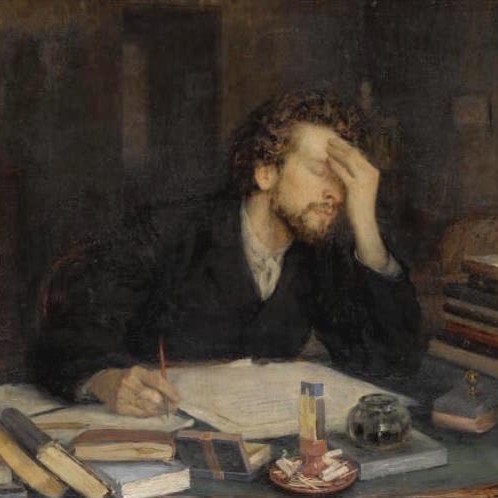
For several years, I’ve had the idea of a story bouncing around in my head. I had a vague plot and a few bits of interesting dialogue in mind. Occasionally, I’d dive into a flurry of research, absorbing every book I could find related to minor elements that might factor into the story. But I never actually sat down and wrote anything.

A talk with some friends revealed that all three of us were in the same spot. Great ideas, plenty of research… very few words written. One friend suggested that NaNoWriMo (National Novel Writing Month) might be the answer.

The official writing challenge has been in a kind of limbo for a few years, but the idea is pretty simple: write a complete draft of a novel, at least 50,000 words, in one month. Traditionally (since 2000 at least), NaNoWriMo has taken place in November, but we decided to do it in February. We wouldn’t have local celebrity endorsements or official contest entries, but we could try writing 2,000 words every day.
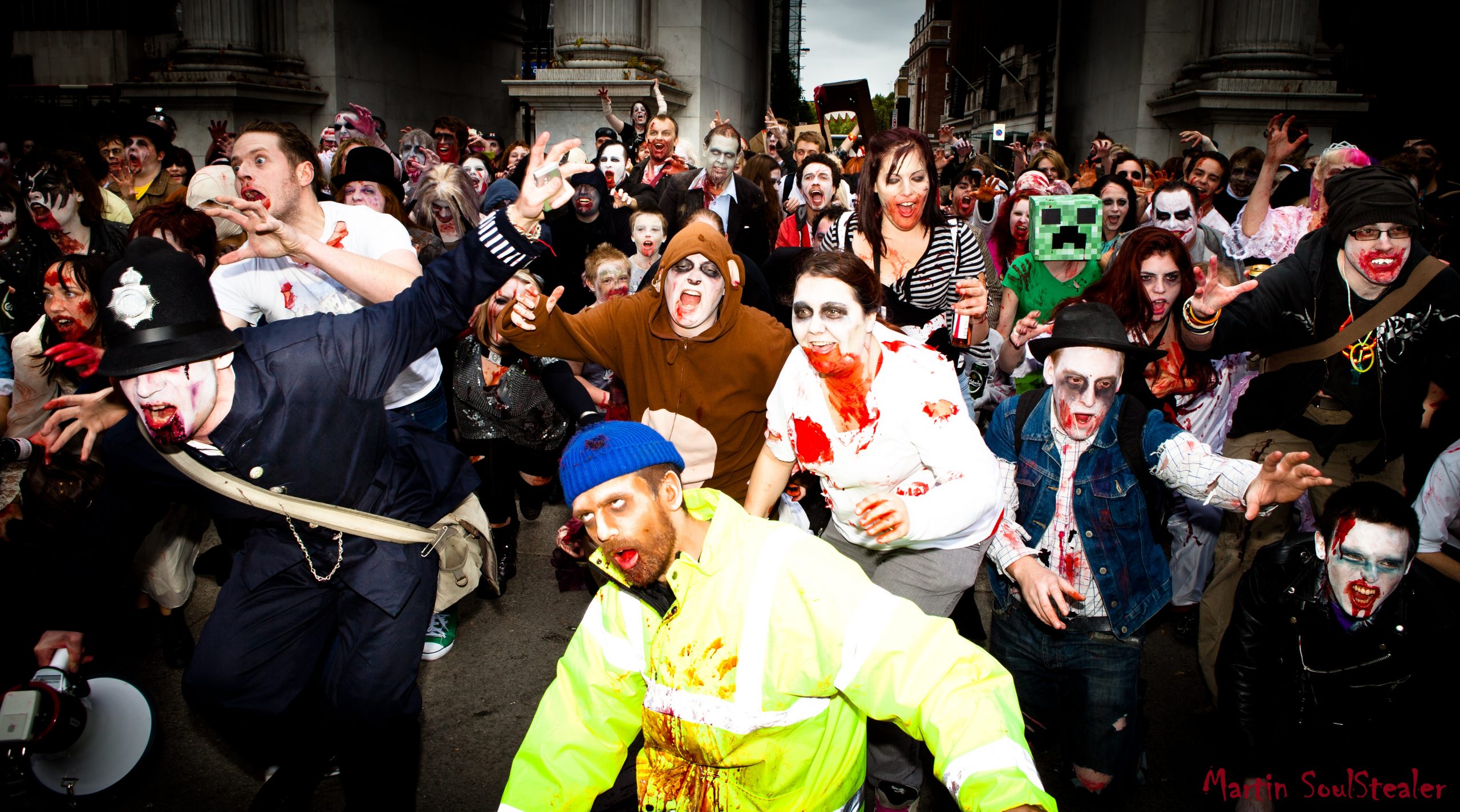
And so I spent January of this year coming up with an outline and writing character backgrounds. On the morning of February 1st, I sat down to answer a question I’d been considering for years: How would the residents and staff of a retirement community behave during the Zombie Apocalypse?

For the first few days, meeting the daily goal was easy. I got up extra early and typed up 2,000 words of scenes I’d already mapped out in detail. Dialogue that had been perfected and smoothed for years transferred from my brain to the screen with no trouble. By 6am, I had met my word count and could start my regular morning schedule.

And then, around the fifth day, I ran out of outline. All the interesting bits and scenes I’d so carefully worked out over the preceding month were already written. The rest was much more vague than I realized. Meeting my daily word count was no longer a simple matter of typing the words I had already polished.
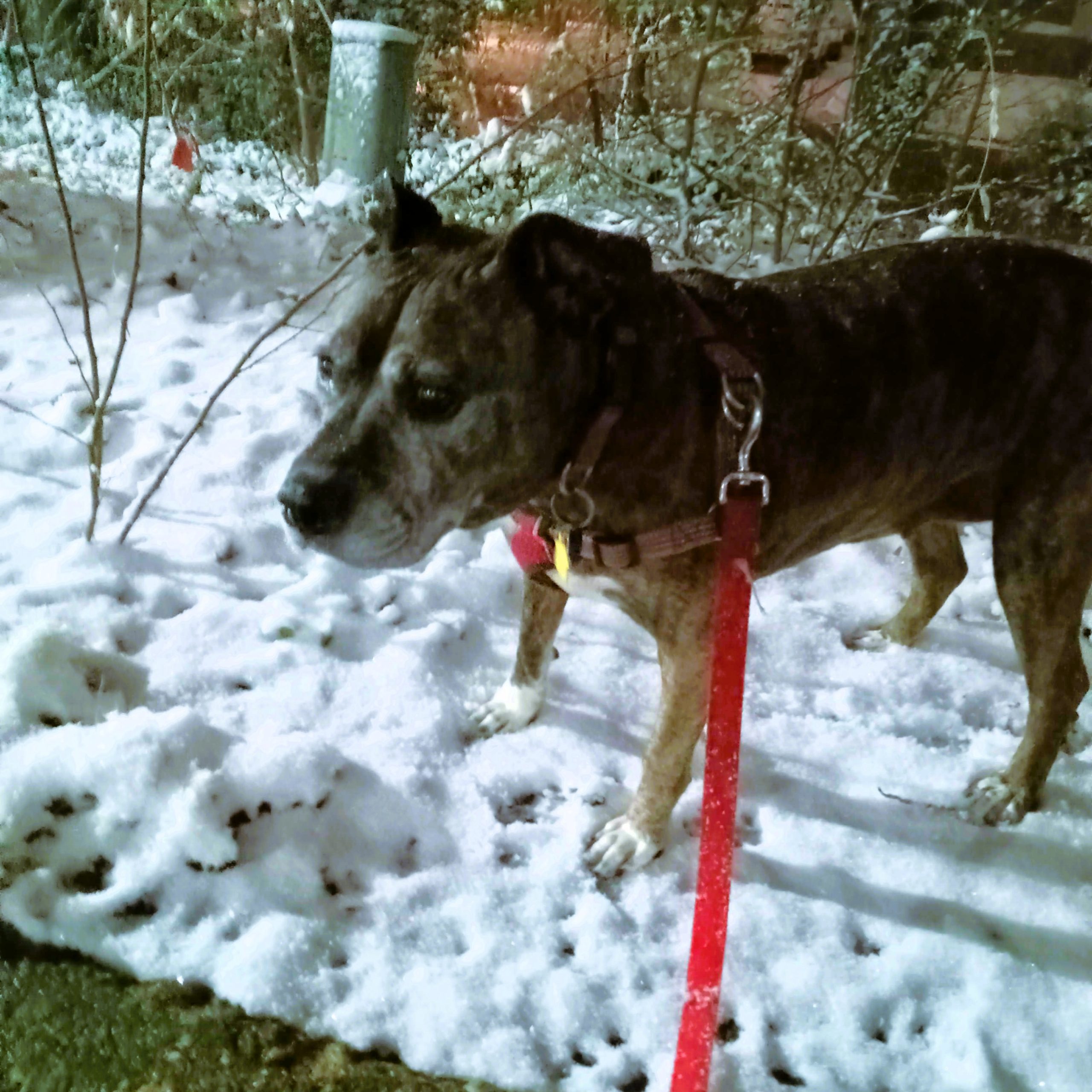
Ladybug, my collaborator

With my road map gone, I developed a routine to force out the words every day. Before sitting down to write, I’d take my dog for a very early morning walk. In the freezing pre-dawn, I’d ask her about whatever story bits were giving me trouble. How to move a character who needed to be in two places at once? Which character should I send to scavenge medicine? What’s a realistic reaction for a nurse when confronted with the walking dead? Ladybug gave excellent feedback, though I admit I didn’t understand most of it. When I sat down to write, she’d park her chin on my knee to make sure I didn’t give up early.

Part of what makes NaNoWriMo successful is community support. Participants can meet up with other writers to work together. Schools or libraries sometimes sponsor all-night marathon writing sessions. My fellow novel sprinters and I were in different time zones, so meeting up in person to write together wasn’t really feasible. We checked in frequently over the phone and helped each other with sticky plot points, but we were basically working in isolation.
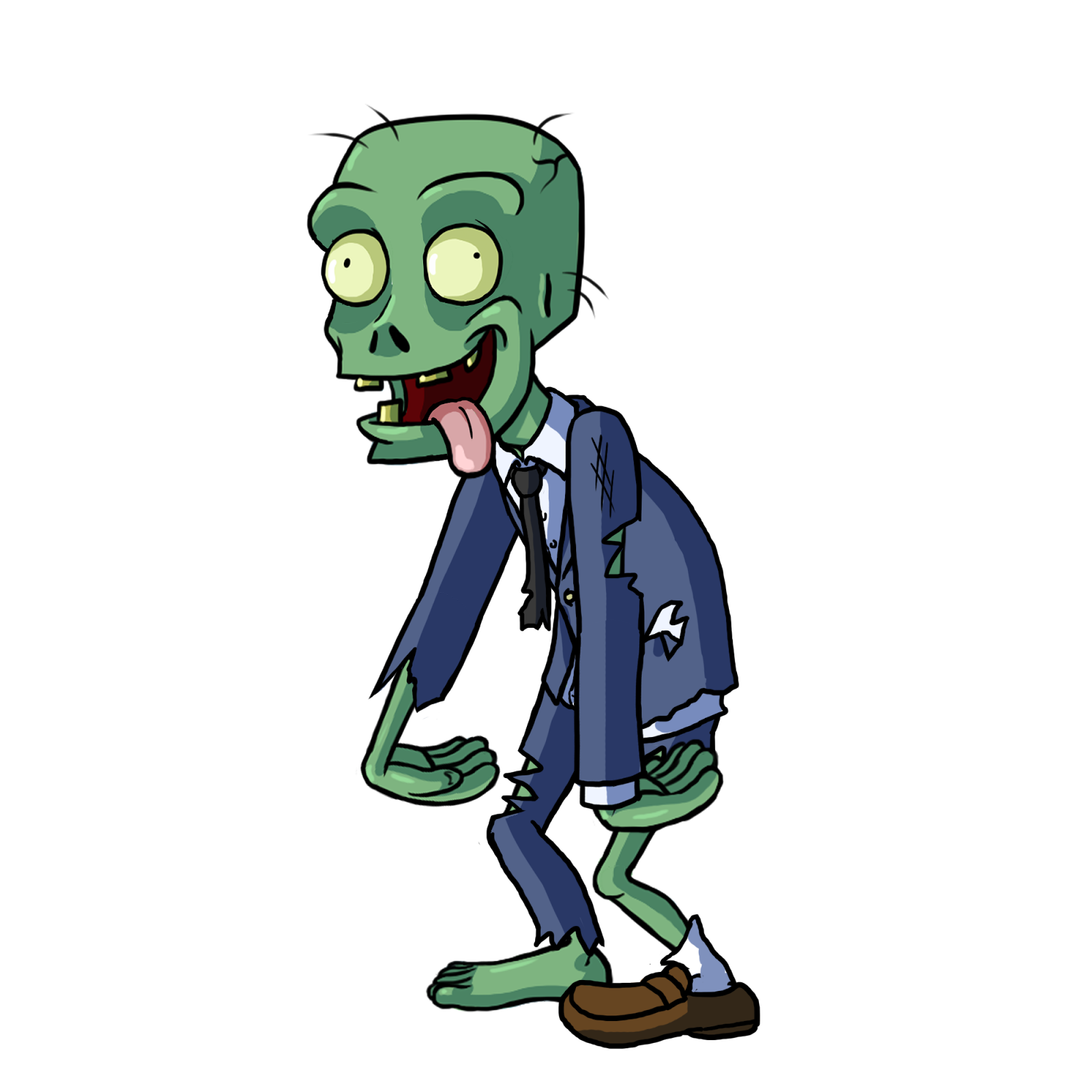
For the entire month of February, NaNoWriMo more or less took over my brain. I asked random people I met how their job skills would help them fight zombies. At work, I listened to nursing school lectures, podcasts about wheelchair accessible farming techniques, and audiobooks about the pathology of rabies. My spouse put up with me turning every conversation back to the problems of corpse disposal or scavenged weapons.

People around me started to get concerned. I asked a doctor for suggestions of medications that a patient would die without. At one point, my boss overheard me talking through a plot point with a friend: “I think I need to kill Hank, just to make everyone else sad. Plus, he doesn’t have the upper body strength to decapitate anyone.”

I had a really hard time killing anyone. After writing extremely detailed character backgrounds, I found that I liked these fictional people and didn’t want them to be in any danger. I didn’t even want them arguing with each other. Keeping everyone alive and happy during a zombie attack makes for a pretty boring story.

But the story kept growing! More characters, more subplots, more interesting bits I wanted to work in. Halfway through the month, when I had already written nearly 30,000 words, I decided to introduce an entirely different conflict.
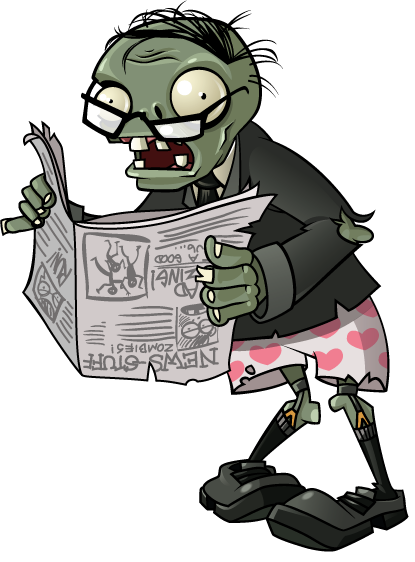
I didn’t write particularly good words, but there were an awful lot of them. In fact, one scene wound up being a commercial for a particular brand of lock as an explanation for why a character couldn’t break into a pharmacy. But the idea of NaNoWriMo is to focus on quantity over quality, then go back and fix the quality later. After spending years with a nebulous idea of a story and endlessly procrastinating with research, I finally had some things written down.

So, did I succeed at NaNoWriMo? Well, sort of. The ultimate goal has two parts: a finished novel and 50,000 words. I completed the latter but not the former. My novel is well beyond the minimum word limit, but I haven’t quite finished the plot. Throwing in an additional villain and a moral quandary separate from zombies meant I have more threads to tie up.

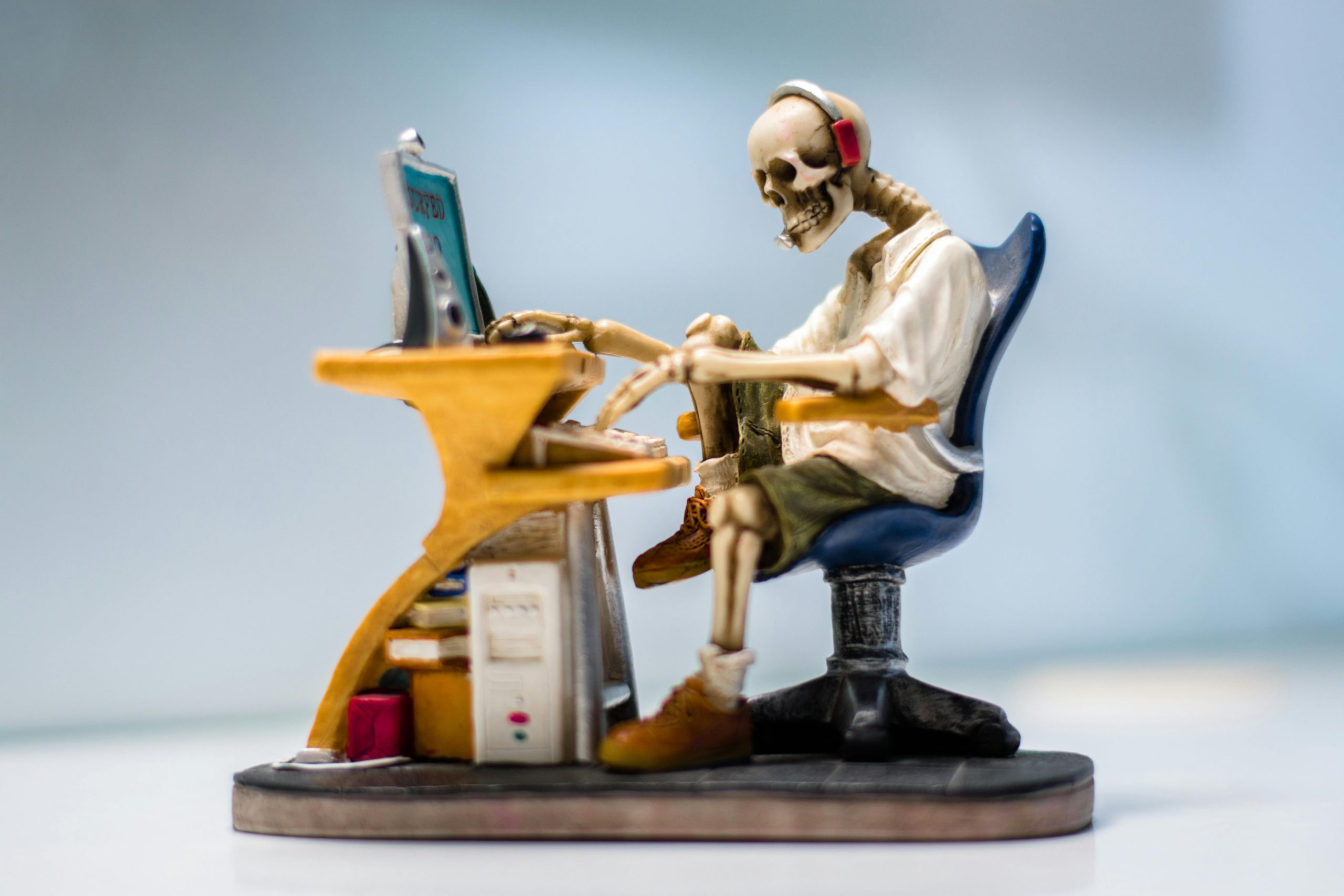
Forcing out so many words every day did become easier as the month went on, but I was completely exhausted by the end. On the morning of March 1st, I opened my computer and stared at the screen for a while before simply walking away. In fact, I haven’t written anything else on the project since the end of February. The marathon writing habits of NaNoWriMo haven’t translated to a reasonable writing habit I could keep up.

Perhaps I should try for another 50,000 words in November.
EVERY SUPERHERO HAS AN ACHILLES HEEL

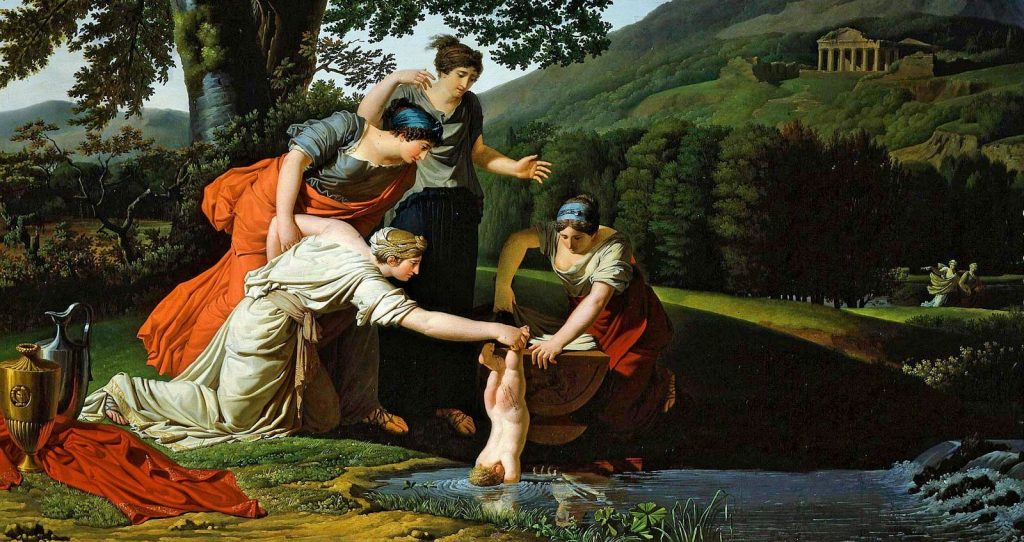
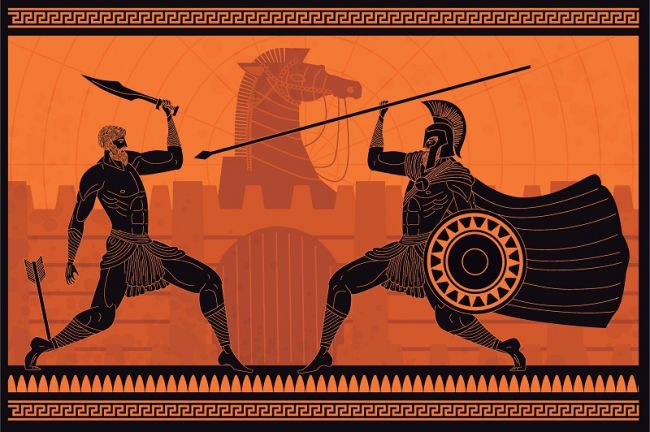
Just about everyone knows that an Achilles heel is a potentially fatal weakness, or vulnerability—even if the story behind the term is vague or missing.  The term stems from the Greek legend about the heroic warrior Achilles whose mother tried to make him immortal by holding the infant by his heel and dipping him into the River Styx. 

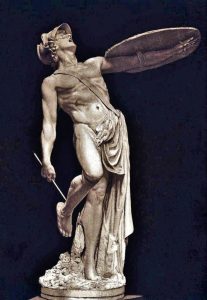
Achilles was killed by an arrow, shot by the Trojan prince Paris. In most versions of the story, the god Apollo is said to have guided the arrow into his only vulnerable spot, the heel that was not dipped in the river. 

I think of Achilles as the prototype of all modern day superheroes, with their varied and entertaining versions of Achilles heel. 

Note to writers: Don’t make your protagonist too perfect. How can one pull for a character who couldn’t possibly lose?

Editor’s Note: There are almost as many variations of the powers and vulnerabilities of most comic book characters as there are characters. The characterizations provided here refer to the most interesting timelines from among the Golden Age comics, the Silver Age comics, DC’s New 52, Marvel 616, Flashpoint, Universe of M, and the myriad other reboots and multiverses.

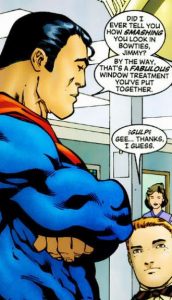
Everyone knows that Superman is crippled by Kryptonite and that’s that. But weakened as he is by green Kryptonite, pink Kryptonite may be even more devastating: it can fundamentally alter his personality in many ways, including hinting at being gay and attracted to Jimmy Olsen. At the time, this would have been seen as a major character flaw (possibly illegal) by the writers and the audience. A sillier effect came from silver Kryptonite, which made Superman act drunk and get the munchies.

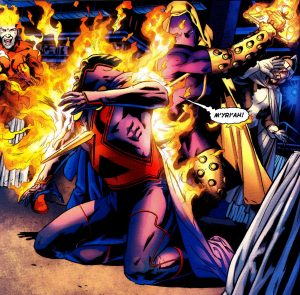
For Martian Manhunter (also known as J’onn J’onzz), the weakness is fire. And it doesn’t need to be a raging inferno, or even a blowtorch, even a book of matches will do. In addition to scalding his exterior, flames scramble his masterful mind. Perhaps there’s a bit of lingering mental trauma from watching his entire planet destroyed by fire.

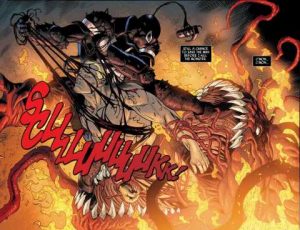
And he isn’t alone: Venom, the symbiote taking advantage of enemies of Spider-Man, could be done in by two seconds exposure to a cigarette lighter. Fire is just about the only way to force Venom to leave his host.

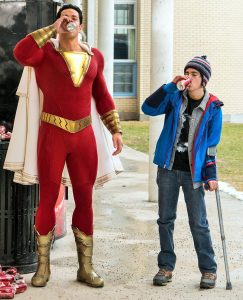
Captain Marvel, Jr. (later renamed Shazam) calls out his superhero name to activate his powers, but if he says his own name (Freddie Freeman) aloud during a battle, he immediately goes back to being a little boy. Thus, he adopts a number of aliases to hide his secret identity and his super identity.  This was not a very useful strategy.

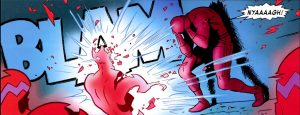
When Daredevil went blind, he developed an echolocation skill that would be the envy of bats, along with a super sense of smell. At the same time, he is susceptible to unexpected loud noises, deafening or supersonic sounds, and noxious odors. He can be rendered unconscious and vulnerable to a follow-up attack.

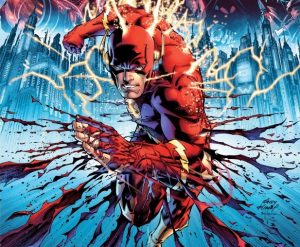
The Flash is one of the few Superheroes—perhaps the only one—to be killed by his own powers. In battling to save the world, he ran so fast that he burst apart into atoms. Apparently he didn’t know that his excessive speed was also his weakness. (He didn’t stay dead long.) When triggering Flashpoint, the Flash was consumed in the Speed Force, where he became lost and stuck for more than twenty years. He can also be slowed down by extreme cold, but that’s not as funny.

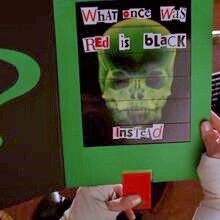
The Riddler is more a supervillsain than a superhero, but even so, not truly deadly. He’s so narcissistic that he wants recognition for his cleverness more than he wants to avoid being caught. Dr. E. Nigma can never complete a crime without leaving clues. His paradoxes are always solvable.

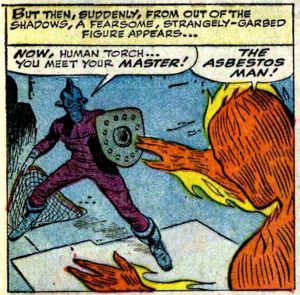
Today the horrible effects of asbestos exposure are well known, but in the 1960’s when Asbestos Man was introduced, it seemed perfectly reasonable to outfit him with an asbestos suit, a fire-retardant shield, and a fisherman’s net to best his arch enemy, the Human Torch.

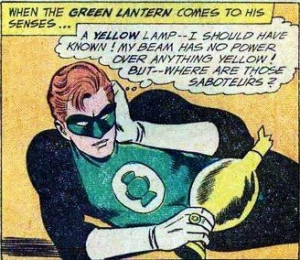
Impurities in the Green Lantern Corp’s rings make them useless against anything yellow. This weakness is easy to exploit and makes for some truly comic plots. His second debilitating weakness is wooden weapons, or even tree bark.

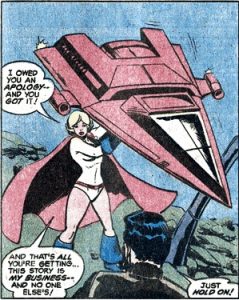
Power Girl was the antithesis of the Green Movement: she was done in by anything in natural in its unadulterated state. Think sticks, stones, cotton, silk, etc., ughh. According to comic book logic, it was because those materials didn’t exist in her home dimension. Power Girl was eventually revealed to be Super Girl, the cousin of Superman, though she did not share his weakness to Kryptonite.

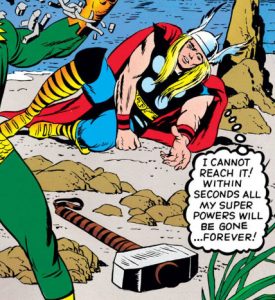
In the early days of Thor, all it took to force him to return to his alter ego of Donald Blake was to get his hammer away from him for 60 seconds. Considering his primary method of attach was throwing the hammer at enemies, one might think he’d make certain nothing could stop its retrieval. Surprising how often that happened!

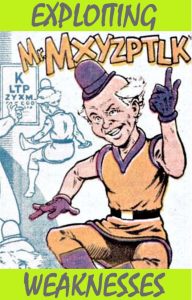
Mr. Mxyzptlk was generally safe, unless someone can convince or trick him into saying his name backwards. If that happens, he’s consigned to his native dimension for three months.

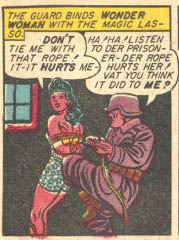
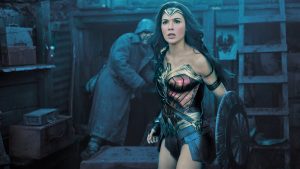
Wonder Woman, the prototypical female with superpowers, had skills to match or exceed those of male superheroes. I find it irritating that her weakness was being tied up by men, her super bracelets tied behind her back. Some of this can be traced back to her creator, William Moulton Marston and his recreational pursuits.

In later years, Wonder Woman joined an increasing number of super-powered heroes and villains with much more relatable weaknesses. In the 2017 film Wonder Woman, Princess Diana is nearly destroyed by despair at the violence in the world. 

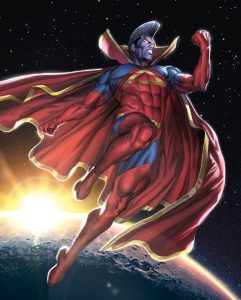
Gladiator can freeze a planet with his breath melt it with his eyes, or shatter it with his bare hands. He runs at superhuman speed, flies like Superman, and is immune to Death Stars. And he’s incredibly good looking. All of this makes his weakness surprisingly humanizing: if he starts doubting himself, all his super powers desert him.

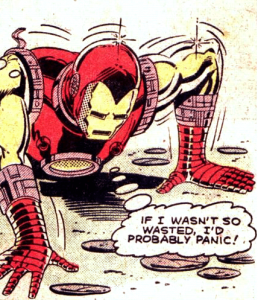
Tony Stark did not have any superhuman abilities, but his mechanical genius allowed him to become Iron Man. However, his alcoholism is still a major liability. By trying to fly and fight while drunk, Iron Man endangers his entire team and any civilians who happen to be nearby.

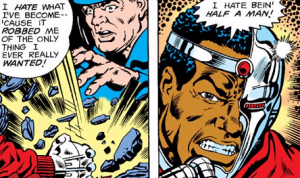
Cyborg must deal with constant internal conflict because of his apparent loss of humanity. After a severe accident, Victor Stone had robot parts melded with his remaining flesh. He cannot survive without the technology grafted to his body, but he battles self-loathing stemming from his belief that the medical procedures made without his consent have robbed him of his humanity.

Bottom line for writers: your protagonist’s Achilles heel doesn’t have to be fatal, or even logical, as long as you have the right backstory for it.

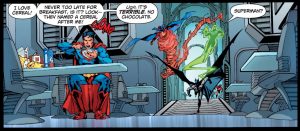
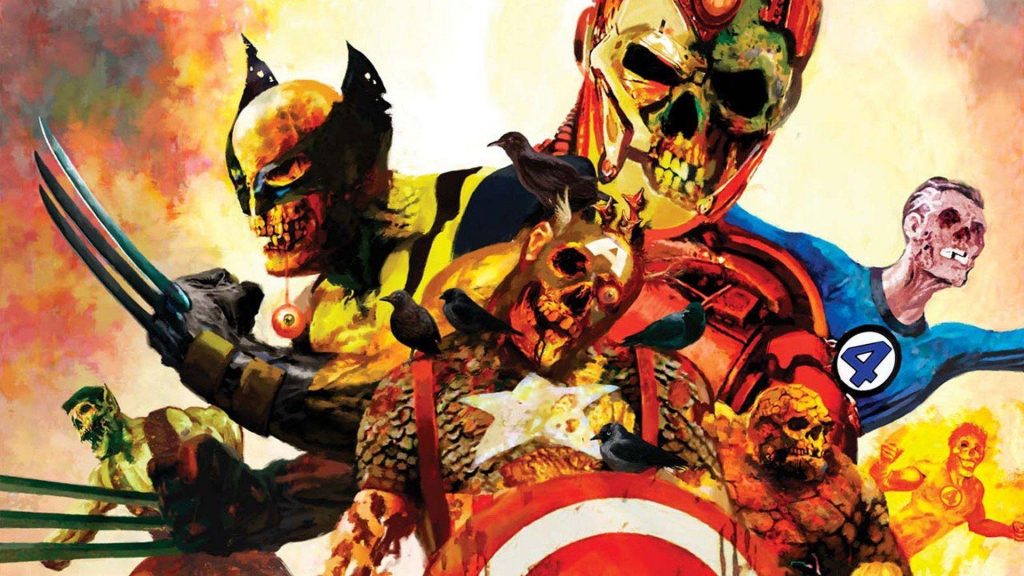
Everyone is defenseless against zombies, even superheroes and super-villains.