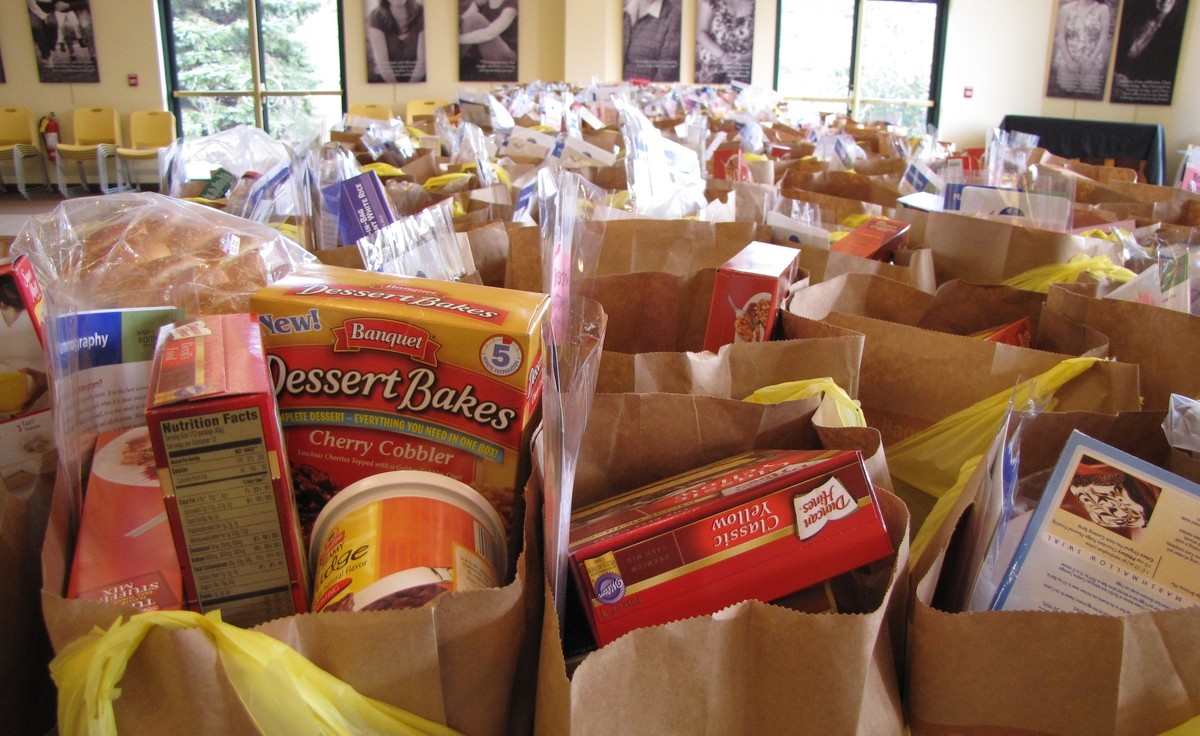
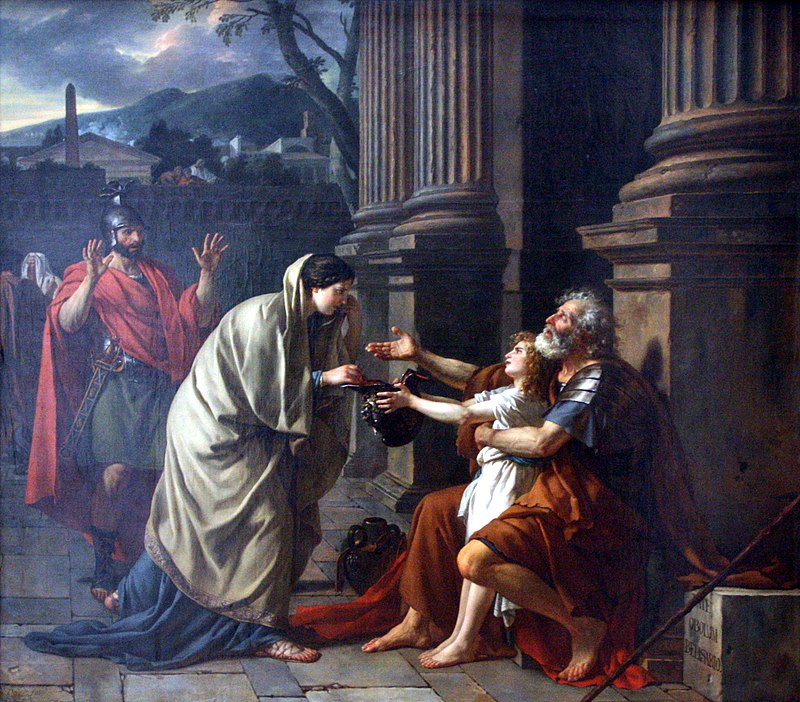
I know it’s counter to the expectations of the season. Besides Giving Tuesday, many organizations (including our local CBS news) are in the midst of a month of giving. Culturally, giving is a good thing. But it isn’t purely positive.
Giving Opens Floodgates
My motivation for writing this blog is the deluge of text messages, emails, and snail mails asking for money. I’m steeped in the downside of giving: once you are on a list, you are doomed.
The organization or cause you originally donated to seeks more frequent and/or bigger donations.
Selling mailing lists can generate lots of revenue. Once an organization has a list of reliable donors, they often sell that list to other entities. Donors are then inundated with with requests for further donations to entirely new organizations!
Donations to political candidates trigger requests from other candidates in the same party. These can come from all over the country. Supporting a candidate at the national level opens you up to solicitations from state and local candidates—not necessarily your own state or locale!
Some solicitations come with a “free gift” to create guilt or an obligation to donate. Often these gifts are of poor quality or completely useless to the recipient. One organization sent me so many free gifts that I doubted how much of my donation was actually going to forward the stated mission. I stopped donating to that group altogether.
Responding to a mail solicitation can trigger follow-up phone calls as well.
Giving ’til It Hurts!
Once, I volunteered my time and professional know-how for a set number of hours on set days per week. That morphed into requests for special events and monetary contributions. I doubt I’m alone in this experience.
I’m currently voluntarily teaching a memoir class a few times per year. Fortunately, I enjoy it. There is considerable social pressure to continue doing so.
When I searched this topic online, I found that giving can have negative effects on the donor, including financial strain and instability, high tax burdens, loss of personal wealth, emotional guilt and anxiety, burnout and compassion fatigue, and neglect of personal relationships, potentially weakening social cohesion and exacerbating inequality if generosity creates donor-recipient hierarchies. In short, I learned that there are more serious drawbacks than the irritation factor that started me down this path.
According to Charities Aid Foundation 2024 World Giving Index, 76% of U.S. adults helped a stranger, 61% donated money, and 39% volunteered. This gave the U.S. a World Giving Index Score rank of #6 for 2024 (after Indonesia, Kenya, Singapore, the Republic of Gambia, and Nigeria, and just ahead of Ukraine). In short, there’s a lot of giving out there.
Bottom Line: I’d never suggest that people not give, only urge that they consider the unintended side effects.
And who isn’t, these days? But a pandemic isn’t the only trigger for defense mechanisms. For example, the death of a loved one, loss of a job, life-threatening illness, relocation, demotion . . . the possibilities are endless. So, for you reading pleasure and maybe your writing of believable characters, here’s a quick overview of ways people cope with thoughts, feelings, or acts that are too psychologically painful to tolerate.
Acting Out Performing an extreme behavior when a person cannot otherwise express thoughts or feelings. A child’s temper tantrum would be one example. Hurting oneself is one form of acting out—cutting or burning oneself, literally banging one’s head against a wall.
Aim Inhibition Rather than admit to failure, a person accepts a more modest goal. Think of someone who had hopes for a career in the NFL who becomes a high school coach.
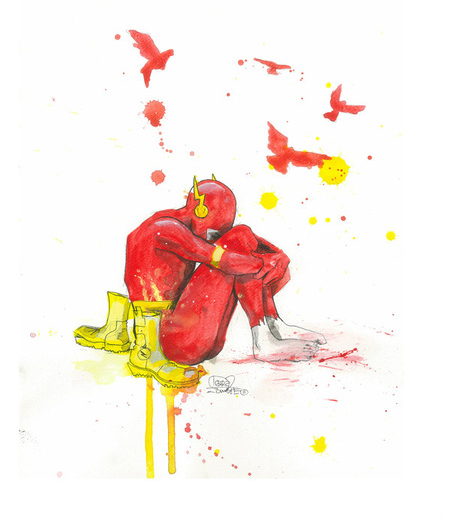
If he can’t be the Flash, at least he can be Whizzer!
.
.
.
Altruism Rather than admit having no control over a situation, a person copes by helping others, perhaps compulsively. This is a person who needs to be needed and may promote helplessness in those close to him/her.
The Angel had such a strong compulsion to help everyone that Dr. Charles Xavier of the X-Men diagnosed him with “heropathy” (not an actual disease).
.
Avoidance Refusing to deal with the situation. In the current pandemic, choosing not to watch the news, read the newspapers, or respond to online postings.
Deadpool has been using running and laughing to avoid his horrible life situations since he was a child.
.
Compartmentalization Keeping different parts of one’s life in separate compartments, often with different moral guidelines. For example, someone who lies, cheats, steals, or hurts others to make a living but is unfailingly kind, helpful, and loyal to family and loved ones. Another example would be someone who enjoys extramarital sex but would never have “an affair” because that involves emotional intimacy and thus would be “cheating.”
Matt Murdock is a blind defense lawyer by day and the superhuman illegal vigilante Daredevil by night.
Compensation Overachievement in one area because of failure in another. For example, throwing oneself into professional achievement because of failure of a marriage or intimate relationships. Or the opposite: not making it professionally and then becoming a helicopter parent.
Hartley Rathaway was born deaf and became obsessed with sound manipulation, eventually becoming the Pied Piper.
.
The Amazons on Themyscira spent centuries denying the existence of any world outside their island paradise.
Denial Basically, this is saying it isn’t so. “There is no pandemic. It’s all a hoax—or an exaggeration.” “It isn’t that dangerous.” Addicts often deny that they have a problem.
Displacement Taking out frustrations, feelings, or impulses on people or objects that are less threatening. It usually applies to displaced aggression. The classic example is the boss criticizes the employee, the employee yells at his/her spouse, the spouse scolds the child, and the child kicks the dog. Of course, the person might just abuse the child or pet. Or one might smash a fist into the wall or break something.
Reed Richards “Mr. Fantastic” frequently expressed his frustrations with the world by beating his wife and children. This panel occurred immediately after such an outbreak.
Dissociation Mentally separating oneself from one’s body or environment in order to keep an overwhelming experience at a distance. An example would be someone unhappy with his/her job has trouble concentrating at work, frequently “daydream” or finding his/her mind wandering.
Trance used her astral projection ability to escape the demonic Limbo pocket dimension and get help.
Fantasy Retreating to a safe place in one’s mind. If one can’t find relief in fantasizing about being turned into a movie star or whatever, you can get much the same effect by binge reading or tv watching or gaming.
Michael Jon Carter hated his life in the 25th century, so he traveled back in time with stolen gadgets to live out a fantasy life as the superhero Booster Gold in the 20th century.
Humor Seeing the funny or ironic side of any situation. This is actually a pretty adaptive way to handle stress and anxiety. For example, wearing a face mask with giant mustache attached or creating silly photo shoots of pets in quarantine.
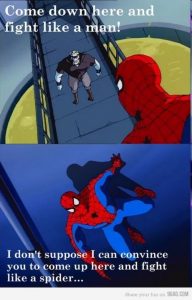
Spiderman is a master of using bad jokes to torture his enemies.
.
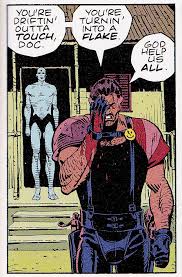
Dr. Manhattan is so brilliant that he loses all touch with humanity.
Intellectualization Focusing on the problem/problematic thoughts in a cold, factual way. For example, putting the current pandemic into the context of pandemics through the ages, how devastating they were, how they were transmitted, how they were dealt with, etc.
Passive Aggression This is often the refuge for someone who can’t express anger or aggression directly (by scolding, hitting, etc.). For example, a teenager who is assigned a chore, such as mopping the kitchen floor, who begins by asking a gazillion questions about where to find and how to use the necessary equipment, then doesn’t sweep before starting, then mopping around the table rather than under it, and finally leaving soap scum behind.
Emma Frost generally straddles the line between passive-aggressive and aggressive-aggressive, depending on her allies.
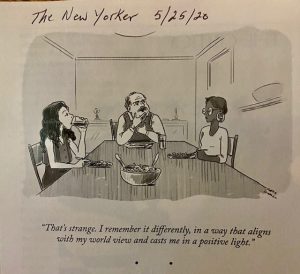
Projection Ascribing one’s unacceptable qualities, thoughts, or feelings to others. Think Donald Trump accusing reporters of being rude.
Harley Quinn projected her brainwashing and Stockholm Syndrome onto Flash and tried to “cure” him.
Rationalization Basically, this is making excuses. You did it, you aren’t denying that you did it, but you give rational or logical reasons for it. What makes this a defense mechanism is that the stated/acknowledged reason isn’t the real motivation. For example, you pawned your mother’s wedding and engagement rings and claim you needed the money when you really wanted to hurt her—or you hated your dead father and don’t want the reminder around.
Gin Genie can create seismic shock waves in direct relation to the amount of alcohol in her system. To be a powerful superhero, she also has to be an abusive alcoholic.
Kamala Khan wants to fit in and avoid trouble but goes out of her way to stand up and confront super villains and terrorists when she shifts into Ms. Marvel.
Reaction Formation Replacing an unacceptable feeling, impulse, or behavior with the opposite. For example, subconsciously wishing a sibling would fail and so going out of one’s way to be helpful and promote success — the perfect fan.
Regression A person reverts to a pattern of behavior that worked when one was younger. Think thumb-sucking, crying, sulking, or temper tantrums.
Zatanna feels such guilt over using her powers to erase the memories of her enemies and friends that her powers revert to a level she had when younger.
.
Repression I like to think of this as motivated forgetting. Things that are too painful are kept out of consciousness awareness, but may have a powerful effect on behavior. For example, a victim of early childhood sexual abuse who doesn’t remember the event(s) but has difficulty becoming intimate.
Jessica Jones has years of repressed memories thanks to brainwashing and mind control.
Suppression Much like repression, but one consciously decides not to think about or remember something. This is fairly tough to pull off! Every time it comes to consciousness, one distracts oneself with something else. One example: having an obsessive thought running through one’s head is a way to block other scarier or more stressful thoughts from surfacing.
The Red Room training forced Natasha Romanoff to remove all empathy and mercy and become the Black Widow. She had to retrain herself to join the Avengers.
Sublimation Act out unacceptable impulses by transforming them into a more acceptable form. For example, aggressive impulses channeled into martial arts. Someone who likes looking at naked bodies takes up figure drawing.
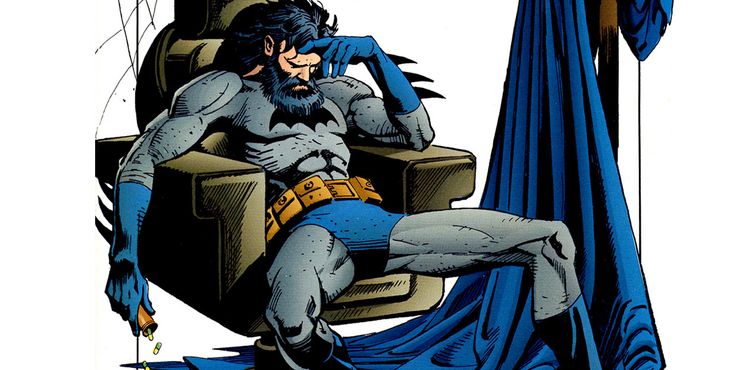
Batman has turned the anger and grief from watching his parents’ murder into a drive to fight crime.
Undoing Closely related to Reaction Formation but usually on a more conscious level; trying to make up for unacceptable thoughts, feelings, or behaviors — sort of like an unstated apology. For example, a child who is jealous of a younger sibling and wishes s/he were dead might make a point of giving that sibling toys, one’s cookie, etc.
Tomorrow Woman is an android created to destroy the Justice League. She achieves artificial consciousness and sacrifices herself to destroy her creators instead.
BOTTOM LINES FOR WRITERS: Everyone uses defense mechanisms. It’s how we cope. Choose defense mechanisms for your characters that are in line with his/her character in general. So, for example, a scientist is unlikely to use denial and more likely to use intellectualization.
Although using defense mechanisms is natural, normal, and helpful on an episodic or “acute” basis, long-term or “chronic” use can lead to emotional problems because the underlying threat or anxiety is never actually addressed.
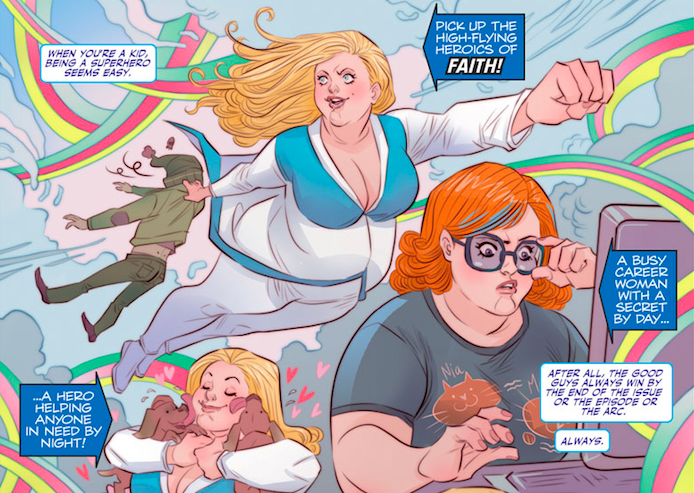
The most emotionally stable superhero out there seems to be Zephyr aka Faith Herbert, from Valiant Entertainment. We should all be as awesome as Zephyr!
Altruism: an individual performing an action that is at a cost to him/herself (e.g., time, effort, pleasure, quality of life, probability of survival or reproduction) that benefits – either directly or indirectly – another individual or group, without the expectation of reciprocity or compensation for that action.
Helping behavior may or may not be altruistic. There are many factors affecting the urge to help, including the following.
1) Kin selection: both animals and humans are more helpful toward close kin that to distant kin or non-kin. Perception of kinship is affected by whether the other looks like the giver, shares a family name (especially if it’s an unusual name), has a familiar scent (in animal groups), etc. Think of kin as the in-group.
2) Vested interests: helping friends, allies, and similar social in-groups (besides avoiding vicarious suffering to the individual) may eventually benefit the altruist. Extreme self-sacrifice may be adaptive if a hostile outgroup threatens to kill the entire group. During the Allied campaign in Italy in the World War II, First Lieutenant John Robert Fox ordered an artillery strike on his position in Sommocolinia, sacrificing his own life to take out invading German forces and allow US troops to retreat safely. He was posthumously awarded the Congressional Medal of Honor.
3) Reciprocal altruism: helping others is more likely if there is a chance that they can and will reciprocate. Therefore, people are more helpful it is likely that they will interact again in the future. If a person sees others being non-cooperative, they are less likely to be helpful. If someone helps first, the recipient of the help is more likely to help in return. Think charities that give small gifts of stickers, notepads, or holiday cards when asking for a contribution.
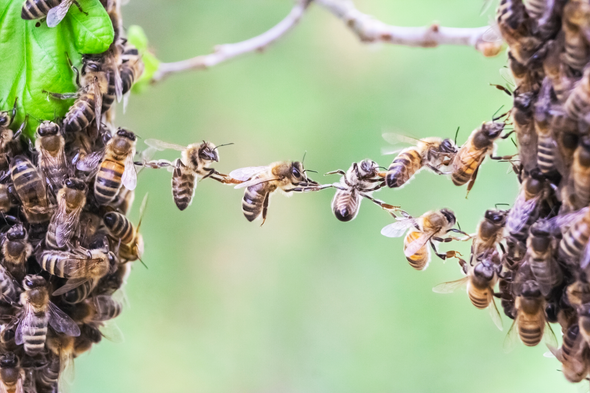
5) Groups of people cooperate more if they perceive a threat from another group. In the insect world, this frequently happens when a colony or hive finds safety in numbers while moving larvae, a queen, or the entire group. Ants, bees, termites, etc., form large masses and structures to complete the move.
Moving a beehive
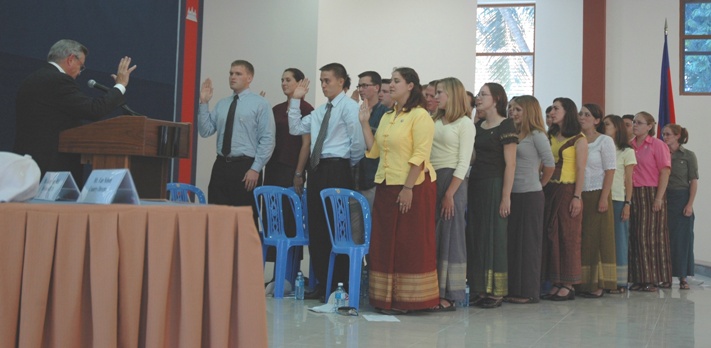
6) People will help more when they know that their helping will be communicated to people they will interact with later, is publicly announced, is discussed, or is simply observed by someone else.
Peace Corps volunteers swearing in
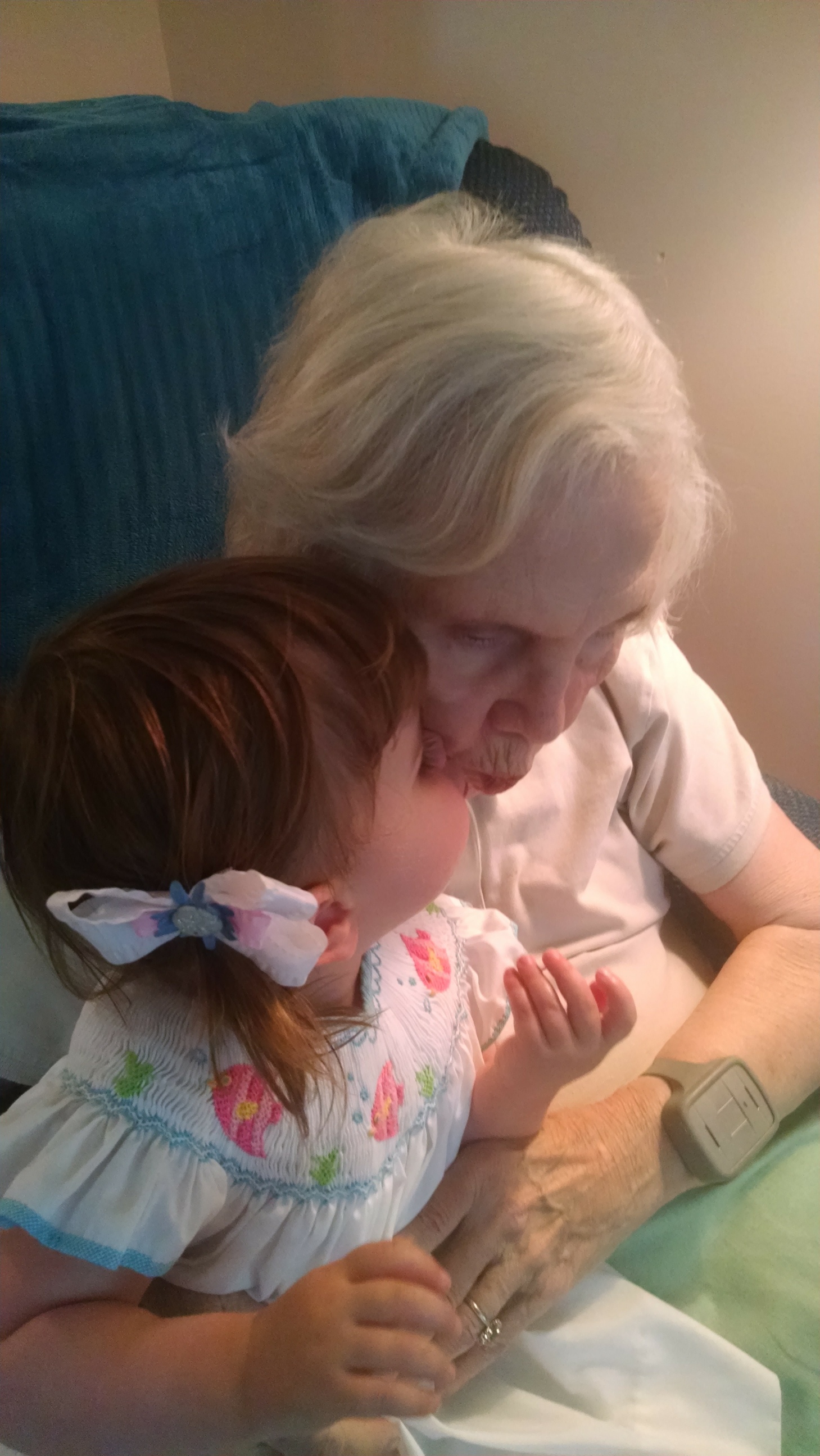
7) Selective investment theory proposes that close social bonds, and associated emotional, cognitive, and neurohormonal mechanisms evolved in order to facilitate long-term, high-cost altruism benefiting those depending on another for group survival and reproductive success. Humans, like many other animals, care for members of the species who cannot care for themselves, ultimately benefiting the species as a whole.
Very young and very old humans often require assistance and care
8) Microbiologists are studying whether some strains of microbes might influence the hosts to perform altruistic behaviors that are not immediately obvious as beneficial to the host. There is a possibility, currently being researched, that the bacteria in a person’s gut could affect their behavior and that changes in the bacterial makeup (such as from taking antibiotics) might result in a change in personality.
At first glance, this monkey grooming a sleeping wild dog must be suicidal
Psychology has defined psychological altruism as “a motivational state with the goal of increasing another’s welfare. Some definitions specify a lack of external rewards for altruistic behaviors. Even when not immediately obvious, altruism is often rewarded in various ways (see above). When there is no tangible reward, feeling good about oneself can be rewarding. Regardless of whether an act is “true” altruism, there are many psychological studies that document the conditions under which people are more likely to help.
Helping is more likely when the recipient is clearly in need.
Helping is more likely when the giver feels personal responsibility for reducing the other person’s distress.
A person with a high level of empathic concern is likely to help regardless of how many bystanders are around.
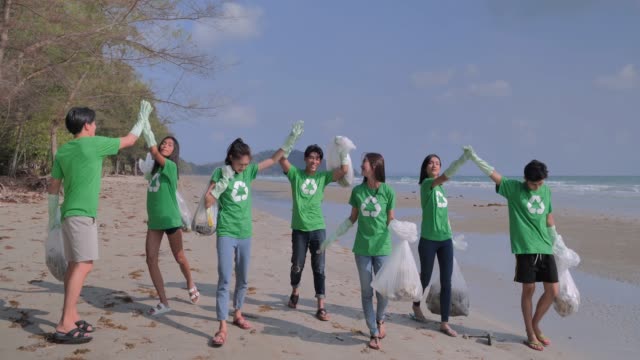
The up-side of helping: volunteerism is strongly related to current and future health and well-being.
Older adults who volunteered were higher in life satisfaction and will to live, and lower on measures of depression, anxiety, somatization.
A 30-year study of the physical health of mothers found that 52% of those who did not volunteer experienced a major illness, compared to 36% of those who did.
A 4-year study of people 55 and older found that those who volunteered for two or more organizations had a 63% lower likelihood of dying. Controlling for prior health status indicated that volunteerism accounted for a 44%reduction in mortality.
Research supports the idea that altruistic acts bring out happiness but it also works in the opposite direction: happier people are also kinder.
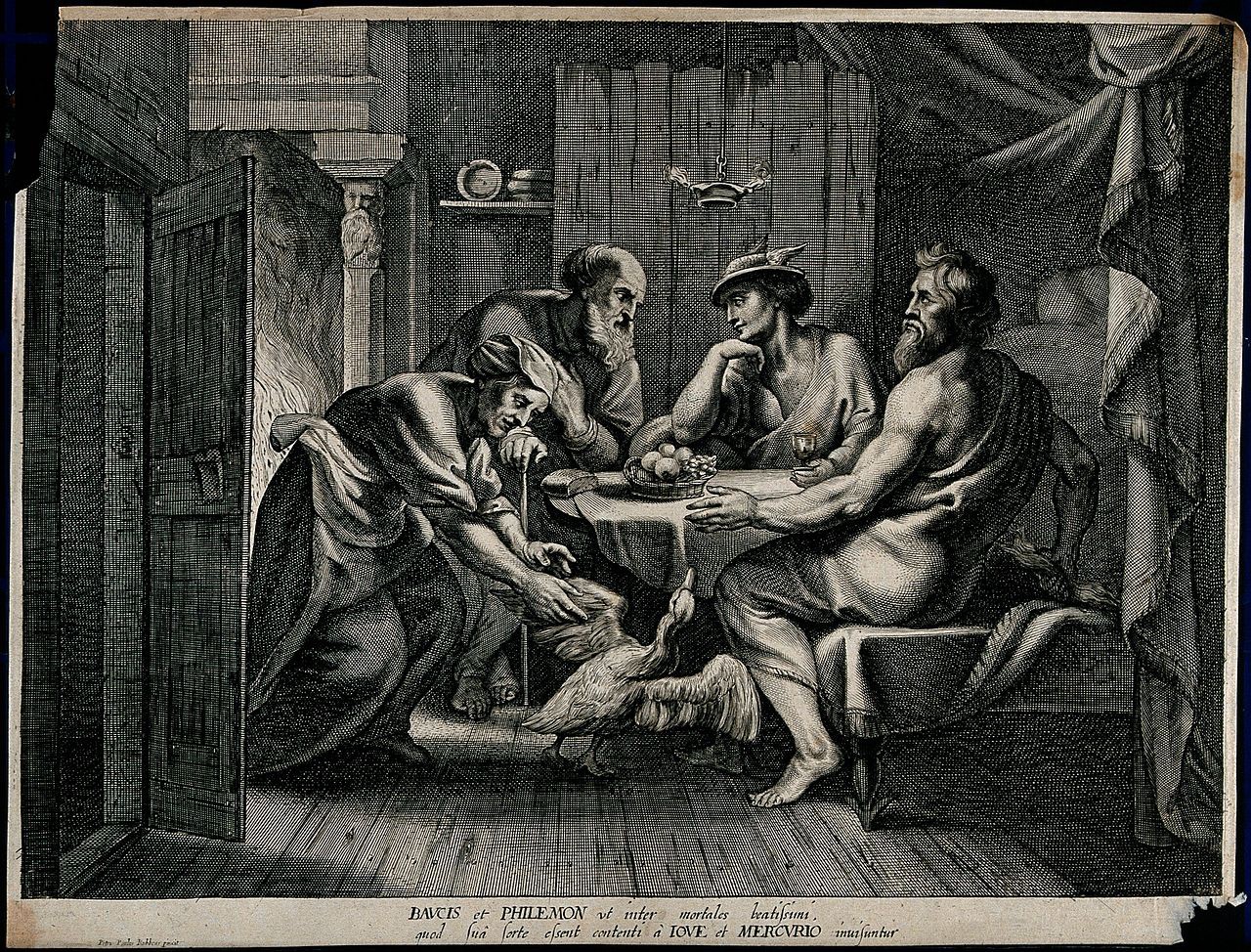
Philemon and Baucis offered complete hospitality to Zeus and Hermes in disguise, despite being paupers
When too much of a good thing is no longer a good thing:
Although positive effects of helping were still significant, one study of volunteers found that feeling overwhelmed by others’ demands had an even stronger negative effect on mental health.
While generous acts make people feel good about themselves, it is also important for recipients of assistance to appreciate—and show that their appreciation—for kindness and help.
Research indicates that a conscious focus on gratitude led to reductions in negative affect and increases in optimistic appraisals, positive affect, offering emotional support, sleep quality, and well-being for the grateful person.
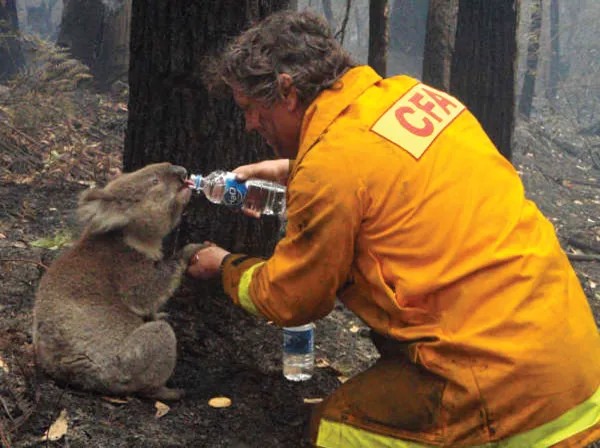
Volunteer burn-out is especially common in high-stress positions, such as volunteer firefighters and medical providers at refugee camps.
Altruism is an important moral value for virtually all of the world’s religions:
Jews practice tzedakah, righteous behavior, providing support to make the world a more just place
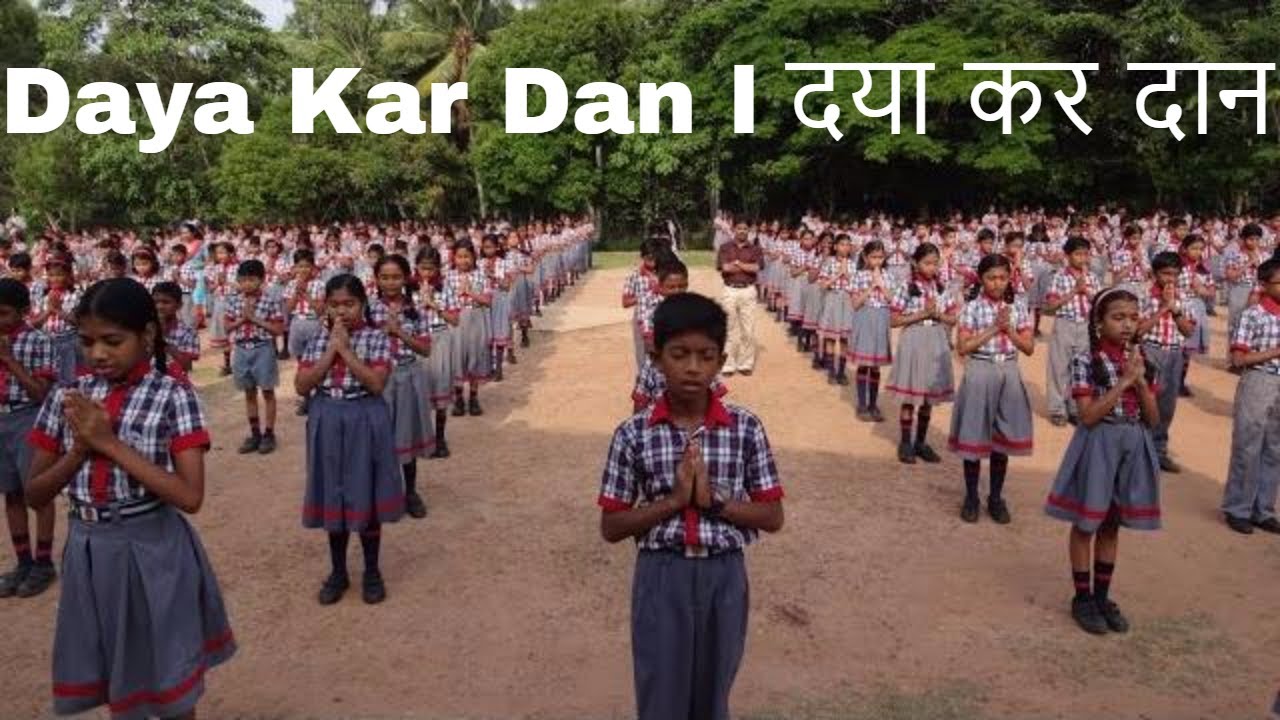
Daya (compassion) and Daan (chairty) are two of the fundamental teachings of Hinduism
As part of aparigraha (non-attachment), Jains give away possessions and harm no living creature
Many Christian churches still practice tithing, donating 10% of all earnings
One of the five primary tenets of Islam is zakat, giving to charity
Sikhs practice seva, which is unselfish and unbiased aid to all