Unwritten History of a Thriver

womens history month
[Source: Affinity]
No doubt the media are rife with information on women in science, literature, politics, business—you name it. But today I want to focus on my personal history, and the crucial role played by my paternal grandmother. Granny was a thriver—which is to say, she did a whole lot more than just survive hard times, grief, and heartache.
 

unwritten history thriver
Margaret Louisa Butcher, the ninth of twelve children, was born on Yost Branch in Johnson County, Kentucky. She quickly became “Lucy” because that’s what her siblings made of her name.
unwritten history thriver
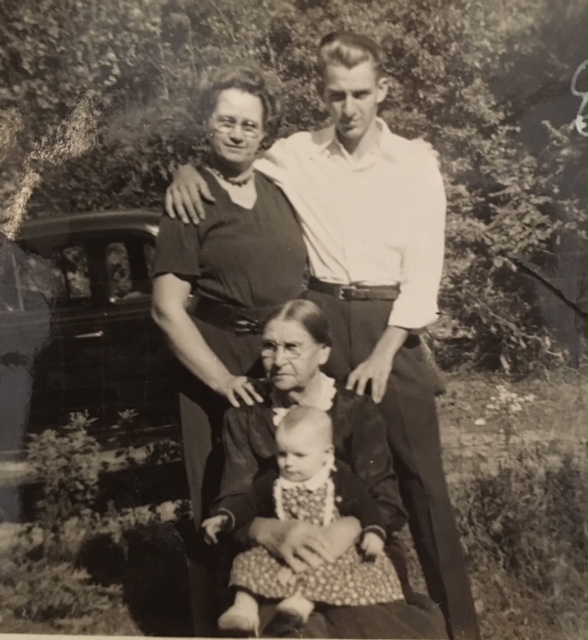
By the time I came along, she was long married and officially Lucy Butcher Parker. She’d married Allie Howard Parker and they lived at the head of Old House Creek in Rowan County, Kentucky. This is a picture taken there of Granny Parker, my father, Great-granny Butcher, and me.
unwritten history thriver
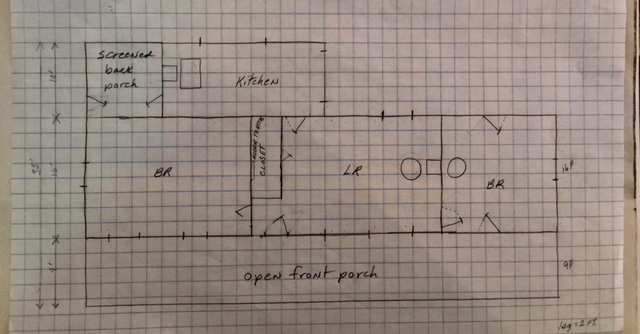
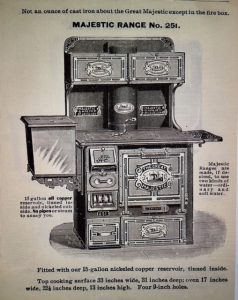
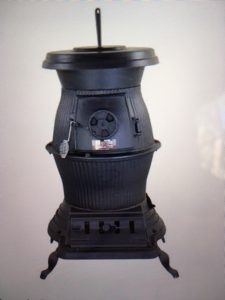
The Old Home Place (as everyone in the family called it) was four rooms and two porches. The front porch was for rocking, swinging, and whatever household work could be taken outside. The back porch was for churning butter and washing clothes. Eventually there was a wringer washer, but before that it was a washboard and two tubs. The house had electricity by the time I knew it, but no running water or indoor plumbing of any sort. The well was in the backyard and the outhouse sat over a little tributary to Old House Creek. Granny cooked on a cast iron, wood-burning stove and two of the other rooms were heated with potbellied wood/coal burning stoves, similar to those pictured below. Cornbread and biscuits were staples.
 

I used to play on the stacked wood behind the kitchen stove. On the wall above me were strings of dried apple rings and leather britches beans (dried green beans).


unwritten history thriver
One time I sneaked a snack of dried apple and it tasted so good I ate the whole string. Then, being really thirsty, I drank dipper after dipper of well water. As the apples rehydrated in my stomach, I thought I was going to burst and hurt something awful. Granny didn’t punish me for the apples. She said the apples would punish me for her. Once the stomach ache passed, I had diarrhea so bad I had to run to the outhouse again and again.


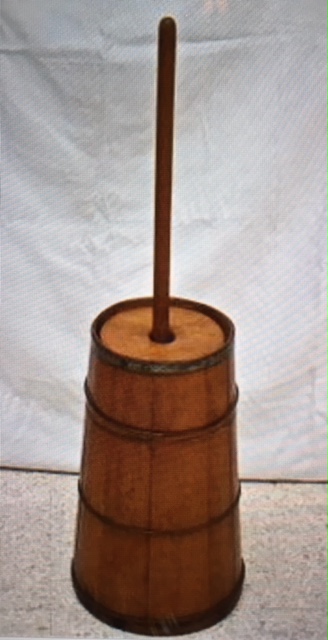
Granny had a vegetable garden, chickens, and milk cows. She churned her own butter and sold some of it to the general store out on the highway. I sometimes helped churn, though I didn’t have the stamina to do the whole job. The churning rhyme was to help keep the rhythm smooth, moving the dasher up and down word by word.
 

unwritten history thriver
Churn, butter, churn.
Johnny stands at the gate
Waiting for a butter cake.
Churn, butter, churn.


According to my Aunt Mary, my father’s younger sister, the VA Hospital sent Grandpa Parker home in early 1933 to die because they couldn’t cure his illness. (I assume this was a lung problem. He was a coal miner in his earlier years, before being gassed in WWI). He didn’t die, but while he recovered, Granny and the children struggled to get by. Mary and my dad set traps for fur-bearing animals as a way to make money in the late 30s and early 40s. They also raised, dried, shelled, and shipped popcorn to try to make a few dollars, as well as picked blackberries for five cents a gallon. They shelled corn for a neighbor to take to the gristmill. They saved the inner husks from dried corn to use for filling like feathers for a feather bed.
unwritten history thriver
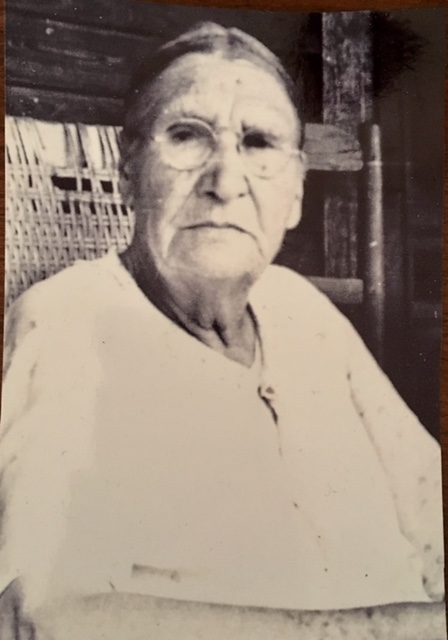
Granny had a hard life—perhaps not by Appalachian standards of the time, but certainly by my standards. All of her children were born at home, sitting on Grandpa’s lap, his knees spread to make a birthing chair. Her widowed mother, Granny Butcher, spent nearly all of her last seventeen years living with Grandpa and Granny. I’m told Granny Butcher was a kind, gentle woman, but by the time I knew her, she was old and nearly blind.
 

unwritten history thriver
Still, she did what she could to help—snapping beans, shelling peas, churning, and the like. Granny Parker nursed her through her last decline, and did the same for Grandpa.


What I most remember about Granny Parker—besides her never-ending work—was her laugh. She loved a good joke or humorous stories. I don’t ever remember Granny complaining. She read the Bible every day and Reader’s Digest as often as it came. She encouraged me to do all I could, as well as I could. I grew up wanting to be like her: strong, capable, self-sufficient.


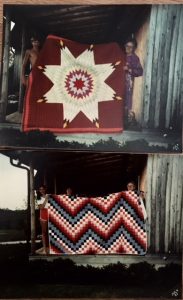
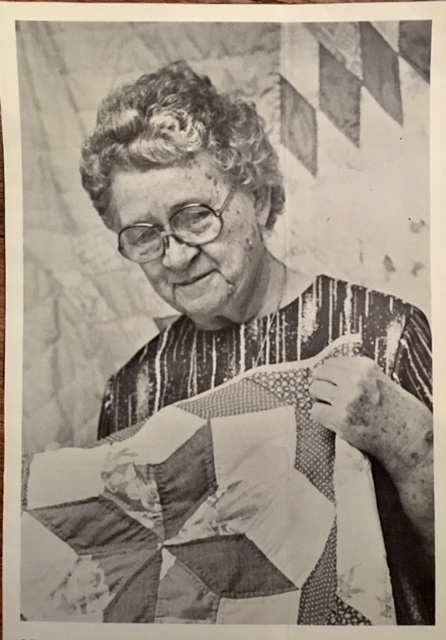
Granny always made quilts. I have several of her quilts, and have passed some along to my children.
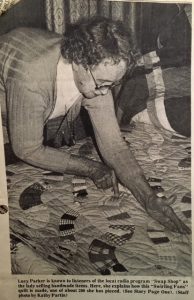
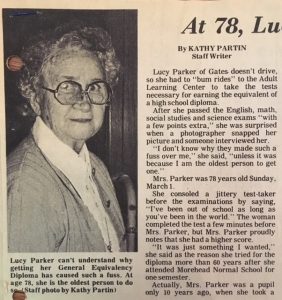
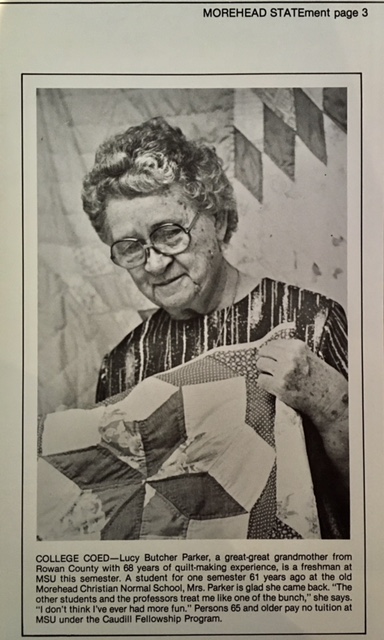
As a widow, she continued to make and sell quilts. I thought that her life was pretty much as it always had been until she sent me this newspaper clipping.
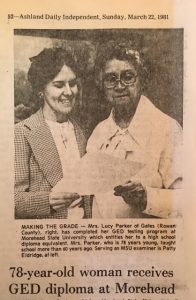
By then Granny had a phone and I called her. “Do you mean you never had a high school diploma? Didn’t you teach school before you got married?”


She said, “No, I never had a diploma. Don’t you remember me telling you that I was licensed to teach by examination? I was in the first group that had to go to Frankfort to be tested.”


And the next thing I knew, she had enrolled in college! Granny never learned to drive, so she had to plan her classes around the bus schedule and when she could get a ride.
 

unwritten history thriver
I saw Granny shortly before she died at age 83. I asked her whether, if she had it to do over again, she would change anything about her life. I expected her to say something about how her life might have been made easier. What she did say was, “The only thing I regret is that I’m a junior and won’t live long enough to get my college diploma.”


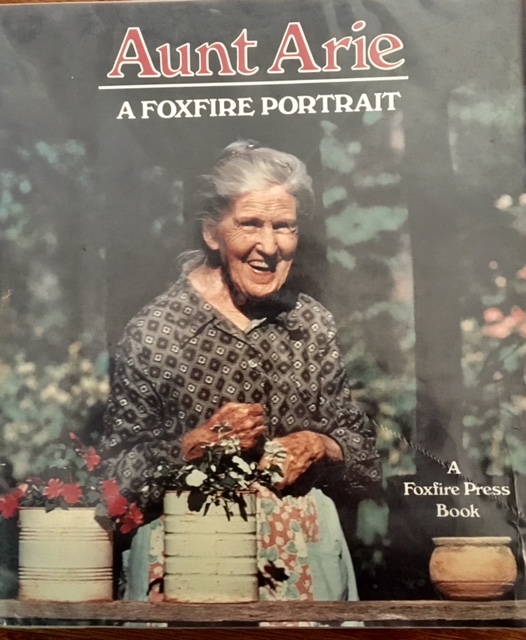
Recently I’ve been revisiting the Foxfire Books. They reflect much of my Appalachian childhood. Right now I’m reading Aunt Arie: A Foxfire Portrait. She reminds me of Granny Parker.
aunt arie
During this Women’s History Month, do consider the important women in your history. And let me know about them!
Bits and Pieces

bits pieces
[Source: Pixabay]
I never set out to collect random bits of information, but things just stick in my brain—for no particular reason and in no particular order. Some comes from life experiences but many come from books. I enjoy coming across these nuggets, and so I drop them into my own writing upon occasion. Just for the fun of it, I’ll share some of these with you.


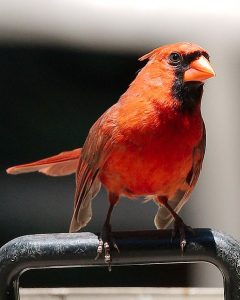
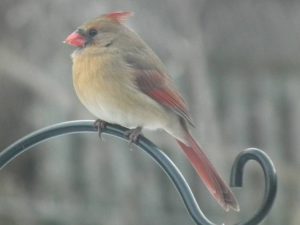
The Northern Cardinal is the most popular state bird, adopted by Illinois, Indiana, Ohio, West Virginia, Virginia, North Carolina, and Kentucky. Other bits and pieces about birds come to mind as well. When both the male and the female sit on the clutch of eggs in the nest, there is little differentiation in plumage between the two; when only the female sits, she is always the dull looking one. Female goshawks are significantly larger than the males, as much as 25% bigger, and this is called reversed sexual size dimorphism. Didn’t you always want to know?


murder crows
Goshawks are secretive and tend to fly solo, but other birds are considerably more social. Hence  we have a flock of geese, a murmuration of starlings, and a murder of crows! This is one of my favorites.
crash test dummies
[Creative Commons]
Real cadavers are used to calibrate crash-test dummies. At one time, before more modern—and reliable—methods of determining death were available, the fear of being buried alive was so great that in Germany they constructed death houses (I forget the term for them) where corpses were left unburied until they began to decompose.


skeleton bits pieces
[Creative Commons]
Together, the hands and feet make up more than half of all the bones in the human body, 27 per hand and 26 per foot, 106 of the 206 total. And check out disappearing human bone disease!
bits pieces daffodils
You Are One-third Daffodil is the title of a book which includes this tidbit: humans share 35% of their DNA with daffodils. Could this be the reason voles don’t eat daffodil bulbs or humans? Consider the possibilities for fantasy fiction.


And speaking of eating. . . Queen Anne’s lace is also known as wild carrot and the roots are edible when young. Hominy was originally made using dried corn and wood ash lye, which is still the way to have homemade hominy—which I don’t. Sort of related: lye soap is made using leftover cooking fat and wood ash lye. My maternal grandmother made it in big flat trays in the basement.
lye soap bits pieces
[Creative Commons]
In junior high school I learned that the Battle of Hastings was fought in England in 1066. I haven’t been able to unlearn it!


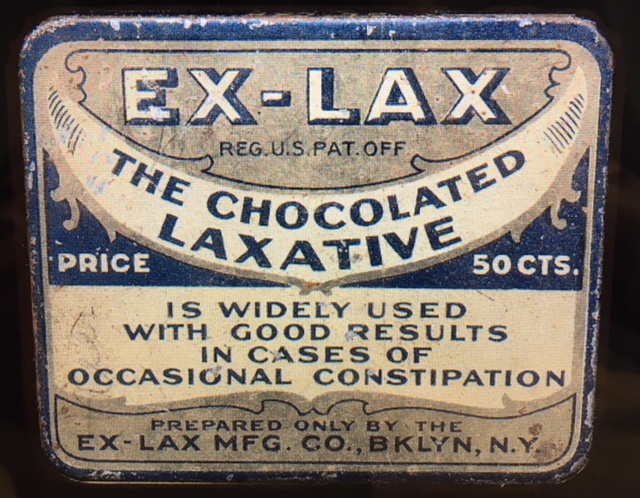
During the Great Depression ham was 10 cents a pound and gasoline was 10 cents a gallon. The first “rubber boots” were when people in South America coated their feet in latex from the rubber tree. Ex-Lax has been around since 1906, created by a Hungarian immigrant in New York. My list could go on and on, for there is no good stopping place.


ex lax
BOTTOM LINE: In addition to journaling about story ideas, drafts, etc., consider keeping your own list of bits and pieces that might fit into your writing life. Even if not, it’s entertaining.

Your Writing Tools: Search and Rescue Info

writing tools search rescue info
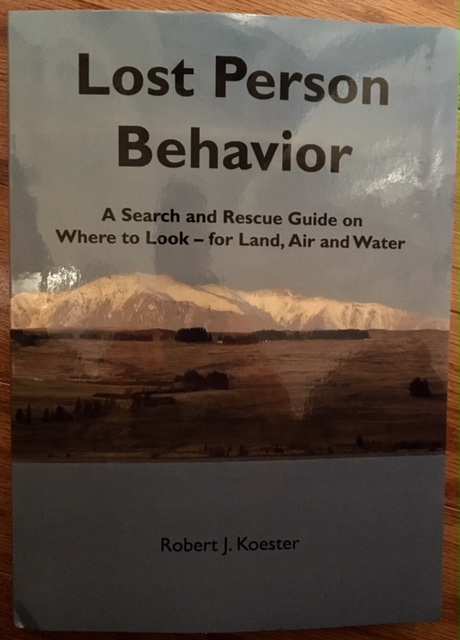
Robert J. Koester studied lost person behavior in a systematic, scientific, statistical way and the result is what many consider to be the best book on search and rescue ever written. So maybe you’re thinking Whoopdedoo. I’m into fiction. Maybe you’re yawning and about to browse elsewhere. Read on instead.
 
This book contains invaluable nuggets to make your writing not only accurate but also richer. Its usefulness for mystery writers might be more apparent than for more general literary fiction, but consider all the ways and reasons someone might go missing—either as the primary plot line, or as a subplot that complicates everything.


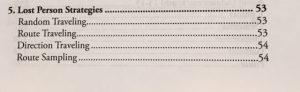
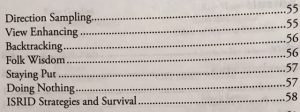
This book is useful whether you are writing from the POV of the missing person or the searcher(s). For example, it delineates strategies lost people use to try to get unlost, including the effectiveness of each.


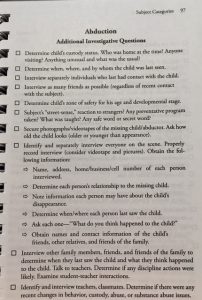
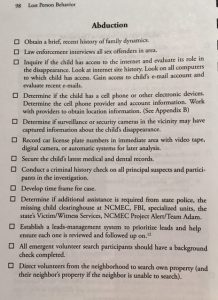
To aid the searcher, data are organized into 34 subject categories, ranging from Abduction through Urban Entrapment and Worker. Data about children are partitioned by age. Data on Skiers are partitioned by Alpine and Nordic. And so it goes. And for each Subject Category, there is an brief introduction, followed by guidelines for getting the search started and—perhaps of most interest to writers—pages of Additional Investigative Questions. For example, consider the usefulness of these questions concerning abductions.


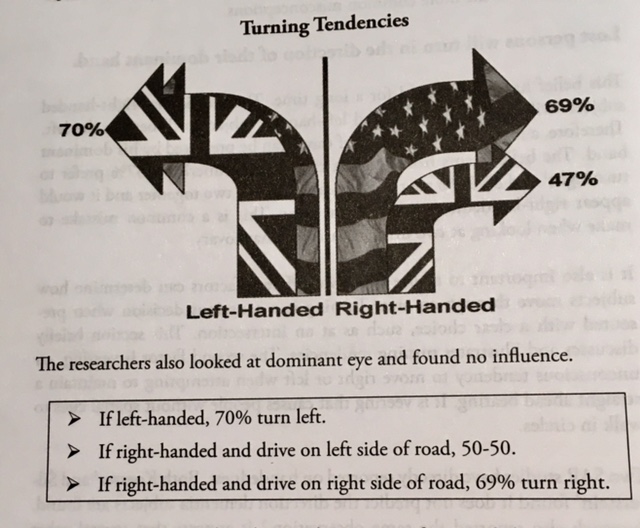
Perhaps my favorite chapter is 6. Lost Person Myths and Legends.  For example, is it true that lost people will turn in the direction of their dominant hand? To some extent. When forced to make a clear choice between right and left, handedness matters. But the extent to which it matters is influenced by learned driving patterns.


writing tools search rescue info
People without visual cues do, indeed, walk in circles. Why? When blindfolded and told to walk in a straight line, whether one circles clockwise or counterclockwise is strongly influenced by which leg is longer. Too bad that bit of information is seldom available to searchers!


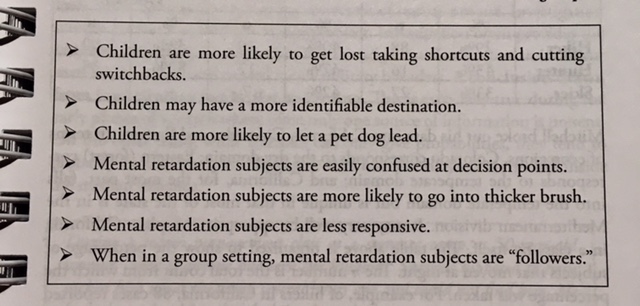
Potentially relevant information is everywhere in this book. Do the mentally retarded and children behave similarly when lost? Yes and no. The distances traveled from the initial planning point are quite similar for those with mental retardation and children 7-12 years of age. But there are important differences.


writing tools search rescue info
Dementia wanderers essentially travel straight ahead till they get stuck. Therefore, the most important first question to ask is, “Which door did he go out of?” Despondents, on the other hand, are most likely to just walk out and are most often found on a path, trail, or at their destination. Despondents are not truly lost.


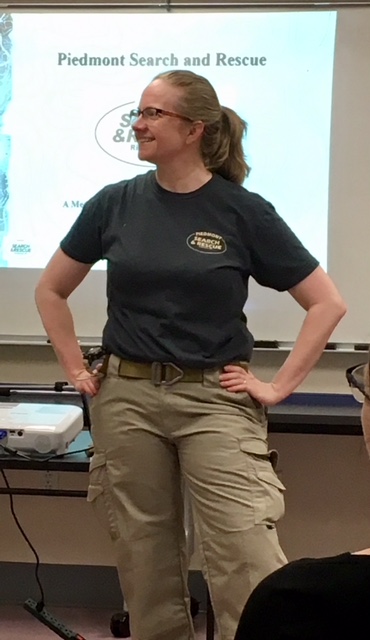
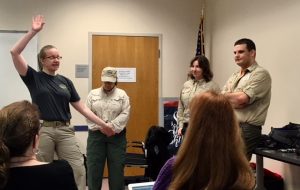
I became aware of Koester’s book during a SinC/CentralVA program by 4 members of the Piedmont Search and Rescue staff. The book is expensive but you might well find it worth adding to your shelf.
writing tools search rescue info
The organization has an enormous amount of information and experience. You can find lots of it online.

What Sadistic Sob Would Do That?

More than 1,000 people gather at Seattle-Tacoma International Airport, to protest President Donald Trump's order that restricts immigration to the U.S., Saturday, Jan. 28, 2017, in Seattle. President Trump signed an executive order Friday that bans legal U.S. residents and visa-holders from seven Muslim-majority nations from entering the U.S. for 90 days and puts an indefinite hold on a program resettling Syrian refugees. (Genna Martin/seattlepi.com via AP)
[Source: Concord Monitor]
You can find stories all over the internet of people increasingly being treated inhumanely while trying to enter the U.S.—preschoolers being handcuffed, weeping mothers and young children separated for hours at a time, people held for twenty hours without food… Sometimes such stories suggest that it’s because of the things Pres. Trump says and does. His supporters are likely to reply, “No way in hell would he order such things! These are the acts of a few sick individuals.”


As writers, we don’t need to prove or disprove either of these causes. As writers, we know that almost anyone is capable of almost any act if the motivation is sufficient. What we may not have considered is just how easily ordinary people can be led to do extraordinary things.  
 
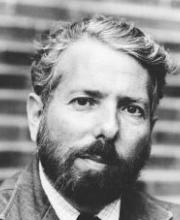
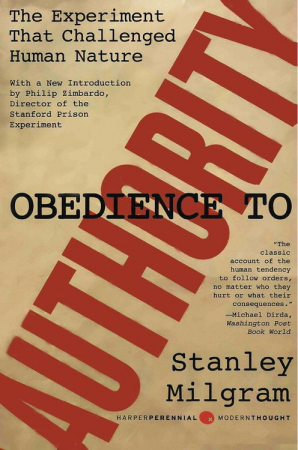
In 1963 Stanley Milgram first published his research on obedience to authority figures. The beginning of his research (1961) was with the trial of Nazi war criminal Adolf Eichmann in Jerusalem. He started with the question, “Could it be that Eichmann and his accomplices in the Holocaust were just following orders?”
 
The short answer is “Yes.” A very high proportion of people would fully obey the instructions, even if reluctantly, even if the acts ran counter to their own consciences.
 
The basic paradigm was that the subject thought he was the teacher, assisting the experimenter by delivering electric shocks to a learner whenever the learner gave a wrong answer. With each wrong answer, the apparent shock level was increased, finally to a point where the shocks—if real—would have been fatal. In the initial experiment, 65% of subjects gave the maximum shock level at least three times.


The important thing to remember is that the experimenter had no real authority over the subject delivering the shocks. The experimenter wasn’t a parent, a supervisor, a friend, a lover. The subject was not physically restrained from leaving. You can read all about it, in detail, in his 1974 book.


stanley milgram book 1974
[Source: HarperCollins]
Variations on the original experiment revealed that a less official looking setting decreased obedience slightly. When the teacher was physically closer to the learner, the level of compliance decreased—but even when the teacher had to physically hold the supposed learner’s hand on what was supposed to be a shock plate, 30% completed the experiment. When the experimenter was physically farther away, compliance decreased. For example, when the experimenter gave instructions over the phone, compliance dropped to 21%. There was no significant difference in results when all women were used.


To write convincingly about obedience, it’s important to note that the people were greatly stressed by what they were doing. They objected verbally, questioned the experimenter, and reported high levels of distress when debriefed.
 
So, can we conclude that someone is telling people to get rough with those trying to enter the United States? NO! 
 
[Source: TED]
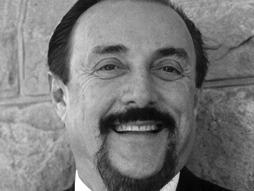
Enter Philip Zimbardo. In 1971 he conducted The Stanford Prison Experiment. It was specifically intended to investigate issues of the relationships between prisoners and guards. Did the behaviors of prisoners and guards reflect inherent personality differences between the two groups?


Volunteers for a two-week prison experiment were screened and those with criminal backgrounds, psychological impairment, or medical problems were excluded. The research team chose 24 men they deemed most psychologically stable and healthy. Participants were paid $15 per day (the equivalent of $92.91 in 2018).


The subjects were randomly divided into prisoners and guards.


stanford prison experiment
[Source: HowStuffWorks]
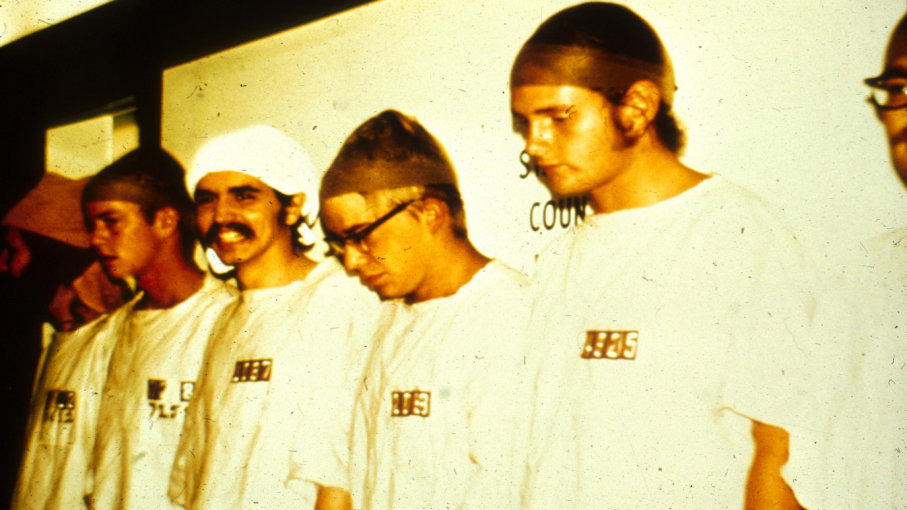
The guards were instructed not to physically harm the prisoners or withhold food or drink, but Zimbardo emphasized that “…in this situation we’ll have all the power and they will have none.” Guards were told to call prisoners by their assigned numbers rather than their names. But otherwise, guards improvised their roles. Prisoners were given no instructions.


prison experiment
[Source: SF Gate]
On the second day the three prisoners in one cell rioted, blocked the door with their beds, tore off their caps, and refused to come out or obey the guards. Guards from other shifts agreed to  work overtime to quell the riot and eventually they attacked the prisoners with fire extinguishers (while not being supervised by research staff).


sadist stanford prison experiment
[Source: Daily Maverick]
The experiment was terminated after only 6 days. By then, about a third of the guards had exhibited “genuine sadistic tendencies”; prisoners were emotionally traumatized and five of them had to be removed from the experiment early. You can read about this experiment in any social psychology textbook. Online you can also view video clips.


Arguably, the most important outcome of the study is that the behavior of two equivalent groups diverged dramatically after one was labeled “guards” and the other was labeled “prisoners.” 
 
To answer the initial question of what sadistic SOB would do such a thing: the perfectly ordinary, likable, friend, colleague, or neighbor.
 
As a writer, keep that in mind as you create characters behaving badly.

Upside, Downside: The Writing Life

upside downside writing life
 
The upside to writing is almost limitless! Which is fortunate, because few of us gain significant income for our efforts. Here are some of the best things about the writing life for me.


1) It’s good for your brain. Writing requires rational thought, planning, focus, and practice, all of which is good exercise for maintaining one’s intellectual health.
2) It helps develop empathy. Getting inside heads other than one’s own, being able to take the other’s perspective, even express an opinion not one’s own are all conducive to a broader world view.
nimrod hall summer arts program 2016
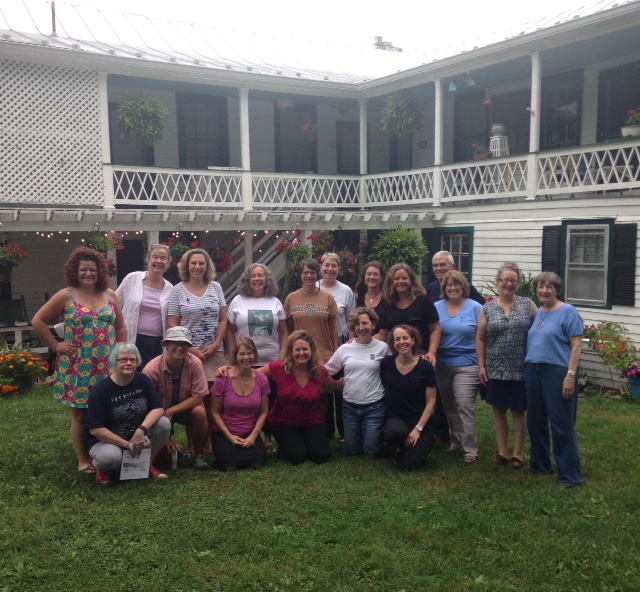
L-R, kneeling: Foust, Kristy Bell, Nancy Hurrelbrinck, Jennifer Dickinson, Judy Bice, Ruth Gallogly; L-R standing, Terry Dolson, Jane Shepherd, Kit Wellfod, Charlotte Morgan, Cathy Hankla, me, Sheri Reynolds, Molly Todd, David Cooper, Betsy Arnett, Amelia Williams, Frances Burch.
3) Writers are interesting people. I’ve never met a boring writer—although I can’t say the same for all their spouses! But writers all seem to have rich, complex lives and thoughtful views on everything from history to art.
4) Writing is good for your physical and mental health. Yes, there is actually evidence of this! You can look it up online. Writers get sick less often, heal faster, and are less likely to be depressed.
5) Writing gives you something to think and talk about besides your poor health, job complaints, etc.
6) It makes you a more discerning reader. You notice bad, poor, sloppy writing. You may even drop some formerly favorite authors—which I guess could be a downside, if you look at it that way. But you will appreciate good writing more than ever.
[Source: Amazon]
[Source: Amazon]
7) When you finish a piece of writing, and especially when something is published, you have a rewarding sense of achievement.
The downsides are fewer, but powerful.
 
1) It’s difficult and time consuming. Enough said.
upside downside writing life
2) When it becomes a habit, you feel guilty when you don’t do it.
3) Writing to deadlines can raise your blood pressure and exacerbate your ulcers. (However, you’re less likely to have these issues if you write. See above.)
BOTTOM LINE:
upside downside writing life its-a-wonderful-life
[Source: Stafflink]

Dialogue Dos and Don’ts

dialogue dos donts

Dialogue is essential to every genre of fiction; however, sometimes it’s hard to get it just right. Bad dialogue can trip up a reader, and sometimes doing so will make them want to stop reading altogether. That being said, here are a few dialogue dos and don’ts that can help you with writing speech:

Do

  • Try breaking up characters’ dialogue with action. Full pages of dialogue tend to make the reader’s mind wander (that being said… don’t overdo dialogue tags, e.g. said, exclaimed, whispered).
  • Do research. Sit in a coffeehouse, restaurant, movie theater, etc. and listen to the conversations around you (make sure you’re not caught!). This can help you establish natural ways of speaking without needing to rack your brains.
  • Read your dialogue out loud and act it out if necessary. Does it feel unnatural? Edit it out.

Don’t

  • Don’t have characters tell each other things they already know just because the reader doesn’t know those things. For example, if two sisters are talking, it’s highly unlikely that one would say, “When Mom and Dad adopted our brother John, I was devastated.” Find another way to convey relevant relationships or bits of backstory to the reader.
  • Don’t have an exchange between two people weighed down by repeatedly calling each other by name. “Hello, John.” “Hi, Sharon.” “How are you doing, John?” “Oh, Sharon, I am so low I have to reach up to touch bottom.”
  • Don’t put in greetings and leave-takings that are pro-forma, tell us nothing about the characters, or don’t move the story forward. Just because they would happen in real life doesn’t mean that every amenity has to be spelled out to the point of diluting the scene.

There are many more resources online that can help you with writing dialogue. Check them out for more inspiration!

Hanahaki and Other Useful Diseases

Hanahaki useful diseases
Hanahaki comes from two Japanese words: hana, which means flower, and hakimasu, which means to throw up. It is a fictitious disease in which the victim coughs up flower petals when suffering from unrequited love. The most common version is when the victim’s lungs fill with flowers and roots grow in the respiratory system. The victim chokes on blood and petals and dies.


Hanahaki useful diseases
In another version, the flowers are surgically removed. The surgery also removes the victim’s feelings of love and s/he can no longer love the person they once loved. Sometimes this also removes the ability to ever love again.


Hanahaki
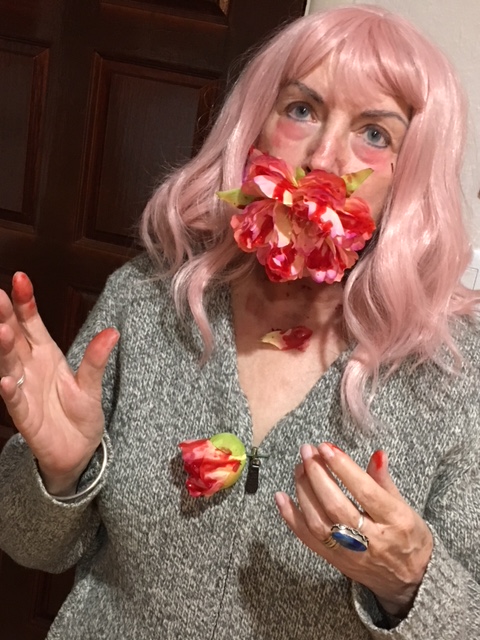
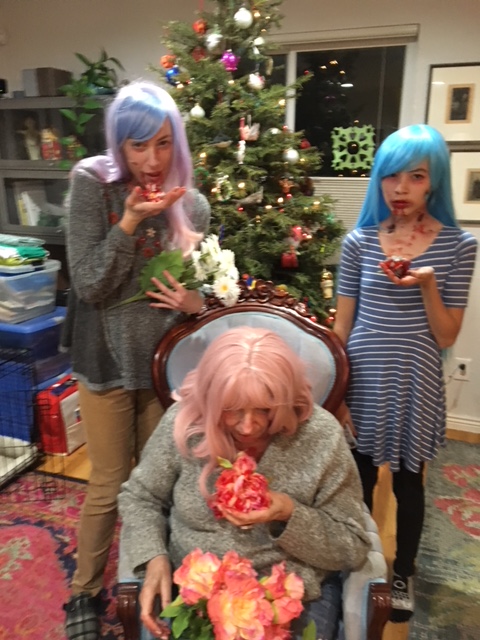
My 13-year-old granddaughter came across hanahaki disease while researching possible diseases for a book she and her friends are writing. Need I say the book is fantasy fiction? She also enjoys special effects makeup, and one evening created three generations suffering from hanahaki disease—me, her mother, and herself.


Hanahaki useful diseases
In researching hanahaki disease, I discovered a whole world of disease and disaster that I was previously unaware of. Wikipedia has 40 pages of fictional diseases in literature, film, TV, video games, and role-playing games, everything from the Andromeda Strain to Cooties.
stephen king
Fictional diseases is probably not the first association you have for Stephen King, but he has created his share, including the superflu in The Stand, the Ripley in Dreamcatcher, and the pulse in Cell. Authors from Edgar Allan Poe to J.K. Rowling have invented fictional diseases. Why not you?
 
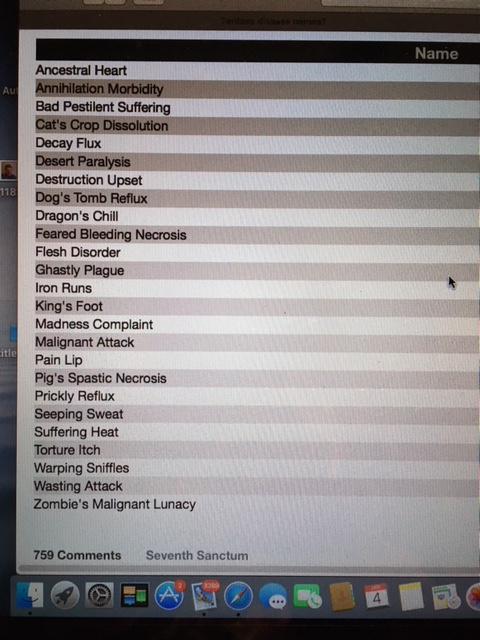
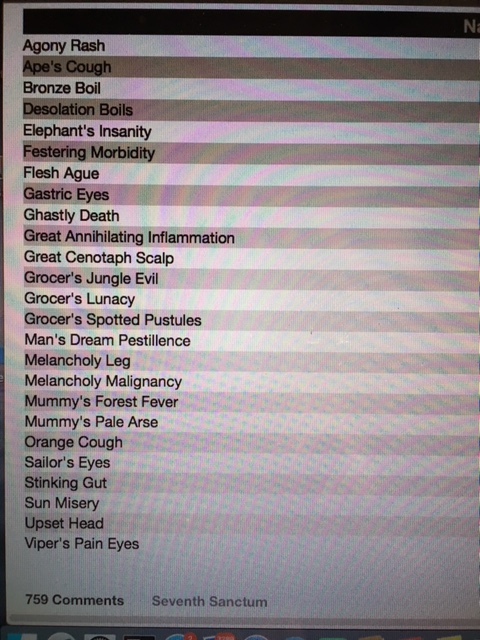
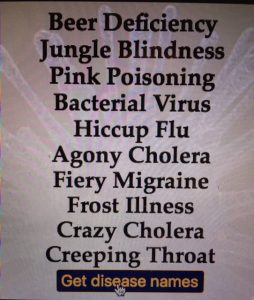
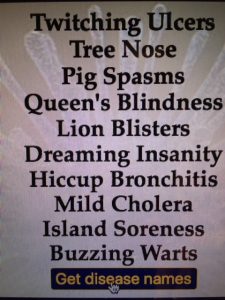
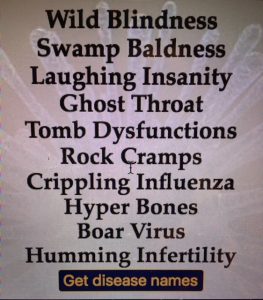
Getting started is easy. If nothing comes to mind immediately, go to seventhsanctum.com and use the Disease Generator.  You can get 25 disease names in an instant.
Hanahaki diseases
And if nothing appeals to you—not ancestral heart or zombie’s malignant lunacy, not seeping sweat or torture itch—just push the button for more diseases.


Hanahaki diseases
Once you have a name, you need to develop the disease, starting with disease type (childhood/common/rare) and moving on to cause (bacteria, virus, parasite, fungus, imbalance of bodily humors, etc.). You need to consider transmission (airborne, body fluids, food or water, touch, etc.) and virulence (how likely a person is to catch the disease after coming into contact with it). How long is the incubation period? A person could be showing symptoms and become infectious almost instantaneously or it could take years. What are the symptoms of this disease? Is it treatable and/or curable? And last but not least, how do people react when they encounter someone with this disease?
 
Feel free to use symptoms from real diseases, past or present. For example, cholera, dysentery, small pox, consumption, syphilis, the Black Plague, etc. BTW, the Black Plague is a zoonotic disease, meaning it moves from animals to humans—as in bird flue or swine flu.


fictional diseases
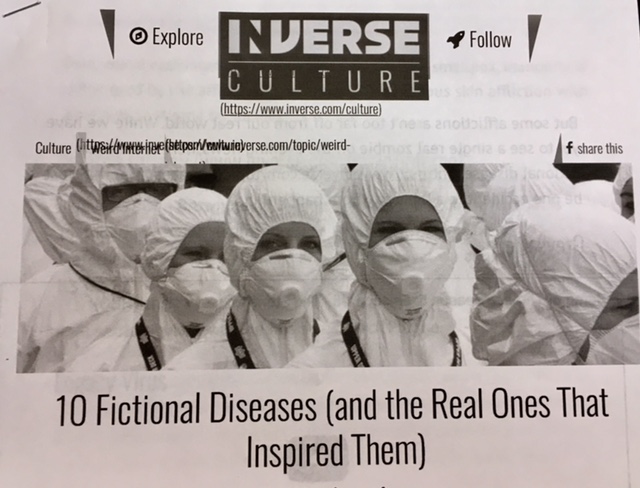
The more realistic your story line, the more realistic your disease should be. For inspiration, check out Inverse Culture.


Bottom line: Consider the advantages of deadly diseases. As long as people fear death, they will push protagonists to the edge, and that’s a good thing.


Writing Resolutions for 2018

writing resolutions 2018

 
 A new year links the past and the future. (You heard it here first!) So it’s your opportunity to wrap up things already started, launch new projects, and and develop (or strengthen) good habits. So here’s the plan.


1a) If you have a project underway, review a hard copy of all writing to date. DO NOT REVISE. Instead, note in the margins things to tend to when you do revise. If you want to make major changes (e.g., add a character, a death, a divorce, etc. that needs to have already happened) note those but don’t go back now. Write going forward as if you’ve already revised.


1b) If you have nothing new in the works, browse your files of old writing. (Of course you have these!) Pick one that strikes your fancy and work on it in the new year. If it’s old, you have grown and developed. You might change POV, add striking details. even use the same material in a different genre. Make use of work you’ve already done.


writing resolution 2018
2) Read current periodicals (at lest one) on a regular basis to see what’s trending. Choose something that you wouldn’t mind reading anyway. It might be Style in Richmond. Any major publication you follow, such as The New Yorker, etc. Who knows when knowing that early teens all across the country are into sexual fluidity and rating their degrees of homo or hetero tendencies might be fruitful.


3) Follow the news of the weird. You can do this online, by searching that phrase. But you also can find tidbits in the daily paper, church news bulletins, etc.


4) Write something every day! Depending on whether you keep a writing journal or something more like a diary, that might suffice. But ideally, it will be something totally creative. Consider any dreams/nightmares so vivid that you woke. If all else fails, start by writing about surviving the holidays.


Bottom line: Keep on truckin’! The only way to write is to do it.


writing 2018

A Writer’s Gift to Self

[Source: AudioFile]
David Morrell is incredible! His debut novel (1972) was First Blood which would later become the Rambo movies. He has published 44 books, including stand-alone novels (17), the Rambo series (4), Brotherhood of the Rose series (4), Cavanaugh/Protector series (3), Creeper & Scavenger series (2), Thomas DeQuincy series (4), comic books (3), and nonfiction (7). He’s also published short fiction, and edited several volumes.


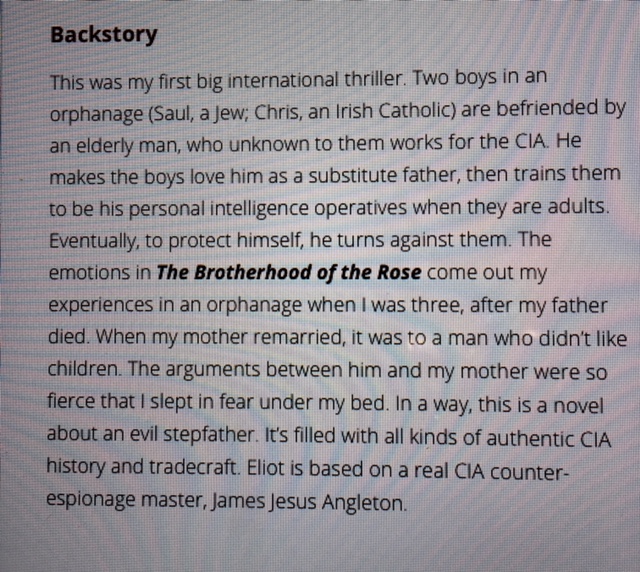
If you go to davidmorrell.net, you can click on any book cover to get a description of the book plus his comments on why he wrote it. The latter are fascinating. For example, he has this to say about The Brotherhood of the Rose:


writers gift self backstory david morrell
Click to enlarge
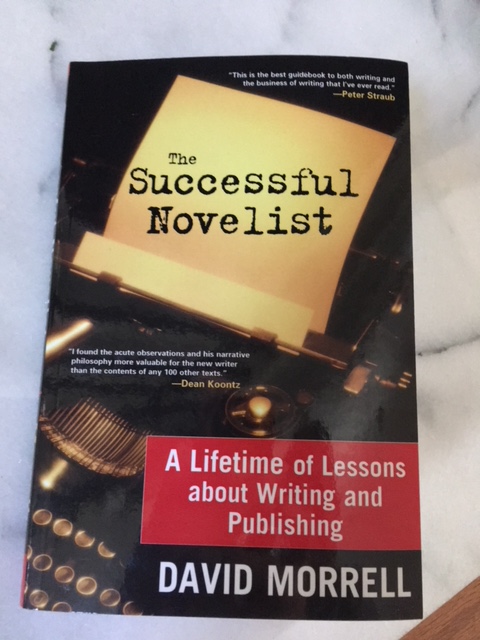
So, he’s published impressively, but my focus today is about David Morrell the teacher.  He has a Ph.D. in American literature and was a professor at the University of Iowa for sixteen years. (He is a living contradiction to the adage, “Those who can, do. Those who can’t do, teach.”) In 1998, he decided to share his teaching in print. If you click “On Writing” on his website, you can access Five Rules for Writing Thrillers, What’s In A Name?, and Five Further Concepts. In 2002 he published The Successful Novelist, reissued in 2008.


writers gift self successful novelist david morrell (2)
A friend handed this book to me and said, “It’s great—and a fast read!” It sat around for a long time before I even opened it. I blush to admit that I’d never heard of David Morrell! (In my defense, I’ll only say that thrillers aren’t my usual escapist reading. And there are a lot of writers out there!) But now I am among the throngs who praise him. This book isn’t just helpful, it’s a good read!


Rather than try to describe it or review it further, I refer you to his website section “On Writing,” where you can access a sample chapter. Do it! And then give yourself the gift of David Morrell’s experience and insight.


writers gift self successful novelist david morrell