National Read a Book Day!

national read book day water your mind read
Tomorrow is National Read a Book Day (annually on Sept. 6). Unlike National Book Lovers Day (August 9), this fun holiday is for everyone.


national read book day
National Read a Book Day is a relatively new unofficial holiday, and its origins are murky. First celebrated around 2010, it was probably started by a librarian, perhaps to encourage children to read. But then again, it could have been any bibliophile wanting to encourage and celebrate reading.
national read book day
In any event, it’s a a day to enjoy reading, to read with children, to donate a book to a children’s school library, or throw a book reading party—whatever takes your fancy.


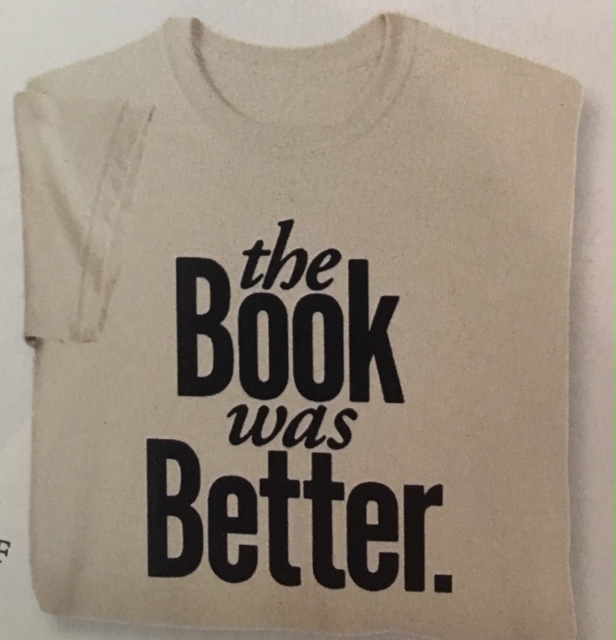
national read book day book better
The main goal is to encourage reading—fiction, non-fiction, poetry, history, memoir—either physical books or e-books.


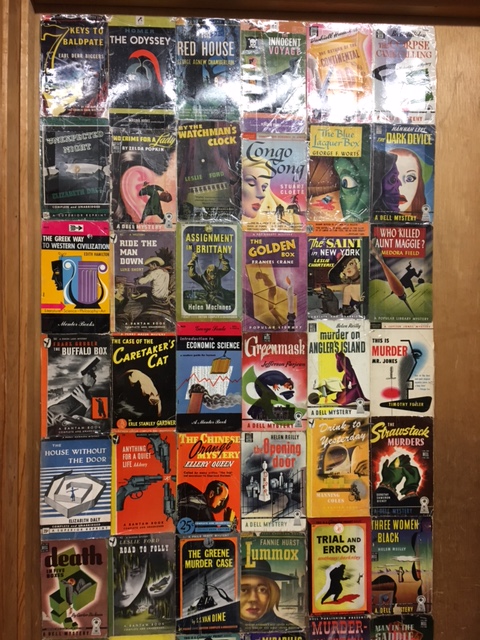
national read book day vivian lawry books
In the spirit of the holiday, any book reading counts. You might continue a book in progress, reread a favorite passage from a previous book, or dip into a collection of short stories.
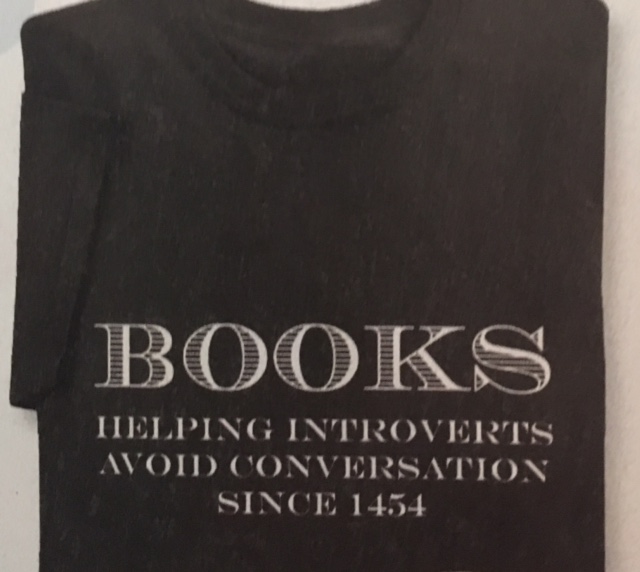
national read book day books helping introverts avoid conversation since 1454
If you aren’t a fast reader but want to read an entire book, go for Dr. Seuss or Beatrix Potter—or any good children’s book. If you don’t have one on your shelves, try any library or bookstore.
national read book day raven used books tote
 
But if you really like a challenge, follow the tips from  Business Insider and read a book a day everyday!


  • listen to white noise while you read
  • try an audiobook
  • alternate between genres
  • always carry a book with you
  • have your next book ready
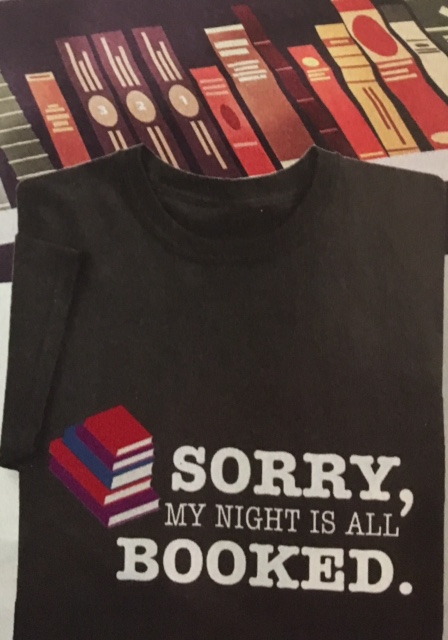
national read book day sorry night all booked

So You Think You’re Literate?

You think you’re literate?


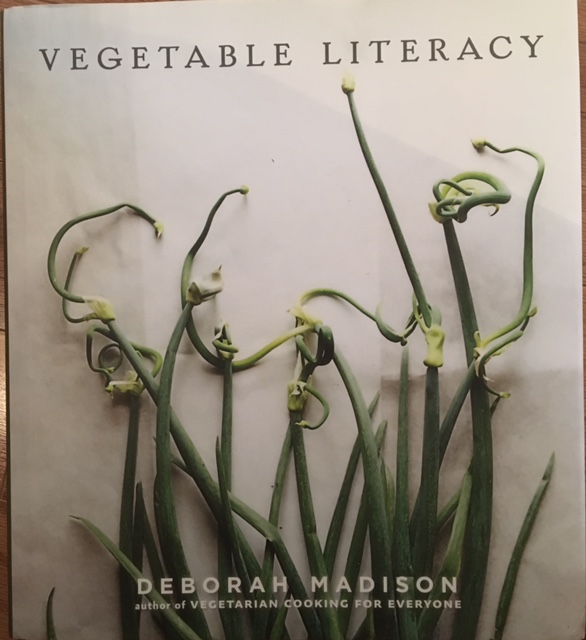
So did I until I delved into Vegetable Literacy by Deborah Madison. She’s a long-standing advocate of buying local and cooking seasonal produce. Although I bought the book in 2014, and have cooked from it since then, I only recently started reading it.


so think literate vegetable literacy
If you are interested in botany, gardening, cooking and/or eating, this book’s for you!
 
The twelve chapters, each devoted to one vegetable family, includes essays, photos, and recipes. Just reading the chapter headings is an education—at least, it was for me.


Chapter One: The Carrot Family. I once felt rather smug, knowing that Queen Anne’s lace is related to carrots. Ha! In this 43-page chapter, Madison introduces the rest of the family: angelica, anise, asafetida, caraway, celery, celery root, chervil, cilantro and coriander, cumin, dill, fennel, hemlock, lovage, osha, parsley, parsley root, parsnips, and wild carrot. Although I’ve grown dill and parsley for decades, I never tumbled to the relationship.
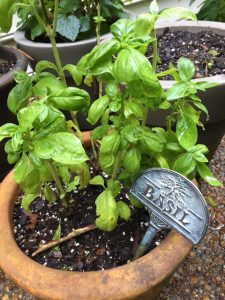
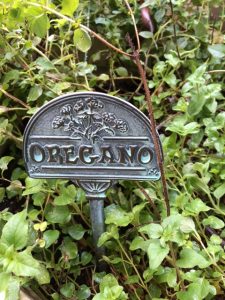
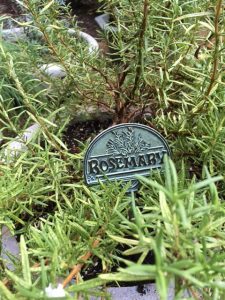
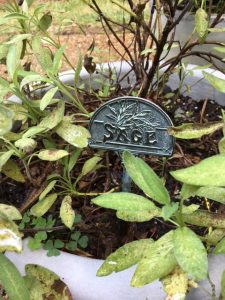
In Chapter Two: The Mint Family, I learned that most staples of my herb garden are relatives: basil, lavender, marjoram, mint, oregano, rosemary, sage, and thyme.
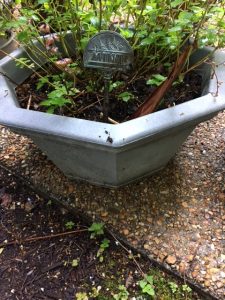
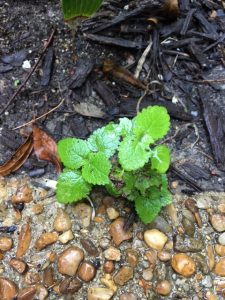
Thyme, sage, rosemary, oregano, and mint are all perennial for me. The problem with mint is that it won’t stay potted! It’s been known to actually cross the patio.
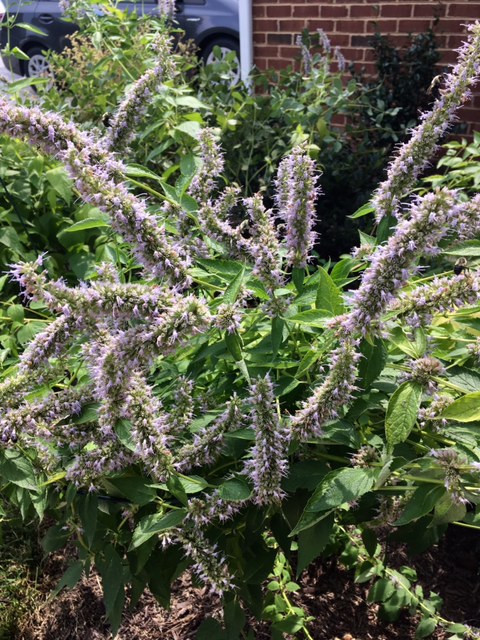
Thanks to this chapter, I now know that anise hyssop, bee balm, catmint, chia seeds, horehound, lemon balm, perilla, and savory are in this family as well. Unfortunately, my hyssop isn’t anise hyssop. Only bees want to sample it.
hyssop bees
I won’t go in depth with chapter contents, for that wouldn’t do the book justice. I’ll just mention selections. Chapter Three: The Sunflower Family,  surprised me by including lettuces and tarragon. The Knotweed Family includes a favorite from childhood, rhubarb. The Cabbage Family includes kale, mustard, radishes, and turnips. Tuscan Kale with Anchovy-Garlic Dressing is a recent favorite.
tomatoes potatoes
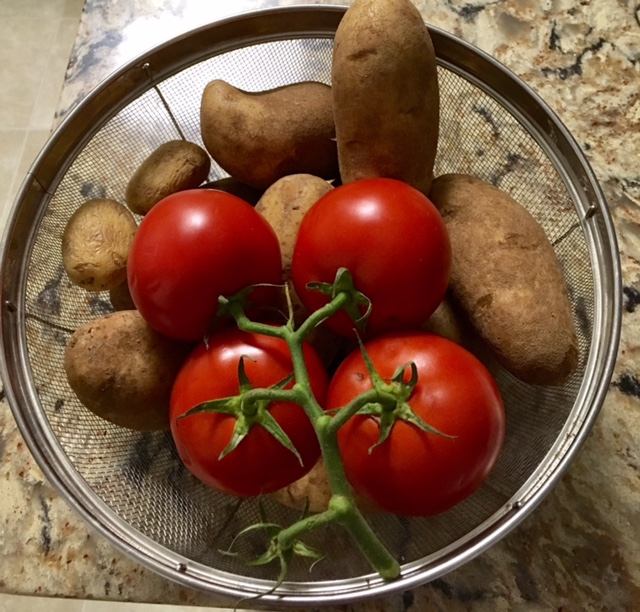
By Chapter Six: The Nightshade Family, I stopped being surprised that eggplants, tomatoes, potatoes, and tobacco might turn up together—along with miscellaneous other relatives. Chapter Seven (The Goosefoot and Amaranth Families) deals with edible weeds, leaves, and seeds.
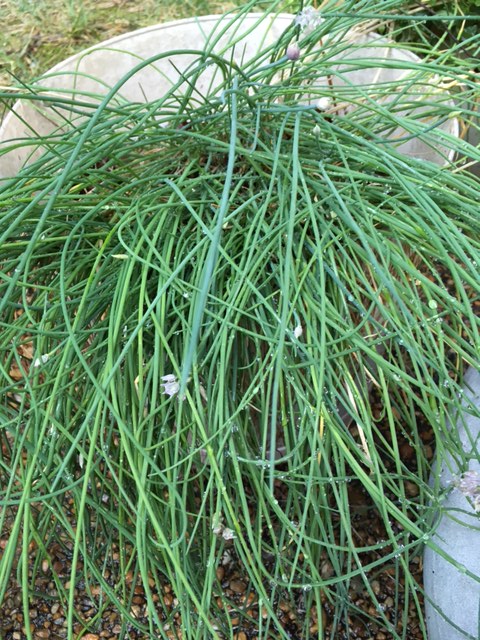
fresh chives
Chapter Eight includes the recipes for chives, onions, asparagus, leeks, shallots, etc. Of course there are chapters on squashes, melons, and gourds—which includes cucumbers; grains and cereals (e.g., barley, wild rice, millet, etc.); and legumes (all sorts of beans and peas).
so think literate pantry dried legumes
Chapter 12 is the last—shortest—chapter, on The Morning Glory Family. It’s shortest because the only edible member is the sweet potato.


I LOVE THIS SORT OF INFORMATION! Yes, I could get the botanicals elsewhere. But, as cookbook author Davis Tanis said, “Filled with fascinating botanical notes and inspired recipes that really explore vegetables from the the ground up—it is a pleasure to read.The writing is beautiful and the lessons are astutely down to earth.”
Get into Pictures

Last Saturday, August 19, was World Picture Day—and I missed it! But it’s never to late to recall a good idea.
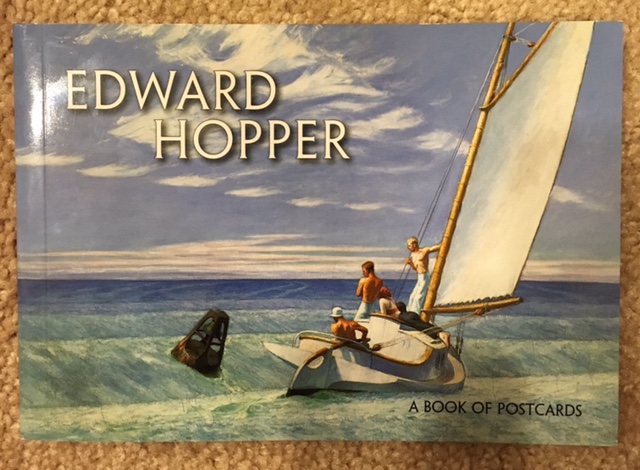
edward hopper
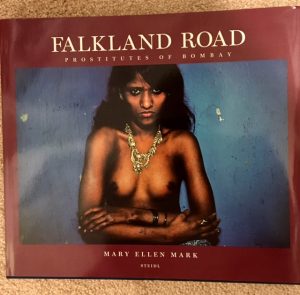
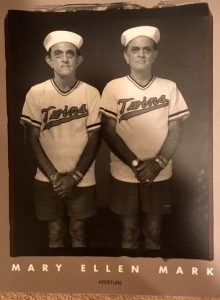
Those of us who have taken writing workshops know the value of pictures as writing prompts. I’ve been on the receiving end and the giving end of postcards, photos, or paintings as the stimulus for stories. Several of my published stories started with such prompts, including Naked Truth, Love Me Tender, and Pictures Not Displayed (forthcoming).
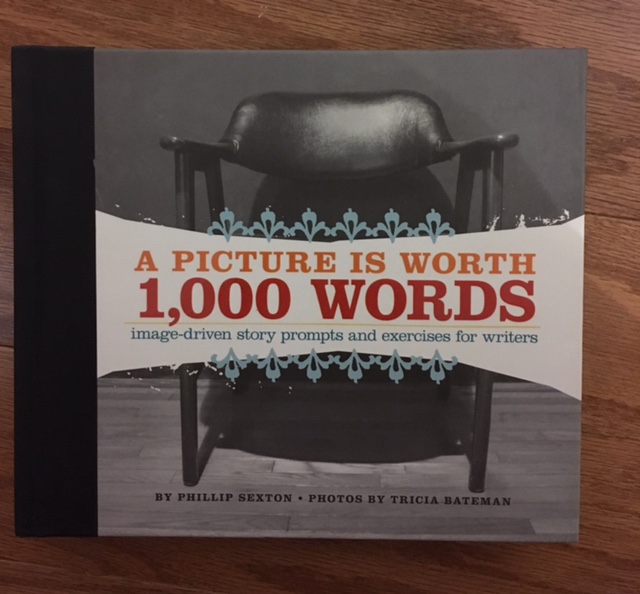
picture worth 1000 words
Whole books have been published for the specific purpose of prompting stories.  There’s a lot to be said for using such a book for daily—or at least regular—writing exercises, some of which turn into scenes in longer pieces or books. They can add a plot twist that surprises the reader.
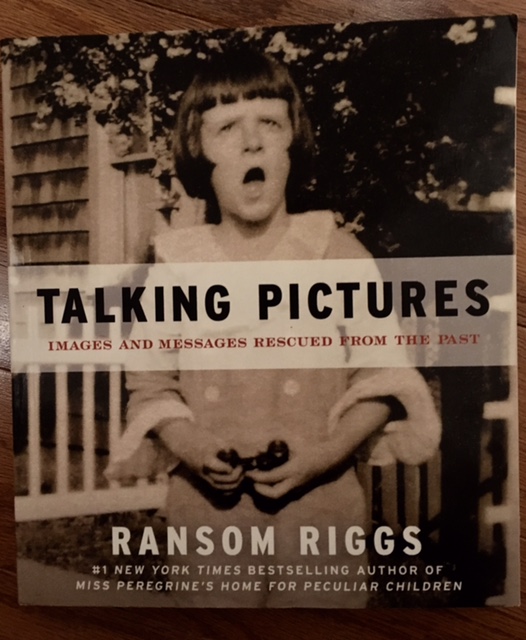
talking pictures ransom riggs
Books that aren’t necessarily intended as writing prompts can nevertheless be great resources.
Each picture should lead to a full story, including—at the minimum—who, what, when, where, and why. Never underestimate the importance of why. Rorschach cards are used to elicit such stories for diagnostic purposes. And as with the Rorschach cards, the good writer will consider what led up to the picture, what will happen now, and what is the protagonist thinking and feeling.


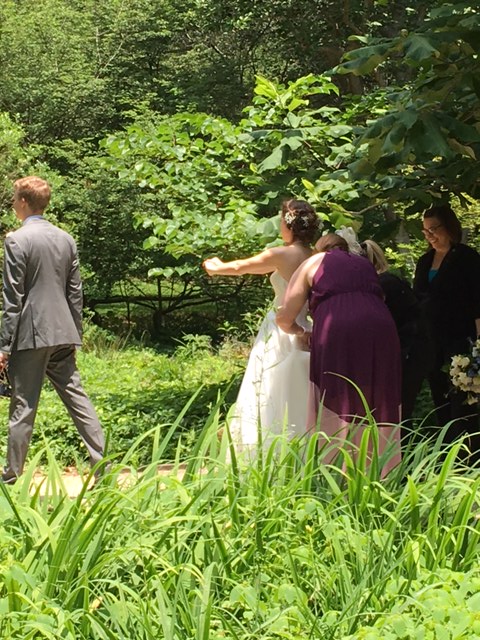
But beyond looking at pictures, you should take pictures. This is often easy, given the availability of cell phones with a photo capability. Keeping an eye out for photo opps makes you more sensitive to details of your surroundings—from the color of flowers to found art—to capturing people’s emotions in the moment. Your own pictures are as useful for material as any others. Go for it.


wedding

Your Characters’ Secrets

Everyone has secrets. Anything that is known only to oneself (maybe one other person) is a secret. It can be a regret, betrayal, desire, fear, confession, past humiliation—anything unknown.
post secret
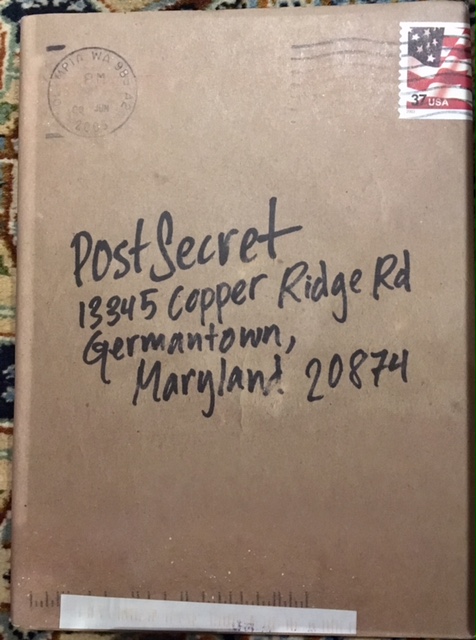
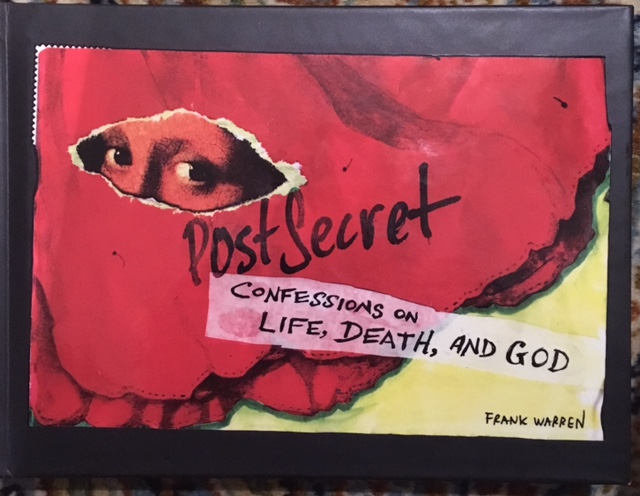
Frank Warren tapped into the breadth and depth of secrets when he invited people to return postcards anonymously revealing a secret as part of a group art project. The response was extraordinary, and Post Secret became an international phenomenon—and a book. Here are three randomly selected offerings from this book.


“I can’t think of a secret. Except—I don’t think I’m interesting enough to have a secret.”
“I don’t care about recycling (but I pretend to).”


“I didn’t tell people I was running a marathon for fear they’s be nauseated by visions of my FAT ASS bouncing down the street.”


my secret post secret
The art project ended but the postcards kept coming. In two years he received over 50,000 postcards. This led to a second book, containing many secrets shared by young people. Here are three examples.


“If I charged the people I babysit for by the SCREAM I’d be rich.”


“I’m only friends with rich girls.”
 

“I told my family, the school nurse, and my optometrist that I couldn’t see the last rows just so that I would get glasses like my friends.”
 

secret lives men women frank warren
Eventually there were so many postcards that they could be sorted into related themes. The result was The Secret Lives of Men and Women.  The secrets revealed include the following:


“I’ve been with my wife for twenty years and she doesn’t know who I am.”


“I didn’t take a pill last night. Even if you leave me, I’ll have part of you to love forever.

“I have both a wife and a girlfriend and I’ve never been lonelier.”


“All of my exes bat for the other team.”


lifetime secrets frank warren
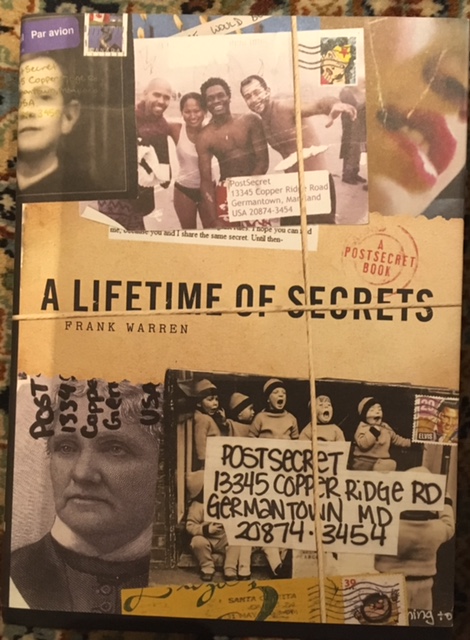
Many secrets have a hold on a person for years. Many of these are captured in A Lifetime of SecretsFor example,


“I still remember my rapist’s birthday.”


“My best friend slept with the only man I ever loved. Their son is in college now. I still drive by their house.”


“I only allow myself to read your letters once a year (9/17). Then, I let myself fantasize how my life would be different if you were still around. Sometimes I find myself hating you because it’s easier than missing you.”


“Finally I truly wish you well.”


Why give your characters secrets? It adds depth to them, makes them more like real people. In addition, depending on the secret, it can add humor, intra-psychic tension, or the motivation for behavior in various situations. Feel free to give a character a secret of your own. Or make one up. Or consult Frank Warren’s treasure troves!


post secret confessions on life death and god

Vicarious Adventure

My personal adventures have been relatively tame: parasailing in the Bahamas, zip-lining in Costa Rica, draping an anaconda around my shoulders in the Amazon rainforest. (FYI: Anaconda poop bleaches clothing.) But I’ve always enjoyed vicarious adventures—women’s adventures.


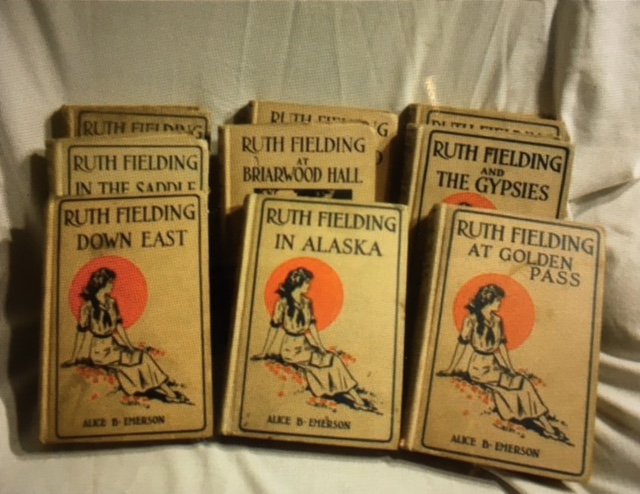
This started when I was in elementary school. I read the adventures of Ruth Fielding in a series of books owned by my paternal aunt.


ruth fielding
Although the settings of these thirty books seemed like ancient history (published 1913-1934), I loved kind-hearted, curious, brave, adventuresome Ruth.


When I was somewhat older, I discovered Cherry Ames: Student Nurse.


cherry ames books
The medical aspects of this series (27 books) fascinated me. But more important was the heroine, whose kind heart led her into dangerous situations that her sharp wits got her out of. I gave my Cherry Ames books to my older granddaughter a few years ago, but alas, her interests are more in the fantasy/horror genre. Oh, well.


As you may have gathered by now, for me, there is no expiration date on adventure.


west with the night
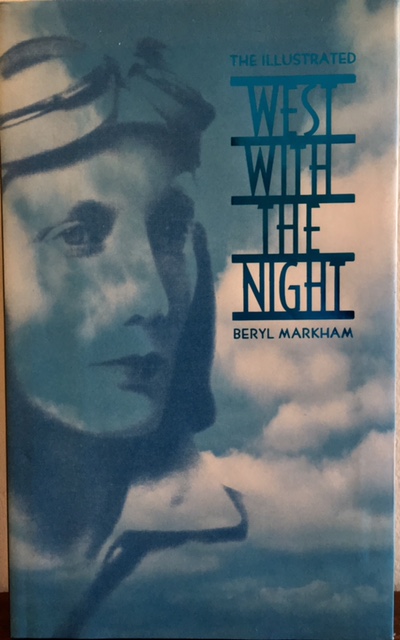
Beryl Markham’s incredible book is set in the earliest years of flight, and being a bush pilot in Africa. The writing is lyrical, the scenes compelling.


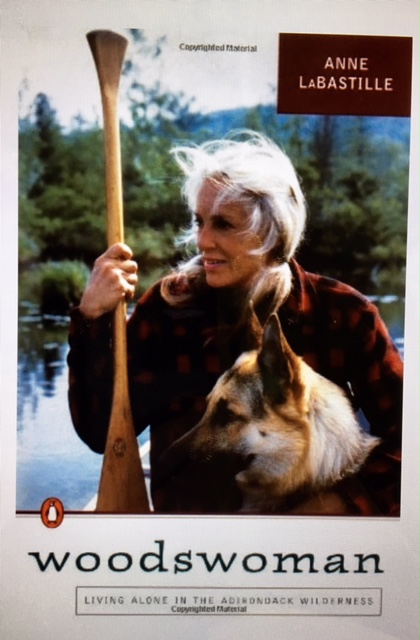
When I was involved in a vicarious love affair with Alaska (I’ve never been there), I read book after book set there, and through a rather circuitous route, came across Woodswoman.
 
woodswoman anne lebastille
When one thinks New York, the first thing to come to mind is not wilderness. And yet the North Country has winters suitable for training military for the Arctic, and parts of the Adirondacks truly are isolated—and virtually inaccessible in winter. Anne LaBastille living alone, frozen in for the winter, with a jerry-rigged outdoor shower, is plenty adventurous.


My longest term adventure was a two-week float-and-paddle rafting trip down the Colorado River. I mostly floated. Side-canyon hikes were strenuous and attending to one’s bodily needs was a challenge. But the most exciting part was the white-water rapids. I went bow-riding over thirty-foot drops! (Bow-riding is sitting on the front of the raft, holding onto a rope.)
writing down the river
So it’s no wonder I love Writing Down the River. Over one summer, fifteen talented women writers rafted down the Colorado. Their contributions to this book reflect their successes and failures, joys and fears. They take you there! (And, BTW, the photographs are gorgeous.)


Bottom line: Find your adventure—personal or vicarious—and pursue it.

A Creative Nonfiction Writer You Should Know

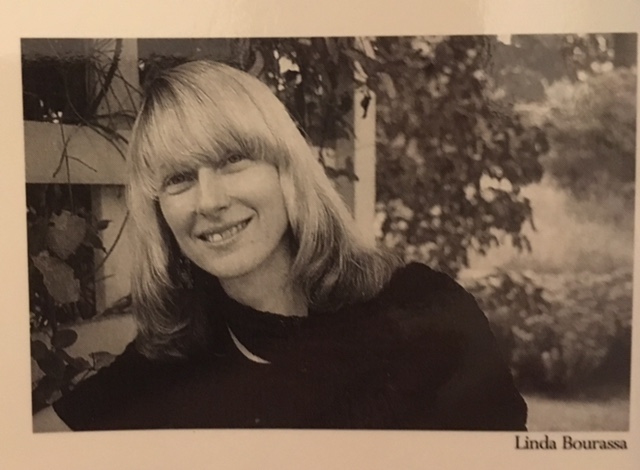
creative nonfiction writer know linda bourassa
Once upon a time, I worked with Dr. Joyce Dyer at Hiram College. We were just solidifying the writing program and making it more prominent within the curriculum. Joyce was a great choice to head those efforts, for she is a stellar colleague and widely admired teacher. But that’s not why I am writing about her today.


Joyce Dyer has a flair for drawing on her own life and making it bigger—relevant, compelling reading.
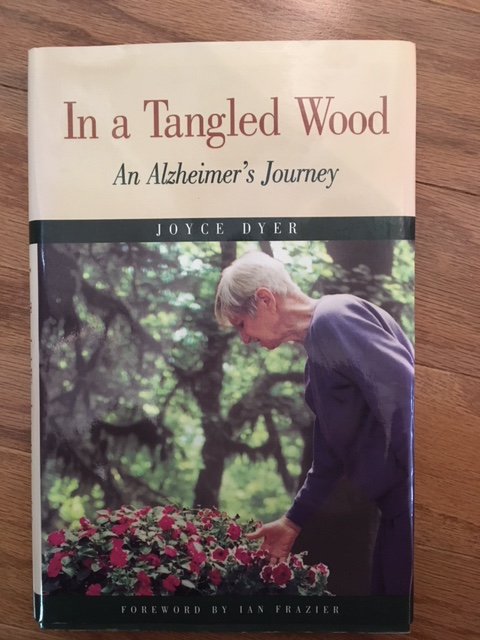
tangled wood alzheimers journey joyce dyer
In a Tangled Wood: An Alzheimer’s Journey is a rare, powerful memoir of a mother and daughter in the world of Alzheimer’s. It is humorous, painful, and wise. Joyce doesn’t shy away from the struggle, but this book contains a surprising wealth of joy as well.
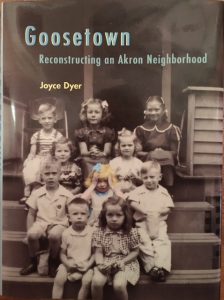
Sociology of time and place permeate two of her books. The titles say it all: Goosetown: Reconstructing an Akron Neighborhood and Gum-Dipped: A Daughter Remembers Rubber Town. The former, in particular, is a case study in writing memoir based on the earliest years of one’s life. How can those memories be recovered? Those times revisited? Anyone interested in writing—or simply reading—memoir should check out these books.


The keen eye and talent for the telling detail that characterize her own work enabled her to edit two volumes of essays that are prime reading for anyone interested in writing, women’s writing, women’s history, or life in general!


bloodroot joyce dyer
Bloodroot: Reflections on Place by Appalachian Women Writers is particularly poignant for me. Being firmly rooted in the hills of eastern Kentucky and southeastern Ohio, Appalachian voices and places permeate many of my short stories and one (as yet unpublished) novel.
curlers chainsaws women their machines
And now I have the pleasure of starting From Curlers to Chainsaws: Women and Their Machines. Published just last year, this is a new acquisition, an anthology I expect to enjoy reading and to shelve for reference. Bill Roorbach’s cover comment says it beautifully: “From Curlers to Chainsaws makes stops along the way to visit prosthetics, lawnmowers, typewriters, vibrators, washing machines, and on and on, from traditional women’s gear to equipment we’re all using now, praise be… a book of women’s voices so clear and diverse and funny and heartbreakingly individual that you hurry from one to the next…” I can hardly wait!

Airport Reading

I just returned from family time in Colorado, with lots of airport hours each way.

airport hudson store

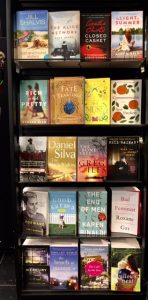
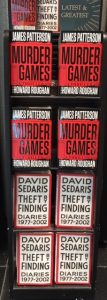
And as is the case with airports everywhere, there was a Hudson’s for last-minute purchases at exorbitant prices, with prominent displays of bestsellers. Oh, to be Patterson or Sedaris!

Who buys a big heavy book at an airport?

anne tyler accidental tourist
[Source: Goodreads]
This made me think of The Accidental Tourist–at least I think that was the book/movie in which the protagonist wrote travel guides for people who hate travel. He advised always traveling with a hardcover book to discourage seat mates from chatting.

But are there many people like that out there?

If so, they must be limited to the planes, because they certainly weren’t in the airports.

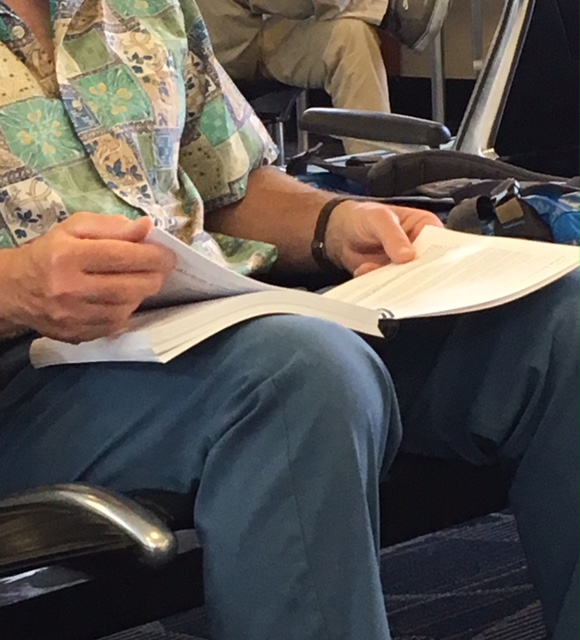
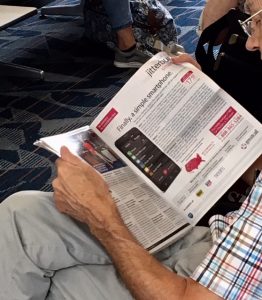
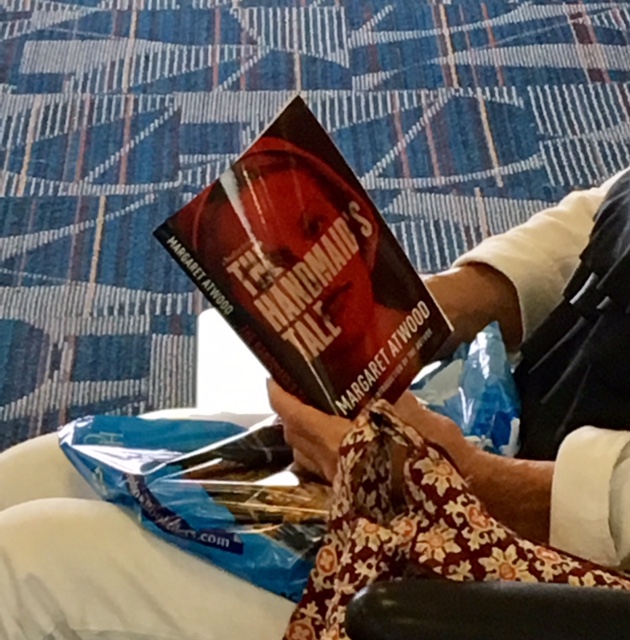
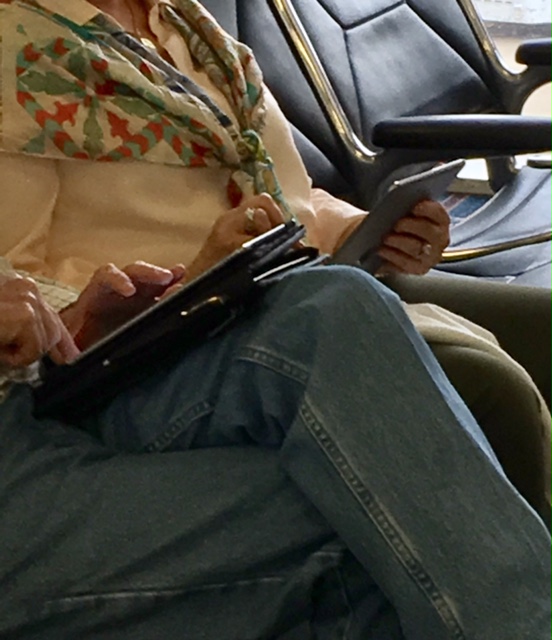
In ascending order of frequency, I saw people work reading,

airport reading

magazine reading,

paperback reading,

handmaids tale margaret atwood

and reading on electronic devices.

kindle airport reading

I am in this last group. It’s the perfect way to carry literally hundreds of books in the space and weight of one paperback. DEFINITELY THE WAY TO GO!

kindle interface

There’s a Rule for That!

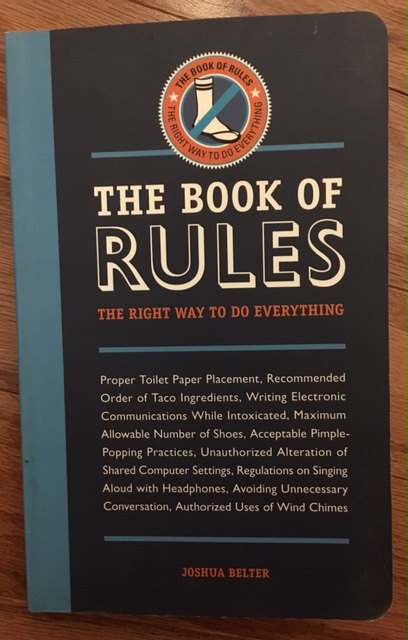
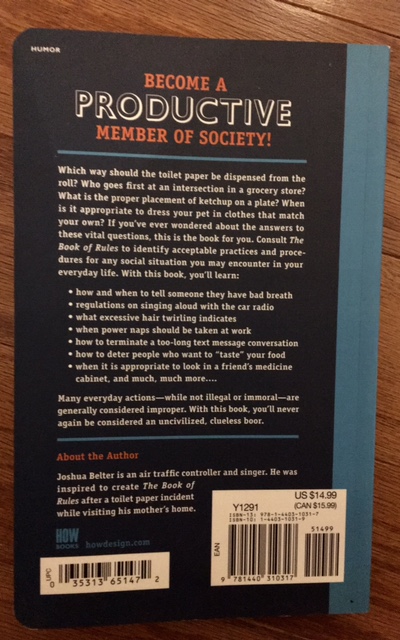
book of rules

This is a fun read and less than 200 pages. For one thing, it’s humorous. And it’s a scientific fact that laughing is good for your physical and mental health. So, even if you aren’t rule-bound, you might want to be rule-informed.


The authors are concerned with everyday actions which—although neither immoral nor illegal—are generally considered improper. In general, these are rules for getting along well in U.S. society. Readers are encouraged to suggest additions or amendments to thebookofrules.com.


The rules are organized into the following chapters.
 
DRIVING, should you want to know about the Green Light Honk, singing along with the radio, who controls the dashboard configuration, and similar vital information.


SHOPPING, including the proper direction and speed of pedestrian flow, shopping cart selection and return, seasonal shopping guidelines, and the proper protocol for found money, to name a few.


DINING OUT, besides dress codes and tipping guidelines for awkward situation, includes dining out with coupons, touching hot plates, and offering compliments/complaints—and more!


FOOD, including accommodating vegetarians, the cereal box prize, and the thickness of peanut butter and jelly.


HABITS AND MANNERS: Who doesn’t want to know how to yawn properly, issue an acceptable fart, or notify an individual of bad breath? This is a long chapter.


HOME: Learn how to make a 60-second sofa seat reservation, authorize the use of wind chimes, deal with yard parkers, and more.


BATHROOMS (such a major topic it’s separated from home in general): Look her for advice on locking the bathroom door, looking in a friend’s medicine cabinet, towel folding and display, and public restroom rules for men and for women. (BTW, I, for one, disagree with their guideline for dispensing toilet tissue.)


The remaining chapters of KITCHENS, DRESS, MULTIMEDIA, THE WORKPLACE, AND TRAVEL contain similarly essential and guidance. As I said, it’s a pleasant read. And if you are like me, intentionally flaunting the rules is inherently gratifying!


If you’re a writer, imagine the ideas for creating an unusual obsessive-compulsive character’s behavior. 
 
theres a rule for that

Bad Writing, Fun Reading

drivel book
Imagine my surprise when I found two of my all-time favorite writers included in a collection of bad writing.
mary roach
Mary Roach, best-selling author of science for public consumption, presents a facsimile of an early Pet Tips column from the San Francisco Examiner. The opening line is “Why not guppies?” and the closing begins with, “Let’s hear it for guppies!” And in between there are actually interesting facts about guppy gestation, birth, and cannibalism—totally overwritten.
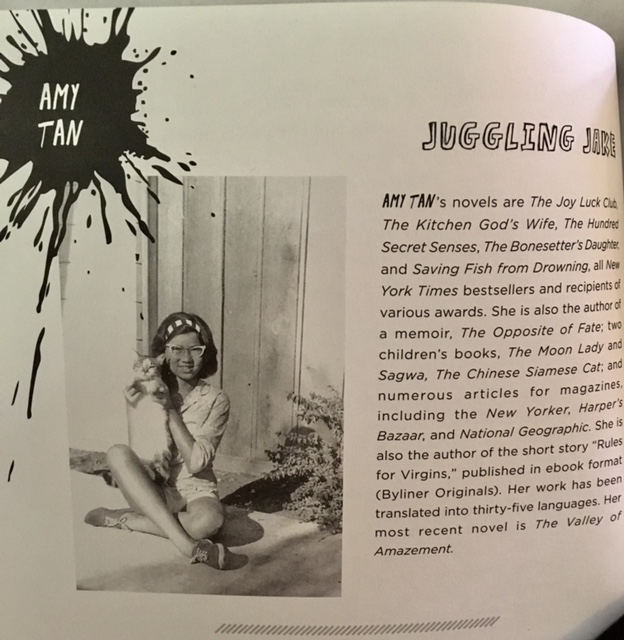
amy tan
Ami Tan’s contribution is a 10-line poem titled “A Juggler Named Jake.”  The first stanza lines end with Jake, fake, air, pair, and break. The second stanza endings are Hoodit, to do it, plates, break, and glue it.


This book works on so many levels! First, it reminds the rest of us that once upon a time, occasionally, even the best writers suck—which can be very good for morale!


Then, too, reading bad writing and knowing why it is bad is good for one’s self-esteem.


Finally, it’s full of bite-size reads. With 51 contributors and fewer than 200 pp of text, including photos and section breaks, each entry can be read in a flash.


The pieces are grouped by topic: Totally Professional, Bad Romance, Ill-Advised Confessions, Oddities, Dark Matter, and Terrible Angst—all so bad they’re good!


drivel

Writers’ Notebooks

notebooks

Virtually all writers have heard the advice that they should keep notebooks—books of whatever sort in which one jots down ideas for stories, images, bits of dialogue, whatever might be useful sometime or other. I’m not very good at that. I kept extensive notes when I was writing Nettie’s Books, but mostly it is catch as catch can.


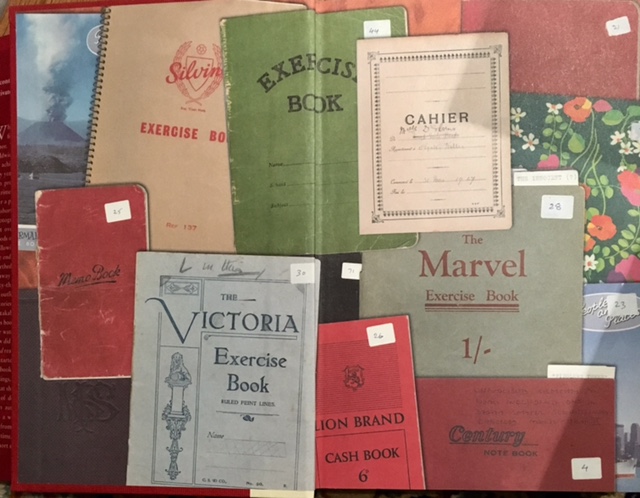
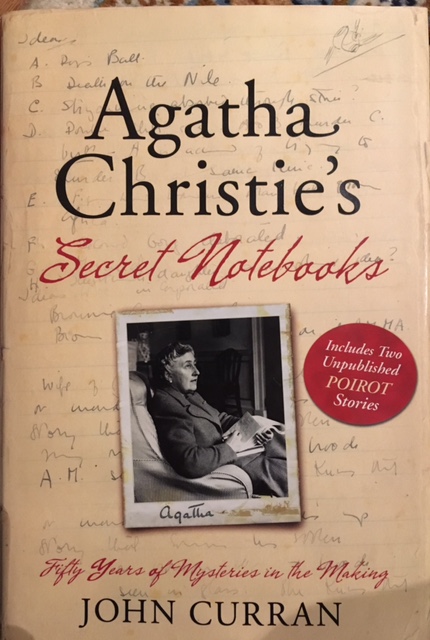
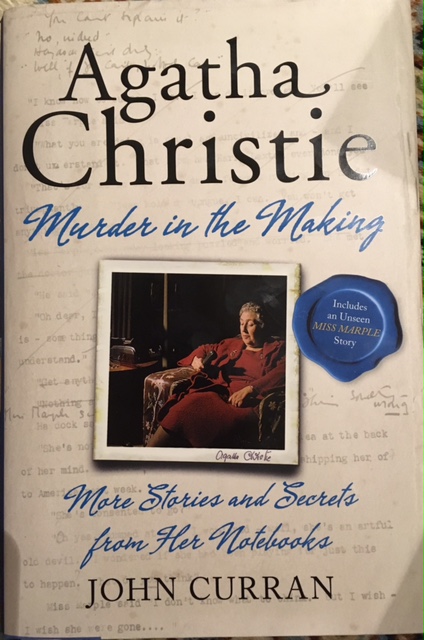
But don’t take me as a model! Better look to Agatha Christie. When Christie died in 1976, at the age of 85, she left behind 73 hand-written private notebooks, including illustrations and two unpublished Poirot stories.


agatha christies secret notebooks
She wrote more than one book a year from the 1920s, all bestsellers. Her notebooks included notes, lists, and stories. Such notebooks give depth to the published works, reveal the originally planned endings, and plots that were rejected.


agatha christie murder in the making
Not surprisingly, such a successful, prolific writer left behind more material than one book could contain. This volume explores Christie’s techniques for surprise and entertainment. John Curran discusses how her plots evolved, presents previously unpublished short stories and chapters edited out of published works, and discusses her final unfinished work.
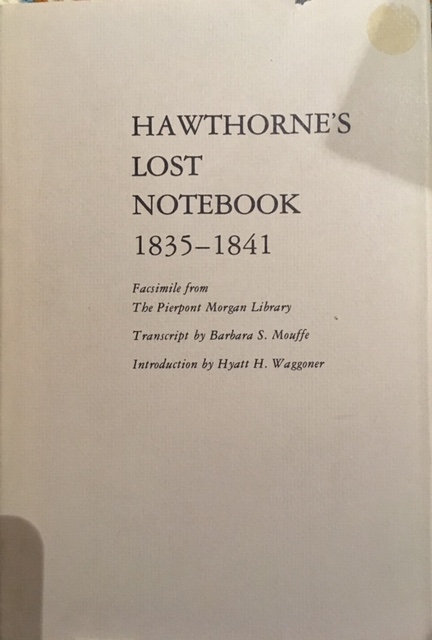
hawthorne's lost notebook
Keeping a notebook is not a modern idea. Hawthorne’s notebook from 1835-1841 is testimony to that. It is the earliest notebook that Hawthorne is known to have kept, containing more ideas for stories and articles than any other, including facsimiles in his own hand with more readable typescript alongside.


I urge you to read such notebooks. For one thing, they are fascinating reading. But also, you might come across bits that the greats abandoned but which inspire you to new heights.


In any event, consider keeping your own writer’s notebook—or expanding what you’ve already started. As in virtually every case, there are books to help you do that!


novelists notebook