Those of you who have been with me for awhile know that I am a HUGE fan of Jane Austen. On March 22, 2017, I posted a blog on the 200th anniversary of her last fiction writing. A gazillion books and articles—that’s by actual count!—have been written about Austen. If you want a pretty thorough overview and summary, with references to delve deeper, check out the 30-page Wikipedia article. What you have in this blog is my personal homage.
My Journey to Jane Austen
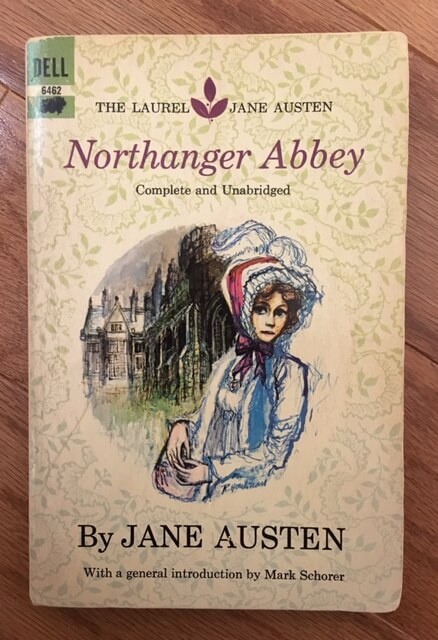
Copies of Austen’s novels are old friends. I bought Northanger Abbey secondhand for 35 cents.
Others were bought new for 50 cents each.
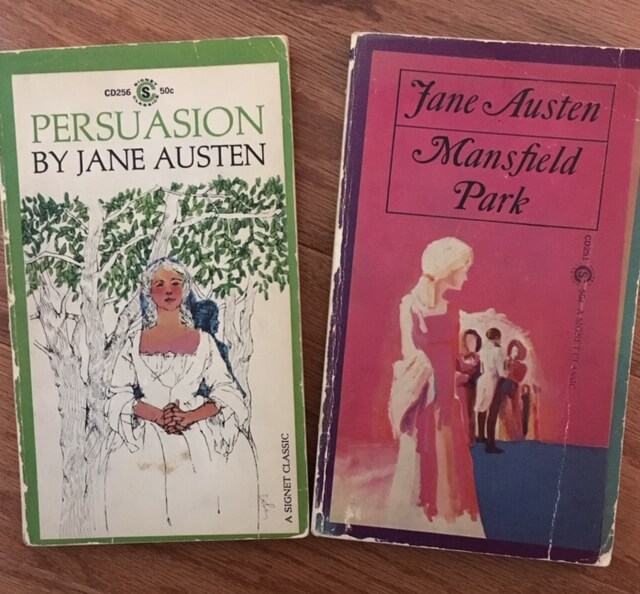
All of them have been read and read again, and most show those years of age and love.
I first became a fan in the spring of my sophomore year in college. “Why so late?” you might ask. In my pre-matriculation advisement, the English professor (who happened to teach such classes) urged me toward Chaucer and Beowulf. I took no literature classes after my freshman year, so there were tons (by actual weight) of books that “everyone” had read but I hadn’t. A lot of them are still out there. In any event, during finals week, I devoured every Austen I could lay my hands on.

As I recall, I read Pride and Prejudice first, and it remains my favorite. I’m not alone here. As far back as 1940, various film and TV versions have come to be. If one searches Kindle for Jane Austen Fan Fiction, there are literally hundreds of novels based on this book alone.These include prequels, sequels, murder mysteries, soft-core porn, fantasy, and horror.
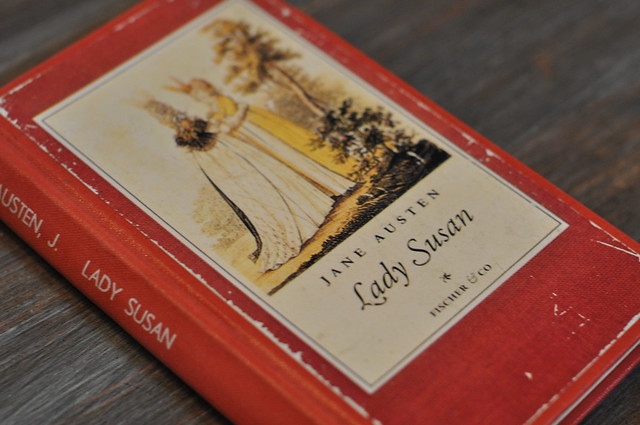
Film adaptations of all Austen’s novels abound. In 1995, Emma Thompson won an Academy Award for her role in Sense and Sensibility. 2007 brought forth Mansfield Park, Northanger Abbey, and Persuasion. Love and Friendship, based on Austen’s first novel, Lady Susan, appeared in 2016.
Jane Austen for Writers
Setting pen to paper—or fingers to keyboard—a writer never knows what the future holds. Although Austen’s Lady Susan, written in the epistolary form popular at the time, was penned first (1804), it was published last (1871). Austen published as Anonymous and enjoyed little fame or fortune during her lifetime.

Emma is but one example of why Austen’s work is so enduring. Before she began the novel, she wrote, “I am going to take a heroine whom no one but myself will much like. Emma Woodhouse is handsome, clever, and rich. She is also spoiled, headstrong, and self-satisfied; she greatly overestimates her own insights and abilities; she is blind to the dangers of meddling in other people’s lives; and her imagination and perceptions often lead her astray.” In other words, she paints a timeless portrait of the conceit and hubris of youth.
Austen is a great example of “write what you know.” In all her novels, Austen explores the concerns and difficulties of genteel women living in 18th and 19th century England, their dependence on marriage for security and status. Her novels portray the social and economic reality of the period.
And she makes her readers laugh.
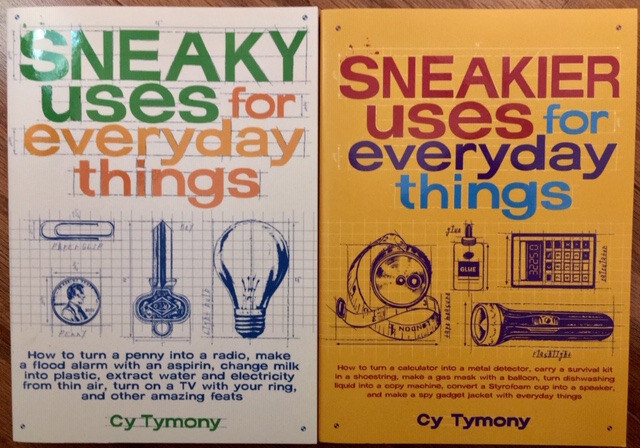
Something to aspire to: to express universals of human relationships, personalities, passions, and foibles that transcend time and place. She’s my role model—which is why I continue to acquire her books. This is my most recent one. Although published in 1981, I’ve enjoyed it for only a couple of years—so far!






![[Source]](http://vivianlawry.com/wordpress/wp-content/uploads/2018/02/162203966.jpg)